
Articles | Volume 22, issue 6
https://doi.org/10.5194/os-22-3619-2026
© Author(s) 2026. This work is distributed under
the Creative Commons Attribution 4.0 License.
the Creative Commons Attribution 4.0 License.
https://doi.org/10.5194/os-22-3619-2026
© Author(s) 2026. This work is distributed under
the Creative Commons Attribution 4.0 License.
the Creative Commons Attribution 4.0 License.
Review article
| 
06 Nov 2026
Review article |
| 06 Nov 2026
| 06 Nov 2026
The Mediterranean observation systems: MonGOOS analysis of present capabilities, weaknesses and perspectives
Manuel Vargas-Yáñez
CORRESPONDING AUTHOR

Instituto Español de Oceanografía (IEO-CSIC), Centro Oceanográfico de Málaga, Spanish National Research Council, Malaga, Spain
Orens Pasqueron de Fommervault
Intergovernmental Oceanographic Commission of the United Nations Educational, Scientific and Cultural Organization (UNESCO/IOC), Paris, France
Emanuela Clementi
CMCC Foundation – Euro-Mediterranean Centre on Climate Change, Bologna, Italy
Christian Ferrarin
National Research Council of Italy (CNR), Institute of Marine Sciences (ISMAR), Venezia, Firenze, Lerici, Rome, Italy
Svitlana Liubartseva
CMCC Foundation – Euro-Mediterranean Centre on Climate Change, Bologna, Italy
Diego Álvarez-Berastegui
Instituto Español de Oceanografía (IEO-CSIC), Centro Oceanográfico de Baleares, Spanish National Research Council, Palma, Spain
Baptiste Mourre
Instituto Mediterráneo de Estudios Avanzados (IMEDA), Spanish National Research Council – Universitat Illes Balears (CSIC-UIB), Mallorca, Spain
Matjaz Licer
Slovenian Environment Agency (ARSO), Ljubljana, Slovenia
National Institute of Biology (NIB), Ljubljana, Slovenia
University of Ljubljana, Faculty of Mathematics and Physics, Ljubljana, Slovenia
George Alexandrakis
Coastal Marine Research Lab, Institute of Applied and Computational Mathematics, Foundation for Research and Technology Hellas (FORTH), Heraklion, Greece
Salvatore Aronica
Institute for Biological Resources and Marine Biotechnology of the National Research Council (IRBIM-CNR), Ancona, Italy
Rosa Balbín
Instituto Español de Oceanografía (IEO-CSIC), Centro Oceanográfico de Baleares, Spanish National Research Council, Palma, Spain
Joaquín Ballabrera-Poy
Institut Català de Recerca per a la Governança del Mar (ICATMAR), Barcelona, Spain
Institut de Ciències del Mar – Spanish National Research Council (ICM-CSIC), Barcelona, Spain
Sana Ben Ismail
Institut National des Sciences et Technologies de la Mer (INST), Tunis, Tunisia
Nathaniel Bensoussan
Univ. Brest, CNRS, Ifremer, IRD, Laboratoire d'Océanographie Physique et Spatiale (LOPS), IUEM, 29280 Plouzané, France
Ismail Bessa
Institut National de Recherche Halieutique (INRH), Casablanca, Morocco
Alicia Blanco
European Global Ocean Observing System (EuroGOOS), Brussels, Belgium
Anthony Bosse
Aix-Marseille Univ., Univ. Toulon, CNRS, IRD, MIO, Marseille, France
Evi Bourma
Hellenic Centre for Marine Research (HCMR), Anavyssos, Greece
François Bourrin
Centre de Formation et de Recherche sur les Environnements Méditerranéens (CEFREM), Université de Perpignan Via Domitia (UPVD) – Centre National de la Recherche Scientifique (CNRS), 66000 Perpignan, France
Carlo Brandini
National Research Council of Italy (CNR), Institute of Marine Sciences (ISMAR), Venezia, Firenze, Lerici, Rome, Italy
Consorzio LaMMA, 50019 Firenze, Italy
Fulvio Capodici
Università degli Studi di Palermo, UNIPA, Palermo, Italy
Clara Casals-Baixas
Institut Català de Recerca per a la Governança del Mar (ICATMAR), Barcelona, Spain
Institut de Ciències del Mar – Spanish National Research Council (ICM-CSIC), Barcelona, Spain
Branko Cermelj
National Institute of Biology (NIB), Ljubljana, Slovenia
Giuseppe Ciraolo
Università degli Studi di Palermo, UNIPA, Palermo, Italy
Pascal Conan
CNRS, Laboratoire d'Océanographie Microbienne, LOMIC, Sorbonne Université, 66650 Banyuls-sur-Mer, France
Sorbonne Université, CNRS, OSU STAMAR, UAR2017, 4 place Jussieu, 75252 Paris CEDEX 05, France
Laurent Coppola
Sorbonne Université, CNRS, OSU STAMAR, UAR2017, 4 place Jussieu, 75252 Paris CEDEX 05, France
Lorenzo Corgnati
National Research Council of Italy (CNR), Institute of Marine Sciences (ISMAR), Venezia, Firenze, Lerici, Rome, Italy
Joaquín del Río
SARTI-MAR Research Group, Universitat Politècnica de Catalunya (UPC), Barcelona, Spain
Emilie Diamond Riquier
Sorbonne Université, CNRS, OSU STAMAR, UAR2017, 4 place Jussieu, 75252 Paris CEDEX 05, France
Lara Díaz-Barroso
Balearic Islands Coastal Observing and Forecasting System (SOCIB), Palma, Spain
Bartolomeo Doronzo
National Research Council of Italy (CNR), Institute of Marine Sciences (ISMAR), Venezia, Firenze, Lerici, Rome, Italy
Consorzio LaMMA, Livorno, Italy
Xavier Durrieu de Madron
Centre de Formation et de Recherche sur les Environnements Méditerranéens (CEFREM), Université de Perpignan Via Domitia (UPVD) – Centre National de la Recherche Scientifique (CNRS), 66000 Perpignan, France
Milad Fakhri
National Centre for Marine Sciences, National Council for Scientific Research in Lebanon (CNRS-L), Beirut, Lebanon
Constantin Frangoulis
Hellenic Centre for Marine Research (HCMR), Anavyssos, Greece
Claudia Fratianni
Istituto Nazionale di Geofisica e Vulcanologia (INGV), Rome, Italy
Emilio García-Ladona
Institut Català de Recerca per a la Governança del Mar (ICATMAR), Barcelona, Spain
Institut de Ciències del Mar – Spanish National Research Council (ICM-CSIC), Barcelona, Spain
Jesús García-Lafuente
Universidad de Málaga (UMA), Malaga, Spain
M. Carmen García-Martínez
Instituto Español de Oceanografía (IEO-CSIC), Centro Oceanográfico de Málaga, Spanish National Research Council, Malaga, Spain
Joaquín Garrabou
Institut de Ciències del Mar – Spanish National Research Council (ICM-CSIC), Barcelona, Spain
Josep Gasol
Institut de Ciències del Mar – Spanish National Research Council (ICM-CSIC), Barcelona, Spain
Adam Gauci
Department of Geosciences, University of Malta, Msida, Malta
Frédéric Gazeau
Sorbonne Université, CNRS, Laboratoire d'Océanographie de Villefranche, LOV, 06230 Villefranche-sur-Mer, France
Gerald Gregori
Aix-Marseille Univ., Univ. Toulon, CNRS, IRD, MIO, Marseille, France
Abed El Rahman Hassoun
National Centre for Marine Sciences, National Council for Scientific Research in Lebanon (CNRS-L), Beirut, Lebanon
GEOMAR Helmholtz Centre for Ocean Research Kiel, Kiel, Germany
Jordi Isern-Fontanet
Institut Català de Recerca per a la Governança del Mar (ICATMAR), Barcelona, Spain
Institut de Ciències del Mar – Spanish National Research Council (ICM-CSIC), Barcelona, Spain
Dominique Lefevre
Aix-Marseille Univ., Univ. Toulon, CNRS, IRD, MIO, Marseille, France
Nadia Lo Bue
Istituto Nazionale di Geofisica e Vulcanologia (INGV), Rome, Italy
Guiomar López
Balearic Islands Coastal Observing and Forecasting System (SOCIB), Palma, Spain
Pablo Lorente
Puertos del Estado (PE), Madrid, Spain
Deny Malengros
Aix-Marseille Univ., Univ. Toulon, CNRS, IRD, MIO, Marseille, France
Ramon Massana
Institut de Ciències del Mar – Spanish National Research Council (ICM-CSIC), Barcelona, Spain
Sinan Mavruk
Fisheries Faculty, Çukurova University, 01330 Balcali, Adana, Türkiye
Stefano Miserocchi
Institute of Polar Sciences, National Research Council of Italy Bologna, Italy
Behzad Mostajir
MARBEC, Univ Montpellier, CNRS, Ifremer, IRD, Montpellier, France
Laure Mousseau
Sorbonne Université, CNRS, Laboratoire d'Océanographie de Villefranche, LOV, 06230 Villefranche-sur-Mer, France
Francina Moya
Instituto Español de Oceanografía (IEO-CSIC), Centro Oceanográfico de Málaga, Spanish National Research Council, Malaga, Spain
Antonio Novellino
ETT|DEDA Group, Genova, Italy
Arianna Orasi
Institute for Environmental Protection and Research (ISPRA), Rome, Italy
Emanuele Organelli
National Research Council of Italy (CNR), Institute of Marine Sciences (ISMAR), Venezia, Firenze, Lerici, Rome, Italy
Vincent Ouisse
MARBEC, Univ Montpellier, CNRS, Ifremer, IRD, Montpellier, France
Tal Ozer
Israel Oceanographic & Limnological Research (IOLR), Haifa, Israel
Antonios Parasyris
Coastal Marine Research Lab, Institute of Applied and Computational Mathematics, Foundation for Research and Technology Hellas (FORTH), Heraklion, Greece
Begoña Pérez-Gómez
Puertos del Estado (PE), Madrid, Spain
Susana Pérez-Rubio
Puertos del Estado (PE), Madrid, Spain
Leonidas Perivoliotis
Hellenic Centre for Marine Research (HCMR), Anavyssos, Greece
George Petihakis
Hellenic Centre for Marine Research (HCMR), Anavyssos, Greece
Anne Petrenko
Aix-Marseille Univ., Univ. Toulon, CNRS, IRD, MIO, Marseille, France
Sebastien Pinel
Centre de Formation et de Recherche sur les Environnements Méditerranéens (CEFREM), Université de Perpignan Via Domitia (UPVD) – Centre National de la Recherche Scientifique (CNRS), 66000 Perpignan, France
Xavier Pitarch
Institut Català de Recerca per a la Governança del Mar (ICATMAR), Barcelona, Spain
Institut de Ciències del Mar – Spanish National Research Council (ICM-CSIC), Barcelona, Spain
Angela Pomaro
National Research Council of Italy (CNR), Institute of Marine Sciences (ISMAR), Venezia, Firenze, Lerici, Rome, Italy
Lucía Quirós-Collazos
Institut Català de Recerca per a la Governança del Mar (ICATMAR), Barcelona, Spain
Institut de Ciències del Mar – Spanish National Research Council (ICM-CSIC), Barcelona, Spain
Emma Reyes
Balearic Islands Coastal Observing and Forecasting System (SOCIB), Palma, Spain
Simone Sammartino
Universidad de Málaga (UMA), Malaga, Spain
Anna Sánchez-Vidal
Department of Earth and Ocean Dynamics, University of Barcelona (UB), Barcelona, Spain
Lucía Sanz-Pinilla
Instituto Español de Oceanografía (IEO-CSIC), Servicios Centrales, Spanish National Research Council, Madrid, Spain
Katrin Schroeder
National Research Council of Italy (CNR), Institute of Marine Sciences (ISMAR), Venezia, Firenze, Lerici, Rome, Italy
Stefano Taddei
Consorzio LaMMA, Livorno, Italy
Elena Tel
Instituto Español de Oceanografía (IEO-CSIC), Servicios Centrales, Spanish National Research Council, Madrid, Spain
Pierre Testor
Centre National de la Recherche Scientifique (CNRS), Paris, France
Marco Torri
National Research Council of Italy. Institute for Studies on the Mediterranean (CNR-ISMed), Palermo, Italy
Daniela Turk
Independent Scientist, Ljubljana, Slovenia
Laura Ursella
National Institute of Oceanography and Applied Geophysics (OGS), Trieste, Italy
Dimitris Velaoras
Hellenic Centre for Marine Research (HCMR), Anavyssos, Greece
Francesca Vidussi
MARBEC, Univ Montpellier, CNRS, Ifremer, IRD, Montpellier, France
Ivica Vilibić
Ruđer Bošković Institute (RBI), Division for Marine and Environmental Research, Zagreb, Croatia
Institute for Adriatic Crops, Split, Croatia
Enrico Zambianchi
Sapienza Università di Roma, Rome, Italy
Nikolaos D. Zarokanellos
Balearic Islands Coastal Observing and Forecasting System (SOCIB), Palma, Spain
George Zodiatis
ORION Research, Nicosia, Cyprus
Vanessa Cardin
National Institute of Oceanography and Applied Geophysics (OGS), Trieste, Italy
Related authors
No articles found.
Alberto González-Santana, Magdalena Carranza, Lara Díaz-Barroso, Pedro Vélez-Belchí, and Lluis Miret-Pastor
EGUsphere, https://doi.org/10.22541/essoar.15009652/v1, https://doi.org/10.22541/essoar.15009652/v1, 2026
This preprint is open for discussion and under review for Ocean Science (OS).
Short summary
Short summary
Recovering ocean-observing floats could make long-term ocean monitoring more sustainable. We assessed the costs and benefits of recovering different types of Argo floats under uncertain operating conditions. Our results show that recovery can substantially reduce the cost of obtaining ocean observations, particularly for more expensive floats, supporting more efficient and sustainable use of observing resources.
Vedrana Kovačević, Manuel Bensi, Laura Ursella, Naomi Krauzig, Giuseppe Aulicino, and Leonardo Langone
EGUsphere, https://doi.org/10.5194/egusphere-2026-5781, https://doi.org/10.5194/egusphere-2026-5781, 2026
This preprint is open for discussion and under review for Ocean Science (OS).
Short summary
Short summary
Here, we describe the ocean water properties and currents within Edisto Inlet, a highly dynamic Antarctic fjord along Victoria Land in the north-west Ross Sea, using unique data collected in February 2023. Edisto is mostly filled with Antarctic Surface and cold Modified Shelf waters. Warmer ocean water from the Ross Sea was not directly detected inside the fjord, its signature was found just 10 to 15 km outside the mouth, suggesting it may occasionally enter the inlet and mix with local waters.
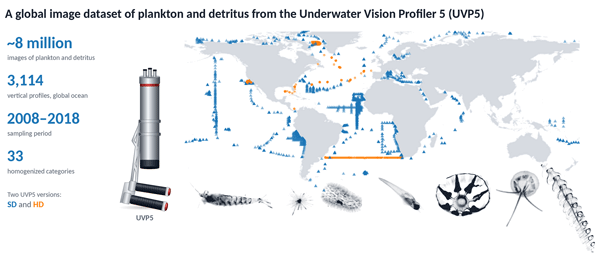
Ariadna C. Nocera, Lars Stemmann, Marcel Babin, Tristan Biard, Julie Coustenoble, François Carlotti, Laurent Coppola, Lucas Courchet, Laetitia Drago, Amanda Elineau, Lionel Guidi, Helena Hauss, Laëtitia Jalabert, Lee Karp-Boss, Rainer Kiko, Manon Laget, Fabien Lombard, Andrew McDonnell, Camille Merland, Solène Motreuil, Thelma Panaïotis, Marc Picheral, Andreas Rogge, Anya Waite, and Jean-Olivier Irisson
Earth Syst. Sci. Data, 18, 7345–7366, https://doi.org/10.5194/essd-18-7345-2026, https://doi.org/10.5194/essd-18-7345-2026, 2026
Short summary
Short summary
Plankton and sinking organic particles (detritus) shape how the ocean stores carbon, but they are difficult to observe worldwide. We present a global, openly available collection of about 8 million images captured by an underwater camera (UVP5) in 3114 profiles from 2008 to 2018 and sorted into 33 categories. Detritus made up 90 % of the objects and copepods were the most common plankton. The dataset can help train machine learning tools and improve ocean ecosystem and climate models.
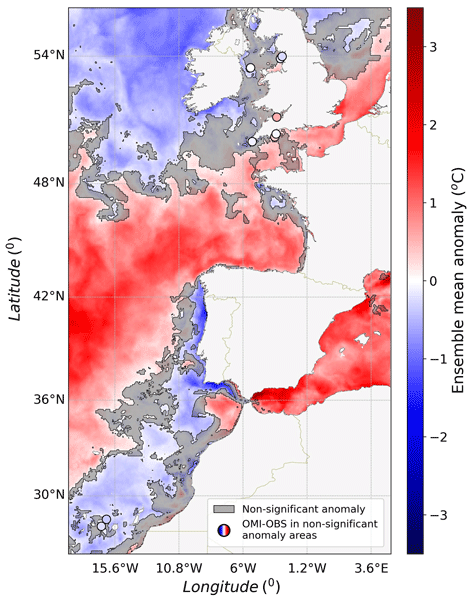
Álvaro de Pascual Collar, Axel Alonso Valle, Alex Gallardo, Marta de Alfonso Alonso-Muñoyerro, Begoña Pérez Gómez, Stefania Ciliberti, and Marcos G. Sotillo
State Planet, 7-osr10, 7, https://doi.org/10.5194/sp-7-osr10-7-2026, https://doi.org/10.5194/sp-7-osr10-7-2026, 2026
Short summary
Short summary
This study improves the monitoring of extreme sea surface temperature events in the Iberia–Biscay–Ireland region. We tested new data sources and combined information from different models and satellites to provide more consistent results and characterize inter-product spread. The findings show that these methods make the indicator more reliable and useful for supporting climate and ocean management decisions.
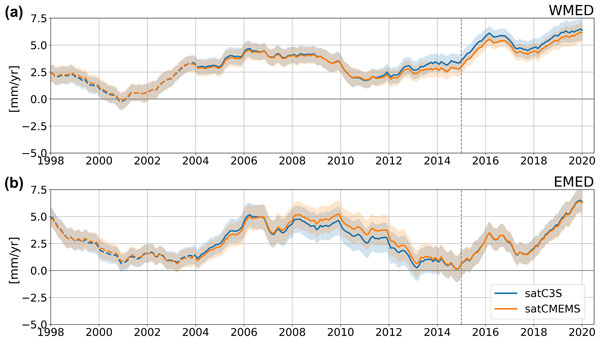
Federica Borile, Vladyslav Lyubartsev, Begoña Pérez Gómez, Jue Lin-Ye, Anna Mangilli, Emanuela Clementi, and Paolo Oddo
State Planet, 7-osr10, 13, https://doi.org/10.5194/sp-7-osr10-13-2026, https://doi.org/10.5194/sp-7-osr10-13-2026, 2026
Short summary
Short summary
Sea level decadal trends are analysed in the Western and Eastern Mediterranean Sea using satellite and in-situ data. We found that sea level rise is not constant but varies over decades and differs between regions. These changes are influenced by temperature, salinity, and local land movements. Understanding this variability helps improve coastal planning and prepares communities for changing sea levels in the near future.
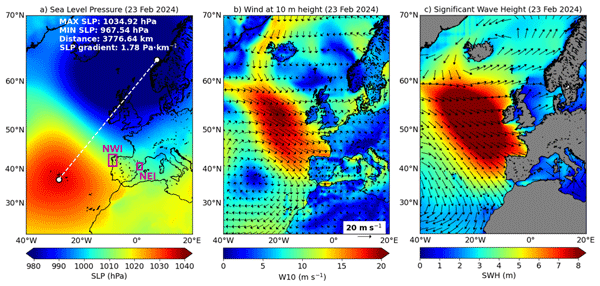
Pablo Lorente, Garbiñe Ayensa, Marta De Alfonso, Samuel Galán, Pilar Gil, Fernando Manzano, Anna Magdalena Matulka, Pedro Montero, Verónica Morales-Márquez, Begoña Pérez-Gómez, Cristina Pérez-Íñigo, Susana Pérez-Rubio, and M. Isabel Ruiz
State Planet, 7-osr10, 15, https://doi.org/10.5194/sp-7-osr10-15-2026, https://doi.org/10.5194/sp-7-osr10-15-2026, 2026
Short summary
Short summary
Storm Louis hit southwestern Europe in February 2024, causing major transport disruptions, power outages, and one death. Powerful winds and high waves struck two Spanish ports, with wave heights over 8 m. Despite similar conditions offshore, the ports reacted differently due to their layouts. One saw long-lasting, moderate impacts, while the other faced a shorter, more intense event. The study highlights the need for better storm monitoring to protect coastal infrastructure.
Leonardo Lima, Rafael Gomes de Menezes, Ehsan Sadighrad, Ronan McAdam, Filipe Costa, Pietro Miraglio, Mehmet Ilicak, Eric Jansen, Ali Aydogdu, Francesco Maicu, and Emanuela Clementi
State Planet, 7-osr10, 5, https://doi.org/10.5194/sp-7-osr10-5-2026, https://doi.org/10.5194/sp-7-osr10-5-2026, 2026
Short summary
Short summary
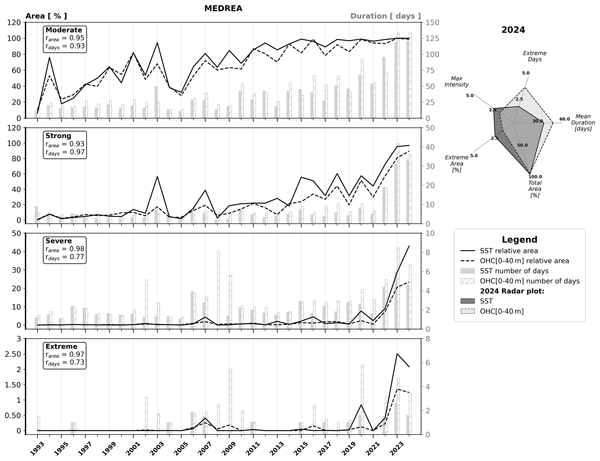
As climate change intensifies, marine heatwaves (MHWs), periods of unusually high ocean temperatures, threaten ecosystems and communities. This study analyzes MHWs in the Mediterranean and Black Seas, examining surface temperatures and ocean heat content in the upper 0–40 m to capture subsurface warming. Findings highlight the need to monitor both surface and subsurface conditions for a comprehensive understanding and better management considering ongoing warming trends in both seas.
Naomi Krauzig, Alessandro Coluccelli, Francesco Memmola, Pierluigi Penna, Fabrizio Moro, Enrico Zambianchi, and Pierpaolo Falco
State Planet, 7-osr10, 17, https://doi.org/10.5194/sp-7-osr10-17-2026, https://doi.org/10.5194/sp-7-osr10-17-2026, 2026
Short summary
Short summary
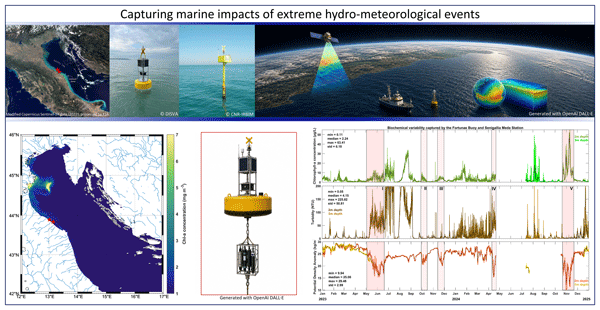
Between 2023 and 2024, the northern Adriatic Sea experienced extreme surface freshening driven by storms, heavy rainfall and river flooding. Using high-frequency in-situ data, satellite imagery, and Copernicus Marine Service products, this study traces the evolution, causes, and ecological impacts of these events. Salinity dropped to 15 g/kg, triggering stratification, turbidity peaks, and algal blooms. Findings stress the need for integrating autonomous monitoring into operational services.
Laura Gómez-Navarro, Maxime Ballarotta, Diego Cortés-Morales, Marie-Isabelle Pujol, Laura Fortunato, Baptiste Mourre, and Ananda Pascual
State Planet, 7-osr10, 8, https://doi.org/10.5194/sp-7-osr10-8-2026, https://doi.org/10.5194/sp-7-osr10-8-2026, 2026
Short summary
Short summary
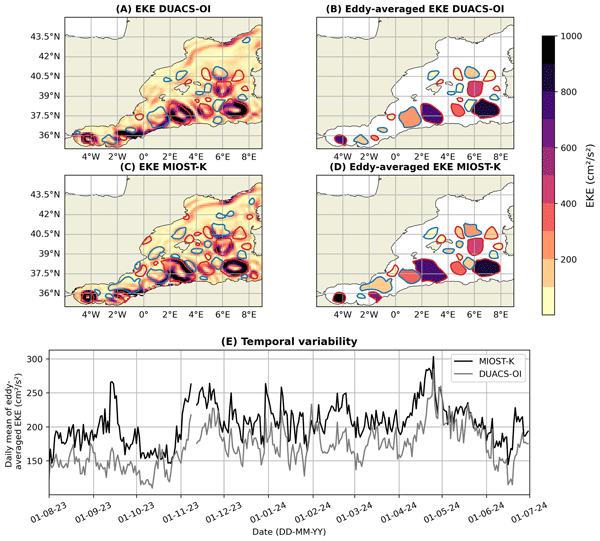
Understanding how the ocean moves heat, nutrients, and pollution is vital for climate studies and ecosystem health. We examined eddies in the western Mediterranean Sea using innovative satellite observations from the Surface Water and Ocean Topography mission. Compared to existing data, we detected major differences in eddy patterns. These advances improve our ability to monitor the ocean, manage marine pollution, and support sustainable maritime activities.
Zhuomin Li, Aida Alvera-Azcárate, Alexander Barth, Nathaniel Bensoussan, Lei Guan, and Na Xu
EGUsphere, https://doi.org/10.5194/egusphere-2026-5436, https://doi.org/10.5194/egusphere-2026-5436, 2026
This preprint is open for discussion and under review for Ocean Science (OS).
Short summary
Short summary
In the Gulf of Lion, summer–autumn northwest winds drive coastal upwelling cooling often masked in satellite/reanalysis SST by clouds and strict quality control. We reconstruct HY-1D COCTS SST and validate against three coastal stations. It captures most events but underestimates cooling. We add wind-informed cloud detection using wind speed/direction to recover cold upwelling pixels mislabeled as cloud. Results match in situ SST better, improving SST availability for upwelling studies.
Grega Rovšček, Matjaž Ličer, Alexander Barth, and Matej Kristan
Geosci. Model Dev., 19, 8915–8938, https://doi.org/10.5194/gmd-19-8915-2026, https://doi.org/10.5194/gmd-19-8915-2026, 2026
Short summary
Short summary
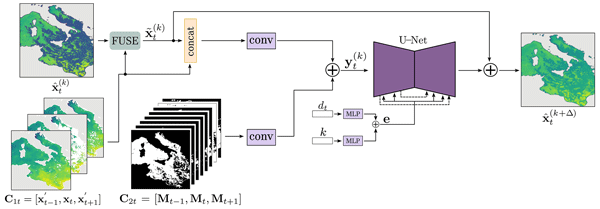
Satellite measurements of sea surface temperature are often blocked by clouds, leaving large gaps in the data used to study the ocean and climate. We developed a new computer model that fills in these missing areas while also estimating how uncertain the reconstruction is. Tests on several ocean regions show more accurate results and more realistic patterns, helping scientists better analyze and model ocean conditions.
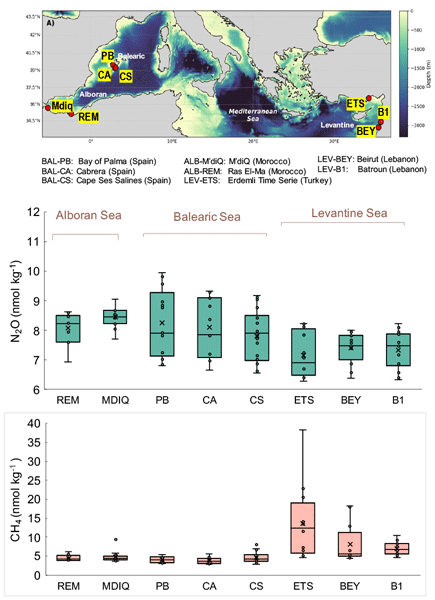
Mercedes de la Paz, Susana Flecha, Fatima Zohra Bouthir, Milad Fahkri, Abed El Rahman Hassoun, Valeria Ibello, Korhan Özkan, Fiz F. Pérez, Adil Chair, and Iris E. Hendriks
Earth Syst. Sci. Data, 18, 6207–6224, https://doi.org/10.5194/essd-18-6207-2026, https://doi.org/10.5194/essd-18-6207-2026, 2026
Short summary
Short summary
This study provides monthly year-long dataset of nitrous oxide and methane concentrations and their air-sea exchange in understudied coastal areas of the Mediterranean Sea. By using standardized methods across multiple sites, it reveals marked seasonal and regional differences, with methane showing highly variable bursts linked to local sources. The dataset addresses major observational gaps and offers a reliable foundation for future environmental evaluation in this sensitive region.
Francesco Maicu, Seimur Shirinov, Charikleia L. G. Oikonomou, Vitalii Sharmar, Lucia Gualtieri, Anna Chiara Goglio, Ehsan Sadighrad, Dimitra Denaxa, Aimie Moulin, Bethany McDonagh, Salvatore Causio, Emanuela Clementi, Gerasimos Korres, Ivan Federico, and Enrico Scoccimarro
State Planet Discuss., https://doi.org/10.5194/sp-2026-12, https://doi.org/10.5194/sp-2026-12, 2026
Preprint under review for SP
Short summary
Short summary
In January 2026, an exceptional storm brought record waves, flooding, and strong currents to the Mediterranean Sea. To understand its coastal impact, we combined data from Europe's ocean monitoring service with a detailed coastal computer model, tracking the storm from open sea to shore. We found unusually high waves, raised sea levels, and strong changes in currents and saltiness. Combining wide-area forecasts with local models improves flood prediction, supporting earlier coastal warning.
Anna Chiara Goglio, Emanuela Clementi, Nadia Pinardi, Giulio Boccaletti, Paolo Oddo, and Lorenzo Mentaschi
EGUsphere, https://doi.org/10.5194/egusphere-2026-4734, https://doi.org/10.5194/egusphere-2026-4734, 2026
Short summary
Short summary
Venice, one of the world's most famous cities, is threatened by flooding, locally known as Acqua Alta. Based on numerical results from the Copernicus Marine Mediterranean Analysis and Forecasting System, we investigate each process involved in the dynamics of these events to improve their predictability. For the first time, we identify processes occurring within the water column that contribute to the sea level peak, providing new insight into the understanding and modeling of Acqua Alta events.
Salem Ibrahim Salem, Andre Valente, Shubha Sathyendranath, Andrei Chuprin, Théo Renard, Jaime Pitarch, Ruth Airs, Moreno Ana, Maria-Manuel Angelico, David Antoine, Robert Arnone, Florinda Artuso, Paulo O. Oliveira, William Balch, Kathryn Barker, Ray Barlow, Simon Bélanger, Marco Bellacicco, Jean-François Berthon, Şükrü Beşiktepe, Francesco Bignami, Yngve Borsheim, Astrid Bracher, Federica Braga, Vittorio Brando, Robert J. W. Brewin, Vanda Brotas, Elisabetta Canuti, Francisco P. Chavez, Andrés Cianca, Hervé Claustre, Lesley Clementson, Simone Colella, Raul Costa, Cristina Nunes, Richard Crout, Emmanuel Devred, Annalisa Di Cicco, Federico Falcini, Ivan Farace, Afonso Ferreira, Scott Freeman, Robert Frouin, Carlos García-Soto, Isabella Giardina, Stuart W. Gibb, Arthur Gleason, Ralf Goericke, Richard Gould, Michael Grant, Nathalie Guillocheau, Hiroto Higa, Stanford B. Hooker, Chuamin Hu, Joji Ishizaka, Thomas Jackson, Mati Kahru, Milton Kampel, Bokyung Kim, Holger Klein, Piotr Kowalczuk, Susanne Kratzer, Raphael Kudela, Antonia Lai, Rosario Lavezza, Jesus Ledesma, Huiwon Lee, Steven Lohrenz, Hubert Loisel, Vivian Lutz, Antonio Mannino, Francesca Margiotta, Victor Martinez-Vicente, Salvatore Marullo, Luca Massi, Patricia Matrai, Atsushi Matsuoka, David McKee, Chiara Melillo, Carlos B. Mendes, Brian G. Mitchell, Tiffany Moisan, Enrique Montes, Frank Muller-Karger, Aimee Neeley, Michael Novak, Leonie O'Dowd, Michael Ondrusek, Emanuele Organelli, Heeyoon Park, Trevor Platt, Francesca Polonelli, Alex Poulton, Mariella Ragni, Michel Repecaud, Maurizio Ribera d’Alcalà, Tamara Rodriguez-Ramos, Rüdiger Röttgers, Manuel Ruiz-Villarreal, Michela Sammartino, Rosalia Santoleri, Gian Marco Scarpa, Thomas Schroeder, Valeria Segura, Timothy Smyth, Denise Smythe-Wright, Heidi M. Sosik, Joanna Stoń-Egiert, Malcolm Taberner, Jing Tan, Rob Thomas, Crystal Thomas, Gavin Tilstone, Andreia Tracana, Michael Twardowski, Vincenzo Vellucci, Gianluca Volpe, Kenneth Voss, Jeremy Werdell, Marcel Wernand, Bozena Wojtasiewicz, Simon Wright, Sunmi Yang, Giuseppe Zibordi, Maria Laura Zoffoli, and Steve Groom
Earth Syst. Sci. Data Discuss., https://doi.org/10.5194/essd-2026-539, https://doi.org/10.5194/essd-2026-539, 2026
Preprint under review for ESSD
Short summary
Short summary
This paper presents the fourth version of the ESA Ocean Colour Climate Change Initiative global in situ bio-optical database. The updated compilation combines observations from many international data sources collected between 1996 and 2025 and includes major expansions in coverage and variables. The dataset provides a consistent reference for validating satellite ocean-colour products and supports algorithm development and long-term climate studies.
Amine M'hamdi, Ariane Koch-Larrouy, Anthony Bosse, Isabelle Dadou, Vincent Vantrepotte, and Alex Costa da Silva
EGUsphere, https://doi.org/10.5194/egusphere-2026-4862, https://doi.org/10.5194/egusphere-2026-4862, 2026
Short summary
Short summary
Internal tides are underwater waves that can transport nutrients from deep waters toward the sunlit ocean. Using glider observations off the Amazon shelf, we compared vertical advection and turbulent mixing. Vertical advection supplied more nitrate and silicate on average, while turbulence became important during energetic events. Together, these processes change nutrient supply and balance, potentially influencing phytoplankton communities in the tropical Atlantic.
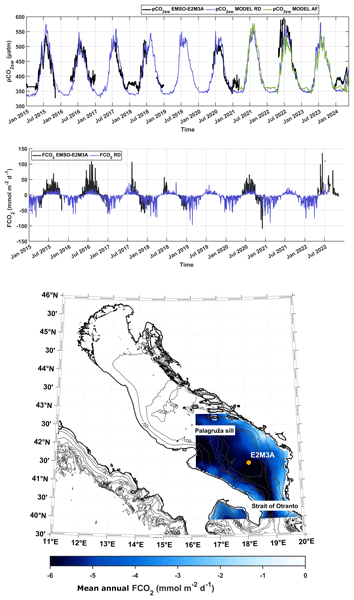
Carlotta Dentico, Gianpiero Cossarini, Giuseppe Civitarese, Michele Giani, Angelo Rubino, and Vanessa Cardin
Biogeosciences, 23, 5399–5418, https://doi.org/10.5194/bg-23-5399-2026, https://doi.org/10.5194/bg-23-5399-2026, 2026
Short summary
Short summary
The concentration of carbon dioxide in the atmosphere is rising due to human activities. The ocean has absorbed almost 30 % of the total emissions and stored in deeper waters. We studied the southern Adriatic, an area where dense water forms and sinks, helping move carbon from the surface to depth. Using a recently validated long-term dataset, we found that over the past decade this region acted as a net sink of carbon dioxide, highlighting its role in storing carbon in the Mediterranean Sea.
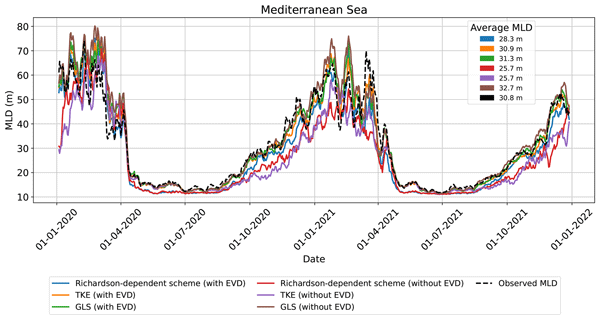
Lucia Gualtieri, Hans Burchard, Federica Borile, Aimie Moulin, Pietro Miraglio, Francesco Maicu, Emanuela Clementi, and Paolo Oddo
Geosci. Model Dev., 19, 7041–7068, https://doi.org/10.5194/gmd-19-7041-2026, https://doi.org/10.5194/gmd-19-7041-2026, 2026
Short summary
Short summary
This study addresses a gap in understanding how turbulent mixing closure schemes and convective adjustments interplay in the Mediterranean Sea. Coupled ocean-wave simulations were performed with different mixing parameterizations and model results were compared against Argo float observations across different space and time scales. Results show that the Generalised Length Scale closure scheme best reproduces observed mixed layer properties and variability, without needing convective adjustment.
Filipe Costa, Ehsan Sadighrad, Leonardo Lima, Ali Aydoğdu, Mehmet Ilicak, Diana Azevedo, and Emanuela Clementi
State Planet Discuss., https://doi.org/10.5194/sp-2026-17, https://doi.org/10.5194/sp-2026-17, 2026
Revised manuscript under review for SP
Short summary
Short summary
Freshwater is essential to the Black Sea, supporting marine ecosystems, coastal management, and climate services. This study presents the first long-term assessment of freshwater storage changes using a high-resolution regional dataset. We show that freshwater has declined mainly because of increasing evaporation and decreasing river discharge. This new indicator supports long-term monitoring of environmental change in the Black Sea.
Francesco Paladini de Mendoza, Leonardo Langone, Alice Cavaliere, Gianmarco Ingrosso, Lorenzo Pasculli, Chiara Ripa, Mauro Mazzola, Manuel Bensi, Federico Giglio, Stefano Miserocchi, Tommaso Tesi, and Patrizia Giordano
Earth Syst. Sci. Data Discuss., https://doi.org/10.5194/essd-2026-501, https://doi.org/10.5194/essd-2026-501, 2026
Preprint under review for ESSD
Short summary
Short summary
This paper presents 5-years of continuous ocean observations from Arctic fjords and nearby deep waters around Svalbard. The dataset reveals strong seasonal changes, recurring inflows of warm Atlantic waters, and differences between glacier-influenced coastal areas and offshore environments. By providing openly accessible, high-quality measurements, the study supports research on climate change, ocean dynamics, glacier–ocean interactions, in a rapidly changing Arctic.
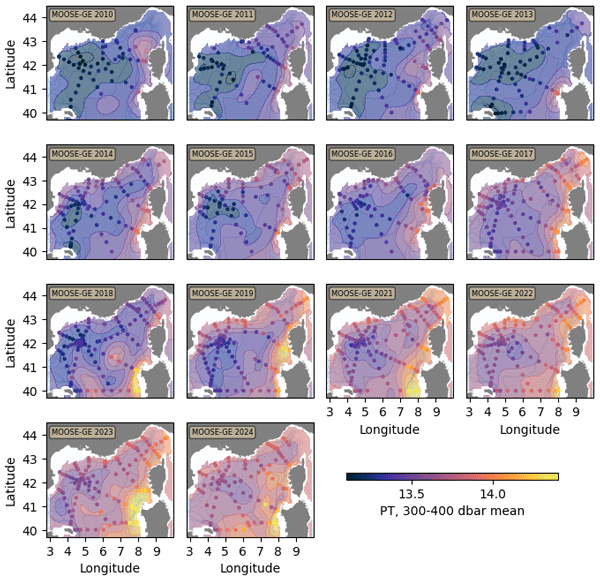
Laurent Coppola, Anthony Bosse, Thibaut Wagener, Dominique Lefevre, Magali Lescot, François Carlotti, Fabien Lombard, Lionel Guidi, Fabrice Not, Xavier Durrieu de Madron, Pascal Conan, Mireille Pujo-Pay, Caroline Ulses, Samuel Somot, Claude Estournel, Emilie Diamond Riquier, Céline Laus, Nathalie Leblond, Matthieu Labaste, Patrice Bretel, Melek Golbol, Stephane Kunesch, Jennifer Sola, Laure Chirurgien, Sandra Nunige, Sarah Romac, and Pierre Testor
Earth Syst. Sci. Data, 18, 5303–5327, https://doi.org/10.5194/essd-18-5303-2026, https://doi.org/10.5194/essd-18-5303-2026, 2026
Short summary
Short summary
The Mediterranean Ocean Observing System for the Environment program investigated the fast-changing northwestern Mediterranean through annual cruises from 2010 to 2024. Using consistent surface-to-seafloor measurements, checked against fixed and autonomous platforms, we find intermediate and deep waters warming and getting saltier, oxygen declining and dissolved carbon rising, indicating progressing acidification. These trends can reshape ecosystems and stress the need for sustained monitoring.
Anna Chiara Goglio, Lorenzo Mentaschi, Begoña Pérez Gómez, Paolo Oddo, Emanuela Clementi, and Federica Borile
State Planet Discuss., https://doi.org/10.5194/sp-2026-7, https://doi.org/10.5194/sp-2026-7, 2026
Revised manuscript under review for SP
Short summary
Short summary
Mediterranean coastal communities are increasingly threatened by extreme sea level events. We built an indicator combining model and observed data to summarize their changes. The analysis of their evolution revealed that the associated hazard is rising along the entire coastline, especially in the northern Adriatic, the Aegean Sea, and along Turkish and Cypriot coasts. This trend is mostly driven by sea level rise, except for the Adriatic Sea, where strong storm effects play a bigger role.
Nadia Lo Bue, Beatrice Giambenedetti, Davide Embriaco, Paolo Bagiacchi, Claudia Fratianni, Riccardo Vagni, and Giuditta Marinaro
Earth Syst. Sci. Data, 18, 5093–5115, https://doi.org/10.5194/essd-18-5093-2026, https://doi.org/10.5194/essd-18-5093-2026, 2026
Short summary
Short summary
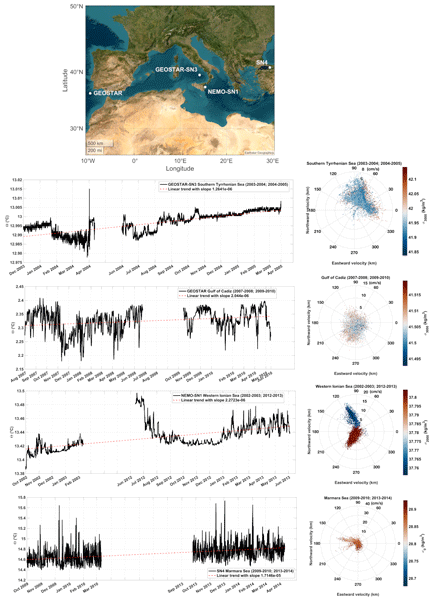
We present a set of long-term, high-resolution oceanographic datasets collected by benthic observatories in the deep Mediterranean Sea. These records provide valuable insights into deep-ocean dynamics and their potential influence on climate variability. Standardized post-processing and quality-control procedures ensure data reliability and usability for further analyses and model validation, helping to address key gaps in deep-sea monitoring and observation.
Laura Feudale, Giorgio Bolzon, Gianpiero Cossarini, Anna Teruzzi, Emanuela Clementi, and Stefano Salon
EGUsphere, https://doi.org/10.5194/egusphere-2026-3413, https://doi.org/10.5194/egusphere-2026-3413, 2026
Short summary
Short summary
We investigate the impact of physical forcing frequency on Mediterranean biogeochemical simulations. Using 6-hourly instead of daily ocean fields improves phytoplankton bloom and nutrient patterns through a better representation of vertical transport processes, highlighting the importance of high-frequency variability for ecosystem forecasting.
Marta Álvarez, Maribel I. García-Ibáñez, Nico Lange, Alex Kozyr, Antón Velo, Toste Tanhua, Giuseppe Civitarese, Carolina Cantoni, Malek Belgacem, Katrin Schroeder, Rubén Acerbi, Laurent Coppola, Thibaut Wagener, Noelia M. Fajar, Susana Flecha, Michele Giani, Louisa Giannoudi, Elisa F. Guallart, Abed El Rahman Hassoun, Emma I. Huertas, Valeria Ibello, Mehdia A. Keraghel, Férial Louanchi, Anna Luchetta, Fiz F. Pérez, Carsten Schirnick, Ekaterini Souvermezoglou, Lidia Urbini, Montserrat Vidal, and Patrizia Ziveri
Earth Syst. Sci. Data, 18, 4915–4941, https://doi.org/10.5194/essd-18-4915-2026, https://doi.org/10.5194/essd-18-4915-2026, 2026
Short summary
Short summary
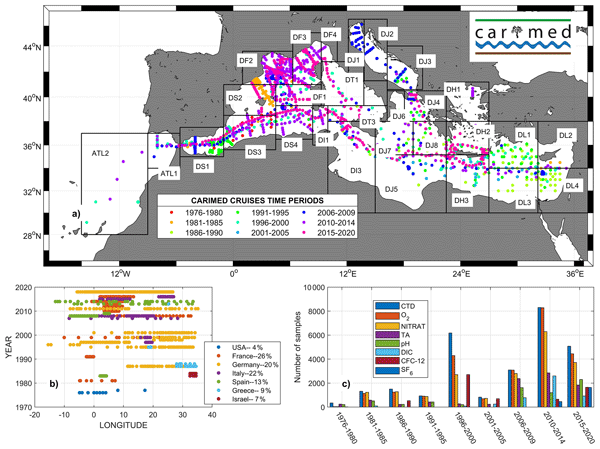
CARIMED (CARbon, tracers, and ancillary data In the MEDiterranean Sea) is a high-quality, FAIR (Findability, Accessibility, Interoperability, and Reusability) dataset integrating hydrographic, biogeochemical, and transient tracer data from 46 research cruises (1976–2018) across the Mediterranean Sea. The data underwent rigorous, basin-adapted quality control to remove systematic biases, unifying four decades of fragmented data, delivering two complementary products: the aggregated original cruise data product and the bias-adjusted data synthesis product.
Mathilde Couteyen Carpaye, David Nerini, Fabrice Garcia, Véronique Lagadec, Sandra Nunige, David Pecqueur, Christophe Salmeron, Léa Buniak, Morgane Didry, Jean-Marc Feuerstein, and Gérald Grégori
EGUsphere, https://doi.org/10.5194/egusphere-2026-3454, https://doi.org/10.5194/egusphere-2026-3454, 2026
Short summary
Short summary
Monitoring of phytoplankton over long periods and at high frequency is challenging. Yet, it is essential because these organisms form the base of marine food webs, and changes in their communities can affect higher trophic levels. Here, we address the challenge of missing biological data by using vertical profiles of temperature and salinity as proxies for environmental conditions influencing nutrient availability and shaping pico- and nanophytoplankton communities at a coastal site.
Iva Međugorac, Nikola Metličić, Jadranka Šepić, Marko Rus, Srđan Čupić, Matej Kristan, and Matjaž Ličer
EGUsphere, https://doi.org/10.5194/egusphere-2026-3411, https://doi.org/10.5194/egusphere-2026-3411, 2026
Short summary
Short summary
Strong high-frequency sea-level oscillations can cause coastal flooding and damage along the Adriatic coast. Using over 20 years of observations, we tested whether convolutional neural networks can predict these events from sea-level and atmospheric data. The models reproduced typical oscillations well, but rare extremes were often underestimated.
Martina Auditore, Baptiste Mourre, and Paolo Oddo
EGUsphere, https://doi.org/10.5194/egusphere-2026-3276, https://doi.org/10.5194/egusphere-2026-3276, 2026
This preprint is open for discussion and under review for Ocean Science (OS).
Short summary
Short summary
Coastal eddies are rotating water masses that transport heat, nutrients, and other materials, shaping ecosystems and circulation. This study evaluates the new SWOT (Surface Water and Ocean Topography) satellite’s ability to track the alongshore propagation of a coastal eddy in the Algerian Basin (Western Mediterranean). SWOT’s high-resolution daily observations capture eddy evolution in unprecedented detail, revealing interactions with the coast and topography beyond conventional altimetry.
Sara Pavan, Marco Bajo, Francesco Barbariol, Alvise Benetazzo, Silvio Davison, and Christian Ferrarin
EGUsphere, https://doi.org/10.5194/egusphere-2026-2774, https://doi.org/10.5194/egusphere-2026-2774, 2026
This preprint is open for discussion and under review for Natural Hazards and Earth System Sciences (NHESS).
Short summary
Short summary
We present the marine and coastal hazard estimation of Mediterranean cyclones during the period 1994–2020. The study shows which portion of extreme storm surge and waves is linked to cyclones in the Mediterranean Sea. Hazard estimation is performed according to sea level and waves based parameters. Results stress that it is challenging to identify the most hazardous Mediterranean cyclones in a comprehensive sense (i.e., accounting for all parameters), as well as the areas most exposed to hazard.
Kévin Robache, Anne A. Petrenko, Mathieu Gentil, Louise Rousselet, and Sophie Bonnet
EGUsphere, https://doi.org/10.5194/egusphere-2026-3095, https://doi.org/10.5194/egusphere-2026-3095, 2026
Preprint archived
Short summary
Short summary
Oceanic vertical velocity (w), though much weaker than horizontal currents, plays a key role in ocean surface–interior exchanges. Using nearly one year of moored ADCP observations in the Coral Sea, we show that w variability is mainly driven by internal gravity waves and intermittent small-scale processes. A persistent weak downwelling regime is intermittently disrupted by intense short-lived upwelling events associated with canyon topography.
Morgan Reed Raven, Nitai Amiel, Dror L. Angel, James P. Barry, Thomas M. Blattmann, Laura Boicenco, Antoine Crémière, Natalya Evans, Nora Gallarotti, Sebastian Haas, Jan-Hendrik Hehemann, Peter Krost, Pranay Lal, David Lordkipanidze, Tiia Luostarinen, Aaron M. Martinez, Allison J. Matzelle, Selma Menabit, Mihaela Muresan, Andreas Neumann, Jean-Daniel Paris, Christopher R. Pearce, Nick Reynard, Daniel L. Sanchez, Florence Schubotz, Violeta Slabakova, Adrian Stanica, Elena Stoica, Andrew K. Sweetman, Tina Treude, Yoana G. Voynova, and Nikolaos D. Zarokanellos
Biogeosciences, 23, 3755–3776, https://doi.org/10.5194/bg-23-3755-2026, https://doi.org/10.5194/bg-23-3755-2026, 2026
Short summary
Short summary
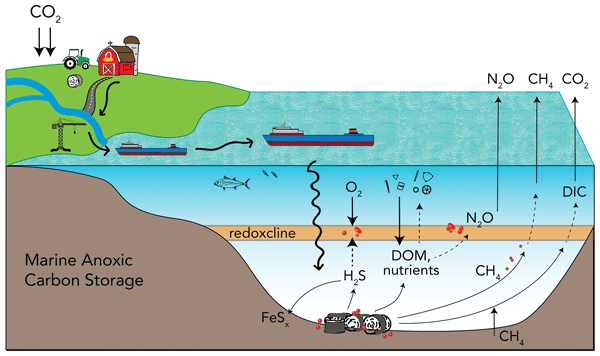
In addition to reducing emissions, vast quantities of CO2 will need to be removed from the atmosphere to meet climate goals. One strategy known as Marine Anoxic Carbon Storage (MACS) would bury plant carbon for thousands of years in parts in the ocean that lack oxygen, where carbon preservation can be highly efficient. We evaluate the environmental and other impacts of hypothetical large-scale MACS deployment from an interdisciplinary, international perspective and present a research roadmap.
Bartolomeo Doronzo, Stefano Taddei, and Carlo Brandini
EGUsphere, https://doi.org/10.5194/egusphere-2026-3013, https://doi.org/10.5194/egusphere-2026-3013, 2026
Short summary
Short summary
This study presents a new way to map ocean surface currents measured by coastal radar systems. Instead of using fixed grids, the method adapts the spatial resolution to where observations are more reliable. This leads to a more consistent and continuous representation of the flow, especially in complex coastal areas. The approach improves how observational information is used and is particularly useful for applications involving ocean transport and coastal dynamics.
Ivica Vilibic and Elena Terzic
EGUsphere, https://doi.org/10.5194/egusphere-2026-3080, https://doi.org/10.5194/egusphere-2026-3080, 2026
Short summary
Short summary
The Adriatic Sea is changing faster than expected, with warmer and saltier waters reshaping its environment from the surface to the seabed. This study documents these changes and discusses how they may affect biogeochemistry, marine ecosystems, and more. The research provides important insight into the future happening nowadays of one of Europe’s most sensitive marine regions.
Chiara Favaretto, Francesco Barbariol, Alvise Benetazzo, Luigi Cavaleri, Francesco Marcello Falcieri, Christian Ferrarin, Rossella Ferretti, Stefano Menegon, Matteo Nastasi, Gianluca Redaelli, Antonio Ricchi, and Piero Ruol
EGUsphere, https://doi.org/10.5194/egusphere-2026-2285, https://doi.org/10.5194/egusphere-2026-2285, 2026
Short summary
Short summary
Coastal flooding is becoming more frequent and damaging, but warnings often rely on single forecasts that miss important uncertainty. We developed and tested a new early warning approach that uses multiple weather scenarios to better describe possible flood outcomes, while reducing computing costs. Applied to severe storms in northern Italy, the method preserved key information and showed that reliable flood alerts can be produced efficiently, supporting practical early warning systems.
Fabio Giordano, Matjaž Ličer, Stefano Querin, Stefano Salon, and Martin Vodopivec
EGUsphere, https://doi.org/10.5194/egusphere-2026-2567, https://doi.org/10.5194/egusphere-2026-2567, 2026
Short summary
Short summary
In summer 2023, the Gulf of Trieste (Adriatic, Mediterranean Sea) experienced extreme bottom temperatures recorded by a thermometer at 20 m depth. However, the three-month bottom marine heatwave was not detectable from the surface. The event followed a prolonged drought: high salinity and density of surface waters caused unusually deep mixing, allowing warm surface waters to reach the seafloor and imposing extreme stress on bottom-dwelling biota.
Joelle Habib, Caroline Ulses, Claude Estournel, Milad Fakhri, Patrick Marsaleix, Thierry Moutin, Dominique Lefevre, Mireille Pujo-Pay, Marine Fourrier, Laurent Coppola, Cathy Wimart-Rousseau, and Pascal Conan
Biogeosciences, 23, 2939–2958, https://doi.org/10.5194/bg-23-2939-2026, https://doi.org/10.5194/bg-23-2939-2026, 2026
Short summary
Short summary
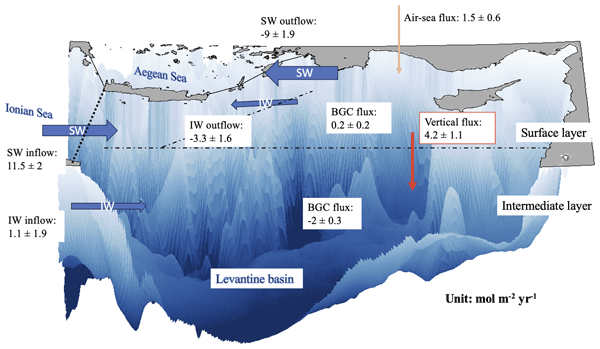
The Levantine Basin in the eastern Mediterranean Sea is one of the most nutrient-poor marine regions on Earth. Using a detailed model and observations, we studied how oxygen changes from 2013 to 2020. We found that winter cooling draws oxygen into the sea and moves it to deeper waters, while warmer months release some back. Overall, the basin absorbs more oxygen than it releases, and winter heat loss and circulation patterns strongly control how oxygen is stored and transported.
Mireia G. Mingote, Frédéric Cyr, Eve Galimany, Ricardo Santos-Bethencourt, Jordi Isern-Fontanet, Jordi Ribera-Altimir, Joan Sala-Coromina, Mariona Panisello-Garriga, and Joan B. Company
EGUsphere, https://doi.org/10.5194/egusphere-2026-1554, https://doi.org/10.5194/egusphere-2026-1554, 2026
This preprint is open for discussion and under review for Biogeosciences (BG).
Short summary
Short summary
We studied more than fifty years of Norway lobster catches in the northwestern Mediterranean to understand why they have dropped since the mid 2010s. By combining fishing records with ocean data, we found that warmer and saltier mid-depth waters are strongly linked to lower catches and slight shifts to deeper areas. Changes in ocean currents also play a role. These results show that climate change, not just fishing, is affecting this resource and should be included in management decisions.
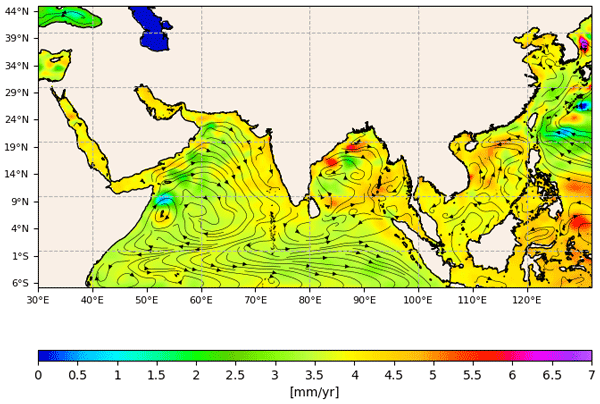
Rita Lecci, Robyn Gwee, Kun Yan, Sanne Muis, Nadia Pinardi, Jun She, Martin Verlaan, Simona Masina, Wenshan Li, Hui Wang, Salvatore Causio, Antonio Novellino, Marco Alba, Etiënne Kras, Sandra Gaytan Aguilar, and Jan-Bart Calewaert
Nat. Hazards Earth Syst. Sci., 26, 1767–1783, https://doi.org/10.5194/nhess-26-1767-2026, https://doi.org/10.5194/nhess-26-1767-2026, 2026
Short summary
Short summary
This study explored how sea level is changing along the China-Europe Sea Route. By combining satellite and in-situ observations with advanced modeling, the research identified ongoing sea level rise and an increasing frequency of extreme water level events in some regions. These findings underscore the importance of continued monitoring and provide useful knowledge to support long-term planning, coastal resilience, and informed decision-making.
Simona Masina, Andrea Cipollone, Doroteaciro Iovino, Stefania Ciliberti, Rita Lecci, Sergio Cretí, Vladyslav Lyubartsev, Giovanni Coppini, and Emanuela Clementi
EGUsphere, https://doi.org/10.5194/egusphere-2026-887, https://doi.org/10.5194/egusphere-2026-887, 2026
Short summary
Short summary
The paper presents GOFS16, an eddy-resolving global operational ocean and sea ice forecasting system which provides 6-day forecasts of three-dimensional temperature, salinity, currents, sea level, and sea ice properties. The system assimilates satellite and in situ observations using a 3D variational data assimilation scheme. Validation is conducted routinely using global and regional metrics. Results indicate that GOFS16 performs within the expected range of skill for current global systems.
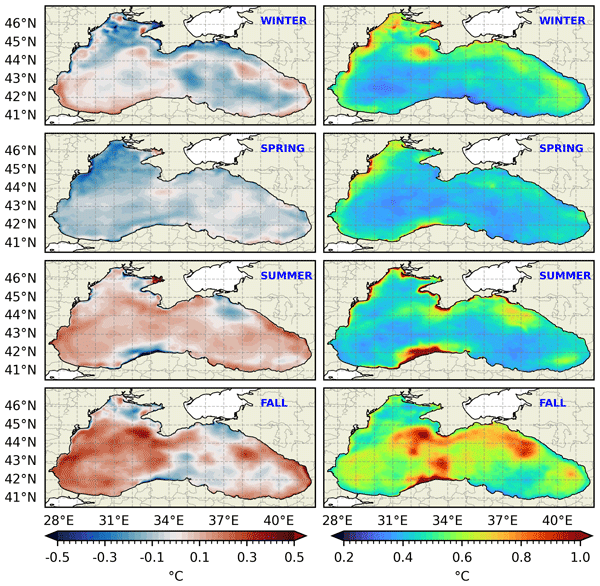
Leonardo Lima, Diana Azevedo, Mehmet Ilicak, Eric Jansen, Filipe Costa, Adil Sozer, Pietro Miraglio, and Emanuela Clementi
Ocean Sci., 22, 1051–1072, https://doi.org/10.5194/os-22-1051-2026, https://doi.org/10.5194/os-22-1051-2026, 2026
Short summary
Short summary
We used a high-resolution ocean model to investigate how the Black Sea is responding to external drivers, including climate change. Our results show clear warming, particularly in the upper 150 m, and reveal significant changes in ocean circulation and water masses. The model also supports the development of ocean monitoring indicators that help track the sea’s response to climate-related trends and improve our understanding of how ocean conditions in the Black Sea evolve.
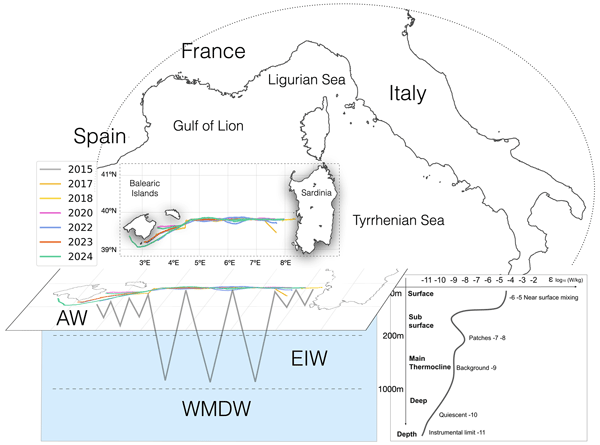
Florian Volmer Martin Kokoszka, Mireno Borghini, Katrin Schroeder, Jacopo Chiggiato, Joaquín Tintoré, Nikolaos Dimitrios Zarokanellos, Albert Miralles, Patricia Rivera Rodríguez, Manuel Rubio, Miguel Charcos, Benjamín Casas, and Anneke ten Doeschate
Earth Syst. Sci. Data, 18, 2203–2226, https://doi.org/10.5194/essd-18-2203-2026, https://doi.org/10.5194/essd-18-2203-2026, 2026
Short summary
Short summary
We present a unique dataset of underwater measurements collected by an autonomous glider in the western Mediterranean Sea. It reveals how ocean layers mix over seasons and years. Using sensors to detect small scale water movements, we estimated how mechanical energy and heat are transferred in the ocean. These data help scientists better understand ocean circulation and climate effects. All files and methods are openly shared to support future research.
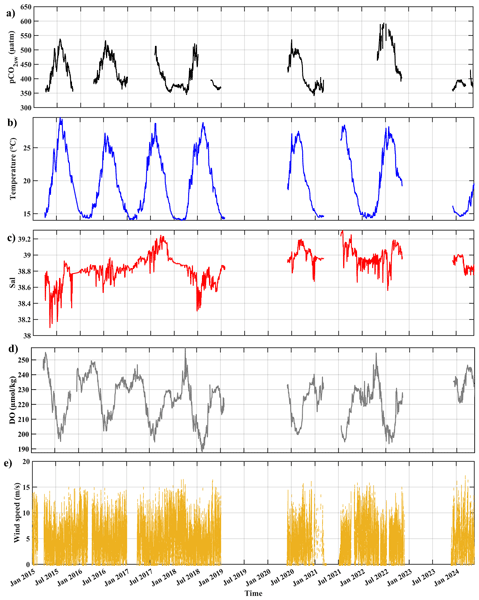
Carlotta Dentico, Angelo Rubino, Giuseppe Civitarese, Michele Giani, Giuseppe Siena, Stefano Kuchler, Julien Le Meur, Andrea Corbo, and Vanessa Cardin
Earth Syst. Sci. Data, 18, 2119–2131, https://doi.org/10.5194/essd-18-2119-2026, https://doi.org/10.5194/essd-18-2119-2026, 2026
Short summary
Short summary
The ocean absorbs excess heat and carbon dioxide from human-driven climate change, causing warming, acidification, and impacts on marine life and coastal communities. The southern Adriatic, an important area for air-sea CO2 exchange, is still poorly characterized. Using high-resolution oceanographic measurements, local physical and biogeochemical changes were investigated, providing a dataset to improve future understanding of the role of the southern Adriatic as a carbon source or sink.
Yotam Fadida, Tal Ozer, Tal Ben Ezra, Michael D. Krom, Anat Tsemel, Tatiana Margo Tsagaraki, Eli Biton, Yaron Toledo, and Yoav Lehahn
EGUsphere, https://doi.org/10.5194/egusphere-2026-1507, https://doi.org/10.5194/egusphere-2026-1507, 2026
Short summary
Short summary
The Levantine Basin is ultra-oligotrophic with strong coastal–offshore gradients of pytoplankton and nutrients. In summer, stratification limits exchange, but coastal mesoscale eddies transport coastal biomass and nutrients offshore. Using satellite, glider, HF radar, and in situ data, we show that these eddies carry distinct coastal signatures, making them key episodic drivers of cross-shore exchange.
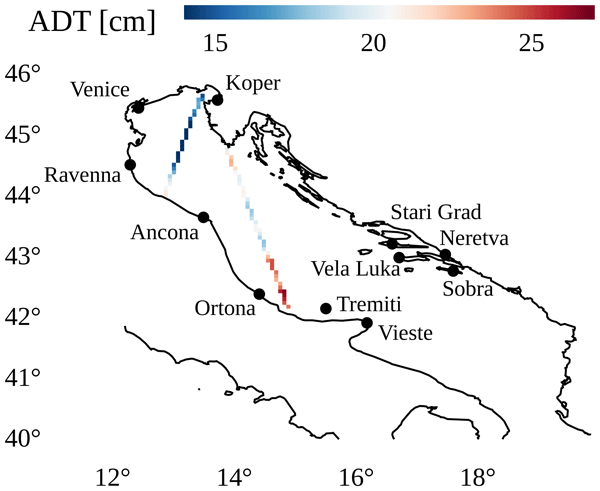
Marko Rus, Matjaž Ličer, and Matej Kristan
Geosci. Model Dev., 19, 2177–2195, https://doi.org/10.5194/gmd-19-2177-2026, https://doi.org/10.5194/gmd-19-2177-2026, 2026
Short summary
Short summary
This paper introduces HIDRA-D, a novel deep-learning model for dense, gridded sea level forecasting from sparse satellite altimetry and tide gauge data. By forecasting low-frequency spatial components, HIDRA-D offers a faster alternative to traditional numerical models. Evaluated on the satellite altimetry data in the Adriatic Sea, it outperforms the NEMO general circulation model, reducing the mean absolute error by 28.0 %. The model is robust but shows limitations in complex coastal areas.

Jonathan Coyne, Frédéric Cyr, Sheila Atchison, Charlie Bishop, Sébastien Donnet, Peter S. Galbraith, Maxime Geoffroy, David Hebert, Chantelle Layton, Andry Ratsimandresy, Jose-Luis del Rio Iglesias, Jean-Luc Shaw, Stephen Snook, Nancy Soontiens, Elena Tel, and Wojciech Walkusz
Earth Syst. Sci. Data, 18, 1463–1488, https://doi.org/10.5194/essd-18-1463-2026, https://doi.org/10.5194/essd-18-1463-2026, 2026
Short summary
Short summary
As part of the new Fisheries Act, Fisheries and Oceans Canada (DFO) has made it a priority to make oceanographic data publicly available. The Canadian Atlantic Shelf Temperature-Salinity (CASTS) aims to address this priority, by creating an open-access data product that includes most of the historical temperature and salinity profiles in Atlantic Canada and its Arctic gateways since 1873.
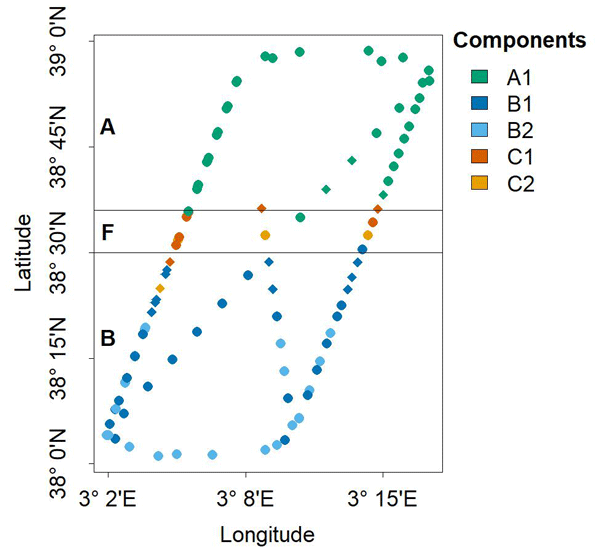
Théo Garcia, Laurina Oms, Xavier Milhaud, Andrea M. Doglioli, Monique Messié, Pierre Vandekerkhove, Claire Lacour, Gérald Grégori, and Denys Pommeret
Adv. Stat. Clim. Meteorol. Oceanogr., 12, 21–41, https://doi.org/10.5194/ascmo-12-21-2026, https://doi.org/10.5194/ascmo-12-21-2026, 2026
Short summary
Short summary
We studied how small, short-lived ocean features in the Mediterranean Sea affect microscopic plant communities that support ocean life. Using a new statistical approach, we found strong evidence that these features can host unique communities not found in surrounding waters. This discovery helps us better understand the role of ocean dynamics in shaping marine ecosystems, even when data are limited and conditions vary widely.
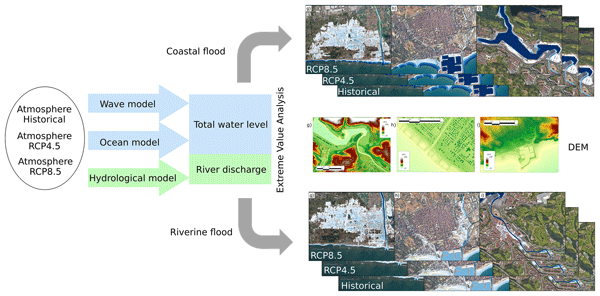
Michele Bendoni, Francesca Caparrini, Andrea Cucco, Stefano Taddei, Iulia Anton, Roberta Paranunzio, Rossella Mocali, Massimo Perna, Michele Sacco, Giovanni Vitale, Manuela Corongiu, Alberto Ortolani, Salem Gharbia, and Carlo Brandini
Nat. Hazards Earth Syst. Sci., 26, 709–731, https://doi.org/10.5194/nhess-26-709-2026, https://doi.org/10.5194/nhess-26-709-2026, 2026
Short summary
Short summary
We studied how future climate scenarios may affect flooding in three European coastal cities. Using atmospheric data and an integrated modeling framework, we simulated extreme storm surges, waves, and river discharges at high urban resolution (up to 2 m). Flood trends are driven by local geomorphic features, sea-level rise, and storm intensity changes, providing insights for adaptation strategies.
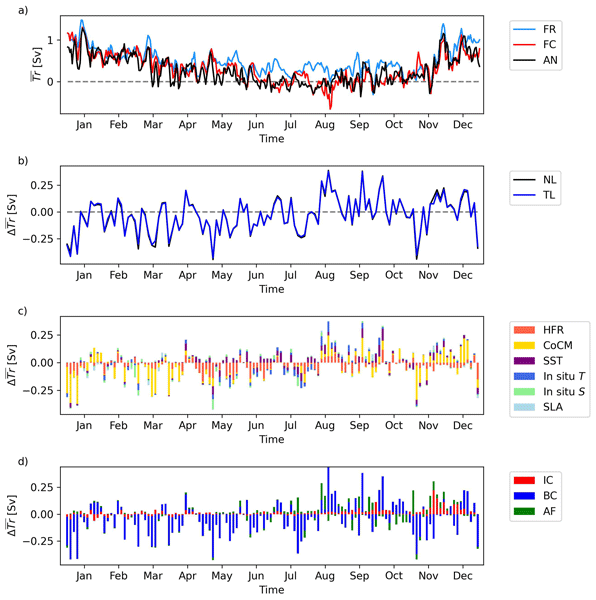
Michele Bendoni, Andrew Michael Moore, Roberta Sciascia, Carlo Brandini, Katrin Schroeder, Mireno Borghini, and Marcello Gatimu Magaldi
Ocean Sci., 22, 281–303, https://doi.org/10.5194/os-22-281-2026, https://doi.org/10.5194/os-22-281-2026, 2026
Short summary
Short summary
We use data assimilation (DA) to optimally merge information from observations of ocean variables and a numerical model of the north-western Mediterranean Sea. Data come from satellites, coastal high-frequency radars and fixed & movable devices. DA decreases model errors associated to all observed variables. The volume transport across the Corsica Channel, which connects the Tyrrhenian and Ligurian waters, is differently modified based on the typology and location of the assimilated observation.

Paolo Oddo, Mario Adani, Francesco Carere, Andrea Cipollone, Anna Chiara Goglio, Eric Jansen, Ali Aydogdu, Francesca Mele, Italo Epicoco, Jenny Pistoia, Emanuela Clementi, Nadia Pinardi, and Simona Masina
Geosci. Model Dev., 19, 423–445, https://doi.org/10.5194/gmd-19-423-2026, https://doi.org/10.5194/gmd-19-423-2026, 2026
Short summary
Short summary
This study present a data assimilation system that combines ocean observational data with ocean model results to better understand the ocean and predict its future state. The method uses a three dimensional incremental variational approach focusing on the physical relationships between all the state vector variables errors. Testing in the Mediterranean Sea showed that a complex sea level operator based on a barotropic model works best.
Maxime Duranson, Léo Berline, Loïc Guilloux, Alice Della Penna, Mark D. Ohman, Sven Gastauer, Cédric Cotte, Daniela Bănaru, Théo Garcia, Maristella Berta, Andrea Doglioli, Gérald Gregori, Francesco D'Ovidio, and François Carlotti
Biogeosciences, 23, 363–385, https://doi.org/10.5194/bg-23-363-2026, https://doi.org/10.5194/bg-23-363-2026, 2026
Short summary
Short summary
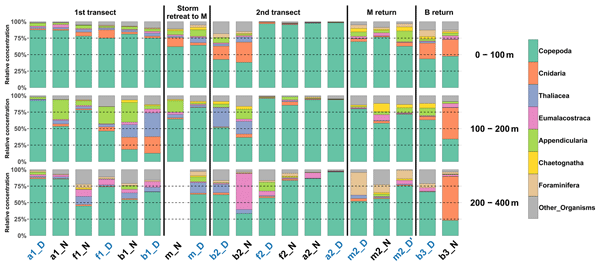
The zooplankton community was investigated using net sampling across the North Balearic Front at fine resolution. The front mostly acts as a zonal boundary between communities with a copepod dominated community to the north and a more diversified community to the south. The front itself exhibited lower zooplankton concentrations. The main community difference occurred in the 0–100 m layer, while deeper layers were more homogeneous.
Evi Bourma, Dionysios Ballas, Gerasimi Anastasopoulou, Natalia Stamataki, Spyros Velanas, Manos Pettas, George Petihakis, and Leonidas Perivoliotis
EGUsphere, https://doi.org/10.5194/egusphere-2025-6542, https://doi.org/10.5194/egusphere-2025-6542, 2026
Short summary
Short summary
A glider dataset from six years of seasonal missions in the Cretan Sea was analyzed to estimate the status of the water masses and changes in oceanographic properties that occurred throughout the study period. The glider data recorded the aftermath of extreme events such as the prolonged hot summer of 2023 and abrupt changes in the vertical structure of the water masses, as well as the salinification and warming of the intermediate and deeper layers.
Sabrina Homrani, Orens Pasqueron de Fommervault, Mathieu Gentil, Frédéric Jourdin, Xavier Durrieu de Madron, and François Bourrin
Ocean Sci., 21, 3563–3585, https://doi.org/10.5194/os-21-3563-2025, https://doi.org/10.5194/os-21-3563-2025, 2025
Short summary
Short summary
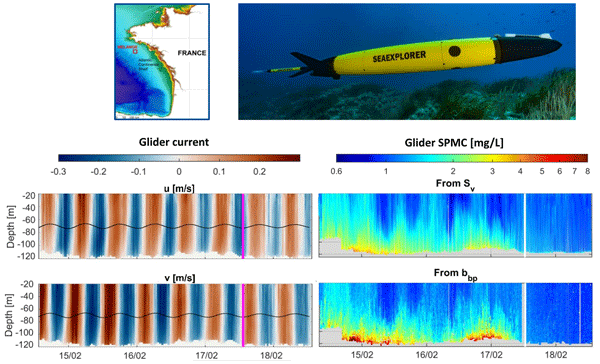
This article demonstrates that gliders equipped with current profilers and optical turbidity sensors are able to measure, with an acceptable accuracy of round 33 % (median of relative errors), the transport fluxes of suspended particulate matter flowing through the water column, in a tidal shelf sea (providing calibration of turbidity sensors). These results highlight the potential of gliders for quantifying sediment fluxes and advancing our understanding of coastal hydro-sedimentary processes.
Christian Ferrarin, Debora Bellafiore, Alejandro Paladio Hernandez, Irina Dinu, and Adrian Stanica
Ocean Sci., 21, 3291–3310, https://doi.org/10.5194/os-21-3291-2025, https://doi.org/10.5194/os-21-3291-2025, 2025
Short summary
Short summary
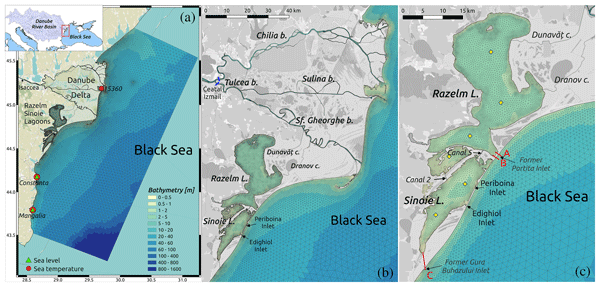
This paper investigates the hydrodynamic processes among the interconnected water bodies (river branches, lagoons, and the coastal sea) that together form the Danube Delta river-sea continuum. To achieve this, we implemented the SHYFEM (System of HydrodYnamic Finite Element Modules) model across the entire Danube Delta. The model was applied to investigate the distribution of water among river branches, coastal dynamics in front of the delta, the renewal capacity of the lagoons, and the potential impacts of lagoon-sea reconnection solutions.
Marta Arjona-Camas, Xavier Durrieu de Madron, François Bourrin, Helena Fos, Anna Sanchez-Vidal, and David Amblas
Ocean Sci., 21, 3195–3219, https://doi.org/10.5194/os-21-3195-2025, https://doi.org/10.5194/os-21-3195-2025, 2025
Short summary
Short summary
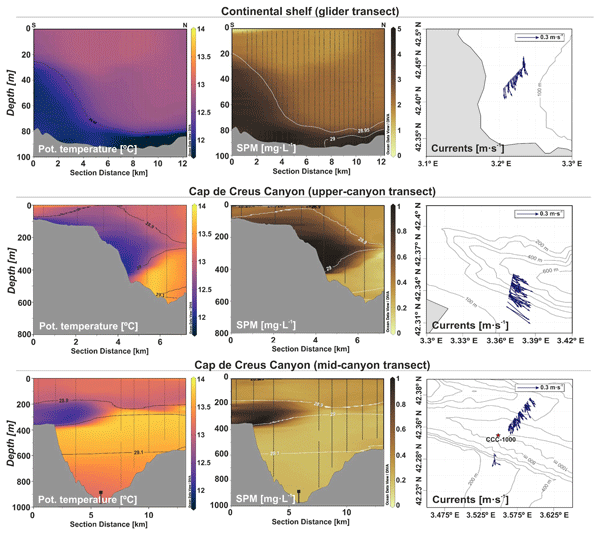
This study examines dense shelf water and sediment transport in the Cap de Creus Canyon during the mild winter of 2021–2022, using multiplatform-observational data and the MedSea Reanalysis product. Results show dense shelf waters on the shelf and upper canyon, contributing to Western Intermediate Water. Dense shelf water transport exhibit marked interannual variability, even under mild winters. MDSWC (mild dense shelf water cascading) events are expected to increase with climate change, favoring intermediate-water formation.
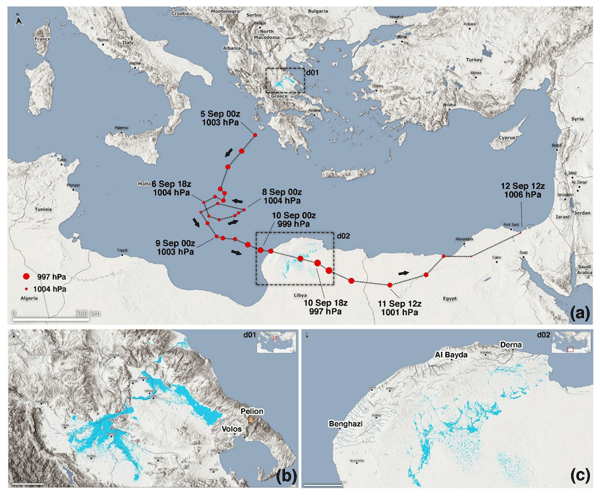
Emmanouil Flaounas, Stavros Dafis, Silvio Davolio, Davide Faranda, Christian Ferrarin, Katharina Hartmuth, Assaf Hochman, Aristeidis Koutroulis, Samira Khodayar, Mario Marcello Miglietta, Florian Pantillon, Platon Patlakas, Michael Sprenger, and Iris Thurnherr
Weather Clim. Dynam., 6, 1515–1538, https://doi.org/10.5194/wcd-6-1515-2025, https://doi.org/10.5194/wcd-6-1515-2025, 2025
Short summary
Short summary
Storm Daniel (2023) is one of the most catastrophic storms ever documented in the Mediterranean. Our results highlight the different dynamics and therefore the different predictability skill of precipitation, its extremes and impacts that have been produced in Greece and Libya, the two most affected countries. Our approach concerns an analysis of the storm by articulating dynamics, weather prediction, hydrological and oceanographic implications, climate extremes, and attribution theory.
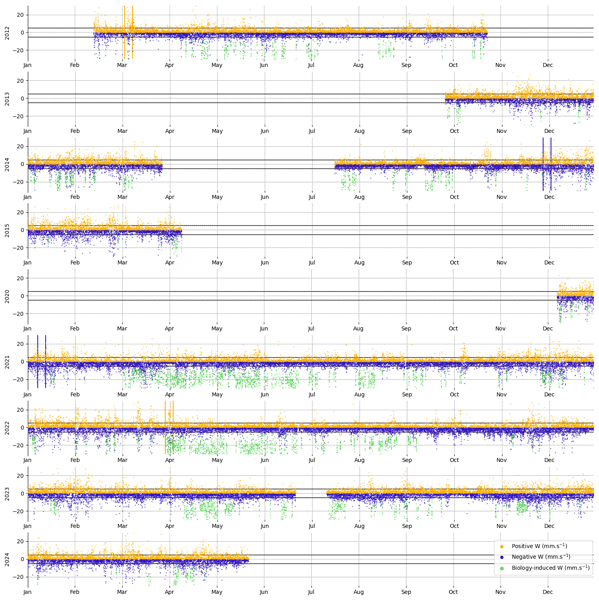
Maxime Arnaud, Anne Petrenko, Jean-Luc Fuda, Caroline Comby, Anthony Bosse, Yann Ourmières, and Stéphanie Barrillon
Ocean Sci., 21, 2829–2847, https://doi.org/10.5194/os-21-2829-2025, https://doi.org/10.5194/os-21-2829-2025, 2025
Short summary
Short summary
Measuring oceanic vertical velocities accurately is a challenge in today’s physical oceanography. Our work shows intense wind-induced coastal events involving upward or downward water movements that have been detected using an acoustic current profiler. These data has also been validated with other in situ and satellite observations. A brand new method to identify and filter out biology-induced velocities is also presented, giving an interdisciplinary point of view of such coastal processes.
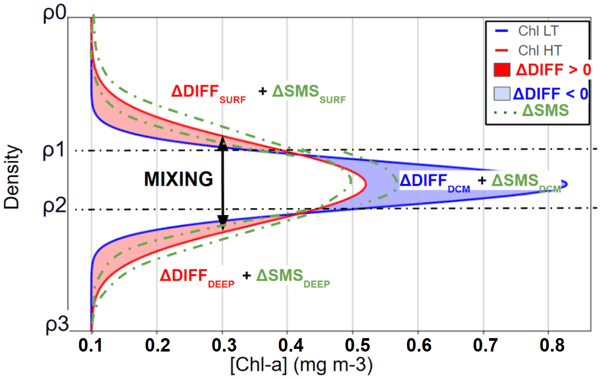
Amine M'hamdi, Ariane Koch-Larrouy, Alex Costa da Silva, Isabelle Dadou, Carina Regina de Macedo, Anthony Bosse, Vincent Vantrepotte, Habib Micaël Aguedjou, Trung-Kien Tran, Pierre Testor, Laurent Mortier, Arnaud Bertrand, Pedro Augusto Mendes de Castro Melo, James Lee, Marcelo Rollnic, and Moacyr Araujo
Ocean Sci., 21, 2873–2894, https://doi.org/10.5194/os-21-2873-2025, https://doi.org/10.5194/os-21-2873-2025, 2025
Short summary
Short summary
In the ocean off the Amazon shelf, internal waves caused by tides move water layers up and down and mix them. Using an underwater glider and satellites, we found internal tides redistribute chlorophyll from the deep chlorophyll maximum upward to the surface and downward to depth. Turbulent chlorophyll fluxes supply about 38 % of surface chlorophyll, and total chlorophyll increases by 14–29 % during strong tides, potentially affecting the marine food web.
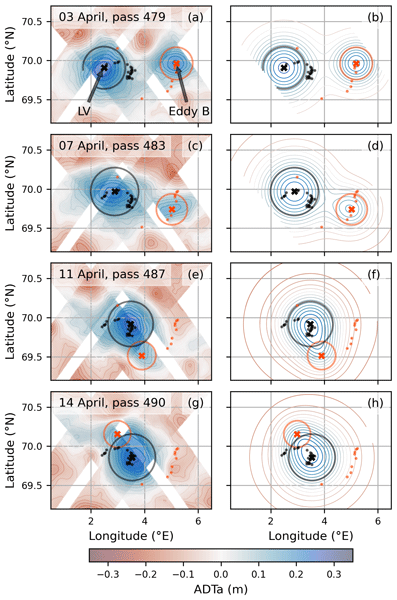
Gillian M. Damerell, Anthony Bosse, and Ilker Fer
Ocean Sci., 21, 2763–2785, https://doi.org/10.5194/os-21-2763-2025, https://doi.org/10.5194/os-21-2763-2025, 2025
Short summary
Short summary
The Lofoten Vortex is an unusual feature in the ocean: a permanent eddy which does not dissipate as most eddies do. We have long thought that other eddies must merge into the vortex in order to maintain its heat content and energetics, but such mergers are very difficult to observe due to their transient, unpredictable nature. For the first time, we have observed a merger using an ocean glider and high-resolution satellite data and can document how the merger affects the properties of the vortex.
Xavier Durrieu de Madron, Paul Blin, Mireille Pujo-Pay, Vincent Taillandier, and Pascal Conan
Ocean Sci., 21, 2705–2726, https://doi.org/10.5194/os-21-2705-2025, https://doi.org/10.5194/os-21-2705-2025, 2025
Short summary
Short summary
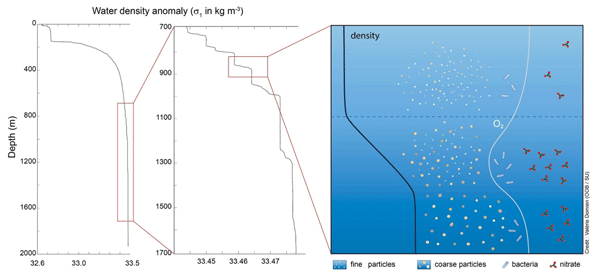
This study investigated the effects of salt fingering on particle and solute distribution in the Tyrrhenian Sea. Density interfaces associated with thermohaline staircases slow the settling of suspended particles and promote aggregation. This affects the particle size distribution and creates nutrient and oxygen gradients, affecting microbial activity and nutrient cycling. The research highlights the potential role of salt fingers in deep ocean biogeochemical processes.
Ángel Sánchez-Lorente, Elena Tel, Lucía Sanz-Pinilla, and Gonzalo González-Nuevo González
Earth Syst. Sci. Data, 17, 5729–5744, https://doi.org/10.5194/essd-17-5729-2025, https://doi.org/10.5194/essd-17-5729-2025, 2025
Short summary
Short summary
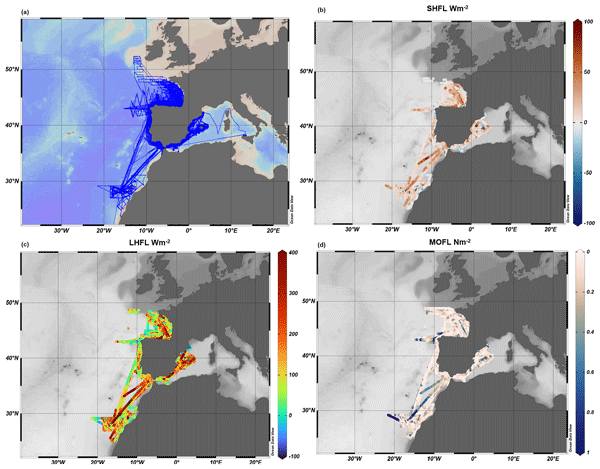
This study has been done within the framework of JAE INTRO-ICU fellowship of the Instituto Español de Oceanografía, with an interest in understanding the interaction between the ocean and atmosphere in a climate change context using experimental measurements aboard research vessels over Spanish waters. The distinct behaviour in the different basins of the Spanish waters is reflected, and the need for further investment in experimental observations due to its great usefulness is also evidenced.
Maher Bouzaiene, Antonio Guarnieri, Damiano Delrosso, Ahmad F. Dilmahamod, Simona Simoncelli, and Claudia Fratianni
Ocean Sci., 21, 2643–2662, https://doi.org/10.5194/os-21-2643-2025, https://doi.org/10.5194/os-21-2643-2025, 2025
Short summary
Short summary
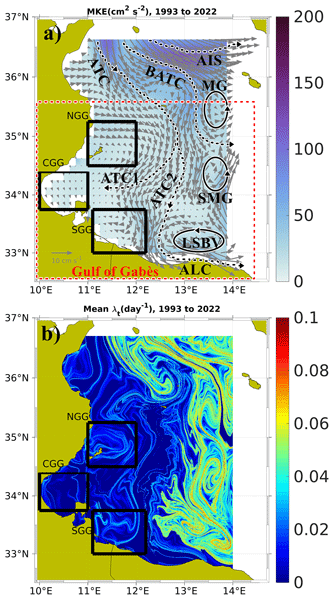
We analyze the geostrophic circulation and tidal effects in the Gulf of Gabès from 30 years of altimetry data (1993–2022) and the outputs of a high-resolution ocean model for the year 2022.
Yangjie Sheng, Yanan Wang, Ting Cai, Yuntao Wang, Afef Fathalli, Sana Ben Ismail, and Yuanyuan Feng
Biogeosciences, 22, 5961–5974, https://doi.org/10.5194/bg-22-5961-2025, https://doi.org/10.5194/bg-22-5961-2025, 2025
Short summary
Short summary
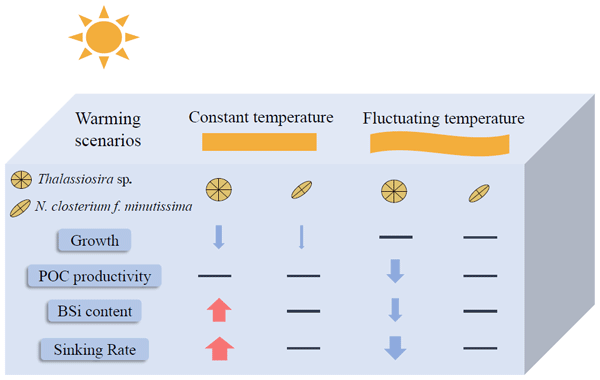
We conducted semi-continuous incubation experiments on two ecologically significant marine diatom species, Thalassiosira sp. and Nitzschia closterium f. minutissima, to examine their physiological responses to ocean warming and temperature fluctuation. These findings highlight the influence of temperature fluctuation on the physiology of marine diatoms in the context of global warming, thus having implications for a further understanding of biogeochemical feedbacks.
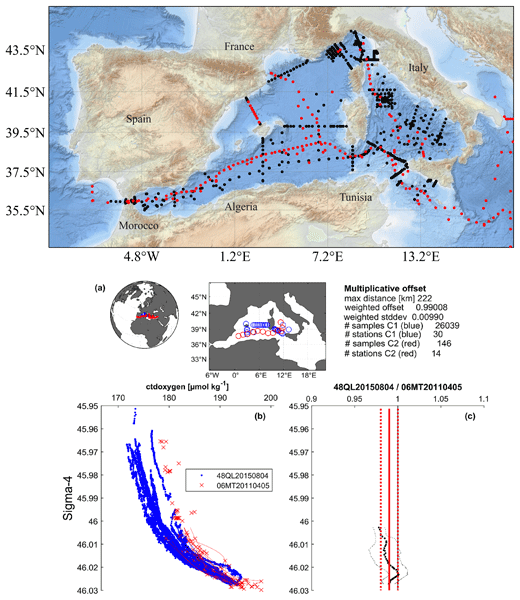
Malek Belgacem, Katrin Schroeder, Marta Álvarez, Siv K. Lauvset, Jacopo Chiggiato, Mireno Borghini, Carolina Cantoni, Tiziana Ciuffardi, and Stefania Sparnocchia
Earth Syst. Sci. Data, 17, 5315–5336, https://doi.org/10.5194/essd-17-5315-2025, https://doi.org/10.5194/essd-17-5315-2025, 2025
Short summary
Short summary
The Mediterranean Sea is changing rapidly, underscoring the urgent need for high-quality datasets to quantify trends and assess impacts on biogeochemical cycles. O2 is a key indicator of marine ecosystem health and plays a central role in CO2 and nutrient cycling. We compiled a regional-scale dataset of O2 in the western Mediterranean to provide a robust observational foundation for assessing O2 variability, associated with climate change, and anomalies related to deoxygenation processes.

Jérémy Mayen, Pierre Polsenaere, Aurore Regaudie de Gioux, Jonathan Deborde, Karine Collin, Yoann Le Merrer, Élodie Foucault, Vincent Ouisse, Laurent André, Marie Arnaud, Pierre Kostyrka, Éric Lamaud, Gwenaël Abril, and Philippe Souchu
Biogeosciences, 22, 5387–5411, https://doi.org/10.5194/bg-22-5387-2025, https://doi.org/10.5194/bg-22-5387-2025, 2025
Short summary
Short summary
In a salt marsh, we performed seasonal 24 h cycles to look for aquatic metabolism influence on water carbon dynamics and net ecosystem CO2 exchanges (NEEs). From high to low tide in winter, marsh anaerobic respiration generated the highest levels of dissolved inorganic carbon and alkalinity. On the contrary, in spring and summer, marsh primary production led to CO2-depleted water exports downstream. At high tide, aquatic heterotrophy can influence NEE during the highest immersion levels only.
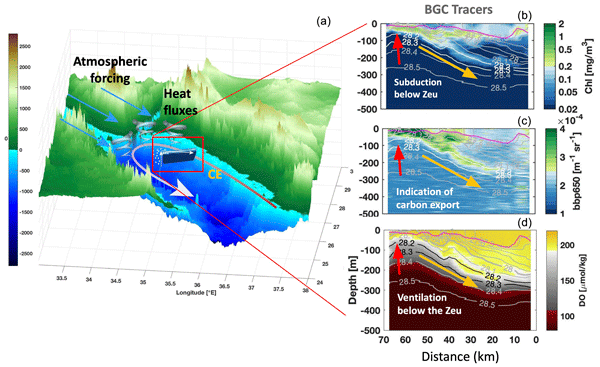
Lina Eyouni, Zoi Kokkini, Nikolaos D. Zarokanellos, and Burton H. Jones
Ocean Sci., 21, 2345–2366, https://doi.org/10.5194/os-21-2345-2025, https://doi.org/10.5194/os-21-2345-2025, 2025
Short summary
Short summary
This study examines how multiple processes in the northern Red Sea form Red Sea Outflow Water and affect biogeochemical fluxes. Using glider data, wind and air–sea flux reanalysis, and satellite observations, it highlights seasonal evolution. Eddy-driven upwelling exposes cool water to heat loss and evaporation, fueling primary productivity. Circulation patterns block inflows, extend cooling, and subduct water into the ocean interior, influencing regional dynamics.
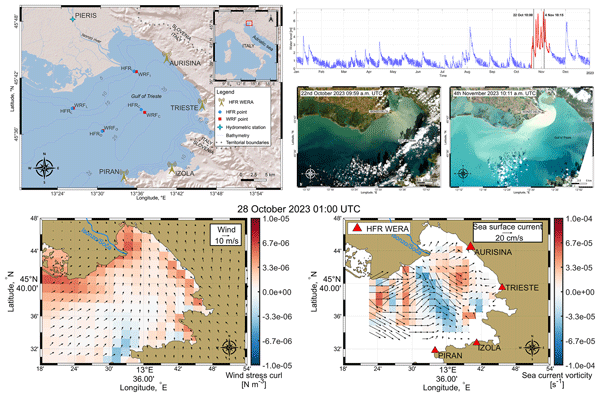
Davide Lombardo, Sofia Flora, Fabio Giordano, Emanuele Ingrassia, Milena Menna, Stefano Querin, and Laura Ursella
Ocean Sci., 21, 2197–2214, https://doi.org/10.5194/os-21-2197-2025, https://doi.org/10.5194/os-21-2197-2025, 2025
Short summary
Short summary
This study analyses the extreme meteo-marine event of October–November 2023 in the Gulf of Trieste, characterised by southerly strong winds, heavy rainfall, and high river discharge. Using high-frequency radar data, wind records, and numerical models, we analysed the interactions between river discharge and wind-driven currents. Results show that strong river discharge can dominate coastal circulation and overlay the wind effects. This multi-platform approach provides valuable insights into ocean dynamics.
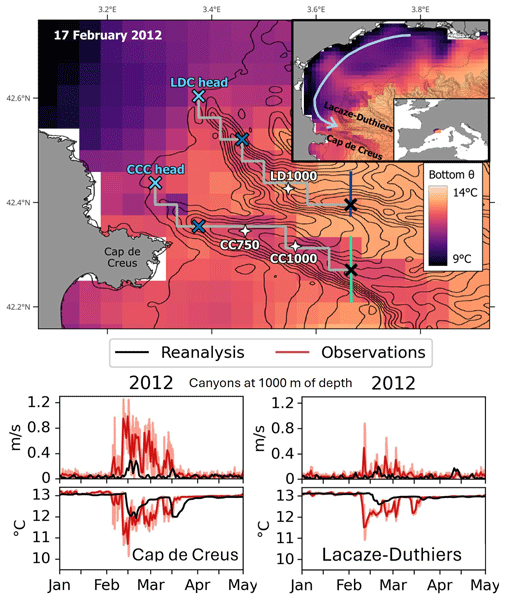
Helena Fos, Jesús Peña-Izquierdo, David Amblas, Marta Arjona-Camas, Laia Romero, Víctor Estella-Pérez, Cristian Florindo-Lopez, Antoni Calafat, Marc Cerdà-Domènech, Pere Puig, Xavier Durrieu de Madron, and Anna Sanchez-Vidal
Ocean Sci., 21, 2169–2178, https://doi.org/10.5194/os-21-2169-2025, https://doi.org/10.5194/os-21-2169-2025, 2025
Short summary
Short summary
Dense shelf water cascading (DSWC) is an oceanographic process where dense shelf water rapidly spills over the shelf edge and cascades into the deep ocean. Using a high-resolution model that incorporates real observations from the water column and sea surface (MedSea Reanalysis), this study compares over 30 years of simulated intense DSWC with actual observations in the NW Mediterranean. We identified all the intense cascading events since 1987, with results closely matching the observations.
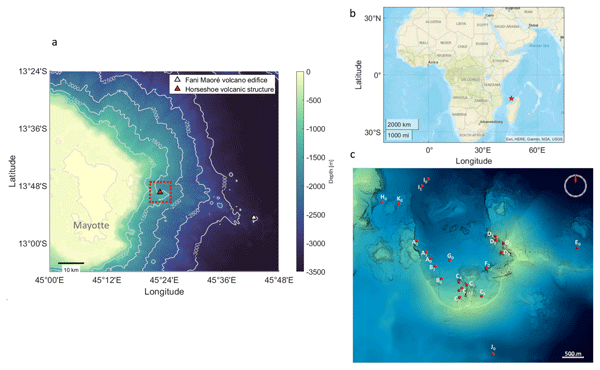
Alexandre Heumann, Félix Margirier, Emmanuel Rinnert, Pascale Lherminier, Carla Scalabrin, Louis Géli, Orens Pasqueron de Fommervault, and Laurent Béguery
Earth Syst. Sci. Data, 17, 4535–4554, https://doi.org/10.5194/essd-17-4535-2025, https://doi.org/10.5194/essd-17-4535-2025, 2025
Short summary
Short summary
Following a seismic crisis in May 2018 in Mayotte, an observation network has been created with the given objective of monitoring the volcanic phenomena. A SeaExplorer glider has been deployed to supplement the data obtained during a series of oceanographic surveys. The glider performed a continuous monitoring over 30 months of the water column from the sea surface to 1250 m water depth, with the objective of acquiring the hydrological properties, water currents and dissolved gas concentrations.
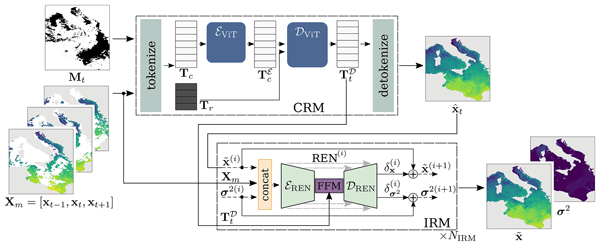
Matjaž Zupančič Muc, Vitjan Zavrtanik, Alexander Barth, Aida Alvera-Azcarate, Matjaž Ličer, and Matej Kristan
Geosci. Model Dev., 18, 5549–5573, https://doi.org/10.5194/gmd-18-5549-2025, https://doi.org/10.5194/gmd-18-5549-2025, 2025
Short summary
Short summary
Accurate sea surface temperature data (SST) are crucial for weather forecasting and climate modeling, but satellite observations are often incomplete. We developed a new method called CRITER, which uses machine learning to fill in the gaps in SST data. Our two-stage approach reconstructs large-scale patterns and refines details. Tested on Mediterranean, Adriatic, and Atlantic sea data, CRITER outperforms current methods, reducing errors by up to 44 %.

Sofia Flora, Laura Ursella, and Achim Wirth
Geosci. Model Dev., 18, 4685–4712, https://doi.org/10.5194/gmd-18-4685-2025, https://doi.org/10.5194/gmd-18-4685-2025, 2025
Short summary
Short summary
We developed a hierarchy of idealized deterministic–stochastic models to simulate sea surface currents in the Gulf of Trieste. They include tide- and wind-driven sea surface current components, resolving the slowly varying part of the flow, and a stochastic signal, representing the fast-varying small-scale dynamics. The comparison with high-frequency radar observations shows that the non-Gaussian stochastic model captures key dynamics and mimics the observed fat-tailed probability distribution.

Elena Terzić, Clara Gardiol, and Ivica Vilibić
Ocean Sci., 21, 1441–1459, https://doi.org/10.5194/os-21-1441-2025, https://doi.org/10.5194/os-21-1441-2025, 2025
Short summary
Short summary
Vertical salinity profiles with their highest values at the surface layers – surface saline lakes – have been known to occur in the eastern Mediterranean, where strong evaporation, warm summers, and low winds all contribute to an increase in surface salinity. Our analysis of Argo data from the past 2 decades showed that saline lakes also occur in other regions across the Mediterranean Sea. This poses the question of whether such changes indicate a salinification of the entire basin due to climate change.
Roberto Sorgente, Antonia Di Maio, Alberto Ribotti, Andrea Cucco, Giovanni Quattrocchi, Simona Genovese, Ignazio Fontana, Giovanni Giacalone, Gualtiero Basilone, Salvatore Aronica, Marco Barra, Paola Rumolo, Antonio Bonanno, Rosalia Ferreri, and Angelo Bonanno
Earth Syst. Sci. Data Discuss., https://doi.org/10.5194/essd-2025-394, https://doi.org/10.5194/essd-2025-394, 2025
Preprint withdrawn
Short summary
Short summary
We analyse 2009–2022 CTD data from 12 summer cruises on the Ligurian - Tyrrhenian shelf. Results show a decadal-scale warming and salinification down to the intermediate layer, leading to enhanced water column stratification. Changes are linked with the BIOS and the cyclonic -anticyclonic state transition of the Northern Ionian Gyre. Results underscore the role of inter-basin connectivity and climate-driven circulation dynamics in shaping the hydrography of the western Mediterranean.
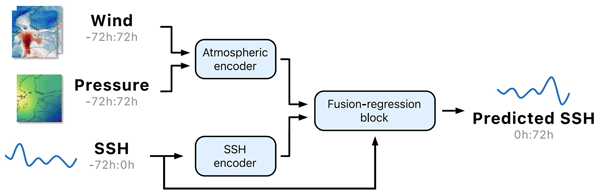
Amirhossein Barzandeh, Matjaž Ličer, Marko Rus, Matej Kristan, Ilja Maljutenko, Jüri Elken, Priidik Lagemaa, and Rivo Uiboupin
Ocean Sci., 21, 1315–1327, https://doi.org/10.5194/os-21-1315-2025, https://doi.org/10.5194/os-21-1315-2025, 2025
Short summary
Short summary
We evaluated a deep-learning model, HIDRA2, for predicting sea levels along the Estonian coast and compared it to traditional numerical models. HIDRA2 performed better overall, offering faster forecasts and valuable uncertainty estimates using ensemble predictions.
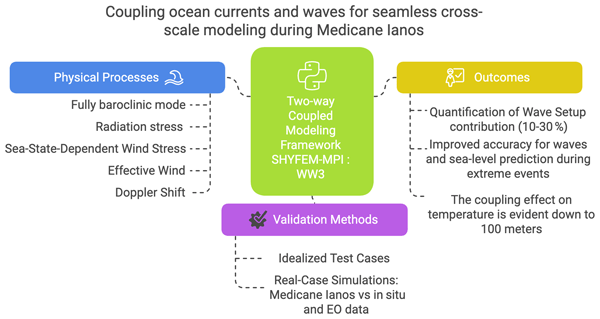
Salvatore Causio, Seimur Shirinov, Ivan Federico, Giovanni De Cillis, Emanuela Clementi, Lorenzo Mentaschi, and Giovanni Coppini
Ocean Sci., 21, 1105–1123, https://doi.org/10.5194/os-21-1105-2025, https://doi.org/10.5194/os-21-1105-2025, 2025
Short summary
Short summary
This study examines how waves and ocean currents interact during severe weather, focusing on Medicane Ianos, one of the strongest storms in the Mediterranean. Using advanced modeling, we created a unique system to simulate these interactions, capturing effects like wave-induced water levels and wave-induced effects on the vertical structure of the ocean. We validated our approach with ideal tests and real data from the storm.

Giuseppe Aulicino, Antonino Ian Ferola, Laura Fortunato, Giorgio Budillon, Pasquale Castagno, Pierpaolo Falco, Giannetta Fusco, Naomi Krauzig, Giancarlo Spezie, Enrico Zambianchi, and Yuri Cotroneo
Earth Syst. Sci. Data, 17, 2625–2640, https://doi.org/10.5194/essd-17-2625-2025, https://doi.org/10.5194/essd-17-2625-2025, 2025
Short summary
Short summary
This study presents 30 years of water temperature data from expendable bathythermograph (XBT) probes collected between Aotearoa / New Zealand and the Ross Sea (Antarctica). Gathered during research cruises by the Italian National Antarctic Research Program, the data were rigorously verified and corrected for depth and temperature bias. This dataset provides a valuable insight into the Southern Ocean's climate and enhances satellite observations and ocean models.
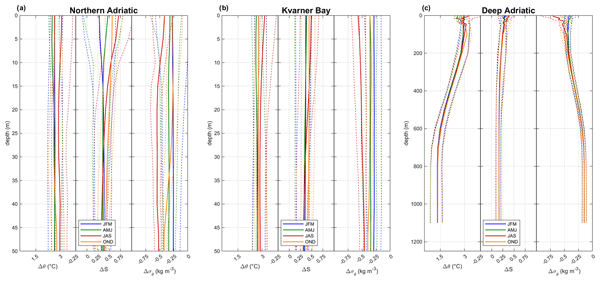
Davide Bonaldo, Sandro Carniel, Renato R. Colucci, Cléa Denamiel, Petra Pranić, Fabio Raicich, Antonio Ricchi, Lorenzo Sangelantoni, Ivica Vilibić, and Maria Letizia Vitelletti
Ocean Sci., 21, 1003–1031, https://doi.org/10.5194/os-21-1003-2025, https://doi.org/10.5194/os-21-1003-2025, 2025
Short summary
Short summary
We present a high-resolution modelling effort to investigate the possible end-of-century evolution of the main physical processes in the Adriatic Sea in a severe climate change scenario, with an ensemble approach (i.e. use of multiple simulations) allowing us to control the uncertainty of the predictions. Our model exhibits a satisfactory capability to reproduce the recent past and provides a basis for a set of multidisciplinary studies in this area over a multi-decadal horizon.
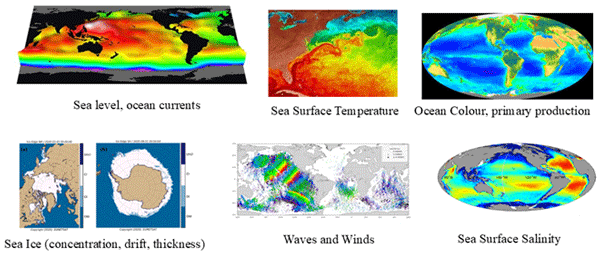
Pierre-Yves Le Traon, Antonio Novellino, and Andrew M. Moore
State Planet, 5-opsr, 7, https://doi.org/10.5194/sp-5-opsr-7-2025, https://doi.org/10.5194/sp-5-opsr-7-2025, 2025
Short summary
Short summary
Ocean prediction relies on the integration between models and satellite and in situ observations through data assimilation techniques. The authors discuss the role of observations in operational ocean forecasting systems, describing the state of the art of satellite and in situ observing networks and defining the paths for addressing multi-scale monitoring and forecasting.
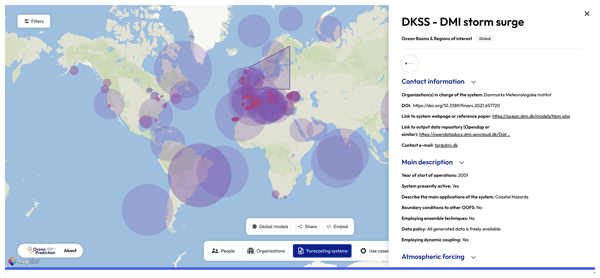
Marina Tonani, Eric Chassignet, Mauro Cirano, Yasumasa Miyazawa, and Begoña Pérez Gómez
State Planet, 5-opsr, 3, https://doi.org/10.5194/sp-5-opsr-3-2025, https://doi.org/10.5194/sp-5-opsr-3-2025, 2025
Short summary
Short summary
This article provides an overview of the main characteristics of ocean forecast systems covering a limited region of the ocean. Their main components are described, as well as the spatial and temporal scales they resolve. The oceanic variables that these systems are able to predict are also explained. An overview of the main forecasting systems currently in operation is also provided.
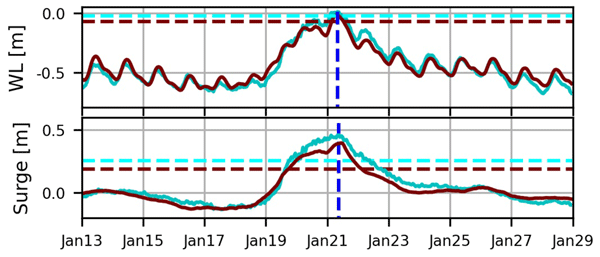
Angelique Melet, Begoña Pérez Gómez, and Pascal Matte
State Planet, 5-opsr, 11, https://doi.org/10.5194/sp-5-opsr-11-2025, https://doi.org/10.5194/sp-5-opsr-11-2025, 2025
Short summary
Short summary
Forecasting the sea level is crucial for supporting coastal management through early warning systems and for adopting adaptation strategies to mitigate climate change impacts. We provide here an overview on models commonly used for sea level forecasting, which can be based on storm surge models or ocean circulation ones, integrated on structured or unstructured grids, including an outlook on new approaches based on ensemble methods.
Mauro Cirano, Enrique Alvarez-Fanjul, Arthur Capet, Stefania Ciliberti, Emanuela Clementi, Boris Dewitte, Matias Dinápoli, Ghada El Serafy, Patrick Hogan, Sudheer Joseph, Yasumasa Miyazawa, Ivonne Montes, Diego A. Narvaez, Heather Regan, Claudia G. Simionato, Gregory C. Smith, Joanna Staneva, Clemente A. S. Tanajura, Pramod Thupaki, Claudia Urbano-Latorre, Jennifer Veitch, and Jorge Zavala Hidalgo
State Planet, 5-opsr, 5, https://doi.org/10.5194/sp-5-opsr-5-2025, https://doi.org/10.5194/sp-5-opsr-5-2025, 2025
Short summary
Short summary
Operational ocean forecasting systems (OOFSs) are crucial for human activities, environmental monitoring, and policymaking. An assessment across eight key regions highlights strengths and gaps, particularly in coastal and biogeochemical forecasting. AI offers improvements, but collaboration, knowledge sharing, and initiatives like the OceanPrediction Decade Collaborative Centre (DCC) are key to enhancing accuracy, accessibility, and global forecasting capabilities.
Antonio Novellino, Alain Arnaud, Andreas Schiller, and Liying Wan
State Planet, 5-opsr, 25, https://doi.org/10.5194/sp-5-opsr-25-2025, https://doi.org/10.5194/sp-5-opsr-25-2025, 2025
Short summary
Short summary
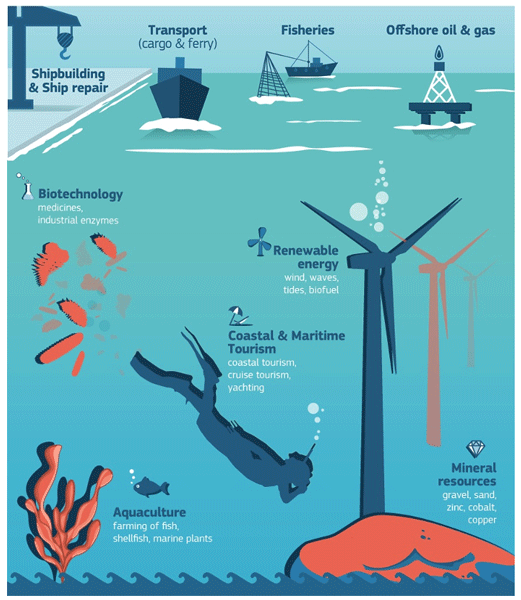
The paper describes the significant role that ocean forecasting systems play in the blue economy, demonstrating their direct benefits in improving prediction accuracy and downstream applications.
Antonio Novellino, Pierre-Yves Le Traon, and Andy Moore
State Planet, 5-opsr, 8, https://doi.org/10.5194/sp-5-opsr-8-2025, https://doi.org/10.5194/sp-5-opsr-8-2025, 2025
Short summary
Short summary
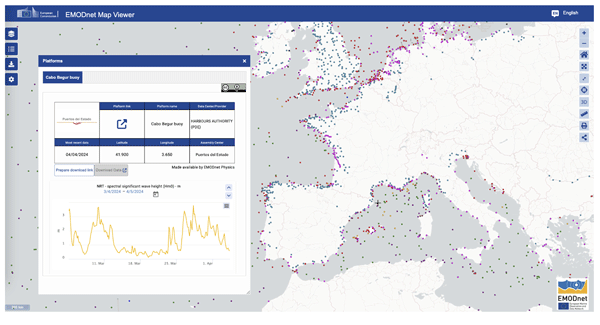
This paper discusses the vital role of observations in ocean predictions and forecasting, highlighting the need for effective access, management, and integration of data to improve models and decision-making. The paper also explores opportunities for standardizing protocols and the potential of citizen-based, cost-effective data collection methods.

Jennifer Veitch, Enrique Alvarez-Fanjul, Arthur Capet, Stefania Ciliberti, Mauro Cirano, Emanuela Clementi, Fraser Davidson, Ghada el Serafy, Guilherme Franz, Patrick Hogan, Sudheer Joseph, Svitlana Liubartseva, Yasumasa Miyazawa, Heather Regan, and Katerina Spanoudaki
State Planet, 5-opsr, 6, https://doi.org/10.5194/sp-5-opsr-6-2025, https://doi.org/10.5194/sp-5-opsr-6-2025, 2025
Short summary
Short summary
Ocean forecast systems provide information about a future state of the ocean. This information is provided in the form of decision support tools, or downstream applications, that can be accessed by various stakeholders to support livelihoods, coastal resilience and the good governance of the marine environment. This paper provides an overview of the various downstream applications of ocean forecast systems that are utilized around the world.

Antonios Parasyris, Vassiliki Metheniti, Nikolaos Kampanis, and Sofia Darmaraki
Ocean Sci., 21, 897–912, https://doi.org/10.5194/os-21-897-2025, https://doi.org/10.5194/os-21-897-2025, 2025
Short summary
Short summary
The Mediterranean faces more frequent and intense marine heat waves, harming ecosystems and fisheries. Using machine learning, we developed a model to forecast these events up to 7 d in the future, outperforming traditional methods. This approach enables faster, accurate forecasts, helping authorities mitigate impacts and protect marine resources.
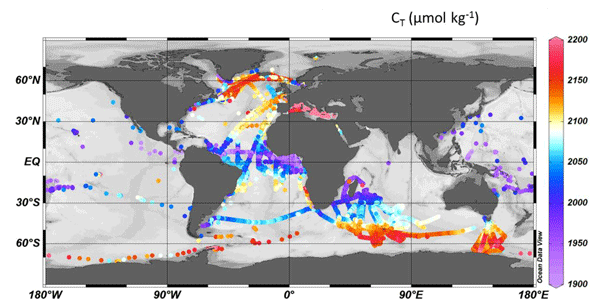
Nicolas Metzl, Jonathan Fin, Claire Lo Monaco, Claude Mignon, Samir Alliouane, Bruno Bombled, Jacqueline Boutin, Yann Bozec, Steeve Comeau, Pascal Conan, Laurent Coppola, Pascale Cuet, Eva Ferreira, Jean-Pierre Gattuso, Frédéric Gazeau, Catherine Goyet, Emilie Grossteffan, Bruno Lansard, Dominique Lefèvre, Nathalie Lefèvre, Coraline Leseurre, Sébastien Petton, Mireille Pujo-Pay, Christophe Rabouille, Gilles Reverdin, Céline Ridame, Peggy Rimmelin-Maury, Jean-François Ternon, Franck Touratier, Aline Tribollet, Thibaut Wagener, and Cathy Wimart-Rousseau
Earth Syst. Sci. Data, 17, 1075–1100, https://doi.org/10.5194/essd-17-1075-2025, https://doi.org/10.5194/essd-17-1075-2025, 2025
Short summary
Short summary
This work presents a new synthesis of 67 000 total alkalinity and total dissolved inorganic carbon observations obtained between 1993 and 2023 in the global ocean, coastal zones, and the Mediterranean Sea. We describe the data assemblage and associated quality control and discuss some potential uses of this dataset. The dataset is provided in a single format and includes the quality flag for each sample.

Marko Rus, Hrvoje Mihanović, Matjaž Ličer, and Matej Kristan
Geosci. Model Dev., 18, 605–620, https://doi.org/10.5194/gmd-18-605-2025, https://doi.org/10.5194/gmd-18-605-2025, 2025
Short summary
Short summary
HIDRA3 is a deep-learning model for predicting sea levels and storm surges, offering significant improvements over previous models and numerical simulations. It utilizes data from multiple tide gauges, enhancing predictions even with limited historical data and during sensor outages. With its advanced architecture, HIDRA3 outperforms current state-of-the-art models by achieving a mean absolute error of up to 15 % lower, proving effective for coastal flood forecasting under diverse conditions.
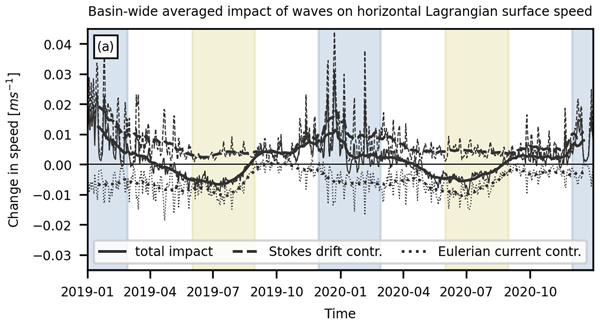
Siren Rühs, Ton van den Bremer, Emanuela Clementi, Michael C. Denes, Aimie Moulin, and Erik van Sebille
Ocean Sci., 21, 217–240, https://doi.org/10.5194/os-21-217-2025, https://doi.org/10.5194/os-21-217-2025, 2025
Short summary
Short summary
Simulating the transport of floating particles on the ocean surface is crucial for solving many societal issues. Here, we investigate how the representation of wind-generated surface waves impacts particle transport simulations. We find that different wave-driven processes can alter transport patterns and that commonly adopted approximations are not always adequate. This suggests that ideally coupled ocean–wave models should be used for surface particle transport simulations.
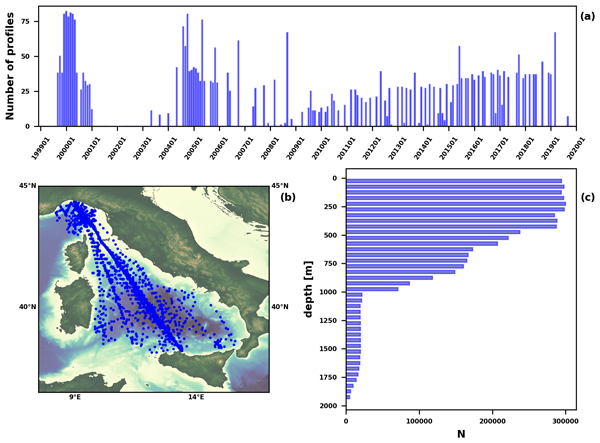
Simona Simoncelli, Franco Reseghetti, Claudia Fratianni, Lijing Cheng, and Giancarlo Raiteri
Earth Syst. Sci. Data, 16, 5531–5561, https://doi.org/10.5194/essd-16-5531-2024, https://doi.org/10.5194/essd-16-5531-2024, 2024
Short summary
Short summary
This data review is about the reprocessing of historical eXpendable BathyThermograp (XBT) profiles from the Ligurian and Tyrrhenian seas over the time period 1999–2019. A new automated quality control analysis has been performed starting from the original raw data and operational log sheets. The data have been formatted and standardized according to the latest community best practices, and all available metadata have been inserted, including calibration information and uncertainty specification.
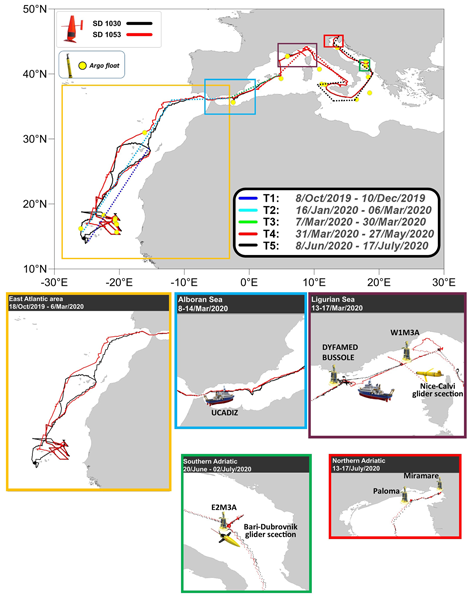
Riccardo Martellucci, Michele Giani, Elena Mauri, Laurent Coppola, Melf Paulsen, Marine Fourrier, Sara Pensieri, Vanessa Cardin, Carlotta Dentico, Roberto Bozzano, Carolina Cantoni, Anna Lucchetta, Alfredo Izquierdo, Miguel Bruno, and Ingunn Skjelvan
Earth Syst. Sci. Data, 16, 5333–5356, https://doi.org/10.5194/essd-16-5333-2024, https://doi.org/10.5194/essd-16-5333-2024, 2024
Short summary
Short summary
As part of the ATL2MED demonstration experiment, two autonomous surface vehicles undertook a 9-month mission from the northeastern Atlantic to the Adriatic Sea. Biofouling affected the measurement of variables such as conductivity and dissolved oxygen. COVID-19 limited the availability of discrete samples for validation. We present correction methods for salinity and dissolved oxygen. We use model products to correct salinity and apply the Argo floats in-air correction method for oxygen
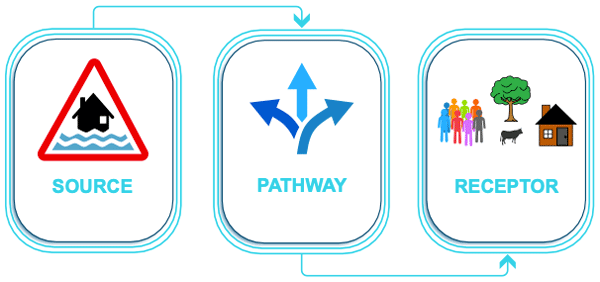
Roderik van de Wal, Angélique Melet, Debora Bellafiore, Paula Camus, Christian Ferrarin, Gualbert Oude Essink, Ivan D. Haigh, Piero Lionello, Arjen Luijendijk, Alexandra Toimil, Joanna Staneva, and Michalis Vousdoukas
State Planet, 3-slre1, 5, https://doi.org/10.5194/sp-3-slre1-5-2024, https://doi.org/10.5194/sp-3-slre1-5-2024, 2024
Short summary
Short summary
Sea level rise has major impacts in Europe, which vary from place to place and in time, depending on the source of the impacts. Flooding, erosion, and saltwater intrusion lead, via different pathways, to various consequences for coastal regions across Europe. This causes damage to assets, the environment, and people for all three categories of impacts discussed in this paper. The paper provides an overview of the various impacts in Europe.
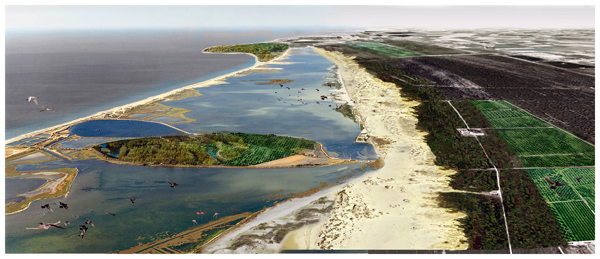
Alexander Bisaro, Giulia Galluccio, Elisa Fiorini Beckhauser, Fulvio Biddau, Ruben David, Floortje d'Hont, Antonio Góngora Zurro, Gonéri Le Cozannet, Sadie McEvoy, Begoña Pérez Gómez, Claudia Romagnoli, Eugenio Sini, and Jill Slinger
State Planet, 3-slre1, 7, https://doi.org/10.5194/sp-3-slre1-7-2024, https://doi.org/10.5194/sp-3-slre1-7-2024, 2024
Short summary
Short summary
This paper assesses coastal adaptation governance by examining socio-economic and political contexts, reviewing policy frameworks, and identifying challenges. Results show that regional and basin-scale frameworks lack sea level rise provisions, but significant national progress is observed. The main governance challenges are time horizons and uncertainty, coordination, and social vulnerability. These, however, can be addressed if flexible planning and nature-based solutions are implemented.
Anaïs Lebrun, Cale A. Miller, Marc Meynadier, Steeve Comeau, Pierre Urrutti, Samir Alliouane, Robert Schlegel, Jean-Pierre Gattuso, and Frédéric Gazeau
Biogeosciences, 21, 4605–4620, https://doi.org/10.5194/bg-21-4605-2024, https://doi.org/10.5194/bg-21-4605-2024, 2024
Short summary
Short summary
We tested the effects of warming, low salinity, and low irradiance on Arctic kelps. We show that growth rates were similar across species and treatments. Alaria esculenta is adapted to low-light conditions. Saccharina latissima exhibited nitrogen limitation, suggesting coastal erosion and permafrost thawing could be beneficial. Laminaria digitata did not respond to the treatments. Gene expression of Hedophyllum nigripes and S. latissima indicated acclimation to the experimental treatments.
Beatrice Giambenedetti, Nadia Lo Bue, and Vincenzo Artale
Ocean Sci., 20, 1209–1228, https://doi.org/10.5194/os-20-1209-2024, https://doi.org/10.5194/os-20-1209-2024, 2024
Short summary
Short summary
We used a simplified model to investigate how changes in abyssal stratification can impact the propagation of vortices in the ocean. Although abyssal stratification is typically considered stable, observations have shown that this is not always a good approximation. We found that changes in deep stratification can introduce variability into the patterns of the vortices. Despite the assumptions made in our model, our results are supported by seafloor observations in the Ionian Sea.
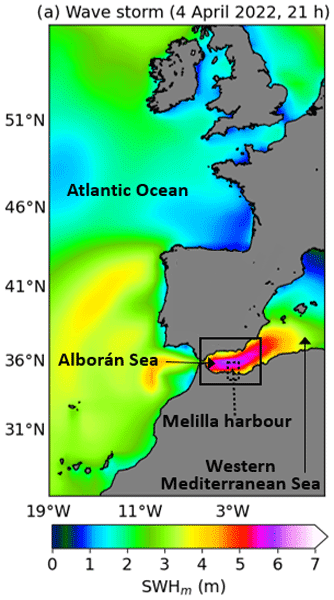
Pablo Lorente, Marta de Alfonso, Pilar Gil, Fernando Manzano, Anna Magdalena Matulka, Begoña Pérez-Gómez, Susana Pérez-Rubio, and M. Isabel Ruiz
State Planet, 4-osr8, 19, https://doi.org/10.5194/sp-4-osr8-19-2024, https://doi.org/10.5194/sp-4-osr8-19-2024, 2024
Short summary
Short summary
Over recent decades, extreme weather events have attracted growing public concern due to their widespread impact on the environment and human well-being. Their comprehensive monitoring is crucial to adopt prevention strategies and reduce coastal vulnerability. In this work, the record-breaking wave event that hit Melilla harbour (SW Mediterranean Sea) during early April 2022 was investigated to elucidate the meteorological drivers and evaluate the energetic response of Melilla harbour basins.
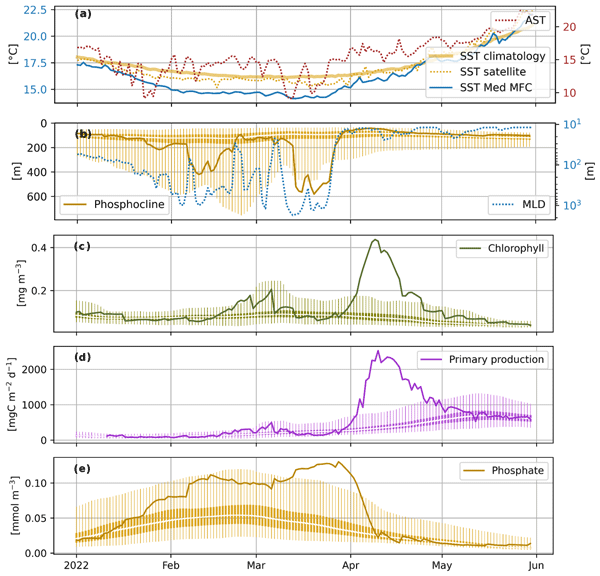
Anna Teruzzi, Ali Aydogdu, Carolina Amadio, Emanuela Clementi, Simone Colella, Valeria Di Biagio, Massimiliano Drudi, Claudia Fanelli, Laura Feudale, Alessandro Grandi, Pietro Miraglio, Andrea Pisano, Jenny Pistoia, Marco Reale, Stefano Salon, Gianluca Volpe, and Gianpiero Cossarini
State Planet, 4-osr8, 15, https://doi.org/10.5194/sp-4-osr8-15-2024, https://doi.org/10.5194/sp-4-osr8-15-2024, 2024
Short summary
Short summary
A noticeable cold spell occurred in Eastern Europe at the beginning of 2022 and was the main driver of intense deep-water formation and the associated transport of nutrients to the surface. Southeast of Crete, the availability of both light and nutrients in the surface layer stimulated an anomalous phytoplankton bloom. In the area, chlorophyll concentration (a proxy for bloom intensity) and primary production were considerably higher than usual, suggesting possible impacts on fishery catches.
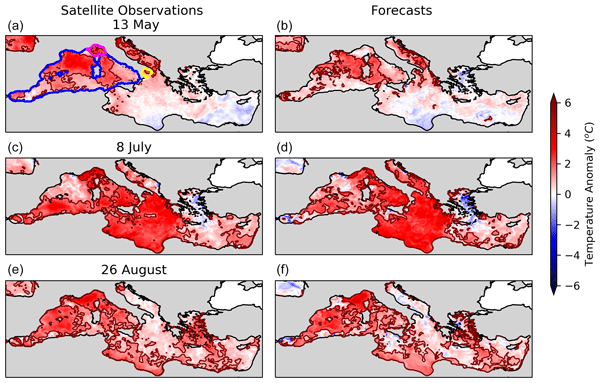
Ronan McAdam, Giulia Bonino, Emanuela Clementi, and Simona Masina
State Planet, 4-osr8, 13, https://doi.org/10.5194/sp-4-osr8-13-2024, https://doi.org/10.5194/sp-4-osr8-13-2024, 2024
Short summary
Short summary
In the summer of 2022, a regional short-term forecasting system was able to predict the onset, spread, peaks, and decay of a record-breaking marine heatwave in the Mediterranean Sea up to 10 d in advance. Satellite data show that the event was record-breaking in terms of basin-wide intensity and duration. This study demonstrates the potential of state-of-the-art forecasting systems to provide early warning of marine heatwaves for marine activities (e.g. conservation and aquaculture).
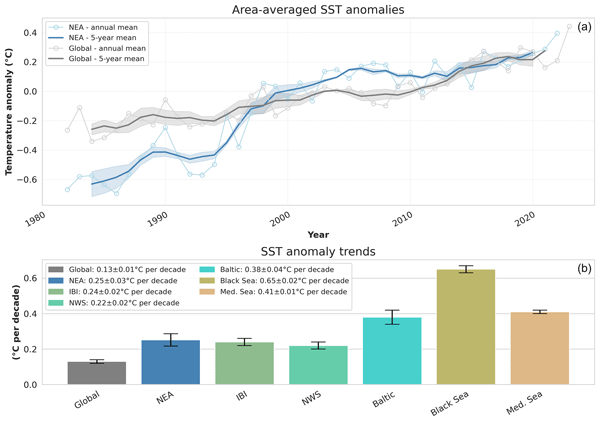
Karina von Schuckmann, Lorena Moreira, Mathilde Cancet, Flora Gues, Emmanuelle Autret, Ali Aydogdu, Lluis Castrillo, Daniele Ciani, Andrea Cipollone, Emanuela Clementi, Gianpiero Cossarini, Alvaro de Pascual-Collar, Vincenzo De Toma, Marion Gehlen, Rianne Giesen, Marie Drevillon, Claudia Fanelli, Kevin Hodges, Simon Jandt-Scheelke, Eric Jansen, Melanie Juza, Ioanna Karagali, Priidik Lagemaa, Vidar Lien, Leonardo Lima, Vladyslav Lyubartsev, Ilja Maljutenko, Simona Masina, Ronan McAdam, Pietro Miraglio, Helen Morrison, Tabea Rebekka Panteleit, Andrea Pisano, Marie-Isabelle Pujol, Urmas Raudsepp, Roshin Raj, Ad Stoffelen, Simon Van Gennip, Pierre Veillard, and Chunxue Yang
State Planet, 4-osr8, 2, https://doi.org/10.5194/sp-4-osr8-2-2024, https://doi.org/10.5194/sp-4-osr8-2-2024, 2024

Thibauld M. Béjard, Andrés S. Rigual-Hernández, Javier P. Tarruella, José-Abel Flores, Anna Sanchez-Vidal, Irene Llamas-Cano, and Francisco J. Sierro
Biogeosciences, 21, 4051–4076, https://doi.org/10.5194/bg-21-4051-2024, https://doi.org/10.5194/bg-21-4051-2024, 2024
Short summary
Short summary
The Mediterranean Sea is regarded as a climate change hotspot. Documenting the population of planktonic foraminifera is crucial. In the Sicily Channel, fluxes are higher during winter and positively linked with chlorophyll a concentration and cool temperatures. A comparison with other Mediterranean sites shows the transitional aspect of the studied zone. Finally, modern populations significantly differ from those in the sediment, highlighting a possible effect of environmental change.
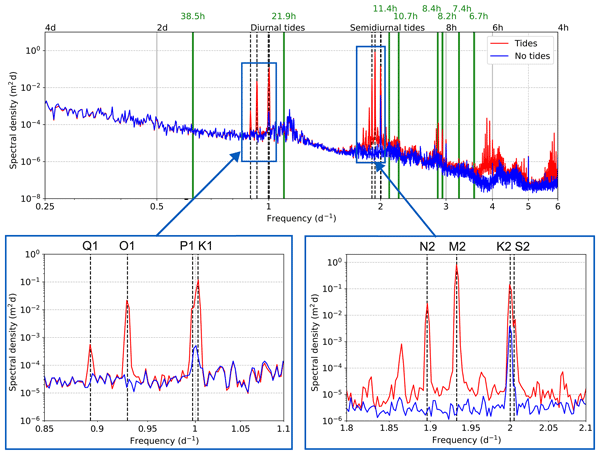
Bethany McDonagh, Emanuela Clementi, Anna Chiara Goglio, and Nadia Pinardi
Ocean Sci., 20, 1051–1066, https://doi.org/10.5194/os-20-1051-2024, https://doi.org/10.5194/os-20-1051-2024, 2024
Short summary
Short summary
Tides in the Mediterranean Sea are typically of low amplitude, but twin experiments with and without tides demonstrate that tides affect the circulation directly at scales away from those of the tides. Analysis of the energy changes due to tides shows that they enhance existing oscillations, and internal tides interact with other internal waves. Tides also increase the mixed layer depth and enhance deep water formation in key regions. Internal tides are widespread in the Mediterranean Sea.
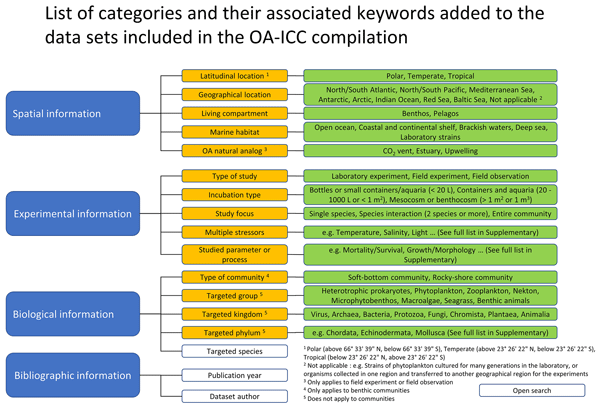
Yan Yang, Patrick Brockmann, Carolina Galdino, Uwe Schindler, and Frédéric Gazeau
Earth Syst. Sci. Data, 16, 3771–3780, https://doi.org/10.5194/essd-16-3771-2024, https://doi.org/10.5194/essd-16-3771-2024, 2024
Short summary
Short summary
Studies investigating the effects of ocean acidification on marine organisms and communities have been steadily increasing. To facilitate data comparison, a data compilation hosted by the PANGAEA Data Publisher was initiated in 2008 and is updated on a regular basis. By November 2023, a total of 1501 datasets (~25 million data points) from 1554 papers have been archived. To filter and access relevant biological response data from this compilation, a user-friendly portal was launched in 2018.
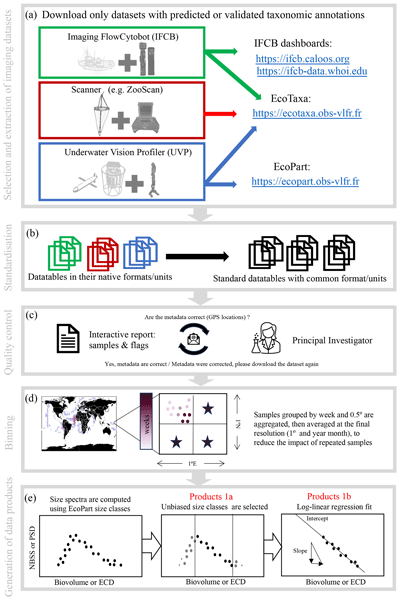
Mathilde Dugenne, Marco Corrales-Ugalde, Jessica Y. Luo, Rainer Kiko, Todd D. O'Brien, Jean-Olivier Irisson, Fabien Lombard, Lars Stemmann, Charles Stock, Clarissa R. Anderson, Marcel Babin, Nagib Bhairy, Sophie Bonnet, Francois Carlotti, Astrid Cornils, E. Taylor Crockford, Patrick Daniel, Corinne Desnos, Laetitia Drago, Amanda Elineau, Alexis Fischer, Nina Grandrémy, Pierre-Luc Grondin, Lionel Guidi, Cecile Guieu, Helena Hauss, Kendra Hayashi, Jenny A. Huggett, Laetitia Jalabert, Lee Karp-Boss, Kasia M. Kenitz, Raphael M. Kudela, Magali Lescot, Claudie Marec, Andrew McDonnell, Zoe Mériguet, Barbara Niehoff, Margaux Noyon, Thelma Panaïotis, Emily Peacock, Marc Picheral, Emilie Riquier, Collin Roesler, Jean-Baptiste Romagnan, Heidi M. Sosik, Gretchen Spencer, Jan Taucher, Chloé Tilliette, and Marion Vilain
Earth Syst. Sci. Data, 16, 2971–2999, https://doi.org/10.5194/essd-16-2971-2024, https://doi.org/10.5194/essd-16-2971-2024, 2024
Short summary
Short summary
Plankton and particles influence carbon cycling and energy flow in marine ecosystems. We used three types of novel plankton imaging systems to obtain size measurements from a range of plankton and particle sizes and across all major oceans. Data were compiled and cross-calibrated from many thousands of images, showing seasonal and spatial changes in particle size structure in different ocean basins. These datasets form the first release of the Pelagic Size Structure database (PSSdb).
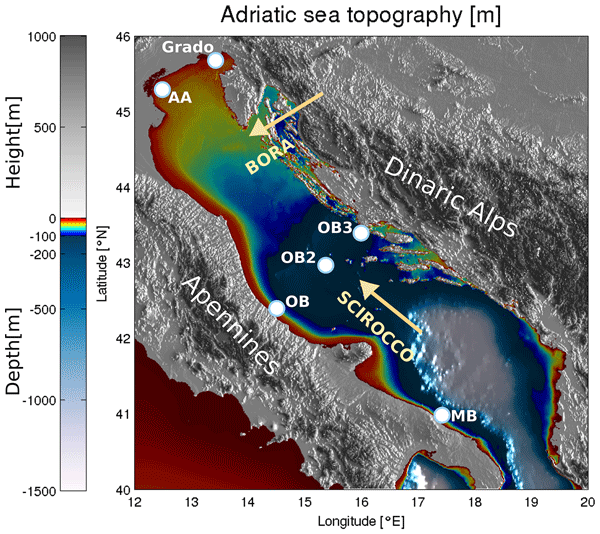
Peter Mlakar, Antonio Ricchi, Sandro Carniel, Davide Bonaldo, and Matjaž Ličer
Geosci. Model Dev., 17, 4705–4725, https://doi.org/10.5194/gmd-17-4705-2024, https://doi.org/10.5194/gmd-17-4705-2024, 2024
Short summary
Short summary
We propose a new point-prediction model, the DEep Learning WAVe Emulating model (DELWAVE), which successfully emulates the Simulating WAves Nearshore model (SWAN) over synoptic to climate timescales. Compared to control climatology over all wind directions, the mismatch between DELWAVE and SWAN is generally small compared to the difference between scenario and control conditions, suggesting that the noise introduced by surrogate modelling is substantially weaker than the climate change signal.
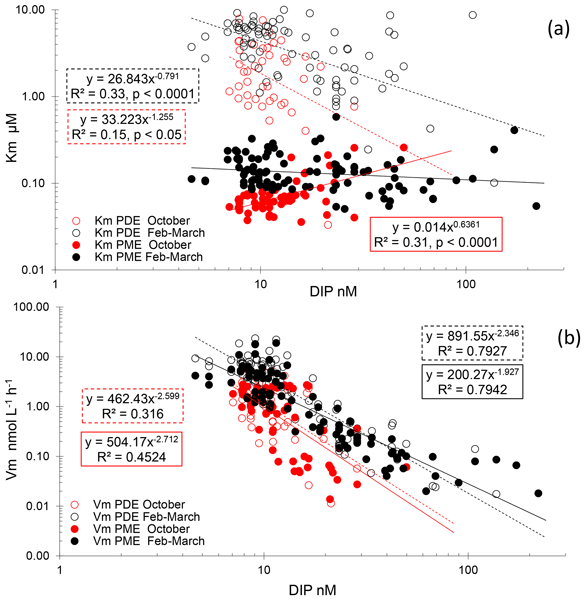
France Van Wambeke, Pascal Conan, Mireille Pujo-Pay, Vincent Taillandier, Olivier Crispi, Alexandra Pavlidou, Sandra Nunige, Morgane Didry, Christophe Salmeron, and Elvira Pulido-Villena
Biogeosciences, 21, 2621–2640, https://doi.org/10.5194/bg-21-2621-2024, https://doi.org/10.5194/bg-21-2621-2024, 2024
Short summary
Short summary
Phosphomonoesterase (PME) and phosphodiesterase (PDE) activities over the epipelagic zone are described in the eastern Mediterranean Sea in winter and autumn. The types of concentration kinetics obtained for PDE (saturation at 50 µM, high Km, high turnover times) compared to those of PME (saturation at 1 µM, low Km, low turnover times) are discussed in regard to the possible inequal distribution of PDE and PME in the size continuum of organic material and accessibility to phosphodiesters.
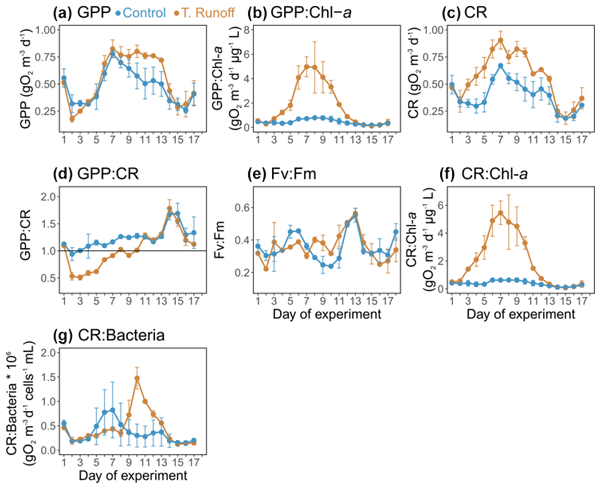
Tanguy Soulié, Francesca Vidussi, Justine Courboulès, Marie Heydon, Sébastien Mas, Florian Voron, Carolina Cantoni, Fabien Joux, and Behzad Mostajir
Biogeosciences, 21, 1887–1902, https://doi.org/10.5194/bg-21-1887-2024, https://doi.org/10.5194/bg-21-1887-2024, 2024
Short summary
Short summary
Due to climate change, it is projected that extreme rainfall events, which bring terrestrial matter into coastal seas, will occur more frequently in the Mediterranean region. To test the effects of runoffs of terrestrial matter on plankton communities from Mediterranean coastal waters, an in situ mesocosm experiment was conducted. The simulated runoff affected key processes mediated by plankton, such as primary production and respiration, suggesting major consequences of such events.
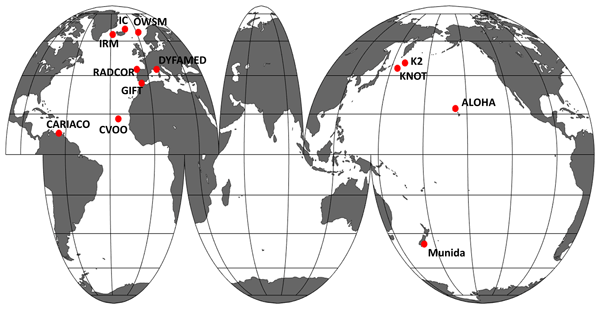
Nico Lange, Björn Fiedler, Marta Álvarez, Alice Benoit-Cattin, Heather Benway, Pier Luigi Buttigieg, Laurent Coppola, Kim Currie, Susana Flecha, Dana S. Gerlach, Makio Honda, I. Emma Huertas, Siv K. Lauvset, Frank Muller-Karger, Arne Körtzinger, Kevin M. O'Brien, Sólveig R. Ólafsdóttir, Fernando C. Pacheco, Digna Rueda-Roa, Ingunn Skjelvan, Masahide Wakita, Angelicque White, and Toste Tanhua
Earth Syst. Sci. Data, 16, 1901–1931, https://doi.org/10.5194/essd-16-1901-2024, https://doi.org/10.5194/essd-16-1901-2024, 2024
Short summary
Short summary
The Synthesis Product for Ocean Time Series (SPOTS) is a novel achievement expanding and complementing the biogeochemical data landscape by providing consistent and high-quality biogeochemical time-series data from 12 ship-based fixed time-series programs. SPOTS covers multiple unique marine environments and time-series ranges, including data from 1983 to 2021. All in all, it facilitates a variety of applications that benefit from the collective value of biogeochemical time-series observations.
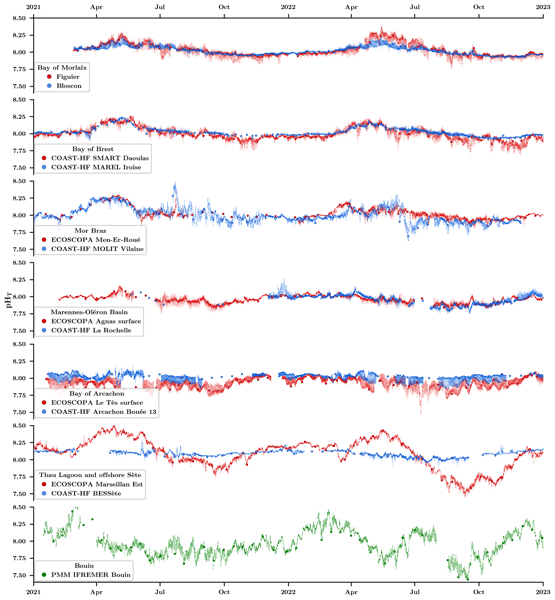
Sébastien Petton, Fabrice Pernet, Valérian Le Roy, Matthias Huber, Sophie Martin, Éric Macé, Yann Bozec, Stéphane Loisel, Peggy Rimmelin-Maury, Émilie Grossteffan, Michel Repecaud, Loïc Quemener, Michael Retho, Soazig Manac'h, Mathias Papin, Philippe Pineau, Thomas Lacoue-Labarthe, Jonathan Deborde, Louis Costes, Pierre Polsenaere, Loïc Rigouin, Jérémy Benhamou, Laure Gouriou, Joséphine Lequeux, Nathalie Labourdette, Nicolas Savoye, Grégory Messiaen, Elodie Foucault, Vincent Ouisse, Marion Richard, Franck Lagarde, Florian Voron, Valentin Kempf, Sébastien Mas, Léa Giannecchini, Francesca Vidussi, Behzad Mostajir, Yann Leredde, Samir Alliouane, Jean-Pierre Gattuso, and Frédéric Gazeau
Earth Syst. Sci. Data, 16, 1667–1688, https://doi.org/10.5194/essd-16-1667-2024, https://doi.org/10.5194/essd-16-1667-2024, 2024
Short summary
Short summary
Our research highlights the concerning impact of rising carbon dioxide levels on coastal areas. To better understand these changes, we've established an observation network in France. By deploying pH sensors and other monitoring equipment at key coastal sites, we're gaining valuable insights into how various factors, such as freshwater inputs, tides, temperature, and biological processes, influence ocean pH.
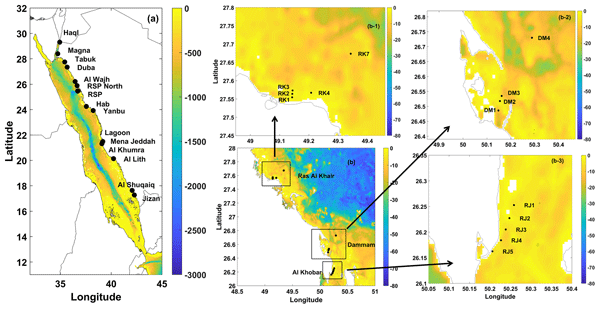
Yasser O. Abualnaja, Alexandra Pavlidou, James H. Churchill, Ioannis Hatzianestis, Dimitris Velaoras, Harilaos Kontoyiannis, Vassilis P. Papadopoulos, Aristomenis P. Karageorgis, Georgia Assimakopoulou, Helen Kaberi, Theodoros Kannelopoulos, Constantine Parinos, Christina Zeri, Dionysios Ballas, Elli Pitta, Vassiliki Paraskevopoulou, Afroditi Androni, Styliani Chourdaki, Vassileia Fioraki, Stylianos Iliakis, Georgia Kabouri, Angeliki Konstantinopoulou, Georgios Krokos, Dimitra Papageorgiou, Alkiviadis Papageorgiou, Georgios Pappas, Elvira Plakidi, Eleni Rousselaki, Ioanna Stavrakaki, Eleni Tzempelikou, Panagiota Zachioti, Anthi Yfanti, Theodore Zoulias, Abdulah Al Amoudi, Yasser Alshehri, Ahmad Alharbi, Hammad Al Sulami, Taha Boksmati, Rayan Mutwalli, and Ibrahim Hoteit
Earth Syst. Sci. Data, 16, 1703–1731, https://doi.org/10.5194/essd-16-1703-2024, https://doi.org/10.5194/essd-16-1703-2024, 2024
Short summary
Short summary
We present oceanographic measurements obtained during two surveillance cruises conducted in June and September 2021 in the Red Sea and the Arabian Gulf. It is the first multidisciplinary survey within the Saudi Arabian coastal zone, extending from near the Saudi–Jordanian border in the north of the Red Sea to the south close to the Saudi--Yemen border and in the Arabian Gulf. The objective was to record the pollution status along the coastal zone of the kingdom related to specific pressures.
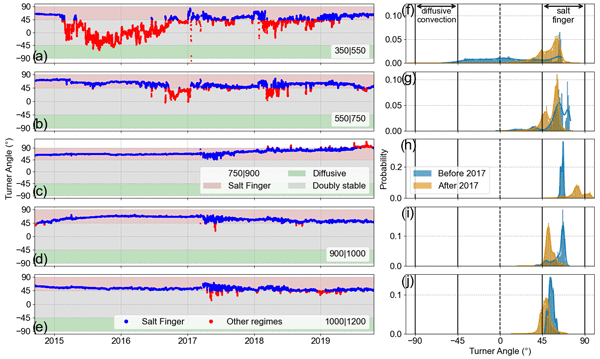
Felipe L. L. Amorim, Julien Le Meur, Achim Wirth, and Vanessa Cardin
Ocean Sci., 20, 463–474, https://doi.org/10.5194/os-20-463-2024, https://doi.org/10.5194/os-20-463-2024, 2024
Short summary
Short summary
Analysis of a high-frequency time series of thermohaline data measured at the EMSO-E2M3A regional facility in the southern Adriatic Pit (SAP) reveals a significant change in the double-diffusive regime in 2017 associated with the intrusion of extremely salty waters into the area, suggesting salt fingering as the dominant regime. The strong heat loss at the surface during this winter allowed deep convection to transport this high-salinity water from the intermediate to deep layers of the pit.
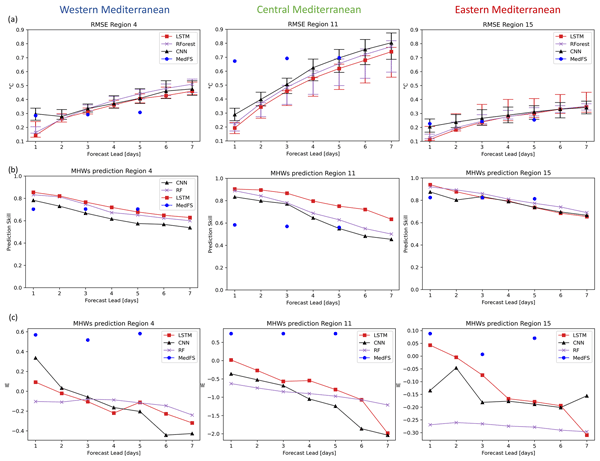
Giulia Bonino, Giuliano Galimberti, Simona Masina, Ronan McAdam, and Emanuela Clementi
Ocean Sci., 20, 417–432, https://doi.org/10.5194/os-20-417-2024, https://doi.org/10.5194/os-20-417-2024, 2024
Short summary
Short summary
This study employs machine learning to predict marine heatwaves (MHWs) in the Mediterranean Sea. MHWs have far-reaching impacts on society and ecosystems. Using data from ESA and ECMWF, the research develops accurate prediction models for sea surface temperature (SST) and MHWs across the region. Notably, machine learning methods outperform existing forecasting systems, showing promise in early MHW predictions. The study also highlights the importance of solar radiation as a predictor of SST.
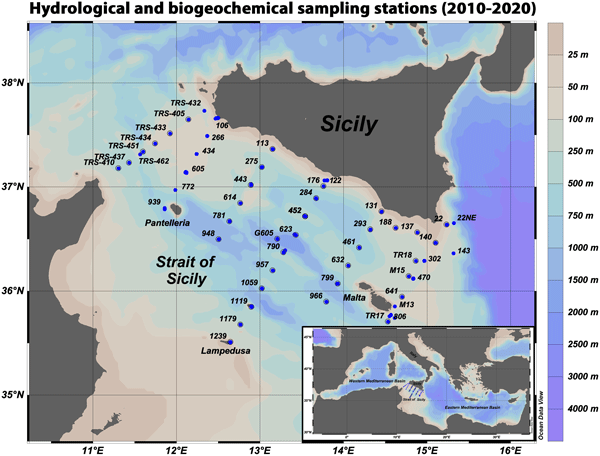
Francesco Placenti, Marco Torri, Katrin Schroeder, Mireno Borghini, Gabriella Cerrati, Angela Cuttitta, Vincenzo Tancredi, Carmelo Buscaino, and Bernardo Patti
Earth Syst. Sci. Data, 16, 743–752, https://doi.org/10.5194/essd-16-743-2024, https://doi.org/10.5194/essd-16-743-2024, 2024
Short summary
Short summary
Oceanographic surveys were conducted in the Strait of Sicily between 2010 and 2021. This paper provides a description of the time series of nutrients and hydrological data collected in this zone. The dataset fills an important gap in field observations of a crucial area where exchanges with the Mediterranean sub-basin take place, providing support for studies aimed at describing ongoing processes and at realizing reliable projections of the effects of these processes in the near future.
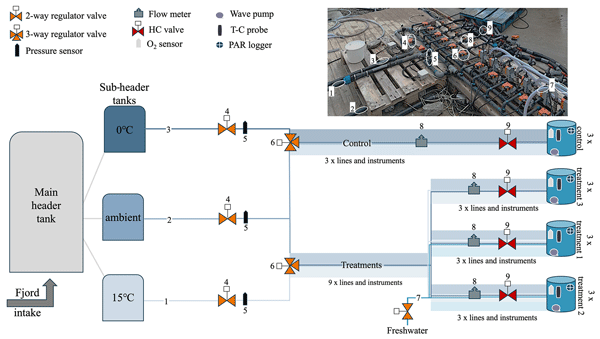
Cale A. Miller, Pierre Urrutti, Jean-Pierre Gattuso, Steeve Comeau, Anaïs Lebrun, Samir Alliouane, Robert W. Schlegel, and Frédéric Gazeau
Biogeosciences, 21, 315–333, https://doi.org/10.5194/bg-21-315-2024, https://doi.org/10.5194/bg-21-315-2024, 2024
Short summary
Short summary
This work describes an experimental system that can replicate and manipulate environmental conditions in marine or aquatic systems. Here, we show how the temperature and salinity of seawater delivered from a fjord is manipulated to experimental tanks on land. By constantly monitoring temperature and salinity in each tank via a computer program, the system continuously adjusts automated flow valves to ensure the seawater in each tank matches the targeted experimental conditions.
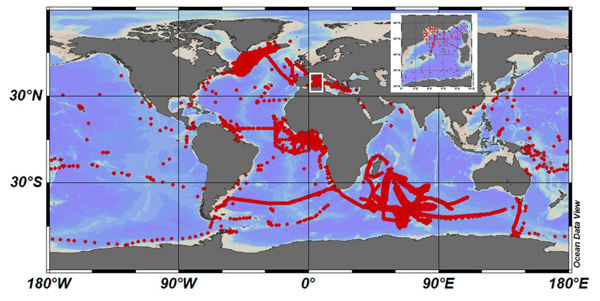
Nicolas Metzl, Jonathan Fin, Claire Lo Monaco, Claude Mignon, Samir Alliouane, David Antoine, Guillaume Bourdin, Jacqueline Boutin, Yann Bozec, Pascal Conan, Laurent Coppola, Frédéric Diaz, Eric Douville, Xavier Durrieu de Madron, Jean-Pierre Gattuso, Frédéric Gazeau, Melek Golbol, Bruno Lansard, Dominique Lefèvre, Nathalie Lefèvre, Fabien Lombard, Férial Louanchi, Liliane Merlivat, Léa Olivier, Anne Petrenko, Sébastien Petton, Mireille Pujo-Pay, Christophe Rabouille, Gilles Reverdin, Céline Ridame, Aline Tribollet, Vincenzo Vellucci, Thibaut Wagener, and Cathy Wimart-Rousseau
Earth Syst. Sci. Data, 16, 89–120, https://doi.org/10.5194/essd-16-89-2024, https://doi.org/10.5194/essd-16-89-2024, 2024
Short summary
Short summary
This work presents a synthesis of 44 000 total alkalinity and dissolved inorganic carbon observations obtained between 1993 and 2022 in the Global Ocean and the Mediterranean Sea at the surface and in the water column. Seawater samples were measured using the same method and calibrated with international Certified Reference Material. We describe the data assemblage, quality control and some potential uses of this dataset.
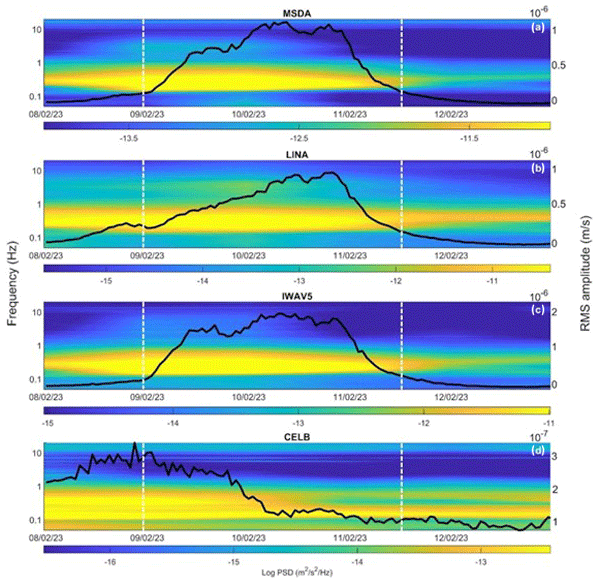
Alfio Marco Borzì, Vittorio Minio, Raphael De Plaen, Thomas Lecocq, Salvatore Alparone, Salvatore Aronica, Flavio Cannavò, Fulvio Capodici, Giuseppe Ciraolo, Sebastiano D'Amico, Danilo Contrafatto, Giuseppe Di Grazia, Ignazio Fontana, Giovanni Giacalone, Graziano Larocca, Carlo Lo Re, Giorgio Manno, Gabriele Nardone, Arianna Orasi, Marco Picone, Giovanni Scicchitano, and Andrea Cannata
Ocean Sci., 20, 1–20, https://doi.org/10.5194/os-20-1-2024, https://doi.org/10.5194/os-20-1-2024, 2024
Short summary
Short summary
In this work, we study a Mediterranean cyclone that occurred in February 2023 and its relationship with a particular seismic signal called microseism. By integrating the data recorded by seismic stations, satellites, HF radar and wavemeter buoy we are able to obtain information about this event. We show how an innovative monitoring system of the Mediterranean cyclones can be designed by integrating microseism information with other techniques routinely used to study meteorological phenomena.
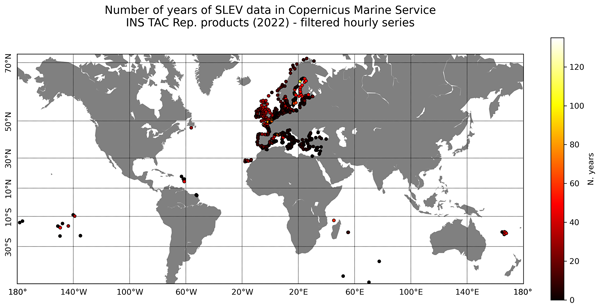
Jue Lin-Ye, Begoña Pérez Gómez, Alejandro Gallardo, Fernando Manzano, Marta de Alfonso, Elizabeth Bradshaw, and Angela Hibbert
Ocean Sci., 19, 1743–1751, https://doi.org/10.5194/os-19-1743-2023, https://doi.org/10.5194/os-19-1743-2023, 2023
Short summary
Short summary
The historical sea level measurements in the Copernicus Marine Service have been machine flagged and visually inspected. The existing software for the near-real-time product has been adapted. The new product was launched in November of 2022 and is readily available to the general public.
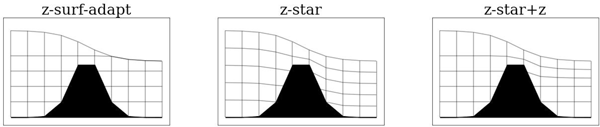
Luca Arpaia, Christian Ferrarin, Marco Bajo, and Georg Umgiesser
Geosci. Model Dev., 16, 6899–6919, https://doi.org/10.5194/gmd-16-6899-2023, https://doi.org/10.5194/gmd-16-6899-2023, 2023
Short summary
Short summary
We propose a discrete multilayer shallow water model based on z-layers which, thanks to the insertion and removal of surface layers, can deal with an arbitrarily large tidal oscillation independently of the vertical resolution. The algorithm is based on a two-step procedure used in numerical simulations with moving boundaries (grid movement followed by a grid topology change, that is, the insertion/removal of surface layers), which avoids the appearance of very thin surface layers.
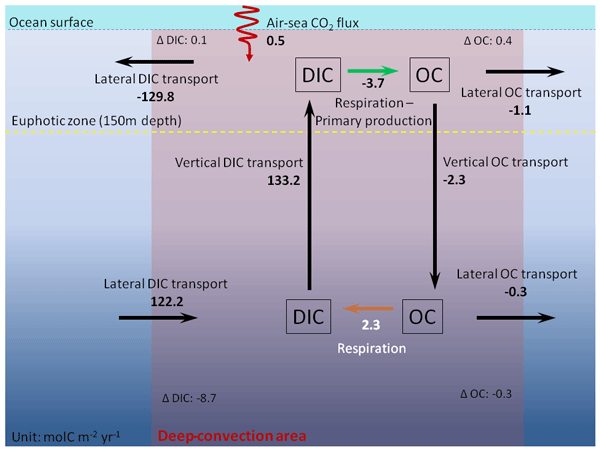
Caroline Ulses, Claude Estournel, Patrick Marsaleix, Karline Soetaert, Marine Fourrier, Laurent Coppola, Dominique Lefèvre, Franck Touratier, Catherine Goyet, Véronique Guglielmi, Fayçal Kessouri, Pierre Testor, and Xavier Durrieu de Madron
Biogeosciences, 20, 4683–4710, https://doi.org/10.5194/bg-20-4683-2023, https://doi.org/10.5194/bg-20-4683-2023, 2023
Short summary
Short summary
Deep convection plays a key role in the circulation, thermodynamics, and biogeochemical cycles in the Mediterranean Sea, considered to be a hotspot of biodiversity and climate change. In this study, we investigate the seasonal and annual budget of dissolved inorganic carbon in the deep-convection area of the northwestern Mediterranean Sea.
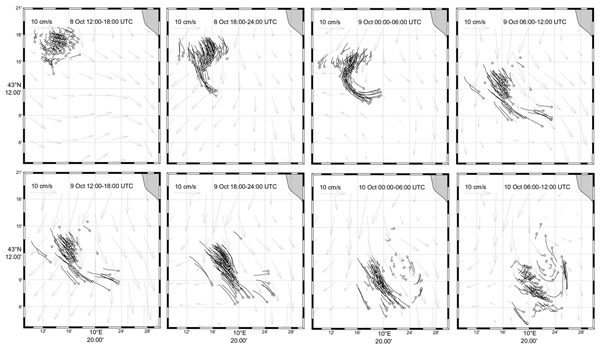
Pierre-Marie Poulain, Luca Centurioni, Carlo Brandini, Stefano Taddei, Maristella Berta, and Milena Menna
Ocean Sci., 19, 1617–1631, https://doi.org/10.5194/os-19-1617-2023, https://doi.org/10.5194/os-19-1617-2023, 2023
Short summary
Short summary
Drifters and a profiling float were deployed in the coastal waters of the southeastern Ligurian Sea to characterize the near-surface circulation at a scale of ~10 km. The drifters were trapped in an offshore-flowing filament and a cyclonic eddy that developed at the southwestern extremity of the filament. Drifter velocities are used to estimate differential kinematic properties and relative dispersion statistics of the surface currents.

Sofia Flora, Laura Ursella, and Achim Wirth
Nonlin. Processes Geophys., 30, 515–525, https://doi.org/10.5194/npg-30-515-2023, https://doi.org/10.5194/npg-30-515-2023, 2023
Short summary
Short summary
An increasing amount of data allows us to move from low-order moments of fluctuating observations to their PDFs. We found the analytical fat-tailed PDF form (a combination of Gaussian and two-exponential convolutions) for 2 years of sea surface current increments in the Gulf of Trieste, using superstatistics and the maximum-entropy principle twice: on short and longer timescales. The data from different wind regimes follow the same analytical PDF, pointing towards a universal behaviour.
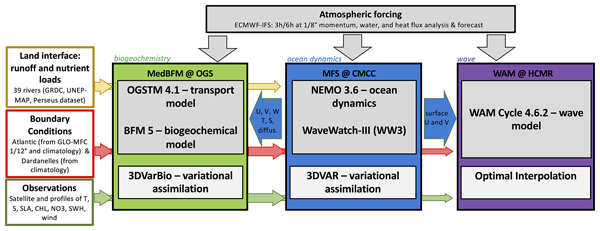
Giovanni Coppini, Emanuela Clementi, Gianpiero Cossarini, Stefano Salon, Gerasimos Korres, Michalis Ravdas, Rita Lecci, Jenny Pistoia, Anna Chiara Goglio, Massimiliano Drudi, Alessandro Grandi, Ali Aydogdu, Romain Escudier, Andrea Cipollone, Vladyslav Lyubartsev, Antonio Mariani, Sergio Cretì, Francesco Palermo, Matteo Scuro, Simona Masina, Nadia Pinardi, Antonio Navarra, Damiano Delrosso, Anna Teruzzi, Valeria Di Biagio, Giorgio Bolzon, Laura Feudale, Gianluca Coidessa, Carolina Amadio, Alberto Brosich, Arnau Miró, Eva Alvarez, Paolo Lazzari, Cosimo Solidoro, Charikleia Oikonomou, and Anna Zacharioudaki
Ocean Sci., 19, 1483–1516, https://doi.org/10.5194/os-19-1483-2023, https://doi.org/10.5194/os-19-1483-2023, 2023
Short summary
Short summary
The paper presents the Mediterranean Forecasting System evolution and performance developed in the framework of the Copernicus Marine Service.
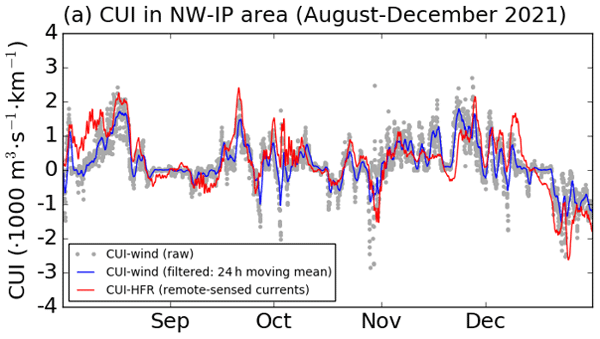
Pablo Lorente, Anna Rubio, Emma Reyes, Lohitzune Solabarrieta, Silvia Piedracoba, Joaquín Tintoré, and Julien Mader
State Planet, 1-osr7, 8, https://doi.org/10.5194/sp-1-osr7-8-2023, https://doi.org/10.5194/sp-1-osr7-8-2023, 2023
Short summary
Short summary
Upwelling is an important process that impacts water quality and aquaculture production in coastal areas. In this work we present a new methodology to monitor this phenomenon in two different regions by using surface current estimations provided by remote sensing technology called high-frequency radar.
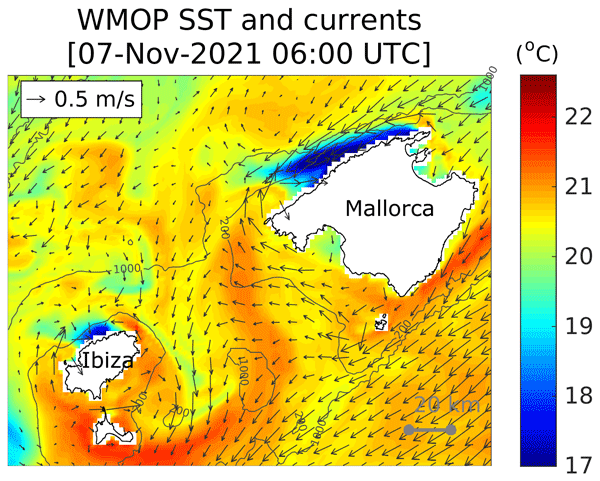
Baptiste Mourre, Emma Reyes, Pablo Lorente, Alex Santana, Jaime Hernández-Lasheras, Ismael Hernández-Carrasco, Maximo García-Jove, and Nikolaos D. Zarokanellos
State Planet, 1-osr7, 15, https://doi.org/10.5194/sp-1-osr7-15-2023, https://doi.org/10.5194/sp-1-osr7-15-2023, 2023
Short summary
Short summary
We characterize the signature of an intense storm-induced coastal upwelling along the north-western coast of the Balearic Islands in 2021 using a high-resolution operational prediction model. The upwelling, with a duration of 3 d and a spatial offshore extension of 20 km, led to cross-shore surface temperature differences of up to 6 °C. It was the most intense event of the past 9 years in terms of the impact on temperature and the second-most intense event in terms of cross-shore transports.
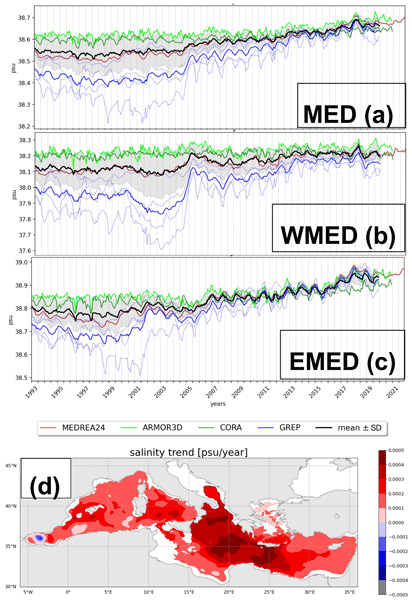
Ali Aydogdu, Pietro Miraglio, Romain Escudier, Emanuela Clementi, and Simona Masina
State Planet, 1-osr7, 6, https://doi.org/10.5194/sp-1-osr7-6-2023, https://doi.org/10.5194/sp-1-osr7-6-2023, 2023
Short summary
Short summary
This paper investigates the salt content, salinity anomaly and trend in the Mediterranean Sea using observational and reanalysis products. The salt content increases overall, while negative salinity anomalies appear in the western basin, especially around the upwelling regions. There is a large spread in the salinity estimates that is reduced with the emergence of the Argo profilers.
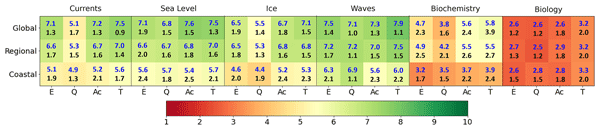
Stefania A. Ciliberti, Enrique Alvarez Fanjul, Jay Pearlman, Kirsten Wilmer-Becker, Pierre Bahurel, Fabrice Ardhuin, Alain Arnaud, Mike Bell, Segolene Berthou, Laurent Bertino, Arthur Capet, Eric Chassignet, Stefano Ciavatta, Mauro Cirano, Emanuela Clementi, Gianpiero Cossarini, Gianpaolo Coro, Stuart Corney, Fraser Davidson, Marie Drevillon, Yann Drillet, Renaud Dussurget, Ghada El Serafy, Katja Fennel, Marcos Garcia Sotillo, Patrick Heimbach, Fabrice Hernandez, Patrick Hogan, Ibrahim Hoteit, Sudheer Joseph, Simon Josey, Pierre-Yves Le Traon, Simone Libralato, Marco Mancini, Pascal Matte, Angelique Melet, Yasumasa Miyazawa, Andrew M. Moore, Antonio Novellino, Andrew Porter, Heather Regan, Laia Romero, Andreas Schiller, John Siddorn, Joanna Staneva, Cecile Thomas-Courcoux, Marina Tonani, Jose Maria Garcia-Valdecasas, Jennifer Veitch, Karina von Schuckmann, Liying Wan, John Wilkin, and Romane Zufic
State Planet, 1-osr7, 2, https://doi.org/10.5194/sp-1-osr7-2-2023, https://doi.org/10.5194/sp-1-osr7-2-2023, 2023
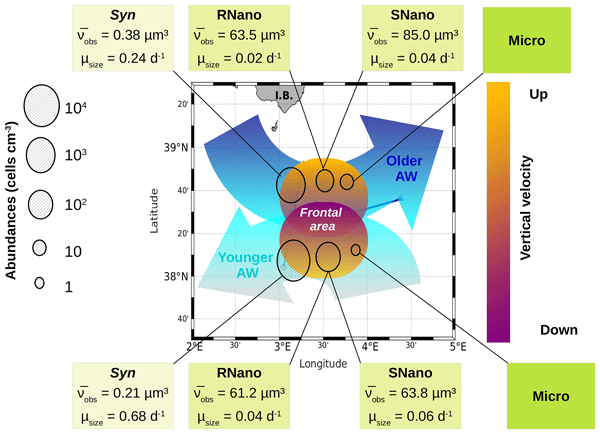
Roxane Tzortzis, Andrea M. Doglioli, Monique Messié, Stéphanie Barrillon, Anne A. Petrenko, Lloyd Izard, Yuan Zhao, Francesco d'Ovidio, Franck Dumas, and Gérald Gregori
Biogeosciences, 20, 3491–3508, https://doi.org/10.5194/bg-20-3491-2023, https://doi.org/10.5194/bg-20-3491-2023, 2023
Short summary
Short summary
We studied a finescale frontal structure in order to highlight its influence on the dynamics and distribution of phytoplankton communities. We computed the growth rates of several phytoplankton groups identified by flow cytometry in two water masses separated by the front. We found contrasted phytoplankton dynamics on the two sides of the front, consistent with the distribution of their abundances. Our study gives new insights into the physical and biological coupling on a finescale front.
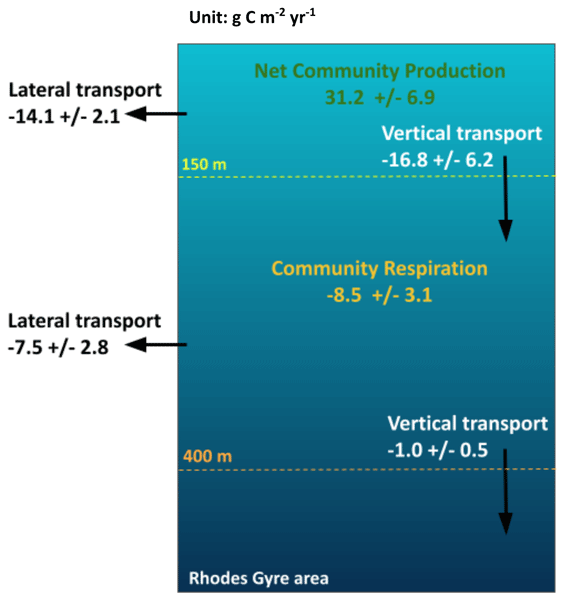
Joelle Habib, Caroline Ulses, Claude Estournel, Milad Fakhri, Patrick Marsaleix, Mireille Pujo-Pay, Marine Fourrier, Laurent Coppola, Alexandre Mignot, Laurent Mortier, and Pascal Conan
Biogeosciences, 20, 3203–3228, https://doi.org/10.5194/bg-20-3203-2023, https://doi.org/10.5194/bg-20-3203-2023, 2023
Short summary
Short summary
The Rhodes Gyre, eastern Mediterranean Sea, is the main Levantine Intermediate Water formation site. In this study, we use a 3D physical–biogeochemical model to investigate the seasonal and interannual variability of organic carbon dynamics in the gyre. Our results show its autotrophic nature and its high interannual variability, with enhanced primary production, downward exports, and onward exports to the surrounding regions during years marked by intense heat losses and deep mixed layers.
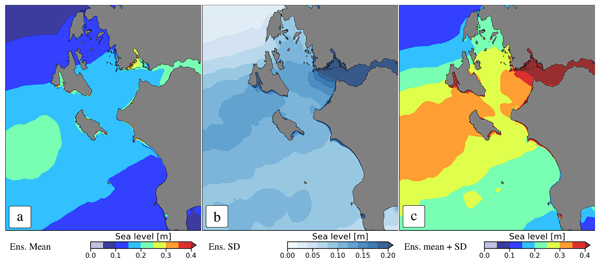
Christian Ferrarin, Florian Pantillon, Silvio Davolio, Marco Bajo, Mario Marcello Miglietta, Elenio Avolio, Diego S. Carrió, Ioannis Pytharoulis, Claudio Sanchez, Platon Patlakas, Juan Jesús González-Alemán, and Emmanouil Flaounas
Nat. Hazards Earth Syst. Sci., 23, 2273–2287, https://doi.org/10.5194/nhess-23-2273-2023, https://doi.org/10.5194/nhess-23-2273-2023, 2023
Short summary
Short summary
The combined use of meteorological and ocean models enabled the analysis of extreme sea conditions driven by Medicane Ianos, which hit the western coast of Greece on 18 September 2020, flooding and damaging the coast. The large spread associated with the ensemble highlighted the high model uncertainty in simulating such an extreme weather event. The different simulations have been used for outlining hazard scenarios that represent a fundamental component of the coastal risk assessment.
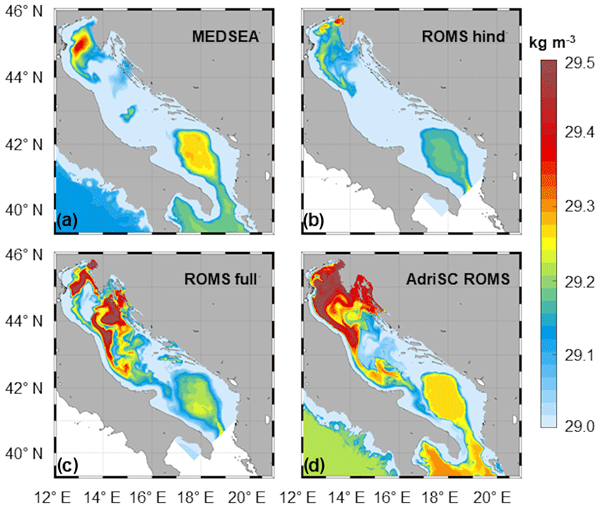
Petra Pranić, Cléa Denamiel, Ivica Janeković, and Ivica Vilibić
Ocean Sci., 19, 649–670, https://doi.org/10.5194/os-19-649-2023, https://doi.org/10.5194/os-19-649-2023, 2023
Short summary
Short summary
In this study, we analyse and compare the results of four different approaches in modelling bora-driven dense-water dynamics in the Adriatic. The study investigated the likely requirements for modelling the ocean circulation in the Adriatic and found that a 31-year run of a fine-resolution Adriatic climate model is able to outperform most aspects of the newest reanalysis product, a short-term hindcast and data-assimilated simulation, in reproducing the dense-water dynamics in the Adriatic Sea.
Cléa Denamiel and Ivica Vilibić
EGUsphere, https://doi.org/10.5194/egusphere-2023-913, https://doi.org/10.5194/egusphere-2023-913, 2023
Preprint archived
Short summary
Short summary
We present a new methodology using coupled atmosphere-ocean-wave models and demonstrate the feasibility to provide meter scale assessments of the impact of climate change on storm surge hazards. We show that sea level variations and distributions can be derived at the climate scale in the Adriatic Sea small lagoons and bays. We expect that the newly developed methodology could lead to more targeted adaptation strategies in regions of the world vulnerable to atmospherically driven extreme events.
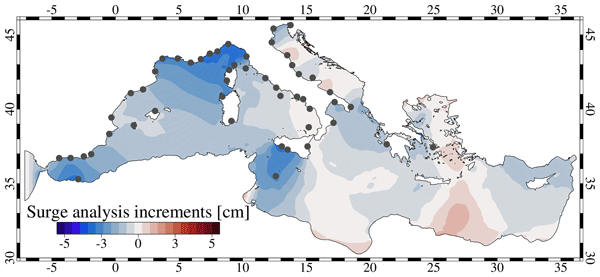
Marco Bajo, Christian Ferrarin, Georg Umgiesser, Andrea Bonometto, and Elisa Coraci
Ocean Sci., 19, 559–579, https://doi.org/10.5194/os-19-559-2023, https://doi.org/10.5194/os-19-559-2023, 2023
Short summary
Short summary
This work uses a hydrodynamic model which assimilates in situ data to reproduce tides, surges, and seiches in the Mediterranean basin. Furthermore, we study the periods of the barotropic modes of the Mediterranean and Adriatic basins. This research aims to improve the forecasting and reanalysis for operational warning and climatological studies. It aims also to reach a better knowledge of these sea level components in this area.
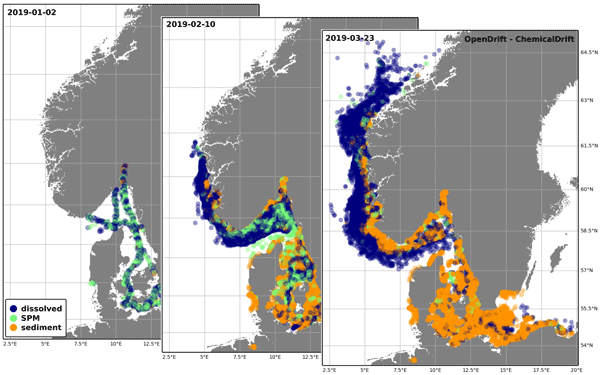
Manuel Aghito, Loris Calgaro, Knut-Frode Dagestad, Christian Ferrarin, Antonio Marcomini, Øyvind Breivik, and Lars Robert Hole
Geosci. Model Dev., 16, 2477–2494, https://doi.org/10.5194/gmd-16-2477-2023, https://doi.org/10.5194/gmd-16-2477-2023, 2023
Short summary
Short summary
The newly developed ChemicalDrift model can simulate the transport and fate of chemicals in the ocean and in coastal regions. The model combines ocean physics, including transport due to currents, turbulence due to surface winds and the sinking of particles to the sea floor, with ocean chemistry, such as the partitioning, the degradation and the evaporation of chemicals. The model will be utilized for risk assessment of ocean and sea-floor contamination from pollutants emitted from shipping.
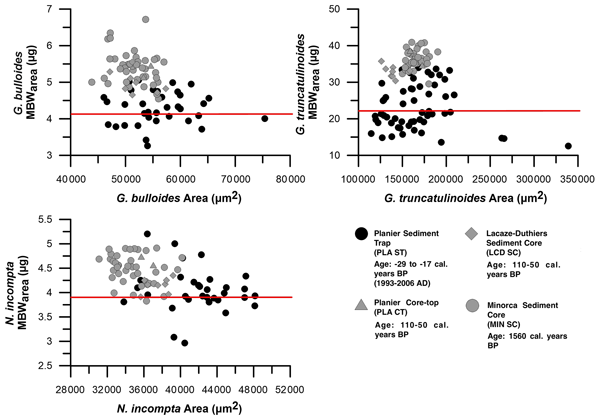
Thibauld M. Béjard, Andrés S. Rigual-Hernández, José A. Flores, Javier P. Tarruella, Xavier Durrieu de Madron, Isabel Cacho, Neghar Haghipour, Aidan Hunter, and Francisco J. Sierro
Biogeosciences, 20, 1505–1528, https://doi.org/10.5194/bg-20-1505-2023, https://doi.org/10.5194/bg-20-1505-2023, 2023
Short summary
Short summary
The Mediterranean Sea is undergoing a rapid and unprecedented environmental change. Planktic foraminifera calcification is affected on different timescales. On seasonal and interannual scales, calcification trends differ according to the species and are linked mainly to sea surface temperatures and carbonate system parameters, while comparison with pre/post-industrial assemblages shows that all three species have reduced their calcification between 10 % to 35 % according to the species.
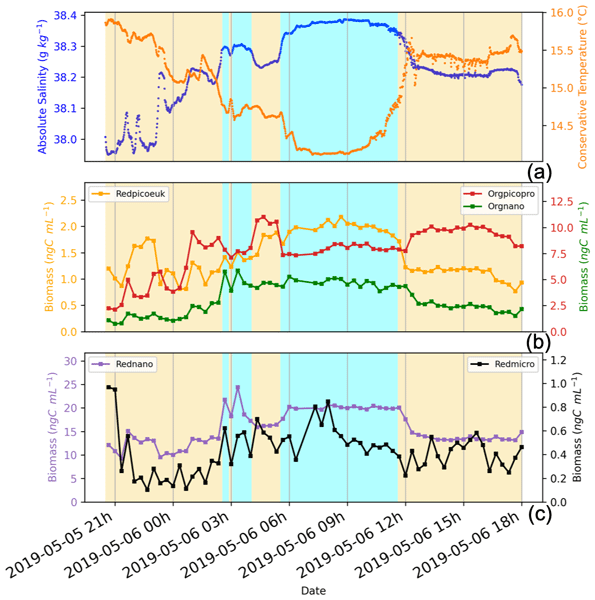
Stéphanie Barrillon, Robin Fuchs, Anne A. Petrenko, Caroline Comby, Anthony Bosse, Christophe Yohia, Jean-Luc Fuda, Nagib Bhairy, Frédéric Cyr, Andrea M. Doglioli, Gérald Grégori, Roxane Tzortzis, Francesco d'Ovidio, and Melilotus Thyssen
Biogeosciences, 20, 141–161, https://doi.org/10.5194/bg-20-141-2023, https://doi.org/10.5194/bg-20-141-2023, 2023
Short summary
Short summary
Extreme weather events can have a major impact on ocean physics and biogeochemistry, but their study is challenging. In May 2019, an intense storm occurred in the north-western Mediterranean Sea, during which in situ multi-platform measurements were performed. The results show a strong impact on the surface phytoplankton, highlighting the need for high-resolution measurements coupling physics and biology during these violent events that may become more common in the context of global change.
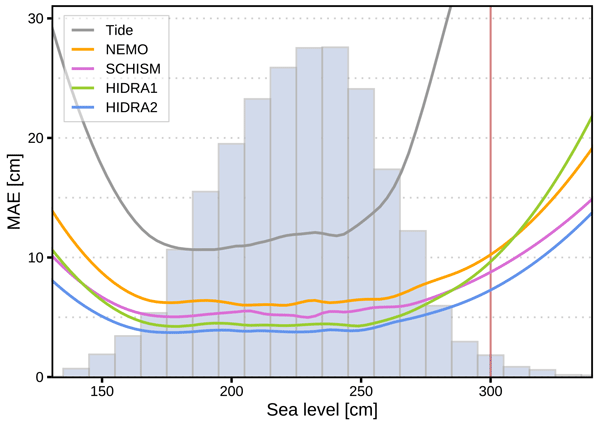
Marko Rus, Anja Fettich, Matej Kristan, and Matjaž Ličer
Geosci. Model Dev., 16, 271–288, https://doi.org/10.5194/gmd-16-271-2023, https://doi.org/10.5194/gmd-16-271-2023, 2023
Short summary
Short summary
We propose a new fast and reliable deep-learning architecture HIDRA2 for sea level and storm surge modeling. HIDRA2 features new feature encoders and a fusion-regression block. We test HIDRA2 on Adriatic storm surges, which depend on an interaction between tides and seiches. We demonstrate that HIDRA2 learns to effectively mimic the timing and amplitude of Adriatic seiches. This is essential for reliable HIDRA2 predictions of total storm surge sea levels.
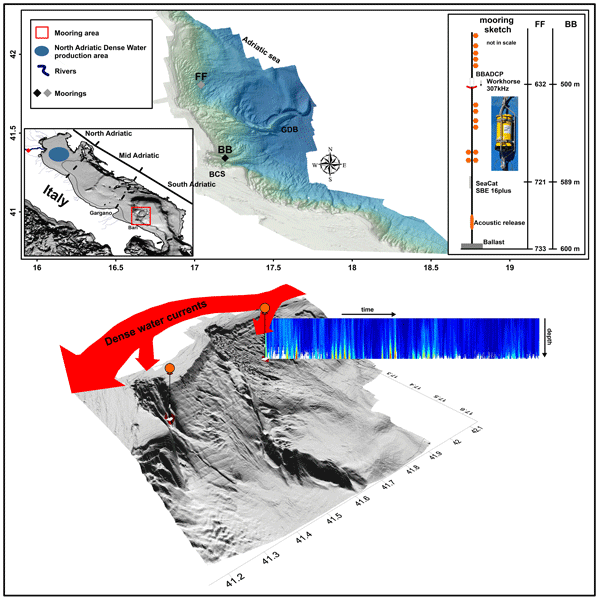
Francesco Paladini de Mendoza, Katrin Schroeder, Leonardo Langone, Jacopo Chiggiato, Mireno Borghini, Patrizia Giordano, Giulio Verazzo, and Stefano Miserocchi
Earth Syst. Sci. Data, 14, 5617–5635, https://doi.org/10.5194/essd-14-5617-2022, https://doi.org/10.5194/essd-14-5617-2022, 2022
Short summary
Short summary
This work presents the dataset of continuous monitoring in the southern Adriatic Margin, providing a unique observatory of deep-water dynamics. The study area is influenced by episodic dense-water cascading, which is a fundamental process for water renewal and deep-water dynamics. Information about the frequency and intensity variations of these events is observed along a time series. The monitoring activities are still ongoing and the moorings are part of the EMSO-ERIC network.
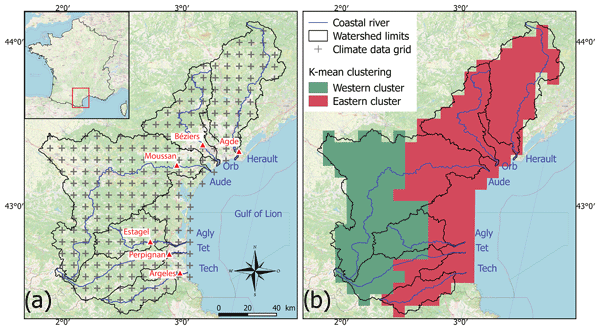
Camille Labrousse, Wolfgang Ludwig, Sébastien Pinel, Mahrez Sadaoui, Andrea Toreti, and Guillaume Lacquement
Hydrol. Earth Syst. Sci., 26, 6055–6071, https://doi.org/10.5194/hess-26-6055-2022, https://doi.org/10.5194/hess-26-6055-2022, 2022
Short summary
Short summary
The interest of this study is to demonstrate that we identify two zones in our study area whose hydroclimatic behaviours are uneven. By investigating relationships between the hydroclimatic conditions in both clusters for past observations with the overall atmospheric functioning, we show that the inequalities are mainly driven by a different control of the atmospheric teleconnection patterns over the area.
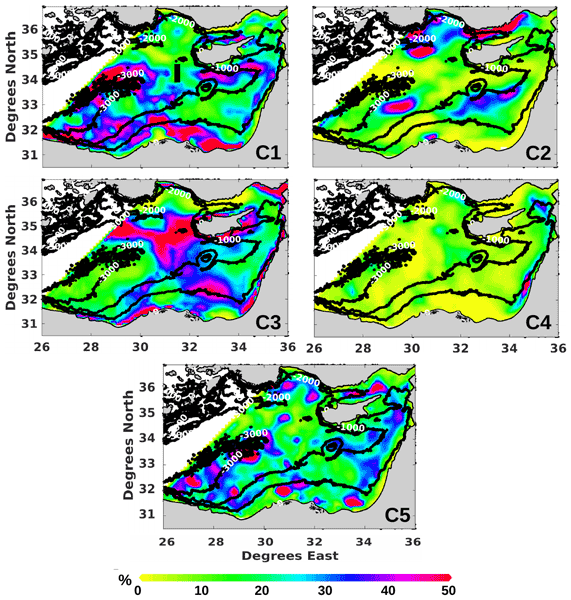
Georges Baaklini, Roy El Hourany, Milad Fakhri, Julien Brajard, Leila Issa, Gina Fifani, and Laurent Mortier
Ocean Sci., 18, 1491–1505, https://doi.org/10.5194/os-18-1491-2022, https://doi.org/10.5194/os-18-1491-2022, 2022
Short summary
Short summary
We use machine learning to analyze the long-term variation of the surface currents in the Levantine Sea, located in the eastern Mediterranean Sea. We decompose the circulation into groups based on their physical characteristics and analyze their spatial and temporal variability. We show that most structures of the Levantine Sea are becoming more energetic over time, despite those of the western area remaining the most dominant due to their complex bathymetry and strong currents.
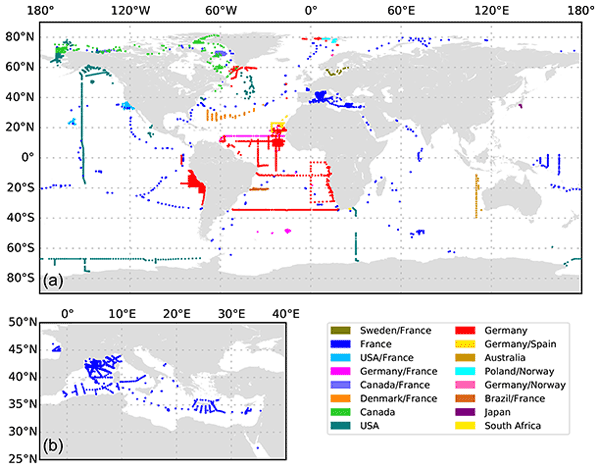
Rainer Kiko, Marc Picheral, David Antoine, Marcel Babin, Léo Berline, Tristan Biard, Emmanuel Boss, Peter Brandt, Francois Carlotti, Svenja Christiansen, Laurent Coppola, Leandro de la Cruz, Emilie Diamond-Riquier, Xavier Durrieu de Madron, Amanda Elineau, Gabriel Gorsky, Lionel Guidi, Helena Hauss, Jean-Olivier Irisson, Lee Karp-Boss, Johannes Karstensen, Dong-gyun Kim, Rachel M. Lekanoff, Fabien Lombard, Rubens M. Lopes, Claudie Marec, Andrew M. P. McDonnell, Daniela Niemeyer, Margaux Noyon, Stephanie H. O'Daly, Mark D. Ohman, Jessica L. Pretty, Andreas Rogge, Sarah Searson, Masashi Shibata, Yuji Tanaka, Toste Tanhua, Jan Taucher, Emilia Trudnowska, Jessica S. Turner, Anya Waite, and Lars Stemmann
Earth Syst. Sci. Data, 14, 4315–4337, https://doi.org/10.5194/essd-14-4315-2022, https://doi.org/10.5194/essd-14-4315-2022, 2022
Short summary
Short summary
The term
marine particlescomprises detrital aggregates; fecal pellets; bacterioplankton, phytoplankton and zooplankton; and even fish. Here, we present a global dataset that contains 8805 vertical particle size distribution profiles obtained with Underwater Vision Profiler 5 (UVP5) camera systems. These data are valuable to the scientific community, as they can be used to constrain important biogeochemical processes in the ocean, such as the flux of carbon to the deep sea.

Nydia Catalina Reyes Suárez, Valentina Tirelli, Laura Ursella, Matjaž Ličer, Massimo Celio, and Vanessa Cardin
Ocean Sci., 18, 1321–1337, https://doi.org/10.5194/os-18-1321-2022, https://doi.org/10.5194/os-18-1321-2022, 2022
Short summary
Short summary
Explaining the dynamics of jellyfish blooms is a challenge for scientists. Biological and meteo-oceanographic data were combined on different timescales to explain the exceptional bloom of the jellyfish Rhizostoma pulmo in the Gulf of Trieste (Adriatic Sea) in April 2021. The bloom was associated with anomalously warm seasonal sea conditions. Then, a strong bora wind event enhanced upwelling and mixing of the water column, causing jellyfish to rise to the surface and accumulate along the coast.

Julius Schlumberger, Christian Ferrarin, Sebastiaan N. Jonkman, Manuel Andres Diaz Loaiza, Alessandro Antonini, and Sandra Fatorić
Nat. Hazards Earth Syst. Sci., 22, 2381–2400, https://doi.org/10.5194/nhess-22-2381-2022, https://doi.org/10.5194/nhess-22-2381-2022, 2022
Short summary
Short summary
Flooding has serious impacts on the old town of Venice. This paper presents a framework combining a flood model with a flood-impact model to support improving protection against future floods in Venice despite the recently built MOSE barrier. Applying the framework to seven plausible flood scenarios, it was found that individual protection has a significant damage-mediating effect if the MOSE barrier does not operate as anticipated. Contingency planning thus remains important in Venice.
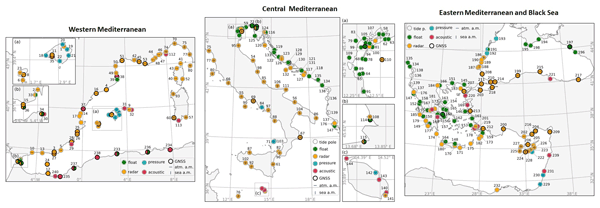
Begoña Pérez Gómez, Ivica Vilibić, Jadranka Šepić, Iva Međugorac, Matjaž Ličer, Laurent Testut, Claire Fraboul, Marta Marcos, Hassen Abdellaoui, Enrique Álvarez Fanjul, Darko Barbalić, Benjamín Casas, Antonio Castaño-Tierno, Srđan Čupić, Aldo Drago, María Angeles Fraile, Daniele A. Galliano, Adam Gauci, Branislav Gloginja, Víctor Martín Guijarro, Maja Jeromel, Marcos Larrad Revuelto, Ayah Lazar, Ibrahim Haktan Keskin, Igor Medvedev, Abdelkader Menassri, Mohamed Aïssa Meslem, Hrvoje Mihanović, Sara Morucci, Dragos Niculescu, José Manuel Quijano de Benito, Josep Pascual, Atanas Palazov, Marco Picone, Fabio Raicich, Mohamed Said, Jordi Salat, Erdinc Sezen, Mehmet Simav, Georgios Sylaios, Elena Tel, Joaquín Tintoré, Klodian Zaimi, and George Zodiatis
Ocean Sci., 18, 997–1053, https://doi.org/10.5194/os-18-997-2022, https://doi.org/10.5194/os-18-997-2022, 2022
Short summary
Short summary
This description and mapping of coastal sea level monitoring networks in the Mediterranean and Black seas reveals the existence of 240 presently operational tide gauges. Information is provided about the type of sensor, time sampling, data availability, and ancillary measurements. An assessment of the fit-for-purpose status of the network is also included, along with recommendations to mitigate existing bottlenecks and improve the network, in a context of sea level rise and increasing extremes.
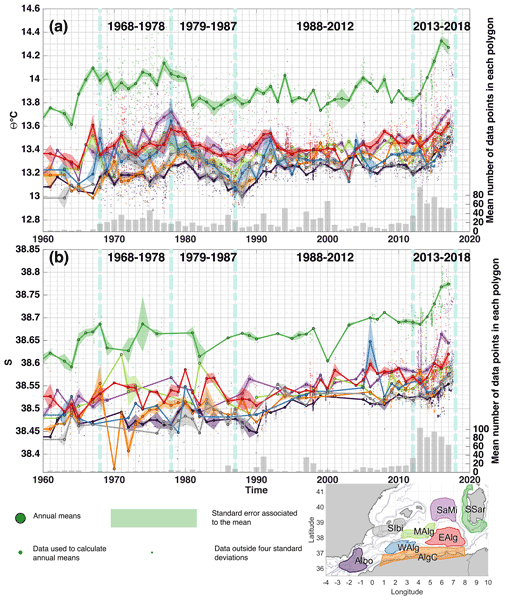
Katia Mallil, Pierre Testor, Anthony Bosse, Félix Margirier, Loic Houpert, Hervé Le Goff, Laurent Mortier, and Ferial Louanchi
Ocean Sci., 18, 937–952, https://doi.org/10.5194/os-18-937-2022, https://doi.org/10.5194/os-18-937-2022, 2022
Short summary
Short summary
Our study documents the circulation in the Algerian Basin of the western Mediterranean Sea using in situ data. It shows that the Algerian Gyres have an impact on the distribution at intermediate depth of Levantine Intermediate Water. They allow a westward transport from the south of Sardinia toward the interior of the Algerian Basin. Temperature and salinity trends of this water mass are also investigated, confirming a recent acceleration of the warming and salinification during the last decade.
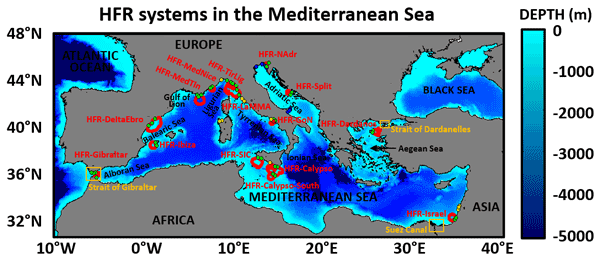
Pablo Lorente, Eva Aguiar, Michele Bendoni, Maristella Berta, Carlo Brandini, Alejandro Cáceres-Euse, Fulvio Capodici, Daniela Cianelli, Giuseppe Ciraolo, Lorenzo Corgnati, Vlado Dadić, Bartolomeo Doronzo, Aldo Drago, Dylan Dumas, Pierpaolo Falco, Maria Fattorini, Adam Gauci, Roberto Gómez, Annalisa Griffa, Charles-Antoine Guérin, Ismael Hernández-Carrasco, Jaime Hernández-Lasheras, Matjaž Ličer, Marcello G. Magaldi, Carlo Mantovani, Hrvoje Mihanović, Anne Molcard, Baptiste Mourre, Alejandro Orfila, Adèle Révelard, Emma Reyes, Jorge Sánchez, Simona Saviano, Roberta Sciascia, Stefano Taddei, Joaquín Tintoré, Yaron Toledo, Laura Ursella, Marco Uttieri, Ivica Vilibić, Enrico Zambianchi, and Vanessa Cardin
Ocean Sci., 18, 761–795, https://doi.org/10.5194/os-18-761-2022, https://doi.org/10.5194/os-18-761-2022, 2022
Short summary
Short summary
High-frequency radar (HFR) is a land-based remote sensing technology that can provide maps of the surface circulation over broad coastal areas, along with wave and wind information. The main goal of this work is to showcase the current status of the Mediterranean HFR network as well as present and future applications of this sensor for societal benefit such as search and rescue operations, safe vessel navigation, tracking of marine pollutants, and the monitoring of extreme events.
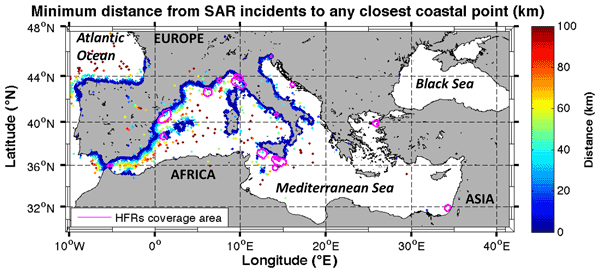
Emma Reyes, Eva Aguiar, Michele Bendoni, Maristella Berta, Carlo Brandini, Alejandro Cáceres-Euse, Fulvio Capodici, Vanessa Cardin, Daniela Cianelli, Giuseppe Ciraolo, Lorenzo Corgnati, Vlado Dadić, Bartolomeo Doronzo, Aldo Drago, Dylan Dumas, Pierpaolo Falco, Maria Fattorini, Maria J. Fernandes, Adam Gauci, Roberto Gómez, Annalisa Griffa, Charles-Antoine Guérin, Ismael Hernández-Carrasco, Jaime Hernández-Lasheras, Matjaž Ličer, Pablo Lorente, Marcello G. Magaldi, Carlo Mantovani, Hrvoje Mihanović, Anne Molcard, Baptiste Mourre, Adèle Révelard, Catalina Reyes-Suárez, Simona Saviano, Roberta Sciascia, Stefano Taddei, Joaquín Tintoré, Yaron Toledo, Marco Uttieri, Ivica Vilibić, Enrico Zambianchi, and Alejandro Orfila
Ocean Sci., 18, 797–837, https://doi.org/10.5194/os-18-797-2022, https://doi.org/10.5194/os-18-797-2022, 2022
Short summary
Short summary
This work reviews the existing advanced and emerging scientific and societal applications using HFR data, developed to address the major challenges identified in Mediterranean coastal waters organized around three main topics: maritime safety, extreme hazards and environmental transport processes. It also includes a discussion and preliminary assessment of the capabilities of existing HFR applications, finally providing a set of recommendations towards setting out future prospects.
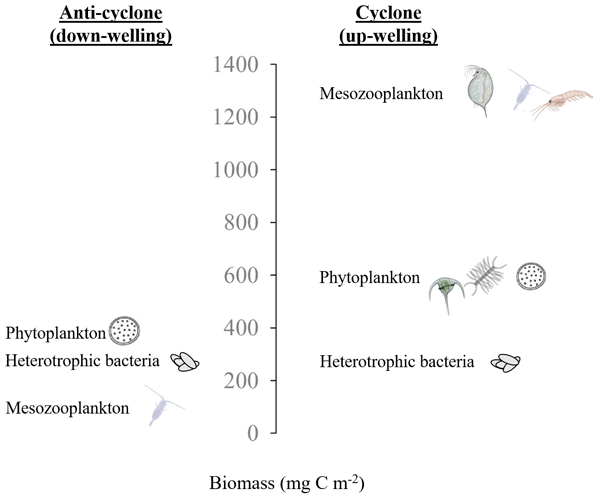
Natalia Belkin, Tamar Guy-Haim, Maxim Rubin-Blum, Ayah Lazar, Guy Sisma-Ventura, Rainer Kiko, Arseniy R. Morov, Tal Ozer, Isaac Gertman, Barak Herut, and Eyal Rahav
Ocean Sci., 18, 693–715, https://doi.org/10.5194/os-18-693-2022, https://doi.org/10.5194/os-18-693-2022, 2022
Short summary
Short summary
We studied how distinct water circulations that elevate (cyclone) or descend (anticyclone) water from the upper ocean affect the biomass, activity and diversity of planktonic microorganisms in the impoverished eastern Mediterranean. We show that cyclonic and anticyclonic eddies differ in their community composition and production. Moreover, the anticyclone may be a potential bio-invasion and dispersal vector, while the cyclone may serve as a thermal refugee for native species.

Julie Dinasquet, Estelle Bigeard, Frédéric Gazeau, Farooq Azam, Cécile Guieu, Emilio Marañón, Céline Ridame, France Van Wambeke, Ingrid Obernosterer, and Anne-Claire Baudoux
Biogeosciences, 19, 1303–1319, https://doi.org/10.5194/bg-19-1303-2022, https://doi.org/10.5194/bg-19-1303-2022, 2022
Short summary
Short summary
Saharan dust deposition of nutrients and trace metals is crucial to microbes in the Mediterranean Sea. Here, we tested the response of microbial and viral communities to simulated dust deposition under present and future conditions of temperature and pH. Overall, the effect of the deposition was dependent on the initial microbial assemblage, and future conditions will intensify microbial responses. We observed effects on trophic interactions, cascading all the way down to viral processes.

Céline Ridame, Julie Dinasquet, Søren Hallstrøm, Estelle Bigeard, Lasse Riemann, France Van Wambeke, Matthieu Bressac, Elvira Pulido-Villena, Vincent Taillandier, Fréderic Gazeau, Antonio Tovar-Sanchez, Anne-Claire Baudoux, and Cécile Guieu
Biogeosciences, 19, 415–435, https://doi.org/10.5194/bg-19-415-2022, https://doi.org/10.5194/bg-19-415-2022, 2022
Short summary
Short summary
We show that in the Mediterranean Sea spatial variability in N2 fixation is related to the diazotrophic community composition reflecting different nutrient requirements among species. Nutrient supply by Saharan dust is of great importance to diazotrophs, as shown by the strong stimulation of N2 fixation after a simulated dust event under present and future climate conditions; the magnitude of stimulation depends on the degree of limitation related to the diazotrophic community composition.
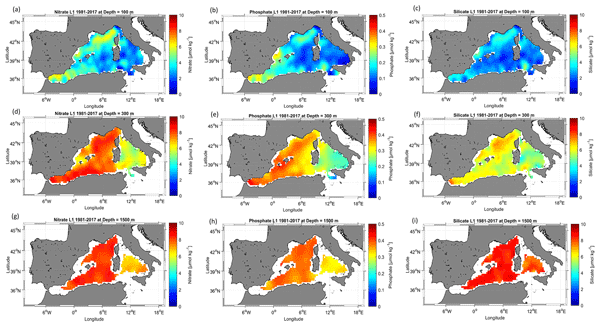
Malek Belgacem, Katrin Schroeder, Alexander Barth, Charles Troupin, Bruno Pavoni, Patrick Raimbault, Nicole Garcia, Mireno Borghini, and Jacopo Chiggiato
Earth Syst. Sci. Data, 13, 5915–5949, https://doi.org/10.5194/essd-13-5915-2021, https://doi.org/10.5194/essd-13-5915-2021, 2021
Short summary
Short summary
The Mediterranean Sea exhibits an anti-estuarine circulation, responsible for its low productivity. Understanding this peculiar character is still a challenge since there is no exact quantification of nutrient sinks and sources. Because nutrient in situ observations are generally infrequent and scattered in space and time, climatological mapping is often applied to sparse data in order to understand the biogeochemical state of the ocean. The dataset presented here partly addresses these issues.

Roxane Tzortzis, Andrea M. Doglioli, Stéphanie Barrillon, Anne A. Petrenko, Francesco d'Ovidio, Lloyd Izard, Melilotus Thyssen, Ananda Pascual, Bàrbara Barceló-Llull, Frédéric Cyr, Marc Tedetti, Nagib Bhairy, Pierre Garreau, Franck Dumas, and Gérald Gregori
Biogeosciences, 18, 6455–6477, https://doi.org/10.5194/bg-18-6455-2021, https://doi.org/10.5194/bg-18-6455-2021, 2021
Short summary
Short summary
This work analyzes an original high-resolution data set collected in the Mediterranean Sea. The major result is the impact of a fine-scale frontal structure on the distribution of phytoplankton groups, in an area of moderate energy with oligotrophic conditions. Our results provide an in situ confirmation of the findings obtained by previous modeling studies and remote sensing about the structuring effect of the fine-scale ocean dynamics on the structure of the phytoplankton community.
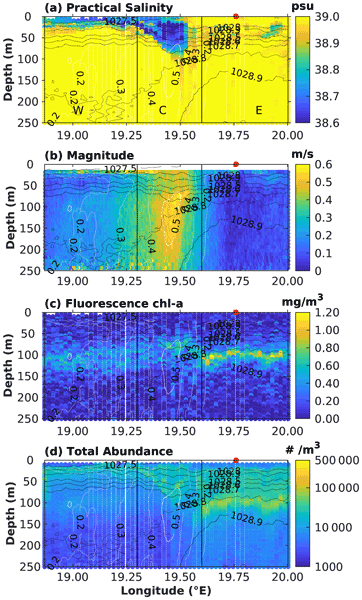
Léo Berline, Andrea Michelangelo Doglioli, Anne Petrenko, Stéphanie Barrillon, Boris Espinasse, Frederic A. C. Le Moigne, François Simon-Bot, Melilotus Thyssen, and François Carlotti
Biogeosciences, 18, 6377–6392, https://doi.org/10.5194/bg-18-6377-2021, https://doi.org/10.5194/bg-18-6377-2021, 2021
Short summary
Short summary
While the Ionian Sea is considered a nutrient-depleted and low-phytoplankton biomass area, it is a crossroad for water mass circulation. In the central Ionian Sea, we observed a strong contrast in particle distribution across a ~100 km long transect. Using remote sensing and Lagrangian simulations, we suggest that this contrast finds its origin in the long-distance transport of particles from the north, west and east of the Ionian Sea, where phytoplankton production was more intense.
Cited articles
ACCOBAMS: ACCOBAMS Mediterranean technical assessment on anthropogenic underwater noise, ACCOBAMS, Monaco, 40 pp., https://doi.org/10.70978/FGOD6973, 2025.
Albano, P. G., Steger, J., Bošnjak, M., Dunne, B., Guifarro, Z., Turapova, E., Hua, Q., Kaufman, D. S., Rilov, G., and Zuschin, M.: Native biodiversity collapse in the eastern Mediterranean, P. Roy. Soc. B, 288, 20202469, https://doi.org/10.1098/rspb.2020.2469, 2021.
Albano, P. G., Schultz, L., Wessely, J., Taviani, M., Dullinger, S., and Danise, S.: The dawn of the tropical Atlantic invasion into the Mediterranean Sea, P. Natl. Acad. Sci. USA, 121, e2320687121, https://doi.org/10.1073/pnas.2320687121, 2024.
Aydogdu, A., Escudier, R., Hernandez-Lasheras, J., Amadio, C., Pistoia, J., Zarokanellos, N. D., Cossarini, G., Remy, E., and Mourre B.: Glider observations in the Western Mediterranean Sea: their assimilation and impact assessment using four analysis and forecasting systems, Front. Mar. Sci., 12, 1456463, https://doi.org/10.3389/fmars.2025.1456463, 2025.
Bakker, D. C. E., Pfeil, B., Landa, C. S., Metzl, N., O'Brien, K. M., Olsen, A., Smith, K., Cosca, C., Harasawa, S., Jones, S. D., Nakaoka, S., Nojiri, Y., Schuster, U., Steinhoff, T., Sweeney, C., Takahashi, T., Tilbrook, B., Wada, C., Wanninkhof, R., Alin, S. R., Balestrini, C. F., Barbero, L., Bates, N. R., Bianchi, A. A., Bonou, F., Boutin, J., Bozec, Y., Burger, E. F., Cai, W.-J., Castle, R. D., Chen, L., Chierici, M., Currie, K., Evans, W., Featherstone, C., Feely, R. A., Fransson, A., Goyet, C., Greenwood, N., Gregor, L., Hankin, S., Hardman-Mountford, N. J., Harlay, J., Hauck, J., Hoppema, M., Humphreys, M. P., Hunt, C. W., Huss, B., Ibánhez, J. S. P., Johannessen, T., Keeling, R., Kitidis, V., Körtzinger, A., Kozyr, A., Krasakopoulou, E., Kuwata, A., Landschützer, P., Lauvset, S. K., Lefèvre, N., Lo Monaco, C., Manke, A., Mathis, J. T., Merlivat, L., Millero, F. J., Monteiro, P. M. S., Munro, D. R., Murata, A., Newberger, T., Omar, A. M., Ono, T., Paterson, K., Pearce, D., Pierrot, D., Robbins, L. L., Saito, S., Salisbury, J., Schlitzer, R., Schneider, B., Schweitzer, R., Sieger, R., Skjelvan, I., Sullivan, K. F., Sutherland, S. C., Sutton, A. J., Tadokoro, K., Telszewski, M., Tuma, M., van Heuven, S. M. A. C., Vandemark, D., Ward, B., Watson, A. J., and Xu, S.: A multi-decade record of high-quality fCO2 data in version 3 of the Surface Ocean CO2 Atlas (SOCAT), Earth Syst. Sci. Data, 8, 383–413, https://doi.org/10.5194/essd-8-383-2016, 2016.
Balbin, R., Redondo, F., Alonso, C., Ballesteros, E., Bou, M., Fullana, J., Garcia-Ibañez, M., Garcia-Martinez, M. C., Moya, F., Piñeiro, S., Santiago, R., Vargas-Yañez, M., and Tel, E.: IBAMar-SL, A comprehensive ocean variables dataset for the Western Mediterranean Sea, SEANOE [data set], https://doi.org/10.17882/108215, 2025.
Bellomo, L., Griffa, A., Cosoli, S., Falco, P., Gerin, R., Iermano, I., Kalampokis, A., Kokkini, Z., Lana, A., Magaldi, M. G., Mamoutos, I., Mantovani, C., Marmain, J., Potiris, E., Sayol, J. M., Barbin, Y., Berta, M., Borghini, M., Bussani, A., Corgnati, L., Dagneaux, Q., Gaggelli, J., Guterman, P., Mallarino, D., Mazzoldi, A., Molcard, A., Orfila, A., Poulain, P.-M., Quentin, C., Tintoré, J., Uttieri, M., Vetrano, A., Zambianchi, E., and Zervakis, V.: Toward an integrated HF radar network in the Mediterranean Sea to improve search and rescue and oil spill response: the TOSCA project experience, J. Operat. Oceanogr., 8, 95–107, https://doi.org/10.1080/1755876X.2015.1087184, 2015.
Benatti, T. A. K., de Andrade, E. M., Correa, M. R., d. Lopes, F. S., Bernardino, J. P. M. D. S., Sales Jr., J. S., and Fernandes, A. C.: A Low-Cost, Open-Source, Multi-Purpose Autonomous Surface Vehicle, J. Mar. Sci. Eng., 13, 2380, https://doi.org/10.3390/jmse13122380, 2025.
Bendoni, M., Moore, A. M., Molcard, A., Magaldi, M. G., Fattorini, M., and Brandini, C.: 4D-Var data assimilation and observation impact on surface transport of HF-radar-derived surface currents in the north-western Mediterranean Sea, Ocean Model., 184, 102236, https://doi.org/10.1016/j.ocemod.2023.102236, 2023.
Bianchi, C. N. and Morri, C.: Marine biodiversity of the Mediterranean Sea: situation, problems and prospects for future research, Mar. Pollut. Bull., 40, 367–376, https://doi.org/10.1016/S0025-326X(00)00027-8, 2000.
Bianchi, C. N. and Morri, C.: Global sea warming and “tropicalization” of the Mediterranean Sea: biogeographic and ecological aspects, Biogeographia, 24, 319–327, https://doi.org/10.21426/B6110129, 2003.
Cancouët, R., Arduini Plaisant, L., Garcia Juan, A., Belbéoch, M., and Siiriä, S.-M.: Enrichments of monitoring tools to track and compare float configurations and estimate life expectancies (Deliverable D2.1, Euro-Argo RISE Project, Grant Agreement No. 824131), Euro-Argo ERIC [data set], https://doi.org/10.5281/zenodo.7101519, 2020.
Capodici, F., Cosoli, S., Ciraolo, G., Nasello, C., Maltese, A., Poulain, P.-M., Drago, A., Azzopardi, J., and Gauci, A.: Validation of HF radar sea surface currents in the Malta–Sicily Channel, Remote Sens. Environ., 225, 65–76, https://doi.org/10.1016/j.rse.2019.02.026, 2019.
Capodici, F., Corbari, L., Gauci, A., Basilone, G., Bonanno, A., Campanella, S., Ciraolo, G., Candela, A., D'Amato, D., Ferreri, R., Fontana, I., Genovese, S., Giacalone, G., Marino, G., and Aronica, S.: Towards microplastic hotspots detection: a comparative analysis of in-situ sampling and sea surface currents derived by HF radars, Mar. Pollut. Bull., 209, 117237, https://doi.org/10.1016/j.marpolbul.2024.117237, 2024.
Cappelletto, M., Santoleri, R., Evangelista, L., Galgani, F., Garcés, E., Giorgetti, A., Fava, F., Herut, B., Hilmi, K., Kholeif, S., Lorito, S., Sammari, C., Campillos Lianos, M., Celussi, M., D'Alelio, D., Francocci, F., Giorgi, G., Melaku Canu, D., Organelli, E., Pomaro, A., Sannino, G., Segou, M., Simoncelli, S., Babeyko, A., Barbanti, A., Chang-Seng, D., Cardin, V., Casotti, R., Drago, A., El Asmi, S., Eparkhina, D., Fichaut, M., Hema, T., Procaccini, G., Santoro, F., Scoullos, M., Solidoro, C., Trincardi, F., Tunesi, L., Umgiesser, G., Zingone, A., Ballerini, T., Chaffai, A., Coppini, G., Gruber, S., Knezevic, J., Leone, G., Penca, J., Pinardi, N., Petihakis, G., Rio, M.-H., Said, M., Siokouros, Z., Srour, A., Snoussi, M., Tintoré, J., Vassilopoulou, V., and Zavatarelli, M.: The Mediterranean Sea we want, Ocean Coast. Res., 69, e21031, https://doi.org/10.1590/2675-2824069.21019mc, 2021.
Celentano, P., Falco, P., Memmola, F., and Zambianchi, E.: Surface connectivity between different areas of the Mediterranean Sea derived from drifter data, J. Mar. Syst., 239, 103854, https://doi.org/10.1016/j.jmarsys.2022.103854, 2023.
Cooley, S., Schoeman, D., Bopp, L., Boyd, P., Donner, S., Ghebrehiwet, D.Y., Ito, S.-I., Kiessling, W., Martinetto, P., Ojea, E., Racault, M.-F., Rost, B., and Skern-Mauritzen, M.: Oceans and coastal ecosystems and their services, in: Climate Change 2022: Impacts, Adaptation and Vulnerability, Contribution of Working Group II to the Sixth Assessment Report of the IPCC, edited by: Pörtner, H.-O., Roberts, D. C., Tignor, M., Poloczanska, E. S., Mintenbeck, K., Alegría, A., Craig, M., Langsdorf, S., Löschke, S., Möller, V., Okem, A., and Rama, B., Cambridge University Press, https://doi.org/10.1017/9781009325844.005, 2022.
Corgnati, L., Mantovani, C., Rubio, A., Reyes, E., Rotllán, P., Novellino, A., Gorringe, P., Solabarrieta, L., Griffa, A., and Mader, J.: The EuroGOOS High Frequency Radar Task Team: a success story of collaboration to be kept alive and made growing, in: Proceedings of the 9th EuroGOOS International Conference, May 2021, Brest, France, 467–474, https://doi.org/10.13155/83160, 2021.
Corgnati, L., Berta, M., Kokkini, Z., Mantovani, C., Magaldi, M. G., Molcard, A., and Griffa, A.: Assessment of OMA gap-filling performances for multiple and single coastal HF radar systems: validation with drifter data in the Ligurian Sea, Remote Sens., 16, 2458, https://doi.org/10.3390/rs16132458, 2024.
Cunha, I., Freitas, L., Alves, F., Dinis, A., Ribeiro, C., Nicolau, C., Ferreira, R., Gonçalves, J. A., and Formigo, N.: Marine traffic and potential impacts towards cetaceans within the Madeira EEZ, J. Cetacean Res. Manage., 16, 17–28, https://doi.org/10.47536/jcrm.v16i1.438, 2017.
Damghi, A., Bouazzati, H., El M'rini, A., and Nibani, H.: Exploring Coastal Dynamics in Morocco's Mediterranean Region using (AUV) Technology, J. Coast. Res., 113, 690–694, https://doi.org/10.2112/JCR-SI113-136.1, 2025.
Darmaraki, S., Denaxa, D., Theodorou, I., Livanou, E., Rigatou, D., Raitsos, E., Stavrakidis-zachou, O., Dimarchopoulou, D., Bonino, G., McAdam, R., Organelli, E., Pitsouni, A., and Parasyris, A.: Marine heatwaves in the Mediterranean Sea: a literature review, Mediterran. Mar. Sci., 25, 586–620, https://doi.org/10.12681/mms.38392, 2024.
Dayan, H., McAdam, R., Juza, M., Masina, S., and Speich, S.: Marine heat waves in the Mediterranean Sea: an assessment from the surface to the subsurface to meet national needs, Front. Mar. Sci., 10, 1045138, https://doi.org/10.3389/fmars.2023.1045138, 2023.
De Dominicis, M., Bruciaferri, D., Gerin, R., Pinardi, N., Poulain, P. M., Garreau, P., Zodiatis, G., Perivoliotis, L., Fazioli, L., Sorgente, R., and Manganiello, C.: A multi-model assessment of the impact of currents, waves and wind in modelling surface drifters and oil spill, Deep-Sea Res. Pt. II, 133, 21–38, https://doi.org/10.1016/j.dsr2.2016.04.002, 2016.
Del-Rio, J., Nogueras, M., Toma, D. M., Martínez, E., Artero-Delgado, C., Bghiel, I., Martinez, M., Cadena, J., Garcia-Benadi, A., Sarria, D., Aguzzi, J., Masmitja, I., Carandell, M., Olive, J., Gomariz, S., Santamaria, P., and Mànuel Làzaro, A.: OBSEA: A decadal balance for a cabled observatory deployment, IEEE Access, 8, 33163–33177, https://doi.org/10.1109/ACCESS.2020.2973771, 2020.
Doronzo, B., Bendoni, M., Taddei, S., Boccacci, A., and Brandini, C.: Validating HF radar current accuracy via Lagrangian measurements and radar-to-radar comparisons in highly variable surface currents, Remote Sens., 17, 1243, https://doi.org/10.3390/rs17071243, 2025.
D'Ortenzio, F. and Ribera d'Alcalà, M.: On the trophic regimes of the Mediterranean Sea: a satellite analysis, Biogeosciences, 6, 139–148, https://doi.org/10.5194/bg-6-139-2009, 2009.
D'Ortenzio, F., Taillandier, V., Claustre, H., Prieur, L. M., Leymarie, E., Mignot, A., Poteau, A., Penkerc'h, C., and Schmechtig, C.: Biogeochemical Argo: the test case of the NAOS Mediterranean array, Front. Mar. Sci., 7, 120, https://doi.org/10.3389/fmars.2020.00120, 2020.
EuroSea: Tide Gauge Metadata Catalogue (Deliverable D3.15). EuroSea Project. https://eurosea.eu/download/eurosea_d3-15_tide-gauge-metadata-catalogue/ (last access: 29 April 2026), 2023.
Garrabou, J., Gómez-Gras, D., Medrano, A., Cerrano, C., Ponti, M., Schlegel, R., Bensoussan, N., Turicchia, E., Sini, M., Gerovasileiou, V., Teixidó, N., Mirasole, A., Tamburello, L., Cebrian, E., Rilov, G., Ledoux, J.-B., Ben Souissi, J., Khamassi, F., Ghanem, R., Benabdi, M., Grimes, S., Ocaña, O., Bazairi, H., Hereu, B., Linares, C., Kurt Kersting, D., la Rovira, G., Ortega, J., Casals, D., Pagès-Escolà, M., Margarit, N., Capdevila, P., Verdura, J., Ramos, A., Izquierdo, A., Barberá, C., Rubio-Portillo, E., Antón, I., López-Sendino, P., Díaz, D., Vázquez-Luis, M., Duarte, C. M., Marbà, N., Aspillaga, E., Espinosa, F., Grech, D., Guala, I., Azzurro, E., Farina, S., Gambi, M. C., Chimienti, G., Montefalcone, M., Azzola, A., Pulido Mantas, T., Fraschetti, S., Ceccherelli, G., Kipson, S., Bakran-Petricioli, T., Petricioli, D., Jimenez, C., Katsanevakis, S., Tuney Kizilkaya, I., Kizilkaya, Z., Sartoretto, S., Elodie, R., Ruitton, S., Comeau, S., Gattuso, J.-P., and Harmelin, J.-G.: Marine heatwaves drive recurrent mass mortalities in the Mediterranean Sea, Global Change Biol., 28, 5708–5725, https://doi.org/10.1111/gcb.16301, 2022.
Gentil, M., Estournel, C., Durrieu de Madron, X., Many, G., Miles, T., Marsaleix, P., Berné, S., and Bourrin, F.: Sediment dynamics on the outer-shelf of the Gulf of Lions during a storm: An approach based on acoustic glider and numerical modeling, Cont. Shelf Res., 240, 104721, https://doi.org/10.1016/j.csr.2022.104721, 2022.
Giannoulaki, M., Zwolinski, J., Cemal Gucu, A. C., De Felice, A., and Somarakis, S.: The “MEDiterranean International Acoustic Survey”: An introduction, Mediterran. Mar. Sci., 22, 747–750, https://doi.org/10.12681/mms.29068, 2021.
Guérin, C.-A., Dumas, D., Molcard, A., Quentin, C., Zakardjian, B., Gramoullé, A., and Berta, M.: High-frequency radar measurements with CODAR in the region of Nice: improved calibration and performance, J. Atmos. Ocean. Tech., 38, 2003–2016, https://doi.org/10.1175/JTECH-D-21-0058.1, 2021.
Hassoun, A. E. R., Mojtahid, M., Merheb, M., Lionello, P., Gattuso, J.-P., and Cramer, W.: Climate change risks on key open marine and coastal Mediterranean ecosystems, Sci. Rep., 15, 24907, https://doi.org/10.1038/s41598-025-07858-x, 2025.
Hernández-Lasheras, J., Orfila, A., Santana, A., Hernández-Carrasco, I., and Mourre, B.: High-frequency radar observing system simulation experiment in the western Mediterranean Sea: a Lagrangian assessment approach, Ocean Model., 196, 102553, https://doi.org/10.1016/j.ocemod.2025.102553, 2025.
IPCC: Climate Change 2021: The Physical Science Basis, in: Contribution of Working Group I to the Sixth Assessment Report of the Intergovernmental Panel on Climate Change, Cambridge University Press, Cambridge, New York, https://doi.org/10.1017/9781009157896, 2021.
Juza, M. and Tintoré, J.: Multivariate sub-regional ocean indicators in the Mediterranean Sea: from event detection to climate change estimations, Front. Mar. Sci., 8, 610589, https://doi.org/10.3389/fmars.2021.610589, 2021.
Juza, M., Fernández-Mora, A., and Tintoré, J.: Sub-regional marine heat waves in the Mediterranean Sea from observations: long-term surface changes, subsurface and coastal responses, Front. Mar. Sci., 9, 785771, https://doi.org/10.3389/fmars.2022.785771, 2022.
Karydis, M. and Kitsiou, D.: Eutrophication and environmental policy in the Mediterranean Sea: a review, Environ. Monit. Assess., 184, 4931–4984, https://doi.org/10.1007/s10661-011-2313-2, 2012.
Keramea, P., Kokkos, N., Zodiatis, G., Sylaios, G., Coppini, G., Peña, J., Benjumeda, P., Sepp Neves, A. A., Lardner, R., Liubartseva, S., Soloviev, D., Scuro, M., Nikolaidis, A., and Viola, F.: Satellite imagery in evaluating oil spill modelling scenarios for the Syrian oil spill crisis, summer 2021, Front. Mar. Sci., 10, 1264261, https://doi.org/10.3389/fmars.2023.1264261, 2023.
Kokoszka, F. V. M., Borghini, M., Schroeder, K., Chiggiato, J., Tintoré, J., Zarokanellos, N. D., Miralles, A., Rivera Rodríguez, P., Rubio, M., Charcos, M., Casas, B., and Ten Doeschate, A.: Advancing turbulence essential ocean variable: a reference glider-based microstructure dataset from the western Mediterranean, Earth Syst. Sci. Data, 18, 2203–2226, https://doi.org/10.5194/essd-18-2203-2026, 2026.
Korres, G., Ntoumas, M., Potiris, M., and Petihakis, G.: Assimilating FerryBox data into the Aegean Sea model, J. Mar. Syst., 140, 59–72, https://doi.org/10.1016/j.jmarsys.2014.03.013, 2014.
Lee, D.-K. and Maximenko, N.: Surface Drifters and Ocean Dynamics: A Review of Technological Advancements and Scientific Contributions, Ocean Sci. J., 60, 22, https://doi.org/10.1007/s12601-025-00217-x, 2025.
Liubartseva, S., Coppini, G., Lecci, R., and Clementi, E.: Tracking plastics in the Mediterranean: a 2-D Lagrangian model, Mar. Pollut. Bull., 129, 151–162, https://doi.org/10.1016/j.marpolbul.2018.02.019, 2018.
Liubartseva, S., Coppini, G., Daniel, P., Canu, D. M., and Hoxhaj, M.: Model-based insights into pathways and fate of oil spills in the Mediterranean Sea, Mar. Pollut. Bull., 217, 118061, https://doi.org/10.1016/j.marpolbul.2025.118061, 2025.
Lorente, P., Aguiar, E., Bendoni, M., Berta, M., Brandini, C., Cáceres-Euse, A., Capodici, F., Cianelli, D., Ciraolo, G., Corgnati, L., Dadić, V., Doronzo, B., Drago, A., Dumas, D., Falco, P., Fattorini, M., Gauci, A., Gómez, R., Griffa, A., and Cardin, V.: Coastal high-frequency radars in the Mediterranean – Part 1: status of operations and a framework for future development, Ocean Sci., 18, 761–795, https://doi.org/10.5194/os-18-761-2022, 2022.
Lumpkin, R. and Pazos, M.: Measuring surface currents with Surface Velocity Program drifters: the instrument, its data, and some recent results, in: Lagrangian Analysis and Prediction of Coastal and Ocean Dynamics, edited by: Griffa, A., Kirwan Jr., A. D., Mariano, A. J., Özgökmen, T., and Rossby, H. T., Cambridge University Press, 39–67, https://doi.org/10.1017/CBO9780511535901.003, 2007.
Mantovani, C., Pearlman, J., Rubio, A., Przeslawski, R., Bushnell, M., Simpson, P., Corgnati, L., Alvarez, E., Cosoli, S., and Roarty, H.: An ocean practices maturity model: from good to best practices, Front. Mar. Sci., 11, 1415374, https://doi.org/10.3389/fmars.2024.1415374, 2024.
Marrec, P., Sammari, C., Ben Ismail, S., Ben Ismail, A., Grégori, G., Denis, M., and Thyssen, M.: Phytoplankton distribution in the Western Mediterranean Sea using automated flow cytometry onboard the ferryline “Le Carthage” (CTN), in: Ferrybox Workshop 2021, https://hal.science/hal-03436582 (last access: 10 February 2026), 2021.
Martellucci, R., Giani, M., Mauri, E., Coppola, L., Paulsen, M., Fourrier, M., Lefèvre, N., Chen, J.-M., Santana-Casiano, J. M., Landolfi, A., Pensieri, S., Vellucci, V., Doglioli, A. M., Petihakis, G., and Organelli, E.: CO2 and hydrography acquired by autonomous surface vehicles from the Atlantic Ocean to the Mediterranean Sea: data correction and validation, Earth Syst. Sci. Data, 16, 5333–5356, https://doi.org/10.5194/essd-16-5333-2024, 2024.
Martín Míguez, B., Novellino, A., Vinci, M., Claus, S., Calewaert, J. B., Vallius, H., and Hernández, F.: The European Marine Observation and Data Network (EMODnet): visions and roles of the gateway to marine data in Europe, Front. Mar. Sci., 6, 313, https://doi.org/10.3389/fmars.2019.00313, 2019.
Martín Mínguez, B., Heslop, E., Bax, N., Benedetti-Cecchi, L., Canonico, G., Currie, K., Evans, K., Fischer, A. S., Garçon, V., Hood, M., Karstensen, J., Lara-López, A., Legler, D., Muller-Karger, F. E., Nair Thayannur Mullachery, B., Nordlund, L. M., Palacz, A. P., Post, J., Simmons, S. E., Speich, S., Stukonytė, L., Sutton, A. J., Tanhua, T., Telszewski, M., von Schuckmann, K., Waite, A. M., and Yu, W.: GOOS Essential Ocean Variables: the backbone of a sustained and evolving global ocean observing system, Front. Mar. Sci., 13, 1737002, https://doi.org/10.3389/fmars.2026.1737002, 2026.
Marullo, S., Serva, F., Iacono, R., Napolitano, E., di Sarra, A., Meloni, D., Monteleone, F., Sferlazzo, D., De Silvestri, L., de Toma, V., Pisano, A., Bellacicco, M., Landolfi, A., Organelli, E., Yang, C., and Santoleri, R.: Record-breaking persistence of the 2022/23 marine heatwave in the Mediterranean Sea, Environ. Res. Lett., 18, 114041, https://doi.org/10.1088/1748-9326/ad02ae, 2023.
Mayot, N., D'Ortenzio, F., Ribera d'Alcalà, M., Lavigne, H., and Claustre, H.: Interannual variability of the Mediterranean trophic regimes from ocean color satellites, Biogeosciences, 13, 1901–1917, https://doi.org/10.5194/bg-13-1901-2016, 2016.
MEA: Millennium Ecosystem Assessment: Ecosystems and human well-being – biodiversity synthesis, World Resources Institute, Washington, D.C., https://www.unep.org/resources/report/ecosystem-and-human-well-being-biodiversity-synthesis (last access: 18 March 2026), 2005.
Miglietta, M. M. and Rotunno, R.: Development mechanisms for Mediterranean tropical-like cyclones (medicanes), Q. J. Roy. Meteorol. Soc., 145, 1444–1460, https://doi.org/10.1002/qj.3503, 2019.
Minton, G., Folegot, T., Cosandey-Godin, A., Jacob, T., Lancaster, M., and Ushio, M.: Shipping and cetaceans: a review of impacts and mitigation options for policy makers and other stakeholders, WWF Report, 72 pp., https://wwfwhales.org/resources/2021-wwf-report-shipping-cetaceans (last access: 18 March 2026), 2021.
Morales-Márquez, V., Dumas, D., and Guérin, C.-A.: HF radar estimation of ocean wave parameters: second-order Doppler spectrum versus Bragg wave modulation approach, Coast. Eng., 198, 104719, https://doi.org/10.1016/j.coastaleng.2025.104719, 2025.
Mourre, B., Clementi, E., Coppini, G., Coppola, L., Korres, G., Novellino, A., Alvarez-Fanjul, E., Daniel, P., Zodiatis, G., Schroeder, K., and Tintoré, J.: Mediterranean observing and forecasting systems, in: Oceanography of the Mediterranean Sea: An Introductory Guide, edited by: Schroeder, K. and Chiggiato, J., Elsevier, 335–386, https://doi.org/10.1016/B978-0-12-823692-5.00001-7, 2022.
Neumann, B., Vafeidis, A. T., Zimmermann, J., and Nicholls, R. J.: Future coastal population growth and exposure to sea-level rise and coastal flooding – a global assessment, PLOS ONE, 10, e0118571, https://doi.org/10.1371/journal.pone.0118571, 2015.
Novellino, A., Le Traon, P.-Y., and Moore, A.: Merging and serving ocean observations: a description of marine data aggregators, in: Ocean prediction: present status and state of the art (OPSR), edited by: Álvarez Fanjul, E., Ciliberti, S. A., Pearlman, J., Wilmer-Becker, K., and Behera, S., Copernicus Publications, State Planet, 5-opsr, 8, https://doi.org/10.5194/sp-5-opsr-8-2025, 2025.
Oppenheimer, M., Glavovic, B. C., Hinkel, J., van de Wal, R., Magnan, A. K., Abd-Elgawad, A., Cai, R., Cifuentes-Jara, M., DeConto, R. M., Ghosh, T., Hay, J., Isla, F., Marzeion, B., Meyssignac, B., and Sebesvari, Z.: Sea Level Rise and Implications for Low-Lying Islands, Coasts and Communities, in: IPCC Special Report on the Ocean and Cryosphere in a Changing Climate, edited by: Pörtner, H.-O., Roberts, D. C., Masson-Delmotte, V., Zhai, P., Tignor, M., Poloczanska, E., Mintenbeck, K., Alegría, A., Nicolai, M., Okem, A., Petzold, J., Rama, B., and Weyer, N. M., Cambridge University Press, Cambridge, UK and New York, NY, USA, 321–445, https://doi.org/10.1017/9781009157964.006, 2019.
Pairaud, I., Petton, S., Sellet, H., Helleringer, C., Le Bihan, C., and Charria, G.: Using a micro-AUV for monitoring coastal river plume areas, in: IEEE Proceedings of OCEANS 2025 Brest, 1–10, https://doi.org/10.1109/OCEANS58557.2025.11104618, 2025.
Pastor, F. and Khodayar, S.: Marine heat waves: characterizing a major climate impact in the Mediterranean, Sci. Total Environ., 861, 160621, https://doi.org/10.1016/j.scitotenv.2022.160621, 2023.
Patterson, R. G., Cronin, M. F., Swart, S., Beja, J., Edholm, J. M., McKenna, J., and Zhang, D.: Uncrewed surface vehicles in the Global Ocean Observing System: a new frontier for observing and monitoring at the air–sea interface, Front. Mar. Sci., 12, 1523585, https://doi.org/10.3389/fmars.2025.1523585, 2025.
Penna, P., Domenichetti, F., Belardinelli, A., and Martinelli, M.: Dataset of depth and temperature profiles obtained from 2012 to 2020 using commercial fishing vessels of the AdriFOOS fleet in the Adriatic Sea, Earth Syst. Sci. Data, 15, 3513–3527, https://doi.org/10.5194/essd-15-3513-2023, 2023.
Pérez Gómez, B., Vilibić, I., Šepić, J., Međugorac, I., Ličer, M., Testut, L., Fraboul, C., Marcos, M., Abdellaoui, H., Álvarez Fanjul, E., Barbalić, D., Casas, B., Castaño-Tierno, A., Čupić, S., Drago, A., Fraile, M. A., Galliano, D. A., Gauci, A., Gloginja, B., Martín Guijarro, V., Jeromel, M., Larrad Revuelto, M., Lazar, A., Keskin, I. H., Medvedev, I., Menassri, A., Meslem, M. A., Mihanović, H., Morucci, S., Niculescu, D., Quijano de Benito, J. M., Pascual, J., Palazov, A., Picone, M., Raicich, F., Said, M., Salat, J., Sezen, E., Simav, M., Sylaios, G., Tel, E., Tintoré, J., Zaimi, K., and Zodiatis, G.: Coastal sea level monitoring in the Mediterranean and Black seas, Ocean Sci., 18, 997–1053, https://doi.org/10.5194/os-18-997-2022, 2022.
Pernice, M. C. and Gasol, J. M.: Automated flow cytometry as a tool to obtain a fine-grain picture of marine prokaryote community structure along an entire oceanographic cruise, Front. Microbiol., 13, 1064112, https://doi.org/10.3389/fmicb.2022.1064112, 2023.
Petersen, W.: FerryBox systems: State-of-the-art in Europe and future development, J. Mar. Syst., 140, 4–12, https://doi.org/10.1016/j.jmarsys.2014.07.003, 2014.
Petersen, W. and Colijn, F. (Eds.): FerryBox Whitebook, EuroGOOS AISBL, Brussels, 48 pp. https://doi.org/10.25607/OBP-1002, 2017.
Petersen, W., Petschatnikov, M., Schroeder, F., and Colijn, F.: Ferry-Box Systems for Monitoring Coastal Waters, in: Building the European Capacity in Operational Oceanography: Proceedings of the Third International Conference on EuroGOOS (Athens, Greece, 2–6 December 2002), edited by: Dahlin, H., Flemming, N. C., Nittis, K., and Petersson, S. E., Elsevier, 325–333, ISBN 0-444-51550-X, 2003.
Petersen, W., Wehde, H., Krasemann, H., Colijn, F., and Schroeder, F.: FerryBox and MERIS: Assessment of coastal and shelf sea ecosystems by combining in situ and remotely sensed data, Estuar. Coast. Shelf Sci., 77, 296–307, https://doi.org/10.1016/j.ecss.2007.09.023, 2008.
Placenti, F., Torri, M., Schroeder, K., Borghini, M., Cerrati, G., Cuttitta, A., Tancredi, V., Buscaino, C., and Patti, B.: A 12-year-long (2010–2021) hydrological and biogeochemical dataset in the Sicily Channel (Mediterranean Sea), Earth Syst. Sci. Data, 16, 743–752, https://doi.org/10.5194/essd-16-743-2024, 2024.
Poulain, P.-M.: Tidal currents in the Adriatic as measured by surface drifters, J. Geophys. Res.-Oceans, 118, 1434–1444, https://doi.org/10.1002/jgrc.20147, 2013.
Poulain, P.-M., Barbanti, R., Font, J., Cruzado, A., Millot, C., Gertman, I., Griffa, A., Molcard, A., Rupolo, V., Le Bras, S., and Petit de la Villeon, L.: MedArgo: a drifting profiler program in the Mediterranean Sea, Ocean Sci., 3, 379–395, https://doi.org/10.5194/os-3-379-2007, 2007.
Poulain, P.-M., Menna, M., and Mauri, E.: Surface Geostrophic Circulation of the Mediterranean Sea Derived from Drifter and Satellite Altimeter Data, J. Phys. Oceanogr., 42, 973–990, https://doi.org/10.1175/JPO-D-11-0159.1, 2012.
Poulain, P.-M., Menna, M., and Gerin, R.: Mapping Mediterranean tidal currents with surface drifters, Deep-Sea Res. Pt. I, 138, 22–33, https://doi.org/10.1016/j.dsr.2018.07.011, 2018.
Reyes, E., Aguiar, E., Bendoni, M., Berta, M., Brandini, C., Cáceres-Euse, A., Capodici, F., Cardin, V., Cianelli, D., Ciraolo, G., Corgnati, L., Dadić, V., Doronzo, B., Drago, A., Dumas, D., Falco, P., Fattorini, M., Fernandes, M. J., Gauci, A., Gómez, R., Griffa, A., Guérin, C.-A., Hernández-Carrasco, I., Hernández-Lasheras, J., Ličer, M., Lorente, P., Magaldi, M. G., Mantovani, C., Mihanović, H., Molcard, A., Mourre, B., Révelard, A., Reyes-Suárez, C., Saviano, S., Sciascia, R., Taddei, S., Tintoré, J., Toledo, Y., Uttieri, M., Vilibć, I., Zambianchi, E., and Orfila, A.: Coastal high-frequency radars in the Mediterranean – Part 2: Applications in support of science priorities and societal needs, Ocean Sci., 18, 797–837, https://doi.org/10.5194/os-18-797-2022, 2022.
Ribotti, A., Bussani, A., Menna, M., Satta, A., Sorgente, R., Cucco, A., and Gerin, R.: A Mediterranean drifter dataset, Earth Syst. Sci. Data, 15, 4651–4659, https://doi.org/10.5194/essd-15-4651-2023, 2023.
Roemmich, D., Alford, M. H., Claustre, H., Johnson, K. S., King, B., Moum, J., and Zhang, D.: On the future of Argo: a global, full-depth, multidisciplinary profiling float array, Front. Mar. Sci., 6, 439, https://doi.org/10.3389/fmars.2019.00439, 2019.
Rudnick, D., Davis, R., Eriksen, C., Fratantoni, D., and Perry, M.J.: Underwater gliders for ocean research, Mar. Technol. Soc. J., 38, 73–84, https://doi.org/10.4031/002533204787522703, 2004.
Sardain, A., Sardain, E., and Leung, B.: Global forecasts of shipping traffic and biological invasions to 2050, Nat. Sustain., 2, 274–282, https://doi.org/10.1038/s41893-019-0245-y, 2019.
Saviano, S., Kalampokis, A., Zambianchi, E., and Uttieri, M.: A year-long assessment of wave measurements retrieved from an HF radar network in the Gulf of Naples (Tyrrhenian Sea, western Mediterranean Sea), J. Operat. Oceanogr., 12, 1–15, https://doi.org/10.1080/1755876X.2019.1565853, 2019.
Saviano, S., De Leo, F., Besio, G., Zambianchi, E., and Uttieri, M.: HF radar measurements of surface waves in the Gulf of Naples (southeastern Tyrrhenian Sea): comparison with hindcast results at different scales, Front. Mar. Sci., 7, 492, https://doi.org/10.3389/fmars.2020.00492, 2020.
Saviano, S., Esposito, G., Di Lemma, R., de Ruggiero, P., Zambianchi, E., Pierini, S., Falco, P., Buonocore, B., Cianelli, D., and Uttieri, M.: Wind direction data from a coastal HF radar system in the Gulf of Naples (central Mediterranean Sea), Remote Sens., 13, 1333, https://doi.org/10.3390/rs13071333, 2021.
Schroeder, K., Millot, C., Bengara, L., Ben Ismail, S., Bensi, M., Borghini, M., Budillon, G., Cardin, V., Coppola, L., Curtil, C., Drago, A., El Moumni, B., Font, J., Fuda, J. L., Garía-Lafuente, J., Gasparini, G. P., Kontoyiannis, H., Lefevre, D., Puig, P., Raimbault, P., Rougier, G., Salat, J., Sammari, C., Sánchez Garrido, J. C., Sanchez-Roman, A., Sparnocchia, S., Tamburini, C., Taupier-Letage, I., Theocharis, A., Vargas-Yáñez, M., and Vetrano, A.: Long-term monitoring programme of the hydrological variability in the Mediterranean Sea: a first overview of the HYDROCHANGES network, Ocean Sci., 9, 301–324, https://doi.org/10.5194/os-9-301-2013, 2013.
Schroeder, K., Tanhua, T., Bryden, H. L., Álvarez, M., Chiggiato, J., and Aracri, S.: Mediterranean Sea ship-based hydrographic investigations program (Med-SHIP), Oceanography, 28, 12–15, https://doi.org/10.5670/oceanog.2015.71, 2015.
Schroeder, K., Kovačević, V., Civitarese, G., Velaoras, D., Álvarez, M., Tanhua, T., Jullion, L., Coppola, L., Bensi, M., Ursella, L., Santinelli, C., Giani, M., Chiggiato, J., Aly-Eldeen, M., Assimakopoulou, G., Bachi, G., Bogner, B., Borghini, M., Cardin, V., Cornec, M., Giannakourou, A., Giannoudi, L., Gogou, A., Golbol, M., Hazan, O., Karthäuser, C., Kralj, M., Krasakopoulou, E., Matić, F., Mihanović, H., Muslim, S., Papadopoulos, V. P., Parinos, C., Paulitschke, A., Pavlidou, A., Pitta, E., Protopapa, M., Rahav, E., Raveh, O., Renieris, P., Reyes-Suarez, N. C., Rousselaki, E., Silverman, J., Souvermezoglou, E., Urbini, L., Zeri, C., and Zervoudaki, S.: Seawater physics and chemistry along the Med-SHIP transects in the Mediterranean Sea in 2016, Sci. Data, 11, 52, https://doi.org/10.1038/s41597-023-02835-3, 2024.
Segur, T. and Sonke, J. E.: Terrestrial and marine plastic pollution outlook in the Mediterranean region: a box-model approach based on OECD policy scenarios, Biogeosciences, 22, 5139–5156, https://doi.org/10.5194/bg-22-5139-2025, 2025.
Shen, W. and Gurgel, K.-W.: Wind direction inversion from narrow-beam HF radar backscatter signals in low and high wind conditions at different radar frequencies, Remote Sens., 10, 1480, https://doi.org/10.3390/rs10091480, 2018.
Shepherd, I.: European efforts to make marine data more accessible, Ethn. Sci. Environ. Polit., 18, 75–81, https://doi.org/10.3354/esep00181, 2018.
Tanhua, T., Pouliquen, S., Hausman, J., O'Brien, K., Bricher, P., de Bruin, T., Buck, J. J. H., Burger, E. F., Carval, T., Casey, K. S., Diggs, S., Giorgetti, A., Glaves, H., Harscoat, V., Kinkade, D., Muelbert, J. H., Novellino, A., Pfeil, B., Pulsifer, P. L., Van de Putte, A., Robinson, E., Schaap, D., Smirnov, A., Smith, N., Snowden, D., Spears, T., Stall, S., Tacoma, M., Thijsse, P., Tronstad, S., Vandenberghe, T., Wengren, M., Wyborn, L., and Zhao, Z.: Ocean FAIR Data Services, Front. Mar. Sci., 6, 440, https://doi.org/10.3389/fmars.2019.00440, 2019.
Testut, L., Laval, A., Chupin, C., Guichard, M., and Pérez Gómez, B.: TGCAT-A tool to analyse the content of sea level data portals, Geosci. Data J., 13, e70047, https://doi.org/10.1002/gdj3.70047, 2026.
Toller, S., Urbinati, E., Bellafiore, D., Bergami, C., De Pascalis, F., Magaldi, M. G., Bellacicco, M., Bellati, F., Berta, M., Boccacci, A., Bozzano, R., Brunetti, F., Buscaino, G., Cantoni, C., Cardin, V.R., Caroppo, C., Corgnati, L. P., Corsi, A., Davison, S., Denti, G., Di Macco, A., Embriaco, D., Giani, M., Giandomenico, S., Giorgi, G., Kokkini, Z., La Forgia, G., Lagomarsino-Oneto, D., Mantovani, C., Marini, S., Mauri, E., Organelli, E., Paladini De Mendoza, F., Papale, E. B., Pensieri, S., Petrocelli, A., Pitarch, J., Pomaro, A., Riccobene, G., Riminucci, F., Rubino, F., Scarpa, G. M., Schroeder, K., Sciascia, R., Tagliavini, R., and Santoleri, R.: The Italian effort toward a coordinated observation of Essential Variables (EOV, ECV, EBV) in European Marine Environments. Long-term observation in the central Mediterranean seas and Italian coasts, Front. Mar. Sci., 13, 1771479, https://doi.org/10.3389/fmars.2026.1771479, 2026.
Ursella, L., Aronica, S., Cardin, V., Ciraolo, G., Deponte, D., Lo Re, C., Orasi, A., and Capodici, F.: Calibration and validation of high frequency coastal radar waves exploiting in-situ observations and modelled data in the south-west Sicily, J. Operat. Oceanogr., 17, 137–150, https://doi.org/10.1080/1755876X.2023.2215111, 2024.
Vargas-Yáñez, M., Moya, F., Serra, M., Juza, M., Jordà, G., Ballesteros, E., Alonso, C., Pascual, J., Salat, J., Moltó, V., Tel, E., Balbín, R., Santiago, R., Piñeiro, S., and García-Martínez, M.C.: Observations in the Spanish Mediterranean Waters: A Review and Update of Results of 30-Year Monitoring, J. Mar. Sci. Eng., 11, 1284, https://doi.org/10.3390/jmse11071284, 2023.
Vargas-Yáñez, M., Lofthouse, J. W., Chevalier, C., Vargas-García, E., González, M., García-Martínez, M. C., Ballesteros, E., Alonso, C., Báez, J. C., Torreblanca, D., Zounon, Y., and Moya, F.: About the Tropicalization of the Spanish Mediterranean Waters: Effects on Fish Communities, J. Mar. Sci. Eng., 13, 2325, https://doi.org/10.3390/jmse13122325, 2025.
Velaoras, D., Papadopoulos, V. P., Kontoyiannis, H., Cardin, V., and Civitarese, G.: Water masses and hydrography during April and June 2016 in the Cretan Sea and Cretan Passage (eastern Mediterranean Sea), Deep-Sea Res. Pt. II, 164, 25–40, https://doi.org/10.1016/j.dsr2.2018.09.005, 2019.
Virapongse, A., Pearlman, F., Pearlman, J., Murambadoro, M. D., Kuwayama, Y., and Glasscoe, M .T.: Ten rules to increase the societal value of earth observations, Earth Sci. Inform., 13, 233–247, https://doi.org/10.1007/s12145-020-00453-w, 2020.
Wolff, C., Vafeidis, A. T., Muis, S., Lincke, D., Satta, A., Lionello, P., Jimenez, J. A., Conte, D., and Hinkel, J.: A Mediterranean coastal database for assessing the impacts of sea-level rise and associated hazards, Sci. Data 5, 180044, https://doi.org/10.1038/sdata.2018.44, 2018.
Woodworth, P. L., Aarup, T., André, G., Donato, V., Enet, S., Edwing, R., Heitsenrether, R., Farre, R., Fierro, J., Gaete, J., Foden, P., Pugh, J., Pérez, B., Rickards, L., and Schöne, T. (Eds.): Manual on Sea-level Measurement and Interpretation, in: Volume V: Radar Gauges, IOC Manuals and Guides No. 14, Vol. V, JCOMM Technical Report No. 89, Intergovernmental Oceanographic Commission of UNESCO, Paris, 104 pp., https://doi.org/10.25607/OBP-1444, 2016.
Wyatt, L.: Ocean wave measurement, in: Ocean Remote Sensing Technologies – High-Frequency, Marine and GNSS-Based Radar, edited by: Huang, W. and Gill, E. W., SciTech Publishing, Raleigh, NC, 145–178, ISBN 978-1-83953-162-0, 2021.
Zakzouk, M., Abdulaziz, A. M., El-Magd, I. A., Dahab, A. S., and Ali, E. M.: Automated oil spill detection using deep learning and SAR satellite data for the northern entrance of the Suez Canal, Sci. Rep., 15, 20107, https://doi.org/10.1038/s41598-025-03028-1, 2025.
Zarokanellos, N. D., Rudnick, D. L., Garcia-Jove, M., Mourre, B., Ruiz, S., Pascual, A., and Tintoré, J.: Frontal dynamics in the Alboran Sea: 1. Coherent 3D pathways at the Almeria-Oran front using underwater glider observations, J. Geophys. Res.-Oceans, 127, e2021JC017405, https://doi.org/10.1029/2021JC017405, 2022.
Zarokanellos, N. D., Charcos, M., Miralles, A., Marasco, M., Juza, M., Casas, B., Fernández, J. G., Rubio, M., and Tintoré, J.: In Situ Sensing: Ocean Gliders, in: Marine Analytical Chemistry, edited by: Blasco, J. and Tovar-Sánchez, A., Springer, 419–443, https://doi.org/10.1007/978-3-031-14486-8_10, 2023.
Zodiatis, G., Brenner, S., Gertman, I., Ozer, T., Simoncelli, S., Ioannou, M., and Savva, S.: Twenty years of in-situ monitoring in the south-eastern Mediterranean Levantine basin: Basic elements of the thermohaline structure and of the mesoscale circulation during 1995–2015, Front. Mar. Sci., 9, 1074504, https://doi.org/10.3389/fmars.2022.1074504, 2023.
Short summary
This work provides a comprehensive overview of the current marine observation capabilities in the Mediterranean Sea, making this information accessible to scientists, stakeholders and environmental policymakers. It supports initiatives such as the Copernicus Marine Service, European Marine Observation and Data Network, the European Ocean Pact and relevant European Union directives. It’s intended to be regularly updated, helping to identify strengths and gaps in Mediterranean observation systems.
This work provides a comprehensive overview of the current marine observation capabilities in...


Altmetrics
Final-revised paper
Preprint