
Articles | Volume 22, issue 3
https://doi.org/10.5194/os-22-2011-2026
© Author(s) 2026. This work is distributed under
the Creative Commons Attribution 4.0 License.
the Creative Commons Attribution 4.0 License.
https://doi.org/10.5194/os-22-2011-2026
© Author(s) 2026. This work is distributed under
the Creative Commons Attribution 4.0 License.
the Creative Commons Attribution 4.0 License.
Research article
| 
26 Jun 2026
Research article |
| 26 Jun 2026
| 26 Jun 2026
Modulation of internal tides properties off the Vitória–Trindade ridge during contrasted seasons from altimetry and a regional ocean model
Perrine Bauchot
CORRESPONDING AUTHOR

Ecole Nationale Supérieure des Techniques Avancées (ENSTA), Brest, France
Laboratoire d'Etudes en Géophysique et Océanographie Spatiales (LEGOS), Toulouse, France
Ariane Koch-Larrouy
Laboratoire d'Etudes en Géophysique et Océanographie Spatiales (LEGOS), Toulouse, France
CECI CNRS/Cerfacs/IRD, Université de Toulouse, Toulouse, France
Mercator Océan International, Toulouse, France
Michel Tchilibou
Collecte Localisation Satellites (CLS), Toulouse, France
Loren Carrère
Collecte Localisation Satellites (CLS), Toulouse, France
Fabrice Hernandez
Laboratoire d'Etudes en Géophysique et Océanographie Spatiales (LEGOS), Toulouse, France
Mercator Océan International, Toulouse, France
Guillaume Morvan
Laboratoire d'Etudes en Géophysique et Océanographie Spatiales (LEGOS), Toulouse, France
Jérôme Chanut
Mercator Océan International, Toulouse, France
Related authors
No articles found.
Joseph K. Ansong, Brian K. Arbic, Romain Bourdalle-Badié, Clément Bricaud, Jérôme Chanut, Dimitris Menemenlis, Richard D. Ray, Michael Schindelegger, Alan J. Wallcraft, He Wang, Alistair J. Adcroft, Frédéric Briol, Maarten C. Buijsman, Loren Carrère, Eric P. Chassignet, Gerald Dibarboure, Robert W. Hallberg, Christopher N. Hill, Ariane Koch-Larrouy, Florent Lyard, Matthew R. Mazloff, An T. Nguyen, Nicolas Picot, Rui M. Ponte, and Jay F. Shriver
EGUsphere, https://doi.org/10.5194/egusphere-2026-5064, https://doi.org/10.5194/egusphere-2026-5064, 2026
This preprint is open for discussion and under review for Ocean Science (OS).
Short summary
Short summary
We assess how well four high-resolution global ocean models reproduce surface and internal tides compared with satellite observations. Some models produce internal tides that are too strong, but including energy loss over rough seafloor improves their accuracy. Longer model records and higher resolution also improve agreement with observations. We further identify errors in the tidal forcing of widely used MITgcm simulations that reduce the accuracy of their simulated tides.
Amine M'hamdi, Ariane Koch-Larrouy, Anthony Bosse, Isabelle Dadou, Vincent Vantrepotte, and Alex Costa da Silva
EGUsphere, https://doi.org/10.5194/egusphere-2026-4862, https://doi.org/10.5194/egusphere-2026-4862, 2026
This preprint is open for discussion and under review for Ocean Science (OS).
Short summary
Short summary
Internal tides are underwater waves that can transport nutrients from deep waters toward the sunlit ocean. Using glider observations off the Amazon shelf, we compared vertical advection and turbulent mixing. Vertical advection supplied more nitrate and silicate on average, while turbulence became important during energetic events. Together, these processes change nutrient supply and balance, potentially influencing phytoplankton communities in the tropical Atlantic.
Amine M'hamdi, Ariane Koch-Larrouy, Isabelle Dadou, Carina Regina de Macedo, Fernand Assene, Vincent Vantrepotte, Guillaume Morvan, and Alex Costa da Silva
EGUsphere, https://doi.org/10.5194/egusphere-2026-2729, https://doi.org/10.5194/egusphere-2026-2729, 2026
Short summary
Short summary
We show that tides play a major role in structuring nutrient supply and phytoplankton variability across the Amazon shelf–offshore continuum, from the 15-day spring–neap cycle to seasonal timescales. By enhancing nitrate uplift, especially along the shelf break and internal-tide pathway, tides stimulate offshore chlorophyll growth, modulate the nitracline and deep chlorophyll maximum, and explain a large fraction of the seasonal nutrient signal.
Fabius Kouogang, Ariane Koch-Larrouy, Xavier Carton, Fernand Assene, Guillaume Morvan, and Moacyr Araujo
Ocean Sci., 22, 1545–1568, https://doi.org/10.5194/os-22-1545-2026, https://doi.org/10.5194/os-22-1545-2026, 2026
Short summary
Short summary
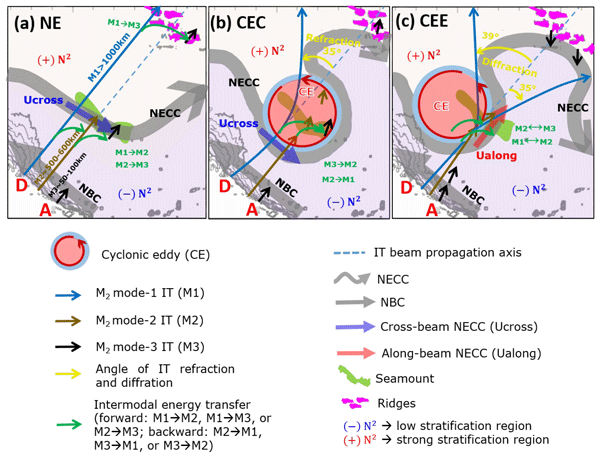
Our research investigates how large waves travel deep within the ocean. Using a detailed computer model, we show that when these deep waves meet giant ocean circulation, their path is dramatically changed. They can be bent off course, split apart, or stopped completely. An underwater mountain works with this circulation to transfer the wave energy between different ocean layers. Understanding this process is vital because it controls ocean mixing.
Landry Junior Mbang Essome, Gaël Alory, Casimir Yelognissé Da-Allada, Isabelle Dadou, Roy Dorgeless Ngakala, and Guillaume Morvan
Ocean Sci., 22, 1279–1309, https://doi.org/10.5194/os-22-1279-2026, https://doi.org/10.5194/os-22-1279-2026, 2026
Short summary
Short summary
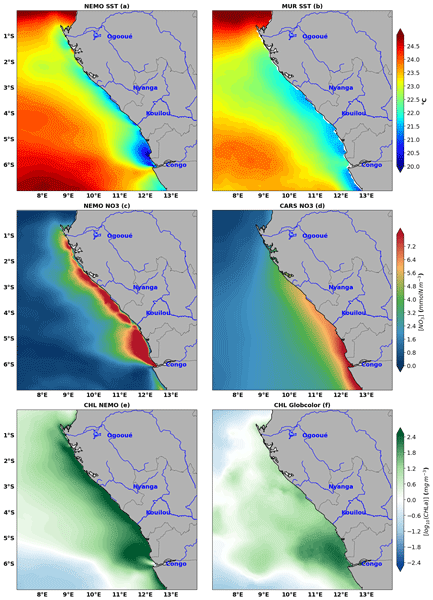
We used a high-resolution model to study how ocean currents and waves, especially coastal trapped waves, control nitrate variability in the Gabon-Congo upwelling system. This nutrient availability drives seasonal marine productivity, with the Congo River also adding significant nitrate. Our research clarifies the complex interplay of physical and biological factors, offering crucial insights for managing regional fisheries and assessing climate change impacts on this vital ecosystem.
Carina Regina de Macedo, Ariane Koch-Larrouy, José Carlos Bastos da Silva, Jorge Manuel Magalhães, Fernand Assene, Manh Duy Tran, Isabelle Dadou, Amine M'Hamdi, Trung Kien Tran, and Vincent Vantrepotte
Ocean Sci., 22, 871–892, https://doi.org/10.5194/os-22-871-2026, https://doi.org/10.5194/os-22-871-2026, 2026
Short summary
Short summary
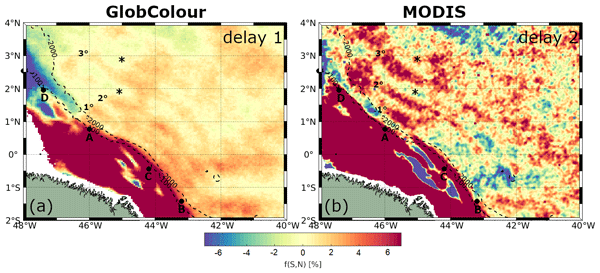
We investigated how ocean tides influence marine phytoplankton along the North Brazilian coast. Using satellite data from 2005 to 2021, we found that tides can either enhance or reduce phytoplankton growth on the continental shelf. Offshore, internal tides stimulate primary production along their pathways. These results improve our understanding of how tidal processes shape marine life in tropical coastal regions.
Chloé Goret, Ariane Koch-Larrouy, Fabius Kouogang, Carina Regina de Macedo, Amine M'Hamdi, Jorge M. Magalhães, José Carlos Bastos da Silva, Michel Tchilibou, Camila Artana, Isabelle Dadou, Antoine Delepoulle, Simon Barbot, Maxime Ballarotta, Loren Carrère, and Alex Costa da Silva
Ocean Sci., 22, 679–698, https://doi.org/10.5194/os-22-679-2026, https://doi.org/10.5194/os-22-679-2026, 2026
Short summary
Short summary
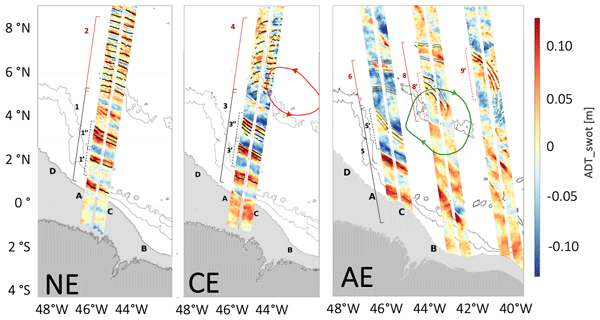
Using high-resolution satellite measurements, we observed how eddies off the Amazon shelf modify internal solitary waves. The results show that these waves can be deflected from their path, even split into two branches, and change their geometry when interacting with different types of eddies. This work provides new insight into the ocean’s complex dynamic interactions and could help guide future predictions of ocean behavior and its effects on coastal and marine ecosystems.
Fernand Assene, Ariane Koch-Larrouy, Carina Regina de Macedo, Isabelle Dadou, Michel Tchilibou, Guillaume Morvan, Damien Allain, Simon Barbot, Alex Costa da Silva, Jérôme Chanut, Vincent Vantrepotte, Florent Lyard, Edward Zaron, and Trung-Kien Tran
EGUsphere, https://doi.org/10.5194/egusphere-2026-557, https://doi.org/10.5194/egusphere-2026-557, 2026
Short summary
Short summary
We examine temperature (T) variability at two semidiurnal and one fortnightly frequencies in North Brazil using satellite-observed and modeled temperatures. Semidiurnal T variability is weak offshore but peaks over the shelf due to barotropic mixing. Below 100 m, internal tide (IT)-driven mixing causes strong T variability (0.6–2 °C). T fortnightly maximums (~0.15 °C) appear along IT pathways, showing their key role.
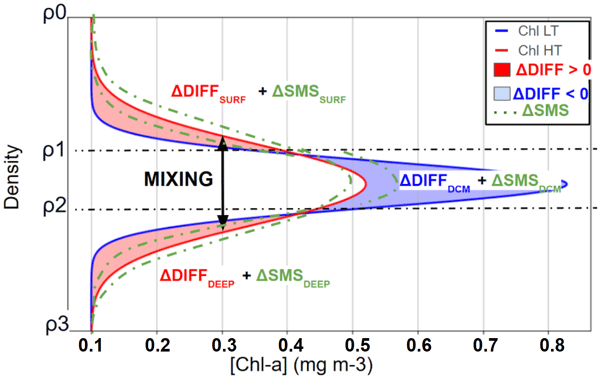
Amine M'hamdi, Ariane Koch-Larrouy, Alex Costa da Silva, Isabelle Dadou, Carina Regina de Macedo, Anthony Bosse, Vincent Vantrepotte, Habib Micaël Aguedjou, Trung-Kien Tran, Pierre Testor, Laurent Mortier, Arnaud Bertrand, Pedro Augusto Mendes de Castro Melo, James Lee, Marcelo Rollnic, and Moacyr Araujo
Ocean Sci., 21, 2873–2894, https://doi.org/10.5194/os-21-2873-2025, https://doi.org/10.5194/os-21-2873-2025, 2025
Short summary
Short summary
In the ocean off the Amazon shelf, internal waves caused by tides move water layers up and down and mix them. Using an underwater glider and satellites, we found internal tides redistribute chlorophyll from the deep chlorophyll maximum upward to the surface and downward to depth. Turbulent chlorophyll fluxes supply about 38 % of surface chlorophyll, and total chlorophyll increases by 14–29 % during strong tides, potentially affecting the marine food web.
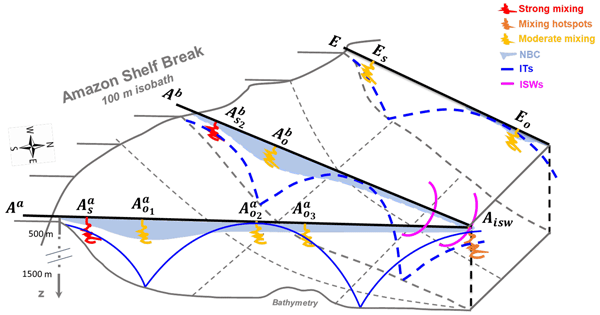
Fabius Kouogang, Ariane Koch-Larrouy, Jorge Magalhaes, Alex Costa da Silva, Daphne Kerhervé, Arnaud Bertrand, Evan Cervelli, Fernand Assene, Jean-François Ternon, Pierre Rousselot, James Lee, Marcelo Rollnic, and Moacyr Araujo
Ocean Sci., 21, 1589–1608, https://doi.org/10.5194/os-21-1589-2025, https://doi.org/10.5194/os-21-1589-2025, 2025
Short summary
Short summary
New research reveals that ocean mixing off the Amazon coast peaks not only near wave origins but also 230 km offshore, where different wave paths may intersect. This overlap likely forms strong solitary waves that intensify turbulence. Based on the AMAZOMIX-2021 cruise, which collected direct turbulence measurements alongside hydrographic data, the study quantifies dissipation and the relative contributions of tidal shear and large-scale shear. This mixing helps redistribute heat and nutrients, playing a key role in climate regulation and marine ecosystems.
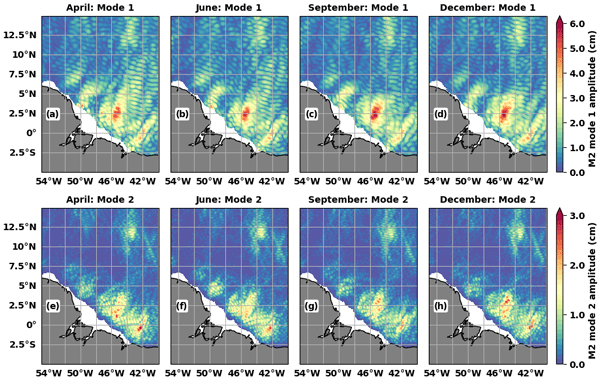
Michel Tchilibou, Simon Barbot, Loren Carrere, Ariane Koch-Larrouy, Gérald Dibarboure, and Clément Ubelmann
Ocean Sci., 21, 1469–1486, https://doi.org/10.5194/os-21-1469-2025, https://doi.org/10.5194/os-21-1469-2025, 2025
Short summary
Short summary
MIOST24 (Multivariate Inversion of Ocean Surface Topography 2024) annual and monthly internal tide (IT) atlases, based on 25 years of altimetry data and an updated wavelength database, are presented for the Indo-Philippine archipelago and the Amazon shelf. The atlases show monthly IT variability and a better correction of IT in altimetry data than with MIOST22 (MIOST 2022) and HRET (High-Resolution Empirical Tide). The results support the development of a global MIOST24.
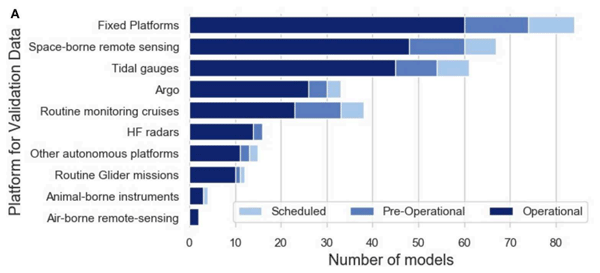
Marcos Garcia Sotillo, Marie Drevillon, and Fabrice Hernandez
State Planet, 5-opsr, 16, https://doi.org/10.5194/sp-5-opsr-16-2025, https://doi.org/10.5194/sp-5-opsr-16-2025, 2025
Short summary
Short summary
Operational forecasting systems require best practices for assessing the quality of ocean products. The authors discuss the role of the observing network in performing validation of ocean models, identifying current gaps but also emphasizing the need of new metrics. An analysis on the level of maturity of validation processes from global to regional systems is provided. A rich variety of approaches exists. An example is provided of how the Copernicus Marine Service organizes product quality information.
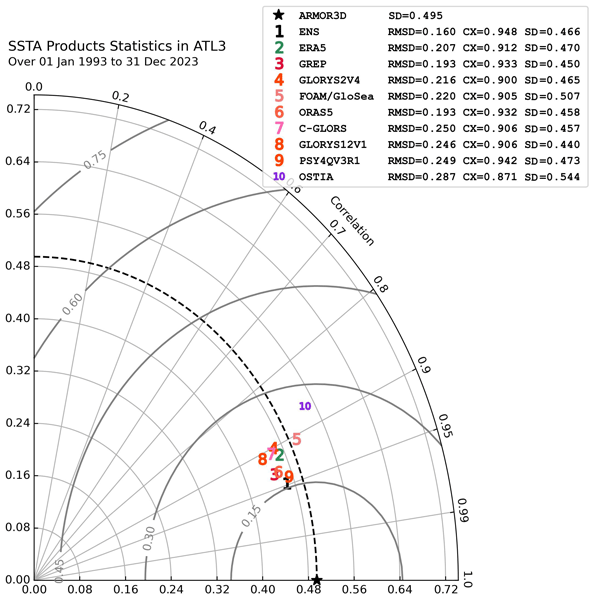
Fabrice Hernandez, Marcos Garcia Sotillo, and Angélique Melet
State Planet, 5-opsr, 17, https://doi.org/10.5194/sp-5-opsr-17-2025, https://doi.org/10.5194/sp-5-opsr-17-2025, 2025
Short summary
Short summary
An historical review over the last 3 decades on intercomparison projects of ocean numerical reanalysis or forecast is first proposed. From this, main issues and lessons learned are discussed in order to propose an overview of best practices and key considerations to facilitate intercomparison activities in operational oceanography.
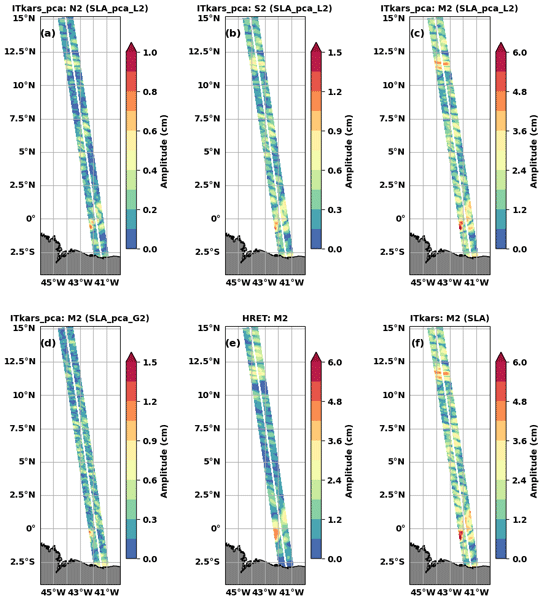
Michel Tchilibou, Loren Carrere, Florent Lyard, Clément Ubelmann, Gérald Dibarboure, Edward D. Zaron, and Brian K. Arbic
Ocean Sci., 21, 325–342, https://doi.org/10.5194/os-21-325-2025, https://doi.org/10.5194/os-21-325-2025, 2025
Short summary
Short summary
Sea level observations along the swaths of the new SWOT (Surface Water and Ocean Topography) mission were used to characterize internal tides at three semidiurnal frequencies off the Amazon shelf in the tropical Atlantic during the SWOT calibration/validation period. The atlases were derived using harmonic analysis and principal component analysis. The SWOT-derived internal tide atlas outperforms the reference atlas previously used to correct SWOT observations.
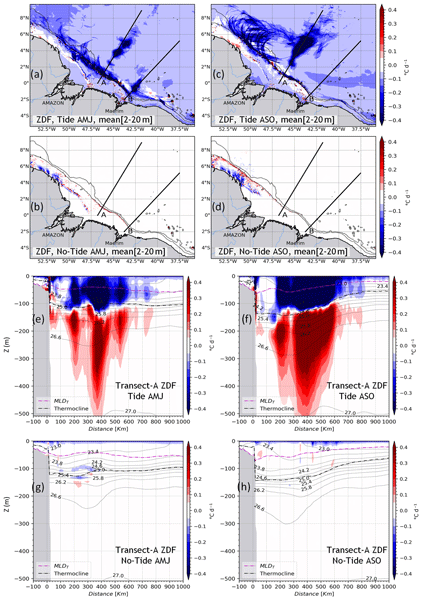
Fernand Assene, Ariane Koch-Larrouy, Isabelle Dadou, Michel Tchilibou, Guillaume Morvan, Jérôme Chanut, Alex Costa da Silva, Vincent Vantrepotte, Damien Allain, and Trung-Kien Tran
Ocean Sci., 20, 43–67, https://doi.org/10.5194/os-20-43-2024, https://doi.org/10.5194/os-20-43-2024, 2024
Short summary
Short summary
Twin simulations, with and without tides, are used to assess the impact of internal tides (ITs) on ocean temperature off the Amazon mouth at a seasonal scale. We found that in the surface layers, ITs and barotropic tides cause a cooling effect on sea surface temperature, subsequently leading to an increase in the net heat flux between the atmosphere and ocean. Vertical mixing is identified as the primary driver, followed by vertical and horizontal advection.
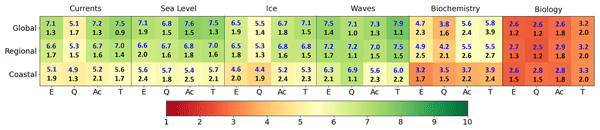
Stefania A. Ciliberti, Enrique Alvarez Fanjul, Jay Pearlman, Kirsten Wilmer-Becker, Pierre Bahurel, Fabrice Ardhuin, Alain Arnaud, Mike Bell, Segolene Berthou, Laurent Bertino, Arthur Capet, Eric Chassignet, Stefano Ciavatta, Mauro Cirano, Emanuela Clementi, Gianpiero Cossarini, Gianpaolo Coro, Stuart Corney, Fraser Davidson, Marie Drevillon, Yann Drillet, Renaud Dussurget, Ghada El Serafy, Katja Fennel, Marcos Garcia Sotillo, Patrick Heimbach, Fabrice Hernandez, Patrick Hogan, Ibrahim Hoteit, Sudheer Joseph, Simon Josey, Pierre-Yves Le Traon, Simone Libralato, Marco Mancini, Pascal Matte, Angelique Melet, Yasumasa Miyazawa, Andrew M. Moore, Antonio Novellino, Andrew Porter, Heather Regan, Laia Romero, Andreas Schiller, John Siddorn, Joanna Staneva, Cecile Thomas-Courcoux, Marina Tonani, Jose Maria Garcia-Valdecasas, Jennifer Veitch, Karina von Schuckmann, Liying Wan, John Wilkin, and Romane Zufic
State Planet, 1-osr7, 2, https://doi.org/10.5194/sp-1-osr7-2-2023, https://doi.org/10.5194/sp-1-osr7-2-2023, 2023
Carina Regina de Macedo, Ariane Koch-Larrouy, José Carlos Bastos da Silva, Jorge Manuel Magalhães, Carlos Alessandre Domingos Lentini, Trung Kien Tran, Marcelo Caetano Barreto Rosa, and Vincent Vantrepotte
Ocean Sci., 19, 1357–1374, https://doi.org/10.5194/os-19-1357-2023, https://doi.org/10.5194/os-19-1357-2023, 2023
Short summary
Short summary
We focus on the internal solitary waves (ISWs) off the Amazon shelf, their velocity, and their variability in seasonal and tidal cycles. The analysis is based on a large remote-sensing data set. The region is newly described as a hot spot for ISWs with mode-2 internal tide wavelength. The wave activity is higher during spring tides. The mode-1 waves located in the region influenced by the North Equatorial Counter Current showed a velocity/wavelength 14.3 % higher during the boreal summer/fall.
Arne Bendinger, Sophie Cravatte, Lionel Gourdeau, Laurent Brodeau, Aurélie Albert, Michel Tchilibou, Florent Lyard, and Clément Vic
Ocean Sci., 19, 1315–1338, https://doi.org/10.5194/os-19-1315-2023, https://doi.org/10.5194/os-19-1315-2023, 2023
Short summary
Short summary
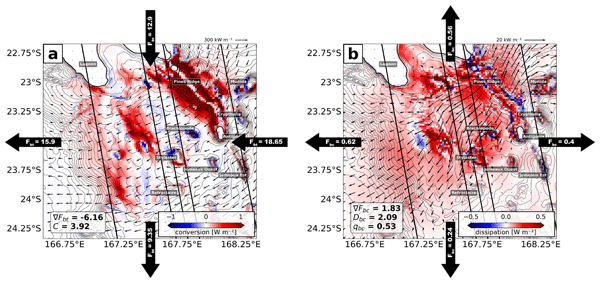
New Caledonia is a hot spot of internal-tide generation due to complex bathymetry. Regional modeling quantifies the coherent internal tide and shows that most energy is converted in shallow waters and on very steep slopes. The region is a challenge for observability of balanced dynamics due to strong internal-tide sea surface height (SSH) signatures at similar wavelengths. Correcting the SSH for the coherent internal tide may increase the observability of balanced motion to < 100 km.
Djoirka Minto Dimoune, Florence Birol, Fabrice Hernandez, Fabien Léger, and Moacyr Araujo
Ocean Sci., 19, 251–268, https://doi.org/10.5194/os-19-251-2023, https://doi.org/10.5194/os-19-251-2023, 2023
Short summary
Short summary
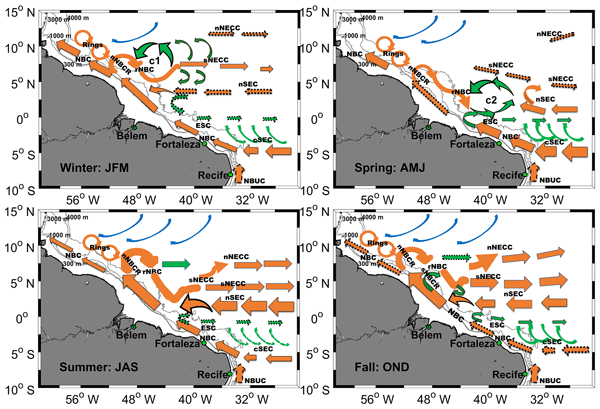
Altimeter-derived currents are used here to revisit the seasonal and interannual variability of all surface currents involved in the western tropical Atlantic circulation. A new approach based on the calculation of the current strengths and core positions is used to investigate the relationship between the currents, the remote wind variability, and the tropical Atlantic modes. The results show relationships at the seasonal and interannual timescale depending on the location of the currents.

Edward D. Zaron, Tonia A. Capuano, and Ariane Koch-Larrouy
Ocean Sci., 19, 43–55, https://doi.org/10.5194/os-19-43-2023, https://doi.org/10.5194/os-19-43-2023, 2023
Short summary
Short summary
Phytoplankton in the upper ocean are food for fish and are thus economically important to humans; furthermore, phytoplankton consume nutrients and generate oxygen by photosynthesis, just like plants on land. Vertical mixing in the ocean is responsible for transporting nutrients into the sunlit zone of the surface ocean. We used remotely sensed data to quantify the influence of tidal mixing on phytoplankton through an analysis of ocean color, which we interpret as chlorophyll concentration.
Michel Tchilibou, Ariane Koch-Larrouy, Simon Barbot, Florent Lyard, Yves Morel, Julien Jouanno, and Rosemary Morrow
Ocean Sci., 18, 1591–1618, https://doi.org/10.5194/os-18-1591-2022, https://doi.org/10.5194/os-18-1591-2022, 2022
Short summary
Short summary
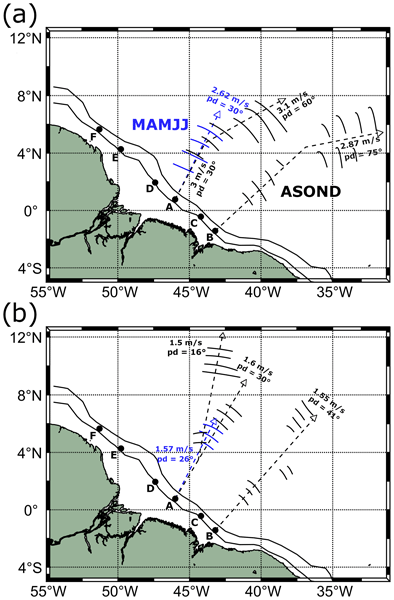
This high-resolution model-based study investigates the variability in the generation, propagation, and sea height signature (SSH) of the internal tide off the Amazon shelf during two contrasted seasons. ITs propagate further north during the season characterized by weak currents and mesoscale eddies and a shallow and strong pycnocline. IT imprints on SSH dominate those of the geostrophic motion for horizontal scales below 200 km; moreover, the SSH is mainly incoherent below 70 km.
Clément Ubelmann, Loren Carrere, Chloé Durand, Gérald Dibarboure, Yannice Faugère, Maxime Ballarotta, Frédéric Briol, and Florent Lyard
Ocean Sci., 18, 469–481, https://doi.org/10.5194/os-18-469-2022, https://doi.org/10.5194/os-18-469-2022, 2022
Short summary
Short summary
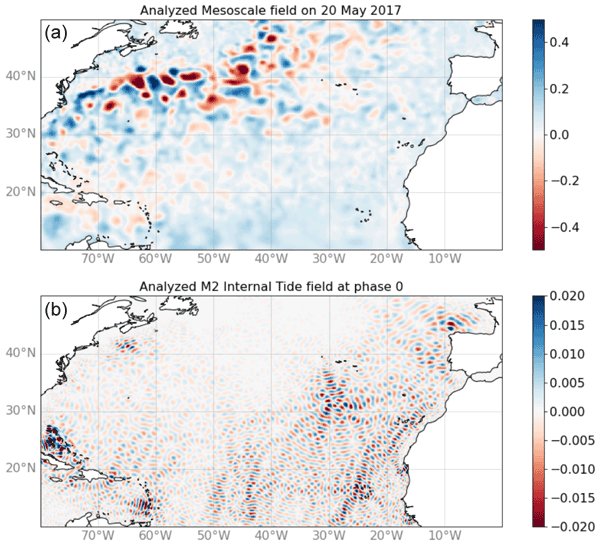
The signature of internal tides has become an important component for high-resolution altimetry over oceans. Several studies have proposed some solutions to resolve part of these internal tides based on the altimetry record. Following these studies, we propose here a new inversion approach aimed to mitigate aliasing with other dynamics. After a description of the methodology, the solution for the main tidal components has been successfully validated against independent observations.
Simon Barbot, Florent Lyard, Michel Tchilibou, and Loren Carrere
Ocean Sci., 17, 1563–1583, https://doi.org/10.5194/os-17-1563-2021, https://doi.org/10.5194/os-17-1563-2021, 2021
Short summary
Short summary
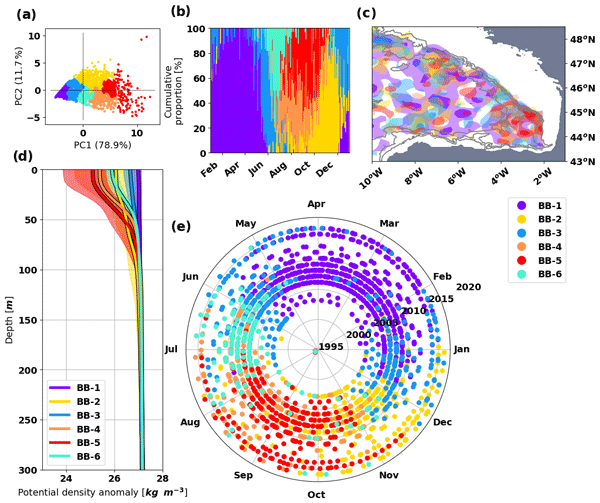
Internal tides are responsible for surface deformations of the ocean that could affect the measurements of the forthcoming SWOT altimetric mission and need to be corrected. This study highlights the variability of the properties of internal tides based on the stratification variability only. A single methodology is successfully applied in two areas driven by different oceanic processes: the western equatorial Atlantic and the Bay of Biscay.
Cited articles
Arbic, B., Alford, M., Ansong, J., Buijsman, M., Ciotti, R., Farrar, J., Hallberg, R., Henze, C., Hill, C., Luecke, C., Menemenlis, D., Metzger, E., Müeller, M., Nelson, A., Nelson, B., Ngodock, H., Ponte, R., Richman, J., Savage, A., and Zhao, Z.: A Primer on Global Internal Tide and Internal Gravity Wave Continuum Modeling in HYCOM and MITgcm, https://doi.org/10.17125/gov2018.ch13, 2018. a
Baines, P. G.: On internal tide generation models, Deep-Sea Res., 29, 307–338, 1982. a
Barbot, S., Lyard, F., Tchilibou, M., and Carrere, L.: Background stratification impacts on internal tide generation and abyssal propagation in the western equatorial Atlantic and the Bay of Biscay, Ocean Sci., 17, 1563–1583, https://doi.org/10.5194/os-17-1563-2021, 2021. a, b, c
Barkan, R., Srinivasan, K., Yang, L., McWilliams, J. C., Gula, J., and Vic, C.: Oceanic mesoscale eddy depletion catalyzed by internal waves, Geophys. Res. Lett., 48, e2021GL094376, https://doi.org/10.1029/2021GL094376, 2021. a
Bauchot, P.: Learning optimal measurements and sampling strategies for multiplatform ocean monitoring surveillance, PhD thesis, ENSTA – IPP, https://doi.org/10.70675/ef792642z4586z461az903bz795ed658ccb0, 2025. a
Bauchot, P.: PerrineBauchot/InternalTides_VTR: Altimetry processing algorithm for internal tides off the VTR (1.0), Zenodo [code], https://doi.org/10.5281/zenodo.20800604, 2026. a
Buijsman, M. C., Arbic, B. K., Richman, J. G., Shriver, J. F., Wallcraft, A. J., and Zamudio, L.: Semidiurnal internal tide incoherence in the equatorial Pacific, J. Geophys. Res.-Oceans, 122, 5286–5305, https://doi.org/10.1002/2016JC012590, 2017. a
Carrère, L., Le Provost, C., and Lyard, F.: On the statistical stability of the M2 barotropic and baroclinic tidal characteristics from along-track TOPEX/Poseidon satellite altimetry analysis, J. Geophys. Res.-Oceans, 109, https://doi.org/10.1029/2003JC001873, 2004. a, b, c
Carrere, L., Arbic, B. K., Dushaw, B., Egbert, G., Erofeeva, S., Lyard, F., Ray, R. D., Ubelmann, C., Zaron, E., Zhao, Z., Shriver, J. F., Buijsman, M. C., and Picot, N.: Accuracy assessment of global internal-tide models using satellite altimetry, Ocean Sci., 17, 147–180, https://doi.org/10.5194/os-17-147-2021, 2021. a
Carter, G. S., Merrifield, M., Becker, J. M., Katsumata, K., Gregg, M., Luther, D., Levine, M., Boyd, T. J., and Firing, Y.: Energetics of M2 barotropic-to-baroclinic tidal conversion at the Hawaiian Islands, J. Phys. Oceanogr., 38, 2205–2223, 2008. a
Chelton, D. B. and Schlax, M. G.: The accuracies of smoothed sea surface height fields constructed from tandem satellite altimeter datasets, J. Atmos. Ocean. Tech., 20, 1276–1302, 2003. a
Cusack, J. M., Brearley, J. A., Garabato, A. C. N., Smeed, D. A., Polzin, K. L., Velzeboer, N., and Shakespeare, C. J.: Observed eddy–internal wave interactions in the Southern Ocean, J. Phys. Oceanogr., 50, 3043–3062, https://doi.org/10.1175/JPO-D-20-0001.1, 2020. a
Delpech, A., Barkan, R., Srinivasan, K., McWilliams, J. C., Arbic, B. K., Siyanbola, O. Q., and Buijsman, M. C.: Eddy–internal wave interactions and their contribution to cross-scale energy fluxes: a case study in the California Current, J. Phys. Oceanogr., 54, 741–754, https://doi.org/10.1175/JPO-D-23-0181.1, 2024. a
Dossa, A. N., da Silva, A. C., Hernandez, F., Aguedjou, H. M., Chaigneau, A., Araujo, M., and Bertrand, A.: Mesoscale eddies in the southwestern tropical Atlantic, Frontiers in Marine Science, 9, 886617, https://doi.org/10.3389/fmars.2022.886617, 2022. a
Dunphy, M. and Lamb, K. G.: Focusing and vertical mode scattering of the first mode internal tide by mesoscale eddy interaction, J. Geophys. Res.-Oceans, 119, 523–536, 2014. a
Egbert, G. D. and Ray, R. D.: Estimates of M2 tidal energy dissipation from TOPEX/Poseidon altimeter data, J. Geophys. Res.-Oceans, 106, 22475–22502, 2001. a
Fernández-Castro, B., Evans, D. G., Frajka-Williams, E., Vic, C., and Naveira-Garabato, A. C.: Breaking of internal waves and turbulent dissipation in an anticyclonic mode water eddy, J. Phys. Oceanogr., 50, 1893–1914, 2020. a
Ferrari, R. and Wunsch, C.: Ocean circulation kinetic energy: reservoirs, sources, and sinks, Annu. Rev. Fluid Mech., 41, 253–282, https://doi.org/10.1146/annurev.fluid.40.111406.102139, 2009. a, b
Fu, L.-L., Pavelsky, T., Cretaux, J.-F., Morrow, R., Farrar, J. T., Vaze, P., Sengenes, P., Vinogradova-Shiffer, N., Sylvestre-Baron, A., Picot, N., and Dibarboure, G.: The surface water and ocean topography mission: a breakthrough in radar remote sensing of the ocean and land surface water, Geophys. Res. Lett., 51, e2023GL107652, https://doi.org/10.1029/2023GL107652, 2024. a
Garrett, C.: Internal tides and ocean mixing, Science, 301, 1858–1859, 2003. a
Gerkema, T. and Zimmerman, J.: An Introduction to Internal Waves, Lecture Notes, Royal NIOZ, Texel, 207, https://www.vliz.be/imisdocs/publications/ocrd/60/307760.pdf (last access: June 2026), 2008. a
Giachini Tosetto, E., Lett, C., Koch-Larrouy, A., Costa da Silva, A., Neumann-Leitão, S., Nogueira Junior, M., Barrier, N., Dossa, A. N., Tchilibou, M., Bauchot, P., Morvan, G., and Bertrand, A.: Identifying community assembling zones and connectivity pathways in the Tropical Southwestern Atlantic Ocean, Ecography, 2024, e07110, https://doi.org/10.1111/ecog.07110, 2024. a
Goret, C., Koch-Larrouy, A., Kouogang, F., de Macedo, C. R., M'Hamdi, A., Magalhães, J. M., da Silva, J. C. B., Tchilibou, M., Artana, C., Dadou, I., Delepoulle, A., Barbot, S., Ballarotta, M., Carrère, L., and Costa da Silva, A.: Internal solitary waves refraction and diffraction from interaction with eddies off the Amazon Shelf from SWOT, Ocean Sci., 22, 679–698, https://doi.org/10.5194/os-22-679-2026, 2026. a
Hernandez, F., da Silva, A. C., Silva, M. A., and de Assunçáo, R. V.: Fine Scales Structures of the Abrolhos Bank Circulation From SWOT, Insitu and Copernicus Data, in: ESA Living Planet Symposium 2025, ird-05203616, 2025. a
Hersbach, H., Bell, B., Berrisford, P., Hirahara, S., Horányi, A., Muñoz-Sabater, J., Nicolas, J. Peubey, C., Radu, R., Schepers, D., Simmons, A., Soci, C., Abdalla, S., Abellan, X., Balsamo, G., Bechtold, P., Biavati, G., Bidlot, J., Bonavita, M., De Chiara, G., Dahlgren, P., Dee, D., Diamantakis, M., Dragani, R., Flemming, J., Forbes, R., Fuentes, M., Geer, A., Haimberger, L., Healy, S., Hogan, R. J., Hólm, E., Janisková, M., Keeley, S., Laloyaux, P., Lopez, P., Lupu, C., Radnoti, G., de Rosnay, P., Rozum, I., Vamborg, F.,Villaume, S., and Thépaut, J.-N.: The ERA5 global reanalysis, Q. J. Roy. Meteor. Soc., 146, 1999–2049, 2020. a
IPCC: The Earth's Energy Budget, Climate Feedbacks and Climate Sensitivity, Cambridge University Press, 923–1054, https://doi.org/10.1017/9781009157896.009, 2023. a
Kelly, S., Nash, J., and Kunze, E.: Internal-tide energy over topography, J. Geophys. Res.-Oceans, 115, https://doi.org/10.1029/2009JC005618, 2010. a
Klemas, V.: Remote sensing of ocean internal waves: an overview, J. Coast. Res., 28, 540–546, 2012. a
Kouogang, F., Koch-Larrouy, A., Carton, X., Assene, F., Morvan, G., and Araujo, M.: Internal tides–cyclonic eddy interaction and intermodal energy pathways: evidence from 3 km NEMO-AMAZON36 simulations, Ocean Sci., 22, 1545–1568, https://doi.org/10.5194/os-22-1545-2026, 2026. a
Lahaye, N., Gula, J., and Roullet, G.: Internal tide cycle and topographic scattering over the north mid-Atlantic ridge, J. Geophys. Res.-Oceans, 125, e2020JC016376, https://doi.org/10.1029/2020JC016376, 2020. a
Lellouche, J.-M., Greiner, E., Le Galloudec, O., Garric, G., Regnier, C., Drevillon, M., Benkiran, M., Testut, C.-E., Bourdalle-Badie, R., Gasparin, F., Hernandez, O., Levier, B., Drillet, Y., Remy, E., and Le Traon, P.-Y.: Recent updates to the Copernicus Marine Service global ocean monitoring and forecasting real-time 1
Levitus, S., Locarnini, R. A., Boyer, T. P., Mishonov, A. V., Antonov, J. I., Garcia, H. E., Baranova, O. K., Zweng, M. M., Johnson, D. R., and Seidov, D.: World Ocean Atlas 2009, https://repository.library.noaa.gov/view/noaa/1259 (last access: June 2026), 2010. a
Lyard, F. H., Allain, D. J., Cancet, M., Carrère, L., and Picot, N.: FES2014 global ocean tide atlas: design and performance, Ocean Sci., 17, 615–649, https://doi.org/10.5194/os-17-615-2021, 2021. a, b
Löb, J., Köhler, J., Mertens, C., Walter, M., Li, Z., von Storch, J.-S., Zhao, Z., and Rhein, M.: Observations of the low-mode internal tide and its interaction with mesoscale flow south of the Azores, J. Geophys. Res.-Oceans, 125, e2019JC015879, https://doi.org/10.1029/2019JC015879, 2020. a
Madec, G.: NEMO Ocean Engine, ISSN 1288-1619, 2017. a
Martin, S. A., Manucharyan, G. E., and Klein, P.: Synthesizing sea surface temperature and satellite altimetry observations using deep learning improves the accuracy and resolution of gridded sea surface height anomalies, J. Adv. Model. Earth Sy., 15, e2022MS003589, https://doi.org/10.1029/2022MS003589, 2023. a
Morrow, R., Blurmstein, D., and Dibarboure, G.: Fine-scale altimetry and the future SWOT mission, in: New Frontiers in Operational Oceanography, 191–226, https://doi.org/10.17125/gov2018.ch08, 2018. a
Napolitano, D. C., da Silveira, I., Tandon, A., and Calil, P. H.: Submesoscale phenomena due to the Brazil current crossing of the Vitória-Trindade Ridge, J. Geophys. Res.-Oceans, 126, e2020JC016731, https://doi.org/10.1029/2020JC016731, 2021. a
Nugroho, D., Koch-Larrouy, A., Gaspar, P., Lyard, F., Reffray, G., and Tranchant, B.: Modelling explicit tides in the Indonesian seas: an important process for surface sea water properties, Mar. Pollut. Bull., 131, 7–18, 2018. a
Qian, H., Shaw, P.-T., and Ko, D. S.: Generation of internal waves by barotropic tidal flow over a steep ridge, Deep-Sea Res. Pt. I, 57, 1521–1531, 2010. a
Shakespeare, C. J.: Spontaneous generation of internal waves, Phys. Today, 72, 34–39, 2019. a
Subeesh, M., Unnikrishnan, A., and Francis, P.: Generation, propagation and dissipation of internal tides on the continental shelf and slope off the west coast of India, Cont. Shelf Res., 214, 104321, https://doi.org/10.1016/j.csr.2020.104321, 2021. a
Tchilibou, M., Koch-Larrouy, A., Barbot, S., Lyard, F., Morel, Y., Jouanno, J., and Morrow, R.: Internal tides off the Amazon shelf during two contrasted seasons: interactions with background circulation and SSH imprints, Ocean Sci., 18, 1591–1618, https://doi.org/10.5194/os-18-1591-2022, 2022. a
Tchilibou, M., Carrere, L., Lyard, F., Ubelmann, C., Dibarboure, G., Zaron, E. D., and Arbic, B. K.: Internal tides off the Amazon shelf in the western tropical Atlantic: analysis of SWOT Cal/Val mission data, Ocean Sci., 21, 325–342, https://doi.org/10.5194/os-21-325-2025, 2025. a
Ubelmann, C., Carrere, L., Durand, C., Dibarboure, G., Faugère, Y., Ballarotta, M., Briol, F., and Lyard, F.: Simultaneous estimation of ocean mesoscale and coherent internal tide sea surface height signatures from the global altimetry record, Ocean Sci., 18, 469–481, https://doi.org/10.5194/os-18-469-2022, 2022. a
Whalen, C. B., De Lavergne, C., Naveira Garabato, A. C., Klymak, J. M., MacKinnon, J. A., and Sheen, K. L.: Internal wave-driven mixing: governing processes and consequences for climate, Nature Reviews Earth and Environment, 1, 606–621, 2020. a
Zaron, E. D.: Baroclinic tidal sea level from exact-repeat mission altimetry, J. Phys. Oceanogr., 49, 193–210, https://doi.org/10.1175/JPO-D-18-0127.1, 2019. a
Short summary
The Vitória–Trindade Ridge off the Brazilian coast is a hotspot for internal tides, which drive energy and nutrients exchanges in the ocean. Using satellite data and a high-resolution ocean model, we study what influences these small waves in this region. We show that internal tides are generated more strongly in summer and lose energy faster in winter. Ocean eddies may also affect their fate. These results are essential for understanding oceanic energy pathways and refine model predictions.
The Vitória–Trindade Ridge off the Brazilian coast is a hotspot for internal tides, which drive...


