
Articles | Volume 22, issue 1
https://doi.org/10.5194/os-22-679-2026
© Author(s) 2026. This work is distributed under
the Creative Commons Attribution 4.0 License.
the Creative Commons Attribution 4.0 License.
https://doi.org/10.5194/os-22-679-2026
© Author(s) 2026. This work is distributed under
the Creative Commons Attribution 4.0 License.
the Creative Commons Attribution 4.0 License.
Research article
| 
17 Feb 2026
Research article |
| 17 Feb 2026
| 17 Feb 2026
Internal solitary waves refraction and diffraction from interaction with eddies off the Amazon Shelf from SWOT
Chloé Goret
CORRESPONDING AUTHOR

CECI, Université de Toulouse, CERFACS/CNRS/IRD, Toulouse, France
Ariane Koch-Larrouy
CECI, Université de Toulouse, CERFACS/CNRS/IRD, Toulouse, France
Fabius Kouogang
CECI, Université de Toulouse, CERFACS/CNRS/IRD, Toulouse, France
Departamento de Oceanografia, Universidade Federal de Pernambuco, DOCEAN/UFPE, Recife, Brazil
Carina Regina de Macedo
LEGOS, Université de Toulouse, CNES, CNRS, IRD, Toulouse, France
Earth Observation and Geoinformatics Division, National Institute for Space Research (INPE), São José dos Campos, Brazil
Amine M'Hamdi
CECI, Université de Toulouse, CERFACS/CNRS/IRD, Toulouse, France
Departamento de Oceanografia, Universidade Federal de Pernambuco, DOCEAN/UFPE, Recife, Brazil
LEGOS, Université de Toulouse, CNES, CNRS, IRD, Toulouse, France
Jorge M. Magalhães
Interdisciplinary Centre of Marine and Environmental Research (CIIMAR), 4450-208 Matosinhos, Portugal
José Carlos Bastos da Silva
Interdisciplinary Centre of Marine and Environmental Research (CIIMAR), 4450-208 Matosinhos, Portugal
Department of Geoscience, Environment and Spatial Planning (DGAOT), Faculty of Sciences, University of Porto, Rua do Campo Alegre, s/n, 4169-007 Porto, Portugal
Michel Tchilibou
Collecte Localisation Satellites (CLS), Ramonville-Saint-Agne, France
Camila Artana
LOCEAN-IPSL/CNRS, Université Pierre et Marie Curie, Paris, France
Isabelle Dadou
LEGOS, Université de Toulouse, CNES, CNRS, IRD, Toulouse, France
Antoine Delepoulle
Collecte Localisation Satellites (CLS), Ramonville-Saint-Agne, France
Simon Barbot
LEGOS, Université de Toulouse, CNES, CNRS, IRD, Toulouse, France
Maxime Ballarotta
Collecte Localisation Satellites (CLS), Ramonville-Saint-Agne, France
Loren Carrère
Collecte Localisation Satellites (CLS), Ramonville-Saint-Agne, France
Alex Costa da Silva
LOCEAN-IPSL/CNRS, Université Pierre et Marie Curie, Paris, France
Related authors
No articles found.
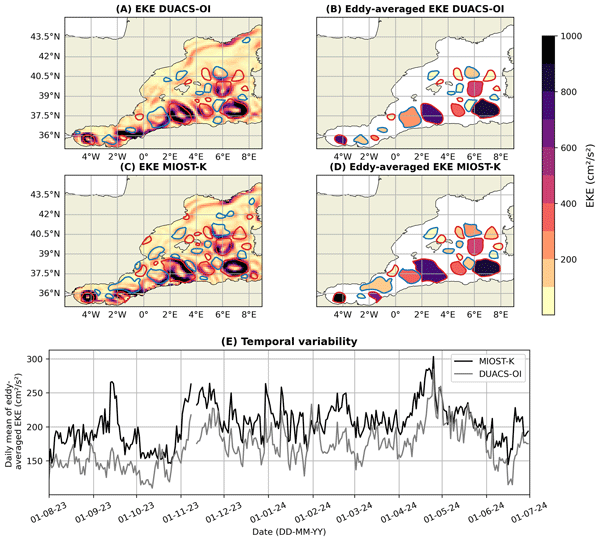
Laura Gómez-Navarro, Maxime Ballarotta, Diego Cortés-Morales, Marie-Isabelle Pujol, Laura Fortunato, Baptiste Mourre, and Ananda Pascual
State Planet, 7-osr10, 8, https://doi.org/10.5194/sp-7-osr10-8-2026, https://doi.org/10.5194/sp-7-osr10-8-2026, 2026
Short summary
Short summary
Understanding how the ocean moves heat, nutrients, and pollution is vital for climate studies and ecosystem health. We examined eddies in the western Mediterranean Sea using innovative satellite observations from the Surface Water and Ocean Topography mission. Compared to existing data, we detected major differences in eddy patterns. These advances improve our ability to monitor the ocean, manage marine pollution, and support sustainable maritime activities.
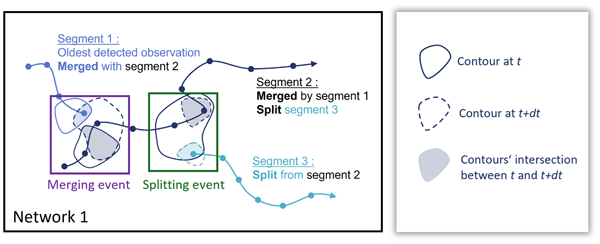
Juliette Gamot, Antoine Delepoulle, Francesco Nencioli, Marie-Isabelle Pujol, and Gerald Dibarboure
Earth Syst. Sci. Data, 18, 7043–7070, https://doi.org/10.5194/essd-18-7043-2026, https://doi.org/10.5194/essd-18-7043-2026, 2026
Short summary
Short summary
Mesoscale eddies are rotating ocean features that play a key role in transporting heat, salt, and biological material. This study presents a new global dataset derived from satellite observations to track these eddies and identify when they merge or split. By organizing them into interaction networks, we show that such events are frequent and strongly influence eddy evolution, leading to a more realistic description of ocean circulation.
Arnaud Bertrand, Monique Simier, Gabriel Vinicius Felix Afonso, Gael Alory, Alejandro Ariza, Ramilla Assunção, Jean-Christophe Auguet, François Baurand, Beatrice Bec, Delphine Bonnet, Léandro Ferreira Cabanez, Claire Carré, Alexis Chaigneau, Adilma de Lourdes Montenegro Cocentino, Isis Amalia Cordeiro, Alex Costa da Silva, Martin Coubard, Mauro de Melo Junior, Juan-Carlos Molinero, Jeremy Devesa, Gilles Domalain, Leandro Nole Eduardo, Gérard Eldin, Gabriel Bittencourt Farias, Guilherme Ferreira, Gabriela Guerra Araújo Abrantes Figueiredo, Thierry Frédou, Diaz Xiomara Garcia, Everton Giachini Tosetto, Júlio Guazzelli Gonzalez, Jacques Grelet, Sandrine Hillion, Anne Justino, Marina Cavalcanti Jales, Sírleis Rodrigues Lacerda, François Le Loc'h, Anne Lebourges-Dhaussy, Rayssa Siqueira Lima, Nathalia Lins-Silva, Alex Souza Lira, Simone Maria de Albuquerque Lira, Catarina Marcolin da Rocha, Júlia Rodrigues Martins, Anais Médieu, Catarina Melo, Pedro Augusto Mendes de Castro Melo, Michael Maia Mincarone, Magali Monnier, Jean-Marie Munaron, Sigrid Neumann-Leitão, Junior Miodeli Nogueira, Matheus Oliveira, Beatrice Padovani Ferreira, Latifa Pelage, David Point, Ulisses Pinheiro, Fabrice Roubaud, Gildas Roudaut, Pierre Rousselot, Julianna de Lemos Santana, Ralf Schwamborn, Maria da Glória Gonçalves Silva-Cunha, Andrey Soares, Jesser Fidelis Souza Filho, Jean-François Ternon, Paulo Travassos, Gary Vargas, Teodoro Vaske Jr., Renata P. S. Campelo, Bárbara Teixeira Villarins, and Flávia Lucena-Frédou
Earth Syst. Sci. Data Discuss., https://doi.org/10.5194/essd-2026-512, https://doi.org/10.5194/essd-2026-512, 2026
Preprint under review for ESSD
Short summary
Short summary
Understanding marine ecosystems requires observing environment, organisms, and interactions. Off Northeast Brazil, we conducted expeditions in 2015 and 2017 to measure ocean conditions, map distributions with acoustics, and sample from plankton to deep-sea fish. We identified 172,000 specimens, analysed food webs using chemical tracers, and measured contaminants. This dataset connects ocean physics to biodiversity across depths, providing an integrated view of a tropical marine ecosystem.
Joseph K. Ansong, Brian K. Arbic, Romain Bourdalle-Badié, Clément Bricaud, Jérôme Chanut, Dimitris Menemenlis, Richard D. Ray, Michael Schindelegger, Alan J. Wallcraft, He Wang, Alistair J. Adcroft, Frédéric Briol, Maarten C. Buijsman, Loren Carrère, Eric P. Chassignet, Gerald Dibarboure, Robert W. Hallberg, Christopher N. Hill, Ariane Koch-Larrouy, Florent Lyard, Matthew R. Mazloff, An T. Nguyen, Nicolas Picot, Rui M. Ponte, and Jay F. Shriver
EGUsphere, https://doi.org/10.5194/egusphere-2026-5064, https://doi.org/10.5194/egusphere-2026-5064, 2026
This preprint is open for discussion and under review for Ocean Science (OS).
Short summary
Short summary
We assess how well four high-resolution global ocean models reproduce surface and internal tides compared with satellite observations. Some models produce internal tides that are too strong, but including energy loss over rough seafloor improves their accuracy. Longer model records and higher resolution also improve agreement with observations. We further identify errors in the tidal forcing of widely used MITgcm simulations that reduce the accuracy of their simulated tides.
Cristina Martí-Solana, Simón Ruiz, Vincent Combes, Bàrbara Barceló-Llull, Maxime Ballarotta, and Ananda Pascual
State Planet Discuss., https://doi.org/10.5194/sp-2026-11, https://doi.org/10.5194/sp-2026-11, 2026
Preprint under review for SP
Short summary
Short summary
The Southern Ocean helps regulate Earth's climate, and its winds have strengthened for decades, raising the question of whether the current circling Antarctica is speeding up. Using twenty-five years of satellite data, we find little evidence of this. Much of the extra wind energy seems absorbed by small swirling currents, which show signs of intensifying, while current speed and position appear fairly stable. This suggests the ocean may continue absorbing heat and carbon as winds strengthen.
Amine M'hamdi, Ariane Koch-Larrouy, Anthony Bosse, Isabelle Dadou, Vincent Vantrepotte, and Alex Costa da Silva
EGUsphere, https://doi.org/10.5194/egusphere-2026-4862, https://doi.org/10.5194/egusphere-2026-4862, 2026
This preprint is open for discussion and under review for Ocean Science (OS).
Short summary
Short summary
Internal tides are underwater waves that can transport nutrients from deep waters toward the sunlit ocean. Using glider observations off the Amazon shelf, we compared vertical advection and turbulent mixing. Vertical advection supplied more nitrate and silicate on average, while turbulence became important during energetic events. Together, these processes change nutrient supply and balance, potentially influencing phytoplankton communities in the tropical Atlantic.
Philippe Gamet, Bimal K. Bhattacharya, Jean-Louis Roujean, Gilles Boulet, Corinne Salcedo, Albert Olioso, Kanishka Mallick, Marie Weiss, Emmanuelle Sarrazin, Emmanuelle Autret, Laure Roupioz, José Antonio Sobrino, Olivier Merlin, Ghislain Picard, Thomas H. G. Vidal, Mark Irvine, Rahul Nigam, Mehul Pandya, Simon Gascoin, Sébastien Marcq, Manoj K. Mishra, Emilie Delogu, Vincent Rivalland, Jordi Etchanchu, Jean-Louis Raynaud, Meenakshi Sarkar, Rishi K. Gangwar, Sushil K. Singh, Renaud Binet, Sara Arioli, Hervé Yésou, Isabelle Dadou, Alexei Kouraev, Julien Michel, Benoit Coudert, Samuel Mwangi, Nesrine Farhani, Ayan Das, Stéphane Saux-Picart, Thierry Tormos, Jean-François Piollé, Charles Verpoorter, Auline Rodler, Jonathan Leon Tavares, Jennifer Adams, Anand S. Sahadevan, Besavaraju Santhi Sree, Manikumar Vedantam, Dheeraj Adlakha, Laurence Buffet, Kathrin Naegeli, Itziar Barat, Jerome Demarty, Olivier Hagolle, and Philippe Maisongrande
EGUsphere, https://doi.org/10.5194/egusphere-2026-4492, https://doi.org/10.5194/egusphere-2026-4492, 2026
Short summary
Short summary
This paper highlights how the upcoming TRISHNA satellite mission (launching 2027) will transform Earth observation by providing high-resolution (60 m) thermal infrared imagery with sub-weekly revisits. It details the mission's design and its synergies with other future missions to significantly improve the monitoring of global surface temperature and its dynamics, water stress, and ecosystem energy processes.
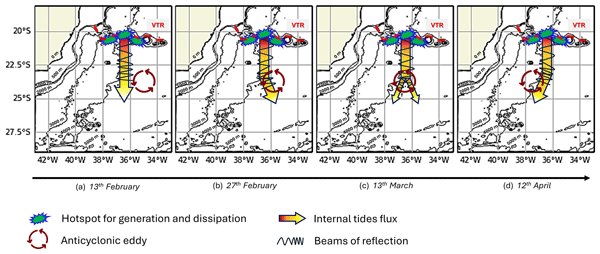
Perrine Bauchot, Ariane Koch-Larrouy, Michel Tchilibou, Loren Carrère, Fabrice Hernandez, Guillaume Morvan, and Jérôme Chanut
Ocean Sci., 22, 2011–2025, https://doi.org/10.5194/os-22-2011-2026, https://doi.org/10.5194/os-22-2011-2026, 2026
Short summary
Short summary
The Vitória–Trindade Ridge off the Brazilian coast is a hotspot for internal tides, which drive energy and nutrients exchanges in the ocean. Using satellite data and a high-resolution ocean model, we study what influences these small waves in this region. We show that internal tides are generated more strongly in summer and lose energy faster in winter. Ocean eddies may also affect their fate. These results are essential for understanding oceanic energy pathways and refine model predictions.
Amine M'hamdi, Ariane Koch-Larrouy, Isabelle Dadou, Carina Regina de Macedo, Fernand Assene, Vincent Vantrepotte, Guillaume Morvan, and Alex Costa da Silva
EGUsphere, https://doi.org/10.5194/egusphere-2026-2729, https://doi.org/10.5194/egusphere-2026-2729, 2026
Short summary
Short summary
We show that tides play a major role in structuring nutrient supply and phytoplankton variability across the Amazon shelf–offshore continuum, from the 15-day spring–neap cycle to seasonal timescales. By enhancing nitrate uplift, especially along the shelf break and internal-tide pathway, tides stimulate offshore chlorophyll growth, modulate the nitracline and deep chlorophyll maximum, and explain a large fraction of the seasonal nutrient signal.
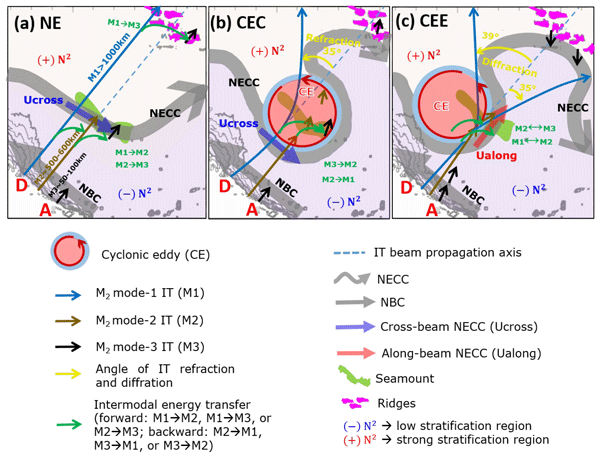
Fabius Kouogang, Ariane Koch-Larrouy, Xavier Carton, Fernand Assene, Guillaume Morvan, and Moacyr Araujo
Ocean Sci., 22, 1545–1568, https://doi.org/10.5194/os-22-1545-2026, https://doi.org/10.5194/os-22-1545-2026, 2026
Short summary
Short summary
Our research investigates how large waves travel deep within the ocean. Using a detailed computer model, we show that when these deep waves meet giant ocean circulation, their path is dramatically changed. They can be bent off course, split apart, or stopped completely. An underwater mountain works with this circulation to transfer the wave energy between different ocean layers. Understanding this process is vital because it controls ocean mixing.
Landry Junior Mbang Essome, Gaël Alory, Casimir Yelognissé Da-Allada, Isabelle Dadou, Roy Dorgeless Ngakala, and Guillaume Morvan
Ocean Sci., 22, 1279–1309, https://doi.org/10.5194/os-22-1279-2026, https://doi.org/10.5194/os-22-1279-2026, 2026
Short summary
Short summary
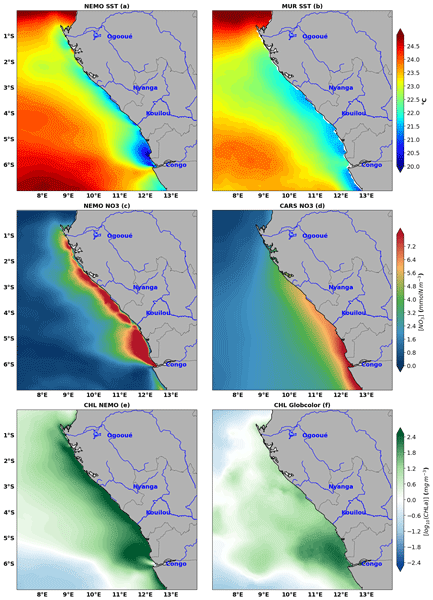
We used a high-resolution model to study how ocean currents and waves, especially coastal trapped waves, control nitrate variability in the Gabon-Congo upwelling system. This nutrient availability drives seasonal marine productivity, with the Congo River also adding significant nitrate. Our research clarifies the complex interplay of physical and biological factors, offering crucial insights for managing regional fisheries and assessing climate change impacts on this vital ecosystem.
Carina Regina de Macedo, Ariane Koch-Larrouy, José Carlos Bastos da Silva, Jorge Manuel Magalhães, Fernand Assene, Manh Duy Tran, Isabelle Dadou, Amine M'Hamdi, Trung Kien Tran, and Vincent Vantrepotte
Ocean Sci., 22, 871–892, https://doi.org/10.5194/os-22-871-2026, https://doi.org/10.5194/os-22-871-2026, 2026
Short summary
Short summary
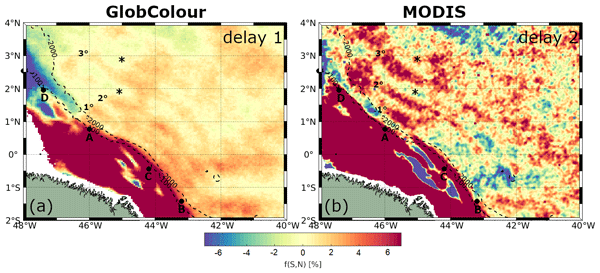
We investigated how ocean tides influence marine phytoplankton along the North Brazilian coast. Using satellite data from 2005 to 2021, we found that tides can either enhance or reduce phytoplankton growth on the continental shelf. Offshore, internal tides stimulate primary production along their pathways. These results improve our understanding of how tidal processes shape marine life in tropical coastal regions.
Jean H. M. Roger, Yannice Faugère, Hélène Hébert, Antoine Delepoulle, and Gérald Dibarboure
Nat. Hazards Earth Syst. Sci., 26, 943–954, https://doi.org/10.5194/nhess-26-943-2026, https://doi.org/10.5194/nhess-26-943-2026, 2026
Short summary
Short summary
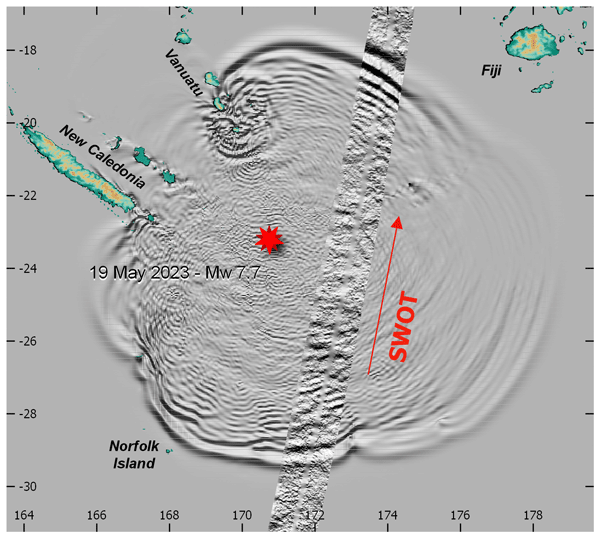
Deployed in 2022, the SWOT (Surface Water Ocean Topography) satellite was flying over the Southwest Pacific on 19 May 2023 when it recorded the tsunami triggered by a magnitude 7.7 earthquake south of the Vanuatu arc. For the very first time, it provided a 2D image of a tsunami wavefield along a straight path. Comparison with numerical tsunami simulations reveals good phase agreement between the modeled wavefield and the SWOT record, but the simulated amplitudes are lower than the measurements.
Fernand Assene, Ariane Koch-Larrouy, Carina Regina de Macedo, Isabelle Dadou, Michel Tchilibou, Guillaume Morvan, Damien Allain, Simon Barbot, Alex Costa da Silva, Jérôme Chanut, Vincent Vantrepotte, Florent Lyard, Edward Zaron, and Trung-Kien Tran
EGUsphere, https://doi.org/10.5194/egusphere-2026-557, https://doi.org/10.5194/egusphere-2026-557, 2026
Short summary
Short summary
We examine temperature (T) variability at two semidiurnal and one fortnightly frequencies in North Brazil using satellite-observed and modeled temperatures. Semidiurnal T variability is weak offshore but peaks over the shelf due to barotropic mixing. Below 100 m, internal tide (IT)-driven mixing causes strong T variability (0.6–2 °C). T fortnightly maximums (~0.15 °C) appear along IT pathways, showing their key role.
Amine M'hamdi, Ariane Koch-Larrouy, Alex Costa da Silva, Isabelle Dadou, Carina Regina de Macedo, Anthony Bosse, Vincent Vantrepotte, Habib Micaël Aguedjou, Trung-Kien Tran, Pierre Testor, Laurent Mortier, Arnaud Bertrand, Pedro Augusto Mendes de Castro Melo, James Lee, Marcelo Rollnic, and Moacyr Araujo
Ocean Sci., 21, 2873–2894, https://doi.org/10.5194/os-21-2873-2025, https://doi.org/10.5194/os-21-2873-2025, 2025
Short summary
Short summary
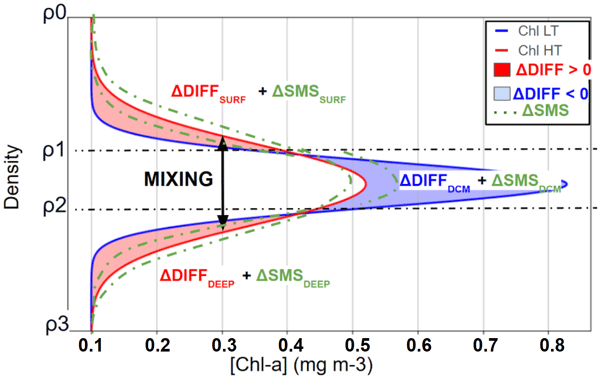
In the ocean off the Amazon shelf, internal waves caused by tides move water layers up and down and mix them. Using an underwater glider and satellites, we found internal tides redistribute chlorophyll from the deep chlorophyll maximum upward to the surface and downward to depth. Turbulent chlorophyll fluxes supply about 38 % of surface chlorophyll, and total chlorophyll increases by 14–29 % during strong tides, potentially affecting the marine food web.
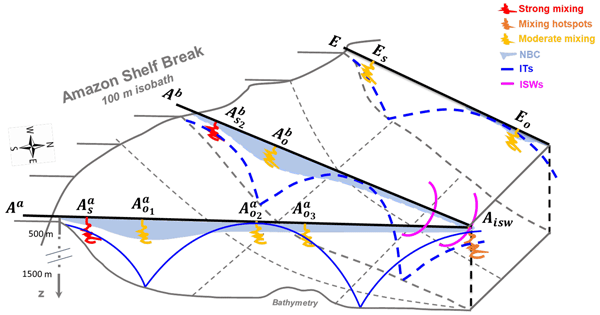
Fabius Kouogang, Ariane Koch-Larrouy, Jorge Magalhaes, Alex Costa da Silva, Daphne Kerhervé, Arnaud Bertrand, Evan Cervelli, Fernand Assene, Jean-François Ternon, Pierre Rousselot, James Lee, Marcelo Rollnic, and Moacyr Araujo
Ocean Sci., 21, 1589–1608, https://doi.org/10.5194/os-21-1589-2025, https://doi.org/10.5194/os-21-1589-2025, 2025
Short summary
Short summary
New research reveals that ocean mixing off the Amazon coast peaks not only near wave origins but also 230 km offshore, where different wave paths may intersect. This overlap likely forms strong solitary waves that intensify turbulence. Based on the AMAZOMIX-2021 cruise, which collected direct turbulence measurements alongside hydrographic data, the study quantifies dissipation and the relative contributions of tidal shear and large-scale shear. This mixing helps redistribute heat and nutrients, playing a key role in climate regulation and marine ecosystems.
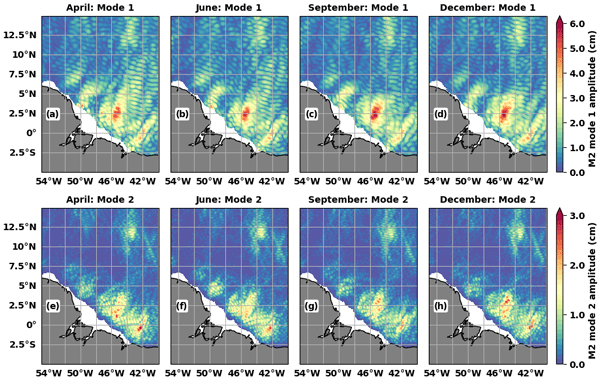
Michel Tchilibou, Simon Barbot, Loren Carrere, Ariane Koch-Larrouy, Gérald Dibarboure, and Clément Ubelmann
Ocean Sci., 21, 1469–1486, https://doi.org/10.5194/os-21-1469-2025, https://doi.org/10.5194/os-21-1469-2025, 2025
Short summary
Short summary
MIOST24 (Multivariate Inversion of Ocean Surface Topography 2024) annual and monthly internal tide (IT) atlases, based on 25 years of altimetry data and an updated wavelength database, are presented for the Indo-Philippine archipelago and the Amazon shelf. The atlases show monthly IT variability and a better correction of IT in altimetry data than with MIOST22 (MIOST 2022) and HRET (High-Resolution Empirical Tide). The results support the development of a global MIOST24.
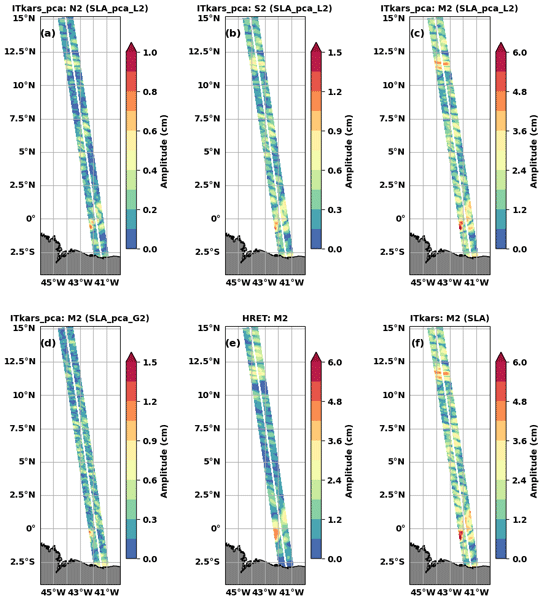
Michel Tchilibou, Loren Carrere, Florent Lyard, Clément Ubelmann, Gérald Dibarboure, Edward D. Zaron, and Brian K. Arbic
Ocean Sci., 21, 325–342, https://doi.org/10.5194/os-21-325-2025, https://doi.org/10.5194/os-21-325-2025, 2025
Short summary
Short summary
Sea level observations along the swaths of the new SWOT (Surface Water and Ocean Topography) mission were used to characterize internal tides at three semidiurnal frequencies off the Amazon shelf in the tropical Atlantic during the SWOT calibration/validation period. The atlases were derived using harmonic analysis and principal component analysis. The SWOT-derived internal tide atlas outperforms the reference atlas previously used to correct SWOT observations.
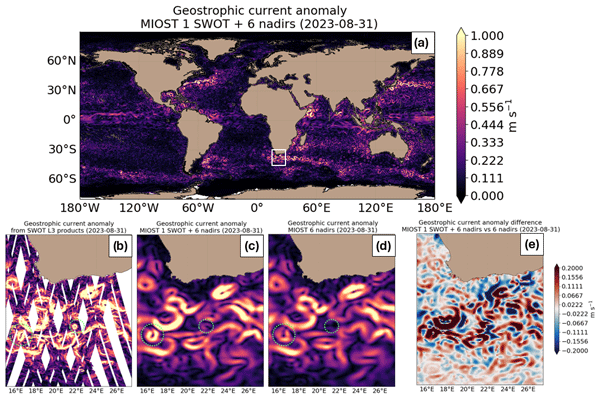
Maxime Ballarotta, Clément Ubelmann, Valentin Bellemin-Laponnaz, Florian Le Guillou, Guillaume Meda, Cécile Anadon, Alice Laloue, Antoine Delepoulle, Yannice Faugère, Marie-Isabelle Pujol, Ronan Fablet, and Gérald Dibarboure
Ocean Sci., 21, 63–80, https://doi.org/10.5194/os-21-63-2025, https://doi.org/10.5194/os-21-63-2025, 2025
Short summary
Short summary
The Surface Water and Ocean Topography (SWOT) mission provides unprecedented swath altimetry data. This study examines SWOT's impact on mapping systems, showing a moderate effect with the current nadir altimetry constellation and a stronger impact with a reduced one. Integrating SWOT with dynamic mapping techniques improves the resolution of satellite-derived products, offering promising solutions for studying and monitoring sea-level variability at finer scales.
Fernand Assene, Ariane Koch-Larrouy, Isabelle Dadou, Michel Tchilibou, Guillaume Morvan, Jérôme Chanut, Alex Costa da Silva, Vincent Vantrepotte, Damien Allain, and Trung-Kien Tran
Ocean Sci., 20, 43–67, https://doi.org/10.5194/os-20-43-2024, https://doi.org/10.5194/os-20-43-2024, 2024
Short summary
Short summary
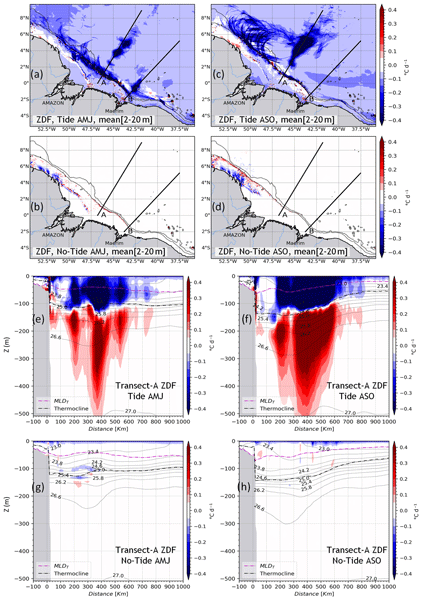
Twin simulations, with and without tides, are used to assess the impact of internal tides (ITs) on ocean temperature off the Amazon mouth at a seasonal scale. We found that in the surface layers, ITs and barotropic tides cause a cooling effect on sea surface temperature, subsequently leading to an increase in the net heat flux between the atmosphere and ocean. Vertical mixing is identified as the primary driver, followed by vertical and horizontal advection.
Florian Le Guillou, Lucile Gaultier, Maxime Ballarotta, Sammy Metref, Clément Ubelmann, Emmanuel Cosme, and Marie-Helène Rio
Ocean Sci., 19, 1517–1527, https://doi.org/10.5194/os-19-1517-2023, https://doi.org/10.5194/os-19-1517-2023, 2023
Short summary
Short summary
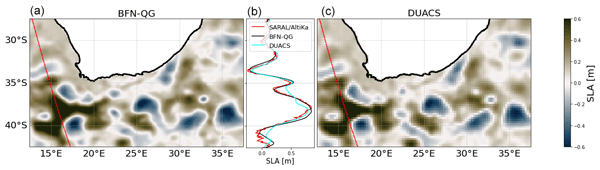
Altimetry provides sea surface height (SSH) data along one-dimensional tracks. For many applications, the tracks are interpolated in space and time to provide gridded SSH maps. The operational SSH gridded products filter out the small-scale signals measured on the tracks. This paper evaluates the performances of a recently implemented dynamical method to retrieve the small-scale signals from real SSH data. We show a net improvement in the quality of SSH maps when compared to independent data.
Carina Regina de Macedo, Ariane Koch-Larrouy, José Carlos Bastos da Silva, Jorge Manuel Magalhães, Carlos Alessandre Domingos Lentini, Trung Kien Tran, Marcelo Caetano Barreto Rosa, and Vincent Vantrepotte
Ocean Sci., 19, 1357–1374, https://doi.org/10.5194/os-19-1357-2023, https://doi.org/10.5194/os-19-1357-2023, 2023
Short summary
Short summary
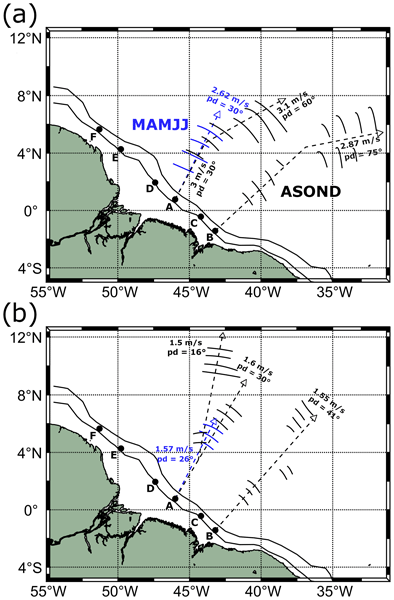
We focus on the internal solitary waves (ISWs) off the Amazon shelf, their velocity, and their variability in seasonal and tidal cycles. The analysis is based on a large remote-sensing data set. The region is newly described as a hot spot for ISWs with mode-2 internal tide wavelength. The wave activity is higher during spring tides. The mode-1 waves located in the region influenced by the North Equatorial Counter Current showed a velocity/wavelength 14.3 % higher during the boreal summer/fall.
Arne Bendinger, Sophie Cravatte, Lionel Gourdeau, Laurent Brodeau, Aurélie Albert, Michel Tchilibou, Florent Lyard, and Clément Vic
Ocean Sci., 19, 1315–1338, https://doi.org/10.5194/os-19-1315-2023, https://doi.org/10.5194/os-19-1315-2023, 2023
Short summary
Short summary
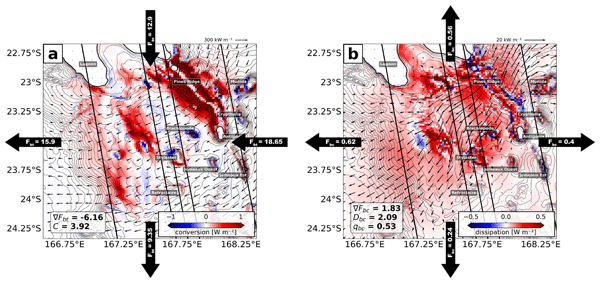
New Caledonia is a hot spot of internal-tide generation due to complex bathymetry. Regional modeling quantifies the coherent internal tide and shows that most energy is converted in shallow waters and on very steep slopes. The region is a challenge for observability of balanced dynamics due to strong internal-tide sea surface height (SSH) signatures at similar wavelengths. Correcting the SSH for the coherent internal tide may increase the observability of balanced motion to < 100 km.

Edward D. Zaron, Tonia A. Capuano, and Ariane Koch-Larrouy
Ocean Sci., 19, 43–55, https://doi.org/10.5194/os-19-43-2023, https://doi.org/10.5194/os-19-43-2023, 2023
Short summary
Short summary
Phytoplankton in the upper ocean are food for fish and are thus economically important to humans; furthermore, phytoplankton consume nutrients and generate oxygen by photosynthesis, just like plants on land. Vertical mixing in the ocean is responsible for transporting nutrients into the sunlit zone of the surface ocean. We used remotely sensed data to quantify the influence of tidal mixing on phytoplankton through an analysis of ocean color, which we interpret as chlorophyll concentration.
Maxime Ballarotta, Clément Ubelmann, Pierre Veillard, Pierre Prandi, Hélène Etienne, Sandrine Mulet, Yannice Faugère, Gérald Dibarboure, Rosemary Morrow, and Nicolas Picot
Earth Syst. Sci. Data, 15, 295–315, https://doi.org/10.5194/essd-15-295-2023, https://doi.org/10.5194/essd-15-295-2023, 2023
Short summary
Short summary
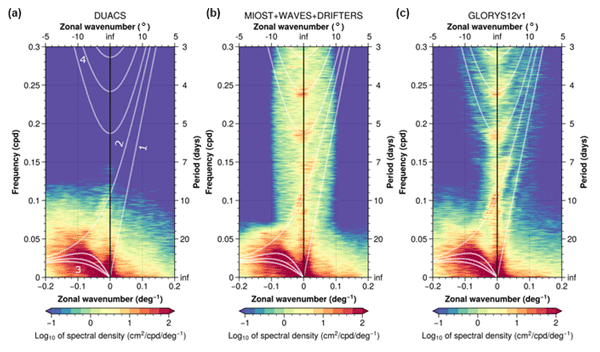
We present a new gridded sea surface height and current dataset produced by combining observations from nadir altimeters and drifting buoys. This product is based on a multiscale and multivariate mapping approach that offers the possibility to improve the physical content of gridded products by combining the data from various platforms and resolving a broader spectrum of ocean surface dynamic than in the current operational mapping system. A quality assessment of this new product is presented.
Everton Giachini Tosetto, Arnaud Bertrand, Sigrid Neumann-Leitão, Alex Costa da Silva, and Miodeli Nogueira Júnior
Ocean Sci., 18, 1763–1779, https://doi.org/10.5194/os-18-1763-2022, https://doi.org/10.5194/os-18-1763-2022, 2022
Short summary
Short summary
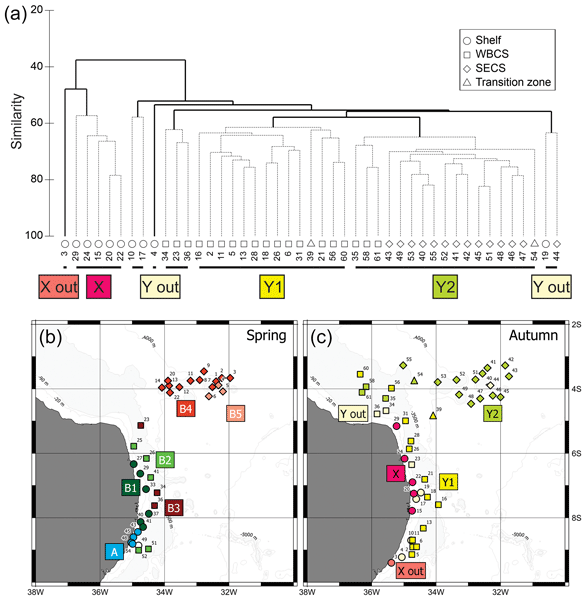
In the western tropical South Atlantic, coastward currents spread oceanic cnidarians over the continental shelf. While both coastal and oceanic communities co-occur in scenarios of higher runoff and weaker boundary current intensity, oceanic species dominate almost the entire shelf during the dry season characterized by stronger currents. Meanwhile, offshore, when the mixed-layer depth is shallower, the enhanced primary productivity supports larger populations of planktonic cnidarians.
Michel Tchilibou, Ariane Koch-Larrouy, Simon Barbot, Florent Lyard, Yves Morel, Julien Jouanno, and Rosemary Morrow
Ocean Sci., 18, 1591–1618, https://doi.org/10.5194/os-18-1591-2022, https://doi.org/10.5194/os-18-1591-2022, 2022
Short summary
Short summary
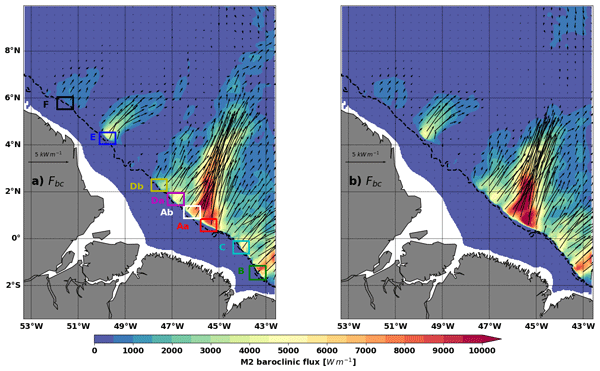
This high-resolution model-based study investigates the variability in the generation, propagation, and sea height signature (SSH) of the internal tide off the Amazon shelf during two contrasted seasons. ITs propagate further north during the season characterized by weak currents and mesoscale eddies and a shallow and strong pycnocline. IT imprints on SSH dominate those of the geostrophic motion for horizontal scales below 200 km; moreover, the SSH is mainly incoherent below 70 km.
Clément Ubelmann, Loren Carrere, Chloé Durand, Gérald Dibarboure, Yannice Faugère, Maxime Ballarotta, Frédéric Briol, and Florent Lyard
Ocean Sci., 18, 469–481, https://doi.org/10.5194/os-18-469-2022, https://doi.org/10.5194/os-18-469-2022, 2022
Short summary
Short summary
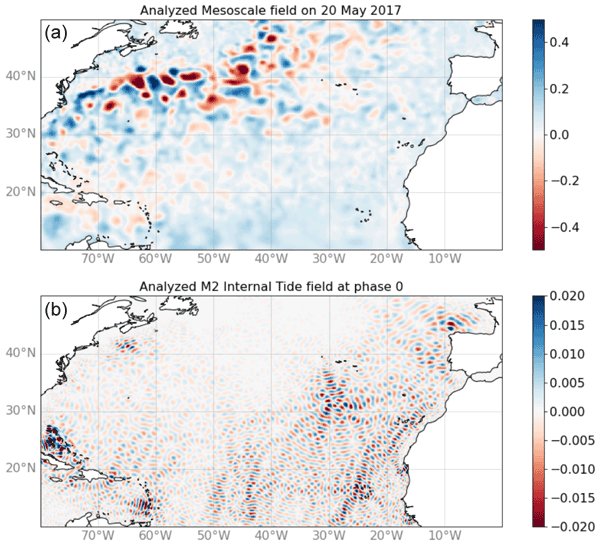
The signature of internal tides has become an important component for high-resolution altimetry over oceans. Several studies have proposed some solutions to resolve part of these internal tides based on the altimetry record. Following these studies, we propose here a new inversion approach aimed to mitigate aliasing with other dynamics. After a description of the methodology, the solution for the main tidal components has been successfully validated against independent observations.

Cori Pegliasco, Antoine Delepoulle, Evan Mason, Rosemary Morrow, Yannice Faugère, and Gérald Dibarboure
Earth Syst. Sci. Data, 14, 1087–1107, https://doi.org/10.5194/essd-14-1087-2022, https://doi.org/10.5194/essd-14-1087-2022, 2022
Short summary
Short summary
The new global Mesoscale Eddy Trajectory Atlases (META3.1exp) provide eddy identification and trajectories from altimetry maps. These atlases comprise an improvement to and continuation of the historical META2.0 product. Changes in the detection parameters and tracking were tested by comparing the eddies from the different datasets. In particular, the eddy contours available in META3.1exp are an asset for multi-disciplinary studies.
Ramilla Vieira Assunção, Anne Lebourges-Dhaussy, Alex Costa da Silva, Bernard Bourlès, Gary Vargas, Gildas Roudaut, and Arnaud Bertrand
Ocean Sci. Discuss., https://doi.org/10.5194/os-2021-101, https://doi.org/10.5194/os-2021-101, 2021
Publication in OS not foreseen
Short summary
Short summary
Active acoustics has been used to characterize physical structures and processes in the ocean, typically attributed to biological dispersion or turbulent structures. We take advantage of acoustic data from the Southwest Atlantic to test the feasibility of this approach in an oligotrophic region. The results show that the thermohaline structure impacts the vertical distribution of acoustic scatterers, however the methods tested did not allow a robust estimate of the thermohaline limits.
Simon Barbot, Florent Lyard, Michel Tchilibou, and Loren Carrere
Ocean Sci., 17, 1563–1583, https://doi.org/10.5194/os-17-1563-2021, https://doi.org/10.5194/os-17-1563-2021, 2021
Short summary
Short summary
Internal tides are responsible for surface deformations of the ocean that could affect the measurements of the forthcoming SWOT altimetric mission and need to be corrected. This study highlights the variability of the properties of internal tides based on the stratification variability only. A single methodology is successfully applied in two areas driven by different oceanic processes: the western equatorial Atlantic and the Bay of Biscay.
Cited articles
Aguedjou, H. M. A., Dadou, I., Chaigneau, A., Morel, Y., and Alory, G.: Eddies in the Tropical Atlantic Ocean and Their Seasonal Variability, Geophys. Res. Lett., 46, 12156–12164, https://doi.org/10.1029/2019GL083925, 2019.
Alford, M. H., Peacock, T., MacKinnon, J. A., Nash, J. D., Buijsman, M. C., Centurioni, L. R., Chao, S.-Y., Chang, M.-H., Farmer, D. M., Fringer, O. B., Fu, K.-H., Gallacher, P. C., Graber, H. C., Helfrich, K. R., Jachec, S. M., Jackson, C. R., Klymak, J. M., Ko, D. S., Jan, S., Johnston, T. M. S., Legg, S., Lee, I.-H., Lien, R.-C., Mercier, M. J., Moum, J. N., Musgrave, R., Park, J.-H., Pickering, A. I., Pinkel, R., Rainville, L., Ramp, S. R., Rudnick, D. L., Sarkar, S., Scotti, A., Simmons, H. L., St Laurent, L. C., Venayagamoorthy, S. K., Wang, Y.-H., Wang, J., Yang, Y. J., Paluszkiewicz, T., and (David) Tang, T.-Y.: The formation and fate of internal waves in the South China Sea, Nature, 521, 65–69, https://doi.org/10.1038/nature14399, 2015.
Alpers, W.: Theory of radar imaging of internal waves, Nature, 314, 245–247, 1985.
Archer, M., Wang, J., Klein, P., Dibarboure, G., and Fu, L.-L.: Wide-swath satellite altimetry unveils global submesoscale ocean dynamics, Nature, 640, 691–696, https://doi.org/10.1038/s41586-025-08722-8, 2025.
Assene, F., Koch-Larrouy, A., Dadou, I., Tchilibou, M., Morvan, G., Chanut, J., Costa da Silva, A., Vantrepotte, V., Allain, D., and Tran, T.-K.: Internal tides off the Amazon shelf – Part 1: The importance of the structuring of ocean temperature during two contrasted seasons, Ocean Sci., 20, 43–67, https://doi.org/10.5194/os-20-43-2024, 2024.
AVISO/DUACS: SWOT Level-3 KaRIn Low Rate SSH Expert (v2.0.1), CNES [data set], https://doi.org/10.24400/527896/A01-2023.018, 2024a.
AVISO/DUACS: SALTO/DUACS Mutlimission Experimental Level-4 maps, computed with SWOT Level-3 products (using both KaRIn and nadir instruments) (v1.0), CNES [data set], https://doi.org/10.24400/527896/A01-2024.007, 2024b.
Ballarotta, M., Ubelmann, C., Pujol, M.-I., Taburet, G., Fournier, F., Legeais, J.-F., Faugère, Y., Delepoulle, A., Chelton, D., Dibarboure, G., and Picot, N.: On the resolutions of ocean altimetry maps, Ocean Sci., 15, 1091–1109, https://doi.org/10.5194/os-15-1091-2019, 2019.
Ballarotta, M., Ubelmann, C., Bellemin-Laponnaz, V., Le Guillou, F., Meda, G., Anadon, C., Laloue, A., Delepoulle, A., Faugère, Y., Pujol, M.-I., Fablet, R., and Dibarboure, G.: Integrating wide-swath altimetry data into Level-4 multi-mission maps, Ocean Sci., 21, 63–80, https://doi.org/10.5194/os-21-63-2025, 2025.
Barbot, S., Lyard, F., Tchilibou, M., and Carrere, L.: Background stratification impacts on internal tide generation and abyssal propagation in the western equatorial Atlantic and the Bay of Biscay, Ocean Sci., 17, 1563–1583, https://doi.org/10.5194/os-17-1563-2021, 2021.
Bendinger, A., Cravatte, S., Gourdeau, L., Rainville, L., Vic, C., Sérazin, G., Durand, F., Marin, F., and Fuda, J.-L.: Internal-tide vertical structure and steric sea surface height signature south of New Caledonia revealed by glider observations, Ocean Sci., 20, 945–964, https://doi.org/10.5194/os-20-945-2024, 2024.
Bendinger, A., Cravatte, S., Gourdeau, L., Vic, C., and Lyard, F.: Regional modeling of internal-tide dynamics around New Caledonia – Part 2: Tidal incoherence and implications for sea surface height observability, Ocean Sci., 21, 1943–1966, https://doi.org/10.5194/os-21-1943-2025, 2025.
Bole, J., Ebbesmeyer, C., and Romea R.: Soliton Currents In The South China Sea: Measurements And Theoretical Modeling, presented at the Offshore Technology Conference, Houston, Texas, https://doi.org/10.4043/7417-MS, 1994
Capuano, T. A., Nugroho, D., Koch-Larrouy, A., Dadou, I., Zaron, E. D., Vantrepotte, V., Allain, D., and Kien, T.: Impact of internal tides on distributions and variability of Chlorophyll-a and Nutrients in the Indonesian Seas, J. Geophys. Res. Oceans, 130, e2022JC019128, https://doi.org/10.1029/2022JC019128, 2025.
Chaigneau, A., Gizolme, A., and Grados, C.: Mesoscale eddies off Peru in altimeter records: Identification algorithms and eddy spatio-temporal patterns, Prog. Oceanogr., 79, 106–119, https://doi.org/10.1016/j.pocean.2008.10.013, 2008.
Chelton, D. B., Schlax, M. G., Samelson, R. M., and De Szoeke, R. A.: Global observations of large oceanic eddies, Geophys. Res. Lett., 34, 2007GL030812, https://doi.org/10.1029/2007GL030812, 2007.
Chelton, D. B., Schlax, M. G., and Samelson, R. M.: Global observations of nonlinear mesoscale eddies, Prog. Oceanogr., 91, 167–216, https://doi.org/10.1016/j.pocean.2011.01.002, 2011.
Cheshm Siyahi, V., Kudryavtsev, V. N., Chapron, B., and Collard, F.: Internal Waves Observations from the Surface Water Ocean Topography Mission: Combined sea surface height and roughness measurements, ESS Open Archive [preprint], https://doi.org/10.22541/essoar.174043032.29111777/v1, 2025.
Delepoulle, A., Mason, E., Busché, C., Pegliasco, C., Capet, A., Troupin, C., and Koldunov, N.: AntSimi/pyeddy-tracker: META3.1 Article (v3.3.1), Zenodo [code], https://doi.org/10.5281/zenodo.6333989, 2022.
de Macedo, C. R., Koch-Larrouy, A., da Silva, J. C. B., Magalhães, J. M., Lentini, C. A. D., Tran, T. K., Rosa, M. C. B., and Vantrepotte, V.: Spatial and temporal variability in mode-1 and mode-2 internal solitary waves from MODIS-Terra sun glint off the Amazon shelf, Ocean Sci., 19, 1357–1374, https://doi.org/10.5194/os-19-1357-2023, 2023.
de Macedo, C. R., Koch-Larrouy, A., da Silva, J. C. B., Magalhães, J. M., Assene, F., Tran, M. D., Dadou, I., M'Hamdi, A., Tran, T. K., and Vantrepotte, V.: Internal tide signatures on surface chlorophyll concentration in the Brazilian Equatorial Margin, EGUsphere [preprint], https://doi.org/10.5194/egusphere-2025-2307, 2025.
Dibarboure, G., Anadon, C., Briol, F., Cadier, E., Chevrier, R., Delepoulle, A., Faugère, Y., Laloue, A., Morrow, R., Picot, N., Prandi, P., Pujol, M.-I., Raynal, M., Tréboutte, A., and Ubelmann, C.: Blending 2D topography images from the Surface Water and Ocean Topography (SWOT) mission into the altimeter constellation with the Level-3 multi-mission Data Unification and Altimeter Combination System (DUACS), Ocean Sci., 21, 283–323, https://doi.org/10.5194/os-21-283-2025, 2025.
Duda, T. F., Lin, Y.-T., Buijsman, M., and Newhall, A. E.: Internal Tidal Modal Ray Refraction and Energy Ducting in Baroclinic Gulf Stream Currents, J. Phys. Oceanogr., 48, 1969–1993, https://doi.org/10.1175/JPO-D-18-0031.1, 2018.
Dunphy, M. and Lamb, K. G.: Focusing and vertical mode scattering of the first mode internal tide by mesoscale eddy interaction, J. Geophys. Res.-Ocean, 119, 523–536, https://doi.org/10.1002/2013JC009293, 2014.
Dunphy, M., Ponte, A. L., Klein, P., and Le Gentil, S.: Low-Mode Internal Tide Propagation in a Turbulent Eddy Field, J. Phy. Oceanogr., 47, 649–665, https://doi.org/10.1175/JPO-D-16-0099.1, 2017.
Fu, L., Pavelsky, T., Cretaux, J., Morrow, R., Farrar, J. T., Vaze, P., Sengenes, P., Vinogradova-Shiffer, N., Sylvestre-Baron, A., Picot, N., and Dibarboure, G.: The Surface Water and Ocean Topography Mission: A Breakthrough in Radar Remote Sensing of the Ocean and Land Surface Water, Geophys. Res. Lett., 51, e2023GL107652, https://doi.org/10.1029/2023GL107652, 2024.
Garzoli, S. L., Ffield, A., Johns, W. E., and Yao, Q.: North Brazil Current retroflection and transports, J. Geophys. Res., 109, 2003JC001775, https://doi.org/10.1029/2003JC001775, 2004.
Gerkema, T.: Internal and interfacial tides: Beam scattering and local generation of solitary waves, J. Mar. Res., 59, 227–255, https://doi.org/10.1357/002224001762882646, 2001.
Grisouard, N. and Staquet, C.: Generation of internal solitary waves in a pycnocline by an internal wave beam: a numerical study, J. Fluid Mech., 676, 491–513, https://doi.org/10.1017/jfm.2011.61, 2011.
Guo, Z., Wang, S., Cao, A., Xie, J., Song, J., and Guo, X.: Refraction of the M2 internal tides by mesoscale eddies in the South China Sea, Deep-Sea Res. Pt. I, 192, 103946, https://doi.org/10.1016/j.dsr.2022.103946, 2023.
He, Z., Wu, W., Wang, J., Ding, L., Chang, Q., and Huang, Y.: Investigations into Motion Responses of Suspended Submersible in Internal Solitary Wave Field, J. Mar. Sci. Eng., 12, 596, https://doi.org/10.3390/jmse12040596, 2024.
Helfrich, K. R.: Decay and return of internal solitary waves with rotation, Phys. Fluids, 19, 026601, https://doi.org/10.1063/1.2472509, 2007.
Huang, H., Qiu, S., Zeng, Z., Song, P., Guo, J., and Chen, X.: Modulation of Internal Solitary Waves by One Mesoscale Eddy Pair West of the Luzon Strait, J. Phys. Oceanogr., 54, 2133–2152, https://doi.org/10.1175/JPO-D-23-0244.1, 2024.
Huthnance, J. M.: Circulation, exchange and water masses at the ocean margin: the role of physical processes at the shelf edge, Progress in Oceanography, 35, 353–431, https://doi.org/10.1016/0079-6611(95)80003-C, 1995.
Hyder, P., Jeans, D. R. G., Cauquil, E., and Nerzic, R.: Observations and predictability of internal solitons in the northern Andaman Sea, Ocean Sci., 27, 1–11, https://doi.org/10.1016/j.apor.2005.07.001, 2005.
Jackson, C., Da Silva, J., and Jeans, G.: The Generation of Nonlinear Internal Waves, Oceanography, 25, 108–123, https://doi.org/10.5670/oceanog.2012.46, 2012.
Johnston, T. M. S. and Merrifield, M. A.: Internal tide scattering at seamounts, ridges, and islands, J. Geophys. Res., 108, 3180, https://doi.org/10.1029/2002JC001528, 2003.
Jousset, S., Mulet, S., Greiner, E., Wilkin, J., Vidar, L., Chafik, L., Raj, R., Bonaduce, A., Picot, N., and Dibarboure, G.: New Global Mean Dynamic Topography CNES-CLS-22 Combining Drifters, Hydrography Profiles and High Frequency Radar Data, Earth Syst. Sci. Data Discuss. [preprint], https://doi.org/10.5194/essd-2025-429, in review, 2025.
Kouogang, F., Koch-Larrouy, A., Magalhaes, J., Costa da Silva, A., Kerhervé, D., Bertrand, A., Cervelli, E., Assene, F., Ternon, J.-F., Rousselot, P., Lee, J., Rollnic, M., and Araujo, M.: Turbulent dissipation along contrasting internal tide paths off the Amazon shelf from AMAZOMIX, Ocean Sci., 21, 1589–1608, https://doi.org/10.5194/os-21-1589-2025, 2025a.
Kurian, J., Colas, F., Capet, X., McWilliams, J. C., and Chelton, D. B.: Eddy properties in the California Current System, J. Geophys. Res., 116, C08027, https://doi.org/10.1029/2010JC006895, 2011.
Lamb, K. G.: Internal solitary waves shoaling onto a shelf: Comparisons of weakly-nonlinear and fully nonlinear models for hyperbolic-tangent stratifications, Ocean Modelling, 78, 17–34, https://doi.org/10.1016/j.ocemod.2014.02.004, 2014.
Liu, B. and D'Sa, E. J.: Oceanic Internal Waves in the Sulu–Celebes Sea Under Sunglint and Moonglint, IEEE T. Geosci. Remote, 57, 6119–6129, https://doi.org/10.1109/TGRS.2019.2904402, 2019.
Magalhães, J. M., da Silva, J. C. B., Buijsman, M. C., and Garcia, C. A. E.: Effect of the North Equatorial Counter Current on the generation and propagation of internal solitary waves off the Amazon shelf (SAR observations), Ocean Sci., 12, 243–255, https://doi.org/10.5194/os-12-243-2016, 2016.
Magalhaes, J. M., Da Silva, J. C. B., Nolasco, R., Dubert, J., and Oliveira, P. B.: Short timescale variability in large-amplitude internal waves on the western Portuguese shelf, Cont. Shelf Res., 246, 104812, https://doi.org/10.1016/j.csr.2022.104812, 2022.
Mason, E., Pascual, A., and McWilliams, J. C.: A New Sea Surface Height–Based Code for Oceanic Mesoscale Eddy Tracking, J. Atmos. Ocean Tech., 31, 1181–1188, https://doi.org/10.1175/JTECH-D-14-00019.1, 2014.
Mathur, M., Carter, G. S., and Peacock, T.: Topographic scattering of the low-mode internal tide in the deep ocean, J. Geophys. Res. Oceans, 119, 2165–2182, https://doi.org/10.1002/2013JC009152. 2014
Mercier, M. J., Mathur, M., Gostiaux, L., Gerkema, T., Magalhães, J. M., Da Silva, J. C. B., and Dauxois, T.: Soliton generation by internal tidal beams impinging on a pycnocline: laboratory experiments, J. Fluid Mech., 704, 37–60, https://doi.org/10.1017/jfm.2012.191, 2012.
M'hamdi, A., Koch-Larrouy, A., Costa da Silva, A., Dadou, I., De Macedo, C. R., Bosse, A., Vantrepotte, V., Aguedjou, H. M., Tran, T.-K., Testor, P., Mortier, L., Bertrand, A., Mendes de Castro Melo, P. A., Lee, J., Rollnic, M., and Araujo, M.: Impact of Internal Tides on Chlorophyll-a Distribution and Primary Production off the Amazon Shelf from Glider Measurements and Satellite Observations, EGUsphere [preprint], https://doi.org/10.5194/egusphere-2025-2141, 2025.
MODIS Characterization Support Team: NASA MODIS Adaptive Processing System, NASA Goddard Space Flight Center: MODIS 1km Calibrated Radiances Product, EarthData [data set], https://doi.org/10.5067/MODIS/MYD021KM.061, 2017.
Morrow, R., Fu, L.-L., Ardhuin, F., Benkiran, M., Chapron, B., Cosme, E., d'Ovidio, F., Farrar, J. T., Gille, S. T., Lapeyre, G., Le Traon, P.-Y., Pascual, A., Ponte, A., Qiu, B., Rascle, N., Ubelmann, C., Wang, J., and Zaron, E. D.: Global Observations of Fine-Scale Ocean Surface Topography With the Surface Water and Ocean Topography (SWOT) Mission, Front. Mar. Sci., 6, 232, https://doi.org/10.3389/fmars.2019.00232, 2019.
Muacho, S., Da Silva, J. C. B., Brotas, V., and Oliveira, P. B.: Effect of internal waves on near-surface chlorophyll concentration and primary production in the Nazaré Canyon (west of the Iberian Peninsula), Deep-Sea Res. Pt. I, 81, 89–96, https://doi.org/10.1016/j.dsr.2013.07.012, 2013.
Müller, M., Cherniawsky, J. Y., Foreman, M. G. G., and Von Storch, J. -S.: Global M2 internal tide and its seasonal variability from high resolution ocean circulation and tide modeling, Geophys. Res. Lett., 39, 2012GL053320, https://doi.org/10.1029/2012GL053320, 2012.
Munk, W. and Wunsch, C.: Abyssal recipes II: energetics of tidal and wind mixing, Deep-Sea Res. Pt. I, 45, 1977–2010, https://doi.org/10.1016/S0967-0637(98)00070-3, 1998.
Nash, J., Shroyer, E., Kelly, S., Inall, M., Duda, T., Levine, M., Jones, N., and Musgrave, R.: Are Any Coastal Internal Tides Predictable?, Oceanography, 25, 80–95, https://doi.org/10.5670/oceanog.2012.44, 2012.
Oppenheim, A. V., Willsky, A. S., and Nawab, S. H.: Signals and systems (2nd ed.), Prentice Hall, https://studylib.net/doc/27004224/alan-v.-oppenheim--alan-s.-willsky--with-s.-hamid-signal (last access: 6 February 2026), 1996.
Pegliasco, C., Delepoulle, A., Mason, E., Morrow, R., Faugère, Y., and Dibarboure, G.: META3.1exp: a new global mesoscale eddy trajectory atlas derived from altimetry, Earth Syst. Sci. Data, 14, 1087–1107, https://doi.org/10.5194/essd-14-1087-2022, 2022.
Penven, P., Echevin, V., Pasapera, J., Colas, F., and Tam, J.: Average circulation, seasonal cycle, and mesoscale dynamics of the Peru Current System: A modeling approach, J. Geophys. Res., 110, 2005JC002945, https://doi.org/10.1029/2005JC002945, 2005.
Ponte, A. L. and Klein, P.: Incoherent signature of internal tides on sea level in idealized numerical simulations, Geophys. Res. Lett., 42, 1520–1526, https://doi.org/10.1002/2014GL062583, 2015.
Qiu, B., Chen, S., Wang, J., and Fu, L.: Seasonal and Fortnight Variations in Internal Solitary Waves in the Indonesian Seas From the SWOT Measurements, J. Geophys. Res.-Ocean, 129, e2024JC021086, https://doi.org/10.1029/2024JC021086, 2024.
Sandstrom, H. and Elliott, J.: Internal tide and solitons on the Scotian Shelf : A nutrient pump at work, J. Geoph. Res.-Oceans, 89, 6415–6426, https://doi.org/10.1029/JC089iC04p06415, 1984
Shimizu, K. and Nakayama, K.: Effects of topography and Earth's rotation on the oblique interaction of internal solitary-like waves in the Andaman Sea, J. Geophys. Res.-Oceans, 122, 7449–7465, https://doi.org/10.1002/2017JC012888, 2017.
Silva, A., Araujo, M., Medeiros, C., Silva, M., and Bourles, B.: Seasonal changes in the mixed and barrier layers in the western Equatorial Atlantic, Oceanography., 53, 83–98, https://doi.org/10.1590/S1679-87592005000200001, 2005.
Silva, J., New, A., and Magalhães, J.: On the structure and propagation of internal solitary waves generated at the Mascarene Plateau in the Indian Ocean, Deep Sea Research Part I: Oceanographic Research Papers, 58, 229–240, https://doi.org/10.1016/j.dsr.2010.12.003, 2011.
Shimizu, K. and Nakayama, K.: Effects of topography and Earth's rotation on the oblique interaction of internal solitary-like waves in the Andaman Sea, J. Geophys. Res.-Oceans, 122, 7449–7465, https://doi.org/10.1002/2017JC012888, 2017.
Siyahi, V. C., Kudryavtsev, V. N., Chapron, B., and Collard, F.: Internal Waves Observations from the Surface Water Ocean Topography Mission: Combined sea surface height and roughness measurements, ESS Open Archive, https://doi.org/10.22541/essoar.174043032.29111777/v1, 24 February 2025.
Solano, M. S., Buijsman, M. C., Shriver, J. F., Magalhaes, J., da Silva, J., Jackson, C., Arbic, B. K., and Barkan, R.: Nonlinear internal tidesin a realistically forced global oceansimulation, J. Geophys. Res.-Ocean, 128, e2023JC019913, https://doi.org/10.1029/2023JC019913, 2023.
Taburet, G., Sanchez-Roman, A., Ballarotta, M., Pujol, M.-I., Legeais, J.-F., Fournier, F., Faugere, Y., and Dibarboure, G.: DUACS DT2018: 25 years of reprocessed sea level altimetry products, Ocean Sci., 15, 1207–1224, https://doi.org/10.5194/os-15-1207-2019, 2019.
Tchilibou, M., Koch-Larrouy, A., Barbot, S., Lyard, F., Morel, Y., Jouanno, J., and Morrow, R.: Internal tides off the Amazon shelf during two contrasted seasons: interactions with background circulation and SSH imprints, Ocean Sci., 18, 1591–1618, https://doi.org/10.5194/os-18-1591-2022, 2022.
Tchilibou, M., Carrere, L., Lyard, F., Ubelmann, C., Dibarboure, G., Zaron, E. D., and Arbic, B. K.: Internal tides off the Amazon shelf in the western tropical Atlantic: analysis of SWOT Cal/Val mission data, Ocean Sci., 21, 325–342, https://doi.org/10.5194/os-21-325-2025, 2025.
Ubelmann, C., Dibarboure, G., Gaultier, L., Ponte, A., Ardhuin, F., Ballarotta, M., and Faugère, Y.: Reconstructing Ocean Surface Current Combining Altimetry and Future Spaceborne Doppler Data, J. Geophys. Res.-Ocean, 126, e2020JC016560, https://doi.org/10.1029/2020JC016560, 2021.
Ubelmann, C., Carrere, L., Durand, C., Dibarboure, G., Faugère, Y., Ballarotta, M., Briol, F., and Lyard, F.: Simultaneous estimation of ocean mesoscale and coherent internal tide sea surface height signatures from the global altimetry record, Ocean Sci., 18, 469–481, https://doi.org/10.5194/os-18-469-2022, 2022.
VIIRS Calibration Support Team: NASA Goddard Space Flight Center: VIIRS/JPSS1 Moderate Resolution Bands L1B 6-Min Swath 750m, LAADS DAAC [data set], https://doi.org/10.5067/VIIRS/VJ102MOD.021, 2021.
Vlasenko, V., Guo, C., and Stashchuk, N.: On the mechanism of A-type and B-type internal solitary wave generation in the northern South China Sea, Deep-Sea Res. Pt. I, 69, 100–112, https://doi.org/10.1016/j.dsr.2012.07.004, 2012.
Wang, C. and Pawlowicz, R.: Oblique wave-wave interactions of nonlinear near-surface internal waves in the Strait of Georgia, J. Geophys. Res., 117, 2012JC008022, https://doi.org/10.1029/2012JC008022, 2012.
Wang, Y. and Legg, S.: Enhanced Dissipation of Internal Tides in a Mesoscale Baroclinic Eddy, J. Phys. Oceanogr., 53, 2293–2316, https://doi.org/10.1175/JPO-D-23-0045.1, 2023.
Xie, J., He, Y., Chen, Z., Xu, J., and Cai, S.: Simulations of Internal Solitary Wave Interactions with Mesoscale Eddies in the Northeastern South China Sea, J. Phys. Oceanogr., 45, 2959–2978, https://doi.org/10.1175/JPO-D-15-0029.1, 2015.
Xu, J., He, Y., Chen, Z., Zhan, H., Wu, Y., Xie, J., Shang, X., Ning, D., Fang, W., and Cai, S.: Observations of different effects of an anti-cyclonic eddy on internal solitary waves in the South China Sea, Progress in Oceanography, 188, 102422, https://doi.org/10.1016/j.pocean.2020.102422, 2020.
Yuan, C., Grimshaw, R., Johnson, E., and Wang, Z.: Topographic effect on oblique internal wave-wave interactions, J. Fluid Mech., 856, 36–60, https://doi.org/10.1017/jfm.2018.678, 2018.
Yuan, C., Pan, L., Gao, Z., and Wang, Z.: Combined Effect of Topography and Rotation on Oblique Internal Solitary Wave-Wave Interactions, J. Geophys. Res.-Ocean, 128, e2023JC019634, https://doi.org/10.1029/2023JC019634, 2023.
Zaron, E. D.: Baroclinic Tidal Sea Level from Exact-Repeat Mission Altimetry, J Phys Oceanogr, 49, 193–210, https://doi.org/10.1175/JPO-D-18-0127.1, 2019.
Zaron, E. D. and Egbert, G. D.: Time-variable refraction of internal tides at the Hawaiian Ridge, Journal of Physical Oceanography, 44, 538–557, https://doi.org/10.1175/JPO-D-12-0238.1, 2014.
Zhang, X. and Li, X.: Unveiling three-dimensional sea surface signatures caused by internal solitary waves: insights from the surface water ocean topography mission, J. Ocean. Limnol., 42, 709–714, https://doi.org/10.1007/s00343-024-3286-7, 2024.
Short summary
Using high-resolution satellite measurements, we observed how eddies off the Amazon shelf modify internal solitary waves. The results show that these waves can be deflected from their path, even split into two branches, and change their geometry when interacting with different types of eddies. This work provides new insight into the ocean’s complex dynamic interactions and could help guide future predictions of ocean behavior and its effects on coastal and marine ecosystems.
Using high-resolution satellite measurements, we observed how eddies off the Amazon shelf modify...


