
Articles | Volume 22, issue 5
https://doi.org/10.5194/os-22-3037-2026
© Author(s) 2026. This work is distributed under
the Creative Commons Attribution 4.0 License.
the Creative Commons Attribution 4.0 License.
https://doi.org/10.5194/os-22-3037-2026
© Author(s) 2026. This work is distributed under
the Creative Commons Attribution 4.0 License.
the Creative Commons Attribution 4.0 License.
Research article
| 
06 Oct 2026
Research article |
| 06 Oct 2026
| 06 Oct 2026
Storm-modulated submesoscale dynamics over sloping topography in a wind-driven, non-tidal basin
Evridiki Chrysagi
CORRESPONDING AUTHOR

Institute of Oceanography, University of Hamburg, Hamburg, Germany
Department of Physical Oceanography, Leibniz Institute for Baltic Sea Research Warnemünde, Rostock, Germany
Lars Umlauf
Department of Physical Oceanography, Leibniz Institute for Baltic Sea Research Warnemünde, Rostock, Germany
Ulf Gräwe
Department of Physical Oceanography, Leibniz Institute for Baltic Sea Research Warnemünde, Rostock, Germany
Hans Burchard
Department of Physical Oceanography, Leibniz Institute for Baltic Sea Research Warnemünde, Rostock, Germany
Alberto C. Naveira Garabato
Ocean and Earth Science, University of Southampton, Southampton, UK
Related authors
No articles found.
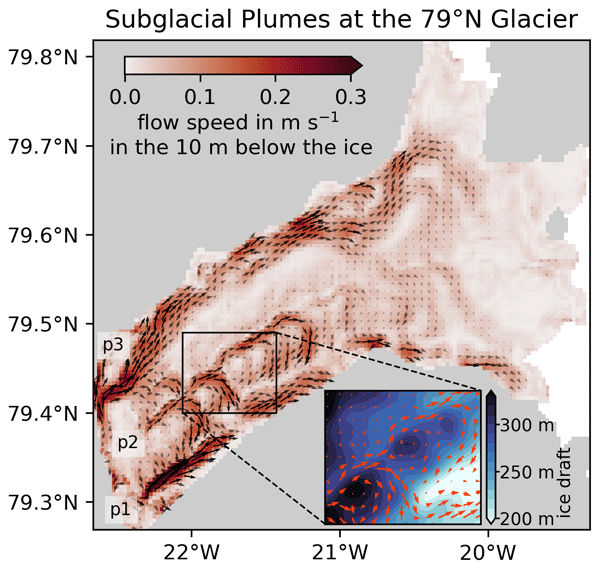
Markus Reinert, Claudia Wekerle, Knut Klingbeil, Marvin Lorenz, and Hans Burchard
The Cryosphere, 20, 4563–4584, https://doi.org/10.5194/tc-20-4563-2026, https://doi.org/10.5194/tc-20-4563-2026, 2026
Short summary
Short summary
The Greenland Ice Sheet is an important contributor to global sea level rise. In northern Greenland, floating glacier tongues are primarily melted by ocean currents. These processes are difficult to observe, so we developed a realistic numerical model to study ocean-driven melting at Greenland's largest floating ice tongue, the 79° North Glacier. Our simulation reveals the details of the oceanic currents bringing warm water toward the ice base, melting and shaping the glacier tongue from below.
Isabelle F. M. White, Oana Dragomir, Alessandro Silvano, Alberto C. Naveira Garabato, Anna E. Hogg, Pierre Dutrieux, Laura Herraiz-Borreguero, and Jennifer Cocks
EGUsphere, https://doi.org/10.5194/egusphere-2026-4414, https://doi.org/10.5194/egusphere-2026-4414, 2026
This preprint is open for discussion and under review for Earth Observation (EO).
Short summary
Short summary
We present a 22-year sea surface height product in the ice-covered Southern Ocean from Envisat and CryoSat-2 satellite altimetry data. Our product is 1° longitude by 0.5° latitude from 50° S to the Antarctic coast. Validation with in-situ, independent satellite and reanalysis data shows it captures seasonal and interannual variability. This supports long-term study of large-scale sea level trends and processes in the Southern Ocean, a region that is observing rapid sea ice and ice sheet melting.
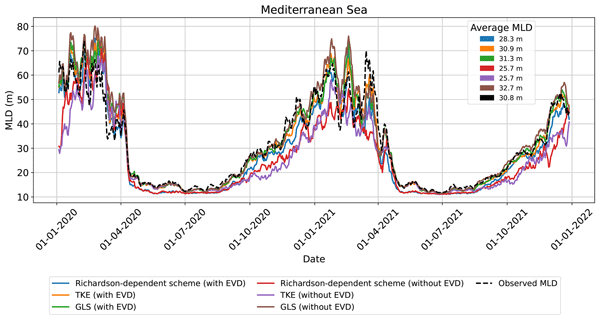
Lucia Gualtieri, Hans Burchard, Federica Borile, Aimie Moulin, Pietro Miraglio, Francesco Maicu, Emanuela Clementi, and Paolo Oddo
Geosci. Model Dev., 19, 7041–7068, https://doi.org/10.5194/gmd-19-7041-2026, https://doi.org/10.5194/gmd-19-7041-2026, 2026
Short summary
Short summary
This study addresses a gap in understanding how turbulent mixing closure schemes and convective adjustments interplay in the Mediterranean Sea. Coupled ocean-wave simulations were performed with different mixing parameterizations and model results were compared against Argo float observations across different space and time scales. Results show that the Generalised Length Scale closure scheme best reproduces observed mixed layer properties and variability, without needing convective adjustment.
Lisa Deyle, Grete Boskamp, Jens Meyerjürgens, Lars Umlauf, and Thomas H. Badewien
EGUsphere, https://doi.org/10.5194/egusphere-2026-3332, https://doi.org/10.5194/egusphere-2026-3332, 2026
Short summary
Short summary
Using drifting instruments, we observed conditions in the upper two metres of the ocean in the German Bight during calm, sunny weather. Strong layering developed, with pronounced temperature and salinity differences over short vertical distances and rapid small-scale variability. A model captured the overall warming but did not reproduce these fine-scale structures. These observations improve our understanding of air–sea exchange and the representation of near-surface processes in ocean models.
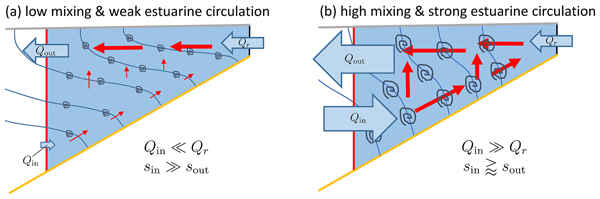
Hans Burchard, Knut Klingbeil, Xiangyu Li, Lloyd Reese, and W. Rockwell Geyer
Ocean Sci., 22, 1875–1918, https://doi.org/10.5194/os-22-1875-2026, https://doi.org/10.5194/os-22-1875-2026, 2026
Short summary
Short summary
This review presents major aspects of estuarine mixing. Due to the large amounts of brackish water in estuaries produced by mixing of fresh river discharge and salty ocean water, mixing is one major characteristic of what is an estuary. Mixing is quantified locally as well as on estuary-wide scales. Diagnostics of integrated mixing are given for estuarine volumes bounded by transects as well as surfaces of constant salinity moving with the flow. Examples for real-world estuaries are given.
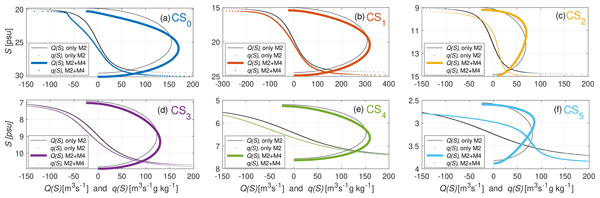
Manuel Díez-Minguito and Hans Burchard
Ocean Sci., 22, 1861–1874, https://doi.org/10.5194/os-22-1861-2026, https://doi.org/10.5194/os-22-1861-2026, 2026
Short summary
Short summary
Combining field observations with an analytical tidal scenario, we estimated in the Guadalquivir estuary its Total Exchange Flow (TEF), which has implications for water quality and residence times. The influence of tidal asymmetry on TEF is also explored. Results reveal a spatial variability in TEF and that salinity–current covariance exerts greater control on TEF than tidal asymmetry. The approach is suitable for regional studies evaluating sensitivity to changes in runoff, salinity and tides.
Hugues Goosse, Cecile Davrinche, Benjamin Richaud, Dániel Topál, Stephy Libera, Alberto C. Naveira Garabato, Alessandro Silvano, Martin Vancoppenolle, and Pablo Ortega
EGUsphere, https://doi.org/10.5194/egusphere-2026-1823, https://doi.org/10.5194/egusphere-2026-1823, 2026
Short summary
Short summary
The variability of the winter sea ice edge is much higher in regions close to the main topographic features of the Southern Ocean than over the smoother abyssal plain. The oceanic bathymetry influences mesoscale eddy activity and the Antarctic Circumpolar Current jets, affecting both oceanic heat transport and sea ice velocity and subsequently sea ice variability.
Miriam F. Sterl, Carlo J. Mans, Alberto C. Naveira Garabato, and Sjoerd Groeskamp
EGUsphere, https://doi.org/10.5194/egusphere-2026-2566, https://doi.org/10.5194/egusphere-2026-2566, 2026
Short summary
Short summary
Large oceanic 'whirls', called eddies, can mix ocean properties such as heat or salt. The mixing strength is tricky to measure directly. We present a new method to derive the mixing strength based on data from a mooring; a cable from the seafloor to the surface, with instruments along it. We apply our method to a mooring in the Southern Ocean and show that it confirms some important features predicted from theory. The method can be a valuable tool to increase our understanding of ocean mixing.
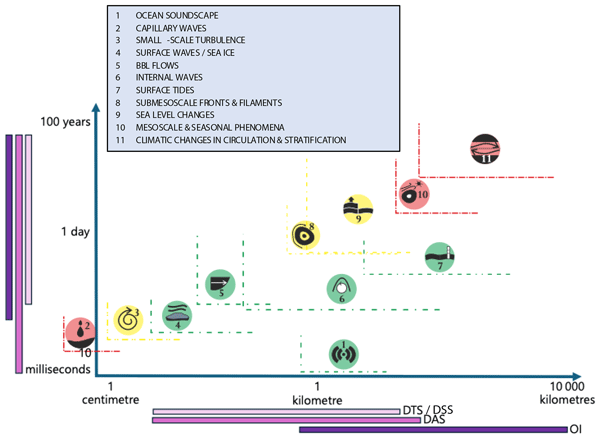
Alberto C. Naveira Garabato, Carl P. Spingys, Andrew J. Lucas, Tiago S. Dotto, Christian T. Wild, Scott W. Tyler, Ted A. Scambos, Christopher B. Kratt, Giuseppe Cappelli, Ethan F. Williams, Mariona Claret, Hannah E. Glover, Meagan E. Wengrove, Madison M. Smith, Michael G. Baker, Giuseppe Marra, Max Tamussino, Zitong Feng, David Lloyd, Liam Taylor, Mikael Mazur, Maria-Daphne Mangriotis, Aaron Micallef, Jennifer Ward Neale, Oleg A. Godin, Matthew H. Alford, Emma P. M. Gregory, Michael A. Clare, Hamid Shiri, Angel Ruiz Angulo, Kathryn L. Gunn, Ben I. Moat, Isobel A. Yeo, Afonso Loureiro, Alessandro Silvano, Arthur Hartog, and Mohammad Belal
Ocean Sci., 22, 1129–1167, https://doi.org/10.5194/os-22-1129-2026, https://doi.org/10.5194/os-22-1129-2026, 2026
Short summary
Short summary
Distributed optical fibre sensing (DOFS) is a technology that enables continuous, real-time measurements of environmental parameters along a fibre optic cable. Here, we review the recently emerged applications of DOFS in physical oceanography, and offer a perspective on the technology’s potential for future growth in the field.
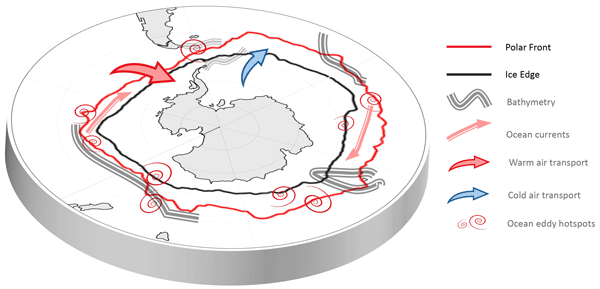
Hugues Goosse, Stephy Libera, Alberto C. Naveira Garabato, Benjamin Richaud, Alessandro Silvano, and Martin Vancoppenolle
The Cryosphere, 19, 5763–5779, https://doi.org/10.5194/tc-19-5763-2025, https://doi.org/10.5194/tc-19-5763-2025, 2025
Short summary
Short summary
The position of the winter sea ice edge in the Southern Ocean is strongly linked to the one of the Antarctic Circumpolar Current and thus to ocean bathymetry. This is due to the influence of the Antarctic Circumpolar Current on the southward heat flux that limits sea ice expansion, directly through oceanic processes and indirectly through its influence on atmospheric heat transport.
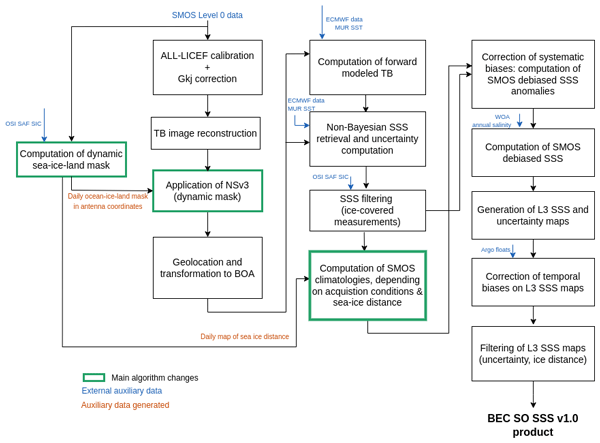
Verónica González-Gambau, Estrella Olmedo, Aina García-Espriu, Cristina González-Haro, Antonio Turiel, Carolina Gabarró, Alessandro Silvano, Aditya Narayanan, Alberto Naveira-Garabato, Rafael Catany, Nina Hoareau, Marta Umbert, Giuseppe Aulicino, Yuri Cotroneo, Roberto Sabia, and Diego Fernández-Prieto
Earth Syst. Sci. Data, 17, 5089–5111, https://doi.org/10.5194/essd-17-5089-2025, https://doi.org/10.5194/essd-17-5089-2025, 2025
Short summary
Short summary
This paper introduces a new Sea Surface Salinity product for the Southern Ocean, based on SMOS data and developed by the Barcelona Expert Center. It offers 9 d maps on a 25 km EASE-SL grid, from 2011 to 2023, covering areas south of 30° S. The product is accurate beyond 150 km from sea ice, with nearly zero bias and a ~0.22 STD. It tracks well seasonal and interannual changes and will contribute to the understanding of processes influenced by upper-ocean salinity, including ice formation/melt.
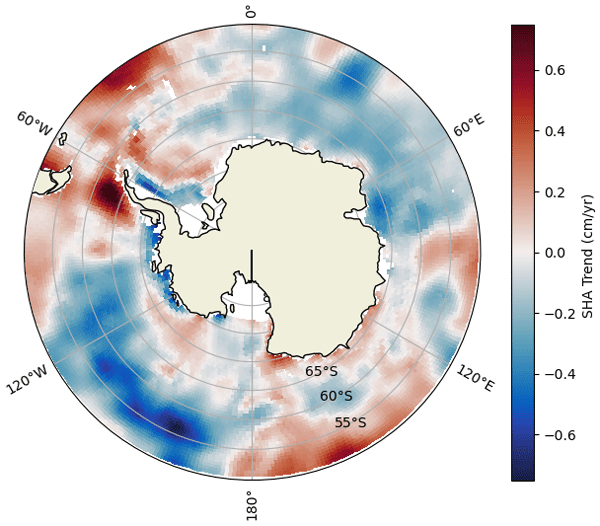
Jennifer Cocks, Alessandro Silvano, Alberto C. Naveira Garabato, Oana Dragomir, Noémie Schifano, Anna E. Hogg, and Alice Marzocchi
Ocean Sci., 21, 1609–1625, https://doi.org/10.5194/os-21-1609-2025, https://doi.org/10.5194/os-21-1609-2025, 2025
Short summary
Short summary
Heat and freshwater fluxes in the Southern Ocean mediate global ocean circulation and abyssal ventilation. These fluxes manifest as changes in steric height: sea level anomalies from changes in ocean density. We compute the steric height anomaly of the Southern Ocean using satellite data and validate it against in situ observations. We analyse trends and variability in steric height, drawing links to climate variability, and discuss the effectiveness of the method, highlighting issues with its application.
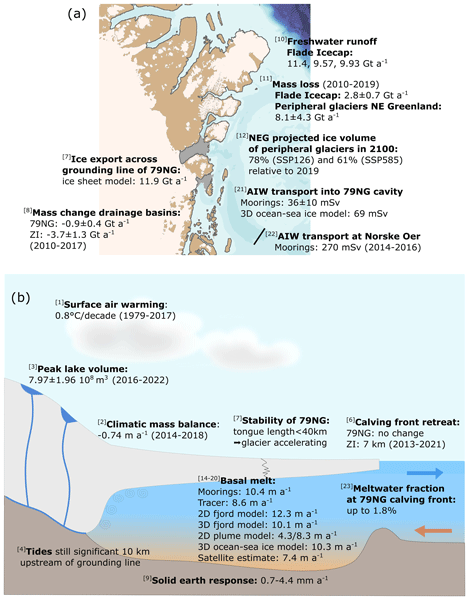
Torsten Kanzow, Angelika Humbert, Thomas Mölg, Mirko Scheinert, Matthias Braun, Hans Burchard, Francesca Doglioni, Philipp Hochreuther, Martin Horwath, Oliver Huhn, Maria Kappelsberger, Jürgen Kusche, Erik Loebel, Katrina Lutz, Ben Marzeion, Rebecca McPherson, Mahdi Mohammadi-Aragh, Marco Möller, Carolyne Pickler, Markus Reinert, Monika Rhein, Martin Rückamp, Janin Schaffer, Muhammad Shafeeque, Sophie Stolzenberger, Ralph Timmermann, Jenny Turton, Claudia Wekerle, and Ole Zeising
The Cryosphere, 19, 1789–1824, https://doi.org/10.5194/tc-19-1789-2025, https://doi.org/10.5194/tc-19-1789-2025, 2025
Short summary
Short summary
The Greenland Ice Sheet represents the second-largest contributor to global sea-level rise. We quantify atmosphere, ice and ocean processes related to the mass balance of glaciers in northeast Greenland, focusing on Greenland’s largest floating ice tongue, the 79° N Glacier. We find that together, the different in situ and remote sensing observations and model simulations reveal a consistent picture of a coupled atmosphere–ice sheet–ocean system that has entered a phase of major change.
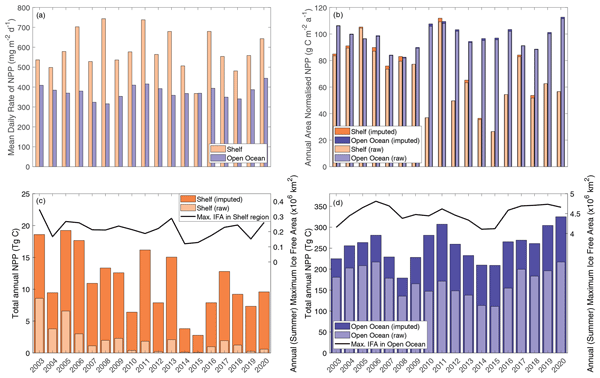
Clara Celestine Douglas, Nathan Briggs, Peter Brown, Graeme MacGilchrist, and Alberto Naveira Garabato
Ocean Sci., 20, 475–497, https://doi.org/10.5194/os-20-475-2024, https://doi.org/10.5194/os-20-475-2024, 2024
Short summary
Short summary
We use data from satellites and robotic floats to assess what drives year-to-year variability in primary production in the Weddell Gyre. We find that the maximum area of ice-free water in the summer is important in determining the total primary production in the region but that areas that are ice free for longer than 120 d become nutrient limited. This has potential implications for ecosystem health in a warming world, where a decline in sea ice cover will affect total primary production.
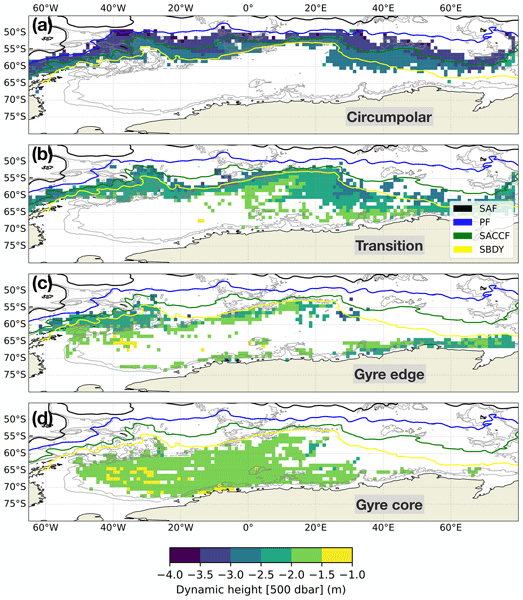
Dani C. Jones, Maike Sonnewald, Shenjie Zhou, Ute Hausmann, Andrew J. S. Meijers, Isabella Rosso, Lars Boehme, Michael P. Meredith, and Alberto C. Naveira Garabato
Ocean Sci., 19, 857–885, https://doi.org/10.5194/os-19-857-2023, https://doi.org/10.5194/os-19-857-2023, 2023
Short summary
Short summary
Machine learning is transforming oceanography. For example, unsupervised classification approaches help researchers identify underappreciated structures in ocean data, helping to generate new hypotheses. In this work, we use a type of unsupervised classification to identify structures in the temperature and salinity structure of the Weddell Gyre, which is an important region for global ocean circulation and for climate. We use our method to generate new ideas about mixing in the Weddell Gyre.
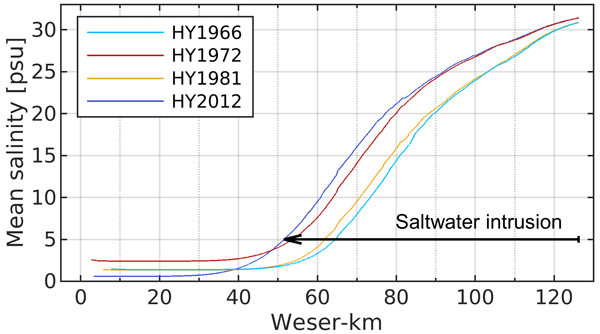
Pia Kolb, Anna Zorndt, Hans Burchard, Ulf Gräwe, and Frank Kösters
Ocean Sci., 18, 1725–1739, https://doi.org/10.5194/os-18-1725-2022, https://doi.org/10.5194/os-18-1725-2022, 2022
Short summary
Short summary
River engineering measures greatly changed tidal dynamics in the Weser estuary. We studied the effect on saltwater intrusion with numerical models. Our analysis shows that a deepening of the navigation channel causes saltwater to intrude further into the Weser estuary. This effect is mostly masked by the natural variability of river discharge. In our study, it proved essential to recalibrate individual hindcast models due to differences in sediments, bed forms, and underlying bathymetric data.
Stefanie L. Ypma, Quinten Bohte, Alexander Forryan, Alberto C. Naveira Garabato, Andy Donnelly, and Erik van Sebille
Ocean Sci., 18, 1477–1490, https://doi.org/10.5194/os-18-1477-2022, https://doi.org/10.5194/os-18-1477-2022, 2022
Short summary
Short summary
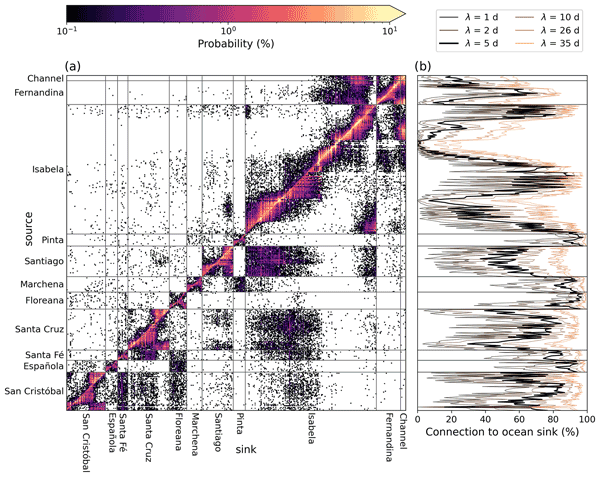
In this research we aim to improve cleanup efforts on the Galapagos Islands of marine plastic debris when resources are limited and the distribution of the plastic on shorelines is unknown. Using a network that describes the flow of macroplastic between the islands we have identified the most efficient cleanup locations, quantified the impact of targeting these locations and showed that shorelines where the plastic is unlikely to leave are likely efficient cleanup locations.
Vera Fofonova, Tuomas Kärnä, Knut Klingbeil, Alexey Androsov, Ivan Kuznetsov, Dmitry Sidorenko, Sergey Danilov, Hans Burchard, and Karen Helen Wiltshire
Geosci. Model Dev., 14, 6945–6975, https://doi.org/10.5194/gmd-14-6945-2021, https://doi.org/10.5194/gmd-14-6945-2021, 2021
Short summary
Short summary
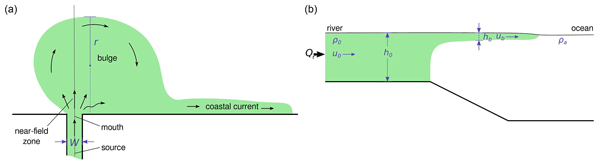
We present a test case of river plume spreading to evaluate coastal ocean models. Our test case reveals the level of numerical mixing (due to parameterizations used and numerical treatment of processes in the model) and the ability of models to reproduce complex dynamics. The major result of our comparative study is that accuracy in reproducing the analytical solution depends less on the type of applied model architecture or numerical grid than it does on the type of advection scheme.
Cited articles
Allen, J. S. and Newberger, P. A.: Downwelling Circulation on the Oregon Continental Shelf. Part I: Response to Idealized Forcing, J. Phys. Oceanogr., 26, 2011–2035, https://doi.org/10.1175/1520-0485(1996)026<2011:DCOTOC>2.0.CO;2, 1996. a
Benthuysen, J. and Thomas, L. N.: Friction and Diapycnal Mixing at a Slope: Boundary Control of Potential Vorticity, J. Phys. Oceanogr., 42, 1509–1523, https://doi.org/10.1175/JPO-D-11-0130.1, 2012. a, b, c
Bosse, A., Testor, P., Mayot, N., Prieur, L., D'Ortenzio, F., Mortier, L., Le Goff, H., Gourcuff, C., Coppola, L., Lavigne, H., and Raimbault, P.: A submesoscale coherent vortex in the Ligurian Sea: From dynamical barriers to biological implications, J. Geophys. Res.-Oceans, 122, 6196–6217, https://doi.org/10.1002/2016JC012634, 2017. a
Burchard, H. and Beckers, J. M.: Non-uniform adaptive vertical grids in one-dimensional numerical ocean models, Ocean Model., 6, 51–81, https://doi.org/10.1016/S1463-5003(02)00060-4, 2004. a
Burchard, H. and Bolding, K.: GETM: A general estuarine transport model, Tech. Rep. EUR 20253 EN, Eur. Comm., p. 157, 2002. a
Canuto, V. M., Howard, A., Cheng, Y., and Dubovikov, M. S.: Ocean turbulence. Part I: One-point closure model-momentum and heat vertical diffusivities, J. Phys. Oceanogr., 31, 1413–1426, https://doi.org/10.1175/1520-0485(2001)031<1413:OTPIOP>2.0.CO;2, 2001. a
Capet, X., McWilliams, J. C., Molemaker, M. J., and Shchepetkin, A. F.: Mesoscale to submesoscale transition in the California Current system. Part I: Flow Structure, Eddy Flux, and Observational Tests, J. Phys. Oceanogr., 38, 29–43, https://doi.org/10.1175/2007JPO3671.1, 2008. a
Capó, E., McWilliams, J. C., and Jagannathan, A.: Flow-Topography Interaction Along the Spanish Slope in the Alboran Sea: Vorticity Generation and Connection to Interior Fronts, J. Geophys. Res.-Oceans, 128, e2022JC019480, https://doi.org/10.1029/2022JC019480, 2023. a, b
Carpenter, J. R., Rodrigues, A., Schultze, L. K. P., Merckelbach, L. M., Suzuki, N., Baschek, B., and Umlauf, L.: Shear Instability and Turbulence Within a Submesoscale Front Following a Storm, Geophys. Res. Lett., 47, https://doi.org/10.1029/2020GL090365, 2020. a
Chor, T. and Wenegrat, J. O.: The Turbulent Dynamics of Anticyclonic Submesoscale Headland Wakes, J. Phys. Oceanogr., 55, 737–759, https://doi.org/10.1175/JPO-D-24-0139.1, 2025. a
Chrysagi, E.: Dataset for the publication: “Storm-Modulated Submesoscale Dynamics over Sloping Topography in a Wind-Driven, Non-Tidal Basin”, Leibniz Institute for Baltic Sea Research Warnemünde [data set], https://doi.org/10.12754/data-2025-0006, 2026. a
Chrysagi, E., Basdurak, N. B., Umlauf, L., Gräwe, U., and Burchard, H.: Thermocline Salinity Minima Due To Wind-Driven Differential Advection, J. Geophys. Res.-Oceans, 127, e2022JC018904, https://doi.org/10.1029/2022JC018904, 2022. a
Contreras, M., Pizarro, O., Dewitte, B., Sepulveda, H. H., and Renault, L.: Subsurface Mesoscale Eddy Generation in the Ocean off Central Chile, J. Geophys. Res.-Oceans, 124, 5700–5722, https://doi.org/10.1029/2018JC014723, 2019. a
D'Asaro, E. A.: Generation of submesoscale vortices: A new mechanism, J. Geophys. Res.-Oceans, 93, 6685–6693, https://doi.org/10.1029/JC093iC06p06685, 1988. a
Frenger, I., Bianchi, D., Stührenberg, C., Oschlies, A., Dunne, J., Deutsch, C., Galbraith, E., and Schütte, F.: Biogeochemical Role of Subsurface Coherent Eddies in the Ocean: Tracer Cannonballs, Hypoxic Storms, and Microbial Stewpots?, Global Biogeochem. Cy., 32, 226–249, https://doi.org/10.1002/2017GB005743, 2018. a
Galperin, B., Kantha, L. H., Hassid, S., and Rosati, A.: A quasi-equilibrium turbulent energy model for geophysical flows, J. Atmos. Sci., 45, 55–62, https://doi.org/10.1175/1520-0469(1988)045<0055:AQETEM>2.0.CO;2, 1988. a
Garabato, A. C. N., Frajka-Williams, E. E., Spingys, C. P., Legg, S., Polzin, K. L., Forryan, A., Abrahamsen, E. P., Buckingham, C. E., Griffies, S. M., McPhail, S. D., Nicholls, K. W., Thomas, L. N., and Meredith, M. P.: Rapid mixing and exchange of deep-ocean waters in an abyssal boundary current, P. Natl. Acad. Sci. USA, 116, 13233–13238, https://doi.org/10.1073/pnas.1904087116, 2019. a, b, c, d, e, f, g
Gräwe, U., Holtermann, P., Klingbeil, K., and Burchard, H.: Advantages of vertically adaptive coordinates in numerical models of stratified shelf seas, Ocean Model., 92, 56–68, https://doi.org/10.1016/j.ocemod.2015.05.008, 2015. a
Gräwe, U., Klingbeil, K., Kelln, J., and Dangendorf, S.: Decomposing mean sea level rise in a semi-enclosed basin, the Baltic Sea, J. Climate, 32, 3089–3108, https://doi.org/10.1175/JCLI-D-18-0174.1, 2019. a
Gula, J., Blacic, T. M., and Todd, R. E.: Submesoscale Coherent Vortices in the Gulf Stream, Geophys. Res. Lett., 46, 2704–2714, https://doi.org/10.1029/2019GL081919, 2019. a, b
Gula, J., Taylor, J., Shcherbina, A., and Mahadevan, A.: Submesoscale processes and mixing, Elsevier, pp. 181–214, https://doi.org/10.1016/B978-0-12-821512-8.00015-3, 2022. a
Hamze-Ziabari, S. M., Razmi, A. M., Lemmin, U., and Barry, D. A.: Detecting Submesoscale Cold Filaments in a Basin-Scale Gyre in Large, Deep Lake Geneva (Switzerland/France), Geophys. Res. Lett., 49, e2021GL096185, https://doi.org/10.1029/2021GL096185, 2022. a
Hofmeister, R., Burchard, H., and Beckers, J. M.: Non-uniform adaptive vertical grids for 3D numerical ocean models, Ocean Model., 33, 70–86, https://doi.org/10.1016/j.ocemod.2009.12.003, 2010. a
Holtermann, P. L., Umlauf, L., Tanhua, T., Schmale, O., Rehder, G., and Waniek, J. J.: The Baltic Sea Tracer Release Experiment: 1. Mixing Rates, J. Geophys. Res.-Oceans, 117, https://doi.org/10.1029/2011JC007439, 2012. a, b
Hoskins, B. J.: The role of potential vorticity in symmetric stability and instability, Q. J. Roy. Meteor. Soc., 100, 480–482, https://doi.org/10.1002/qj.49710042520, 1974. a
Jagannathan, A., Srinivasan, K., McWilliams, J. C., Molemaker, J., and Stewart, A. L.: Evolution of Bottom Boundary Layers on Three Dimensional Topography–Buoyancy Adjustment and Instabilities, J. Geophys. Res.-Oceans, 128, https://doi.org/10.1029/2023JC019705, 2023. a, b
Klingbeil, K., Lemarié, F., Debreu, L., and Burchard, H.: The numerics of hydrostatic structured-grid coastal ocean models: State of the art and future perspectives, Ocean Model., 125, 80–105, https://doi.org/10.1016/j.ocemod.2018.01.007, 2018. a
Lappe, C. and Umlauf, L.: Efficient boundary mixing due to near-inertial waves in a nontidal basin: Observations from the Baltic Sea, J. Geophys. Res.-Oceans, 121, 8287–8304, https://doi.org/10.1002/2016JC011985, 2016. a
Liblik, T., Väli, G., Salm, K., Laanemets, J., Lilover, M.-J., and Lips, U.: Quasi-steady circulation regimes in the Baltic Sea, Ocean Sci., 18, 857–879, https://doi.org/10.5194/os-18-857-2022, 2022. a, b, c, d
Lips, U., Salm, K., Väli, G., Liblik, T., Arneborg, L., Biddle, L. C., Bulczak, A. I., Chrysagi, E., Falarz, M., Holtermann, P., Jakacki, J., Meier, H. E. M., Mohrmann, M., Myrberg, K., Pemberton, P., and Umlauf, L.: Submesoscale dynamics in the Baltic Sea – a review, Prog. Oceanogr., 245, 103746, https://doi.org/10.1016/j.pocean.2026.103746, 2026. a, b, c, d
Löptien, U., Renz, M., and Dietze, H.: Major Baltic Inflows come in different flavours, Commun. Earth Environ., 6, 232, https://doi.org/10.1038/s43247-025-02209-0, 2025. a
Masini, M., Koszalka, I. M., Nilsson, J., Sokolov, A., and Gustafsson, B.: Dynamics of Upwelling and Downwelling in a Channel Basin of the Baltic Sea, Tellus A, 77, 38–66, https://doi.org/10.16993/tellusa.4070, 2025. a
McCoy, D., Bianchi, D., and Stewart, A. L.: Global observations of submesoscale coherent vortices in the ocean, Prog. Oceanogr., 189, https://doi.org/10.1016/j.pocean.2020.102452, 2020. a
McWilliams, J. C.: Submesoscale currents in the ocean, P. Roy. Soc. A-Math. Phy., 472, 20160117, https://doi.org/10.1098/rspa.2016.0117, 2016. a, b, c
Mohrholz, V.: Major Baltic inflow statistics – Revised, Front. Mar. Sci., 5, 384, https://doi.org/10.3389/fmars.2018.00384, 2018. a
Moum, J. N., Perlin, A., Klymak, J. M., Levine, M. D., Boyd, T., and Kosro, P. M.: Convectively Driven Mixing in the Bottom Boundary Layer, J. Phys. Oceanogr., 34, 2189–2202, https://doi.org/10.1175/1520-0485(2004)034<2189:CDMITB>2.0.CO;2, 2004. a
Reissmann, J. H., Burchard, H., Feistel, R., Hagen, E., Lass, H. U., Mohrholz, V., Nausch, G., Umlauf, L., and Wieczorek, G.: Vertical mixing in the Baltic Sea and consequences for eutrophication – A review, Prog. Oceanogr., 82, 47–80, https://doi.org/10.1016/j.pocean.2007.10.004, 2009. a, b
Sepúlveda Steiner, O., Forrest, A. L., McInerney, J. B. T., Fernández Castro, B., Lavanchy, S., Wüest, A., and Bouffard, D.: Spatial Variability of Turbulent Mixing From an Underwater Glider in a Large, Deep, Stratified Lake, J. Geophys. Res.-Oceans, 128, e2022JC018913, https://doi.org/10.1029/2022JC018913, 2023. a
Siegelman, L.: Energetic Submesoscale Dynamics in the Ocean Interior, J. Phys. Oceanogr., 50, 727–749, https://doi.org/10.1175/JPO-D-19-0253.1, 2020. a
Smagorinsky, J.: General Circulation Experiments With the Primitive Equations, Mon. Weather Rev., 91, 99–164, https://doi.org/10.1175/1520-0493(1963)091<0099:gcewtp>2.3.co;2, 1963. a
Thomas, L. N. and Taylor, J. R.: Reduction of the usable wind-work on the general circulation by forced symmetric instability, Geophys. Res. Lett., 37, https://doi.org/10.1029/2010GL044680, 2010. a
Thomas, L. N., Taylor, J. R., Ferrari, R., and Joyce, T. M.: Symmetric instability in the Gulf Stream, Deep-Sea Res. Pt. II, 91, 96–110, https://doi.org/10.1016/j.dsr2.2013.02.025, 2013. a, b
Umlauf, L. and Burchard, H.: Second-order turbulence closure models for geophysical boundary layers. A review of recent work, Cont. Shelf Res., 25, 795–827, https://doi.org/10.1016/j.csr.2004.08.004, 2005. a, b, c
Umlauf, L., Smyth, W. D., and Moum, J. N.: Energetics of Bottom Ekman Layers during Buoyancy Arrest, J. Phys. Oceanogr., 45, 3099–3117, https://doi.org/10.1175/JPO-D-15-0041.1, 2015. a
Väli, G., Zhurbas, V., Lips, U., and Laanemets, J.: Submesoscale structures related to upwelling events in the Gulf of Finland, Baltic Sea (numerical experiments), J. Mar. Syst., 171, 31–42, https://doi.org/10.1016/j.jmarsys.2016.06.010, 2017. a
Vic, C., Roullet, G., Capet, X., Carton, X., Molemaker, M. J., and Gula, J.: Eddy-topography interactions and the fate of the Persian Gulf Outflow, J. Geophys. Res.-Oceans, 120, 6700–6717, https://doi.org/10.1002/2015JC011033, 2015. a
Vortmeyer-Kley, R., Holtermann, P., Feudel, U., and Gräwe, U.: Comparing Eulerian and Lagrangian eddy census for a tide-less, semi-enclosed basin, the Baltic Sea, Ocean Dynam., 69, 701–717, https://doi.org/10.1007/s10236-019-01269-z, 2019. a
Wenegrat, J. O. and Thomas, L. N.: Centrifugal and Symmetric Instability during Ekman Adjustment of the Bottom Boundary Layer, J. Phys. Oceanogr., 50, 1793–1812, https://doi.org/10.1175/JPO-D-20-0027.1, 2020. a, b, c, d
Wenegrat, J. O., Callies, J., and Thomas, L. N.: Submesoscale Baroclinic Instability in the Bottom Boundary Layer, J. Phys. Oceanogr., 48, 2571–2592, https://doi.org/10.1175/JPO-D-17-0264.1, 2018. a
Zakharchuk, E. A., Tikhonova, N., Zakharova, E., and Kouraev, A. V.: Spatiotemporal structure of Baltic free sea level oscillations in barotropic and baroclinic conditions from hydrodynamic modelling, Ocean Sci., 17, 543–559, https://doi.org/10.5194/os-17-543-2021, 2021. a
Zhu, R., Yang, H., Chen, Z., Jing, Z., Zhang, Z., Sun, B., and Wu, L.: Topography-Generated Submesoscale Coherent Vortices in the Kuroshio–Oyashio Extension Region from High-Resolution Simulations, J. Phys. Oceanogr., 54, 237–252, https://doi.org/10.1175/JPO-D-23-0072.1, 2024. a, b
Zhurbas, V. and Väli, G.: Wind-Controlled Transport of Saltwater in the Southeastern Baltic Sea: A Model Study, Front. Mar. Sci., 9, https://doi.org/10.3389/fmars.2022.835656, 2022. a, b, c, d
Zhurbas, V., Väli, G., and Kuzmina, N.: Striped texture of submesoscale fields in the northeastern Baltic Proper: Results of very high-resolution modelling for summer season, Oceanologia, 64, 1–21, https://doi.org/10.1016/j.oceano.2021.08.003, 2022. a
Short summary
High-resolution numerical simulations of the Baltic Sea reveal that fine-scale features known as submesoscales are widespread in the deeper layers of the basin, especially near its boundaries. These features are linked to strong mixing and, in this wind-driven system, are found to intensify during storms, with wind reversals shifting the location of mixing hotspots. Our results suggest that storm-modulated submesoscales may be important in other wind-driven coastal seas and lakes.
High-resolution numerical simulations of the Baltic Sea reveal that fine-scale features known as...


