
Articles | Volume 22, issue 1
https://doi.org/10.5194/os-22-119-2026
© Author(s) 2026. This work is distributed under
the Creative Commons Attribution 4.0 License.
the Creative Commons Attribution 4.0 License.
https://doi.org/10.5194/os-22-119-2026
© Author(s) 2026. This work is distributed under
the Creative Commons Attribution 4.0 License.
the Creative Commons Attribution 4.0 License.
Research article
| 
13 Jan 2026
Research article |
| 13 Jan 2026
| 13 Jan 2026
Hidden vortices: near-equatorial low-oxygen extremes driven by high-baroclinic-mode vortices

GEOMAR Helmholtz Centre for Ocean Research Kiel, Kiel, Germany
Faculty of Mathematics and Natural Sciences, Kiel University, Kiel, Germany
Johannes Hahn
Federal Maritime and Hydrographic Agency, Hamburg, Germany
Ivy Frenger
GEOMAR Helmholtz Centre for Ocean Research Kiel, Kiel, Germany
Arne Bendinger
Laboratoire d'Océanographie Physique et Spatiale, University Brest, CNRS, Ifremer, IRD, IUEM, Plouzané, France
Ahmad Fehmi Dilmahamod
GEOMAR Helmholtz Centre for Ocean Research Kiel, Kiel, Germany
Marco Schulz
GEOMAR Helmholtz Centre for Ocean Research Kiel, Kiel, Germany
Peter Brandt
GEOMAR Helmholtz Centre for Ocean Research Kiel, Kiel, Germany
Faculty of Mathematics and Natural Sciences, Kiel University, Kiel, Germany
Related authors
Nana Hocke, Lavinia Patara, John Dunne, Florian Schütte, Mariana Maia Pacheco, and Ivy Frenger
EGUsphere, https://doi.org/10.5194/egusphere-2026-4347, https://doi.org/10.5194/egusphere-2026-4347, 2026
Short summary
Short summary
We investigate how ocean eddies influence carbon dioxide and oxygen exchange between the ocean and atmosphere using a high-resolution coupled ocean–biogeochemical climate model. We find that mesoscale variability explains 6–7 % of flux variance globally, with regional contributions exceeding 30 %. Biological processes dominate globally integrated mesoscale flux anomalies, accounting for about two-thirds of the signal, while temperature-driven effects become more important under warming.
Yi-Jie Yang, Suman Singha, Ron Goldman, and Florian Schütte
Earth Syst. Sci. Data, 17, 6807–6837, https://doi.org/10.5194/essd-17-6807-2025, https://doi.org/10.5194/essd-17-6807-2025, 2025
Short summary
Short summary
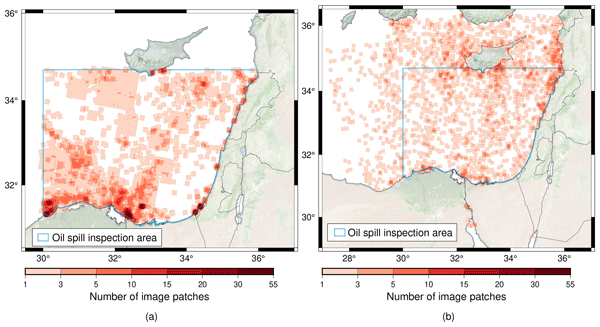
This data descriptor presents a dataset containing oil slicks, look-alikes, and other remarkable ocean phenomena in synthetic aperture radar (SAR) data, which can be used for training oil spill detection methods. It explains the formation of various oceanic phenomena, supported by examples and supporting materials. These insights can help researchers from diverse backgrounds, such as remote sensing, oceanography, and machine learning, to better understand the sources of the signatures.

Swantje Bastin, Aleksei Koldunov, Florian Schütte, Oliver Gutjahr, Marta Agnieszka Mrozowska, Tim Fischer, Radomyra Shevchenko, Arjun Kumar, Nikolay Koldunov, Helmuth Haak, Nils Brüggemann, Rebecca Hummels, Mia Sophie Specht, Johann Jungclaus, Sergey Danilov, Marcus Dengler, and Markus Jochum
Geosci. Model Dev., 18, 1189–1220, https://doi.org/10.5194/gmd-18-1189-2025, https://doi.org/10.5194/gmd-18-1189-2025, 2025
Short summary
Short summary
Vertical mixing is an important process, for example, for tropical sea surface temperature, but cannot be resolved by ocean models. Comparisons of mixing schemes and settings have usually been done with a single model, sometimes yielding conflicting results. We systematically compare two widely used schemes with different parameter settings in two different ocean models and show that most effects from mixing scheme parameter changes are model-dependent.
Lionel Gourdeau, Nadia Ayoub, Arne Bendinger, Sophie Cravatte, Rosemary Morrow, Mei-Ling Dabat, Fabien Léger, and Oscar Vergara
EGUsphere, https://doi.org/10.5194/egusphere-2026-5846, https://doi.org/10.5194/egusphere-2026-5846, 2026
This preprint is open for discussion and under review for Earth Observation (EO).
Short summary
Short summary
For decades, conventional altimeters have observed sea surface height features of hundreds of km. The recent SWOT satellite provides unprecedented observations of fine-scale ocean features down to 15 km. This study shows in a test region that with specific processing of their high-resolution data, conventional altimeters can also capture features down to 20 km, and offer a rich long-term dataset to improve our knowledge of ocean fine-scale processes alongside and beyond the SWOT mission.
Nana Hocke, Lavinia Patara, John Dunne, Florian Schütte, Mariana Maia Pacheco, and Ivy Frenger
EGUsphere, https://doi.org/10.5194/egusphere-2026-4347, https://doi.org/10.5194/egusphere-2026-4347, 2026
Short summary
Short summary
We investigate how ocean eddies influence carbon dioxide and oxygen exchange between the ocean and atmosphere using a high-resolution coupled ocean–biogeochemical climate model. We find that mesoscale variability explains 6–7 % of flux variance globally, with regional contributions exceeding 30 %. Biological processes dominate globally integrated mesoscale flux anomalies, accounting for about two-thirds of the signal, while temperature-driven effects become more important under warming.
Alexandra Andrae, Peter Brandt, Franz Philip Tuchen, Rebecca Hummels, and Joke F. Lübbecke
EGUsphere, https://doi.org/10.5194/egusphere-2026-4390, https://doi.org/10.5194/egusphere-2026-4390, 2026
Short summary
Short summary
Trajectories of surface drifters reveal the presence wind-forced intraseasonal Yanai (mixed Rossby–gravity) waves superimposed on the mean background circulation in the western equatorial Atlantic. Three drifters deployed in May 2023 exhibited circular trajectories centered on the equator, consistent with a 14-day Yanai wave. Numerical experiments reproduce the observation, indicating wave amplitudes of 0.6–0.7 m/s and demonstrating how the North Brazil Current modulates the wave-induced motion.
Tianfei Xue, Lionel A. Arteaga, Markus Pahlow, and Ivy Frenger
EGUsphere, https://doi.org/10.5194/egusphere-2026-3722, https://doi.org/10.5194/egusphere-2026-3722, 2026
Short summary
Short summary
Climate change alters the balance between ocean plants (phytoplankton) and the tiny animals eating them (zooplankton) in the Southern Ocean. Using 12 climate models, we show zooplankton respond more strongly to climate change than phytoplankton, but mainly in spring and summer. Near Antarctica zooplankton increase more than phytoplankton; in subtropical waters they decline more. Annual averages hide these seasonal extremes, underestimating ecological impacts on marine food webs.
Karin Kvale, Ivy Frenger, Julia Getzlaff, Wolfgang Koeve, Iris Kriest, Angela Landolfi, and Andreas Oschlies
EGUsphere, https://doi.org/10.5194/egusphere-2026-3481, https://doi.org/10.5194/egusphere-2026-3481, 2026
Short summary
Short summary
We tried to understand how parameter choices can impact ocean model results over long-timescale simulations. Using a standard ocean biogeochemical model, we modified the physics slightly and then used an objective tuning procedure to create 3 ocean biogeochemical models that perform nearly identically for the modern ocean. These 3 models gave similar results but for different underlying reasons, which caused the models to respond differently when forced with fossil CO2 emissions.
Anna Christina Hans, Rebecca Hummels, Peter Brandt, Franziska U. Schwarzkopf, and Stephan Juricke
EGUsphere, https://doi.org/10.5194/egusphere-2026-2983, https://doi.org/10.5194/egusphere-2026-2983, 2026
Short summary
Short summary
We mimic an observational array at 11°S in an ocean model to assess its capability to compute the temporal variability of the Atlantic Meridional Overturning Circulation. The current approaches based on bottom pressure sensors and measurements of the boundary currents explain large parts of the transport variability. Improvements can be achieved by also considering temperature and salinity data, while the potential of self-calibrating pressure sensors and inverted echo sounders is limited.
Charly de Marez, Arne Bendinger, and Ahmad Fehmi Dilmahamod
Ocean Sci., 22, 1515–1528, https://doi.org/10.5194/os-22-1515-2026, https://doi.org/10.5194/os-22-1515-2026, 2026
Short summary
Short summary
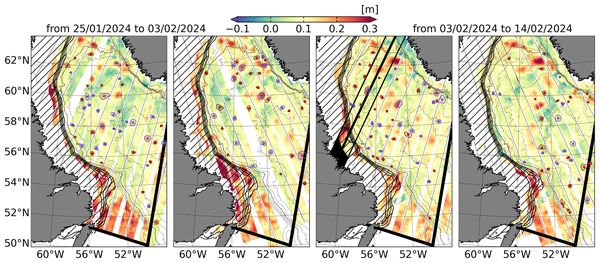
We use new observations from the Surface Water and Ocean Topography Mission (SWOT) satellite to reveal the structure of ocean eddies in the Labrador Sea at unprecedented resolution. By comparison with ship-based measurements, we show that SWOT reliably detects these features even at high latitudes, where conventional altimetry is limited. Our results provide the first detailed view of mesoscale eddies in the Labrador Sea and highlight SWOT's potential in polar regions.
Alan D. Fox, Neil J. Fraser, Kristin Burmeister, Sam C. Jones, Stuart A. Cunningham, Lewis A. Drysdale, Ahmad Fehmi Dilmahamod, and Johannes Karstensen
Ocean Sci., 22, 1439–1456, https://doi.org/10.5194/os-22-1439-2026, https://doi.org/10.5194/os-22-1439-2026, 2026
Short summary
Short summary
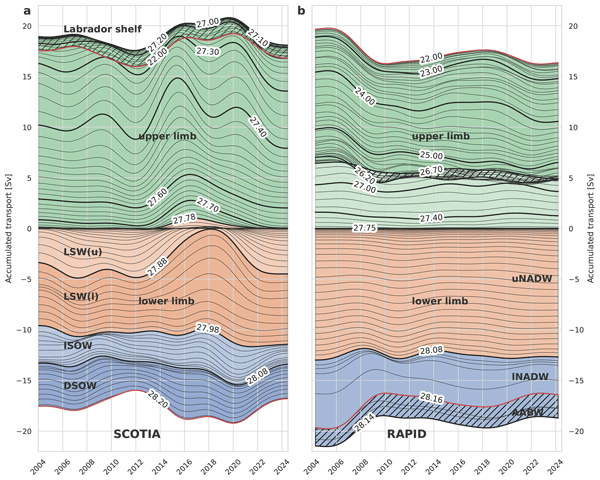
The Atlantic ocean circulation that helps regulate climate is expected to weaken this century. Long-term measurements in the subtropics now show signs of weakening, but northern data are shorter and more variable. By combining several observing systems, we reconstructed northern circulation since 2004 and found strong ups and downs, but no clear long-term weakening so far.
Wolfgang Koeve and Ivy Frenger
EGUsphere, https://doi.org/10.5194/egusphere-2026-304, https://doi.org/10.5194/egusphere-2026-304, 2026
Short summary
Short summary
Apparent oxygen utilization (AOU) is widely used to diagnose oceanic oxygen loss and marine carbon cycle changes because it can be derived from observations and climate models. However, it assumes perfect oxygen equilibration at the ocean surface, an assumption that introduces uncertainty. Using an Earth System model of intermediate complexity, we reassess the validity of the AOU approximation for steady-state and future climate scenarios.
Joelle Habib, Lars Stemmann, Alexandre Accardo, Alberto Baudena, Franz Philip Tuchen, Peter Brandt, and Rainer Kiko
Biogeosciences, 22, 7985–8003, https://doi.org/10.5194/bg-22-7985-2025, https://doi.org/10.5194/bg-22-7985-2025, 2025
Short summary
Short summary
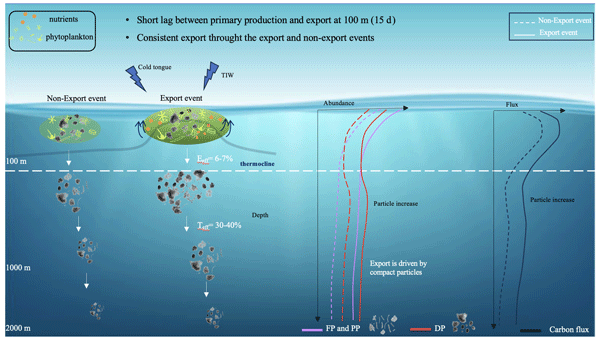
This study investigates how carbon moves from the ocean surface to the depths in the equatorial Atlantic, contributing to long-term carbon storage. Using an Argo float equipped with a camera, we captured two periods with major carbon export events. By identifying particle types and their sinking behaviors, we found that smaller, compact particles are key drivers of carbon transport. Our findings underscore the value of using imaging tools on autonomous platforms in tracking carbon sequestration.
Yi-Jie Yang, Suman Singha, Ron Goldman, and Florian Schütte
Earth Syst. Sci. Data, 17, 6807–6837, https://doi.org/10.5194/essd-17-6807-2025, https://doi.org/10.5194/essd-17-6807-2025, 2025
Short summary
Short summary
This data descriptor presents a dataset containing oil slicks, look-alikes, and other remarkable ocean phenomena in synthetic aperture radar (SAR) data, which can be used for training oil spill detection methods. It explains the formation of various oceanic phenomena, supported by examples and supporting materials. These insights can help researchers from diverse backgrounds, such as remote sensing, oceanography, and machine learning, to better understand the sources of the signatures.
Maher Bouzaiene, Antonio Guarnieri, Damiano Delrosso, Ahmad F. Dilmahamod, Simona Simoncelli, and Claudia Fratianni
Ocean Sci., 21, 2643–2662, https://doi.org/10.5194/os-21-2643-2025, https://doi.org/10.5194/os-21-2643-2025, 2025
Short summary
Short summary
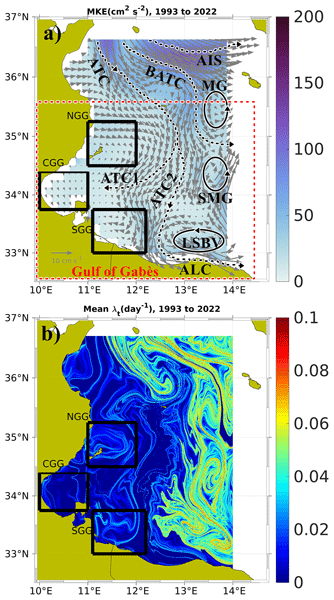
We analyze the geostrophic circulation and tidal effects in the Gulf of Gabès from 30 years of altimetry data (1993–2022) and the outputs of a high-resolution ocean model for the year 2022.
Arne Bendinger, Sophie Cravatte, Lionel Gourdeau, Clément Vic, and Florent Lyard
Ocean Sci., 21, 1943–1966, https://doi.org/10.5194/os-21-1943-2025, https://doi.org/10.5194/os-21-1943-2025, 2025
Short summary
Short summary
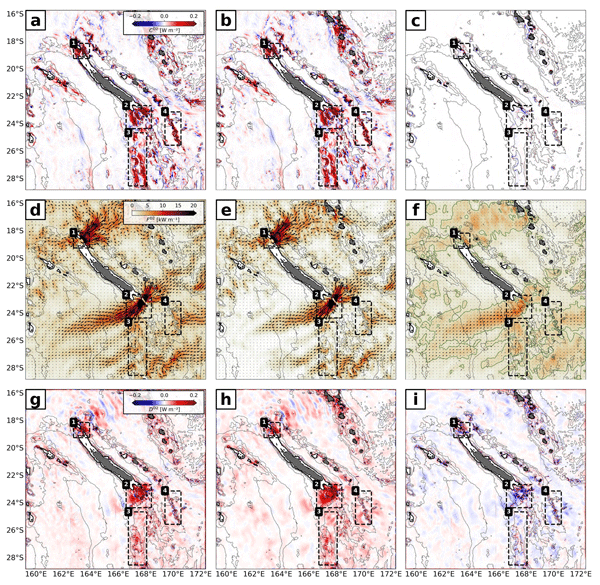
Temporal variability of the semidiurnal internal tide around New Caledonia is investigated using regional modeling. An important contribution to temporal variability not linked to the spring–neap tide cycle is due to the presence of mesoscale eddies both at the generation sites and in the propagation direction. The incoherent tide has a widespread signature in sea surface height (SSH), challenging the SSH observability of mesoscale to submesoscale dynamics.
Yawouvi Dodji Soviadan, Miriam Beck, Joelle Habib, Alberto Baudena, Laetitia Drago, Alexandre Accardo, Remi Laxenaire, Sabrina Speich, Peter Brandt, Rainer Kiko, and Stemmann Lars
Biogeosciences, 22, 3485–3501, https://doi.org/10.5194/bg-22-3485-2025, https://doi.org/10.5194/bg-22-3485-2025, 2025
Short summary
Short summary
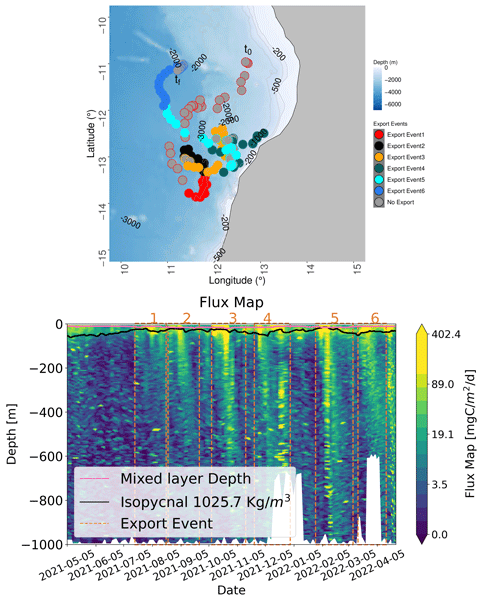
Key parameters representing the gravity flux in global models are sinking speed and vertical attenuation of exported material. We calculate, for the first time, these parameters in situ in the ocean for six intermittent blooms followed by export events using high-resolution (3 d) time series of 0–1000 m depth profiles from imaging sensors mounted on an Argo float. We show that sinking speed depends not only on size but also on the morphology of the particles, with density being an important property.
Léo C. Aroucha, Joke F. Lübbecke, Peter Brandt, Franziska U. Schwarzkopf, and Arne Biastoch
Ocean Sci., 21, 661–678, https://doi.org/10.5194/os-21-661-2025, https://doi.org/10.5194/os-21-661-2025, 2025
Short summary
Short summary
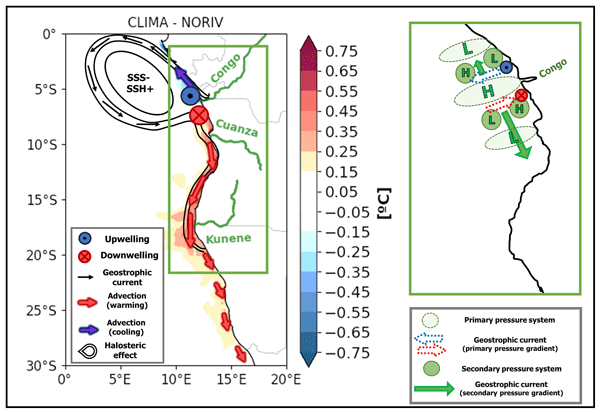
The west African coastal region sustains highly productive fisheries and marine ecosystems influenced by sea surface temperature. We use oceanic models to show that the freshwater input from land to ocean strengthens a surface northward (southward) coastal current north (south) of the Congo River mouth, promoting a transfer of cooler (warmer) waters to north (south) of the Congo discharge location. We highlight the significant impact of river discharge on ocean temperatures and circulation.
Malcolm J. Roberts, Kevin A. Reed, Qing Bao, Joseph J. Barsugli, Suzana J. Camargo, Louis-Philippe Caron, Ping Chang, Cheng-Ta Chen, Hannah M. Christensen, Gokhan Danabasoglu, Ivy Frenger, Neven S. Fučkar, Shabeh ul Hasson, Helene T. Hewitt, Huanping Huang, Daehyun Kim, Chihiro Kodama, Michael Lai, Lai-Yung Ruby Leung, Ryo Mizuta, Paulo Nobre, Pablo Ortega, Dominique Paquin, Christopher D. Roberts, Enrico Scoccimarro, Jon Seddon, Anne Marie Treguier, Chia-Ying Tu, Paul A. Ullrich, Pier Luigi Vidale, Michael F. Wehner, Colin M. Zarzycki, Bosong Zhang, Wei Zhang, and Ming Zhao
Geosci. Model Dev., 18, 1307–1332, https://doi.org/10.5194/gmd-18-1307-2025, https://doi.org/10.5194/gmd-18-1307-2025, 2025
Short summary
Short summary
HighResMIP2 is a model intercomparison project focusing on high-resolution global climate models, that is, those with grid spacings of 25 km or less in the atmosphere and ocean, using simulations of decades to a century in length. We are proposing an update of our simulation protocol to make the models more applicable to key questions for climate variability and hazard in present-day and future projections and to build links with other communities to provide more robust climate information.
Swantje Bastin, Aleksei Koldunov, Florian Schütte, Oliver Gutjahr, Marta Agnieszka Mrozowska, Tim Fischer, Radomyra Shevchenko, Arjun Kumar, Nikolay Koldunov, Helmuth Haak, Nils Brüggemann, Rebecca Hummels, Mia Sophie Specht, Johann Jungclaus, Sergey Danilov, Marcus Dengler, and Markus Jochum
Geosci. Model Dev., 18, 1189–1220, https://doi.org/10.5194/gmd-18-1189-2025, https://doi.org/10.5194/gmd-18-1189-2025, 2025
Short summary
Short summary
Vertical mixing is an important process, for example, for tropical sea surface temperature, but cannot be resolved by ocean models. Comparisons of mixing schemes and settings have usually been done with a single model, sometimes yielding conflicting results. We systematically compare two widely used schemes with different parameter settings in two different ocean models and show that most effects from mixing scheme parameter changes are model-dependent.
Eike E. Köhn, Richard J. Greatbatch, Peter Brandt, and Martin Claus
Ocean Sci., 20, 1281–1290, https://doi.org/10.5194/os-20-1281-2024, https://doi.org/10.5194/os-20-1281-2024, 2024
Short summary
Short summary
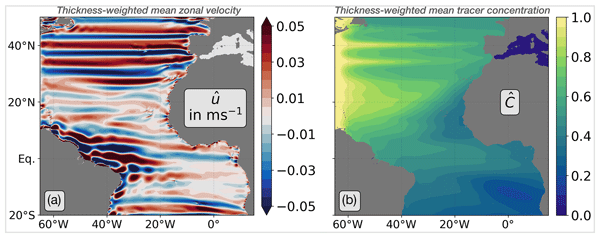
The latitudinally alternating zonal jets are a ubiquitous feature of the ocean. We use a simple model to illustrate the potential role of these jets in the formation, maintenance, and multidecadal variability in the oxygen minimum zones, using the eastern tropical North Atlantic oxygen minimum zone as an example.
Arne Bendinger, Sophie Cravatte, Lionel Gourdeau, Luc Rainville, Clément Vic, Guillaume Sérazin, Fabien Durand, Frédéric Marin, and Jean-Luc Fuda
Ocean Sci., 20, 945–964, https://doi.org/10.5194/os-20-945-2024, https://doi.org/10.5194/os-20-945-2024, 2024
Short summary
Short summary
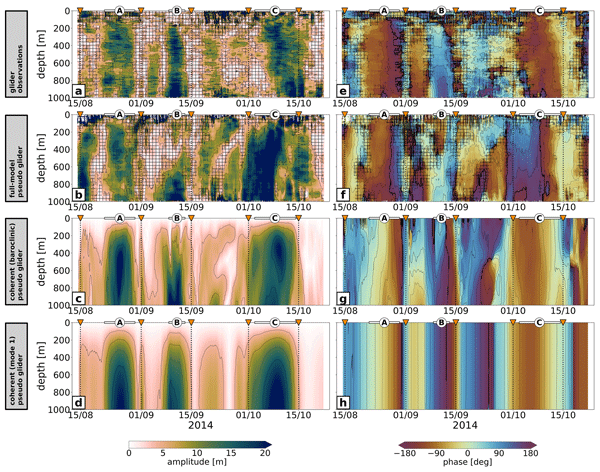
A unique dataset of glider observations reveals tidal beams south of New Caledonia – an internal-tide-generation hot spot in the southwestern tropical Pacific. Observations are in good agreement with numerical modeling output, highlighting the glider's capability to infer internal tides while assessing the model's realism of internal-tide dynamics. Discrepancies are in large part linked to eddy–internal-tide interactions. A methodology is proposed to deduce the internal-tide surface signature.
Tianfei Xue, Jens Terhaar, A. E. Friederike Prowe, Thomas L. Frölicher, Andreas Oschlies, and Ivy Frenger
Biogeosciences, 21, 2473–2491, https://doi.org/10.5194/bg-21-2473-2024, https://doi.org/10.5194/bg-21-2473-2024, 2024
Short summary
Short summary
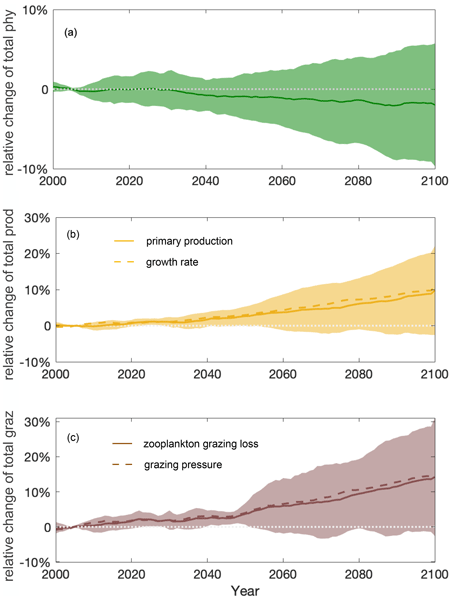
Phytoplankton play a crucial role in marine ecosystems. However, climate change's impact on phytoplankton biomass remains uncertain, particularly in the Southern Ocean. In this region, phytoplankton biomass within the water column is likely to remain stable in response to climate change, as supported by models. This stability arises from a shallower mixed layer, favoring phytoplankton growth but also increasing zooplankton grazing due to phytoplankton concentration near the surface.
Kristin Burmeister, Franziska U. Schwarzkopf, Willi Rath, Arne Biastoch, Peter Brandt, Joke F. Lübbecke, and Mark Inall
Ocean Sci., 20, 307–339, https://doi.org/10.5194/os-20-307-2024, https://doi.org/10.5194/os-20-307-2024, 2024
Short summary
Short summary
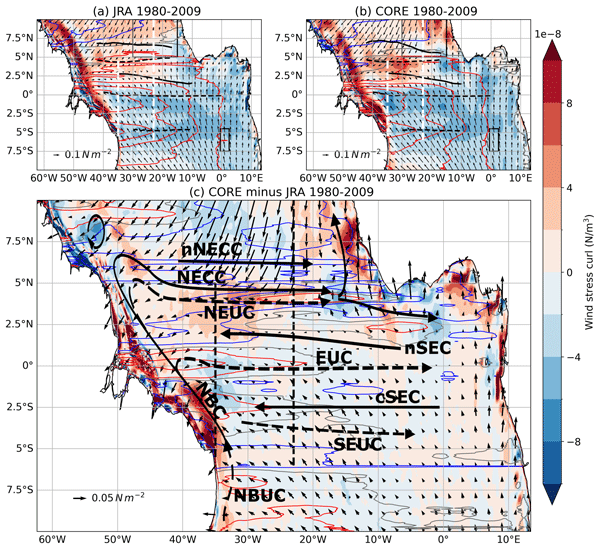
We apply two different forcing products to a high-resolution ocean model to investigate their impact on the simulated upper-current field in the tropical Atlantic. Where possible, we compare the simulated results to long-term observations. We find large discrepancies between the two simulations regarding the wind and current fields. We propose that long-term observations, once they have reached a critical length, need to be used to test the quality of wind-driven simulations.
Arne Bendinger, Sophie Cravatte, Lionel Gourdeau, Laurent Brodeau, Aurélie Albert, Michel Tchilibou, Florent Lyard, and Clément Vic
Ocean Sci., 19, 1315–1338, https://doi.org/10.5194/os-19-1315-2023, https://doi.org/10.5194/os-19-1315-2023, 2023
Short summary
Short summary
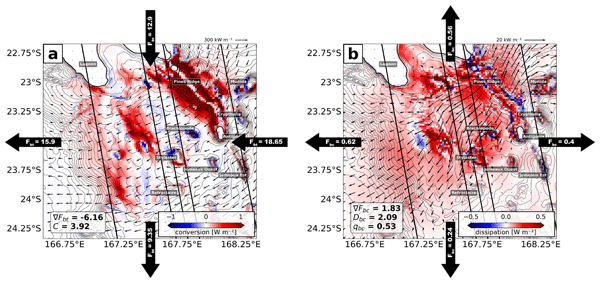
New Caledonia is a hot spot of internal-tide generation due to complex bathymetry. Regional modeling quantifies the coherent internal tide and shows that most energy is converted in shallow waters and on very steep slopes. The region is a challenge for observability of balanced dynamics due to strong internal-tide sea surface height (SSH) signatures at similar wavelengths. Correcting the SSH for the coherent internal tide may increase the observability of balanced motion to < 100 km.
Swantje Bastin, Martin Claus, Richard J. Greatbatch, and Peter Brandt
Ocean Sci., 19, 923–939, https://doi.org/10.5194/os-19-923-2023, https://doi.org/10.5194/os-19-923-2023, 2023
Short summary
Short summary
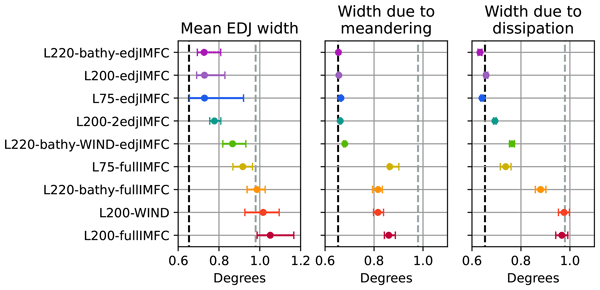
Equatorial deep jets are ocean currents that flow along the Equator in the deep oceans. They are relevant for oxygen transport and tropical surface climate, but their dynamics are not yet entirely understood. We investigate different factors leading to the jets being broader than theory predicts. Mainly using an ocean model, but corroborating the results with shipboard observations, we show that loss of momentum is the main factor for the broadening but that meandering also contributes.
Peter Brandt, Gaël Alory, Founi Mesmin Awo, Marcus Dengler, Sandrine Djakouré, Rodrigue Anicet Imbol Koungue, Julien Jouanno, Mareike Körner, Marisa Roch, and Mathieu Rouault
Ocean Sci., 19, 581–601, https://doi.org/10.5194/os-19-581-2023, https://doi.org/10.5194/os-19-581-2023, 2023
Short summary
Short summary
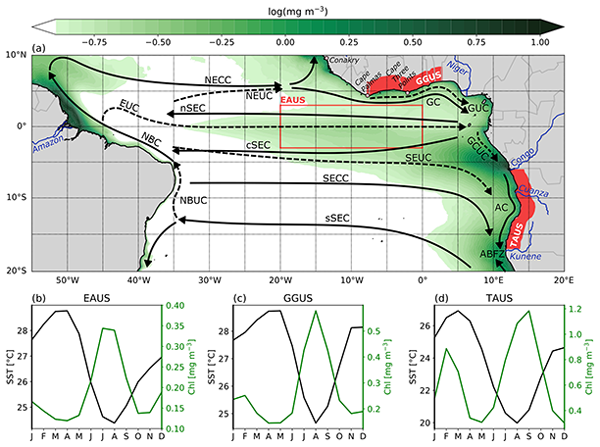
Tropical upwelling systems are among the most productive ecosystems globally. The tropical Atlantic upwelling undergoes a strong seasonal cycle that is forced by the wind. Local wind-driven upwelling and remote effects, particularly via the propagation of equatorial and coastal trapped waves, lead to an upward and downward movement of the nitracline. Turbulent mixing results in upward supply of nutrients. Here, we review the different physical processes responsible for biological productivity.
Mareike Körner, Peter Brandt, and Marcus Dengler
Ocean Sci., 19, 121–139, https://doi.org/10.5194/os-19-121-2023, https://doi.org/10.5194/os-19-121-2023, 2023
Short summary
Short summary
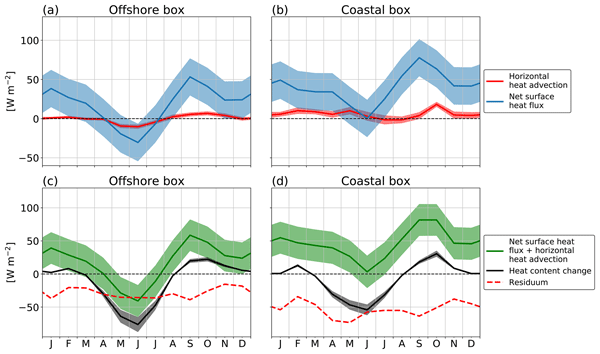
The coastal waters off Angola host a productive ecosystem. Surface waters at the coast are colder than further offshore. We find that surface heat fluxes warm the coastal region more strongly than the offshore region and cannot explain the differences. The influence of horizontal heat advection is minor on the surface temperature change. In contrast, ocean turbulence data suggest that cooling associated with vertical mixing is an important mechanism to explain the near-coastal cooling.
Quentin Devresse, Kevin W. Becker, Arne Bendinger, Johannes Hahn, and Anja Engel
Biogeosciences, 19, 5199–5219, https://doi.org/10.5194/bg-19-5199-2022, https://doi.org/10.5194/bg-19-5199-2022, 2022
Short summary
Short summary
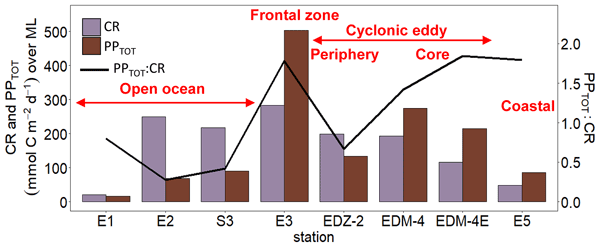
Eddies are ubiquitous in the ocean and alter physical, chemical, and biological processes. However, how they affect organic carbon production and consumption is largely unknown. Here we show how an eddy triggers a cascade effect on biomass production and metabolic activities of phyto- and bacterioplankton. Our results may contribute to the improvement of biogeochemical models used to estimate carbon fluxes in the ocean.
Rainer Kiko, Marc Picheral, David Antoine, Marcel Babin, Léo Berline, Tristan Biard, Emmanuel Boss, Peter Brandt, Francois Carlotti, Svenja Christiansen, Laurent Coppola, Leandro de la Cruz, Emilie Diamond-Riquier, Xavier Durrieu de Madron, Amanda Elineau, Gabriel Gorsky, Lionel Guidi, Helena Hauss, Jean-Olivier Irisson, Lee Karp-Boss, Johannes Karstensen, Dong-gyun Kim, Rachel M. Lekanoff, Fabien Lombard, Rubens M. Lopes, Claudie Marec, Andrew M. P. McDonnell, Daniela Niemeyer, Margaux Noyon, Stephanie H. O'Daly, Mark D. Ohman, Jessica L. Pretty, Andreas Rogge, Sarah Searson, Masashi Shibata, Yuji Tanaka, Toste Tanhua, Jan Taucher, Emilia Trudnowska, Jessica S. Turner, Anya Waite, and Lars Stemmann
Earth Syst. Sci. Data, 14, 4315–4337, https://doi.org/10.5194/essd-14-4315-2022, https://doi.org/10.5194/essd-14-4315-2022, 2022
Short summary
Short summary
The term
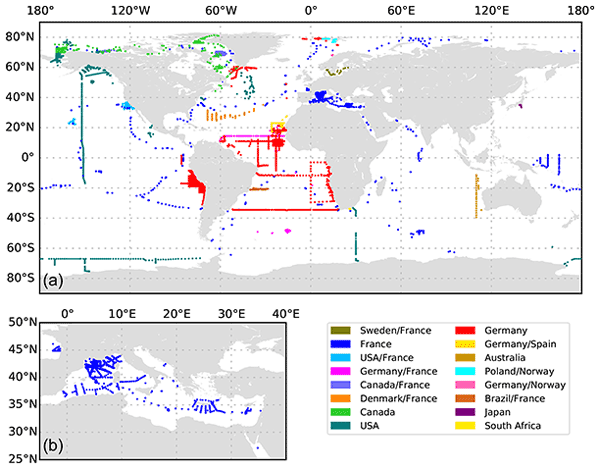
marine particlescomprises detrital aggregates; fecal pellets; bacterioplankton, phytoplankton and zooplankton; and even fish. Here, we present a global dataset that contains 8805 vertical particle size distribution profiles obtained with Underwater Vision Profiler 5 (UVP5) camera systems. These data are valuable to the scientific community, as they can be used to constrain important biogeochemical processes in the ocean, such as the flux of carbon to the deep sea.
Chia-Te Chien, Jonathan V. Durgadoo, Dana Ehlert, Ivy Frenger, David P. Keller, Wolfgang Koeve, Iris Kriest, Angela Landolfi, Lavinia Patara, Sebastian Wahl, and Andreas Oschlies
Geosci. Model Dev., 15, 5987–6024, https://doi.org/10.5194/gmd-15-5987-2022, https://doi.org/10.5194/gmd-15-5987-2022, 2022
Short summary
Short summary
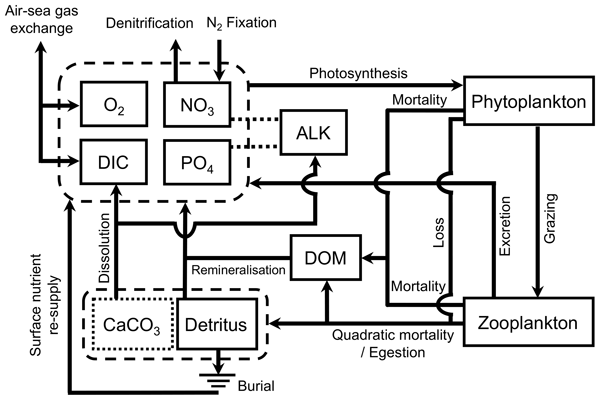
We present the implementation and evaluation of a marine biogeochemical model, Model of Oceanic Pelagic Stoichiometry (MOPS) in the Flexible Ocean and Climate Infrastructure (FOCI) climate model. FOCI-MOPS enables the simulation of marine biological processes, the marine carbon, nitrogen and oxygen cycles, and air–sea gas exchange of CO2 and O2. As shown by our evaluation, FOCI-MOPS shows an overall adequate performance that makes it an appropriate tool for Earth climate system simulations.
Tianfei Xue, Ivy Frenger, A. E. Friederike Prowe, Yonss Saranga José, and Andreas Oschlies
Biogeosciences, 19, 455–475, https://doi.org/10.5194/bg-19-455-2022, https://doi.org/10.5194/bg-19-455-2022, 2022
Short summary
Short summary
The Peruvian system supports 10 % of the world's fishing yield. In the Peruvian system, wind and earth’s rotation bring cold, nutrient-rich water to the surface and allow phytoplankton to grow. But observations show that it grows worse at high upwelling. Using a model, we find that high upwelling happens when air mixes the water the most. Then phytoplankton is diluted and grows slowly due to low light and cool upwelled water. This study helps to estimate how it might change in a warming climate.
Olaf Duteil, Ivy Frenger, and Julia Getzlaff
Ocean Sci., 17, 1489–1507, https://doi.org/10.5194/os-17-1489-2021, https://doi.org/10.5194/os-17-1489-2021, 2021
Short summary
Short summary
The large oxygen minimum zones in the tropical Pacific Ocean are still not well represented by typical climate models. We analyze a set of ocean models and highlight the fact that an oxygen concentration that is too low at intermediate depth in the subtropical regions associated with a sluggish representation of the intermediate equatorial current system may be responsible for the overly large extension of the modeled oxygen minimum zones, potentially hampering future projections.
Cited articles
Antonov, J. I., Seidov, D., Boyer, T. P., Locarnini, R. A., Mishonov, A. V., Garcia, H. E., Baranova, O. K., Zweng, M. M., and Johnson, D. R.: World Ocean Atlas 2009, in: Volume 2: Salinity, NOAA Atlas NESDIS 69, edited by: Levitus, S., US Government Printing Office, Washington, D.C., 184 pp., http://www.nodc.noaa.gov/OC5/indprod.html (last access: 15 June 2023), 2010.
Bendinger, A., Dilmahamod, A. F., Albert, A., Le Sommer, J., and Karstensen, J.: Characteristics of Mesoscale-to-Submesoscale Eddies in the Labrador Sea: Insights from Ship Observations, J. Phys. Oceanogr., 55, 2037–2057, https://doi.org/10.1175/JPO-D-24-0216.1, 2025.
Bittig, H. C., Körtzinger, A., Neill, C., van Ooijen, E., Plant, J. N., Hahn, J., Johnson, K. S., Yang, B., and Emerson, S. R.: Oxygen Optode Sensors: Principle, Characterization, Calibration, and Application in the Ocean, Frontiers in Marine Science, 4, 10.3389/fmars.2017.00429, 2018.
Brandt, P., Hormann, V., Körtzinger, A., Visbeck, M., Krahmann, G., Stramma, L., Lumpkin, R., and Schmid, C.: Changes in the Ventilation of the Oxygen Minimum Zone of the Tropical North Atlantic, J. Phys. Oceanogr., 40, 1784–1801, https://doi.org/10.1175/2010jpo4301.1, 2010.
Brandt, P., Bange, H. W., Banyte, D., Dengler, M., Didwischus, S. H., Fischer, T., Greatbatch, R. J., Hahn, J., Kanzow, T., Karstensen, J., Körtzinger, A., Krahmann, G., Schmidtko, S., Stramma, L., Tanhua, T., and Visbeck, M.: On the role of circulation and mixing in the ventilation of oxygen minimum zones with a focus on the eastern tropical North Atlantic, Biogeosciences, 12, 489–512, https://doi.org/10.5194/bg-12-489-2015, 2015.
Calil, P. H. R.: High-Resolution, Basin-Scale Simulations Reveal the Impact of Intermediate Zonal Jets on the Atlantic Oxygen Minimum Zones, J. Adv. Model. Earth Syst., 15, e2022MS003158, https://doi.org/10.1029/2022MS003158, 2023.
Castelão, G. P. and Johns, W. E.: Sea surface structure of North Brazil Current rings derived from shipboard and moored acoustic Doppler current profiler observations, J. Geophys. Res., 116, C01010, https://doi.org/10.1029/2010JC006575, 2011.
Castelão, G. P., Irber, L. C., and Villas Boas, A. B. M.: An objective reference system for studying rings in the ocean, Comput. Geosci., 61, 43–49, 2013.
Chaigneau, A., Eldin, G., and Dewitte, B.: Eddy activity in the four major upwrelling systems from satellite altimetry (1992–2007), Prog. Oceanogr., 83, 117–123, https://doi.org/10.1016/j.pocean.2009.07.012, 2009.
Chelton, D. B., deSzoeke, R. A., Schlax, M. G., Naggar, K. E., and Siwertz, N.: Geographical Variability of the First Baroclinic Rossby Radius of Deformation, J. Phys. Oceanogr., 28, 433–460, https://doi.org/10.1175/1520-0485(1998)028<0433:Gvotfb>2.0.Co;2, 1998.
Chelton, D. B., Schlax, M. G., and Samelson, R. M.: Global observations of nonlinear mesoscale eddies, Prog. Oceanogr., 91, 167–216, https://doi.org/10.1016/j.pocean.2011.01.002, 2011.
Christiansen, S., Hoving, H. J., Schutte, F., Hauss, H., Karstensen, J., Kortzinger, A., Schroder, S. M., Stemmann, L., Christiansen, B., Picheral, M., Brandt, P., Robison, B., Koch, R., and Kiko, R.: Particulate matter flux interception in oceanic mesoscale eddies by the polychaete Poeobius sp, Limnol. Oceanogr., 63, 2093–2109, https://doi.org/10.1002/lno.10926, 2018.
D'Asaro, E. A.: Generation of submesoscale vortices: A new mechanism, J. Geophys. Res.-Oceans, 93, 6685–6693, https://doi.org/10.1029/JC093iC06p06685, 1988.
Delworth, T. L., Rosati, A., Anderson, W., Adcroft, A. J., Balaji, V., Benson, R., Dixon, K., Griffies, S. M., Lee, H.-C., Pacanowski, R. C., Vecchi, G. A., Wittenberg, A. T., Zeng, F., and Zhang, R.: Simulated Climate and Climate Change in the GFDL CM2.5 High-Resolution Coupled Climate Model, J. Climate, 25, 2755–2781, https://doi.org/10.1175/jcli-d-11-00316.1, 2012.
Deutsch, C., Penn, J. L. and Seibel, B.: Metabolic trait diversity shapes marine biogeography, Nature, 585, 557–562, https://doi.org/10.1038/s41586-020-2721-y, 2020.
Dilmahamod, A. F., Karstensen, J., Dietze, H., Löptien, U., and Fennel, K.: Generation Mechanisms of Mesoscale Eddies in the Mauritanian Upwelling Region, J. Phys. Oceanogr., 52, 161–182, https://doi.org/10.1175/JPO-D-21-0092.1, 2022.
Dufour, C. O., Griffies, S. M., de Souza, G. F., Frenger, I., Morrison, A. K., Palter, J. B., Sarmiento, J. L., Galbraith, E. D., Dunne, J. P., Anderson, W. G., and Slater, R. D.: Role of Mesoscale Eddies in Cross-Frontal Transport of Heat and Biogeochemical Tracers in the Southern Ocean, J. Phys. Oceanogr., 45, 3057–3081, https://doi.org/10.1175/jpo-d-14-0240.1, 2015.
Duteil, O., Schwarzkopf, F. U., Böning, C. W., and Oschlies, A.: Major role of the equatorial current system in setting oxygen levels in the eastern tropical Atlantic Ocean: A high- resolution model study, Geophys. Res. Lett., 41, 2033–2040, https://doi.org/10.1002/2013gl058888, 2014.
Eden, C.: Eddy length scales in the North Atlantic Ocean, J. Geophys. Res.-Oceans, 112, https://doi.org/10.1029/2006jc003901, 2007.
E.U. Copernicus Marine Service Information: Global Ocean Gridded L 4 Sea Surface Heights And Derived Variables Reprocessed 1993 Ongoing, Marine Data Store (MDS) [data set], https://doi.org/10.48670/moi-00148, 2024.
Fiedler, B., Grundle, D. S., Schütte, F., Karstensen, J., Löscher, C. R., Hauss, H., Wagner, H., Loginova, A., Kiko, R., Silva, P., Tanhua, T., and Körtzinger, A.: Oxygen utilization and downward carbon flux in an oxygen-depleted eddy in the eastern tropical North Atlantic, Biogeosciences, 13, 5633–5647, https://doi.org/10.5194/bg-13-5633-2016, 2016.
Fischer, J., Brandt, P., Dengler, M., Müller, M., and Symonds, D.: Surveying the Upper Ocean with the Ocean Surveyor: A New Phased Array Doppler Current Profiler, J. Atmos. Ocean. Tech., 20, 742–751, https://doi.org/10.1175/1520-0426(2003)20<742:Stuowt>2.0.Co;2, 2003.
Frenger, I.: Supplementary model data to: Hidden vortices: Near-equatorial lowoxygen extremes driven by high-baroclinic-mode vortices [data set and code], GEOMAR Helmholtz Centre for Ocean Research Kiel [distributor], https://hdl.handle.net/20.500.12085/21ab7868-c112-4173-ada4-75b86f098f18,
Frenger, I., Bianchi, D., Stührenberg, C., Oschlies, A., Dunne, J., Deutsch, C., Galbraith, E., and Schütte, F.: Biogeochemical Role of Subsurface Coherent Eddies in the Ocean: Tracer Cannonballs, Hypoxic Storms, and Microbial Stewpots?, Global Biogeochem. Cy., 32, 226–249, https://doi.org/10.1002/2017GB005743, 2018.
Galbraith, E. D., Dunne, J. P., Gnanadesikan, A., Slater, R. D., Sarmiento, J. L., Dufour, C. O., de Souza, G. F., Bianchi, D., Claret, M., Rodgers, K. B., and Marvasti, S. S.: Complex functionality with minimal computation: Promise and pitfalls of reduced-tracer ocean biogeochemistry models, J. Adv. Model. Earth Syst., 7, 2012–2028, https://doi.org/10.1002/2015ms000463, 2015.
Garcia, H. E., Locarnini, R. A., Boyer, T. P., Antonov, J. I., Baranova, O. K., Zweng, M. M., and Johnson, D. R.: World Ocean Atlas 2009, in: Volume 3: Dissolved Oxygen, Apparent Oxygen Utilization, and Oxygen Saturation, NOAA Atlas NESDIS 70, edited by: Levitus, S., US Government Printing Office, Washington, D.C., 344 pp., https://doi.org/10.25923/rb67-ns53, 2010a.
Garcia, H. E., Locarnini, R. A., Boyer, T. P., Antonov, J. I., Zweng, M. M., Baranova, O. K., and Johnson, D. R.: World Ocean Atlas 2009, in: Volume 4: Nutrients (phosphate, nitrate, silicate), NOAA Atlas NESDIS 71, edited by: Levitus, S., US Government Printing Office, Washington, D.C., 398 pp., http://www.nodc.noaa.gov/OC5/indprod.html (last access: 15 June 2023), 2010b.
Garcia, H. E., Wang, Z., Bouchard, C., Cross, S. L., Paver, C. R., Reagan, J. R., Boyer, T. P., Locarnini, R. A., Mishonov, A. V., Baranova, O., Seidov, D., and Dukhovskoy, D.: World Ocean Atlas 2023, Volume 3: Dissolved Oxygen, Apparent Oxygen Utilization, Dissolved Oxygen Saturation and 30 year Climate Normal, A. Mishonov, Tech. Ed. NOAA Atlas NESDIS 91 [data set], https://doi.org/10.25923/rb67-ns53, 2024.
Gill, A. E.: Atmosphere-Ocean Dynamics, in: International Geophysics Series Volume 30, Academic Press, New York, https://doi.org/10.1016/S0074-6142(08)60026-1, 1982.
Griffies, S. M., Winton, M., Anderson, W. G., Benson, R., Delworth, T. L., Dufour, C. O., Dunne, J. P., Goddard, P., Morrison, A. K., Rosati, A., Wittenberg, A. T., Yin, J., and Zhang, R.: Impacts on Ocean Heat from Transient Mesoscale Eddies in a Hierarchy of Climate Models, J. Climate, 28, 952–977, https://doi.org/10.1175/jcli-d-14-00353.1, 2015.
Gula, J., Blacic, T. M., and Todd, R. E.: Submesoscale Coherent Vortices in the Gulf Stream, Geophys. Res. Lett., 46, 2704–2714, https://doi.org/10.1029/2019gl081919, 2019.
Hahn, J., Brandt, P., Greatbatch, R. J., Krahmann, G., and Kortzinger, A.: Oxygen variance and meridional oxygen supply in the Tropical North East Atlantic oxygen minimum zone, Clim. Dynam., 43, 2999–3024, https://doi.org/10.1007/s00382-014-2065-0, 2014.
Hahn, J., Brandt, P., Schmidtko, S., and Krahmann, G.: Decadal oxygen change in the eastern tropical North Atlantic, Ocean Sci., 13, 551–576, https://doi.org/10.5194/os-13-551-2017, 2017.
Hauss, H., Christiansen, S., Schutte, F., Kiko, R., Lima, M. E., Rodrigues, E., Karstensen, J., Loscher, C. R., Kortzinger, A., and Fiedler, B.: Dead zone or oasis in the open ocean? Zooplankton distribution and migration in low-oxygen modewater eddies, Biogeosciences, 13, 1977–1989, https://doi.org/10.5194/bg-13-1977-2016, 2016.
Karstensen, J., Stramma, L., and Visbeck, M.: Oxygen minimum zones in the eastern tropical Atlantic and Pacific oceans, Prog. Oceanogr., 77, 331–350, https://doi.org/10.1016/j.pocean.2007.05.009, 2008.
Karstensen, J., Fiedler, B., Schütte, F., Brandt, P., Körtzinger, A., Fischer, G., Zantopp, R., Hahn, J., Visbeck, M., and Wallace, D.: Open ocean dead zones in the tropical North Atlantic Ocean, Biogeosciences, 12, 2597–2605, https://doi.org/10.5194/bg-12-2597-2015, 2015.
Karstensen, J., Schütte, F., Pietri, A., Krahmann, G., Fiedler, B., Grundle, D., Hauss, H., Körtzinger, A., Löscher, C. R., Testor, P., Vieira, N., and Visbeck, M.: Upwelling and isolation in oxygen-depleted anticyclonic modewater eddies and implications for nitrate cycling, Biogeosciences, 14, 2167–2181, https://doi.org/10.5194/bg-14-2167-2017, 2017.
Keppler, L., Cravatte, S., Chaigneau, A., Pegliasco, C., Gourdeau, L., and Singh, A.: Observed Characteristics and Vertical Structure of Mesoscale Eddies in the Southwest Tropical Pacific, Journal of Geophysical Research: Oceans, 123, 2731-2756, 10.1002/2017jc013712, 2018.
Key, R. M., Kozyr, A., Sabine, C. L., Lee, K., Wanninkhof, R., Bullister, J. L., Feely, R. A., Millero, F. J., Mordy, C., and Peng, T.-H.: A global ocean carbon climatology: Results from Global Data Analysis Project (GLODAP), Global Biogeochem. Cy., 18, https://doi.org/10.1029/2004gb002247, 2004.
Köhn, E. E., Greatbatch, R. J., Brandt, P., and Claus, M.: The formation and ventilation of an oxygen minimum zone in a simple model for latitudinally alternating zonal jets, Ocean Sci., 20, 1281–1290, https://doi.org/10.5194/os-20-1281-2024, 2024.
Li, Q. P., Hansell, D. A., McGillicuddy Jr., D. J., Bates, N. R., and Johnson, R. J.: Tracer-based assessment of the origin and biogeochemical transformation of a cyclonic eddy in the Sargasso Sea, J. Geophys. Res.-Oceans, 113, https://doi.org/10.1029/2008jc004840, 2008.
Locarnini, R. A., Mishonov, A. V., Antonov, J. I., Boyer, T. P., Garcia, H. E., Baranova, O. K., Zweng, M. M., and Johnson, D. R.: World Ocean Atlas 2009, in: Volume 1: Temperature, NOAA Atlas NESDIS 68, edited by: Levitus, S., US Government Printing Office, Washington, D.C., 184 pp., https://repository.library.noaa.gov/view/noaa/1195 (last access: 15 June 2023), 2010.
Löscher, C. R., Fischer, M. A., Neulinger, S. C., Fiedler, B., Philippi, M., Schütte, F., Singh, A., Hauss, H., Karstensen, J., Körtzinger, A., Künzel, S., and Schmitz, R. A.: Hidden biosphere in an oxygen-deficient Atlantic open-ocean eddy: future implications of ocean deoxygenation on primary production in the eastern tropical North Atlantic, Biogeosciences, 12, 7467–7482, https://doi.org/10.5194/bg-12-7467-2015, 2015.
Machu, E., Capet, X., Estrade, P. A., Ndoye, S., Brajard, J., Baurand, F., Auger, P.-A., Lazar, A., and Brehmer, P.: First Evidence of Anoxia and Nitrogen Loss in the Southern Canary Upwelling System, Geophys. Res. Lett., 46, 2619–2627, https://doi.org/10.1029/2018gl079622, 2019.
McCoy, D., Bianchi, D., and Stewart, A. L.: Global observations of submesoscale coherent vortices in the ocean, Prog. Oceanogr., 189, 102452, https://doi.org/10.1016/j.pocean.2020.102452, 2020.
McGillicuddy, D. J.: Formation of Intrathermocline Lenses by Eddy-Wind Interaction, J. Phys. Oceanogr., 45, 606–612, https://doi.org/10.1175/jpo-d-14-0221.1, 2015.
McGillicuddy, D. J.: Mechanisms of Physical-Biological-Biogeochemical Interaction at the Oceanic Mesoscale, in: Annual Review of Marine Science, Vol. 8, edited by: Carlson, C. A. and Giovannoni, S. J., Annual Reviews, Palo Alto, 125–159 pp., https://doi.org/10.1146/annurev-marine-010814-015606, 2016.
McWilliams, J. C.: Submesoscale, coherent vortices in the ocean, Rev. Geophys., 23, 165–182, https://doi.org/10.1029/RG023i002p00165, 1985.
Molemaker, M. J., McWilliams, J. C., and Dewar, W. K.: Submesoscale Instability and Generation of Mesoscale Anticyclones near a Separation of the California Undercurrent, J. Phys. Oceanogr., 45, 613–629, https://doi.org/10.1175/jpo-d-13-0225.1, 2015.
Nof, D.: On the â-Induced Movement of Isolated Baroclinic Eddies, J. Phys. Oceanogr., 11, 1662–1672, https://doi.org/10.1175/1520-0485(1981)011<1662:Otimoi>2.0.Co;2, 1981.
Peña-Izquierdo, J., van Sebille, E., Pelegrí, J. L., Sprintall, J., Mason, E., Llanillo, P. J., and Machín, F.: Water mass pathways to the North Atlantic oxygen minimum zone, J. Geophys. Res.-Oceans, 120, https://doi.org/10.1002/2014JC010557, 2015.
Philander, S. G. H.: Forced oceanic waves, Rev. Geophys., 16, 15–46, https://doi.org/10.1029/RG016i001p00015, 1978.
Reagan, J. R., Boyer, T. P., Garcia, H. E., Locarnini, R. A., Baranova, O. K., Bouchard, C., Cross, S. L., Mishonov, A. V., Paver, C. R., Seidov, D., Wang, Z., and Dukhovskoy, D.: World Ocean Atlas 2023, NOAA National Centers for Environmental Information, Dataset [data set], https://doi.org/10.25921/va26-hv25, 2023.
Reagan, J. R., Boyer, T. P., García, H. E., Locarnini, R. A., Baranova, O. K., Bouchard, C., Cross, S. L., Mishonov, A. V., Paver, C. R., Seidov, D., Wang, Z., and Dukhovskoy, D.: World Ocean Atlas 2023, NOAA National Centers for Environmental Information, https://doi.org/10.25921/va26-hv25, 2024.
Rubino, A., Dotsenko, S., and Brandt, P.: Nonstationary Westward Translation of Nonlinear Frontal Warm-Core Eddies, J. Phys. Oceanogr., 39, 1486–1494, https://doi.org/10.1175/2008jpo4089.1, 2009.
Schütte, F., Brandt, P., and Karstensen, J.: Occurrence and characteristics of mesoscale eddies in the tropical northeastern Atlantic Ocean, Ocean Sci., 12, 663–685, https://doi.org/10.5194/os-12-663-2016, 2016a.
Schütte, F., Karstensen, J., Krahmann, G., Hauss, H., Fiedler, B., Brandt, P., Visbeck, M., and Körtzinger, A.: Characterization of “dead-zone” eddies in the eastern tropical North Atlantic, Biogeosciences, 13, 5865–5881, https://doi.org/10.5194/bg-13-5865-2016, 2016b.
Schütte F., Schulz, M., Brandt, P., and Hahn, J.: Near-equatorial low-oxygen extremes: Long-term time series of dissolved oxygen measurements from the upper 500 m depth of the eastern tropical North Atlantic, PANGAEA [data set], https://doi.pangaea.de/10.1594/PANGAEA.987397, 2025.
Shcherbina, A. Y., Rudnick, D. L., and Talley, L. D.: Ice-draft profiling from bottom-mounted ADCP data, J. Atmos. Ocean. Tech., 22, 1249–1266, https://doi.org/10.1175/jtech1776.1, 2005.
Srinivasan, R., Rajendran, V., Zacharia, S., Sudhakar, T., and Atmanand, M. A.: Indigenized Indian Drifting Buoys with INSAT Communication for Ocean Observations, Ocean Eng., 145, https://doi.org/10.1016/j.oceaneng.2017.08.054, 2017.
Stramma, L., Bange, H. W., Czeschel, R., Lorenzo, A., and Frank, M.: On the role of mesoscale eddies for the biological productivity and biogeochemistry in the eastern tropical Pacific Ocean off Peru, Biogeosciences, 10, 7293–7306, https://doi.org/10.5194/bg-10-7293-2013, 2013.
Thomsen, S., Kanzow, T., Krahmann, G., Greatbatch, R. J., Dengler, M., and Lavik, G.: The formation of a subsurface anticyclonic eddy in the Peru-Chile Undercurrent and its impact on the near-coastal salinity, oxygen, and nutrient distributions, J. Geophys. Res.-Oceans, 121, 476–501, https://doi.org/10.1002/2015JC010878, 2016.
Urbano, D. F., Jochum, M., and Silveira, I. C. A.: Redescovering the second core of the Atlantic NECC, Ocean Modell., 12, 1–15, https://doi.org/10.1016/j.ocemod.2005.04.003, 2006.
van Leeuwen, P. J.: The Propagation Mechanism of a Vortex on theâPlane, J. Phys. Oceanogr., 37, 2316–2330, https://doi.org/10.1175/jpo3107.1, 2007.
Vic, C. and Ferron, B.: Observed structure of an internal tide beam over the Mid-Atlantic Ridge, J. Geophys. Res.-Oceans, 128, e2022JC019509, https://doi.org/10.1029/2022JC019509, 2023.
Vic, C., Ferron, B., Thierry, V., Mercier, H., and Lherminier, P.: Tidal and Near-Inertial Internal Waves over the Reykjanes Ridge, J. Phys. Oceanogr., 51, 419–437, https://doi.org/10.1175/JPO-D-20-0097.1, 2021.
Visbeck, M.: Deep velocity profiling using lowered acoustic Doppler current profilers: Bottom track and inverse solutions, J. Atmos. Ocean. Tech., 19, 794–807, https://doi.org/10.1175/1520-0426(2002)019<0794:dvpula>2.0.co;2, 2002.
Short summary
We found extreme drops in oxygen levels in the tropical Atlantic linked to surprisingly long-lived, small subsurface eddies. These eddies are hidden beneath the surface (undetectable by satellites) and are unusually stable, even in the highly dynamic ocean near the equator. Using long-term measurements and computer models, we show that these features can strongly influence oxygen supply and potentially impact marine ecosystems.
We found extreme drops in oxygen levels in the tropical Atlantic linked to surprisingly...


