
Articles | Volume 22, issue 5
https://doi.org/10.5194/os-22-3245-2026
© Author(s) 2026. This work is distributed under
the Creative Commons Attribution 4.0 License.
the Creative Commons Attribution 4.0 License.
https://doi.org/10.5194/os-22-3245-2026
© Author(s) 2026. This work is distributed under
the Creative Commons Attribution 4.0 License.
the Creative Commons Attribution 4.0 License.
Research article
| 
21 Oct 2026
Research article |
| 21 Oct 2026
| 21 Oct 2026
AMOC weakening across latitude and time in CMIP6 future scenarios

National Oceanography Centre, Southampton, UK
School of Ocean and Earth Science, University of Southampton, Southampton, UK
Jennifer Mecking
National Oceanography Centre, Southampton, UK
Robert Marsh
School of Ocean and Earth Science, University of Southampton, Southampton, UK
Sybren Drijfhout
School of Ocean and Earth Science, University of Southampton, Southampton, UK
Marilena Oltmanns
National Oceanography Centre, Southampton, UK
Department of Climate Sciences, Alfred Wegener Institute, Bremerhaven, Germany
Faculty of Physics and Electrical Engineering, University of Bremen, Bremen, Germany
Alejandra Sanchez-Franks
National Oceanography Centre, Southampton, UK
Related authors
No articles found.
Reinhard K. H. Schiemann, Grenville Lister, Rosalyn Hatcher, Dan Hodson, Bryan Lawrence, Len Shaffrey, Jeff Cole, Andrea Dittus, Jenny Mecking, Jon Robson, Simon Wilson, Yevgeny Aksenov, Adam T. Blaker, Ben Harvey, Oscar Martínez-Alvarado, Annette Osprey, Stephanie Rynders, Sharar Ahmadi, Jake Aylmer, Laura Baker, David Case, Emanuele Silvio Gentile, Steve George, Kevin Hodges, Eliza Karlowska, Charlotte Lang, Hua Lu, Niamh O'Callaghan, Weronika Osmolska, Scott Osprey, Tony Phillips, David Schröder, Robin Smith, Andrew G. Turner, Steve Woolnough, Martin Andrews, Andrew Coward, Steven Hardiman, James Harle, John W. Rostron, David M. H. Sexton, Bablu Sinha, Jonny Williams, and Chris Wilson
EGUsphere, https://doi.org/10.5194/egusphere-2026-2281, https://doi.org/10.5194/egusphere-2026-2281, 2026
This preprint is open for discussion and under review for Geoscientific Model Development (GMD).
Short summary
Short summary
This paper presents a new large ensemble of climate model simulations: The CANARI HadGEM3 Large Ensemble (CANARI LE). The CANARI LE has a comparatively high resolution, provides sub-daily output on atmospheric pressure levels, and boundary conditions for driving regional model simulations. The CANARI LE is thus a community resource that lends itself for the study of physical coupled climate processes, weather systems, and impacts in a changing climate.
Baylor Fox-Kemper, Patricia DeRepentigny, Anne Marie Treguier, Christian Stepanek, Eleanor O'Rourke, Chloe Mackallah, Alberto Meucci, Yevgeny Aksenov, Paul J. Durack, Nicole Feldl, Oluwayemi Garuba, Vanessa Hernaman, Céline Heuzé, Doroteaciro Iovino, Gaurav Madan, André L. Marquez, François Massonnet, Jenny Mecking, Dhrubajyoti Samanta, Patrick C. Taylor, Wan-Ling Tseng, and Martin Vancoppenolle
Geosci. Model Dev., 19, 6043–6078, https://doi.org/10.5194/gmd-19-6043-2026, https://doi.org/10.5194/gmd-19-6043-2026, 2026
Short summary
Short summary
The ocean and sea ice are central to Earth's climate system, influencing global heat and carbon cycles, weather patterns, and sea level rise. Here the earth system model variables needed for studies of the ocean and sea ice are prioritized and requested. These requested variables were developed through an international, community-based process.
Sina Loriani, Yevgeny Aksenov, David I. Armstrong McKay, Govindasamy Bala, Andreas Born, Cristiano Mazur Chiessi, Henk A. Dijkstra, Jonathan F. Donges, Sybren Drijfhout, Matthew H. England, Alexey V. Fedorov, Laura C. Jackson, Kai Kornhuber, Gabriele Messori, Francesco S. R. Pausata, Stefanie Rynders, Jean-Baptiste Sallée, Bablu Sinha, Steven C. Sherwood, Didier Swingedouw, and Thejna Tharammal
Earth Syst. Dynam., 16, 1611–1653, https://doi.org/10.5194/esd-16-1611-2025, https://doi.org/10.5194/esd-16-1611-2025, 2025
Short summary
Short summary
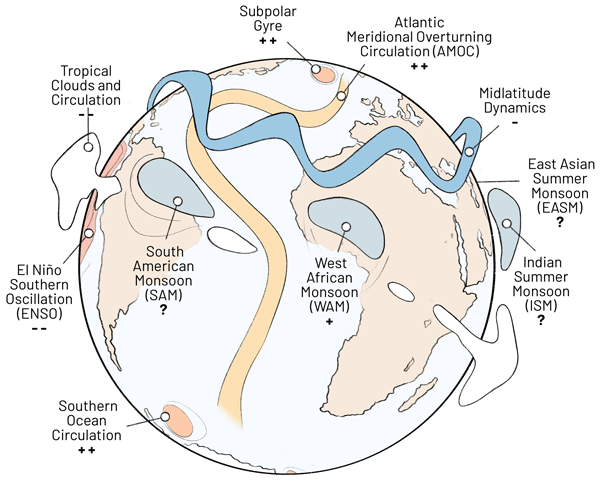
In this work, we draw on palaeo-records, observations, and modelling studies to review tipping points in the ocean overturning circulations, monsoon systems, and global atmospheric circulations. We find indications for tipping in the ocean overturning circulations and the West African monsoon, with potentially severe impacts on the Earth system and humans. Tipping in the other considered systems is regarded as conceivable but is currently not sufficiently supported by evidence.
Ligin Joseph, Nikolaos Skliris, Vishnu S., Dipanjan Dey, and Robert Marsh
EGUsphere, https://doi.org/10.5194/egusphere-2025-3886, https://doi.org/10.5194/egusphere-2025-3886, 2025
Preprint archived
Short summary
Short summary
We studied marine heatwaves in the North Indian Ocean using sea surface temperatures with long-term warming removed to capture true short-term extremes. These heatwaves often interact with the monsoon's natural wet–dry cycles (MISO), shaping rainfall during and after events. After termination, extreme rainfall anomalies appear over parts of South Asia as revived monsoon winds release stored ocean heat and moisture.
Peter M. F. Sheehan, Benjamin G. M. Webber, Alejandra Sanchez-Franks, and Bastien Y. Queste
Ocean Sci., 21, 1575–1588, https://doi.org/10.5194/os-21-1575-2025, https://doi.org/10.5194/os-21-1575-2025, 2025
Short summary
Short summary
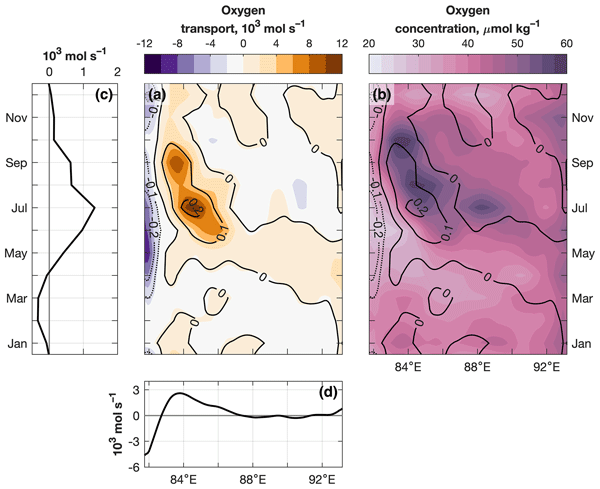
Using measurements and computer models, we identify a large flux of oxygen within the Southwest Monsoon Current, which flows north into the Bay of Bengal between June and September each year. Oxygen levels in the bay are very low, but they are not quite low enough for key nutrient cycles to be as dramatically altered as in other low-oxygen regions. We suggest that the flux which we identify contributes to keeping oxygen levels in the bay above the threshold below which dramatic changes would occur.
Melissa Wood, Ivan D. Haigh, Quan Quan Le, Hung Nghia Nguyen, Hoang Ba Tran, Stephen E. Darby, Robert Marsh, Nikolaos Skliris, and Joël J.-M. Hirschi
Nat. Hazards Earth Syst. Sci., 24, 3627–3649, https://doi.org/10.5194/nhess-24-3627-2024, https://doi.org/10.5194/nhess-24-3627-2024, 2024
Short summary
Short summary
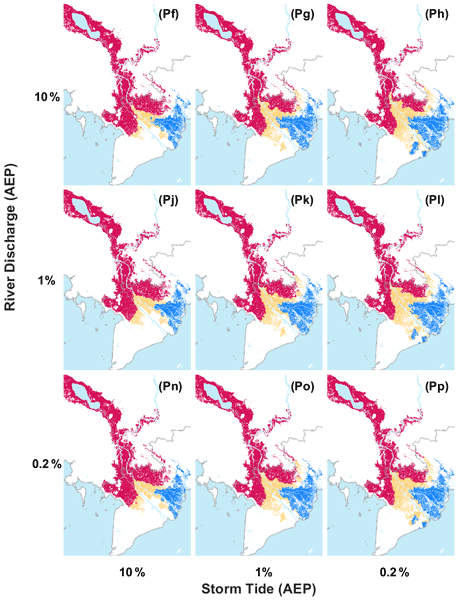
We look at how compound flooding from the combination of river flooding and storm tides (storm surge and astronomical tide) may be changing over time due to climate change, with a case study of the Mekong River delta. We found that future compound flooding has the potential to flood the region more extensively and be longer lasting than compound floods today. This is useful to know because it means managers of deltas such as the Mekong can assess options for improving existing flood defences.

Helene Asbjørnsen, Tor Eldevik, Johanne Skrefsrud, Helen L. Johnson, and Alejandra Sanchez-Franks
Ocean Sci., 20, 799–816, https://doi.org/10.5194/os-20-799-2024, https://doi.org/10.5194/os-20-799-2024, 2024
Short summary
Short summary
The Gulf Stream system is essential for northward ocean heat transport. Here, we use observations along the path of the extended Gulf Stream system and an observationally constrained ocean model to investigate variability in the Gulf Stream system since the 1990s. We find regional differences in the variability between the subtropical, subpolar, and Nordic Seas regions, which warrants caution in using observational records at a single latitude to infer large-scale circulation change.
Harry Bryden, Jordi Beunk, Sybren Drijfhout, Wilco Hazeleger, and Jennifer Mecking
Ocean Sci., 20, 589–599, https://doi.org/10.5194/os-20-589-2024, https://doi.org/10.5194/os-20-589-2024, 2024
Short summary
Short summary
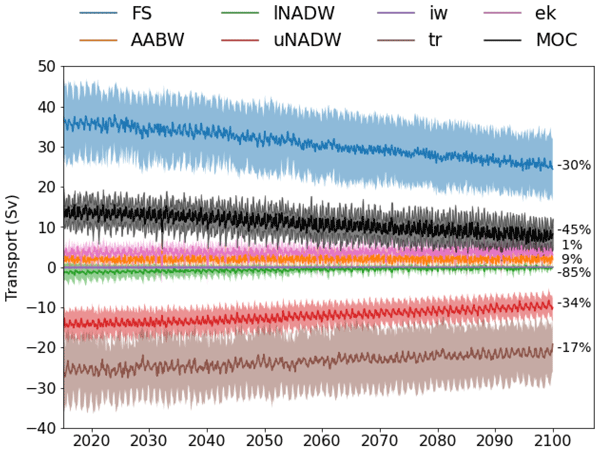
There is widespread interest in whether the Gulf Stream will decline under global warming. We analyse 19 coupled climate model projections of the AMOC over the 21st century. The model consensus is that the AMOC will decline by about 40 % due to reductions in northward Gulf Stream transport and southward deep western boundary current transport. Whilst the wind-driven Gulf Stream decreases by 4 Sv, most of the decrease in the Gulf Stream is due to a reduction of 7 Sv in its thermohaline component.
Melissa Wood, Ivan D. Haigh, Quan Quan Le, Hung Nghia Nguyen, Hoang Ba Tran, Stephen E. Darby, Robert Marsh, Nikolaos Skliris, Joël J.-M. Hirschi, Robert J. Nicholls, and Nadia Bloemendaal
Nat. Hazards Earth Syst. Sci., 23, 2475–2504, https://doi.org/10.5194/nhess-23-2475-2023, https://doi.org/10.5194/nhess-23-2475-2023, 2023
Short summary
Short summary
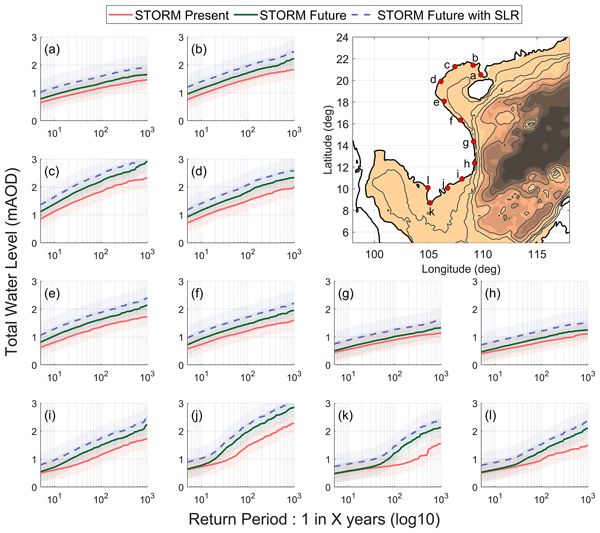
We used a novel database of simulated tropical cyclone tracks to explore whether typhoon-induced storm surges present a future flood risk to low-lying coastal communities around the South China Sea. We found that future climate change is likely to change tropical cyclone behaviour to an extent that this increases the severity and frequency of storm surges to Vietnam, southern China, and Thailand. Consequently, coastal flood defences need to be reviewed for resilience against this future hazard.
Guillaume Gastineau, Claude Frankignoul, Yongqi Gao, Yu-Chiao Liang, Young-Oh Kwon, Annalisa Cherchi, Rohit Ghosh, Elisa Manzini, Daniela Matei, Jennifer Mecking, Lingling Suo, Tian Tian, Shuting Yang, and Ying Zhang
The Cryosphere, 17, 2157–2184, https://doi.org/10.5194/tc-17-2157-2023, https://doi.org/10.5194/tc-17-2157-2023, 2023
Short summary
Short summary
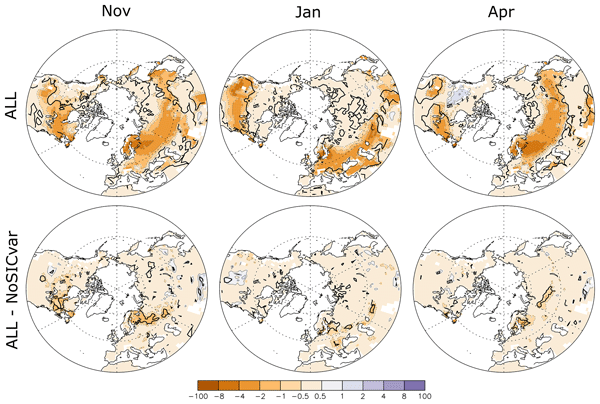
Snow cover variability is important for many human activities. This study aims to understand the main drivers of snow cover in observations and models in order to better understand it and guide the improvement of climate models and forecasting systems. Analyses reveal a dominant role for sea surface temperature in the Pacific. Winter snow cover is also found to have important two-way interactions with the troposphere and stratosphere. No robust influence of the sea ice concentration is found.
Alan D. Fox, Patricia Handmann, Christina Schmidt, Neil Fraser, Siren Rühs, Alejandra Sanchez-Franks, Torge Martin, Marilena Oltmanns, Clare Johnson, Willi Rath, N. Penny Holliday, Arne Biastoch, Stuart A. Cunningham, and Igor Yashayaev
Ocean Sci., 18, 1507–1533, https://doi.org/10.5194/os-18-1507-2022, https://doi.org/10.5194/os-18-1507-2022, 2022
Short summary
Short summary
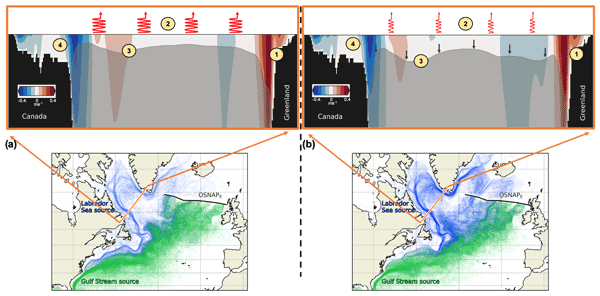
Observations of the eastern subpolar North Atlantic in the 2010s show exceptional freshening and cooling of the upper ocean, peaking in 2016 with the lowest salinities recorded for 120 years. Using results from a high-resolution ocean model, supported by observations, we propose that the leading cause is reduced surface cooling over the preceding decade in the Labrador Sea, leading to increased outflow of less dense water and so to freshening and cooling of the eastern subpolar North Atlantic.

Matthew Clark, Robert Marsh, and James Harle
Ocean Sci., 18, 549–564, https://doi.org/10.5194/os-18-549-2022, https://doi.org/10.5194/os-18-549-2022, 2022
Short summary
Short summary
The European Slope Current (SC) is a northward-flowing current running parallel to the UK coastline. It is forced by changes in the density gradient of the wider North Atlantic Ocean. As the North Atlantic has warmed since the late 1990s, these gradients have changed strength and moved, reducing the volume and speed of water feeding into the SC. The SC flows into the North Sea, where changes in the species distribution of some plankton and fish have been seen due to the warming inputs.
Helen E. Phillips, Amit Tandon, Ryo Furue, Raleigh Hood, Caroline C. Ummenhofer, Jessica A. Benthuysen, Viviane Menezes, Shijian Hu, Ben Webber, Alejandra Sanchez-Franks, Deepak Cherian, Emily Shroyer, Ming Feng, Hemantha Wijesekera, Abhisek Chatterjee, Lisan Yu, Juliet Hermes, Raghu Murtugudde, Tomoki Tozuka, Danielle Su, Arvind Singh, Luca Centurioni, Satya Prakash, and Jerry Wiggert
Ocean Sci., 17, 1677–1751, https://doi.org/10.5194/os-17-1677-2021, https://doi.org/10.5194/os-17-1677-2021, 2021
Short summary
Short summary
Over the past decade, understanding of the Indian Ocean has progressed through new observations and advances in theory and models of the oceanic and atmospheric circulation. This review brings together new understanding of the ocean–atmosphere system in the Indian Ocean, describing Indian Ocean circulation patterns, air–sea interactions, climate variability, and the critical role of the Indian Ocean as a clearing house for anthropogenic heat.
Cited articles
Baker, J. A., Bell, M. J., Jackson, L. C., Renshaw, R., Vallis, G. K., Watson, A. J., and Wood, R. A.: Overturning Pathways Control AMOC Weakening in CMIP6 s Models, Geophys. Res. Lett., 50, https://doi.org/10.1029/2023GL103381, 2023. a
Bellomo, K., Angeloni, M., Corti, S., and von Hardenberg, J.: Future climate change shaped by inter-model differences in Atlantic meridional overturning circulation response, Nat. Commun., 12, https://doi.org/10.1038/s41467-021-24015-w, 2021. a, b
Bi, D., Dix, M., Marsland, S., O’Farrell, S., Sullivan, A., Bodman, R., Law, R., Harman, I., Srbinovsky, J., Rashid, H. A., Dobrohotoff, P., Mackallah, C., Yan, H., Hirst, A., Savita, A., Dias, F. B., Woodhouse, M., Fiedler, R., and Heerdegen, A.: Configuration and spin-up of ACCESS-CM2, the new generation Australian Community Climate and Earth System Simulator Coupled Model, Journal of Southern Hemisphere Earth Systems Science, 70, 225–251, https://doi.org/10.1071/ES19040, 2020. a
Bonan, D. B., Thompson, A. F., Schneider, T., Zanna, L., Armour, K. C., and Sun, S.: Observational constraints imply limited future Atlantic meridional overturning circulation weakening, Nat. Geosci., 18, 479–487, https://doi.org/10.1038/s41561-025-01709-0, 2025. a
Boucher, O., Servonnat, J., Albright, A. L., Aumont, O., Balkanski, Y., Bastrikov, V., Bekki, S., Bonnet, R., Bony, S., Bopp, L., Braconnot, P., Brockmann, P., Cadule, P., Caubel, A., Cheruy, F., Codron, F., Cozic, A., Cugnet, D., D'Andrea, F., Davini, P., de Lavergne, C., Denvil, S., Deshayes, J., Devilliers, M., Ducharne, A., Dufresne, J.-L., Dupont, E., Éthé, C., Fairhead, L., Falletti, L., Flavoni, S., Foujols, M.-A., Gardoll, S., Gastineau, G., Ghattas, J., Grandpeix, J.-Y., Guenet, B., Guez, Lionel, E., Guilyardi, E., Guimberteau, M., Hauglustaine, D., Hourdin, F., Idelkadi, A., Joussaume, S., Kageyama, M., Khodri, M., Krinner, G., Lebas, N., Levavasseur, G., Lévy, C., Li, L., Lott, F., Lurton, T., Luyssaert, S., Madec, G., Madeleine, J.-B., Maignan, F., Marchand, M., Marti, O., Mellul, L., Meurdesoif, Y., Mignot, J., Musat, I., Ottlé, C., Peylin, P., Planton, Y., Polcher, J., Rio, C., Rochetin, N., Rousset, C., Sepulchre, P., Sima, A., Swingedouw, D., Thiéblemont, R., Traore, A. K., Vancoppenolle, M., Vial, J., Vialard, J., Viovy, N., and Vuichard, N.: Presentation and Evaluation of the IPSL-CM6A-LR Climate Model, J. Adv. Model. Earth Sy., 12, e2019MS002010, https://doi.org/10.1029/2019MS002010, 2020. a
Bryden, H., Beunk, J., Drijfhout, S., Hazeleger, W., and Mecking, J.: Comparing observed and modelled components of the Atlantic Meridional Overturning Circulation at 26° N, Ocean Sci., 20, 589–599, https://doi.org/10.5194/os-20-589-2024, 2024. a
Buckley, M. W., Ferreira, D., Campin, J. M., Marshall, J., and Tulloch, R.: On the relationship between decadal buoyancy anomalies and variability of the atlantic meridional overturning circulation, J. Climate, 25, 8009–8030, https://doi.org/10.1175/JCLI-D-11-00505.1, 2012. a
Buckley, M. W., Lozier, M. S., Desbruyères, D., and Evans, D. G.: Buoyancy forcing and the subpolar Atlantic meridional overturning circulation, Philos. Trans. Ser. A, 381, 20220181, https://doi.org/10.1098/rsta.2022.0181, 2023. a
Coquereau, A., Sévellec, F., Huck, T., Hirschi, J. J.-M., and Jamet, Q.: Past, present, and future variability of Atlantic meridional overturning circulation in CMIP6 ensembles, Earth Sy. Dynam., 17, 209–233, https://doi.org/10.5194/esd-17-209-2026, 2026. a
Danabasoglu, G., Lamarque, J.-F., Bacmeister, J., Bailey, D. A., DuVivier, A. K., Edwards, J., Emmons, L. K., Fasullo, J., Garcia, R., Gettelman, A., Hannay, C., Holland, M. M., Large, W. G., Lauritzen, P. H., Lawrence, D. M., Lenaerts, J. T. M., Lindsay, K., Lipscomb, W. H., Mills, M. J., Neale, R., Oleson, K. W., Otto-Bliesner, B., Phillips, A. S., Sacks, W., Tilmes, S., van Kampenhout, L., Vertenstein, M., Bertini, A., Dennis, J., Deser, C., Fischer, C., Fox-Kemper, B., Kay, J. E., Kinnison, D., Kushner, P. J., Larson, V. E., Long, M. C., Mickelson, S., Moore, J. K., Nienhouse, E., Polvani, L., Rasch, P. J., and Strand, W. G.: The Community Earth System Model Version 2 (CESM2), J. Adv. Model. Earth Sy., 12, e2019MS001916, https://doi.org/10.1029/2019MS001916, 2020. a
Den Toom, M., Dijkstra, H. A., Weijer, W., Hecht, M. W., Maltrud, M. E., and Van Sebille, E.: Response of a strongly eddying global ocean to North Atlantic freshwater perturbations, J. Phys. Oceanogr., 44, 464–481, https://doi.org/10.1175/JPO-D-12-0155.1, 2014. a
Dong, B., Aksenov, Y., Colfescu, I., Harvey, B., Hirschi, J., Josey, S., Lu, H., Mecking, J., Oltmanns, M., Osprey, S., Robson, J., Rynders, S., Shaffrey, L., Sinha, B., Sutton, R., and Weisheimer, A.: Key drivers of large scale changes in North Atlantic atmospheric and oceanic circulations and their predictability, Clim. Dynam., 63, https://doi.org/10.1007/s00382-025-07591-1, 2025. a
Döscher, R., Acosta, M., Alessandri, A., Anthoni, P., Arsouze, T., Bergman, T., Bernardello, R., Boussetta, S., Caron, L.-P., Carver, G., Castrillo, M., Catalano, F., Cvijanovic, I., Davini, P., Dekker, E., Doblas-Reyes, F. J., Docquier, D., Echevarria, P., Fladrich, U., Fuentes-Franco, R., Gröger, M., v. Hardenberg, J., Hieronymus, J., Karami, M. P., Keskinen, J.-P., Koenigk, T., Makkonen, R., Massonnet, F., Ménégoz, M., Miller, P. A., Moreno-Chamarro, E., Nieradzik, L., van Noije, T., Nolan, P., O'Donnell, D., Ollinaho, P., van den Oord, G., Ortega, P., Prims, O. T., Ramos, A., Reerink, T., Rousset, C., Ruprich-Robert, Y., Le Sager, P., Schmith, T., Schrödner, R., Serva, F., Sicardi, V., Sloth Madsen, M., Smith, B., Tian, T., Tourigny, E., Uotila, P., Vancoppenolle, M., Wang, S., Wårlind, D., Willén, U., Wyser, K., Yang, S., Yepes-Arbós, X., and Zhang, Q.: The EC-Earth3 Earth system model for the Coupled Model Intercomparison Project 6, Geosci. Model Dev., 15, 2973–3020, https://doi.org/10.5194/gmd-15-2973-2022, 2022. a, b
Drijfhout, S., Angevaare, J. R., Mecking, J., van Westen, R. M., and Rahmstorf, S.: Shutdown of northern Atlantic overturning after 2100 following deep mixing collapse in CMIP6 projections, Environ. Res. Lett., 20, https://doi.org/10.1088/1748-9326/adfa3b, 2025. a, b
Duarte, D., Liu, W., and Zhang, L.: A weakened Atlantic Meridional Overturning Circulation will affect future heat waves by mostly attenuating their severity, Clim. Dynam., 63, https://doi.org/10.1007/s00382-025-07736-2, 2025. a
Eyring, V., Bony, S., Meehl, G. A., Senior, C. A., Stevens, B., Stouffer, R. J., and Taylor, K. E.: Overview of the Coupled Model Intercomparison Project Phase 6 (CMIP6) experimental design and organization, Geosci. Model Dev., 9, 1937–1958, https://doi.org/10.5194/gmd-9-1937-2016, 2016. a, b, c
Fox-Kemper, B., Hewitt, H., Xiao, C., Aðalgeirsdóttir, G., Drijfhout, S., Edwards, T., Golledge, N., Hemer, M., Kopp, R., Krinner, G., Mix, A., Notz, D., Nowicki, S., Nurhati, I., Ruiz, L., Sallée, J.-B., Slangen, A., and Yu, Y.: Ocean, Cryosphere and Sea Level Change, in: Climate Change 2021 – The Physical Science Basis, 1211–1362, Cambridge University Press, https://doi.org/10.1017/9781009157896.011, 2021. a
Fraser, N. J., Fox, A. D., and Cunningham, S. A.: Impact of Ekman Pumping on the Meridional Coherence of the AMOC, Geophys. Res. Lett., 52, https://doi.org/10.1029/2024GL108846, 2025. a
Gérard, J. and Crucifix, M.: Diagnosing the causes of AMOC slowdown in a coupled model: a cautionary tale, Earth Sy. Dynam., 15, 293–306, https://doi.org/10.5194/esd-15-293-2024, 2024. a
Gu, S., Liu, Z., and Wu, L.: Time Scale Dependence of the Meridional Coherence of the Atlantic Meridional Overturning Circulation, J. Geophys. Res.-Ocean., 125, https://doi.org/10.1029/2019JC015838, 2020. a
Han, L.: Exploring the AMOC Connectivity Between the RAPID and OSNAP Lines With a Model-Based Data Set, Geophys. Res. Lett., 50, https://doi.org/10.1029/2023GL105225, 2023. a
Haskins, R. K., Oliver, K. I., Jackson, L. C., Wood, R. A., and Drijfhout, S. S.: Temperature domination of AMOC weakening due to freshwater hosing in two GCMs, Clim. Dynam., 54, 273–286, https://doi.org/10.1007/s00382-019-04998-5, 2020. a, b
Hirschi, J. and Marotzke, J.: Reconstructing the meridional overturning circulation from boundary densities and the zonal wind stress, J. Phys. Oceanogr., 37, 743–763, https://doi.org/10.1175/JPO3019.1, 2007. a, b
Hirschi, J. J., Barnier, B., Böning, C., Biastoch, A., Blaker, A. T., Coward, A., Danilov, S., Drijfhout, S., Getzlaff, K., Griffies, S. M., Hasumi, H., Hewitt, H., Iovino, D., Kawasaki, T., Kiss, A. E., Koldunov, N., Marzocchi, A., Mecking, J. V., Moat, B., Molines, J. M., Myers, P. G., Penduff, T., Roberts, M., Treguier, A. M., Sein, D. V., Sidorenko, D., Small, J., Spence, P., Thompson, L. A., Weijer, W., and Xu, X.: The Atlantic Meridional Overturning Circulation in High-Resolution Models, J. Geophys. Res.-Ocean., 125, https://doi.org/10.1029/2019JC015522, 2020. a
Hodson, D. L. and Sutton, R. T.: The impact of resolution on the adjustment and decadal variability of the Atlantic meridional overturning circulation in a coupled climate model, Clim. Dynam., 39, 3057–3073, https://doi.org/10.1007/s00382-012-1309-0, 2012. a, b, c
IOC, SCOR, and IAPSO: The international thermodynamic equation of seawater-2010: Calculation and use of thermodynamic properties Intergovernmental Oceanographic Commission, Intergovernmental Oceanographic Commission, Manuals and Guides No. 56, UNESCO (English), 196 pp., 2010. a
Jackson, L. C. and Wood, R. A.: Fingerprints for early detection of changes in the AMOC, J. Climate, 33, 7027–7044, https://doi.org/10.1175/JCLI-D-20-0034.1, 2020. a
Jackson, L. C., Kahana, R., Graham, T., Ringer, M. A., Woollings, T., Mecking, J. V., and Wood, R. A.: Global and European climate impacts of a slowdown of the AMOC in a high resolution GCM, Clim. Dynam., 45, 3299–3316, https://doi.org/10.1007/s00382-015-2540-2, 2015. a, b
Jackson, L. C., Roberts, M. J., Hewitt, H. T., Iovino, D., Koenigk, T., Meccia, V. L., Roberts, C. D., Ruprich-Robert, Y., and Wood, R. A.: Impact of ocean resolution and mean state on the rate of AMOC weakening, Clim. Dynam., 55, 1711–1732, https://doi.org/10.1007/s00382-020-05345-9, 2020. a
Jackson, L. C., Biastoch, A., Buckley, M. W., Desbruyères, D. G., Frajka-Williams, E., Moat, B., and Robson, J.: The evolution of the North Atlantic Meridional Overturning Circulation since 1980, Nat. Rev. Earth Environ., 3, 241–254, https://doi.org/10.1038/s43017-022-00263-2, 2022. a
Johns, W. E., Elipot, S., Smeed, D. A., Moat, B., King, B., Volkov, D. L., and Smith, R. H.: Towards two decades of Atlantic Ocean mass and heat transports at 26.5° N, Philos. Trans. Ser. A, 381, 20220188, https://doi.org/10.1098/rsta.2022.0188, 2023. a
Kostov, Y., Messias, M. J., Mercier, H., Johnson, H. L., and Marshall, D. P.: Fast mechanisms linking the Labrador Sea with subtropical Atlantic overturning, Clim. Dynam., 60, 2687–2712, https://doi.org/10.1007/s00382-022-06459-y, 2022. a
Levang, S. J. and Schmitt, R. W.: What causes the AMOC to weaken in CMIP5?, J. Climate, 33, 1535–1545, https://doi.org/10.1175/JCLI-D-19-0547.1, 2020. a, b, c
Li, F., Susan Lozier, M., Danabasoglu, G., Holliday, N. P., Kwon, Y.-o., Romanou, A., Yeager, S. G., and Zhang, R.: Local and Downstream Relationships between Labrador Sea Water Volume and North Atlantic Meridional Overturning Circulation Variability, J. Climate, 32, 3883–3898, 2019. a
Li, F., Lozier, M. S., Bacon, S., Bower, A. S., Cunningham, S. A., de Jong, M. F., deYoung, B., Fraser, N., Fried, N., Han, G., Holliday, N. P., Holte, J., Houpert, L., Inall, M. E., Johns, W. E., Jones, S., Johnson, C., Karstensen, J., Le Bras, I. A., Lherminier, P., Lin, X., Mercier, H., Oltmanns, M., Pacini, A., Petit, T., Pickart, R. S., Rayner, D., Straneo, F., Thierry, V., Visbeck, M., Yashayaev, I., and Zhou, C.: Subpolar North Atlantic western boundary density anomalies and the Meridional Overturning Circulation, Nat. Commun., 12, https://doi.org/10.1038/s41467-021-23350-2, 2021. a
Lin, Y.-J., Rose, B. E. J., and Hwang, Y.-T.: Mean State AMOC Affects AMOC Weakening through Subsurface Warming in the Labrador Sea, J. Climate, 36, 3895, https://doi.org/10.1175/JCLI-D-22-0464.1, 2023. a, b
Lobelle, D., Beaulieu, C., Livina, V., Sévellec, F., and Frajka-Williams, E.: Detectability of an AMOC Decline in Current and Projected Climate Changes, Geophys. Res. Lett., 47, https://doi.org/10.1029/2020GL089974, 2020. a
Lovato, T., Peano, D., Butenschön, M., Materia, S., Iovino, D., Scoccimarro, E., Fogli, P. G., Cherchi, A., Bellucci, A., Gualdi, S., Masina, S., and Navarra, A.: CMIP6 Simulations With the CMCC Earth System Model (CMCC-ESM2), J. Adv. Model. Earth Sy., 14, e2021MS002814, https://doi.org/10.1029/2021MS002814, 2022. a
Lozier, M. S., Bacon, S., Bower, A. S., Cunningham, S. A., De Jong, M. F., De Steur, L., De Young, B., Fischer, J., Gary, S. F., Greenan, B. J., Heimbmbach, P., Holliday, N. P., Houpert, L., Inall, M. E., Johns, W. E., Johnson, H. L., Karstensen, J., Li, F., Lin, X., Mackay, N., Marshall, D. P., Mercier, H., Myers, P. G., Pickart, R. S., Pillar, H. R., Straneo, F., Thierry, V., Weller, R. A., Williams, R. G., Wilson, C., Yang, J., Zhao, J., and Zika, J. D.: Overturning in the Subpolar north Atlantic program: A new international ocean observing system, Bull. Am. Meteorol. Soc., 98, 737–752, https://doi.org/10.1175/BAMS-D-16-0057.1, 2017. a
Madan, G., Gjermundsen, A., Iversen, S. C., and LaCasce, J. H.: The weakening AMOC under extreme climate change, Clim. Dynam., https://doi.org/10.1007/s00382-023-06957-7, 2023. a
Marshall, D. P. and Johnson, H. L.: Propagation of meridional circulation anomalies along western and eastern boundaries, J. Phys. Oceanogr., 43, 2699–2717, https://doi.org/10.1175/JPO-D-13-0134.1, 2013. a, b, c
McCarthy, G. D., Hug, G., Smeed, D., Morris, K. J., and Moat, B.: Signal and Noise in the Atlantic Meridional Overturning Circulation at 26° N, Geophys. Res. Lett., 52, https://doi.org/10.1029/2025GL115055, 2025. a
McDougall, T. J. and Barker, P. M.: Getting started with TEOS-10 and the Gibbs Seawater (GSW) Oceanographic Toolbox, SCOR/IAPSO WG127, ISBN 978-0-646-55621-5, 2011. a
Meccia, V. L., Simolo, C., Bellomo, K., and Corti, S.: The impact of a weakened AMOC on European heatwaves, Environ. Res. Lett., 20, 024 005, https://doi.org/10.1088/1748-9326/ada3e7, 2025. a
Mecking, J. V., Drijfhout, S. S., Jackson, L. C., and Andrews, M. B.: The effect of model bias on Atlantic freshwater transport and implications for AMOC bi-stability, Tellus A, 69, https://doi.org/10.1080/16000870.2017.1299910, 2017. a
Menary, M. B., Robson, J., Allan, R. P., Booth, B. B., Cassou, C., Gastineau, G., Gregory, J., Hodson, D., Jones, C., Mignot, J., Ringer, M., Sutton, R., Wilcox, L., and Zhang, R.: Aerosol-Forced AMOC Changes in CMIP6 Historical Simulations, Geophys. Res. Lett., 47, https://doi.org/10.1029/2020GL088166, 2020. a, b, c, d
O'Neill, B. C., Tebaldi, C., Van Vuuren, D. P., Eyring, V., Friedlingstein, P., Hurtt, G., Knutti, R., Kriegler, E., Lamarque, J. F., Lowe, J., Meehl, G. A., Moss, R., Riahi, K., and Sanderson, B. M.: The Scenario Model Intercomparison Project (ScenarioMIP) for CMIP6, Geosci. Model Dev., 9, 3461–3482, https://doi.org/10.5194/gmd-9-3461-2016, 2016. a
Petit, T., Robson, J., Ferreira, D., Yeager, S., and Evans, D. G.: Coherence of the AMOC Over the Subpolar North Atlantic on Interannual to Multiannual Time Scales, Geophys. Res. Lett., 52, https://doi.org/10.1029/2025GL115171, 2025. a, b, c
Pickart, R. S. and Spall, M. A.: Impact of Labrador Sea convection on the North Atlantic meridional overturning circulation, J. Phys. Oceanogr., 37, 2207–2227, https://doi.org/10.1175/JPO3178.1, 2007. a
Pita, I., Johns, W., Elipot, S., Smeed, D., Moat, B., and Volkov, D. L.: Upper ocean warming in the western subtropical Atlantic drives AMOC weakening at 26.5° N, PREPRINT (Version 1), Research Square, https://doi.org/10.21203/rs.3.rs-8897292/v1, 2026. a, b
Rapanague, M. J., Putrasahan, D. A., and Marotzke, J.: Dependence of AMOC Meridional Connectivity on Resolution, Timescale, and Definition, ESS Open Archive, 2026, https://doi.org/10.22541/essoar.15004331/v1, 2026. a, b
Robson, J., Menary, M. B., Sutton, R. T., Mecking, J., Gregory, J. M., Jones, C., Sinha, B., Stevens, D. P., and Wilcox, L. J.: The Role of Anthropogenic Aerosol Forcing in the 1850–1985 Strengthening of the AMOC in CMIP6 Historical Simulations, J. Climate, 35, 6843, https://doi.org/10.1175/JCLI-D-22-0124.1, 2022. a, b, c
Seland, Ø., Bentsen, M., Olivié, D., Toniazzo, T., Gjermundsen, A., Graff, L. S., Debernard, J. B., Gupta, A. K., He, Y.-C., Kirkevåg, A., Schwinger, J., Tjiputra, J., Aas, K. S., Bethke, I., Fan, Y., Griesfeller, J., Grini, A., Guo, C., Ilicak, M., Karset, I. H. H., Landgren, O., Liakka, J., Moseid, K. O., Nummelin, A., Spensberger, C., Tang, H., Zhang, Z., Heinze, C., Iversen, T., and Schulz, M.: Overview of the Norwegian Earth System Model (NorESM2) and key climate response of CMIP6 DECK, historical, and scenario simulations, Geosci. Model Dev., 13, 6165–6200, https://doi.org/10.5194/gmd-13-6165-2020, 2020. a
Sellar, A. A., Jones, C. G., Mulcahy, J. P., Tang, Y., Yool, A., Wiltshire, A., O'Connor, F. M., Stringer, M., Hill, R., Palmieri, J., Woodward, S., de Mora, L., Kuhlbrodt, T., Rumbold, S. T., Kelley, D. I., Ellis, R., Johnson, C. E., Walton, J., Abraham, N. L., Andrews, M. B., Andrews, T., Archibald, A. T., Berthou, S., Burke, E., Blockley, E., Carslaw, K., Dalvi, M., Edwards, J., Folberth, G. A., Gedney, N., Griffiths, P. T., Harper, A. B., Hendry, M. A., Hewitt, A. J., Johnson, B., Jones, A., Jones, C. D., Keeble, J., Liddicoat, S., Morgenstern, O., Parker, R. J., Predoi, V., Robertson, E., Siahaan, A., Smith, R. S., Swaminathan, R., Woodhouse, M. T., Zeng, G., and Zerroukat, M.: UKESM1: Description and Evaluation of the U.K. Earth System Model, J. Adv. Model. Earth Sy., 11, 4513–4558, https://doi.org/10.1029/2019MS001739, 2019. a
Smeed, D. A., McCarthy, G. D., Cunningham, S. A., Frajka-Williams, E., Rayner, D., Johns, W. E., Meinen, C. S., Baringer, M. O., Moat, B. I., Duchez, A., and Bryden, H. L.: Observed decline of the Atlantic meridional overturning circulation 2004–2012, Ocean Sci., 10, 29–38, https://doi.org/10.5194/os-10-29-2014, 2014. a
Straneo, F.: On the Connection between Dense Water Formation, Overturning, and Poleward Heat Transport in a Convective Basin, J. Phys. Oceanogr., 36, 1822–1840, 2006. a
Swart, N. C., Cole, J. N. S., Kharin, V. V., Lazare, M., Scinocca, J. F., Gillett, N. P., Anstey, J., Arora, V., Christian, J. R., Hanna, S., Jiao, Y., Lee, W. G., Majaess, F., Saenko, O. A., Seiler, C., Seinen, C., Shao, A., Sigmond, M., Solheim, L., von Salzen, K., Yang, D., and Winter, B.: The Canadian Earth System Model version 5 (CanESM5.0.3), Geosci. Model Dev., 12, 4823–4873, https://doi.org/10.5194/gmd-12-4823-2019, 2019. a
Tatebe, H., Ogura, T., Nitta, T., Komuro, Y., Ogochi, K., Takemura, T., Sudo, K., Sekiguchi, M., Abe, M., Saito, F., Chikira, M., Watanabe, S., Mori, M., Hirota, N., Kawatani, Y., Mochizuki, T., Yoshimura, K., Takata, K., O'ishi, R., Yamazaki, D., Suzuki, T., Kurogi, M., Kataoka, T., Watanabe, M., and Kimoto, M.: Description and basic evaluation of simulated mean state, internal variability, and climate sensitivity in MIROC6, Geosci. Model Dev., 12, 2727–2765, https://doi.org/10.5194/gmd-12-2727-2019, 2019. a
Tooth, O.: NOC-MSM/nemo_cookbook:v2026.01.0b1 (v2026.01.0b1), Zenodo, https://doi.org/10.5281/zenodo.18292769, 2026. a
Trenberth, K. E. and Fasullo, J. T.: Atlantic meridional heat transports computed from balancing Earth's energy locally, Geophys. Res. Lett., 44, 1919–1927, https://doi.org/10.1002/2016GL072475, 2017. a
Vacca, A. V., Bellomo, K., Fabiano, F., and von Hardenberg, J.: On the role of AMOC weakening in shaping wintertime Euro-Atlantic atmospheric circulation, Clim. Dynam., 63, https://doi.org/10.1007/s00382-025-07747-z, 2025. a, b
van Westen, R. M. and Baatsen, M. L.: European Temperature Extremes Under Different AMOC Scenarios in the Community Earth System Model, Geophys. Res. Lett., 52, https://doi.org/10.1029/2025GL114611, 2025. a, b
Van Westen, R. M., Kliphuis, M., and Dijkstra, H. A.: Physics-based early warning signal shows that AMOC is on tipping course, Sci. Adv, 10, 1189–1199, https://doi.org/10.1126/sciadv.adk1189, 2024. a
van Westen, R. M., Kliphuis, M., and Dijkstra, H. A.: Collapse of the Atlantic Meridional Overturning Circulation in a Strongly Eddying Ocean-Only Model, Geophys. Res. Lett., 52, https://doi.org/10.1029/2024GL114532, 2025. a
Voldoire, A., Saint-Martin, D., Sénési, S., Decharme, B., Alias, A., Chevallier, M., Colin, J., Guérémy, J.-F., Michou, M., Moine, M.-P., Nabat, P., Roehrig, R., Salas y Mélia, D., Séférian, R., Valcke, S., Beau, I., Belamari, S., Berthet, S., Cassou, C., Cattiaux, J., Deshayes, J., Douville, H., Ethé, C., Franchistéguy, L., Geoffroy, O., Lévy, C., Madec, G., Meurdesoif, Y., Msadek, R., Ribes, A., Sanchez-Gomez, E., Terray, L., and Waldman, R.: Evaluation of CMIP6 DECK Experiments With CNRM-CM6-1, J. Adv. Model. Earth Sy., 11, 2177–2213, https://doi.org/10.1029/2019MS001683, 2019. a
Wang, Y.-C., Hsu, H.-H., Chen, C.-A., Tseng, W.-L., Hsu, P.-C., Lin, C.-W., Chen, Y.-L., Jiang, L.-C., Lee, Y.-C., Liang, H.-C., Chang, W.-M., Lee, W.-L., and Shiu, C.-J.: Performance of the Taiwan Earth System Model in Simulating Climate Variability Compared With Observations and CMIP6 Model Simulations, J. Adv. Model. Earth Sy., 13, e2020MS002 353, https://doi.org/10.1029/2020MS002353, 2021. a
Weijer, W., Maltrud, M. E., Hecht, M. W., Dijkstra, H. A., and Kliphuis, M. A.: Response of the Atlantic Ocean circulation to Greenland Ice Sheet melting in a strongly-eddying ocean model, Geophys. Res. Lett., 39, L09606, https://doi.org/10.1029/2012GL051611, 2012. a, b
Wett, S., Rhein, M., Kieke, D., Mertens, C., and Moritz, M.: Meridional Connectivity of a 25-Year Observational AMOC Record at 47° N, Geophys. Res. Lett., 50, https://doi.org/10.1029/2023GL103284, 2023. a, b
Yukimoto, S., Kawai, H., Koshiro, T., Oshima, N., Yoshida, K., Urakawa, S., Tsujino, H., Deushi, M., Tanaka, T., Hosaka, M., Yabu, S., Yoshimura, H., Shindo, E., Mizuta, R., Obata, A., Adachi, Y., and Ishii, M.: The Meteorological Research Institute Earth System Model Version 2.0, MRI-ESM2.0: Description and Basic Evaluation of the Physical Component, J. Meteorol. Soc. Jpn. Ser. II, 97, 931–965, https://doi.org/10.2151/jmsj.2019-051, 2019. a
Zhang, H., Zhang, M., Jin, J., Fei, K., Ji, D., Wu, C., Zhu, J., He, J., Chai, Z., Xie, J., Dong, X., Zhang, D., Bi, X., Cao, H., Chen, H., Chen, K., Chen, X., Gao, X., Hao, H., Jiang, J., Kong, X., Li, S., Li, Y., Lin, P., Lin, Z., Liu, H., Liu, X., Shi, Y., Song, M., Wang, H., Wang, T., Wang, X., Wang, Z., Wei, Y., Wu, B., Xie, Z., Xu, Y., Yu, Y., Yuan, L., Zeng, Q., Zeng, X., Zhao, S., Zhou, G., and Zhu, J.: Description and Climate Simulation Performance of CAS-ESM Version 2, J. Adv. Model. Earth Sy., 12, e2020MS002 210, https://doi.org/10.1029/2020MS002210, e2020MS002210 2020MS002210, 2020. a
Zhao, A., Robson, J., Sutton, R., Lai, M. W., Mecking, J. V., Yeager, S., and Petit, T.: Large diversity in AMOC internal variability across NEMO-based climate models, Clim. Dynam., 62, 3355–3374, https://doi.org/10.1007/s00382-023-07069-y, 2024. a
Zhao, B., Reichler, T., Strong, C., and Penland, C.: Simultaneous evolution of gyre and Atlantic meridional overturning circulation anomalies as an eigenmode of the North Atlantic system, J. Climate, 30, 6737–6755, https://doi.org/10.1175/JCLI-D-16-0751.1, 2017. a
Ziehn, T., Chamberlain, M. A., Law, R. M., Lenton, A., Bodman, R. W., Dix, M., Stevens, L., Wang, Y.-P., and Srbinovsky, J.: The Australian Earth System Model: ACCESS-ESM1.5, Journal of Southern Hemisphere Earth Systems Science, 70, 193–214, https://doi.org/10.1071/ES19035, 2020. a
Zou, S., Lozier, M. S., and Buckley, M.: How Is Meridional Coherence Maintained in the Lower Limb of the Atlantic Meridional Overturning Circulation?, Geophys. Res. Lett., 46, 244–252, https://doi.org/10.1029/2018GL080958, 2019. a, b
Short summary
The North Atlantic ocean circulation is expected to weaken due to climate change. First signs of weakening are expected in the subpolar north, reverberating equatorward over years to decades, with unfolding consequences for the climate of Europe and beyond. As the pattern of weakening may provide an early warning of several years, we scrutinise leading climate models to show that the location and degree of weakening strongly depends on the model type and extent of climate change.
The North Atlantic ocean circulation is expected to weaken due to climate change. First signs of...


