
Articles | Volume 22, issue 3
https://doi.org/10.5194/os-22-1727-2026
© Author(s) 2026. This work is distributed under
the Creative Commons Attribution 4.0 License.
the Creative Commons Attribution 4.0 License.
https://doi.org/10.5194/os-22-1727-2026
© Author(s) 2026. This work is distributed under
the Creative Commons Attribution 4.0 License.
the Creative Commons Attribution 4.0 License.
Research article
| 
29 May 2026
Research article |
| 29 May 2026
| 29 May 2026
Stratification and mixed layer depth around Iceland: Characterization and inter-annual variability

Earth Science Institute, University of Iceland, 101 Reykjavik, Iceland
Esther Portela
Laboratoire d’Océanographie Physique et Spatiale, University of Brest, CNRS, IRD, Ifremer, Plouzané, France
Charly de Marez
Earth Science Institute, University of Iceland, 101 Reykjavik, Iceland
Laboratoire d’Océanographie Physique et Spatiale, University of Brest, CNRS, IRD, Ifremer, Plouzané, France
Andreas Macrander
Hafrannsóknastofnun/Marine and Freshwater Research Institute, Hafnarfjörður, Iceland
Sólveig Rósa Ólafsdóttir
Hafrannsóknastofnun/Marine and Freshwater Research Institute, Hafnarfjörður, Iceland
Thomas Meunier
Woods Hole Oceanographic Institution, Woods Hole, MA, USA
Steingrímur Jónsson
Hafrannsóknastofnun/Marine and Freshwater Research Institute, Hafnarfjörður, Iceland
University of Akureyri, Akureyri, Iceland
M. Dolores Pérez-Hernández
Unidad océano y clima, Instituto de Oceanografía y Cambio Global, IOCAG, Universidad de Las Palmas de Gran Canaria, ULPGC, Unidad Asociada ULPGC-CSIC, Las Palmas de Gran Canaria, Spain
Related authors
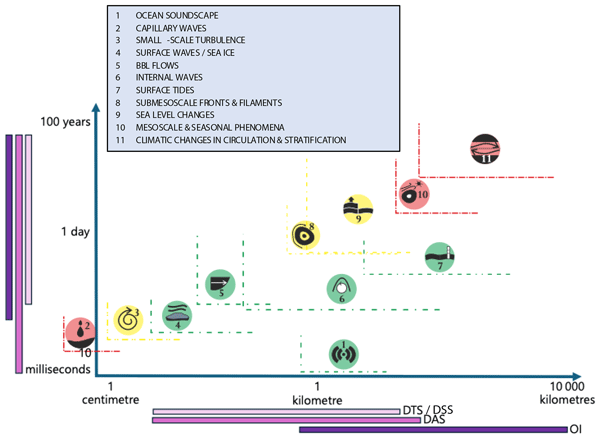
Alberto C. Naveira Garabato, Carl P. Spingys, Andrew J. Lucas, Tiago S. Dotto, Christian T. Wild, Scott W. Tyler, Ted A. Scambos, Christopher B. Kratt, Giuseppe Cappelli, Ethan F. Williams, Mariona Claret, Hannah E. Glover, Meagan E. Wengrove, Madison M. Smith, Michael G. Baker, Giuseppe Marra, Max Tamussino, Zitong Feng, David Lloyd, Liam Taylor, Mikael Mazur, Maria-Daphne Mangriotis, Aaron Micallef, Jennifer Ward Neale, Oleg A. Godin, Matthew H. Alford, Emma P. M. Gregory, Michael A. Clare, Hamid Shiri, Angel Ruiz Angulo, Kathryn L. Gunn, Ben I. Moat, Isobel A. Yeo, Afonso Loureiro, Alessandro Silvano, Arthur Hartog, and Mohammad Belal
Ocean Sci., 22, 1129–1167, https://doi.org/10.5194/os-22-1129-2026, https://doi.org/10.5194/os-22-1129-2026, 2026
Short summary
Short summary
Distributed optical fibre sensing (DOFS) is a technology that enables continuous, real-time measurements of environmental parameters along a fibre optic cable. Here, we review the recently emerged applications of DOFS in physical oceanography, and offer a perspective on the technology’s potential for future growth in the field.
Charly de Marez, Anissa Bouras, and Xavier Carton
EGUsphere, https://doi.org/10.5194/egusphere-2026-5662, https://doi.org/10.5194/egusphere-2026-5662, 2026
This preprint is open for discussion and under review for Ocean Science (OS).
Short summary
Short summary
We show that static stability constrains the structure and distribution of oceanic eddies. Eddy polarity, intensity, vertical extent, and background stratification determine whether balanced eddies remain stable, with implications for their propagation and eddy-induced vertical mixing.
Guðrið Eriksdóttir, Bogi Hansen, Karin Margretha H. Larsen, Steffen M. Olsen, Andrea M. U. Gierisch, and Sólveig Rósa Ólafsdóttir
Ocean Sci., 22, 2405–2423, https://doi.org/10.5194/os-22-2405-2026, https://doi.org/10.5194/os-22-2405-2026, 2026
Short summary
Short summary
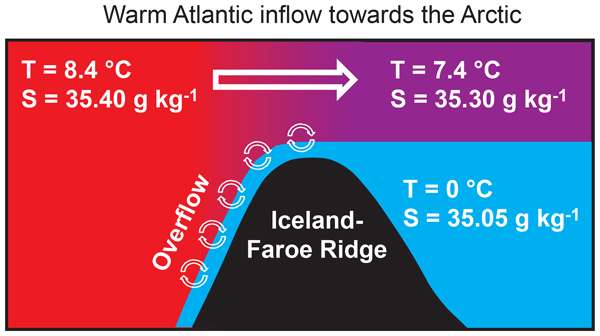
The Atlantic inflow across the Iceland-Faroe Ridge carries almost half of the warm water towards the Arctic. This study explores the modifications of the Atlantic water on its way to and across this underwater ridge. While crossing the ridge, the water is strongly cooled and freshened, which can reduce the ability for deep-water formation. Understanding these processes is important for improving ocean and climate models so more realistic forecasts can be made in a warming climate.
Ulla K. Heede, Matthew C. Long, Alicia Karspeck, Scott Bachman, Nora Loose, Dafydd Stephenson, David T. Ho, Lennart Gerke, Tobias Koffman, Alice Benoit-Cattin, Sara Harðardóttir, and Andreas Macrander
EGUsphere, https://doi.org/10.5194/egusphere-2026-2920, https://doi.org/10.5194/egusphere-2026-2920, 2026
Short summary
Short summary
We use a new open-source ocean model system to conduct simulations of a fjord in Iceland and study how adding alkaline material to seawater can remove CO2 from the air. We compare the model with field data to evaluate the model's accuracy. From our simulations, we show that the added alkaline material creates a short-lived, detectable signal in ocean chemistry in the fjord. Our motivation is to show how this ocean model system can support alkalinity enhancement field trials.
Charly de Marez, Arne Bendinger, and Ahmad Fehmi Dilmahamod
Ocean Sci., 22, 1515–1528, https://doi.org/10.5194/os-22-1515-2026, https://doi.org/10.5194/os-22-1515-2026, 2026
Short summary
Short summary
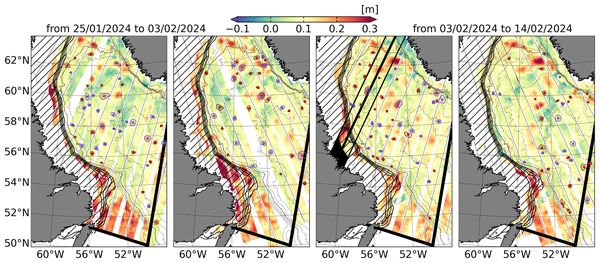
We use new observations from the Surface Water and Ocean Topography Mission (SWOT) satellite to reveal the structure of ocean eddies in the Labrador Sea at unprecedented resolution. By comparison with ship-based measurements, we show that SWOT reliably detects these features even at high latitudes, where conventional altimetry is limited. Our results provide the first detailed view of mesoscale eddies in the Labrador Sea and highlight SWOT's potential in polar regions.
Alberto C. Naveira Garabato, Carl P. Spingys, Andrew J. Lucas, Tiago S. Dotto, Christian T. Wild, Scott W. Tyler, Ted A. Scambos, Christopher B. Kratt, Giuseppe Cappelli, Ethan F. Williams, Mariona Claret, Hannah E. Glover, Meagan E. Wengrove, Madison M. Smith, Michael G. Baker, Giuseppe Marra, Max Tamussino, Zitong Feng, David Lloyd, Liam Taylor, Mikael Mazur, Maria-Daphne Mangriotis, Aaron Micallef, Jennifer Ward Neale, Oleg A. Godin, Matthew H. Alford, Emma P. M. Gregory, Michael A. Clare, Hamid Shiri, Angel Ruiz Angulo, Kathryn L. Gunn, Ben I. Moat, Isobel A. Yeo, Afonso Loureiro, Alessandro Silvano, Arthur Hartog, and Mohammad Belal
Ocean Sci., 22, 1129–1167, https://doi.org/10.5194/os-22-1129-2026, https://doi.org/10.5194/os-22-1129-2026, 2026
Short summary
Short summary
Distributed optical fibre sensing (DOFS) is a technology that enables continuous, real-time measurements of environmental parameters along a fibre optic cable. Here, we review the recently emerged applications of DOFS in physical oceanography, and offer a perspective on the technology’s potential for future growth in the field.
Estel Font, Esther Portela, Sebastiaan Swart, Mauro Pinto-Juica, and Bastien Y. Queste
Ocean Sci., 22, 387–401, https://doi.org/10.5194/os-22-387-2026, https://doi.org/10.5194/os-22-387-2026, 2026
Short summary
Short summary
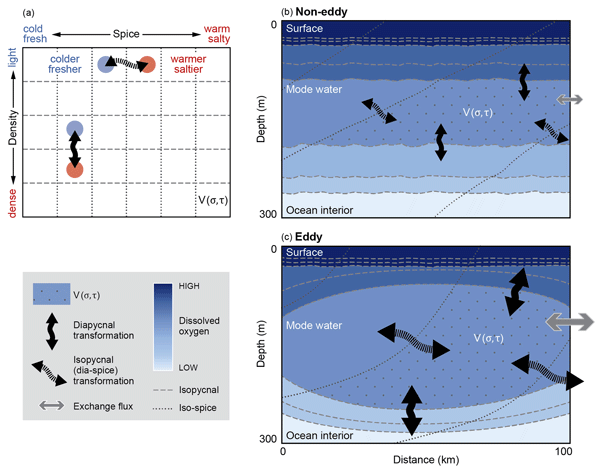
In the Sea of Oman, mode waters form at the surface in winter and are trapped beneath a warmer surface layer in spring, linking the surface ocean and the oxygen minimum zone. Using data from ocean gliders, our study examines how this layer evolves. Changes occur along layers of equal density, with brief episodes of vertical mixing, enhanced by eddies. Glider data reveal more variability than monthly means, showing the need for sustained glider observations to understand future ecosystem impacts.
Charly de Marez
Ocean Sci., 21, 1933–1942, https://doi.org/10.5194/os-21-1933-2025, https://doi.org/10.5194/os-21-1933-2025, 2025
Short summary
Short summary
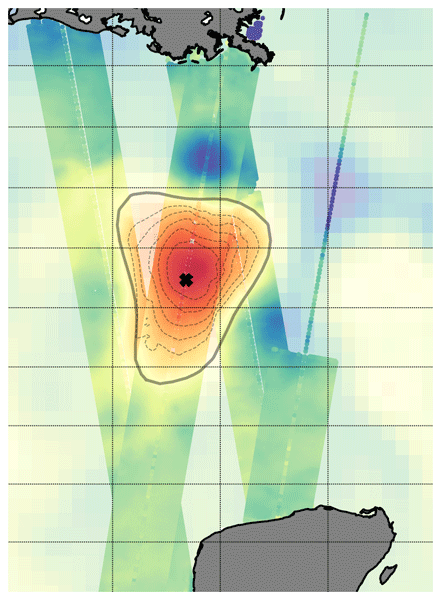
Oceanic eddies are giant swirling currents that help transport heat, nutrients, and pollutants across the ocean. However, their life cycle has never been observed in detail. Using new satellite data, we tracked an intense eddy in the Gulf of Mexico, describing its life cycle from birth during a 6-month period. Our observations reveal small-scale turbulence surrounding it and interactions with other structures that shape its evolution, validating decades of numerical studies.
Meredith G. Meyer, Esther Portela, Walker O. Smith Jr., and Karen J. Heywood
Ocean Sci., 21, 1223–1236, https://doi.org/10.5194/os-21-1223-2025, https://doi.org/10.5194/os-21-1223-2025, 2025
Short summary
Short summary
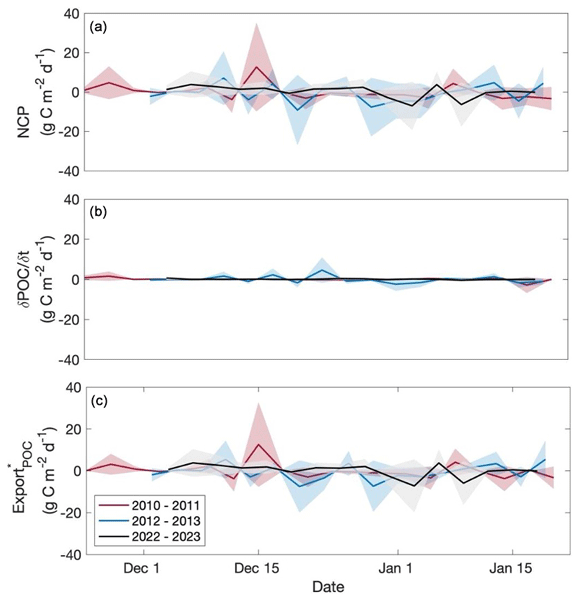
During the annual phytoplankton bloom, rates of primary production and carbon export in the Ross Sea, Antarctica, are uncoupled from each other and from oxygen and carbon stocks. These biogeochemical rates support the high-productivity, low-export classification of the region and suggest that environmental factors influence these stocks and rates differently and make projections under future climate change scenarios difficult.
Nicolas Kolodziejczyk, Esther Portela, Virginie Thierry, and Annaig Prigent
Earth Syst. Sci. Data, 16, 5191–5206, https://doi.org/10.5194/essd-16-5191-2024, https://doi.org/10.5194/essd-16-5191-2024, 2024
Short summary
Short summary
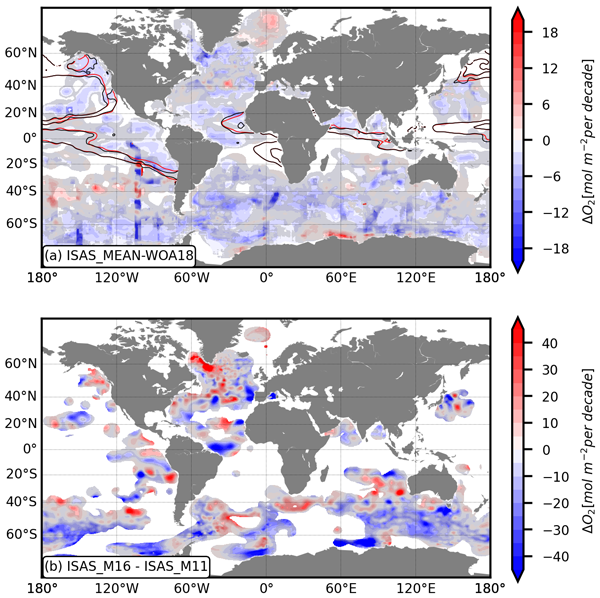
Oceanic dissolved oxygen (DO) is fundamental for ocean biogeochemical cycles and marine life. To ease the computation of the ocean oxygen budget from in situ DO data, mapping of data on a regular 3D grid is useful. Here, we present a new DO gridded product from the Argo database. We compare it with existing DO mapping from a historical dataset. We suggest that the ocean has generally been losing oxygen since the 1980s, but large interannual and regional variabilities should be considered.
Miguel Ángel Gutiérrez-Guerra, María Dolores Pérez-Hernández, and Pedro Vélez-Belchí
Ocean Sci., 20, 1291–1308, https://doi.org/10.5194/os-20-1291-2024, https://doi.org/10.5194/os-20-1291-2024, 2024
Short summary
Short summary
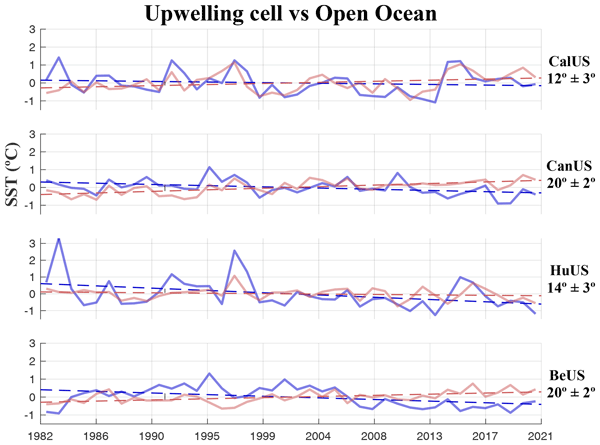
Eastern boundary upwelling systems (EBUSs) are crucial for resources, but climate change poses uncertainties for their future. To assess global warming's impact, we examine Andrew Bakun's 1990 hypothesis of intensified upwelling using deseasonalized sea surface temperature data. A new index, αUI, normalizes upwelling trends against non-upwelling processes, confirming intensification in all EBUSs and supporting Bakun's hypothesis.
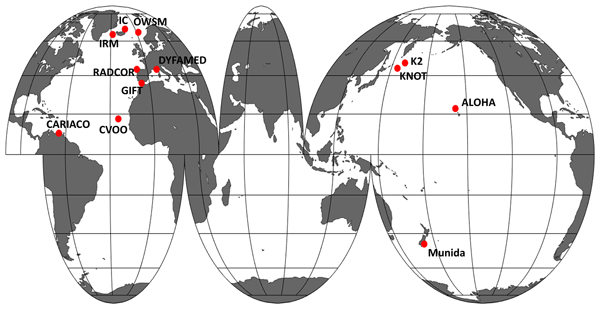
Nico Lange, Björn Fiedler, Marta Álvarez, Alice Benoit-Cattin, Heather Benway, Pier Luigi Buttigieg, Laurent Coppola, Kim Currie, Susana Flecha, Dana S. Gerlach, Makio Honda, I. Emma Huertas, Siv K. Lauvset, Frank Muller-Karger, Arne Körtzinger, Kevin M. O'Brien, Sólveig R. Ólafsdóttir, Fernando C. Pacheco, Digna Rueda-Roa, Ingunn Skjelvan, Masahide Wakita, Angelicque White, and Toste Tanhua
Earth Syst. Sci. Data, 16, 1901–1931, https://doi.org/10.5194/essd-16-1901-2024, https://doi.org/10.5194/essd-16-1901-2024, 2024
Short summary
Short summary
The Synthesis Product for Ocean Time Series (SPOTS) is a novel achievement expanding and complementing the biogeochemical data landscape by providing consistent and high-quality biogeochemical time-series data from 12 ship-based fixed time-series programs. SPOTS covers multiple unique marine environments and time-series ranges, including data from 1983 to 2021. All in all, it facilitates a variety of applications that benefit from the collective value of biogeochemical time-series observations.
Christoph Heinze, Thorsten Blenckner, Peter Brown, Friederike Fröb, Anne Morée, Adrian L. New, Cara Nissen, Stefanie Rynders, Isabel Seguro, Yevgeny Aksenov, Yuri Artioli, Timothée Bourgeois, Friedrich Burger, Jonathan Buzan, B. B. Cael, Veli Çağlar Yumruktepe, Melissa Chierici, Christopher Danek, Ulf Dieckmann, Agneta Fransson, Thomas Frölicher, Giovanni Galli, Marion Gehlen, Aridane G. González, Melchor Gonzalez-Davila, Nicolas Gruber, Örjan Gustafsson, Judith Hauck, Mikko Heino, Stephanie Henson, Jenny Hieronymus, I. Emma Huertas, Fatma Jebri, Aurich Jeltsch-Thömmes, Fortunat Joos, Jaideep Joshi, Stephen Kelly, Nandini Menon, Precious Mongwe, Laurent Oziel, Sólveig Ólafsdottir, Julien Palmieri, Fiz F. Pérez, Rajamohanan Pillai Ranith, Juliano Ramanantsoa, Tilla Roy, Dagmara Rusiecka, J. Magdalena Santana Casiano, Yeray Santana-Falcón, Jörg Schwinger, Roland Séférian, Miriam Seifert, Anna Shchiptsova, Bablu Sinha, Christopher Somes, Reiner Steinfeldt, Dandan Tao, Jerry Tjiputra, Adam Ulfsbo, Christoph Völker, Tsuyoshi Wakamatsu, and Ying Ye
Biogeosciences Discuss., https://doi.org/10.5194/bg-2023-182, https://doi.org/10.5194/bg-2023-182, 2023
Revised manuscript not accepted
Short summary
Short summary
For assessing the consequences of human-induced climate change for the marine realm, it is necessary to not only look at gradual changes but also at abrupt changes of environmental conditions. We summarise abrupt changes in ocean warming, acidification, and oxygen concentration as the key environmental factors for ecosystems. Taking these abrupt changes into account requires greenhouse gas emissions to be reduced to a larger extent than previously thought to limit respective damage.
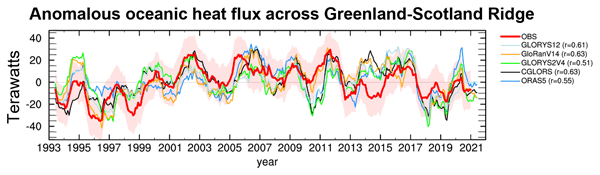
Michael Mayer, Takamasa Tsubouchi, Susanna Winkelbauer, Karin Margretha H. Larsen, Barbara Berx, Andreas Macrander, Doroteaciro Iovino, Steingrímur Jónsson, and Richard Renshaw
State Planet, 1-osr7, 14, https://doi.org/10.5194/sp-1-osr7-14-2023, https://doi.org/10.5194/sp-1-osr7-14-2023, 2023
Short summary
Short summary
This paper compares oceanic fluxes across the Greenland–Scotland Ridge (GSR) from ocean reanalyses to largely independent observational data. Reanalyses tend to underestimate the inflow of warm waters of subtropical Atlantic origin and hence oceanic heat transport across the GSR. Investigation of a strong negative heat transport anomaly around 2018 highlights the interplay of variability on different timescales and the need for long-term monitoring of the GSR to detect forced climate signals.
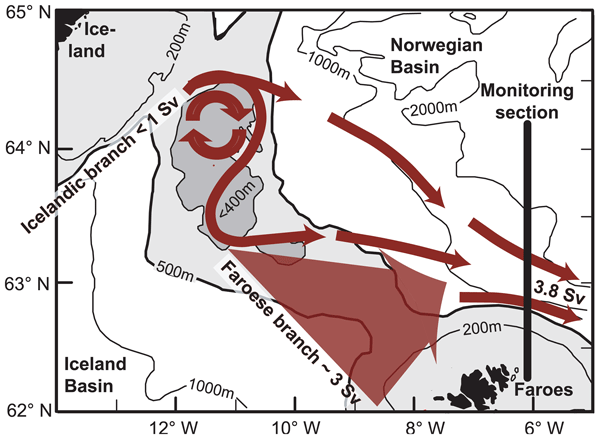
Bogi Hansen, Karin M. H. Larsen, Hjálmar Hátún, Steffen M. Olsen, Andrea M. U. Gierisch, Svein Østerhus, and Sólveig R. Ólafsdóttir
Ocean Sci., 19, 1225–1252, https://doi.org/10.5194/os-19-1225-2023, https://doi.org/10.5194/os-19-1225-2023, 2023
Short summary
Short summary
Based on in situ observations combined with sea level anomaly (SLA) data from satellite altimetry, volume as well as heat (relative to 0 °C) transport of the Iceland–Faroe warm-water inflow towards the Arctic (IF inflow) increased from 1993 to 2021. The reprocessed SLA data released in December 2021 represent observed variations accurately. The IF inflow crosses the Iceland–Faroe Ridge in two branches, with retroflection in between. The associated coupling to overflow reduces predictability.
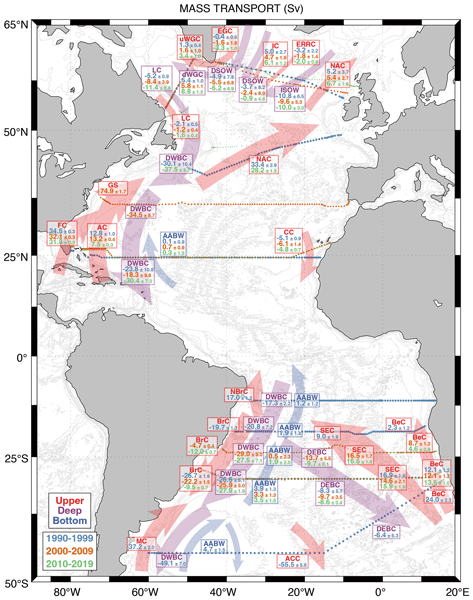
Verónica Caínzos, M. Dolores Pérez-Hernández, Daniel Santana-Toscano, Cristina Arumí-Planas, and Alonso Hernández-Guerra
Ocean Sci., 19, 1009–1045, https://doi.org/10.5194/os-19-1009-2023, https://doi.org/10.5194/os-19-1009-2023, 2023
Short summary
Short summary
The pathways of the Atlantic circulation form a complex system of currents that change meridionally due to interactions with nearby water masses. Over the last 30 years, hydrographic data have allowed us to characterize these upper, deep, and abyssal currents for the entire water column using high-resolution data, computing their mass, heat, and freshwater transports. Generally, we have found no changes among decades for each current in terms of the transport of mass or properties.
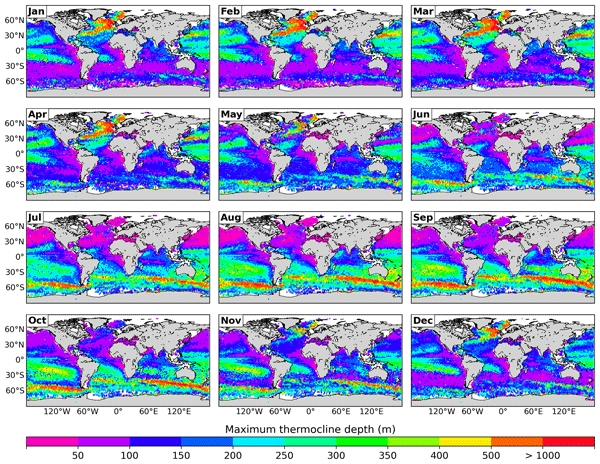
Emmanuel Romero, Leonardo Tenorio-Fernandez, Esther Portela, Jorge Montes-Aréchiga, and Laura Sánchez-Velasco
Ocean Sci., 19, 887–901, https://doi.org/10.5194/os-19-887-2023, https://doi.org/10.5194/os-19-887-2023, 2023
Short summary
Short summary
In this study, we present a methodology to locate the minimum and maximum depths of the strongest thermocline, its thickness, and its strength by adjusting the sigmoid function to the temperature profiles in the global ocean. The results of the methodology are compared with the results of other methods found in the literature, and an assessment of the ocean regions where the adjustment is valid is provided. The method proposed here has shown to be robust and easy to apply.
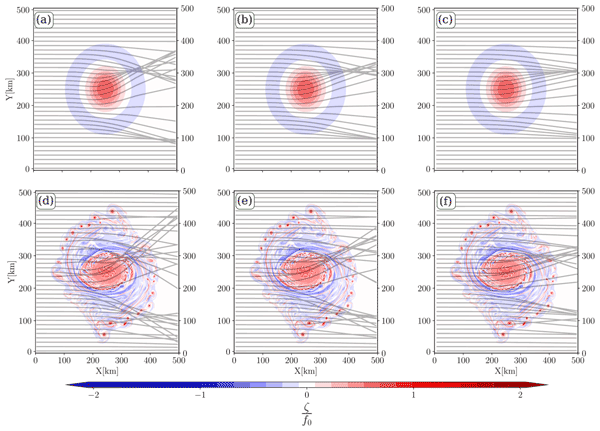
Gwendal Marechal and Charly de Marez
Ocean Sci., 18, 1275–1292, https://doi.org/10.5194/os-18-1275-2022, https://doi.org/10.5194/os-18-1275-2022, 2022
Short summary
Short summary
The surface ocean is turbulent from several hundred to a few kilometres. The more the current field is turbulent, the more traveling waves over the underlying current that are scattered. In this paper we focus on an isolated eddy where spontaneous instabilities have occurred, resulting in the emergence of smaller structures. Thanks to the wave scattering we have been able to retrieve the underlying surface current gradients normally not retrievable with traditional current measurements.
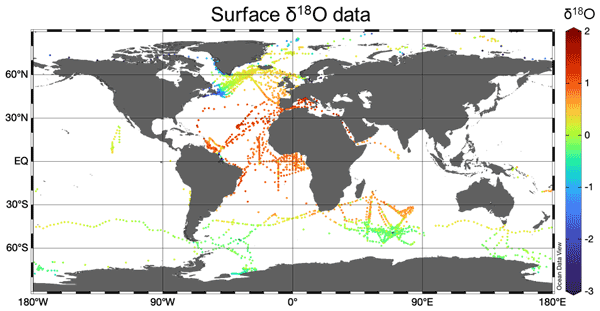
Gilles Reverdin, Claire Waelbroeck, Catherine Pierre, Camille Akhoudas, Giovanni Aloisi, Marion Benetti, Bernard Bourlès, Magnus Danielsen, Jérôme Demange, Denis Diverrès, Jean-Claude Gascard, Marie-Noëlle Houssais, Hervé Le Goff, Pascale Lherminier, Claire Lo Monaco, Herlé Mercier, Nicolas Metzl, Simon Morisset, Aïcha Naamar, Thierry Reynaud, Jean-Baptiste Sallée, Virginie Thierry, Susan E. Hartman, Edward W. Mawji, Solveig Olafsdottir, Torsten Kanzow, Anton Velo, Antje Voelker, Igor Yashayaev, F. Alexander Haumann, Melanie J. Leng, Carol Arrowsmith, and Michael Meredith
Earth Syst. Sci. Data, 14, 2721–2735, https://doi.org/10.5194/essd-14-2721-2022, https://doi.org/10.5194/essd-14-2721-2022, 2022
Short summary
Short summary
The CISE-LOCEAN seawater stable isotope dataset has close to 8000 data entries. The δ18O and δD isotopic data measured at LOCEAN have uncertainties of at most 0.05 ‰ and 0.25 ‰, respectively. Some data were adjusted to correct for evaporation. The internal consistency indicates that the data can be used to investigate time and space variability to within 0.03 ‰ and 0.15 ‰ in δ18O–δD17; comparisons with data analyzed in other institutions suggest larger differences with other datasets.
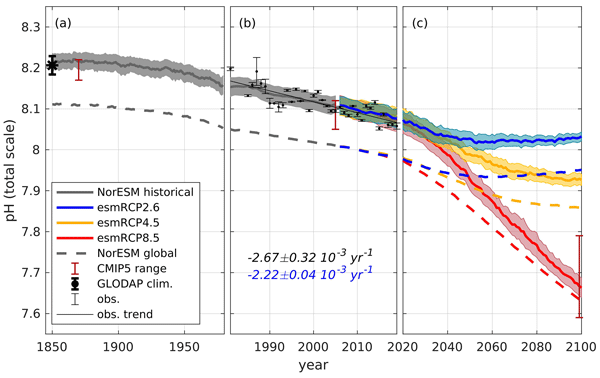
Filippa Fransner, Friederike Fröb, Jerry Tjiputra, Nadine Goris, Siv K. Lauvset, Ingunn Skjelvan, Emil Jeansson, Abdirahman Omar, Melissa Chierici, Elizabeth Jones, Agneta Fransson, Sólveig R. Ólafsdóttir, Truls Johannessen, and Are Olsen
Biogeosciences, 19, 979–1012, https://doi.org/10.5194/bg-19-979-2022, https://doi.org/10.5194/bg-19-979-2022, 2022
Short summary
Short summary
Ocean acidification, a direct consequence of the CO2 release by human activities, is a serious threat to marine ecosystems. In this study, we conduct a detailed investigation of the acidification of the Nordic Seas, from 1850 to 2100, by using a large set of samples taken during research cruises together with numerical model simulations. We estimate the effects of changes in different environmental factors on the rate of acidification and its potential effects on cold-water corals.
Cited articles
Astthorsson, O. S., Valdimarsson, H., Gudmundsdottir, A., and Oskarsson, G. J.: Climate-related variations in the occurrence and distribution of mackerel (Scomber scombrus) in Icelandic waters, ICES J. Mar. Sci., 69, 1289–1297, 2012.
Athanase, M., Provost, C., Pérez‐Hernández, M. D., Sennéchael, N., Bertosio, C., Artana, C., Garric, G., and Lellouche, J. M.: Atlantic water modification north of Svalbard in the Mercator physical system from 2007 to 2020, J. Geophys. Res.-Ocean., 125, e2020JC016463, https://doi.org/10.1029/2020JC016463, 2020.
Bindoff, N. L., Cheung, W. W. L., Kairo, J. G., Arístegui, J., Guinder, V. A., Hallberg, R., Hilmi, N., Jiao, N., Karim, M. S., Levin, L., O'Donoghue, S., Purca Cuicapusa, S. R., Rinkevich, B., Suga, T., Tagliabue, A., and Williamson, P.: Changing Ocean, Marine Ecosystems, and Dependent Communities, In: IPCC Special Report on the Ocean and Cryosphere in a Changing Climate, edited by: Pörtner, H.-O., Roberts, D. C., Masson-Delmotte, V., Zhai, P., Tignor, M., Poloczanska, E., Mintenbeck, K., Alegría, A., Nicolai, M., Okem, A., Petzold, J., Rama, B., and Weyer, N. M., Cambridge University Press, Cambridge, UK and New York, NY, USA, 447–587, https://doi.org/10.1017/9781009157964.007, 2019.
Brakstad, A.: Hydrographic and Geochemical Observations in the Nordic Seas Between 1950 and 2019, University of Bergen, https://doi.org/10.21335/NMDC-1271328906, 2023.
Bersch, M.: North Atlantic Oscillation–induced changes of the upper layer circulation in the northern North Atlantic Ocean, J. Geophys. Res., 107, 3156, https://doi.org/10.1029/2001JC000901, 2002.
Campana, S. E., Stefansdottir, R. B., Jakobsdottir, K., and Solmundsson, J.: Shifting fish distributions in warming sub-Arctic oceans, Sci. Rep., 10, 1–14, 2020.
Carmack, E. C.: The alpha/beta ocean distinction: A perspective on freshwater fluxes, convection, nutrients and productivity in high-latitude seas, Deep-Sea Res. Pt. II, 54, 2578–2598, 2007.
Casanova‐Masjoan, M., Pérez‐Hernández, M. D., Pickart, R. S., Valdimarsson, H., Ólafsdóttir, S. R., Macrander, A., Grisolía‐Santos, D., Torres, D. J., Jónsson, S., Våge, K., and Lin, P.: Along-stream, seasonal, and interannual variability of the North Icelandic Irminger Current and East Icelandic Current around Iceland, J. Geophys. Res.-Ocean., 125, e2020JC016283, https://doi.org/10.1029/2020JC016283, 2020.
Cerfonteyn, M., Groben, R., Vaulot, D., Guðmundsson, K., Vannier, P., Pérez-Hernández, M. D. and Marteinsson, V. þ.: The distribution and diversity of eukaryotic phytoplankton in the Icelandic marine environment, Sci. Rep., 13, 8519, https://doi.org/10.1038/s41598-023-35537-2, 2023.
Dai, A., Luo, D., Song, M., and Liu, J.: Arctic amplification is caused by sea-ice loss under increasing CO2, Nat. Commun., 10, 1–13, 2019.
de Boyer Montégut, C., Madec, G., Fischer, A. S., Lazar, A., and Iudicone, D.: Mixed layer depth over the global ocean: An examination of profile data and a profile-based climatology, J. Geophys. Res.-Ocean., 109, https://doi.org/10.1029/2004JC002378, 2004.
de Marez, C., Vives, C. R., Portela, E., and Ruiz-Angulo, A.: Mesoscale ocean processes: The critical role of stratification in the Icelandic region, J. Geophys. Res.-Ocean., 130, https://doi.org/10.1029/2025JC022664, 2025.
Dickson, R., Lazier, J., Meincke, J., Rhines, P., and Swift, J.: Long-term coordinated changes in the convective activity of the North Atlantic, Prog. Oceanogr., 38, https://doi.org/10.1016/S0079-6611(97)00002-5, 1996.
Feucher, C., Portela, E., Kolodziejczyk, N., and Thierry, V.: Subpolar gyre decadal variability explains the recent oxygenation in the Irminger Sea, Commun. Earth Environ., 3, 279, https://doi.org/10.1038/s43247-022-00570-y, 2022.
Foukal, N. P., Gelderloos, R., and Pickart, R. S.: A continuous pathway for fresh water along the east Greenland shelf, Sci. Adv., 6, eabc4254, https://doi.org/10.1126/sciadv.abc4254, 2020.
Fox-Kemper, B., Hewitt, H. T., Xiao, C., Aðalgeirsdóttir, G., Drijfhout, S. S., Edwards, T. L., Golledge, N. R., Hemer, M., Kopp, R. E., Krinner, G., Mix, A., Notz, D., Nowicki, S., Nurhati, I. S., Ruiz, L., Sallée, J.-B., Slangen, A. B. A., and Yu, Y.: Ocean, Cryosphere and Sea Level Change, in: Climate Change 2021: The Physical Science Basis. Contribution of Working Group I to the Sixth Assessment Report of the Intergovernmental Panel on Climate Change, edited by: Masson-Delmotte, V., Zhai, P., Pirani, A., Connors, S. L., Péan, C., Berger, S., Caud, N., Chen, Y., Goldfarb, L., Gomis, M. I., Huang, M., Leitzell, K., Lonnoy, E., Matthews, J. B. R., Maycock, T. K., Waterfield, T., Yelekçi, O., Yu, R., and Zhou, B.: Cambridge University Press, Cambridge, United Kingdom and New York, NY, USA, 1211–1362, https://doi.org/10.1017/9781009157896.011, 2021.
Gjelstrup, C. V. B., Sejr, M. K., de Steur, L., Christiansen, J. S., Granskog, M. A., Koch, B. P., Møller, E. F., Winding, M. H. S., and Stedmon, C. A.: Vertical redistribution of principle water masses on the northeast Greenland Shelf, Nat. Commun., 13, https://doi.org/10.1038/s41467-022-35413-z, 2022.
Hansen, B. and Østerhus, S.: North Atlantic–Nordic Seas exchanges, Prog. Oceanogr., 45, 109–208, 2000.
Hansen, B., Larsen, K. M. H., Hátún, H., Olsen, S. M., Gierisch, A. M. U., Østerhus, S., and Ólafsdóttir, S. R.: The Iceland–Faroe warm-water flow towards the Arctic estimated from satellite altimetry and in situ observations, Ocean Sci., 19, 1225–1252, https://doi.org/10.5194/os-19-1225-2023, 2023.
Harden, B.E., Pickart, R.S., Valdimarsson, H., Våge, K., de Steur, L., Richards, C., Bahr, F., Torres, D., Børve, E., Jónsson, S. and Macrander, A.: Upstream sources of the Denmark Strait overflow: Observations from a high-resolution mooring array, Deep-Sea Res. Pt. I, 112, 94–112, 2016.
Hátún, H. and Chafik, L.: On the recent ambiguity of the North Atlantic Subpolar Gyre Index, J. Geophys. Res.-Ocean., 123, 5072–5076, 2018.
Hátún, H., Chafik, L., and Larsen, K. M. H.: The Norwegian Sea Gyre – a regulator of Iceland-Scotland Ridge exchanges, Front. Mar. Sci., 8, 1001, https://doi.org/10.3389/fmars.2021.694614, 2021.
Håvik, L., Pickart, R. S., Våge, K., Torres, D., Thurnherr, A. M., Beszczynska‐Möller, A., Walczowski, W., and Von Appen, W. J.: Evolution of the East Greenland Current from Fram Strait to Denmark Strait: Synoptic measurements from summer 2012, J. Geophys. Res.-Ocean., 122, 1974–1994, 2017.
Hersbach, H., Bell, B., Berrisford, P., Hirahara, S., Horányi, A., Muñoz‐Sabater, J., Nicolas, J., Peubey, C., Radu, R., Schepers, D., and Simmons, A.: The ERA5 global reanalysis, Q. J. R. Meteorol. Soc., 146, 1999–2049, https://doi.org/10.1002/qj.3803, 2020.
Holliday, N. P., Bersch, M., Berx, B., Chafik, L., Cunningham, S., Florindo-López, C., Hátún, H., Johns, W., Josey, S. A., Larsen, K. M. H., and Mulet, S.: Ocean circulation causes the largest freshening event for 120 years in eastern subpolar North Atlantic, Nat. Commun., 11, 2020.
Holt, J., Schrum, C., Cannaby, H., Daewel, U., Allen, I., Artioli, Y., Bopp, L., Butenschon, M., Fach, B. A., Harle, J., and Pushpadas, D.: Potential impacts of climate change on the primary production of regional seas: A comparative analysis of five European seas, Prog. Oceanogr., 140, 91–115, 2016.
Holte, J., Talley, L. D., Gilson, J., and Roemmich, D.: An Argo mixed layer climatology and database, Geophys. Res. Lett., 44, 5618–5626, 2017.
Huang, J., Pickart, R. S., Chen, Z., and Huang, R. X.: Role of air-sea heat flux on the transformation of Atlantic Water encircling the Nordic Seas, Nat. Commun., 14, https://doi.org/10.1038/s41467-023-35889-3, 2023.
Hurrell, J. W.: Decadal trends in the North Atlantic Oscillation: Regional temperatures and precipitation, Science, 269, 5224, https://doi.org/10.1126/science.269.5224.676, 1995.
Jónsson, S.: The circulation in the northern part of the Denmark Strait and its variability, ICES CM, 50, https://doi.org/10.17895/ices.pub.25637283, 1999.
Jónsson, S. and Briem, J.: Flow of Atlantic water west of Iceland and onto the North Icelandic shelf, ICES Marine Science Symposia, 219, 326–328, https://doi.org/10.17895/ices.pub.19271852, 2003.
Jónsson, S. and Valdimarsson, H.: Water mass transport variability to the North Icelandic shelf, 1994–2010, ICES J. Mar. Sci., 69, 809–815, https://doi.org/10.1093/icesjms/fss024, 2012.
Kohler, J., Serra, N., Bryan, F. O., Johnson, B. K., and Stammer, D.: Mechanisms of mixed-layer salinity seasonal variability in the Indian Ocean, J. Geophys. Res.-Ocean., 123, 466–496, 2018.
Li, G., Cheng, L., Zhu, J., Trenberth, K. E., Mann, M. E., and Abraham, J. P.: Increasing ocean stratification over the past half-century, Nat. Clim. Chang., 10, 1116–1123, 2020.
Lin, P., Pickart, R. S., Jochumsen, K., Moore, G. W. K., Valdimarsson, H., Fristedt, T., and Pratt, L. J.: Kinematic structure and dynamics of the Denmark Strait overflow from ship-based observations, J. Phys. Oceanogr., 50, 2020.
Liu, C., Liang, X., Chambers, D. P., and Ponte, R. M.: Global patterns of spatial and temporal variability in salinity from multiple gridded Argo products, J. Clim., 33, 8751–8766, 2020.
Logemann, K., Ólafsson, J., Snorrason, Á., Valdimarsson, H., and Marteinsdóttir, G.: The circulation of Icelandic waters – a modelling study, Ocean Sci., 9, 931–955, https://doi.org/10.5194/os-9-931-2013, 2013.
Lozier, M. S., Li, F., Bacon, S., Bahr, F., Bower, A.S., Cunningham, S. A., de Jong, M. F., de Steur, L., deYoung, B., Fischer, J., and Gary, S. F.: A sea change in our view of overturning in the subpolar North Atlantic, Science, 363, 516–521, 2019.
Macrander, A., Valdimarsson, H., and Jonsson, S.: Improved transport estimate of the East Icelandic Current 2002–2012, J. Geophys. Res.-Ocean., 119, 3407–3424, 2014.
Mastropole, D., Pickart, R. S., Valdimarsson, H., Våge, K., Jochumsen, K., and Girton, J.: On the hydrography of Denmark Strait, J. Geophys. Res.-Ocean., 122, 306–321, 2017.
Mauritzen, C.: Production of dense overflow waters feeding the North Atlantic across the Greenland-Scotland Ridge, Part 1: Evidence for a revised circulation scheme, Deep-Sea Res. Pt. I, 43, 769–806, 1996.
Moore, G. W. K., Våge, K., Pickart, R. S., and Renfrew, I. A.: Decreasing intensity of open-ocean convection in the Greenland and Iceland seas, Nat. Clim. Change, 5, 877-882, 2015.
Ólafsson, J.: Winter mixed layer nutrients in the Irminger and Iceland seas, ICES Mar. Sci. Symp., 219, 329–332, 2003.
Ólafsdóttir, A. H., Utne, K. R., Jacobsen, J. A., Jansen, T., Óskarsson, G. J., Nøttestad, L., Elvarsson, B. Þ., Broms, C., and Slotte, A.: Geographical expansion of Northeast Atlantic mackerel (Scomber scombrus) in the Nordic Seas from 2007 to 2016 was primarily driven by stock size and constrained by low temperatures, Deep-Sea Res. Pt. II, 159, 152–168, 2019.
Østerhus, S., Woodgate, R., Valdimarsson, H., Turrell, B., de Steur, L., Quadfasel, D., Olsen, S. M., Moritz, M., Lee, C. M., Larsen, K. M. H., Jónsson, S., Johnson, C., Jochumsen, K., Hansen, B., Curry, B., Cunningham, S., and Berx, B.: Arctic Mediterranean exchanges: a consistent volume budget and trends in transports from two decades of observations, Ocean Sci., 15, 379–399, https://doi.org/10.5194/os-15-379-2019, 2019.
Pérez‐Hernández, M. D., Pickart, R. S., Torres, D. J., Bahr, F., Sundfjord, A., Ingvaldsen, R., Renner, A. H., Beszczynska‐Möller, A., von Appen, W. J., and Pavlov, V.: Structure, transport, and seasonality of the Atlantic Water boundary current north of Svalbard: Results from a yearlong mooring array, J. Geophys. Res.-Ocean., 124, 1679–1698, 2019.
Petit, T., Lozier, M. S., Josey, S. A., and Cunningham, S. A.: Atlantic deep water formation occurs primarily in the Iceland Basin and Irminger Sea by local buoyancy forcing, Geophys. Res. Lett., 47, e2020GL091028, https://doi.org/10.1029/2020GL091028, 2020.
Petit, T., Lozier, M. S., Josey, S. A., and Cunningham, S. A.: Role of air–sea fluxes and ocean surface density in the production of deep waters in the eastern subpolar gyre of the North Atlantic, Ocean Sci., 17, 1353–1365, https://doi.org/10.5194/os-17-1353-2021, 2021.
Piron, A., Thierry, V., Mercier, H., and Caniaux, G.: Argo float observations of basin-scale deep convection in the Irminger Sea during winter 2011–2012, Deep-Sea Res. Pt. I, 109, 76–90, 2016.
Polyakov, I. V., Pnyushkov, A. V., Alkire, M. B., Ashik, I. M., Baumann, T. M., Carmack, E. C., Goszczko, I., Guthrie, J., Ivanov, V. V., Kanzow, T., and Krishfield, R.: Greater role for Atlantic inflows on sea-ice loss in the Eurasian Basin of the Arctic Ocean, Science, 356, 285–291, 2017.
Polyakov, I. V., Rippeth, T. P., Fer, I., Alkire, M. B., Baumann, T. M., Carmack, E. C., Ingvaldsen, R., Ivanov, V. V., Janout, M., Lind, S., and Padman, L.: Weakening of cold halocline layer exposes sea ice to oceanic heat in the eastern Arctic Ocean, J. Clim., 33, 8107–8123, 2020.
Price, J. F., Weller, R. A., and Pinkel, R.: Diurnal cycling – Observations and models of the upper ocean response to diurnal heating, cooling, and wind mixing, J. Geophys. Res.-Ocean., 91, 8411–8427, 1986.
Renfrew, I. A., Pickart, R. S., Våge, K., Moore, G. W., Bracegirdle, T. J., Elvidge, A. D., Jeansson, E., Lachlan-Cope, T., McRaven, L. T., Papritz, L., and Reuder, J.: The Iceland Greenland Seas Project, Bull. Am. Meteorol. Soc., 100, 1795–1817, 2019.
Richardson, K. and Bendtsen, J.: Distinct seasonal primary production patterns in the sub-polar gyre and surrounding seas, Front. Mar. Sci., https://doi.org/10.3389/fmars.2021.785685, 2021.
Rudels, B., Björk, G., Nilsson, J., Winsor, P., Lake, I., and Nohr, C.: The interaction between waters from the Arctic Ocean and the Nordic Seas north of Fram Strait and along the East Greenland Current: Results from the Arctic Ocean-02 Oden expedition, J. Mar. Syst., 55, 1–30, 2005.
Sallée, J. B., Pellichero, V., Akhoudas, C., Pauthenet, E., Vignes, L., Schmidtko, S., Garabato, A. N., Sutherland, P., and Kuusela, M.: Summertime increases in upper-ocean stratification and mixed-layer depth, Nature, 591, 592–598, https://doi.org/10.1038/s41586-021-03303-x, 2021.
Sarafanov, A.: On the effect of the North Atlantic Oscillation on temperature and salinity of the subpolar North Atlantic intermediate and deep waters, ICES J. Mar. Sci., 66, 1448–1454, 2009.
Semper, S., Våge, K., Pickart, R. S., Valdimarsson, H., Torres, D. J., and Jónsson, S.: The emergence of the North Icelandic Jet and its evolution from Northeast Iceland to Denmark Strait, J. Phys. Oceanogr., 49, 2499–2521, 2019.
Shepherd, J. G., Brewer, P. G., Oschlies, A., and Watson, A. J.: Ocean ventilation and deoxygenation in a warming world: Introduction and overview, Philos. Trans. A Math. Phys. Eng. Sci., 375, https://doi.org/10.1098/rsta.2017.0240, 2017.
Skyllingstad, E. D., Samelson, R. M., Simmons, H., Laurent, L. S., Merrifield, S., Klenz, T., and Centurioni, L.: Boundary layer energetics of rapid wind and wave forced mixing events, J. Phys. Oceanogr., 53, 1887–1900, 2023.
Stewart, K. D. and Haine, T. W.: Thermobaricity in the transition zones between alpha and beta oceans, J. Phys. Oceanogr., 46, 1805–1821, 2016.
Strehl, A.-M., Våge, K., Merdrud, S. L. H., and Barreyre, T.: A 70-year perspective on water-mass transformation in the Greenland Sea: From thermobaric to thermal convection, Prog. Oceanogr., 227, 103304, https://doi.org/10.1016/j.pocean.2024.103304, 2024.
Tesdal, J.-E., Abernathey, R. P., Goes, J. I., Gordon, A. L., and Haine, T. W.: Salinity trends within the upper layers of the subpolar North Atlantic, J. Clim., 31, 2675–2698, 2018.
Valdimarsson, H., Astthórsson, O. S., and Pálsson, J.: Hydrographic variability in Icelandic waters during recent decades and related changes in distribution of some fish species, ICES J. Mar. Sci., 69, 816–825, https://doi.org/10.1093/icesjms/fss027, 2012.
Våge, K., Pickart, R. S., Moore, G., and Ribergaard, M. H.: Winter mixed layer development in the central Irminger Sea: The effect of strong, intermittent wind events, J. Phys. Oceanogr., 38, 541–565, 2008.
Våge, K., Pickart, R. S., Spall, M. A., Valdimarsson, H., Jónsson, S., Torres, D. J., Østerhus, S., and Eldevik, T.: Significant role of the North Icelandic Jet in the formation of Denmark Strait Overflow Water, Nat. Geosci., 4, 723–727, 2011.
Våge, K., Pickart, R. S., Spall, M. A., Moore, G. W. K., Valdimarsson, H., Torres, D. J., Erofeeva, S. Y., and Nilsen, J. E. Ø.: Revised circulation scheme north of the Denmark Strait, Deep-Sea Res. Pt. I, 79, 20–39, 2013.
Våge, K., Moore, G. W. K., Jónsson, S., and Valdimarsson, H.: Water mass transformation in the Iceland Sea, Deep-Sea Res. Pt. I, 101, 98–109, 2015.
Våge, K., Papritz, L., Havik, L., Spall, M. A., and Moore, G. W. K.: Ocean convection linked to the recent ice edge retreat along East Greenland, Nat. Commun., 9, 1–8, 2018.
Våge, K., Semper, S., Valdimarsson, H., Jónsson, S., Pickart, R. S., and Moore, G. W. K.: Water mass transformation in the Iceland Sea: Contrasting two winters separated by four decades, Deep-Sea Res. Pt. I, 186, 103824, https://doi.org/10.1016/j.dsr.2015.04.001, 2022.
Whitney, M. M.: Icelandic riverine freshwater distribution, offshore export, and alongshelf connectivity, Estuar. Coast. Shelf Sci., 319, 109266, https://doi.org/10.1016/j.ecss.2025.109266, 2025.
Yamaguchi, R. and Suga, T.: Trend and variability in global upper-ocean stratification since the 1960s, J. Geophys. Res.-Ocean., 124, 8933–8948, 2019.
Zhai, L., Gudmundsson, K., Miller, P., Peng, W., Guðfinnsson, H., Debes, H., Hátún, H., White III, G. N., Walls, R. H., Sathyendranath, S., and Platt, T.: Phytoplankton phenology and production around Iceland and Faroes, Cont. Shelf Res., 37, 2012.
Short summary
Analysis of 1990–2019 hydrographic around Iceland identifies three dynamical regions: an α-ocean south with warm Atlantic Water and deep mixed layers, a β-ocean northwest with salinity-dominated stratification and shallow mixed layers, and a northeastern transition zone with seasonal shifts. Waters warmed, especially in the northeast, showing Atlantification. Density decreases occur in the south, while other regions show density-compensated variability, with no clear trend in mixed layer depth.
Analysis of 1990–2019 hydrographic around Iceland identifies three dynamical regions: an α-ocean...


