
Articles | Volume 22, issue 2
https://doi.org/10.5194/os-22-821-2026
© Author(s) 2026. This work is distributed under
the Creative Commons Attribution 4.0 License.
the Creative Commons Attribution 4.0 License.
https://doi.org/10.5194/os-22-821-2026
© Author(s) 2026. This work is distributed under
the Creative Commons Attribution 4.0 License.
the Creative Commons Attribution 4.0 License.
Research article
| Highlight paper
| 
10 Mar 2026
Research article | Highlight paper |
| 10 Mar 2026
| 10 Mar 2026
The role of cyclonic eddies in the detachment and separation of Loop Current eddies

Center for Ocean-Atmospheric Prediction Studies (COAPS), Florida State University, Tallahassee, Florida, USA
LEGOS, Université de Toulouse, CNES-CNRS-IRD-UPS, 14 Avenue Edouard Belin, 31400 Toulouse, France
Julien Jouanno
LEGOS, Université de Toulouse, CNES-CNRS-IRD-UPS, 14 Avenue Edouard Belin, 31400 Toulouse, France
Eric P. Chassignet
Center for Ocean-Atmospheric Prediction Studies (COAPS), Florida State University, Tallahassee, Florida, USA
Giovanni Durante
Center for Scientific Research and Higher Education at Ensenada (CICESE), Ensenada, Mexico
Ilkyeong Ma
Center for Ocean-Atmospheric Prediction Studies (COAPS), Florida State University, Tallahassee, Florida, USA
Julio Sheinbaum
Center for Scientific Research and Higher Education at Ensenada (CICESE), Ensenada, Mexico
Lionel Renault
LEGOS, Université de Toulouse, CNES-CNRS-IRD-UPS, 14 Avenue Edouard Belin, 31400 Toulouse, France
Related authors
No articles found.
Clovis Thouvenin-Masson and Julien Jouanno
Ocean Sci., 22, 2835–2862, https://doi.org/10.5194/os-22-2835-2026, https://doi.org/10.5194/os-22-2835-2026, 2026
Short summary
Short summary
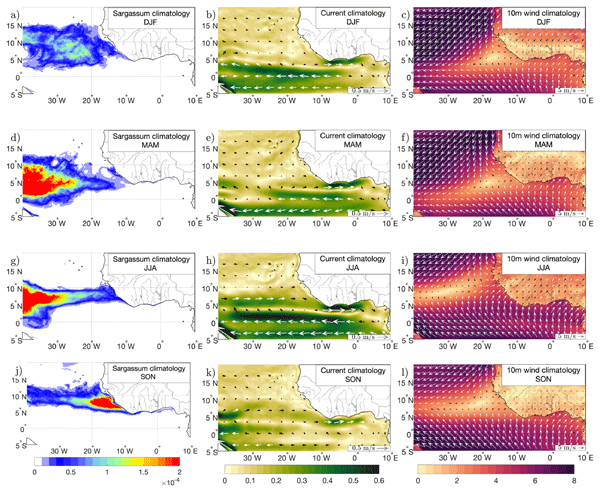
We studied why floating Sargassum seaweed repeatedly reaches the northern Gulf of Guinea, where it affects coastal activities such as fishing. By combining satellite observations with computer simulations, we found two main arrival seasons, in spring and autumn. Most events are driven by seaweed transported from the eastern tropical Atlantic, while winds push it toward the coast and beaching limits how long it persists. Year-to-year changes are linked to shifts in Atlantic climate.
Gaël Many, Julien Jouanno, Marc Lucas, Audrey Hasson, Jean-Michel Lellouche, and Yann Drillet
State Planet Discuss., https://doi.org/10.5194/sp-2026-30, https://doi.org/10.5194/sp-2026-30, 2026
Preprint under review for SP
Short summary
Short summary
Large Sargassum blooms have become a recurring feature of the Tropical Atlantic, affecting coastal areas and ecosystems. We studied satellite observations from 2002 to 2025 to understand how bloom size and severity vary through time and across regions. We developed two simple indicators to compare years and areas. The results reveal strong regional differences and show that 2025 was an exceptional basin-wide bloom, highlighting the value of consistent monitoring for tracking future events.
Joseph K. Ansong, Brian K. Arbic, Romain Bourdalle-Badié, Clément Bricaud, Jérôme Chanut, Dimitris Menemenlis, Richard D. Ray, Michael Schindelegger, Alan J. Wallcraft, He Wang, Alistair J. Adcroft, Frédéric Briol, Maarten C. Buijsman, Loren Carrère, Eric P. Chassignet, Gerald Dibarboure, Robert W. Hallberg, Christopher N. Hill, Ariane Koch-Larrouy, Florent Lyard, Matthew R. Mazloff, An T. Nguyen, Nicolas Picot, Rui M. Ponte, and Jay F. Shriver
EGUsphere, https://doi.org/10.5194/egusphere-2026-5064, https://doi.org/10.5194/egusphere-2026-5064, 2026
This preprint is open for discussion and under review for Ocean Science (OS).
Short summary
Short summary
We assess how well four high-resolution global ocean models reproduce surface and internal tides compared with satellite observations. Some models produce internal tides that are too strong, but including energy loss over rough seafloor improves their accuracy. Longer model records and higher resolution also improve agreement with observations. We further identify errors in the tidal forcing of widely used MITgcm simulations that reduce the accuracy of their simulated tides.
Rémi Laxenaire, Eric P. Chassignet, Xiaobiao Xu, Alan J. Wallcraft, Luna Hiron, Brian K. Arbic, Maarten C. Buijsman, Miguel Solano, and Shane Elipot
Geosci. Model Dev., 19, 5571–5599, https://doi.org/10.5194/gmd-19-5571-2026, https://doi.org/10.5194/gmd-19-5571-2026, 2026
Short summary
Short summary
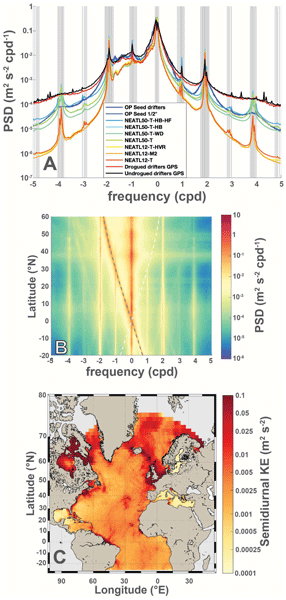
Surface kinetic energy reflects the distribution of ocean circulation across temporal and spatial scales, shaping energy transfer and mixing in the upper ocean. In a series of North and Equatorial Atlantic numerical simulations, we show that the surface kinetic energy is sensitive to the model's choices in grid and seafloor resolution and to the tides and wind variability, offering guidance for the configuration of future ocean simulations.
Gokhan Danabasoglu, Frederic S. Castruccio, Burcu Boza, Alice M. Barthel, Arne Biastoch, Adam Blaker, Alexandra Bozec, Diego Bruciaferri, Frank O. Bryan, Eric P. Chassignet, Yao Fu, Ian Grooms, Catherine Guiavarc'h, Hakase Hayashida, Andrew McC. Hogg, Ryan M. Holmes, Doroteaciro Iovino, Andrew E. Kiss, M. Susan Lozier, Gustavo Marques, Alex Megann, Franziska U. Schwarzkopf, Dave Storkey, Luke van Roekel, Jon Wolfe, Xiaobiao Xu, and Rong Zhang
Geosci. Model Dev., 19, 5071–5117, https://doi.org/10.5194/gmd-19-5071-2026, https://doi.org/10.5194/gmd-19-5071-2026, 2026
Short summary
Short summary
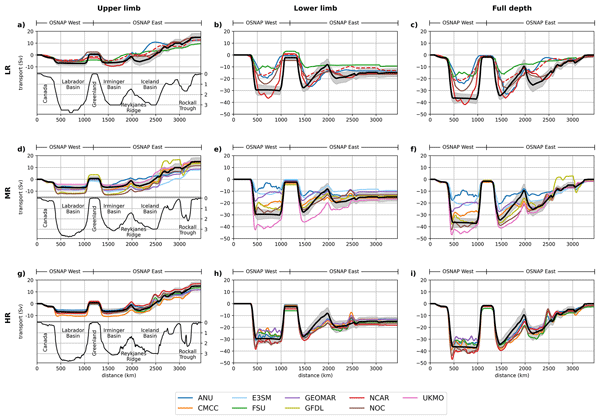
A comparison of simulated and observed overturning transports across the Overturning in the Subpolar North Atlantic Program sections is presented. Eighteen ocean simulations participate in the study with resolutions ranging from coarse to eddy-resolving. The simulated transports are in general agreement with observations, with better agreement at high resolution. Analyzing overturning circulations in both depth and density space together provides a more complete picture.
Marc Kakante Mendy, Florent Gasparin, Manon Gévaudan, Moussa Diakhaté, Issa Sakho, and Julien Jouanno
Ocean Sci., 22, 1745–1762, https://doi.org/10.5194/os-22-1745-2026, https://doi.org/10.5194/os-22-1745-2026, 2026
Short summary
Short summary
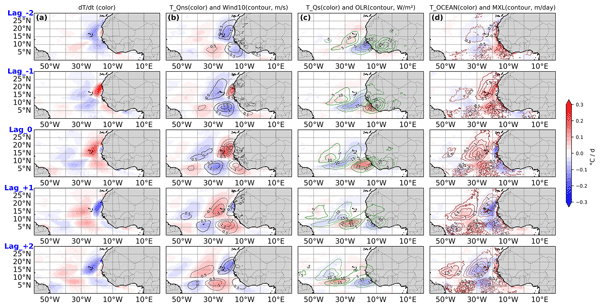
The North Tropical Atlantic plays an important role in shaping climate in the region. In our study we examined how African Easterly Waves influence the ocean surface. Using numerical modelling and buoy records, we found that these waves can warm or cool the sea by more than half a degree. The faster waves have the strongest impact. Because sea temperature affects rainfall and storms, understanding these waves can help improve weather and climate forecasts.
Gabriela Martinez Balbontin, Julien Jouanno, Rachid Benshila, Julien Lamouroux, Coralie Perruche, and Stefano Ciavatta
Biogeosciences, 23, 2601–2620, https://doi.org/10.5194/bg-23-2601-2026, https://doi.org/10.5194/bg-23-2601-2026, 2026
Short summary
Short summary
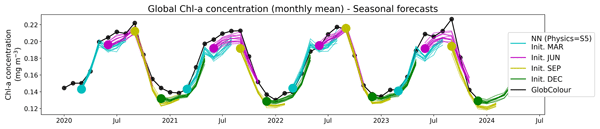
This study uses machine learning to predict global sea surface chlorophyll a, which is important for monitoring marine ecosystems and the carbon cycle. Using forecasts of sea surface temperature, salinity, height, and mixed layer depth, we generate global predictions up to six months ahead in just minutes. Our approach matches state-of-the-art numerical methods while being faster and more resource-efficient.
Pablo Fernández, Sabrina Speich, Guillaume Lapeyre, Claudia Pasquero, Carlos Conejero, Lionel Renault, and Fabien Desbiolles
Ocean Sci., 22, 699–725, https://doi.org/10.5194/os-22-699-2026, https://doi.org/10.5194/os-22-699-2026, 2026
Short summary
Short summary
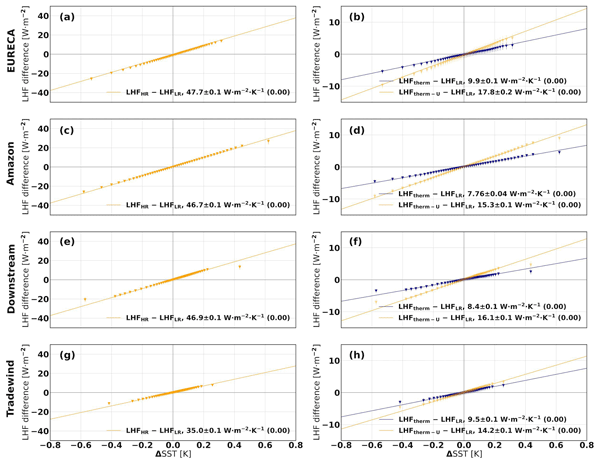
We use a high-resolution ocean-atmosphere coupled simulation to assess the effects of fine-scale sea surface temperature, surface currents, and ocean vertical stratification on the spatial variability of latent heat flux in the Northwest Tropical Atlantic. The results show significant impacts from these three variables in latent heat flux. They stress the need to account for fine-scale ocean processes in the coarser global coupled models even in relatively quiescent regions like the tropics.

Alessandro Storer, Matteo Borgnino, Agostino Niyonkuru Meroni, Fabien Desbiolles, Carlos Conejero, Lionel Renault, and Claudia Pasquero
Adv. Sci. Res., 22, 103–110, https://doi.org/10.5194/asr-22-103-2025, https://doi.org/10.5194/asr-22-103-2025, 2025
Short summary
Short summary
We looked into how a numerical experiment represents the interactions between the air and the sea at scales of about 100–1000 km. We found that slight changes in sea surface temperature (SST) drive dramatic modifications in evaporation rates from the sea surface. Cold sea patches tend to cool down the air and to keep moisture trapped within the lower atmospheric layers. Warmer SST, instead, makes them more buoyant and inflate with drier air, thus diluting moisture over thicker air layers.
Rosmery Sosa-Gutierrez, Julien Jouanno, and Leo Berline
Ocean Sci., 21, 1505–1514, https://doi.org/10.5194/os-21-1505-2025, https://doi.org/10.5194/os-21-1505-2025, 2025
Short summary
Short summary
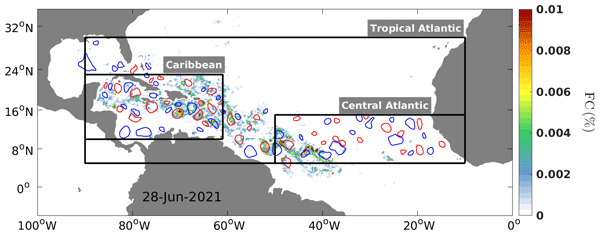
Since 2010, pelagic Sargassum spp. blooms have increased in several tropical Atlantic regions, causing socioeconomic and ecosystem impacts. Offshore structuration of Sargassum by mesoscale dynamics may influence transport and growth. Sargassum stays afloat, constantly interacting with currents, waves, winds, and mesoscale eddies. We find that anticyclones and cyclones effectively trap Sargassum throughout its propagation, with a greater tendency for cyclones to accumulate Sargassum.
Marina Tonani, Eric Chassignet, Mauro Cirano, Yasumasa Miyazawa, and Begoña Pérez Gómez
State Planet, 5-opsr, 3, https://doi.org/10.5194/sp-5-opsr-3-2025, https://doi.org/10.5194/sp-5-opsr-3-2025, 2025
Short summary
Short summary
This article provides an overview of the main characteristics of ocean forecast systems covering a limited region of the ocean. Their main components are described, as well as the spatial and temporal scales they resolve. The oceanic variables that these systems are able to predict are also explained. An overview of the main forecasting systems currently in operation is also provided.
Yann Drillet, Matthew Martin, Yosuke Fujii, Eric Chassignet, and Stefania Ciliberti
State Planet, 5-opsr, 2, https://doi.org/10.5194/sp-5-opsr-2-2025, https://doi.org/10.5194/sp-5-opsr-2-2025, 2025
Short summary
Short summary
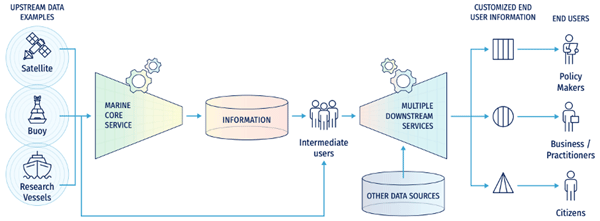
This article describes the various stages of research and development that have been carried out over the last few decades to produce an operational reference service for global ocean monitoring and forecasting.
Ibrahim Hoteit, Eric Chassignet, and Mike Bell
State Planet, 5-opsr, 21, https://doi.org/10.5194/sp-5-opsr-21-2025, https://doi.org/10.5194/sp-5-opsr-21-2025, 2025
Short summary
Short summary
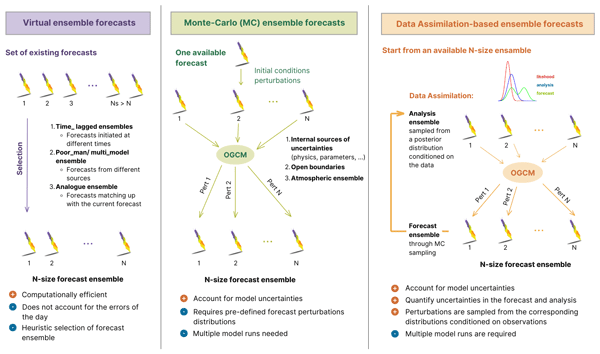
This paper explores how using multiple predictions instead of just one can improve ocean forecasts and help prepare for changes in ocean conditions. By combining different forecasts, scientists can better understand the uncertainty in predictions, leading to more reliable forecasts and better decision-making. This method is useful for responding to hazards like oil spills, improving climate forecasts, and supporting decision-making in fields like marine safety and resource management.
Sébastien Masson, Swen Jullien, Eric Maisonnave, David Gill, Guillaume Samson, Mathieu Le Corre, and Lionel Renault
Geosci. Model Dev., 18, 1241–1263, https://doi.org/10.5194/gmd-18-1241-2025, https://doi.org/10.5194/gmd-18-1241-2025, 2025
Short summary
Short summary
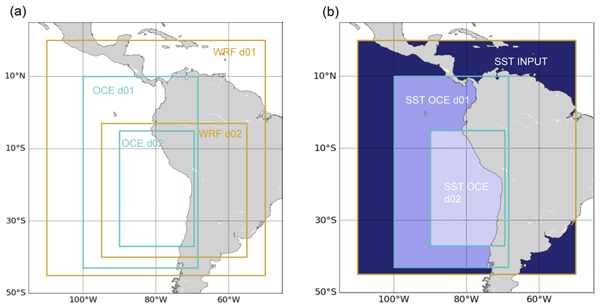
This article details a new feature we implemented in the popular regional atmospheric model WRF. This feature allows for data exchange between WRF and any other model (e.g. an ocean model) using the coupling library Ocean–Atmosphere–Sea–Ice–Soil Model Coupling Toolkit (OASIS3-MCT). This coupling interface is designed to be non-intrusive, flexible and modular. It also offers the possibility of taking into account the nested zooms used in WRF or in the models with which it is coupled.
Olmo Zavala-Romero, Alexandra Bozec, Eric P. Chassignet, and Jose R. Miranda
Ocean Sci., 21, 113–132, https://doi.org/10.5194/os-21-113-2025, https://doi.org/10.5194/os-21-113-2025, 2025
Short summary
Short summary
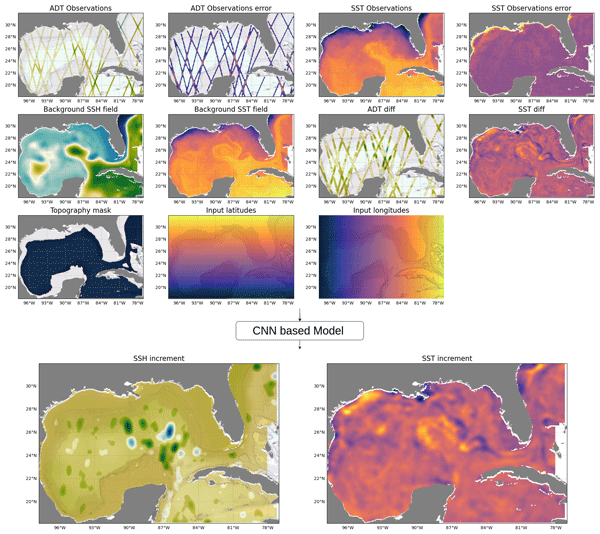
This study shows AI can speed up data assimilation in ocean models. Researchers used convolutional neural networks (CNNs) to assimilate sea surface temperature and height observations in the Gulf of Mexico, learning to replicate corrections made by traditional, computationally expensive methods. CNN design and training window size significantly impacted accuracy, but the percentage of ocean pixels did not. These findings suggest CNNs may accelerate data assimilation in realistic settings.
Qiang Wang, Qi Shu, Alexandra Bozec, Eric P. Chassignet, Pier Giuseppe Fogli, Baylor Fox-Kemper, Andy McC. Hogg, Doroteaciro Iovino, Andrew E. Kiss, Nikolay Koldunov, Julien Le Sommer, Yiwen Li, Pengfei Lin, Hailong Liu, Igor Polyakov, Patrick Scholz, Dmitry Sidorenko, Shizhu Wang, and Xiaobiao Xu
Geosci. Model Dev., 17, 347–379, https://doi.org/10.5194/gmd-17-347-2024, https://doi.org/10.5194/gmd-17-347-2024, 2024
Short summary
Short summary
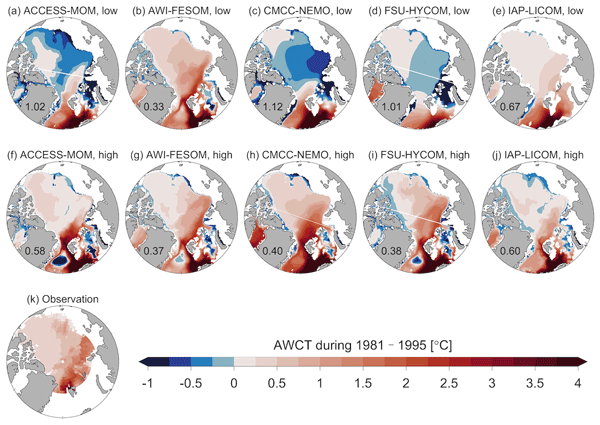
Increasing resolution improves model skills in simulating the Arctic Ocean, but other factors such as parameterizations and numerics are at least of the same importance for obtaining reliable simulations.
Elisa Carli, Rosemary Morrow, Oscar Vergara, Robin Chevrier, and Lionel Renault
Ocean Sci., 19, 1413–1435, https://doi.org/10.5194/os-19-1413-2023, https://doi.org/10.5194/os-19-1413-2023, 2023
Short summary
Short summary
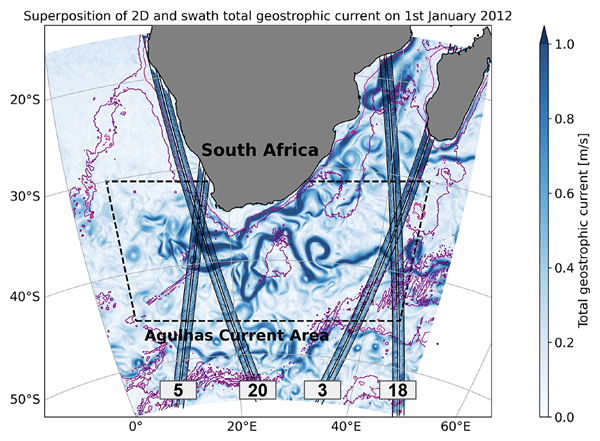
Oceanic eddies are the structures carrying most of the energy in our oceans. They are key to climate regulation and nutrient transport. We prepare for the Surface Water and Ocean Topography mission, studying eddy dynamics in the region south of Africa, where the Indian and Atlantic oceans meet, using models and simulated satellite data. SWOT will provide insights into the structures smaller than what is currently observable, which appear to greatly contribute to eddy kinetic energy and strain.
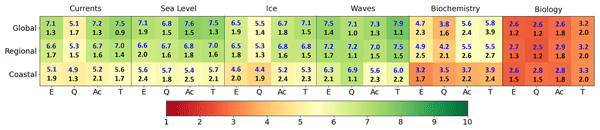
Stefania A. Ciliberti, Enrique Alvarez Fanjul, Jay Pearlman, Kirsten Wilmer-Becker, Pierre Bahurel, Fabrice Ardhuin, Alain Arnaud, Mike Bell, Segolene Berthou, Laurent Bertino, Arthur Capet, Eric Chassignet, Stefano Ciavatta, Mauro Cirano, Emanuela Clementi, Gianpiero Cossarini, Gianpaolo Coro, Stuart Corney, Fraser Davidson, Marie Drevillon, Yann Drillet, Renaud Dussurget, Ghada El Serafy, Katja Fennel, Marcos Garcia Sotillo, Patrick Heimbach, Fabrice Hernandez, Patrick Hogan, Ibrahim Hoteit, Sudheer Joseph, Simon Josey, Pierre-Yves Le Traon, Simone Libralato, Marco Mancini, Pascal Matte, Angelique Melet, Yasumasa Miyazawa, Andrew M. Moore, Antonio Novellino, Andrew Porter, Heather Regan, Laia Romero, Andreas Schiller, John Siddorn, Joanna Staneva, Cecile Thomas-Courcoux, Marina Tonani, Jose Maria Garcia-Valdecasas, Jennifer Veitch, Karina von Schuckmann, Liying Wan, John Wilkin, and Romane Zufic
State Planet, 1-osr7, 2, https://doi.org/10.5194/sp-1-osr7-2-2023, https://doi.org/10.5194/sp-1-osr7-2-2023, 2023
Peter Brandt, Gaël Alory, Founi Mesmin Awo, Marcus Dengler, Sandrine Djakouré, Rodrigue Anicet Imbol Koungue, Julien Jouanno, Mareike Körner, Marisa Roch, and Mathieu Rouault
Ocean Sci., 19, 581–601, https://doi.org/10.5194/os-19-581-2023, https://doi.org/10.5194/os-19-581-2023, 2023
Short summary
Short summary
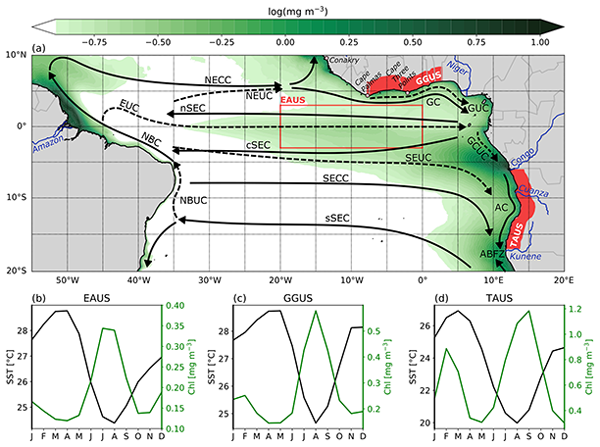
Tropical upwelling systems are among the most productive ecosystems globally. The tropical Atlantic upwelling undergoes a strong seasonal cycle that is forced by the wind. Local wind-driven upwelling and remote effects, particularly via the propagation of equatorial and coastal trapped waves, lead to an upward and downward movement of the nitracline. Turbulent mixing results in upward supply of nutrients. Here, we review the different physical processes responsible for biological productivity.
Roy Dorgeless Ngakala, Gaël Alory, Casimir Yélognissè Da-Allada, Olivia Estelle Kom, Julien Jouanno, Willi Rath, and Ezinvi Baloïtcha
Ocean Sci., 19, 535–558, https://doi.org/10.5194/os-19-535-2023, https://doi.org/10.5194/os-19-535-2023, 2023
Short summary
Short summary
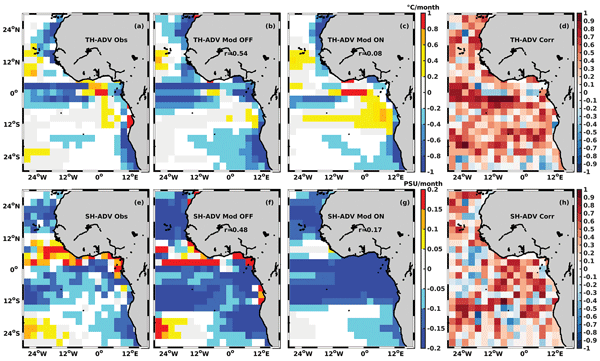
Surface heat flux is the main driver of the heat budget in the Senegal, Angola, and Benguela regions but not in the equatorial region. In the Senegal and Benguela regions, freshwater flux governs the salt budget, while in equatorial and Angola regions, oceanic processes are the main drivers. Results from numerical simulation show the important role of mesoscale advection for temperature and salinity variations in the mixed layer. Nonlinear processes unresolved by observations play a key role.
José Gerardo Quintanilla, Juan Carlos Herguera, and Julio Sheinbaum
EGUsphere, https://doi.org/10.5194/egusphere-2023-751, https://doi.org/10.5194/egusphere-2023-751, 2023
Preprint archived
Short summary
Short summary
The reduction of the oxygen concentration in the ocean interior is a worrisome global trend that can be harmful for the marine life. This study presents evidence that the central Gulf of Mexico waters at depths between 200 to 800 m has been affected by an oxygen reduction trend that might be aggravating under climate change. We show evidence that link this oxygen reduction to a decrease in the volume of water transported from the Caribbean in to the Gulf of Mexico via enormous ocean gyres.
Sarah Berthet, Julien Jouanno, Roland Séférian, Marion Gehlen, and William Llovel
Earth Syst. Dynam., 14, 399–412, https://doi.org/10.5194/esd-14-399-2023, https://doi.org/10.5194/esd-14-399-2023, 2023
Short summary
Short summary
Phytoplankton absorbs the solar radiation entering the ocean surface and contributes to keeping the associated energy in surface waters. This natural effect is either not represented in the ocean component of climate models or its representation is simplified. An incomplete representation of this biophysical interaction affects the way climate models simulate ocean warming, which leads to uncertainties in projections of oceanic emissions of an important greenhouse gas (nitrous oxide).
Michel Tchilibou, Ariane Koch-Larrouy, Simon Barbot, Florent Lyard, Yves Morel, Julien Jouanno, and Rosemary Morrow
Ocean Sci., 18, 1591–1618, https://doi.org/10.5194/os-18-1591-2022, https://doi.org/10.5194/os-18-1591-2022, 2022
Short summary
Short summary
This high-resolution model-based study investigates the variability in the generation, propagation, and sea height signature (SSH) of the internal tide off the Amazon shelf during two contrasted seasons. ITs propagate further north during the season characterized by weak currents and mesoscale eddies and a shallow and strong pycnocline. IT imprints on SSH dominate those of the geostrophic motion for horizontal scales below 200 km; moreover, the SSH is mainly incoherent below 70 km.
Hector S. Torres, Patrice Klein, Jinbo Wang, Alexander Wineteer, Bo Qiu, Andrew F. Thompson, Lionel Renault, Ernesto Rodriguez, Dimitris Menemenlis, Andrea Molod, Christopher N. Hill, Ehud Strobach, Hong Zhang, Mar Flexas, and Dragana Perkovic-Martin
Geosci. Model Dev., 15, 8041–8058, https://doi.org/10.5194/gmd-15-8041-2022, https://doi.org/10.5194/gmd-15-8041-2022, 2022
Short summary
Short summary
Wind work at the air-sea interface is the scalar product of winds and currents and is the transfer of kinetic energy between the ocean and the atmosphere. Using a new global coupled ocean-atmosphere simulation performed at kilometer resolution, we show that all scales of winds and currents impact the ocean dynamics at spatial and temporal scales. The consequential interplay of surface winds and currents in the numerical simulation motivates the need for a winds and currents satellite mission.
Cited articles
Archer, M. R., Li, Z., and Fu, L.-L.: Increasing the Space–Time Resolution of Mapped Sea Surface Height From Altimetry, J. Geophys. Res.-Oceans, 125, https://doi.org/10.1029/2019jc015878, 2020. a, b
Athié, G., Sheinbaum, J., Leben, R., Ochoa, J., Shannon, M. R., and Candela, J.: Interannual variability in the Yucatan Channel flow, Geophys. Res. Lett., 42, 1496–1503, https://doi.org/10.1002/2014gl062674, 2015. a
Athié, G., Sheinbaum, J., Candela, J., Ochoa, J., Pérez-Brunius, P., and Romero-Arteaga, A.: Seasonal Variability of the Transport through the Yucatan Channel from Observations, J. Phys. Oceanogr., 50, 343–360, https://doi.org/10.1175/jpo-d-18-0269.1, 2020. a
Biggs, D. C., Fargion, G. S., Hamilton, P., and Leben, R. R.: Cleavage of a Gulf of Mexico loop current eddy by a deep water cyclone, J. Geophys. Res.-Oceans, 101, 20629–20641, https://doi.org/10.1029/96jc01078, 1996. a
Bunge, L., Ochoa, J., Badan, A., Candela, J., and Sheinbaum, J.: Deep flows in the Yucatan Channel and their relation to changes in the Loop Current extension, J. Geophys. Res.-Oceans, 107, 26-1–26-7, https://doi.org/10.1029/2001jc001256, 2002. a
Candela, J., Sheinbaum, J., Ochoa, J., Badan, A., and Leben, R.: The potential vorticity flux through the Yucatan Channel and the Loop Current in the Gulf of Mexico, Geophys. Res. Lett., 29, 16-1–16-4, https://doi.org/10.1029/2002gl015587, 2002. a, b
Candela, J., Ochoa, J., Sheinbaum, J., López, M., Pérez-Brunius, P., Tenreiro, M., Pallàs-Sanz, E., Athié, G., and Arriaza-Oliveros, L.: The Flow through the Gulf of Mexico, J. Phys. Oceanogr., 49, 1381–1401, https://doi.org/10.1175/jpo-d-18-0189.1, 2019. a, b
Chang, Y.-L. and Oey, L.-Y.: Why Can Wind Delay the Shedding of Loop Current Eddies?, J. Phys. Oceanogr., 40, 2481–2495, https://doi.org/10.1175/2010jpo4460.1, 2010. a
Chelton, D. B., Schlax, M. G., and Samelson, R. M.: Global observations of nonlinear mesoscale eddies, Prog. Oceanogr., 91, 167–216, https://doi.org/10.1016/j.pocean.2011.01.002, 2011. a, b, c
Chérubin, L. M., Morel, Y., and Chassignet, E. P.: Loop Current Ring Shedding: The Formation of Cyclones and the Effect of Topography, J. Phys. Oceanogr., 36, 569–591, https://doi.org/10.1175/jpo2871.1, 2006. a, b, c
Cochrane, J.: Separation of an anticyclone and subsequent developments in the Loop Current (1969), Contributions on the Physical Oceanography of the Gulf of Mexico, 2, 91–106, 1972. a
Donohue, K., Watts, D., Hamilton, P., Leben, R., Kennelly, M., and Lugo-Fernández, A.: Gulf of Mexico Loop Current path variability, Dynam. Atmos. Oceans, 76, 174–194, https://doi.org/10.1016/j.dynatmoce.2015.12.003, 2016. a, b
Dukhovskoy, D. S., Leben, R. R., Chassignet, E. P., Hall, C. A., Morey, S. L., and Nedbor-Gross, R.: Characterization of the uncertainty of loop current metrics using a multidecadal numerical simulation and altimeter observations, Deep-Sea Res. Pt. I, 100, 140–158, https://doi.org/10.1016/j.dsr.2015.01.005, 2015. a, b
Durante, G., Sheinbaum, J., and Candela, J.: Capturing the Loop Current by Its Ends – Part I: A Volume-Conserving Objective Mapping of the Canek Velocity Database, J. Atmos. Ocean. Tech., 42, 1529–1547, https://doi.org/10.1175/jtech-d-24-0139.1, 2025. a
Elliott, B. A.: Anticyclonic Rings in the Gulf of Mexico, J. Phys. Oceanogr., 12, 1292–1309, https://doi.org/10.1175/1520-0485(1982)012<1292:aritgo>2.0.co;2, 1982. a
European Union-Copernicus Marine Service: Global ocean gridded normalized measurement noise of sea level anomalies, https://doi.org/10.48670/MOI-00144, 2015. a
Garcia-Jove, M., Sheinbaum, J., and Jouanno, J.: Sensitivity of Loop Current metrics and eddy detachments to different model configurations: The impact of topography and Caribbean perturbations, Atmósfera, 29, 235–265, https://doi.org/10.20937/atm.2016.29.03.05, 2016. a, b, c
Hamilton, P., Lugo-Fernández, A., and Sheinbaum, J.: A Loop Current experiment: Field and remote measurements, Dynam. Atmos. Oceans, 76, 156–173, https://doi.org/10.1016/j.dynatmoce.2016.01.005, 2016. a, b
Hamilton, P., Leben, R., Bower, A., Furey, H., and Pérez-Brunius, P.: Hydrography of the Gulf of Mexico Using Autonomous Floats, J. Phys. Oceanogr., 48, 773–794, https://doi.org/10.1175/jpo-d-17-0205.1, 2018. a
Hiron, L., Cruz, B. J., and Shay, L. K.: Evidence of Loop Current Frontal Eddy Intensification Through Local Linear and Nonlinear Interactions with the Loop Current, J. Geophys. Res.-Oceans, 125, https://doi.org/10.1029/2019jc015533, 2020. a, b, c
Hogg, A. M., Meredith, M. P., Chambers, D. P., Abrahamsen, E. P., Hughes, C. W., and Morrison, A. K.: Recent trends in the Southern Ocean eddy field, J. Geophys. Res.-Oceans, 120, 257–267, https://doi.org/10.1002/2014jc010470, 2015. a, b, c
Hurlburt, H. E. and Thompson, J. D.: A Numerical Study of Loop Current Intrusions and Eddy Shedding, J. Phys. Oceanogr., 10, 1611–1651, https://doi.org/10.1175/1520-0485(1980)010<1611:ansolc>2.0.co;2, 1980. a
Jouanno, J., Ochoa, J., Pallàs-Sanz, E., Sheinbaum, J., Andrade-Canto, F., Candela, J., and Molines, J.-M.: Loop Current Frontal Eddies: Formation along the Campeche Bank and Impact of Coastally Trapped Waves, J. Phys. Oceanogr., 46, 3339–3363, https://doi.org/10.1175/jpo-d-16-0052.1, 2016. a, b, c, d
Jousset, S., Mulet, S., Greiner, E., Wilkin, J., Vidar, L., Chafik, L., Raj, R., Bonaduce, A., Picot, N., and Dibarboure, G.: New Global Mean Dynamic Topography CNES-CLS-22 Combining Drifters, Hydrography Profiles and High Frequency Radar Data, ESS Open Archive [preprint], https://doi.org/10.22541/essoar.170158328.85804859/v2, 2025. a
Kantha, L.: Empirical Models of the Loop Current Eddy Detachment/Separation Time in the Gulf of Mexico, J. Waterway Port Coast. Ocean Eng., 140, https://doi.org/10.1061/(asce)ww.1943-5460.0000220, 2014. a
Larrañaga, M., Renault, L., and Jouanno, J.: Partial Control of the Gulf of Mexico Dynamics by the Current Feedback to the Atmosphere, J. Phys. Oceanogr., 52, 2515–2530, https://doi.org/10.1175/jpo-d-21-0271.1, 2022. a
Larrañaga, M., Renault, L., Wineteer, A., Contreras, M., Arbic, B. K., Bourassa, M. A., and Rodriguez, E.: Assessing the Future ODYSEA Satellite Mission for the Estimation of Ocean Surface Currents, Wind Stress, Energy Fluxes, and the Mechanical Coupling Between the Ocean and the Atmosphere, Remote Sens., 17, 302, https://doi.org/10.3390/rs17020302, 2025. a
Larsen, J. C.: Transport and heat flux of the Florida Current at 27°N derived from cross-stream voltages and profiling data: theory and observations, Philos. T. Roy. Soc. Lond. A, 338, 169–236, https://doi.org/10.1098/rsta.1992.0007, 1992. a
Laxenaire, R., Chassignet, E. P., Dukhovskoy, D. S., and Morey, S. L.: Impact of upstream variability on the Loop Current dynamics in numerical simulations of the Gulf of Mexico, Front. Mar. Sci., 10, https://doi.org/10.3389/fmars.2023.1080779, 2023. a, b
Le Hénaff, M., Kourafalou, V. H., Dussurget, R., and Lumpkin, R.: Cyclonic activity in the eastern Gulf of Mexico: Characterization from along-track altimetry and in situ drifter trajectories, Prog. Oceanogr., 120, 120–138, https://doi.org/10.1016/j.pocean.2013.08.002, 2014. a
Le Hénaff, M., Kourafalou, V. H., Androulidakis, Y., Ntaganou, N., and Kang, H.: Influence of the Caribbean Sea eddy field on Loop Current predictions, Front. Mar. Sci., 10, https://doi.org/10.3389/fmars.2023.1129402, 2023. a
Lugo-Fernández, A. and Leben, R. R.: On the Linear Relationship between Loop Current Retreat Latitude and Eddy Separation Period, J. Phys. Oceanogr., 40, 2778–2784, https://doi.org/10.1175/2010jpo4354.1, 2010. a, b
Meunier, T., Pallás-Sanz, E., Tenreiro, M., Portela, E., Ochoa, J., Ruiz-Angulo, A., and Cusí, S.: The Vertical Structure of a Loop Current Eddy, J. Geophys. Res.-Oceans, 123, 6070–6090, https://doi.org/10.1029/2018jc013801, 2018. a
Meunier, T., Sheinbaum, J., Pallàs-Sanz, E., Tenreiro, M., Ochoa, J., Ruiz-Angulo, A., Carton, X., and de Marez, C.: Heat Content Anomaly and Decay of Warm-Core Rings: the Case of the Gulf of Mexico, Geophys. Res. Lett., 47, https://doi.org/10.1029/2019gl085600, 2020. a
Molina, M. J., Timmer, R. P., and Allen, J. T.: Importance of the Gulf of Mexico as a climate driver for U.S. severe thunderstorm activity, Geophys. Res. Lett., 43, https://doi.org/10.1002/2016gl071603, 2016. a
Morey, S. L., Gopalakrishnan, G., Sanz, E. P., Azevedo Correia De Souza, J. M., Donohue, K., Pérez-Brunius, P., Dukhovskoy, D., Chassignet, E., Cornuelle, B., Bower, A., Furey, H., Hamilton, P., and Candela, J.: Assessment of Numerical Simulations of Deep Circulation and Variability in the Gulf of Mexico Using Recent Observations, J. Phys. Oceanogr., 50, 1045–1064, https://doi.org/10.1175/jpo-d-19-0137.1, 2020. a
Morrow, R., Fu, L.-L., Ardhuin, F., Benkiran, M., Chapron, B., Cosme, E., d'Ovidio, F., Farrar, J. T., Gille, S. T., Lapeyre, G., Le Traon, P.-Y., Pascual, A., Ponte, A., Qiu, B., Rascle, N., Ubelmann, C., Wang, J., and Zaron, E. D.: Global Observations of Fine-Scale Ocean Surface Topography With the Surface Water and Ocean Topography (SWOT) Mission, Front. Mar. Sci., 6, https://doi.org/10.3389/fmars.2019.00232, 2019. a
Nickerson, A. K., Weisberg, R. H., and Liu, Y.: On the Evolution of the Gulf of Mexico Loop Current Through Its Penetrative, Ring Shedding and Retracted States, Adv. Space Res., 69, 4058–4077, https://doi.org/10.1016/j.asr.2022.03.039, 2022. a
Oey, L., Lee, H., and Schmitz, W. J.: Effects of winds and Caribbean eddies on the frequency of Loop Current eddy shedding: A numerical model study, J. Geophys. Res.-Oceans, 108, https://doi.org/10.1029/2002jc001698, 2003. a
Pegliasco, C., Delepoulle, A., Mason, E., Morrow, R., Faugère, Y., and Dibarboure, G.: META3.1exp: a new global mesoscale eddy trajectory atlas derived from altimetry, Earth Syst. Sci. Data, 14, 1087–1107, https://doi.org/10.5194/essd-14-1087-2022, 2022. a, b, c
Pichevin, T. and Nof, D.: The momentum imbalance paradox, Tellus A, 49, 298–319, https://doi.org/10.1034/j.1600-0870.1997.t01-1-00009.x, 1997. a
Pérez-Brunius, P., Furey, H., Bower, A., Hamilton, P., Candela, J., García-Carrillo, P., and Leben, R.: Dominant Circulation Patterns of the Deep Gulf of Mexico, J. Phys. Oceanogr., 48, 511–529, https://doi.org/10.1175/jpo-d-17-0140.1, 2018. a
Rodríguez, E., Bourassa, M., Chelton, D., Farrar, J. T., Long, D., Perkovic-Martin, D., and Samelson, R.: The Winds and Currents Mission Concept, Front. Mar. Sci., 6, https://doi.org/10.3389/fmars.2019.00438, 2019. a
Schmitz Jr., W. J.: Cyclones and Westward Propagation in the Shedding of Anticyclonic Rings from the Loop Current, AGU – American Geophysical Union, 241–261, ISBN 9781118666166, https://doi.org/10.1029/161GM18, 2005. a, b, c
Shay, L. K., Goni, G. J., and Black, P. G.: Effects of a Warm Oceanic Feature on Hurricane Opal, Mon. Weather Rev., 128, 1366–1383, https://doi.org/10.1175/1520-0493(2000)128<1366:eoawof>2.0.co;2, 2000. a
Sheinbaum, J.: Flow structure and transport in the Yucatan Channel, Geophys. Res. Lett., 29, https://doi.org/10.1029/2001gl013990, 2002. a, b, c
Sheinbaum, J., Athié, G., Candela, J., Ochoa, J., and Romero-Arteaga, A.: Structure and variability of the Yucatan and loop currents along the slope and shelf break of the Yucatan channel and Campeche bank, Dynam. Atmos. Oceans, 76, 217–239, https://doi.org/10.1016/j.dynatmoce.2016.08.001, 2016. a, b, c, d
Sosa-Gutiérrez, R., Pallàs-Sanz, E., Jouanno, J., Chaigneau, A., Candela, J., and Tenreiro, M.: Erosion of the Subsurface Salinity Maximum of the Loop Current Eddies From Glider Observations and a Numerical Model, J. Geophys. Res.-Oceans, 125, e2019JC015397, https://doi.org/10.1029/2019JC015397, 2020. a
Torres, H., Wineteer, A., Klein, P., Lee, T., Wang, J., Rodriguez, E., Menemenlis, D., and Zhang, H.: Anticipated Capabilities of the ODYSEA Wind and Current Mission Concept to Estimate Wind Work at the Air–Sea Interface, Remote Sens., 15, 3337, https://doi.org/10.3390/rs15133337, 2023. a
Vukovich, F. M. and Maul, G. A.: Cyclonic Eddies in the Eastern Gulf of Mexico, J. Phys. Oceanogr., 15, 105–117, https://doi.org/10.1175/1520-0485(1985)015<0105:ceiteg>2.0.co;2, 1985. a
Wineteer, A., Torres, H. S., and Rodriguez, E.: On the Surface Current Measurement Capabilities of Spaceborne Doppler Scatterometry, Geophys. Res. Lett., 47, https://doi.org/10.1029/2020gl090116, 2020. a
Yablonsky, R. M. and Ginis, I.: Impact of a Warm Ocean Eddy's Circulation on Hurricane-Induced Sea Surface Cooling with Implications for Hurricane Intensity, Mon. Weather Rev., 141, 997–1021, https://doi.org/10.1175/mwr-d-12-00248.1, 2012. a
Yang, H., Yang, C., Liu, Y., and Chen, Z.: Energetics during eddy shedding in the Gulf of Mexico, Ocean Dynam., 73, 79–90, https://doi.org/10.1007/s10236-023-01538-y, 2023a. a, b
Yang, X., Le Hénaff, M., Mapes, B., and Iskandarani, M.: Dynamical interactions between Loop Current and Loop Current Frontal Eddies in a HYCOM ensemble of the circulation in the Gulf of Mexico, Front. Mar. Sci., 10, https://doi.org/10.3389/fmars.2023.1048780, 2023b. a, b, c
Zavala-Hidalgo, J., Morey, S. L., and O'Brien, J. J.: Cyclonic Eddies Northeast of the Campeche Bank from Altimetry Data, J. Phys. Oceanogr., 33, 623–629, https://doi.org/10.1175/1520-0485(2003)033<0623:cenotc>2.0.co;2, 2003. a, b, c, d
Zavala-Hidalgo, J., Morey, S. L., O'brien, J. J., and Zamudio, L.: On the Loop Current eddy shedding variability, Atmósfera, 19, 41–48, 2006. a
Editorial statement
Warm-core eddies detached from the Loop Current play a crucial role in transporting substantial heat from the Caribbean to the Gulf of Mexico. Using satellite altimetric observations, the drivers of the detachment and separation of Loop Current eddies were revealed. A notably elongated Loop Current and the intensified presence of cyclonic eddies west of the Florida Shelf are key factors in the process of eddy detachment. Conversely, for the separation of these eddies, it is crucial that intensified cyclonic eddies occur on both sides of the Loop Current. The co-occurrence of eastern and western cyclonic eddies in the Loop Current bottleneck zone leads to the formation of a large cyclonic structure. The latter seems to prevent newly formed Loop Current eddies from reattaching and can limit the growth of the Loop Current during several months. These findings underscore the crucial role of cyclonic eddies in regulating the detachment and separation of Loop Current eddies.
Warm-core eddies detached from the Loop Current play a crucial role in transporting substantial...
Short summary
We analyze 29 years of satellite altimetry to investigate the detachment of Loop Current Eddies in the Gulf of Mexico. Over half of the Loop Current eddies reattach within a month, while 42 % separate and drift westward. Detachment requires the Loop Current to reach the Mississippi Fan and is strongly influenced by cyclonic eddies, whose configuration determines whether an eddy separates or reattaches to the Loop Current.
We analyze 29 years of satellite altimetry to investigate the detachment of Loop Current Eddies...


