
Articles | Volume 22, issue 5
https://doi.org/10.5194/os-22-2903-2026
© Author(s) 2026. This work is distributed under
the Creative Commons Attribution 4.0 License.
the Creative Commons Attribution 4.0 License.
https://doi.org/10.5194/os-22-2903-2026
© Author(s) 2026. This work is distributed under
the Creative Commons Attribution 4.0 License.
the Creative Commons Attribution 4.0 License.
Research article
| 
25 Sep 2026
Research article |
| 25 Sep 2026
| 25 Sep 2026
North Atlantic sea level budget revisited

Université de Toulouse, LEGOS (CNES/CNRS/IRD/UT3), 31401 Toulouse, CEDEX 9, France
Laboratoire d'Océanographie Physique et Spatiale (LOPS), IUEM, Université de Bretagne Occidentale, CNRS, Ifremer, IRD, 29280 Plouzané, France
Anny Cazenave
CORRESPONDING AUTHOR
Université de Toulouse, LEGOS (CNES/CNRS/IRD/UT3), 31401 Toulouse, CEDEX 9, France
William Llovel
Laboratoire d'Océanographie Physique et Spatiale (LOPS), IUEM, Université de Bretagne Occidentale, CNRS, Ifremer, IRD, 29280 Plouzané, France
Andrea Storto
Institute of Marine Science, National Research Council of Italy, Rome, Italy
Marie Bouih
Magellium, 31520 Ramonville St Agne, France
Related authors
No articles found.
Vincenzo de Toma, Andrea Storto, Ronan McAdam, Antonietta Capotondi, and Chunxue Yang
EGUsphere, https://doi.org/10.5194/egusphere-2026-5747, https://doi.org/10.5194/egusphere-2026-5747, 2026
This preprint is open for discussion and under review for Ocean Science (OS).
Short summary
Short summary
Marine heatwaves, prolonged spells of unusually warm seawater, can harm marine life and the people who depend on it, yet we know little about what happens beneath the surface. We compared three reconstructions of past ocean conditions and found they reliably capture famous surface events seen by satellites. Warm water often extends 100 to 150 metres down, and events reaching deeper last longer. Our results show that combining several products adds value to the results.
Paolo Mauriello, Gregory C. Smith, Andrea Storto, and Chunxue Yang
Ocean Sci., 22, 2863–2902, https://doi.org/10.5194/os-22-2863-2026, https://doi.org/10.5194/os-22-2863-2026, 2026
Short summary
Short summary
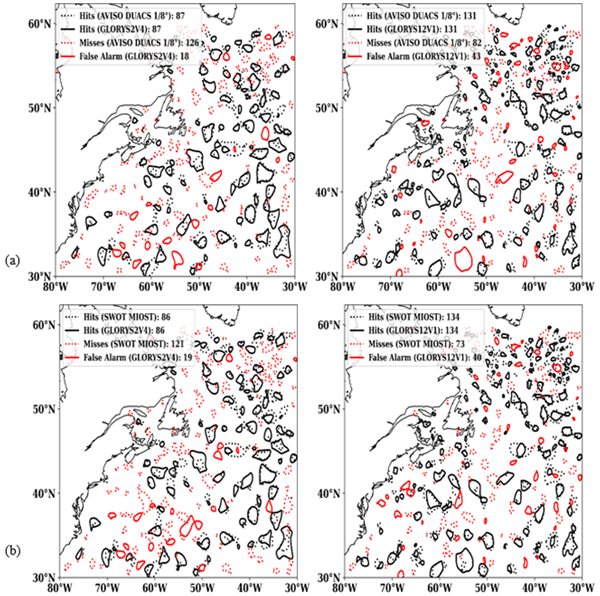
This article evaluates two ocean reanalyses with spatial resolutions of 1/4° and 1/12° by comparing them with two satellite observation products, both at 1/8° resolution. The results show the added value of higher model resolution for representing mesoscale eddies and highlight the value of wide-swath satellite altimetry for model verification in the North Atlantic.
Susanna Winkelbauer, Gaël Forget, Michael Mayer, Romain Bourdalle-Badie, Andrea Cipollone, Leopold Haimberger, Keith Haines, Satoshi Osafune, Yuanyuan Song, Andrea Storto, Chunxue Yang, and Hao Zuo
EGUsphere, https://doi.org/10.5194/egusphere-2026-5435, https://doi.org/10.5194/egusphere-2026-5435, 2026
This preprint is open for discussion and under review for Ocean Science (OS).
Short summary
Short summary
Ocean currents carry vast amounts of heat through the Atlantic and strongly influence climate. We compared estimates from 17 global ocean reanalyses with observations to assess how well they reproduce this heat transport and its changes over time. Most reanalyses capture the main patterns and variations, but important differences remain. The reanalyses also suggest a decrease in northward heat transport since the early 1990s, although its magnitude remains uncertain.
Andrea Storto, Vincenzo de Toma, and Chunxue Yang
Ocean Sci., 22, 2809–2834, https://doi.org/10.5194/os-22-2809-2026, https://doi.org/10.5194/os-22-2809-2026, 2026
Short summary
Short summary
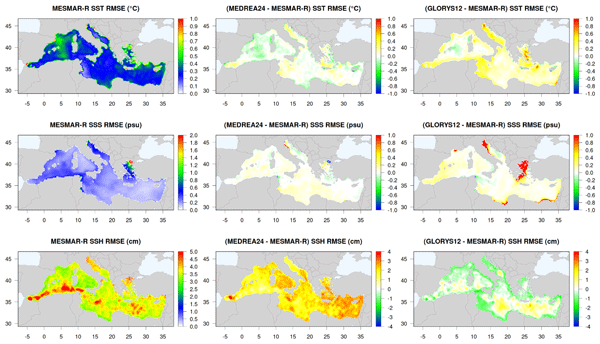
The Mediterranean region is one of the fastest-warming areas on Earth, and understanding its changes is thus crucial. We produced a new reconstruction of the Mediterranean climate for the 1993–2024 period, using a modelling system that combines weather, ocean, and hydrology information with observations. This new reanalysis offers a clearer picture of how the region has been warming, drying, and changing over the past 30 years, supporting better studies of extreme events and climate impacts.
Yushi Morioka, Doroteaciro Iovino, Andrea Cipollone, Andrea Storto, Takeshi Doi, Masami Nonaka, and Swadhin K. Behera
EGUsphere, https://doi.org/10.5194/egusphere-2026-5070, https://doi.org/10.5194/egusphere-2026-5070, 2026
This preprint is open for discussion and under review for The Cryosphere (TC).
Short summary
Short summary
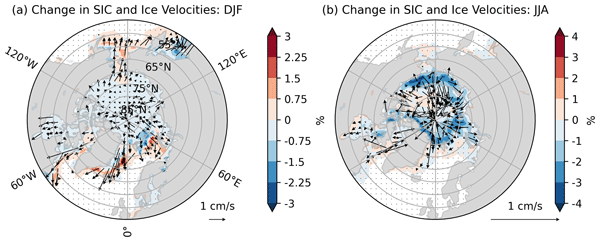
Arctic sea ice has been shrinking for the last four decades. As global warming continues, predicting summer sea ice is becoming more important. Here we create a seasonal forecast system using the SINTEX-F3 model. Results show that summer sea ice in the Barents-Kara Sea is best predicted when accurate sea ice and snow conditions are provided from spring. It is found that initial sea ice thickness acts as a memory for the climate system, enabling accurate summer sea ice prediction from spring.
Kristian Strommen, Michael Mayer, Andrea Storto, Jonas Spaeth, and Steffen Tietsche
Weather Clim. Dynam., 7, 1593–1618, https://doi.org/10.5194/wcd-7-1593-2026, https://doi.org/10.5194/wcd-7-1593-2026, 2026
Short summary
Short summary
Numerical weather forecasts of sea ice are unreliable, exhibiting an overly narrow range of plausible sea ice evolutions. Stochastic perturbations introduce randomness to the forecast in order to alleviate this by representing uncertainties in the representation of sea ice physics. We show that including such perturbations in a forecast model improves the reliability of sea ice forecasts, and furthermore results in improved seasonal forecasts of the northern European winter circulation.
Alejandro Blazquez, Benoit Meyssignac, Robin Fraudeau, Michael Ablain, Jonathan Bamber, Antonio Bonaduce, Marie Bouih, Anny Cazenave, Thorben Döhne, Ines Dussaillant, Ramiro Ferrari, Martin Horwath, Nicolas Kolodziejczyk, Hugo Lecomte, Stephanie Leroux, William Llovel, Daniele Melini, Erwan Oulhen, Thierry Penduff, Roshin P. Raj, Giorgio Spada, Marius Schlaak, Papasarafianou Stamatia, Andrea Storto, Chunxue Yang, and Sarah Connors
Earth Syst. Sci. Data Discuss., https://doi.org/10.5194/essd-2026-627, https://doi.org/10.5194/essd-2026-627, 2026
Preprint under review for ESSD
Short summary
Short summary
Closing the sea‑level budget on annual and longer time scales is a cornerstone of physical oceanography because sea‑level rise is one of the best indicators of climate change, and a closed budget shows we have identified and quantified all major drivers. We examined it from 1993 to 2022, finding an accelerated rise that matched ice melt and warm water until 2015. Afterwards an unexplained gap appears. Better deep‑ocean observations and refined gravity processing are needed to close the budget.
Julia Pfeffer, Benoît Meyssignac, Rory Bingham, Alejandro Blazquez, Marie Bouih, Carla Braitenberg, Luca Brocca, Henryk Dobslaw, Ramiro Ferrari, Ehsan Forootan, Helena Gerdener, Muhammad Tahir Javed, Laura Jensen, Volker Klemann, Anna Kremer, Jürgen Kusche, Gilles Larnicol, Muhammad Usman Liaqat, Francesco Leopardi, Elisavet-Maria Mamagiannou, Gerardo Maurizio, Roland Pail, Isabelle Panet, Thomas Papanikolaou, Peyman Saemian, Ingo Sasgen, Maike Schumacher, Marius Schlaak, Linus Shihora, Alireza Sobouti, Nico Sneeuw, Mohammad Javad Tourian, Dimitrios Tsoulis, Georgios Vergos, Bert Wouters, Fan Yang, and Ilias Daras
EGUsphere, https://doi.org/10.5194/egusphere-2026-4642, https://doi.org/10.5194/egusphere-2026-4642, 2026
This preprint is open for discussion and under review for Earth Observation (EO).
Short summary
Short summary
The ESA SING project demonstrates how the future satellite gravity missions NGGM and MAGIC will improve observations of continental water storage, oceans, glaciers, sea level, earthquakes, and climate change. Their more accurate, higher-resolution gravity measurements will enhance Earth system monitoring, improve climate and hazard assessments, and strengthen operational services for water management, disaster preparedness, and environmental decision-making.
Louis Kern, Thomas Vaujour, Julia Pfeffer, Andrea Storto, Camille Szczypta, Gilles Garric, Claire Sirere, Gilles Larnicol, Chunxue Yang, Romain Bourdalle-Badie, and Stéphanie Guinehut
EGUsphere, https://doi.org/10.5194/egusphere-2025-6351, https://doi.org/10.5194/egusphere-2025-6351, 2026
Short summary
Short summary
Freshwater fluxes, despite their importance, are often poorly represented in ocean models. The impact of river discharge is evaluated from the Water Mass Balance approach, combining gravimetry and atmospheric reanalyses data. These estimates are assessed against river gauges, highlighting good agreement over South American rivers. Compared to climatological data, when used as inputs for ocean model simulations, this technique improves salinity and upper ocean circulation representation.
Alexis Barge, Julien Le Sommer, Andrea Storto, and Sophie Valcke
EGUsphere, https://doi.org/10.5194/egusphere-2026-854, https://doi.org/10.5194/egusphere-2026-854, 2026
Short summary
Short summary
Scientists use programs, called Earth System Models, to study and predict climate. These models are based on physical theories but can be completed with AI tools. However, combining these tools with traditional models is difficult due to their different nature. Our research introduces a new method that connects these AI tools with existing climate models. We tested this method by integrating it with an ocean model. This work should help scientists explore new ways of making climate predictions.
Julia Pfeffer, Anny Cazenave, Rodrigo Abarca-del-Rio, Veronique Dehant, Mioara Mandea, Severine Rosat, and Nicolas Gillet
EGUsphere, https://doi.org/10.5194/egusphere-2026-82, https://doi.org/10.5194/egusphere-2026-82, 2026
Short summary
Short summary
Observations have revealed the existence of a 6-year oscillation in the whole Earth system, from its deep interior to the superficial fluid envelopes. However, the origin of such a global phenomenon remains unknown. In this study we investigate the spatio-temporal structure of the 6-yr cycle of the atmospheric zonal wind circulation and inferred atmospheric angular momentum. These new findings should help understanding why and how such a 6-yr periodicity manifest across the whole Earth system.
Haohao Zhang, Andrea Storto, Xuezhi Bai, and Chunxue Yang
The Cryosphere, 19, 6807–6826, https://doi.org/10.5194/tc-19-6807-2025, https://doi.org/10.5194/tc-19-6807-2025, 2025
Short summary
Short summary
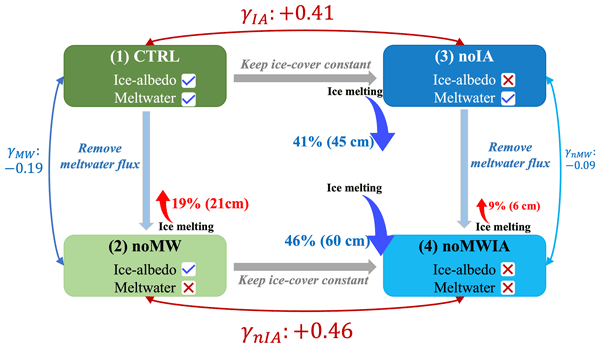
Using a 1D coupled ice-ocean model, we quantified the effects of meltwater and ice-albedo feedback independently. The meltwater reduces melting by 19 % through thermal isolation, while ice-albedo feedback increases melting by 41 %, with nonlinear coupling between them. In winter, meltwater protects ice in weakly stratified areas by blocking Atlantic heat. Our study provides new insights into the relative importance of different components in the Arctic ice-ocean system.
Andrea Storto, Sergey Frolov, Laura Slivinski, and Chunxue Yang
Geosci. Model Dev., 18, 4789–4804, https://doi.org/10.5194/gmd-18-4789-2025, https://doi.org/10.5194/gmd-18-4789-2025, 2025
Short summary
Short summary
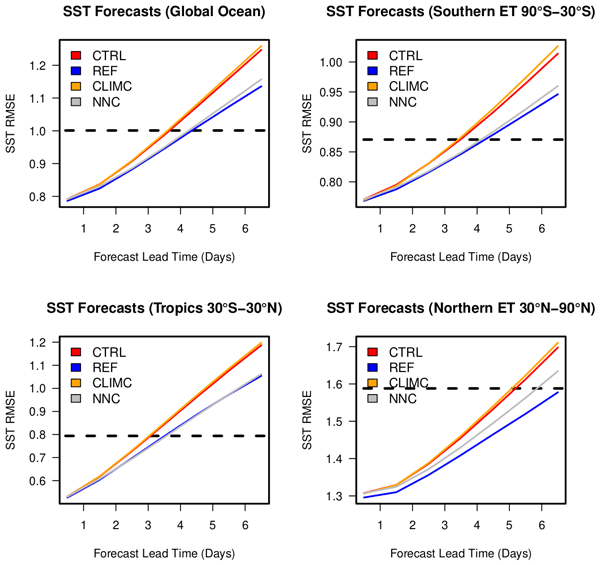
Inaccuracies in air–sea heat fluxes severely degrade the accuracy of ocean numerical simulations. Here, we use artificial neural networks to correct air–sea heat fluxes as a function of oceanic and atmospheric state predictors. The correction successfully improves surface and subsurface ocean temperatures beyond the training period and in prediction experiments.
Marie Bouih, Anne Barnoud, Chunxue Yang, Andrea Storto, Alejandro Blazquez, William Llovel, Robin Fraudeau, and Anny Cazenave
Ocean Sci., 21, 1425–1440, https://doi.org/10.5194/os-21-1425-2025, https://doi.org/10.5194/os-21-1425-2025, 2025
Short summary
Short summary
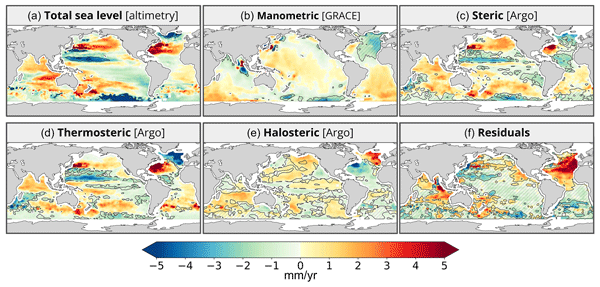
Present-day sea level rise is not uniform regionally. For better understanding of regional sea level variations, a classical approach is to compare the observed sea level trend patterns with those of the sum of the contributions. If the regional sea level trend budget is not closed, this allows the detection of errors in the observing systems. Our study shows that the trend budget is not closed in the North Atlantic Ocean and identifies errors in Argo-based salinity data as the main suspect.
Andrea Storto, Giulia Chierici, Julia Pfeffer, Anne Barnoud, Romain Bourdalle-Badie, Alejandro Blazquez, Davide Cavaliere, Noémie Lalau, Benjamin Coupry, Marie Drevillon, Sebastien Fourest, Gilles Larnicol, and Chunxue Yang
State Planet, 4-osr8, 12, https://doi.org/10.5194/sp-4-osr8-12-2024, https://doi.org/10.5194/sp-4-osr8-12-2024, 2024
Short summary
Short summary
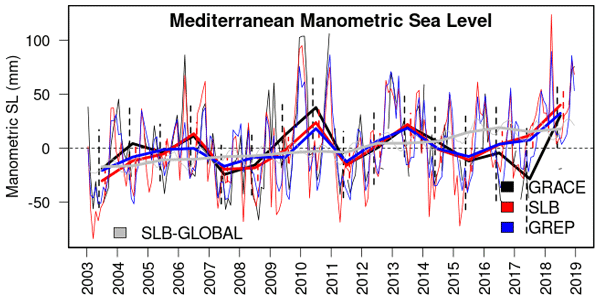
The variability in the manometric sea level (i.e. the sea level mass component) in three ocean basins is investigated in this study using three different methods (reanalyses, gravimetry, and altimetry in combination with in situ observations). We identify the emerging long-term signals, the consistency of the datasets, and the influence of large-scale climate modes on the regional manometric sea level variations at both seasonal and interannual timescales.
Vincenzo de Toma, Daniele Ciani, Yassmin Hesham Essa, Chunxue Yang, Vincenzo Artale, Andrea Pisano, Davide Cavaliere, Rosalia Santoleri, and Andrea Storto
Geosci. Model Dev., 17, 5145–5165, https://doi.org/10.5194/gmd-17-5145-2024, https://doi.org/10.5194/gmd-17-5145-2024, 2024
Short summary
Short summary
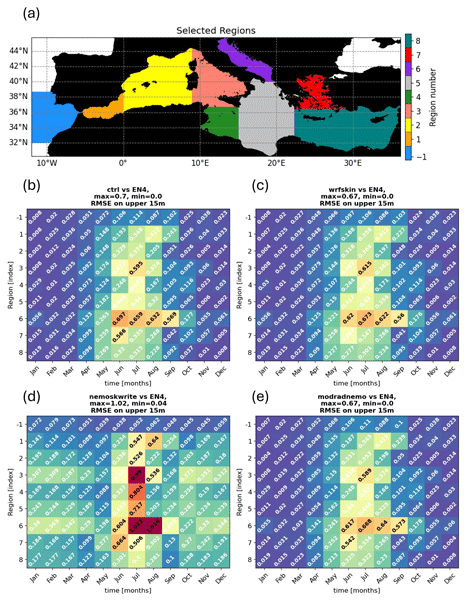
This study explores methods to reconstruct diurnal variations in skin sea surface temperature in a model of the Mediterranean Sea. Our new approach, considering chlorophyll concentration, enhances spatial and temporal variations in the warm layer. Comparative analysis shows context-dependent improvements. The proposed "chlorophyll-interactive" method brings the surface net total heat flux closer to zero annually, despite a net heat loss from the ocean to the atmosphere.
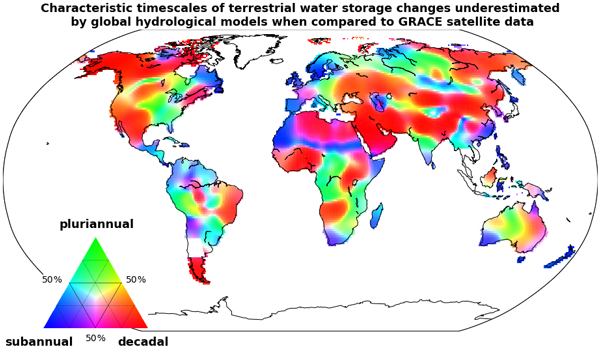
Julia Pfeffer, Anny Cazenave, Alejandro Blazquez, Bertrand Decharme, Simon Munier, and Anne Barnoud
Hydrol. Earth Syst. Sci., 27, 3743–3768, https://doi.org/10.5194/hess-27-3743-2023, https://doi.org/10.5194/hess-27-3743-2023, 2023
Short summary
Short summary
The GRACE (Gravity Recovery And Climate Experiment) satellite mission enabled the quantification of water mass redistributions from 2002 to 2017. The analysis of GRACE satellite data shows here that slow changes in terrestrial water storage occurring over a few years to a decade are severely underestimated by global hydrological models. Several sources of errors may explain such biases, likely including the inaccurate representation of groundwater storage changes.
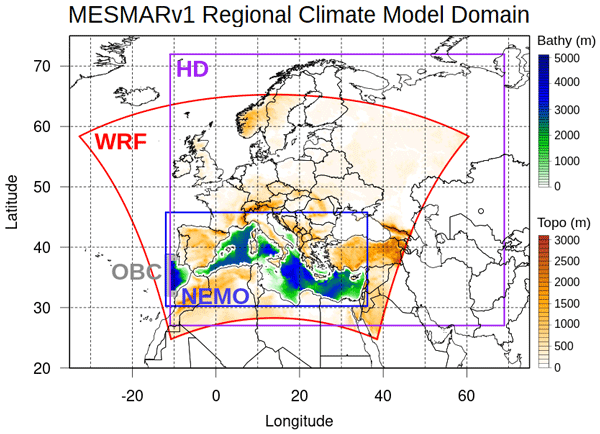
Andrea Storto, Yassmin Hesham Essa, Vincenzo de Toma, Alessandro Anav, Gianmaria Sannino, Rosalia Santoleri, and Chunxue Yang
Geosci. Model Dev., 16, 4811–4833, https://doi.org/10.5194/gmd-16-4811-2023, https://doi.org/10.5194/gmd-16-4811-2023, 2023
Short summary
Short summary
Regional climate models are a fundamental tool for a very large number of applications and are being increasingly used within climate services, together with other complementary approaches. Here, we introduce a new regional coupled model, intended to be later extended to a full Earth system model, for climate investigations within the Mediterranean region, coupled data assimilation experiments, and several downscaling exercises (reanalyses and long-range predictions).
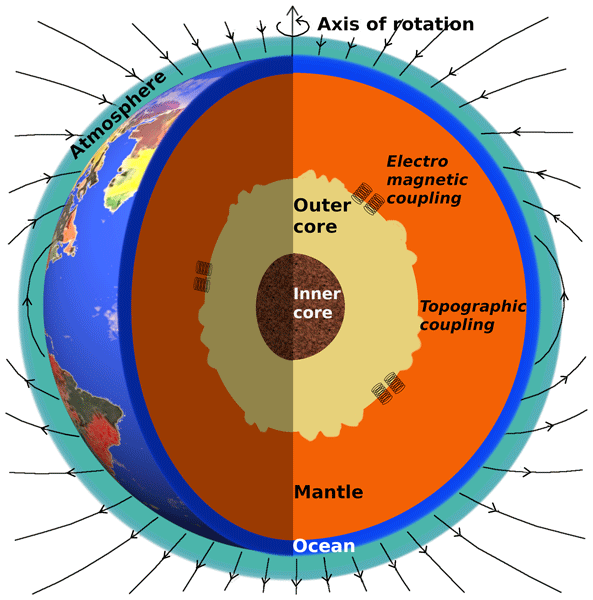
Anny Cazenave, Julia Pfeffer, Mioara Mandea, and Veronique Dehant
Earth Syst. Dynam., 14, 733–735, https://doi.org/10.5194/esd-14-733-2023, https://doi.org/10.5194/esd-14-733-2023, 2023
Short summary
Short summary
While a 6-year oscillation has been reported for some time in the motions of the fluid outer core of the Earth, in the magnetic field and in the Earth rotation, novel results indicate that the climate system also oscillates at this 6-year frequency. This strongly suggests the existence of coupling mechanisms affecting the Earth system as a whole, from the deep Earth interior to the surface fluid envelopes.
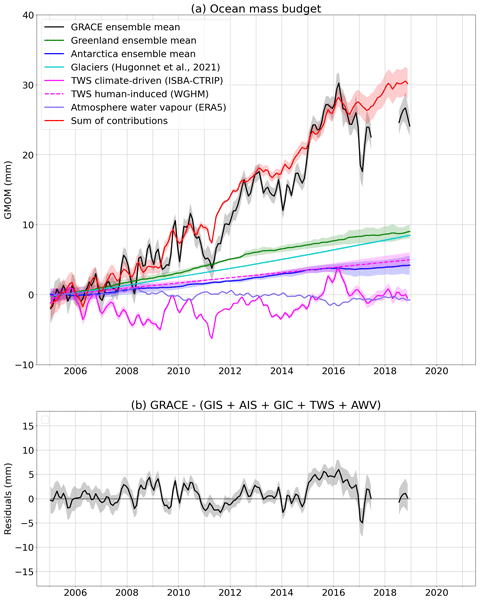
Anne Barnoud, Julia Pfeffer, Anny Cazenave, Robin Fraudeau, Victor Rousseau, and Michaël Ablain
Ocean Sci., 19, 321–334, https://doi.org/10.5194/os-19-321-2023, https://doi.org/10.5194/os-19-321-2023, 2023
Short summary
Short summary
The increase in ocean mass due to land ice melting is responsible for about two-thirds of the global mean sea level rise. The ocean mass variations are monitored by GRACE and GRACE Follow-On gravimetry satellites that faced instrumental issues over the last few years. In this work, we assess the robustness of these data by comparing the ocean mass gravimetry estimates to independent observations (other satellite observations, oceanographic measurements and land ice and water models).
Martin Horwath, Benjamin D. Gutknecht, Anny Cazenave, Hindumathi Kulaiappan Palanisamy, Florence Marti, Ben Marzeion, Frank Paul, Raymond Le Bris, Anna E. Hogg, Inès Otosaka, Andrew Shepherd, Petra Döll, Denise Cáceres, Hannes Müller Schmied, Johnny A. Johannessen, Jan Even Øie Nilsen, Roshin P. Raj, René Forsberg, Louise Sandberg Sørensen, Valentina R. Barletta, Sebastian B. Simonsen, Per Knudsen, Ole Baltazar Andersen, Heidi Ranndal, Stine K. Rose, Christopher J. Merchant, Claire R. Macintosh, Karina von Schuckmann, Kristin Novotny, Andreas Groh, Marco Restano, and Jérôme Benveniste
Earth Syst. Sci. Data, 14, 411–447, https://doi.org/10.5194/essd-14-411-2022, https://doi.org/10.5194/essd-14-411-2022, 2022
Short summary
Short summary
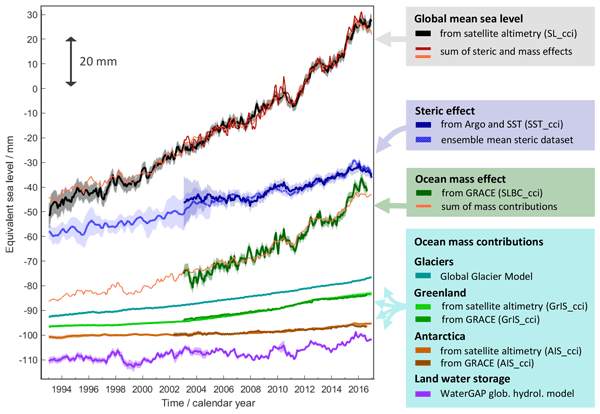
Global mean sea-level change observed from 1993 to 2016 (mean rate of 3.05 mm yr−1) matches the combined effect of changes in water density (thermal expansion) and ocean mass. Ocean-mass change has been assessed through the contributions from glaciers, ice sheets, and land water storage or directly from satellite data since 2003. Our budget assessments of linear trends and monthly anomalies utilise new datasets and uncertainty characterisations developed within ESA's Climate Change Initiative.
Cited articles
Ablain, M., Jugier, R., Zawadzki, L., Taburet, N., Cazenave, A., Meyssignac, B., and Picot, N.: The TOPEX-A drift and impacts on GMSL time series, Technical Report, 2017.
Adhikari, S., Ivins, E. R., Frederikse, T., Landerer, F. W., and Caron, L.: Sea-level fingerprints emergent from GRACE mission data, Earth Syst. Sci. Data, 11, 629–646, https://doi.org/10.5194/essd-11-629-2019, 2019.
Barnoud, A., Pfeffer, J., Guérou, A., Frery, M., Siméon, M., Cazenave, A., Chen, J., Llovel, W., Thierry, V., Legeais, J., and Ablain, M.: Contributions of Altimetry and Argo to Non‐Closure of the Global Mean Sea Level Budget Since 2016, Geophys. Res. Lett., 48, https://doi.org/10.1029/2021gl092824, 2021.
Blazquez, A., Meyssignac, B., Lemoine, J., Berthier, E., Ribes, A., and Cazenave, A.: Exploring the uncertainty in GRACE estimates of the mass redistributions at the Earth surface: implications for the global water and sea level budgets, Geophys. J. Int., 215, 415–430, https://doi.org/10.1093/gji/ggy293, 2018.
Bouih, M., Barnoud, A., Yang, C., Storto, A., Blazquez, A., Llovel, W., Fraudeau, R., and Cazenave, A.: Regional sea level trend budget over 2004–2022, Ocean Sci., 21, 1425–1440, https://doi.org/10.5194/os-21-1425-2025, 2025.
Brown, S., Willis, J., and Fournier, S.: Jason-3 Wet Path Delay Correction, Technical Report, https://doi.org/10.5067/J3L2G-PDCOR, 2023.
Camargo, C. M. L., Riva, R. E. M., Hermans, T. H. J., Schütt, E. M., Marcos, M., Hernandez-Carrasco, I., and Slangen, A. B. A.: Regionalizing the sea-level budget with machine learning techniques, Ocean Sci., 19, 17–41, https://doi.org/10.5194/os-19-17-2023, 2023.
Chen, J., Tapley, B., Seo, K., Wilson, C., and Ries, J.: Improved Quantification of Global Mean Ocean Mass Change Using GRACE Satellite Gravimetry Measurements, Geophys. Res. Lett., 46, 13984–13991, https://doi.org/10.1029/2019GL085519, 2019.
Chen, J., Tapley, B., Wilson, C., Cazenave, A., Seo, K.-W., and Kim, J.-S.: Global Ocean Mass Change From GRACE and GRACE Follow-On and Altimeter and Argo Measurements, Geophys. Res. Lett., 47, e2020GL090656, https://doi.org/10.1029/2020GL090656, 2020.
Cheng, L., Zhu, J., Cowley, R., Boyer, T., and Wijffels, S.: Time, Probe Type, and Temperature Variable Bias Corrections to Historical Expendable Bathythermograph Observations, J. Atmos. Ocean. Tech., 31, 1793–1825, https://doi.org/10.1175/JTECH-D-13-00197.1, 2014.
Climate Data Store: Sea level gridded data from satellite observations for the global ocean from 1993 to present. Copernicus Climate Change Service (C3S), Climate Data Store (CDS) [data set], https://doi.org/10.24381/cds.4c328c78, 2018.
Dieng, H. B., Cazenave, A., Meyssignac, B., and Ablain, M.: New estimate of the current rate of sea level rise from a sea level budget approach, Geophys. Res. Lett., 44, 3744–3751, https://doi.org/10.1002/2017GL073308, 2017.
Dobslaw, H., Bergmann-Wolf, I., Dill, R., Poropat, L., Thomas, M., Dahle, C., Esselborn, S., König, R., and Flechtner, F.: A new high-resolution model of non-tidal atmosphere and ocean mass variability for de-aliasing of satellite gravity observations: AOD1B RL06, Geophys. J. Int., 211, 263–269, https://doi.org/10.1093/gji/ggx302, 2017.
Flechtner, F., Dobslaw, H., and Fagiolini, E.: GRACE AOD1B product description document for product release 05, Technical Report, 2014.
Frederikse, T., Riva, R., Kleinherenbrink, M., Wada, Y., van den Broeke, M., and Marzeion, B.: Closing the sea level budget on a regional scale: Trends and variability on the Northwestern European continental shelf, Geophys. Res. Lett., 43, 10864–10872, https://doi.org/10.1002/2016GL070750, 2016.
Gregory, J. M., Griffies, S. M., Hughes, C. W., Lowe, J. A., Church, J. A., Fukimori, I., Gomez, N., Kopp, R. E., Landerer, F., Cozannet, G. L., Ponte, R. M., Stammer, D., Tamisiea, M. E., and van de Wal, R. S. W.: Concepts and Terminology for Sea Level: Mean, Variability and Change, Both Local and Global, Surv. Geophys., 40, 1251–1289, https://doi.org/10.1007/s10712-019-09525-z, 2019.
Hamlington, B. D., Gardner, A. S., Ivins, E., Lenaerts, J. T. M., Reager, J. T., Trossman, D. S., Zaron, E. D., Adhikari, S., Arendt, A., Aschwanden, A., Beckley, B. D., Bekaert, D. P. S., Blewitt, G., Caron, L., Chambers, D. P., Chandanpurkar, H. A., Christianson, K., Csatho, B., Cullather, R. I., DeConto, R. M., Fasullo, J. T., Frederikse, T., Freymueller, J. T., Gilford, D. M., Girotto, M., Hammond, W. C., Hock, R., Holschuh, N., Kopp, R. E., Landerer, F., Larour, E., Menemenlis, D., Merrifield, M., Mitrovica, J. X., Nerem, R. S., Nias, I. J., Nieves, V., Nowicki, S., Pangaluru, K., Piecuch, C. G., Ray, R. D., Rounce, D. R., Schlegel, N.-J., Seroussi, H., Shirzaei, M., Sweet, W. V., Velicogna, I., Vinogradova, N., Wahl, T., Wiese, D. N., and Willis, M. J.: Understanding of Contemporary Regional Sea-Level Change and the Implications for the Future, Rev. Geophys., 58, e2019RG000672, https://doi.org/10.1029/2019RG000672, 2020.
Hightower, E., Caron, L., Landerer, F., Watkins, M., Ivins, E., and Larour, E.: Impact of Heterogeneous Mantle Viscosity on the Glacial Isostatic Adjustment Correction for GRACE(-FO): Implications for Surface Mass Trends, J. Geophys. Res.-Sol. Ea., 131, e2026JB033791, https://doi.org/10.1029/2026JB033791, 2026.
Horwath, M., Gutknecht, B. D., Cazenave, A., Palanisamy, H. K., Marti, F., Marzeion, B., Paul, F., Le Bris, R., Hogg, A. E., Otosaka, I., Shepherd, A., Döll, P., Cáceres, D., Müller Schmied, H., Johannessen, J. A., Nilsen, J. E. Ø., Raj, R. P., Forsberg, R., Sandberg Sørensen, L., Barletta, V. R., Simonsen, S. B., Knudsen, P., Andersen, O. B., Ranndal, H., Rose, S. K., Merchant, C. J., Macintosh, C. R., von Schuckmann, K., Novotny, K., Groh, A., Restano, M., and Benveniste, J.: Global sea-level budget and ocean-mass budget, with a focus on advanced data products and uncertainty characterisation, Earth Syst. Sci. Data, 14, 411–447, https://doi.org/10.5194/essd-14-411-2022, 2022.
Hosoda, S.: Grid Point Value of the Monthly Objective Analysis using the Argo data, Technical Report, https://doi.org/10.17596/0000102, 2007.
Liu, C., Liang, X., Chambers, D., and Ponte, R.: Global Patterns of Spatial and Temporal Variability in Salinity from Multiple Gridded Argo Products, J. Climate, https://doi.org/10.1175/JCLI-D-20-0053.1, 2020.
Llovel, W. and Hochet, A.: Salinity Contribution to Regional Sea Level Trends in the Tropical Southwestern Pacific Ocean Over 2014–2023, Geophys. Res. Lett., 52, e2025GL116115, https://doi.org/10.1029/2025GL116115, 2025.
Llovel, W., Balem, K., Tajouri, S., and Hochet, A.: Cause of Substantial Global Mean Sea Level Rise Over 2014–2016, Geophys. Res. Lett., 50, e2023GL104709, https://doi.org/10.1029/2023GL104709, 2023.
Loomis, B. D., Luthcke, S. B., and Sabaka, T. J.: Regularization and error characterization of GRACE mascons, J. Geodesy, 93, 1381–1398, https://doi.org/10.1007/s00190-019-01252-y, 2019.
McDougall, T. J. and Barker, P. M.: Getting started with TEOS-10 and the Gibbs Seawater (GSW) Oceanographic Toolbox, SCOR/IAPSO WG127, 28 pp., ISBN 978-0-646-55621-5, 2011.
Mu, D., Church, J. A., King, M., Ludwigsen, C. B., and Xu, T.: Contrasting Discrepancy in the Sea Level Budget Between the North and South Atlantic Ocean Since 2016, Earth and Space Science, 11, e2023EA003133, https://doi.org/10.1029/2023EA003133, 2024.
Nerem, R. S., Beckley, B. D., Fasullo, J. T., Hamlington, B. D., Masters, D., and Mitchum, G. T.: Climate-change–driven accelerated sea-level rise detected in the altimeter era, P. Natl. Acad. Sci. USA, 115, 2022–2025, https://doi.org/10.1073/pnas.1717312115, 2018.
Pardaens, A. K., Gregory, J. M., and Lowe, J. A.: A model study of factors influencing projected changes in regional sea level over the twenty-first century, Clim. Dynam., 36, 2015–2033, https://doi.org/10.1007/s00382-009-0738-x, 2011.
Peltier, W. R., Argus, D. F., and Drummond, R.: Comment on “An Assessment of the ICE-6G_C (VM5a) Glacial Isostatic Adjustment Model” by Purcell et al., J. Geophys. Res.-Sol. Ea., 123, 2019–2028, https://doi.org/10.1002/2016JB013844, 2018.
Ponte, R. M., Sun, Q., Liu, C., and Liang, X.: How Salty Is the Global Ocean: Weighing It All or Tasting It a Sip at a Time?, Geophys. Res. Lett., 48, e2021GL092935, https://doi.org/10.1029/2021GL092935, 2021.
Prandi, P., Meyssignac, B., Ablain, M., Spada, G., Ribes, A., and Benveniste, J.: Local sea level trends, accelerations and uncertainties over 1993–2019, Scientific Data, 8, 1, https://doi.org/10.1038/s41597-020-00786-7, 2021.
Roemmich, D. and Gilson, J.: The 2004–2008 mean and annual cycle of temperature, salinity, and steric height in the global ocean from the Argo Program, Prog. Oceanogr., 82, 81–100, https://doi.org/10.1016/j.pocean.2009.03.004, 2009.
Royston, S., Dutt Vishwakarma, B., Westaway, R., Rougier, J., Sha, Z., and Bamber, J.: Can We Resolve the Basin-Scale Sea Level Trend Budget From GRACE Ocean Mass?, J. Geophys. Res.-Oceans, 125, e2019JC015535, https://doi.org/10.1029/2019JC015535, 2020.
Save, H., Bettadpur, S., and Tapley, B. D.: High-resolution CSR GRACE RL05 mascons, J. Geophys. Res.-Sol. Ea., 121, 7547–7569, https://doi.org/10.1002/2016JB013007, 2016.
Storto, A. and Yang, C.: Acceleration of the ocean warming from 1961 to 2022 unveiled by large-ensemble reanalyses, Nat. Commun., 15, 545, https://doi.org/10.1038/s41467-024-44749-7, 2024.
Sun, Y., Riva, R., and Ditmar, P.: Optimizing estimates of annual variations and trends in geocenter motion and J2 from a combination of GRACE data and geophysical models, J. Geophys. Res.-Sol. Ea., 121, 8352–8370, https://doi.org/10.1002/2016JB013073, 2016.
Tapley, B., Watkins, M., Flechtner, F., Reigber, C., Bettadpur, S., Rodell, M., Sasgen, I., Famiglietti, J., Landerer, F., Chambers, D., Reager, J., Gardner, A., Save, H., Ivins, E., Swenson, S., Boening, C., Dahle, C., Wiese, D., Dobslaw, H., and Velicogna, I.: Contributions of GRACE to understanding climate change, Nat. Clim. Change, 5, https://doi.org/10.1038/s41558-019-0456-2, 2019.
Thierry, V., Claustre, H., Pasqueron De Fommervault, O., Zilberman, N., Johnson, K. S., King, B. A., Wijffels, S. E., Bhaskar, U. T. V. S., Balmaseda, M. A., Belbeoch, M., Bollard, M., Boutin, J., Boyd, P., Cancouët, R., Chai, F., Ciavatta, S., Crane, R., Cravatte, S., Dall'Olmo, G., Desbruyères, D., Durack, P. J., Fassbender, A. J., Fennel, K., Fujii, Y., Gasparin, F., González-Santana, A., Gourcuff, C., Gray, A., Hewitt, H. T., Jayne, S. R., Johnson, G. C., Kolodziejczyk, N., Le Boyer, A., Le Traon, P.-Y., Llovel, W., Lozier, M. S., Lyman, J. M., McDonagh, E. L., Martin, A. P., Meyssignac, B., Mogensen, K. S., Morris, T., Oke, P. R., Smith, W. O., Owens, B., Poffa, N., Post, J., Roemmich, D., Rykaczewski, R. R., Sathyendranath, S., Scanderbeg, M., Scheurle, C., Schofield, O., Von Schuckmann, K., Scourse, J., Sprintall, J., Suga, T., Tonani, M., Van Wijk, E., Xing, X., and Zuo, H.: Advancing ocean monitoring and knowledge for societal benefit: the urgency to expand Argo to OneArgo by 2030, Front. Mar. Sci., 12, 1593904, https://doi.org/10.3389/fmars.2025.1593904, 2025.
Wang, C., Dong, S., and Munoz, E.: Seawater density variations in the North Atlantic and the Atlantic meridional overturning circulation, Clim. Dynam., 34, 953–968, https://doi.org/10.1007/s00382-009-0560-5, 2010.
Watkins, M. M., Wiese, D. N., Yuan, D.-N., Boening, C., and Landerer, F. W.: Improved methods for observing Earth's time variable mass distribution with GRACE using spherical cap mascons, J. Geophys. Res.-Sol. Ea., 120, 2648–2671, https://doi.org/10.1002/2014JB011547, 2015.
WCRP Global Sea Level Budget Group: Global sea-level budget 1993–present, Earth Syst. Sci. Data, 10, 1551–1590, https://doi.org/10.5194/essd-10-1551-2018, 2018.
Wong, A. P. S., Gilson, J., and Cabanes, C.: Argo salinity: bias and uncertainty evaluation, Earth Syst. Sci. Data, 15, 383–393, https://doi.org/10.5194/essd-15-383-2023, 2023.
Wunsch, C., Ponte, R. M., and Heimbach, P.: Decadal Trends in Sea Level Patterns: 1993–2004, J. Climate, 20, 5889–5911, https://doi.org/10.1175/2007JCLI1840.1, 2007.
Short summary
The objective of this study is to understand why the North Atlantic sea level budget is not closed over the Argo and Gravity Recovery and Climate Experiment (GRACE) era. We show that using an ocean reanalysis for the ocean mass component instead of GRACE, and accounting for deep ocean warming allows quasi-closure of the North Atlantic sea level budget within data uncertainties.
The objective of this study is to understand why the North Atlantic sea level budget is not...


