
Articles | Volume 22, issue 5
https://doi.org/10.5194/os-22-2725-2026
© Author(s) 2026. This work is distributed under
the Creative Commons Attribution 4.0 License.
the Creative Commons Attribution 4.0 License.
https://doi.org/10.5194/os-22-2725-2026
© Author(s) 2026. This work is distributed under
the Creative Commons Attribution 4.0 License.
the Creative Commons Attribution 4.0 License.
Research article
| 
09 Sep 2026
Research article |
| 09 Sep 2026
| 09 Sep 2026
The added value of Med-CORDEX coupled high-resolution regional climate models in representing sea surface temperature and marine heatwaves in the Mediterranean Sea
Francesco De Rovere
CORRESPONDING AUTHOR

CMCC Foundation – Euro-Mediterranean Center on Climate Change, Bologna, Italy
Giulia Bonino
CMCC Foundation – Euro-Mediterranean Center on Climate Change, Bologna, Italy
Ronan McAdam
CMCC Foundation – Euro-Mediterranean Center on Climate Change, Bologna, Italy
Enrico Scoccimarro
CMCC Foundation – Euro-Mediterranean Center on Climate Change, Bologna, Italy
Samuel Somot
Météo-France, CNRS, Univ. Toulouse, CNRM, Toulouse, France
Iván M. Parras-Berrocal
Météo-France, CNRS, Univ. Toulouse, CNRM, Toulouse, France
Bodo Ahrens
Institute for Atmospheric and Environmental Sciences, Goethe University Frankfurt, Frankfurt am Main, Germany
Vladimir Djurdjevic
Faculty of Physics, University of Belgrade, Belgrade, Serbia
Laurent Li
Laboratoire de Météorologie Dynamique, CNRS, Sorbonne Université, Paris, France
Simona Masina
CMCC Foundation – Euro-Mediterranean Center on Climate Change, Bologna, Italy
Related authors
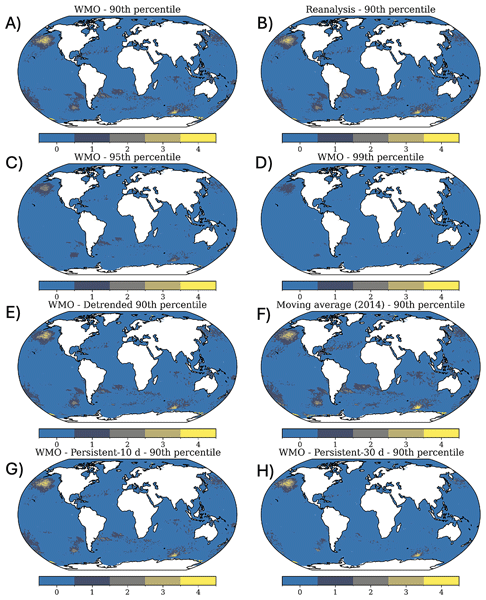
Alex Hayward, Nishka Dasgupta, Ronan McAdam, Mark R. Payne, Roshin P. Raj, Giulia Bonino, Sourav Chatterjee, Vincent Combes, Dimitra Denaxa, Francesco De Rovere, Pia Englyst, Veera Haapaniemi, Paul Hargous, Jacob Høyer, K. Ajith Joseph, Beatriz Lopes, Ana Oliveira, João Paixão, Fabiola Silva, Saradhy Surendran, Artemis Zegna-Rata, and Steffen M. Olsen
Earth Syst. Sci. Data, 18, 7181–7197, https://doi.org/10.5194/essd-18-7181-2026, https://doi.org/10.5194/essd-18-7181-2026, 2026
Short summary
Short summary
We present a global marine heatwave and cold spell dataset (1982–2024) based on satellite sea surface temperature. The dataset applies multiple definitions in parallel, varying baselines, thresholds, detrending, and event durations. It enables consistent comparisons of marine heatwave characterisation across methods and supports climate monitoring, and ecological impact studies.
Vincenzo de Toma, Andrea Storto, Ronan McAdam, Antonietta Capotondi, and Chunxue Yang
EGUsphere, https://doi.org/10.5194/egusphere-2026-5747, https://doi.org/10.5194/egusphere-2026-5747, 2026
This preprint is open for discussion and under review for Ocean Science (OS).
Short summary
Short summary
Marine heatwaves, prolonged spells of unusually warm seawater, can harm marine life and the people who depend on it, yet we know little about what happens beneath the surface. We compared three reconstructions of past ocean conditions and found they reliably capture famous surface events seen by satellites. Warm water often extends 100 to 150 metres down, and events reaching deeper last longer. Our results show that combining several products adds value to the results.
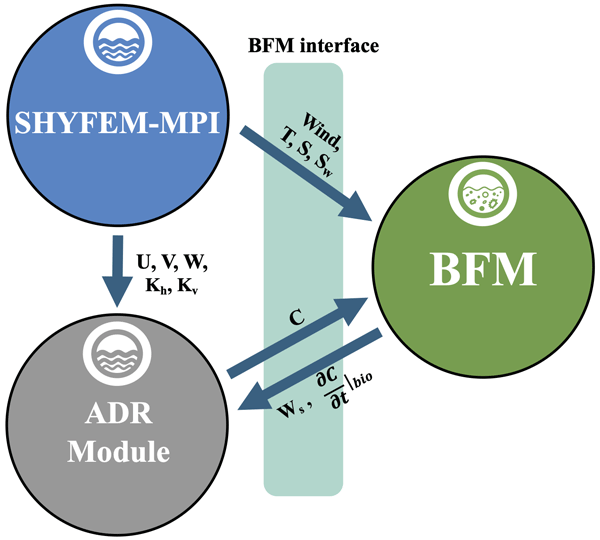
Jacopo Alessandri, Giulia Bonino, Tomas Lovato, Momme Butenschön, Lorenzo Mentaschi, Giorgia Verri, Ivan Federico, and Nadia Pinardi
Geosci. Model Dev., 19, 9301–9324, https://doi.org/10.5194/gmd-19-9301-2026, https://doi.org/10.5194/gmd-19-9301-2026, 2026
Short summary
Short summary
Coastal seas are strongly shaped by complex coastlines, shallow depths, and inputs from rivers, which influence marine life and water quality. This study introduces a new high-resolution modelling system that combines ocean circulation and marine ecosystem processes on unstructured grids. Applied to the northern Adriatic Sea, the model realistically captures seasonal changes in key biogeochemical variables, offering improved tools to support coastal environmental management.
Alex Hayward, Nishka Dasgupta, Ronan McAdam, Mark R. Payne, Roshin P. Raj, Giulia Bonino, Sourav Chatterjee, Vincent Combes, Dimitra Denaxa, Francesco De Rovere, Pia Englyst, Veera Haapaniemi, Paul Hargous, Jacob Høyer, K. Ajith Joseph, Beatriz Lopes, Ana Oliveira, João Paixão, Fabiola Silva, Saradhy Surendran, Artemis Zegna-Rata, and Steffen M. Olsen
Earth Syst. Sci. Data, 18, 7181–7197, https://doi.org/10.5194/essd-18-7181-2026, https://doi.org/10.5194/essd-18-7181-2026, 2026
Short summary
Short summary
We present a global marine heatwave and cold spell dataset (1982–2024) based on satellite sea surface temperature. The dataset applies multiple definitions in parallel, varying baselines, thresholds, detrending, and event durations. It enables consistent comparisons of marine heatwave characterisation across methods and supports climate monitoring, and ecological impact studies.
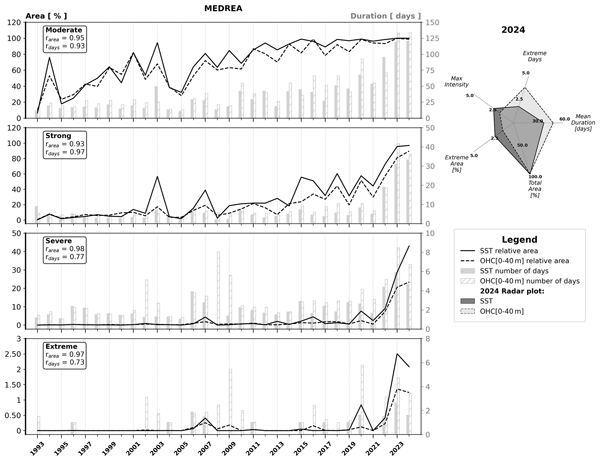
Leonardo Lima, Rafael Gomes de Menezes, Ehsan Sadighrad, Ronan McAdam, Filipe Costa, Pietro Miraglio, Mehmet Ilicak, Eric Jansen, Ali Aydogdu, Francesco Maicu, and Emanuela Clementi
State Planet, 7-osr10, 5, https://doi.org/10.5194/sp-7-osr10-5-2026, https://doi.org/10.5194/sp-7-osr10-5-2026, 2026
Short summary
Short summary
As climate change intensifies, marine heatwaves (MHWs), periods of unusually high ocean temperatures, threaten ecosystems and communities. This study analyzes MHWs in the Mediterranean and Black Seas, examining surface temperatures and ocean heat content in the upper 0–40 m to capture subsurface warming. Findings highlight the need to monitor both surface and subsurface conditions for a comprehensive understanding and better management considering ongoing warming trends in both seas.
Claudia J. Stubenrauch, Xiaoting Chen, Laurent Li, and Anthony J. Baran
EGUsphere, https://doi.org/10.5194/egusphere-2026-5049, https://doi.org/10.5194/egusphere-2026-5049, 2026
This preprint is open for discussion and under review for Weather and Climate Dynamics (WCD).
Short summary
Short summary
Atmospheric heating gradients caused by tropical upper tropospheric ice clouds (cirrus) influence the atmospheric circulation which then affects patterns of precipitation. While their overall radiative effect leads to a strengthening of the Hadley circulation, semi-transparent cirrus weaken the circulation. This means that in a warmer climate changes in their optical depth may then counteract or enhance the weakened Hadley circulation.
Ronan McAdam, Antonella Sanna, Giulia Bonino, and Enrico Scoccimarro
EGUsphere, https://doi.org/10.5194/egusphere-2026-5138, https://doi.org/10.5194/egusphere-2026-5138, 2026
This preprint is open for discussion and under review for Ocean Science (OS).
Short summary
Short summary
Wind-driven upwelling brings nutrient-rich water to the surface, supporting rich ecosystems and fisheries. In 2025, the Gulf of Panama's upwelling collapsed, causing unusually warm water with little chlorophyll. We tested whether seasonal forecasts could have predicted this event. Forecasts captured the weak winds and warm temperatures a season ahead. This shows seasonal forecasting can give early warning of upwelling collapse, helping coastal communities and authorities prepare.
Francesco Maicu, Seimur Shirinov, Charikleia L. G. Oikonomou, Vitalii Sharmar, Lucia Gualtieri, Anna Chiara Goglio, Ehsan Sadighrad, Dimitra Denaxa, Aimie Moulin, Bethany McDonagh, Salvatore Causio, Emanuela Clementi, Gerasimos Korres, Ivan Federico, and Enrico Scoccimarro
State Planet Discuss., https://doi.org/10.5194/sp-2026-12, https://doi.org/10.5194/sp-2026-12, 2026
Preprint under review for SP
Short summary
Short summary
In January 2026, an exceptional storm brought record waves, flooding, and strong currents to the Mediterranean Sea. To understand its coastal impact, we combined data from Europe's ocean monitoring service with a detailed coastal computer model, tracking the storm from open sea to shore. We found unusually high waves, raised sea levels, and strong changes in currents and saltiness. Combining wide-area forecasts with local models improves flood prediction, supporting earlier coastal warning.
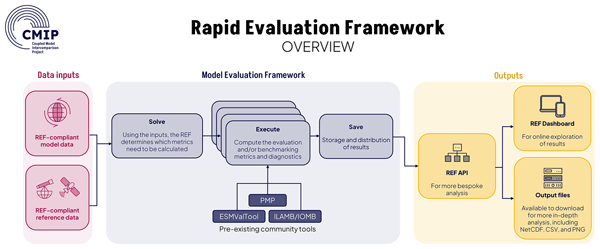
Forrest M. Hoffman, Birgit Hassler, Ranjini Swaminathan, Jared Lewis, Bouwe Andela, Nathan Collier, Dóra Hegedűs, Jiwoo Lee, Charlotte Pascoe, Mika Pflüger, Martina Stockhause, Paul Ullrich, Min Xu, Lisa Bock, Felicity Chun, Bettina K. Gier, Douglas I. Kelley, Axel Lauer, Julien Lenhardt, Manuel Schlund, Mohanan G. Sreeush, Katja Weigel, Ed Blockley, Rebecca Beadling, Romain Beucher, Demiso D. Dugassa, Valerio Lembo, Jianhua Lu, Swen Brands, Jerry Tjiputra, Elizaveta Malinina, Brian Medeiros, Enrico Scoccimarro, Jeremy Walton, Phil Kershaw, André Lanfer Marquez, Malcolm J. Roberts, Eleanor O'Rourke, Beth Dingley, Briony Turner, Helene Hewitt, and John P. Dunne
Geosci. Model Dev., 19, 7415–7455, https://doi.org/10.5194/gmd-19-7415-2026, https://doi.org/10.5194/gmd-19-7415-2026, 2026
Short summary
Short summary
The Rapid Evaluation Framework (REF) is a community-driven platform for benchmarking and performance assessment of Earth system models. Built upon four disparate community evaluation tools, the REF is designed to provide model-data comparisons for the Assessment Fast Track for the Seventh Phase of the Coupled Model Intercomparison Project. The REF will be run at the Earth System Grid Federation to enable model devleopers and scientists to quickly identify model biases and performance issues.
Mittal Parmar, Kristina Fröhlich, Antonella Sanna, Tobias Stacke, Marianna Benassi, Zhicheng Luo, Daniele Peano, and Bodo Ahrens
The Cryosphere, 20, 4157–4184, https://doi.org/10.5194/tc-20-4157-2026, https://doi.org/10.5194/tc-20-4157-2026, 2026
Short summary
Short summary
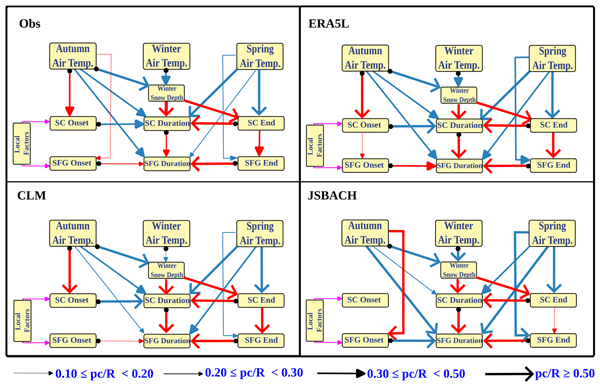
Seasonally frozen ground strongly influences land–atmosphere interactions, yet its simulation remains uncertain in land surface models. This study evaluates 2 standalone LSM simulations forced by reanalysis data (1986-2022) and validates results against reference observations at 26 Russian sites. Results show contrasting biases linked to snow insulation and freeze–thaw processes, highlighting the need for improved snow and soil parameterizations.
Laurent Coppola, Anthony Bosse, Thibaut Wagener, Dominique Lefevre, Magali Lescot, François Carlotti, Fabien Lombard, Lionel Guidi, Fabrice Not, Xavier Durrieu de Madron, Pascal Conan, Mireille Pujo-Pay, Caroline Ulses, Samuel Somot, Claude Estournel, Emilie Diamond Riquier, Céline Laus, Nathalie Leblond, Matthieu Labaste, Patrice Bretel, Melek Golbol, Stephane Kunesch, Jennifer Sola, Laure Chirurgien, Sandra Nunige, Sarah Romac, and Pierre Testor
Earth Syst. Sci. Data, 18, 5303–5327, https://doi.org/10.5194/essd-18-5303-2026, https://doi.org/10.5194/essd-18-5303-2026, 2026
Short summary
Short summary
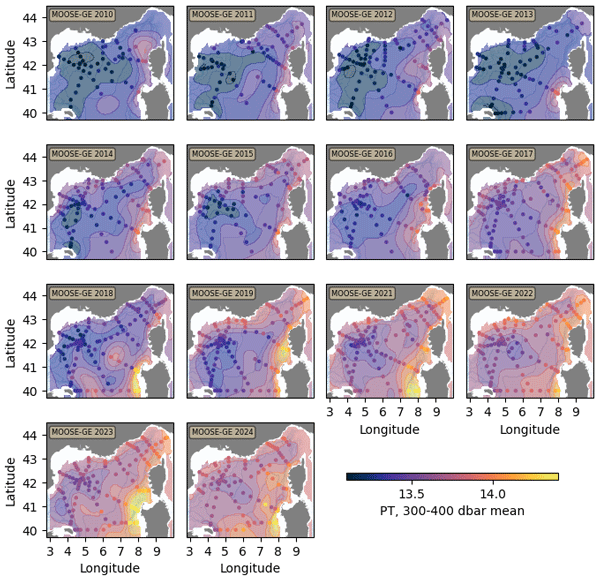
The Mediterranean Ocean Observing System for the Environment program investigated the fast-changing northwestern Mediterranean through annual cruises from 2010 to 2024. Using consistent surface-to-seafloor measurements, checked against fixed and autonomous platforms, we find intermediate and deep waters warming and getting saltier, oxygen declining and dissolved carbon rising, indicating progressing acidification. These trends can reshape ecosystems and stress the need for sustained monitoring.
Erwan Le Roux, Pierre Tandeo, Carlos Granero Belinchon, Melika Baklouti, Julien Le Sommer, Florence Sevault, Samuel Somot, Antoine Doury, and Mahmoud Al Najar
EGUsphere, https://doi.org/10.5194/egusphere-2026-1991, https://doi.org/10.5194/egusphere-2026-1991, 2026
Short summary
Short summary
Projected impacts of climate change are assessed with impact models driven by climate projections. However, impact models can have a high computational cost. Here, we design statistical emulators of impact models based on automatic equation discovery. To our knowledge, this approach is a promising innovation that could pave the way to develop simple and interpretable emulators for various climate impact studies, but also to validate existing knowledge and to understand novel links.
Rita Lecci, Robyn Gwee, Kun Yan, Sanne Muis, Nadia Pinardi, Jun She, Martin Verlaan, Simona Masina, Wenshan Li, Hui Wang, Salvatore Causio, Antonio Novellino, Marco Alba, Etiënne Kras, Sandra Gaytan Aguilar, and Jan-Bart Calewaert
Nat. Hazards Earth Syst. Sci., 26, 1767–1783, https://doi.org/10.5194/nhess-26-1767-2026, https://doi.org/10.5194/nhess-26-1767-2026, 2026
Short summary
Short summary
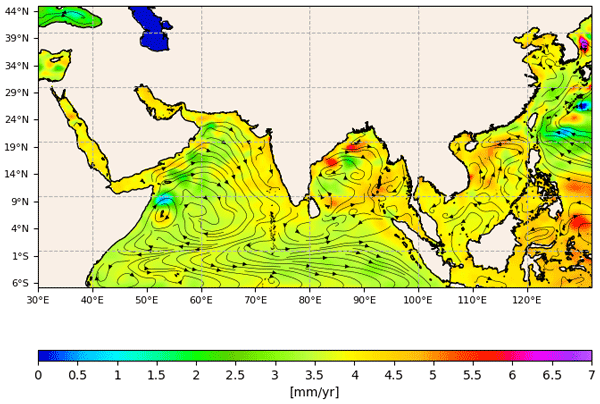
This study explored how sea level is changing along the China-Europe Sea Route. By combining satellite and in-situ observations with advanced modeling, the research identified ongoing sea level rise and an increasing frequency of extreme water level events in some regions. These findings underscore the importance of continued monitoring and provide useful knowledge to support long-term planning, coastal resilience, and informed decision-making.
Simona Masina, Andrea Cipollone, Doroteaciro Iovino, Stefania Ciliberti, Rita Lecci, Sergio Cretí, Vladyslav Lyubartsev, Giovanni Coppini, and Emanuela Clementi
EGUsphere, https://doi.org/10.5194/egusphere-2026-887, https://doi.org/10.5194/egusphere-2026-887, 2026
Short summary
Short summary
The paper presents GOFS16, an eddy-resolving global operational ocean and sea ice forecasting system which provides 6-day forecasts of three-dimensional temperature, salinity, currents, sea level, and sea ice properties. The system assimilates satellite and in situ observations using a 3D variational data assimilation scheme. Validation is conducted routinely using global and regional metrics. Results indicate that GOFS16 performs within the expected range of skill for current global systems.
Quentin-Boris Barral, Claude Estournel, Robin Waldman, Ivan Parras-Berrocal, Patrick Marsaleix, and Florence Sevault
EGUsphere, https://doi.org/10.5194/egusphere-2026-1480, https://doi.org/10.5194/egusphere-2026-1480, 2026
This preprint is open for discussion and under review for Ocean Science (OS).
Short summary
Short summary
Surface waters of the western Mediterranean Sea are warming rapidly. Using a very detailed computer simulation of future climate conditions under strong greenhouse gas emissions, we examined how ocean circulation could change. The results suggest that the main coastal current may become wider and less stable, allowing a large rotating circulation to appear seasonally near the Balearic Islands and modifying the regional transport of heat and salt.
Paul Voit, Marie Hundhausen, Larisa Seregina, Hendrik Feldmann, Bodo Ahrens, and Maik Heistermann
EGUsphere, https://doi.org/10.5194/egusphere-2026-1229, https://doi.org/10.5194/egusphere-2026-1229, 2026
Short summary
Short summary
Extreme rainfall is expected to increase with a warming climate. However, it remains unclear how this will impact future floods. This study utilizes an ensemble of 6 new datasets, containing the future projected rainfall, and compares the simulated flash floods of the past (1971–2000) and future (2071–2100) under the RCP8.5 scenario for the German part of the Danube catchment. Our results indicate an increase of 100-yr flood return levels of 30 % across all subcatchments under this scenario.
Tatijana Stosic, Ivana Tošić, Antonio Samuel Alves da Silva, Vladimir Djurdjević, and Borko Stosic
Nonlin. Processes Geophys., 33, 157–172, https://doi.org/10.5194/npg-33-157-2026, https://doi.org/10.5194/npg-33-157-2026, 2026
Short summary
Short summary
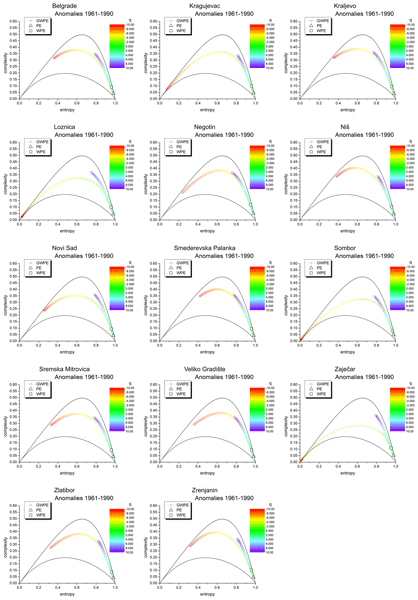
In this work we address the change in rainfall predictability in Serbia due to climate change, using a novel entropy-based method that highlights both small and large fluctuations. The study is performed on data from 14 stations from 1961–2020. While rainfall average remains rather stable between two subperiods, the predictability of large and small fluctuations has changed, suggesting that climate change has affected rainfall dynamics in ways not observable by standard statistical methods.

Fanni Dóra Kelemen, Richard Lohmann, Jiang Zhu, and Bodo Ahrens
Clim. Past, 22, 505–516, https://doi.org/10.5194/cp-22-505-2026, https://doi.org/10.5194/cp-22-505-2026, 2026
Short summary
Short summary
The arrangement of continents and oceans strongly affects climate by shaping large-scale circulation patterns. We study, how early Eocene geography (53.5 Ma) influenced mid-latitude storms and persistent high-pressure systems, focusing on the West Siberian Sea and absent Antarctic Circumpolar Current. The climate model simulation of the early Eocene, shows a more balanced hemispheric distribution, through increased northern and decreased southern mid-latitude storm activity compared to today.

Lisa Bernini, Leone Cavicchia, Fabien Desbiolles, Enrico Scoccimarro, and Claudia Pasquero
Weather Clim. Dynam., 7, 367–391, https://doi.org/10.5194/wcd-7-367-2026, https://doi.org/10.5194/wcd-7-367-2026, 2026
Short summary
Short summary
We studied why some Mediterranean storms intensify and begin to resemble tropical cyclones, becoming especially damaging. By comparing many storms, we found that strong cyclones form when powerful disturbances high in the atmosphere are present. If this happens over warm seas, storms are more likely to develop tropical-like features, while the cooling of the sea by the storm itself helps limit its lifetime. These findings can help improve early warnings and reduce risks in the region.

Damien Héron, Thierry Penduff, Jean-Michel Brankart, Pierre Brasseur, Samuel Somot, Robin Waldman, and Romain Pennel
Ocean Sci., 22, 531–547, https://doi.org/10.5194/os-22-531-2026, https://doi.org/10.5194/os-22-531-2026, 2026
Short summary
Short summary
Our study used realistic ocean simulations to determine how much of the Mediterranean’s circulation is due to natural randomness rather than atmospheric forcing. We found that spontaneous ocean variability is strong in several regions and can persist for years or even decades. This randomness influences how well models and observations can capture the Mediterranean’s response to climate change.

Paolo Oddo, Mario Adani, Francesco Carere, Andrea Cipollone, Anna Chiara Goglio, Eric Jansen, Ali Aydogdu, Francesca Mele, Italo Epicoco, Jenny Pistoia, Emanuela Clementi, Nadia Pinardi, and Simona Masina
Geosci. Model Dev., 19, 423–445, https://doi.org/10.5194/gmd-19-423-2026, https://doi.org/10.5194/gmd-19-423-2026, 2026
Short summary
Short summary
This study present a data assimilation system that combines ocean observational data with ocean model results to better understand the ocean and predict its future state. The method uses a three dimensional incremental variational approach focusing on the physical relationships between all the state vector variables errors. Testing in the Mediterranean Sea showed that a complex sea level operator based on a barotropic model works best.
Prashant Singh and Bodo Ahrens
Atmos. Chem. Phys., 25, 17869–17888, https://doi.org/10.5194/acp-25-17869-2025, https://doi.org/10.5194/acp-25-17869-2025, 2025
Short summary
Short summary
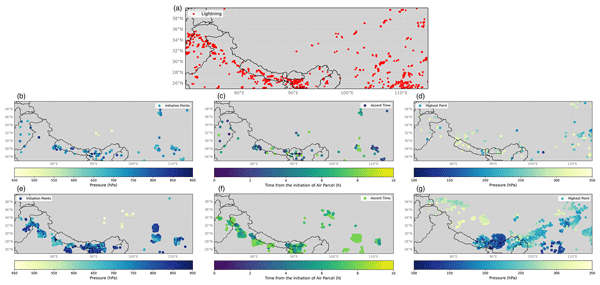
Intense deep convective clouds (e.g. lightning events) can rapidly move water vapour and other gases into the upper troposphere. The Third Pole region, especially the Himalayas, frequently experiences such storms. ICON (Icosahedral Nonhydrostatic )-CLM (climate limited-area mode) (3.3 km) and ERA5 reanalysis data (30 km), these convective events can lift water vapour into the upper troposphere but rarely into the lower stratosphere in the Third Pole. After reaching the upper troposphere, the water vapour tends to move horizontally away from the region.
Zhicheng Luo, Danny Risto, and Bodo Ahrens
The Cryosphere, 19, 6547–6576, https://doi.org/10.5194/tc-19-6547-2025, https://doi.org/10.5194/tc-19-6547-2025, 2025
Short summary
Short summary
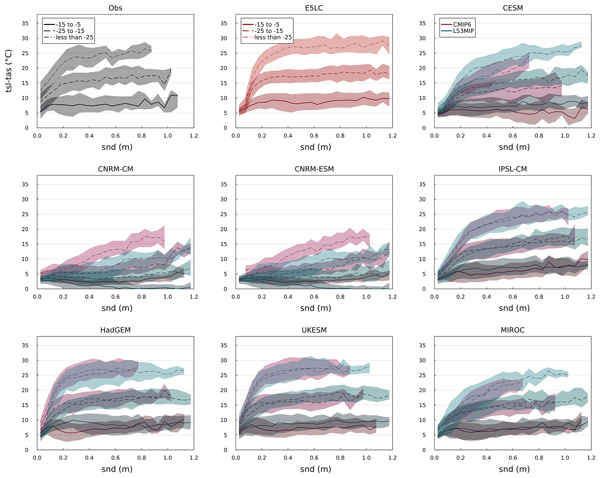
Climate models face challenges in accurately simulating cold regions' soil temperatures and snow conditions. By comparing different models, we found that the land surface models have a strong impact on simulation errors. Additionally, they struggle to account for snow’s insulating effect on the ground properly. Our findings highlight the need for improving frozen soil simulation, which is crucial for understanding the climate impacts of frozen soil.

Di Wang, Camille Risi, Lide Tian, Di Yang, Gabriel J. Bowen, Siteng Fan, Yang Su, Hongxi Pang, and Laurent Z. X. Li
Atmos. Meas. Tech., 18, 7349–7368, https://doi.org/10.5194/amt-18-7349-2025, https://doi.org/10.5194/amt-18-7349-2025, 2025
Short summary
Short summary
We developed and validated a model to correct for water vapor diffusion in sampling bags, enabling reconstruction of the original isotopic composition. We quantified all major sources of error and their uncertainties and introduced permeability experiments as a necessary step before field sampling. This study improves the accuracy, reliability, and standardization of atmospheric isotope observations using air bags.
Christian Czakay, Larisa Tarasova, and Bodo Ahrens
EGUsphere, https://doi.org/10.5194/egusphere-2025-3532, https://doi.org/10.5194/egusphere-2025-3532, 2025
Short summary
Short summary
In this study, we simulated streamflow in German river catchments for climate projections using a deep learning model. Flood-generating processes were identified using explainable artificial intelligence. In the median, the models project mostly less rain-on-snow floods in Germany in the future and an overall lower importance of snowmelt. The average and strongest rain-on-snow floods will have a higher magnitude. The trends found for the individual climate models can vary considerably.
Richard Lohmann, Christopher Purr, and Bodo Ahrens
EGUsphere, https://doi.org/10.5194/egusphere-2025-3670, https://doi.org/10.5194/egusphere-2025-3670, 2025
Short summary
Short summary
This study investigates the relationship between atmospheric blocking and the extreme events heatwaves, heavy rainfall and calm events in Germany in atmospheric reanalyses and CMIP6 climate simulations. In the reanalyses, the statistical relationship is more pronounced between blocking and calms than between blocking and heavy precipitation. In the simulated future climate, the frequency of the three extreme event types increases with nearly unchanged relationship of blocking with the extremes.
Lei Zhu, Philippe Ciais, Yitong Yao, Daniel Goll, Sebastiaan Luyssaert, Isabel Martínez Cano, Arthur Fendrich, Laurent Li, Hui Yang, Sassan Saatchi, Ricardo Dalagnol, and Wei Li
Geosci. Model Dev., 18, 4915–4933, https://doi.org/10.5194/gmd-18-4915-2025, https://doi.org/10.5194/gmd-18-4915-2025, 2025
Short summary
Short summary
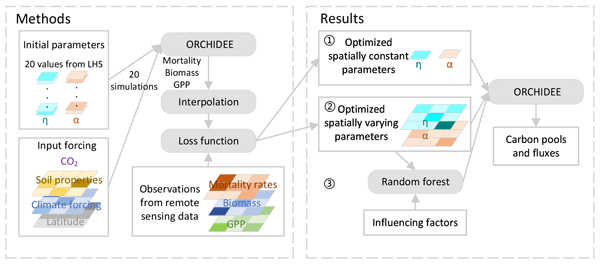
This study enhances the accuracy of modeling the carbon dynamics of the Amazon rainforest by optimizing key model parameters based on satellite data. Using spatially varying parameters for tree mortality and photosynthesis, we improved predictions of biomass, productivity, and tree mortality. Our findings highlight the critical role of wood density and water availability in forest processes, offering insights to use in refining global carbon cycle models.
Malcolm J. Roberts, Kevin A. Reed, Qing Bao, Joseph J. Barsugli, Suzana J. Camargo, Louis-Philippe Caron, Ping Chang, Cheng-Ta Chen, Hannah M. Christensen, Gokhan Danabasoglu, Ivy Frenger, Neven S. Fučkar, Shabeh ul Hasson, Helene T. Hewitt, Huanping Huang, Daehyun Kim, Chihiro Kodama, Michael Lai, Lai-Yung Ruby Leung, Ryo Mizuta, Paulo Nobre, Pablo Ortega, Dominique Paquin, Christopher D. Roberts, Enrico Scoccimarro, Jon Seddon, Anne Marie Treguier, Chia-Ying Tu, Paul A. Ullrich, Pier Luigi Vidale, Michael F. Wehner, Colin M. Zarzycki, Bosong Zhang, Wei Zhang, and Ming Zhao
Geosci. Model Dev., 18, 1307–1332, https://doi.org/10.5194/gmd-18-1307-2025, https://doi.org/10.5194/gmd-18-1307-2025, 2025
Short summary
Short summary
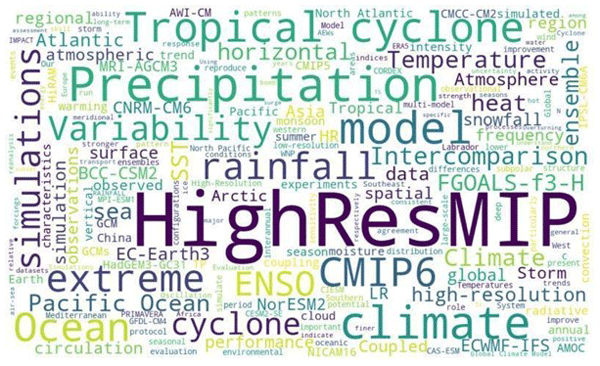
HighResMIP2 is a model intercomparison project focusing on high-resolution global climate models, that is, those with grid spacings of 25 km or less in the atmosphere and ocean, using simulations of decades to a century in length. We are proposing an update of our simulation protocol to make the models more applicable to key questions for climate variability and hazard in present-day and future projections and to build links with other communities to provide more robust climate information.
Lorenzo Sangelantoni, Stefano Tibaldi, Leone Cavicchia, Enrico Scoccimarro, Pier Luigi Vidale, Kevin Hodges, Vivien Mavel, Mattia Almansi, Chiara Cagnazzo, and Samuel Almond
EGUsphere, https://doi.org/10.5194/egusphere-2024-4157, https://doi.org/10.5194/egusphere-2024-4157, 2025
Preprint archived
Short summary
Short summary
We introduce a new dataset of European windstorms linked to extratropical cyclones, spanning whole ERA5 reanalysis period (1940–present). Developed under Copernicus Climate Change Service, the dataset provides standardized, high-quality information on windstorm tracks and footprints for industries like insurance and risk management. Preliminary findings show an increase in cold-season windstorms and their impacts in parts of Europe. Tracking methods contribute to uncertainties in key statistics.

Colin G. Jones, Fanny Adloff, Ben B. B. Booth, Peter M. Cox, Veronika Eyring, Pierre Friedlingstein, Katja Frieler, Helene T. Hewitt, Hazel A. Jeffery, Sylvie Joussaume, Torben Koenigk, Bryan N. Lawrence, Eleanor O'Rourke, Malcolm J. Roberts, Benjamin M. Sanderson, Roland Séférian, Samuel Somot, Pier Luigi Vidale, Detlef van Vuuren, Mario Acosta, Mats Bentsen, Raffaele Bernardello, Richard Betts, Ed Blockley, Julien Boé, Tom Bracegirdle, Pascale Braconnot, Victor Brovkin, Carlo Buontempo, Francisco Doblas-Reyes, Markus Donat, Italo Epicoco, Pete Falloon, Sandro Fiore, Thomas Frölicher, Neven S. Fučkar, Matthew J. Gidden, Helge F. Goessling, Rune Grand Graversen, Silvio Gualdi, José M. Gutiérrez, Tatiana Ilyina, Daniela Jacob, Chris D. Jones, Martin Juckes, Elizabeth Kendon, Erik Kjellström, Reto Knutti, Jason Lowe, Matthew Mizielinski, Paola Nassisi, Michael Obersteiner, Pierre Regnier, Romain Roehrig, David Salas y Mélia, Carl-Friedrich Schleussner, Michael Schulz, Enrico Scoccimarro, Laurent Terray, Hannes Thiemann, Richard A. Wood, Shuting Yang, and Sönke Zaehle
Earth Syst. Dynam., 15, 1319–1351, https://doi.org/10.5194/esd-15-1319-2024, https://doi.org/10.5194/esd-15-1319-2024, 2024
Short summary
Short summary
We propose a number of priority areas for the international climate research community to address over the coming decade. Advances in these areas will both increase our understanding of past and future Earth system change, including the societal and environmental impacts of this change, and deliver significantly improved scientific support to international climate policy, such as future IPCC assessments and the UNFCCC Global Stocktake.
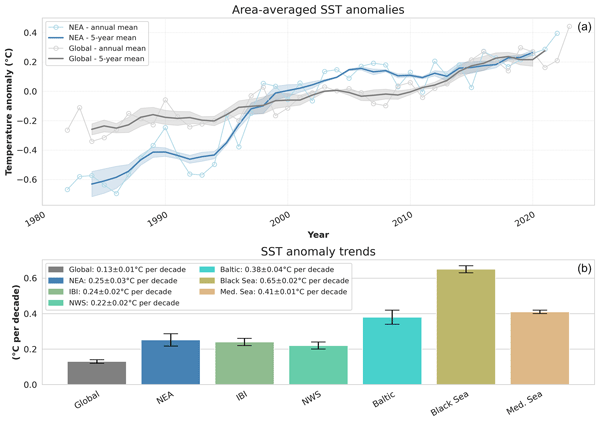
Karina von Schuckmann, Lorena Moreira, Mathilde Cancet, Flora Gues, Emmanuelle Autret, Ali Aydogdu, Lluis Castrillo, Daniele Ciani, Andrea Cipollone, Emanuela Clementi, Gianpiero Cossarini, Alvaro de Pascual-Collar, Vincenzo De Toma, Marion Gehlen, Rianne Giesen, Marie Drevillon, Claudia Fanelli, Kevin Hodges, Simon Jandt-Scheelke, Eric Jansen, Melanie Juza, Ioanna Karagali, Priidik Lagemaa, Vidar Lien, Leonardo Lima, Vladyslav Lyubartsev, Ilja Maljutenko, Simona Masina, Ronan McAdam, Pietro Miraglio, Helen Morrison, Tabea Rebekka Panteleit, Andrea Pisano, Marie-Isabelle Pujol, Urmas Raudsepp, Roshin Raj, Ad Stoffelen, Simon Van Gennip, Pierre Veillard, and Chunxue Yang
State Planet, 4-osr8, 2, https://doi.org/10.5194/sp-4-osr8-2-2024, https://doi.org/10.5194/sp-4-osr8-2-2024, 2024
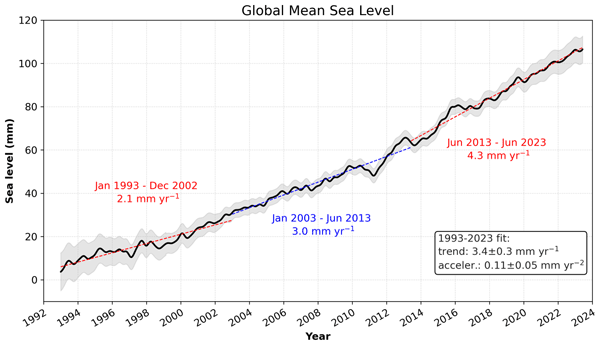
Karina von Schuckmann, Lorena Moreira, Mathilde Cancet, Flora Gues, Emmanuelle Autret, Jonathan Baker, Clément Bricaud, Romain Bourdalle-Badie, Lluis Castrillo, Lijing Cheng, Frederic Chevallier, Daniele Ciani, Alvaro de Pascual-Collar, Vincenzo De Toma, Marie Drevillon, Claudia Fanelli, Gilles Garric, Marion Gehlen, Rianne Giesen, Kevin Hodges, Doroteaciro Iovino, Simon Jandt-Scheelke, Eric Jansen, Melanie Juza, Ioanna Karagali, Thomas Lavergne, Simona Masina, Ronan McAdam, Audrey Minière, Helen Morrison, Tabea Rebekka Panteleit, Andrea Pisano, Marie-Isabelle Pujol, Ad Stoffelen, Sulian Thual, Simon Van Gennip, Pierre Veillard, Chunxue Yang, and Hao Zuo
State Planet, 4-osr8, 1, https://doi.org/10.5194/sp-4-osr8-1-2024, https://doi.org/10.5194/sp-4-osr8-1-2024, 2024
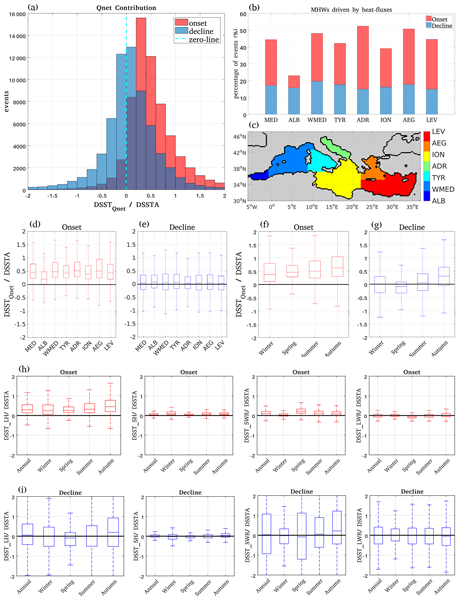
Dimitra Denaxa, Gerasimos Korres, Giulia Bonino, Simona Masina, and Maria Hatzaki
State Planet, 4-osr8, 11, https://doi.org/10.5194/sp-4-osr8-11-2024, https://doi.org/10.5194/sp-4-osr8-11-2024, 2024
Short summary
Short summary
We investigate the air–sea heat flux during marine heatwaves (MHWs) in the Mediterranean Sea. Surface heat flux drives 44 % of the onset and only 17 % of the declining MHW phases, suggesting a key role of oceanic processes. Heat flux is more important in warmer months and onset phases, with latent heat dominating. Shorter events show a weaker heat flux contribution. In most cases, mixed layer shoaling occurs over the entire MHW duration, followed by vertical mixing after the MHW end day.
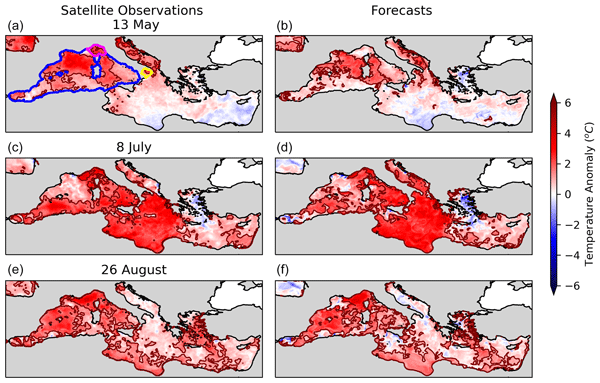
Ronan McAdam, Giulia Bonino, Emanuela Clementi, and Simona Masina
State Planet, 4-osr8, 13, https://doi.org/10.5194/sp-4-osr8-13-2024, https://doi.org/10.5194/sp-4-osr8-13-2024, 2024
Short summary
Short summary
In the summer of 2022, a regional short-term forecasting system was able to predict the onset, spread, peaks, and decay of a record-breaking marine heatwave in the Mediterranean Sea up to 10 d in advance. Satellite data show that the event was record-breaking in terms of basin-wide intensity and duration. This study demonstrates the potential of state-of-the-art forecasting systems to provide early warning of marine heatwaves for marine activities (e.g. conservation and aquaculture).
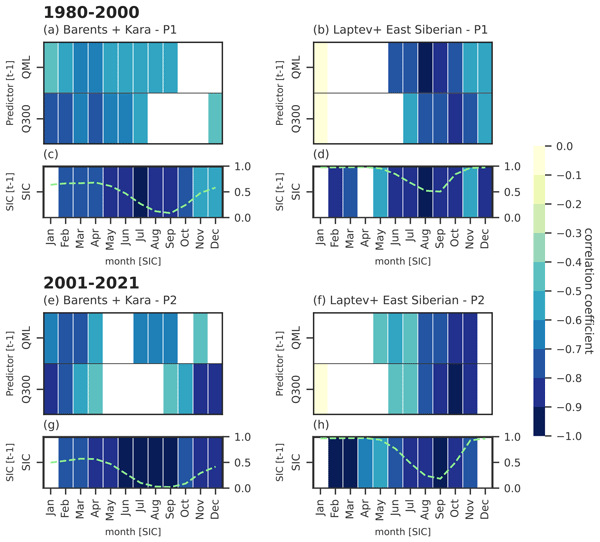
Elena Bianco, Doroteaciro Iovino, Simona Masina, Stefano Materia, and Paolo Ruggieri
The Cryosphere, 18, 2357–2379, https://doi.org/10.5194/tc-18-2357-2024, https://doi.org/10.5194/tc-18-2357-2024, 2024
Short summary
Short summary
Changes in ocean heat transport and surface heat fluxes in recent decades have altered the Arctic Ocean heat budget and caused warming of the upper ocean. Using two eddy-permitting ocean reanalyses, we show that this has important implications for sea ice variability. In the Arctic regional seas, upper-ocean heat content acts as an important precursor for sea ice anomalies on sub-seasonal timescales, and this link has strengthened since the 2000s.
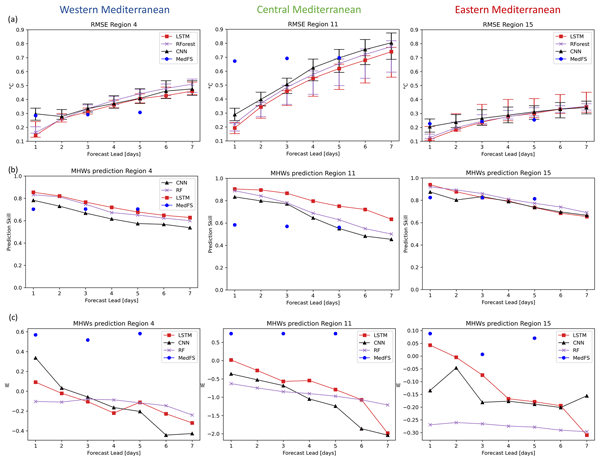
Giulia Bonino, Giuliano Galimberti, Simona Masina, Ronan McAdam, and Emanuela Clementi
Ocean Sci., 20, 417–432, https://doi.org/10.5194/os-20-417-2024, https://doi.org/10.5194/os-20-417-2024, 2024
Short summary
Short summary
This study employs machine learning to predict marine heatwaves (MHWs) in the Mediterranean Sea. MHWs have far-reaching impacts on society and ecosystems. Using data from ESA and ECMWF, the research develops accurate prediction models for sea surface temperature (SST) and MHWs across the region. Notably, machine learning methods outperform existing forecasting systems, showing promise in early MHW predictions. The study also highlights the importance of solar radiation as a predictor of SST.
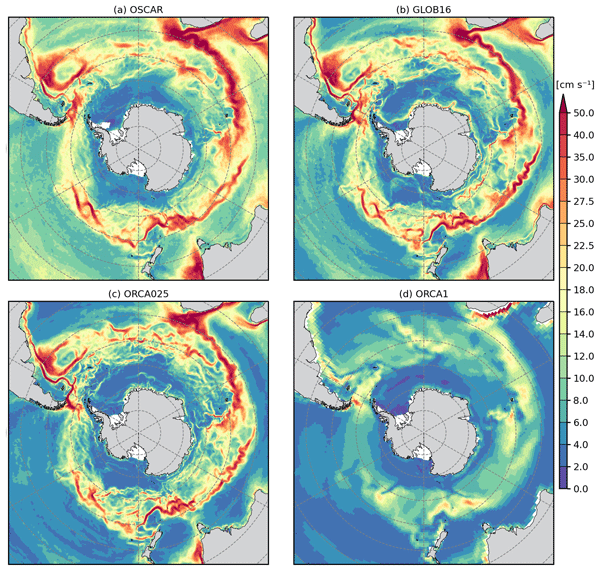
Doroteaciro Iovino, Pier Giuseppe Fogli, and Simona Masina
Geosci. Model Dev., 16, 6127–6159, https://doi.org/10.5194/gmd-16-6127-2023, https://doi.org/10.5194/gmd-16-6127-2023, 2023
Short summary
Short summary
This paper describes the model performance of three global ocean–sea ice configurations, from non-eddying (1°) to eddy-rich (1/16°) resolutions. Model simulations are obtained following the Ocean Model Intercomparison Project phase 2 (OMIP2) protocol. We compare key global climate variables across the three models and against observations, emphasizing the relative advantages and disadvantages of running forced ocean–sea ice models at higher resolution.
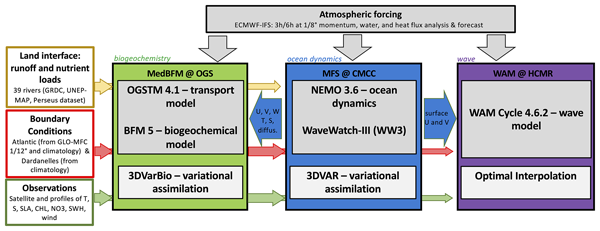
Giovanni Coppini, Emanuela Clementi, Gianpiero Cossarini, Stefano Salon, Gerasimos Korres, Michalis Ravdas, Rita Lecci, Jenny Pistoia, Anna Chiara Goglio, Massimiliano Drudi, Alessandro Grandi, Ali Aydogdu, Romain Escudier, Andrea Cipollone, Vladyslav Lyubartsev, Antonio Mariani, Sergio Cretì, Francesco Palermo, Matteo Scuro, Simona Masina, Nadia Pinardi, Antonio Navarra, Damiano Delrosso, Anna Teruzzi, Valeria Di Biagio, Giorgio Bolzon, Laura Feudale, Gianluca Coidessa, Carolina Amadio, Alberto Brosich, Arnau Miró, Eva Alvarez, Paolo Lazzari, Cosimo Solidoro, Charikleia Oikonomou, and Anna Zacharioudaki
Ocean Sci., 19, 1483–1516, https://doi.org/10.5194/os-19-1483-2023, https://doi.org/10.5194/os-19-1483-2023, 2023
Short summary
Short summary
The paper presents the Mediterranean Forecasting System evolution and performance developed in the framework of the Copernicus Marine Service.
Ali Aydogdu, Pietro Miraglio, Romain Escudier, Emanuela Clementi, and Simona Masina
State Planet, 1-osr7, 6, https://doi.org/10.5194/sp-1-osr7-6-2023, https://doi.org/10.5194/sp-1-osr7-6-2023, 2023
Short summary
Short summary
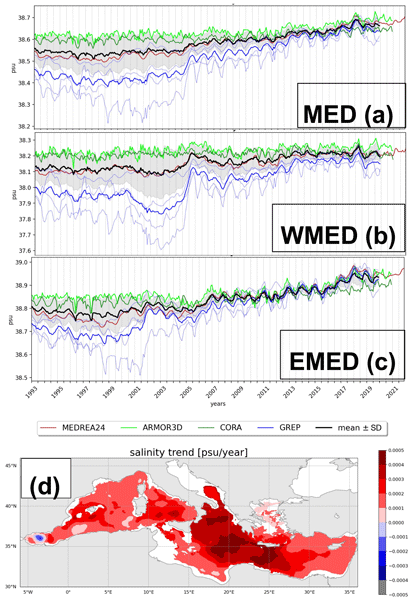
This paper investigates the salt content, salinity anomaly and trend in the Mediterranean Sea using observational and reanalysis products. The salt content increases overall, while negative salinity anomalies appear in the western basin, especially around the upwelling regions. There is a large spread in the salinity estimates that is reduced with the emergence of the Argo profilers.
Andrea Cipollone, Deep Sankar Banerjee, Doroteaciro Iovino, Ali Aydogdu, and Simona Masina
Ocean Sci., 19, 1375–1392, https://doi.org/10.5194/os-19-1375-2023, https://doi.org/10.5194/os-19-1375-2023, 2023
Short summary
Short summary
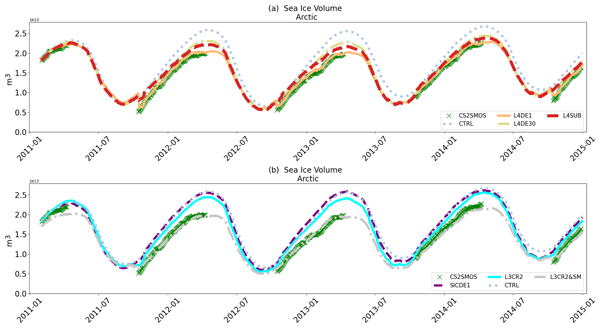
Sea-ice volume is characterized by low predictability compared to the sea ice area or the extent. A joint initialization of the thickness and concentration using satellite data could improve the predictive power, although it is still absent in the present global analysis–reanalysis systems. This study shows a scheme to correct the two features together that can be easily extended to include ocean variables. The impact of such a joint initialization is shown and compared among different set-ups.
Leonardo Lima, Salvatore Causio, Mehmet Ilicak, Ronan McAdam, and Eric Jansen
State Planet Discuss., https://doi.org/10.5194/sp-2023-19, https://doi.org/10.5194/sp-2023-19, 2023
Revised manuscript not accepted
Short summary
Short summary
Recent studies have revealed an increase in the ocean temperature and heat content in the Black Sea, where the research on marine heat waves (MHWs) is still incipient. Our study reveals long-lasting MHWs and interesting connections between surface and subsurface MHWs in the Black Sea. Our analysis is a starting point to create a monitoring system of MHWs for the Black Sea.
Emmanouil Flaounas, Leonardo Aragão, Lisa Bernini, Stavros Dafis, Benjamin Doiteau, Helena Flocas, Suzanne L. Gray, Alexia Karwat, John Kouroutzoglou, Piero Lionello, Mario Marcello Miglietta, Florian Pantillon, Claudia Pasquero, Platon Patlakas, María Ángeles Picornell, Federico Porcù, Matthew D. K. Priestley, Marco Reale, Malcolm J. Roberts, Hadas Saaroni, Dor Sandler, Enrico Scoccimarro, Michael Sprenger, and Baruch Ziv
Weather Clim. Dynam., 4, 639–661, https://doi.org/10.5194/wcd-4-639-2023, https://doi.org/10.5194/wcd-4-639-2023, 2023
Short summary
Short summary
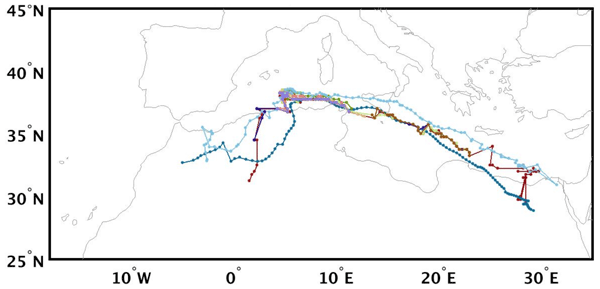
Cyclone detection and tracking methods (CDTMs) have different approaches in defining and tracking cyclone centers. This leads to disagreements on extratropical cyclone climatologies. We present a new approach that combines tracks from individual CDTMs to produce new composite tracks. These new tracks are shown to correspond to physically meaningful systems with distinctive life stages.
Iván M. Parras-Berrocal, Rubén Vázquez, William Cabos, Dimitry V. Sein, Oscar Álvarez, Miguel Bruno, and Alfredo Izquierdo
Ocean Sci., 19, 941–952, https://doi.org/10.5194/os-19-941-2023, https://doi.org/10.5194/os-19-941-2023, 2023
Short summary
Short summary
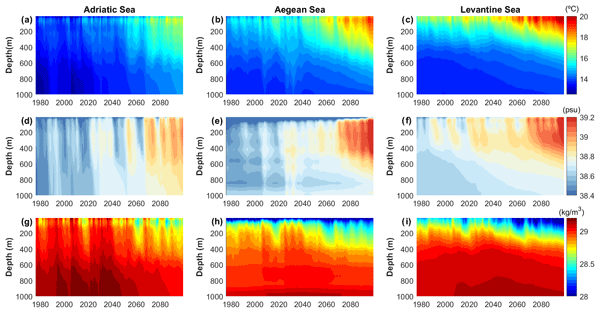
Global warming may strongly affect dense water formation in the eastern Mediterranean, potentially impacting basin circulation and water properties. We find that at the end of the century dense water formation is reduced by 75 % for the Adriatic, 84 % for the Aegean, and 83 % for the Levantine Sea. This reduction is caused by changes in the temperature and salinity of surface and intermediate waters, which strengthen the vertical stratification, hampering deep convection.
Giulia Bonino, Simona Masina, Giuliano Galimberti, and Matteo Moretti
Earth Syst. Sci. Data, 15, 1269–1285, https://doi.org/10.5194/essd-15-1269-2023, https://doi.org/10.5194/essd-15-1269-2023, 2023
Short summary
Short summary
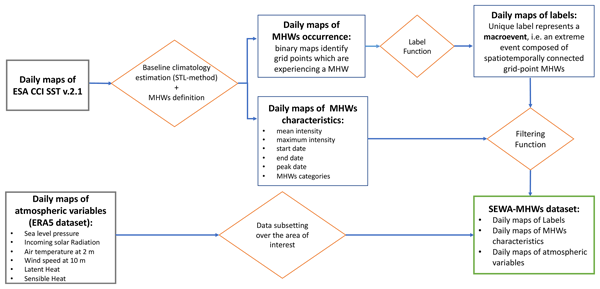
We present a unique observational dataset of marine heat wave (MHW) macroevents and their characteristics over southern Europe and western Asian (SEWA) basins in the SEWA-MHW dataset. This dataset is the first effort in the literature to archive extremely hot sea surface temperature macroevents. The advantages of the availability of SEWA-MHWs are avoiding the waste of computational resources to detect MHWs and building a consistent framework which would increase comparability among MHW studies.
Di Wang, Lide Tian, Camille Risi, Xuejie Wang, Jiangpeng Cui, Gabriel J. Bowen, Kei Yoshimura, Zhongwang Wei, and Laurent Z. X. Li
Atmos. Chem. Phys., 23, 3409–3433, https://doi.org/10.5194/acp-23-3409-2023, https://doi.org/10.5194/acp-23-3409-2023, 2023
Short summary
Short summary
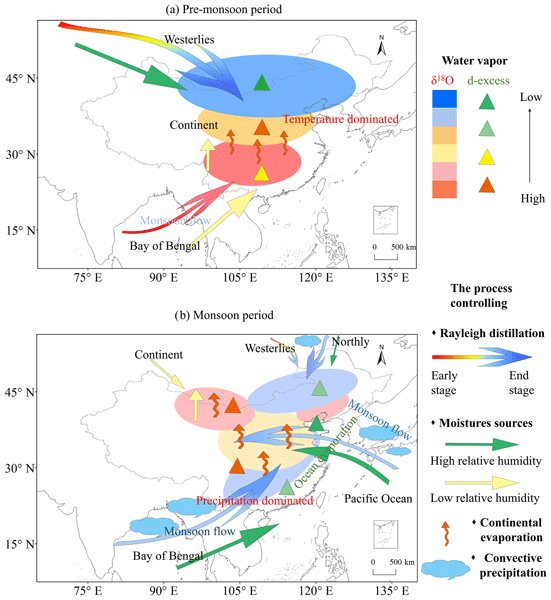
To better understand the spatial and temporal distribution of vapor isotopes, we present two vehicle-based spatially continuous snapshots of the near-surface vapor isotopes in China during the pre-monsoon and monsoon periods. These observations are explained well by different moisture sources and processes along the air mass trajectories. Our results suggest that proxy records need to be interpreted in the context of regional systems and sources of moisture.
Yuan Zhang, Devaraju Narayanappa, Philippe Ciais, Wei Li, Daniel Goll, Nicolas Vuichard, Martin G. De Kauwe, Laurent Li, and Fabienne Maignan
Geosci. Model Dev., 15, 9111–9125, https://doi.org/10.5194/gmd-15-9111-2022, https://doi.org/10.5194/gmd-15-9111-2022, 2022
Short summary
Short summary
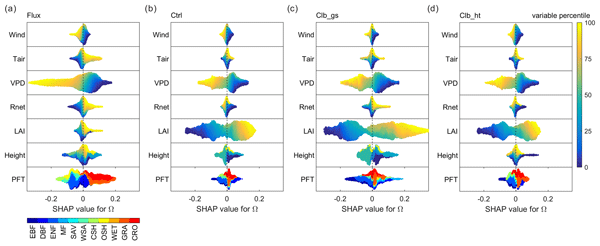
There are a few studies to examine if current models correctly represented the complex processes of transpiration. Here, we use a coefficient Ω, which indicates if transpiration is mainly controlled by vegetation processes or by turbulence, to evaluate the ORCHIDEE model. We found a good performance of ORCHIDEE, but due to compensation of biases in different processes, we also identified how different factors control Ω and where the model is wrong. Our method is generic to evaluate other models.

Giulia Bonino, Doroteaciro Iovino, Laurent Brodeau, and Simona Masina
Geosci. Model Dev., 15, 6873–6889, https://doi.org/10.5194/gmd-15-6873-2022, https://doi.org/10.5194/gmd-15-6873-2022, 2022
Short summary
Short summary
The sea surface temperature (SST) is highly influenced by the transfer of energy driven by turbulent air–sea fluxes (TASFs). In the NEMO ocean general circulation model, TASFs are computed by means of bulk formulas. Bulk formulas require the choice of a given bulk parameterization, which influences the magnitudes of the TASFs. Our results show that parameterization-related SST differences are primarily sensitive to the wind stress differences across parameterizations.
Marco Reale, Gianpiero Cossarini, Paolo Lazzari, Tomas Lovato, Giorgio Bolzon, Simona Masina, Cosimo Solidoro, and Stefano Salon
Biogeosciences, 19, 4035–4065, https://doi.org/10.5194/bg-19-4035-2022, https://doi.org/10.5194/bg-19-4035-2022, 2022
Short summary
Short summary
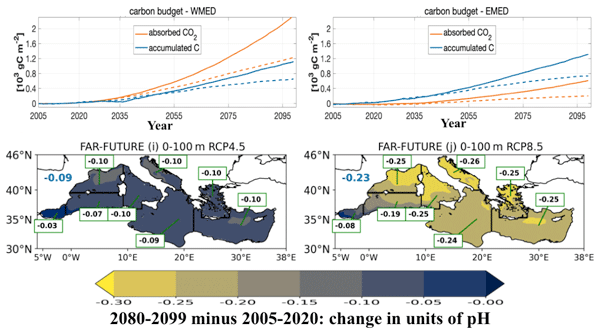
Future projections under the RCP8.5 and RCP4.5 emission scenarios of the Mediterranean Sea biogeochemistry at the end of the 21st century show different levels of decline in nutrients, oxygen and biomasses and an acidification of the water column. The signal intensity is stronger under RCP8.5 and in the eastern Mediterranean. Under RCP4.5, after the second half of the 21st century, biogeochemical variables show a recovery of the values observed at the beginning of the investigated period.
Praveen Kumar Pothapakula, Amelie Hoff, Anika Obermann-Hellhund, Timo Keber, and Bodo Ahrens
Earth Syst. Dynam. Discuss., https://doi.org/10.5194/esd-2022-24, https://doi.org/10.5194/esd-2022-24, 2022
Preprint withdrawn
Short summary
Short summary
The Vb-cyclones simulated with a coupled regional climate model with two different driving data sets are compared against each other in historical period, thereafter the future climate predictions were analyzed. The Vb-cyclones in two simulations agree well in terms of their occurrence, intensity and track in two simulations, though there are discrepancies in seasonal cycles and their process linking Mediterranean Sea in historical period. So significant changes were observed in the future.
Enrico Scoccimarro, Daniele Peano, Silvio Gualdi, Alessio Bellucci, Tomas Lovato, Pier Giuseppe Fogli, and Antonio Navarra
Geosci. Model Dev., 15, 1841–1854, https://doi.org/10.5194/gmd-15-1841-2022, https://doi.org/10.5194/gmd-15-1841-2022, 2022
Short summary
Short summary
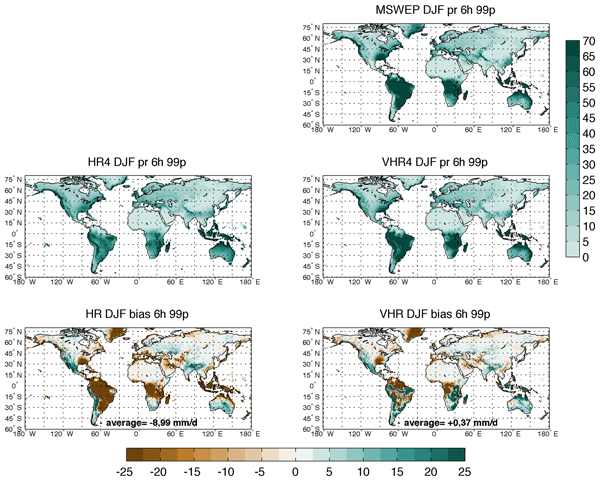
This study evaluated the ability of the CMCC-CM2 climate model participating to the last CMIP6 effort, in representing extreme events of precipitation and temperature at the daily and 6-hourly frequencies. The 1/4° resolution version of the atmospheric model provides better results than the version at 1° resolution for temperature extremes, at both time frequencies. For precipitation extremes, especially at the daily time frequency, the higher resolution does not improve model results.
Alba de la Vara, Iván M. Parras-Berrocal, Alfredo Izquierdo, Dmitry V. Sein, and William Cabos
Earth Syst. Dynam., 13, 303–319, https://doi.org/10.5194/esd-13-303-2022, https://doi.org/10.5194/esd-13-303-2022, 2022
Short summary
Short summary
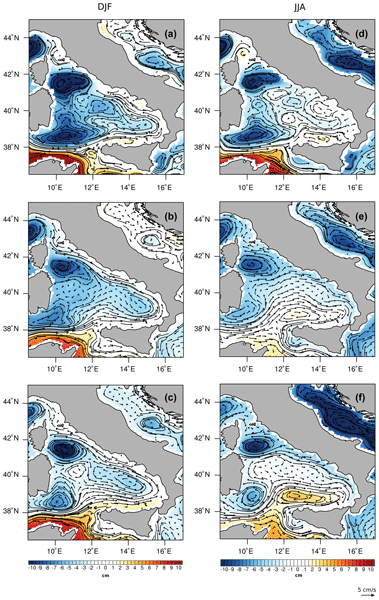
We study with the regionally coupled climate model ROM the impact of climate change on the Tyrrhenian Sea circulation, as well as the possible mechanisms and consequences in the NW Mediterranean Sea. Our results show a shift towards the summer circulation pattern by the end of the century. Also, water flowing via the Corsica Channel is more stratified and smaller in volume. Both factors may contribute to the interruption of deep water formation in the Gulf of Lions in the future.
Guillaume Evin, Samuel Somot, and Benoit Hingray
Earth Syst. Dynam., 12, 1543–1569, https://doi.org/10.5194/esd-12-1543-2021, https://doi.org/10.5194/esd-12-1543-2021, 2021
Short summary
Short summary
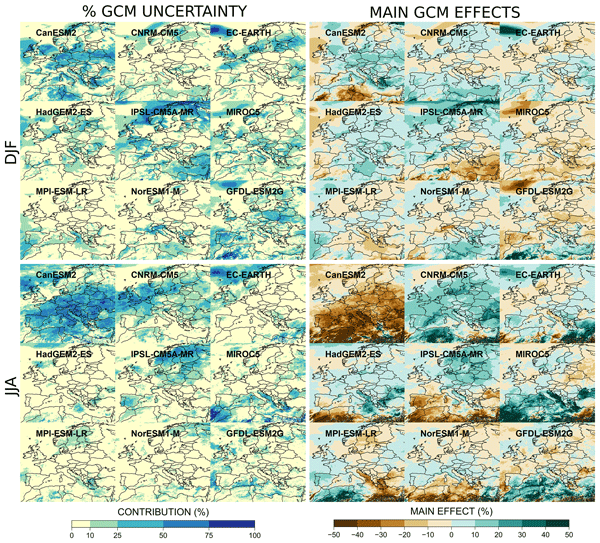
This research paper proposes an assessment of mean climate change responses and related uncertainties over Europe for mean seasonal temperature and total seasonal precipitation. An advanced statistical approach is applied to a large ensemble of 87 high-resolution EURO-CORDEX projections. For the first time, we provide a comprehensive estimation of the relative contribution of GCMs and RCMs, RCP scenarios, and internal variability to the total variance of a very large ensemble.
Erika Brattich, Hongyu Liu, Bo Zhang, Miguel Ángel Hernández-Ceballos, Jussi Paatero, Darko Sarvan, Vladimir Djurdjevic, Laura Tositti, and Jelena Ajtić
Atmos. Chem. Phys., 21, 17927–17951, https://doi.org/10.5194/acp-21-17927-2021, https://doi.org/10.5194/acp-21-17927-2021, 2021
Short summary
Short summary
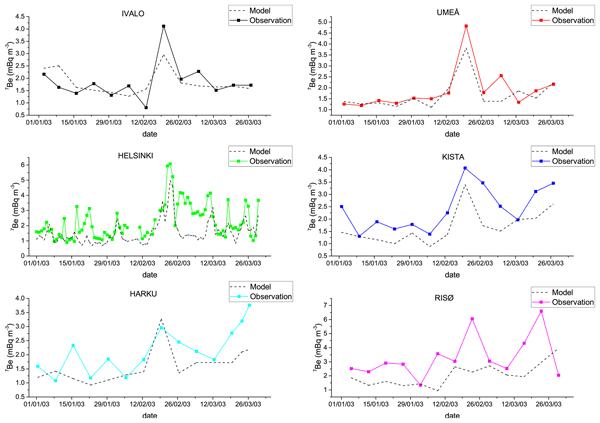
In this study we analyse the output of a chemistry and transport model together with observations of different meteorological and compositional variables to demonstrate the link between sudden stratospheric warming and transport of stratospheric air to the surface in the subpolar regions of Europe during the cold season. Our findings have particular implications for atmospheric composition since climate projections indicate more frequent sudden stratospheric warming under a warmer climate.
Cited articles
Ahumada, M. A. and Cruzado, A.: Modeling of the circulation in the Northwestern Mediterranean Sea with the Princeton Ocean Model, Ocean Sci., 3, 77–89, https://doi.org/10.5194/os-3-77-2007, 2007. a
Bartók, B., Wild, M., Folini, D., Lüthi, D., Kotlarski, S., Schär, C., Vautard, R., Jerez, S., and Imecs, Z.: Projected changes in surface solar radiation in CMIP5 global climate models and in EURO-CORDEX regional climate models for Europe, Clim. Dynam., 49, 2665–2683, https://doi.org/10.1007/s00382-016-3471-2, 2017. a
Bergamasco, A. and Malanotte-Rizzoli, P.: The circulation of the Mediterranean Sea: a historical review of experimental investigations, Advances in Oceanography and Limnology, 1, 11–28, https://doi.org/10.1080/19475721.2010.491656, 2010. a
Bonino, G., McAdam, R., Athanasiadis, P., Cavicchia, L., Rodrigues, R. R., Scoccimarro, E., Tibaldi, S., and Masina, S.: Mediterranean summer marine heatwaves triggered by weaker winds under subtropical ridges, Nat. Geosci., 18, 848–853, https://doi.org/10.1038/s41561-025-01762-9, 2025. a, b
Boé, J., Somot, S., Corre, L., and Nabat, P.: Large discrepancies in summer climate change over Europe as projected by global and regional climate models: causes and consequences, Clim. Dynam., 54, 2981–3002, https://doi.org/10.1007/s00382-020-05153-1, 2020. a
Buongiorno Nardelli, B., Tronconi, C., Pisano, A., and Santoleri, R.: High and Ultra-High resolution processing of satellite Sea Surface Temperature data over Southern European Seas in the framework of MyOcean project, Remote Sens. Environ., 129, 1–16, https://doi.org/10.1016/j.rse.2012.10.012, 2013. a
Byun, U., Chang, E., Kim, J., Ahn, J., Cha, D., Min, S., and Byun, Y.: Investigation of Added Value in Regional Climate Models for East Asian Storm Track Analysis, J. Geophys. Res.-Atmos., 128, e2023JD039167, https://doi.org/10.1029/2023JD039167, 2023. a
Capotondi, A., Rodrigues, R. R., Sen Gupta, A., Benthuysen, J. A., Deser, C., Frölicher, T. L., Lovenduski, N. S., Amaya, D. J., Le Grix, N., Xu, T., Hermes, J., Holbrook, N. J., Martinez-Villalobos, C., Masina, S., Roxy, M. K., Schaeffer, A., Schlegel, R. W., Smith, K. E., and Wang, C.: A global overview of marine heatwaves in a changing climate, Commun. Earth Environ., 5, 701, https://doi.org/10.1038/s43247-024-01806-9, 2024. a, b, c, d
Cardoso, R. M. and Soares, P. M. M.: Is there added value in the EURO-CORDEX hindcast temperature simulations? Assessing the added value using climate distributions in Europe, Int. J. Climatol., 42, 4024–4039, https://doi.org/10.1002/joc.7472, 2022. a
Careto, J. A. M., Soares, P. M. M., Cardoso, R. M., Herrera, S., and Gutiérrez, J. M.: Added value of EURO-CORDEX high-resolution downscaling over the Iberian Peninsula revisited – Part 1: Precipitation, Geosci. Model Dev., 15, 2635–2652, https://doi.org/10.5194/gmd-15-2635-2022, 2022. a
Cavicchia, L., Gualdi, S., Sanna, A., and Oddo, P.: The Regional Ocean-Atmosphere Coupled Model COSMO-NEMO_MFS, CMCC Research Paper, https://www.cmcc.it/wp-content/uploads/2015/04/rp0254-csp-04-2015.pdf (last access: 31 August 2026), 2015. a
Ciarlo`, J. M., Coppola, E., Fantini, A., Giorgi, F., Gao, X., Tong, Y., Glazer, R. H., Torres Alavez, J. A., Sines, T., Pichelli, E., Raffaele, F., Das, S., Bukovsky, M., Ashfaq, M., Im, E.-S., Nguyen-Xuan, T., Teichmann, C., Remedio, A., Remke, T., Bülow, K., Weber, T., Buntemeyer, L., Sieck, K., Rechid, D., and Jacob, D.: A new spatially distributed added value index for regional climate models: the EURO-CORDEX and the CORDEX-CORE highest resolution ensembles, Clim. Dynam., 57, 1403–1424, https://doi.org/10.1007/s00382-020-05400-5, 2021. a, b, c, d
Conte, D., Gualdi, S., and Lionello, P.: Effect of Model Resolution on Intense and Extreme Precipitationinthe Mediterranean Region, Atmosphere, 11, 699, https://doi.org/10.3390/atmos11070699, 2020. a
Cramer, W., Guiot, J., Fader, M., Garrabou, J., Gattuso, J.-P., Iglesias, A., Lange, M. A., Lionello, P., Llasat, M. C., Paz, S., Peñuelas, J., Snoussi, M., Toreti, A., Tsimplis, M. N., and Xoplaki, E.: Climate change and interconnected risks to sustainable development in the Mediterranean, Nat. Clim. Change, 8, 972–980, https://doi.org/10.1038/s41558-018-0299-2, 2018. a
Darmaraki, S., Somot, S., Sevault, F., and Nabat, P.: Past Variability of Mediterranean Sea Marine Heatwaves, Geophys. Res. Lett., 46, 9813–9823, https://doi.org/10.1029/2019GL082933, 2019a. a
Darmaraki, S., Somot, S., Sevault, F., Nabat, P., Cabos Narvaez, W. D., Cavicchia, L., Djurdjevic, V., Li, L., Sannino, G., and Sein, D. V.: Future evolution of Marine Heatwaves in the Mediterranean Sea, Clim. Dynam., 53, 1371–1392, https://doi.org/10.1007/s00382-019-04661-z, 2019b. a, b
Darmaraki, S., Denaxa, D., Theodorou, I., Livanou, E., Rigatou, D., Raitsos E., D., Stavrakidis-Zachou, O., Dimarchopoulou, D., Bonino, G., McADAM, R., Organelli, E., Pitsouni, A., and Parasyris, A.: Marine Heatwaves in the Mediterranean Sea: A Literature Review, Mediterr. Mar. Sci., 25, 586–620, https://doi.org/10.12681/mms.38392, 2024. a
Dayan, H., McAdam, R., Juza, M., Masina, S., and Speich, S.: Marine heat waves in the Mediterranean Sea: An assessment from the surface to the subsurface to meet national needs, Front. Mar. Sci., 10, 1045138, https://doi.org/10.3389/fmars.2023.1045138, 2023. a
Demirov, E. and Pinardi, N.: Simulation of the Mediterranean Sea circulation from 1979 to 1993: Part I. The interannual variability, J. Marine Syst., 33–34, 23–50, https://doi.org/10.1016/S0924-7963(02)00051-9, 2002. a
Denaxa, D., Korres, G., Darmaraki, S., and Hatzaki, M.: Insights into sea surface temperature variability and the impact of long-term warming on marine heatwaves in the Mediterranean Sea, in: 9th edition of the Copernicus Ocean State Report (OSR9), edited by: von Schuckmann, K., Moreira, L., de Pascual Collar, Á., Grégoire, M., Brasseur, P., Garric, G., Karstensen, J., Lionello, P., Marcos, M., Poulain, P.-M., and Staneva, J., Copernicus Publications, State Planet, 6-osr9, 10, https://doi.org/10.5194/sp-6-osr9-10-2025, 2025. a
Di Luca, A., De Elía, R., and Laprise, R.: Potential for small scale added value of RCM's downscaled climate change signal, Clim. Dynam., 40, 601–618, https://doi.org/10.1007/s00382-012-1415-z, 2013. a
Djurdjevic, V. and Rajkovic, B.: Verification of a coupled atmosphere-ocean model using satellite observations over the Adriatic Sea, Ann. Geophys., 26, 1935–1954, https://doi.org/10.5194/angeo-26-1935-2008, 2008. a
Dufresne, J.-L., Foujols, M.-A., Denvil, S., Caubel, A., Marti, O., Aumont, O., Balkanski, Y., Bekki, S., Bellenger, H., Benshila, R., Bony, S., Bopp, L., Braconnot, P., Brockmann, P., Cadule, P., Cheruy, F., Codron, F., Cozic, A., Cugnet, D., De Noblet, N., Duvel, J.-P., Ethé, C., Fairhead, L., Fichefet, T., Flavoni, S., Friedlingstein, P., Grandpeix, J.-Y., Guez, L., Guilyardi, E., Hauglustaine, D., Hourdin, F., Idelkadi, A., Ghattas, J., Joussaume, S., Kageyama, M., Krinner, G., Labetoulle, S., Lahellec, A., Lefebvre, M.-P., Lefevre, F., Levy, C., Li, Z. X., Lloyd, J., Lott, F., Madec, G., Mancip, M., Marchand, M., Masson, S., Meurdesoif, Y., Mignot, J., Musat, I., Parouty, S., Polcher, J., Rio, C., Schulz, M., Swingedouw, D., Szopa, S., Talandier, C., Terray, P., Viovy, N., and Vuichard, N.: Climate change projections using the IPSL-CM5 Earth System Model: from CMIP3 to CMIP5, Clim. Dynam., 40, 2123–2165, https://doi.org/10.1007/s00382-012-1636-1, 2013. a
Döscher, R., Acosta, M., Alessandri, A., Anthoni, P., Arsouze, T., Bergman, T., Bernardello, R., Boussetta, S., Caron, L.-P., Carver, G., Castrillo, M., Catalano, F., Cvijanovic, I., Davini, P., Dekker, E., Doblas-Reyes, F. J., Docquier, D., Echevarria, P., Fladrich, U., Fuentes-Franco, R., Gröger, M., v. Hardenberg, J., Hieronymus, J., Karami, M. P., Keskinen, J.-P., Koenigk, T., Makkonen, R., Massonnet, F., Ménégoz, M., Miller, P. A., Moreno-Chamarro, E., Nieradzik, L., van Noije, T., Nolan, P., O'Donnell, D., Ollinaho, P., van den Oord, G., Ortega, P., Prims, O. T., Ramos, A., Reerink, T., Rousset, C., Ruprich-Robert, Y., Le Sager, P., Schmith, T., Schrödner, R., Serva, F., Sicardi, V., Sloth Madsen, M., Smith, B., Tian, T., Tourigny, E., Uotila, P., Vancoppenolle, M., Wang, S., Wårlind, D., Willén, U., Wyser, K., Yang, S., Yepes-Arbós, X., and Zhang, Q.: The EC-Earth3 Earth system model for the Coupled Model Intercomparison Project 6, Geosci. Model Dev., 15, 2973–3020, https://doi.org/10.5194/gmd-15-2973-2022, 2022. a
Embury, O., Merchant, C. J., Good, S. A., Rayner, N. A., Høyer, J. L., Atkinson, C., Block, T., Alerskans, E., Pearson, K. J., Worsfold, M., McCarroll, N., and Donlon, C.: Satellite-based time-series of sea-surface temperature since 1980 for climate applications, Sci. Data, 11, 326, https://doi.org/10.1038/s41597-024-03147-w, 2024. a
Escudier, R., Clementi, E., Omar, M., Cipollone, A., Pistoia, J., Aydogdu, A., Drudi, M., Grandi, A., Lyubartsev, V., Lecci, R., Cretí, S., Masina, S., Coppini, G., an Pinardi, N.: Mediterranean Sea Physical Reanalysis (CMEMS MED-Currents) (Version 1), Copernicus Monitoring Environment Marine Service (CMEMS) [data set], https://doi.org/10.48670/mds-00375, 2020. a
Escudier, R., Clementi, E., Cipollone, A., Pistoia, J., Drudi, M., Grandi, A., Lyubartsev, V., Lecci, R., Aydogdu, A., Delrosso, D., Omar, M., Masina, S., Coppini, G., and Pinardi, N.: A High Resolution Reanalysis for the Mediterranean Sea, Front. Earth Sci., 9, 702285, https://doi.org/10.3389/feart.2021.702285, 2021. a
E.U. Copernicus Marine Service Information (CMEMS): Mediterranean Sea – High Resolution Diurnal Subskin Sea Surface Temperature Analysis, Marine Data Store (MDS) [data set], https://doi.org/10.48670/moi-00170, 2023. a
E.U. Copernicus Marine Service Information (CMEMS): Mediterranean Sea – High Resolution L4 Sea Surface Temperature Reprocessed, Marine Data Store (MDS) [data set], https://doi.org/10.48670/moi-00173, 2024. a
Eyring, V., Bony, S., Meehl, G. A., Senior, C. A., Stevens, B., Stouffer, R. J., and Taylor, K. E.: Overview of the Coupled Model Intercomparison Project Phase 6 (CMIP6) experimental design and organization, Geosci. Model Dev., 9, 1937–1958, https://doi.org/10.5194/gmd-9-1937-2016, 2016. a
Fantini, A., Raffaele, F., Torma, C., Bacer, S., Coppola, E., Giorgi, F., Ahrens, B., Dubois, C., Sanchez, E., and Verdecchia, M.: Assessment of multiple daily precipitation statistics in ERA-Interim driven Med-CORDEX and EURO-CORDEX experiments against high resolution observations, Clim. Dynam., 51, 877–900, https://doi.org/10.1007/s00382-016-3453-4, 2018. a
Freedman, D. and Diaconis, P.: On the histogram as a density estimator:L 2 theory, Z. Wahrscheinlichkeit., 57, 453–476, https://doi.org/10.1007/BF01025868, 1981. a
Frölicher, T. L., Fischer, E. M., and Gruber, N.: Marine heatwaves under global warming, Nature, 560, 360–364, https://doi.org/10.1038/s41586-018-0383-9, 2018. a
Garfinkel, C. I., Knobler, S., Liberzon, D., and Rilov, G.: Precursors of Marine Heatwaves in the Eastern Mediterranean, Geophys. Res. Lett., 53, e2025GL120652, https://doi.org/10.1029/2025GL120652, 2026. a
Garrabou, J., Gómez-Gras, D., Medrano, A., Cerrano, C., Ponti, M., Schlegel, R., Bensoussan, N., Turicchia, E., Sini, M., Gerovasileiou, V., Teixido, N., Mirasole, A., Tamburello, L., Cebrian, E., Rilov, G., Ledoux, J., Souissi, J. B., Khamassi, F., Ghanem, R., Benabdi, M., Grimes, S., Ocaña, O., Bazairi, H., Hereu, B., Linares, C., Kersting, D. K., La Rovira, G., Ortega, J., Casals, D., Pagès-Escolà, M., Margarit, N., Capdevila, P., Verdura, J., Ramos, A., Izquierdo, A., Barbera, C., Rubio-Portillo, E., Anton, I., López-Sendino, P., Díaz, D., Vázquez-Luis, M., Duarte, C., Marbà, N., Aspillaga, E., Espinosa, F., Grech, D., Guala, I., Azzurro, E., Farina, S., Cristina Gambi, M., Chimienti, G., Montefalcone, M., Azzola, A., Mantas, T. P., Fraschetti, S., Ceccherelli, G., Kipson, S., Bakran-Petricioli, T., Petricioli, D., Jimenez, C., Katsanevakis, S., Kizilkaya, I. T., Kizilkaya, Z., Sartoretto, S., Elodie, R., Ruitton, S., Comeau, S., Gattuso, J., and Harmelin, J.: Marine heatwaves drive recurrent mass mortalities in the Mediterranean Sea, Glob. Change Biol., 28, 5708–5725, https://doi.org/10.1111/gcb.16301, 2022. a
Giorgetta, M. A., Jungclaus, J., Reick, C. H., Legutke, S., Bader, J., Böttinger, M., Brovkin, V., Crueger, T., Esch, M., Fieg, K., Glushak, K., Gayler, V., Haak, H., Hollweg, H., Ilyina, T., Kinne, S., Kornblueh, L., Matei, D., Mauritsen, T., Mikolajewicz, U., Mueller, W., Notz, D., Pithan, F., Raddatz, T., Rast, S., Redler, R., Roeckner, E., Schmidt, H., Schnur, R., Segschneider, J., Six, K. D., Stockhause, M., Timmreck, C., Wegner, J., Widmann, H., Wieners, K., Claussen, M., Marotzke, J., and Stevens, B.: Climate and carbon cycle changes from 1850 to 2100 in MPI-ESM simulations for the Coupled Model Intercomparison Project phase 5, J. Adv. Model. Earth Sy., 5, 572–597, https://doi.org/10.1002/jame.20038, 2013. a, b, c
Giorgi, F.: Climate change hot-spots, Geophys. Res. Lett., 33, 2006GL025734, https://doi.org/10.1029/2006GL025734, 2006. a
Guo, X., Gao, Y., Zhang, S., Wu, L., Chang, P., Cai, W., Zscheischler, J., Leung, L. R., Small, J., Danabasoglu, G., Thompson, L., and Gao, H.: Threat by marine heatwaves to adaptive large marine ecosystems in an eddy-resolving model, Nat. Clim. Change, 12, 179–186, https://doi.org/10.1038/s41558-021-01266-5, 2022. a, b, c
Hamdeno, M. and Alvera-Azcaráte, A.: Marine heatwaves characteristics in the Mediterranean Sea: Case study the 2019 heatwave events, Front. Mar. Sci., 10, 1093760, https://doi.org/10.3389/fmars.2023.1093760, 2023. a
Hamon, M., Beuvier, J., Somot, S., Lellouche, J.-M., Greiner, E., Jordà, G., Bouin, M.-N., Arsouze, T., Béranger, K., Sevault, F., Dubois, C., Drevillon, M., and Drillet, Y.: Design and validation of MEDRYS, a Mediterranean Sea reanalysis over the period 1992–2013, Ocean Sci., 12, 577–599, https://doi.org/10.5194/os-12-577-2016, 2016. a
Hamouda, M. E., Czakay, C., and Ahrens, B.: On Convection During Vb-Cyclone Events in Present and Warmer Climate, : ESS Open Archive, https://doi.org/10.22541/essoar.169447440.03083598/v1, 2023. a
Hawkins, E. and Sutton, R.: The Potential to Narrow Uncertainty in Regional Climate Predictions, B. Am. Meteor. Soc., 90, 1095–1108, https://doi.org/10.1175/2009BAMS2607.1, 2009. a
Herrmann, M., Somot, S., Calmanti, S., Dubois, C., and Sevault, F.: Representation of spatial and temporal variability of daily wind speed and of intense wind events over the Mediterranean Sea using dynamical downscaling: impact of the regional climate model configuration, Nat. Hazards Earth Syst. Sci., 11, 1983–2001, https://doi.org/10.5194/nhess-11-1983-2011, 2011. a, b, c
Herrmann, M. J. and Somot, S.: Relevance of ERA40 dynamical downscaling for modeling deep convection in the Mediterranean Sea, Geophys. Res. Lett., 35, 2007GL032442, https://doi.org/10.1029/2007GL032442, 2008. a
Hobday, A. J., Alexander, L. V., Perkins, S. E., Smale, D. A., Straub, S. C., Oliver, E. C., Benthuysen, J. A., Burrows, M. T., Donat, M. G., Feng, M., Holbrook, N. J., Moore, P. J., Scannell, H. A., Sen Gupta, A., and Wernberg, T.: A hierarchical approach to defining marine heatwaves, Prog. Oceanogr., 141, 227–238, https://doi.org/10.1016/j.pocean.2015.12.014, 2016. a, b
Iles, C. E., Vautard, R., Strachan, J., Joussaume, S., Eggen, B. R., and Hewitt, C. D.: The benefits of increasing resolution in global and regional climate simulations for European climate extremes, Geosci. Model Dev., 13, 5583–5607, https://doi.org/10.5194/gmd-13-5583-2020, 2020. a
IPCC: Climate Change 2022 – Impacts, Adaptation and Vulnerability: Working Group II Contribution to the Sixth Assessment Report of the Intergovernmental Panel on Climate Change, Cambridge University Press, 1 edn., ISBN 978-1-009-32584-4, https://doi.org/10.1017/9781009325844, 2023. a
Jacob, D., Petersen, J., Eggert, B., Alias, A., Christensen, O. B., Bouwer, L. M., Braun, A., Colette, A., Déqué, M., Georgievski, G., Georgopoulou, E., Gobiet, A., Menut, L., Nikulin, G., Haensler, A., Hempelmann, N., Jones, C., Keuler, K., Kovats, S., Kröner, N., Kotlarski, S., Kriegsmann, A., Martin, E., Van Meijgaard, E., Moseley, C., Pfeifer, S., Preuschmann, S., Radermacher, C., Radtke, K., Rechid, D., Rounsevell, M., Samuelsson, P., Somot, S., Soussana, J.-F., Teichmann, C., Valentini, R., Vautard, R., Weber, B., and Yiou, P.: EURO-CORDEX: new high-resolution climate change projections for European impact research, Regional Environmental Change, 14, 563–578, https://doi.org/10.1007/s10113-013-0499-2, 2014. a
Jacob, D., Teichmann, C., Sobolowski, S., Katragkou, E., Anders, I., Belda, M., Benestad, R., Boberg, F., Buonomo, E., Cardoso, R. M., Casanueva, A., Christensen, O. B., Christensen, J. H., Coppola, E., De Cruz, L., Davin, E. L., Dobler, A., Domínguez, M., Fealy, R., Fernandez, J., Gaertner, M. A., García-Díez, M., Giorgi, F., Gobiet, A., Goergen, K., Gómez-Navarro, J. J., Alemán, J. J. G., Gutiérrez, C., Gutiérrez, J. M., Güttler, I., Haensler, A., Halenka, T., Jerez, S., Jiménez-Guerrero, P., Jones, R. G., Keuler, K., Kjellström, E., Knist, S., Kotlarski, S., Maraun, D., Van Meijgaard, E., Mercogliano, P., Montávez, J. P., Navarra, A., Nikulin, G., De Noblet-Ducoudré, N., Panitz, H.-J., Pfeifer, S., Piazza, M., Pichelli, E., Pietikäinen, J.-P., Prein, A. F., Preuschmann, S., Rechid, D., Rockel, B., Romera, R., Sánchez, E., Sieck, K., Soares, P. M. M., Somot, S., Srnec, L., Sørland, S. L., Termonia, P., Truhetz, H., Vautard, R., Warrach-Sagi, K., and Wulfmeyer, V.: Regional climate downscaling over Europe: perspectives from the EURO-CORDEX community, Reg. Environ. Change, 20, 51, https://doi.org/10.1007/s10113-020-01606-9, 2020. a
Kim, Y., Evans, J. P., and Sharma, A.: Multivariate bias correction of regional climate model boundary conditions, Clim. Dynam., 61, 3253–3269, https://doi.org/10.1007/s00382-023-06718-6, 2023. a
Lazoglou, G., Papadopoulos-Zachos, A., Georgiades, P., Zittis, G., Velikou, K., Manios, E. M., and Anagnostopoulou, C.: Identification of climate change hotspots in the Mediterranean, Sci. Rep., 14, 29817, https://doi.org/10.1038/s41598-024-80139-1, 2024. a
Lehner, F., Deser, C., Maher, N., Marotzke, J., Fischer, E. M., Brunner, L., Knutti, R., and Hawkins, E.: Partitioning climate projection uncertainty with multiple large ensembles and CMIP5/6, Earth Syst. Dynam., 11, 491–508, https://doi.org/10.5194/esd-11-491-2020, 2020. a
Lionello, P. and Scarascia, L.: The relation between climate change in the Mediterranean region and global warming, Reg. Environ. Change, 18, 1481–1493, https://doi.org/10.1007/s10113-018-1290-1, 2018. a
L’Hévéder, B., Li, L., Sevault, F., and Somot, S.: Interannual variability of deep convection in the Northwestern Mediterranean simulated with a coupled AORCM, Clim. Dynam., 41, 937–960, https://doi.org/10.1007/s00382-012-1527-5, 2013. a, b
Macias, D., Garcia-Gorriz, E., Dosio, A., Stips, A., and Keuler, K.: Obtaining the correct sea surface temperature: bias correction of regional climate model data for the Mediterranean Sea, Clim. Dynam., 51, 1095–1117, https://doi.org/10.1007/s00382-016-3049-z, 2018. a
Martínez, J., Leonelli, F. E., García-Ladona, E., Garrabou, J., Kersting, D. K., Bensoussan, N., and Pisano, A.: Evolution of marine heatwaves in warming seas: the Mediterranean Sea case study, Front. Mar. Sci., 10, 1193164, https://doi.org/10.3389/fmars.2023.1193164, 2023. a
Marullo, S., Santoleri, R., Ciani, D., Le Borgne, P., Péré, S., Pinardi, N., Tonani, M., and Nardone, G.: Combining model and geostationary satellite data to reconstruct hourly SST field over the Mediterranean Sea, Remote Sens. Environ., 146, 11–23, https://doi.org/10.1016/j.rse.2013.11.001, 2014. a
Mishra, A. K., Jangir, B., and Strobach, E.: Does Increasing Climate Model Horizontal Resolution Be Beneficial for the Mediterranean Region?: Multimodel Evaluation Framework for High-Resolution Model Intercomparison Project, J. Geophys. Res.-Atmos., 128, https://doi.org/10.1029/2022jd037812, 2023. a
Molina, M. O., Careto, J. A. M., Gutiérrez, C., Sánchez, E., and Soares, P. M. M.: The added value of high-resolution EURO-CORDEX simulations to describe daily wind speed over Europe, Int. J. Climatol., 43, 1062–1078, https://doi.org/10.1002/joc.7877, 2023. a
Molina, M. O., Careto, J. M., Gutiérrez, C., Sánchez, E., Goergen, K., Sobolowski, S., Coppola, E., Pichelli, E., Ban, N., Belus̆ić, D., Short, C., Caillaud, C., Dobler, A., Hodnebrog, , Kartsios, S., Lenderink, G., De Vries, H., Göktürk, O., Milovac, J., Feldmann, H., Truhetz, H., Demory, M. E., Warrach-Sagi, K., Keuler, K., Adinolfi, M., Raffa, M., Tölle, M., Sieck, K., Bastin, S., and Soares, P. M. M.: The added value of simulated near-surface wind speed over the Alps from a km-scale multimodel ensemble, Clim. Dynam., 62, 4697–4715, https://doi.org/10.1007/s00382-024-07257-4, 2024. a
Moreno-Chamarro, E., Caron, L.-P., Loosveldt Tomas, S., Vegas-Regidor, J., Gutjahr, O., Moine, M.-P., Putrasahan, D., Roberts, C. D., Roberts, M. J., Senan, R., Terray, L., Tourigny, E., and Vidale, P. L.: Impact of increased resolution on long-standing biases in HighResMIP-PRIMAVERA climate models, Geosci. Model Dev., 15, 269–289, https://doi.org/10.5194/gmd-15-269-2022, 2022. a
Nabat, P., Somot, S., Mallet, M., Sanchez-Lorenzo, A., and Wild, M.: Contribution of anthropogenic sulfate aerosols to the changing Euro-Mediterranean climate since 1980, Geophys. Res. Lett., 41, 5605–5611, https://doi.org/10.1002/2014GL060798, 2014. a
Obermann, A., Bastin, S., Belamari, S., Conte, D., Gaertner, M. A., Li, L., and Ahrens, B.: Mistral and Tramontane wind speed and wind direction patterns in regional climate simulations, Clim. Dynam., 51, 1059–1076, https://doi.org/10.1007/s00382-016-3053-3, 2018. a, b
Oliver, E. C., Benthuysen, J. A., Darmaraki, S., Donat, M. G., Hobday, A. J., Holbrook, N. J., Schlegel, R. W., and Sen Gupta, A.: Marine Heatwaves, Annu. Rev. Mar. Sci., 13, 313–342, https://doi.org/10.1146/annurev-marine-032720-095144, 2021. a
Paredes-Fortuny, L., Pastor, F., and Khodayar, S.: Concurrent atmospheric heatwaves intensify marine heatwaves through air-sea heat flux change in the Mediterranean Sea, Commun. Earth Environ., 6, 638, https://doi.org/10.1038/s43247-025-02633-2, 2025. a
Parras-Berrocal, I. M., Vazquez, R., Cabos, W., Sein, D., Mañanes, R., Perez-Sanz, J., and Izquierdo, A.: The climate change signal in the Mediterranean Sea in a regionally coupled atmosphere–ocean model, Ocean Sci., 16, 743–765, https://doi.org/10.5194/os-16-743-2020, 2020. a, b
Parras-Berrocal, I. M., Waldman, R., Gonzalez, N. M., Ahrens, B., Cabos, W., Jordà, G., Lionello, P., Sannino, G., and Somot, S.: Regionalized Mediterranean relative sea level projections under high-emission regional climate scenarios, Environ. Res. Lett., 20, 114068, https://doi.org/10.1088/1748-9326/ae15a5, 2025. a
Parras-Berrocal, I. M., Waldman, R., Sevault, F., Somot, S., Gonzalez, N., Ahrens, B., Anav, A., Djurdjević, V., Gualdi, S., Hamouda, M. E., Li, L., Lionello, P., Sannino, G., and Sein, D. V.: Response of the Mediterranean Sea Surface Circulation at Various Global Warming Levels: A Multi-Model Approach, Geophys. Res. Lett., 51, https://doi.org/10.1029/2024gl111695, 2024. a
Pinardi, N. and Masetti, E.: Variability of the large scale general circulation of the Mediterranean Sea from observations and modelling: a review, Palaeogeogr. Palaeocl., 158, 153–173, https://doi.org/10.1016/S0031-0182(00)00048-1, 2000. a
Pisano, A., Buongiorno Nardelli, B., Tronconi, C., and Santoleri, R.: The new Mediterranean optimally interpolated pathfinder AVHRR SST Dataset (1982–2012), Remote Sens. Environ., 176, 107–116, https://doi.org/10.1016/j.rse.2016.01.019, 2016. a
Prein, A. F., Gobiet, A., Truhetz, H., Keuler, K., Goergen, K., Teichmann, C., Fox Maule, C., Van Meijgaard, E., Déqué, M., Nikulin, G., Vautard, R., Colette, A., Kjellström, E., and Jacob, D.: Precipitation in the EURO-CORDEX 0.11° and 0.44° simulations: high resolution, high benefits?, Clim. Dynam., 46, 383–412, https://doi.org/10.1007/s00382-015-2589-y, 2016. a
Qiu, Z., Qiao, F., Jang, C. J., Zhang, L., and Song, Z.: Evaluation and projection of global marine heatwaves based on CMIP6 models, Deep-Sea Res. Pt. II, 194, 104998, https://doi.org/10.1016/j.dsr2.2021.104998, 2021. a
Rummukainen, M.: Added value in regional climate modeling, WIREs Climate Change, 7, 145–159, https://doi.org/10.1002/wcc.378, 2016. a
Ruti, P. M., Somot, S., Giorgi, F., Dubois, C., Flaounas, E., Obermann, A., Dell’Aquila, A., Pisacane, G., Harzallah, A., Lombardi, E., Ahrens, B., Akhtar, N., Alias, A., Arsouze, T., Aznar, R., Bastin, S., Bartholy, J., Béranger, K., Beuvier, J., Bouffies-Cloché, S., Brauch, J., Cabos, W., Calmanti, S., Calvet, J.-C., Carillo, A., Conte, D., Coppola, E., Djurdjevic, V., Drobinski, P., Elizalde-Arellano, A., Gaertner, M., Galàn, P., Gallardo, C., Gualdi, S., Goncalves, M., Jorba, O., Jordà, G., L’Heveder, B., Lebeaupin-Brossier, C., Li, L., Liguori, G., Lionello, P., Maciàs, D., Nabat, P., Önol, B., Raikovic, B., Ramage, K., Sevault, F., Sannino, G., Struglia, M. V., Sanna, A., Torma, C., and Vervatis, V.: Med-CORDEX Initiative for Mediterranean Climate Studies, B. Am. Meteor. Soc., 97, 1187–1208, https://doi.org/10.1175/bams-d-14-00176.1, 2016. a, b
Sánchez-Garrido, J. C. and Nadal, I.: The Alboran Sea circulation and its biological response: A review, Front. Mar. Sci., 9, 933390, https://doi.org/10.3389/fmars.2022.933390, 2022. a
Schlegel, R. W., Oliver, E. C. J., Hobday, A. J., and Smit, A. J.: Detecting Marine Heatwaves With Sub-Optimal Data, Front. Mar. Sci., 6, 737, https://doi.org/10.3389/fmars.2019.00737, 2019. a
Schumacher, D. L., Singh, J., Hauser, M., Fischer, E. M., Wild, M., and Seneviratne, S. I.: Exacerbated summer European warming not captured by climate models neglecting long-term aerosol changes, Commun. Earth Environ., 5, 182, https://doi.org/10.1038/s43247-024-01332-8, 2024. a
Scoccimarro, E., Gualdi, S., Bellucci, A., Sanna, A., Giuseppe Fogli, P., Manzini, E., Vichi, M., Oddo, P., and Navarra, A.: Effects of Tropical Cyclones on Ocean Heat Transport in a High-Resolution Coupled General Circulation Model, J Climate, 24, 4368–4384, https://doi.org/10.1175/2011jcli4104.1, 2011. a
Scoccimarro, E., Lanteri, P., and Cavicchia, L.: Freddy: breaking record for tropical cyclone precipitation?, Environ. Res. Lett., 19, 064013, https://doi.org/10.1088/1748-9326/ad44b5, 2024. a
Sein, D. V., Mikolajewicz, U., Gröger, M., Fast, I., Cabos, W., Pinto, J. G., Hagemann, S., Semmler, T., Izquierdo, A., and Jacob, D.: Regionally coupled atmosphere-ocean-sea ice-marine biogeochemistry model ROM: 1. Description and validation, J. Adv. Model. Earth Sy., 7, 268–304, https://doi.org/10.1002/2014ms000357, 2015. a, b
Sevault, F.: Atlas of the 1980–2018 ERA-Interim simulation with the coupled regional climate system model CNRM-RCSM6, Zenodo, https://doi.org/10.5281/zenodo.11066601, 2024. a
Sevault, F., Somot, S., Alias, A., Dubois, C., Lebeaupin-Brossier, C., Nabat, P., Adloff, F., Déqué, M., and Decharme, B.: A fully coupled Mediterranean regional climate system model: design and evaluation of the ocean component for the 1980–2012 period, Tellus A, 66, 23967, https://doi.org/10.3402/tellusa.v66.23967, 2014. a, b, c
Simon, C., Kis, A., and Torma, C. Z.: Evaluation of different bias-corrected EURO-CORDEX databases and the expected future changes in precipitation over Hungary, Sci. Total Environ., 1001, 180451, https://doi.org/10.1016/j.scitotenv.2025.180451, 2025. a
Smith, K. E., Burrows, M. T., Hobday, A. J., Sen Gupta, A., Moore, P. J., Thomsen, M., Wernberg, T., and Smale, D. A.: Socioeconomic impacts of marine heatwaves: Global issues and opportunities, Science, 374, eabj3593, https://doi.org/10.1126/science.abj3593, 2021. a
Smith, K. E., Sen Gupta, A., Burrows, M. T., Filbee-Dexter, K., Hobday, A. J., Holbrook, N. J., Malan, N., Moore, P. J., Oliver, E. C. J., Thomsen, M. S., Wernberg, T., Zhao, Z., and Smale, D. A.: Ocean extremes as a stress test for marine ecosystems and society, Nat. Clim. Change, 15, 231–235, https://doi.org/10.1038/s41558-025-02269-2, 2025. a
Soares, P. M. M. and Cardoso, R. M.: A simple method to assess the added value using high-resolution climate distributions: application to the EURO-CORDEX daily precipitation, Int. J. Climatol., 38, 1484–1498, https://doi.org/10.1002/joc.5261, 2018. a
Somot, S., Ruti, P., Ahrens, B., Coppola, E., Jordà, G., Sannino, G., and Solmon, F.: Editorial for the Med-CORDEX special issue, Clim. Dynam., 51, 771–777, https://doi.org/10.1007/s00382-018-4325-x, 2018. a
Soto-Navarro, J., Jordá, G., Amores, A., Cabos, W., Somot, S., Sevault, F., Macías, D., Djurdjevic, V., Sannino, G., Li, L., and Sein, D.: Evolution of Mediterranean Sea water properties under climate change scenarios in the Med-CORDEX ensemble, Clim. Dynam., 54, 2135–2165, https://doi.org/10.1007/s00382-019-05105-4, 2020. a
Séférian, R., Nabat, P., Michou, M., Saint-Martin, D., Voldoire, A., Colin, J., Decharme, B., Delire, C., Berthet, S., Chevallier, M., Sénési, S., Franchisteguy, L., Vial, J., Mallet, M., Joetzjer, 710 E., Geoffroy, O., Guérémy, J., Moine, M., Msadek, R., Ribes, A., Rocher, M., Roehrig, R., Salas-y-Mélia, D., Sanchez, E., Terray, L., Valcke, S., Waldman, R., Aumont, O., Bopp, L., Deshayes, J., Éthé, C., and Madec, G.: Role of Earth System Processes in Present-Day and Future Climate, J. Adv. Model. Earth Sy., 11, 4182–4227, https://doi.org/10.1029/2019ms001791, 2019. a
Taylor, K. E., Stouffer, R. J., and Meehl, G. A.: An Overview of CMIP5 and the Experiment Design, B. Am. Meteor. Soc., 93, 485–498, https://doi.org/10.1175/BAMS-D-11-00094.1, 2012. a
Torma, C., Giorgi, F., and Coppola, E.: Added value of regional climate modeling over areas characterized by complex terrain-Precipitation over the Alps, J. Geophys. Res.-Atmos., 120, 3957–3972, https://doi.org/10.1002/2014JD022781, 2015. a
Veljovic, K., Rajkovic, B., Fennessy, M. J., Altshuler, E. L., and Mesinger, F.: Regional climate modeling: Should one attempt improving on the large scales? Lateral boundary condition scheme: Any impact?, Meteor. Z., 19, 237–246, https://doi.org/10.1127/0941-2948/2010/0460, 2010. a
Voldoire, A., Sanchez-Gomez, E., Salas Y Mélia, D., Decharme, B., Cassou, C., Sénési, S., Valcke, S., Beau, I., Alias, A., Chevallier, M., Déqué, M., Deshayes, J., Douville, H., Fernandez, E., Madec, G., Maisonnave, E., Moine, M.-P., Planton, S., Saint-Martin, D., Szopa, S., Tyteca, S., Alkama, R., Belamari, S., Braun, A., Coquart, L., and Chauvin, F.: The CNRM-CM5.1 global climate model: description and basic evaluation, Clim. Dynam., 40, 2091–2121, https://doi.org/10.1007/s00382-011-1259-y, 2013. a, b
Short summary
Marine heatwaves in the Mediterranean Sea are intensifying, posing growing threats to marine life and coastal communities. We evaluated if high-resolution regional climate models better capture these extremes compared to the global models driving them. Regional models reliably improve sea surface temperature patterns and marine heatwave duration, but struggle more with heatwave intensity. Higher horizontal resolution alone is not enough, advances in other model components are equally needed.
Marine heatwaves in the Mediterranean Sea are intensifying, posing growing threats to marine...


