Articles | Volume 21, issue 1
https://doi.org/10.5194/os-21-515-2025
© Author(s) 2025. This work is distributed under
the Creative Commons Attribution 4.0 License.
https://doi.org/10.5194/os-21-515-2025
© Author(s) 2025. This work is distributed under
the Creative Commons Attribution 4.0 License.
Anthropogenic pressures driving the salinity intrusion in the Guadalquivir estuary: insights from 1D numerical simulations

Department of Applied Physics, Faculty of Marine and Environmental Sciences, Marine Research Institute (INMAR), International Campus of Excellence of the Sea (CEI·MAR), University of Cadiz, Puerto Real, 11510 Cadiz, Spain
Juan J. Gomiz-Pascual
Department of Applied Physics, Faculty of Marine and Environmental Sciences, Marine Research Institute (INMAR), International Campus of Excellence of the Sea (CEI·MAR), University of Cadiz, Puerto Real, 11510 Cadiz, Spain
Marina Bolado-Penagos
Department of Applied Physics, Faculty of Marine and Environmental Sciences, Marine Research Institute (INMAR), International Campus of Excellence of the Sea (CEI·MAR), University of Cadiz, Puerto Real, 11510 Cadiz, Spain
Sabine Sauvage
Centre de Recherche sur la Biodiversité et l'Environnement (CRBE), Université de Toulouse, CNRS, IRD, Toulouse INP, Université Toulouse 3 – Paul Sabatier (UT3), Toulouse, France
José M. Sánchez-Pérez
Centre de Recherche sur la Biodiversité et l'Environnement (CRBE), Université de Toulouse, CNRS, IRD, Toulouse INP, Université Toulouse 3 – Paul Sabatier (UT3), Toulouse, France
Miguel Bruno
Department of Applied Physics, Faculty of Marine and Environmental Sciences, Marine Research Institute (INMAR), International Campus of Excellence of the Sea (CEI·MAR), University of Cadiz, Puerto Real, 11510 Cadiz, Spain
Related authors
No articles found.
Thomas Legay, Yoann Aubert, Julien Verdonck, Jérémy Guilhen, Adrien Paris, Jean-Michel Martinez, Sabine Sauvage, Pankyes Datok, Vanessa Dos Santos, José Miquel Sanchez-Perez, Stéphane Bruxelles, Emeric Lavergne, and Franck Mercier
Proc. IAHS, 385, 477–484, https://doi.org/10.5194/piahs-385-477-2024, https://doi.org/10.5194/piahs-385-477-2024, 2024
Short summary
Short summary
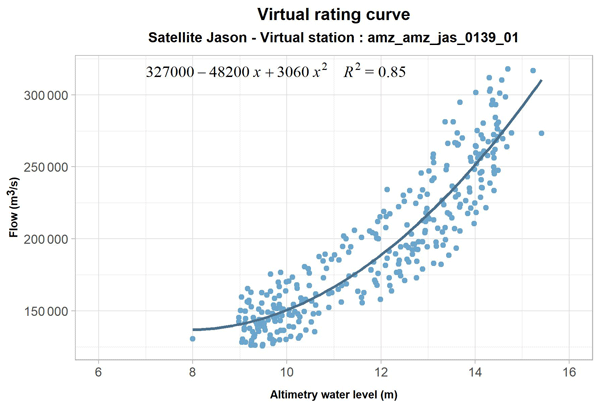
Water resources management traditionally relies on the use of in situ data. Spatial altimetry data is a new source of data for water resources monitoring. Through two projects, various partners (BRLi, IRD, CNES, CLS, CNRS, CENEAU) developed a method based on the combination of hydrological models, in-situ and satellite data to enhance the use of spatial altimetry data for water resources management. This article proposes to evaluate the implemented method.
Elisabeth Brochet, Youen Grusson, Sabine Sauvage, Ludovic Lhuissier, and Valérie Demarez
Hydrol. Earth Syst. Sci., 28, 49–64, https://doi.org/10.5194/hess-28-49-2024, https://doi.org/10.5194/hess-28-49-2024, 2024
Short summary
Short summary
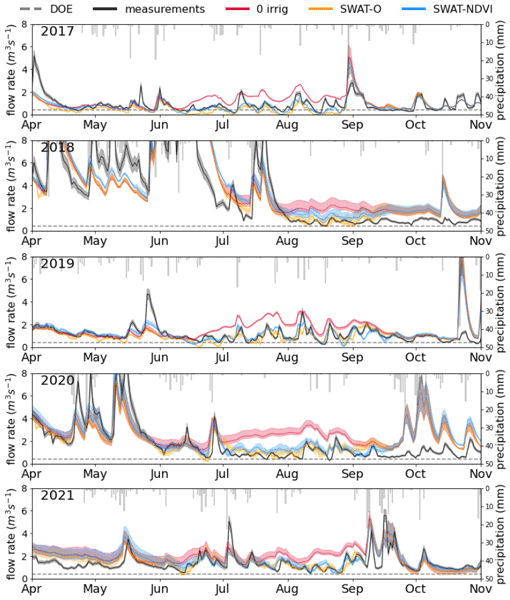
This study aims to take into account irrigation withdrawals in a watershed model. The model we used combines agriculture and hydrological modeling. Two different crop models were compared, the first based on air temperature and the second based on Sentinel-2 satellite data. Results show that including remote sensing data leads to better emergence dates. Both methods allow us to simulate the daily irrigation withdrawals and downstream flow with a good accuracy, especially during low-flow periods.
Iván M. Parras-Berrocal, Rubén Vázquez, William Cabos, Dimitry V. Sein, Oscar Álvarez, Miguel Bruno, and Alfredo Izquierdo
Ocean Sci., 19, 941–952, https://doi.org/10.5194/os-19-941-2023, https://doi.org/10.5194/os-19-941-2023, 2023
Short summary
Short summary
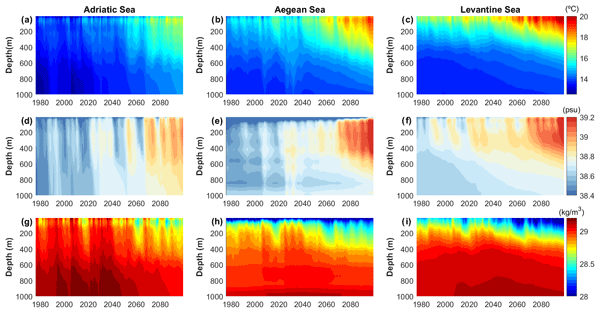
Global warming may strongly affect dense water formation in the eastern Mediterranean, potentially impacting basin circulation and water properties. We find that at the end of the century dense water formation is reduced by 75 % for the Adriatic, 84 % for the Aegean, and 83 % for the Levantine Sea. This reduction is caused by changes in the temperature and salinity of surface and intermediate waters, which strengthen the vertical stratification, hampering deep convection.
Cited articles
Alcérreca-Huerta, J. C., Callejas-Jiménez, M. E., Carrillo, L., and Castillo, M. M.: Dam implications on salt-water intrusion and land use within a tropical estuarine environment of the Gulf of Mexico, Sci. Total Environ., 652, 1102–1112, https://doi.org/10.1016/j.scitotenv.2018.10.288, 2019.
Algaba, M. H. P., Huyghe, W., van Leeuwen, K., Koop, S., and Eisenreich, S.: Assessment and Actions to Support Integrated Water Resources Management of Seville (Spain), Environ. Dev. Sustain., 26, 7347–7375, https://doi.org/10.1007/s10668-023-03011-8, 2024.
Álvarez, O., Tejedor, B., and Vidal, J.: La dinámica de marea en el estuario del Guadalquivir: un caso peculiar de resonancia antrópica, Física de la Tierra, 11–24, 0214-4557, 2001.
Baldó, F. and Drake, P.: A multivariate approach to the feeding habits of small fishes in the Guadalquivir Estuary, J. Fish Biol., 61, 21–32, https://doi.org/10.1111/j.1095-8649.2002.tb01758.x, 2002.
Baldó, F., Cuesta, J. A., Fernández-Delgado, C., and Drake, P.: Efecto de la regulación del caudal del Río Guadalquivir sobre las características físico-químicas del agua y la macrofauna acuática de su estuario, Cienc. Mar., 31, 467–476, 2005.
Bermúdez, M., Vilas, C., Quintana, R., Gonzalez-Fernández, D., Cózar, A., and Díez-Minguito, M.: Unravelling spatio-temporal patterns of suspended microplastic concentration in the natura 2000 Guadalquivir (SW Spain): observations and model simulations, Mar. Pollut. Bull., 170, 112622, https://doi.org/10.1016/j.marpolbul.2021.112622, 2021.
Biemond, B., de Swart, H. E., Dijkstra, H. A., and Díez-Minguito, M.: Estuarine salinity response to freshwater pulses, J. Geophys. Res.-Oceans, 127, e2022JC018669, https://doi.org/10.1029/2022JC018669, 2022.
Biemond, B., Vuik, V., Lambregts, P., de Swart, H. E., and Dijkstra, H. A.: Salt intrusion and effective longitudinal dispersion in man-made canals: a simplified model approach, Estuar. Coast. Shelf S., 298, 108654, https://doi.org/10.1016/j.ecss.2024.108654, 2024.
Bowden, K. F.: Physical Oceanography of Coastal Waters, Ellis Horwood Series in Marine Science, E. Horwood, Chichester, ISBN 0853126860, 9780853126867, 1983.
Bramato, S., Contreras, E., Polo, M. J., and Losada, M. A.: An integrated database manager to forecast estuarine dynamics and water quality in the Guadalquivir river (Spain), River Flow, 2, 1415–1420, 2010.
Brockway, R., Bowers, D., Hoguane, A., Dove, V., and Vassele, V.: A note on salt intrusion in funnel-shaped estuaries: Application to the Incomati estuary, Mozambique, Estuar. Coast. Shelf S., 66, 1–5, https://doi.org/10.1016/j.ecss.2005.07.014, 2006.
Cañavate, J. P., Van Bergejik, S., González-Ortegón, E., and Vilas, C.: Contrasting fatty acids with other indicators to assess nutritional status of suspended particulate organic matter in a turbid estuary, Estuar. Coast. Shelf S., 254, 107239, https://doi.org/10.1016/j.ecss.2021.107329, 2021.
Confederación Hidrográfica del Guadalquivir (Gobierno de España): SAIH data, https://www.chguadalquivir.es/saih/, last access: 25 March 2024.
Contreras, E. and Polo, M. J.: Aportes desde las cuencas vertientes. Propuesta metodológica para diagnosticar y pronosticar las consecuencias de las actuaciones humanas en el estuario del Guadalquivir, technical report, Group of Fluvial Dyn. and Hydrol., University of Córdoba, Córdoba, Spain, 2010 (in Spanish).
Costa, S., Gutiérrez Mas, J. M., and Morales, J. A.: Establecimiento del régimen de flujo en el estuario del Guadalquivir, mediante el análisis de formas de fondo con sonda multihaz, Rev. Soc. Geol. España, 22, 23–42, 2009.
Dauvin, J.-C.: Effects of heavy metal contamination on the macrobenthic fauna in estuaries: the case of the Seine estuary, Mar. Pollut. Bull, 57, 160–169, https://doi.org/10.1016/j.marpolbul.2007.10.012, 2008.
Deng, F., Jia, F., Shi, R., Zhang, S., Lian, Q., Zong, X., and Chen, Z.: Influence of stratification and wind forcing on the dynamics of Lagrangian residual velocity in a periodically stratified estuary, Ocean Sci., 20, 499–519, https://doi.org/10.5194/os-20-499-2024, 2024.
Díez-Minguito, M., Baquerizo, A., Ortega-Sánchez, M., Navarro, G., and Losada, M. A.: Tide transformation in the Guadalquivir estuary (SW Spain) and process-based zonation, J. Geophys. Res.-Oceans, 117, C03019, https://doi.org/10.1029/2011JC007344, 2012.
Díez-Minguito, M., Contreras, E., Polo, M., and Losada, M. A.: Spatio-temporal distribution, along-channel transport, and post-river flood recovery of salinity in the Guadalquivir estuary (SW Spain), J. Geophys. Res.-Oceans, 118, 2267–2278, https://doi.org/10.1002/jgrc.20172, 2013.
Díez-Minguito, M., Baquerizo, A., de Swart, H. E., and Losada, M. A.: Structure of the turbidity field in the Guadalquivir estuary: Analysis of observations and a box model approach, J. Geophys. Res.-Oceans, 119, 7190–7204, https://doi.org/10.1002/2014JC010210, 2014.
Donázar-Aramendía, I., Sánchez-Moyano, J. E., García-Asencio, I., Miró, J. M., Megina, C., and García-Gómez, J. C.: Maintenance dredging impacts on a highly stressed estuary (Guadalquivir estuary): A BACI approach through oligohaline and polyhaline habitats, Mar. Environ. Res., 140, 455–467, https://doi.org/10.1016/j.marenvres.2018.07.012, 2018.
Dronkers, J. J.: Tidal computations for rivers, coastal areas and sea, J. Hydraul. Div., 95, 1, https://doi.org/10.1061/JYCEAJ.0001941, 1969.
Elliot, M. and McLusky, D. S.: The need for definitions in understanding estuaries, Estuar. Coast. Shelf S., 55, 815–827, https://doi.org/10.1006/ecss.2002.1031, 2002.
Fernández-Delgado, C., Baldó, F., Vilas, C., García-González, D., Cuesta, J. A., González-Ortegón, E., and Drake, P.: Effects of the river discharge management on the nursery function of the Guadalquivir River estuary (SW Spain), Hydrobiologia, 587, 125–136, https://doi.org/10.1007/s10750-007-0691-9, 2007.
Gallego, J. B. and García Novo, F.: High-intensity versus low-intensity restoration alternatives of a tidal marsh in Guadalquivir estuary, SW Spain, Ecol. Eng., 30, 112–121, https://doi.org/10.1016/j.ecoleng.2006.11.005, 2006.
García-Lafuente, J., Delgado, J., Navarro, G., Calero, C., Díez-Minguito, M., Ruiz, J., and Sánchez-Garrido, J. C.: About the tidal oscillations of temperature in a tidally driven estuary: The case of Guadalquivir estuary, southwest Spain. Estuar. Coast. Shelf S., 111, 60–66, https://doi.org/10.1016/j.ecss.2012.06.007, 2012.
García-Luque, E., Forja, J. M., DelValls, T. A., and Gómez-Parra, A.: The behaviour of heavy metals from the Guadalquivir estuary after the Aznalcollar mining spill: Field and laboratory surveys, Environ. Monit. Assess., 83, 71–88,https://doi.org/10.1023/A:1022508810582, 2003.
Gay, P. and O'Donnell, J.: A simple advection-dispersion model for the salt distribution in linearly tapered estuaries, J. Geophys. Res., 112, C07021, https://doi.org/10.1029/2006JC003840, 2007.
Gay, P. and O'Donnell, J.: Comparison of the salinity structure of the Chesapeake Bay, the Delaware Bay, and Long Island Sound using a linearly tapered advection-dispersion model, Estuar. Coast., 32, 68–87, https://doi.org/10.1007/s12237-008-9101-4, 2009.
Godin, G. and Martinez, A.: Numerical experiments to investigate the effects of quadratic friction on the propagation of tides in a channel, Cont. Shelf Res., 14, 723–748, https://doi.org/10.1016/0278-4343(94)90070-1, 1994.
Gomez-Parra, A., Forja, J. M., DelValls, T. A., Sáenz, I., and Riba, I.: Early contamination by heavy metals of the Guadalquivir estuary after the Aznalcollar mining spill (SW Spain), Mar. Pollut. Bull., 40, 1115–1123, https://doi.org/10.1016/S0025-326X(00)00065-5, 2000.
Gomiz-Pascual, J. J., Bolado-Penagos, M., Gonzalez, C. J., Vazquez, A., Buonocore, C., Romero-Cozar, J., Perez-Cayeiro, M. L., Izquierdo, A., Alvarez, O., Mañanes, R., and Bruno, M.: The fate of Guadalquivir River discharges in the coastal strip of the Gulf of Cádiz. A study based on the linking of watershed catchment and hydrodynamic models, Sci. Total Environ., 795, 148740, https://doi.org/10.1016/j.scitotenv.2021.148740, 2021.
González-Ortegón, E. and Drake, P.: Effects of freshwater inputs on the lower trophic levels of a temperate estuary: physical, physiological or trophic forcing?, Aquat. Sci., 74, 455–469, https://doi.org/10.1007/s00027-011-0240-5, 2012.
González-Ortegón, E., Baldó, F., Arias, A., Cuesta, J. A., Fernández-Delgado, C., Vilas, C., and Drake, P.: Freshwater scarcity effects on the aquatic macrofauna of a European Mediterranean-climate estuary, Sci. Total Environ., 503–504, 213–221, https://doi.org/10.1016/j.scitotenv.2014.06.020, 2014.
Grimalt, J. O., Ferrer, M., and Macpherson, E.: The mine tailing accident in Aznalcollar, Sci. Total Environ., 242, 3–11, https://doi.org/10.1016/s0048-9697(99)00372-1, 1999.
Huang, H., Wang, Y., Wang, S., Lan, Y., and Huang, X.: Saltwater Intrusion in the Changjiang River Estuary in Response to the East Route of the South-to-North Water Transfer Project in the New Period after 2003, Sustainability, 16, 683, https://doi.org/10.3390/su16020683, 2024.
Huertas, E., Flecha, S., Navarro, G., Perez, F. F., and De la Paz, M.: Spatio-temporal variability and controls on methane and nitrous oxide in the Guadalquivir Estuary, Southwestern Europe, Aquat. Sci., 80, 29, https://doi.org/10.1007/s00027-018-0580-5, 2018.
Jassby, A. D., Cloern, J. E., and Cole, B. E.: Annual primary production: patterns and mechanisms of change in a nutrient-rich tidal ecosystem, Limnol. Oceanogr., 47, 698–712, https://doi.org/10.4319/lo.2002.47.3.0698, 2002.
Lee, J., Biemond, B., de Swart, H., and Dijkstra, H. A.: Increasing risks of extreme salt intrusion events across European estuaries in a warming climate, Commun. Earth Environ., 5, 60, https://doi.org/10.1038/s43247-024-01225-w, 2024.
Lewis, R. E. and Uncles, R. J.: Factors affecting longitudinal dispersion in estuaries of different scale, Ocean Dynam., 53, 197–207, https://doi.org/10.1007/s10236-003-0030-2, 2003.
Lopes, C. L., Le Fouest, V., Corzo, A., and Dias, J. M.: Editorial: Advances in monitoring and modelling spatial and temporal dynamics of estuarine ecosystems, Front. Mar. Sci., 11, 1367378, https://doi.org/10.3389/fmars.2024.1367378, 2024.
Losada, M.Á., Díez-Minguito, M., and Reyes-Merlo, M.Á.: Tidal-fluvial interaction in the Guadalquivir River estuary: spatial and frequency dependent response of currents and water levels, J. Geophys. Res.-Oceans, 122, 847–865, https://doi.org/10.1002/2016JC011984, 2017.
MacCready, P.: Estuarine adjustment, J. Phys. Oceanogr., 37, 2133–2145, https://doi.org/10.1175/JPO3082.1, 2007.
Marshall, S. and Elliott, M.: Environmental influences on the fish assemblage of the Humber Estuary, U.K, Estuar. Coast. Shelf S., 46, 175–184, https://doi.org/10.1006/ecss.1997.0268, 1998.
Mendiguchía, C., Moreno, C., and García-Vargas, M.: Evaluation of natural and anthropogenic influences on the Guadalquivir River (Spain) by dissolved heavy metals and nutrients, Chemosphere, 69, 1509–1517, https://doi.org/10.1016/j.chemosphere.2007.05.082, 2007.
Miranda, L. B., Andutta, F. P., Kjerfve, B., and Castro Filho, B. M.: Fundamentals of Estuarine Physical Oceanography (Vol. 8), Singapore, Springer, https://doi.org/10.1007/978-981-10-3041-3, 2017.
Morales, J. A., Carro, B. M., Sanmiguel, E. G., and Borrego, J.: Tasas de acumulación reciente en los márgenes del estuario del Guadalquivir, Geogaceta, 67, ISSN 2173-6545, 2020.
Navarro, G., Gutierréz, F. J., Díez-Minguito, M., Losada, M. Á., and Ruiz, J.: Temporal and spatial variability in the Guadalquivir estuary: a challenge for real-time telemetry, Ocean Dynam., 61, 753–765, https://doi.org/10.1007/s10236-011-0379-6, 2011.
Puertos del Estado: Oceanografía: Nivel del mar, mareógrafos, https://portus.puertos.es/#/, last access: 20 March 2024.
Reyes-Merlo, M. Á., Díez-Minguito, M., Ortega-Sánchez, M., Baquerizo, A., and Losada, M. Á.: On the relative influence of climate forcing agents on the saline intrusion in a well-mixed estuary: Medium-term Monte Carlo predictions, J. Coast. Res., 65, 1200–1205, https://doi.org/10.2112/SI65-203.1, 2013.
Riba, I., DelValls, T. A., Forja, J. M., and Gómez-Parra, A.: Influence of the Aznalcóllar mining spill on the vertical distribution of heavy metals in sediments from the Guadalquivir estuary (SW Spain), Mar. Pollut. Bull., 44, 39–47, https://doi.org/10.1016/S0025-326X(01)00171-0, 2002.
Ruiz, J., Macías, D., Losada, M. Á., Díez-Minguito, M., and Prieto, L.: A simple biogeochemical model for estuaries with high sediment loads: application to the Guadalquivir River (SW Iberia), Ecol. Model., 265, 194–206, https://doi.org/10.1016/j.ecolmodel.2013.06.012, 2013.
Ruiz, J., Polo, M. J., Díez-Minguito, M., Navarro, G., Morris, E. P., Huertas, E., Caballero, I., Conteras, E., and Losada, M. Á.: The Guadalquivir estuary: A hot spot for environmental and human conflicts, Environ. Manage. Gov., 8, 199–232, https://doi.org/10.1007/978-3-319-06305-8_8, 2015.
Ruiz, J., Macías, D., and Navarro, G.: Natural forcings on a transformed territory overshoot thresholds of primary productivity in the Guadalquivir estuary, Cont. Shelf Res., 148, 199–207, https://doi.org/10.1016/j.csr.2017.09.002, 2017.
Siles-Ajamil, R., Díez-Minguito, M., and Losada, M. Á.: Tide propagation and salinity distribution response to changes in water depth and channel network in Guadalquivir River estuary: an exploratory model approach, Ocean Coast. Manage., 174, 92–107, https://doi.org/10.1016/j.ocecoaman.2019.03.015, 2019.
Sirviente, S.: Sirviente_etal_2025_egusphere-2024-2451_, Zenodo [data set], https://doi.org/10.5281/zenodo.14910634, 2025.
Sirviente, S., Sánchez-Rodríguez, J., Gomiz-Pascual, J. J., Bolado-Penagos, M., Sierra, A., Ortega, T., Álvarez, Ó., Forja, J., and Bruno, M.: A numerical simulation study of the hydrodynamic effects caused by morphological changes in the Guadalquivir River Estuary, Sci. Total Environ., 902, 166084, https://doi.org/10.1016/j.scitotenv.2023.166084, 2023.
Smolarkiewicz, P. K. and Margolin, L. G.: MPDATA: A Finite-Difference Solver for Geophysical Flows, J. Comput. Phys., 140, 459–480, https://doi.org/10.1006/jcph.1998.5901, 1998.
Smolarkiewicz P. K. and Szmelter, J.: MPDATA: An edge-based unstructured-grid formulation, J. Comput. Phys., 206, 624–649, https://doi.org/10.1016/j.jcp.2004.12.021, 2005.
Vieira, M. E. C. and Bordalo, A. A.: The Douro estuary (Portugal): a mesotidal salt wedge, Ocean. Acta, 23, 585–594, https://doi.org/10.1016/S0399-1784(00)01107-5, 2000.
Webber, M., Li, M. T., Chen, J., Finlayson, B., Chen, D., Chen, Z. Y., Wang, M., and Barnett, J.: Impact of the Three Gorges Dam, the South–North Water Transfer Project and water abstractions on the duration and intensity of salt intrusions in the Yangtze River estuary, Hydrol. Earth Syst. Sci., 19, 4411–4425, https://doi.org/10.5194/hess-19-4411-2015, 2015.
Xu, Y., Hoitink, A. J. F., Zheng, J., Kästner, K., and Zhang, W.: Analytical model captures intratidal variation in salinity in a convergent, well-mixed estuary, Hydrol. Earth Syst. Sci., 23, 4309–4322, https://doi.org/10.5194/hess-23-4309-2019, 2019.
Short summary
The present study utilizes a 1D hydrodynamic model to examine the impact of anthropogenic pressures on saline intrusion in the Guadalquivir estuary. Water extraction by human activities has led to elevated salinity levels throughout the estuary, thereby disrupting its natural state. A more profound understanding of these effects is essential for the protection of the estuarine ecosystems.
The present study utilizes a 1D hydrodynamic model to examine the impact of anthropogenic...