
Articles | Volume 22, issue 1
https://doi.org/10.5194/os-22-49-2026
© Author(s) 2026. This work is distributed under
the Creative Commons Attribution 4.0 License.
the Creative Commons Attribution 4.0 License.
https://doi.org/10.5194/os-22-49-2026
© Author(s) 2026. This work is distributed under
the Creative Commons Attribution 4.0 License.
the Creative Commons Attribution 4.0 License.
Research article
| 
07 Jan 2026
Research article |
| 07 Jan 2026
| 07 Jan 2026
Using surface drifters to characterise near-surface ocean dynamics in the southern North Sea: a data-driven approach

Department of Physics, Institute for Marine and Atmospheric Research (IMAU), Utrecht University, Utrecht, the Netherlands
Madlene Nussbaum
Faculty of Geosciences, Physical Geography, Utrecht University, Utrecht, the Netherlands
Ton S. van den Bremer
Faculty of Civil Engineering and Geosciences, Delft University of Technology, Delft, the Netherlands
Erik van Sebille
Department of Physics, Institute for Marine and Atmospheric Research (IMAU), Utrecht University, Utrecht, the Netherlands
Related authors
No articles found.
Niklas Schmücker, Madlene Nussbaum, Alice Johannes, Claudia Guidi, and Peter Lehmann
EGUsphere, https://doi.org/10.5194/egusphere-2026-4629, https://doi.org/10.5194/egusphere-2026-4629, 2026
This preprint is open for discussion and under review for SOIL (SOIL).
Short summary
Short summary
Healthy soil is essential for forests, but assessing its condition usually requires expensive and time-consuming measurements. We tested whether a simple field method originally developed for farmland can also be used in temperate forests. We found that it provides reliable information about soil condition and water movement when interpreted together with soil acidity and texture. This makes it a practical tool for monitoring and protecting forest soils.
Niels Koppelaar, Christel van Eck, and Erik van Sebille
EGUsphere, https://doi.org/10.5194/egusphere-2026-3839, https://doi.org/10.5194/egusphere-2026-3839, 2026
Short summary
Short summary
Climate researchers are key in communicating the climate crisis, but most studies focus on university scientists. Little is known about those working in government organisations. We interviewed 14 Dutch climate scientists at government-funded institutes about opportunities and barriers to advocacy and activism, including concerns about civil servant roles, independence, institutional identity, and unclear rules.
Eise W. Nota, Yinghua Li, Lotta Beyaard, Meryem Upson, Menno L. C. Wagenaar, Zahra Nassralla, Silke J. Baltussen, Esmee van Amelsfort, Lieke M. Gubbels, David Leahy, Janneke J. Muller, Brechtje A. van Amstel, Josefien J. A. Donders, Jan-Eike Rossius, Marcel C. G. van Maarseveen, Henk Markies, Arjan M. van Eijk, Bas D. B. van Dam, Madlene Nussbaum, Saeb Faraji Gargari, Vincent Brunst, Lisanne Braat, and Maarten G. Kleinhans
Earth Syst. Sci. Data Discuss., https://doi.org/10.5194/essd-2026-427, https://doi.org/10.5194/essd-2026-427, 2026
Preprint under review for ESSD
Short summary
Short summary
It is increasingly important to understand the hydrodynamic and morphodynamic processes of estuaries. Here we present a large dataset of physical scale experiments of estuaries, covering almost 230,000 tidal cycles with various planforms and perturbations. The data consists of spatially and temporally covering laserscan DEMs, planform masks, orthomosaics, water depth maps, and timelapses. The data can be used in numerous disciplines, such as morphology, machine learning and numerical modelling.
Elena Gianotten, Meike F. Bos, Darshika Manral, Fabio Nauer, Erik Zettler, Lina A. Amaral-Zettler, and Erik van Sebille
EGUsphere, https://doi.org/10.5194/egusphere-2026-3097, https://doi.org/10.5194/egusphere-2026-3097, 2026
Short summary
Short summary
Widespread blooms of the seaweed Sargassum have caused large-scale inundation events in coastal Caribbean and African regions since 2011. Predicting the where these blooms appear, and how the Sargassum moves, depends on the interaction between ocean flow and biological growth. Here, we present a new computational framework for quick and easy simulation of Sargassum. The framework is particularly useful for testing the dependency of different growth models on the Sargassum fate.

Oriol Pomarol Moya, Madlene Nussbaum, Siamak Mehrkanoon, Philip D. A. Kraaijenbrink, Isabelle Gouttevin, Derek Karssenberg, and Walter W. Immerzeel
The Cryosphere, 20, 1427–1444, https://doi.org/10.5194/tc-20-1427-2026, https://doi.org/10.5194/tc-20-1427-2026, 2026
Short summary
Short summary
Two hybrid Machine Learning (ML) approaches predicting daily Snow Water Equivalent (SWE) were evaluated across ten Northern Hemisphere sites. By integrating meteorological data with Crocus snow model simulations, these hybrid models outperformed both standalone Crocus and traditional ML models. Notably, augmenting measured SWE data with Crocus simulations significantly improved performance at unseen locations, offering a promising new approach to long-term SWE prediction.
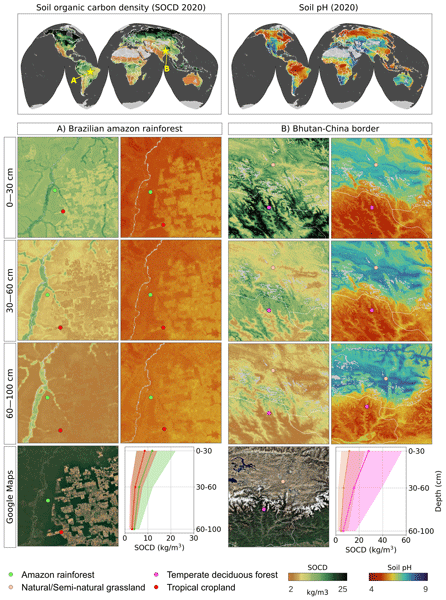
Tomislav Hengl, Davide Consoli, Xuemeng Tian, Travis W. Nauman, Madlene Nussbaum, Mustafa Serkan Isik, Leandro Parente, Yu-Feng Ho, Rolf Simoes, Surya Gupta, Alessandro Samuel-Rosa, Taciara Zborowski Horst, José L. Safanelli, and Nancy Harris
Earth Syst. Sci. Data, 18, 989–1036, https://doi.org/10.5194/essd-18-989-2026, https://doi.org/10.5194/essd-18-989-2026, 2026
Short summary
Short summary
We used satellite data and thousands of soil samples to create detailed global maps showing how soil changes over time. These maps reveal important patterns in soil health, such as a significant global loss of soil carbon in the past 25 years. Our results help track land degradation and support better land restoration efforts. This work provides a new global tool for understanding and protecting soil, a key resource for food, water, and climate.
Issufo Halo, Tarron Lamont, Michael Hart-Davis, Pierrick Penven, Isabelle Ansorge, Chris Reason, Bjorn Backeberg, Siren Rühs, Erik van Sebille, Christo Whittle, Annette Samuelsen, Johnny Johannessen, Tamaryn Morris, Marjolaine Krug, Juliet Hermes, Marek Ostrowski, Sheveenah Taukoor, and Babatunde Abiodun
EGUsphere, https://doi.org/10.5194/egusphere-2025-6573, https://doi.org/10.5194/egusphere-2025-6573, 2026
Short summary
Short summary
This review synthesizes two decades of research on the Greater Agulhas Current System, a major ocean current influencing climate, weather and marine life around southern Africa and beyond. Using improved observations, satellites, and computer models, we show how this system transports properties between oceans, affects rainfall and climate patterns, and marine ecosystems. The findings highlight its global climate importance and the need for sustained monitoring to better predict future change.
Meike F. Bos, Irina I. Rypina, Larry J. Pratt, and Erik van Sebille
EGUsphere, https://doi.org/10.5194/egusphere-2026-64, https://doi.org/10.5194/egusphere-2026-64, 2026
Short summary
Short summary
Macroplastic items in the ocean can move differently than the water surrounding them, because their size and density are different than that of water. We investigate how to implement this effect for macroplastic items in simulations in the North West European Shelf region. For this region we find that the large drag force makes the macroplastics trajectories very closely follow the water itself, meaning that simulating macroplastic is simpler than previously expected.
Erik van Sebille, Celine Weel, Rens Vliegenthart, and Mark Bos
Geosci. Commun., 9, 69–86, https://doi.org/10.5194/gc-9-69-2026, https://doi.org/10.5194/gc-9-69-2026, 2026
Short summary
Short summary
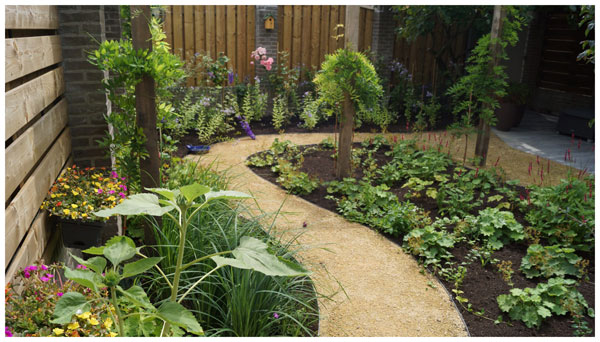
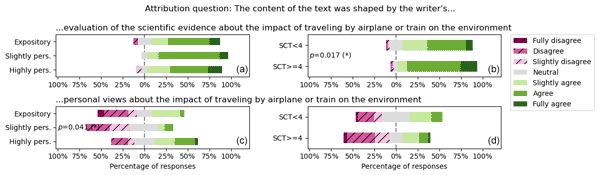
Many climate scientists intuitively fear their credibility decreases when they engage in advocacy. We find that the opposite is the case. By surveying almost 1000 Dutch adults, we found that the credibility of a fictional climate scientists who wrote an article about the greening of gardens was higher when that text included advocacy statements, compared to when it was
neutral. This is because personalization increases the goodwill of readers for the academic who writes a text.
Marc Emanuel Schneiter, Rolf Hut, and Erik Van Sebille
EGUsphere, https://doi.org/10.5194/egusphere-2025-6170, https://doi.org/10.5194/egusphere-2025-6170, 2025
Short summary
Short summary
We study land-water transitions of 24 small floating position-trackers that approximately mimic floating plastic litter. We describe how to automatically identify such transitions from recorded tracks, and we characterize our observations with respect to sea and wind conditions. The insights can be integrated in model simulations and used for the planning of beach cleanups. We released the trackers in the Wadden Sea, a shallow body of water that is strongly influenced by tides and wind.
Claudio M. Pierard, Siren Rühs, Laura Gómez-Navarro, Michael Charles Denes, Florian Meirer, Thierry Penduff, and Erik van Sebille
Nonlin. Processes Geophys., 32, 411–438, https://doi.org/10.5194/npg-32-411-2025, https://doi.org/10.5194/npg-32-411-2025, 2025
Short summary
Short summary
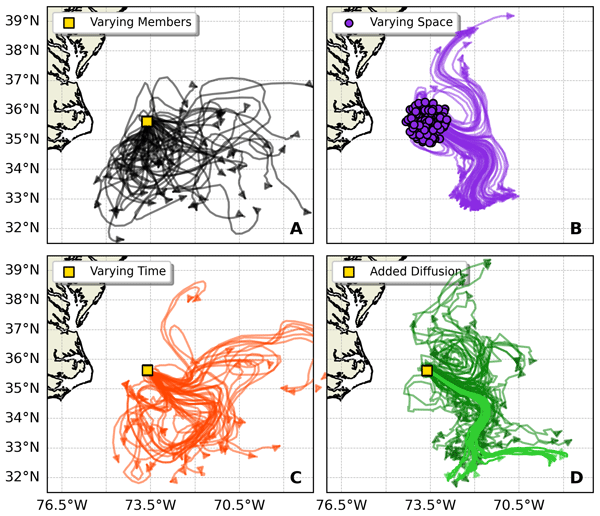
Particle-tracking simulations compute how ocean currents transport material. However, initializing these simulations is often ad hoc. Here, we explore how two different strategies (releasing particles over space or over time) compare. Specifically, we compare the variability in particle trajectories to the variability of particles computed in a 50-member ensemble simulation. We find that releasing the particles over 20 weeks gives variability that is most like that in the ensemble.
Aike Vonk, Mark Bos, and Erik van Sebille
Geosci. Commun., 8, 297–317, https://doi.org/10.5194/gc-8-297-2025, https://doi.org/10.5194/gc-8-297-2025, 2025
Short summary
Short summary
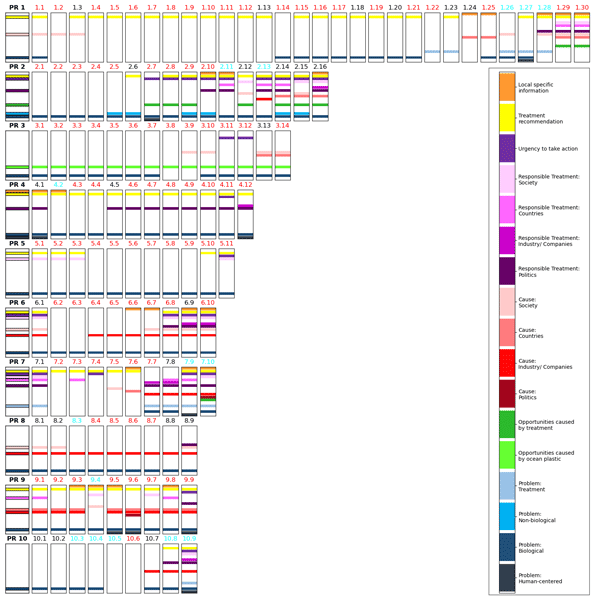
Research institutes communicate scientific findings through press releases, which journalists use to write news articles. We examined how journalists use content from press releases about ocean plastic research. Our findings show that they closely follow the press releases story, primarily quoting involved scientists without seeking external perspectives. Causing the focus to stay on researchers, personalizing science rather than addressing the broader societal dimensions of plastic pollution.
Vesna Bertoncelj, Furu Mienis, Paolo Stocchi, and Erik van Sebille
Ocean Sci., 21, 945–964, https://doi.org/10.5194/os-21-945-2025, https://doi.org/10.5194/os-21-945-2025, 2025
Short summary
Short summary
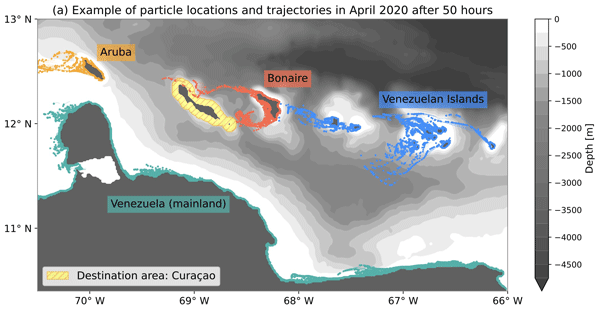
This study explores ocean currents around Curaçao and how land-derived substances like pollutants and nutrients travel in the water. Most substances move northwest, following the main current, but at times, ocean eddies spread them in other directions. This movement may link polluted areas to pristine coral reefs, impacting marine ecosystems. Understanding these patterns helps inform conservation and pollution management around Curaçao.
Nieske Vergunst, Tugce Varol, and Erik van Sebille
Geosci. Commun., 8, 67–80, https://doi.org/10.5194/gc-8-67-2025, https://doi.org/10.5194/gc-8-67-2025, 2025
Short summary
Short summary
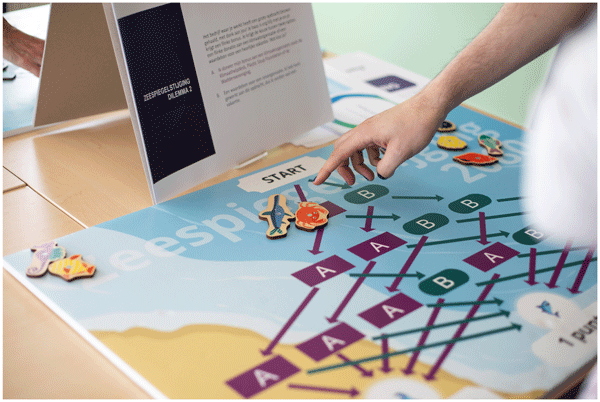
We developed and evaluated a board game about sea level rise to engage young adults. We found that the game positively influenced participants' perceptions of their impact on sea level rise, regardless of their prior familiarity with science. This study suggests that interactive and relatable activities can effectively engage audiences on climate issues, highlighting the potential for similar approaches in public science communication.
Mark V. Elbertsen, Erik van Sebille, and Peter K. Bijl
Clim. Past, 21, 441–464, https://doi.org/10.5194/cp-21-441-2025, https://doi.org/10.5194/cp-21-441-2025, 2025
Short summary
Short summary
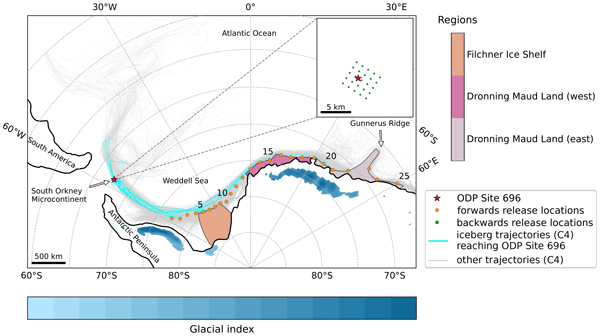
This work verifies the remarkable finds of late Eocene Antarctic-sourced iceberg-rafted debris on the South Orkney Microcontinent. We find that these icebergs must have been on the larger end of the size scale compared to today’s icebergs due to faster melting in the warmer Eocene climate. The study was performed using a high-resolution model in which individual icebergs were followed through time.
Siren Rühs, Ton van den Bremer, Emanuela Clementi, Michael C. Denes, Aimie Moulin, and Erik van Sebille
Ocean Sci., 21, 217–240, https://doi.org/10.5194/os-21-217-2025, https://doi.org/10.5194/os-21-217-2025, 2025
Short summary
Short summary
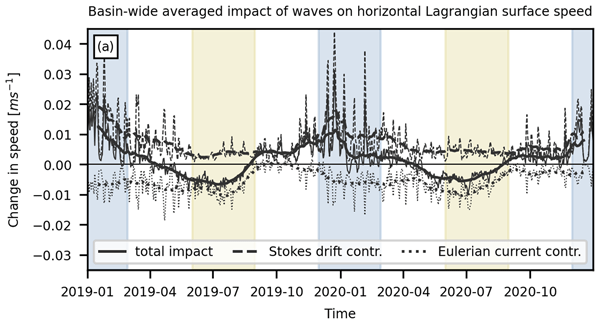
Simulating the transport of floating particles on the ocean surface is crucial for solving many societal issues. Here, we investigate how the representation of wind-generated surface waves impacts particle transport simulations. We find that different wave-driven processes can alter transport patterns and that commonly adopted approximations are not always adequate. This suggests that ideally coupled ocean–wave models should be used for surface particle transport simulations.
Anna Leerink, Mark Bos, Daan Reijnders, and Erik van Sebille
Geosci. Commun., 7, 201–214, https://doi.org/10.5194/gc-7-201-2024, https://doi.org/10.5194/gc-7-201-2024, 2024
Short summary
Short summary
Climate scientists who communicate to a broad audience may be reluctant to write in a more personal style, as they assume that it hurts their credibility. To test this assumption, we asked 100 Dutch people to rate the credibility of a climate scientist. We varied how the author of the article addressed the reader and found that the degree of personalization did not have a measurable impact on the credibility of the author. Thus, we conclude that personalization may not hurt credibility.
Frances Wijnen, Madelijn Strick, Mark Bos, and Erik van Sebille
Geosci. Commun., 7, 91–100, https://doi.org/10.5194/gc-7-91-2024, https://doi.org/10.5194/gc-7-91-2024, 2024
Short summary
Short summary
Climate scientists are urged to communicate climate science; there is very little evidence about what types of communication work well for which audiences. We have performed a systematic literature review to analyze what is known about the efficacy of climate communication by scientists. While we have found more than 60 articles in the last 10 years about climate communication activities by scientists, only 7 of these included some form of evaluation of the impact of the activity.
Philippe F. V. W. Frankemölle, Peter D. Nooteboom, Joe Scutt Phillips, Lauriane Escalle, Simon Nicol, and Erik van Sebille
Ocean Sci., 20, 31–41, https://doi.org/10.5194/os-20-31-2024, https://doi.org/10.5194/os-20-31-2024, 2024
Short summary
Short summary
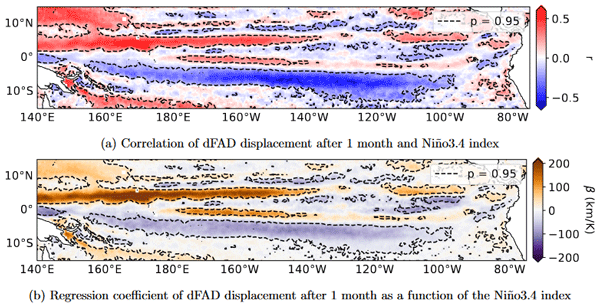
Tuna fisheries in the Pacific often use drifting fish aggregating devices (dFADs) to attract fish that are advected by subsurface flow through underwater appendages. Using a particle advection model, we find that virtual particles advected by surface flow are displaced farther than virtual dFADs. We find a relation between El Niño–Southern Oscillation and circular motion in some areas, influencing dFAD densities. This information helps us to understand processes that drive dFAD distribution.
Tor Nordam, Ruben Kristiansen, Raymond Nepstad, Erik van Sebille, and Andy M. Booth
Geosci. Model Dev., 16, 5339–5363, https://doi.org/10.5194/gmd-16-5339-2023, https://doi.org/10.5194/gmd-16-5339-2023, 2023
Short summary
Short summary
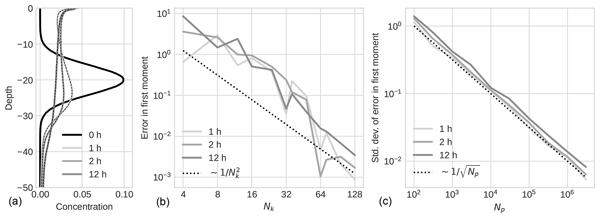
We describe and compare two common methods, Eulerian and Lagrangian models, used to simulate the vertical transport of material in the ocean. They both solve the same transport problems but use different approaches for representing the underlying equations on the computer. The main focus of our study is on the numerical accuracy of the two approaches. Our results should be useful for other researchers creating or using these types of transport models.
Stefanie L. Ypma, Quinten Bohte, Alexander Forryan, Alberto C. Naveira Garabato, Andy Donnelly, and Erik van Sebille
Ocean Sci., 18, 1477–1490, https://doi.org/10.5194/os-18-1477-2022, https://doi.org/10.5194/os-18-1477-2022, 2022
Short summary
Short summary
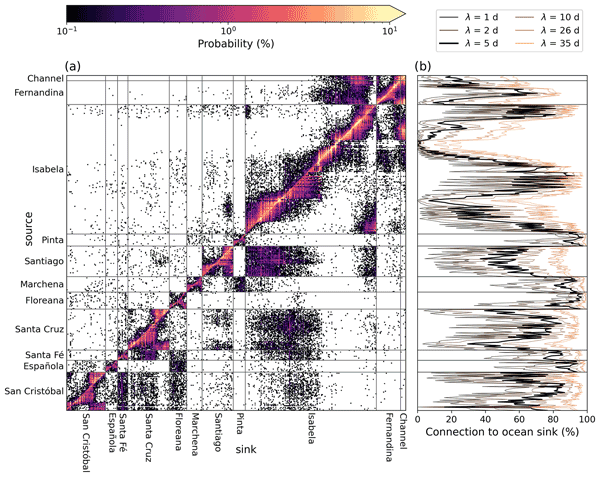
In this research we aim to improve cleanup efforts on the Galapagos Islands of marine plastic debris when resources are limited and the distribution of the plastic on shorelines is unknown. Using a network that describes the flow of macroplastic between the islands we have identified the most efficient cleanup locations, quantified the impact of targeting these locations and showed that shorelines where the plastic is unlikely to leave are likely efficient cleanup locations.
Christopher Chagumaira, Joseph G. Chimungu, Patson C. Nalivata, Martin R. Broadley, Madlene Nussbaum, Alice E. Milne, and R. Murray Lark
EGUsphere, https://doi.org/10.5194/egusphere-2022-583, https://doi.org/10.5194/egusphere-2022-583, 2022
Preprint archived
Short summary
Short summary
Our study examines different quantitative methods to predict concentrations of micronutrients in the soil from field samples. However, we emphasize the concerns of stakeholders, who use such information to make decisions, in this case in relation to the study and management of micronutrient deficiency risk in the human population. We propose a framework to think about these concerns then compare common approaches for digital soil mapping within this framework.

Reint Fischer, Delphine Lobelle, Merel Kooi, Albert Koelmans, Victor Onink, Charlotte Laufkötter, Linda Amaral-Zettler, Andrew Yool, and Erik van Sebille
Biogeosciences, 19, 2211–2234, https://doi.org/10.5194/bg-19-2211-2022, https://doi.org/10.5194/bg-19-2211-2022, 2022
Short summary
Short summary
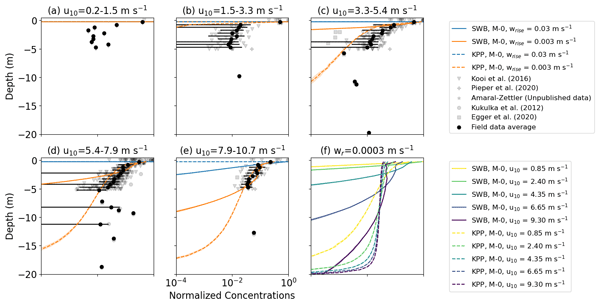
Since current estimates show that only about 1 % of the all plastic that enters the ocean is floating at the surface, we look at subsurface processes that can cause vertical movement of (micro)plastic. We investigate how modelled algal attachment and the ocean's vertical movement can cause particles to sink and oscillate in the open ocean. Particles can sink to depths of > 5000 m in regions with high wind intensity and mainly remain close to the surface with low winds and biological activity.
Victor Onink, Erik van Sebille, and Charlotte Laufkötter
Geosci. Model Dev., 15, 1995–2012, https://doi.org/10.5194/gmd-15-1995-2022, https://doi.org/10.5194/gmd-15-1995-2022, 2022
Short summary
Short summary
Turbulent mixing is a vital process in 3D modeling of particle transport in the ocean. However, since turbulence occurs on very short spatial scales and timescales, large-scale ocean models generally have highly simplified turbulence representations. We have developed parametrizations for the vertical turbulent transport of buoyant particles that can be easily applied in a large-scale particle tracking model. The predicted vertical concentration profiles match microplastic observations well.

Mikael L. A. Kaandorp, Stefanie L. Ypma, Marijke Boonstra, Henk A. Dijkstra, and Erik van Sebille
Ocean Sci., 18, 269–293, https://doi.org/10.5194/os-18-269-2022, https://doi.org/10.5194/os-18-269-2022, 2022
Short summary
Short summary
A large amount of marine litter, such as plastics, is located on or around beaches. Both the total amount of this litter and its transport are poorly understood. We investigate this by training a machine learning model with data of cleanup efforts on Dutch beaches between 2014 and 2019, obtained by about 14 000 volunteers. We find that Dutch beaches contain up to 30 000 kg of litter, largely depending on tides, oceanic transport, and how exposed the beaches are.
Peter D. Nooteboom, Peter K. Bijl, Christian Kehl, Erik van Sebille, Martin Ziegler, Anna S. von der Heydt, and Henk A. Dijkstra
Earth Syst. Dynam., 13, 357–371, https://doi.org/10.5194/esd-13-357-2022, https://doi.org/10.5194/esd-13-357-2022, 2022
Short summary
Short summary
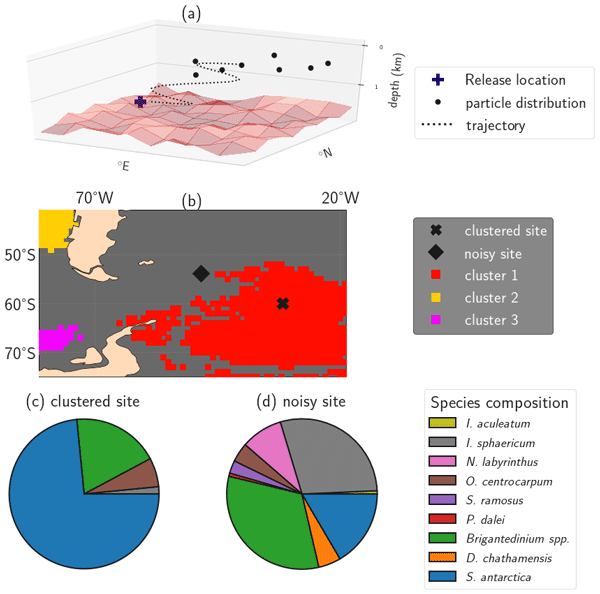
Having descended through the water column, microplankton in ocean sediments represents the ocean surface environment and is used as an archive of past and present surface oceanographic conditions. However, this microplankton is advected by turbulent ocean currents during its sinking journey. We use simulations of sinking particles to define ocean bottom provinces and detect these provinces in datasets of sedimentary microplankton, which has implications for palaeoclimate reconstructions.
Cited articles
Aksamit, N. O., Sapsis, T., and Haller, G.: Machine-Learning Mesoscale and Submesoscale Surface Dynamics from Lagrangian Ocean Drifter Trajectories, J. Phys. Oceanogr., 50, 1179–1196, https://doi.org/10.1175/JPO-D-19-0238.1, 2020. a
Allen, A. A.: Leeway Divergence, Tech. Rep. CG-D-05-05, US Coast Guard Research and Development Center, https://apps.dtic.mil/sti/pdfs/ADA435435.pdf (last access: 18 December 2025), 2005. a
Apley, D. W. and Zhu, J.: Visualizing the Effects of Predictor Variables in Black Box Supervised Learning Models, J. Roy. Stat. Soc. Ser. B, 82, 1059–1086, https://doi.org/10.1111/rssb.12377, 2020. a, b
Apple Inc.: AirTag – Technical Specifications, Apple Inc., https://support.apple.com/en-us/111847 (last access: 18 December 2025), 2021. a
Behrens, T., Schmidt, K., MacMillan, R. A., and Viscarra Rossel, R. A.: Multiscale contextual spatial modelling with the Gaussian scale space, Geoderma, 310, 128–137, https://doi.org/10.1016/j.geoderma.2017.09.015, 2018. a
Beron-Vera, F. J., Olascoaga, M. J., and Miron, P.: Building a Maxey–Riley framework for surface ocean inertial particle dynamics, Phys. Fluids, 31, 096602, https://doi.org/10.1063/1.5110731, 2019. a, b, c
Bishop, C. M.: Pattern recognition and machine learning, Information science and statistics, Springer, New York, ISBN 978-0-387-31073-2, 2006. a
Bos, M., Rypina, I. I., Pratt, L., and Van Sebille, E.: The Maxey-Riley-Gatignol equations for macroplastics in the North West European Shelf region, in preparation, 2025. a
Bracco, A., Brajard, J., Dijkstra, H. A., Hassanzadeh, P., Lessig, C., and Monteleoni, C.: Machine learning for the physics of climate, Nat. Rev. Phys., 7, 6–20, https://doi.org/10.1038/s42254-024-00776-3, 2025. a
Breiman, L.: Statistical Modeling: The Two Cultures (with comments and a rejoinder by the author), Stat. Sci., 16, 199–231, https://doi.org/10.1214/ss/1009213726, 2001. a, b, c
Breivik, Ø., Allen, A. A., Maisondieu, C., and Roth, J. C.: Wind-induced drift of objects at sea: The leeway field method, Appl. Ocean Res., 33, 100–109, https://doi.org/10.1016/j.apor.2011.01.005, 2011. a, b
Breivik, Ø., Allen, A., Maisondieu, C., and others: Advances in search and rescue at sea, Ocean Dynam., 63, 83–88, https://doi.org/10.1007/s10236-012-0581-1, 2013. a
Breivik, Ø., Bidlot, J.-R., and Janssen, P.: A Stokes drift approximation based on the Phillips spectrum, Ocean Model., 100, 49–56, https://doi.org/10.1016/j.ocemod.2016.01.005, 2016. a
Bruciaferri, D., Tonani, M., Lewis, H., Siddorn, J., Saulter, A., Castillo, J., Garcia Valiente, N., Conley, D., Sykes, P., Ascione, I., and McConnell, N.: The Impact of Ocean-Wave Coupling on the Upper Ocean Circulation During Storm Events, J. Geophys. Res.-Oceans, 126, https://doi.org/10.1029/2021JC017343, 2021. a, b
Buffett, G. G., Krahmann, G., Klaeschen, D., Schroeder, K., Sallarès, V., Papenberg, C., Ranero, C. R., and Zitellini, N.: Seismic Oceanography in the Tyrrhenian Sea: Thermohaline Staircases, Eddies, and Internal Waves, J. Geophys. Res.-Oceans, 122, 8503–8523, https://doi.org/10.1002/2017JC012726, 2017. a
Callies, U., Groll, N., Horstmann, J., Kapitza, H., Klein, H., Maßmann, S., and Schwichtenberg, F.: Surface drifters in the German Bight: model validation considering windage and Stokes drift, Ocean Sci., 13, 799–827, https://doi.org/10.5194/os-13-799-2017, 2017. a, b
Calvert, R., Peytavin, A., Pham, Y., Duhamel, A., van der Zanden, J., van Essen, S. M., Sainte-Rose, B., and van den Bremer, T. S.: A Laboratory Study of the Effects of Size, Density, and Shape on the Wave-Induced Transport of Floating Marine Litter, J. Geophys. Res.-Oceans, 129, e2023JC020661, https://doi.org/10.1029/2023JC020661, 2024. a
Calzada, A., Delgado, I., Ramos, C., Pérez, F., Reyes, D., Carracedo, D., Rodríguez, A., Chang, D., Cabrales, J., and Lobaina, A.: Lagrangian Model PETROMAR-3D to Describe Complex Processes in Marine Oil Spills, Open J. Mar. Sci., 11, 17–40, https://doi.org/10.4236/ojms.2021.111002, 2021. a
Clementi, E., Drudi, M., Aydogdu, A., Moulin, A., Grandi, A., Mariani, A., Goglio, A., Pistoia, J., Miraglio, P., Lecci, R., Palermo, F., Coppini, G., Masina, S., and Pinardi, N.: Mediterranean Sea Physical Analysis and Forecast (CMEMS MED-Physics, EAS8 system), cmcc, https://doi.org/10.25423/CMCC/MEDSEA_ANALYSISFORE, 2023. a, b
Copernicus Marine Service: Atlantic – European North West Shelf – Ocean Physics Analysis and Forecast, Marine Data Store (MDS) [data set] , https://doi.org/10.48670/moi-00054, 2024a. a
Copernicus Marine Service: Atlantic – European North West Shelf – Ocean Wave Analysis and Forecast, Marine Data Store (MDS) [data set], https://doi.org/10.48670/moi-00055, 2024b. a
Cortes, C. and Vapnik, V. N.: Support-Vector Networks, Mach. Learn., 20, 273–297, 1995. a
Cunningham, H. J., Higgins, C., and van den Bremer, T. S.: The Role of the Unsteady Surface Wave-Driven Ekman–Stokes Flow in the Accumulation of Floating Marine Litter, J. Geophys. Res.-Oceans, 127, e2021JC018106, https://doi.org/10.1029/2021JC018106, 2022. a
Dagestad, K.-F. and Röhrs, J.: Prediction of ocean surface trajectories using satellite derived vs. modeled ocean currents, Remote Sens. Environ., 223, 130–142, https://doi.org/10.1016/j.rse.2019.01.001, 2019. a, b
Davis, R. E., Dufour, J. E., Parks, G. J., and Perkins, M. R.: Two Inexpensive Current-Following Drifters, Scripps Institution of Oceanography, La Jolla, CA, Ref. 82-28, 55 pp., 1982. a
Delandmeter, P. and van Sebille, E.: The Parcels v2.0 Lagrangian framework: new field interpolation schemes, Geosci. Model Dev., 12, 3571–3584, https://doi.org/10.5194/gmd-12-3571-2019, 2019. a
Deyle, L., Badewien, T. H., Wurl, O., and Meyerjürgens, J.: Lagrangian surface drifter observations in the North Sea: an overview of high-resolution tidal dynamics and surface currents, Earth Syst. Sci. Data, 16, 2099–2112, https://doi.org/10.5194/essd-16-2099-2024, 2024. a
Dominicis, M. D., Bruciaferri, D., Gerin, R., Pinardi, N., Poulain, P. M., Garreau, P., Zodiatis, G., Perivoliotis, L., Fazioli, L., Sorgente, R., and Manganiello, C.: A multi-model assessment of the impact of currents, waves and wind in modelling surface drifters and oil spill, Deep-Sea Res. Pt. II, 133, 21–38, https://doi.org/10.1016/j.dsr2.2016.04.002, 2016. a, b
Drucker, H., Burges, C. J., Kaufman, L., Smola, A., and Vapnik, V.: Support vector regression machines, Adv. Neural Inf. Process. Syst., 9, 155–161, 1996. a
Duhaut, T. H. A. and Straub, D. N.: Wind Stress Dependence on Ocean Surface Velocity: Implications for Mechanical Energy Input to Ocean Circulation, J. Phys. Oceanogr., 36, 202–211, https://doi.org/10.1175/JPO2842.1, 2006. a
Ekman, V.: On the Influence of the Earth's Rotation on Ocean Currents, Arkiv för Matematik, Astronomy Och Fysik, 2, 1–53, 1905. a
Elipot, S., Lumpkin, R., Perez, R. C., Lilly, J. M., Early, J. J., and Sykulski, A. M.: A global surface drifter data set at hourly resolution, J. Geophys. Res.-Oceans, 121, 2937–2966, https://doi.org/10.1002/2016JC011716, 2016. a
Essink, S., Hormann, V., Centurioni, L. R., and Mahadevan, A.: On Characterizing Ocean Kinematics from Surface Drifters, J. Atmos. Ocean. Tech., 39, 1183–1198, https://doi.org/10.1175/JTECH-D-21-0068.1, 2022. a
Ewald, F. K., Bothmann, L., Wright, M. N., Bischl, B., Casalicchio, G., and König, G.: A Guide to Feature Importance Methods for Scientific Inference, in: Explainable Artificial Intelligence, Springer Nature Switzerland, 440–464, ISBN 978-3-031-63797-1, https://doi.org/10.1007/978-3-031-63797-1_22, 2024. a, b
Fajardo-Urbina, J. M., Liu, Y., Georgievska, S., Gräwe, U., Clercx, H. J. H., Gerkema, T., and Duran-Matute, M.: Efficient deep learning surrogate method for predicting the transport of particle patches in coastal environments, Mar. Pollut. Bull., 209, 117251, https://doi.org/10.1016/j.marpolbul.2024.117251, 2024. a
Faraway, J.: Linear Models with R, Chapman & Hall/CRC Texts in Statistical Science, CRC Press, ISBN 978-1-040-27585-6, 2025. a
Foreman, R. J. and Emeis, S.: Revisiting the Definition of the Drag Coefficient in the Marine Atmospheric Boundary Layer, J. Phys. Oceanogr., 40, 2325–2332, https://doi.org/10.1175/2010JPO4420.1, 2010. a, b
Friedman, J. H.: Greedy function approximation: A gradient boosting machine, Ann. Statist., 29, 1189–1232, https://doi.org/10.1214/aos/1013203451, 2001. a
Geurts, P., Ernst, D., and Wehenkel, L.: Extremely randomized trees, Mach. Learn., 63, 3–42, https://doi.org/10.1007/s10994-006-6226-1, 2006. a
Grimaldi, C. M., Lowe, R. J., Benthuysen, J. A., Cuttler, M. V. W., Green, R. H., Radford, B., Ryan, N., and Gilmour, J.: Hydrodynamic drivers of fine-scale connectivity within a coral reef atoll, Limnol. Oceanogr., 67, 2204–2217, https://doi.org/10.1002/lno.12198, 2022. a
Grossi, M. D., Jegelka, S., Lermusiaux, P. F. J., and Özgökmen, T. M.: Surface drifter trajectory prediction in the Gulf of Mexico using neural networks, Ocean Model., 196, 102543, https://doi.org/10.1016/j.ocemod.2025.102543, 2025. a, b, c
Haram, L. E., Carlton, J. T., Centurioni, L., Choong, H., Cornwell, B., Crowley, M., Egger, M., Hafner, J., Hormann, V., Lebreton, L., Maximenko, N., McCuller, M., Murray, C., Par, J., Shcherbina, A., Wright, C., and Ruiz, G. M.: Extent and reproduction of coastal species on plastic debris in the North Pacific Subtropical Gyre, Nat. Ecol. Evol., 7, 687–697, https://doi.org/10.1038/s41559-023-01997-y, 2023. a
Haza, A. C., D'Asaro, E., Chang, H., Chen, S., Curcic, M., Guigand, C., Huntley, H. S., Jacobs, G., Novelli, G., Özgökmen, T. M., Poje, A. C., Ryan, E., and Shcherbina, A.: Drogue-Loss Detection for Surface Drifters during the Lagrangian Submesoscale Experiment (LASER), J. Atmos. Ocean. Tech., 35, 705–725, https://doi.org/10.1175/JTECH-D-17-0143.1, 2018. a
Haza, A. C., Paldor, N., Özgökmen, T. M., Curcic, M., Chen, S. S., and Jacobs, G.: Wind-Based Estimations of Ocean Surface Currents From Massive Clusters of Drifters in the Gulf of Mexico, J. Geophys. Res.-Oceans, 124, 5844–5869, https://doi.org/10.1029/2018JC014813, 2019. a
Hengl, T., Nussbaum, M., Wright, M. N., Heuvelink, G. B., and Gräler, B.: Random forest as a generic framework for predictive modeling of spatial and spatio-temporal variables, Peer J., 6, https://doi.org/10.7717/peerj.5518, 2018. a, b
Hersbach, H., Bell, B., Berrisford, P., Biavati, G., Horányi, A., Muñoz Sabater, J., Nicolas, J., Peubey, C., Radu, R., Rozum, I., Schepers, D., Simmons, A., Soci, C., Dee, D., and Thépaut, J.-N.: ERA5 Hourly Data on Single Levels from 1940 to Present, Climate Data Store [data set], https://doi.org/10.24381/cds.adbb2d47, 2023. a, b
Jomar, D.: PyALE: ALE Plots with python, GitHub [code], https://github.com/DanaJomar/PyALE (last access: 18 December 2025), 2020. a
Jones, C. E., Dagestad, K.-F., Breivik, Ø., Holt, B., Röhrs, J., Christensen, K. H., Espeseth, M., Brekke, C., and Skrunes, S.: Measurement and modeling of oil slick transport, J. Geophys. Res.-Oceans, 121, 7759–7775, https://doi.org/10.1002/2016JC012113, 2016. a
Kaandorp, M., Lobelle, D., Kehl, C., Dijkstra, H. A., and van Sebille, E.: Global mass of buoyant marine plastics dominated by large long-lived debris, Nat. Geosci., 16, 689–694, https://doi.org/10.1038/s41561-023-01216-0, 2023. a
Kaandorp, M. L. A., Ypma, S. L., Boonstra, M., Dijkstra, H. A., and van Sebille, E.: Using machine learning and beach cleanup data to explain litter quantities along the Dutch North Sea coast, Ocean Sci., 18, 269–293, https://doi.org/10.5194/os-18-269-2022, 2022. a
Kopte, R., Becker, M., Holtermann, P., and Winter, C.: Tides, Stratification, and Counter Rotation: The German Bight ROFI in Comparison to Other Regions of Freshwater Influence, J. Geophys. Res.-Oceans, 127, e2021JC018236, https://doi.org/10.1029/2021JC018236, 2022. a
Kühn, S. and van Franeker, J. A.: Quantitative overview of marine debris ingested by marine megafauna, Mar. Pollut. Bull., 151, 110858, https://doi.org/10.1016/j.marpolbul.2019.110858, 2020. a
Laxague, N. J. M., Özgökmen, T. M., Haus, B. K., Novelli, G., Shcherbina, A., Sutherland, P., Guigand, C. M., Lund, B., Mehta, S., Alday, M., and Molemaker, J.: Relative dispersion at hte surface of the Gulf of Mexico, Geophys. Res. Lett., 45, 245–249, https://doi.org/10.1002/2017GL075891, 2018. a
Lenain, L. and Pizzo, N.: The Contribution of High-Frequency Wind-Generated Surface Waves to the Stokes Drift, J. Phys. Oceanogr., 50, 3455–3465, https://doi.org/10.1175/JPO-D-20-0116.1, 2020. a
Lindo-Atichati, D., Jia, Y., Wren, J. L. K., Antoniades, A., and Kobayashi, D. R.: Eddies in the Hawaiian Archipelago Region: Formation, Characterization, and Potential Implications on Larval Retention of Reef Fish, J. Geophys. Res.-Oceans, 125, e2019JC015348, https://doi.org/10.1029/2019JC015348, 2020. a
Lipton, Z. C.: The Mythos of Model Interpretability, arXiv [preprint], arXiv:1606.03490 [cs], https://doi.org/10.48550/arXiv.1606.03490, 2017. a
Liu, Y. and Weisberg, R. H.: Evaluation of trajectory modeling in different dynamic regions using normalized cumulative Lagrangian separation, J. Geophys. Res.-Oceans, 116, https://doi.org/10.1029/2010JC006837, 2011. a, b
Liu, Y., Weisberg, R. H., Vignudelli, S., and Mitchum, G. T.: Evaluation of altimetry-derived surface current products using Lagrangian drifter trajectories in the eastern Gulf of Mexico, J. Geophys. Res.-Oceans, 119, 2827–2842, https://doi.org/10.1002/2013JC009710, 2014. a
Lumpkin, R., Özgökmen, T., and Centurioni, L.: Advances in the Application of Surface Drifters, Annu. Rev. Mar. Sci., 9, https://doi.org/10.1146/annurev-marine-010816-060641, 2016. a
Manral, D., Bos, I., de Boer, M., and van Sebille, E.: Modelling drift of cold-stunned Kemp's ridley turtles stranding on the Dutch coast, Open Res. Eur., 4, 41, https://doi.org/10.12688/openreseurope.16913.3, 2024. a
Mato, Y., Isobe, T., Takada, H., Kanehiro, H., Ohtake, C., and Kaminuma, T.: Plastic Resin Pellets as a Transport Medium for Toxic Chemicals in the Marine Environment, Environ. Sci. Technol., 35, 318–324, https://doi.org/10.1021/es0010498, 2001. a
Medina Rubio, J.: jimena-medinarubio/ML_surface-drifters, Zenodo [code], https://doi.org/10.5281/zenodo.17975392, 2025a. a
Medina Rubio, J.: Random Forest models trained on surface drifter trajectories in the North Sea (April, 2024), Zenodo [code], https://doi.org/10.5281/zenodo.17901303, 2025b. a
Medina Rubio, J.: Support vector regression models trained on surface drifter trajectories in the North Sea (April, 2024), Zenodo [code], https://doi.org/10.5281/zenodo.17901907, 2025c. . a
MetOcean: iSphere, MetOcean, Dartmouth, Nova Scotia, https://metocean.com/products/isphere/ (last access: 18 December 2025), 2017. a
Meyerjürgens, J., Badewien, T. H., Garaba, S. P., Wolff, J.-O., and Zielinski, O.: A State-of-the-Art Compact Surface Drifter Reveals Pathways of Floating Marine Litter in the German Bight, Front. Mar. Sci., 6, https://doi.org/10.3389/fmars.2019.00058, 2019. a
Meyers, S. D., Kelly, B. G., and O'Brien, J. J.: An Introduction to Wavelet Analysis in Oceanography and Meteorology: With Application to the Dispersion of Yanai Waves, Mon. Weather Rev., 121, 2858–2866, https://doi.org/10.1175/1520-0493(1993)121<2858:AITWAI>2.0.CO;2, 1993. a, b
Moerman, B., Breivik, Ø., Hole, L. R., Hope, G., Johannessen, J. A., and Rabault, J.: An analysis on OpenMetBuoy-v2021 drifter in-situ data and Lagrangian trajectory simulations in the Agulhas Current System, arXiv [preprint], https://doi.org/10.48550/arXiv.2409.20096, 2024. a
Morey, S. L., Wienders, N., Dukhovskoy, D. S., and Bourassa, M. A.: Measurement Characteristics of Near-Surface Currents from Ultra-Thin Drifters, Drogued Drifters, and HF Radar, Remote Sens., 10, 1633, https://doi.org/10.3390/rs10101633, 2018. a
Nooteboom, P. D., Bijl, P. K., van Sebille, E., von der Heydt, A. S., and Dijkstra, H. A.: Transport Bias by Ocean Currents in Sedimentary Microplankton Assemblages: Implications for Paleoceanographic Reconstructions, Paleoceanogr. Paleoclimatol., 34, 1178–1194, https://doi.org/10.1029/2019PA003606, 2019. a
Novelli, G., Guigand, C. M., Cousin, C., Ryan, E. H., Laxague, N. J. M., Dai, H., Haus, B. K., and Özgökmen, T. M.: A Biodegradable Surface Drifter for Ocean Sampling on a Massive Scale, J. Atmos. Ocean. Tech., 34, 2509–2532, https://doi.org/10.1175/JTECH-D-17-0055.1, 2017. a
Nussbaum, M., Spiess, K., Baltensweiler, A., Grob, U., Keller, A., Greiner, L., Schaepman, M. E., and Papritz, A.: Evaluation of digital soil mapping approaches with large sets of environmental covariates, SOIL, 4, 1–22, https://doi.org/10.5194/soil-4-1-2018, 2018. a
Olascoaga, M. J., Beron-Vera, F. J., Miron, P., Triñanes, J., Putman, N. F., Lumpkin, R., and Goni, G. J.: Observation and quantification of inertial effects on the drift of floating objects at the ocean surface, Phys. Fluids, 32, https://doi.org/10.1063/1.5139045, 2020. a
O'Malley, M., Sykulski, A. M., Lumpkin, R., and Schuler, A.: Probabilistic Prediction of Oceanographic Velocities with Multivariate Gaussian Natural Gradient Boosting, Environ. Data Sci., 2, e10, https://doi.org/10.1017/eds.2023.4, 2023. a, b
Otto, L., Zimmerman, J. T. F., Furnes, G. K., Mork, M., Saetre, R., and Becker, G.: Review of the physical oceanography of the North Sea, Neth. J. Sea Res., 26, 161–238, https://doi.org/10.1016/0077-7579(90)90091-T, 1990. a, b
Pärn, O., Davulienė, L., Macias Moy, D., Vahter, K., Stips, A., and Torsvik, T.: Effects of Eulerian current, Stokes drift and wind while simulating surface drifter trajectories in the Baltic Sea, Oceanologia, 65, 453–465, https://doi.org/10.1016/j.oceano.2023.02.001, 2023. a
Pawlowicz, R., Chavanne, C., and Dumont, D.: The Water-Following Performance of Various Lagrangian Surface Drifters Measured in a Dye Release Experiment, J. Atmos. Ocean. Tech., 41, 45–63, https://doi.org/10.1175/JTECH-D-23-0073.1, 2024. a
Pedregosa, F., Varoquaux, G., Gramfort, A., Michel, V., Thirion, B., Grisel, O., Blondel, M., Prettenhofer, P., Weiss, R., Dubourg, V., Vanderplas, J., Passos, A., Cournapeau, D., Brucher, M., Perrot, M., and Duchesnay, E.: Scikit-learn: Machine Learning in Python, J. Mach. Learn. Res., 12, 2825–2830, 2011. a, b, c
Pisano, A., De Dominicis, M., Biamino, W., Bignami, F., Gherardi, S., Colao, F., Coppini, G., Marullo, S., Sprovieri, M., Trivero, P., Zambianchi, E., and Santoleri, R.: An oceanographic survey for oil spill monitoring and model forecasting validation using remote sensing and in situ data in the Mediterranean Sea, Deep-Sea Res. Pt. II, 133, 132–145, https://doi.org/10.1016/j.dsr2.2016.02.013, 2016. a
Pizzo, N., Melville, W. K., and Deike, L.: Lagrangian Transport by Nonbreaking and Breaking Deep-Water Waves at the Ocean Surface, J. Phys. Oceanogr., 49, 983–992, https://doi.org/10.1175/JPO-D-18-0227.1, 2019. a
Prasad, A. M., Iverson, L. R., and Liaw, A.: Newer Classification and Regression Tree Techniques: Bagging and Random Forests for Ecological Prediction, Ecosystems, 9, 181–199, https://doi.org/10.1007/s10021-005-0054-1, 2006. a
Probst, P. and Boulesteix, A.-L.: To tune or not to tune the number of trees in random forest, J. Mach. Learn. Res., 18, 6673–6690, 2017. a
Rinaldi, E., Buongiorno Nardelli, B., Zambianchi, E., Santoleri, R., and Poulain, P.-M.: Lagrangian and Eulerian observations of the surface circulation in the Tyrrhenian Sea, J. Geophys. Res.- Oceans, 115, https://doi.org/10.1029/2009JC005535, 2010. a
Röhrs, J., Christensen, K. H., Hole, L. R., Broström, G., Drivdal, M., and Sundby, S.: Observation-based evaluation of surface wave effects on currents and trajectory forecasts, Ocean Dynam., 62, 1519–1533, https://doi.org/10.1007/s10236-012-0576-y, 2012. a
Röhrs, J., Sutherland, G., Jeans, G., Bedington, M., Sperrevik, A. K., Dagestad, K.-F., Gusdal, Y., Mauritzen, C., Dale, A., and LaCasce, J. H.: Surface Currents in Operational Oceanography: Key Applications, Mechanisms, and Methods, J. Oper. Oceanogr., 16, 60–88, https://doi.org/10.1080/1755876X.2021.1903221, 2021. a, b
Rühs, S., van den Bremer, T., Clementi, E., Denes, M. C., Moulin, A., and van Sebille, E.: Non-negligible impact of Stokes drift and wave-driven Eulerian currents on simulated surface particle dispersal in the Mediterranean Sea, Ocean Science, 21, 217–240, https://doi.org/10.5194/os-21-217-2025, 2025. a
Schneiter, M. and van Sebille, E.: Stokesdrifters_Wadden, GitHub [code], https://github.com/Parcels-code/Stokesdrifters_Wadden (last access: 17 October 2025), 2023. a
Seabold, S. and Perktold, J.: Statsmodels: Econometric and Statistical Modeling with Python, in: Proceedings of the 9th Python in Science Conference, edited by: v. d. Walt, S. and Millman, J., 92–96, https://doi.org/10.25080/Majora-92bf1922-011, 2010. a
Smola, A. J. and Schölkopf, B.: A Tutorial on Support Vector Regression, Stat. Comput., 14, 199–222, https://doi.org/10.1023/B:STCO.0000035301.49549.88, 2004. a
Spearman, C.: The Proof and Measurement of Association between Two Things, Am. J. Psychol., 15, 72–101, 1904. a
Staneva, J., Ricker, M., Carrasco Alvarez, R., Breivik, Ø., and Schrum, C.: Effects of Wave-Induced Processes in a Coupled Wave–Ocean Model on Particle Transport Simulations, Water, 13, 415, https://doi.org/10.3390/w13040415, 2021. a
Stokes, G. G.: On the theory of oscillatory waves, T. Cambridge Philos. Soc., 8, 441–455, 1847. a
Sutherland, G., Soontiens, N., Davidson, F., Smith, G. C., Bernier, N., Blanken, H., Schillinger, D., Marcotte, G., Röhrs, J., Dagestad, K.-F., Christensen, K. H., and Breivik, Ø.: Evaluating the Leeway Coefficient of Ocean Drifters Using Operational Marine Environmental Prediction Systems, J. Atmos. Ocean. Tech., 37, 1943–1954, https://doi.org/10.1175/JTECH-D-20-0013.1, 2020. a
Sybrandy, A. L. and Niiler, P. P.: WOCE/TOGA Lagrangian Drifter Construction Manual, Scripps Institution of Oceanography, La Jolla, CA, WOCE Report 63, SIO Ref. 91/6, 1992. a
Tonani, M., Sykes, P., King, R. R., McConnell, N., Péquignet, A. C., O'Dea, E., Graham, J. A., Polton, J., and Siddorn, J.: The impact of a new high-resolution ocean model on the Met Office North-West European Shelf forecasting system, Ocean Sci., 15, 1133–1158, https://doi.org/10.5194/os-15-1133-2019, 2019. a, b, c, d
van den Bremer, T. S. and Breivik, Ø.: Stokes drift, Philos. T. Roy. Soc. A, 376, https://doi.org/10.1098/rsta.2017.0104, 2018. a
van der Mheen, M., Pattiaratchi, C., Cosoli, S., and Wandres, M.: Depth-Dependent Correction for Wind-Driven Drift Current in Particle Tracking Applications, Front. Mar. Sci., 7, https://doi.org/10.3389/fmars.2020.00305, 2020. a
van Sebille, E., Aliani, S., Law, K. L., Maximenko, N., Alsina, J. M., Bagaev, A., Bergmann, M., Chapron, B., Chubarenko, I., Cózar, A., Delandmeter, P., Egger, M., Fox-Kemper, B., Garaba, S. P., Goddijn-Murphy, L., Hardesty, B. D., Hoffman, M. J., Isobe, A., Jongedijk, C. E., Kaandorp, M. L. A., Khatmullina, L., Koelmans, A. A., Kukulka, T., Laufkötter, C., Lebreton, L., Lobelle, D., Maes, C., Martinez-Vicente, V., Morales Maqueda, M. A., Poulain-Zarcos, M., Rodríguez, E., Ryan, P. G., Shanks, A. L., Shim, W. J., Suaria, G., Thiel, M., van den Bremer, T. S., and Wichmann, D.: The physical oceanography of the transport of floating marine debris, Environ. Res. Lett., 15, 023003, https://doi.org/10.1088/1748-9326/ab6d7d, 2020. a
van Sebille, E., Zettler, E., Wienders, N., Amaral-Zettler, L., Elipot, S., and Lumpkin, R.: Dispersion of Surface Drifters in the Tropical Atlantic, Front. Mar. Sci., 7, https://doi.org/10.3389/fmars.2020.607426, 2021. a
van Sebille, E.: North Sea drifter trajectories 2024, Zenodo [data set], https://doi.org/10.5281/zenodo.14198921, 2024. a
van Sebille, E.: Tyrrhenian Sea drifter trajectories 2025, Zenodo [data set], https://doi.org/10.5281/zenodo.17293098, 2025. a
Vapnik, V.: An overview of statistical learning theory, IEEE T. Neural Netw., 10, 988–999, https://doi.org/10.1109/72.788640, 1999. a
Wadoux, A. M. J.-C. and Heuvelink, G. B. M.: Uncertainty of spatial averages and totals of natural resource maps, Meth. Ecol. Evol., 14, 1320–1332, https://doi.org/10.1111/2041-210X.14106, 2023. a, b, c
Wagner, T. J. W., Eisenman, I., Ceroli, A. M., and Constantinou, N. C.: How Winds and Ocean Currents Influence the Drift of Floating Objects, J. Phys. Oceanogr., 52, 907–916, https://doi.org/10.1175/JPO-D-20-0275.1, 2022. a, b
Wilks, D. S.: Statistical Methods in the Atmospheric Sciences, in: 3rd edn., Academic Press, Oxford, ISBN 9780128165270, 2011. a
Zimmerman, J. T. F.: On the Euler-Lagrange transformation and the stokes' drift in the presence of oscillatory and residual currents, Deep-Sea Res. Pt. A, 26, 505–520, https://doi.org/10.1016/0198-0149(79)90093-1, 1979. a
Short summary
We study how tides, wind, and waves interact at the ocean surface by tracking ultra-thin drifters released in the southern North Sea for two months. Using model data together with data-driven machine learning models, we determine the relative contribution of each forcing mechanism in driving the drifters' velocity and improve the prediction of their trajectories. We also test the generalisability of this method by applying it to the same drifters in the Tyrrhenian Sea.
We study how tides, wind, and waves interact at the ocean surface by tracking ultra-thin...


