
Articles | Volume 22, issue 1
https://doi.org/10.5194/os-22-387-2026
© Author(s) 2026. This work is distributed under
the Creative Commons Attribution 4.0 License.
the Creative Commons Attribution 4.0 License.
Special issue:
https://doi.org/10.5194/os-22-387-2026
© Author(s) 2026. This work is distributed under
the Creative Commons Attribution 4.0 License.
the Creative Commons Attribution 4.0 License.
Research article
| 
03 Feb 2026
Research article |
| 03 Feb 2026
| 03 Feb 2026
Spatiotemporal scales of mode water transformation in the Sea of Oman

Department of Marine Sciences, University of Gothenburg, Gothenburg, Sweden
Esther Portela
Laboratoire d'Océanographie Physique et Spatiale, University of Brest, CNRS, IRD, Ifremer, Plouzané, France
Sebastiaan Swart
Department of Marine Sciences, University of Gothenburg, Gothenburg, Sweden
Department of Oceanography, University of Cape Town, Rondebosch, South Africa
Mauro Pinto-Juica
Department of Marine Sciences, University of Gothenburg, Gothenburg, Sweden
Bastien Y. Queste
Department of Marine Sciences, University of Gothenburg, Gothenburg, Sweden
Related authors
Gerd A. Bruss, Estel Font, Bastien Y. Queste, and Rob A. Hall
Ocean Sci., 22, 31–47, https://doi.org/10.5194/os-22-31-2026, https://doi.org/10.5194/os-22-31-2026, 2026
Short summary
Short summary
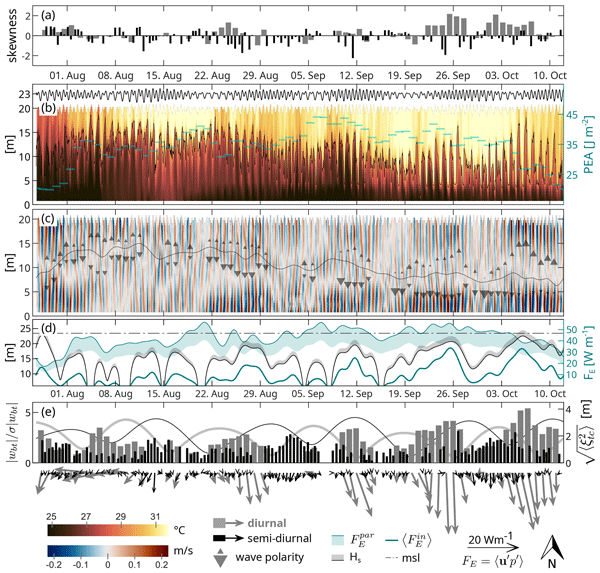
We studied internal tides in the Gulf of Oman, where they had not been observed in detail before. Using seabed instruments, we found that these underwater waves travel far inshore, strengthen as the season shifts toward fall, and stay predictable for weeks. They may bring cooler, low-oxygen water to coastal areas, influencing marine ecosystems and reef health.
Estel Font, Sebastiaan Swart, Puthenveettil Narayana Vinayachandran, and Bastien Y. Queste
Ocean Sci., 21, 1349–1368, https://doi.org/10.5194/os-21-1349-2025, https://doi.org/10.5194/os-21-1349-2025, 2025
Short summary
Short summary
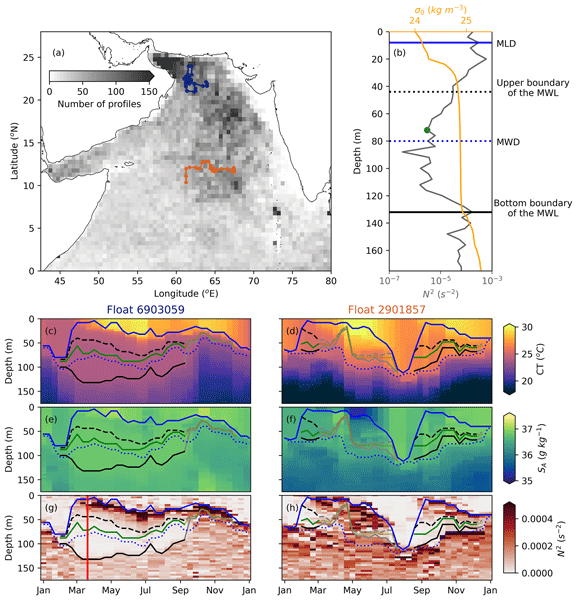
Mode water is formed annually and sits between the warm surface water and deeper older waters. In the Arabian Sea, it plays a crucial role in regulating ocean heat and oxygen variability by acting as a doorway between the surface and deeper waters. Using observations and models, we show that its formation is primarily driven by atmospheric forcing, though ocean currents, eddies, and biological heating also influence its life cycle. This water mass contributes up to 40 % of the region's oxygen content.
Angel Ruiz-Angulo, Esther Portela, Charly de Marez, Andreas Macrander, Sólveig Rósa Ólafsdóttir, Thomas Meunier, Steingrímur Jónsson, and M. Dolores Pérez-Hernández
Ocean Sci., 22, 1727–1743, https://doi.org/10.5194/os-22-1727-2026, https://doi.org/10.5194/os-22-1727-2026, 2026
Short summary
Short summary
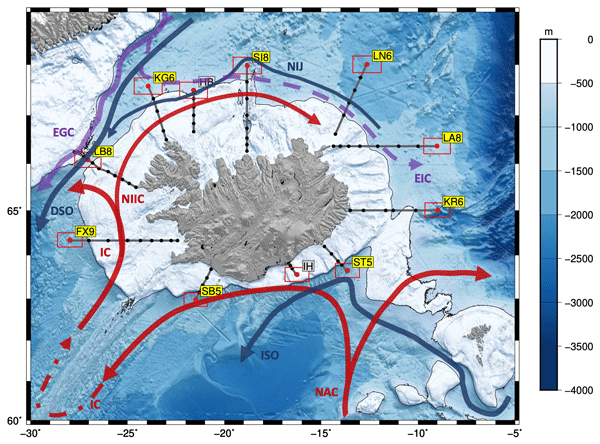
Analysis of 1990–2019 hydrographic around Iceland identifies three dynamical regions: an α-ocean south with warm Atlantic Water and deep mixed layers, a β-ocean northwest with salinity-dominated stratification and shallow mixed layers, and a northeastern transition zone with seasonal shifts. Waters warmed, especially in the northeast, showing Atlantification. Density decreases occur in the south, while other regions show density-compensated variability, with no clear trend in mixed layer depth.
Renske Koets, Sebastiaan Swart, Kathleen Donohue, and Marcel du Plessis
Ocean Sci., 22, 209–224, https://doi.org/10.5194/os-22-209-2026, https://doi.org/10.5194/os-22-209-2026, 2026
Short summary
Short summary
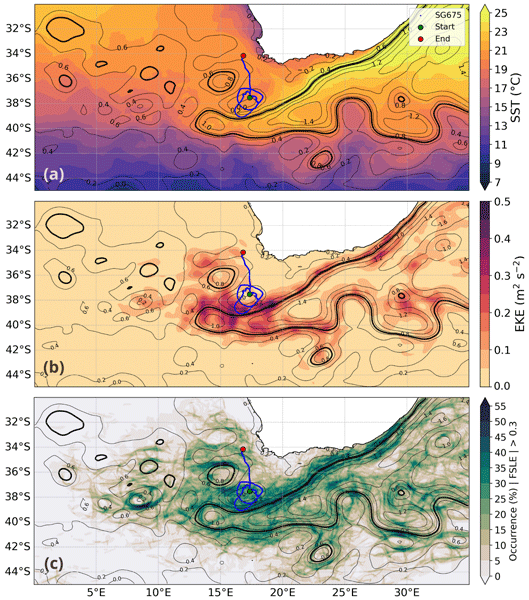
The Cape Basin is a dynamic region where warm, salty Indian Ocean waters meet cooler Atlantic waters. Mixing between these waters drives ventilation, the transport of surface waters to deeper layers in the ocean. Using high-resolution observations from an autonomous Seaglider combined with satellite altimetry we provide new evidence on how small-scale ocean dynamics contribute to ventilation in the Cape Basin, with broader implications on ocean circulation.
Gerd A. Bruss, Estel Font, Bastien Y. Queste, and Rob A. Hall
Ocean Sci., 22, 31–47, https://doi.org/10.5194/os-22-31-2026, https://doi.org/10.5194/os-22-31-2026, 2026
Short summary
Short summary
We studied internal tides in the Gulf of Oman, where they had not been observed in detail before. Using seabed instruments, we found that these underwater waves travel far inshore, strengthen as the season shifts toward fall, and stay predictable for weeks. They may bring cooler, low-oxygen water to coastal areas, influencing marine ecosystems and reef health.
Daisy D. Pickup, Dorothee C. E. Bakker, Karen J. Heywood, Francis Glassup, Emily M. Hammermeister, Sharon E. Stammerjohn, Gareth A. Lee, Socratis Loucaides, Bastien Y. Queste, Benjamin G. M. Webber, and Patricia L. Yager
Ocean Sci., 21, 2727–2741, https://doi.org/10.5194/os-21-2727-2025, https://doi.org/10.5194/os-21-2727-2025, 2025
Short summary
Short summary
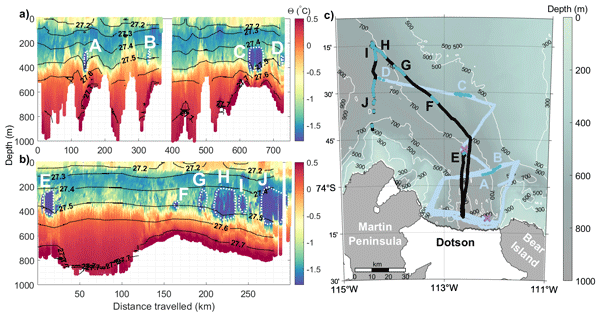
Autonomous platforms in the Amundsen Sea have allowed for detection of isolated water masses that are colder, saltier and denser than overlying water. They are also associated with a higher dissolved inorganic carbon concentration and lower pH. The water masses, referred to as lenses, could have implications for the transfer of heat and storage of carbon in the region. We hypothesise that they form in surrounding areas that experience intense cooling and sea ice formation in autumn/winter.
Peter M. F. Sheehan, Benjamin G. M. Webber, Alejandra Sanchez-Franks, and Bastien Y. Queste
Ocean Sci., 21, 1575–1588, https://doi.org/10.5194/os-21-1575-2025, https://doi.org/10.5194/os-21-1575-2025, 2025
Short summary
Short summary
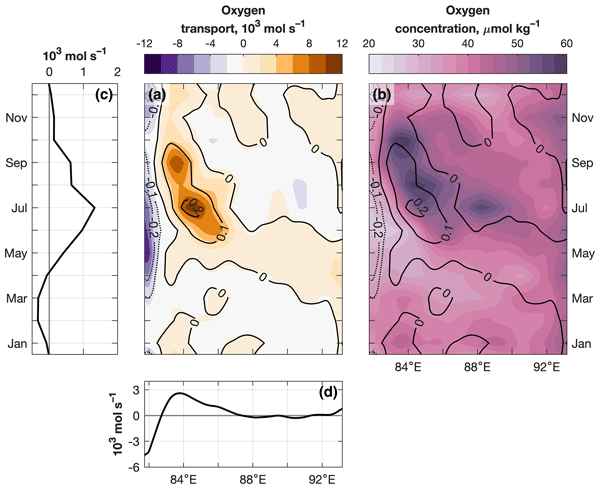
Using measurements and computer models, we identify a large flux of oxygen within the Southwest Monsoon Current, which flows north into the Bay of Bengal between June and September each year. Oxygen levels in the bay are very low, but they are not quite low enough for key nutrient cycles to be as dramatically altered as in other low-oxygen regions. We suggest that the flux which we identify contributes to keeping oxygen levels in the bay above the threshold below which dramatic changes would occur.
Estel Font, Sebastiaan Swart, Puthenveettil Narayana Vinayachandran, and Bastien Y. Queste
Ocean Sci., 21, 1349–1368, https://doi.org/10.5194/os-21-1349-2025, https://doi.org/10.5194/os-21-1349-2025, 2025
Short summary
Short summary
Mode water is formed annually and sits between the warm surface water and deeper older waters. In the Arabian Sea, it plays a crucial role in regulating ocean heat and oxygen variability by acting as a doorway between the surface and deeper waters. Using observations and models, we show that its formation is primarily driven by atmospheric forcing, though ocean currents, eddies, and biological heating also influence its life cycle. This water mass contributes up to 40 % of the region's oxygen content.
Meredith G. Meyer, Esther Portela, Walker O. Smith Jr., and Karen J. Heywood
Ocean Sci., 21, 1223–1236, https://doi.org/10.5194/os-21-1223-2025, https://doi.org/10.5194/os-21-1223-2025, 2025
Short summary
Short summary
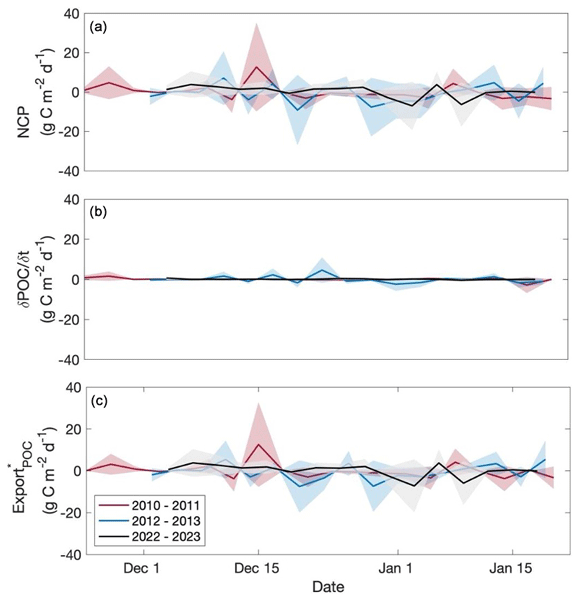
During the annual phytoplankton bloom, rates of primary production and carbon export in the Ross Sea, Antarctica, are uncoupled from each other and from oxygen and carbon stocks. These biogeochemical rates support the high-productivity, low-export classification of the region and suggest that environmental factors influence these stocks and rates differently and make projections under future climate change scenarios difficult.
Kirtana Naëck, Jacqueline Boutin, Sebastiaan Swart, Marcel du Plessis, Liliane Merlivat, Laurence Beaumont, Antonio Lourenco, Francesco d'Ovidio, Louise Rousselet, Brian Ward, and Jean-Baptiste Sallée
Biogeosciences, 22, 1947–1968, https://doi.org/10.5194/bg-22-1947-2025, https://doi.org/10.5194/bg-22-1947-2025, 2025
Short summary
Short summary
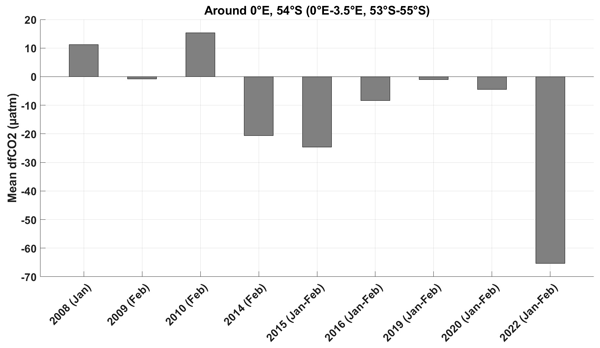
In summer 2022, a CARbon Interface OCean Atmosphere (CARIOCA) drifting buoy observed an anomalously strong ocean carbon sink in the subpolar Southern Ocean associated with large plumes of chlorophyll a. Lagrangian backward trajectories indicate that these waters originated from the sea ice edge in spring 2021. Our study highlights the northward migration of the CO2 sink associated with early sea ice retreat.
Blandine Jacob, Bastien Y. Queste, and Marcel D. du Plessis
Ocean Sci., 21, 359–379, https://doi.org/10.5194/os-21-359-2025, https://doi.org/10.5194/os-21-359-2025, 2025
Short summary
Short summary
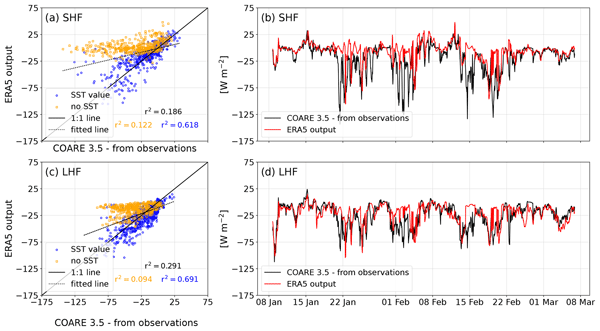
Few observations exist in the Amundsen Sea. Consequently, studies rely on reanalysis (e.g., ERA5) to investigate how the atmosphere affects ocean variability (e.g., sea-ice formation and melt). We use data collected along ice shelves to show that cold, dry air blowing from Antarctica triggers large ocean heat loss, which is underestimated by ERA5. We then use an ocean model to show that this bias has an important impact on the ocean, with implications for sea-ice forecasts.
Nicolas Kolodziejczyk, Esther Portela, Virginie Thierry, and Annaig Prigent
Earth Syst. Sci. Data, 16, 5191–5206, https://doi.org/10.5194/essd-16-5191-2024, https://doi.org/10.5194/essd-16-5191-2024, 2024
Short summary
Short summary
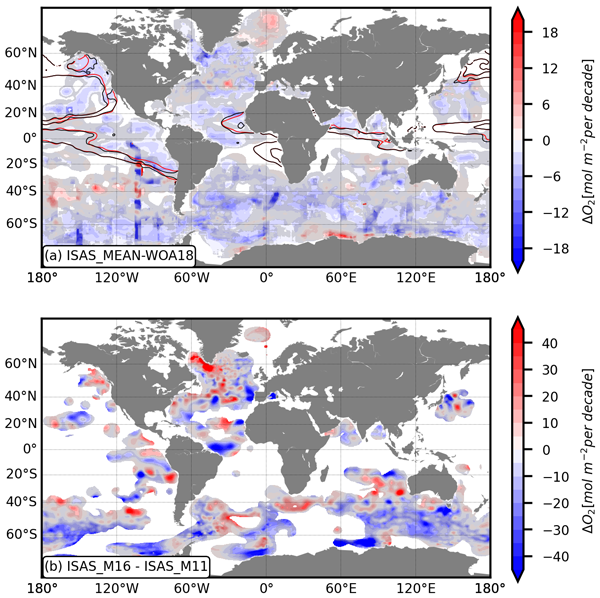
Oceanic dissolved oxygen (DO) is fundamental for ocean biogeochemical cycles and marine life. To ease the computation of the ocean oxygen budget from in situ DO data, mapping of data on a regular 3D grid is useful. Here, we present a new DO gridded product from the Argo database. We compare it with existing DO mapping from a historical dataset. We suggest that the ocean has generally been losing oxygen since the 1980s, but large interannual and regional variabilities should be considered.
Ria Oelerich, Karen J. Heywood, Gillian M. Damerell, Marcel du Plessis, Louise C. Biddle, and Sebastiaan Swart
Ocean Sci., 19, 1465–1482, https://doi.org/10.5194/os-19-1465-2023, https://doi.org/10.5194/os-19-1465-2023, 2023
Short summary
Short summary
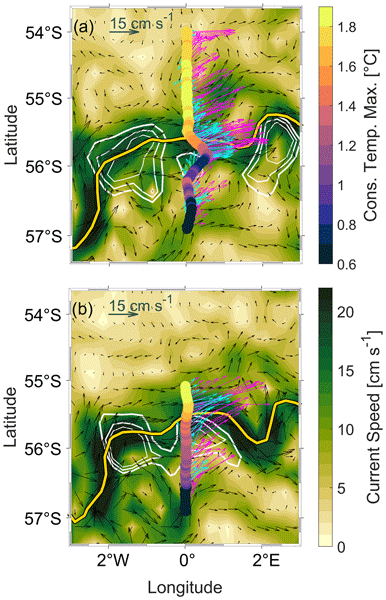
At the southern boundary of the Antarctic Circumpolar Current, relatively warm waters encounter the colder waters surrounding Antarctica. Observations from underwater vehicles and altimetry show that medium-sized cold-core eddies influence the southern boundary's barrier properties by strengthening the slopes of constant density lines across it and amplifying its associated jet. As a result, the ability of exchanging properties, such as heat, across the southern boundary is reduced.
Emmanuel Romero, Leonardo Tenorio-Fernandez, Esther Portela, Jorge Montes-Aréchiga, and Laura Sánchez-Velasco
Ocean Sci., 19, 887–901, https://doi.org/10.5194/os-19-887-2023, https://doi.org/10.5194/os-19-887-2023, 2023
Short summary
Short summary
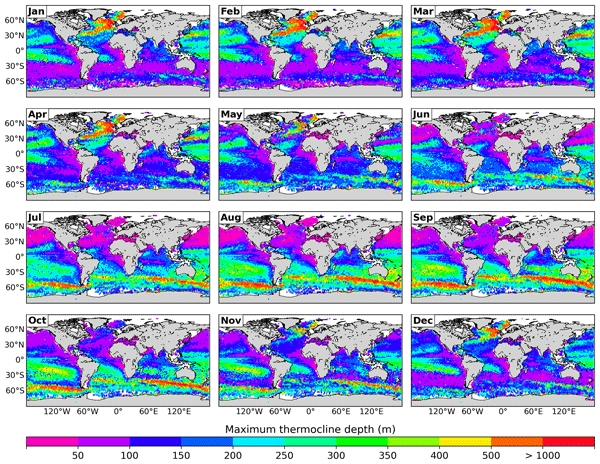
In this study, we present a methodology to locate the minimum and maximum depths of the strongest thermocline, its thickness, and its strength by adjusting the sigmoid function to the temperature profiles in the global ocean. The results of the methodology are compared with the results of other methods found in the literature, and an assessment of the ocean regions where the adjustment is valid is provided. The method proposed here has shown to be robust and easy to apply.
Elise S. Droste, Mario Hoppema, Melchor González-Dávila, Juana Magdalena Santana-Casiano, Bastien Y. Queste, Giorgio Dall'Olmo, Hugh J. Venables, Gerd Rohardt, Sharyn Ossebaar, Daniel Schuller, Sunke Trace-Kleeberg, and Dorothee C. E. Bakker
Ocean Sci., 18, 1293–1320, https://doi.org/10.5194/os-18-1293-2022, https://doi.org/10.5194/os-18-1293-2022, 2022
Short summary
Short summary
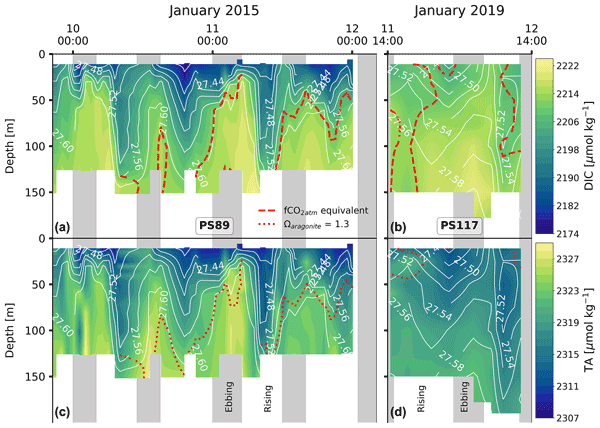
Tides affect the marine carbonate chemistry of a coastal polynya neighbouring the Ekström Ice Shelf by movement of seawater with different physical and biogeochemical properties. The result is that the coastal polynya in the summer can switch between being a sink or a source of CO2 multiple times a day. We encourage consideration of tides when collecting in polar coastal regions to account for tide-driven variability and to avoid overestimations or underestimations of air–sea CO2 exchange.
Benjamin R. Loveday, Timothy Smyth, Anıl Akpinar, Tom Hull, Mark E. Inall, Jan Kaiser, Bastien Y. Queste, Matt Tobermann, Charlotte A. J. Williams, and Matthew R. Palmer
Earth Syst. Sci. Data, 14, 3997–4016, https://doi.org/10.5194/essd-14-3997-2022, https://doi.org/10.5194/essd-14-3997-2022, 2022
Short summary
Short summary
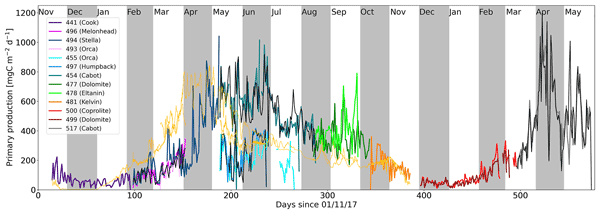
Using a new approach to combine autonomous underwater glider data and satellite Earth observations, we have generated a 19-month time series of North Sea net primary productivity – the rate at which phytoplankton absorbs carbon dioxide minus that lost through respiration. This time series, which spans 13 gliders, allows for new investigations into small-scale, high-frequency variability in the biogeochemical processes that underpin the carbon cycle and coastal marine ecosystems in shelf seas.
Yixi Zheng, David P. Stevens, Karen J. Heywood, Benjamin G. M. Webber, and Bastien Y. Queste
The Cryosphere, 16, 3005–3019, https://doi.org/10.5194/tc-16-3005-2022, https://doi.org/10.5194/tc-16-3005-2022, 2022
Short summary
Short summary
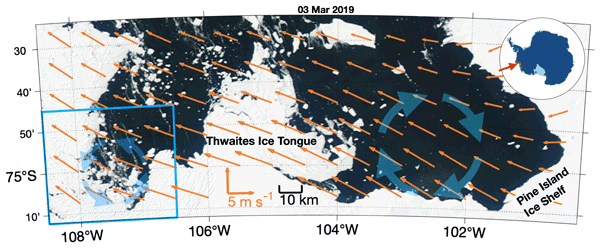
New observations reveal the Thwaites gyre in a habitually ice-covered region in the Amundsen Sea for the first time. This gyre rotates anticlockwise, despite the wind here favouring clockwise gyres like the Pine Island Bay gyre – the only other ocean gyre reported in the Amundsen Sea. We use an ocean model to suggest that sea ice alters the wind stress felt by the ocean and hence determines the gyre direction and strength. These processes may also be applied to other gyres in polar oceans.
Cited articles
Argo: Argo float data and metadata from Global Data Assembly Centre (Argo GDAC), SEANOE [data set], https://doi.org/10.17882/42182, 2023.
Auger, P. A., Bento, J. P., Hormazabal, S., Morales, C. E., and Bustamante, A.: Mesoscale variability in the boundaries of the oxygen minimum zone in the eastern South Pacific: Influence of intrathermocline eddies, J. Geophys. Res.-Oceans, 126, https://doi.org/10.1029/2019JC015272, 2021.
Badin, G., Williams, R. G., Jing, Z., and Wu, L.: Water mass transformations in the Southern Ocean diagnosed from observations: Contrasting effects of air-sea fluxes and diapycnal mixing, J. Phys. Oceanogr., 43, 1472–1484, https://doi.org/10.1175/JPO-D-12-0216.1, 2013.
Calil, P. H. R.: High-resolution, basin-scale simulations reveal the impact of intermediate zonal jets on the Atlantic oxygen minimum zones, J. Adv. Model Earth Sys., 15, https://doi.org/10.1029/2022MS003158, 2023.
Donners, J., Drijfhout, S. S., and Hazeleger, W.: Water mass transformation and subduction in the South Atlantic, J. Phys. Oceanogr., 35, 1841–1860, https://doi.org/10.1175/JPO2782.1, 2005.
Eddebbar, Y. A., Subramanian, A. C., Whitt, D. B., Long, M. C., Verdy, A., Mazloff, M. R., and Merrifield, M. A.: Seasonal modulation of dissolved oxygen in the equatorial Pacific by tropical instability vortices, J. Geophys. Res.-Oceans, 126, https://doi.org/10.1029/2021JC017567, 2021.
EU Copernicus Marine Service Information (CMEMS): Global Ocean Gridded L4 Sea Surface Heights and Derived Variables Reprocessed 1993–ongoing, Marine Data Store (MDS) [data set], https://doi.org/10.48670/moi-00148, 2025.
Evans, D. G., Zika, J. D., Naveira Garabato, A. C., and Nurser, A. J. G.: The imprint of Southern Ocean overturning on seasonal water mass variability in Drake Passage, J. Geophys. Res.-Oceans, 119, 7987–8010, https://doi.org/10.1002/2014JC010097, 2014.
Evans, D. G., Holliday, N. P., Bacon, S., and Le Bras, I.: Mixing and air–sea buoyancy fluxes set the time-mean overturning circulation in the subpolar North Atlantic and Nordic Seas, Ocean Sci., 19, 745–768, https://doi.org/10.5194/os-19-745-2023, 2023.
Feucher, C., Portela, E., Kolodziejczyk, N., Desbruyères, D., and Thierry, V.: Subpolar gyre decadal variability explains the recent oxygenation in the Irminger Sea, Commun. Earth Environ., 3, https://doi.org/10.1038/s43247-022-00570-y, 2022.
Font, E.: EstelFont/Transforamtion_Mode_Water: v1.0.0, Zenodo [code], https://doi.org/10.5281/zenodo.16755122, 2025.
Font, E., Queste, B. Y., and Swart, S.: Seasonal to intraseasonal variability of the upper ocean mixed layer in the Gulf of Oman, J. Geophys. Res.-Oceans, 127, https://doi.org/10.1029/2021JC018045, 2022.
Font, E., Swart, S., Vinayachandran, P. N., and Queste, B. Y.: On mode water formation and erosion in the Arabian Sea: forcing mechanisms, regionality, and seasonality, Ocean Sci., 21, 1349–1368, https://doi.org/10.5194/os-21-1349-2025, 2025.
Frajka-Williams, E., Eriksen, C. C., Rhines, P. B., and Harcourt, R. R.: Determining vertical water velocities from Seaglider, J. Atmos. Oceanic Technol., 28, 1641–1656, https://doi.org/10.1175/2011JTECHO830.1, 2011.
Frenger, I., Bianchi, D., Stührenberg, C., Oschlies, A., Dunne, J., Deutsch, C., Galbraith, E., and Schütte, F.: Biogeochemical role of subsurface coherent eddies in the ocean: Tracer cannonballs, hypoxic storms, and microbial stewpots?, Global Biogeochem. Cycles, 32, 226–249, https://doi.org/10.1002/2017GB005743, 2018.
Gaillard, F., Autret, E., Thierry, V., Galaup, P., Coatanoan, C., and Loubrieu, T.: Quality control of large Argo datasets, J. Atmos. Oceanic Technol., 26, 337–351, https://doi.org/10.1175/2008JTECHO552.1, 2009.
GEBCO Compilation Group: GEBCO 2023 Grid, NERC EDS British Oceanographic Data Centre NOC [data set], https://doi.org/10.5285/f98b053b-0cbc-6c23-e053-6c86abc0af7b, 2023.
Graham, F. S. and McDougall, T. J.: Quantifying the nonconservative production of conservative temperature, potential temperature, and entropy, J. Phys. Oceanogr., 43, 838–862, https://doi.org/10.1175/JPO-D-11-0188.1, 2013.
Groeskamp, S., Griffies, S. M., Iudicone, D., Marsh, R., Nurser, A. J., and Zika, J. D.: The water mass transformation framework for ocean physics and biogeochemistry, Annu. Rev. Mar. Sci., 11, 271–305, https://doi.org/10.1146/annurev-marine-010318-095421, 2019.
Hanawa, K. and Talley, L. D.: Mode waters, Int. Geophys., 77, 373–386, https://doi.org/10.1016/S0074-6142(01)80129-7, 2001.
Herraiz-Borreguero, L. and Rintoul, S. R.: Subantarctic Mode Water: Distribution and circulation, Ocean Dynam., 61, 103–126, https://doi.org/10.1007/s10236-010-0352-9, 2011.
Hersbach, H., Bell, B., Berrisford, P., Hirahara, S., Horányi, A., Muñoz-Sabater, J., Nicolas, J., Peubey, C., Radu, R., Schepers, D., Simmons, A., Soci, C., Abdalla, S., Abellan, X., Balsamo, G., Bechtold, P., Biavati, G., Bidlot, J., Bonavita, M., De Chiara, G., Dahlgren, P., Dee, D., Diamantakis, M., Dragani, R., Flemming, J., Forbes, R., Fuentes, M., Geer, A., Haimberger, L., Healy, S., Hogan, R. J., Hólm, E., Janisková, M., Keeley, S., Laloyaux, P., Lopez, P., Lupu, C., Radnoti, G., de Rosnay, P., Rozum, I., Vamborg, F., Villaume, S., and Thépaut, J. N.: The ERA5 global reanalysis, Q. J. Roy. Meteor. Soc., 146, 1999–2049, https://doi.org/10.1002/qj.3803, 2020.
Ioannou, A., Guez, L., Laxenaire, R., and Speich, S.: Global assessment of mesoscale eddies with TOEddies: Comparison between multiple datasets and colocation with in situ measurements, Remote Sens., 16, https://doi.org/10.3390/rs16224336, 2024.
Jackett, D. R. and McDougall, T. J.: An oceanographic variable for the characterization of intrusions and water masses, Deep-Sea Res., 32, 1195–1207, https://doi.org/10.1016/0198-0149(85)90003-2, 1985.
Jutras, M., Bushinsky, S. M., Cerovečki, I., and Briggs, N.: Mixing accounts for more than half of biogeochemical changes along mode water ventilation pathways, Geophys. Res. Lett., 52, https://doi.org/10.1029/2024GL113789, 2025.
Kalvelage, T., Lavik, G., Jensen, M. M., Revsbech, N. P., Löscher, C., Schunck, H., Desai, D. K., Hauss, H., Kiko, R., Holtappels, M., LaRoche, J., Schmitz, R. A., Graco, M. I., and Kuypers, M. M. M.: Aerobic microbial respiration in oceanic oxygen minimum zones, PLoS ONE, 10, https://doi.org/10.1371/journal.pone.0133526, 2015.
Karstensen, J., Schütte, F., Pietri, A., Krahmann, G., Fiedler, B., Grundle, D., Hauss, H., Körtzinger, A., Löscher, C. R., Testor, P., Vieira, N., and Visbeck, M.: Upwelling and isolation in oxygen-depleted anticyclonic modewater eddies and implications for nitrate cycling, Biogeosciences, 14, 2167–2181, https://doi.org/10.5194/bg-14-2167-2017, 2017.
Lacour, L., Llort, J., Briggs, N., Strutton, P. G., and Boyd, P. W.: Seasonality of downward carbon export in the Pacific Southern Ocean revealed by multi-year robotic observations, Nat. Commun., 14, https://doi.org/10.1038/s41467-023-36954-7, 2023.
Laxenaire, R., Guez, L., Chaigneau, A., Isic, M., Ioannou, A., and Speich, S.: TOEddies global mesoscale eddy atlas colocated with Argo float profiles, SEANOE [data set], https://doi.org/10.17882/102877, 2024.
Lévy, M., Resplandy, L., Palter, J. B., Couespel, D., and Lachkar, Z.: The crucial contribution of mixing to present and future ocean oxygen distribution, in: Ocean mixing, edited by: Meredith, M. and Naviera Garabato, A., Elsevier, 329–344, https://doi.org/10.1016/B978-0-12-821512-8.00020-7, 2022.
Li, Z., England, M. H., and Groeskamp, S.: Recent acceleration in global ocean heat accumulation by mode and intermediate waters, Nat. Commun., 14, 1–14, https://doi.org/10.1038/s41467-023-42468-z, 2023.
Liu, C. and Li, P.: The impact of meso-scale eddies on the Subtropical Mode Water in the western North Pacific, J. Ocean Univ. China, 12, 230–236, https://doi.org/10.1007/s11802-013-2223-8, 2013.
McCartney, M. S.: The subtropical recirculation of mode waters, J. Mar. Res., 40, 427–464, 1982.
McDougall, T. J.: Potential enthalpy: A conservative oceanic variable for evaluating heat content and heat fluxes, J. Phys. Oceanogr., 33, 945–963, https://doi.org/10.1175/1520-0485(2003)033<0945:PEACOV>2.0.CO;2, 2003.
McDougall, T. J. and Barker, P. M.: Getting started with TEOS-10 and the Gibbs Seawater (GSW) Oceanographic Toolbox, SCOR/IAPSO WG127, 28 pp., ISBN 978-0-646-55621-5, 2011.
McDougall, T. J. and Krzysik, O. A.: Spiciness, J. Mar. Res., 73, 141–152, https://doi.org/10.1357/002224015816665589, 2015.
McDougall, T. J., Jackett, D. R., Millero, F. J., Pawlowicz, R., and Barker, P. M.: A global algorithm for estimating Absolute Salinity, Ocean Sci., 8, 1117–1128, https://doi.org/10.5194/os-8-1117-2012, 2012.
Nurser, A. J. G., Marsh, R., and Williams, R. G.: Diagnosing water mass formation from air-sea fluxes and surface mixing, J. Phys. Oceanogr., 29, 1468–1487, https://doi.org/10.1175/1520-0485(1999)029<1468:DWMFFA>2.0.CO;2, 1999.
Portela, E., Kolodziejczyk, N., Vic, C., and Thierry, V.: Physical mechanisms driving oxygen subduction in the global ocean, Geophys. Res. Lett., 47, https://doi.org/10.1029/2020GL089040, 2020a.
Portela, E., Kolodziejczyk, N., Maes, C., and Thierry, V.: Interior water-mass variability in the Southern Hemisphere oceans during the last decade, J. Phys. Oceanogr., 50, 361–381, https://doi.org/10.1175/JPO-D-19-0128.1, 2020b.
Queste, B. Y., Heywood, K. J., and Piontkovski, S. A.: Exploring the potential of ocean gliders: A pirate-proof technique to illuminate mesoscale physical-biological interactions off the coast of Oman (2015–2016), British Oceanographic Data Centre – Natural Environment Research Council, UK [data set], https://doi.org/10.5285/697eb954-f60c-603b-e053-6c86abc00062, 2018.
Resplandy, L., Lévy, M., Bopp, L., Echevin, V., Pous, S., Sarma, V. V. S. S., and Kumar, D.: Controlling factors of the oxygen balance in the Arabian Sea's OMZ, Biogeosciences, 9, 5095–5109, https://doi.org/10.5194/bg-9-5095-2012, 2012.
Sarma, V. V. S. S. and Udaya Bhaskar, T. V. S.: Ventilation of oxygen to oxygen minimum zone due to anticyclonic eddies in the Bay of Bengal, J. Geophys. Res.-Biogeosci., 123, 2145–2153, https://doi.org/10.1029/2018JG004447, 2018.
Schütte, F., Karstensen, J., Krahmann, G., Hauss, H., Fiedler, B., Brandt, P., Visbeck, M., and Körtzinger, A.: Characterization of “dead-zone” eddies in the eastern tropical North Atlantic, Biogeosciences, 13, 5865–5881, https://doi.org/10.5194/bg-13-5865-2016, 2016.
Senafi, F. A., Anis, A., and Menezes, V.: Surface heat fluxes over the northern Arabian Gulf and the northern Red Sea: Evaluation of ECMWF-ERA5 and NASA-MERRA2 reanalyses, Atmosphere, 10, https://doi.org/10.3390/atmos10090504, 2019.
Shi, F., Luo, Y., and Xu, L.: Volume and transport of eddy-trapped mode water south of the Kuroshio Extension, J. Geophys. Res.-Oceans, 123, 8749–8761, https://doi.org/10.1029/2018JC014176, 2018.
Thoppil, P. G.: Mesoscale eddy modulation of winter convective mixing in the northern Arabian Sea, Deep-Sea Res. Pt. II, 216, https://doi.org/10.1016/j.dsr2.2024.105397, 2024.
Trott, C. B., Subrahmanyam, B., Chaigneau, A., and Roman-Stork, H. L.: Eddy-induced temperature and salinity variability in the Arabian Sea, Geophys. Res. Lett., 46, 2734–2742, https://doi.org/10.1029/2018GL081605, 2019.
Walin, G.: On the relation between sea-surface heat flow and thermal circulation in the ocean, Tellus, 34, 187–195, https://doi.org/10.3402/tellusa.v34i2.10801, 1982.
Weber, T. and Bianchi, D.: Efficient particle transfer to depth in oxygen minimum zones of the Pacific and Indian Oceans, Front. Earth Sci., 8, https://doi.org/10.3389/feart.2020.00376, 2020.
Xu, L., Li, P., and Xie, S.-P.: Observing mesoscale eddy effects on mode-water subduction and transport in the North Pacific, Nat. Commun., 7, https://doi.org/10.1038/ncomms10505, 2016.
Short summary
In the Sea of Oman, mode waters form at the surface in winter and are trapped beneath a warmer surface layer in spring, linking the surface ocean and the oxygen minimum zone. Using data from ocean gliders, our study examines how this layer evolves. Changes occur along layers of equal density, with brief episodes of vertical mixing, enhanced by eddies. Glider data reveal more variability than monthly means, showing the need for sustained glider observations to understand future ecosystem impacts.
In the Sea of Oman, mode waters form at the surface in winter and are trapped beneath a warmer...


Special issue