
Articles | Volume 22, issue 6
https://doi.org/10.5194/os-22-3521-2026
© Author(s) 2026. This work is distributed under
the Creative Commons Attribution 4.0 License.
the Creative Commons Attribution 4.0 License.
https://doi.org/10.5194/os-22-3521-2026
© Author(s) 2026. This work is distributed under
the Creative Commons Attribution 4.0 License.
the Creative Commons Attribution 4.0 License.
Research article
| 
02 Nov 2026
Research article |
| 02 Nov 2026
| 02 Nov 2026
Spatial patterns in phytoplankton community composition and their relationship to carbon export on the northwest Weddell Sea continental shelf
Meredith G. Meyer
CORRESPONDING AUTHOR

Centre for Ocean and Atmospheric Sciences, School of Environmental Sciences, University of East Anglia, Norwich, UK
Robert J. W. Brewin
Centre for Geography and Environmental Science, Department of Earth and Environmental Sciences, University of Exeter, Penryn, UK
Xuerong Sun
Centre for Geography and Environmental Science, Department of Earth and Environmental Sciences, University of Exeter, Penryn, UK
Clara Manno
British Antarctic Survey, Cambridge, UK
Florence Atherden
British Antarctic Survey, Cambridge, UK
Sasha J. Kramer
Department of Earth & Environment, Boston University, Boston, MA, USA
Giorgio Dall'Olmo
Sezione di Oceanografia, Istituto Nazionale di Oceanografia e di Geofisica Sperimentale, Trieste, Italy
Karen J. Heywood
Centre for Ocean and Atmospheric Sciences, School of Environmental Sciences, University of East Anglia, Norwich, UK
Related authors
Robert J. W. Brewin, Bethany Wilkinson, Xuerong Sun, Giorgio Dall'Olmo, Gavin H. Tilstone, Katharine R. Hendry, Sarah Breimann, Ian Brown, Angus Atkinson, Katrin Schmidt, Elisabetta Canuti, Meredith G. Meyer, Qi Zheng, Johannes J. Viljoen, Tom Bell, and Karen J. Heywood
EGUsphere, https://doi.org/10.5194/egusphere-2026-4398, https://doi.org/10.5194/egusphere-2026-4398, 2026
This preprint is open for discussion and under review for Ocean Science (OS).
Short summary
Short summary
Phytoplankton are the foundation of the Antarctic food web. Their size affects carbon storage in the ocean and energy transfer to krill, fish, and whales. Because the northwestern Weddell Sea is rarely sampled, little is known about phytoplankton size there. Using ship-based measurements and satellite data, we found medium-sized phytoplankton dominate rather than the smallest types that dominate warmer oceans. This provides a baseline for tracking ecosystem responses to climate change.
Meredith G. Meyer, Esther Portela, Walker O. Smith Jr., and Karen J. Heywood
Ocean Sci., 21, 1223–1236, https://doi.org/10.5194/os-21-1223-2025, https://doi.org/10.5194/os-21-1223-2025, 2025
Short summary
Short summary
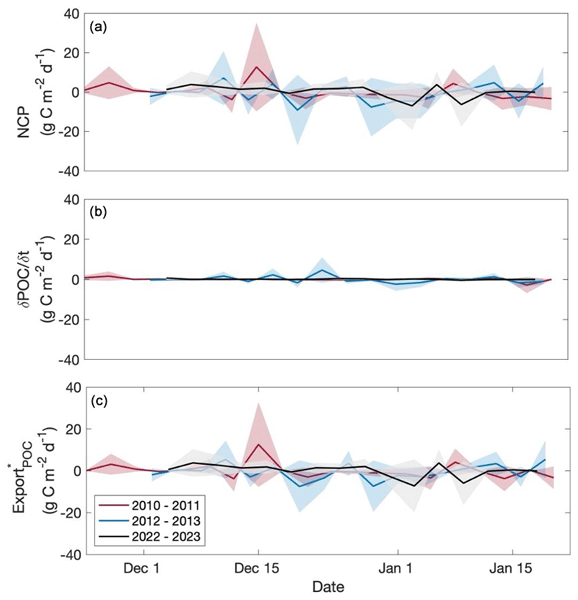
During the annual phytoplankton bloom, rates of primary production and carbon export in the Ross Sea, Antarctica, are uncoupled from each other and from oxygen and carbon stocks. These biogeochemical rates support the high-productivity, low-export classification of the region and suggest that environmental factors influence these stocks and rates differently and make projections under future climate change scenarios difficult.
Tom A. Jordan, Karen J. Heywood, Anna Wåhlin, Rob A. Hall, Atsuhiro Muto, Pierre Dutrieux, Kelly Hogan, James Girton, Karen E. Alley, and Erin Pettit
Solid Earth, 17, 1187–1199, https://doi.org/10.5194/se-17-1187-2026, https://doi.org/10.5194/se-17-1187-2026, 2026
Short summary
Short summary
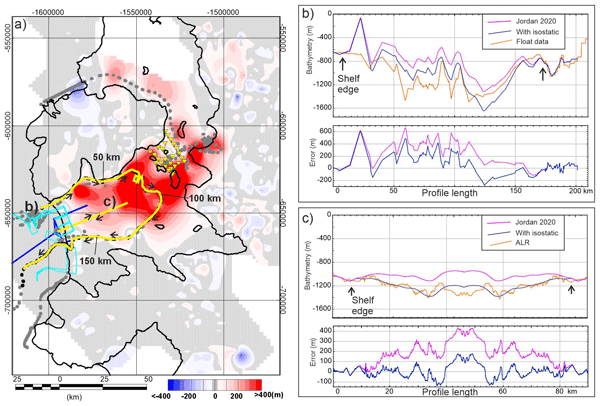
The shape of the water filled cavity hidden beneath ice shelves is extremely important, but hard to measure. Gravity data collected from aircraft can be used to predict the shape. However, in the Dotson Crosson ice shelves in West Antarctica, new direct observations from autonomous platforms sent beneath the ice, and seismic observations from the ice surface showed gravity models were systematically too shallow. We explain why and provide a solution applicable her and in other ice shelves.
Kaihe Yamazaki, Karen J. Heywood, Gillian M. Damerell, Marina Azaneu, and Maya I. Jakes
EGUsphere, https://doi.org/10.5194/egusphere-2026-6184, https://doi.org/10.5194/egusphere-2026-6184, 2026
This preprint is open for discussion and under review for Ocean Science (OS).
Short summary
Short summary
Seamounts can trap ocean currents and stir the water around them. Using two underwater glider surveys over a seamount near the tip of the Antarctic Peninsula, we show that a persistent eddy circling the seamount is held in place by the seafloor and partly driven by strong tides. Tidal mixing weakens the water layering over the summit and favours upwelling, which may supply nutrients to surface waters. The eddy can also trap giant icebergs, holding one for about 18 months.
Florence Atherden, Emily Rowlands, Gareth Flint, Sophie Fielding, Katrin Schmidt, Elaine Fileman, Maren Richter, Bethany Wilkinson, Angus Atkinson, and Clara Manno
Ocean Sci., 22, 2621–2635, https://doi.org/10.5194/os-22-2621-2026, https://doi.org/10.5194/os-22-2621-2026, 2026
Short summary
Short summary
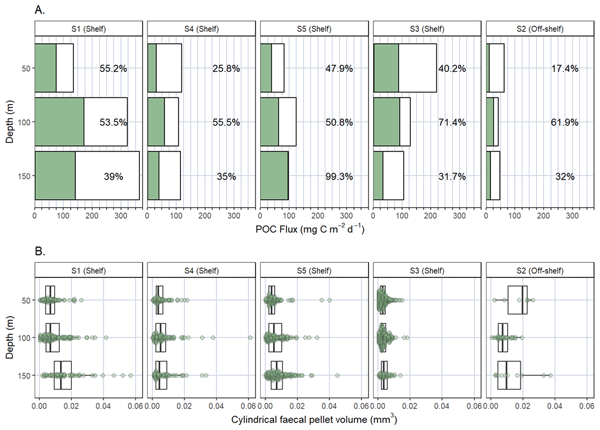
The Southern Ocean influences global climate, in part, through biological production of carbon-rich particles which trap atmospheric CO2 in the deep ocean. Our study highlights that krill defecating at 50–100 m and injecting carbon-rich pellets effectively counteracts the "typical" scenario where the quantity of particles rapidly decreases from the surface, ultimately increasing how much atmospheric carbon is stored. These processes are of global benefit, but vulnerable in a changing climate.
Salem Ibrahim Salem, Andre Valente, Shubha Sathyendranath, Andrei Chuprin, Théo Renard, Jaime Pitarch, Ruth Airs, Moreno Ana, Maria-Manuel Angelico, David Antoine, Robert Arnone, Florinda Artuso, Paulo O. Oliveira, William Balch, Kathryn Barker, Ray Barlow, Simon Bélanger, Marco Bellacicco, Jean-François Berthon, Şükrü Beşiktepe, Francesco Bignami, Yngve Borsheim, Astrid Bracher, Federica Braga, Vittorio Brando, Robert J. W. Brewin, Vanda Brotas, Elisabetta Canuti, Francisco P. Chavez, Andrés Cianca, Hervé Claustre, Lesley Clementson, Simone Colella, Raul Costa, Cristina Nunes, Richard Crout, Emmanuel Devred, Annalisa Di Cicco, Federico Falcini, Ivan Farace, Afonso Ferreira, Scott Freeman, Robert Frouin, Carlos García-Soto, Isabella Giardina, Stuart W. Gibb, Arthur Gleason, Ralf Goericke, Richard Gould, Michael Grant, Nathalie Guillocheau, Hiroto Higa, Stanford B. Hooker, Chuamin Hu, Joji Ishizaka, Thomas Jackson, Mati Kahru, Milton Kampel, Bokyung Kim, Holger Klein, Piotr Kowalczuk, Susanne Kratzer, Raphael Kudela, Antonia Lai, Rosario Lavezza, Jesus Ledesma, Huiwon Lee, Steven Lohrenz, Hubert Loisel, Vivian Lutz, Antonio Mannino, Francesca Margiotta, Victor Martinez-Vicente, Salvatore Marullo, Luca Massi, Patricia Matrai, Atsushi Matsuoka, David McKee, Chiara Melillo, Carlos B. Mendes, Brian G. Mitchell, Tiffany Moisan, Enrique Montes, Frank Muller-Karger, Aimee Neeley, Michael Novak, Leonie O'Dowd, Michael Ondrusek, Emanuele Organelli, Heeyoon Park, Trevor Platt, Francesca Polonelli, Alex Poulton, Mariella Ragni, Michel Repecaud, Maurizio Ribera d’Alcalà, Tamara Rodriguez-Ramos, Rüdiger Röttgers, Manuel Ruiz-Villarreal, Michela Sammartino, Rosalia Santoleri, Gian Marco Scarpa, Thomas Schroeder, Valeria Segura, Timothy Smyth, Denise Smythe-Wright, Heidi M. Sosik, Joanna Stoń-Egiert, Malcolm Taberner, Jing Tan, Rob Thomas, Crystal Thomas, Gavin Tilstone, Andreia Tracana, Michael Twardowski, Vincenzo Vellucci, Gianluca Volpe, Kenneth Voss, Jeremy Werdell, Marcel Wernand, Bozena Wojtasiewicz, Simon Wright, Sunmi Yang, Giuseppe Zibordi, Maria Laura Zoffoli, and Steve Groom
Earth Syst. Sci. Data Discuss., https://doi.org/10.5194/essd-2026-539, https://doi.org/10.5194/essd-2026-539, 2026
Preprint under review for ESSD
Short summary
Short summary
This paper presents the fourth version of the ESA Ocean Colour Climate Change Initiative global in situ bio-optical database. The updated compilation combines observations from many international data sources collected between 1996 and 2025 and includes major expansions in coverage and variables. The dataset provides a consistent reference for validating satellite ocean-colour products and supports algorithm development and long-term climate studies.
Robert J. W. Brewin, Bethany Wilkinson, Xuerong Sun, Giorgio Dall'Olmo, Gavin H. Tilstone, Katharine R. Hendry, Sarah Breimann, Ian Brown, Angus Atkinson, Katrin Schmidt, Elisabetta Canuti, Meredith G. Meyer, Qi Zheng, Johannes J. Viljoen, Tom Bell, and Karen J. Heywood
EGUsphere, https://doi.org/10.5194/egusphere-2026-4398, https://doi.org/10.5194/egusphere-2026-4398, 2026
This preprint is open for discussion and under review for Ocean Science (OS).
Short summary
Short summary
Phytoplankton are the foundation of the Antarctic food web. Their size affects carbon storage in the ocean and energy transfer to krill, fish, and whales. Because the northwestern Weddell Sea is rarely sampled, little is known about phytoplankton size there. Using ship-based measurements and satellite data, we found medium-sized phytoplankton dominate rather than the smallest types that dominate warmer oceans. This provides a baseline for tracking ecosystem responses to climate change.
Jozef Skákala, Shubha Sathyendranath, Yuri Artioli, Deep S. Banerjee, Heather Bouman, Robert J. W. Brewin, Momme Butenschön, Stefano Ciavatta, Stephanie Dutkiewicz, Yanna Fidai, David Ford, Grinson George, Karen Guihou, Bror Jönsson, Marija Bačeković Koloper, Žarko Kovač, Lekshmi Krishnakumary, Gemma Kulk, Charlotte Laufkötter, Gennadi Lessin, Jann Paul Mattern, Angélique Melet, Alexandre Mignot, David Moffat, Fanny Monteiro, Mayra Rodriguez Bennadji, Cécile S. Rousseaux, Ranjini Swaminathan, Osvaldo Ulloa, and Jerry Tjiputra
Ocean Sci., 22, 1457–1481, https://doi.org/10.5194/os-22-1457-2026, https://doi.org/10.5194/os-22-1457-2026, 2026
Short summary
Short summary
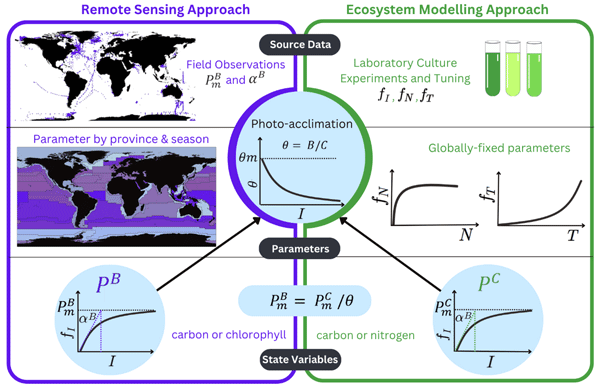
Marine primary production (PP) is a key component of the Earth's climate system, but its current estimates and future projections are highly uncertain. We review the PP uncertainties and discuss their sources both across the ecosystem and satellite models. We propose to reduce the PP uncertainties by better addressing the PP model structures and parametrizations. We also argue that for many models it is desirable to consider spatial and temporal variability in the model parameter values.
Laura Rose Taylor, Katharine R. Hendry, Helen M. Williams, and Clara Manno
EGUsphere, https://doi.org/10.5194/egusphere-2026-2459, https://doi.org/10.5194/egusphere-2026-2459, 2026
Short summary
Short summary
Carbon export from the surface to deep ocean is a key process regulating atmospheric CO2. In Ryder Bay, Western Antarctic Peninsula, zooplankton faecal pellets were found to dominate summer carbon flux, with a chemical composition suggesting feeding on degraded seafloor material in addition to surface-produced algae. These findings suggest organic matter exported from Antarctic coastal shelves may carry distinct chemical signatures, with implications for constraining regional carbon budgets.
Maren Elisabeth Richter, Karen J. Heywood, Rob A. Hall, and Peter E. D. Davis
Ocean Sci., 21, 3341–3359, https://doi.org/10.5194/os-21-3341-2025, https://doi.org/10.5194/os-21-3341-2025, 2025
Short summary
Short summary
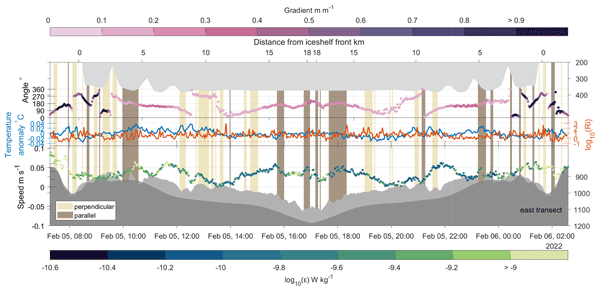
Warm ocean water causes rapid melting of Antarctic glaciers. The circulation and mixing of warm water in ice shelf cavities is mostly unknown. We observed ocean currents and mixing under Dotson Ice Shelf. Mixing is low, with patches of higher mixing associated with stronger currents and vertical current shear. The levels of turbulent mixing will lead to negligible heat loss during the path of the warm water to the grounding line, leaving plenty of heat available to melt the ice shelf there.
Daisy D. Pickup, Dorothee C. E. Bakker, Karen J. Heywood, Francis Glassup, Emily M. Hammermeister, Sharon E. Stammerjohn, Gareth A. Lee, Socratis Loucaides, Bastien Y. Queste, Benjamin G. M. Webber, and Patricia L. Yager
Ocean Sci., 21, 2727–2741, https://doi.org/10.5194/os-21-2727-2025, https://doi.org/10.5194/os-21-2727-2025, 2025
Short summary
Short summary
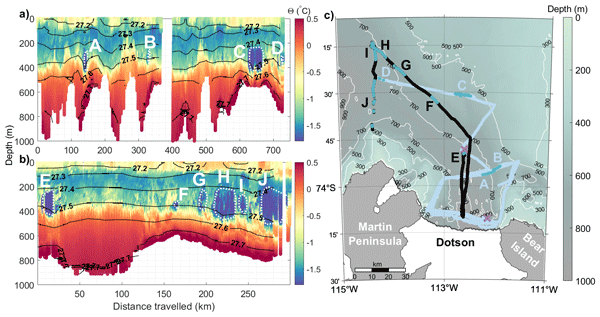
Autonomous platforms in the Amundsen Sea have allowed for detection of isolated water masses that are colder, saltier and denser than overlying water. They are also associated with a higher dissolved inorganic carbon concentration and lower pH. The water masses, referred to as lenses, could have implications for the transfer of heat and storage of carbon in the region. We hypothesise that they form in surrounding areas that experience intense cooling and sea ice formation in autumn/winter.
Christian T. Wild, Tasha Snow, Tiago S. Dotto, Peter E. D. Davis, Scott Tyler, Ted A. Scambos, Erin C. Pettit, and Karen J. Heywood
Ocean Sci., 21, 2605–2629, https://doi.org/10.5194/os-21-2605-2025, https://doi.org/10.5194/os-21-2605-2025, 2025
Short summary
Short summary
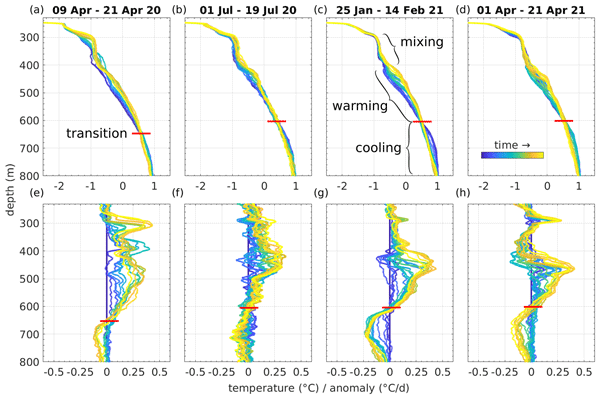
Thwaites Glacier is retreating due to warm ocean water melting it from below, but its thick ice shelf makes this heat hard to monitor. Using hot-water drilling, we placed sensors beneath the floating ice, revealing how surface freezing in Pine Island Bay influences heat at depth. Alongside gradual warming, we found bursts of heat that could speed up melting at the grounding zone, which may become more common as sea ice declines.
Shenjie Zhou, Pierre Dutrieux, Claudia F. Giulivi, Adrian Jenkins, Alessandro Silvano, Christopher Auckland, E. Povl Abrahamsen, Michael Meredith, Irena Vaňková, Keith Nicholls, Peter E. D. Davis, Svein Østerhus, Arnold L. Gordon, Christopher J. Zappa, Tiago S. Dotto, Ted Scambos, Kathryn L. Gunn, Stephen R. Rintoul, Shigeru Aoki, Craig Stevens, Chengyan Liu, Sukyoung Yun, Tae-Wan Kim, Won Sang Lee, Markus Janout, Tore Hattermann, Julius Lauber, Elin Darelius, Anna Wåhlin, Leo Middleton, Pasquale Castagno, Giorgio Budillon, Karen J. Heywood, Jennifer Graham, Stephen Dye, Daisuke Hirano, and Una Kim Miller
Earth Syst. Sci. Data, 17, 5693–5706, https://doi.org/10.5194/essd-17-5693-2025, https://doi.org/10.5194/essd-17-5693-2025, 2025
Short summary
Short summary
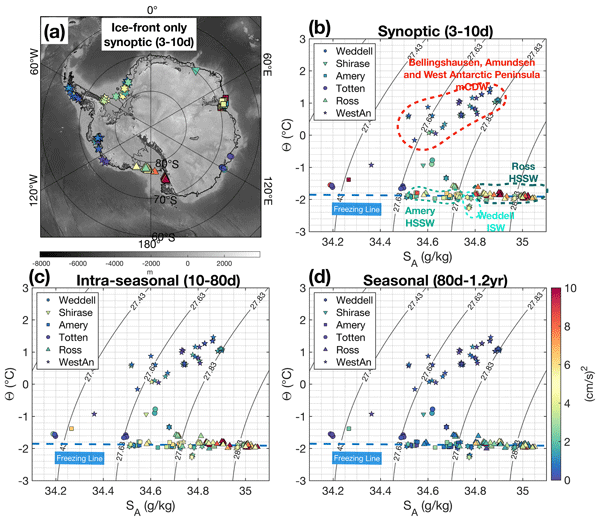
We created the first standardised dataset of in-situ ocean measurements time series from around Antarctica collected since 1970s. This includes temperature, salinity, pressure, and currents recorded by instruments deployed in icy, challenging conditions. Our analysis highlights the dominance of tidal currents and separates these from other patterns to study regional energy distribution. This unique dataset offers a foundation for future research on Antarctic ocean dynamics and ice interactions.
Qi Zheng, Johannes J. Viljoen, Xuerong Sun, Žarko Kovač, Shubha Sathyendranath, and Robert J. W. Brewin
Biogeosciences, 22, 3253–3278, https://doi.org/10.5194/bg-22-3253-2025, https://doi.org/10.5194/bg-22-3253-2025, 2025
Short summary
Short summary
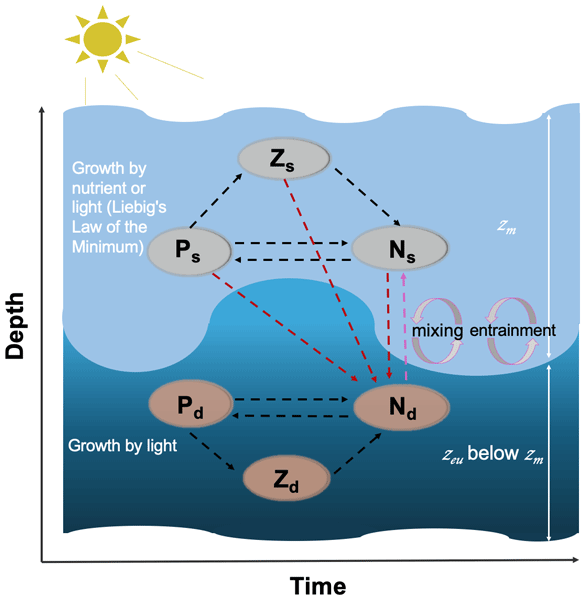
Phytoplankton contribute to half of Earth’s primary production, but not a lot is known about subsurface phytoplankton, living at the base of the sunlit ocean. We develop a two-layered box model to simulate phytoplankton seasonal and interannual variations in different depth layers of the ocean. Our model captures seasonal and long-term trends of the two layers, explaining how they respond to a warming ocean, furthering our understanding of how phytoplankton are responding to climate change.
Meredith G. Meyer, Esther Portela, Walker O. Smith Jr., and Karen J. Heywood
Ocean Sci., 21, 1223–1236, https://doi.org/10.5194/os-21-1223-2025, https://doi.org/10.5194/os-21-1223-2025, 2025
Short summary
Short summary
During the annual phytoplankton bloom, rates of primary production and carbon export in the Ross Sea, Antarctica, are uncoupled from each other and from oxygen and carbon stocks. These biogeochemical rates support the high-productivity, low-export classification of the region and suggest that environmental factors influence these stocks and rates differently and make projections under future climate change scenarios difficult.
Thomas M. Jordan, Giorgio Dall'Olmo, Gavin Tilstone, Robert J. W. Brewin, Francesco Nencioli, Ruth Airs, Crystal S. Thomas, and Louise Schlüter
Earth Syst. Sci. Data, 17, 493–516, https://doi.org/10.5194/essd-17-493-2025, https://doi.org/10.5194/essd-17-493-2025, 2025
Short summary
Short summary
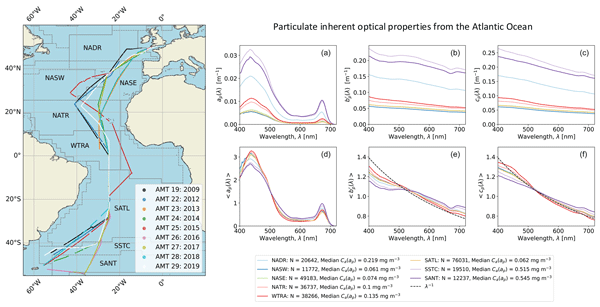
We present a compilation of water optical properties and phytoplankton pigments from the surface of the Atlantic Ocean collected during nine cruises between 2009 and 2019. We derive continuous Chlorophyll a concentrations (a biomass proxy) from water absorption. We then illustrate geographical variations and relationships for water optical properties, Chlorophyll a, and other pigments. The dataset will be useful to researchers in ocean optics, remote sensing, ecology, and biogeochemistry.

Yuan Zhang, Fang Shen, Renhu Li, Mengyu Li, Zhaoxin Li, Songyu Chen, and Xuerong Sun
Earth Syst. Sci. Data, 16, 4793–4816, https://doi.org/10.5194/essd-16-4793-2024, https://doi.org/10.5194/essd-16-4793-2024, 2024
Short summary
Short summary
This work describes AIGD-PFT, the first AI-driven global daily gap-free 4 km phytoplankton functional type (PFT) product from 1998 to 2023. AIGD-PFT enhances the accuracy and spatiotemporal coverage quantification of eight major PFTs (i.e. diatoms, dinoflagellates, haptophytes, pelagophytes, cryptophytes, green algae, prokaryotes, and Prochlorococcus).
Ria Oelerich, Karen J. Heywood, Gillian M. Damerell, Marcel du Plessis, Louise C. Biddle, and Sebastiaan Swart
Ocean Sci., 19, 1465–1482, https://doi.org/10.5194/os-19-1465-2023, https://doi.org/10.5194/os-19-1465-2023, 2023
Short summary
Short summary
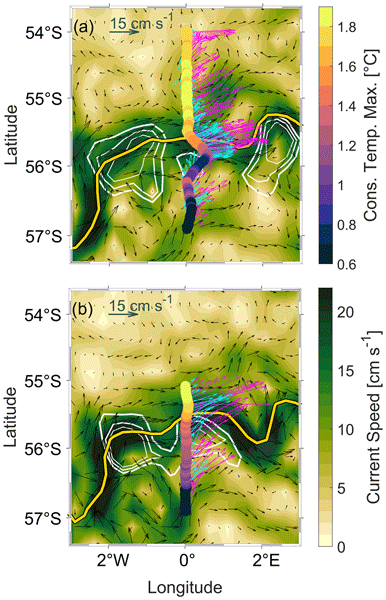
At the southern boundary of the Antarctic Circumpolar Current, relatively warm waters encounter the colder waters surrounding Antarctica. Observations from underwater vehicles and altimetry show that medium-sized cold-core eddies influence the southern boundary's barrier properties by strengthening the slopes of constant density lines across it and amplifying its associated jet. As a result, the ability of exchanging properties, such as heat, across the southern boundary is reduced.
Anna Belcher, Sian F. Henley, Katharine Hendry, Marianne Wootton, Lisa Friberg, Ursula Dallman, Tong Wang, Christopher Coath, and Clara Manno
Biogeosciences, 20, 3573–3591, https://doi.org/10.5194/bg-20-3573-2023, https://doi.org/10.5194/bg-20-3573-2023, 2023
Short summary
Short summary
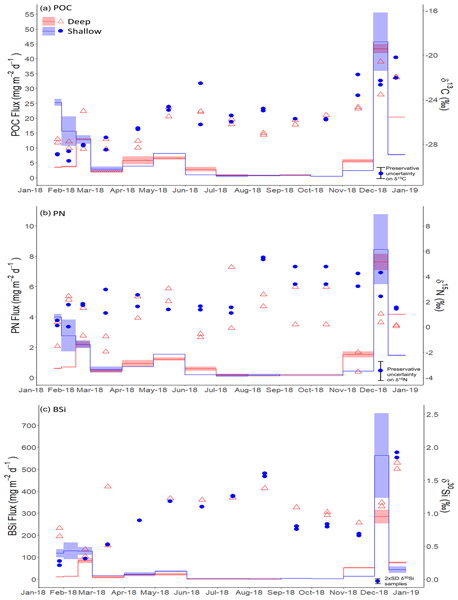
The oceans play a crucial role in the uptake of atmospheric carbon dioxide, particularly the Southern Ocean. The biological pumping of carbon from the surface to the deep ocean is key to this. Using sediment trap samples from the Scotia Sea, we examine biogeochemical fluxes of carbon, nitrogen, and biogenic silica and their stable isotope compositions. We find phytoplankton community structure and physically mediated processes are important controls on particulate fluxes to the deep ocean.
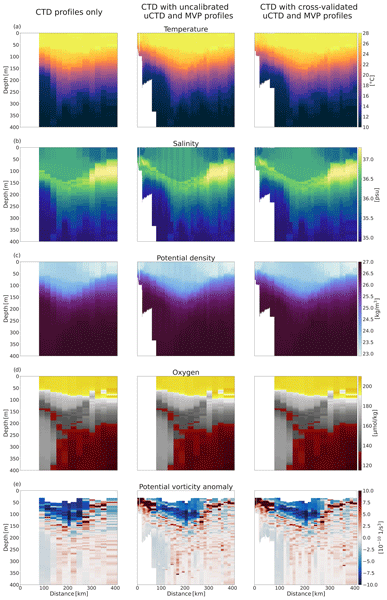
Pierre L'Hégaret, Florian Schütte, Sabrina Speich, Gilles Reverdin, Dariusz B. Baranowski, Rena Czeschel, Tim Fischer, Gregory R. Foltz, Karen J. Heywood, Gerd Krahmann, Rémi Laxenaire, Caroline Le Bihan, Philippe Le Bot, Stéphane Leizour, Callum Rollo, Michael Schlundt, Elizabeth Siddle, Corentin Subirade, Dongxiao Zhang, and Johannes Karstensen
Earth Syst. Sci. Data, 15, 1801–1830, https://doi.org/10.5194/essd-15-1801-2023, https://doi.org/10.5194/essd-15-1801-2023, 2023
Short summary
Short summary
In early 2020, the EUREC4A-OA/ATOMIC experiment took place in the northwestern Tropical Atlantic Ocean, a dynamical region where different water masses interact. Four oceanographic vessels and a fleet of autonomous devices were deployed to study the processes at play and sample the upper ocean, each with its own observing capability. The article first describes the data calibration and validation and second their cross-validation, using a hierarchy of instruments and estimating the uncertainty.

Peter M. F. Sheehan, Gillian M. Damerell, Philip J. Leadbitter, Karen J. Heywood, and Rob A. Hall
Ocean Sci., 19, 77–92, https://doi.org/10.5194/os-19-77-2023, https://doi.org/10.5194/os-19-77-2023, 2023
Short summary
Short summary
We calculate the rate of turbulent kinetic energy dissipation, i.e. the mixing driven by small-scale ocean turbulence, in the western tropical Atlantic Ocean via two methods. We find good agreement between the results of both. A region of elevated mixing is found between 200 and 500 m, and we calculate the associated heat and salt fluxes. We find that double-diffusive mixing in salt fingers, a common feature of the tropical oceans, drives larger heat and salt fluxes than the turbulent mixing.
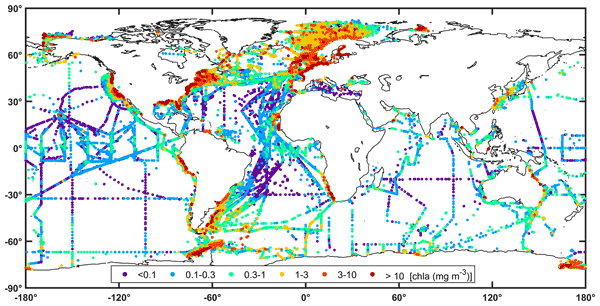
André Valente, Shubha Sathyendranath, Vanda Brotas, Steve Groom, Michael Grant, Thomas Jackson, Andrei Chuprin, Malcolm Taberner, Ruth Airs, David Antoine, Robert Arnone, William M. Balch, Kathryn Barker, Ray Barlow, Simon Bélanger, Jean-François Berthon, Şükrü Beşiktepe, Yngve Borsheim, Astrid Bracher, Vittorio Brando, Robert J. W. Brewin, Elisabetta Canuti, Francisco P. Chavez, Andrés Cianca, Hervé Claustre, Lesley Clementson, Richard Crout, Afonso Ferreira, Scott Freeman, Robert Frouin, Carlos García-Soto, Stuart W. Gibb, Ralf Goericke, Richard Gould, Nathalie Guillocheau, Stanford B. Hooker, Chuamin Hu, Mati Kahru, Milton Kampel, Holger Klein, Susanne Kratzer, Raphael Kudela, Jesus Ledesma, Steven Lohrenz, Hubert Loisel, Antonio Mannino, Victor Martinez-Vicente, Patricia Matrai, David McKee, Brian G. Mitchell, Tiffany Moisan, Enrique Montes, Frank Muller-Karger, Aimee Neeley, Michael Novak, Leonie O'Dowd, Michael Ondrusek, Trevor Platt, Alex J. Poulton, Michel Repecaud, Rüdiger Röttgers, Thomas Schroeder, Timothy Smyth, Denise Smythe-Wright, Heidi M. Sosik, Crystal Thomas, Rob Thomas, Gavin Tilstone, Andreia Tracana, Michael Twardowski, Vincenzo Vellucci, Kenneth Voss, Jeremy Werdell, Marcel Wernand, Bozena Wojtasiewicz, Simon Wright, and Giuseppe Zibordi
Earth Syst. Sci. Data, 14, 5737–5770, https://doi.org/10.5194/essd-14-5737-2022, https://doi.org/10.5194/essd-14-5737-2022, 2022
Short summary
Short summary
A compiled set of in situ data is vital to evaluate the quality of ocean-colour satellite data records. Here we describe the global compilation of bio-optical in situ data (spanning from 1997 to 2021) used for the validation of the ocean-colour products from the ESA Ocean Colour Climate Change Initiative (OC-CCI). The compilation merges and harmonizes several in situ data sources into a simple format that could be used directly for the evaluation of satellite-derived ocean-colour data.
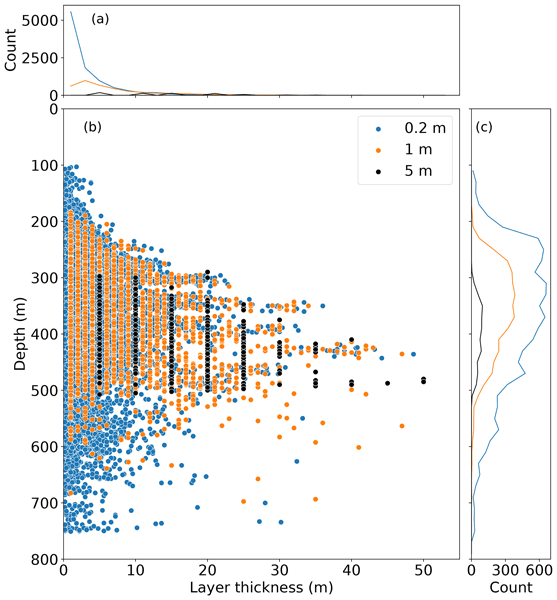
Callum Rollo, Karen J. Heywood, and Rob A. Hall
Geosci. Instrum. Method. Data Syst., 11, 359–373, https://doi.org/10.5194/gi-11-359-2022, https://doi.org/10.5194/gi-11-359-2022, 2022
Short summary
Short summary
Using an underwater buoyancy-powered autonomous glider, we collected profiles of temperature and salinity from the ocean north-east of Barbados. Most of the temperature and salinity profiles contained staircase-like structures of alternating constant values and large gradients. We wrote an algorithm to identify these staircases. We hypothesise that these staircases are prevented from forming where background gradients in temperature and salinity are too great.
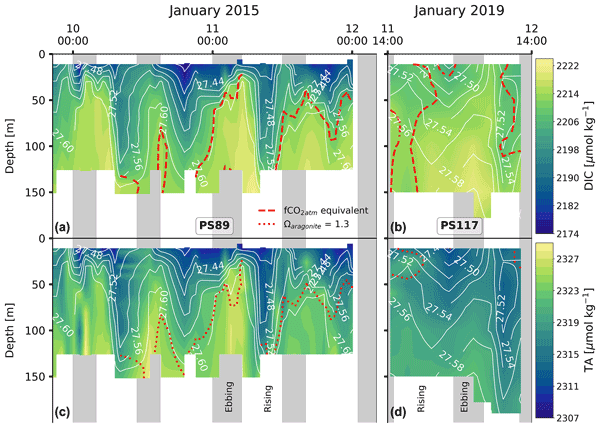
Elise S. Droste, Mario Hoppema, Melchor González-Dávila, Juana Magdalena Santana-Casiano, Bastien Y. Queste, Giorgio Dall'Olmo, Hugh J. Venables, Gerd Rohardt, Sharyn Ossebaar, Daniel Schuller, Sunke Trace-Kleeberg, and Dorothee C. E. Bakker
Ocean Sci., 18, 1293–1320, https://doi.org/10.5194/os-18-1293-2022, https://doi.org/10.5194/os-18-1293-2022, 2022
Short summary
Short summary
Tides affect the marine carbonate chemistry of a coastal polynya neighbouring the Ekström Ice Shelf by movement of seawater with different physical and biogeochemical properties. The result is that the coastal polynya in the summer can switch between being a sink or a source of CO2 multiple times a day. We encourage consideration of tides when collecting in polar coastal regions to account for tide-driven variability and to avoid overestimations or underestimations of air–sea CO2 exchange.
Michael P. Hemming, Jan Kaiser, Jacqueline Boutin, Liliane Merlivat, Karen J. Heywood, Dorothee C. E. Bakker, Gareth A. Lee, Marcos Cobas García, David Antoine, and Kiminori Shitashima
Ocean Sci., 18, 1245–1262, https://doi.org/10.5194/os-18-1245-2022, https://doi.org/10.5194/os-18-1245-2022, 2022
Short summary
Short summary
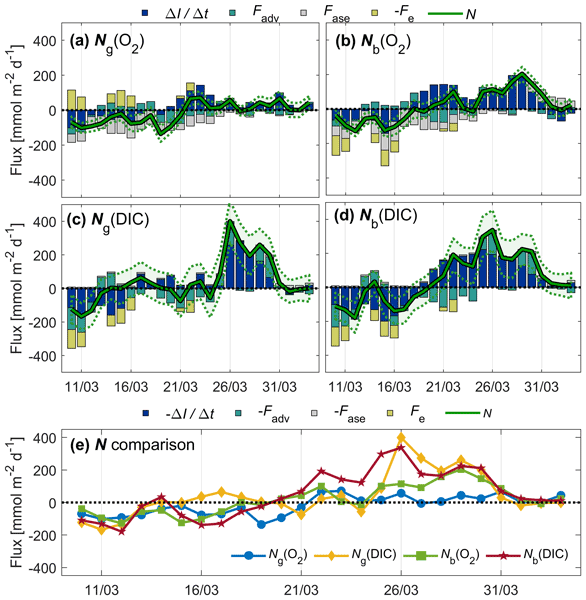
An underwater glider mission was carried out in spring 2016 near a mooring in the northwestern Mediterranean Sea. The glider deployment served as a test of a prototype ion-sensitive field-effect transistor pH sensor. Mean net community production rates were estimated from glider and buoy measurements of dissolved oxygen and inorganic carbon concentrations before and during the spring bloom. Incorporating advection is important for accurate mass budgets. Unexpected metabolic quotients were found.
Yixi Zheng, David P. Stevens, Karen J. Heywood, Benjamin G. M. Webber, and Bastien Y. Queste
The Cryosphere, 16, 3005–3019, https://doi.org/10.5194/tc-16-3005-2022, https://doi.org/10.5194/tc-16-3005-2022, 2022
Short summary
Short summary
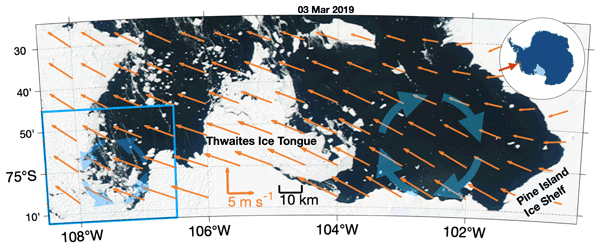
New observations reveal the Thwaites gyre in a habitually ice-covered region in the Amundsen Sea for the first time. This gyre rotates anticlockwise, despite the wind here favouring clockwise gyres like the Pine Island Bay gyre – the only other ocean gyre reported in the Amundsen Sea. We use an ocean model to suggest that sea ice alters the wind stress felt by the ocean and hence determines the gyre direction and strength. These processes may also be applied to other gyres in polar oceans.

Yanxin Wang, Karen J. Heywood, David P. Stevens, and Gillian M. Damerell
Ocean Sci., 18, 839–855, https://doi.org/10.5194/os-18-839-2022, https://doi.org/10.5194/os-18-839-2022, 2022
Short summary
Short summary
It is important that climate models give accurate projections of future extremes in summer and winter sea surface temperature because these affect many features of the global climate system. Our results demonstrate that some models would give large errors if used for future projections of these features, and models with more detailed representation of vertical structure in the ocean tend to have a better representation of sea surface temperature, particularly in summer.
Cited articles
Alderkamp, A., Mills, M. M., van Dijken, G. L., Laan, P., Thuroczy, C., Gerringa, L. J. A., de Baar, H. J. W., Payne, C. D., Visser, R. J. W., Buma, A. G. J., and Arrigo, K. R.: Iron from melting glaciers fuels phytoplankton blooms in the Amundsen Sea (Southern Ocean): Phytoplankton characteristics and productivity, Deep-Sea Res., 71–76, 32–48, https://doi.org/10.1016/j.dsr2.2012.03.005, 2012.
Anderson, S. I., Barton, A. D., Clayton, S., Dutkiewicz, S., and Rynearson, T. A.: Marine phytoplankton functional types exhibit diverse responses to thermal change, Nature 12, 6413, https://doi.org/10.1038/s41467-021-26651-8, 2021.
Atherden, F., Rowlands, E., Flint, G., Fielding, S., Schmidt, K., Fileman, E., Richter, M., Wilkinson, B., Atkinson, A., and Manno, C.: Krill defecation at depth reduces carbon flux attenuation in the Weddell Sea euphotic zone, Ocean Sci., 22, 2621–2635, https://doi.org/10.5194/os-22-2621-2026, 2026a.
Atherden, F., Rowlands, E., and Manno, C.: POC and PON stock data from Weddell Sea Ice floes collected in February 2024 during PICCOLO research cruise SD035, NERC EDS British Oceanographic Data Centre NOC [data set], https://doi.org/10.5285/47f15a7a-de57-dc68-e063-7086abc0ccb7, 2026b.
Brown, M. S., Munro, D. R., Feehan, C. J., Sweeney, C., Ducklow, H. W., and Schofield, O. M.: Enhanced oceanic CO2 uptake along the rapidly changing West Antarctic Peninsula, Nat. Clim. Change, 9, 678–683, https://doi.org/10.1038/s41558-019-0552-3, 2019.
Brown, M. S., Bowman, J. S., Lin, Y., Feehan, C. J., Moreno, C. M., Cassar, N., Marchetti, A., and Schofield, O. M.: Low diversity of a key phytoplankton group along the West Antarctic Peninsula, Limnol. Oceanogr., 66, 2470–2480, https://doi.org/10.1002/lno.11765, 2021.
Cael, B. B., Dutkiewicz, S., and Henson, S.: Abrupt shifts in 21st-century plankton communities, Science Advances, 7, https://doi.org/10.1126/sciadv.abf8593, 2021.
Caron, D. A., Dennett, M. R., Lonsdale, D. J., Moran, D. M., and Shalapyonok, L.: Microzooplankton herbivory in the Ross Sea, Antarcticam Deep-Sea Res. Pt. II, 47, 3249–3272, https://doi.org/10.1016/S0967-0645(00)00067-9, 2000.
Cassar, N., Wright, S. W., Thomson, P. G., Trull, T. W., Westwood, K. J., de Salas, M., Davidson, A., Pearce, I., Davies, D. M., and Matear, R. J.: The relation of mixed-layer net community production to phytoplankton community composition in the Southern Ocean. Global Biogeochem. Cy., 29, 446–462, https://doi.org/10.1002/2014GB004936, 2015.
Cetinić, I., Rousseaux, C. S., Carroll, I. T., Chase, A. P., Kramer, S. J., Werdell, P. J., Siegel, D. A., Dierssen, H. M., Catlett, D., Neeley, A., Soto Ramos, I. M., Wolny, J. L., Sadoff, N., Urquhart, E., Westberry, T. K., Stramski, D., Pahlevan, N., Seegers, B. N., Sirk, E., Lange, P. K., Vandermeulen, R. A., Graff, J. R., Allen, J. G., Gaube, P., McKinna, L. I. W., McKibben, S. M., Binding, C. E., Calzado, V. S., and Sayers, M.: Phytoplankton composition from sPACE: Requirements, opportunities, and challenges, Remote Sens. Environ., 302, 113964, https://doi.org/10.1016/j.rse.2023.113964, 2024.
Chase, A. P., Boss, E., Cetinic, I., and Slade, W.: Estimation of phytoplankton accessory pigments from hyperspectral reflectance spectra: Towards a global algorithm, J. Geophys. Res., 122, 9725–9743, https://doi.org/10.1002/2017JC012859, 2017.
Chen, S., Smith Jr., W. O., and Yu, X.: Revisiting the ocean color algorithms for particulate organic carbon and chlorophyll a concentrations in the Ross Sea, J. Geophys. Res.-Oceans, 126, https://doi.org/10.1029/2021JC017749, 2021.
Denvil-Sommer, A., Buitenhuis, E. T., Kiko, R., Lombard, F., Guidi, L., and Le Quéré, C.: Testing the reconstruction of modelled particulate organic carbon from surface ecosystem components using PlankTOM12 and machine learning, Geosci. Model Dev., 16, 2995–3012, https://doi.org/10.5194/gmd-16-2995-2023, 2023.
Deppeler, S. L. and Davidson, A. T.: Southern Ocean phytoplankton in a changing climate, Frontiers in Marine Science, 4, https://doi.org/10.3389/fmars.2017.00040, 2021.
Dierssen, H. M., Ackleson, S. G., Joyce, K. E., Hestir, E. L., Castagna, A., and Lavender, S.: Living up to the hype of hyperspectral aquatic remote sensing: science, resources and outlook, Frontiers in Environmental Science, 9, https://doi.org/10.3389/fenvs.2021.649528, 2021.
Fileman, E., Mohideen, K., and Tarran, G. A.: Abundance of Protists measured from the water column beneath two sea-ice floes in the Weddell Sea during the PICCOLO research cruise SD035 in January–March 2024, NERC EDS British Oceanographic Data Centre NOC [data set], https://doi.org/10.5285/47b5aaed-7bda-4f73-e063-7086abc0e5a0, 2026.
Flynn, R. F., Haraguchi, L., McQuaid, J., Burger, J. M., Lunga, P. M., Stirnimann, L., Samanta, S., Roychoudhury, A. N., and Fawcett, S. E.: Nanoplankton: The dominant vector for carbon export across the Atlantic Southern Ocean in spring, Science Advances, 9, https://doi.org/10.1126/sciadv.adi3059, 2023.
Fussy, Z., Lampe, R. H., Arrigo, K. R., Barry, K., Brisbin, M. M., Brussaard, C. P. D., Decelle, J., de Vargas, C., DiTullio, G. R., Elbourne, L. D. H., Frischer, M. E., Goodstein, D. M., Grigoriev, I. V., Hayes, R. D., Healey, A. L., James, C. C., Jenkins, J. W., Juery, C., Kumar, M., Kustka, A. B., Maumus, F., Novak Vánclová, A. M. G., Oborník, M., Paulsen, I. T., Probert, I., Saito, M. A., Schmutz, J., Skalický, T., Tec-Campos, D., Tomelka, H., Věchtová, P., Venepally, P., Wilson-Mortier, B., Zengler, K., Zheng, H., and Allen, A. E.: Genome-resolved biogeography of Phaeocystales, cosmopolitan bloom-forming algae, Nat. Commun., 16, 8559, https://doi.org/10.1038/s41467-025-63565-1, 2025.
Garibotti, I. A., Vernet, M., Kozlowski, W. A., and Ferrario, M. E.: Composition and biomass of phytoplankton assemblages in coastal Antarctic waters: a comparison of chemotaxonomic and microscopic analyses, Mar. Ecol. Prog. Ser., 247, 27–42, https://doi.org/10.3354/meps247027, 2003.
Gorman, E. T., Kubalak, D. A., Patel, D., Dress, A., Mott, D. B., Meister, G., and Werdell, P. J.: The NASA Plankton, Aerosol, Cloud, ocean Ecosystem (PACE) mission: an emerging era of global, hyperspectral Earth system remote sensing, P. Soc. Photo-Opt. Ins., https://doi.org/10.1117/12.2537146, 2019.
Hayward, A., Pinkerton, M. H., and Gutierrez-Rodriguez, A.: Phytoclass: A pigment-based chemotaxonomic method to determine the biomass of phytoplankton classes, Limnol. Oceanogr.-Meth., 21, 220–241, https://doi.org/10.1002/lom3.10541, 2023.
Hayward, A., Pinkerton, M. H., Wright, S. W., Gutierrez-Rodrigues, A., and Law, C. S.: Twenty-size years of phytoplankton pigments reveal a circumpolar class divide around the Southern Ocean, Communications Earth and Environment, 5, https://doi.org/10.1038/s43247-024-01261-6, 2024.
Hayward, A., Wright, S. W., Carroll, D., Law, C. S., Wongpan, P., Gutierrez-Rodriguez, A., and Pinkerton, M. H.: Antarctic phytoplankton communities restructure under shifting sea-ice regimes, Nat. Clim. Change, https://doi.org/10.1038/s41558-025-02379-x, 2025.
Henson, S. A., Cael, B. B., Allen, S. R., and Dutkiewicz, S.: Future phytoplankton diversity in a changing climate, Nat. Commun., 12, https://doi.org/10.1038/s41467-021-25699-w, 2021.
Heywood, K.: RRS Sir David Attenborough cruise SD035, 17 January–08 March 2024, PICCOLO cruise report, 347 pp., https://www.bodc.ac.uk/resources/inventories/cruise_inventory/report/18626/ (last access: 28 August 2026), 2024.
Hong, Z., Long, D., Shan, K., Zhang, J., Woolway, R. I., Liu, M., Mann, M. E., and Fang, H.: Declining ocean greenness and phytoplankton blooms in low to mid-latitudes under a warming climate, Science Advances, 11, https://doi.org/10.1126/sciadv.adx4857, 2025.
IOCCG: A Scientific Roadmap of Aquatic Hyperspectral Remote Sensing: Overview of Status, Challenges and Future Perspectives, edited by: Bracher, A., Dogliotti, A., and Werdell, J., IOCCG Report Series, No. 22, Version 1.0, International Ocean Colour Coordinating Group, Dartmouth, Canada, https://ioccg.org/wp-content/uploads/2026/04/report_22_hyperspectral_v1.pdf (last access: 25 August 2026), 2026.
Kang, S.-H. and Fryxell, G. A.: Phytoplankton in the Weddell Sea, Antarctica: composition, abundance and distribution in water-column assemblages of the marginal ice-edge zone during austral autumn, Mar. Biol., 116, 335–348, https://doi.org/10.1007/BF00350024, 1993.
Kramer, S. J. and Siegel, D. A.: How can phytoplankton pigments be best used to characterize surface ocean phytoplankton groups for ocean color remote sensing algorithms, J. Geophys. Res., 124, 7557–7574, https://doi.org/10.1029/2019JC015604, 2019.
Kramer, S. J., Siegel, D. A., Maritorena, S., and Catlett, D.: Modeling surface ocean phytoplankton pigments from hyperspectral remote sensing reflectance on global scales, Remote Sens. Environ., 270, 112879, https://doi.org/10.1016/j.rse.2021.112879, 2022.
Kramer, S. J., Bolaños, L. M., Catlett, D., Chase, A. P., Behrenfeld, M. J., Boss, E. S., Crockford, E. T., Giovannoni, S. J., Graff, J. R., Haëntjens, N., Karp-Boss, L., Peacock, E. E., Roesler, C. S., Sosik, H. M., and Siegel, D. A.: Towards a synthesis of phytoplankton community composition methods for global-scale application, Limnol. Oceanogr., 22, 217–240, https://doi.org/10.1002/lom3.10602, 2024.
Kramer, S. J., Jones, E. L., Estapa, M. L., Paul, N. L., Rynearson, T. A., Santoro, A. E., Sudek, S., and Durkin, C. A.: Sinking particles exporting diatoms and hacrobia predict the magnitude of oceanic POC flux, ISME J., 19, wraf105, https://doi.org/10.1093/ismejo/wraf105, 2025.
Ligowski, R., Jordan, R. W., and Assmy, P.: Morphological adaptation of a planktonic diatom to growth in Antarctic sea ice, Mar. Biol., 159, 817–827, https://doi.org/10.1007/s00227-011-1857-6, 2012.
Lin, Y., Gifford, S., Ducklow, H., Schofield, O., and Cassar, N.: Towards quantitative microbiome community profiling using internal standards, Appl. Environ. Microb., 85, https://doi.org/10.1128/AEM.02634-18, 2019.
Lin, Y., Moreno, C., Marchetti, A., Ducklow, H., Schofield, O., Delage, E., Meredith, M., Li, Z., Eveillard, D., Chaffron, S., and Cassar, N.: Decline in plankton diversity and carbon flux with reduced sea ice extent along the Western Antarctic Peninsula, Nat. Commun., 12, 4948, https://doi.org/10.1038/s41467-021-25235-w, 2021.
Mackey, M. D., Mackey, D. J., Higgins, H. W., and Wright, S. W.: CHEMTAX – a program for estimating class abundances from chemical markers: application to HPLC measurements of phytoplankton, Mar. Ecol. Prog. Ser., 144, 265–283, https://doi.org/10.3354/meps144265, 1996.
Mendes, C. R. B., Tavano, V. M., Kerr, R., Dotto, T. S., Maximiano, T., and Secchi, E. R.: Impact of sea ice on the structure of phytoplankton communities in the northern Antarctic Peninsula, Deep-Sea Res., 149, 111–123, https://doi.org/10.1016/j.dsr2.2017.12.003, 2018.
Meyer, M. G., Jones, R. M., and Smith Jr., W. O.: Quantifying seasonal particulate organic carbon concentrations and export potential in the southwestern Ross Sea using autonomous gliders, J. Geophys. Res.-Oceans, 127, https://doi.org/10.1029/2022JC018798, 2022.
Meyer, M. G., Brzezinski, M. A., Cohn, M. R., Kramer, S. J., Paul, N., Sharpe, G., Niebergall, A. K., Gifford, S., Cassar, N., and Marchetti, A.: Size-fractionated primary production dynamics during the decline phase of the North Atlantic spring bloom, Global Biogeochem. Cy., 38, https://doi.org/10.1029/2023GB008019, 2024.
Meyer, M. G., Portela, E., Smith Jr., W. O., and Heywood, K. J.: Critical uncoupling between biogeochemical stocks and rates in Ross Sea springtime production–export dynamics, Ocean Sci., 21, 1223–1236, https://doi.org/10.5194/os-21-1223-2025, 2025.
Meyer, M. G., Sun, X., Brewin, R. J. W., and Dall'Olmo, G.: High performance liquid chromatography samples from water, ice and interfacial samples collected during RRS Sir David Attenborough cruise SD035 in the Southern Ocean in February 2024 as part of the PICCOLO project, NERC EDS British Oceanographic Data Centre NOC [data set], https://doi.org/10.5285/4d5d158b-3cf9-ad21-e063-7086abc01540, 2026.
Michaels, A. F. and Silver, M. W.: Primary production, sinking fluxes, and the microbial food web, Deep-Sea Res., 35, 473–490, https://doi.org/10.1016/0198-0149(88)90126-4, 1988.
Moreno, C. M., Bernish, M., Meyer, M. G., Li, Z., Waite, N., Cohen, N. R., Schofield, O., and Marchetti, A.: Molecular physiology of Antarctic diatom natural assemblages and bloom event reveal insights into strategies contributing to their ecological success, mSystems, 9, https://doi.org/10.1128/msystems.01306-23, 2024.
Nardelli, S. C., Gray, P. C., Stammerjohn, S. E., and Schofield, O.: Characterizing coastal phytoplankton seasonal succession patterns on the West Antarctic Peninsula, Limnol. Oceanogr., 68, 845–861, https://doi.org/10.1002/lno.12314, 2023.
Oliver, H., Turner, J. S., Castagna, A., Houskeeper, H., and Dierssen, H.: High Antarctic coastal productivity in polynyas revealed by considering remote sensing ice-adjacency effects, Limnology and Oceanography Letters, https://doi.org/10.1002/lol2.70043, 2025.
Roca-Martí, M., Healey, M., McBride, C. E., Sipler, R., Devred, E., Cisternas-Novoa, C., Romanelli, E., Ohashi, K., and Kienast, S. S.: Sinking particle fluxes and biological carbon pump efficiency in the Labrador Sea during a Phaeocystis bloom decline, Biogeosciences, 23, 6229–6248, https://doi.org/10.5194/bg-23-6229-2026, 2026.
Sathyendranath, S.: Reports and monographs of the international ocean-colour coordinating group, International Ocean Colour Coordinating Group, Dartmouth, Canada, IOCCG Report No. 15, https://ioccg.org/wp-content/uploads/2018/09/ioccg_report_15_2014.pdf (last access: 1 June 2026), 2014.
Schloss, I. and Estrada, M.: Phytoplankton composition in the Weddell-Scotia Confluence area during austral spring in relation to hydrography, Polar Biol., 14, 77–90, https://doi.org/10.1007/BF00234969, 1994.
Schmidt, K., Birchill, A. J., Atkinson, A., Brewin, R. J. W., Clark, J. R., Hickman, A. E., Johns, D. G., Lohan, M. C., Milne, A., Pardo, S., Polimene, L., Smyth, T. J., Tarran, G. A., Widdicombe, C. E., Woodward, E. M. S., and Ussher, S. J.: Increasing picocyanobacterial success in shelf waters contributes to long-term food web degradation, Glob. Change Biol., 26, https://doi.org/10.1111/gcb.15161, 2020.
Senger, P., Costa, R. R., Montiero, T., Ferreira, A., Kerr, R., Dotto, T. S., Secchi, E. R., and Mendes, C. R. B.: Distinct phytoplankton groups as key drivers modulating summer CO2 uptake in the northern Antarctic Peninsula, Mar. Ecol. Prog. Ser., 782, https://doi.org/10.3354/meps15088, 2026.
Siegel, D. A., Burd, A. B., Estapa, M. L., Fields, E., Johnson, L., Passow, U., Romanelli, E., Brzezinski, M. A., Buesseler, K. O., Clevenger, S. J., Cetinic, I., Drago, L., Durkin, C. A., Kiko, R., Kramer, S. J., Maas, A. E., Omand, M. M., and Steinberg, D. K.: Assessing marine snow dynamics during the demise of the North Atlantic spring bloom using in situ particle imagery, Global Biogeoche. Cy., 39, https://doi.org/10.1029/2025GB008676, 2025.
Sharpe, G., Zhao, L., Meyer, M. G., Gong, W., Burns, S. M., Tagliabue, A., Buck, K. N., Santoro, A. E., Graff, J. R., Marchetti, A., and Gifford, S.: Synechococcus nitrogen gene loss in iron-limited ocean regions, ISME Communications, 3, https://doi.org/10.1038/s43705-023-00314-9, 2023.
Smith, R. C., Baker, K. S., Fraser, W. R., Hofmann, E. E., Karl, D. M., Klinck, J. M., Quentin, L. B., Prezelin, B. B., Ross, R. M., Trivelpiece, W. Z., and Vernet, M.: The Palmer LTER: A Long-Term Ecological Research Program at Palmer Station, Antarctica, Oceanography, 8, 77–86, 1995.
Smith Jr., W. O. and Kaufman, D. E.: Climatological temporal and spatial distributions of nutrients and particulate matter in the Ross Sea, Prog. Oceanogr., 168, 182–195, https://doi.org/10.1016/j.pocean.2018.10.003, 2018.
Smith Jr., W. O. and Trimborn, S.: Phaeocystis: A global enigma, Annu. Rev. Mar. Sci., 16, 417–441, https://doi.org/10.1146/annurev-marine-022223-025031, 2024.
Smith Jr., W. O., Codispoti, L. A., Nelson, D. M., Manley, T., Buskey, E. J., Niebauer, H. J., and Cota, G. F.: Importance of Phaeocystis blooms in the high-latitude ocean carbon cycle, Nature, 352, 514–516, https://doi.org/10.1038/352514a0, 1991.
Smith Jr., W. O., Ainley, D. G., Arrigo, K. R., and Dinniman, M. S.: The oceanography and ecology of the Ross Sea, Annu. Rev. Mar. Sci., 6, 469–487, https://doi.org/10.1146/annurev-marine-010213-135114, 2014.
Suomalainen, J., Oliviera, R. A., Hakala, T., Koivumaki, N., Markelin, L., Nasi, R., and Honkavaara, E.: Direct reflectance transformation methodology for drone-based hyperspectral imaging, Remote Sens. Environ., 266, https://doi.org/10.1016/j.rse.2021.112691, 2021.
Thomalla, S. J., Nicholson, S.-A., Ryan-Keogh, T. J., and Smith, M. E.: Widespread changes in Southern Ocean phytoplankton blooms linked to climate drivers, Nat. Clim. Change, 13, 975–984, https://doi.org/10.1038/s41558-023-01768-4, 2023.
Thompson, A. F., Stewart, A. L., Spence, P., and Heywood, K. J.: The Antarctic slope current in a changing climate, Rev. Geophys., 56, 741–770, https://doi.org/10.1029/2018RG000624, 2018.
Trimborn, S., Hoppe, C. J. M., Taylor, B. B., Bracher, A., and Hassler, C.: Physiological characteristics of open ocean and coastal phytoplankton communities of Western Antarctic Peninsula and Drake Passage waters, Deep-Sea Res., 98, 115–124, https://doi.org/10.1016/j.dsr.2014.12.010, 2015.
Van Heukelem, L. and Thomas, C.: Computer assisted high-performance liquid chromatography method development with applications to the isolation and analysis of phytoplankton pigments, J. Chromatogr. A, 910, 31–49. 2001.
Venables, H., Meredith, M. P., Hendry, K. R., ten Hoopen, P., Peat, H., Chapman, A., Beaumont, J., Piper, R., Miller, A. J., Mann, P., Rossetti, H., Massey, A., Souster, T., Reeves, S., Fenton, M., Heiser, S., Pountney, S., Reed, S., Waring, Z., Clark, M., Bolton, E., Mathews, R., London, H., Clement, A., Stuart, E., Reichardt, A., Brandon, M., Leng, M., Arrowsmith, C., Annett, A., Henley, S. F., and Clarke, A.: Sustained year-round oceanographic measurements from Rothera Research Station, Antarctica, 1997–2017, Scientific Data, 10, https://doi.org/10.1038/s41597-023-02172-5, 2023.
Williams, J. R., Giering, S. L. C., Baker, C. A., Pabortsava, K., Briggs, N., East, H., Espinola, B., Blackbird, S., Le Moigne, F. A. C., Villa-Alfageme, M., Poulton, A. J., Carvalho, F., Pebody, C., Saw, K., Moore, C. M., Henson, S. A., Sanders, R., and Martin, A. P.: Inefficient transfer of diatoms through the subpolar Southern Ocean twilight zone, Nat. Geosci., 18, 72–77, https://doi.org/10.1038/s41561-024-01602-2, 2024.
Wright, S. W., van den Enden, R. L., Pearce, I., Davidson, A. T., Scott, F. J., and Westwood, K. J.: Phytoplankton community structure and stocks in the Southern Ocean (30–80° E) determined by CHEMTAX analysis of HPLC pigment signatures, Deep-Sea Res. Pt. II, 57, 758–788, https://doi.org/10.1016/j.dsr2.2009.06.015, 2009.
Xi, H., Losa, S. N., Mangin, A., Soppa, M., Garnesson, P., Demaria, J., Liu, Y., d'Andon, O. H. F., and Bracher, A.: Global retrieval of phytoplankton functional types based on empirical orthogonal functions using CMEMS GlobColour merged products and further extension to OLCI data, Remote Sens. Environ., 240, https://doi.org/10.1016/j.rse.2020.111704, 2020.
Xi, H., Bretagnon, M., Mehdipour, E., Demaria, J., Mangin, A., and Bracher, A.: Consistent long-term observations of surface phytoplankton functional types from space, in: 9th edition of the Copernicus Ocean State Report (OSR9), edited by: von Schuckmann, K., Moreira, L., de Pascual Collar, Á., Grégoire, M., Brasseur, P., Garric, G., Karstensen, J., Lionello, P., Marcos, M., Poulain, P.-M., and Staneva, J., Copernicus Publications, State Planet, 6-osr9, 7, https://doi.org/10.5194/sp-6-osr9-7-2025, 2025.
Zuniga, D., Sanchez-Vidal, A., Flexas, M. M., Carroll, D., Rufino, M. M., Spreen, G., Calafat, A., and Abrantes, F.: Sinking diatom assemblages as a key driver for deep carbon and silicon export in the Scotia Sea (Southern Ocean), Front. Earth Sci., 9, https://doi.org/10.3389/feart.2021.579198, 2021.
Short summary
Antarctica is a key region for carbon cycling and export. The efficiency of carbon export has been linked to the type of phytoplankton dominating the system. Our results suggest diatoms, haptophytes, and cryptophytes are present in all water column samples despite substantial physical differences between sampling locations. Our data shows a strong relationship between the proportion of diatoms, haptophytes, and cryptophytes relative to all other phytoplankton and the magnitude of carbon flux.
Antarctica is a key region for carbon cycling and export. The efficiency of carbon export has...


Altmetrics
Final-revised paper
Preprint