
Articles | Volume 22, issue 5
https://doi.org/10.5194/os-22-3457-2026
© Author(s) 2026. This work is distributed under
the Creative Commons Attribution 4.0 License.
the Creative Commons Attribution 4.0 License.
https://doi.org/10.5194/os-22-3457-2026
© Author(s) 2026. This work is distributed under
the Creative Commons Attribution 4.0 License.
the Creative Commons Attribution 4.0 License.
Research article
| 
28 Oct 2026
Research article |
| 28 Oct 2026
| 28 Oct 2026
Quantifying freshwater fluxes from Major rivers and assessing their impact on the Atlantic Ocean

Magellium, 1 rue Ariane, Toulouse, France
Thomas Vaujour
Magellium, 1 rue Ariane, Toulouse, France
Julia Pfeffer
Magellium, 1 rue Ariane, Toulouse, France
Andrea Storto
CNR-ISMAR, Rome, Italy
Camille Szczypta
EDF, Toulouse, France
Gilles Garric
Mercator Ocean International, Toulouse, France
Claire Sirere
Mercator Ocean International, Toulouse, France
Gilles Larnicol
Magellium, 1 rue Ariane, Toulouse, France
Chunxue Yang
CNR-ISMAR, Rome, Italy
Romain Bourdalle-Badie
Mercator Ocean International, Toulouse, France
Stéphanie Guinehut
Mercator Ocean International, Toulouse, France
Related authors
No articles found.
Vincenzo de Toma, Andrea Storto, Ronan McAdam, Antonietta Capotondi, and Chunxue Yang
EGUsphere, https://doi.org/10.5194/egusphere-2026-5747, https://doi.org/10.5194/egusphere-2026-5747, 2026
This preprint is open for discussion and under review for Ocean Science (OS).
Short summary
Short summary
Marine heatwaves, prolonged spells of unusually warm seawater, can harm marine life and the people who depend on it, yet we know little about what happens beneath the surface. We compared three reconstructions of past ocean conditions and found they reliably capture famous surface events seen by satellites. Warm water often extends 100 to 150 metres down, and events reaching deeper last longer. Our results show that combining several products adds value to the results.
Karina von Schuckmann, Flora Gues, Mahé Butel, Gilles Garric, Alvaro de Pascual, Axel Alonso Valle, Aurélien Liné, and Lorena Moreira Mendez
State Planet, 7-osr10, 2, https://doi.org/10.5194/sp-7-osr10-2-2026, https://doi.org/10.5194/sp-7-osr10-2-2026, 2026
Short summary
Short summary
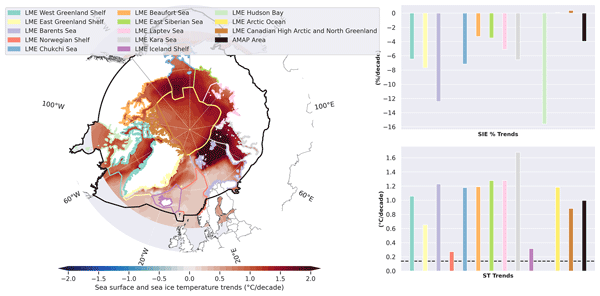
The polar ocean narrative integrates physical, ecological, and societal indicators and shows amplified warming, sea ice loss, and compound change for coastal erosion in the Arctic. Indicators in the Antarctic illustrate an international governance challenge, where biodiversity protection requires both conservation and global mitigation. Together, these examples show that polar ocean change is not a collection of isolated environmental trends, but undergoes an interconnected transformation.
Zhe Song, Anny Cazenave, William Llovel, Andrea Storto, and Marie Bouih
Ocean Sci., 22, 2903–2914, https://doi.org/10.5194/os-22-2903-2026, https://doi.org/10.5194/os-22-2903-2026, 2026
Short summary
Short summary
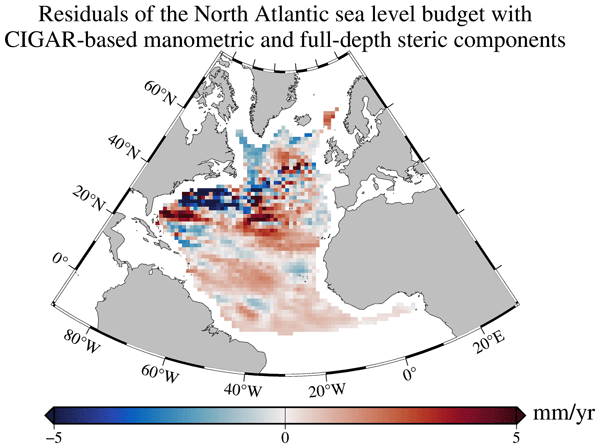
The objective of this study is to understand why the North Atlantic sea level budget is not closed over the Argo and Gravity Recovery and Climate Experiment (GRACE) era. We show that using an ocean reanalysis for the ocean mass component instead of GRACE, and accounting for deep ocean warming allows quasi-closure of the North Atlantic sea level budget within data uncertainties.
Paolo Mauriello, Gregory C. Smith, Andrea Storto, and Chunxue Yang
Ocean Sci., 22, 2863–2902, https://doi.org/10.5194/os-22-2863-2026, https://doi.org/10.5194/os-22-2863-2026, 2026
Short summary
Short summary
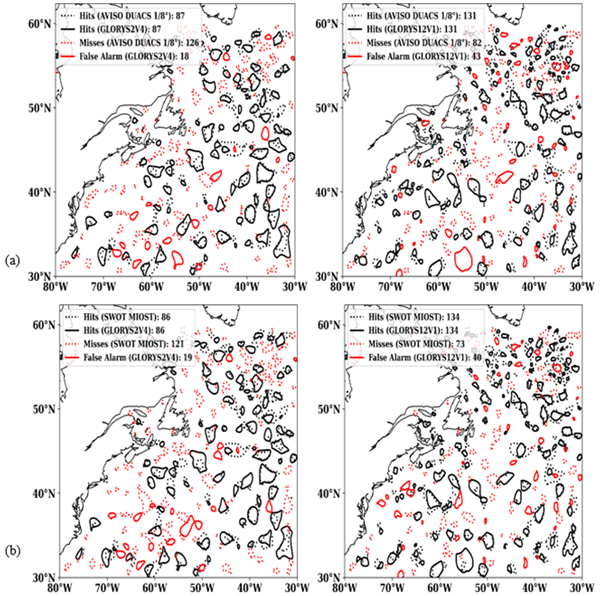
This article evaluates two ocean reanalyses with spatial resolutions of 1/4° and 1/12° by comparing them with two satellite observation products, both at 1/8° resolution. The results show the added value of higher model resolution for representing mesoscale eddies and highlight the value of wide-swath satellite altimetry for model verification in the North Atlantic.
Andrea Storto, Vincenzo de Toma, and Chunxue Yang
Ocean Sci., 22, 2809–2834, https://doi.org/10.5194/os-22-2809-2026, https://doi.org/10.5194/os-22-2809-2026, 2026
Short summary
Short summary
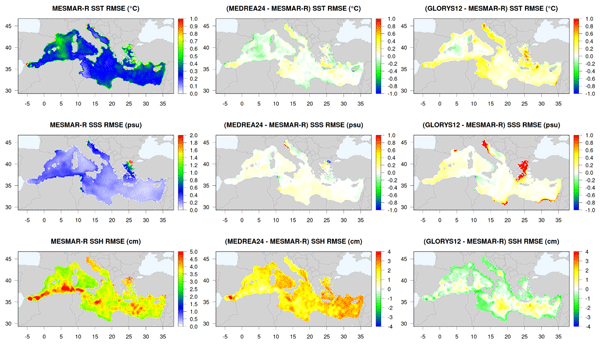
The Mediterranean region is one of the fastest-warming areas on Earth, and understanding its changes is thus crucial. We produced a new reconstruction of the Mediterranean climate for the 1993–2024 period, using a modelling system that combines weather, ocean, and hydrology information with observations. This new reanalysis offers a clearer picture of how the region has been warming, drying, and changing over the past 30 years, supporting better studies of extreme events and climate impacts.
Susanna Winkelbauer, Gaël Forget, Michael Mayer, Romain Bourdalle-Badie, Andrea Cipollone, Leopold Haimberger, Keith Haines, Satoshi Osafune, Yuanyuan Song, Andrea Storto, Chunxue Yang, and Hao Zuo
EGUsphere, https://doi.org/10.5194/egusphere-2026-5435, https://doi.org/10.5194/egusphere-2026-5435, 2026
This preprint is open for discussion and under review for Ocean Science (OS).
Short summary
Short summary
Ocean currents carry vast amounts of heat through the Atlantic and strongly influence climate. We compared estimates from 17 global ocean reanalyses with observations to assess how well they reproduce this heat transport and its changes over time. Most reanalyses capture the main patterns and variations, but important differences remain. The reanalyses also suggest a decrease in northward heat transport since the early 1990s, although its magnitude remains uncertain.
Joseph K. Ansong, Brian K. Arbic, Romain Bourdalle-Badié, Clément Bricaud, Jérôme Chanut, Dimitris Menemenlis, Richard D. Ray, Michael Schindelegger, Alan J. Wallcraft, He Wang, Alistair J. Adcroft, Frédéric Briol, Maarten C. Buijsman, Loren Carrère, Eric P. Chassignet, Gerald Dibarboure, Robert W. Hallberg, Christopher N. Hill, Ariane Koch-Larrouy, Florent Lyard, Matthew R. Mazloff, An T. Nguyen, Nicolas Picot, Rui M. Ponte, and Jay F. Shriver
EGUsphere, https://doi.org/10.5194/egusphere-2026-5064, https://doi.org/10.5194/egusphere-2026-5064, 2026
This preprint is open for discussion and under review for Ocean Science (OS).
Short summary
Short summary
We assess how well four high-resolution global ocean models reproduce surface and internal tides compared with satellite observations. Some models produce internal tides that are too strong, but including energy loss over rough seafloor improves their accuracy. Longer model records and higher resolution also improve agreement with observations. We further identify errors in the tidal forcing of widely used MITgcm simulations that reduce the accuracy of their simulated tides.
Yushi Morioka, Doroteaciro Iovino, Andrea Cipollone, Andrea Storto, Takeshi Doi, Masami Nonaka, and Swadhin K. Behera
EGUsphere, https://doi.org/10.5194/egusphere-2026-5070, https://doi.org/10.5194/egusphere-2026-5070, 2026
Preprint archived
Short summary
Short summary
Arctic sea ice has been shrinking for the last four decades. As global warming continues, predicting summer sea ice is becoming more important. Here we create a seasonal forecast system using the SINTEX-F3 model. Results show that summer sea ice in the Barents-Kara Sea is best predicted when accurate sea ice and snow conditions are provided from spring. It is found that initial sea ice thickness acts as a memory for the climate system, enabling accurate summer sea ice prediction from spring.
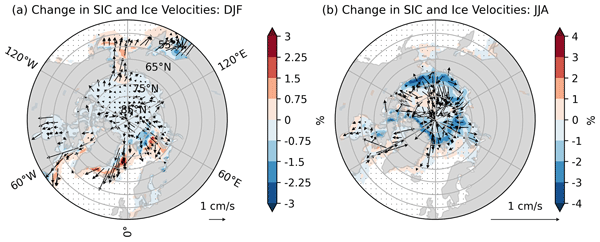
Kristian Strommen, Michael Mayer, Andrea Storto, Jonas Spaeth, and Steffen Tietsche
Weather Clim. Dynam., 7, 1593–1618, https://doi.org/10.5194/wcd-7-1593-2026, https://doi.org/10.5194/wcd-7-1593-2026, 2026
Short summary
Short summary
Numerical weather forecasts of sea ice are unreliable, exhibiting an overly narrow range of plausible sea ice evolutions. Stochastic perturbations introduce randomness to the forecast in order to alleviate this by representing uncertainties in the representation of sea ice physics. We show that including such perturbations in a forecast model improves the reliability of sea ice forecasts, and furthermore results in improved seasonal forecasts of the northern European winter circulation.
Alejandro Blazquez, Benoit Meyssignac, Robin Fraudeau, Michael Ablain, Jonathan Bamber, Antonio Bonaduce, Marie Bouih, Anny Cazenave, Thorben Döhne, Ines Dussaillant, Ramiro Ferrari, Martin Horwath, Nicolas Kolodziejczyk, Hugo Lecomte, Stephanie Leroux, William Llovel, Daniele Melini, Erwan Oulhen, Thierry Penduff, Roshin P. Raj, Giorgio Spada, Marius Schlaak, Papasarafianou Stamatia, Andrea Storto, Chunxue Yang, and Sarah Connors
Earth Syst. Sci. Data Discuss., https://doi.org/10.5194/essd-2026-627, https://doi.org/10.5194/essd-2026-627, 2026
Preprint under review for ESSD
Short summary
Short summary
Closing the sea‑level budget on annual and longer time scales is a cornerstone of physical oceanography because sea‑level rise is one of the best indicators of climate change, and a closed budget shows we have identified and quantified all major drivers. We examined it from 1993 to 2022, finding an accelerated rise that matched ice melt and warm water until 2015. Afterwards an unexplained gap appears. Better deep‑ocean observations and refined gravity processing are needed to close the budget.
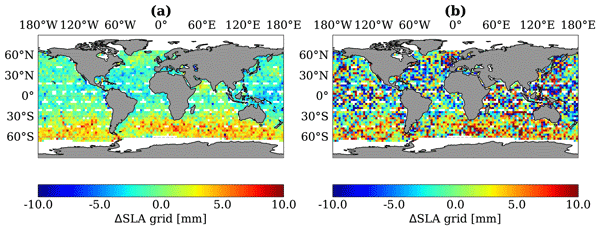
Noémie Lalau, Michaël Ablain, Thomas Vaujour, François Boy, Gerald Dibarboure, and Alejandro Egido
Ocean Sci., 22, 2491–2501, https://doi.org/10.5194/os-22-2491-2026, https://doi.org/10.5194/os-22-2491-2026, 2026
Short summary
Short summary
We investigated how to maintain continuous sea level measurements between current Sentinel-3 constellation and the upcoming Sentinel-3 Next Generation Topography mission. Because of new satellite designs, a 4-hour delay will exists between observations during the calibration phase. By simulating this time lag, we found that, despite increased uncertainty, reliable calibration is possible. Extending this phase to one year ensures a stable, long-term record for climate and ocean monitoring.
Youyu Lu, Li Zhai, Xianmin Hu, Chantelle Layton, David Brickman, Blair Greenan, and Gilles Garric
State Planet Discuss., https://doi.org/10.5194/sp-2026-26, https://doi.org/10.5194/sp-2026-26, 2026
Preprint under review for SP
Short summary
Short summary
Ocean temperature is a key factor influencing marine ecosystem. On Scotian Shelf, the observed ocean bottom temperatures show strong year-to-year variations of 2–5 degrees in Celsius, and a decade-long warm phase ended since summer of 2023. Analysis of a numerical modelling product revealed causes of warm and cool events including winter heat loss at sea surface and lateral water transport by ocean flows. The influence of complicated ocean dynamics calls for innovative methods for prediction.
Julia Pfeffer, Benoît Meyssignac, Rory Bingham, Alejandro Blazquez, Marie Bouih, Carla Braitenberg, Luca Brocca, Henryk Dobslaw, Ramiro Ferrari, Ehsan Forootan, Helena Gerdener, Muhammad Tahir Javed, Laura Jensen, Volker Klemann, Anna Kremer, Jürgen Kusche, Gilles Larnicol, Muhammad Usman Liaqat, Francesco Leopardi, Elisavet-Maria Mamagiannou, Gerardo Maurizio, Roland Pail, Isabelle Panet, Thomas Papanikolaou, Peyman Saemian, Ingo Sasgen, Maike Schumacher, Marius Schlaak, Linus Shihora, Alireza Sobouti, Nico Sneeuw, Mohammad Javad Tourian, Dimitrios Tsoulis, Georgios Vergos, Bert Wouters, Fan Yang, and Ilias Daras
EGUsphere, https://doi.org/10.5194/egusphere-2026-4642, https://doi.org/10.5194/egusphere-2026-4642, 2026
This preprint is open for discussion and under review for Earth Observation (EO).
Short summary
Short summary
The ESA SING project demonstrates how the future satellite gravity missions NGGM and MAGIC will improve observations of continental water storage, oceans, glaciers, sea level, earthquakes, and climate change. Their more accurate, higher-resolution gravity measurements will enhance Earth system monitoring, improve climate and hazard assessments, and strengthen operational services for water management, disaster preparedness, and environmental decision-making.
Weidong Ma, Jianing Wang, Fan Wang, Gilles Garric, and Youyu Lu
State Planet Discuss., https://doi.org/10.5194/sp-2026-6, https://doi.org/10.5194/sp-2026-6, 2026
Preprint under review for SP
Short summary
Short summary
We combined long-term ocean observations with high-resolution ocean simulations to examine how deep water entering the western Pacific has changed over the past three decades. We found that this flow has steadily weakened, reducing the renewal of cold, oxygen-rich water in the deepest ocean. These results provide new evidence that climate-driven changes near Antarctica are already affecting the deep Pacific and may influence how the ocean stores heat and carbon in the future.
Didier Swingedouw, Laura Jackson, Aixue Hu, Anastasia Romanou, Nicole C. Laureanti, Wilbert Weijer, Sina Loriani, Bette Otto-Bliesner, Ayako Abe-Ouchi, Lucas Almeida, Alessio Bellucci, Reyk Börner, Gokhan Danabasoglu, Donovan P. Dennis, Marion Devilliers, Sybren Drijfhout, Jonathan Donges, Friederike Fröb, Thomas L. Frölicher, Guillaume Gastineau, Heiko Goelzer, Chuncheng Guo, Urs Hofmann, Anna Höse, Colin Jones, Torben Koenigk, Ann Kristin Klose, Valerio Lembo, Jose Licon-Salaiz, Ken Mankoff, Virna Meccia, Irina Melnikova, Oliver Mehling, Laurie Menviel, Juliette Mignot, Jon I. Robson, Gavin A. Schmidt, Robin Smith, Yuchen Sun, Irene Trombini, Matteo Willeit, Richard Wood, Fanghua Wu, Lin Zhaohui, and Ricarda Winkelmann
EGUsphere, https://doi.org/10.5194/egusphere-2026-1698, https://doi.org/10.5194/egusphere-2026-1698, 2026
Short summary
Short summary
This study presents a plan for climate model experiments to better understand how changes in freshwater in the North Atlantic affect major ocean currents. We designed coordinated simulations to test their response to warming, added freshwater, and possible recovery after weakening. Comparing results across models and past climate evidence helps improve confidence in projections and assess risks of large ocean circulation changes.
Alexis Barge, Julien Le Sommer, Andrea Storto, and Sophie Valcke
EGUsphere, https://doi.org/10.5194/egusphere-2026-854, https://doi.org/10.5194/egusphere-2026-854, 2026
Short summary
Short summary
Scientists use programs, called Earth System Models, to study and predict climate. These models are based on physical theories but can be completed with AI tools. However, combining these tools with traditional models is difficult due to their different nature. Our research introduces a new method that connects these AI tools with existing climate models. We tested this method by integrating it with an ocean model. This work should help scientists explore new ways of making climate predictions.
Violaine Piton, Hervé Giordani, Romain Bourdalle-Badie, and Charles Pelletier
EGUsphere, https://doi.org/10.5194/egusphere-2026-640, https://doi.org/10.5194/egusphere-2026-640, 2026
Short summary
Short summary
Vertical ocean mixing regulates climate by transferring heat from the surface to depth. Because most models use simplified schemes, they often misrepresent convection and bias temperatures and air–sea heat exchange. We test a new mixing scheme in a global ocean model. It better captures daily tropical surface mixing and deep winter convection at high latitudes, reduces upper-ocean temperature biases, and alters surface heat balance, improving climate model realism.
Julia Pfeffer, Anny Cazenave, Rodrigo Abarca-del-Rio, Veronique Dehant, Mioara Mandea, Severine Rosat, and Nicolas Gillet
EGUsphere, https://doi.org/10.5194/egusphere-2026-82, https://doi.org/10.5194/egusphere-2026-82, 2026
Short summary
Short summary
Observations have revealed the existence of a 6-year oscillation in the whole Earth system, from its deep interior to the superficial fluid envelopes. However, the origin of such a global phenomenon remains unknown. In this study we investigate the spatio-temporal structure of the 6-yr cycle of the atmospheric zonal wind circulation and inferred atmospheric angular momentum. These new findings should help understanding why and how such a 6-yr periodicity manifest across the whole Earth system.
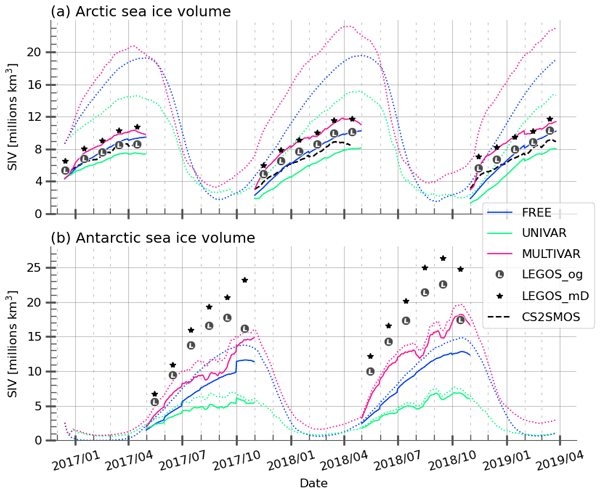
Aliette Chenal, Gilles Garric, Charles-Emmanuel Testut, Mathieu Hamon, Giovanni Ruggiero, Florent Garnier, and Pierre-Yves Le Traon
The Cryosphere, 20, 369–395, https://doi.org/10.5194/tc-20-369-2026, https://doi.org/10.5194/tc-20-369-2026, 2026
Short summary
Short summary
This study proposes to improve the representation of ice and snow volumes in the Arctic and Antarctic based on a novel multivariate assimilation method using freeboard radar and snow depth satellite data. The approach leads to an improved sea ice and snow volume representation, even during summer when satellite data is limited. The performance of the assimilated system is better in the Arctic than in Antarctica, where ocean/ice interactions play a key role.
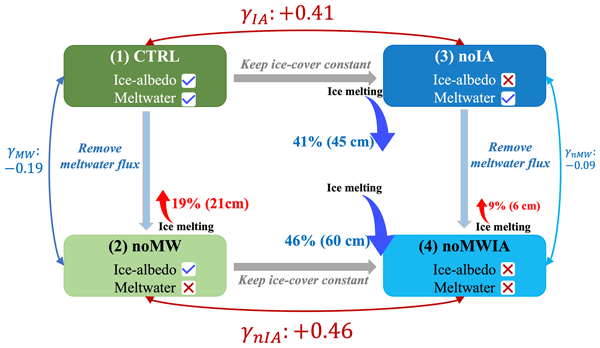
Haohao Zhang, Andrea Storto, Xuezhi Bai, and Chunxue Yang
The Cryosphere, 19, 6807–6826, https://doi.org/10.5194/tc-19-6807-2025, https://doi.org/10.5194/tc-19-6807-2025, 2025
Short summary
Short summary
Using a 1D coupled ice-ocean model, we quantified the effects of meltwater and ice-albedo feedback independently. The meltwater reduces melting by 19 % through thermal isolation, while ice-albedo feedback increases melting by 41 %, with nonlinear coupling between them. In winter, meltwater protects ice in weakly stratified areas by blocking Atlantic heat. Our study provides new insights into the relative importance of different components in the Arctic ice-ocean system.

Amélie Loubet, Simon J. van Gennip, Romain Bourdallé-Badie, and Marie Drevillon
State Planet, 6-osr9, 11, https://doi.org/10.5194/sp-6-osr9-11-2025, https://doi.org/10.5194/sp-6-osr9-11-2025, 2025
Short summary
Short summary
Marine heatwaves (MHWs) are intensifying due to climate change. In 2023, the Copernicus Marine forecast system tracked a significant MHW event in the North Atlantic tropical ocean. We show this event was unprecedented, at the surface and at depth. It peaked in the north-east in May, spreading south-west to reach the Caribbean by autumn. In the east and centre parts, the MHW remained within the surface layers, while in the Caribbean, it reached deeper levels due to warm waters advected by equatorial eddies.
Li Zhai, Youyu Lu, Haiyan Wang, Gilles Garric, and Simon Van Gennip
State Planet, 6-osr9, 5, https://doi.org/10.5194/sp-6-osr9-5-2025, https://doi.org/10.5194/sp-6-osr9-5-2025, 2025
Short summary
Short summary
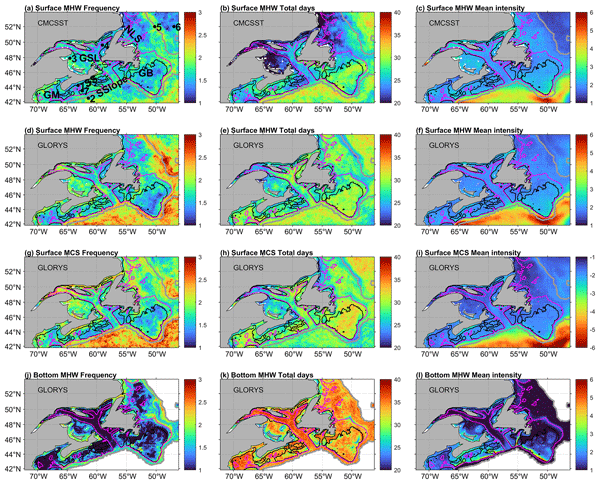
Statistics of marine heatwaves and cold spells in the water column of the Northwest Atlantic during 1993–2023 are derived using a global ocean reanalysis product. On the Scotian Shelf, temperatures and parameters of extreme events present layered structures in the water column, long-term trends, and sharp increases around 2012. Quantification of extreme warm (cold) conditions in 2012 (1998) supports previous studies on the impacts of these conditions on several marine life species.
Adam M. Cook, Youyu Lu, Xianmin Hu, David Brickman, David Hebert, Chantelle Layton, and Gilles Garric
State Planet, 6-osr9, 8, https://doi.org/10.5194/sp-6-osr9-8-2025, https://doi.org/10.5194/sp-6-osr9-8-2025, 2025
Short summary
Short summary
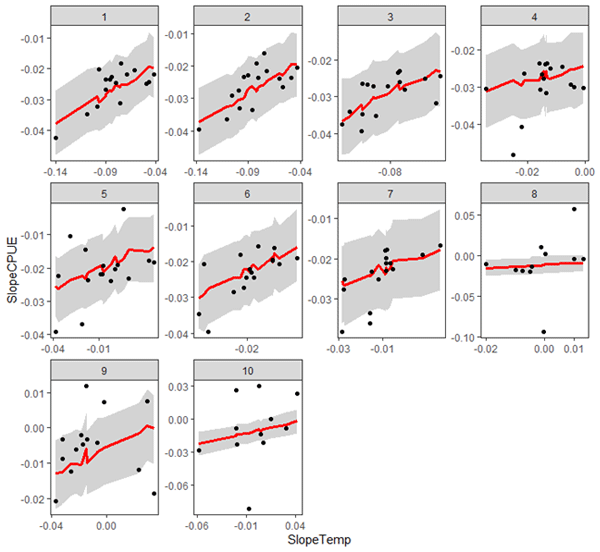
Ocean bottom temperatures from a global ocean reanalysis product are found to be consistent with in situ observations on the Scotian Shelf. Statistical analysis reveals a positive relationship between changes in lobster catch rate and ocean bottom temperature off the southwest coast of Nova Scotia during 2008–2023. A standardized lobster catch rate index with the influence of bottom temperature included is more consistent with available stock biomass compared to the index without such an influence.
Andrea Storto, Sergey Frolov, Laura Slivinski, and Chunxue Yang
Geosci. Model Dev., 18, 4789–4804, https://doi.org/10.5194/gmd-18-4789-2025, https://doi.org/10.5194/gmd-18-4789-2025, 2025
Short summary
Short summary
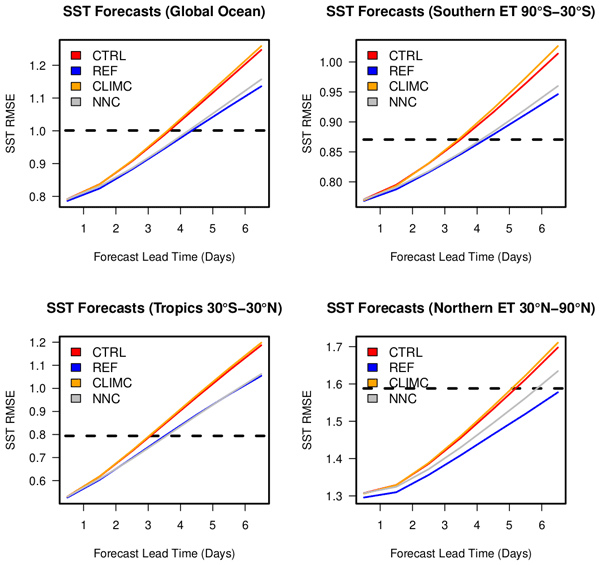
Inaccuracies in air–sea heat fluxes severely degrade the accuracy of ocean numerical simulations. Here, we use artificial neural networks to correct air–sea heat fluxes as a function of oceanic and atmospheric state predictors. The correction successfully improves surface and subsurface ocean temperatures beyond the training period and in prediction experiments.
Marie Bouih, Anne Barnoud, Chunxue Yang, Andrea Storto, Alejandro Blazquez, William Llovel, Robin Fraudeau, and Anny Cazenave
Ocean Sci., 21, 1425–1440, https://doi.org/10.5194/os-21-1425-2025, https://doi.org/10.5194/os-21-1425-2025, 2025
Short summary
Short summary
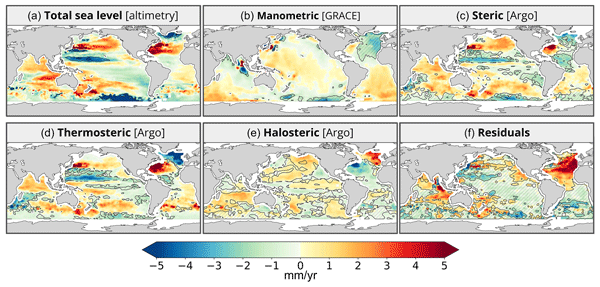
Present-day sea level rise is not uniform regionally. For better understanding of regional sea level variations, a classical approach is to compare the observed sea level trend patterns with those of the sum of the contributions. If the regional sea level trend budget is not closed, this allows the detection of errors in the observing systems. Our study shows that the trend budget is not closed in the North Atlantic Ocean and identifies errors in Argo-based salinity data as the main suspect.
Karina von Schuckmann, Lorena Moreira, Mathilde Cancet, Flora Gues, Emmanuelle Autret, Ali Aydogdu, Lluis Castrillo, Daniele Ciani, Andrea Cipollone, Emanuela Clementi, Gianpiero Cossarini, Alvaro de Pascual-Collar, Vincenzo De Toma, Marion Gehlen, Rianne Giesen, Marie Drevillon, Claudia Fanelli, Kevin Hodges, Simon Jandt-Scheelke, Eric Jansen, Melanie Juza, Ioanna Karagali, Priidik Lagemaa, Vidar Lien, Leonardo Lima, Vladyslav Lyubartsev, Ilja Maljutenko, Simona Masina, Ronan McAdam, Pietro Miraglio, Helen Morrison, Tabea Rebekka Panteleit, Andrea Pisano, Marie-Isabelle Pujol, Urmas Raudsepp, Roshin Raj, Ad Stoffelen, Simon Van Gennip, Pierre Veillard, and Chunxue Yang
State Planet, 4-osr8, 2, https://doi.org/10.5194/sp-4-osr8-2-2024, https://doi.org/10.5194/sp-4-osr8-2-2024, 2024
Karina von Schuckmann, Lorena Moreira, Mathilde Cancet, Flora Gues, Emmanuelle Autret, Jonathan Baker, Clément Bricaud, Romain Bourdalle-Badie, Lluis Castrillo, Lijing Cheng, Frederic Chevallier, Daniele Ciani, Alvaro de Pascual-Collar, Vincenzo De Toma, Marie Drevillon, Claudia Fanelli, Gilles Garric, Marion Gehlen, Rianne Giesen, Kevin Hodges, Doroteaciro Iovino, Simon Jandt-Scheelke, Eric Jansen, Melanie Juza, Ioanna Karagali, Thomas Lavergne, Simona Masina, Ronan McAdam, Audrey Minière, Helen Morrison, Tabea Rebekka Panteleit, Andrea Pisano, Marie-Isabelle Pujol, Ad Stoffelen, Sulian Thual, Simon Van Gennip, Pierre Veillard, Chunxue Yang, and Hao Zuo
State Planet, 4-osr8, 1, https://doi.org/10.5194/sp-4-osr8-1-2024, https://doi.org/10.5194/sp-4-osr8-1-2024, 2024
Antonio Sánchez-Román, Flora Gues, Romain Bourdalle-Badie, Marie-Isabelle Pujol, Ananda Pascual, and Marie Drévillon
State Planet, 4-osr8, 4, https://doi.org/10.5194/sp-4-osr8-4-2024, https://doi.org/10.5194/sp-4-osr8-4-2024, 2024
Short summary
Short summary
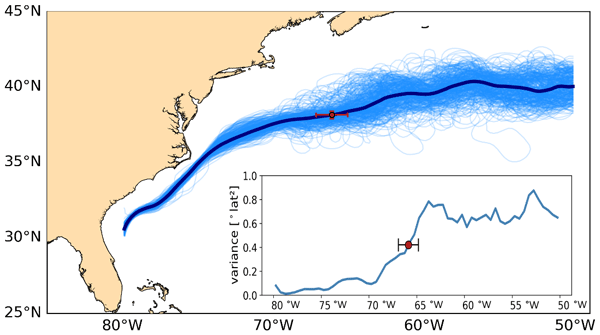
This study investigates the changing pattern of the Gulf Stream over the last 3 decades as observed in the altimetric record (1993–2022). Changes in the Gulf Stream path have an effect on its speed (and associated energy) and also on waters transported towards the subpolar North Atlantic, impacting Europe's climate. The observed shifts in the paths seem to be linked to variability in the North Atlantic Ocean during winter that may play an important role.
Andrea Storto, Giulia Chierici, Julia Pfeffer, Anne Barnoud, Romain Bourdalle-Badie, Alejandro Blazquez, Davide Cavaliere, Noémie Lalau, Benjamin Coupry, Marie Drevillon, Sebastien Fourest, Gilles Larnicol, and Chunxue Yang
State Planet, 4-osr8, 12, https://doi.org/10.5194/sp-4-osr8-12-2024, https://doi.org/10.5194/sp-4-osr8-12-2024, 2024
Short summary
Short summary
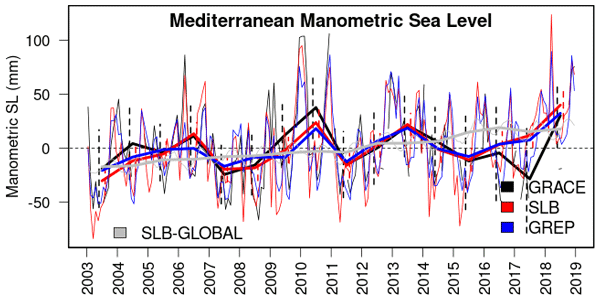
The variability in the manometric sea level (i.e. the sea level mass component) in three ocean basins is investigated in this study using three different methods (reanalyses, gravimetry, and altimetry in combination with in situ observations). We identify the emerging long-term signals, the consistency of the datasets, and the influence of large-scale climate modes on the regional manometric sea level variations at both seasonal and interannual timescales.
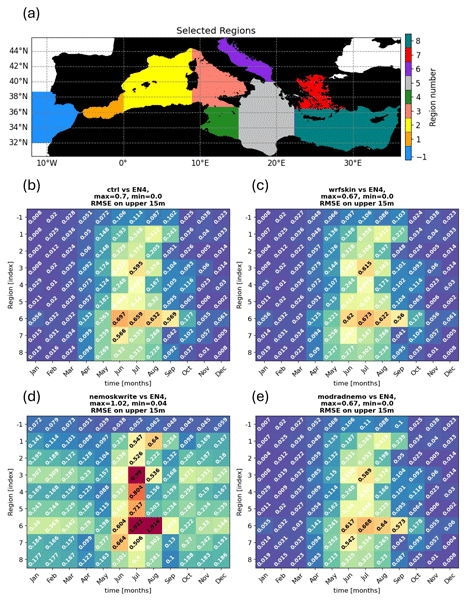
Vincenzo de Toma, Daniele Ciani, Yassmin Hesham Essa, Chunxue Yang, Vincenzo Artale, Andrea Pisano, Davide Cavaliere, Rosalia Santoleri, and Andrea Storto
Geosci. Model Dev., 17, 5145–5165, https://doi.org/10.5194/gmd-17-5145-2024, https://doi.org/10.5194/gmd-17-5145-2024, 2024
Short summary
Short summary
This study explores methods to reconstruct diurnal variations in skin sea surface temperature in a model of the Mediterranean Sea. Our new approach, considering chlorophyll concentration, enhances spatial and temporal variations in the warm layer. Comparative analysis shows context-dependent improvements. The proposed "chlorophyll-interactive" method brings the surface net total heat flux closer to zero annually, despite a net heat loss from the ocean to the atmosphere.
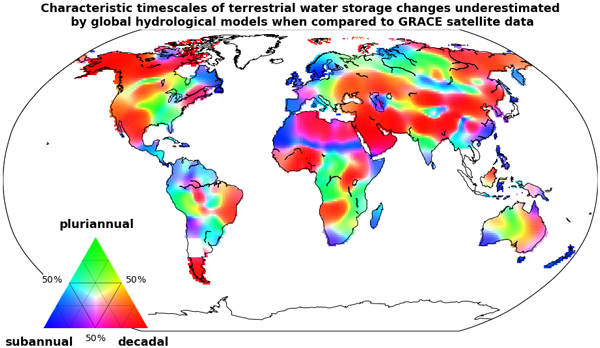
Julia Pfeffer, Anny Cazenave, Alejandro Blazquez, Bertrand Decharme, Simon Munier, and Anne Barnoud
Hydrol. Earth Syst. Sci., 27, 3743–3768, https://doi.org/10.5194/hess-27-3743-2023, https://doi.org/10.5194/hess-27-3743-2023, 2023
Short summary
Short summary
The GRACE (Gravity Recovery And Climate Experiment) satellite mission enabled the quantification of water mass redistributions from 2002 to 2017. The analysis of GRACE satellite data shows here that slow changes in terrestrial water storage occurring over a few years to a decade are severely underestimated by global hydrological models. Several sources of errors may explain such biases, likely including the inaccurate representation of groundwater storage changes.
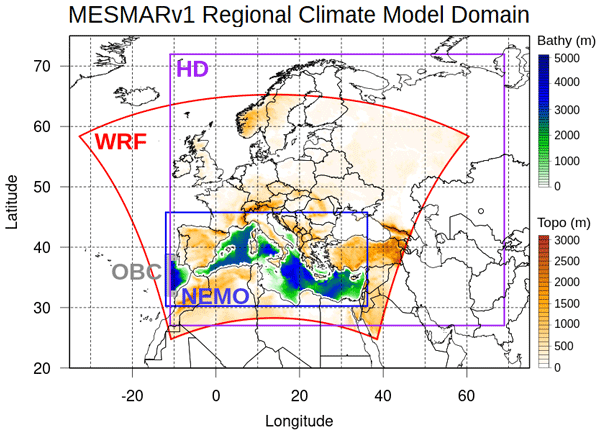
Andrea Storto, Yassmin Hesham Essa, Vincenzo de Toma, Alessandro Anav, Gianmaria Sannino, Rosalia Santoleri, and Chunxue Yang
Geosci. Model Dev., 16, 4811–4833, https://doi.org/10.5194/gmd-16-4811-2023, https://doi.org/10.5194/gmd-16-4811-2023, 2023
Short summary
Short summary
Regional climate models are a fundamental tool for a very large number of applications and are being increasingly used within climate services, together with other complementary approaches. Here, we introduce a new regional coupled model, intended to be later extended to a full Earth system model, for climate investigations within the Mediterranean region, coupled data assimilation experiments, and several downscaling exercises (reanalyses and long-range predictions).
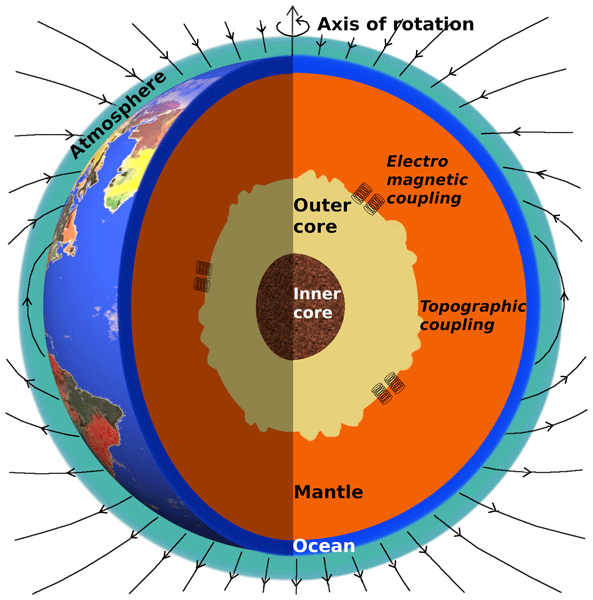
Anny Cazenave, Julia Pfeffer, Mioara Mandea, and Veronique Dehant
Earth Syst. Dynam., 14, 733–735, https://doi.org/10.5194/esd-14-733-2023, https://doi.org/10.5194/esd-14-733-2023, 2023
Short summary
Short summary
While a 6-year oscillation has been reported for some time in the motions of the fluid outer core of the Earth, in the magnetic field and in the Earth rotation, novel results indicate that the climate system also oscillates at this 6-year frequency. This strongly suggests the existence of coupling mechanisms affecting the Earth system as a whole, from the deep Earth interior to the surface fluid envelopes.
Anne Barnoud, Julia Pfeffer, Anny Cazenave, Robin Fraudeau, Victor Rousseau, and Michaël Ablain
Ocean Sci., 19, 321–334, https://doi.org/10.5194/os-19-321-2023, https://doi.org/10.5194/os-19-321-2023, 2023
Short summary
Short summary
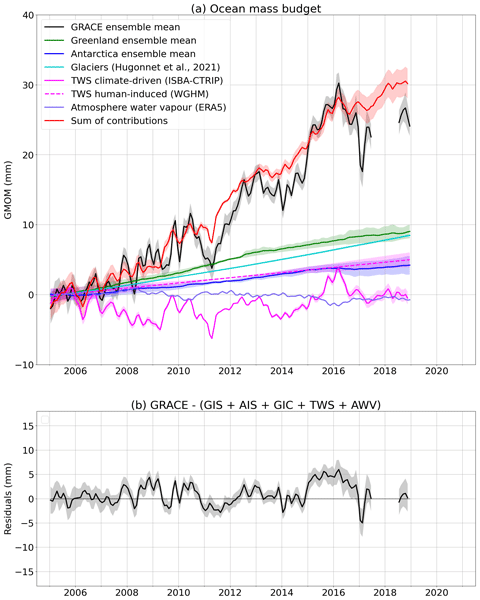
The increase in ocean mass due to land ice melting is responsible for about two-thirds of the global mean sea level rise. The ocean mass variations are monitored by GRACE and GRACE Follow-On gravimetry satellites that faced instrumental issues over the last few years. In this work, we assess the robustness of these data by comparing the ocean mass gravimetry estimates to independent observations (other satellite observations, oceanographic measurements and land ice and water models).
Joris Pianezze, Jonathan Beuvier, Cindy Lebeaupin Brossier, Guillaume Samson, Ghislain Faure, and Gilles Garric
Nat. Hazards Earth Syst. Sci., 22, 1301–1324, https://doi.org/10.5194/nhess-22-1301-2022, https://doi.org/10.5194/nhess-22-1301-2022, 2022
Short summary
Short summary
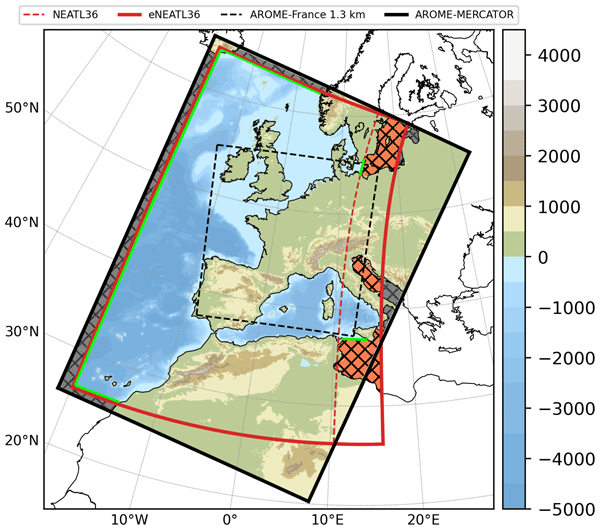
Most numerical weather and oceanic prediction systems do not consider ocean–atmosphere feedback during forecast, and this can lead to significant forecast errors, notably in cases of severe situations. A new high-resolution coupled ocean–atmosphere system is presented in this paper. This forecast-oriented system, based on current regional operational systems and evaluated using satellite and in situ observations, shows that the coupling improves both atmospheric and oceanic forecasts.

Florence Marti, Alejandro Blazquez, Benoit Meyssignac, Michaël Ablain, Anne Barnoud, Robin Fraudeau, Rémi Jugier, Jonathan Chenal, Gilles Larnicol, Julia Pfeffer, Marco Restano, and Jérôme Benveniste
Earth Syst. Sci. Data, 14, 229–249, https://doi.org/10.5194/essd-14-229-2022, https://doi.org/10.5194/essd-14-229-2022, 2022
Short summary
Short summary
The Earth energy imbalance at the top of the atmosphere due to the increase in greenhouse gases and aerosol concentrations is responsible for the accumulation of energy in the climate system. With its high thermal inertia, the ocean accumulates most of this energy excess in the form of heat. The estimation of the global ocean heat content through space geodetic observations allows monitoring of the energy imbalance with realistic uncertainties to better understand the Earth’s warming climate.
Florent Garnier, Sara Fleury, Gilles Garric, Jérôme Bouffard, Michel Tsamados, Antoine Laforge, Marion Bocquet, Renée Mie Fredensborg Hansen, and Frédérique Remy
The Cryosphere, 15, 5483–5512, https://doi.org/10.5194/tc-15-5483-2021, https://doi.org/10.5194/tc-15-5483-2021, 2021
Short summary
Short summary
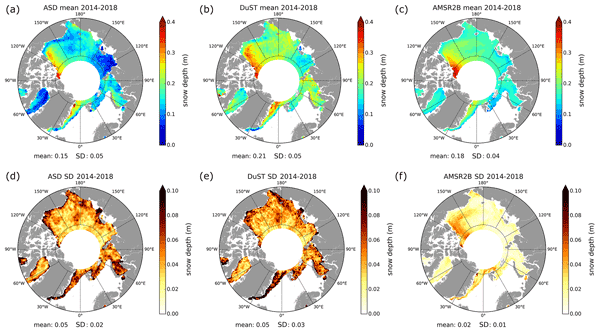
Snow depth data are essential to monitor the impacts of climate change on sea ice volume variations and their impacts on the climate system. For that purpose, we present and assess the altimetric snow depth product, computed in both hemispheres from CryoSat-2 and SARAL satellite data. The use of these data instead of the common climatology reduces the sea ice thickness by about 30 cm over the 2013–2019 period. These data are also crucial to argue for the launch of the CRISTAL satellite mission.
Cited articles
Alory, G., Da-Allada, C. Y., Djakouré, S., Dadou, I., Jouanno, J., and Loemba, D. P.: Coastal Upwelling Limitation by Onshore Geostrophic Flow in the Gulf of Guinea Around the Niger River Plume, Front. Mar. Sci., 7, https://doi.org/10.3389/fmars.2020.607216, 2021.
Andreadis, K. M., Coss, S. P., Durand, M., Gleason, C. J., Simmons, T. T., Tebaldi, N., Bjerklie, D. M., Brinkerhoff, C., Dudley, R. W., Gejadze, I., Larnier, K., Malaterre, P.-O., Oubanas, H., Allen, G. H., Bates, P. D., David, C. H., Domeneghetti, A., Elmi, O., Marc, L. F., Prata de Moraes Frasson, R., Friedmann, E., Garambois, P.-A., Gehring, J., Getirana, A., Hughes, M., Lee, J., Matte, P., Minear, J. T., Monnier, J., Muhebwa, A., Tourian, M. J., Pavelsky, T. M., Riggs, R. M., Rodríguez, E., Sikder, M. S., Smith, L. C., Stuurman, C., Taneja, J., Tarpanelli, A., Wang, J., Williams, B. A., and Yadav, B.: A First Look at River Discharge Estimation From SWOT Satellite Observations, Geophys. Res. Lett., 52, e2024GL114185, https://doi.org/10.1029/2024GL114185, 2025.
Aroucha, L. C., Lübbecke, J. F., Brandt, P., Schwarzkopf, F. U., and Biastoch, A.: River discharge impacts coastal southeastern tropical Atlantic sea surface temperature and circulation: a model-based analysis, Ocean Sci., 21, 661–678, https://doi.org/10.5194/os-21-661-2025, 2025.
Bernard, B., Madec, G., Penduff, T., Molines, J.-M., Treguier, A.-M., Le Sommer, J., Beckmann, A., Biastoch, A., Böning, C., Dengg, J., Derval, C., Durand, E., Gulev, S., Remy, E., Talandier, C., Theetten, S., Maltrud, M., McClean, J., and De Cuevas, B.: Impact of partial steps and momentum advection schemes in a global ocean circulation model at eddy-permitting resolution, Ocean Dyn., 56, 543–567, https://doi.org/10.1007/s10236-006-0082-1, 2006.
Blazquez, A., Meyssignac, B., Lemoine, J., Berthier, E., Ribes, A., and Cazenave, A.: Exploring the uncertainty in GRACE estimates of the mass redistributions at the Earth surface: implications for the global water and sea level budgets, Geophys. J. Int., 215, 415–430, https://doi.org/10.1093/gji/ggy293, 2018.
Bourdalle-Badie, R. and Treguier, A.-M.: Mercator-Ocean Report. A Climatology of Runoff for the Global Ocean-Ice Model ORCA025; Technical Report MOO-RP-425-365-MER, Mercator Ocean, 2006.
Brodeau, L., Barnier, B., Gulev, S. K., and Woods, C.: Climatologically Significant Effects of Some Approximations in the Bulk Parameterizations of Turbulent Air–Sea Fluxes, J. Phys. Oceanogr., 47, 5–28, https://doi.org/10.1175/JPO-D-16-0169.1, 2017.
Cáceres, D., Marzeion, B., Malles, J. H., Gutknecht, B. D., Müller Schmied, H., and Döll, P.: Assessing global water mass transfers from continents to oceans over the period 1948–2016, Hydrol. Earth Syst. Sci., 24, 4831–4851, https://doi.org/10.5194/hess-24-4831-2020, 2020.
Caron, L., Ivins, E. R., Larour, E., Adhikari, S., Nilsson, J., and Blewitt, G.: GIA Model Statistics for GRACE Hydrology, Cryosphere, and Ocean Science, Geophys. Res. Lett., 45, 2203–2212, https://doi.org/10.1002/2017GL076644, 2018.
Chandanpurkar, H. A., Lee, T., Wang, X., Zhang, H., Fournier, S., Fenty, I., Fukumori, I., Menemenlis, D., Piecuch, C. G., Reager, J. T., Wang, O., and Worden, J.: Influence of Nonseasonal River Discharge on Sea Surface Salinity and Height, J. Adv. Model. Earth Sy., 14, e2021MS002715, https://doi.org/10.1029/2021MS002715, 2022.
Chen, J., Tapley, B., Wilson, C., Cazenave, A., Seo, K.-W., and Kim, J.-S.: Global Ocean Mass Change From GRACE and GRACE Follow-On and Altimeter and Argo Measurements, Geophys. Res. Lett., 47, e2020GL090656, https://doi.org/10.1029/2020GL090656, 2020.
Cheng, M., Tapley, B. D., and Ries, J. C.: Deceleration in the Earth's oblateness, J. Geophys. Res.-Sol. Ea., 118, 740–747, https://doi.org/10.1002/jgrb.50058, 2013.
Crétaux, J.-F., Abarca-del-Río, R., Bergé-Nguyen, M., Arsen, A., Drolon, V., Clos, G., and Maisongrande, P.: Lake Volume Monitoring from Space, Surv. Geophys., 37, 269–305, https://doi.org/10.1007/s10712-016-9362-6, 2016.
Dai, A.: Dai and Trenberth Global River Flow and Continental Discharge Dataset, NSF National Center for Atmospheric Research, https://doi.org/10.5065/D6V69H1T, 2017.
Dai, A. and Trenberth, K. E.: Estimates of Freshwater Discharge from Continents: Latitudinal and Seasonal Variations, J. Hydrometeorol., 3, 660–687, https://doi.org/10.1175/1525-7541(2002)003%3C0660:EOFDFC%3E2.0.CO;2, 2002.
Dai, A., Qian, T., Trenberth, K. E., and Milliman, J. D.: Changes in Continental Freshwater Discharge from 1948–2004, J. Climate, 22, 2773–2792, https://doi.org/10.1175/2008JCLI2592.1, 2009.
Decharme, B., Delire, C., Minvielle, M., Colin, J., Vergnes, J.-P., Alias, A., Saint-Martin, D., Séférian, R., Sénési, S., and Voldoire, A.: Recent Changes in the ISBA-CTRIP Land Surface System for Use in the CNRM-CM6 Climate Model and in Global Off-Line Hydrological Applications, J. Adv. Model. Earth Sy., 11, 1207–1252, https://doi.org/10.1029/2018ms001545, 2019.
Dobriyal, P., Badola, R., Tuboi, C., and Hussain, S. A.: A review of methods for monitoring streamflow for sustainable water resource management, Appl. Water Sci., 7, 2617–2628, https://doi.org/10.1007/s13201-016-0488-y, 2017.
Dobslaw, H. and Thomas, M.: Simulation and observation of global ocean mass anomalies, J. Geophys. Res.-Oceans, 112, https://doi.org/10.1029/2006JC004035, 2007.
Elmi, O., Tourian, M. J., Saemian, P., and Sneeuw, N.: Remote Sensing-Based Extension of GRDC Discharge Time Series – A Monthly Product with Uncertainty Estimates, Sci. Data, 11, 240, https://doi.org/10.1038/s41597-024-03078-6, 2024.
Federal Institute of Hydrology: Global Runoff Database, Global Runoff Data Centre, https://portal.grdc.bafg.de/applications/public.html (last access: 26 October 2026), 2024.
Feng, Y., Menemenlis, D., Xue, H., Zhang, H., Carroll, D., Du, Y., and Wu, H.: Improved representation of river runoff in Estimating the Circulation and Climate of the Ocean Version 4 (ECCOv4) simulations: implementation, evaluation, and impacts to coastal plume regions, Geosci. Model Dev., 14, 1801–1819, https://doi.org/10.5194/gmd-14-1801-2021, 2021.
Foltz, G. R., Brandt, P., Richter, I., Rodríguez-Fonseca, B., Hernandez, F., Dengler, M., Rodrigues, R. R., Schmidt, J. O., Yu, L., Lefevre, N., Da Cunha, L. C., McPhaden, M. J., Araujo, M., Karstensen, J., Hahn, J., Martín-Rey, M., Patricola, C. M., Poli, P., Zuidema, P., Hummels, R., Perez, R. C., Hatje, V., Lübbecke, J. F., Polo, I., Lumpkin, R., Bourlès, B., Asuquo, F. E., Lehodey, P., Conchon, A., Chang, P., Dandin, P., Schmid, C., Sutton, A., Giordani, H., Xue, Y., Illig, S., Losada, T., Grodsky, S. A., Gasparin, F., Lee, T., Mohino, E., Nobre, P., Wanninkhof, R., Keenlyside, N., Garcon, V., Sánchez-Gómez, E., Nnamchi, H. C., Drévillon, M., Storto, A., Remy, E., Lazar, A., Speich, S., Goes, M., Dorrington, T., Johns, W. E., Moum, J. N., Robinson, C., Perruche, C., de Souza, R. B., Gaye, A. T., López-Parages, J., Monerie, P.-A., Castellanos, P., Benson, N. U., Hounkonnou, M. N., Duhá, J. T., Laxenaire, R., and Reul, N.: The Tropical Atlantic Observing System, Front. Mar. Sci., 6, https://doi.org/10.3389/fmars.2019.00206, 2019.
Fournier, S., Reager, J. T., Chandanpurkar, H. A., Pascolini-Campbell, M., and Jarugula, S.: The Salinity of Coastal Waters as a Bellwether for Global Water Cycle Changes, Geophys. Res. Lett., 50, e2023GL106684, https://doi.org/10.1029/2023GL106684, 2023.
Gaspar, P., Grégoris, Y., and Lefevre, J.-M.: A simple eddy kinetic energy model for simulations of the oceanic vertical mixing: Tests at station Papa and long-term upper ocean study site, J. Geophys. Res.-Oceans, 95, 16179–16193, https://doi.org/10.1029/JC095iC09p16179, 1990.
Good, S. A., Martin, M. J., and Rayner, N. A.: EN4: Quality controlled ocean temperature and salinity profiles and monthly objective analyses with uncertainty estimates, J. Geophys. Res.-Oceans, 118, 6704–6716, https://doi.org/10.1002/2013JC009067, 2013..
Gupta, H. V., Kling, H., Yilmaz, K. K., and Martinez, G. F.: Decomposition of the mean squared error and NSE performance criteria: Implications for improving hydrological modelling, J. Hydrol., 377, 80–91, https://doi.org/10.1016/j.jhydrol.2009.08.003, 2009.
Hamlington, B. D., Gardner, A. S., Ivins, E., Lenaerts, J. T. M., Reager, J. T., Trossman, D. S., Zaron, E. D., Adhikari, S., Arendt, A., Aschwanden, A., Beckley, B. D., Bekaert, D. P. S., Blewitt, G., Caron, L., Chambers, D. P., Chandanpurkar, H. A., Christianson, K., Csatho, B., Cullather, R. I., DeConto, R. M., Fasullo, J. T., Frederikse, T., Freymueller, J. T., Gilford, D. M., Girotto, M., Hammond, W. C., Hock, R., Holschuh, N., Kopp, R. E., Landerer, F., Larour, E., Menemenlis, D., Merrifield, M., Mitrovica, J. X., Nerem, R. S., Nias, I. J., Nieves, V., Nowicki, S., Pangaluru, K., Piecuch, C. G., Ray, R. D., Rounce, D. R., Schlegel, N., Seroussi, H., Shirzaei, M., Sweet, W. V., Velicogna, I., Vinogradova, N., Wahl, T., Wiese, D. N., and Willis, M. J.: Understanding of Contemporary Regional Sea-Level Change and the Implications for the Future, Rev. Geophys., 58, https://doi.org/10.1029/2019RG000672, 2020.
Hersbach, H., Bell, B., Berrisford, P., Hirahara, S., Horányi, A., Muñoz-Sabater, J., Nicolas, J., Peubey, C., Radu, R., Schepers, D., Simmons, A., Soci, C., Abdalla, S., Abellan, X., Balsamo, G., Bechtold, P., Biavati, G., Bidlot, J., Bonavita, M., De Chiara, G., Dahlgren, P., Dee, D., Diamantakis, M., Dragani, R., Flemming, J., Forbes, R., Fuentes, M., Geer, A., Haimberger, L., Healy, S., Hogan, R. J., Hólm, E., Janisková, M., Keeley, S., Laloyaux, P., Lopez, P., Lupu, C., Radnoti, G., de Rosnay, P., Rozum, I., Vamborg, F., Villaume, S., and Thépaut, J.-N.: The ERA5 global reanalysis, Q. J. Roy. Meteor. Soc., 146, 1999–2049, https://doi.org/10.1002/qj.3803, 2020.
Huang, B. and Mehta, V. M.: Influences of freshwater from major rivers on global ocean circulation and temperatures in the MIT ocean general circulation model, Adv. Atmos. Sci., 27, 455–468, https://doi.org/10.1007/s00376-009-9022-6, 2010.
Jahfer, S., Vinayachandran, P. N., and Nanjundiah, R. S.: Long-term impact of Amazon river runoff on northern hemispheric climate, Sci. Rep., 7, 10989, https://doi.org/10.1038/s41598-017-10750-y, 2017.
Kling, H., Fuchs, M., and Paulin, M.: Runoff conditions in the upper Danube basin under an ensemble of climate change scenarios, J. Hydrol., 424–425, 264–277, https://doi.org/10.1016/j.jhydrol.2012.01.011, 2012.
Kusche, J., Schmidt, R., Petrovic, S., and Rietbroek, R.: Decorrelated GRACE time-variable gravity solutions by GFZ, and their validation using a hydrological model, J. Geod., 83, 903–913, https://doi.org/10.1007/s00190-009-0308-3, 2009.
Landerer, F. W., Flechtner, F. M., Save, H., Webb, F. H., Bandikova, T., Bertiger, W. I., Bettadpur, S. V., Byun, S. H., Dahle, C., Dobslaw, H., Fahnestock, E., Harvey, N., Kang, Z., Kruizinga, G. L. H., Loomis, B. D., McCullough, C., Murböck, M., Nagel, P., Paik, M., Pie, N., Poole, S., Strekalov, D., Tamisiea, M. E., Wang, F., Watkins, M. M., Wen, H.-Y., Wiese, D. N., and Yuan, D.-N.: Extending the Global Mass Change Data Record: GRACE Follow-On Instrument and Science Data Performance, Geophys. Res. Lett., 47, e2020GL088306, https://doi.org/10.1029/2020GL088306, 2020.
Large, W. G. and Yeager, S. G.: The global climatology of an interannually varying air–sea flux data set, Clim. Dynam., 33, 341–364, https://doi.org/10.1007/s00382-008-0441-3, 2009.
Lehmann, F., Vishwakarma, B. D., and Bamber, J.: How well are we able to close the water budget at the global scale?, Hydrol. Earth Syst. Sci., 26, 35–54, https://doi.org/10.5194/hess-26-35-2022, 2022.
Lehner, B. and Grill, G.: Global river hydrography and network routing: baseline data and new approaches to study the world's large river systems, Hydrol. Process., 27, 2171–2186, https://doi.org/10.1002/hyp.9740, 2013.
Lemoine, J. and Reinquin, F.: Processing of SLR observations at CNES, Newsl. EGSIEM, 3, 2017.
Loomis, B. D., Rachlin, K. E., and Luthcke, S. B.: Improved Earth Oblateness Rate Reveals Increased Ice Sheet Losses and Mass-Driven Sea Level Rise, Geophys. Res. Lett., 46, 6910–6917, https://doi.org/10.1029/2019GL082929, 2019.
Madec, G., Bourdallé-Badie, R., Pierre-Antoine Bouttier, Bricaud, C., Bruciaferri, D., Calvert, D., Chanut, J., Clementi, E., Coward, A., Delrosso, D., Ethé, C., Flavoni, S., Graham, T., Harle, J., Iovino, D., Lea, D., Lévy, C., Lovato, T., Martin, N., Masson, S., Mocavero, S., Paul, J., Rousset, C., Storkey, D., Storto, A., and Vancoppenolle, M.: NEMO ocean engine, https://doi.org/10.5281/ZENODO.1472492, 2017.
Mayer, J., Mayer, M., and Haimberger, L.: Consistency and Homogeneity of Atmospheric Energy, Moisture, and Mass Budgets in ERA5, J. Climate, 34, 3955–3974, https://doi.org/10.1175/JCLI-D-20-0676.1, 2021.
Pailler, K., Bourlès, B., and Gouriou, Y.: The barrier layer in the western tropical Atlantic Ocean, Geophys. Res. Lett., 26, 2069–2072, https://doi.org/10.1029/1999GL900492, 1999.
Peltier, W. R., Argus, D. F., and Drummond, R.: Comment on “An Assessment of the ICE-6G_C (VM5a) Glacial Isostatic Adjustment Model” by Purcell et al., J. Geophys. Res.-Sol. Ea., 123, 2019–2028, https://doi.org/10.1002/2016JB013844, 2018.
Pfeffer, J., Cazenave, A., and Barnoud, A.: Analysis of the interannual variability in satellite gravity solutions: detection of climate modes fingerprints in water mass displacements across continents and oceans, Clim. Dynam., 58, 1065–1084, https://doi.org/10.1007/s00382-021-05953-z, 2022.
Sausen, R., Schubert, S., and Dümenil, L.: A model of river runoff for use in coupled atmosphere–ocean models, J. Hydrol., 155, 337–352, https://doi.org/10.1016/0022-1694(94)90177-5, 1994.
Schneider, U., Becker, A., Finger, P., Meyer-Christoffer, A., Rudolf, B., and Ziese, M.: GPCC Full Data Reanalysis Version 7.0 at 0.5°: Monthly Land-Surface Precipitation from Rain-Gauges built on GTS-based and Historic Data: Gridded Monthly Totals (7.0), https://doi.org/10.5676/DWD_GPCC/FD_M_V7_050, 2015.
SO HYBAM: Catalogue – Hybam, https://hybam.obs-mip.fr/catalogue (last access: 29 August 2025), 2025.
Storto, A. and Yang, C.: Acceleration of the ocean warming from 1961–2022 unveiled by large-ensemble reanalyses, Nat. Commun., 15, 545, https://doi.org/10.1038/s41467-024-44749-7, 2024.
Storto, A., Bonaduce, A., Feng, X., and Yang, C.: Steric Sea Level Changes from Ocean Reanalyses at Global and Regional Scales, Water, 11, 1987, https://doi.org/10.3390/w11101987, 2019.
Sun, Y., Riva, R., and Ditmar, P.: Optimizing estimates of annual variations and trends in geocenter motion and J2 from a combination of GRACE data and geophysical models, J. Geophys. Res.-Sol. Ea., 121, 8352–8370, https://doi.org/10.1002/2016JB013073, 2016.
Syed, T. H., Famiglietti, J. S., Chen, J., Rodell, M., Seneviratne, S. I., Viterbo, P., and Wilson, C. R.: Total basin discharge for the Amazon and Mississippi River basins from GRACE and a land–atmosphere water balance, Geophys. Res. Lett., 32, https://doi.org/10.1029/2005GL024851, 2005.
Syed, T. H., Famiglietti, J. S., and Chambers, D. P.: GRACE-Based Estimates of Terrestrial Freshwater Discharge from Basin to Continental Scales, J. Hydrometeorol., 10, 22–40, https://doi.org/10.1175/2008JHM993.1, 2009.
Tajouri, S., Llovel, W., Sévellec, F., Molines, J.-M., Mathiot, P., Penduff, T., and Leroux, S.: Simulated Impact of Time-Varying River Runoff and Greenland Freshwater Discharge on Sea Level Variability in the Beaufort Gyre Over 2005–2018, J. Geophys. Res.-Oceans, 129, e2024JC021237, https://doi.org/10.1029/2024JC021237, 2024.
Tapley, B. D., Bettadpur, S., Watkins, M., and Reigber, C.: The gravity recovery and climate experiment: Mission overview and early results, Geophys. Res. Lett., 31, https://doi.org/10.1029/2004gl019920, 2004.
Thouvenin-Masson, C., Boutin, J., Échevin, V., Lazar, A., and Vergely, J.-L.: Influence of river runoff and precipitation on the seasonal and interannual variability of sea surface salinity in the eastern North Tropical Atlantic, Ocean Sci., 20, 1547–1566, https://doi.org/10.5194/os-20-1547-2024, 2024.
Topé, G. D. A., Alory, G., Djakouré, S., Da-Allada, C. Y., Jouanno, J., and Morvan, G.: How does the Niger river warm coastal waters in the northern Gulf of Guinea?, Front. Mar. Sci., 10, https://doi.org/10.3389/fmars.2023.1187202, 2023.
Tsujino, H., Urakawa, S., Nakano, H., Small, R. J., Kim, W. M., Yeager, S. G., Danabasoglu, G., Suzuki, T., Bamber, J. L., Bentsen, M., Böning, C. W., Bozec, A., Chassignet, E. P., Curchitser, E., Boeira Dias, F., Durack, P. J., Griffies, S. M., Harada, Y., Ilicak, M., Josey, S. A., Kobayashi, C., Kobayashi, S., Komuro, Y., Large, W. G., Le Sommer, J., Marsland, S. J., Masina, S., Scheinert, M., Tomita, H., Valdivieso, M., and Yamazaki, D.: JRA-55 based surface dataset for driving ocean–sea-ice models (JRA55-do), Ocean Model., 130, 79–139, https://doi.org/10.1016/j.ocemod.2018.07.002, 2018.
Vaujour, T., Kern, L., Pfeffer, J., Storto, A., Szczypta, C., Garric, G., Sirere, C., Larnicol, G., Yang, C., Bourdallé-Badie, R., and Guinehut, S.: River discharge estimates for 18 major Atlantic rivers using the Water Mass Balance approach, Zenodo [data set], https://doi.org/10.5281/zenodo.17589359, 2025.
Short summary
Freshwater fluxes, despite their importance, are often poorly represented in ocean models. The impact of river discharge is evaluated from the Water Mass Balance approach, combining gravimetry and atmospheric reanalyses data. These estimates are assessed against river gauges, highlighting good agreement over South American rivers. Compared to climatological data, when used as inputs for ocean model simulations, this technique improves salinity and upper ocean circulation representation.
Freshwater fluxes, despite their importance, are often poorly represented in ocean models. The...


Altmetrics
Final-revised paper
Preprint