
Articles | Volume 22, issue 5
https://doi.org/10.5194/os-22-3145-2026
© Author(s) 2026. This work is distributed under
the Creative Commons Attribution 4.0 License.
the Creative Commons Attribution 4.0 License.
https://doi.org/10.5194/os-22-3145-2026
© Author(s) 2026. This work is distributed under
the Creative Commons Attribution 4.0 License.
the Creative Commons Attribution 4.0 License.
Research article
| 
13 Oct 2026
Research article |
| 13 Oct 2026
| 13 Oct 2026
Topographic control of tides in the Ross Sea: eddy-like structures, bottom-trapped waves, and energetics
Yue Xia
School of Atmospheric Sciences, Sun Yat-sen University, and Southern Marine Science and Engineering Guangdong Laboratory (Zhuhai), Zhuhai, China

Southern Marine Science and Engineering Guangdong Laboratory (Zhuhai), Zhuhai, China
Zhaomin Wang
Southern Marine Science and Engineering Guangdong Laboratory (Zhuhai), Zhuhai, China
Craig Stevens
Earth Sciences New Zealand, Wellington, New Zealand
Department of Physics, University of Auckland, Auckland, New Zealand
Chengyan Liu
Southern Marine Science and Engineering Guangdong Laboratory (Zhuhai), Zhuhai, China
Liangjun Yan
School of Marine Sciences, Sun Yat-sen University, Zhuhai, China
Xianxian Han
School of Marine Sciences, Sun Yat-sen University, Zhuhai, China
Dake Chen
Southern Marine Science and Engineering Guangdong Laboratory (Zhuhai), Zhuhai, China
State Key Laboratory of Satellite Ocean Environment Dynamics, Second Institute of Oceanography, Ministry of Natural Resources, Hangzhou, China
Related authors
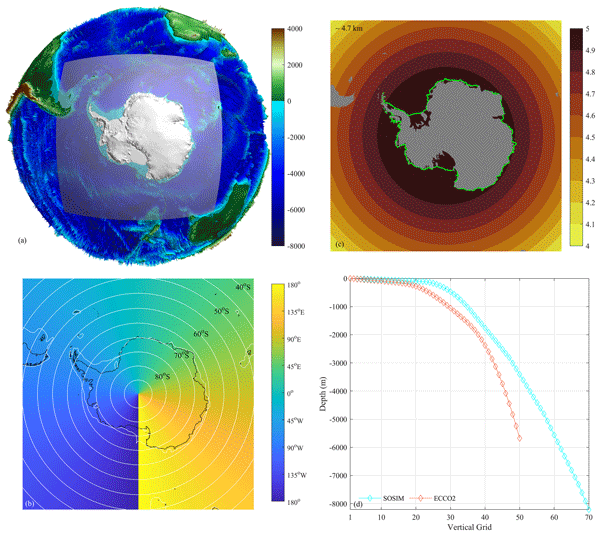
Chengyan Liu, Zhaomin Wang, Dake Chen, Xianxian Han, Hengling Leng, Xi Liang, Liangjun Yan, Xiang Li, Craig Stevens, Andrew McC. Hogg, Kazuya Kusahara, Kaihe Yamazaki, Kay I. Ohshima, Meng Zhou, Xiao Cheng, Dongxiao Wang, Changming Dong, Jiping Liu, Qinghua Yang, Xichen Li, Ruibo Lei, Minghu Ding, Zhaoru Zhang, Dujuan Kang, Di Qi, Tongya Liu, Jihai Dong, Lu An, Ru Chen, Tong Zhang, Xiaoming Hu, Bo Han, Haibo Bi, Qi Shu, Longjiang Mu, Shiming Xu, Hu Yang, Hailong Liu, Tingfeng Dou, Zhixuan Feng, Lei Zheng, Xueyuan Tang, Guitao Shi, Yongqing Cai, Bingrui Li, Yang Wu, Xia Lin, Wenjin Sun, Yu Liu, Kai Yu, Yu Zhang, Weizeng Shao, Xiaoyu Wang, Shaojun Zheng, Chengyi Yuan, Chunxia Zhou, Jian Liu, Yang Liu, Yue Xia, Xiaoyu Pan, Jiabao Zeng, Kechen Liu, Jiahao Fan, Chen Cheng, and Qi Li
Geosci. Model Dev., 19, 2985–3033, https://doi.org/10.5194/gmd-19-2985-2026, https://doi.org/10.5194/gmd-19-2985-2026, 2026
Short summary
Short summary
We developed a high-resolution computer model to simulate how the ocean, sea ice, and ice shelves interact around Antarctica. This helps us understand their critical role in global climate and sea-level rise. Our model successfully captures essential features like major currents and seasonal ice changes. Despite some remaining biases, it provides a useful tool for predicting future changes in this vital and rapidly evolving region.
Hang Wang, Hu Yang, Xiaoxu Shi, Jiping Liu, Gerrit Lohmann, Jiawang Wu, Jun Tian, Francisco W. Cruz, Jianbo Cheng, and Dake Chen
EGUsphere, https://doi.org/10.5194/egusphere-2026-5495, https://doi.org/10.5194/egusphere-2026-5495, 2026
This preprint is open for discussion and under review for Climate of the Past (CP).
Short summary
Short summary
Geological records of past Saharan climate are often incomplete and difficult to date, while long climate simulations require extensive computing. We therefore developed an efficient empirical model from 30 climate simulations and records of Earth's orbit, carbon dioxide and sea level. It provides a practical way to study long-term Saharan climate change and can guide future simulations, field sampling and the dating of geological and archaeological records.
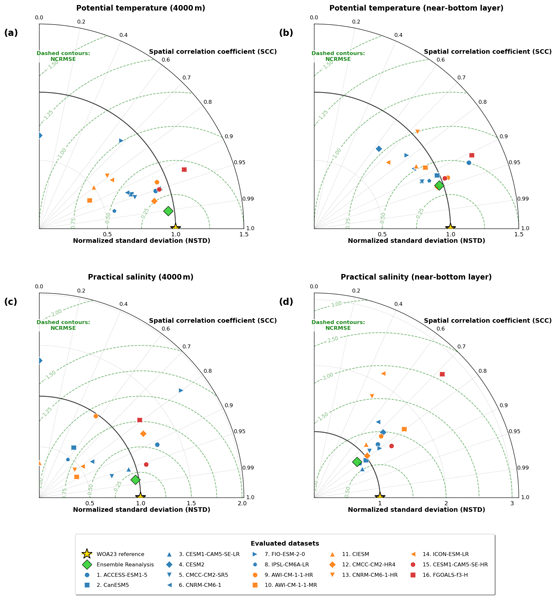
Siran Chen, Jiping Liu, and Xianxian Han
Ocean Sci., 22, 2691–2709, https://doi.org/10.5194/os-22-2691-2026, https://doi.org/10.5194/os-22-2691-2026, 2026
Short summary
Short summary
Antarctic Bottom Water influences global ocean circulation, heat storage, and carbon uptake. We compared an observational atlas, an ocean reconstruction, and 16 climate models by separating this water into three regional types. The reconstruction matched the observed large-scale patterns well, but many climate models showed substantial regional temperature and salinity errors. Correcting average biases improved some models, although errors in spatial structure remained.
Chengyan Liu, Zhaomin Wang, Dake Chen, Xianxian Han, Hengling Leng, Xi Liang, Liangjun Yan, Xiang Li, Craig Stevens, Andrew McC. Hogg, Kazuya Kusahara, Kaihe Yamazaki, Kay I. Ohshima, Meng Zhou, Xiao Cheng, Dongxiao Wang, Changming Dong, Jiping Liu, Qinghua Yang, Xichen Li, Ruibo Lei, Minghu Ding, Zhaoru Zhang, Dujuan Kang, Di Qi, Tongya Liu, Jihai Dong, Lu An, Ru Chen, Tong Zhang, Xiaoming Hu, Bo Han, Haibo Bi, Qi Shu, Longjiang Mu, Shiming Xu, Hu Yang, Hailong Liu, Tingfeng Dou, Zhixuan Feng, Lei Zheng, Xueyuan Tang, Guitao Shi, Yongqing Cai, Bingrui Li, Yang Wu, Xia Lin, Wenjin Sun, Yu Liu, Kai Yu, Yu Zhang, Weizeng Shao, Xiaoyu Wang, Shaojun Zheng, Chengyi Yuan, Chunxia Zhou, Jian Liu, Yang Liu, Yue Xia, Xiaoyu Pan, Jiabao Zeng, Kechen Liu, Jiahao Fan, Chen Cheng, and Qi Li
Geosci. Model Dev., 19, 2985–3033, https://doi.org/10.5194/gmd-19-2985-2026, https://doi.org/10.5194/gmd-19-2985-2026, 2026
Short summary
Short summary
We developed a high-resolution computer model to simulate how the ocean, sea ice, and ice shelves interact around Antarctica. This helps us understand their critical role in global climate and sea-level rise. Our model successfully captures essential features like major currents and seasonal ice changes. Despite some remaining biases, it provides a useful tool for predicting future changes in this vital and rapidly evolving region.
Yufei Liu, Hu Yang, Haowen Dang, Gerrit Lohmann, Tao Lian, Zhengyao Lu, Xiaoxu Shi, Jiping Liu, Hang Wang, Feng Jiang, Xinyue Deng, Xiaoming Hu, and Dake Chen
EGUsphere, https://doi.org/10.21203/rs.3.rs-7865695/v1, https://doi.org/10.21203/rs.3.rs-7865695/v1, 2026
Short summary
Short summary
Observations and reconstructions show that ENSO is influenced by astronomical precession in addition to anthropogenic warming. Using ~10,000-year simulations, we reconstruct a full tropical precession cycle and find that present ENSO activity is relatively strong within it. This results from asymmetric continental heating that alters the background climate and the threshold for ENSO development, linking astronomical forcing to tropical climate variability.
Jinfei Wang, Maike Sonnewald, Noé Pirlet, François Massonnet, Hugues Goosse, Dake Chen, and Qinghua Yang
EGUsphere, https://doi.org/10.5194/egusphere-2026-1301, https://doi.org/10.5194/egusphere-2026-1301, 2026
Short summary
Short summary
Antarctic sea ice has shifted from expansion to rapid decline since 2016. Using model outputs and data mining, we identified six sea ice regimes, shaped by different dynamic and thermodynamic conditions. A coastal regime, featured by sea ice transport and new ice formation, has shown area loss since 1979, accelerating after 2016. This coastal regime and a pack ice regime together control overall sea ice variability. Our work offers a new framework for understanding Antarctic sea ice changes.
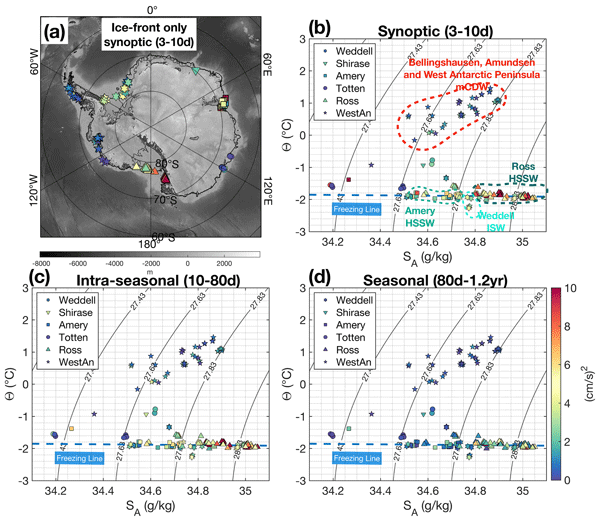
Shenjie Zhou, Pierre Dutrieux, Claudia F. Giulivi, Adrian Jenkins, Alessandro Silvano, Christopher Auckland, E. Povl Abrahamsen, Michael Meredith, Irena Vaňková, Keith Nicholls, Peter E. D. Davis, Svein Østerhus, Arnold L. Gordon, Christopher J. Zappa, Tiago S. Dotto, Ted Scambos, Kathryn L. Gunn, Stephen R. Rintoul, Shigeru Aoki, Craig Stevens, Chengyan Liu, Sukyoung Yun, Tae-Wan Kim, Won Sang Lee, Markus Janout, Tore Hattermann, Julius Lauber, Elin Darelius, Anna Wåhlin, Leo Middleton, Pasquale Castagno, Giorgio Budillon, Karen J. Heywood, Jennifer Graham, Stephen Dye, Daisuke Hirano, and Una Kim Miller
Earth Syst. Sci. Data, 17, 5693–5706, https://doi.org/10.5194/essd-17-5693-2025, https://doi.org/10.5194/essd-17-5693-2025, 2025
Short summary
Short summary
We created the first standardised dataset of in-situ ocean measurements time series from around Antarctica collected since 1970s. This includes temperature, salinity, pressure, and currents recorded by instruments deployed in icy, challenging conditions. Our analysis highlights the dominance of tidal currents and separates these from other patterns to study regional energy distribution. This unique dataset offers a foundation for future research on Antarctic ocean dynamics and ice interactions.
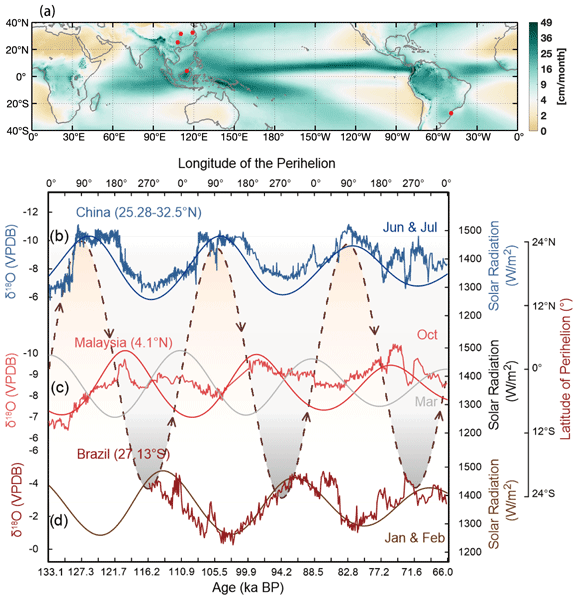
Hu Yang, Xiaoxu Shi, Xulong Wang, Qingsong Liu, Yi Zhong, Xiaodong Liu, Youbin Sun, Yanjun Cai, Fei Liu, Gerrit Lohmann, Martin Werner, Zhimin Jian, Tainã M. L. Pinho, Hai Cheng, Lijuan Lu, Jiping Liu, Chao-Yuan Yang, Qinghua Yang, Yongyun Hu, Xing Cheng, Jingyu Zhang, and Dake Chen
Clim. Past, 21, 1263–1279, https://doi.org/10.5194/cp-21-1263-2025, https://doi.org/10.5194/cp-21-1263-2025, 2025
Short summary
Short summary
For 1 century, the hemispheric summer insolation is proposed as a key pacemaker of astronomical climate change. However, an increasing number of geologic records reveal that the low-latitude hydrological cycle shows asynchronous precessional evolutions that are very often out of phase with the summer insolation. Here, we propose that the astronomically driven low-latitude hydrological cycle is not paced by summer insolation but by shifting perihelion.
Han Zhang, Dake Chen, Tongya Liu, Di Tian, Min He, Qi Li, Guofei Wei, and Jian Liu
Earth Syst. Sci. Data, 16, 5665–5679, https://doi.org/10.5194/essd-16-5665-2024, https://doi.org/10.5194/essd-16-5665-2024, 2024
Short summary
Short summary
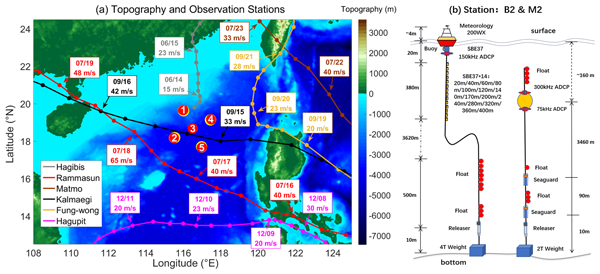
This paper provides a cross-shaped moored array dataset (MASCS 1.0) of observations that consist of five buoys and four moorings in the northern South China Sea from 2014 to 2015. The moored array is influenced by atmospheric forcings such as tropical cyclones and monsoon as well as oceanic tides and flows. The data reveal variations of the air–sea interface and the ocean itself, which are valuable for studies of air–sea interactions and ocean dynamics in the northern South China Sea.

Fu Zhao, Xi Liang, Zhongxiang Tian, Ming Li, Na Liu, and Chengyan Liu
Geosci. Model Dev., 17, 6867–6886, https://doi.org/10.5194/gmd-17-6867-2024, https://doi.org/10.5194/gmd-17-6867-2024, 2024
Short summary
Short summary
In this work, we introduce a newly developed Antarctic sea ice forecasting system, namely the Southern Ocean Ice Prediction System (SOIPS). The system is based on a regional sea ice‒ocean‒ice shelf coupled model and can assimilate sea ice concentration observations. By assessing the system's performance in sea ice forecasts, we find that the system can provide reliable Antarctic sea ice forecasts for the next 7 d and has the potential to guide ship navigation in the Antarctic sea ice zone.
Chao-Yuan Yang, Jiping Liu, and Dake Chen
The Cryosphere, 18, 1215–1239, https://doi.org/10.5194/tc-18-1215-2024, https://doi.org/10.5194/tc-18-1215-2024, 2024
Short summary
Short summary
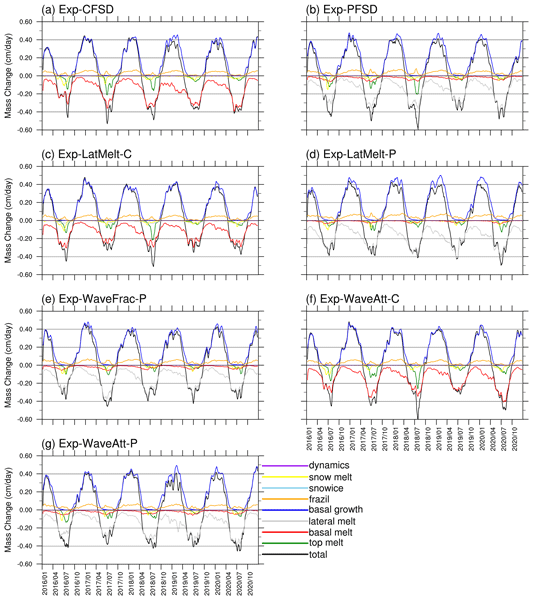
We present a new atmosphere–ocean–wave–sea ice coupled model to study the influences of ocean waves on Arctic sea ice simulation. Our results show (1) smaller ice-floe size with wave breaking increases ice melt, (2) the responses in the atmosphere and ocean to smaller floe size partially reduce the effect of the enhanced ice melt, (3) the limited oceanic energy is a strong constraint for ice melt enhancement, and (4) ocean waves can indirectly affect sea ice through the atmosphere and the ocean.
Shijie Peng, Qinghua Yang, Matthew D. Shupe, Xingya Xi, Bo Han, Dake Chen, Sandro Dahlke, and Changwei Liu
Atmos. Chem. Phys., 23, 8683–8703, https://doi.org/10.5194/acp-23-8683-2023, https://doi.org/10.5194/acp-23-8683-2023, 2023
Short summary
Short summary
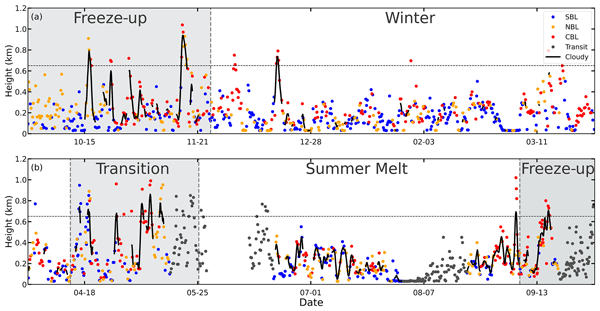
Due to a lack of observations, the structure of the Arctic atmospheric boundary layer (ABL) remains to be further explored. By analyzing a year-round radiosonde dataset collected over the Arctic sea-ice surface, we found the annual cycle of the ABL height (ABLH) is primarily controlled by the evolution of ABL thermal structure, and the surface conditions also show a high correlation with ABLH variation. In addition, the Arctic ABLH is found to be decreased in summer compared with 20 years ago.
Hengling Leng, Hailun He, and Michael A. Spall
Ocean Sci., 19, 289–304, https://doi.org/10.5194/os-19-289-2023, https://doi.org/10.5194/os-19-289-2023, 2023
Short summary
Short summary
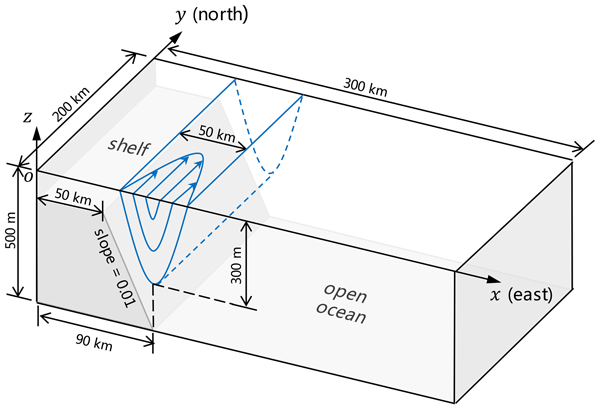
The Chukchi continental slope is one of the most energetic regions in the western Arctic Ocean as it is populated with strong boundary currents and mesoscale eddies. Using a set of experiments with an idealized primitive equation numerical model, we find that the ice friction can cause the loss of energy of both the Chukchi Slope Current and mesoscale eddies over a vertical scale of 100 m through Ekman pumping. Some scales for measuring the effects of ice friction are also provided.
Chao-Yuan Yang, Jiping Liu, and Dake Chen
Geosci. Model Dev., 15, 1155–1176, https://doi.org/10.5194/gmd-15-1155-2022, https://doi.org/10.5194/gmd-15-1155-2022, 2022
Short summary
Short summary
We present an improved coupled modeling system for Arctic sea ice prediction. We perform Arctic sea ice prediction experiments with improved/updated physical parameterizations, which show better skill in predicting sea ice state as well as atmospheric and oceanic state in the Arctic compared with its predecessor. The improved model also shows extended predictive skill of Arctic sea ice after the summer season. This provides an added value of this prediction system for decision-making.
Cited articles
Bell, T. H.: Lee waves in stratified flows with simple harmonic time dependence, J. Fluid Mech., 67, 705–722, https://doi.org/10.1017/S0022112075000560, 1975.
Brearley, J. A., Meredith, M. P., Garabato, A. C. N., Venables, H. J., and Inall, M. E.: Controls on turbulent mixing on the West Antarctic Peninsula shelf, Deep-Sea Res. Pt. II, 139, 18–30, https://doi.org/10.1016/j.dsr2.2017.02.011, 2017.
Brunt, K. M., King, M. A., Fricker, H. A., and MacAyeal, D. R.: Flow of the Ross Ice Shelf, Antarctica, is modulated by the ocean tide, J. Glaciol., 56, 157–161, https://doi.org/10.3189/002214310791190875, 2010.
Castagno, P., Falco, P., Dinniman, M. S., Spezie, G., and Budillon, G.: Temporal variability of the Circumpolar Deep Water inflow onto the Ross Sea continental shelf, J. Marine Syst., 166, 37–49, https://doi.org/10.1016/j.jmarsys.2016.05.006, 2017.
Chelton, D. B., deSzoeke, R. A., Schlax, M. G., El Naggar, K., and Siwertz, N.: Geographical Variability of the First Baroclinic Rossby Radius of Deformation, J. Phys. Oceanogr., 28, 433–460, https://doi.org/10.1175/1520-0485(1998)028<0433:GVOTFB>2.0.CO;2, 1998.
Chen, C. and Beardsley, R. C.: A Numerical Study of Stratified Tidal Rectification over Finite-Amplitude Banks. Part I: Symmetric Banks, J. Phys. Oceanogr., 25, 2090–2110, https://doi.org/10.1175/1520-0485(1995)025<2090:ANSOST>2.0.CO;2, 1995.
Darwin, G. H.: On the Antarctic Tidal Observations of the “Discovery”, in: The Scientific Papers of Sir George Darwin (Original version published 1907): Oceanic Tides and Lunar Disturbance of Gravity, Cambridge University Press, Cambridge, 372–388, https://doi.org/10.1017/CBO9780511703461.014, 2009.
D'Asaro, E. A. and Morison, J. H.: Internal waves and mixing in the Arctic Ocean, Deep-Sea Res., 39, S459–S484, https://doi.org/10.1016/S0198-0149(06)80016-6, 1992.
Doake, C. S. M., Corr, H. F. J., Nicholls, K. W., Gaffikin, A., Jenkins, A., Bertiger, W. I., and King, M. A.: Tide-induced lateral movement of Brunt Ice Shelf, Antarctica, Geophys. Res. Lett., 29, https://doi.org/10.1029/2001GL014606, 2002.
Falahat, S. and Nycander, J.: On the Generation of Bottom – Trapped Internal Tides, J. Phys. Oceanogr., 45, 526–545, https://doi.org/10.1175/JPO-D-14-0081.1, 2015.
Fetterer, F., Knowles, K., Meier, W. N., Savoie, M., and Windnagel, A. K.: Sea ice index, version 3. NSIDC: National Snow and Ice Data Center [data set], updated daily, https://doi.org/10.7265/N5K072F8, 2017.
Flexas, M. M., Schodlok, M. P., Padman, L., Menemenlis, D., and Orsi, A. H.: Role of tides on the formation of the Antarctic Slope Front at the Weddell-Scotia Confluence, J. Geophys. Res.-Oceans, 120, 3658–3680, https://doi.org/10.1002/2014JC010372, 2015.
Fricker, H. A. and Padman, L.: Ice shelf grounding zone structure from ICESat laser altimetry, Geophys. Res. Lett., 33, L15502, https://doi.org/10.1029/2006GL026907, 2006.
Garreau, P. and Maze, R.: Tidal Rectification and Mass Transport over a Shelf Break: A Barotropic Frictionless Model, J. Phys. Oceanogr., 22, 719–731, https://doi.org/10.1175/1520-0485(1992)022<0719:TRAMTO>2.0.CO;2, 1992.
Gilmour, A. E., Macdonald, W. J. P., and van der Hoeven, F. G.: Winter measurements of sea currents in McMurdo Sound, New Zeal. J. Geol. Geop., 5, 778–789, https://doi.org/10.1080/00288306.1962.10417637, 1962.
Gordon, A. L., Zambianchi, E., Orsi, A., Visbeck, M., Giulivi, C. F., Whitworth III, T., and Spezie, G.: Energetic plumes over the western Ross Sea continental slope, Geophys. Res. Lett., 31, L21302, https://doi.org/10.1029/2004GL020785, 2004.
Gordon, A. L., Orsi, A. H., Muench, R., Huber, B. A., Zambianchi, E., and Visbeck, M.: Western Ross Sea continental slope gravity currents, Deep-Sea Res. Pt. II, 56, 796–817, https://doi.org/10.1016/j.dsr2.2008.10.037, 2009.
Guan, X., Ou, H.-W., and Chen, D.: Tidal effect on the dense water discharge, Part 2: A numerical study, Deep-Sea Res. Pt. II, 56, 884–894, https://doi.org/10.1016/j.dsr2.2008.10.028, 2009.
Hallberg, R.: Using a resolution function to regulate parameterizations of oceanic mesoscale eddy effects, Ocean Model., 72, 92–103, https://doi.org/10.1016/j.ocemod.2013.08.007, 2013.
Han, B. and Eden, C.: The energetics of internal tides at the Luzon Ridge, Ocean Dynam., 69, 1009–1022, https://doi.org/10.1007/s10236-019-01297-9, 2019.
Han, X., Stewart, A. L., Chen, D., Liu, X., and Lian, T.: Controls of Topographic Rossby Wave Properties and Downslope Transport in Dense Overflows, J. Phys. Oceanogr., 53, 1805–1820, https://doi.org/10.1175/JPO-D-22-0237.1, 2023.
Han, X., Stewart, A. L., Chen, D., Janout, M., Liu, X., Wang, Z., and Gordon, A. L.: Circum-Antarctic bottom water formation mediated by tides and topographic waves, Nat. Commun., 15, 2049, https://doi.org/10.1038/s41467-024-46086-1, 2024.
Harding, S., Kilcher, L., and Thomson, J.: Turbulence measurements from compliant moorings. Part I: Motion characterization, J. Atmos. Ocean. Tech., 34, 1235–1247, https://doi.org/10.1175/JTECH-D-16-0189.1, 2017.
Hersbach, H., Bell, B., Berrisford, P., Biavati, G., Horányi, A., Muñoz Sabater, J., Nicolas, J., Peubey, C., Radu, R., Rozum, I., Schepers, D., Simmons, A., Soci, C., Dee, D., and Thépaut, J.-N.: ERA5 hourly data on single levels from 1940 to present, Copernicus Climate Change Service (C3S) Climate Data Store (CDS) [data set], https://doi.org/10.24381/cds.adbb2d47, 2023.
Hiron, L., Schönau, M. C., Raja, K. J., Chassignet, E. P., Buijsman, M. C., Arbic, B. K., Bozec, A., Coelho, E. F., and Solano, M. S.: The influence of vertical resolution on internal tide energetics and subsequent effects on underwater acoustic propagation, J. Adv. Model. Earth Sy., 17, e2024MS004389, https://doi.org/10.1029/2024MS004389, 2025.
Holland, D. M. and Jenkins, A.: Modeling Thermodynamic Ice–Ocean Interactions at the Base of an Ice Shelf, J. Phys. Oceanogr., 29, 1787–1800, https://doi.org/10.1175/1520-0485(1999)029<1787:MTIOIA>2.0.CO;2, 1999.
Howard, S. L., Erofeeva, S., and Padman, L.: CATS2008: Circum-Antarctic Tidal Simulation version 2008, U. S. Antarctic Program (USAP) Data Center [data set], https://doi.org/10.15784/601235, 2019.
Jacobs, S. S.: Bottom water production and its links with the thermohaline circulation, Antarct. Sci., 16, 427–437, https://doi.org/10.1017/S095410200400224X, 2004.
Kalvaitis, A. N.: Effects of vertical motion on vector averaging (Savonius rotor) and electromagnetic type current meters, NOAA Tech. Memo., NOASIC-TM-OX3/74ERO1, National Ocean Survey, NOAA, U. S. Department of Commerce, Washington, D. C., 38 pp., https://repository.library.noaa.gov/view/noaa/67381 (last access: 25 September 2026), 1974.
Kang, D. and Fringer, O.: Energetics of Barotropic and Baroclinic Tides in the Monterey Bay Area, J. Phys. Oceanogr., 42, 272–290, https://doi.org/10.1175/JPO-D-11-039.1, 2012.
Langlois, G. and Maze, R.: Influence of mooring line motion on current measurements, Deep-Sea Res., 37, 1363–1374, https://doi.org/10.1016/0198-0149(90)90048-Z, 1990.
Legrésy, B., Wendt, A., Tabacco, I., Rémy, F., and Dietrich, R.: Influence of tides and tidal current on Mertz Glacier, Antarctica, J. Glaciol., 50, 427–435, https://doi.org/10.3189/172756504781829828, 2004.
Liu, C., Wang, Z., Liang, X., Li, X., Cheng, C., Wu, Y., Liu, Y., Yuan, X., and Yu, X.: Observed Tidal Currents in Prydz Bay and Their Contribution to the Amery Ice Shelf Basal Melting, OLAR, 2, 0020, https://doi.org/10.34133/olar.0020, 2023.
Liu, Y., Liu, C., Wang, Z., Yan, L., Haigh, M., Han, X., Liu, K., Xia, Y., Zeng, J., Li, X., and Li, X.: Spatial characteristics and dynamic mechanisms of the Antarctic Slope Current in the Ross Sea, J. Geophys. Res.-Oceans, 130, e2025JC023219, https://doi.org/10.1029/2025JC023219, 2025.
Llewellyn Smith, S. G. and Young, W. R.: Conversion of the Barotropic Tide, J. Phys. Oceanogr., 32, 1554–1566, https://doi.org/10.1175/1520-0485(2002)032<1554:COTBT>2.0.CO;2, 2002.
Losch, M., Menemenlis, D., Campin, J.-M., Heimbach, P., and Hill, C.: On the formulation of sea-ice models. Part 1: Effects of different solver implementations and parameterizations, Ocean Model., 33, 129–144, https://doi.org/10.1016/j.ocemod.2009.12.008, 2010.
MacAyeal, D. R.: Thermohaline circulation below the Ross Ice Shelf: A consequence of tidally induced vertical mixing and basal melting, J. Geophys. Res.-Oceans, 89, 597–606, https://doi.org/10.1029/JC089IC01P00597, 1984a.
MacAyeal, D. R.: Numerical simulations of the Ross Sea tides, J. Geophys. Res.-Oceans, 89, 607–615, https://doi.org/10.1029/jc089ic01p00607, 1984b.
Marshall, J., Adcroft, A., Hill, C., Perelman, L., and Heisey, C.: A finite-volume, incompressible Navier Stokes model for studies of the ocean on parallel computers, J. Geophys. Res.-Oceans, 102, 5753–5766, https://doi.org/10.1029/96jc02775, 1997.
Mazloff, M. R., Heimbach, P., and Wunsch, C.: An eddy-permitting southern ocean state estimate, J. Phys. Oceanogr., 40, 880–899, https://doi.org/10.1175/2009jpo4236.1, 2010.
McWilliams, J. C., Molemaker, M. J., and Damien, P.: Baroclinic sea level, J. Adv. Model. Earth Sy., 16, e2023MS003977, https://doi.org/10.1029/2023MS003977, 2024.
Müller, M.: On the space- and time-dependence of barotropic-to-baroclinic tidal energy conversion, Ocean Model., 72, 242–252, https://doi.org/10.1016/j.ocemod.2013.09.007, 2013.
Musgrave, R. C., MacKinnon, J. A., Pinkel, R., Waterhouse, A. F., Nash, J., and Kelly, S. M.: The Influence of Subinertial Internal Tides on Near-Topographic Turbulence at the Mendocino Ridge: Observations and Modeling, J. Phys. Oceanogr., 47, 2139–2154, https://doi.org/10.1175/JPO-D-16-0278.1, 2017.
Niwa, Y. and Hibiya, T.: Estimation of baroclinic tide energy available for deep ocean mixing based on three-dimensional global numerical simulations, J. Oceanogr., 67, 493–502, https://doi.org/10.1007/s10872-011-0052-1, 2011.
Opel, L., Schindelegger, M., and Ray, R. D.: A likely role for stratification in long-term changes of the global ocean tides, Commun. Earth Environ., 5, 261, https://doi.org/10.1038/s43247-024-01432-5, 2024.
Orsi, A. H., Johnson, G. C., and Bullister, J. L.: Circulation, mixing, and production of Antarctic Bottom Water, Prog. Oceanogr., 43, 55–109, https://doi.org/10.1016/S0079-6611(99)00004-X, 1999.
Ou, H.-W., Guan, X., and Chen, D.: Tidal effect on the dense water discharge, Part 1: Analytical model, Deep-Sea Res. Pt. II, 56, 874–883, https://doi.org/10.1016/j.dsr2.2008.10.031, 2009.
Padman, L., Fricker, H. A., Coleman, R., Howard, S., and Erofeeva, L.: A new tide model for the Antarctic ice shelves and seas, Ann. Glaciol., 34, 247–254, https://doi.org/10.3189/172756402781817752, 2002.
Padman, L., Erofeeva, S., and Joughin, I.: Tides of the Ross Sea and Ross Ice Shelf cavity, Antarct. Sci., 15, 31–40, https://doi.org/10.1017/S0954102003001032, 2003.
Padman, L., Howard, S. L., Orsi, A. H., and Muench, R. D.: Tides of the northwestern Ross Sea and their impact on dense outflows of Antarctic Bottom Water, Deep-Sea Res. Pt. II, 56, 818–834, https://doi.org/10.1016/j.dsr2.2008.10.026, 2009.
Padman, L., Siegfried, M. R., and Fricker, H. A.: Ocean tide influences on the Antarctic and Greenland ice sheets, Rev. Geophys., 56, 142–184, https://doi.org/10.1002/2016RG000546, 2018.
Pairaud, I. L., Auclair, F., Marsaleix, P., Lyard, F., and Pichon, A.: Dynamics of the semi-diurnal and quarter-diurnal internal tides in the Bay of Biscay. Part 2: Baroclinic tides, Cont. Shelf Res., 30, 253–269, https://doi.org/10.1016/j.csr.2009.10.008, 2010.
Pawlowicz, R., Beardsley, B., and Lentz, S.: Classical tidal harmonic analysis including error estimates in MATLAB using T_TIDE, Comput. Geosci., 28, 929–937, https://doi.org/10.1016/S0098-3004(02)00013-4, 2002.
Pérenne, N., Pichon, A., and Huet, P.: A numerical study of stratified tidal rectification, Cont. Shelf Res., 20, 37–68, https://doi.org/10.1016/S0278-4343(99)00057-6, 2000.
Pillsbury, R. D. and Jacobs, S. S.: Preliminary observations from long-term current meter moorings near the Ross Ice Shelf, Antarctica, Antarct. Res. Ser., 87–107, https://doi.org/10.1029/AR043p0087, 1985.
Ray, R.: A preliminary tidal analysis of ICESat laser altimetry: Southern Ross Ice Shelf, Geophys. Res. Lett., 35, L02505, https://doi.org/10.1029/2007GL032125, 2008.
Riedel, B., Nixdorf, U., Heinert, M., Eckstaller, A., and Mayer, C.: The response of the Ekströmisen (Antarctica) grounding zone to tidal forcing, Ann. Glaciol., 29, 239–242, https://doi.org/10.3189/172756499781821247, 1999.
Robertson, R.: Baroclinic and barotropic tides in the Ross Sea, Antarct. Sci., 17, 107–120, https://doi.org/10.1017/S0954102005002506, 2005.
Robertson, R.: Tidally induced increases in melting of Amundsen Sea ice shelves, J. Geophys. Res.-Oceans, 118, 3138–3145, https://doi.org/10.1002/jgrc.20236, 2013.
Robertson, R., Beckmann, A., and Hellmer, H.: M2 tidal dynamics in the Ross Sea, Antarct. Sci., 15, 41–46, https://doi.org/10.1017/S0954102003001044, 2003.
Roos, P. C. and de Swart, H. E.: Tides in Coastal Seas. Influence of Topography and Bottom Friction, in: The Mathematics of Marine Modelling: Water, Solute and Particle Dynamics in Estuaries and Shallow Seas, edited by: Schuttelaars, H., Heemink, A., and Deleersnijder, E., Springer, 73–102, https://doi.org/10.1007/978-3-031-09559-7, 2022.
Schaffer, J. and Timmermann, R.: Greenland and Antarctic ice sheet topography, cavity geometry, and global bathymetry (RTopo-2), links to NetCDF files, PANGAEA [data set], https://doi.org/10.1594/PANGAEA.856844, 2016.
Si, Y., Stewart, A. L., and Eisenman, I.: Coupled Ocean–Sea Ice Dynamics of the Antarctic Slope Current Driven by Topographic Eddy Suppression and Sea Ice Momentum Redistribution, J. Phys. Oceanogr., 52, 1563–1589, https://doi.org/10.1175/JPO-D-21-0142.1, 2022.
Si, Y., Stewart, A. L., and Eisenman, I.: Heat transport across the Antarctic Slope Front controlled by cross-slope salinity gradients, Sci. Adv., 9, eadd7049, https://doi.org/10.1126/sciadv.add7049, 2023.
Song, P. and Chen, X.: Investigation of the Internal Tides in the Northwest Pacific Ocean Considering the Background Circulation and Stratification, J. Phys. Oceanogr., 50, 3165–3188, https://doi.org/10.1175/JPO-D-19-0177.1, 2020.
Stewart, A. L., Klocker, A., and Menemenlis, D.: Circum-Antarctic shoreward heat transport derived from an eddy- and tide-resolving simulation, Geophys. Res. Lett., 45, 834–845, https://doi.org/10.1002/2017GL075677, 2018.
Stewart, A. L., Klocker, A., and Menemenlis, D.: Acceleration and Overturning of the Antarctic Slope Current by Winds, Eddies, and Tides, J. Phys. Oceanogr., 49, 2043–2074, https://doi.org/10.1175/JPO-D-18-0221.1, 2019.
Susanto, R. D. and Gordon, A. L.: Velocity and transport of the Makassar Strait throughflow, J. Geophys. Res.-Oceans, 110, C01005, https://doi.org/10.1029/2004JC002425, 2005.
Tanaka, Y.: Energy Conversion Rate from Subinertial Surface Tides to Internal Tides, J. Phys. Oceanogr., 53, 1355–1374, https://doi.org/10.1175/JPO-D-22-0201.1, 2023.
Varlamov, S. M., Guo, X., Miyama, T., Ichikawa, K., Waseda, T., and Miyazawa, Y.: M2 baroclinic tide variability modulated by the ocean circulation south of Japan, J. Geophys. Res.-Oceans, 120, 3681–3710, https://doi.org/10.1002/2015JC010739, 2015.
Verdy, A. and Mazloff, M. R.: A data assimilating model for estimating Southern Ocean biogeochemistry, J. Geophys. Res.-Oceans, 122, 6968–6988, https://doi.org/10.1002/2016jc012650, 2017.
Wang, C., Liu, Z., and Lin, H.: A Simple Approach for Disentangling Vortical and Wavy Motions of Oceanic Flows, J. Phys. Oceanogr., 53, 1237–1249, https://doi.org/10.1175/JPO-D-22-0148.1, 2023.
Wang, D. and Mooers, C. N. K.: Coastal-Trapped Waves in a Continuously Stratified Ocean, J. Phys. Oceanogr., 6, 853–863, https://doi.org/10.1175/1520-0485(1976)006<0853:CTWIAC>2.0.CO;2, 1976.
Wang, Q., Danilov, S., Hellmer, H., and Schröter, J.: Overflow dynamics and bottom water formation in the western Ross Sea: The influence of tides, J. Geophys. Res.-Oceans, 115, C10054, https://doi.org/10.1029/2010JC006189, 2010.
Whitworth III, T. and Orsi, A. H.: Antarctic Bottom Water production and export by tides in the Ross Sea, Geophys. Res. Lett., 33, L12609, https://doi.org/10.1029/2006GL026357, 2006.
Williams, R. T. and Robinson, E. S.: The ocean tide in the southern Ross Sea, J. Geophys. Res.-Oceans, 85, 6689–6696, https://doi.org/10.1029/JC085IC11P06689, 1980.
Yan, L., Wang, Z., Liu, C., Wu, Y., Qin, Q., Sun, C., Qian, J., and Zhang, L.: The salinity budget of the ross Sea Continental Shelf, Antarctica, J. Geophys. Res.-Oceans, 128, e2022JC018979, https://doi.org/10.1029/2022jc018979, 2023.
Zhang, J. and Hibler, W. D.: On an efficient numerical method for modeling sea ice dynamics, J. Geophys. Res.-Oceans, 102, 8691–8702, https://doi.org/10.1029/96jc03744, 1997.
Zhang, J. and Rothrock, D.: Modeling Arctic sea ice with an efficient plastic solution, J. Geophys. Res.-Oceans, 105, 3325–3338, https://doi.org/10.1029/1999jc900320, 2000.
Zhang, Z., Chen, X., and Pohlmann, T.: The Impact of Fortnightly Stratification Variability on the Generation of Baroclinic Tides in the Luzon Strait, J. Mar. Sci. Eng., 9, 703, https://doi.org/10.3390/jmse9070703, 2021.
Short summary
Around Antarctica, tides strongly influence ice shelves through both dynamic and thermodynamic processes, and also help form dense bottom water that drives global ocean circulation. Using a regional model of the Ross Sea, we identified three eddy-like structures along the slope that control local water and heat transport, which potentially contributes to ice shelf melting.
Around Antarctica, tides strongly influence ice shelves through both dynamic and thermodynamic...


