
Articles | Volume 22, issue 5
https://doi.org/10.5194/os-22-2779-2026
© Author(s) 2026. This work is distributed under
the Creative Commons Attribution 4.0 License.
the Creative Commons Attribution 4.0 License.
https://doi.org/10.5194/os-22-2779-2026
© Author(s) 2026. This work is distributed under
the Creative Commons Attribution 4.0 License.
the Creative Commons Attribution 4.0 License.
Research article
| 
11 Sep 2026
Research article |
| 11 Sep 2026
| 11 Sep 2026
Enhanced water mass mixing in Fram Strait in 2020 and elevated circulation timescales of Atlantic-derived waters in 2021 based on transient tracers I-129 and U-236
Marcel Scheiwiller
CORRESPONDING AUTHOR

Department of Environmental Systems Science, ETHZ, Zürich, Switzerland
Anne-Marie Wefing
Norwegian Polar Institute, Tromsø, Norway
Habacuc Pérez-Tribouillier
Department of Environmental Systems Science, ETHZ, Zürich, Switzerland
Laboratory of Ion Beam Physics, Department of Physics, ETHZ, Zürich, Switzerland
Christof Vockenhuber
Department of Environmental Systems Science, ETHZ, Zürich, Switzerland
Laboratory of Ion Beam Physics, Department of Physics, ETHZ, Zürich, Switzerland
Paul A. Dodd
Norwegian Polar Institute, Tromsø, Norway
Justin P. Gwynn
Norwegian Radiation and Nuclear Safety Authority, Tromsø, Norway
Núria Casacuberta
CORRESPONDING AUTHOR
Department of Environmental Systems Science, ETHZ, Zürich, Switzerland
Laboratory of Ion Beam Physics, Department of Physics, ETHZ, Zürich, Switzerland
Institute of Marine Sciences (ICM-CSIC), Barcelona, Spain
Related authors
Anne-Marie Wefing, Annabel Payne, Marcel Scheiwiller, Christof Vockenhuber, Marcus Christl, Toste Tanhua, and Núria Casacuberta
Ocean Sci., 21, 3311–3340, https://doi.org/10.5194/os-21-3311-2025, https://doi.org/10.5194/os-21-3311-2025, 2025
Short summary
Short summary
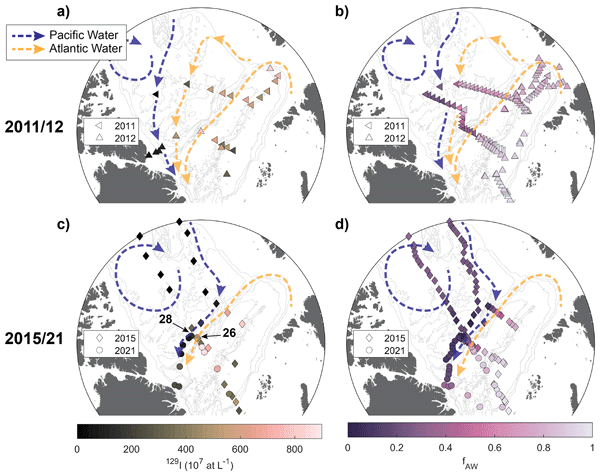
Here we used the anthropogenic radionuclides I-129 and U-236 as tracers for Atlantic Water circulation in the Arctic Ocean. New data collected in 2021 allowed to assess the distribution of Atlantic Water and mixing with Pacific-origin water in the surface layer in that year. By using historical tracer data from 2011 to 2021, we looked into temporal changes of the circulation and found slightly older waters in the central Arctic Ocean in 2021 compared to 2015.
Lisa G. T. Leist, Maxi Castrillejo, Kumiko Azetsu-Scott, Craig Lee, Jed Lenetsky, Marc Ringuette, Christof Vockenhuber, Habacuc Pérez-Tribouillier, Catherine Jeandel, Jean-Éric Tremblay, and Núria Casacuberta
Ocean Sci., 22, 1835–1860, https://doi.org/10.5194/os-22-1835-2026, https://doi.org/10.5194/os-22-1835-2026, 2026
Short summary
Short summary
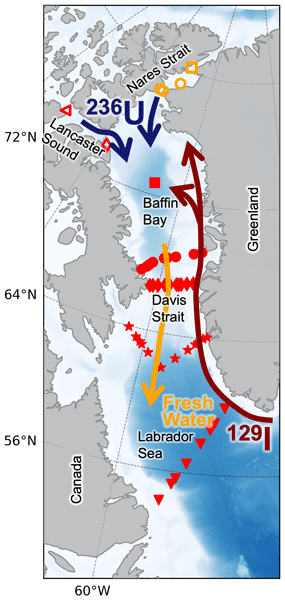
The Arctic and Atlantic Oceans are connected by narrow passages, and the exchange of waters affect global climate. Using artificial radionuclides from nuclear reprocessing discharges, we traced the origin of water masses from the Arctic to the Labrador Sea. Results show that waters from Canadian Arctic origin entering via Lancaster Sound are a key freshwater source to the Labrador Sea. These flows strongly influence the formation of deep waters in the Atlantic, vital for the global circulation.
Niklas Kappelt, Piers Larkman, Pascal Bohleber, Florian Adolphi, Marcus Christl, Christof Vockenhuber, Philip Gautschi, Eric Wolff, and Raimund Muscheler
EGUsphere, https://doi.org/10.5194/egusphere-2026-790, https://doi.org/10.5194/egusphere-2026-790, 2026
This preprint is open for discussion and under review for The Cryosphere (TC).
Short summary
Short summary
10Be is a radionuclide often measured in ice cores to reconstruct the solar magnetic field and geomagnetic field, as well as to date ice based on its half-life of 1.387 million years. Previous measurements in deep ice from Antarctica showed a decrease in concentrations with age. We analysed the influence of the sample preparation procedure and were able to show that the use of ion exchange columns can lead to decreasing concentrations, an effect which is amplified at greater depths and ages.
Chantal Schmidt, David Mair, Naki Akçar, Marcus Christl, Negar Haghipour, Christof Vockenhuber, Philip Gautschi, Brian McArdell, and Fritz Schlunegger
Earth Surf. Dynam., 14, 33–53, https://doi.org/10.5194/esurf-14-33-2026, https://doi.org/10.5194/esurf-14-33-2026, 2026
Short summary
Short summary
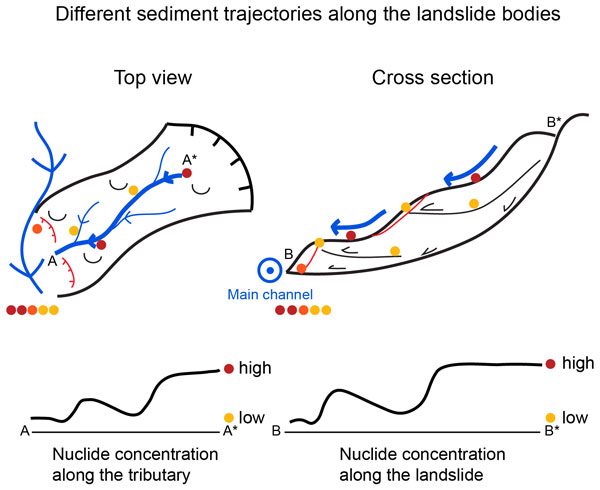
Our study examines erosion in a small, pre-Alpine basin by using cosmogenic nuclides in river sediments. Based on a dense measuring network we were able to distinguish two main zones: an upper zone with slow erosion of surface material, and a steeper, lower zone where faster erosion is driven by landslides. The data suggests that sediment has been constantly produced over thousands of years, indicating a stable, long-term balance between contrasting erosion processes.
Anne-Marie Wefing, Annabel Payne, Marcel Scheiwiller, Christof Vockenhuber, Marcus Christl, Toste Tanhua, and Núria Casacuberta
Ocean Sci., 21, 3311–3340, https://doi.org/10.5194/os-21-3311-2025, https://doi.org/10.5194/os-21-3311-2025, 2025
Short summary
Short summary
Here we used the anthropogenic radionuclides I-129 and U-236 as tracers for Atlantic Water circulation in the Arctic Ocean. New data collected in 2021 allowed to assess the distribution of Atlantic Water and mixing with Pacific-origin water in the surface layer in that year. By using historical tracer data from 2011 to 2021, we looked into temporal changes of the circulation and found slightly older waters in the central Arctic Ocean in 2021 compared to 2015.
Niklas Kappelt, Eric Wolff, Marcus Christl, Christof Vockenhuber, Philip Gautschi, and Raimund Muscheler
Clim. Past, 21, 1585–1594, https://doi.org/10.5194/cp-21-1585-2025, https://doi.org/10.5194/cp-21-1585-2025, 2025
Short summary
Short summary
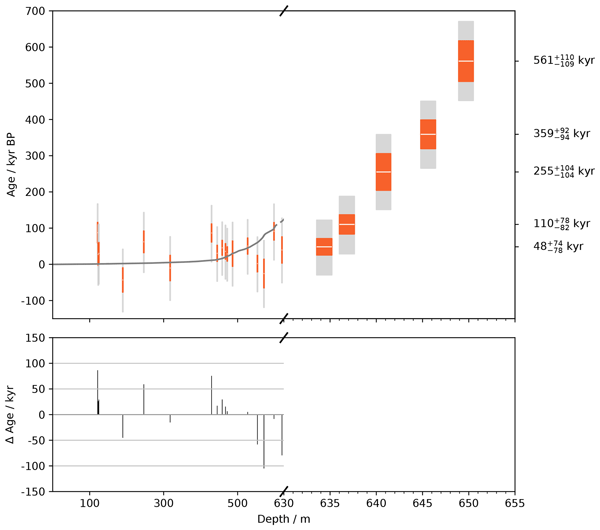
By measuring the radioactive decay of atmospherically produced 36Cl and 10Be in an ice core drilled in West Antarctica, we were able to determine the age of the deepest sample close to bedrock to be about 550 thousand years old. This means that the ice in this location, known as Skytrain Ice Rise, has survived several warm periods in the past, at least since marine isotope stage 11.

Margot C. F. Debyser, Laetitia Pichevin, Robyn E. Tuerena, Paul A. Dodd, Antonia Doncila, and Raja S. Ganeshram
Biogeosciences, 19, 5499–5520, https://doi.org/10.5194/bg-19-5499-2022, https://doi.org/10.5194/bg-19-5499-2022, 2022
Short summary
Short summary
We focus on the exchange of key nutrients for algae production between the Arctic and Atlantic oceans through the Fram Strait. We show that the export of dissolved silicon here is controlled by the availability of nitrate which is influenced by denitrification on Arctic shelves. We suggest that any future changes in the river inputs of silica and changes in denitrification due to climate change will impact the amount of silicon exported, with impacts on Atlantic algal productivity and ecology.
Cited articles
Aagaard, K. and Carmack, E. C.: The role of sea ice and other fresh water in the Arctic circulation, J. Geophys. Res.-Oceans, 94, 14485–14498, https://doi.org/10.1029/JC094IC10P14485, 1989. a, b
Aagaard, K., Foldvik, A., and Hillman, S. R.: The West Spitsbergen Current: Disposition and water mass transformation, J. Geophys. Res.-Oceans, 92, 3778–3784, https://doi.org/10.1029/JC092iC04p03778, 1987. a
Aksenov, Y., Ivanov, V. V., Nurser, A. J., Bacon, S., Polyakov, I. V., Coward, A. C., Naveira-Garabato, A. C., and Beszczynska-Möller, A.: The Arctic circumpolar boundary current, J. Geophys. Res.-Oceans, 116, 9017, https://doi.org/10.1029/2010JC006637, 2011. a
Alfimov, V., Aldahan, A., and Possnert, G.: Tracing water masses with 129I in the western Nordic Seas in early spring 2002, Geophys. Res. Lett., 31, L19305, https://doi.org/10.1029/2004GL020863, 2004. a
Alfimov, V., Aldahan, A., and Possnert, G.: Water masses and 129I distribution in the Nordic Seas, Nucl. Instrum. Meth. B, 294, 542–546, https://doi.org/10.1016/J.NIMB.2012.07.042, 2013. a
Alkire, M. B., Morison, J., and Andersen, R.: Variability in the meteoric water, sea-ice melt, and Pacific water contributions to the central Arctic Ocean, 2000–2014, J. Geophys. Res.-Oceans, 120, 1573–1598, https://doi.org/10.1002/2014JC010023, 2015. a, b
Alkire, M. B., Rember, R., and Polyakov, I.: Discrepancy in the identification of the Atlantic/Pacific front in the central Arctic ocean: NO Versus nutrient relationships, Geophys. Res. Lett., 46, 3843–3852, https://doi.org/10.1029/2018GL081837, 2019. a, b, c
Armitage, T. W. K., Bacon, S., Ridout, A. L., Petty, A. A., Wolbach, S., and Tsamados, M.: Arctic Ocean surface geostrophic circulation 2003–2014, The Cryosphere, 11, 1767–1780, https://doi.org/10.5194/tc-11-1767-2017, 2017. a, b
Årthun, M., Brakstad, A., Dörr, J., Johnson, H. L., Mans, C., Semper, S., and Våge, K.: Atlantification drives recent strengthening of the Arctic overturning circulation, Science Advances, 11, 1794, https://doi.org/10.1126/SCIADV.ADU1794, 2025a. a
Årthun, M., Dinh, K. V., Dörr, J., Dupont, N., Fransner, F., Nilsen, I., Renaud, P. E., Skogen, M. D., Assmy, P., Chierici, M., Duarte, P., Fransson, A., Hansen, C., Nascimento, M. C., Pedersen, T., Smedsrud, L. H., Varpe, Ø., and Cnossen, F.: The future Barents Sea – a synthesis of physical, biogeochemical, and ecological changes toward 2050 and 2100, Elementa, 13, https://doi.org/10.1525/elementa.2024.00046, 2025b. a
Bates, N. R., Moran, S. B., Hansell, D. A., and Mathis, J. T.: An increasing CO2 sink in the Arctic Ocean due to sea-ice loss, Geophys. Res. Lett., 33, 23609, https://doi.org/10.1029/2006GL027028, 2006. a
Bauch, D., van der Loeff, M. R., Andersen, N., Torres-Valdes, S., Bakker, K., and Abrahamsen, E. P.: Origin of freshwater and polynya water in the Arctic Ocean halocline in summer 2007, Prog. Oceanogr., 91, 482–495, https://doi.org/10.1016/J.POCEAN.2011.07.017, 2011. a, b, c, d
Beszczynska-Möller, A., Woodgate, R. A., Lee, C., Melling, H., and Karcher, M.: A synthesis of exchanges through the main oceanic gateways to the Arctic ocean, Oceanography, 24, 82–99, https://doi.org/10.5670/oceanog.2011.59, 2011. a
Box, J. E., Colgan, W. T., Christensen, T. R., Schmidt, N. M., Lund, M., Parmentier, F. J. W., Brown, R., Bhatt, U. S., Euskirchen, E. S., Romanovsky, V. E., Walsh, J. E., Overland, J. E., Wang, M., Corell, R. W., Meier, W. N., Wouters, B., Mernild, S., Mård, J., Pawlak, J., and Olsen, M. S.: Key indicators of Arctic climate change: 1971–2017, Environ. Res. Lett., 14, 045010, https://doi.org/10.1088/1748-9326/AAFC1B, 2019. a
Brown, N. J., Garabato, A. C. N., Bacon, S., Aksenov, Y., Tsubouchi, T., Green, M., Lincoln, B., Rippeth, T., and Feltham, D. L.: The Arctic ocean double estuary: quantification and forcing mechanisms, AGU Advances, 6, e2024AV001529, https://doi.org/10.1029/2024AV001529, 2025. a, b
Carmack, E. C., Yamamoto-Kawai, M., Haine, T. W., Bacon, S., Bluhm, B. A., Lique, C., Melling, H., Polyakov, I. V., Straneo, F., Timmermans, M. L., and Williams, W. J.: Freshwater and its role in the Arctic marine system: sources, disposition, storage, export, and physical and biogeochemical consequences in the Arctic and global oceans, J. Geophys. Res.-Biogeo., 121, 675–717, https://doi.org/10.1002/2015JG003140, 2016. a
Casacuberta, N. and Smith, J. N.: Nuclear reprocessing tracers illuminate flow features and connectivity between the Arctic and subpolar North Atlantic oceans, Annu. Rev. Mar. Sci., 15, 203–221, https://doi.org/10.1146/annurev-marine-032122-112413, 2023. a, b
Casacuberta, N., Christl, M., Lachner, J., van der Loeff, M. R., Masqué, P., and Synal, H. A.: A first transect of 236U in the North Atlantic Ocean, Geochim. Cosmochim. Ac., 133, 34–46, https://doi.org/10.1016/J.GCA.2014.02.012, 2014. a
Casacuberta, N., Masqué, P., Henderson, G., van-der Loeff, M. R., Bauch, D., Vockenhuber, C., Daraoui, A., Walther, C., Synal, H. A., and Christl, M.: First 236U data from the Arctic Ocean and use of
Casacuberta, N., Christl, M., Vockenhuber, C., Wefing, A. M., Wacker, L., Masqué, P., Synal, H. A., and van der Loeff, M. R.: Tracing the three Atlantic branches entering the Arctic Ocean with 129I and 236U, J. Geophys. Res.-Oceans, 123, 6909–6921, https://doi.org/10.1029/2018JC014168, 2018. a, b, c, d, e, f, g, h
Chamizo, E., Christl, M., López-Lora, M., Casacuberta, N., Wefing, A. M., and Kenna, T. C.: The potential of
Chouksey, M., Griesel, A., Eden, C., and Steinfeldt, R.: Transit time distributions and ventilation pathways using CFCs and Lagrangian backtracking in the South Atlantic of an eddying ocean model, J. Phys. Oceanogr., 52, 1531–1548, https://doi.org/10.1175/JPO-D-21-0070.1, 2022. a
Christl, M., Lachner, J., Vockenhuber, C., Lechtenfeld, O., Stimac, I., van der Loeff, M. R., and Synal, H. A.: A depth profile of uranium-236 in the Atlantic Ocean, Geochim. Cosmochim. Ac., 77, 98–107, https://doi.org/10.1016/J.GCA.2011.11.009, 2012. a
Christl, M., Casacuberta, N., Lachner, J., Maxeiner, S., Vockenhuber, C., Synal, H. A., Goroncy, I., Herrmann, J., Daraoui, A., Walther, C., and Michel, R.: Status of 236U analyses at ETH Zurich and the distribution of 236U and 129I in the North Sea in 2009, Nucl. Instrum. Meth. B, 361, 510–516, https://doi.org/10.1016/j.nimb.2015.01.005, 2015a. a, b
Christl, M., Casacuberta, N., Vockenhuber, C., Elsässer, C., Bois, P. B. D., Herrmann, J., and Synal, H. A.: Reconstruction of the 236U input function for the Northeast Atlantic Ocean: Implications for
Christl, M., Gautschi, P., Maxeiner, S., Müller, A. M., Vockenhuber, C., and Synal, H. A.: 236U analyses with the ETH Zurich MILEA prototype system, Nucl. Instrum. Meth. B, 534, 61–71, https://doi.org/10.1016/J.NIMB.2022.11.009, 2023. a
Coachman, L. and Barnes, C.: The movement of Atlantic water in the Arctic Ocean, Arctic, 16, 8–16, https://doi.org/10.14430/arctic3517, 1963. a
Dale, D., Christl, M., Vockenhuber, C., Macrander, A., Òlafsdóttir, S., Middag, R., and Casacuberta, N.: Tracing ocean circulation and mixing from the Arctic to the subpolar North Atlantic using the 129I–236U dual tracer, J. Geophys. Res.-Oceans, 129, e2024JC021211, https://doi.org/10.1029/2024JC021211, 2024. a
de Steur, L.: Fram Strait cruise report, 24 August – 13 September 2020: cruise no. 2020709, Tech. rep., Norwegian Polar Institute, https://hdl.handle.net/11250/2723343, 2021. a
de Steur, L.: Fram Strait cruise report, 31 July–20 August 2021: cruise no. 2021709, Tech. rep., Norwegian Polar Institute, https://hdl.handle.net/11250/2980330, 2022. a
de Steur, L., Hansen, E., Mauritzen, C., Beszczynska-Möller, A., and Fahrbach, E.: Impact of recirculation on the East Greenland current in Fram Strait: results from moored current meter measurements between 1997 and 2009, Deep-Sea Res. Pt. I, 92, 26–40, https://doi.org/10.1016/J.DSR.2014.05.018, 2014. a
Dey, D., Marsh, R., Drijfhout, S., Josey, S. A., Sinha, B., Grist, J., and Döös, K.: Formation of the Atlantic meridional overturning circulation lower limb is critically dependent on Atlantic-Arctic mixing, Nat. Commun. 15, 1–10, https://doi.org/10.1038/s41467-024-51777-w, 2024. a
Dodd, P. A., Rabe, B., Hansen, E., Falck, E., MacKensen, A., Rohling, E., Stedmon, C., and Kristiansen, S.: The freshwater composition of the Fram Strait outflow derived from a decade of tracer measurements, J. Geophys. Res.-Oceans, 117, C11005, https://doi.org/10.1029/2012JC008011, 2012. a, b, c, d, e, f
Dodd, P. A., Ask, A., Divine, D., Granskog, M. A., Keck, A., Kern, Y., Petit, T., Karpouzoglou, T., Stedmon, C. A., and de Steur, L.: CTD profiles from NPI cruise FS2020 to the Fram Strait including auxiliary sensors, Tech. rep., Norwegian Polar Institute [data set], https://doi.org/10.21334/NPOLAR.2022.5DF344C6, 2022a. a
Dodd, P. A., Gonçalves-Araujo, R., Granskog, M. A., Jensen, A. D. B., Kern, Y., Lin, G., Hagen, S. Z., Haraguchi, L., Stedmon, C. A., and de Steur, L.: CTD profiles from NPI cruise FS2021 to the Fram Strait including auxiliary sensors, Tech. rep., Norwegian Polar Institute [data set], https://doi.org/10.21334/NPOLAR.2022.17B6BEC5, 2022b. a
Dörr, J., Mans, C., Årthun, M., Döös, K., Evans, D. G., and He, Y.: The Arctic overturning circulation: transformations, pathways and timescales, Ocean Sci., 22, 565–585, https://doi.org/10.5194/os-22-565-2026, 2026. a
Edmonds, H. N., Zhou, Z. Q., Raisbeck, G. M., Yiou, F., Kilius, L., and Edmond, J. M.: Distribution and behavior of anthropogenic 129I in water masses ventilating the North Atlantic Ocean, J. Geophys. Res.-Oceans, 106, 6881–6894, https://doi.org/10.1029/1999JC000282, 2001. a
Ekwurzel, B., Schlosser, P., Mortlock, R. A., Fairbanks, R. G., and Swift, J. H.: River runoff, sea ice meltwater, and Pacific water distribution and mean residence times in the Arctic Ocean, J. Geophys. Res.-Oceans, 106, 9075–9092, https://doi.org/10.1029/1999jc000024, 2001. a
Falck, E., Kattner, G., and Budéus, G.: Disappearance of Pacific water in the northwestern Fram Strait, Geophys. Res. Lett., 32, 1–4, https://doi.org/10.1029/2005GL023400, 2005. a, b
Fichot, C. G., Kaiser, K., Hooker, S. B., Amon, R. M., Babin, M., Bélanger, S., Walker, S. A., and Benner, R.: Pan-Arctic distributions of continental runoff in the Arctic Ocean, Sci. Rep.-UK, 3, 1–6, https://doi.org/10.1038/srep01053, 2013. a
Gerke, L., Arck, Y., and Tanhua, T.: Temporal variability of ventilation in the Eurasian Arctic Ocean, J. Geophys. Res.-Oceans, 129, e2023JC020608, https://doi.org/10.1029/2023JC020608, 2024. a
Giles, K. A., Laxon, S. W., Ridout, A. L., Wingham, D. J., and Bacon, S.: Western Arctic Ocean freshwater storage increased by wind-driven spin-up of the Beaufort Gyre, Nat. Geosci., 5, 194–197, https://doi.org/10.1038/ngeo1379, 2012. a
Graeve, M. and Ludwichowski, K.-U.: Inorganic nutrients measured on water bottle samples from CTD/Large volume Water-sampler-system during POLARSTERN cruise PS100 (ARK-XXX/2), PANGAEA [data set], https://doi.org/10.1594/PANGAEA.879197, 2017. a
Granskog, M. A., Stedmon, C. A., Dodd, P. A., Amon, R. M., Pavlov, A. K., de Steur, L., and Hansen, E.: Characteristics of colored dissolved organic matter (CDOM) in the Arctic outflow in the Fram Strait: assessing the changes and fate of terrigenous CDOM in the Arctic Ocean, J. Geophys. Res.-Oceans, 117, 12021, https://doi.org/10.1029/2012JC008075, 2012. a
Greene, C. H., Pershing, A. J., Cronin, T. M., and Ceci, N.: Arctic climate change and its impacts on the ecology of the North Atlantic, Ecology, 89, S24–S38, https://doi.org/10.1890/07-0550.1, 2008. a
Haine, T. W., Siddiqui, A. H., and Jiang, W.: Arctic freshwater impact on the Atlantic meridional overturning circulation: status and prospects, Philos. T. Roy. Soc. A, 381, 20220185, https://doi.org/10.1098/RSTA.2022.0185, 2023. a
Haine, T. W., Griffies, S. M., Gebbie, G., and Jiang, W.: A review of Green's Function methods for tracer timescales and pathways in ocean models, J. Adv. Model. Earth Sy., 17, e2024MS004637, https://doi.org/10.1029/2024MS004637, 2025. a
Hall, T. M. and Haine, T. W. N.: On ocean transport diagnostics: the idealized age tracer and the age spectrum, J. Phys. Oceanogr., 32, 1987–1991, https://doi.org/10.1175/1520-0485(2002)032<1987:OOTDTI>2.0.CO;2, 2002. a
Heuzé, C., Huhn, O., Walter, M., Sukhikh, N., Karam, S., Körtke, W., Vredenborg, M., Bulsiewicz, K., Sültenfuß, J., Fang, Y.-C., Mertens, C., Rabe, B., Tippenhauer, S., Allerholt, J., He, H., Kuhlmey, D., Kuznetsov, I., and Mallet, M.: A year of transient tracers (chlorofluorocarbon 12 and sulfur hexafluoride), noble gases (helium and neon), and tritium in the Arctic Ocean from the MOSAiC expedition (2019–2020), Earth Syst. Sci. Data, 15, 5517–5534, https://doi.org/10.5194/essd-15-5517-2023, 2023. a
Hofmann, Z., von Appen, W. J., and Wekerle, C.: Seasonal and mesoscale variability of the two Atlantic water recirculation pathways in Fram Strait, J. Geophys. Res.-Oceans, 126, e2020JC017057, https://doi.org/10.1029/2020JC017057, 2021. a, b, c, d
Håvik, L., Pickart, R. S., Våge, K., Torres, D., Thurnherr, A. M., Beszczynska-Möller, A., Walczowski, W., and von Appen, W. J.: Evolution of the East Greenland current from Fram Strait to Denmark Strait: synoptic measurements from summer 2012, J. Geophys. Res.-Oceans, 122, 1974–1994, https://doi.org/10.1002/2016JC012228, 2017. a
Ingvaldsen, R. B., Assmann, K. M., Primicerio, R., Fossheim, M., Polyakov, I. V., and Dolgov, A. V.: Physical manifestations and ecological implications of Arctic Atlantification, Nature Reviews Earth and Environment, 2, 874–889, https://doi.org/10.1038/s43017-021-00228-x, 2021. a
Jahn, A., Holland, M. M., and Kay, J. E.: Projections of an ice-free Arctic Ocean, Nature Reviews Earth and Environment, 5, 164–176, https://doi.org/10.1038/s43017-023-00515-9, 2024. a
Jones, E. P., Anderson, L. G., and Swift, J. H.: Distribution of Atlantic and Pacific waters in the upper Arctic Ocean: implications for circulation, Geophys. Res. Lett., 25, 765–768, https://doi.org/10.1029/98GL00464, 1998. a
Jones, E. P., Swift, J. H., Anderson, L. G., Lipizer, M., Civitarese, G., Falkner, K. K., Kattner, G., and McLaughlin, F.: Tracing Pacific water in the North Atlantic Ocean, J. Geophys. Res.-Oceans, 108, 3116, https://doi.org/10.1029/2001JC001141, 2003. a
Jones, E. P., Anderson, L. G., Jutterström, S., and Swift, J. H.: Sources and distribution of fresh water in the East Greenland current, Prog. Oceanogr., 78, 37–44, https://doi.org/10.1016/J.POCEAN.2007.06.003, 2008. a, b
Kanzow, T. and Rohardt, G.: CTD raw data files from POLARSTERN cruise PS100, link to tar file, Tech. rep., Alfred Wegener Institute [data set], https://doi.org/10.1594/PANGAEA.871701, 2017. a
Karcher, M. J. and Oberhuber, J. M.: Pathways and modification of the upper and intermediate waters of the Arctic Ocean, J. Geophys. Res.-Oceans, 107, 3049, https://doi.org/10.1029/2000JC000530, 2002. a
Karcher, M., Smith, J. N., Kauker, F., Gerdes, R., and Smethie, W. M.: Recent changes in Arctic Ocean circulation revealed by iodine-129 observations and modeling, J. Geophys. Res.-Oceans, 117, 8007, https://doi.org/10.1029/2011JC007513, 2012. a
Karpouzoglou, T., de Steur, L., Smedsrud, L. H., and Sumata, H.: Observed changes in the Arctic freshwater outflow in Fram Strait, J. Geophys. Res.-Oceans, 127, e2021JC018122, https://doi.org/10.1029/2021JC018122, 2022. a, b, c, d
Karpouzoglou, T., de Steur, L., Smedsrud, L. H., Karcher, M., and Sumata, H.: Three forcing mechanisms of freshwater transport in Fram Strait, J. Geophys. Res.-Oceans, 129, e2024JC020930, https://doi.org/10.1029/2024JC020930, 2024. a
Kim, Y. H., Min, S. K., Gillett, N. P., Notz, D., and Malinina, E.: Observationally-constrained projections of an ice-free Arctic even under a low emission scenario, Nat. Commun., 14, 1–8, https://doi.org/10.1038/s41467-023-38511-8, 2023. a
Kumamoto, Y., Hamajima, Y., Nishino, S., Inoue, M., Nagai, H., Matsuzaki, H., Yamagata, T., Murata, A., and Kikuchi, T.: Temporal changes in iodine-129 and radiocesium in the Canada Basin in the Arctic Ocean between 1993 and 2020, Polar Sci., 41, 101071, https://doi.org/10.1016/J.POLAR.2024.101071, 2024. a
Körtke, W., Walter, M., Huhn, O., Kanzow, T., and Rhein, M.: Decadal changes in the pathways of the Atlantic water core in the Arctic Ocean inferred from transient tracers, J. Geophys. Res.-Oceans, 129, e2024JC021419, https://doi.org/10.1029/2024JC021419, 2024. a
Laukert, G., Frank, M., Bauch, D., Hathorne, E. C., Rabe, B., von Appen, W. J., Wegner, C., Zieringer, M., and Kassens, H.: Ocean circulation and freshwater pathways in the Arctic Mediterranean based on a combined Nd isotope, REE and oxygen isotope section across Fram Strait, Geochim. Cosmochim. Ac., 202, 285–309, https://doi.org/10.1016/j.gca.2016.12.028, 2017. a, b
Le Bras, I., Straneo, F., Muilwijk, M., Smedsrud, L. H., Li, F., Lozier, M. S., and Holliday, N. P.: How much Arctic fresh water participates in the subpolar overturning circulation?, J. Phys. Oceanogr., 51, 955–973, https://doi.org/10.1175/JPO-D-20-0240.1, 2021. a
Leist, L. G., Castrillejo, M., Smith, J. N., Christl, M., Vockenhuber, C., Velo, A., Lherminier, P., and Casacuberta, N.: 129I and 236U distribution in the subpolar North Atlantic unravels water mass provenance in AR7W and A25 lines, Front. Mar. Sci., 11, 1470675, https://doi.org/10.3389/fmars.2024.1470675, 2024. a
Lin, G., Qiao, J., Dodd, P. A., Gonçalves-Araujo, R., Granskog, M. A., Steier, P., and Stedmon, C. A.: Tracing Atlantic water transit times in the Arctic Ocean: coupling reprocessing-derived 236U and colored dissolved organic matter to distinguish different pathways, Earth Planet. Sci. Lett., 622, 118415, https://doi.org/10.1016/J.EPSL.2023.118415, 2023a. a, b, c, d, e, f, g, h, i, j, k, l, m, n
Lin, P., Pickart, R. S., Heorton, H., Tsamados, M., Itoh, M., and Kikuchi, T.: Recent state transition of the Arctic Ocean's Beaufort Gyre, Nat. Geosci., 16, 485–491, https://doi.org/10.1038/s41561-023-01184-5, 2023b. a
Lique, C., Treguier, A. M., Blanke, B., and Grima, N.: On the origins of water masses exported along both sides of Greenland: a Lagrangian model analysis, J. Geophys. Res.-Oceans, 115, C05019, https://doi.org/10.1029/2009JC005316, 2010. a, b
Lique, C., Johnson, H. L., and Davis, P. E.: On the interplay between the circulation in the surface and the intermediate layers of the Arctic Ocean, J. Phys. Oceanogr., 45, 1393–1409, https://doi.org/10.1175/JPO-D-14-0183.1, 2015. a
Manley, T. O.: Branching of Atlantic water within the Greenland spitsbergen passage: an estimate of recirculation, J. Geophys. Res.-Oceans, 100, 20,627–20,634, https://doi.org/10.1029/95JC01251, 1995. a
Marnela, M., Rudels, B., Houssais, M.-N., Beszczynska-Möller, A., and Eriksson, P. B.: Recirculation in the Fram Strait and transports of water in and north of the Fram Strait derived from CTD data, Ocean Sci., 9, 499–519, https://doi.org/10.5194/os-9-499-2013, 2013. a, b, c
Martin, T., Steele, M., and Zhang, J.: Seasonality and long-term trend of Arctic Ocean surface stress in a model, J. Geophys. Res.-Oceans, 119, 1723–1738, https://doi.org/10.1002/2013JC009425, 2014. a
McAlister, J. A. and Orians, K. J.: Dissolved gallium in the Beaufort Sea of the Western Arctic Ocean: A GEOTRACES cruise in the International Polar Year, Mar. Chem., 177, 101–109, https://doi.org/10.1016/J.MARCHEM.2015.05.007, 2015. a, b
McPherson, R., Lochthofen, N., Reifenberg, S. F., von Appen, W. J., and Xi, H.: Year-round vertically resolved observations of upper ocean hydrography and biogeochemistry in the Atlantic water inflow north of Svalbard, Deep-Sea Res. Pt. II, 227, 105639, https://doi.org/10.1016/j.dsr2.2026.105639, 2026a. a
McPherson, R., von Appen, W.-J., de Steur, L., Becker, L., Ionita, M., Krumpen, T., Spreen, G., and Heukamp, F. O.: Recurring Northward Flow Events in the East Greenland Current: A New Pathway for Atlantic Heat into the Arctic, EGUsphere [preprint], https://doi.org/10.5194/egusphere-2026-2955, 2026b. a
McPherson, R. A., Wekerle, C., and Kanzow, T.: Shifts of the recirculation pathways in central Fram Strait drive Atlantic intermediate water variability on northeast Greenland shelf, J. Geophys. Res.-Oceans, 128, e2023JC019915, https://doi.org/10.1029/2023JC019915, 2023. a
Meredith, M., Sommerkorn, M., Cassotta, S., Derksen, C., Ekaykin, A., Hollowed, A., Kofinas, G., Mackintosh, A., Melbourne-Thomas, J., Muelbert, M. M. C., Ottersen, G., Pritchard, H., and Schuur, E. A. G.: Polar Regions, in: IPCC Special Report on the Ocean and Cryosphere in a Changing Climate, edited by: Pörtner, H.-O., Roberts, D. C., Masson-Delmotte, V., Zhai, P., Tignor, M., Poloczanska, E., Mintenbeck, K., Alegría, A., Nicolai, M., Okem, A., Petzold, J., Rama, B., and Weyer, N. M., Cambridge University Press, Cambridge, UK and New York, NY, USA, 203–320, https://doi.org/10.1017/9781009157964.005, 2019. a, b
Morison, J., Kwok, R., Dickinson, S., Andersen, R., Peralta-Ferriz, C., Morison, D., Rigor, I., Dewey, S., and Guthrie, J.: The cyclonic mode of arctic ocean circulation, J. Phys. Oceanogr., 51, 1053–1075, https://doi.org/10.1175/JPO-D-20-0190.1, 2021. a, b
Morison, J. H., Long, C. E., and Levine, M. D.: Internal wave dissipation under sea ice, J. Geophys. Res.-Oceans, 90, 11959–11966, https://doi.org/10.1029/jc090ic06p11959, 1985. a
Muilwijk, M., Hattermann, T., Martin, T., and Granskog, M. A.: Future sea ice weakening amplifies wind-driven trends in surface stress and Arctic Ocean spin-up, Nat. Commun., 15, 1–15, https://doi.org/10.1038/S41467-024-50874-0, 2024. a, b
Östlund, H. G. and Hut, G.: Arctic Ocean water mass balance from isotope data, J. Geophys. Res., 89, 6373–6381, https://doi.org/10.1029/JC089iC04p06373, 1984. a
Paffrath, R., Laukert, G., Bauch, D., van der Loeff, M. R., and Pahnke, K.: Separating individual contributions of major Siberian rivers in the Transpolar Drift of the Arctic Ocean, Sci. Rep.-UK, 11, 8216, https://doi.org/10.1038/s41598-021-86948-y, 2021. a
Pasqualini, A., Schlosser, P., Newton, R., Smethie, W. M., and Friedrich, R.: A multi-decade tracer study of the circulation and spreading rates of Atlantic water in the Arctic Ocean, J. Geophys. Res.-Oceans, 129, e2023JC020738, https://doi.org/10.1029/2023JC020738, 2024. a, b
Payne, A., Wefing, A.-M., Christl, M., Vockenhuber, C., Williams, W., Smith, J. N., and Casacuberta, N.: Circulation timescales and pathways of Atlantic water in the Canada Basin: insights from transient tracers 129I and 236U, J. Geophys. Res.-Oceans, 129, e2023JC020813, https://doi.org/10.1029/2023JC020813, 2024. a, b, c, d, e, f, g
Peacock, S. and Maltrud, M.: Transit-time distributions in a global ocean model, J. Phys. Oceanogr., 36, 474–495, https://doi.org/10.1175/JPO2860.1, 2006. a
Pemberton, P., Nilsson, J., and Meier, H. E.: Arctic ocean freshwater composition, pathways and transformations from a passive tracer simulation, Tellus A, 66, https://doi.org/10.3402/TELLUSA.V66.23988, 2014. a
Planat, N., Tremblay, L. B., Dufour, C. O., and Straub, D.: Seasonal and decadal geostrophic pathways of Pacific and Atlantic waters in the Arctic Amerasian Basin from observations, J. Geophys. Res.-Oceans, 130, e2024JC021560, https://doi.org/10.1029/2024JC021560, 2025. a
Polyakov, I. V., Alkire, M. B., Bluhm, B. A., Brown, K. A., Carmack, E. C., Chierici, M., Danielson, S. L., Ellingsen, I., Ershova, E. A., Gårdfeldt, K., Ingvaldsen, R. B., Pnyushkov, A. V., Slagstad, D., and Wassmann, P.: Borealization of the Arctic Ocean in response to anomalous advection from sub-Arctic seas, Front. Mar. Sci., 7, 516272, https://doi.org/10.3389/fmars.2020.00491, 2020a. a
Polyakov, I. V., Rippeth, T. P., Fer, I., Baumann, T. M., Carmack, E. C., Ivanov, V. V., Janout, M., Padman, L., Pnyushkov, A. V., and Rember, R.: Intensification of near-surface currents and shear in the eastern Arctic Ocean, Geophys. Res. Lett., 47, e2020GL089469, https://doi.org/10.1029/2020GL089469, 2020b. a, b
Polyakov, I. V., Ingvaldsen, R. B., Pnyushkov, A. V., Bhatt, U. S., Francis, J. A., Janout, M., Kwok, R., and Skagseth, Ø.: Fluctuating Atlantic inflows modulate Arctic atlantification, Science, 381, 972–979, https://doi.org/10.1126/science.adh5158, 2023. a, b
Polyakov, I. V., Pnyushkov, A. V., Carmack, E. C., Charette, M., Cho, K.-H., Dykstra, S., Haapala, J., Jung, J., Kipp, L., Yang, E. J., and Molodtsov, S.: Role of sea ice, stratification, and near-inertial oscillations in shaping the upper Siberian Arctic Ocean currents, Ocean Sci., 21, 3105–3122, https://doi.org/10.5194/os-21-3105-2025, 2025a. a
Polyakov, I. V., Pnyushkov, A. V., Charette, M., Cho, K.-H., Jung, J., Kipp, L., Muilwijk, M., Whitmore, L., Yang, E. J., and Yoo, J.: Atlantification advances into the Amerasian Basin of the Arctic Ocean, Science Advances, 11, eadq7580, https://doi.org/10.1126/SCIADV.ADQ7580, 2025b. a
Popova, E. E., Yool, A., Aksenov, Y., and Coward, A. C.: Role of advection in Arctic Ocean lower trophic dynamics: a modeling perspective, J. Geophys. Res.-Oceans, 118, 1571–1586, https://doi.org/10.1002/JGRC.20126, 2013. a
Proshutinsky, A., Krishfield, R., Toole, J. M., Timmermans, M. L., Williams, W., Zimmermann, S., Yamamoto-Kawai, M., Armitage, T. W., Dukhovskoy, D., Golubeva, E., Manucharyan, G. E., Platov, G., Watanabe, E., Kikuchi, T., Nishino, S., Itoh, M., Kang, S. H., Cho, K. H., Tateyama, K., and Zhao, J.: Analysis of the Beaufort Gyre freshwater content in 2003–2018, J. Geophys. Res.-Oceans, 124, 9658–9689, https://doi.org/10.1029/2019JC015281, 2019. a
Pérez-Tribouillier, H., Jaccard, S. L., Blaser, P., Christl, M., Creac'h, L., Hölemann, J., Scheiwiller, M., Vockenhuber, C., Wefing, A. M., and Casacuberta, N.: The role of the St. Anna trough in Atlantic water transport into the Arctic Ocean: a novel radiogenic isotope assessment using iodine, uranium, and neodymium, J. Geophys. Res.-Oceans, 130, e2024JC022050, https://doi.org/10.1029/2024JC022050, 2025. a, b, c, d, e, f, g
Quadfasel, D., Gascard, J.-C., and Koltermann, K.-P.: Large-scale oceanography in Fram Strait during the 1984 Marginal Ice Zone Experiment, J. Geophys. Res.-Oceans, 92, 6719–6728, https://doi.org/10.1029/JC092IC07P06719, 1987. a, b
Rabe, B., Dodd, P. A., Hansen, E., Falck, E., Schauer, U., Mackensen, A., Beszczynska-Möller, A., Kattner, G., Rohling, E. J., and Cox, K.: Liquid export of Arctic freshwater components through the Fram Strait 1998–2011, Ocean Sci., 9, 91–109, https://doi.org/10.5194/os-9-91-2013, 2013. a
Raimondi, L., Wefing, A. M., and Casacuberta, N.: Anthropogenic carbon in the Arctic Ocean: perspectives from different transient tracers, J. Geophys. Res.-Oceans, 129, e2023JC019999, https://doi.org/10.1029/2023JC019999, 2024. a, b, c
Raisbeck, G. M., Yiou, F., Zhou, Z. Q., and Kilius, L. R.: 129I from nuclear fuel reprocessing facilities at Sellafield (U.K.) and La Hague (France); potential as an oceanographic tracer, J. Mar. Syst., 6, 561–570, https://doi.org/10.1016/0924-7963(95)00024-J, 1995. a
Rudels, B.: Arctic ocean circulation, in: A Derivative of the Encyclopedia of Ocean Sciences, https://doi.org/10.1016/B978-012374473-9.00601-9, 211–225, 2009. a, b, c
Rudels, B. and Carmack, E.: Arctic ocean water mass structure and circulation, Oceanography, 35, 52–65, https://doi.org/10.5670/oceanog.2022.116, 2022. a, b, c, d
Rudels, B., Jones, E. P., Anderson, L. G., and Kattner, G.: On the Intermediate Depth Waters of the Arctic Ocean, Vol. 85, https://doi.org/10.1029/GM085P0033, 33–46, 1994. a
Rudels, B., Anderson, L. G., and Jones, E. P.: Formation and evolution of the surface mixed layer and halocline of the Arctic Ocean, J. Geophys. Res.-Oceans, 101, 8807–8821, https://doi.org/10.1029/96JC00143, 1996. a
Rudels, B., Meyer, R., Fahrbach, E., Ivanov, V. V., Østerhus, S., Quadfasel, D., Schauer, U., Tverberg, V., and Woodgate, R. A.: Water mass distribution in Fram Strait and over the Yermak Plateau in summer 1997, Ann. Geophys., 18, 687–705, https://doi.org/10.1007/S00585-000-0687-5, 2000. a, b
Rudels, B., Fahrbach, E., Meincke, J., Budéus, G., and Eriksson, P.: The East Greenland current and its contribution to the Denmark Strait overflow, ICES J. Mar. Sci., 59, 1133–1154, https://doi.org/10.1006/JMSC.2002.1284, 2002. a
Rudels, B., Björk, G., Nilsson, J., Winsor, P., Lake, I., and Nohr, C.: The interaction between waters from the Arctic Ocean and the Nordic Seas north of Fram Strait and along the East Greenland current: results from the Arctic Ocean-02 Oden expedition, J. Mar. Syst., 55, 1–30, https://doi.org/10.1016/j.jmarsys.2004.06.008, 2005. a, b
Rudels, B., Korhonen, M., Schauer, U., Pisarev, S., Rabe, B., and Wisotzki, A.: Circulation and transformation of Atlantic water in the Eurasian Basin and the contribution of the Fram Strait inflow branch to the Arctic Ocean heat budget, Prog. Oceanogr., 132, 128–152, https://doi.org/10.1016/J.POCEAN.2014.04.003, 2015. a, b
Sakaguchi, A., Kawai, K., Steier, P., Quinto, F., Mino, K., Tomita, J., Hoshi, M., Whitehead, N., and Yamamoto, M.: First results on 236U levels in global fallout, Sci. Total Environ., 407, 4238–4242, https://doi.org/10.1016/J.SCITOTENV.2009.01.058, 2009. a
Schauer, U., Fahrbach, E., Østerhus, S., and Rohardt, G.: Arctic warming through the Fram Strait: oceanic heat transport from 3 years of measurements, J. Geophys. Res.-Oceans, 109, C06026, https://doi.org/10.1029/2003JC001823, 2004. a
Scheiwiller, M.: I-129 and U-236 data from the Fram Strait in 2020 and 2021 (Version v1), Zenodo [code], https://doi.org/10.5281/zenodo.19387002, 2026. a, b
Shu, Q., Wang, Q., Årthun, M., Wang, S., Song, Z., Zhang, M., and Qiao, F.: Arctic Ocean amplification in a warming climate in CMIP6 models, Science Advances, 8, eabn9755, https://doi.org/10.1126/sciadv.abn9755, 2022. a
Smedsrud, L. H., Muilwijk, M., Brakstad, A., Madonna, E., Lauvset, S. K., Spensberger, C., Born, A., Eldevik, T., Drange, H., Jeansson, E., Li, C., Olsen, A., Skagseth, Ø., Slater, D. A., Straneo, F., Våge, K., and Årthun, M.: Nordic seas heat Loss, Atlantic inflow, and Arctic sea ice cover over the last century, Rev. Geophys., 60, e2020RG000725, https://doi.org/10.1029/2020RG000725, 2022. a
Smith, J. N., Ellis, K. M., and Boyd, T.: Circulation features in the central Arctic Ocean revealed by nuclear fuel reprocessing tracers from scientific ice expeditions 1995 and 1996, J. Geophys. Res.-Oceans, 104, 29663–29677, https://doi.org/10.1029/1999JC900244, 1999. a
Smith, J. N., Karcher, M., Casacuberta, N., Williams, W. J., Kenna, T., and Smethie, W. M.: A changing Arctic Ocean: how measured and modeled 129I distributions indicate fundamental shifts in circulation between 1994 and 2015, J. Geophys. Res.-Oceans, 126, e2020JC016740, https://doi.org/10.1029/2020JC016740, 2021. a
Smith, J. N., Smethie, W. M., and Casacuberta, N.: Synoptic 129I and CFC–SF6 transit time distribution (TTD) sections across the central Arctic Ocean from the 2015 GEOTRACES cruises, J. Geophys. Res.-Oceans, 127, e2021JC018120, https://doi.org/10.1029/2021JC018120, 2022. a
Snyder, G., Aldahan, A., and Possnert, G.: Global distribution and long-term fate of anthropogenic 129I in marine and surface water reservoirs, Geochem. Geophys. Geosyst., 11, Q04010, https://doi.org/10.1029/2009GC002910, 2010. a, b
Steele, M., Morison, J., Ermold, W., Rigor, I., Ortmeyer, M., and Shimada, K.: Circulation of summer Pacific halocline water in the Arctic Ocean, J. Geophys. Res.-Oceans, 109, C02027, https://doi.org/10.1029/2003JC002009, 2004. a
Stöven, T., Tanhua, T., Hoppema, M., and von Appen, W.-J.: Transient tracer distributions in the Fram Strait in 2012 and inferred anthropogenic carbon content and transport, Ocean Sci., 12, 319–333, https://doi.org/10.5194/os-12-319-2016, 2016. a, b
Tanhua, T., Jones, E. P., Jeansson, E., Jutterström, S., Smethie, W. M., Wallace, D. W., and Anderson, L. G.: Ventilation of the Arctic Ocean: mean ages and inventories of anthropogenic CO2 and CFC-11, J. Geophys. Res.-Oceans, 114, C01002, https://doi.org/10.1029/2008JC004868, 2009. a
Tesi, T., Muschitiello, F., Mollenhauer, G., Miserocchi, S., Langone, L., Ceccarelli, C., Panieri, G., Chiggiato, J., Nogarotto, A., Hefter, J., Ingrosso, G., Giglio, F., Giordano, P., and Capotondi, L.: Rapid Atlantification along the Fram Strait at the beginning of the 20th century, Science Advances, 7, eabj2946, https://doi.org/10.1126/SCIADV.ABJ2946, 2021. a
Timmermans, M. L. and Marshall, J.: Understanding Arctic Ocean circulation: a review of ocean dynamics in a changing climate, J. Geophys. Res.-Oceans, 125, e2018JC014378, https://doi.org/10.1029/2018JC014378, 2020. a, b
Timmermans, M. L. and Toole, J. M.: The Arctic Ocean's Beaufort Gyre, Annu. Rev. Mar. Sci., 15, 223–248, https://doi.org/10.1146/annurev-marine-032122-012034, 2023. a
Vockenhuber, C., Casacuberta, N., Christl, M., and Synal, H. A.: Accelerator mass spectrometry of 129I towards its lower limits, Nucl. Instrum. Meth. B, 361, 445–449, https://doi.org/10.1016/J.NIMB.2015.01.061, 2015. a
von Appen, W. J., Schauer, U., Hattermann, T., and Beszczynska-Möller, A.: Seasonal cycle of mesoscale instability of the west Spitsbergen current, J. Phys. Oceanogr., 46, 1231–1254, https://doi.org/10.1175/JPO-D-15-0184.1, 2016. a, b, c
Wang, Q., Wekerle, C., Wang, X., Danilov, S., Koldunov, N., Sein, D., Sidorenko, D., von Appen, W. J., and Jung, T.: Intensification of the Atlantic water supply to the Arctic Ocean through Fram Strait induced by Arctic sea ice decline, Geophys. Res. Lett., 47, e2019GL086682, https://doi.org/10.1029/2019GL086682, 2020. a
Wang, Q., Danilov, S., and Jung, T.: Arctic freshwater anomaly transiting to the North Atlantic delayed within a buffer zone, Nat. Geosci., 17, 1218–1221, https://doi.org/10.1038/s41561-024-01592-1, 2024a. a
Wang, Q., Shu, Q., and Wang, F.: Recent emergence of Arctic atlantification dominated by climate warming, Science Advances, 10, eadq5235, https://doi.org/10.1126/SCIADV.ADQ5235, 2024b. a, b
Waugh, D. W., Vollmer, M. K., Weiss, R. F., Haine, T. W. N., and Hall, T. M.: Transit time distributions in Lake Issyk-Kul, Geophys. Res. Lett., 29, 2231, https://doi.org/10.1029/2002GL016201, 2002. a
Waugh, D. W., Haine, T. W., and Hall, T. M.: Transport times and anthropogenic carbon in the subpolar North Atlantic Ocean, Deep-Sea Res. Pt. I, 51, 1475–1491, https://doi.org/10.1016/J.DSR.2004.06.011, 2004. a
Wefing, A.-M., Casacuberta, N., Christl, M., Gruber, N., and Smith, J. N.: Circulation timescales of Atlantic Water in the Arctic Ocean determined from anthropogenic radionuclides, Ocean Sci., 17, 111–129, https://doi.org/10.5194/os-17-111-2021, 2021. a, b, c, d, e, f, g, h, i, j, k, l, m, n, o, p, q, r, s, t
Wefing, A.-M., Payne, A., Scheiwiller, M., Vockenhuber, C., Christl, M., Tanhua, T., and Casacuberta, N.: Changes in water mass composition and circulation in the central Arctic Ocean between 2011 and 2021 inferred from tracer observations, Ocean Sci., 21, 3311–3340, https://doi.org/10.5194/os-21-3311-2025, 2025. a, b, c, d, e
Weijer, W., Haine, T. W. N., Siddiqui, A. H., Cheng, W., Veneziani, M., and Kurtakoti, P.: Interactions between the Arctic Mediterranean and the Atlantic meridional overturning circulation, Oceanography, 35, 118–127, https://doi.org/10.5670/oceanog.2022.130, 2022. a
Wekerle, C., Wang, Q., von Appen, W. J., Danilov, S., Schourup-Kristensen, V., and Jung, T.: Eddy-resolving simulation of the Atlantic water circulation in the Fram Strait with focus on the seasonal cycle, J. Geophys. Res.-Oceans, 122, 8385–8405, https://doi.org/10.1002/2017JC012974, 2017. a
Whitmore, L. M., Pasqualini, A., Newton, R., and Shiller, A. M.: Gallium: a new tracer of Pacific water in the Arctic Ocean, J. Geophys. Res.-Oceans, 125, e2019JC015842, https://doi.org/10.1029/2019JC015842, 2020. a, b
Wilson, C., Aksenov, Y., Rynders, S., Kelly, S. J., Krumpen, T., and Coward, A. C.: Significant variability of structure and predictability of Arctic Ocean surface pathways affects basin-wide connectivity, Communications Earth and Environment, 2, 164–, https://doi.org/10.1038/s43247-021-00237-0, 2021. a
Woodgate, R. A., Aagaard, K., Muench, R. D., Gunn, J., Björk, G., Rudels, B., Roach, A. T., and Schauer, U.: The Arctic Ocean boundary current along the Eurasian slope and the adjacent Lomonosov Ridge: water mass properties, transports and transformations from moored instruments, Deep-Sea Res. Pt. I, 48, 1757–1792, https://doi.org/10.1016/S0967-0637(00)00091-1, 2001. a, b
Zhang, R. and Thomas, M.: Horizontal circulation across density surfaces contributes substantially to the long-term mean northern Atlantic meridional overturning circulation, Communications Earth and Environment, 2, 1–12, https://doi.org/10.1038/s43247-021-00182-y, 2021. a
Short summary
We used man-made chemical markers to study how warm Atlantic origin water moves through the Arctic Ocean. Comparing Fram Strait observations from 2016 to 2021, we found stronger mixing in 2020 and longer transit times in 2021. This variability matters because these waters carry heat into the Arctic Ocean, intensifying its warming. Our findings help improve predictions of the Arctic Ocean climate response and its wider effects on ocean circulation.
We used man-made chemical markers to study how warm Atlantic origin water moves through the...


