
Articles | Volume 22, issue 5
https://doi.org/10.5194/os-22-2691-2026
© Author(s) 2026. This work is distributed under
the Creative Commons Attribution 4.0 License.
the Creative Commons Attribution 4.0 License.
https://doi.org/10.5194/os-22-2691-2026
© Author(s) 2026. This work is distributed under
the Creative Commons Attribution 4.0 License.
the Creative Commons Attribution 4.0 License.
Research article
| 
07 Sep 2026
Research article |
| 07 Sep 2026
| 07 Sep 2026
Current status of ocean observation, ensemble reanalysis and CMIP6 models in describing Antarctic Bottom Water
Siran Chen
School of Atmospheric Sciences, Sun Yat-sen University and Southern Marine Science and Engineering Guangdong Laboratory (Zhuhai), Zhuhai, China
Jiping Liu
CORRESPONDING AUTHOR

School of Atmospheric Sciences, Sun Yat-sen University and Southern Marine Science and Engineering Guangdong Laboratory (Zhuhai), Zhuhai, China
Xianxian Han
School of Marine Sciences, Sun Yat-sen University and Southern Marine Science and Engineering Guangdong Laboratory (Zhuhai), Zhuhai, China
Related authors
No articles found.
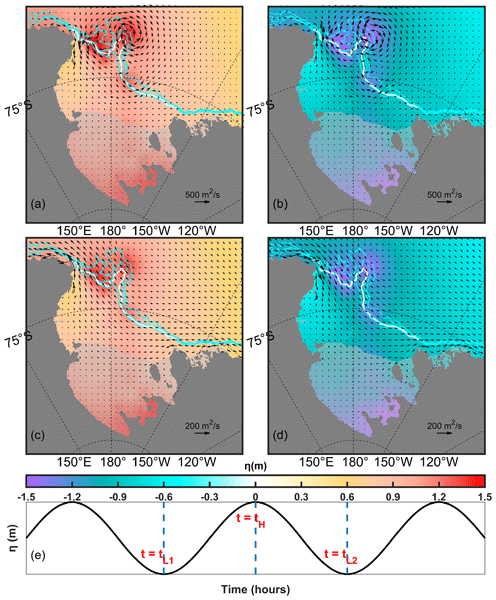
Yue Xia, Hengling Leng, Zhaomin Wang, Craig Stevens, Chengyan Liu, Liangjun Yan, Xianxian Han, and Dake Chen
Ocean Sci., 22, 3145–3164, https://doi.org/10.5194/os-22-3145-2026, https://doi.org/10.5194/os-22-3145-2026, 2026
Short summary
Short summary
Around Antarctica, tides strongly influence ice shelves through both dynamic and thermodynamic processes, and also help form dense bottom water that drives global ocean circulation. Using a regional model of the Ross Sea, we identified three eddy-like structures along the slope that control local water and heat transport, which potentially contributes to ice shelf melting.
Hang Wang, Hu Yang, Xiaoxu Shi, Jiping Liu, Gerrit Lohmann, Jiawang Wu, Jun Tian, Francisco W. Cruz, Jianbo Cheng, and Dake Chen
EGUsphere, https://doi.org/10.5194/egusphere-2026-5495, https://doi.org/10.5194/egusphere-2026-5495, 2026
This preprint is open for discussion and under review for Climate of the Past (CP).
Short summary
Short summary
Geological records of past Saharan climate are often incomplete and difficult to date, while long climate simulations require extensive computing. We therefore developed an efficient empirical model from 30 climate simulations and records of Earth's orbit, carbon dioxide and sea level. It provides a practical way to study long-term Saharan climate change and can guide future simulations, field sampling and the dating of geological and archaeological records.
An Yi, Jiping Liu, Ian Renfrew, Chaoyuan Yang, Changming Dong, Xiangzhou Song, and Qinghua Yang
Earth Syst. Sci. Data Discuss., https://doi.org/10.5194/essd-2026-476, https://doi.org/10.5194/essd-2026-476, 2026
Preprint under review for ESSD
Short summary
Short summary
This dataset quantifies the critical but overlooked role of sea spray in Southern Ocean air-sea heat exchange. We present a new gridded dataset of spray-mediated latent and sensible heat fluxes incorporating a full spray microphysical model, where spray generation depends on wind and wave states. Results show spray can double turbulent heat fluxes during extreme cyclones compared to bulk algorithms. This data is vital for understanding the Southern Ocean's impact on the global energy budget.
Xiaoxu Shi, Xiya Liu, Jiping Liu, Martin Werner, Hu Yang, Francisco W. Cruz, Chaoyuan Yang, and Gerrit Lohmann
EGUsphere, https://doi.org/10.5194/egusphere-2026-3894, https://doi.org/10.5194/egusphere-2026-3894, 2026
This preprint is open for discussion and under review for Climate of the Past (CP).
Short summary
Short summary
Cave stalagmites record the oxygen isotope of past rainfall and are used to reconstruct how monsoons changed, but due to the complexity of isotope impacting factors, what these records tell us is debated. We performed a 8300-year simulation with an isotope-enabled climate model, and show that rainfall amount is the key stable driver across global monsoons, while temperature and moisture pathways vary with region and time. Single-site records are noisy, but regional averages recover the signal.
Fengguan Gu, Changwei Liu, Bo Han, Qinghua Yang, and Jiping Liu
EGUsphere, https://doi.org/10.5194/egusphere-2026-2179, https://doi.org/10.5194/egusphere-2026-2179, 2026
Short summary
Short summary
Snow strongly affects how sea ice grows and melts by insulating the ice and reflecting sunlight. Using observations from a year-long Arctic expedition, we evaluated how models represent snow movement by wind. We found that ignoring snow redistribution leads to too much snow, while improved methods better match observations. Adjusting key parameters further improves results. This work helps make sea ice models more accurate and reliable for climate studies.
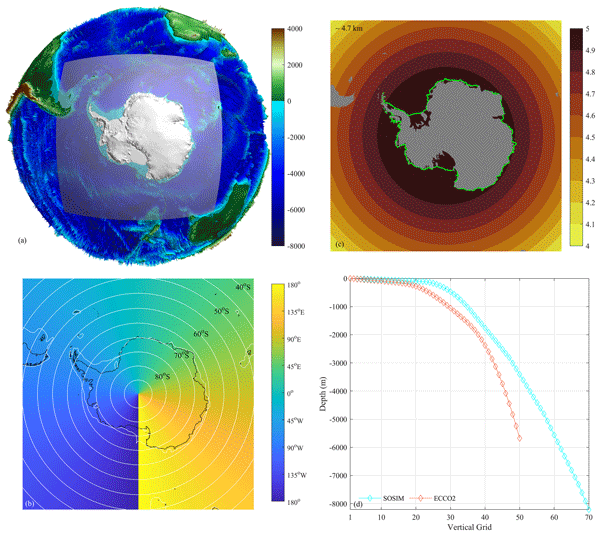
Chengyan Liu, Zhaomin Wang, Dake Chen, Xianxian Han, Hengling Leng, Xi Liang, Liangjun Yan, Xiang Li, Craig Stevens, Andrew McC. Hogg, Kazuya Kusahara, Kaihe Yamazaki, Kay I. Ohshima, Meng Zhou, Xiao Cheng, Dongxiao Wang, Changming Dong, Jiping Liu, Qinghua Yang, Xichen Li, Ruibo Lei, Minghu Ding, Zhaoru Zhang, Dujuan Kang, Di Qi, Tongya Liu, Jihai Dong, Lu An, Ru Chen, Tong Zhang, Xiaoming Hu, Bo Han, Haibo Bi, Qi Shu, Longjiang Mu, Shiming Xu, Hu Yang, Hailong Liu, Tingfeng Dou, Zhixuan Feng, Lei Zheng, Xueyuan Tang, Guitao Shi, Yongqing Cai, Bingrui Li, Yang Wu, Xia Lin, Wenjin Sun, Yu Liu, Kai Yu, Yu Zhang, Weizeng Shao, Xiaoyu Wang, Shaojun Zheng, Chengyi Yuan, Chunxia Zhou, Jian Liu, Yang Liu, Yue Xia, Xiaoyu Pan, Jiabao Zeng, Kechen Liu, Jiahao Fan, Chen Cheng, and Qi Li
Geosci. Model Dev., 19, 2985–3033, https://doi.org/10.5194/gmd-19-2985-2026, https://doi.org/10.5194/gmd-19-2985-2026, 2026
Short summary
Short summary
We developed a high-resolution computer model to simulate how the ocean, sea ice, and ice shelves interact around Antarctica. This helps us understand their critical role in global climate and sea-level rise. Our model successfully captures essential features like major currents and seasonal ice changes. Despite some remaining biases, it provides a useful tool for predicting future changes in this vital and rapidly evolving region.
Chao-Yuan Yang, Fengguan Gu, Jiping Liu, Annette Rinke, Hu Yang, and Xiaoxu Shi
EGUsphere, https://doi.org/10.5194/egusphere-2026-362, https://doi.org/10.5194/egusphere-2026-362, 2026
Short summary
Short summary
Accurately exchanging energy between the atmosphere and the ocean-ice systems through surface heat fluxes is crucial for climate modelling. We present an improved version of Coupled Arctic Prediction System (CAPS) by revising flux coupling for conservation of heat. Our results show that the model with improved flux coupling can better simulate sea ice conditions during the period of Multidisciplinary drifting Observatory for the Study of Arctic Climate (MOSAiC).
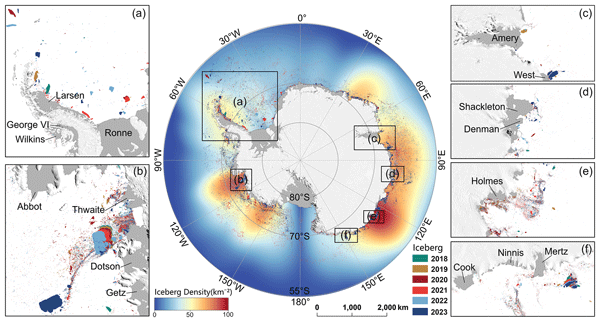
Zilong Chen, Xuying Liu, Zhenfu Guan, Teng Li, Xiao Cheng, Tian Li, Yan Liu, Qi Liang, Lei Zheng, and Jiping Liu
Earth Syst. Sci. Data, 18, 147–166, https://doi.org/10.5194/essd-18-147-2026, https://doi.org/10.5194/essd-18-147-2026, 2026
Short summary
Short summary
Our study uses Google Earth Engine to create a dataset of Antarctic icebergs in the Southern Ocean (south of 55° S) from October 2018 to 2023. The dataset includes icebergs larger than 0.04 km², with details on their locations, sizes, and shapes. It shows significant changes in iceberg number and area, mainly driven by major ice shelf calving events – especially in the Weddell Sea. This resource fills key gaps in understanding iceberg impacts on the ocean and climate.
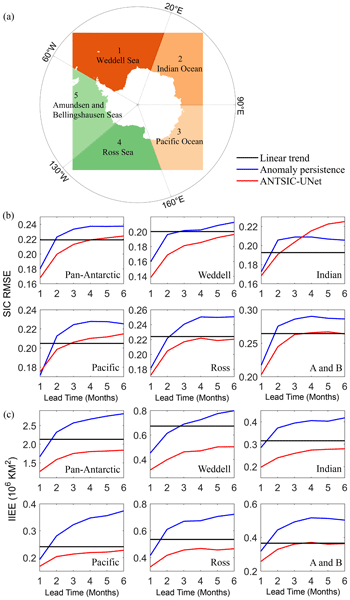
Ziying Yang, Jiping Liu, Mirong Song, Yongyun Hu, Qinghua Yang, Ke Fan, Rune Grand Graversen, and Lu Zhou
The Cryosphere, 19, 6381–6402, https://doi.org/10.5194/tc-19-6381-2025, https://doi.org/10.5194/tc-19-6381-2025, 2025
Short summary
Short summary
Antarctic sea ice has changed rapidly in recent years. Here we developed a deep learning model trained by multiple climate variables for extended seasonal Antarctic sea ice prediction. Our model shows high predictive skills up to 6 months in advance, particularly in predicting extreme events. It also shows skillful predictions at the sea ice edge and year-to-year sea ice changes. Variable importance analyses suggest what variables are more important for prediction at different lead times.

Chenhui Ning, Shiming Xu, Yan Zhang, Xuantong Wang, Zhihao Fan, and Jiping Liu
Geosci. Model Dev., 17, 6847–6866, https://doi.org/10.5194/gmd-17-6847-2024, https://doi.org/10.5194/gmd-17-6847-2024, 2024
Short summary
Short summary
Sea ice models are mainly based on non-moving structured grids, which is different from buoy measurements that follow the ice drift. To facilitate Lagrangian analysis, we introduce online tracking of sea ice in Community Ice CodE (CICE). We validate the sea ice tracking with buoys and evaluate the sea ice deformation in high-resolution simulations, which show multi-fractal characteristics. The source code is openly available and can be used in various scientific and operational applications.
Chao-Yuan Yang, Jiping Liu, and Dake Chen
The Cryosphere, 18, 1215–1239, https://doi.org/10.5194/tc-18-1215-2024, https://doi.org/10.5194/tc-18-1215-2024, 2024
Short summary
Short summary
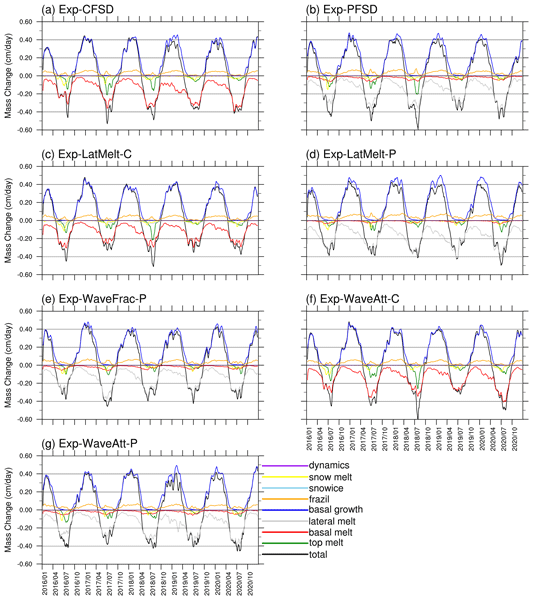
We present a new atmosphere–ocean–wave–sea ice coupled model to study the influences of ocean waves on Arctic sea ice simulation. Our results show (1) smaller ice-floe size with wave breaking increases ice melt, (2) the responses in the atmosphere and ocean to smaller floe size partially reduce the effect of the enhanced ice melt, (3) the limited oceanic energy is a strong constraint for ice melt enhancement, and (4) ocean waves can indirectly affect sea ice through the atmosphere and the ocean.
Xiaoxu Shi, Martin Werner, Hu Yang, Roberta D'Agostino, Jiping Liu, Chaoyuan Yang, and Gerrit Lohmann
Clim. Past, 19, 2157–2175, https://doi.org/10.5194/cp-19-2157-2023, https://doi.org/10.5194/cp-19-2157-2023, 2023
Short summary
Short summary
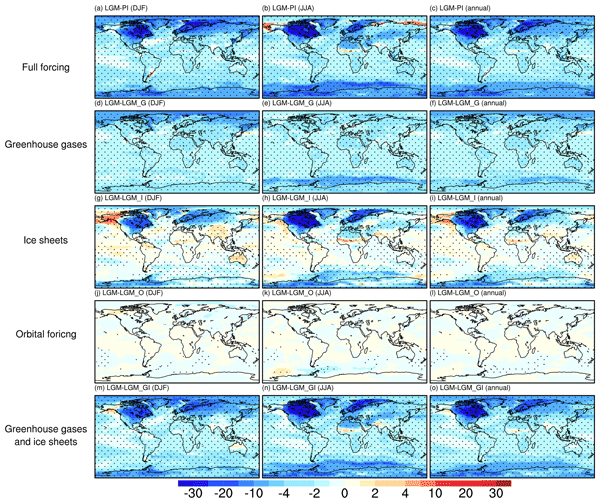
The Last Glacial Maximum (LGM) marks the most recent extremely cold and dry time period of our planet. Using AWI-ESM, we quantify the relative importance of Earth's orbit, greenhouse gases (GHG) and ice sheets (IS) in determining the LGM climate. Our results suggest that both GHG and IS play important roles in shaping the LGM temperature. Continental ice sheets exert a major control on precipitation, atmospheric dynamics, and the intensity of El Niño–Southern Oscillation.
Cited articles
Azaneu, M., Kerr, R., and Mata, M. M.: Assessment of the representation of Antarctic Bottom Water properties in the ECCO2 reanalysis, Ocean Sci., 10, 923–946, https://doi.org/10.5194/os-10-923-2014, 2014.
Boucher, O., Denvil, S., Levavasseur, G., Cozic, A., Caubel, A., Foujols, M.-A., Meurdesoif, Y., Cadule, P., Devilliers, M., Ghattas, J., Lebas, N., Lurton, T., Mellul, L., Musat, I., Mignot, J., and Cheruy, F.: IPSL IPSL-CM6A-LR model output prepared for CMIP6 CMIP historical, Earth System Grid Federation [data set], https://doi.org/10.22033/ESGF/CMIP6.5195, 2018.
Burke, A. and Robinson, L. F.: The Southern Ocean's role in carbon exchange during the last deglaciation, Science, 335, 557–561, https://doi.org/10.1126/science.1208163, 2012.
Chassignet, E. P. and Xu, X.: On the importance of high resolution in large-scale ocean models, Adv. Atmos. Sci., 38, 1621–1634, https://doi.org/10.1007/s00376-021-0385-7, 2021.
Chen, S., Liu, J., and Han, X.: Code and processed data for “Current status of ocean observation, ensemble reanalysis and CMIP6 models in describing Antarctic Bottom Water”, Zenodo [data set], https://doi.org/10.5281/zenodo.21466692, 2026.
Copernicus Marine Service: Global Ocean Ensemble Physics Reanalysis, Mercator Ocean International [data set], https://doi.org/10.48670/moi-00024, 2023.
Danabasoglu, G.: NCAR CESM2 model output prepared for CMIP6 CMIP historical, Earth System Grid Federation [data set], https://doi.org/10.22033/ESGF/CMIP6.7627, 2019.
Gordon, A. L., Huber, B. A., Hellmer, H. H., and Ffield, A.: Deep and bottom water of the Weddell Sea's western rim, Science, 262, 95–97, https://doi.org/10.1126/science.262.5130.95, 1993.
Gouretski, V. and Koltermann, K. P.: How much is the ocean really warming?, Geophys. Res. Lett., 34, https://doi.org/10.1029/2006GL027834, 2007.
Gunn, K. L., Rintoul, S. R., England, M. H., and Bowen, M. M.: Recent reduced abyssal overturning and ventilation in the Australian Antarctic Basin, Nat. Clim. Change, 13, 537–544, https://doi.org/10.1038/s41558-023-01667-8, 2023.
Han, X., Stewart, A. L., Chen, D., Janout, M., Liu, X., Wang, Z., and Gordon, A. L.: Circum-Antarctic bottom water formation mediated by tides and topographic waves, Nat. Commun., 15, 2049, https://doi.org/10.1038/s41467-024-46086-1, 2024.
Han, X., Stewart, A. L., Wang, Z., Yang, Q., Liu, C., and Chen, D.: Tidal effects on Antarctic Bottom Water formation in a changing climate, J. Geophys. Res.-Oceans, 130, https://doi.org/10.1029/2025JC022443, 2025.
Heuzé, C.: Antarctic Bottom Water and North Atlantic Deep Water in CMIP6 models, Ocean Sci., 17, 59–90, https://doi.org/10.5194/os-17-59-2021, 2021.
Hewitt, H. T., Roberts, M., Mathiot, P., Biastoch, A., Blockley, E., Chassignet, E. P., Fox-Kemper, B., Hyder, P., Marshall, D. P., Popova, E., Tréguier, A.-M., Zanna, L., Yool, A., Yu, Y., Beadling, R., Bell, M., Kuhlbrodt, T., Arsouze, T., Bellucci, A., Castruccio, F., Gan, B., Putrasahan, D., Roberts, C. D., Van Roekel, L., and Zhang, Q.: Resolving and parameterising the ocean mesoscale in Earth system models, Curr. Clim. Change Rep., 6, 137–152, https://doi.org/10.1007/s40641-020-00164-w, 2020.
Huang, W.: THU CIESM model output prepared for CMIP6 CMIP historical, Earth System Grid Federation [data set], https://doi.org/10.22033/ESGF/CMIP6.8843, 2019.
Hurrell, J. W., Holland, M. M., Gent, P. R., Ghan, S., Kay, J. E., Kushner, P. J., Lamarque, J.-F., Large, W. G., Lawrence, D. M., Lindsay, K., Lipscomb, W. H., Long, M. C., Mahowald, N. M., Marsh, D. R., Neale, R. B., Rasch, P. J., Vavrus, S. J., Vertenstein, M., Bader, D. C., Collins, W. D., Hack, J. J., Kiehl, J., and Marshall, S.: NCAR CESM1-CAM5-SE-HR model output prepared for CMIP6 HighResMIP, Earth System Grid Federation [data set], https://doi.org/10.22033/ESGF/CMIP6.14220, 2020a.
Hurrell, J. W., Holland, M. M., Gent, P. R., Ghan, S., Kay, J. E., Kushner, P. J., Lamarque, J.-F., Large, W. G., Lawrence, D. M., Lindsay, K., Lipscomb, W. H., Long, M. C., Mahowald, N. M., Marsh, D. R., Neale, R. B., Rasch, P. J., Vavrus, S. J., Vertenstein, M., Bader, D. C., Collins, W. D., Hack, J. J., Kiehl, J., and Marshall, S.: NCAR CESM1-CAM5-SE-LR model output prepared for CMIP6 HighResMIP hist-1950, Earth System Grid Federation [data set], https://doi.org/10.22033/ESGF/CMIP6.14295, 2020b.
Jackett, D. R. and McDougall, T. J.: Minimal adjustment of hydrographic profiles to achieve static stability, J. Atmos. Ocean. Tech., 12, 381–389, https://doi.org/10.1175/1520-0426(1995)012<0381:MAOHPT>2.0.CO;2, 1995.
Johnson, G. C., Purkey, S. G., and Toole, J. M.: Reduced Antarctic meridional overturning circulation reaches the North Atlantic Ocean, Geophys. Res. Lett., 35, https://doi.org/10.1029/2008GL035619, 2008.
Jullion, L., Naveira Garabato, A. C., Meredith, M. P., Holland, P. R., Courtois, P., and King, B. A.: Decadal freshening of the Antarctic Bottom Water exported from the Weddell Sea, J. Climate, 26, 8111–8125, https://doi.org/10.1175/JCLI-D-12-00765.1, 2013.
Kang, S. M., Putrasahan, D. A., Brizuela, N. G., Haak, H., Kröger, J., Marotzke, J., Stevens, B., and von Storch, J.-S.: Km-scale coupled simulation and model–observation SST trend discrepancy, Proc. Natl. Acad. Sci. USA, 123, https://doi.org/10.1073/pnas.2522161123, 2026.
Kobayashi, T.: Changes in Antarctic bottom water off the Wilkes Land coast in the Australian-Antarctic Basin, Deep Sea Res.-Pt. I, 195, 104040, https://doi.org/10.1016/j.dsr.2023.104040, 2023.
Köhl, A.: Evaluation of the GECCO2 ocean synthesis: transports of volume, heat and freshwater in the Atlantic, Q. J. Roy. Meteorol. Soc., 141, 166–181, https://doi.org/10.1002/qj.2347, 2015.
Lellouche, J.-M., Le Galloudec, O., Drévillon, M., Régnier, C., Greiner, E., Garric, G., Ferry, N., Desportes, C., Testut, C.-E., Bricaud, C., Bourdallé-Badie, R., Tranchant, B., Benkiran, M., Drillet, Y., Daudin, A., and De Nicola, C.: Evaluation of global monitoring and forecasting systems at Mercator Océan, Ocean Sci., 9, 57–81, https://doi.org/10.5194/os-9-57-2013, 2013.
Levitus, S., Antonov, J. I., Boyer, T. P., Locarnini, R. A., Garcia, H. E., and Mishonov, A. V.: Global ocean heat content 1955–2008 in light of recently revealed instrumentation problems, Geophys. Res. Lett., 36, https://doi.org/10.1029/2008GL037155, 2009.
Li, Q., England, M. H., Hogg, A. M. C., Rintoul, S. R., and Morrison, A. K.: Abyssal ocean overturning slowdown and warming driven by Antarctic meltwater, Nature, 615, 841–847, https://doi.org/10.1038/s41586-023-05762-w, 2023.
Locarnini, R. A., Mishonov, A. V., Baranova, O. K., Reagan, J. R., Boyer, T. P., Seidov, D., Wang, Z., Garcia, H. E., Bouchard, C., Cross, S. L., Paver, C. R., and Dukhovskoy, D.: World Ocean Atlas 2023, Volume 1: Temperature, edited by: Mishonov, A. V., NOAA Atlas NESDIS 89, 52 pp., https://doi.org/10.25923/54bh-1613, 2024.
Lorenz, S., Jungclaus, J., Schmidt, H., Haak, H., Reick, C., Schupfner, M., Wachsmann, F., Gayler, V., de Vrese, P., Raddatz, T., Mauritsen, T., von Storch, J.-S., Brovkin, V., Claussen, M., Crueger, T., Fiedler, S., Hagemann, S., Hohenegger, C., Jahns, T., Kinne, S., Kornblueh, L., Marotzke, J., Mikolajewicz, U., Modali, K., Müller, W., Nabel, J., Notz, D., Pincus, R., Pohlmann, H., Rast, S., Schnur, R., Schulzweida, U., Six, K., Stevens, B., Roeckner, E., Wieners, K.-H., Esch, M., Giorgetta, M., and Ilyina, T.: MPI-M ICON-ESM-LR model output prepared for CMIP6 CMIP historical, Earth System Grid Federation [data set], https://doi.org/10.22033/ESGF/CMIP6.6593, 2021.
Lovato, T. and Peano, D.: CMCC CMCC-CM2-SR5 model output prepared for CMIP6 CMIP historical, Earth System Grid Federation [data set], https://doi.org/10.22033/ESGF/CMIP6.3825, 2020.
MacLachlan, C., Arribas, A., Peterson, K. A., Maidens, A., Fereday, D., Scaife, A. A., Gordon, M., Vellinga, M., Williams, A., Comer, R. E., Camp, J., Xavier, P., and Madec, G.: Global Seasonal forecast system version 5 (GloSea5): a high-resolution seasonal forecast system, Q. J. Roy. Meteorol. Soc., 141, 1072–1084, https://doi.org/10.1002/qj.2396, 2015.
Marinov, I., Gnanadesikan, A., Toggweiler, J. R., and Sarmiento, J. L.: The Southern Ocean biogeochemical divide, Nature, 441, 964–967, https://doi.org/10.1038/nature04883, 2006.
Megann, A., Storkey, D., Aksenov, Y., Alderson, S., Calvert, D., Graham, T., Hyder, P., Siddorn, J., and Sinha, B.: GO5.0: the joint NERC–Met Office NEMO global ocean model for use in coupled and forced applications, Geosci. Model Dev., 7, 1069–1092, https://doi.org/10.5194/gmd-7-1069-2014, 2014.
Ohshima, K. I., Fukamachi, Y., Williams, G. D., Nihashi, S., Roquet, F., Kitade, Y., Tamura, T., Hirano, D., Herraiz-Borreguero, L., Field, I., Hindell, M., Aoki, S., and Wakatsuchi, M.: Antarctic Bottom Water production by intense sea-ice formation in the Cape Darnley polynya, Nat. Geosci., 6, 235–240, https://doi.org/10.1038/ngeo1738, 2013.
Orsi, A. H., Johnson, G. C., and Bullister, J. L.: Circulation, mixing, and production of Antarctic Bottom Water, Prog. Oceanogr., 43, 55–109, https://doi.org/10.1016/S0079-6611(99)00004-X, 1999.
Pardo, P. C., Pérez, F. F., Velo, A., and Gilcoto, M.: Water masses distribution in the Southern Ocean: Improvement of an extended OMP (eOMP) analysis, Prog. Oceanogr., 103, 92–105, https://doi.org/10.1016/j.pocean.2012.06.002, 2012.
Portela, E., Rintoul, S. R., Bestley, S., Herraiz-Borreguero, L., van Wijk, E., McMahon, C. R., Roquet, F., and Hindell, M.: Seasonal transformation and spatial variability of water masses within MacKenzie Polynya, Prydz Bay, J. Geophys. Res.-Oceans, 126, https://doi.org/10.1029/2021JC017748, 2021.
Portela, E., Rintoul, S. R., Herraiz-Borreguero, L., Roquet, F., Bestley, S., van Wijk, E., Tamura, T., McMahon, C. R., Guinet, C., Harcourt, R., and Hindell, M. A.: Controls on dense shelf water formation in four East Antarctic polynyas, J. Geophys. Res.-Oceans, 127, https://doi.org/10.1029/2022JC018804, 2022.
Purkey, S. G. and Johnson, G. C.: Warming of global abyssal and deep Southern Ocean waters between the 1990s and 2000s: Contributions to global heat and sea level rise budgets, J. Climate, 23, 6336–6351, https://doi.org/10.1175/2010JCLI3682.1, 2010.
Purkey, S. G. and Johnson, G. C.: Antarctic Bottom Water warming and freshening: Contributions to sea level rise, ocean freshwater budgets, and global heat gain, J. Climate, 26, 6105–6122, https://doi.org/10.1175/JCLI-D-12-00834.1, 2013.
Purkey, S. G., Smethie, W. M., Gebbie, G., Gordon, A. L., Sonnerup, R. E., Warner, M. J., and Bullister, J. L.: A synoptic view of the ventilation and circulation of Antarctic Bottom Water from chlorofluorocarbons and natural tracers, Annu. Rev. Mar. Sci., 10, 503–527, https://doi.org/10.1146/annurev-marine-121916-063414, 2018.
Rackow, T., Pedruzo-Bagazgoitia, X., Becker, T., Milinski, S., Sandu, I., Aguridan, R., Bechtold, P., Beyer, S., Bidlot, J., Boussetta, S., Deconinck, W., Diamantakis, M., Dueben, P., Dutra, E., Forbes, R., Ghosh, R., Goessling, H. F., Hadade, I., Hegewald, J., Jung, T., Keeley, S., Kluft, L., Koldunov, N., Koldunov, A., Kölling, T., Kousal, J., Kühnlein, C., Maciel, P., Mogensen, K., Quintino, T., Polichtchouk, I., Reuter, B., Sármány, D., Scholz, P., Sidorenko, D., Streffing, J., Sützl, B., Takasuka, D., Tietsche, S., Valentini, M., Vannière, B., Wedi, N., Zampieri, L., and Ziemen, F.: Multi-year simulations at kilometre scale with the Integrated Forecasting System coupled to FESOM2.5 and NEMOv3.4, Geosci. Model Dev., 18, 33–69, https://doi.org/10.5194/gmd-18-33-2025, 2025.
Reagan, J. R., Boyer, T P., García, H. E., Locarnini, R. A., Baranova, O. K., Bouchard, C., Cross, S. L., Mishonov, A. V., Paver, C. R., Seidov, D., Wang, Z., and Dukhovskoy, D.: World Ocean Atlas 2023, NOAA National Centers for Environmental Information [data set], https://doi.org/10.25921/va26-hv25, 2023.
Reagan, J. R., Seidov, D., Wang, Z., Dukhovskoy, D., Boyer, T. P., Locarnini, R. A., Baranova, O. K., Mishonov, A. V., Garcia, H. E., Bouchard, C., Cross, S. L., and Paver, C. R.: World Ocean Atlas 2023, Volume 2: Salinity, edited by: Mishonov, A. V., NOAA Atlas NESDIS 90, 51 pp., https://doi.org/10.25923/70qt-9574, 2024.
Rintoul, S. R.: The global influence of localized dynamics in the Southern Ocean, Nature, 558, 209–218, https://doi.org/10.1038/s41586-018-0182-3, 2018.
Schmidt, C., Morrison, A. K., and England, M. H.: Wind- and sea-ice-driven interannual variability of Antarctic Bottom Water formation, J. Geophys. Res.-Oceans, 128, https://doi.org/10.1029/2023JC019774, 2023.
Scoccimarro, E., Bellucci, A., and Peano, D.: CMCC CMCC-CM2-HR4 model output prepared for CMIP6 CMIP historical, Earth System Grid Federation [data set], https://doi.org/10.22033/ESGF/CMIP6.3823, 2020.
Semmler, T., Danilov, S., Rackow, T., Sidorenko, D., Hegewald, J., Sein, D., Wang, Q., and Jung, T.: AWI AWI-CM1.1HR model output prepared for CMIP6 HighResMIP hist-1950, Earth System Grid Federation [data set], https://doi.org/10.22033/ESGF/CMIP6.2676, 2017.
Semmler, T., Danilov, S., Rackow, T., Sidorenko, D., Barbi, D., Hegewald, J., Sein, D., Wang, Q., and Jung, T.: AWI AWI-CM1.1MR model output prepared for CMIP6 CMIP historical, Earth System Grid Federation [data set], https://doi.org/10.22033/ESGF/CMIP6.2686, 2018.
Silvano, A., Rintoul, S. R., Peña-Molino, B., Hobbs, W. R., van Wijk, E., Aoki, S., Tamura, T., and Williams, G. D.: Freshening by glacial meltwater enhances melting of ice shelves and reduces formation of Antarctic Bottom Water, Sci. Adv., 4, https://doi.org/10.1126/sciadv.aap9467, 2018.
Silvano, A., Foppert, A., Rintoul, S. R., Holland, P. R., Tamura, T., Kimura, N., Castagno, P., Falco, P., Budillon, G., Haumann, F. A., Naveira Garabato, A. C., and Macdonald, A. M.: Recent recovery of Antarctic Bottom Water formation in the Ross Sea driven by climate anomalies, Nat. Geosci., 13, 780–786, https://doi.org/10.1038/s41561-020-00655-3, 2020.
Silvano, A., Purkey, S., Gordon, A. L., Castagno, P., Stewart, A. L., Rintoul, S. R., Foppert, A., Gunn, K. L., Herraiz-Borreguero, L., Aoki, S., Nakayama, Y., Naveira Garabato, A. C., Spingys, C., Akhoudas, C. H., Sallée, J.-B., de Lavergne, C., Abrahamsen, E. P., Meijers, A. J. S., Meredith, M. P., Zhou, S., Tamura, T., Yamazaki, K., Ohshima, K. I., Falco, P., Budillon, G., Hattermann, T., Janout, M. A., Llanillo, P., Bowen, M. M., Darelius, E., Østerhus, S., Nicholls, K. W., Stevens, C., Fernandez, D., Cimoli, L., Jacobs, S. S., Morrison, A. K., Hogg, A. M., Haumann, F. A., Mashayek, A., Wang, Z., Kerr, R., Williams, G. D., and Lee, W. S.: Observing Antarctic Bottom Water in the Southern Ocean, Front. Mar. Sci., 10, 1221701, https://doi.org/10.3389/fmars.2023.1221701, 2023.
Song, Z., Qiao, F., Bao, Y., Shu, Q., Song, Y., and Yang, X.: FIO-QLNM FIO-ESM2.0 model output prepared for CMIP6 CMIP historical, Earth System Grid Federation [data set], https://doi.org/10.22033/ESGF/CMIP6.9199, 2019.
Storto, A. and Masina, S.: C-GLORSv5: an improved multipurpose global ocean eddy-permitting physical reanalysis, Earth Syst. Sci. Data, 8, 679–696, https://doi.org/10.5194/essd-8-679-2016, 2016.
Swart, N. C., Cole, J. N. S., Kharin, V. V., Lazare, M., Scinocca, J. F., Gillett, N. P., Anstey, J., Arora, V., Christian, J. R., Jiao, Y., Lee, W. G., Majaess, F., Saenko, O. A., Seiler, C., Seinen, C., Shao, A., Solheim, L., von Salzen, K., Yang, D., Winter, B., and Sigmond, M.: CCCma CanESM5 model output prepared for CMIP6 CMIP historical, Earth System Grid Federation [data set], https://doi.org/10.22033/ESGF/CMIP6.3610, 2019.
Uotila, P., Goosse, H., Haines, K., Chevallier, M., Barthélemy, A., Bricaud, C., Carton, J., Fučkar, N., Garric, G., Iovino, D., Kauker, F., Korhonen, M., Lien, V. S., Marnela, M., Massonnet, F., Mignac, D., Peterson, K. A., Sadikni, R., Shi, L., Tietsche, S., Toyoda, T., Xie, J., and Zhang, Z.: An assessment of ten ocean reanalyses in the polar regions, Clim. Dynam., 52, 1613–1650, https://doi.org/10.1007/s00382-018-4242-z, 2019.
van Wijk, E. M. and Rintoul, S. R.: Freshening drives contraction of Antarctic Bottom Water in the Australian Antarctic Basin, Geophys. Res. Lett., 41, 1657–1664, https://doi.org/10.1002/2013GL058921, 2014.
Voldoire, A.: CMIP6 simulations of the CNRM-CERFACS based on CNRM-CM6-1 model for CMIP experiment historical, Earth System Grid Federation [data set], https://doi.org/10.22033/ESGF/CMIP6.4066, 2018.
Voldoire, A.: CNRM-CERFACS CNRM-CM6-1-HR model output prepared for CMIP6 CMIP historical, Earth System Grid Federation [data set], https://doi.org/10.22033/ESGF/CMIP6.4067, 2019.
Williams, G. D., Bindoff, N. L., Marsland, S. J., and Rintoul, S. R.: Formation and export of dense shelf water from the Adélie Depression, East Antarctica, J. Geophys. Res.-Oceans, 113, https://doi.org/10.1029/2007JC004346, 2008.
Williams, G. D., Herraiz-Borreguero, L., Roquet, F., Tamura, T., Ohshima, K. I., Fukamachi, Y., Fraser, A. D., Gao, L., Chen, H., McMahon, C. R., Harcourt, R., and Hindell, M.: The suppression of Antarctic bottom water formation by melting ice shelves in Prydz Bay, Nat. Commun., 7, 12577, https://doi.org/10.1038/ncomms12577, 2016.
Yu, Y.: CAS FGOALS-f3-H model output prepared for CMIP6 HighResMIP hist-1950, Earth System Grid Federation [data set], https://doi.org/10.22033/ESGF/CMIP6.3316, 2020.
Zhang, S., Wu, Y., Cai, W. J., Cai, W., Feely, R. A., Wang, Z., Tanhua, T., Wang, Y., Liu, C., Li, X., Yang, Q., Ding, M., Xu, Z., Kerr, R., Luo, Y., Cheng, X., Chen, L., and Qi, D.: Transport of anthropogenic carbon from the Antarctic shelf to the deep Southern Ocean triggers acidification, Global Biogeochem. Cy., 37, https://doi.org/10.1029/2023GB007921, 2023.
Zhou, S., Meijers, A. J. S., Meredith, M. P., Abrahamsen, E. P., Holland, P. R., Silvano, A., Sallée, J.-B., and Østerhus, S.: Slowdown of Antarctic Bottom Water export driven by climatic wind and sea-ice changes, Nat. Clim. Change, 13, 701–709, https://doi.org/10.1038/s41558-023-01695-4, 2023.
Ziehn, T., Chamberlain, M., Lenton, A., Law, R., Bodman, R., Dix, M., Wang, Y., Dobrohotoff, P., Srbinovsky, J., Stevens, L., Vohralik, P., Mackallah, C., Sullivan, A., O'Farrell, S., and Druken, K.: CSIRO ACCESS-ESM1.5 model output prepared for CMIP6 CMIP historical, Earth System Grid Federation [data set], https://doi.org/10.22033/ESGF/CMIP6.4272, 2019.
Zuo, H., Balmaseda, M. A., Tietsche, S., Mogensen, K., and Mayer, M.: The ECMWF operational ensemble reanalysis–analysis system for ocean and sea ice: A description of the system and assessment, Ocean Sci., 15, 779–808, https://doi.org/10.5194/os-15-779-2019, 2019.
Short summary
Antarctic Bottom Water influences global ocean circulation, heat storage, and carbon uptake. We compared an observational atlas, an ocean reconstruction, and 16 climate models by separating this water into three regional types. The reconstruction matched the observed large-scale patterns well, but many climate models showed substantial regional temperature and salinity errors. Correcting average biases improved some models, although errors in spatial structure remained.
Antarctic Bottom Water influences global ocean circulation, heat storage, and carbon uptake. We...


