
Articles | Volume 22, issue 4
https://doi.org/10.5194/os-22-2197-2026
© Author(s) 2026. This work is distributed under
the Creative Commons Attribution 4.0 License.
the Creative Commons Attribution 4.0 License.
https://doi.org/10.5194/os-22-2197-2026
© Author(s) 2026. This work is distributed under
the Creative Commons Attribution 4.0 License.
the Creative Commons Attribution 4.0 License.
Research article
| 
22 Jul 2026
Research article |
| 22 Jul 2026
| 22 Jul 2026
Linking large-scale climate modes to local wave climate and storm surge: insights from a weather typing approach
Zehua Zhong
CORRESPONDING AUTHOR

School of Ocean and Earth Science, University of Southampton, European Way, Southampton, SO14 3ZH, UK
Hachem Kassem
School of Ocean and Earth Science, University of Southampton, European Way, Southampton, SO14 3ZH, UK
Ivan D. Haigh
School of Ocean and Earth Science, University of Southampton, European Way, Southampton, SO14 3ZH, UK
Department of Civil, Environmental and Construction Engineering, University of Central Florida, Orlando, FL 32816, USA
Center for Integrated Coastal Research, University of Central Florida, Orlando, FL 32816, USA
Dafni E. Sifnioti
EDF Research & Development UK Centre, 11 Bressenden Place, London, SW1E 5BY, UK
Ye Liu
HR Wallingford, Howbery Park, Wallingford, OX10 8BA, UK
Paula Camus
Departamento de Matemática Aplicada y Ciencias de la Computación (MACC), Universidad de Cantabria, 39005 Santander, Spain
School of Ocean and Earth Science, University of Southampton, European Way, Southampton, SO14 3ZH, UK
Related authors
No articles found.
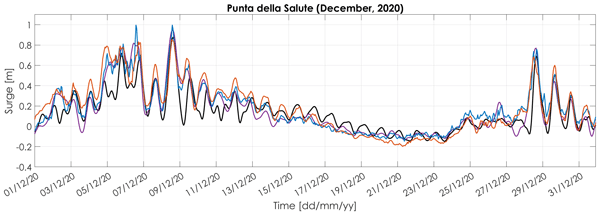
Rodrigo Campos-Caba, Paula Camus, Andrea Mazzino, Michalis Vousdoukas, Massimo Tondello, Ivan Federico, Salvatore Causio, and Lorenzo Mentaschi
Nat. Hazards Earth Syst. Sci., 26, 3683–3706, https://doi.org/10.5194/nhess-26-3683-2026, https://doi.org/10.5194/nhess-26-3683-2026, 2026
Short summary
Short summary
We assess the ability of machine learning emulators, from Multivariate Linear Regression to Long Short-Term Memory (LSTM) networks, to reproduce storm surge dynamics in the northern Adriatic Sea. Using the corrected Mean Absolute Deviation squared (MADc²) loss function, we demonstrate that data-driven models can match high-resolution hydrodynamic simulations in representing extreme surge events with greatly reduced computational cost.
Hamish Wilkinson, Paul Bates, Chris Lucas, Niall Quinn, Ivan D. Haigh, Tom Collings, and Peter Watson
EGUsphere, https://doi.org/10.5194/egusphere-2026-781, https://doi.org/10.5194/egusphere-2026-781, 2026
Short summary
Short summary
Climate change increases storm surge risks, but traditional hydrodynamic models are too expensive for full risk assessment. Accordingly, we have developed a machine learning emulator 1500 times faster, with high accuracy (R2 = 0.91). Feature engineering is used to improve performance and increase generalisability across regions. Shapley values are used to interpret predictions, ensuring the model respects physical laws. This paper presents a robust framework for understanding storm surge risk.
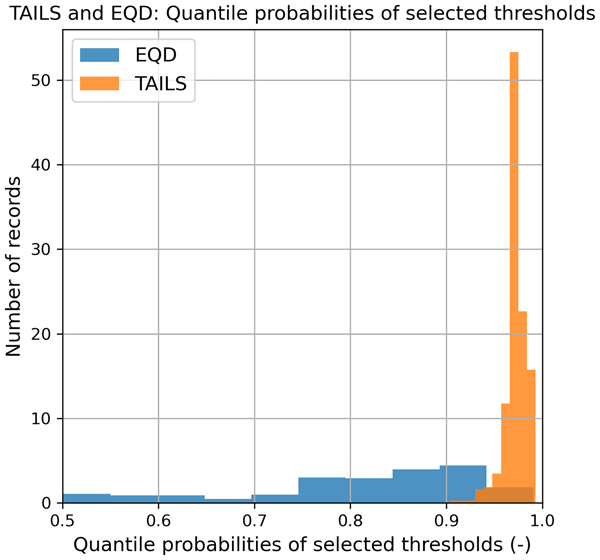
Thomas P. Collings, Callum J. R. Murphy-Barltrop, Conor Murphy, Ivan D. Haigh, Paul D. Bates, and Niall D. Quinn
Nat. Hazards Earth Syst. Sci., 25, 4545–4562, https://doi.org/10.5194/nhess-25-4545-2025, https://doi.org/10.5194/nhess-25-4545-2025, 2025
Short summary
Short summary
Determining the threshold above which events are considered extreme is an important consideration for many modelling procedures. We propose an extension of an existing data-driven method for automatic threshold selection. We test our approach on tide gauge records, and show that it outperforms existing techniques. This helps improve estimates of extreme sea levels, and we hope other researchers will use this method for other natural hazards.
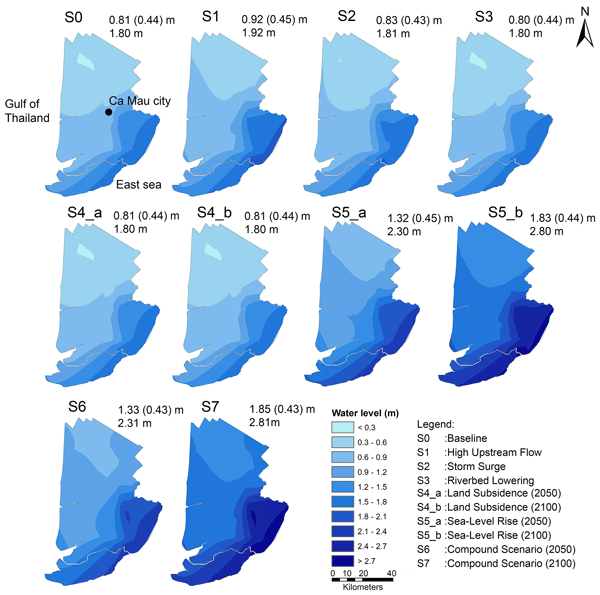
Hung Nghia Nguyen, Quan Quan Le, Viet Dung Nguyen, Hai Dac Do, Hung Duc Pham, Tan Hong Cao, Toan Quang To, Melissa Wood, and Ivan D. Haigh
Nat. Hazards Earth Syst. Sci., 25, 4227–4246, https://doi.org/10.5194/nhess-25-4227-2025, https://doi.org/10.5194/nhess-25-4227-2025, 2025
Short summary
Short summary
The paper examines the inundation process in one of the most climate-vulnerable regions of the Vietnamese Mekong Delta (The Ca Mau Peninsula), highlighting its key drivers and future impacts. This serves as a critical alert for decision-makers and stakeholders, emphasizing the need for strategic investments in infrastructure, adaptation measures, and impact mitigation to address flood risk.
Stephen E. Darby, Ivan D. Haigh, Melissa Wood, Bui Duong, Tien Le Thuy Du, Thao Phuong Bui, Justin Sheffield, Hal Voepel, and Joël J.-M. Hirschi
EGUsphere, https://doi.org/10.5194/egusphere-2025-3506, https://doi.org/10.5194/egusphere-2025-3506, 2025
Short summary
Short summary
We use model simulations to see what changes have been occurring to Mekong and Red River flows, 1970–2019, due to changes in tropical cyclone (TC)-linked precipitation. Results suggest that the highest river flows in multiple sub-catchments have been increasing over time, with coastal zones most intensely affected due to the combination of TC track and wet soils from prior rainfall. Climate change may exacerbate this TC-linked risk in the future making it a topic of strategic importance.
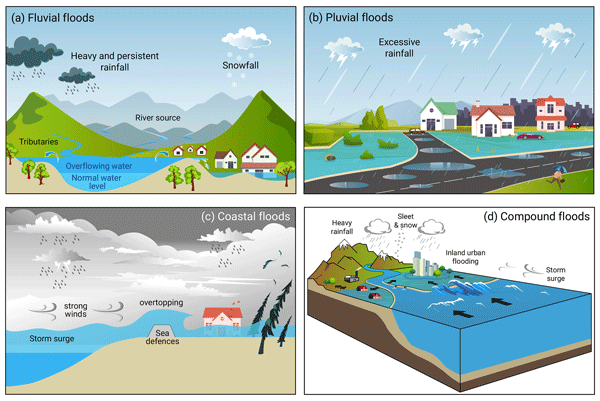
Joshua Green, Ivan D. Haigh, Niall Quinn, Jeff Neal, Thomas Wahl, Melissa Wood, Dirk Eilander, Marleen de Ruiter, Philip Ward, and Paula Camus
Nat. Hazards Earth Syst. Sci., 25, 747–816, https://doi.org/10.5194/nhess-25-747-2025, https://doi.org/10.5194/nhess-25-747-2025, 2025
Short summary
Short summary
Compound flooding, involving the combination or successive occurrence of two or more flood drivers, can amplify flood impacts in coastal/estuarine regions. This paper reviews the practices, trends, methodologies, applications, and findings of coastal compound flooding literature at regional to global scales. We explore the types of compound flood events, their mechanistic processes, and the range of terminology. Lastly, this review highlights knowledge gaps and implications for future practices.
Rodrigo Campos-Caba, Jacopo Alessandri, Paula Camus, Andrea Mazzino, Francesco Ferrari, Ivan Federico, Michalis Vousdoukas, Massimo Tondello, and Lorenzo Mentaschi
Ocean Sci., 20, 1513–1526, https://doi.org/10.5194/os-20-1513-2024, https://doi.org/10.5194/os-20-1513-2024, 2024
Short summary
Short summary
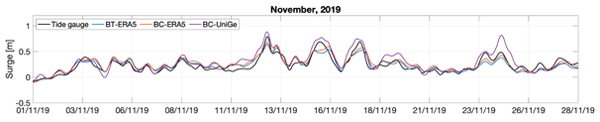
Here we show the development of high-resolution simulations of storm surge in the northern Adriatic Sea employing different atmospheric forcing data and physical configurations. Traditional metrics favor a simulation forced by a coarser database and employing a less sophisticated setup. Closer examination allows us to identify a baroclinic model forced by a high-resolution dataset as being better able to capture the variability and peak values of the storm surge.
Angélique Melet, Roderik van de Wal, Angel Amores, Arne Arns, Alisée A. Chaigneau, Irina Dinu, Ivan D. Haigh, Tim H. J. Hermans, Piero Lionello, Marta Marcos, H. E. Markus Meier, Benoit Meyssignac, Matthew D. Palmer, Ronja Reese, Matthew J. R. Simpson, and Aimée B. A. Slangen
State Planet, 3-slre1, 4, https://doi.org/10.5194/sp-3-slre1-4-2024, https://doi.org/10.5194/sp-3-slre1-4-2024, 2024
Short summary
Short summary
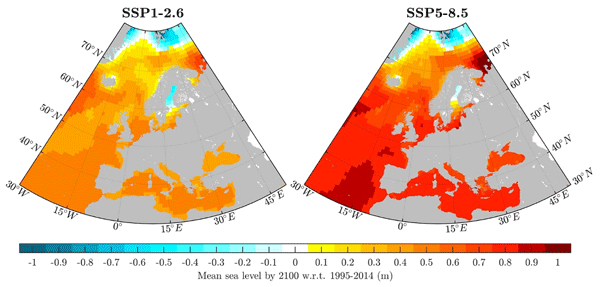
The EU Knowledge Hub on Sea Level Rise’s Assessment Report strives to synthesize the current scientific knowledge on sea level rise and its impacts across local, national, and EU scales to support evidence-based policy and decision-making, primarily targeting coastal areas. This paper complements IPCC reports by documenting the state of knowledge of observed and 21st century projected changes in mean and extreme sea levels with more regional information for EU seas as scoped with stakeholders.
Roderik van de Wal, Angélique Melet, Debora Bellafiore, Paula Camus, Christian Ferrarin, Gualbert Oude Essink, Ivan D. Haigh, Piero Lionello, Arjen Luijendijk, Alexandra Toimil, Joanna Staneva, and Michalis Vousdoukas
State Planet, 3-slre1, 5, https://doi.org/10.5194/sp-3-slre1-5-2024, https://doi.org/10.5194/sp-3-slre1-5-2024, 2024
Short summary
Short summary
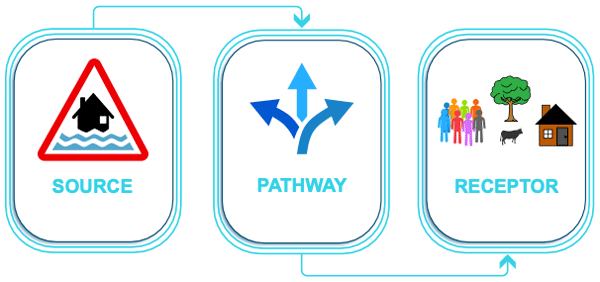
Sea level rise has major impacts in Europe, which vary from place to place and in time, depending on the source of the impacts. Flooding, erosion, and saltwater intrusion lead, via different pathways, to various consequences for coastal regions across Europe. This causes damage to assets, the environment, and people for all three categories of impacts discussed in this paper. The paper provides an overview of the various impacts in Europe.
Melissa Wood, Ivan D. Haigh, Quan Quan Le, Hung Nghia Nguyen, Hoang Ba Tran, Stephen E. Darby, Robert Marsh, Nikolaos Skliris, and Joël J.-M. Hirschi
Nat. Hazards Earth Syst. Sci., 24, 3627–3649, https://doi.org/10.5194/nhess-24-3627-2024, https://doi.org/10.5194/nhess-24-3627-2024, 2024
Short summary
Short summary
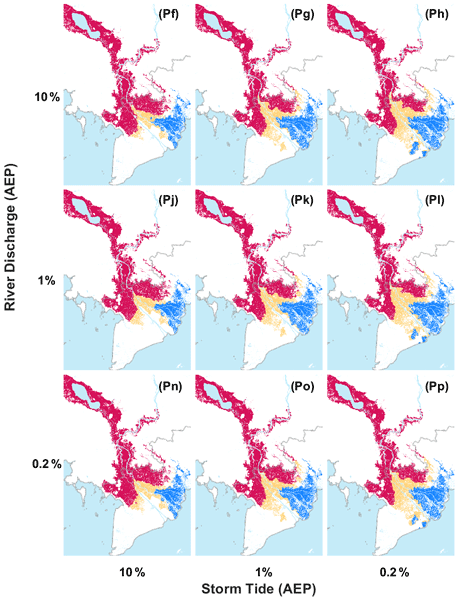
We look at how compound flooding from the combination of river flooding and storm tides (storm surge and astronomical tide) may be changing over time due to climate change, with a case study of the Mekong River delta. We found that future compound flooding has the potential to flood the region more extensively and be longer lasting than compound floods today. This is useful to know because it means managers of deltas such as the Mekong can assess options for improving existing flood defences.
Jun Yu Puah, Ivan D. Haigh, David Lallemant, Kyle Morgan, Dongju Peng, Masashi Watanabe, and Adam D. Switzer
Ocean Sci., 20, 1229–1246, https://doi.org/10.5194/os-20-1229-2024, https://doi.org/10.5194/os-20-1229-2024, 2024
Short summary
Short summary
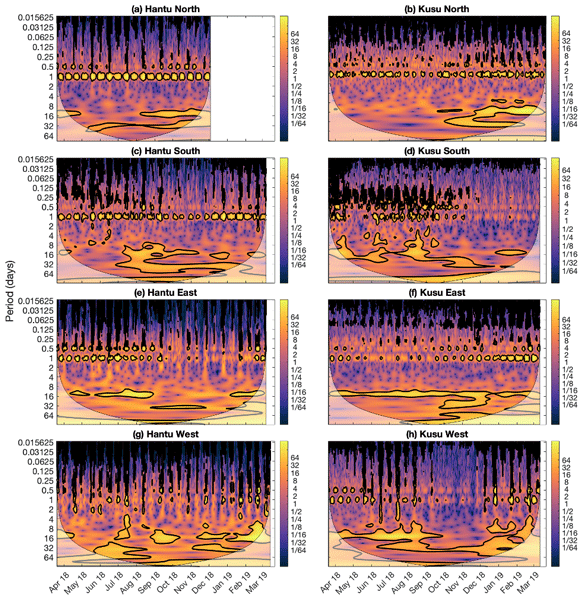
Coastal currents have wide implications for port activities, transport of sediments, and coral reef ecosystems; thus a deeper understanding of their characteristics is needed. We collected data on current velocities for a year using current meters at shallow waters in Singapore. The strength of the currents is primarily affected by tides and winds and generally increases during the monsoon seasons across various frequencies.
Thomas P. Collings, Niall D. Quinn, Ivan D. Haigh, Joshua Green, Izzy Probyn, Hamish Wilkinson, Sanne Muis, William V. Sweet, and Paul D. Bates
Nat. Hazards Earth Syst. Sci., 24, 2403–2423, https://doi.org/10.5194/nhess-24-2403-2024, https://doi.org/10.5194/nhess-24-2403-2024, 2024
Short summary
Short summary
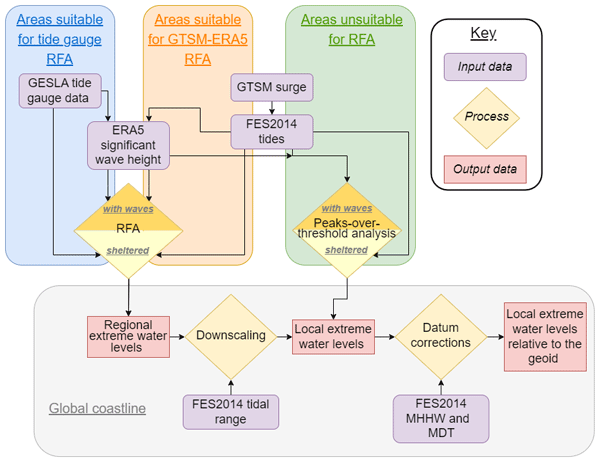
Coastal areas are at risk of flooding from rising sea levels and extreme weather events. This study applies a new approach to estimating the likelihood of coastal flooding around the world. The method uses data from observations and computer models to create a detailed map of where these coastal floods might occur. The approach can predict flooding in areas for which there are few or no data available. The results can be used to help prepare for and prevent this type of flooding.
Melissa Wood, Ivan D. Haigh, Quan Quan Le, Hung Nghia Nguyen, Hoang Ba Tran, Stephen E. Darby, Robert Marsh, Nikolaos Skliris, Joël J.-M. Hirschi, Robert J. Nicholls, and Nadia Bloemendaal
Nat. Hazards Earth Syst. Sci., 23, 2475–2504, https://doi.org/10.5194/nhess-23-2475-2023, https://doi.org/10.5194/nhess-23-2475-2023, 2023
Short summary
Short summary
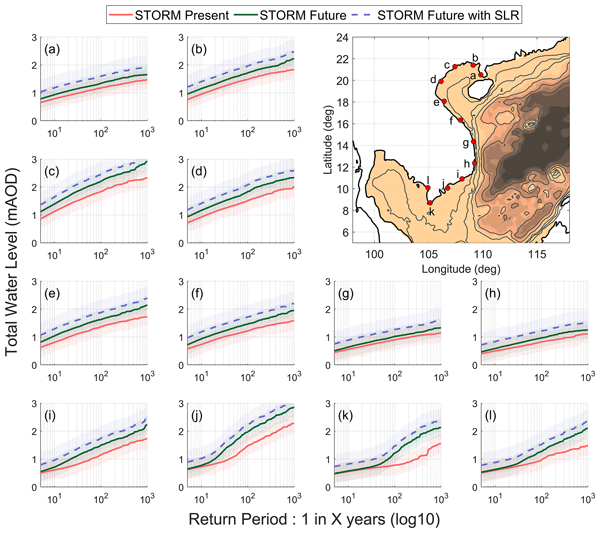
We used a novel database of simulated tropical cyclone tracks to explore whether typhoon-induced storm surges present a future flood risk to low-lying coastal communities around the South China Sea. We found that future climate change is likely to change tropical cyclone behaviour to an extent that this increases the severity and frequency of storm surges to Vietnam, southern China, and Thailand. Consequently, coastal flood defences need to be reviewed for resilience against this future hazard.
Ed Hawkins, Philip Brohan, Samantha N. Burgess, Stephen Burt, Gilbert P. Compo, Suzanne L. Gray, Ivan D. Haigh, Hans Hersbach, Kiki Kuijjer, Oscar Martínez-Alvarado, Chesley McColl, Andrew P. Schurer, Laura Slivinski, and Joanne Williams
Nat. Hazards Earth Syst. Sci., 23, 1465–1482, https://doi.org/10.5194/nhess-23-1465-2023, https://doi.org/10.5194/nhess-23-1465-2023, 2023
Short summary
Short summary
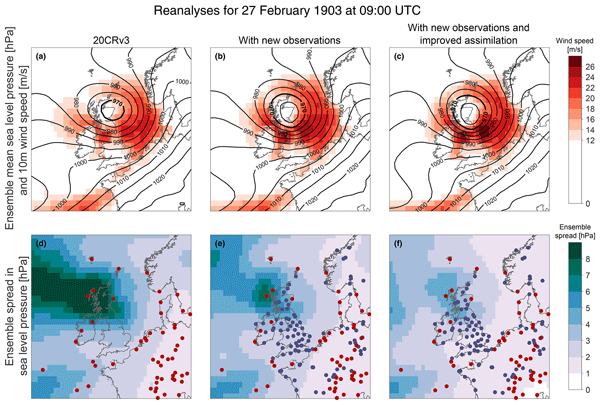
We examine a severe windstorm that occurred in February 1903 and caused significant damage in the UK and Ireland. Using newly digitized weather observations from the time of the storm, combined with a modern weather forecast model, allows us to determine why this storm caused so much damage. We demonstrate that the event is one of the most severe windstorms to affect this region since detailed records began. The approach establishes a new tool to improve assessments of risk from extreme weather.
Ahmed A. Nasr, Thomas Wahl, Md Mamunur Rashid, Paula Camus, and Ivan D. Haigh
Hydrol. Earth Syst. Sci., 25, 6203–6222, https://doi.org/10.5194/hess-25-6203-2021, https://doi.org/10.5194/hess-25-6203-2021, 2021
Short summary
Short summary
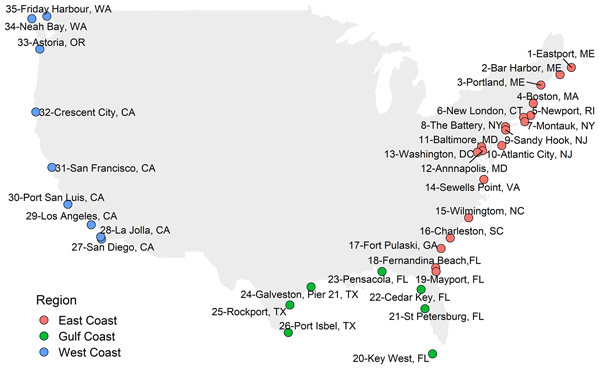
We analyse dependences between different flooding drivers around the USA coastline, where the Gulf of Mexico and the southeastern and southwestern coasts are regions of high dependence between flooding drivers. Dependence is higher during the tropical season in the Gulf and at some locations on the East Coast but higher during the extratropical season on the West Coast. The analysis gives new insights on locations, driver combinations, and the time of the year when compound flooding is likely.

Julia Rulent, Lucy M. Bricheno, J. A. Mattias Green, Ivan D. Haigh, and Huw Lewis
Nat. Hazards Earth Syst. Sci., 21, 3339–3351, https://doi.org/10.5194/nhess-21-3339-2021, https://doi.org/10.5194/nhess-21-3339-2021, 2021
Short summary
Short summary
High coastal total water levels (TWLs) can lead to flooding and hazardous conditions for coastal communities and environment. In this research we are using numerical models to study the interactions between the three main components of the TWL (waves, tides, and surges) on UK and Irish coasts during winter 2013/14. The main finding of this research is that extreme waves and surges can indeed happen together, even at high tide, but they often occurred simultaneously 2–3 h before high tide.
Samuel Tiéfolo Diabaté, Didier Swingedouw, Joël Jean-Marie Hirschi, Aurélie Duchez, Philip J. Leadbitter, Ivan D. Haigh, and Gerard D. McCarthy
Ocean Sci., 17, 1449–1471, https://doi.org/10.5194/os-17-1449-2021, https://doi.org/10.5194/os-17-1449-2021, 2021
Short summary
Short summary
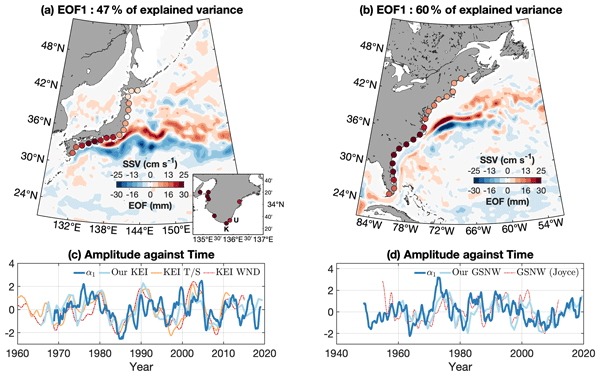
The Gulf Stream and the Kuroshio are major currents of the North Atlantic and North Pacific, respectively. They transport warm water northward and are key components of the Earth climate system. For this study, we looked at how they affect the sea level of the coasts of Japan, the USA and Canada. We found that the inshore sea level
co-varies with the north-to-south shifts of the Gulf Stream and Kuroshio. In the paper, we discuss the physical mechanisms that could explain the agreement.
Cited articles
Ambaum, M. H. P., Hoskins, B. J., and Stephenson, D. B.: Arctic oscillation or North Atlantic oscillation?, J. Climate, 14, 3495–3507, https://doi.org/10.1175/1520-0442(2001)014<3495:AOONAO>2.0.CO;2, 2001. a, b
Anderson, D., Rueda, A., Cagigal, L., Antolinez, J. A. A., Mendez, F. J., and Ruggiero, P.: Time varying emulator for short and long term analysis of coastal flood hazard potential, J. Geophys. Res.-Oceans, 124, 9209–9234, https://doi.org/10.1029/2019JC015312, 2019. a, b
Arcodia, M. C., Becker, E., and Kirtman, B. P.: Subseasonal variability of U.S. coastal sea level from MJO and ENSO teleconnection interference, Weather Forecast., 39, 441–458, https://doi.org/10.1175/WAF-D-23-0002.1, 2024. a
Athanasiadis, P. J., Yeager, S., Kwon, Y.-O., Bellucci, A., Smith, D. W., and Tibaldi, S.: Decadal predictability of North Atlantic blocking and the NAO, npj Climate and Atmospheric Science, 3, 20, https://doi.org/10.1038/s41612-020-0120-6, 2020. a
Barnard, P. L., Short, A. D., Harley, M. D., Splinter, K. D., Vitousek, S., Turner, I. L., Allan, J., Banno, M., Bryan, K. R., Doria, A., Hansen, J. E., Kato, S., Kuriyama, Y., Randall-Goodwin, E., Ruggiero, P., Walker, I. J., and Heathfield, D. K.: Coastal vulnerability across the Pacific dominated by El Niño/Southern Oscillation, Nat. Geosci., 8, 801–807, https://doi.org/10.1038/ngeo2539, 2015. a, b
Barnston, A. G. and Livezey, R. E.: Classification, seasonality and persistence of low-frequency atmospheric circulation Patterns, Mon. Weather Rev., 115, 1083–1126, https://doi.org/10.1175/1520-0493(1987)115<1083:CSAPOL>2.0.CO;2, 1987. a
Berens, P.: CircStat: a MATLAB toolbox for circular statistics, J. Stat. Softw., 31, 1–21, https://doi.org/10.18637/jss.v031.i10, 2009. a, b, c
Cagigal, L., Rueda, A., Anderson, D., Ruggiero, P., Merrifield, M. A., Montaño, J., Coco, G., and Méndez, F. J.: A multivariate, stochastic, climate-based wave emulator for shoreline change modelling, Ocean Model., 154, 101695, https://doi.org/10.1016/j.ocemod.2020.101695, 2020. a, b
Camus, P., Menéndez, M., Méndez, F. J., Izaguirre, C., Espejo, A., Cánovas, V., Pérez, J., Rueda, A., Losada, I. J., and Medina, R.: A weather-type statistical downscaling framework for ocean wave climate, J. Geophys. Res.-Oceans, 119, 7389–7405, https://doi.org/10.1002/2014JC010141, 2014. a, b
Camus, P., Rueda, A., Méndez, F. J., and Losada, I. J.: An atmospheric-to-marine synoptic classification for statistical downscaling marine climate, Ocean Dynam., 66, 1589–1601, https://doi.org/10.1007/s10236-016-1004-5, 2016. a
Camus, P., Haigh, I. D., Quinn, N., Wahl, T., Benson, T., Gouldby, B., Nasr, A. A., Rashid, M. M., Enríquez, A. R., Darby, S. E., Nicholls, R. J., and Nadal-Caraballo, N. C.: Tracking the spatial footprints of extreme storm surges around the coastline of the UK and Ireland, Weather and Climate Extremes, 44, 100662, https://doi.org/10.1016/j.wace.2024.100662, 2024. a
Casas-Prat, M., Hemer, M. A., Dodet, G., Morim, J., Wang, X. L., Mori, N., Young, I., Erikson, L., Kamranzad, B., Kumar, P., Menéndez, M., and Feng, Y.: Wind-wave climate changes and their impacts, Nature Reviews Earth and Environment, 5, 23–42, https://doi.org/10.1038/s43017-023-00502-0, 2024. a
Cassou, C., Terray, L., Hurrell, J. W., and Deser, C.: North Atlantic winter climate regimes: spatial asymmetry, stationarity with time, and oceanic forcing, J. Climate, 17, 1055–1068, https://doi.org/10.1175/1520-0442(2004)017<1055:NAWCRS>2.0.CO;2, 2004. a
Castelle, B., Dodet, G., Masselink, G., and Scott, T.: A new climate index controlling winter wave activity along the Atlantic coast of Europe: the west Europe pressure anomaly, Geophys. Res. Lett., 44, 1384–1392, https://doi.org/10.1002/2016GL072379, 2017. a, b
Castelle, B., Dodet, G., Masselink, G., and Scott, T.: Increased winter-mean wave height, variability, and periodicity in the northeast Atlantic over 1949–2017, Geophys. Res. Lett., 45, 3586–3596, https://doi.org/10.1002/2017GL076884, 2018. a
Chafik, L., Nilsen, J. E. ø., and Dangendorf, S.: Impact of North Atlantic teleconnection patterns on northern European sea level, Journal of Marine Science and Engineering, 5, 43, https://doi.org/10.3390/jmse5030043, 2017. a, b
Copernicus Climate Change Service: Global sea level change time series from 1950 to 2050 derived from reanalysis and high resolution CMIP6 climate projections, Copernicus Climate Change Service (C3S) Climate Data Store (CDS) [data set], https://doi.org/10.24381/cds.a6d42d60, 2022. a
Dunstone, N., Smith, D., Scaife, A., Hermanson, L., Eade, R., Robinson, N., Andrews, M., and Knight, J.: Skilful predictions of the winter North Atlantic oscillation one year ahead, Nat. Geosci., 9, 809–814, https://doi.org/10.1038/ngeo2824, 2016. a
Frederikse, T. and Gerkema, T.: Multi-decadal variability in seasonal mean sea level along the North Sea coast, Ocean Sci., 14, 1491–1501, https://doi.org/10.5194/os-14-1491-2018, 2018. a, b, c
Freitas, A., Bernardino, M., and Guedes Soares, C.: The influence of the Arctic oscillation on North Atlantic wind and wave climate by the end of the 21st century, Ocean Eng., 246, 110634, https://doi.org/10.1016/j.oceaneng.2022.110634, 2022. a
Gleeson, E., Clancy, C., Zubiate, L., Janjić, J., Gallagher, S., and Dias, F.: Teleconnections and Extreme Ocean States in the Northeast Atlantic Ocean, Adv. Sci. Res., 16, 11–29, https://doi.org/10.5194/asr-16-11-2019, 2019. a
Gulev, S. K. and Grigorieva, V.: Variability of the winter wind waves and swell in the North Atlantic and North Pacific as revealed by the voluntary observing ship data, J. Climate, 19, 5667–5685, https://doi.org/10.1175/JCLI3936.1, 2006. a
Gulev, S. K., Zolina, O., and Grigoriev, S.: Extratropical cyclone variability in the Northern Hemisphere winter from the NCEP/NCAR reanalysis data, Clim. Dynam., 17, 795–809, https://doi.org/10.1007/s003820000145, 2001. a
Haigh, I. D., Wadey, M. P., Wahl, T., Ozsoy, O., Nicholls, R. J., Brown, J. M., Horsburgh, K., and Gouldby, B.: Spatial and temporal analysis of extreme sea level and storm surge events around the coastline of the UK, Scientific Data, 3, 160107, https://doi.org/10.1038/sdata.2016.107, 2016. a
Hersbach, H., Bell, B., Berrisford, P., Hirahara, S., Horányi, A., Muñoz-Sabater, J., Nicolas, J., Peubey, C., Radu, R., Schepers, D., Simmons, A., Soci, C., Abdalla, S., Abellan, X., Balsamo, G., Bechtold, P., Biavati, G., Bidlot, J., Bonavita, M., De Chiara, G., Dahlgren, P., Dee, D., Diamantakis, M., Dragani, R., Flemming, J., Forbes, R., Fuentes, M., Geer, A., Haimberger, L., Healy, S., Hogan, R. J., Hólm, E., Janisková, M., Keeley, S., Laloyaux, P., Lopez, P., Lupu, C., Radnoti, G., de Rosnay, P., Rozum, I., Vamborg, F., Villaume, S., and Thépaut, J.-N.: The ERA5 global reanalysis, Q. J. Roy. Meteor. Soc., 146, 1999–2049, https://doi.org/10.1002/qj.3803, 2020. a
Hersbach, H., Bell, B., Berrisford, P., Biavati, G., Horányi, A., Muñoz Sabater, J., Nicolas, J., Peubey, C., Radu, R., Rozum, I., Schepers, D., Simmons, A., Soci, C., Dee, D., and Thépaut, J.-N.: ERA5 hourly data on single levels from 1940 to present, Copernicus Climate Change Service (C3S) Climate Data Store (CDS) [data set], https://doi.org/10.24381/cds.adbb2d47, 2023. a
Hilton, D., Davidson, M., and Scott, T.: Seasonal predictions of shoreline change, informed by climate indices, Journal of Marine Science and Engineering, 8, 616, https://doi.org/10.3390/jmse8080616, 2020. a
Hurrell, J. W.: Decadal trends in the North Atlantic oscillation: regional temperatures and precipitation, Science, 269, 676–679, https://doi.org/10.1126/science.269.5224.676, 1995. a
Itoh, H.: Reconsideration of the true versus apparent Arctic oscillation, J. Climate, 21, 2047–2062, https://doi.org/10.1175/2007JCLI2167.1, 2008. a
Lamb, P. J. and Peppler, R. A.: North Atlantic oscillation: concept and an application, B. Am. Meteorol. Soc., 68, 1218–1225, https://doi.org/10.1175/1520-0477(1987)068<1218:NAOCAA>2.0.CO;2, 1987. a
Martínez-Asensio, A., Tsimplis, M. N., Marcos, M., Feng, X., Gomis, D., Jordà, G., and Josey, S. A.: Response of the North Atlantic wave climate to atmospheric modes of variability, Int. J. Climatol., 36, 1210–1225, https://doi.org/10.1002/joc.4415, 2016. a, b, c
Masselink, G., Castelle, B., Scott, T., and Konstantinou, A.: Role of atmospheric indices in describing shoreline variability along the Atlantic coast of Europe, Geophys. Res. Lett., 50, e2023GL106019, https://doi.org/10.1029/2023GL106019, 2023. a
Michelangeli, P.-A., Vautard, R., and Legras, B.: Weather regimes: recurrence and quasi stationarity, J. Atmos. Sci., 52, 1237–1256, https://doi.org/10.1175/1520-0469(1995)052<1237:WRRAQS>2.0.CO;2, 1995. a, b
Morales-Márquez, V., Orfila, A., Simarro, G., and Marcos, M.: Extreme waves and climatic patterns of variability in the eastern North Atlantic and Mediterranean basins, Ocean Sci., 16, 1385–1398, https://doi.org/10.5194/os-16-1385-2020, 2020. a
Muis, S., Haigh, I. D., Guimarães Nobre, G., Aerts, J. C. J. H., and Ward, P. J.: Influence of El Niño-southern oscillation on global coastal flooding, Earths Future, 6, 1311–1322, https://doi.org/10.1029/2018EF000909, 2018. a
Muis, S., Apecechea, M. I., Dullaart, J., de Lima Rego, J., Madsen, K. S., Su, J., Yan, K., and Verlaan, M.: A high-resolution global dataset of extreme sea levels, tides, and storm surges, including future projections, Frontiers in Marine Science, 7, https://doi.org/10.3389/fmars.2020.00263, 2020. a
Neal, R., Fereday, D., Crocker, R., and Comer, R. E.: A flexible approach to defining weather patterns and their application in weather forecasting over Europe, Meteorol. Appl., 23, 389–400, https://doi.org/10.1002/met.1563, 2016. a
Odériz, I., Silva, R., Mortlock, T. R., and Mori, N.: El Niño southern oscillation impacts on global wave climate and potential coastal hazards, J. Geophys. Res.-Oceans, 125, e2020JC016464, https://doi.org/10.1029/2020JC016464, 2020. a
Patrizio, C. R., Athanasiadis, P. J., Smith, D. M., and Nicolì, D.: Ocean-atmosphere feedbacks key to NAO decadal predictability, npj Climate and Atmospheric Science, 8, 146, https://doi.org/10.1038/s41612-025-01027-7, 2025. a
Pohl, B. and Fauchereau, N.: The southern annular mode seen through weather regimes, J. Climate, 25, 3336–3354, https://doi.org/10.1175/JCLI-D-11-00160.1, 2012. a
Pugh, D. and Woodworth, P.: Storm surges, meteotsunamis and other meteorological effects on sea level, in: Sea-Level Science: Understanding Tides, Surges, Tsunamis and Mean Sea-Level Changes, Cambridge University Press, 155–188, https://doi.org/10.1017/CBO9781139235778.010, 2014. a, b, c
Pérez, J., Méndez, F. J., Menéndez, M., and Losada, I. J.: ESTELA: a method for evaluating the source and travel time of the wave energy reaching a local area, Ocean Dynam., 64, 1181–1191, https://doi.org/10.1007/s10236-014-0740-7, 2014. a
Scott, T., Masselink, G., Castelle, B., and Dodet, G.: The West Europe Pressure Anomaly: 1943–2018, University of Plymouth [data set], https://doi.org/10.24382/35ae12b5-df54-479d-ad09-75ea5049d14f, 2020. a, b
Scott, T., McCarroll, R. J., Masselink, G., Castelle, B., Dodet, G., Saulter, A., Scaife, A. A., and Dunstone, N.: Role of atmospheric indices in describing inshore directional wave climate in the United Kingdom and Ireland, Earths Future, 9, e2020EF001625, https://doi.org/10.1029/2020EF001625, 2021. a, b, c, d, e, f, g, h
Semedo, A., Sušelj, K., Rutgersson, A., and Sterl, A.: A global view on the wind sea and swell climate and variability from ERA-40, J. Climate, 24, 1461–1479, https://doi.org/10.1175/2010JCLI3718.1, 2011. a
Semedo, A., Vettor, R., Breivik, Ø., Sterl, A., Reistad, M., Soares, C. G., and Lima, D.: The wind sea and swell waves climate in the Nordic seas, Ocean Dynam., 65, 223–240, https://doi.org/10.1007/s10236-014-0788-4, 2015. a, b, c, d
Shimura, T., Mori, N., and Mase, H.: Ocean waves and teleconnection patterns in the Northern Hemisphere, J. Climate, 26, 8654–8670, https://doi.org/10.1175/JCLI-D-12-00397.1, 2013. a, b, c
Wakelin, S. L., Woodworth, P. L., Flather, R. A., and Williams, J. A.: Sea-level dependence on the NAO over the NW European continental shelf, Geophys. Res. Lett., 30, https://doi.org/10.1029/2003GL017041, 2003. a, b, c
Wang, X. L. and Swail, V. R.: Changes of extreme wave heights in Northern Hemisphere oceans and related atmospheric circulation regimes, J. Climate, 14, 2204–2221, https://doi.org/10.1175/1520-0442(2001)014<2204:COEWHI>2.0.CO;2, 2001. a
Wiggins, M., Scott, T., Masselink, G., McCarroll, R. J., and Russell, P.: Predicting beach rotation using multiple atmospheric indices, Mar. Geol., 426, 106207, https://doi.org/10.1016/j.margeo.2020.106207, 2020. a, b, c
Wilby, R. and Wigley, T.: Downscaling general circulation model output: a review of methods and limitations, Progress in Physical Geography: Earth and Environment, 21, 530–548, https://doi.org/10.1177/030913339702100403, 1997. a
Woodworth, P. L., Flather, R. A., Williams, J. A., Wakelin, S. L., and Jevrejeva, S.: The dependence of UK extreme sea levels and storm surges on the North Atlantic oscillation, Cont. Shelf Res., 27, 935–946, https://doi.org/10.1016/j.csr.2006.12.007, 2007. a, b, c, d
Woolf, D. K., Challenor, P. G., and Cotton, P. D.: Variability and predictability of the North Atlantic wave climate, J. Geophys. Res.-Oceans, 107, 9-1–9-14, https://doi.org/10.1029/2001JC001124, 2002. a
Zhao, G., Li, D., Yang, S., Qi, J., and Yin, B.: The development of a weather-type statistical downscaling model for wave climate based on wave clustering, Ocean Eng., 304, 117863, https://doi.org/10.1016/j.oceaneng.2024.117863, 2024. a
Zhong, Z., Kassem, H., Haigh, I., Sifnioti, D., Liu, Y., and Camus, P.: Data and Code for: “Linking Large-Scale Climate Modes to Local Wave Climate and Storm Surge: Insights from a Weather Typing Approach”, Zenodo [code, data set], https://doi.org/10.5281/zenodo.15721219, 2026. a
Short summary
This work examines how large-scale climate modes affect waves and storm surges on the northeast coast of England. We combine weather types with a multivariate analysis of sea states. We find that the North Atlantic Oscillation and Scandinavian pattern influence local waves and surges by altering the occurrence probabilities of synoptic conditions associated with specific winds, storm locations, and pressure systems. Our results improve the understanding of climate impacts on coastal conditions.
This work examines how large-scale climate modes affect waves and storm surges on the northeast...


