
Articles | Volume 22, issue 3
https://doi.org/10.5194/os-22-1793-2026
© Author(s) 2026. This work is distributed under
the Creative Commons Attribution 4.0 License.
the Creative Commons Attribution 4.0 License.
Special issue:
https://doi.org/10.5194/os-22-1793-2026
© Author(s) 2026. This work is distributed under
the Creative Commons Attribution 4.0 License.
the Creative Commons Attribution 4.0 License.
Research article
| 
11 Jun 2026
Research article |
| 11 Jun 2026
| 11 Jun 2026
Gliding through marine heatwaves: subsurface biogeochemical characteristics on the Australian continental shelf

Department of Oceanography, University of Cape Town, Cape Town, South Africa
South African Environmental Observation Network, Egagasini Node, Roggebaai, South Africa
Mascarene Environmental Consulting, Ltd, Coromandel, Beau Bassin-Rose Hill, Mauritius
Julia Araujo
National Center for Monitoring and Early Warning of Natural Disasters (CEMADEN), São José dos Campos, 12630-000, Brazil
Romain Le Gendre
IFREMER, UMR 9220 ENTROPIE (IRD, Reunion Univ., IFREMER, New Caledonia Univ., CNRS), BP 32078, 98897 Noumea CEDEX, New Caledonia
Jessica A. Benthuysen
Australian Institute of Marine Science, Crawley, Western Australia 6009, Australia
Franck Eitel Kemgang Ghomsi
Department of Oceanography, University of Cape Town, Cape Town, South Africa
Geodesy Research Laboratory, National Institute of Cartography, P.O. Box 157, Yaoundé, Cameroon
Centre for Earth Observation Science, University of Manitoba, Winnipeg, MB, Canada
Nansen-Tutu Centre for Marine Environmental Research, Department of Oceanography, University of Cape Town, South Africa
Jayanthi S. Saranya
School of Earth and Environmental Sciences, College of Natural Sciences, Seoul National University, Seoul, Republic of Korea
Amandine Schaeffer
School of Mathematics and Statistics, University of New South Wales, Sydney, New South Wales, Australia
Centre for Marine Science and Innovation, University of New South Wales, Sydney, New South Wales, Australia
Related authors
Clea B. Welch, Neil Malan, Daneeja Mawren, Tamaryn Morris, Janet Sprintall, and Juliet C. Hermes
Ocean Sci., 21, 1695–1708, https://doi.org/10.5194/os-21-1695-2025, https://doi.org/10.5194/os-21-1695-2025, 2025
Short summary
Short summary
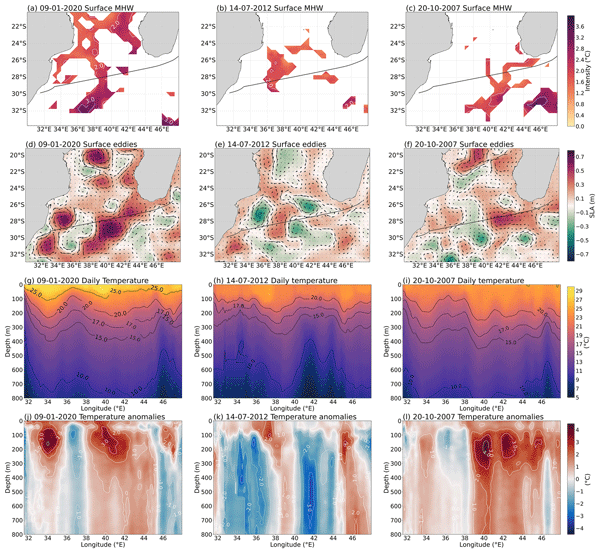
Marine heat waves (MHWs) are prolonged periods of extreme ocean temperatures with significant impacts on marine ecosystems. Much research has focused on surface MHWs, but less is known about their subsurface extent. This study uses satellite and in situ data to investigate MHWs in the southwestern Indian Ocean (SWIO). We find that MHWs in the SWIO are closely linked to mesoscale eddies and that strong temperature anomalies extend below surface-identified MHWs.
Esther Ladet, Carla Chevillard, Romain Le Gendre, Thomas Trophime, Sébastien Petton, and Simon Van Wynsberge
Earth Syst. Sci. Data, 18, 5283–5302, https://doi.org/10.5194/essd-18-5283-2026, https://doi.org/10.5194/essd-18-5283-2026, 2026
Short summary
Short summary
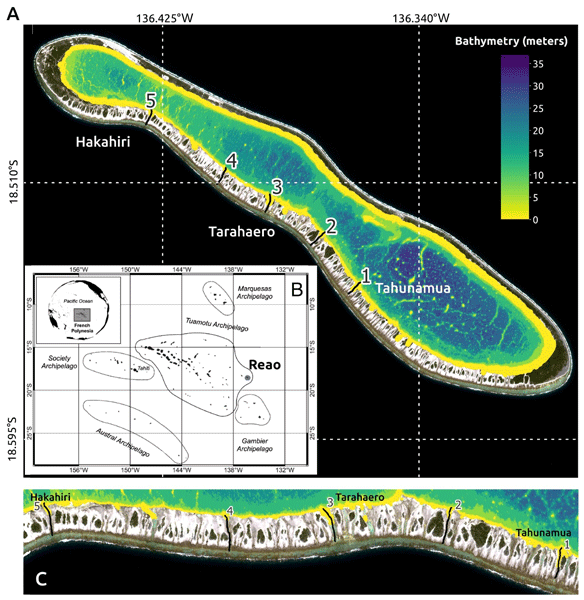
This dataset on Reao atoll provides an unprecedented record of thermal dynamics and lagoon circulation in a semi-closed atoll of French Polynesia, including full coverage of the extreme 2024 marine heatwave that caused mass bleaching. Collected over six monitoring periods between 2016 and 2025, it offers a critical basis for analysing thermal exposure of giant clams, identifying potential refugia, and supporting modelling of atoll responses to climate change.
Carla Chevillard, Romain Le Gendre, Christophe Menkes, Takeshi Izumo, Bastien Pagli, Simon Van Wynsberge, and Sophie Cravatte
Ocean Sci., 22, 1213–1236, https://doi.org/10.5194/os-22-1213-2026, https://doi.org/10.5194/os-22-1213-2026, 2026
Short summary
Short summary
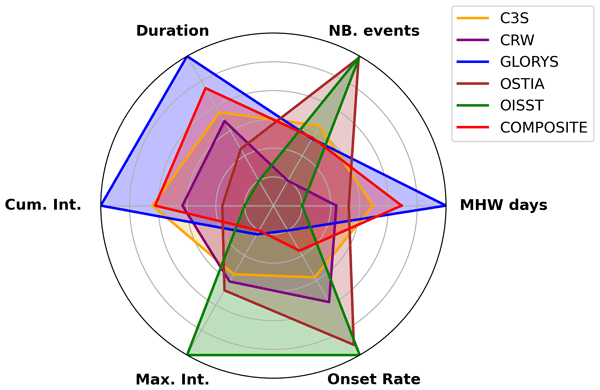
To detect past marine heatwaves events and analyse their characteristics, scientists use one of the available sea surface temperature products, relying on different data ingested and procedures. Here, we compare marine heatwaves statistics computed using six products in the tropical Pacific over 1993–2021. We highlight significant differences and provide uncertainties. Our results advocate for the use of multiple products in marine heatwaves studies to increase the robustness of the conclusions.
Shilpa Lal, Sophie Cravatte, Christophe Menkes, Jed Macdonald, Romain Le Gendre, Ines Mangolte, Cyril Dutheil, Neil J. Holbrook, and Simon Nicol
Ocean Sci., 22, 1023–1049, https://doi.org/10.5194/os-22-1023-2026, https://doi.org/10.5194/os-22-1023-2026, 2026
Short summary
Short summary
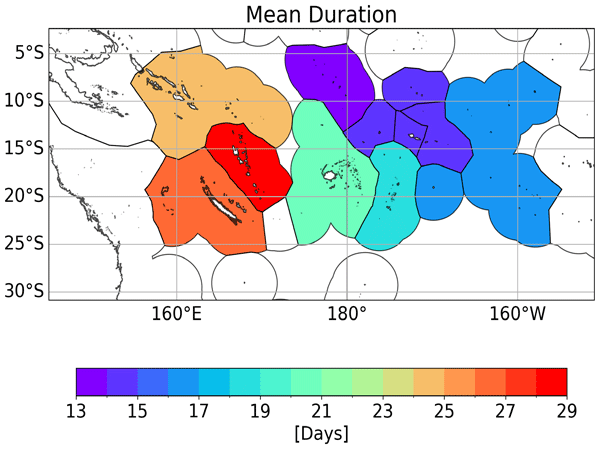
This paper characterizes historical (1981–2023) marine heatwaves in the tropical southwestern Pacific, where they pose a challenge for marine resource dependent Islands. Heatwaves are distinguished as a function of their spatial extent, signature at the coast, and seasonality, to allow a better understanding of their impacts on ecosystems. Marine heatwaves are getting longer and more frequent, with greater spatial extents. Our results aim to inform the Pacific Islands on their vulnerability.
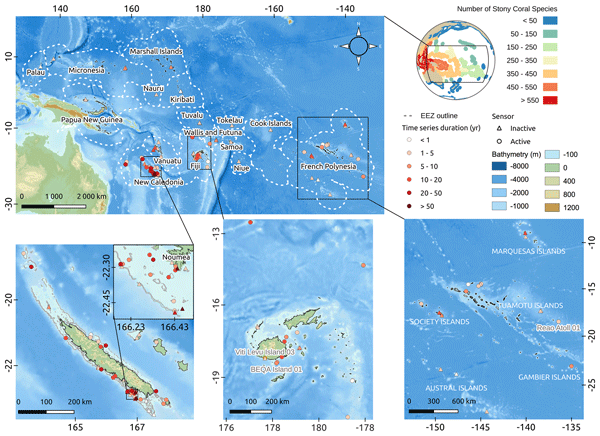
Romain Le Gendre, David Varillon, Sylvie Fiat, Régis Hocdé, Antoine de Ramon N'Yeurt, Serge Andréfouët, Jérôme Aucan, Sophie Cravatte, Maxime Duphil, Alexandre Ganachaud, Baptiste Gaudron, Elodie Kestenare, Vetea Liao, Bernard Pelletier, Alexandre Peltier, Anne-Lou Schaefer, Thomas Trophime, Simon Van Wynsberge, Yves Dandonneau, Michel Allenbach, and Christophe Menkes
Earth Syst. Sci. Data, 17, 5277–5301, https://doi.org/10.5194/essd-17-5277-2025, https://doi.org/10.5194/essd-17-5277-2025, 2025
Short summary
Short summary
Due to ocean warming, coral reef ecosystems are strongly impacted by dystrophic events and corals experiencing increasing frequencies of bleaching events. In situ observation remains the best alternative for accurate characterization of trends and extremes in these shallow environments. This paper presents the coastal temperature dataset of the ReefTEMPS monitoring network, which spreads over multiple Pacific Island countries and territories (PICTs) in the western and central South Pacific.
Clea B. Welch, Neil Malan, Daneeja Mawren, Tamaryn Morris, Janet Sprintall, and Juliet C. Hermes
Ocean Sci., 21, 1695–1708, https://doi.org/10.5194/os-21-1695-2025, https://doi.org/10.5194/os-21-1695-2025, 2025
Short summary
Short summary
Marine heat waves (MHWs) are prolonged periods of extreme ocean temperatures with significant impacts on marine ecosystems. Much research has focused on surface MHWs, but less is known about their subsurface extent. This study uses satellite and in situ data to investigate MHWs in the southwestern Indian Ocean (SWIO). We find that MHWs in the SWIO are closely linked to mesoscale eddies and that strong temperature anomalies extend below surface-identified MHWs.
Franck Eitel Kemgang Ghomsi, Muharrem Hilmi Erkoç, Roshin P. Raj, Atinç Pirti, Antonio Bonaduce, Babatunde J. Abiodun, and Julienne Stroeve
Int. Arch. Photogramm. Remote Sens. Spatial Inf. Sci., XLVIII-M-6-2025, 393–397, https://doi.org/10.5194/isprs-archives-XLVIII-M-6-2025-393-2025, https://doi.org/10.5194/isprs-archives-XLVIII-M-6-2025-393-2025, 2025
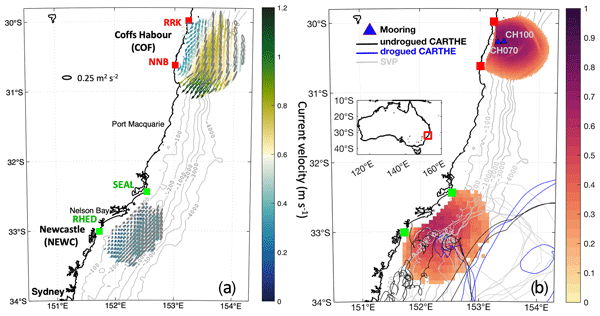
Manh Cuong Tran, Moninya Roughan, and Amandine Schaeffer
Earth Syst. Sci. Data, 17, 937–963, https://doi.org/10.5194/essd-17-937-2025, https://doi.org/10.5194/essd-17-937-2025, 2025
Short summary
Short summary
The East Australian Current (EAC) plays an important role in the marine ecosystem and climate of the region. To understand the EAC regime and the inner shelf dynamics, we implement a variational approach to produce the first multiyear coastal radar dataset (2012–2023) in this region. The validated data allow for a comprehensive investigation of the EAC dynamics. This dataset will be useful for understanding the complex EAC regime and its far-reaching impacts on the shelf environment.
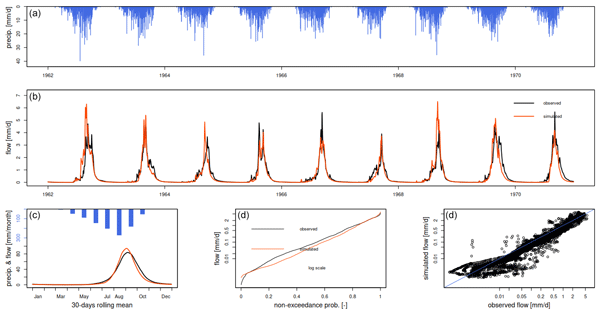
Rodric Mérimé Nonki, Ernest Amoussou, Raphael Muamba Tshimanga, Djan'na Koubodana Houteta, Domiho Japhet Kodja, Franck Eitel Kemgang Ghomsi, and André Lenouo
Proc. IAHS, 385, 319–326, https://doi.org/10.5194/piahs-385-319-2024, https://doi.org/10.5194/piahs-385-319-2024, 2024
Short summary
Short summary
This research aims to evaluate the feasibility of using multiple rainfall-runoff hydrologic models Génie Rural à 4, 5, 6 paramètres Journalier (GR4J, GR5J, and GR6J) in the Upper Benue River (UBR) in Northern Cameroon. By using the Michel's calibration algorithm, we found that the composite criterion is the most sustainable objective function for model optimization. An honest evaluation empirically proves that the GR6J model performs better than the other two models follow by GR5J.
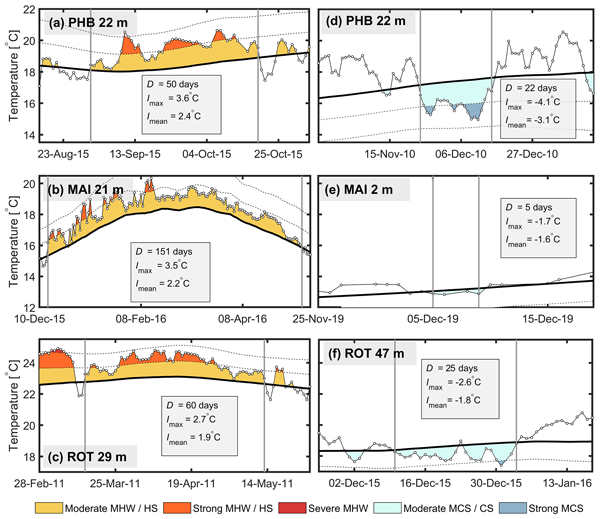
Michael Hemming, Moninya Roughan, and Amandine Schaeffer
Earth Syst. Sci. Data, 16, 887–901, https://doi.org/10.5194/essd-16-887-2024, https://doi.org/10.5194/essd-16-887-2024, 2024
Short summary
Short summary
We present new datasets that are useful for exploring extreme ocean temperature events in Australian coastal waters. These datasets span multiple decades, starting from the 1940s and 1950s, and include observations from the surface to the bottom at four coastal sites. The datasets provide valuable insights into the intensity, frequency and timing of extreme warm and cold temperature events and include event characteristics such as duration, onset and decline rates and their categorisation.
Oriane Bruyère, Romain Le Gendre, Vetea Liao, and Serge Andréfouët
Earth Syst. Sci. Data, 16, 667–679, https://doi.org/10.5194/essd-16-667-2024, https://doi.org/10.5194/essd-16-667-2024, 2024
Short summary
Short summary
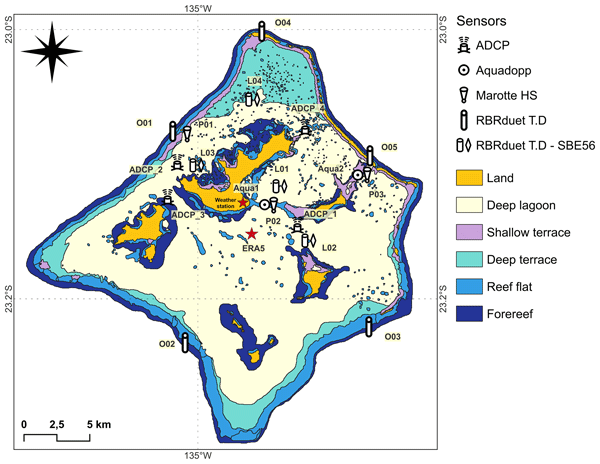
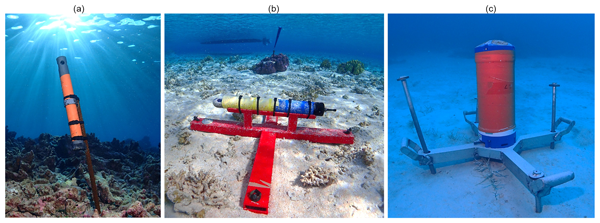
During 2019–2020, the lagoon and forereefs of Gambier Island (French Polynesia) were monitored with oceanographic instruments to measure lagoon hydrodynamics and ocean–lagoon water exchanges. Gambier Island is a key black pearl producer and the study goal was to understand the processes influencing spat collection of pearl oyster Pinctada margaritifera, the species used to produce black pearls. The data set is provided to address local pearl farming questions and other investigations as well.
Oriane Bruyère, Romain Le Gendre, Mathilde Chauveau, Bertrand Bourgeois, David Varillon, John Butscher, Thomas Trophime, Yann Follin, Jérôme Aucan, Vetea Liao, and Serge Andréfouët
Earth Syst. Sci. Data, 15, 5553–5573, https://doi.org/10.5194/essd-15-5553-2023, https://doi.org/10.5194/essd-15-5553-2023, 2023
Short summary
Short summary
During 2018–2022, four pearl farming Tuamotu atolls (French Polynesia) were studied with oceanographic instruments to measure lagoon hydrodynamics and ocean-lagoon water exchanges. The goal was to gain knowledge on the processes influencing the spat collection of the pearl oyster Pinctada margaritifera, the species used to produce black pearls. A worldwide unique oceanographic atoll data set is provided to address local pearl farming questions and other fundamental and applied investigations.
Michael P. Hemming, Moninya Roughan, Neil Malan, and Amandine Schaeffer
Ocean Sci., 19, 1145–1162, https://doi.org/10.5194/os-19-1145-2023, https://doi.org/10.5194/os-19-1145-2023, 2023
Short summary
Short summary
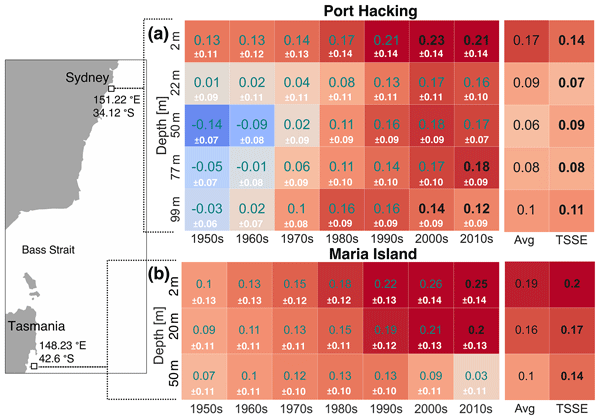
We estimate subsurface linear and non-linear temperature trends at five coastal sites adjacent to the East Australian Current (EAC). We see accelerating trends at both 34.1 and 42.6 °S and place our results in the context of previously reported trends, highlighting that magnitudes are depth-dependent and vary across latitude. Our results indicate the important role of regional dynamics and show the necessity of subsurface data for the improved understanding of regional climate change impacts.
Oriane Bruyère, Benoit Soulard, Hugues Lemonnier, Thierry Laugier, Morgane Hubert, Sébastien Petton, Térence Desclaux, Simon Van Wynsberge, Eric Le Tesson, Jérôme Lefèvre, Franck Dumas, Jean-François Kayara, Emmanuel Bourassin, Noémie Lalau, Florence Antypas, and Romain Le Gendre
Earth Syst. Sci. Data, 14, 5439–5462, https://doi.org/10.5194/essd-14-5439-2022, https://doi.org/10.5194/essd-14-5439-2022, 2022
Short summary
Short summary
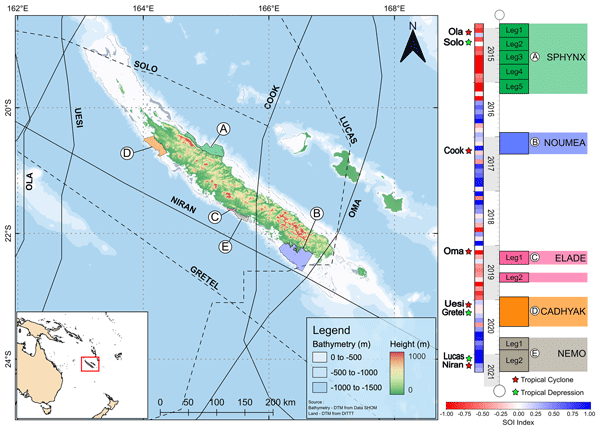
From 2014 to 2021, extensive monitoring of hydrodynamics was deployed within five contrasted lagoons of New Caledonia during austral summers. These coastal physical observations encompassed unmonitored lagoons and captured eight major atmospheric events ranging from tropical depression to category 4 cyclone. The main objectives were to characterize the processes controlling hydrodynamics of these lagoons and record the signature of extreme events on land–lagoon–ocean continuum functioning.
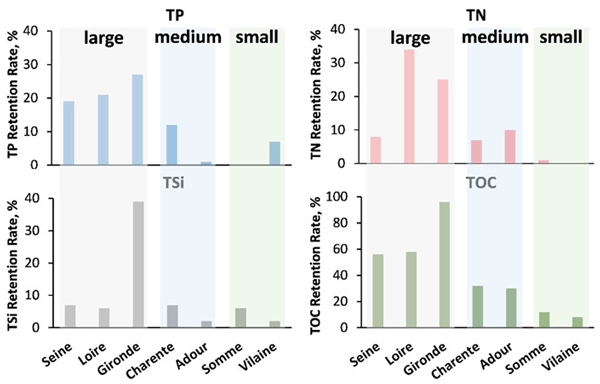
Xi Wei, Josette Garnier, Vincent Thieu, Paul Passy, Romain Le Gendre, Gilles Billen, Maia Akopian, and Goulven Gildas Laruelle
Biogeosciences, 19, 931–955, https://doi.org/10.5194/bg-19-931-2022, https://doi.org/10.5194/bg-19-931-2022, 2022
Short summary
Short summary
Estuaries are key reactive ecosystems along the land–ocean aquatic continuum and are often strongly impacted by anthropogenic activities. We calculated nutrient in and out fluxes by using a 1-D transient model for seven estuaries along the French Atlantic coast. Among these, large estuaries with high residence times showed higher retention rates than medium and small ones. All reveal coastal eutrophication due to the excess of diffused nitrogen from intensive agricultural river basins.
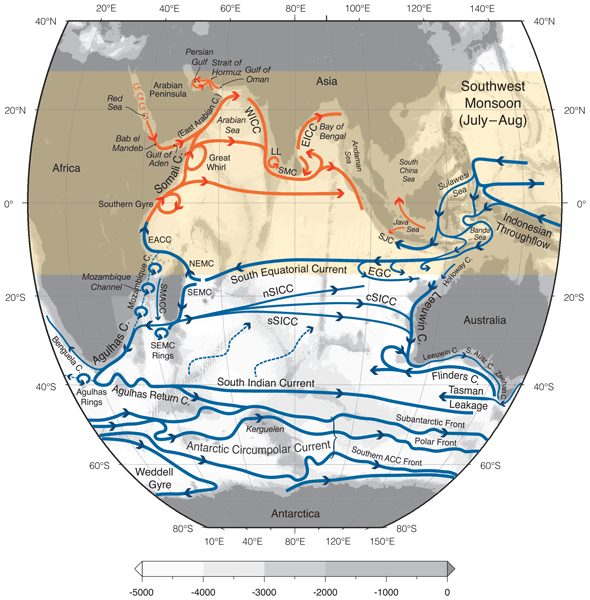
Helen E. Phillips, Amit Tandon, Ryo Furue, Raleigh Hood, Caroline C. Ummenhofer, Jessica A. Benthuysen, Viviane Menezes, Shijian Hu, Ben Webber, Alejandra Sanchez-Franks, Deepak Cherian, Emily Shroyer, Ming Feng, Hemantha Wijesekera, Abhisek Chatterjee, Lisan Yu, Juliet Hermes, Raghu Murtugudde, Tomoki Tozuka, Danielle Su, Arvind Singh, Luca Centurioni, Satya Prakash, and Jerry Wiggert
Ocean Sci., 17, 1677–1751, https://doi.org/10.5194/os-17-1677-2021, https://doi.org/10.5194/os-17-1677-2021, 2021
Short summary
Short summary
Over the past decade, understanding of the Indian Ocean has progressed through new observations and advances in theory and models of the oceanic and atmospheric circulation. This review brings together new understanding of the ocean–atmosphere system in the Indian Ocean, describing Indian Ocean circulation patterns, air–sea interactions, climate variability, and the critical role of the Indian Ocean as a clearing house for anthropogenic heat.
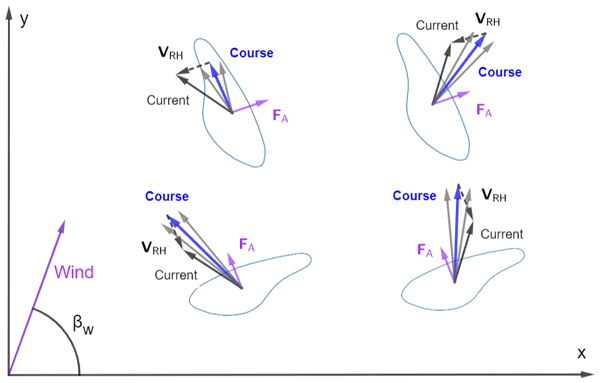
Daniel Lee, Amandine Schaeffer, and Sjoerd Groeskamp
Ocean Sci., 17, 1341–1351, https://doi.org/10.5194/os-17-1341-2021, https://doi.org/10.5194/os-17-1341-2021, 2021
Short summary
Short summary
The bluebottle (Physalia physalis), or Portuguese man o' war, is well known for the painful stings caused by its tentacles. Its drifting dynamics have not been widely explored, with previous studies using simple assumptions to calculate its drift. Considering similarities with a sailboat, we present a new theoretical model for the drifting speed and course of the bluebottle in different wind and ocean conditions, providing new insights into the parameterization of its complex drifting dynamics.
Cited articles
Amaya, D. J., Miller, A. J., Xie, S.-P., and Kosaka, Y.: Physical drivers of the summer 2019 North Pacific marine heatwave, Nat. Commun., 11, 1903, https://doi.org/10.1038/s41467-020-15820-w, 2020.
Amaya, D. J., Alexander, M. A., Capotondi, A., Deser, C., Karnauskas, K. B., Miller, A. J., and Mantua, N. J.: Are long-term changes in mixed layer depth influencing North Pacific marine heatwaves?, B. Am. Meteorol. Soc., 102, S59–S66, https://doi.org/10.1175/BAMS-D-20-0144.1, 2021.
Armbrecht, L. H., Schaeffer, A., Roughan, M., and Armand, L. K.: Interactions between seasonality and oceanic forcing drive the phytoplankton variability in the tropical-temperate transition zone (∼30° S) of Eastern Australia, J. Marine Syst., 144, 92–106, https://doi.org/10.1016/j.jmarsys.2014.11.008, 2015.
Benthuysen, J., Feng, M., and Zhong L.: Spatial patterns of warming off Western Australia during the 2011 Ningaloo Niño: Quantifying impacts of remote and local forcing, Cont. Shelf Res., 91, 232–246, https://doi.org/10.1016/j.csr.2014.09.014, 2014.
Benthuysen, J. A., Tonin, H., Brinkman, R., Herzfeld, M., and Steinberg, C.: Intrusive upwelling in the Central Great Barrier Reef, J. Geophys. Res.-Oceans, 121, 8395–8416, https://doi.org/10.1002/2016JC012294, 2016.
Benthuysen, J. A., Oliver, E. C. J., Feng, M., and Marshall, A. G.: Extreme marine warming across tropical Australia during austral summer 2015–2016, J. Geophys. Res.-Oceans, 123, 1301–1326, https://doi.org/10.1002/2017JC013326, 2018.
Benthuysen, J. A., Steinberg, C., Spillman, C. M., and Smith, G. A.: Oceanographic drivers of bleaching in the GBR: From observations to prediction. Volume 4: Observations and predictions of marine heatwaves, Report to the National Environmental Science Program, Reef and Rainforest Research Centre Limited, 48 pp., https://nesptropical.edu.au/wp-content/uploads/2021/06/4.2-Volume-4-Final-Report_COMPLETE.pdf (last access: 1 June 2021), 2021.
Benthuysen, J. A., Emslie, M. J., Currey-Randall, L. M., Cheal, A. J., and Heupel, M. R.: Oceanographic influences on reef fish assemblages along the Great Barrier Reef, Prog. Oceanogr., 208, 102901, https://doi.org/10.1016/j.pocean.2022.102901, 2022.
Benthuysen, J. A., Pattiaratchi, C., Spillman, C. M., Govekar, P., Beggs, H., Bastos de Oliveira, H., Chandrapavan, A., Feng, M., Hobday, A. J., Holbrook, N. J., Jaine, F. R. A., and Schaeffer, A.: Observing marine heatwaves using ocean gliders to address ecosystem challenges through a coordinated national program, in: Frontiers in Ocean Observing, edited by: Kappel, E. S., Cullen, V., da Silveira, I. C. A., Coward, G., Edwards, C., Heimbach, P., Morris, T., Pillar, H., Roughan, M., and Wilkin, J., Oceanography, 38, https://doi.org/10.5670/oceanog.2025e101, 2025.
Blondeau-Patissier, D., Gower, J. F. R., Dekker, A. G., Phinn, S. R., and Brando, V. E.: A review of ocean color remote sensing methods and statistical techniques for the detection, mapping and analysis of phytoplankton blooms in coastal and open oceans, Prog. Oceanogr., 123, 123–144, https://doi.org/10.1016/j.pocean.2013.12.008, 2014.
Brooke, B., Creasey, J., and Sexton, M.: Broad-scale geomorphology and benthic habitats of the Perth coastal plain and Rottnest Shelf, Western Australia, identified in a merged topographic and bathymetric digital relief model, Int. J. Remote Sens., 31, 6223–6237, https://doi.org/10.1080/01431160903403052, 2010.
Capotondi, A., Alexander, M. A., Bond, N. A., Curchitser, E. N., and Scott, J. D.: Enhanced upper ocean stratification with climate change in the CMIP3 models, J. Geophys. Res., 117, C04031, https://doi.org/10.1029/2011JC007409, 2012.
Capotondi, A., Rodrigues, R. R., Sen Gupta, A., Benthuysen, J. A., Deser, C., Frölicher, T. L., Lovenduski, N. S., Amaya, D. J., Le Grix, N., Xu, T., and Hermes, J.: A global overview of marine heatwaves in a changing climate, Commun. Earth Environ., 5, 701, https://doi.org/10.1038/s43247-024-01806-9, 2024.
Cavole, L. M., Demko, A. M., Diner, R. E., Giddings, A., Koester, I., Pagniello, C. M., Paulsen, M. L., Ramirez-Valdez, A., Schwenck, S. M., Yen, N. K., and Zill, M. E.: Biological impacts of the 2013–2015 warm-water anomaly in the Northeast Pacific: winners, losers, and the future, Oceanography, 29, 273–285, https://doi.org/10.5670/oceanog.2016.32, 2016.
Chen, M., Pattiaratchi, C. B., Ghadouani, A., and Hanson, C.: Seasonal and inter-annual variability of water column properties along the Rottnest continental shelf, south-west Australia, Ocean Sci., 15, 333–348, https://doi.org/10.5194/os-15-333-2019, 2019.
Chen, M., Pattiaratchi, C. B., Ghadouani, A., and Hanson, C.: Influence of storm events on chlorophyll distribution along the oligotrophic continental shelf off south-western Australia, Front. Mar. Sci., 7, 287, https://doi.org/10.3389/fmars.2020.00287, 2020.
Chen, Q., Li, D., Feng, J., Zhao, L., Qi, J., and Yin, B.: Understanding the compound marine heatwave and low-chlorophyll extremes in the western Pacific Ocean, Front. Mar. Sci., 10, 1303663, https://doi.org/10.3389/fmars.2023.1303663, 2023.
Chiswell, S. M.: Tasman Sea high- and low- chlorophyll events, their links to marine heat waves, cool spells, and global teleconnections, New Zeal. J. Mar. Fresh., 57, 550–567, https://doi.org/10.1080/00288330.2022.2076702, 2023.
Davies, K. T. A.: Using passive acoustic monitoring from gliders for near real-time detection of North Atlantic right whales (Eubalaena glacialis) and management of the Laurentian Channel Dynamic Shipping Zones, Transport Canada Innovation Centre, https://open-science.canada.ca/items/de8cd42c-9bef-49a2-815a-15737cd2d1fb (last access: 31 March 2026), 2021.
Davila, X., Olsen, A., Lauvset, S. K., McDonagh, E. L., Brakstad, A., and Gebbie, G.: On the origins of open ocean oxygen minimum zones, J. Geophys. Res.-Oceans, 128, e2023JC019677, https://doi.org/10.1029/2023JC019677, 2023.
de Boyer Montégut, C., Madec, G., Fischer, A. S., Lazar, A., and Iudicone, D.: Mixed layer depth over the global ocean: An examination of profile data and a profile‐based climatology, J. Geophys. Res.-Oceans, 109, https://doi.org/10.1029/2004JC002378, 2004.
Eakins, B. W. and Sharman, G. F.: Volumes of the World's Oceans from ETOPO1, NOAA National Geophysical Data Center, Boulder, CO, 7, 2010.
Elzahaby, Y. and Schaeffer, A.: Observational insight into the subsurface anomalies of marine heatwaves, Front. Mar. Sci., 6, https://doi.org/10.3389/fmars.2019.00745, 2019.
Feng, M., Benthuysen, J., Zhang, N., and Slawinski, D.: Freshening anomalies in the Indonesian throughflow and impacts on the Leeuwin Current during 2010–2011, Geophys. Res. Lett., 42, 8555–8562, https://doi.org/10.1002/2015GL065848, 2015.
Feng, M., Caputi, N., Chandrapavan, A., Chen, M., Hart, A., and Kangas, M.: Multi-year marine cold-spells off the west coast of Australia and effects on fisheries, J. Marine Syst., 214, 103473, https://doi.org/10.1016/j.jmarsys.2020.103473, 2021.
Feng, M., Bui, T., and Benthuysen, J. A.: Seasonal climatology of the Leeuwin Current-Capes Current system off southwest Australia from long-term moored observations, J. Geophys. Res.-Oceans, 130, e2025JC022662, https://doi.org/10.1029/2025JC022662, 2025.
Fordyce, A. J., Ainsworth, T. D., Heron, S. F., and Leggat, W.: Marine heatwave hotspots in coral reef environments: physical drivers, ecophysiological outcomes, and impact upon structural complexity, Front. Marine Sci., 6, 498, https://doi.org/10.3389/fmars.2019.00498, 2019.
Frölicher, T. L., Fischer, E. M., and Gruber, N.: Marine heatwaves under global warming, Nature, 560, 360–364, https://doi.org/10.1038/s41586-018-0383-9, 2018.
Gao, G., Marin, M., Feng, M., Yin, B., Yang, D., Feng, X., Ding, Y., and Song, D.: Drivers of marine heatwaves in the East China Sea and the South Yellow Sea in three consecutive summers during 2016–2018, J. Geophys. Res.-Oceans, 125, e2020JC016518, https://doi.org/10.1029/2020JC016518, 2020.
Garcia, H. E. and Gordon, L. I.: Oxygen solubility in seawater: Better fitting equations, Limnol. Oceanogr., 37, 1307–1312, https://doi.org/10.4319/lo.1992.37.6.1307, 1992.
GlidersMHWs and ghomsi123: ghomsi123/Subsurface-biogeochemical-marine-heatwaves-on-the-Australian-continental-shelf: v1.0 (Updates), Zenodo [code], https://doi.org/10.5281/zenodo.20344425, 2026.
Gomes, D. G., Ruzicka, J. J., Crozier, L. G., Huff, D. D., Brodeur, R. D., and Stewart, J. D.: Marine heatwaves disrupt ecosystem structure and function via altered food webs and energy flux, Nat. Commun., 15, 1988, https://doi.org/10.1038/s41467-024-46263-2, 2024.
Gruber, N.: Warming up, turning sour, losing breath: ocean biogeochemistry under global change, Philos. T. R. Soc. A., 3691980, https://doi.org/10.1098/rsta.2011.0003, 2011.
Gruber, N., Boyd, P. W., Frölicher, T. L., and Vogt, M.: Biogeochemical extremes and compound events in the ocean, Nature, 600, 395–407, https://doi.org/10.1038/s41586-021-03981-7, 2021.
Hanson, C. E., Pattiaratchi, C. B., and Waite, A. M.: Sporadic upwelling on a downwelling coast: phytoplankton responses to spatially variable nutrient dynamics off the Gascoyne region of Western Australia, Cont. Shelf Res., 25, 1561–1582, https://doi.org/10.1016/j.csr.2005.04.003, 2005.
Hayashida, H., Matear, R. J., and Strutton, P. G.: Background nutrient concentration determines phytoplankton bloom response to marine heatwaves, Glob. Change Biol., 26, 4800–4811, https://doi.org/10.1111/gcb.15255, 2020.
Hill, K. L., Rintoul, S. R., Coleman, R., and Ridgway, K. R.: Wind forced low frequency variability of the East Australia Current, Geophys. Res. Lett., 35, https://doi.org/10.1029/2007GL032912, 2008.
Hobday, A. J., Alexander, L. V., Perkins, S. E., Smale, D. A., Straub, S. C., Oliver, E. C. J., Benthuysen, J. A., Burrows, M. T., Donat, M. G., Feng, M., and Holbrook, N. J.: A hierarchical approach to defining marine heatwaves, Prog. Oceanogr., 141, 227–238, https://doi.org/10.1016/j.pocean.2015.12.014, 2016.
Hobday, A. J., Oliver, E. C., Gupta, A. S., Benthuysen, J. A., Burrows, M. T., Donat, M. G., Holbrook, N. J., Moore, P. J., Thomsen, M. S., Wernberg, T., and Smale, D. A.: Categorizing and naming marine heatwaves, Oceanography, 31, 162–173, https://doi.org/10.5670/oceanog.2018.205, 2018.
Holbrook, N. J. and Bindoff, N. L.: Interannual and decadal temperature variability in the southwest Pacific Ocean between 1955 and 1988, J. Climate, 10, 1035–1049, https://doi.org/10.1175/1520-0442(1997)010<1035:IADTVI>2.0.CO;2, 1997.
Holbrook, N. J., Hernaman, V., Koshiba, S., Lako, J., Kajtar, J. B., Amosa, P., and Singh, A.: Impacts of marine heatwaves on tropical western and central Pacific Island nations and their communities, Global Planet. Change, 208, 103680, doi.org/10.1016/j.gloplacha.2021.103680, 2022.
Kwiatkowski, L., Torres, O., Bopp, L., Aumont, O., Chamberlain, M., Christian, J. R., Dunne, J. P., Gehlen, M., Ilyina, T., John, J. G., Lenton, A., Li, H., Lovenduski, N. S., Orr, J. C., Palmieri, J., Santana-Falcón, Y., Schwinger, J., Séférian, R., Stock, C. A., Tagliabue, A., Takano, Y., Tjiputra, J., Toyama, K., Tsujino, H., Watanabe, M., Yamamoto, A., Yool, A., and Ziehn, T.: Twenty-first century ocean warming, acidification, deoxygenation, and upper-ocean nutrient and primary production decline from CMIP6 model projections, Biogeosciences, 17, 3439–3470, https://doi.org/10.5194/bg-17-3439-2020, 2020.
Lachkar, Z., Lévy, M., and Smith, K. S.: Strong intensification of the Arabian Sea oxygen minimum zone in response to Arabian Gulf warming, Geophys. Res. Lett., 46, 5420–5429, https://doi.org/10.1029/2018GL081631, 2019.
Laufkötter, C., Zscheischler, J., and Frölicher, T. L.: High-impact marine heatwaves attributable to human-induced global warming, Science, 369, 1621–1625, https://doi.org/10.1126/science.aba0690, 2020.
Le Gendre, R., Varillon, D., Fiat, S., Hocdé, R., de Ramon N'Yeurt, A., Andréfouët, S., Aucan, J., Cravatte, S., Duphil, M., Ganachaud, A., Gaudron, B., Kestenare, E., Liao, V., Pelletier, B., Peltier, A., Schaefer, A.-L., Trophime, T., Van Wynsberge, S., Dandonneau, Y., Allenbach, M., and Menkes, C.: ReefTEMPS: the Pacific Islands coastal temperature network, Earth Syst. Sci. Data, 17, 5277–5301, https://doi.org/10.5194/essd-17-5277-2025, 2025.
Le Grix, N., Zscheischler, J., Laufkötter, C., Rousseaux, C. S., and Frölicher, T. L.: Compound high-temperature and low-chlorophyll extremes in the ocean over the satellite period, Biogeosciences, 18, 2119–2137, https://doi.org/10.5194/bg-18-2119-2021, 2021.
Li, G., Cheng, L., Zhu, J., Trenberth, K. E., Mann, M. E., and Abraham, J. P.: Increasing ocean stratification over the past half-century, Nat. Clim. Change, 10, 1116–1123, https://doi.org/10.1038/s41558-020-00918-2, 2020.
Ma, X. and Chen, G.: Marine heatwaves are shaping the vertical structure of phytoplankton in the global ocean, Commun. Earth Environ., 6, 715, https://doi.org/10.1038/s43247-025-02718-y, 2025.
Malan, N., Archer, M., Roughan, M., Cetina‐Heredia, P., Hemming, M., Rocha, C., Schaeffer, A., Suthers, I., and Queiroz, E.: Eddy-driven cross-shelf transport in the East Australian Current separation zone, J. Geophys. Res.-Oceans, 125, e2019JC015613, https://doi.org/10.1029/2019JC015613, 2020.
Malan, N., Gupta, A. S., Schaeffer, A., Zhang, S., Doblin, M. A., Pilo, G. S., Kiss, A. E., Everett, J. D., Behrens, E., Capotondi, A., and Cravatte, S.: Lifting the lid on Marine Heatwaves, Prog. Oceanogr., 239, 103539, https://doi.org/10.1016/j.pocean.2025.103539, 2025.
Marre, J. B., Thebaud, O., Pascoe, S., Jennings, S., Boncoeur, J., and Coglan, L.: The use of ecosystem services valuation in Australian coastal zone management, Mar. Policy, 56, 117–124, https://doi.org/10.1016/j.marpol.2015.02.011, 2015.
Meier, H. M., Väli, G., Naumann, M., Eilola, K., and Frauen, C.: Recently accelerated oxygen consumption rates amplify deoxygenation in the Baltic Sea, J. Geophys. Res.-Oceans, 123, 3227–3240, https://doi.org/10.1029/2017JC013686, 2018.
Noh, K. M., Lim, H. G., and Kug, J. S.: Global chlorophyll responses to marine heatwaves in satellite ocean color, Environ. Res. Lett., 17, 064034, https://doi.org/10.1088/1748-9326/ac70ec, 2022.
Oliver, E. C. J., Benthuysen, J. A., Bindoff, N. L., Hobday, A. J., Holbrook, N. J., Mundy, C. N., and Perkins-Kirkpatrick, S. E.: The unprecedented 2015/16 Tasman Sea marine heatwave, Nat. Commun., 8, 16101, https://doi.org/10.1038/ncomms16101, 2017.
Oliver, E. C. J., Benthuysen, J. A., Darmaraki, S., Donat, M. G., Hobday, A. J., Holbrook, N. J., Schlegel, R. W., and Sen Gupta, A.: Marine heatwaves, Annu. Rev. Mar. Sci., 13, 313–342, https://doi.org/10.1146/annurev-marine-032720-095144, 2021.
Pattiaratchi, C., Hollings, B., Woo, M., and Welhena, T.: Dense shelf water formation along the south-west Australian inner shelf, Geophys. Res. Lett., 38, L10609, https://doi.org/10.1029/2011GL046816, 2011.
Pattiaratchi, C., Woo, L. M., Thomson, P. G., Hong, K. K., and Stanley, D.: Ocean glider observations around Australia, Oceanography, 30, 90–91, https://doi.org/10.5670/oceanog.2017.226, 2017.
Paulmier, A. and Ruiz-Pino, D.: Oxygen minimum zones (OMZs) in the modern ocean, Prog. Oceanogr., 80, 113–128, https://doi.org/10.1016/j.pocean.2008.08.001, 2009.
Pearce, A. F. and Feng, M.: The rise and fall of the “marine heat wave” off Western Australia during the summer of 2010/2011, J. Marine Syst., 111, 139–156, https://doi.org/10.1016/j.jmarsys.2012.10.009, 2013.
Ridgway, K. R.: Long-term trend and decadal variability of the southward penetration of the East Australian Current, Geophys. Res. Lett., 34, https://doi.org/10.1029/2007GL030393, 2007.
Ridgway, K. R. and Ling, S. D.: Three decades of variability and warming of nearshore waters around Tasmania, Prog. Oceanogr., 215, 103046, https://doi.org/10.1016/j.pocean.2023.103046, 2023.
Ridgway, K. R., Benthuysen, J. A., and Steinberg, C.: Closing the gap between the Coral Sea and the equator: Direct observations of the north Australian western boundary currents, J. Geophys. Res.-Oceans, 123, 9212–9231, https://doi.org/10.1029/2018JC014269, 2018.
Rudnick, D. L.: Ocean research enabled by underwater gliders, Annu. Rev. Mar. Sci., 8, 519–541, https://doi.org/10.1146/annurev-marine-122414-033913, 2016.
Safonova, K., Meier, H. M., and Gröger, M.: Summer heatwaves on the Baltic Sea seabed contribute to oxygen deficiency in shallow areas, Commun. Earth Environ., 5, 106, https://doi.org/10.1038/s43247-024-01268-z, 2024.
Sampaio, E., Santos, C., Rosa, I. C., Ferreira, V., Pörtner, H.-O., Duarte, C. M., Levin, L. A., and Rosa, R.: Impacts of hypoxic events surpass those of future ocean warming and acidification, Nat. Ecol. Evol., 5, 311–321, https://doi.org/10.1038/s41559-020-01370-3, 2021.
Schaeffer, A. and Roughan, M.: Subsurface intensification of marine heatwaves off southeastern Australia: The role of stratification and local winds, Geophys. Res. Lett., 44, 5025–5033, https://doi.org/10.1002/2017GL073714, 2017.
Schaeffer, A., Roughan, M., and Wood, J. E.: Observed bottom boundary layer transport and uplift on the continental shelf adjacent to a western boundary current, J. Geophys. Res.-Oceans, 119, 4922–4939, https://doi.org/10.1002/2013JC009735, 2014.
Schaeffer, A., Roughan, M., Austin, T., Everett, J.D., Griffin, D., Hollings, B., King, E., Mantovanelli, A., Milburn, S., Pasquer, B., and Pattiaratchi, C.: Mean hydrography on the continental shelf from 26 repeat glider deployments along Southeastern Australia, Sci. Data, 3, 160070, https://doi.org/10.1038/sdata.2016.70, 2016a.
Schaeffer, A., Roughan, M., Jones, E. M., and White, D.: Physical and biogeochemical spatial scales of variability in the East Australian Current separation from shelf glider measurements, Biogeosciences, 13, 1967–1975, https://doi.org/10.5194/bg-13-1967-2016, 2016b.
Schaeffer, A., Sen Gupta, A., and Roughan, M.: Seasonal stratification and complex local dynamics control the sub-surface structure of marine heatwaves in Eastern Australian coastal waters, Commun. Earth Environ., 4, 304, https://doi.org/10.1038/s43247-023-00966-4, 2023.
Schroeder, T., Devlin, M. J., Brando, V. E., Dekker, A. G., Brodie, J. E., Clementson, L. A., and McKinna, L.: Inter-annual variability of wet season freshwater plume extent into the Great Barrier Reef lagoon based on satellite coastal ocean colour observations, Mar. Pollut. Bull., 65, 210–223, https://doi.org/10.1016/j.marpolbul.2012.02.022, 2012.
Sen Gupta, A., Thomsen, M., Benthuysen, J. A., Hobday, A. J., Oliver, E., Alexander, L. V., Burrows, M. T., Donat, M. G., Feng, M., Holbrook, N. J., Perkins-Kirkpatrick, S., Moore, P. J., Rodrigues, R. R., Scannell, H. A., Taschetto, A. S., Ummenhofer, C. C., Wernberg, T., and Smale, D. A.: Drivers and impacts of the most extreme marine heatwave events, Sci. Rep., 10, https://doi.org/10.1038/s41598-020-75445-3, 2020.
Siefert, R. L. and Plattner, G.-K.: The role of coastal zones in global biogeochemical cycles, EOS Trans. AGU, 85, 470–470, https://doi.org/10.1029/2004EO450005, 2004.
Skirving, W., Marsh, B., De La Cour, J., Liu, G., Harris, A., Maturi, E., Geiger, E., and Eakin, C. M.: CoralTemp and the Coral Reef Watch coral bleaching heat stress product suite version 3.1, Remote Sens., 12, 3856, https://doi.org/10.3390/rs12233856, 2020.
Smith, K. E., Burrows, M. T., Hobday, A. J., King, N. G., Moore, P. J., Sen Gupta, A., Moore, P. J., Thomsen, M., Wernberg, T., and Smale, D. A.: Socioeconomic impacts of marine heatwaves: Global issues and opportunities, Science, 374, eabj3593, https://doi.org/10.1126/science.abj3593, 2021.
Smith, K. E., Burrows, M. T., Hobday, A. J., King, N. G., Moore, P. J., Sen Gupta, A., Moore, P. J., Thomsen, M., Wernberg, T., and Smale, D. A.: Biological impacts of marine heatwaves, Annu. Rev. Mar. Sci., 15, 119–145, https://doi.org/10.1146/annurev-marine-032122-121437, 2023.
Stammer, D., Wunsch, C., and Ueyoshi, K.: Temporal changes in ocean eddy transports, J. Phys. Oceanogr., 36, 543–550, https://doi.org/10.1175/JPO2858.1, 2006.
Tassone, S. J., Besterman, A. F., Buelo, C. D., Walter, J. A., and Pace, M. L.: Co-occurrence of aquatic heatwaves with atmospheric heatwaves, low dissolved oxygen, and low pH events in estuarine ecosystems, Estuar. Coast., 45, 707–720, https://doi.org/10.1007/s12237-021-01009-x, 2022.
Testor, P., De Young, B., Rudnick, D.L., Glenn, S., Hayes, D., Lee, C. M., Pattiaratchi, C., Hill, K., Heslop, E., Turpin, V., and Alenius, P: OceanGliders: a component of the integrated GOOS, Front. Mar. Sci., 6, 422, https://doi.org/10.3389/fmars.2019.00422, 2019.
Walsh, S. J.: Commercial fishing practices on offshore juvenile flatfish nursery grounds on the Grand Banks of Newfoundland, Neth. J. Sea Res., 27, 423–432, https://doi.org/10.1016/0077-7579(91)90043-Z, 1991.
Weller, E., Holliday, D., Feng, M., Beckley, L., and Thompson, P.: A continental shelf scale examination of the Leeuwin Current off Western Australia during the austral autumn–winter, Cont. Shelf Res., 31, 1858–1868, https://doi.org/10.1016/j.csr.2011.08.008, 2011.
Wolanski, E. and Kingsford, M. (Eds.).: Oceanographic processes of coral reefs: Physical and biological links in the Great Barrier Reef, 2nd edn., CRC Press, Boca Raton, https://doi.org/10.1201/9781003320425, 2024.
Woo, M. and Pattiaratchi, C.: Hydrography and water masses off the western Australian coast, Deep-Sea Res. Pt. I, 55, 1090–1104, https://doi.org/10.1016/j.dsr.2008.05.005, 2008.
Woo, L. M. and Gourcuff, C.: Ocean Glider delayed mode QA/QC best practice manual, Version 3.0, Integrated Marine Observing System, p. 60, https://doi.org/10.26198/5c997b5fdc9bd, 2021.
Wood, J. E., Schaeffer, A., Roughan, M., and Tate, P. M.: Seasonal variability in the continental shelf waters off southeastern Australia: Fact or fiction?, Cont. Shelf Res., 112, 92–103, https://doi.org/10.1016/j.csr.2015.11.006, 2016.
Zhang, Y., Du, Y., Feng, M., and Hobday, A. J.: Vertical structures of marine heatwaves, Nat. Commun., 14, 6483, https://doi.org/10.1038/s41467-023-42219-0, 2023.
Zhao, Z., Holbrook, N. J., and Oliver, E. C. J.: An eddy pathway to marine heatwave predictability off eastern Tasmania, Frontiers in Climate, 4, 907828, https://doi.org/10.3389/fclim.2022.907828, 2022.
Short summary
Using 16 years of ocean glider data, we show that marine heatwaves are characterised by shallow mixed layers and alter subsurface biogeochemistry across Australia’s continental shelf. Surface chlorophyll generally declined, but strong stratification and event severity promoted deeper, intensified chlorophyll maxima, highlighting region-specific ecological responses to heatwaves.
Using 16 years of ocean glider data, we show that marine heatwaves are characterised by shallow...


Special issue