
Articles | Volume 22, issue 2
https://doi.org/10.5194/os-22-1183-2026
© Author(s) 2026. This work is distributed under
the Creative Commons Attribution 4.0 License.
the Creative Commons Attribution 4.0 License.
https://doi.org/10.5194/os-22-1183-2026
© Author(s) 2026. This work is distributed under
the Creative Commons Attribution 4.0 License.
the Creative Commons Attribution 4.0 License.
Research article
| 
20 Apr 2026
Research article |
| 20 Apr 2026
| 20 Apr 2026
Temperature-based diagnosis of the Gulf Stream path overestimates its northward shift in a warming ocean

Department of Oceanography, Dalhousie University, Halifax, NS, Canada
Katja Fennel
Department of Oceanography, Dalhousie University, Halifax, NS, Canada
Neha Mehendale
GEOMAR Helmholtz Centre for Ocean Research Kiel, Kiel, Germany
Tronje Kemena
GEOMAR Helmholtz Centre for Ocean Research Kiel, Kiel, Germany
David P. Keller
GEOMAR Helmholtz Centre for Ocean Research Kiel, Kiel, Germany
Carbon to Sea Initiative, Washington, D.C., USA
Related authors
Krysten Rutherford, Katja Fennel, Lina Garcia Suarez, and Jasmin G. John
Biogeosciences, 21, 301–314, https://doi.org/10.5194/bg-21-301-2024, https://doi.org/10.5194/bg-21-301-2024, 2024
Short summary
Short summary
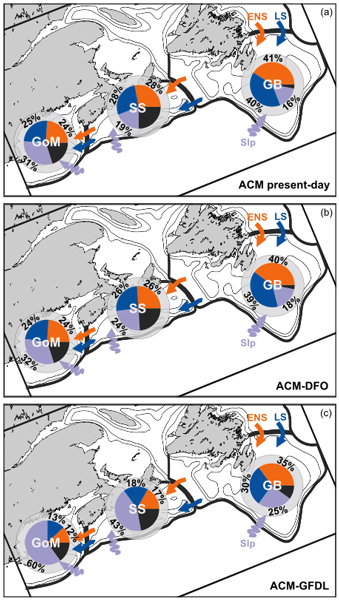
We downscaled two mid-century (~2075) ocean model projections to a high-resolution regional ocean model of the northwest North Atlantic (NA) shelf. In one projection, the NA shelf break current practically disappears; in the other it remains almost unchanged. This leads to a wide range of possible future shelf properties. More accurate projections of coastal circulation features would narrow the range of possible outcomes of biogeochemical projections for shelf regions.
Anusha Sathyanadh, Jörg Schwinger, Tommi Bergman, Antti-Ilari Partanen, Timothée Bourgeois, Miriam Seifert, Judith Hauck, David Keller, Tronje Kemena, Claudia Eisenring, Phil Renforth, Spyros Foteinis, and Helene Muri
EGUsphere, https://doi.org/10.5194/egusphere-2026-5784, https://doi.org/10.5194/egusphere-2026-5784, 2026
This preprint is open for discussion and under review for Biogeosciences (BG).
Short summary
Short summary
We used four global Earth system models to test two ocean-based carbon removal methods along the coasts of the United States, Europe, and China. Both methods reduced atmospheric CO2, but their efficiency varied greatly between models, and much of the carbon removal occurred far from where it was deployed. Cooling emerged only slowly, and remained small, suggesting these methods could support long – term carbon removal but would contribute little to near-term temperature recovery.
Chiara Ciscato, Neha Mehendale, Tronje P. Kemena, Sandy Avrutin, and David P. Keller
Earth Syst. Dynam., 17, 1513–1527, https://doi.org/10.5194/esd-17-1513-2026, https://doi.org/10.5194/esd-17-1513-2026, 2026
Short summary
Short summary
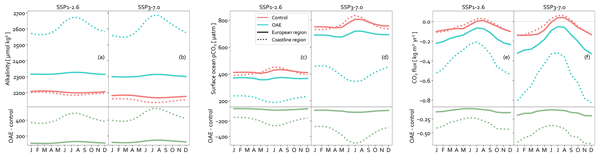
Ocean Alkalinity Enhancement (OAE) is a marine carbon dioxide removal method with large-scale potential. Using an Earth System Model, we explored the effects of continuous coastal OAE application on the seasonal carbon cycle under low and high emissions. We found that stratification retains higher alkalinity over summer, reducing the ocean pCO2 and turning the region into a year-round carbon sink. Additionally, high emissions lower the ocean’s buffering capacity and increase winter CO2 uptake.
Abby Lunstrum, David Keller, Jens Hartmann, and Charly Andre Moras
EGUsphere, https://doi.org/10.70212/cdrxiv.2026517.v2, https://doi.org/10.70212/cdrxiv.2026517.v2, 2026
Short summary
Short summary
Ocean alkalinity enhancement (OAE) is a proposed technology to remove CO2 from the atmosphere. The effectiveness of OAE is determined by several physical, biological, and geochemical processes, many of which are poorly constrained and not typically considered in recent assessments. To help align research and improve estimates of OAE efficiency, we provide a framework describing these processes, identify major knowledge gaps, and highlight research priorities.
Vanessa Teske, Tronje Kemena, and Andreas Oschlies
EGUsphere, https://doi.org/10.5194/egusphere-2026-4781, https://doi.org/10.5194/egusphere-2026-4781, 2026
Short summary
Short summary
Ocean Alkalinity Enhancement is an ocean-based carbon dioxide removal method, but common metrics for assessing its effectiveness are difficult to apply in Earth system models. We show that changes in the global ocean carbon and alkalinity inventories are unreliable indicators for CO₂ uptake by the ocean because alkalinity additions to the ocean can alter the timing of large-scale climate modes, such as El Niño. Regional air-sea CO₂ fluxes provide more robust estimates.
Iris Kriest, Tronje Kemena, and Haichao Guo
EGUsphere, https://doi.org/10.5194/egusphere-2026-3423, https://doi.org/10.5194/egusphere-2026-3423, 2026
This preprint is open for discussion and under review for Geoscientific Model Development (GMD).
Short summary
Short summary
We calibrated rate constants of an ocean biogeochemical model in a computationally efficient circulation. We then transferred these constants to the same biogeochemical model coupled to a computationally expensive Earth system model (ESM) and investigate the effects of this transfer. Compared to an earlier version of the ESM, we find a considerable improvement of the revised model, suggesting that prior calibration of parameters in efficient circulation models can support ESM model development.
Arnaud Laurent, Bin Wang, Dariia Atamanchuk, Subhadeep Rakshit, Kumiko Azetsu-Scott, Chris Algar, and Katja Fennel
Biogeosciences, 23, 115–135, https://doi.org/10.5194/bg-23-115-2026, https://doi.org/10.5194/bg-23-115-2026, 2026
Short summary
Short summary
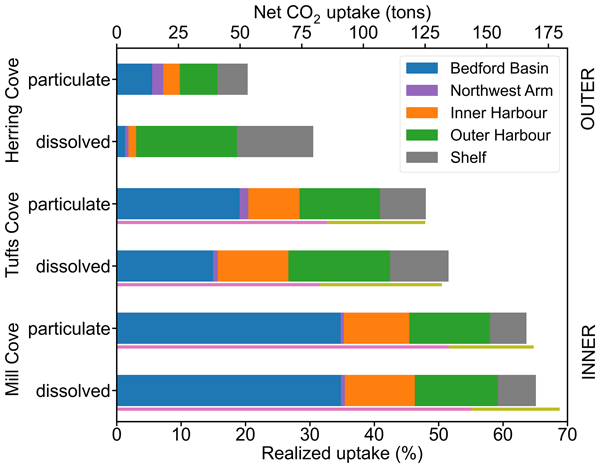
Surface ocean alkalinity enhancement, through the release of alkaline materials, is a technology that could increase the storage of anthropogenic carbon in the ocean. Halifax Harbour (Canada) is a current test site for operational alkalinity addition. Here, we present a model of Halifax Harbour that simulates alkalinity addition at various locations of the harbour and quantifies the resulting net CO2 uptake. The model can be relocated to study alkalinity addition in other coastal systems.
Timothée Bourgeois, Giang T. Tran, Aurich Jeltsch-Thömmes, Jörg Schwinger, Friederike Fröb, Thomas L. Frölicher, Thorsten Blenckner, Olivier Torres, Jean Negrel, David P. Keller, Andreas Oschlies, Laurent Bopp, and Fortunat Joos
Biogeosciences, 22, 5435–5462, https://doi.org/10.5194/bg-22-5435-2025, https://doi.org/10.5194/bg-22-5435-2025, 2025
Short summary
Short summary
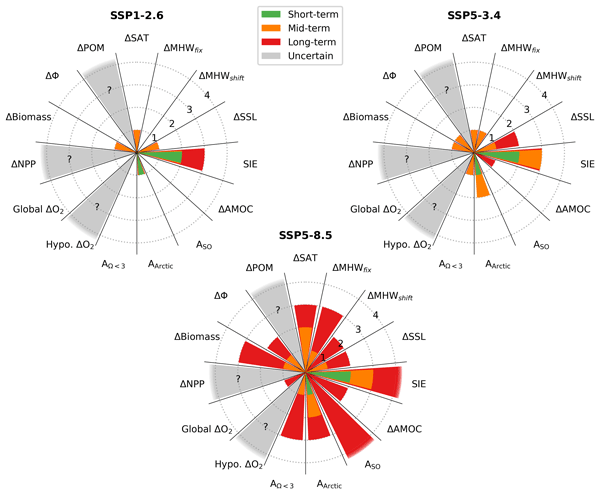
Anthropogenic greenhouse gas emissions significantly impact ocean ecosystems through climate change and acidification, leading to either progressive or abrupt changes. This study maps the crossing of physical and ecological limits for various ocean impact metrics under three emission scenarios. Using Earth system models, we identify when these limits are exceeded, highlighting the urgent need for ambitious climate action to safeguard the world's oceans and ecosystems.
Haichao Guo, Wolfgang Koeve, Andreas Oschlies, Yan-Chun He, Tronje Peer Kemena, Lennart Gerke, and Iris Kriest
Ocean Sci., 21, 1167–1182, https://doi.org/10.5194/os-21-1167-2025, https://doi.org/10.5194/os-21-1167-2025, 2025
Short summary
Short summary
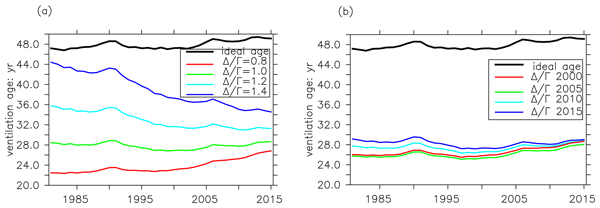
We evaluated the effectiveness of the inverse Gaussian transit time distribution (IG-TTD) with respect to estimating the mean state and temporal changes of seawater age, defined as the duration since water last had contact with the atmosphere, within the tropical thermocline. Results suggest that the IG-TTD underestimates seawater age. Moreover, the IG-TTD constrained by a single tracer gives spurious trends in water age. Incorporating an additional tracer improves IG-TTD's accuracy for estimating temporal change of seawater age.

Gianpiero Cossarini, Andrew Moore, Stefano Ciavatta, and Katja Fennel
State Planet, 5-opsr, 12, https://doi.org/10.5194/sp-5-opsr-12-2025, https://doi.org/10.5194/sp-5-opsr-12-2025, 2025
Short summary
Short summary
Marine biogeochemistry refers to the cycling of chemical elements resulting from physical transport, chemical reaction, uptake, and processing by living organisms. Biogeochemical models can have a wide range of complexity, from a single nutrient to fully explicit representations of multiple nutrients, trophic levels, and functional groups. Uncertainty sources are the lack of knowledge about the parameterizations, the initial and boundary conditions, and the lack of observations.
Kyoko Ohashi, Arnaud Laurent, Christoph Renkl, Jinyu Sheng, Katja Fennel, and Eric Oliver
Geosci. Model Dev., 17, 8697–8733, https://doi.org/10.5194/gmd-17-8697-2024, https://doi.org/10.5194/gmd-17-8697-2024, 2024
Short summary
Short summary
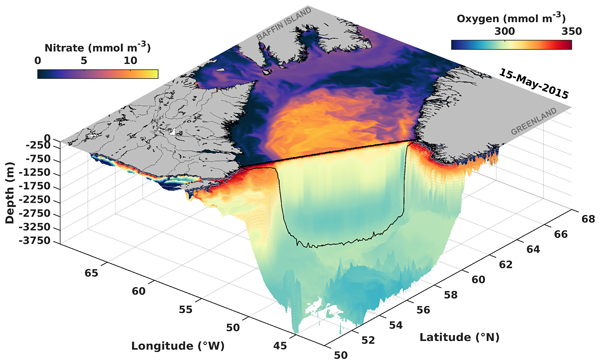
We developed a modelling system of the northwest Atlantic Ocean that simulates the currents, temperature, salinity, and parts of the biochemical cycle of the ocean, as well as sea ice. The system combines advanced, open-source models and can be used to study, for example, the ocean capture of atmospheric carbon dioxide, which is a key process in the global climate. The system produces realistic results, and we use it to investigate the roles of tides and sea ice in the northwest Atlantic Ocean.
Krysten Rutherford, Katja Fennel, Lina Garcia Suarez, and Jasmin G. John
Biogeosciences, 21, 301–314, https://doi.org/10.5194/bg-21-301-2024, https://doi.org/10.5194/bg-21-301-2024, 2024
Short summary
Short summary
We downscaled two mid-century (~2075) ocean model projections to a high-resolution regional ocean model of the northwest North Atlantic (NA) shelf. In one projection, the NA shelf break current practically disappears; in the other it remains almost unchanged. This leads to a wide range of possible future shelf properties. More accurate projections of coastal circulation features would narrow the range of possible outcomes of biogeochemical projections for shelf regions.
Robert W. Izett, Katja Fennel, Adam C. Stoer, and David P. Nicholson
Biogeosciences, 21, 13–47, https://doi.org/10.5194/bg-21-13-2024, https://doi.org/10.5194/bg-21-13-2024, 2024
Short summary
Short summary
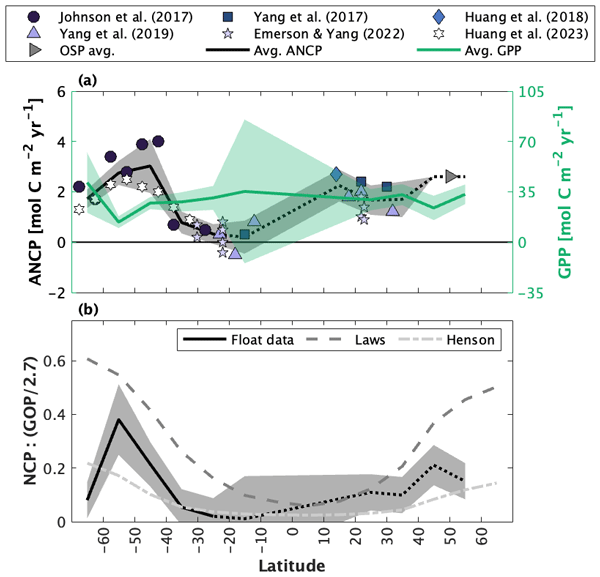
This paper provides an overview of the capacity to expand the global coverage of marine primary production estimates using autonomous ocean-going instruments, called Biogeochemical-Argo floats. We review existing approaches to quantifying primary production using floats, provide examples of the current implementation of the methods, and offer insights into how they can be better exploited. This paper is timely, given the ongoing expansion of the Biogeochemical-Argo array.
Katja Fennel, Matthew C. Long, Christopher Algar, Brendan Carter, David Keller, Arnaud Laurent, Jann Paul Mattern, Ruth Musgrave, Andreas Oschlies, Josiane Ostiguy, Jaime B. Palter, and Daniel B. Whitt
State Planet, 2-oae2023, 9, https://doi.org/10.5194/sp-2-oae2023-9-2023, https://doi.org/10.5194/sp-2-oae2023-9-2023, 2023
Short summary
Short summary
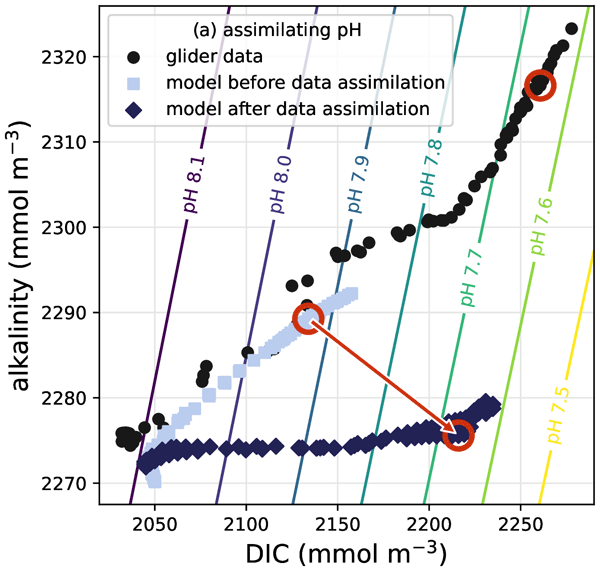
This paper describes biogeochemical models and modelling techniques for applications related to ocean alkalinity enhancement (OAE) research. Many of the most pressing OAE-related research questions cannot be addressed by observation alone but will require a combination of skilful models and observations. We present illustrative examples with references to further information; describe limitations, caveats, and future research needs; and provide practical recommendations.
Li-Qing Jiang, Adam V. Subhas, Daniela Basso, Katja Fennel, and Jean-Pierre Gattuso
State Planet, 2-oae2023, 13, https://doi.org/10.5194/sp-2-oae2023-13-2023, https://doi.org/10.5194/sp-2-oae2023-13-2023, 2023
Short summary
Short summary
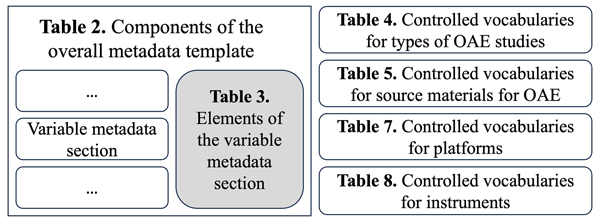
This paper provides comprehensive guidelines for ocean alkalinity enhancement (OAE) researchers on archiving their metadata and data. It includes data standards for various OAE studies and a universal metadata template. Controlled vocabularies for terms like alkalinization methods are included. These guidelines also apply to ocean acidification data.
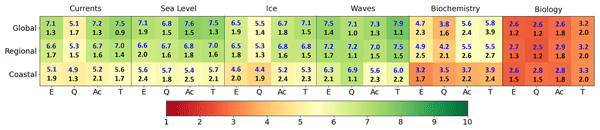
Stefania A. Ciliberti, Enrique Alvarez Fanjul, Jay Pearlman, Kirsten Wilmer-Becker, Pierre Bahurel, Fabrice Ardhuin, Alain Arnaud, Mike Bell, Segolene Berthou, Laurent Bertino, Arthur Capet, Eric Chassignet, Stefano Ciavatta, Mauro Cirano, Emanuela Clementi, Gianpiero Cossarini, Gianpaolo Coro, Stuart Corney, Fraser Davidson, Marie Drevillon, Yann Drillet, Renaud Dussurget, Ghada El Serafy, Katja Fennel, Marcos Garcia Sotillo, Patrick Heimbach, Fabrice Hernandez, Patrick Hogan, Ibrahim Hoteit, Sudheer Joseph, Simon Josey, Pierre-Yves Le Traon, Simone Libralato, Marco Mancini, Pascal Matte, Angelique Melet, Yasumasa Miyazawa, Andrew M. Moore, Antonio Novellino, Andrew Porter, Heather Regan, Laia Romero, Andreas Schiller, John Siddorn, Joanna Staneva, Cecile Thomas-Courcoux, Marina Tonani, Jose Maria Garcia-Valdecasas, Jennifer Veitch, Karina von Schuckmann, Liying Wan, John Wilkin, and Romane Zufic
State Planet, 1-osr7, 2, https://doi.org/10.5194/sp-1-osr7-2-2023, https://doi.org/10.5194/sp-1-osr7-2-2023, 2023
Benjamin Richaud, Katja Fennel, Eric C. J. Oliver, Michael D. DeGrandpre, Timothée Bourgeois, Xianmin Hu, and Youyu Lu
The Cryosphere, 17, 2665–2680, https://doi.org/10.5194/tc-17-2665-2023, https://doi.org/10.5194/tc-17-2665-2023, 2023
Short summary
Short summary
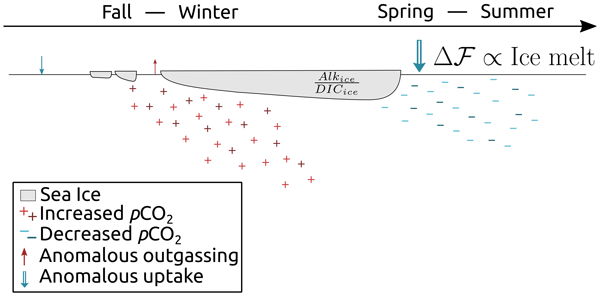
Sea ice is a dynamic carbon reservoir. Its seasonal growth and melt modify the carbonate chemistry in the upper ocean, with consequences for the Arctic Ocean carbon sink. Yet, the importance of this process is poorly quantified. Using two independent approaches, this study provides new methods to evaluate the error in air–sea carbon flux estimates due to the lack of biogeochemistry in ice in earth system models. Those errors range from 5 % to 30 %, depending on the model and climate projection.
Arnaud Laurent, Haiyan Zhang, and Katja Fennel
Biogeosciences, 19, 5893–5910, https://doi.org/10.5194/bg-19-5893-2022, https://doi.org/10.5194/bg-19-5893-2022, 2022
Short summary
Short summary
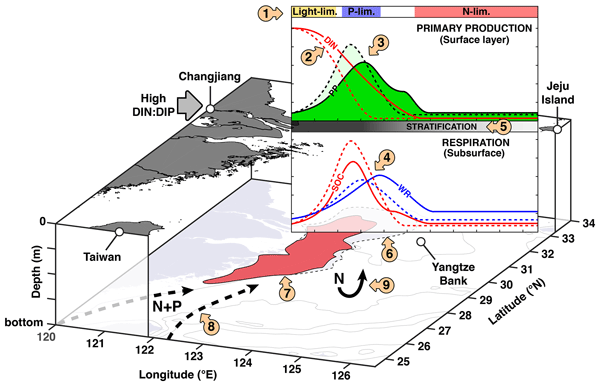
The Changjiang is the main terrestrial source of nutrients to the East China Sea (ECS). Nutrient delivery to the ECS has been increasing since the 1960s, resulting in low oxygen (hypoxia) during phytoplankton decomposition in summer. River phosphorus (P) has increased less than nitrogen, and therefore, despite the large nutrient delivery, phytoplankton growth can be limited by the lack of P. Here, we investigate this link between P limitation, phytoplankton production/decomposition, and hypoxia.
Krysten Rutherford, Katja Fennel, Dariia Atamanchuk, Douglas Wallace, and Helmuth Thomas
Biogeosciences, 18, 6271–6286, https://doi.org/10.5194/bg-18-6271-2021, https://doi.org/10.5194/bg-18-6271-2021, 2021
Short summary
Short summary
Using a regional model of the northwestern North Atlantic shelves in combination with a surface water time series and repeat transect observations, we investigate surface CO2 variability on the Scotian Shelf. The study highlights a strong seasonal cycle in shelf-wide pCO2 and spatial variability throughout the summer months driven by physical events. The simulated net flux of CO2 on the Scotian Shelf is out of the ocean, deviating from the global air–sea CO2 flux trend in continental shelves.
Cited articles
Alexander, M. A., Shin, S., Scott, J. D., Curchitser, E., and Stock, C.: The Response of the Northwest Atlantic Ocean to Climate Change, J. Climate, 33, 405–428, https://doi.org/10.1175/JCLI-D-19-0117.1, 2020.
Andres, M.: On the recent destabilization of the Gulf Stream path downstream of Cape Hatteras, Geophys. Res. Lett., 43, 9836–9842, https://doi.org/10.1002/2016GL069966, 2016.
Bisagni, J. J., Gangopadhyay, A., and Sanchez-Franks, A.: Secular change and inter-annual variability of the Gulf Stream position, 1993–2013, 70°–55° W, Deep-Sea Res. Pt. I, 125, 1–10, https://doi.org/10.1016/j.dsr.2017.04.001, 2017.
Caesar, L., Rahmstorf, S., Robinson, A., Feulner, G., and Saba, V.: Observed fingerprint of a weakening Atlantic Ocean overturning circulation, Nature, 556, 191–196, https://doi.org/10.1038/s41586-018-0006-5, 2018.
Caesar, L., McCarthy, G. D., Thornalley, D. J. R., Cahill, N., and Rahmstorf, S.: Current Atlantic Meridional Overturning Circulation weakest in last millennium, Nat. Geosci., 14, 118–120, https://doi.org/10.1038/s41561-021-00699-z, 2021.
Chen, X. and Tung, K.-K.: Global surface warming enhanced by weak Atlantic overturning circulation, Nature, 559, 387–391, https://doi.org/10.1038/s41586-018-0320-y, 2018.
Chi, L., Wolfe, C. L. P., and Hameed, S.: Intercomparison of the Gulf Stream in ocean reanalyses: 1993–2010, Ocean Model., 125, 1–21, https://doi.org/10.1016/j.ocemod.2018.02.008, 2018.
Chi, L., Wolfe, C. L. P., and Hameed, S.: The Distinction Between the Gulf Stream and Its North Wall, Geophys. Res. Lett., 46, 8943–8951, https://doi.org/10.1029/2019GL083775, 2019.
Chi, L., Wolfe, C. L. P., and Hameed, S.: Has the Gulf Stream Slowed or Shifted in the Altimetry Era?, Geophys. Res. Lett., 48, e2021GL093113, https://doi.org/10.1029/2021GL093113, 2021.
Claret, M., Galbraith, E. D., Palter, J. B., Bianchi, D., Fennel, K., Gilbert, D., and Dunne, J. P.: Rapid coastal deoxygenation due to ocean circulation shift in the northwest Atlantic, Nat. Clim. Change, 8, 868–872, https://doi.org/10.1038/s41558-018-0263-1, 2018.
Copernicus Climate Change Service: Global ocean gridded L4 sea surface heights and derived variables reprocessed, Copernicus Climate Change Service [data set], https://doi.org/10.48670/MOI-00145, 2021.
Cornillon, P. and Watts, R.: Satellite Thermal Infrared and Inverted Echo Sounder Determinations of the Gulf Stream Northern Edge, J. Atmos. Ocean. Tech., 4, 712–723, https://doi.org/10.1175/1520-0426(1987)004<0712:STIAIE>2.0.CO;2, 1987.
Debreu, L., Vouland, C., and Blayo, E.: AGRIF: Adaptive grid refinement in Fortran, Comput. Geosci., 34, 8–13, https://doi.org/10.1016/j.cageo.2007.01.009, 2008.
Delworth, T. L., Rosati, A., Anderson, W., Adcroft, A. J., Balaji, V., Benson, R., Dixon, K., Griffies, S. M., Lee, H.-C., Pacanowski, R. C., Vecchi, G. A., Wittenberg, A. T., Zeng, F., and Zhang, R.: Simulated Climate and Climate Change in the GFDL CM2.5 High-Resolution Coupled Climate Model, J. Climate, 25, 2755–2781, https://doi.org/10.1175/JCLI-D-11-00316.1, 2012.
European Union-Copernicus Marine Service: Multi Observation Global Ocean 3D Temperature Salinity Height Geostrophic Current and MLD, European Union-Copernicus Marine Service [data set], https://doi.org/10.48670/MOI-00052, 2020.
Fichefet, T. and Maqueda, M. A. M.: Sensitivity of a global sea ice model to the treatment of ice thermodynamics and dynamics, J. Geophys. Res.-Oceans, 102, 12609–12646, https://doi.org/10.1029/97JC00480, 1997.
Forsyth, J. S. T., Andres, M., and Gawarkiewicz, G. G.: Recent accelerated warming of the continental shelf off New Jersey: Observations from the CMV Oleander expendable bathythermograph line, J. Geophys. Res.-Oceans, 120, 2370–2384, https://doi.org/10.1002/2014JC010516, 2015.
Frankignoul, C., de Coëtlogon, G., Joyce, T. M., and Dong, S.: Gulf Stream Variability and Ocean–Atmosphere Interactions, J. Phys. Oceanogr., 31, 3516–3529, https://doi.org/10.1175/1520-0485(2002)031<3516:GSVAOA>2.0.CO;2, 2001.
Fuglister, F. C. and Voorhis, A. D.: A New Method of Tracking the Gulf Stream1, Limnol. Oceanogr., 10, R115–R124, https://doi.org/10.4319/lo.1965.10.suppl2.r115, 1965.
Gangopadhyay, A., Chaudhuri, A. H., and Taylor, A. H.: On the Nature of Temporal Variability of the Gulf Stream Path from 75° to 55° W, Earth Interact., 20, 1–17, https://doi.org/10.1175/EI-D-15-0025.1, 2016.
Garcia-Suarez, L. and Fennel, K.: Physical Drivers and Biogeochemical Effects of the Projected Decline of the Shelfbreak Jet in the Northwest North Atlantic Ocean, J. Adv. Model. Earth Syst., 16, e2024MS004580, https://doi.org/10.1029/2024MS004580, 2024.
Garcia-Suarez, L., Fennel, K., Mehendale, N., Kemena, T., and Keller, D. P.: Processed outputs from the CM2.6 and FOCI climate models used to investigate how temperature-based diagnosis of the Gulf Stream path overestimates its northward shift (Garcia-Suarez et al., 2026; OS), Zenodo [data set], https://doi.org/10.5281/zenodo.14644833, 2025.
Gonçalves Neto, A., Langan, J. A., and Palter, J. B.: Changes in the Gulf Stream preceded rapid warming of the Northwest Atlantic Shelf, Commun. Earth Environ., 2, 74, https://doi.org/10.1038/s43247-021-00143-5, 2021.
Guinehut, S., Dhomps, A.-L., Larnicol, G., and Le Traon, P.-Y.: High resolution 3-D temperature and salinity fields derived from in situ and satellite observations, Ocean Sci., 8, 845–857, https://doi.org/10.5194/os-8-845-2012, 2012.
Häkkinen, S.: Variability in sea surface height: A qualitative measure for the meridional overturning in the North Atlantic, J. Geophys. Res.-Oceans, 106, 13837–13848, https://doi.org/10.1029/1999JC000155, 2001.
Hansen, D. V.: Gulf stream meanders between Cape Hatteras and the Grand Banks, Deep-Sea Res. Oceanogr. Abstr., 17, 495–511, https://doi.org/10.1016/0011-7471(70)90064-1, 1970.
Huo, W., Drews, A., Martin, T., and Wahl, S.: Impacts of North Atlantic Model Biases on Natural Decadal Climate Variability, J. Geophys. Res.-Atmos., 129, e2023JD039778, https://doi.org/10.1029/2023JD039778, 2024.
Johnson, G. C. and Lyman, J. M.: Warming trends increasingly dominate global ocean, Nat. Clim. Change, 10, 757–761, https://doi.org/10.1038/s41558-020-0822-0, 2020.
Joyce, T. M., Deser, C., and Spall, M. A.: The Relation between Decadal Variability of Subtropical Mode Water and the North Atlantic Oscillation, J. Climate, 13, 2550–2569, https://doi.org/10.1175/1520-0442(2000)013<2550:TRBDVO>2.0.CO;2, 2000.
Keller, D. P., Mehendale, N., and Kemena, T.: Analysis (report) of high- resolution modelling of efficacy, and regional impacts of selected ocean NETs close to the deployment sites, OceanNets Deliverable, D4.3_v1, OceanNETs, Kiel, Germany, 29 pp., https://doi.org/10.3289/oceannets_d4.3_v1, 2023.
Lillibridge, J. L. and Mariano, A. J.: A statistical analysis of Gulf Stream variability from 18+ years of altimetry data, Deep-Sea Res. Pt. II:, 85, 127–146, https://doi.org/10.1016/j.dsr2.2012.07.034, 2013.
Ma, X., Jia, Y., and Han, Z.: Impact of the Gulf Stream front on atmospheric rivers and Rossby wave train in the North Atlantic, Clim. Dynam., 62, 5827–5843, https://doi.org/10.1007/s00382-024-07178-2, 2024.
Madec, G.: NEMO ocean engine, Note du Pôle de modélisation de l'Institut Pierre-Simon Laplace 27, l'Institut Pierre-Simon Laplace, 386 pp., https://www.nemo-ocean.eu/doc/ (last access: 9 September 2024), 2016.
Martin, T. and Biastoch, A.: On the ocean's response to enhanced Greenland runoff in model experiments: relevance of mesoscale dynamics and atmospheric coupling, Ocean Sci., 19, 141–167, https://doi.org/10.5194/os-19-141-2023, 2023.
Martin, T., Biastoch, A., Lohmann, G., Mikolajewicz, U., and Wang, X.: On Timescales and Reversibility of the Ocean's Response to Enhanced Greenland Ice Sheet Melting in Comprehensive Climate Models, Geophys. Res. Lett., 49, e2021GL097114, https://doi.org/10.1029/2021GL097114, 2022.
Matthes, K., Biastoch, A., Wahl, S., Harlaß, J., Martin, T., Brücher, T., Drews, A., Ehlert, D., Getzlaff, K., Krüger, F., Rath, W., Scheinert, M., Schwarzkopf, F. U., Bayr, T., Schmidt, H., and Park, W.: The Flexible Ocean and Climate Infrastructure version 1 (FOCI1): mean state and variability, Geosci. Model Dev., 13, 2533–2568, https://doi.org/10.5194/gmd-13-2533-2020, 2020.
Mulet, S., Rio, M.-H., Mignot, A., Guinehut, S., and Morrow, R.: A new estimate of the global 3D geostrophic ocean circulation based on satellite data and in-situ measurements, Deep-Sea Res. Pt. II, 77, 70–81, 2012.
Müller, W. A., Jungclaus, J. H., Mauritsen, T., Baehr, J., Bittner, M., Budich, R., Bunzel, F., Esch, M., Ghosh, R., Haak, H., Ilyina, T., Kleine, T., Kornblueh, L., Li, H., Modali, K., Notz, D., Pohlmann, H., Roeckner, E., Stemmler, I., Tian, F., and Marotzke, J.: A Higher-resolution Version of the Max Planck Institute Earth System Model (MPI-ESM1.2-HR), J. Adv. Model. Earth Syst., 10, 1383–1413, https://doi.org/10.1029/2017MS001217, 2018.
O'Neill, B. C., Tebaldi, C., van Vuuren, D. P., Eyring, V., Friedlingstein, P., Hurtt, G., Knutti, R., Kriegler, E., Lamarque, J.-F., Lowe, J., Meehl, G. A., Moss, R., Riahi, K., and Sanderson, B. M.: The Scenario Model Intercomparison Project (ScenarioMIP) for CMIP6, Geosci. Model Dev., 9, 3461–3482, https://doi.org/10.5194/gmd-9-3461-2016, 2016.
Palter, J. B.: The Role of the Gulf Stream in European Climate, Annu. Rev. Mar. Sci., 7, 113–137, https://doi.org/10.1146/annurev-marine-010814-015656, 2015.
Peña-Molino, B. and Joyce, T. M.: Variability in the Slope Water and its relation to the Gulf Stream path, Geophys. Res. Lett., 35, L03606, https://doi.org/10.1029/2007GL032183, 2008.
Pérez-Hernández, M. D. and Joyce, T. M.: Two Modes of Gulf Stream Variability Revealed in the Last Two Decades of Satellite Altimeter Data, J. Phys. Oceanogr., 44, 149–163, https://doi.org/10.1175/JPO-D-13-0136.1, 2014.
Peterson, I., Greenan, B., Gilbert, D., and Hebert, D.: Variability and wind forcing of ocean temperature and thermal fronts in the Slope Water region of the Northwest Atlantic, J. Geophys. Res.-Oceans, 122, 7325–7343, https://doi.org/10.1002/2017JC012788, 2017.
Rahmstorf, S., Box, J. E., Feulner, G., Mann, M. E., Robinson, A., Rutherford, S., and Schaffernicht, E. J.: Exceptional twentieth-century slowdown in Atlantic Ocean overturning circulation, Nat. Clim. Change, 5, 475–480, https://doi.org/10.1038/nclimate2554, 2015.
Reick, C. H., Raddatz, T., Brovkin, V., and Gayler, V.: Representation of natural and anthropogenic land cover change in MPI-ESM, J. Adv. Model. Earth Syst., 5, 459–482, https://doi.org/10.1002/jame.20022, 2013.
Ross, A. C., Stock, C. A., Adcroft, A., Curchitser, E., Hallberg, R., Harrison, M. J., Hedstrom, K., Zadeh, N., Alexander, M., Chen, W., Drenkard, E. J., du Pontavice, H., Dussin, R., Gomez, F., John, J. G., Kang, D., Lavoie, D., Resplandy, L., Roobaert, A., Saba, V., Shin, S.-I., Siedlecki, S., and Simkins, J.: A high-resolution physical–biogeochemical model for marine resource applications in the northwest Atlantic (MOM6-COBALT-NWA12 v1.0), Geosci. Model Dev., 16, 6943–6985, https://doi.org/10.5194/gmd-16-6943-2023, 2023.
Rossby, T., Flagg, C. N., Donohue, K., Sanchez-Franks, A., and Lillibridge, J.: On the long-term stability of Gulf Stream transport based on 20 years of direct measurements, Geophys. Res. Lett., 41, 114–120, https://doi.org/10.1002/2013GL058636, 2014.
Saba, V. S., Griffies, S. M., Anderson, W. G., Winton, M., Alexander, M. A., Delworth, T. L., Hare, J. A., Harrison, M. J., Rosati, A., Vecchi, G. A., and Zhang, R.: Enhanced warming of the Northwest Atlantic Ocean under climate change, J. Geophys. Res.-Oceans, 121, 118–132, https://doi.org/10.1002/2015JC011346, 2016.
Sánchez-Román, A., Gues, F., Bourdalle-Badie, R., Pujol, M.-I., Pascual, A., and Drévillon, M.: Changes in the Gulf Stream path over the last 3 decades, State Planet, 4-osr8, 1–11, https://doi.org/10.5194/sp-4-osr8-4-2024, 2024.
Seidov, D., Mishonov, A., Reagan, J., and Parsons, R.: Resilience of the Gulf Stream path on decadal and longer timescales, Sci. Rep., 9, 11549, https://doi.org/10.1038/s41598-019-48011-9, 2019.
Seidov, D., Mishonov, A., and Parsons, R.: Recent warming and decadal variability of Gulf of Maine and Slope Water, Limnol. Oceanogr., 66, 3472–3488, https://doi.org/10.1002/lno.11892, 2021.
Taylor, A. H. and Stephens, J. A.: The North Atlantic Oscillation and the latitude of the Gulf Stream, Tellus A, 50, 134–142, 1998.
Thompson, K. R. and Demirov, E.: Skewness of sea level variability of the world's oceans, J. Geophys. Res.-Oceans, 111, https://doi.org/10.1029/2004JC002839, 2006.
Thornalley, D. J. R., Oppo, D. W., Ortega, P., Robson, J. I., Brierley, C. M., Davis, R., Hall, I. R., Moffa-Sanchez, P., Rose, N. L., Spooner, P. T., Yashayaev, I., and Keigwin, L. D.: Anomalously weak Labrador Sea convection and Atlantic overturning during the past 150 years, Nature, 556, 227–230, https://doi.org/10.1038/s41586-018-0007-4, 2018.
Todd, R. E. and Ren, A. S.: Warming and lateral shift of the Gulf Stream from in situ observations since 2001, Nat. Clim. Change, 13, 1348–1352, https://doi.org/10.1038/s41558-023-01835-w, 2023.
Valcke, S.: The OASIS3 coupler: a European climate modelling community software, Geosci. Model Dev., 6, 373–388, https://doi.org/10.5194/gmd-6-373-2013, 2013.
Wenta, M., Grams, C. M., Papritz, L., and Federer, M.: Linking Gulf Stream air–sea interactions to the exceptional blocking episode in February 2019: a Lagrangian perspective, Weather Clim. Dynam., 5, 181–209, https://doi.org/10.5194/wcd-5-181-2024, 2024.
Williams, R. G., Katavouta, A., and Roussenov, V.: Regional Asymmetries in Ocean Heat and Carbon Storage due to Dynamic Redistribution in Climate Model Projections, J. Climate, 34, 3907–3925, https://doi.org/10.1175/JCLI-D-20-0519.1, 2021.
Wu, T. and He, R.: Gulf Stream mesoscale variabilities drive bottom marine heatwaves in Northwest Atlantic continental margin methane seeps, Commun. Earth Environ., 5, 1–12, https://doi.org/10.1038/s43247-024-01742-8, 2024.
Yang, H., Lohmann, G., Wei, W., Dima, M., Ionita, M., and Liu, J.: Intensification and poleward shift of subtropical western boundary currents in a warming climate, J. Geophys. Res.-Oceans, 121, 4928–4945, https://doi.org/10.1002/2015JC011513, 2016.
Yang, H., Lohmann, G., Krebs-Kanzow, U., Ionita, M., Shi, X., Sidorenko, D., Gong, X., Chen, X., and Gowan, E. J.: Poleward Shift of the Major Ocean Gyres Detected in a Warming Climate, Geophys. Res. Lett., 47, e2019GL085868, https://doi.org/10.1029/2019GL085868, 2020.
Short summary
This study shows that regional ocean warming can make the Gulf Stream appear to shift north more rapidly than it actually does. Temperature-based proxies, like the Gulf Stream North Wall, overestimate changes in its position. Methods based on sea surface height provide a more accurate view. These results help improve how we track changes in ocean currents and avoid misinterpreting signs of climate-related shifts.
This study shows that regional ocean warming can make the Gulf Stream appear to shift north more...


