
Articles | Volume 22, issue 2
https://doi.org/10.5194/os-22-1129-2026
© Author(s) 2026. This work is distributed under
the Creative Commons Attribution 4.0 License.
the Creative Commons Attribution 4.0 License.
Special issue:
https://doi.org/10.5194/os-22-1129-2026
© Author(s) 2026. This work is distributed under
the Creative Commons Attribution 4.0 License.
the Creative Commons Attribution 4.0 License.
Review article
| 
10 Apr 2026
Review article |
| 10 Apr 2026
| 10 Apr 2026
Distributed optical fibre sensing in physical oceanography: emergence and future prospects
Alberto C. Naveira Garabato
CORRESPONDING AUTHOR

University of Southampton, Southampton, UK
Carl P. Spingys
National Oceanography Centre, Southampton, UK
Andrew J. Lucas
Scripps Institution of Oceanography, University of California San Diego, La Jolla, CA, USA
Tiago S. Dotto
National Oceanography Centre, Southampton, UK
University of East Anglia, Norwich, UK
Christian T. Wild
University of Tübingen, Tübingen, Germany
Scott W. Tyler
University of Nevada, Reno, NV, USA
Ted A. Scambos
University of Colorado Boulder, Boulder, CO, USA
Christopher B. Kratt
University of Nevada, Reno, NV, USA
Giuseppe Cappelli
Geo-Ocean, CNRS, University of Brest, Ifremer, Plouzané, France
IDIL Fibre Optics, Lannion, France
Ethan F. Williams
University of California, Santa Cruz, CA, USA
Mariona Claret
NorthWest Research Associates, Seattle, WA, USA
Hannah E. Glover
Oregon State University, Corvallis, OR, USA
Meagan E. Wengrove
Oregon State University, Corvallis, OR, USA
Madison M. Smith
Woods Hole Oceanographic Institution, Woods Hole, MA, USA
Michael G. Baker
Sandia National Laboratories, Albuquerque, NM, USA
Giuseppe Marra
National Physical Laboratory, Teddington, UK
Max Tamussino
National Physical Laboratory, Teddington, UK
Zitong Feng
National Physical Laboratory, Teddington, UK
David Lloyd
EXA Infrastructure, Dublin, Ireland
Liam Taylor
EXA Infrastructure, Dublin, Ireland
Mikael Mazur
Nokia Bell Labs, Murray Hill, NJ, USA
Maria-Daphne Mangriotis
National Oceanography Centre, Southampton, UK
Aaron Micallef
Monterey Bay Aquarium Research Institute, Moss Landing, CA, USA
Jennifer Ward Neale
National Oceanography Centre, Southampton, UK
Oleg A. Godin
Naval Postgraduate School, Monterey, CA, USA
Matthew H. Alford
Scripps Institution of Oceanography, University of California San Diego, La Jolla, CA, USA
Emma P. M. Gregory
National Oceanography Centre, Southampton, UK
Michael A. Clare
National Oceanography Centre, Southampton, UK
Hamid Shiri
National Oceanography Centre, Southampton, UK
Angel Ruiz Angulo
Institute of Earth Sciences, University of Iceland, Reykjavik, Iceland
Kathryn L. Gunn
University of Southampton, Southampton, UK
Ben I. Moat
National Oceanography Centre, Southampton, UK
Isobel A. Yeo
National Oceanography Centre, Southampton, UK
Afonso Loureiro
Agência Regional para o Desenvolvimento da Investigação, Tecnologia e Inovação, Funchal, Portugal
Instituto Dom Luiz, University of Lisbon, Lisbon, Portugal
Alessandro Silvano
University of Southampton, Southampton, UK
Arthur Hartog
FOSINA, Nanterre, France
Mohammad Belal
National Oceanography Centre, Southampton, UK
Related authors
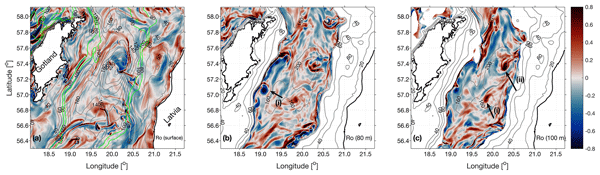
Evridiki Chrysagi, Lars Umlauf, Ulf Gräwe, Hans Burchard, and Alberto C. Naveira Garabato
Ocean Sci., 22, 3037–3053, https://doi.org/10.5194/os-22-3037-2026, https://doi.org/10.5194/os-22-3037-2026, 2026
Short summary
Short summary
High-resolution numerical simulations of the Baltic Sea reveal that fine-scale features known as submesoscales are widespread in the deeper layers of the basin, especially near its boundaries. These features are linked to strong mixing and, in this wind-driven system, are found to intensify during storms, with wind reversals shifting the location of mixing hotspots. Our results suggest that storm-modulated submesoscales may be important in other wind-driven coastal seas and lakes.
Isabelle F. M. White, Oana Dragomir, Alessandro Silvano, Alberto C. Naveira Garabato, Anna E. Hogg, Pierre Dutrieux, Laura Herraiz-Borreguero, and Jennifer Cocks
EGUsphere, https://doi.org/10.5194/egusphere-2026-4414, https://doi.org/10.5194/egusphere-2026-4414, 2026
This preprint is open for discussion and under review for Earth Observation (EO).
Short summary
Short summary
We present a 22-year sea surface height product in the ice-covered Southern Ocean from Envisat and CryoSat-2 satellite altimetry data. Our product is 1° longitude by 0.5° latitude from 50° S to the Antarctic coast. Validation with in-situ, independent satellite and reanalysis data shows it captures seasonal and interannual variability. This supports long-term study of large-scale sea level trends and processes in the Southern Ocean, a region that is observing rapid sea ice and ice sheet melting.
Hugues Goosse, Cecile Davrinche, Benjamin Richaud, Dániel Topál, Stephy Libera, Alberto C. Naveira Garabato, Alessandro Silvano, Martin Vancoppenolle, and Pablo Ortega
EGUsphere, https://doi.org/10.5194/egusphere-2026-1823, https://doi.org/10.5194/egusphere-2026-1823, 2026
Short summary
Short summary
The variability of the winter sea ice edge is much higher in regions close to the main topographic features of the Southern Ocean than over the smoother abyssal plain. The oceanic bathymetry influences mesoscale eddy activity and the Antarctic Circumpolar Current jets, affecting both oceanic heat transport and sea ice velocity and subsequently sea ice variability.
Miriam F. Sterl, Carlo J. Mans, Alberto C. Naveira Garabato, and Sjoerd Groeskamp
EGUsphere, https://doi.org/10.5194/egusphere-2026-2566, https://doi.org/10.5194/egusphere-2026-2566, 2026
Short summary
Short summary
Large oceanic 'whirls', called eddies, can mix ocean properties such as heat or salt. The mixing strength is tricky to measure directly. We present a new method to derive the mixing strength based on data from a mooring; a cable from the seafloor to the surface, with instruments along it. We apply our method to a mooring in the Southern Ocean and show that it confirms some important features predicted from theory. The method can be a valuable tool to increase our understanding of ocean mixing.
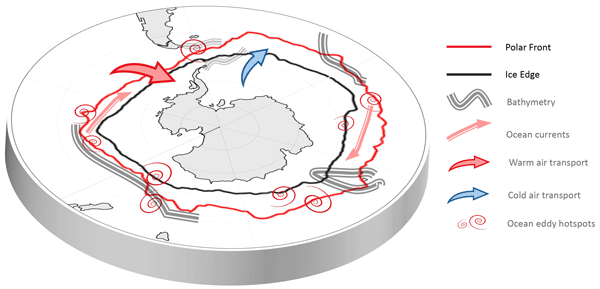
Hugues Goosse, Stephy Libera, Alberto C. Naveira Garabato, Benjamin Richaud, Alessandro Silvano, and Martin Vancoppenolle
The Cryosphere, 19, 5763–5779, https://doi.org/10.5194/tc-19-5763-2025, https://doi.org/10.5194/tc-19-5763-2025, 2025
Short summary
Short summary
The position of the winter sea ice edge in the Southern Ocean is strongly linked to the one of the Antarctic Circumpolar Current and thus to ocean bathymetry. This is due to the influence of the Antarctic Circumpolar Current on the southward heat flux that limits sea ice expansion, directly through oceanic processes and indirectly through its influence on atmospheric heat transport.
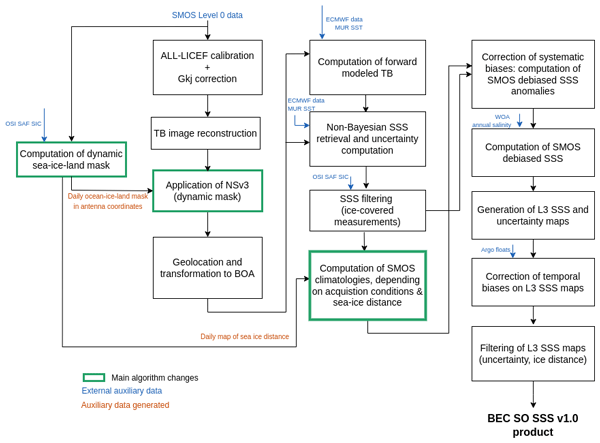
Verónica González-Gambau, Estrella Olmedo, Aina García-Espriu, Cristina González-Haro, Antonio Turiel, Carolina Gabarró, Alessandro Silvano, Aditya Narayanan, Alberto Naveira-Garabato, Rafael Catany, Nina Hoareau, Marta Umbert, Giuseppe Aulicino, Yuri Cotroneo, Roberto Sabia, and Diego Fernández-Prieto
Earth Syst. Sci. Data, 17, 5089–5111, https://doi.org/10.5194/essd-17-5089-2025, https://doi.org/10.5194/essd-17-5089-2025, 2025
Short summary
Short summary
This paper introduces a new Sea Surface Salinity product for the Southern Ocean, based on SMOS data and developed by the Barcelona Expert Center. It offers 9 d maps on a 25 km EASE-SL grid, from 2011 to 2023, covering areas south of 30° S. The product is accurate beyond 150 km from sea ice, with nearly zero bias and a ~0.22 STD. It tracks well seasonal and interannual changes and will contribute to the understanding of processes influenced by upper-ocean salinity, including ice formation/melt.
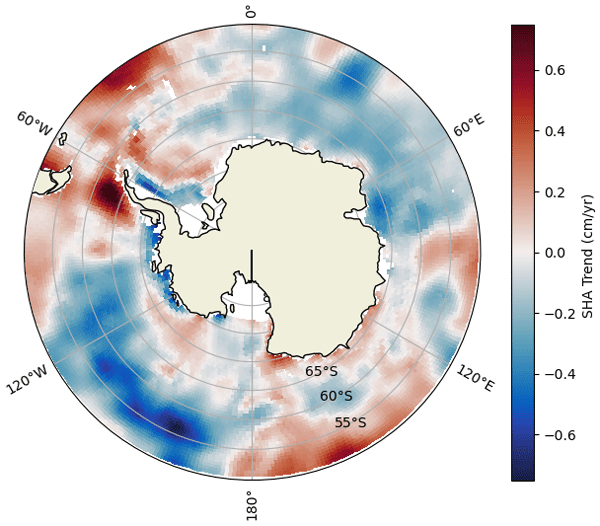
Jennifer Cocks, Alessandro Silvano, Alberto C. Naveira Garabato, Oana Dragomir, Noémie Schifano, Anna E. Hogg, and Alice Marzocchi
Ocean Sci., 21, 1609–1625, https://doi.org/10.5194/os-21-1609-2025, https://doi.org/10.5194/os-21-1609-2025, 2025
Short summary
Short summary
Heat and freshwater fluxes in the Southern Ocean mediate global ocean circulation and abyssal ventilation. These fluxes manifest as changes in steric height: sea level anomalies from changes in ocean density. We compute the steric height anomaly of the Southern Ocean using satellite data and validate it against in situ observations. We analyse trends and variability in steric height, drawing links to climate variability, and discuss the effectiveness of the method, highlighting issues with its application.
Clara Celestine Douglas, Nathan Briggs, Peter Brown, Graeme MacGilchrist, and Alberto Naveira Garabato
Ocean Sci., 20, 475–497, https://doi.org/10.5194/os-20-475-2024, https://doi.org/10.5194/os-20-475-2024, 2024
Short summary
Short summary
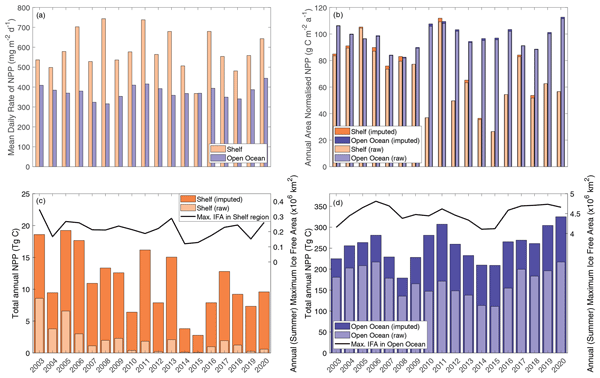
We use data from satellites and robotic floats to assess what drives year-to-year variability in primary production in the Weddell Gyre. We find that the maximum area of ice-free water in the summer is important in determining the total primary production in the region but that areas that are ice free for longer than 120 d become nutrient limited. This has potential implications for ecosystem health in a warming world, where a decline in sea ice cover will affect total primary production.
Dani C. Jones, Maike Sonnewald, Shenjie Zhou, Ute Hausmann, Andrew J. S. Meijers, Isabella Rosso, Lars Boehme, Michael P. Meredith, and Alberto C. Naveira Garabato
Ocean Sci., 19, 857–885, https://doi.org/10.5194/os-19-857-2023, https://doi.org/10.5194/os-19-857-2023, 2023
Short summary
Short summary
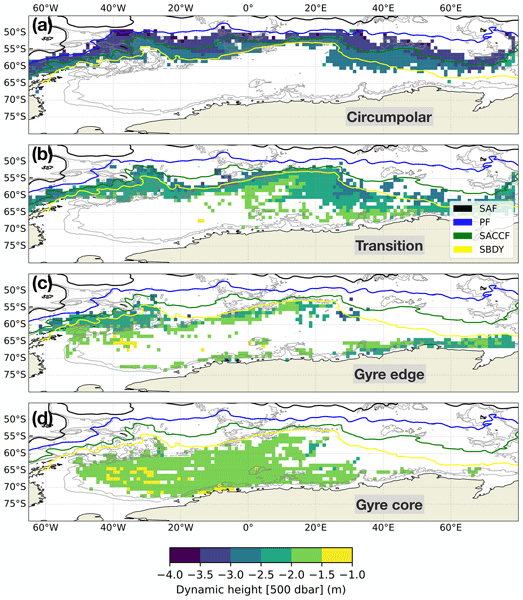
Machine learning is transforming oceanography. For example, unsupervised classification approaches help researchers identify underappreciated structures in ocean data, helping to generate new hypotheses. In this work, we use a type of unsupervised classification to identify structures in the temperature and salinity structure of the Weddell Gyre, which is an important region for global ocean circulation and for climate. We use our method to generate new ideas about mixing in the Weddell Gyre.
Stefanie L. Ypma, Quinten Bohte, Alexander Forryan, Alberto C. Naveira Garabato, Andy Donnelly, and Erik van Sebille
Ocean Sci., 18, 1477–1490, https://doi.org/10.5194/os-18-1477-2022, https://doi.org/10.5194/os-18-1477-2022, 2022
Short summary
Short summary
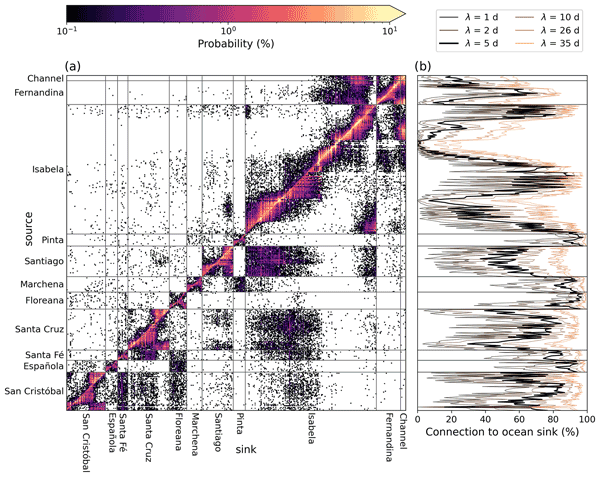
In this research we aim to improve cleanup efforts on the Galapagos Islands of marine plastic debris when resources are limited and the distribution of the plastic on shorelines is unknown. Using a network that describes the flow of macroplastic between the islands we have identified the most efficient cleanup locations, quantified the impact of targeting these locations and showed that shorelines where the plastic is unlikely to leave are likely efficient cleanup locations.
Evridiki Chrysagi, Lars Umlauf, Ulf Gräwe, Hans Burchard, and Alberto C. Naveira Garabato
Ocean Sci., 22, 3037–3053, https://doi.org/10.5194/os-22-3037-2026, https://doi.org/10.5194/os-22-3037-2026, 2026
Short summary
Short summary
High-resolution numerical simulations of the Baltic Sea reveal that fine-scale features known as submesoscales are widespread in the deeper layers of the basin, especially near its boundaries. These features are linked to strong mixing and, in this wind-driven system, are found to intensify during storms, with wind reversals shifting the location of mixing hotspots. Our results suggest that storm-modulated submesoscales may be important in other wind-driven coastal seas and lakes.
Matilda Weatherley, Chris R. Stokes, Stewart S. R. Jamieson, Sindhu Ramanath, and Alessandro Silvano
The Cryosphere, 20, 5509–5532, https://doi.org/10.5194/tc-20-5509-2026, https://doi.org/10.5194/tc-20-5509-2026, 2026
Short summary
Short summary
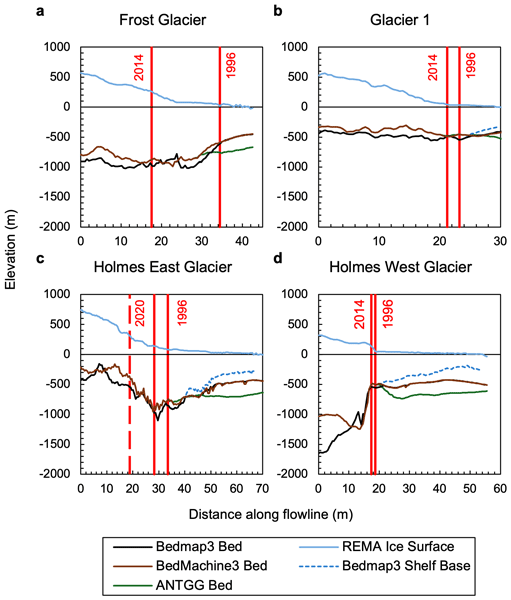
Parts of the East Antarctic Ice Sheet rest on a bed below sea level, making them vulnerable to ice dynamic changes and instability, but few glaciers have been studied in detail. Here we report on glaciers draining into Porpoise Bay, Wilkes Land, overlying the Aurora Subglacial Basin. We find ice surface thinning, grounding line retreat and ice surface velocity increase over recent decades, consistent with warm ocean waters intrusion. This highlights this region's vulnerability to future warming.
Isabelle F. M. White, Oana Dragomir, Alessandro Silvano, Alberto C. Naveira Garabato, Anna E. Hogg, Pierre Dutrieux, Laura Herraiz-Borreguero, and Jennifer Cocks
EGUsphere, https://doi.org/10.5194/egusphere-2026-4414, https://doi.org/10.5194/egusphere-2026-4414, 2026
This preprint is open for discussion and under review for Earth Observation (EO).
Short summary
Short summary
We present a 22-year sea surface height product in the ice-covered Southern Ocean from Envisat and CryoSat-2 satellite altimetry data. Our product is 1° longitude by 0.5° latitude from 50° S to the Antarctic coast. Validation with in-situ, independent satellite and reanalysis data shows it captures seasonal and interannual variability. This supports long-term study of large-scale sea level trends and processes in the Southern Ocean, a region that is observing rapid sea ice and ice sheet melting.
Rebecca Schlegel, Johannes Noll, Leah Sopie Muhle, Christian T. Wild, Falk M. Oraschewski, Olaf Eisen, and Reinhard Drews
EGUsphere, https://doi.org/10.5194/egusphere-2026-3900, https://doi.org/10.5194/egusphere-2026-3900, 2026
This preprint is open for discussion and under review for The Cryosphere (TC).
Short summary
Short summary
Step-like terraces at the base of Antarctic ice shelves are known from warm-water settings, but we show for the first time that they also occur at the base of a cold-water ice shelf. Repeat radar observations reveal that the terraces melt slowly and remain almost unchanged over one year. Our results suggest they form near the grounding line and are then transported with the flowing ice while melting only slowly.
Hugues Goosse, Cecile Davrinche, Benjamin Richaud, Dániel Topál, Stephy Libera, Alberto C. Naveira Garabato, Alessandro Silvano, Martin Vancoppenolle, and Pablo Ortega
EGUsphere, https://doi.org/10.5194/egusphere-2026-1823, https://doi.org/10.5194/egusphere-2026-1823, 2026
Short summary
Short summary
The variability of the winter sea ice edge is much higher in regions close to the main topographic features of the Southern Ocean than over the smoother abyssal plain. The oceanic bathymetry influences mesoscale eddy activity and the Antarctic Circumpolar Current jets, affecting both oceanic heat transport and sea ice velocity and subsequently sea ice variability.
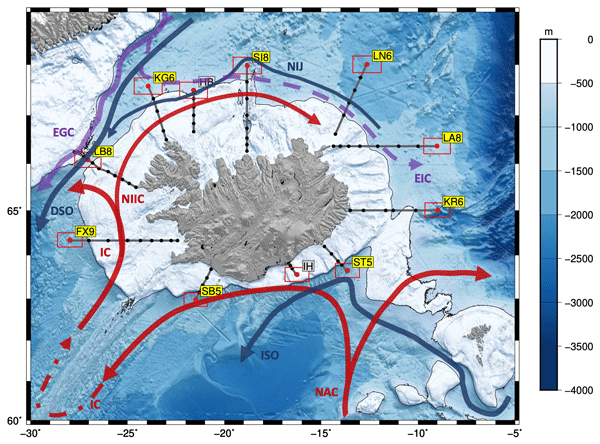
Angel Ruiz-Angulo, Esther Portela, Charly de Marez, Andreas Macrander, Sólveig Rósa Ólafsdóttir, Thomas Meunier, Steingrímur Jónsson, and M. Dolores Pérez-Hernández
Ocean Sci., 22, 1727–1743, https://doi.org/10.5194/os-22-1727-2026, https://doi.org/10.5194/os-22-1727-2026, 2026
Short summary
Short summary
Analysis of 1990–2019 hydrographic around Iceland identifies three dynamical regions: an α-ocean south with warm Atlantic Water and deep mixed layers, a β-ocean northwest with salinity-dominated stratification and shallow mixed layers, and a northeastern transition zone with seasonal shifts. Waters warmed, especially in the northeast, showing Atlantification. Density decreases occur in the south, while other regions show density-compensated variability, with no clear trend in mixed layer depth.
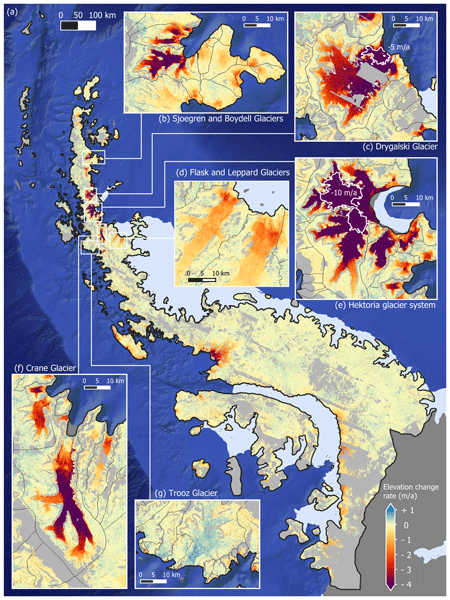
Maud Bernat, Etienne Berthier, Amaury Dehecq, Romain Hugonnet, Joaquin M. C. Belart, Naomi Ochwat, Peter Kuipers Munneke, Elizabeth Case, Ted Scambos, Louis-Marie Gauer, and David Youssefi
The Cryosphere, 20, 3025–3049, https://doi.org/10.5194/tc-20-3025-2026, https://doi.org/10.5194/tc-20-3025-2026, 2026
Short summary
Short summary
The Antarctic Peninsula is a mountainous region containing an ice sheet and peripheral glaciers. Differences remain between the methods used to estimate its mass changes. We use thousands of digital elevation models derived from high resolution stereoscopic images to calculate a new estimate of mass changes. We find that between 2007 and 2021, the ice sheet lost -28±6Gt/a and its peripheral glaciers -14±3Gt/a. We highlight the importance of resolving fine-scale changes in complex coastal areas.
Miriam F. Sterl, Carlo J. Mans, Alberto C. Naveira Garabato, and Sjoerd Groeskamp
EGUsphere, https://doi.org/10.5194/egusphere-2026-2566, https://doi.org/10.5194/egusphere-2026-2566, 2026
Short summary
Short summary
Large oceanic 'whirls', called eddies, can mix ocean properties such as heat or salt. The mixing strength is tricky to measure directly. We present a new method to derive the mixing strength based on data from a mooring; a cable from the seafloor to the surface, with instruments along it. We apply our method to a mooring in the Southern Ocean and show that it confirms some important features predicted from theory. The method can be a valuable tool to increase our understanding of ocean mixing.
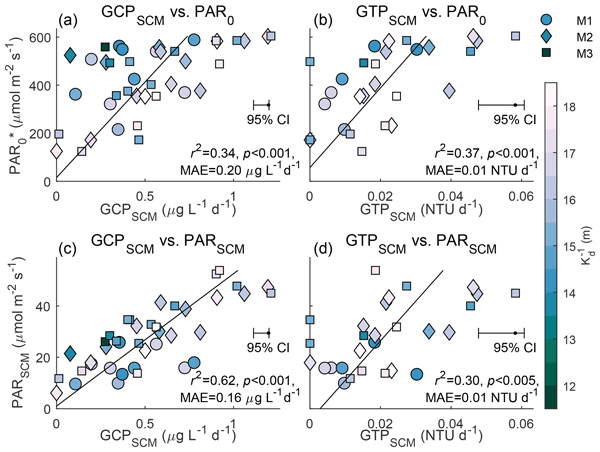
Tamara L. Schlosser, Andrew J. Lucas, Melissa Omand, and J. Thomas Farrar
Ocean Sci., 22, 443–458, https://doi.org/10.5194/os-22-443-2026, https://doi.org/10.5194/os-22-443-2026, 2026
Short summary
Short summary
Seasonal monsoon storms over South Asia and the northern Indian Ocean bring heavy rains and thick clouds, decreasing how much sunlight reaches the ocean. We used new autonomous instruments to show that cloudy periods reduce subsurface ocean productivity by more than half, with ripple effects through the food web. These short-term shifts are as large as seasonal changes in productivity and influence how the ocean stores carbon.
Ethan W. Conley, Jennifer M. Frederick, A. Christian Stanciu, Robert E. Abbott, Michael G. Baker, David Fukuyama, and Michael A. Nole
EGUsphere, https://doi.org/10.5194/egusphere-2025-5529, https://doi.org/10.5194/egusphere-2025-5529, 2026
Short summary
Short summary
This study uses eighteen thermodynamic simulations along a seafloor fiber-optic cable transect offshore Oliktok Point, Alaska, to refine the extent of submarine permafrost on the U.S. Beaufort Shelf. Results suggest prior geophysical estimates may have been conservative and that permafrost may extend farther offshore. Previously identified deep high-resistivity zones likely indicate trapped hydrocarbons, and modeled temperatures support calibration of Distributed Temperature Sensing data.
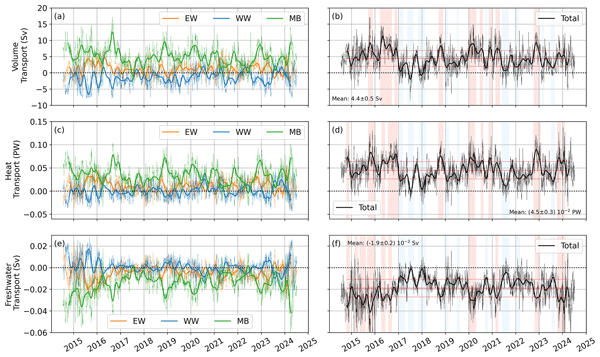
Kristin Burmeister, Sam C. Jones, Neil J. Fraser, Alan D. Fox, Stuart A. Cunningham, Lewis A. Drysdale, Mark E. Inall, Tiago S. Dotto, and N. Penny Holliday
Ocean Sci., 22, 167–185, https://doi.org/10.5194/os-22-167-2026, https://doi.org/10.5194/os-22-167-2026, 2026
Short summary
Short summary
The Rockall Trough carries two ocean currents vital for Europe’s climate. Using underwater sensors and robotic gliders we develop a new method to create the first decade-long record of these flows. We find that the North Atlantic Current drives most changes linked to wider ocean shifts while the slope current responds mainly to local winds. This work improves ocean monitoring and advances our understanding of climate-related changes.
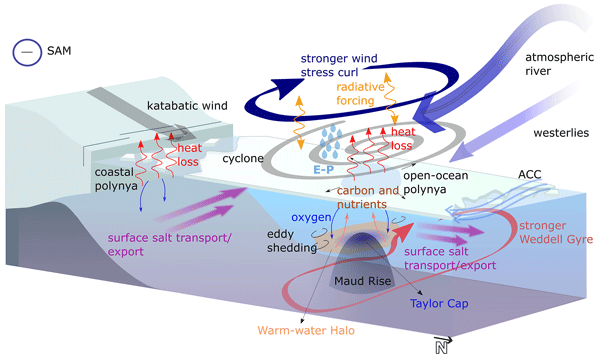
Lu Zhou, Holly Ayres, Birte Gülk, Aditya Narayanan, Casimir de Lavergne, Malin Ödalen, Alessandro Silvano, Xingchi Wang, Margaret Lindeman, and Nadine Steiger
The Cryosphere, 20, 285–308, https://doi.org/10.5194/tc-20-285-2026, https://doi.org/10.5194/tc-20-285-2026, 2026
Short summary
Short summary
Polynyas are large openings in polar sea ice that can influence global climate and ocean circulation. After disappearing for 40 years, major polynyas reappeared in the Weddell Sea in 2016 and 2017, sparking new scientific questions. Our review explores how ocean currents, atmospheric conditions, and deep ocean heat drive their formation. These polynyas impact ecosystems, carbon exchange, and deep water formation, but their future remains uncertain, requiring better observations and models.
Hugues Goosse, Stephy Libera, Alberto C. Naveira Garabato, Benjamin Richaud, Alessandro Silvano, and Martin Vancoppenolle
The Cryosphere, 19, 5763–5779, https://doi.org/10.5194/tc-19-5763-2025, https://doi.org/10.5194/tc-19-5763-2025, 2025
Short summary
Short summary
The position of the winter sea ice edge in the Southern Ocean is strongly linked to the one of the Antarctic Circumpolar Current and thus to ocean bathymetry. This is due to the influence of the Antarctic Circumpolar Current on the southward heat flux that limits sea ice expansion, directly through oceanic processes and indirectly through its influence on atmospheric heat transport.
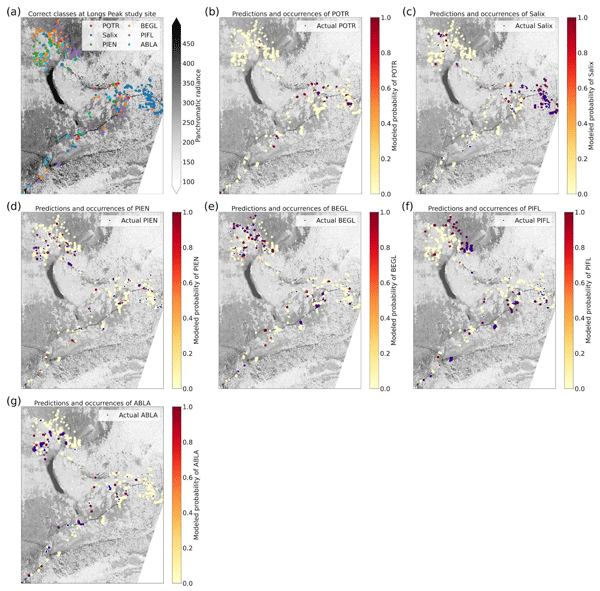
Laurel A. Sindewald, Ryan Lagerquist, Matthew D. Cross, Theodore A. Scambos, Peter J. Anthamatten, and Diana F. Tomback
Biogeosciences, 22, 6509–6543, https://doi.org/10.5194/bg-22-6509-2025, https://doi.org/10.5194/bg-22-6509-2025, 2025
Short summary
Short summary
We used high-resolution satellite imagery and artificial intelligence models to identify six tree and shrub species commonly found at alpine treeline in the Rocky Mountains with accuracies from 44.1% to 86.2%. We are the first to attempt species identification using satellite imagery in treeline systems, where trees are small and difficult to identify remotely. Our work provides a method to identify species with satellite imagery over a broader geographic range than can be achieved with drones.
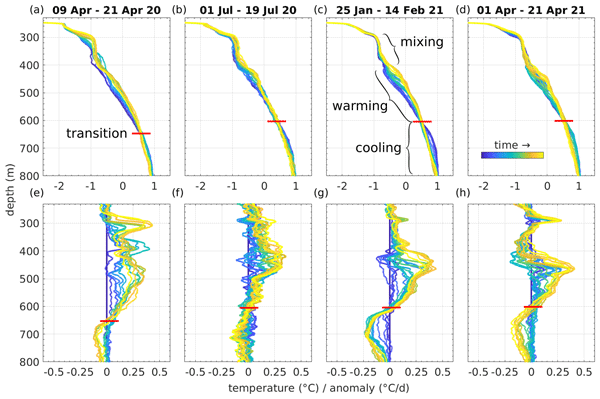
Christian T. Wild, Tasha Snow, Tiago S. Dotto, Peter E. D. Davis, Scott Tyler, Ted A. Scambos, Erin C. Pettit, and Karen J. Heywood
Ocean Sci., 21, 2605–2629, https://doi.org/10.5194/os-21-2605-2025, https://doi.org/10.5194/os-21-2605-2025, 2025
Short summary
Short summary
Thwaites Glacier is retreating due to warm ocean water melting it from below, but its thick ice shelf makes this heat hard to monitor. Using hot-water drilling, we placed sensors beneath the floating ice, revealing how surface freezing in Pine Island Bay influences heat at depth. Alongside gradual warming, we found bursts of heat that could speed up melting at the grounding zone, which may become more common as sea ice declines.
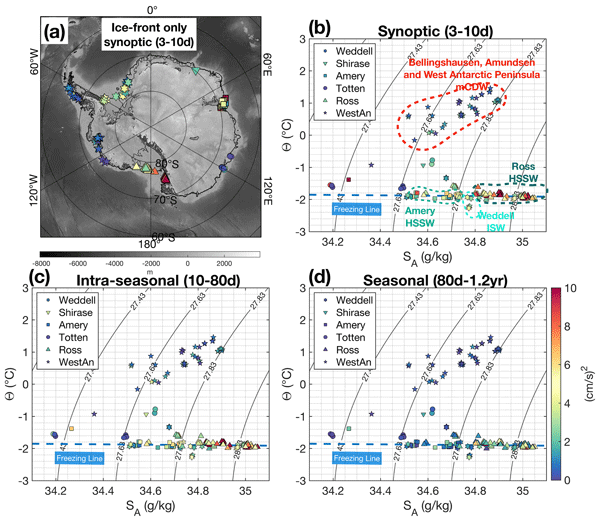
Shenjie Zhou, Pierre Dutrieux, Claudia F. Giulivi, Adrian Jenkins, Alessandro Silvano, Christopher Auckland, E. Povl Abrahamsen, Michael Meredith, Irena Vaňková, Keith Nicholls, Peter E. D. Davis, Svein Østerhus, Arnold L. Gordon, Christopher J. Zappa, Tiago S. Dotto, Ted Scambos, Kathryn L. Gunn, Stephen R. Rintoul, Shigeru Aoki, Craig Stevens, Chengyan Liu, Sukyoung Yun, Tae-Wan Kim, Won Sang Lee, Markus Janout, Tore Hattermann, Julius Lauber, Elin Darelius, Anna Wåhlin, Leo Middleton, Pasquale Castagno, Giorgio Budillon, Karen J. Heywood, Jennifer Graham, Stephen Dye, Daisuke Hirano, and Una Kim Miller
Earth Syst. Sci. Data, 17, 5693–5706, https://doi.org/10.5194/essd-17-5693-2025, https://doi.org/10.5194/essd-17-5693-2025, 2025
Short summary
Short summary
We created the first standardised dataset of in-situ ocean measurements time series from around Antarctica collected since 1970s. This includes temperature, salinity, pressure, and currents recorded by instruments deployed in icy, challenging conditions. Our analysis highlights the dominance of tidal currents and separates these from other patterns to study regional energy distribution. This unique dataset offers a foundation for future research on Antarctic ocean dynamics and ice interactions.
Elizabeth Weidner, Grant Deane, Arnaud Le Boyer, Matthew H. Alford, Hari Vishnu, Mandar Chitre, M. Dale Stokes, Oskar Glowacki, Hayden Johnson, and Fiammetta Straneo
The Cryosphere, 19, 4715–4740, https://doi.org/10.5194/tc-19-4715-2025, https://doi.org/10.5194/tc-19-4715-2025, 2025
Short summary
Short summary
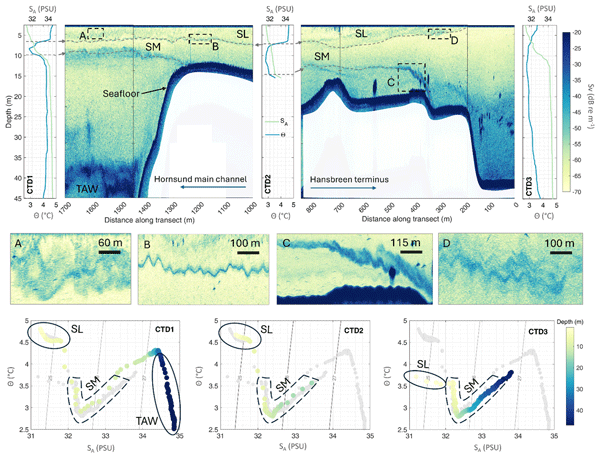
Tidewater glaciers play a central role in polar dynamics, but their study is limited by harsh and isolated conditions. Here, we introduce broadband echosounders as an tool for the study of high-latitude fjords through the rapid collection of calibrated high-resolution, near-synoptic observations. Using a dataset collected in Hornsund Fjord, we illustrate the potential of broadband echosounders as a relatively accessible, low-effort tool, well suited for field deployment in high-latitude fjords.
Christian T. Wild, Reinhard Drews, Niklas Neckel, Joohan Lee, Sihyung Kim, Hyangsun Han, Won Sang Lee, Veit Helm, Sebastian Harry Reid Rosier, Oliver J. Marsh, and Wolfgang Rack
The Cryosphere, 19, 4533–4554, https://doi.org/10.5194/tc-19-4533-2025, https://doi.org/10.5194/tc-19-4533-2025, 2025
Short summary
Short summary
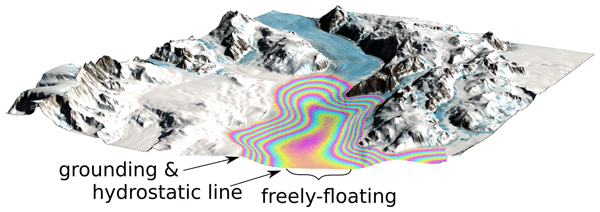
The stability of the Antarctic Ice Sheet depends on how resistance along the sides of large glaciers slows down the flow of ice into the ocean. We present a method to map ice strength using the effect of ocean tides on floating ice shelves. Incorporating weaker ice in shear zones improves the accuracy of model predictions, compared with satellite observations. This demonstrates the untapped potential of radar satellites to map ice stiffness in the most critical areas for ice sheet stability.
Verónica González-Gambau, Estrella Olmedo, Aina García-Espriu, Cristina González-Haro, Antonio Turiel, Carolina Gabarró, Alessandro Silvano, Aditya Narayanan, Alberto Naveira-Garabato, Rafael Catany, Nina Hoareau, Marta Umbert, Giuseppe Aulicino, Yuri Cotroneo, Roberto Sabia, and Diego Fernández-Prieto
Earth Syst. Sci. Data, 17, 5089–5111, https://doi.org/10.5194/essd-17-5089-2025, https://doi.org/10.5194/essd-17-5089-2025, 2025
Short summary
Short summary
This paper introduces a new Sea Surface Salinity product for the Southern Ocean, based on SMOS data and developed by the Barcelona Expert Center. It offers 9 d maps on a 25 km EASE-SL grid, from 2011 to 2023, covering areas south of 30° S. The product is accurate beyond 150 km from sea ice, with nearly zero bias and a ~0.22 STD. It tracks well seasonal and interannual changes and will contribute to the understanding of processes influenced by upper-ocean salinity, including ice formation/melt.
Alek Petty, Christopher Cardinale, and Madison Smith
Geosci. Model Dev., 18, 6313–6340, https://doi.org/10.5194/gmd-18-6313-2025, https://doi.org/10.5194/gmd-18-6313-2025, 2025
Short summary
Short summary
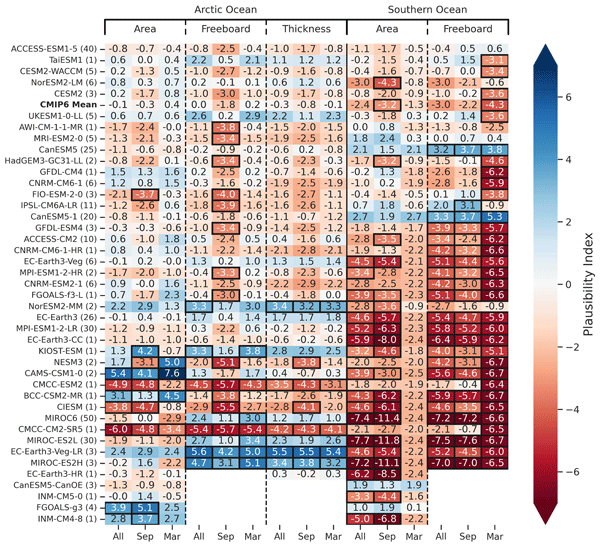
We use total freeboard data from NASA’s Ice, Cloud and land Elevation Satellite-2 (ICESat-2) across both hemispheres and estimates of winter Arctic sea ice thickness to evaluate climate model simulations of sea ice, providing constraints beyond the traditional sea ice area metric. ICESat-2 provides accurate freeboard data, but its short observational record requires careful consideration of natural variability.
Alex S. Gardner, Chad A. Greene, Joseph H. Kennedy, Mark A. Fahnestock, Maria Liukis, Luis A. López, Yang Lei, Ted A. Scambos, and Amaury Dehecq
The Cryosphere, 19, 3517–3533, https://doi.org/10.5194/tc-19-3517-2025, https://doi.org/10.5194/tc-19-3517-2025, 2025
Short summary
Short summary
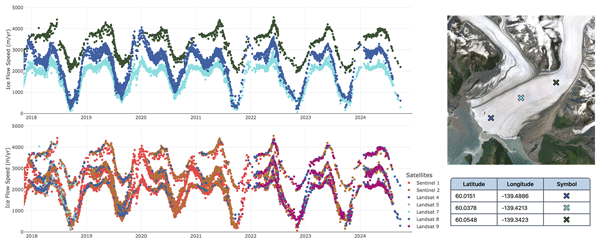
The NASA MEaSUREs Inter-mission Time Series of Land Ice Velocity and Elevation (ITS_LIVE) project provides glacier and ice sheet velocity products for the full Landsat, Sentinel-1, and Sentinel-2 satellite archives and will soon include data from the NISAR satellite. This paper describes the ITS_LIVE processing chain and gives guidance for working with the cloud-optimized glacier and ice sheet velocity products.
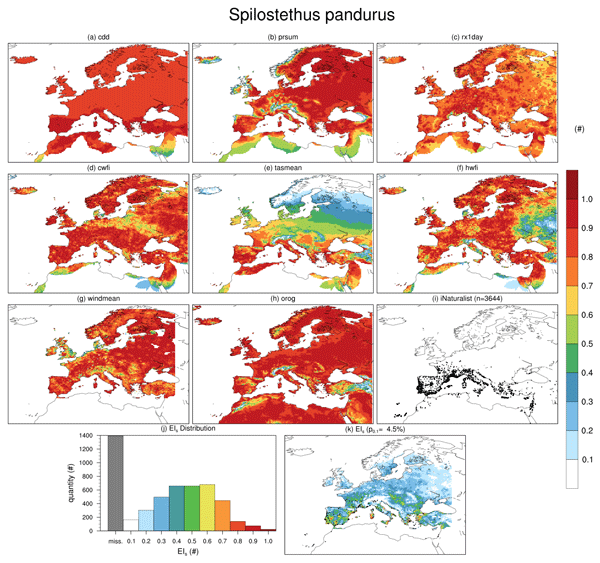
James M. Ciarlo', Monique Borg Inguanez, Erika Coppola, Aaron Micallef, and David Mifsud
Earth Syst. Dynam., 16, 1391–1407, https://doi.org/10.5194/esd-16-1391-2025, https://doi.org/10.5194/esd-16-1391-2025, 2025
Short summary
Short summary
Climate change threatens biodiversity, especially that of arthropods, by altering species' habitats and ecological roles. This study presents a proof of concept for a novel index that models species distributions based on climatic niches, using regional climate model data and focusing on Mediterranean arthropods. The index enables quick assessments of species' climate resilience and offers potential applications for projecting ecological impacts of future climate changes.
Jennifer Cocks, Alessandro Silvano, Alberto C. Naveira Garabato, Oana Dragomir, Noémie Schifano, Anna E. Hogg, and Alice Marzocchi
Ocean Sci., 21, 1609–1625, https://doi.org/10.5194/os-21-1609-2025, https://doi.org/10.5194/os-21-1609-2025, 2025
Short summary
Short summary
Heat and freshwater fluxes in the Southern Ocean mediate global ocean circulation and abyssal ventilation. These fluxes manifest as changes in steric height: sea level anomalies from changes in ocean density. We compute the steric height anomaly of the Southern Ocean using satellite data and validate it against in situ observations. We analyse trends and variability in steric height, drawing links to climate variability, and discuss the effectiveness of the method, highlighting issues with its application.
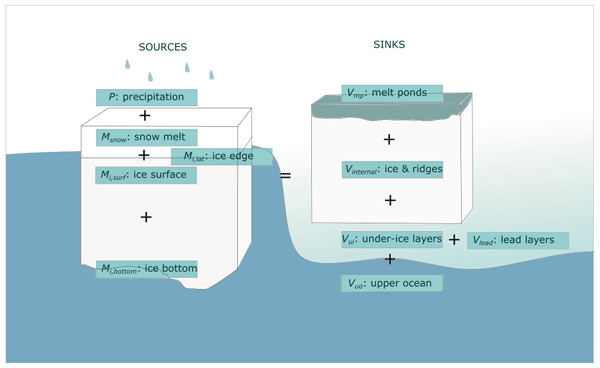
Madison M. Smith, Niels Fuchs, Evgenii Salganik, Donald K. Perovich, Ian Raphael, Mats A. Granskog, Kirstin Schulz, Matthew D. Shupe, and Melinda Webster
The Cryosphere, 19, 619–644, https://doi.org/10.5194/tc-19-619-2025, https://doi.org/10.5194/tc-19-619-2025, 2025
Short summary
Short summary
The fate of freshwater from Arctic sea ice and snowmelt impacts interactions of the atmosphere, sea ice, and ocean. We complete a comprehensive analysis of datasets from a 2020 central Arctic field campaign to understand the drivers of the sea ice freshwater budget and the fate of this water. Over half of the freshwater comes from surface melt, and a majority fraction is incorporated into the ocean. Results suggest that the representation of melt ponds is a key area for future development.
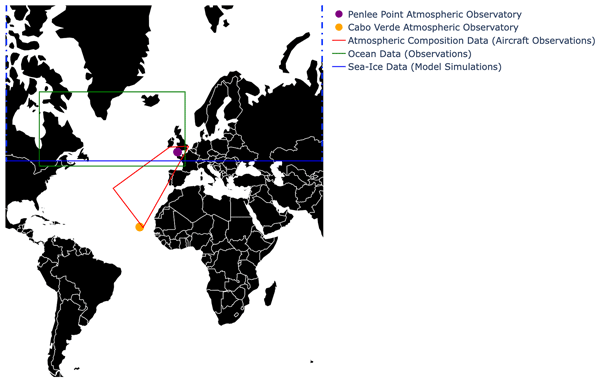
Alex T. Archibald, Bablu Sinha, Maria R. Russo, Emily Matthews, Freya A. Squires, N. Luke Abraham, Stephane J.-B. Bauguitte, Thomas J. Bannan, Thomas G. Bell, David Berry, Lucy J. Carpenter, Hugh Coe, Andrew Coward, Peter Edwards, Daniel Feltham, Dwayne Heard, Jim Hopkins, James Keeble, Elizabeth C. Kent, Brian A. King, Isobel R. Lawrence, James Lee, Claire R. Macintosh, Alex Megann, Bengamin I. Moat, Katie Read, Chris Reed, Malcolm J. Roberts, Reinhard Schiemann, David Schroeder, Timothy J. Smyth, Loren Temple, Navaneeth Thamban, Lisa Whalley, Simon Williams, Huihui Wu, and Mingxi Yang
Earth Syst. Sci. Data, 17, 135–164, https://doi.org/10.5194/essd-17-135-2025, https://doi.org/10.5194/essd-17-135-2025, 2025
Short summary
Short summary
Here, we present an overview of the data generated as part of the North Atlantic Climate System Integrated Study (ACSIS) programme that are available through dedicated repositories at the Centre for Environmental Data Analysis (CEDA; www.ceda.ac.uk) and the British Oceanographic Data Centre (BODC; bodc.ac.uk). The datasets described here cover the North Atlantic Ocean, the atmosphere above (it including its composition), and Arctic sea ice.
Gabriela Collao-Barrios, Ted A. Scambos, Christian T. Wild, Martin Truffer, Karen E. Alley, and Erin C. Pettit
EGUsphere, https://doi.org/10.5194/egusphere-2024-1895, https://doi.org/10.5194/egusphere-2024-1895, 2024
Preprint archived
Short summary
Short summary
Destabilization of ice shelves frequently leads to significant acceleration and greater mass loss, affecting rates of sea level rise. Our results show a relation between tides, flow direction, and grounding-zone acceleration that result from changing stresses in the ice margins and around a nunatak in Dotson Ice Shelf. The study describes a new way tides can influence ice shelf dynamics, an effect that could become more common as ice shelves thin and weaken around Antarctica.
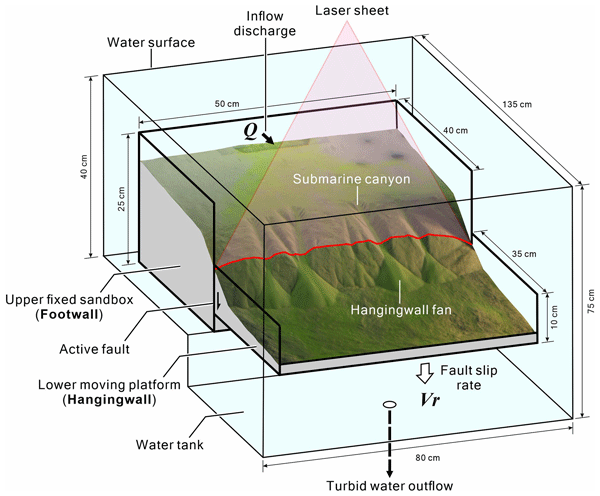
Steven Y. J. Lai, David Amblas, Aaron Micallef, and Hervé Capart
Earth Surf. Dynam., 12, 621–640, https://doi.org/10.5194/esurf-12-621-2024, https://doi.org/10.5194/esurf-12-621-2024, 2024
Short summary
Short summary
This study explores the creation of submarine canyons and hanging-wall fans on active faults, which can be defined by gravity-dominated breaching and underflow-dominated diffusion processes. The study reveals the self-similarity in canyon–fan long profiles, uncovers Hack’s scaling relationship and proposes a formula to estimate fan volume using canyon length. This is validated by global data from source-to-sink systems, providing insights into deep-water sedimentary processes.
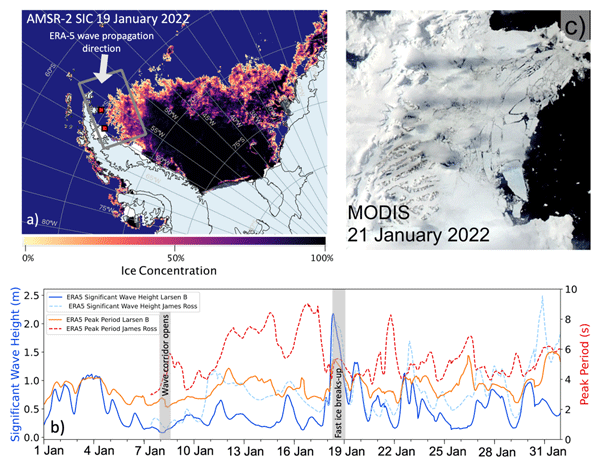
Naomi E. Ochwat, Ted A. Scambos, Alison F. Banwell, Robert S. Anderson, Michelle L. Maclennan, Ghislain Picard, Julia A. Shates, Sebastian Marinsek, Liliana Margonari, Martin Truffer, and Erin C. Pettit
The Cryosphere, 18, 1709–1731, https://doi.org/10.5194/tc-18-1709-2024, https://doi.org/10.5194/tc-18-1709-2024, 2024
Short summary
Short summary
On the Antarctic Peninsula, there is a small bay that had sea ice fastened to the shoreline (
fast ice) for over a decade. The fast ice stabilized the glaciers that fed into the ocean. In January 2022, the fast ice broke away. Using satellite data we found that this was because of low sea ice concentrations and a high long-period ocean wave swell. We find that the glaciers have responded to this event by thinning, speeding up, and retreating by breaking off lots of icebergs at remarkable rates.
Clara Celestine Douglas, Nathan Briggs, Peter Brown, Graeme MacGilchrist, and Alberto Naveira Garabato
Ocean Sci., 20, 475–497, https://doi.org/10.5194/os-20-475-2024, https://doi.org/10.5194/os-20-475-2024, 2024
Short summary
Short summary
We use data from satellites and robotic floats to assess what drives year-to-year variability in primary production in the Weddell Gyre. We find that the maximum area of ice-free water in the summer is important in determining the total primary production in the region but that areas that are ice free for longer than 120 d become nutrient limited. This has potential implications for ecosystem health in a warming world, where a decline in sea ice cover will affect total primary production.
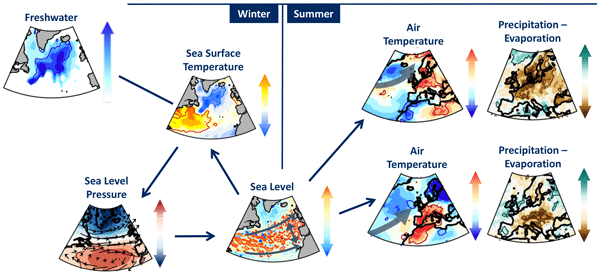
Marilena Oltmanns, N. Penny Holliday, James Screen, Ben I. Moat, Simon A. Josey, D. Gwyn Evans, and Sheldon Bacon
Weather Clim. Dynam., 5, 109–132, https://doi.org/10.5194/wcd-5-109-2024, https://doi.org/10.5194/wcd-5-109-2024, 2024
Short summary
Short summary
The melting of land ice and sea ice leads to freshwater input into the ocean. Based on observations, we show that stronger freshwater anomalies in the subpolar North Atlantic in winter are followed by warmer and drier weather over Europe in summer. The identified link indicates an enhanced predictability of European summer weather at least a winter in advance. It further suggests that warmer and drier summers over Europe can become more frequent under increased freshwater fluxes in the future.
Dani C. Jones, Maike Sonnewald, Shenjie Zhou, Ute Hausmann, Andrew J. S. Meijers, Isabella Rosso, Lars Boehme, Michael P. Meredith, and Alberto C. Naveira Garabato
Ocean Sci., 19, 857–885, https://doi.org/10.5194/os-19-857-2023, https://doi.org/10.5194/os-19-857-2023, 2023
Short summary
Short summary
Machine learning is transforming oceanography. For example, unsupervised classification approaches help researchers identify underappreciated structures in ocean data, helping to generate new hypotheses. In this work, we use a type of unsupervised classification to identify structures in the temperature and salinity structure of the Weddell Gyre, which is an important region for global ocean circulation and for climate. We use our method to generate new ideas about mixing in the Weddell Gyre.
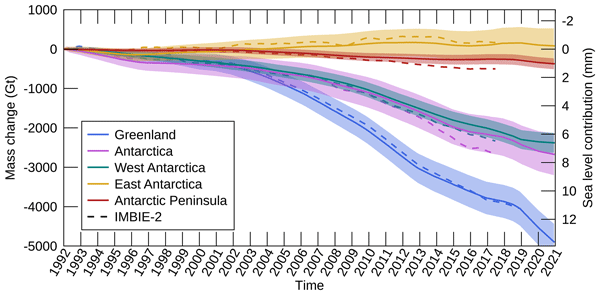
Inès N. Otosaka, Andrew Shepherd, Erik R. Ivins, Nicole-Jeanne Schlegel, Charles Amory, Michiel R. van den Broeke, Martin Horwath, Ian Joughin, Michalea D. King, Gerhard Krinner, Sophie Nowicki, Anthony J. Payne, Eric Rignot, Ted Scambos, Karen M. Simon, Benjamin E. Smith, Louise S. Sørensen, Isabella Velicogna, Pippa L. Whitehouse, Geruo A, Cécile Agosta, Andreas P. Ahlstrøm, Alejandro Blazquez, William Colgan, Marcus E. Engdahl, Xavier Fettweis, Rene Forsberg, Hubert Gallée, Alex Gardner, Lin Gilbert, Noel Gourmelen, Andreas Groh, Brian C. Gunter, Christopher Harig, Veit Helm, Shfaqat Abbas Khan, Christoph Kittel, Hannes Konrad, Peter L. Langen, Benoit S. Lecavalier, Chia-Chun Liang, Bryant D. Loomis, Malcolm McMillan, Daniele Melini, Sebastian H. Mernild, Ruth Mottram, Jeremie Mouginot, Johan Nilsson, Brice Noël, Mark E. Pattle, William R. Peltier, Nadege Pie, Mònica Roca, Ingo Sasgen, Himanshu V. Save, Ki-Weon Seo, Bernd Scheuchl, Ernst J. O. Schrama, Ludwig Schröder, Sebastian B. Simonsen, Thomas Slater, Giorgio Spada, Tyler C. Sutterley, Bramha Dutt Vishwakarma, Jan Melchior van Wessem, David Wiese, Wouter van der Wal, and Bert Wouters
Earth Syst. Sci. Data, 15, 1597–1616, https://doi.org/10.5194/essd-15-1597-2023, https://doi.org/10.5194/essd-15-1597-2023, 2023
Short summary
Short summary
By measuring changes in the volume, gravitational attraction, and ice flow of Greenland and Antarctica from space, we can monitor their mass gain and loss over time. Here, we present a new record of the Earth’s polar ice sheet mass balance produced by aggregating 50 satellite-based estimates of ice sheet mass change. This new assessment shows that the ice sheets have lost (7.5 x 10¹²) t of ice between 1992 and 2020, contributing 21 mm to sea level rise.
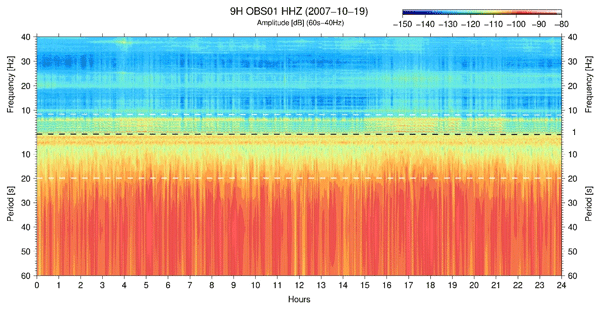
Carlos Corela, Afonso Loureiro, José Luis Duarte, Luis Matias, Tiago Rebelo, and Tiago Bartolomeu
Nat. Hazards Earth Syst. Sci., 23, 1433–1451, https://doi.org/10.5194/nhess-23-1433-2023, https://doi.org/10.5194/nhess-23-1433-2023, 2023
Short summary
Short summary
We show that ocean-bottom seismometers are controlled by bottom currents, but these are not always a function of the tidal forcing. Instead we suggest that the ocean bottom has a flow regime resulting from two possible contributions: the permanent low-frequency bottom current and the tidal current along the full tidal cycle, between neap and spring tides. In the short-period noise band the ocean current generates harmonic tremors that corrupt the dataset records.
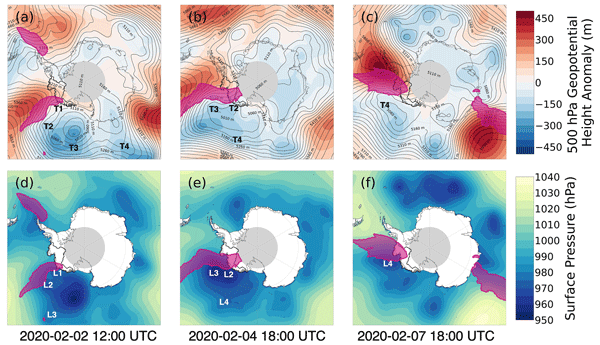
Michelle L. Maclennan, Jan T. M. Lenaerts, Christine A. Shields, Andrew O. Hoffman, Nander Wever, Megan Thompson-Munson, Andrew C. Winters, Erin C. Pettit, Theodore A. Scambos, and Jonathan D. Wille
The Cryosphere, 17, 865–881, https://doi.org/10.5194/tc-17-865-2023, https://doi.org/10.5194/tc-17-865-2023, 2023
Short summary
Short summary
Atmospheric rivers are air masses that transport large amounts of moisture and heat towards the poles. Here, we use a combination of weather observations and models to quantify the amount of snowfall caused by atmospheric rivers in West Antarctica which is about 10 % of the total snowfall each year. We then examine a unique event that occurred in early February 2020, when three atmospheric rivers made landfall over West Antarctica in rapid succession, leading to heavy snowfall and surface melt.
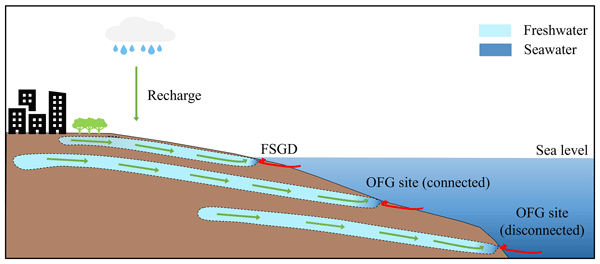
Damian L. Arévalo-Martínez, Amir Haroon, Hermann W. Bange, Ercan Erkul, Marion Jegen, Nils Moosdorf, Jens Schneider von Deimling, Christian Berndt, Michael Ernst Böttcher, Jasper Hoffmann, Volker Liebetrau, Ulf Mallast, Gudrun Massmann, Aaron Micallef, Holly A. Michael, Hendrik Paasche, Wolfgang Rabbel, Isaac Santos, Jan Scholten, Katrin Schwalenberg, Beata Szymczycha, Ariel T. Thomas, Joonas J. Virtasalo, Hannelore Waska, and Bradley A. Weymer
Biogeosciences, 20, 647–662, https://doi.org/10.5194/bg-20-647-2023, https://doi.org/10.5194/bg-20-647-2023, 2023
Short summary
Short summary
Groundwater flows at the land–ocean transition and the extent of freshened groundwater below the seafloor are increasingly relevant in marine sciences, both because they are a highly uncertain term of biogeochemical budgets and due to the emerging interest in the latter as a resource. Here, we discuss our perspectives on future research directions to better understand land–ocean connectivity through groundwater and its potential responses to natural and human-induced environmental changes.
Stefanie L. Ypma, Quinten Bohte, Alexander Forryan, Alberto C. Naveira Garabato, Andy Donnelly, and Erik van Sebille
Ocean Sci., 18, 1477–1490, https://doi.org/10.5194/os-18-1477-2022, https://doi.org/10.5194/os-18-1477-2022, 2022
Short summary
Short summary
In this research we aim to improve cleanup efforts on the Galapagos Islands of marine plastic debris when resources are limited and the distribution of the plastic on shorelines is unknown. Using a network that describes the flow of macroplastic between the islands we have identified the most efficient cleanup locations, quantified the impact of targeting these locations and showed that shorelines where the plastic is unlikely to leave are likely efficient cleanup locations.
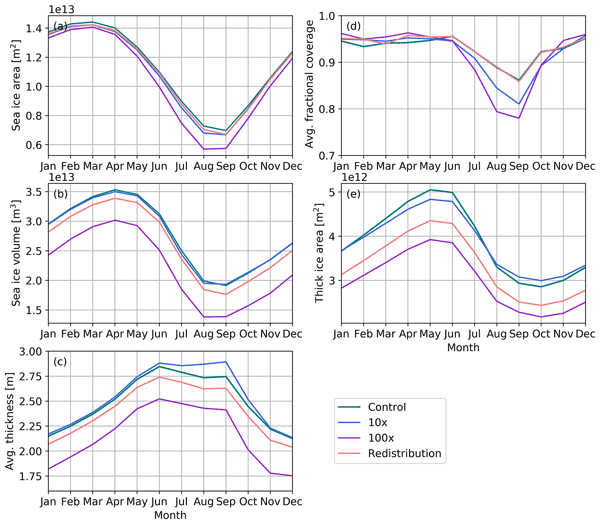
Madison M. Smith, Marika Holland, and Bonnie Light
The Cryosphere, 16, 419–434, https://doi.org/10.5194/tc-16-419-2022, https://doi.org/10.5194/tc-16-419-2022, 2022
Short summary
Short summary
Climate models represent the atmosphere, ocean, sea ice, and land with equations of varying complexity and are important tools for understanding changes in global climate. Here, we explore how realistic variations in the equations describing how sea ice melt occurs at the edges (called lateral melting) impact ice and climate. We find that these changes impact the progression of the sea-ice–albedo feedback in the Arctic and so make significant changes to the predicted Arctic sea ice.
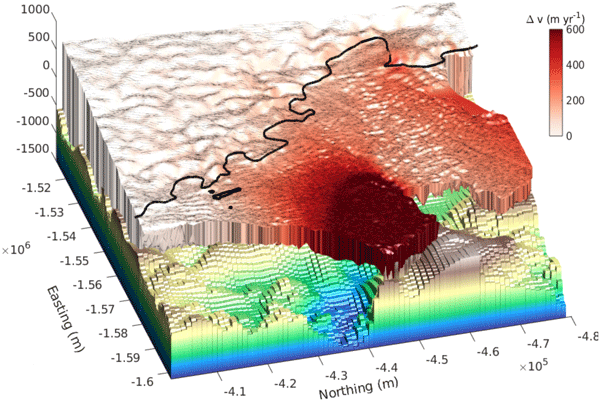
Christian T. Wild, Karen E. Alley, Atsuhiro Muto, Martin Truffer, Ted A. Scambos, and Erin C. Pettit
The Cryosphere, 16, 397–417, https://doi.org/10.5194/tc-16-397-2022, https://doi.org/10.5194/tc-16-397-2022, 2022
Short summary
Short summary
Thwaites Glacier has the potential to significantly raise Antarctica's contribution to global sea-level rise by the end of this century. Here, we use satellite measurements of surface elevation to show that its floating part is close to losing contact with an underwater ridge that currently acts to stabilize. We then use computer models of ice flow to simulate the predicted unpinning, which show that accelerated ice discharge into the ocean follows the breakup of the floating part.
Marilena Oltmanns, N. Penny Holliday, James Screen, D. Gwyn Evans, Simon A. Josey, Sheldon Bacon, and Ben I. Moat
Weather Clim. Dynam. Discuss., https://doi.org/10.5194/wcd-2021-79, https://doi.org/10.5194/wcd-2021-79, 2021
Revised manuscript not accepted
Short summary
Short summary
The Arctic is currently warming twice as fast as the global average. This results in enhanced melting and thus freshwater releases into the North Atlantic. Using a combination of observations and models, we show that atmosphere-ocean feedbacks initiated by freshwater releases into the North Atlantic lead to warmer and drier weather over Europe in subsequent summers. The existence of this dynamical link suggests that European summer weather can potentially be predicted months to years in advance.
Karen E. Alley, Christian T. Wild, Adrian Luckman, Ted A. Scambos, Martin Truffer, Erin C. Pettit, Atsuhiro Muto, Bruce Wallin, Marin Klinger, Tyler Sutterley, Sarah F. Child, Cyrus Hulen, Jan T. M. Lenaerts, Michelle Maclennan, Eric Keenan, and Devon Dunmire
The Cryosphere, 15, 5187–5203, https://doi.org/10.5194/tc-15-5187-2021, https://doi.org/10.5194/tc-15-5187-2021, 2021
Short summary
Short summary
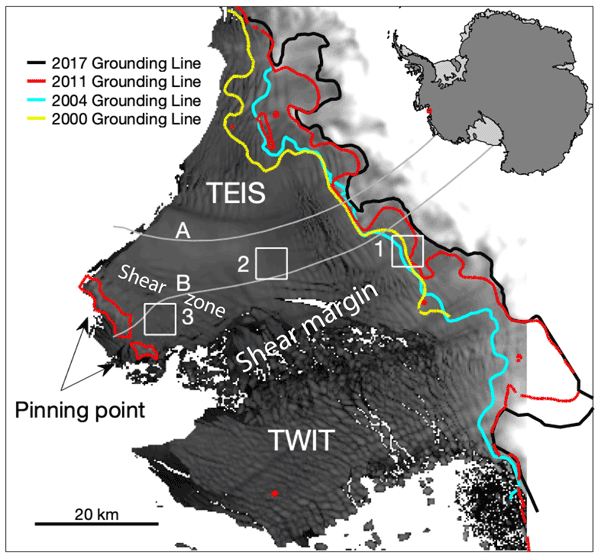
We present a 20-year, satellite-based record of velocity and thickness change on the Thwaites Eastern Ice Shelf (TEIS), the largest remaining floating extension of Thwaites Glacier (TG). TG holds the single greatest control on sea-level rise over the next few centuries, so it is important to understand changes on the TEIS, which controls much of TG's flow into the ocean. Our results suggest that the TEIS is progressively destabilizing and is likely to disintegrate over the next few decades.
Marika M. Holland, David Clemens-Sewall, Laura Landrum, Bonnie Light, Donald Perovich, Chris Polashenski, Madison Smith, and Melinda Webster
The Cryosphere, 15, 4981–4998, https://doi.org/10.5194/tc-15-4981-2021, https://doi.org/10.5194/tc-15-4981-2021, 2021
Short summary
Short summary
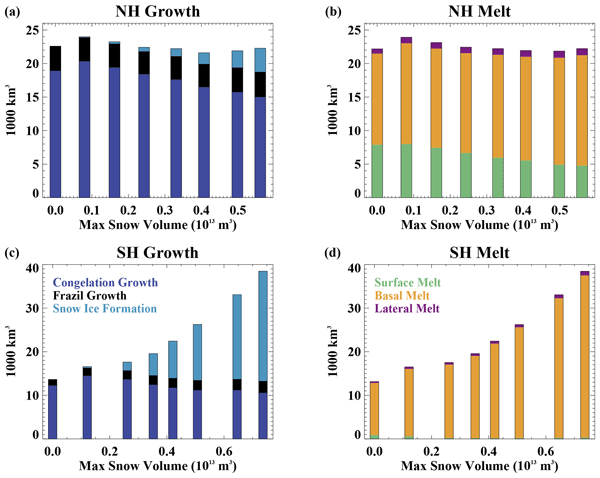
As the most reflective and most insulative natural material, snow has important climate effects. For snow on sea ice, its high reflectivity reduces ice melt. However, its high insulating capacity limits ice growth. These counteracting effects make its net influence on sea ice uncertain. We find that with increasing snow, sea ice in both hemispheres is thicker and more extensive. However, the drivers of this response are different in the two hemispheres due to different climate conditions.
Cited articles
Adusumilli, S., Fricker, H. A., Medley, B., Padman, L., and Siegfried, M. R.: Interannual variations in meltwater input to the Southern Ocean from Antarctic ice shelves, Nat. Geosci., 13, 616–620. https://doi.org/10.1038/s41561-020-0616-z, 2020.
Alford, M. H., Gerdt, D. W., and Adkins, C. M.: An ocean refractometer: Resolving millimeter-scale turbulent density fluctuations via the refractive index, J. Atmos. Ocean. Technol., 23, 121–137, https://doi.org/10.1175/jtech1830.1, 2006.
Alley, K. E., Wild, C. T., Luckman, A., Scambos, T. A., Truffer, M., Pettit, E. C., Muto, A., Wallin, B., Klinger, M., Sutterley, T., Child, S. F., Hulen, C., Lenaerts, J. T. M., Maclennan, M., Keenan, E., and Dunmire, D.: Two decades of dynamic change and progressive destabilization on the Thwaites Eastern Ice Shelf, The Cryosphere, 15, 5187–5203, https://doi.org/10.5194/tc-15-5187-2021, 2021.
Anjana, K., Herath, M., and Epaarachchi, J.: Optical fibre sensors for geohazard monitoring – A review, Measurement, 235, 114846, https://doi.org/10.1016/j.measurement.2024.114846, 2024.
Ashry, I., Mao, Y., Wang, B., Hveding, F., Bukhamsin, A., Ng, T. K., and Ooi, B. S.: A review of distributed fiber-optic sensing in the oil and gas industry, J. Lightwave Technol., 40, 1407–1431, https://doi.org/10.1109/jlt.2021.3135653, 2022.
Bado, M. F. and Casas, J. R.: A review of recent distributed optical fiber sensors applications for civil engineering structural health monitoring, Sensors, 21, 1818, https://doi.org/10.3390/s21051818, 2021.
Baker, M. G. and Abbott, R. E.: Rapid refreezing of a marginal ice zone across a seafloor distributed acoustic sensor, Geophys. Res. Lett., 49, e2022GL099880, https://doi.org/10.1029/2022GL099880, 2022.
Baker, M. G., Abbott, R. E., and O'Rourke, W. T.: The Cryosphere/Ocean Distributed Acoustic Sensing (CODAS) Experiment, Technical Report, Sandia National Laboraties (SNL-NM), Albuquerque, NM, USA, https://doi.org/10.2172/2430275, 2023.
Bakulin, A., Silvestrov, I., and Pevzner, R.: Surface seismics with DAS: An emerging alternative to modern point-sensor acquisition, Lead. Edge, 39, 808–818, https://doi.org/10.1190/tle39110808.1, 2020.
Belal, M. and Newson, T. P.: Enhanced performance of a temperature-compensated submeter spatial resolution distributed strain sensor, IEEE Photonics Technol. Lett., 22, 1705–1707, https://doi.org/10.1109/LPT.2010.2082515, 2010.
Belal, M. and Newson, T. P.: A 5 cm spatial resolution temperature compensated distributed strain sensor evaluated using a temperature controlled strain rig, Opt. Lett., 36, 4728, https://doi.org/10.1364/OL.36.004728, 2011.
Belal, M. and Newson, T. P.: Experimental examination of the variation of the spontaneous Brillouin power and frequency coefficients under the combined influence of temperature and strain, J. Light. Technol., 30, 1250–1255, https://doi.org/10.1109/JLT.2011.2169393, 2012.
Belal, M., Cho, Y. T., Ibsen, M., and Newson, T. P.: A temperature-compensated high spatial resolution distributed strain sensor, Meas. Sci. Technol., 21, 015204, https://doi.org/10.1088/0957-0233/21/1/015204, 2009.
Berger, J. and Wyatt, F.: A discussion on the measurement and interpretation of changes of strain in the Earth – Some observations of earth strain tides in California, Philos. T. R. Soc. Lond. A, 274, 267–277, https://doi.org/10.1098/rsta.1973.0052, 1973.
Bornstein, G., Biescas, B., Sallarès, V., and Mojica, J. F.: Direct temperature and salinity acoustic full waveform inversion, Geophys. Res. Lett., 40, 4344–4348, https://doi.org/10.1002/GRL.50844, 2013.
Bradley, A. T. and Hewitt, I. J.: Tipping point in ice-sheet grounding-zone melting due to ocean water intrusion, Nat. Geosci., 17, 631–637, https://doi.org/10.1038/s41561-024-01465-7, 2024.
Brown, M. G., Godin, O. A., Williams, N. J., Zabotin, N. A., Zabotina, L., and Banker, G. J.: Acoustic Green's function extraction from ambient noise in a coastal ocean environment, Geophys. Res. Lett., 41, 5555–5562. https://doi.org/10.1002/2014GL060926, 2014.
Brown, M. G., Godin, O. A., Zang, X., Ball, J. S., Zabotin, N. A., Zabotina, L. Y., and Williams, N. J.: Ocean acoustic remote sensing using ambient noise: Results from the Florida Straits, Geophys. J. Int., 206, 574–589, https://doi.org/10.1093/gji/ggw170, 2016.
Bucaro, J. A., Dardy, H. D., and Carome, E. F.: Fiber-optic hydrophone, J. Acoust. Soc. Am., 62, 1302–1304, https://doi.org/10.1121/1.381624, 1977.
Budiansky, B., Drucker, D. C., Kino, G. S., and Rice, J. R.: Pressure sensitivity of a clad optical fiber, Appl. Opt., 18, 4085–4088, https://doi.org/10.1364/AO.18.004085, 1979.
Castongia, E., Wang, H. F., Lord, N., Fratta, D., Mondanos, M., and Chalari, A.: An experimental investigation of distributed acoustic sensing (DAS) on lake ice, J. Environ. Eng. Geophys., 22, 167–176, https://doi.org/10.2113/JEEG22.2.167, 2017.
Charnock, H.: Tidal friction from currents near the seabed, Geophys. J. Int., 2, 215–221, https://doi.org/10.1111/j.1365-246X.1959.tb05794.x, 1959.
Cheng, Y., Sayde, C., Li, Q., Basara, J., Selker, J., Tanner, E., and Gentine, P.: Failure of Taylor's hypothesis in the atmospheric surface layer and its correction for eddy-covariance measurements, Geophys. Res. Lett., 44, 4287–4295, https://doi.org/10.1002/2017GL073499, 2017.
Cheng, Y., Li, Q., Argentini, S., Sayde, C., and Gentine, P.: A model for turbulence spectra in the equilibrium range of the stable atmospheric boundary layer, J. Geophys. Res., 125, e2019JD032191, https://doi.org/10.1029/2019JD032191, 2020.
Clare, M. A., Yeo, I. A., Nash, J., Hunt, J. E., Panuve, S., Wilkie, A., Williams, R., Dowey, N., Rowley, P., Barclay, J., and Phillips, J.: Volcanic eruptions and the global subsea telecommunications network, Bull. Volcanol., 87, 1–31, https://doi.org/10.1007/s00445-025-01832-1, 2025.
Claret, M., Ugalde, A., Winters, K., Vladoiu, A., Williams, E., Salvador, J., Hoareau, N., Martins, H., Latorre, H., Vidal-Moreno, P. J., González-Herráez, M., and Pelegrí, J. L.: Constraining fiber-optic cable observations of internal waves with conventional oceanographic measurements, EGU General Assembly 2024, Vienna, Austria, 14–19 Apr 2024, EGU24-15421, https://doi.org/10.5194/egusphere-egu24-15421, 2024.
Colladon, J.-D.: On the reflections of a ray of light inside a parabolic liquid stream, Compt. Rend., 15, 800, 1842.
Connolly, T. P. and Kirincich, A. R.: High-resolution observations of subsurface fronts and alongshore bottom temperature variability over the inner shelf, J. Geophys. Res., 124, 593–614, https://doi.org/10.1029/2018JC014454, 2019.
Copernicus Marine Service: Product: SST_GLO_SST_L3S_NRT_OBSERVATIONS_010_010, Data: IFREMER-GLOB-SST-L3-NRT-OBS_FULL_TIME_SERIE, https://marine.copernicus.eu (last access: October 2025), 2024.
Corrsin, S.: On the Spectrum of Isotropic Temperature Fluctuations in an Isotropic Turbulence, J. Appl. Phys., 22, 469–473, https://doi.org/10.1063/1.1699986, 1951.
Cranch, G. A., Crickmore, R., Kirkendall, C. K., Bautista, A., Daley, K., Motley, S., Salzano, J., Latchem, J., and Nash, P. J.: Acoustic performance of a large-aperture, seabed, fiber-optic hydrophone array, J. Acoust. Soc. Am., 115, 2848–2858, https://doi.org/10.1121/1.1710504, 2004.
Daley, T. M., Freifeld, B. M., Ajo-Franklin, J., Dou, S., Pevzner, R., Shulakova, V., Kashikar, S., Miller, D. E., Goetz, J., Henninges, J., and Lueth, S.: Field testing of fiber-optic distributed acoustic sensing (DAS) for subsurface seismic monitoring, Lead. Edge, 32, 699–706, https://doi.org/10.1190/TLE32060699.1, 2013.
Davis, K. A., Arthur, R. S., Reid, E. C., Rogers, J. S., Fringer, O. B., DeCarlo, T. M., and Cohen, A. L.: Fate of internal waves on a shallow shelf, J. Geophys. Res., 125, e2019JC015377, https://doi.org/10.1029/2019JC015377, 2020.
Davis, P. E., Nicholls, K. W., Holland, D. M., Schmidt, B. E., Washam, P., Riverman, K. L., Arthern, R. J., Vaňková, I., Eayrs, C., Smith, J. A., Anker, P. G., Mullen, A. D., Dichek, D., Lawrence, J. D., Meister, M. M., Clyne, E., Basinski-Ferris, A., Rignot, E., Queste, B. Y., Boehme, L., Heywood, K. J., Anandakrishnan, S., and Makinson, K.: Suppressed basal melting in the eastern Thwaites Glacier grounding zone, Nature, 614, 7948, https://doi.org/10.1038/s41586-022-05586-0, 2023.
Dean, R. G. and Dalrymple, R. A.: Water Wave Mechanics for Engineers and Scientists, Prentice-Hall, Englewood Cliffs, NJ, ISBN 9814365696, 9789814365697, 1984.
Dean, T., Cuny, T., and Hartog, A. H.: The effect of gauge length on axially incident P-waves measured using fibre optic distributed vibration sensing, Geophys. Prospect., 65, 184–193, https://doi.org/10.1111/1365-2478.12419, 2017.
de Lavergne, C., Madec, G., Le Sommer, J., Nurser, A. J. G., and Naveira Garabato, A. C.: On the consumption of Antarctic Bottom Water in the abyssal ocean, J. Phys. Oceanogr., 46, 635–661, https://doi.org/10.1175/JPO-D-14-0201.1, 2016.
Desurvire, E., Simpson, J. R., and Becker, P. C.: High-gain erbium-doped traveling-wave fiber amplifier, Opt. Lett., 12, 888–890, https://doi.org/10.1364/ol.12.000888, 1987.
Dexheimer, D., Airey, M., Roesler, E., Longbottom, C., Nicoll, K., Kneifel, S., Mei, F., Harrison, R. G., Marlton, G., and Williams, P. D.: Evaluation of ARM tethered-balloon system instrumentation for supercooled liquid water and distributed temperature sensing in mixed-phase Arctic clouds, Atmos. Meas. Tech., 12, 6845–6864, https://doi.org/10.5194/amt-12-6845-2019, 2019.
Dickinson, A. and Gunn, K. L.: The next decade of seismic oceanography: Possibilities, challenges and solutions, Front. Mar. Sci., 9, 504, https://doi.org/10.3389/FMARS.2022.736693, 2022.
Donadello, S., Clivati, C., Govoni, A., Margheriti, L., Vassallo, M., Brenda, D., Hovsepyan, M., Bertacco, E., Concas, R., Levi, F., Mura, A., Herrero, A., Carpentieri, F., and Calonico, D.: Seismic monitoring using the telecom fiber network, Commun. Earth Environ., 5, 178, https://doi.org/10.1038/s43247-024-01338-2, 2024.
Dotto, T. S., Heywood, K. J., Hall, R. A., Scambos, T. A., Zheng, Y., Nakayama, Y., Hyogo, S., Snow, T., Wåhlin, A. K., Wild, C., Truffer, M., Muto, A., Alley, K. E., Boehme, L., Bortolotto, G. A., Tyler, S. W., and Pettit, E.: Ocean variability beneath Thwaites Eastern Ice Shelf driven by the Pine Island Bay Gyre strength, Nat. Commun., 13, 7840, https://doi.org/10.1038/s41467-022-35499-5, 2022.
Drake, S., Higgins, C., and Pardyjak, E.: Distinguishing Time Scales of Katabatic Flow in Complex Terrain, Atmosphere, 12, 1651, https://doi.org/10.3390/atmos12121651, 2021.
Dushaw, B. D., Worcester, P. F., Munk, W. H., Spindel, R. C., Mercer, J. A., Howe, B. M., Metzger Jr., K., Birdsall, T. G., Andrew, R. K., Dzieciuch, M. A., and Cornuelle, B. D.: A decade of acoustic thermometry in the North Pacific Ocean, J. Geophys. Res., 114, C07021, https://doi.org/10.1029/2008JC005124, 2009.
Eaton, P. and West, P.: Atomic Force Microscopy, Oxford Academic, https://doi.org/10.1093/acprof:oso/9780199570454.001.0001, 2010.
Eickhoff, W. and Ulrich, R.: Optical frequency domain reflectometry in single-mode fiber, Appl. Phys. Lett., 39, 693–695, https://doi.org/10.1063/1.92872, 1981.
Fakhruzi, I., Titos, M., Benítez, C., and García, L.: Urban traffic monitoring through Distributed Acoustic Sensing: Trial analysis of a potent monitoring tool, Measurement, 253, 117668, https://doi.org/10.1016/j.measurement.2025.117668, 2025.
Fernández-Ruiz, M. R., Soto, M. A., Williams, E. F., Martín-López, S., Zhan, Z., González-Herraez, M., and Martins, H. F.: Distributed acoustic sensing for seismic activity monitoring, APL Photonics, 5, 3, https://doi.org/10.1063/1.5139602, 2020.
Ferrari, R., Mashayek, A., McDougall, T. J., Nikurashin, M., and Campin, J.-M.: Turning ocean mixing upside down, J. Phys. Oceanogr., 46, 2239–2261, https://doi.org/10.1175/JPO-D-15-0244.1, 2016.
Fetterer, F., Savoie, M., Helfrich, S., Clemente-Colón, P., and U.S. National Ice Center and National Snow and Ice Data Center: Multisensor analyzed sea-ice extent Northern Hemisphere (MASIE-NH), version 1, National Snow and Ice Data Center [data set], https://doi.org/10.7265/N5GT5K3K, 2010.
Fletcher, B., Bowen, A., Yoerger, D. R., and Whitcomb, L. L.: Journey to the Challenger Deep: 50 years later with the Nereus hybrid remotely operated vehicle, Mar. Technol. Soc. J., 43, 65–76, https://doi.org/10.4031/MTSJ.43.5.26, 2009.
Fox-Kemper, B., Adcroft, A., Böning, C. W., Chassignet, E. P., Curchitser, E., Danabasoglu, G., Eden, C., England, M. H., Gerdes, R., Greatbatch, R. J., Griffies, S. M., Hallberg, R. W., Hanert, E., Heimbach, P., Hewitt, H. T., Hill, C. N., Komuro, Y., Legg, S., Le Sommer, J., Masina, S., Marsland, S. J., Penny, S. G., Qiao, F., Ringler, T. D., Treguier, A. M., Tsujino, H., Uotila, P., and Yeager, S. G.: Challenges and prospects in ocean circulation models, Front. Mar. Sci., 6, https://doi.org/10.3389/fmars.2019.00065, 2019.
Garrett, C. and Munk, W.: Space-time scales of internal waves, Geophys. Fluid Dyn., 3, 225–264, https://doi.org/10.1080/03091927208236082, 1972.
Gemba, K. L., Durofchalk, N. C., Dall'Osto, D. R., Andrew, R. K., Leary, P., Howe, B. M., and Smith, K. B.: Basin scale coherence of Kauai-Beacon m-sequence transmissions received at Wake Island and Monterey, CA, JASA Express Lett., 3, 08080.1, https://doi.org/10.1121/10.0020514, 2023.
Giallorenzi, T. G., Bucaro, J. A., Dandridge, A., Siegel Jr., G. H., Cole, J. H., Rashleigh, S. C., and Priest, R. G.: Optical fiber sensor technology, IEEE J. Quantum Electron., 18, 626–665, https://doi.org/10.1109/TMTT.1982.1131089, 1982.
Glover, H. E., Wengrove, M. E., and Holman, R.: Measuring hydrodynamics and exploring nearshore processes using distributed sensing of fiber-optic cable strain, Coast. Eng., 190, 104487, https://doi.org/10.1016/j.coastaleng.2024.104487, 2024.
Glover, H. E., Smith, M. M., Wengrove, M. E., Williams, E. F., Thomson, J., Ifju, M., and Lipovsky, B. P.: Comparisons of Seafloor Distributed Fiber-Optic Sensing Datasets and Empirical Calibrations for Inferring Ocean Surface Gravity Waves, J. Atmos. Ocean. Tech., 43, 289–307, https://doi.org/10.1175/JTECH-D-24-0112.1, 2026.
Godin, O. A.: Recovering the acoustic Green's function from ambient noise cross correlation in an inhomogeneous moving medium, Phys. Rev. Lett., 97, 054301, https://doi.org/10.1103/PhysRevLett.97.054301, 2006.
Godin, O. A.: Acoustic noise interferometry in a time-dependent coastal oceana, J. Acoust. Soc. Am., 143, 595–604, https://doi.org/10.1121/1.5022287, 2018.
Godin, O. A. and Chapman, D. M.: Shear-speed gradients and ocean seismo-acoustic noise resonances, J. Acoust. Soc. Am., 106, 2367–2382, https://doi.org/10.1121/1.428074, 1999.
Godin, O. A., Zabotin, N. A., and Goncharov, V. V.: Ocean tomography with acoustic daylight, Geophys. Res. Lett., 37, L13605, https://doi.org/10.1029/2010GL043623, 2010.
Godin, O. A., Brown, M. G., Zabotin, N. A., Zabotina, L. Y., and Williams, N. J.: Passive acoustic measurement of flow velocity in the Straits of Florida, Geosci. Lett., 1, 16, https://doi.org/10.1186/s40562-014-0016-6, 2014.
Godin, O. A., Katsnelson, B. J., Qin, J., Brown, M. G., Zabotin, N. A., and Zang, X.: Application of time reversal to passive acoustic remote sensing of the ocean, Acoust. Phys., 63, 309–320, https://doi.org/10.1134/S1063771017020038, 2017.
Goetz, J. D., Kalnajs, L. E., Deshler, T., Davis, S. M., Bramberger, M., and Alexander, M. J.: A fiber-optic distributed temperature sensor for continuous in situ profiling up to 2 km beneath constant-altitude scientific balloons, Atmos. Meas. Tech., 16, 791–807, https://doi.org/10.5194/amt-16-791-2023, 2023.
Goncharov, V. V., Shurup, A. S., Godin, O. A., Zabotin, N. A., Vedenev, A. I., Sergeev, S. N., Brown, M. G., and Shatravin, A. V.: Tomographic inversion of measured cross-correlation functions of ocean noise in shallow water using ray theory, Acoust. Phys., 62, 436–446, https://doi.org/10.1134/S1063771016040072, 2016.
Gould, G.: The LASER, light amplification by stimulated emission of radiation, The Ann Arbor Conference on Optical Pumping, University of Michigan, 15, 128, 1959.
Gräff, D., Lipovsky, B. P., Vieli, A., Dachauer, A., Jackson, R., Farinotti, D., Schmale, J., Ampuero, J.-P., Berg, E., Dannowski, A., Kneib-Walter, A., Köpfli, M., Kopp, H., van der Loo, E., Mata Flores, D., Mercerat, D., Moser, R., Sladen, A., Walter, F., Wasser, D., Welty, E., Wetter, S., and Williams, E. F.: Calving-driven fjord dynamics resolved by seafloor fibre sensing, Nature, 644, 404–412, https://doi.org/10.1038/s41586-025-09347-7, 2025.
Growe, K., Thiem, L., Landrø, M., and Raknes, E. B.: Determination of marine fibre-optic cable position and acquisition time-shift using direct wave travel time inversion, Geophys. J. Int., 243, https://doi.org/10.1093/gji/ggaf301, 2025.
Gutscher, M.-A., Cappelli, G., Quetel, L., Philippon, M., Lebrun, J.-F., Nativelle, C., Vitalis-Simon, S., and Autret, E.: Monitoring long-term seafloor water temperature changes using fiber optic sensing on submarine telecommunication cables, Geophys. Res. Lett., 52, e2025GL119348, https://doi.org/10.1029/2025GL119348, 2025.
Hadjiloucas, S., Keating, D. A., Usher, M. J., Michie, W. C., Culshaw, B., Konstantaki, M., Graham, N. B., and Moran, C. R.: Hydrogel based distributed fibre optic sensor for measuring soil salinity and soil water potentials, IEE Colloquium on Progress in Fibre Optic Sensors and Their Applications, https://doi.org/10.1049/ic:19951217, 1995.
Hamilton, E. L.: Vp/Vs and Poisson's ratios in marine sediments and rocks: J. Acoust. Soc. Am., 66, 1093–1101, https://doi.org/10.1121/1.383344, 1979.
Hansen, B., Joensen, H. P., and Michelsen, V. E.: Bottom temperature between Iceland and Shetland 1906–1962 measured in telegraph cables, ICES Paper CM, 5, 1994/S, ICES, https://www.pure.fo/en/publications/bottom-temperature-between-iceland-and-shetland-1906-1962-measure/ (last access: May 2025), 1994.
Harmon, N., Belal, M., Mangriotis, M.-D., Spingys, C., and Rychert, C. A.: Distributed Acoustic Sensing along a shallow water energy cable, IEEE J. Ocean. Eng., 50, 1772–1781, https://doi.org/10.1109/JOE.2024.3523363, 2025.
Hartog, A. H.: An introduction to Distributed Optical Fibre Sensors, CRC Press, Boca Ratón), https://doi.org/10.1201/9781315119014, 2017.
Hausner, B., Suárez, F., Glander, K. E., van de Giesen, N., Selker, J. S., and Tyler, S. W.: Calibrating single-ended fiber-optic Raman spectra distributed temperature sensing data, Sensors, 11, 10859–10879, https://doi.org/10.3390/s111110859, 2011.
Hilgersom, K., van Emmerik, T., Solcerova, A., Berghuijs, W., Selker, J., and van de Giesen, N.: Practical considerations for enhanced-resolution coil-wrapped distributed temperature sensing, Geosci. Instrum. Method. Data Syst., 5, 151–162, https://doi.org/10.5194/gi-5-151-2016, 2016.
Hillerkuss, D., Schmogrow, R., Schellinger, T., Jordan, M., Winter, M., Huber, G., Vallaitis, T., Bonk, R., Kleinow, P., Frey, F., Roeger, M., Koenig, S., Ludwig, A., Marculescu, A., Li, J., Hoh, M., Dreschmann, M., Meyer, J., Ben Ezra, S., Narkiss, N., Nebendahl, B., Parmigiani, F., Petropoulos, P., Resan, B., Oehler, A., Weingarten, K., Ellermeyer, T., Lutz, J., Moeller, M., Huebner, M., Becker, J., Koos, C., Freude, W., and Leuthold, J.: 26 Tbit s−1 line-rate super-channel transmission utilizing all-optical fast Fourier transform processing, Nat. Geosci., 5, 364–371, https://doi.org/10.1038/nphoton.2011.74, 2011.
Hocker, G. B.: Fiber-optic sensing of pressure and temperature, Appl. Opt., 18, 1445–1448, https://doi.org/10.1364/AO.18.001445, 1979.
Holman, R. and Haller, M. C.: Remote sensing of the nearshore, Annu. Rev. Mar. Sci., 5, 95–113, https://doi.org/10.1146/annurev-marine-121211-172408, 2013.
Holman, R., Glover, H., Wengrove, M., Ifju, M., Honegger, D., and Haller, M.: Geolocation of distributed acoustic sampling channels using X-band radar and optical remote sensing, Remote Sens., 17, 3142, https://doi.org/10.3390/rs17183142, 2025.
Hotate, K.: Brillouin optical correlation-domain technologies based on synthesis of optical coherence function as fiber optic nerve systems for structural health monitoring, Appl. Sci., 9, 187, https://doi.org/10.3390/app9010187, 2019.
Howe, B. M., Arbic, B. K., Aucan, J., Barnes, C. R., Bayliff, N., Becker, N., Butler, R., Doyle, L., Elipot, S., Johnson, G. C., Landerer, F., Lentz, S., Luther, D. S., Müller, M., Mariano, J., Panayotou, K., Rowe, C., Ota, H., Song, Y. T., Thomas, M., Thomas, P. N., Thompson, P., Tilmann, F., Weber, T., and Weinstein, S: SMART cables for observing the global ocean: Science and implementation, Front. Mar. Sci., 6, 424, https://doi.org/10.3389/fmars.2019.00424, 2019a.
Howe, B. M., Miksis-Olds, J., Rehm, E., Sagen, H., Worcester, P. F., and Haralabus, G.: Observing the oceans acoustically, Front. Mar. Sci., 6, 426, https://doi.org/10.3389/fmars.2019.00426, 2019b.
Howe, B., Angove, M., Aucan, J., Barnes, C. R., Barros, J. R., Bayliff, N., Becker, N. C., Carrilho, F., Fouch, M. J., Fry, B., Jamelot, A., Janiszewski, H., Kong, L. S. L., Lentz, S., Luther, D. S., Marinaro, G., Matias, L. M., Rowe, C. A., Sakya, A. E., Salaree, A., Thiele, T., Tilmann, F. J., von Hillebrandt-Andrade, C., Wallace, L., Weinstein, S., and Wilcock, W.: SMART subsea cables for observing the Earth and ocean, mitigating environmental hazards, and supporting the blue economy, Front. Earth Sci., 9, https://doi.org/10.3389/feart.2021.775544, 2022.
Hubbard, P. G., Vantassel, J. P., Cox, B. R., Rector, J. W., Yust, M. B. S., and Soga, K.: Quantifying the surface strain field induced by active sources with Distributed Acoustic Sensing: Theory and practice, Sensors, 22, 4589, https://doi.org/10.3390/s22124589, 2022.
Ide, S., Araki, E., and Matsumoto, H.: Very broadband strain-rate measurements along a submarine fiber-optic cable off Cape Muroto, Nankai subduction zone, Japan, EPS, 73, 1–10, https://doi.org/10.1186/s40623-021-01385-5, 2021.
Ifju, M.: Using Distributed Acoustic Sensing to Investigate Wave Group Amplitude and Velocity Modulation across the Oregon Continental Shelf, Oregon State University, https://ir.library.oregonstate.edu/concern/graduate_thesis_or_ dissertations/n8710118q (last access: January 2025), 2025.
Ip, E., Pak Tao Lau, A., Barros, D. J. F., and Kahn, J.: Coherent detection in optical fiber systems, Opt. Express, 16, 753–791, https://doi.org/10.1364/OE.16.000753, 2008.
Jaaskelainen, M.: Fiber optic distributed sensing applications in defense, security and energy, Proceedings of SPIE – The International Society for Optical Engineering, 7316, https://doi.org/10.1117/12.820327, 2009.
Josey, S. A., Gulev, S., and Yu, L.: Exchanges through the ocean surface, Int. Geophys., 103, 115–140, https://doi.org/10.1016/B978-0-12-391851-2.00005-2, 2013.
Kao, K. C. and Hockham, G. A.: Dielectric-fibre surface waveguides for optical frequencies, Proceedings of the Institution of Electrical Engineers, 113, https://doi.org/10.1049/piee.1966.0189, 1966.
Kawaguchi, K., Kaneda, Y., and Araki, E.: The DONET: A real-time seafloor research infrastructure for the precise earthquake and tsunami monitoring, in: OCEANS 2008-MTS/IEEE Kobe Techno-Ocean, IEEE, 1–4, https://doi.org/10.1109/OCEANSKOBE.2008.4530918, 2008.
Keck, D. B., Maurer, R. D., and Schultz, P. C.: On the ultimate lower limit of attenuation in glass optical waveguides, Appl. Phys. Lett., 22, 307–309, https://doi.org/10.1063/1.1654649, 1973.
Klymak, J. M. and Moum, J. N.: Oceanic isopycnal slope spectra. Part II: Turbulence, J. Phys. Oceanogr., 37, 1232–1245, https://doi.org/10.1175/JPO3074.1, 2007.
Kobs, S., Holland, D. M., Zagorodnov, V., Stern, A., and Tyler S. W.: Novel monitoring of Antarctic ice shelf basal melting using a fiber-optic distributed temperature sensing mooring, Geophys. Res. Lett., 41, 6779–6786, https://doi.org/10.1002/2014GL061155, 2014.
Kuvshinov, B. N.: Interaction of helically wound fibre-optic cables with plane seismic waves, Geophys. Prospect., 64, 671–688, https://doi.org/10.1111/1365-2478.1230, 2016.
Landrø, M., Bouffaut, L., Kriesell, H. J., Potter, J. R., Rørstadbotnen, R. A., Taweesintananon, K., Johansen, S. E., Brenne, J. K., Haukanes, A., Schjelderup, O., and Storvik, F.: Sensing whales, storms, ships and earthquakes using an Arctic fibre optic cable, Sci. Rep., 12, 19226, https://doi.org/10.1038/s41598-022-23606-x, 2022.
Larose, E., Margerin, L., Derode, A., van Tiggelen, B., Campillo, M., Shapiro, N., Paul, A., Stehly, L., and Tanter, M.: Correlation of random wavefields: An interdisciplinary review, Geophysics, 71, SI11–SI21, https://doi.org/10.1190/1.2213356, 2006.
Larsen, J. C. and Sanford, T. B.: Florida Current volume transports from voltage measurements, Science, 227, 302–304, https://doi.org/10.1126/science.227.4684.302, 1985.
Law, R., Christoffersen, P., Hubbard, B., Doyle, S. H., Chudley, T. R., Schoonman, C. M., Bougamont, M., des Tombe, B., Schilperoort, B., Kechavarzi, C., Booth, A., and Young, T. J.: Thermodynamics of a fast-moving Greenlandic outlet glacier revealed by fiber-optic distributed temperature sensing, Sci. Adv., 7, https://doi.org/10.1126/sciadv.abe7136, 2021.
Li, F., Wang, K., Yang, X., Zhang, B., and Zhang, Y.: Passive ocean acoustic thermometry with machine learning, Appl. Acoust., 181, 108167, https://doi.org/10.1016/j.apacoust.2021.108167, 2021. Li, Y., Karrenbach, M., and Ajo-Franklin, J. B. (Eds.): Distributed Acoustic Sensing in Geophysics: Methods and Applications, Geophysical Monograph Series, American Geophysical Union, https://doi.org/10.1002/9781119521808, 2021.
Li, G., Wang, Y., Shi, A., Liu, Y., and Li, F.: Review of seawater fiber optic salinity sensors based on the refractive index detection principle, Sensors, 23, 2187, https://doi.org/10.3390/s23042187, 2023.
Li, J., Biondi, E., Heimisson, E. R., Puel, S., Zhai, Q., Zhang, S., Hjörleifsdóttir, V., Wei, X., Bird, E., Klesh, A., and Kamalov, V.: Minute-scale dynamics of recurrent dike intrusions in Iceland with fiber-optic geodesy, Science, 388, 1189–1193, https://doi.org/10.1126/science.adu02, 2025a.
Li, J., Zhang, F., Li, L., Cao, K., and Zhang, M.: Overcoming the longstanding challenge of long-range Raman Distributed Optical Fiber Sensing through Golay-encoded autocorrelation and waveform reconstruction, Nature Portfolio [preprint], https://doi.org/10.21203/rs.3.rs-6664562/v1, 2025b.
Liang, H., Wang, J., Zhang, L., Liu, J., and Wang, S.: Review of optical fiber sensors for temperature, salinity, and pressure sensing and measurement in seawater, Sensors, 22, 5363, https://doi.org/10.3390/s22145363, 2022.
Lin, J., Fang, S., He, R., Tang, Q., Qu, F., Wang, B., and Xu, W.: Monitoring ocean currents during the passage of Typhoon Muifa using optical-fiber distributed acoustic sensing, Nat. Commun., 15, 1111, https://doi.org/10.1038/s41467-024-45412-x, 2024.
Lin, J., Wang, Q., Zhang, W., Shu, J., Zhang, L. and Tang, Q.: Estimation of submarine cable location using optical-fiber distributed acoustic sensing combined with ship-borne sound sources, J. Lightwave Technol., 43, 8917–8926, https://doi.org/10.1109/JLT.2025.3588069, 2025.
Liu, M., Costa, L., Mertz, P., Varughese, S., Edirisinghe, S., Kamalov, V., and Zhan, Z.: Trans-oceanic distributed sensing of tides over telecommunication cable between Portugal and Brazil, Geophys. Res. Lett., 52, e2024gl114414, https://doi.org/10.1029/2024GL114414, 2025a.
Liu, J., Li, H., Noh, H. Y., Santi, P., Biondi, B., and Ratti, C.: Urban sensing using existing fiber-optic networks, Nat. Commun., 16, 3091, https://doi.org/10.1038/s41467-025-57997-y, 2025b.
Loureiro, A., Schlaphorst, D., Matias, L., Pereira, A., Corela, C., Gonçalves, S., and Caldeira, R.: First DAS observations from the GeoLab fibre in Madeira, Portugal, Seismica, 4, 2, https://doi.org/10.26443/seismica.v4i2.1482, 2025.
Lu, B., Gu, J., Wang, Z., Ye, L., Liu, Y., and Yang, J.: Ultra-low-noise MIMO distributed acoustic sensor using few-mode optical fibers, J. Light. Technol., 40, https:/doi.org/10.1109/jlt.2022.3144191, 2022.
Lucas, A. J. and Pinkel, R.: Observations of coherent transverse wakes in shoaling nonlinear internal waves, J. Phys. Oceanogr., 52, 1277–1293, https://doi.org/10.1175/JPO-D-21-0059.1, 2022.
Manning, C. G.: Technology Readiness Levels, https://www.nasa.gov/directorates/somd/space-communications-navigation-program/technology-readiness-levels/ (last access: January 2026), 2023.
Marra, G., Clivati, C., Luckett, R., Tampellini, A., Kronjäger, J., Wright, L., Mura, A., Levi, F., Robinson, S., Xuereb, A., Baptie, B., and Calonico, D.: Ultrastable laser interferometry for earthquake detection with terrestrial and submarine cables, Science, 361, 486–490, https://doi.org/10.1126/science.aat4458, 2018.
Marra, G., Fairweather, D. M., Kamalov, V., Gaynor, P., Cantono, M., Mulholland, S., Baptie, B., Castellanos, J. C., Vagenas, G., Gaudron, J. O., Kronjäger, J., Hill, I. R., Schioppo, M., Barbeito Edreira, I., Burrows, K. A., Clivati, C., Calonico, D., and Curtis A.: Optical interferometry-based array of seafloor environmental sensors using a transoceanic submarine cable, Science, 376, 874–879, https://doi.org/10.1126/science.abo193, 2022.
Mata Flores, D., Sladen, A., Ampuero, J.-P., Mercerat, E. D., and Rivet, D.: Monitoring deep sea currents with seafloor distributed acoustic sensing, Earth Space Sci., 10, e2022EA002723, https://doi.org/10.1029/2022EA002723, 2023.
Matsumoto, H., Araki, E., Kimura, T., Fujie, G., Shiraishi, K., Tonegawa, T., Obana, K., Arai, R., Kaiho, Y., Nakamura, Y., Yokobiki, T., Kodaira, S., Takahashi, N., Ellwood, R., Yartsev, V., and Karrenbach, M.: Detection of hydroacoustic signals on a fiber-optic submarine cable, Sci. Rep., 11, 1–12, https://doi.org/10.1038/S41598-021-82093-8, 2021.
Mazur, M., Fontaine, N. K., Kelleher, M. L., Kamalov, V., Ryf, R., Dallachiesa, L., Chen, H., Neilson, D., and Quinlan, F.: Advanced distributed submarine cable monitoring and environmental sensing using constant power probe signals and coherent detection, arXiv, https://doi.org/10.48550/arXiv.2303.06528, 2023.
Mazur, M., Fontaine, N. K., Ryf, R., Pilgrim, P., Chodkiewicz, T., Sosa, G., Carter, S. D., Jasso, S. V., Naik, J., Padmaraju, K., Mistry, A., Winter, D., Dallachiesa, L., Chen, H., and Neilson, D. T.: Real-time in-line coherent distributed sensing over a legacy submarine cable, in: Optical Fiber Communication Conference (OFC) 2024, Technical Digest Series (Optica Publishing Group, 2024), paper Th4B.8, https://doi.org/10.1364/OFC.2024.Th4B.8, 2024.
Mazur, M., Fontaine, N. K., Ryf, R., Karrenbach, M., McLaughlin, K., Sperry, B., Butler, A., Kamalov, V., Dallachiesa, L., Burrows, E., Winter, D., Chen, H., Naik, J., Padmaraju, K., Mistry, A., and Neilson, D.: Submarine cable deep-ocean observation of mega-thrust earthquake and tsunami with 44,000 100-m spaced sensors, 2025 European Conference on Optical Communications (ECOC), Copenhagen, Denmark, 2025, 1–4, https://doi.org/10.1109/ECOC66593.2025.11263003, 2025.
Mears, R. J., Reekie, L., Jauncey, I. M., and Payne, D. N.: Low-noise erbium-doped fibre amplifier operating at 1.54 μm, Electron. Lett., 23, https://doi.org/10.1049/el:19870719, 1987.
Meng, Z., Chen, W., Wang, J., Hu, X., Chen, M., and Zhang, Y.: Recent progress in fiber-optic hydrophones, Photonic Sens., 11, 109–122, https://doi.org/10.1007/s13320-021-0618-5, 2021.
Meulé, S., Peláez-Quiñones, J., Bouchette, F., Sladen, A., Ponte, A., Maier, A., Lior, I., and Coyle, P.: Reconstruction of nearshore surface gravity wave heights from Distributed Acoustic Sensing data, ESS, 11, https://doi.org/10.1029/2024EA003589, 2024.
Mikhalevsky, P. N. and Gavrilov, A. N.: Acoustic thermometry in the Arctic Ocean, Polar Res., 20, 185–192, https://doi.org/10.3402/polar.v20i2.6516, 2001.
Miya, T., Terunuma, Y., Hosaka, T., and Miyashita, T.: Ultimate low-loss single-mode fibre at 1.55 μm, Electron. Lett., 15, https://doi.org/10.1049/el:19790077, 1979.
Moltmann, T., Turton, J., Zhang, H. M., Nolan, G., Gouldman, C., Griesbauer, L., Willis, Z., Piniella, Á. M., Barrell, S., Andersson, E., and Gallage, C.: A global ocean observing system (GOOS), delivered through enhanced collaboration across regions, communities, and new technologies, Front. Mar. Sci., 6, 291, https://doi.org/10.3389/fmars.2019.00291, 2019.
Morrison, T., Calaf, M., Higgins, C. W., Drake, S. A., Perelet, A., and Pardyjak, E.: The impact of surface temperature Heterogeneity on near-surface heat transport, Bound. Layer Meteorol., 180, 247–272, https://doi.org/10.1007/s10546-021-00624-2, 2021.
Moum, J. N.: Variations in ocean mixing from seconds to years, Annu. Rev. Mar. Sci., 13, 201–226, https://doi.org/10.1146/annurev-marine-031920-122846, 2021.
Munk, W. H., Worcester, P., and Wunsch, C.: Ocean acoustic tomography, in: Cambridge Monographs on Mechanics, Cambridge University Press, https://doi.org/10.1017/CBO9780511666926, 1995.
Naveira Garabato, A. C., Yu, X., Callies, J., Barkan, R., Polzin, K. L., Frajka-Williams, E. E., Buckingham, C. E., and Griffies, S. M.: Kinetic energy transfers between mesoscale and submesoscale motions in the open ocean's upper layers, J. Phys. Oceanogr., 52, 75–97, https://doi.org/10.1175/JPO-D-21-0099.1, 2022.
Naughten, K. A., Holland, P. R., and De Rydt, J.: Unavoidable future increase in West Antarctic ice-shelf melting over the twenty-first century, Nat. Clim. Change., 13, 1222–1228, https://doi.org/10.1038/s41558-023-01818-x, 2023.
Osório, J. H., Chesini, G., Serrão, V. A., Franco, M. A. R., and Cordeiro, C. M. B.: Simplifying the design of microstructured optical fibre pressure sensors, Sci. Rep., 7, 2990, https://doi.org/10.1038/s41598-017-03206-w, 2017.
Papenberg, C., Klaeschen, D., Krahmann, G., and Hobbs, R. W.: Ocean temperature and salinity inverted from combined hydrographic and seismic data, Geophys. Res. Lett., 37, https://doi.org/10.1029/2009GL042115, 2010.
Peláez Quiñones, J. D., Sladen, A., Ponte, A., Lior, I., Ampuero, J.-P., Rivet, D., Meulé, S., Bouchette, F., Pairaud, I., and Coyle, P.: High-resolution seafloor thermometry for internal wave and upwelling monitoring using Distributed Acoustic Sensing, Sci. Rep., 13, 17459, https://doi.org/10.1038/s41598-023-44635-0, 2023.
Peña Castro, A. F., Schmandt, B., Baker, M. G., and Abbott, R. E.: Tracking local sea ice extent in the Beaufort Sea using distributed acoustic sensing and machine learning, TSR, 3, 200–209, https://doi.org/10.1785/0320230019, 2023.
Peng, S., Callies, J., Wu, W., and Zhan, Z.: Seismic ocean thermometry of the Kuroshio Extension region, J. Geophys. Res., 129, e2023JC020636, https://doi.org/10.1029/2023JC020636, 2024.
Petrovich, M., Fokoua, E. N., Chen, Y., Sakr, H., Adamu, A. I., Hassan, R., Wu, D., Ando, R. F., Papadimopoulos, A., Sandoghchi, S. R., Jasion, G., and Poletti, F.: First broadband optical fibre with an attenuation lower than 0.1 decibel per kilometre, arXiv:2503.21467, https://doi.org/10.48550/arXiv.2503.21467, 2025.
Pinkel, R., Nguyen, S., Smith, J. A., Lucas, A. J., Reineman, B. D., and Waterhouse, A. F.: Vertical momentum transport by internal gravity waves above the Equatorial Undercurrent at 140° W, Geophys. Res. Lett., 50, e2022GL101630, https://doi.org/10.1029/2022GL101630, 2023.
Polzin, K. L. and McDougall, T. J.: Mixing at the ocean’s bottom boundary, in: Ocean Mixing Drivers Mechanisms and Impacts, edited by: Meredith, M. and Naveira Garabato, A., 145–180, https://doi.org/10.1016/B978-0-12-821512-8.00014-1, 2021.
Poole, S. B., Payne, D. N., Mears, R. J., and Fermann, M.: Fabrication and characterization of low-loss optical fibers containing rare-earth ions, J. Light. Technol., 4, 870–876, https://doi.org/10.1109/JLT.1986.1074811, 1986.
Qin, J.-X., Katsnelson, B., Godin, O., and Li, Z.-L.: Geoacoustic inversion using time reversal of ocean noise, Chin. Phys. Lett., 34, 094301, https://doi.org/10.1088/0256-307X/34/9/094301, 2017.
Ragland, J., Abadi, S., and Sabra, K.: Using ocean ambient sound to measure local integrated deep-ocean temperature, Geophys. Res. Lett., 51, e2024GL108943, https://doi.org/10.1029/2024GL108943, 2024.
Rajan, S. D.: Simultaneous reconstruction of compressional wave speed and density profiles from modal eigenvalues, J. Comput. Acoust., 6, 257–267, https://doi.org/10.1142/S0218396X98000181, 1998.
Rajan, S. D. and Frisk, G. C.: Estimation of three-dimensional water column sound speed profiles and sediment compressional wave speed and density profiles using a distributed network of buoys, J. Acoust. Soc. Am., 147, 1392–1403, https://doi.org/10.1121/10.0000794, 2020.
Rivet, D., de Cacqueray, B., Sladen, A., Roques, A., and Calbris, G.: Preliminary assessment of ship detection and trajectory evaluation using distributed acoustic sensing on an optical fiber telecom cable, J. Acoust. Soc. Am., 149, 2615–2627, https://doi.org/10.1121/10.0004129, 2021.
Rønnekleiv, E., Sørgård, T., Klimentov, D., Tolstik, N., Waagaard, O. H., Jacobsen, J., Stabo-Eeg, F., Ait Sab, O., Calsat, A., Plantady, P., and Brenne, J. K.: Range-scalable distributed acoustic sensing with EDFA repeaters demonstrated over 2227 km, Opt. Lett., 50, 25–28, https://doi.org/10.1364/OL.542267, 2025.
Rosevear, M. G., Gayen, B., Vreugdenhil, C. A., and Galton-Fenzi, B. K.: How does the ocean melt Antarctic ice shelves?, Annu. Rev. Mar. Sci., 16, 1–30, https://doi.org/10.1146/annurev-marine-040323-074354, 2025.
Rovera, A., Tancau, A., Boetti, N., dalla Vedova, M. D. L., Maggiore, P., and Janner, D.: Fiber optic sensors for harsh and high radiation environments in aerospace applications, Sensors, 23, 2512, https://doi.org/10.3390/s23052512, 2023.
Roux, P., Kuperman, W. A., and the NPAL Group: Extracting coherent wave fronts from acoustic ambient noise in the ocean, J. Acoust. Soc. Am., 116, 1995–2003, https://doi.org/10.1121/1.1797754, 2004.
Sane, A., Reichl, B. G., Adcroft, A., and Zanna, L.: Parameterizing vertical mixing coefficients in the ocean surface boundary layer using neural networks, J. Adv. Model. Earth Syst., 15, e2023MS003890, https://doi.org/10.1029/2023MS003890, 2023.
Saw, J., Luo, L., Chu, K., Ryan, J., Soga, K., and Wu, Y.: Distributed Acoustic Sensing for whale vocalization monitoring: A vertical deployment field test, Seismol. Res. Lett., 96, 801–815, https://doi.org/10.1785/0220240389, 2025.
Scambos, T. A., White, T., Wallin, B., Truffer, M., Collao-Barrios, G., Kratt, C., Tyler, S., Pettit, E. C., Wild, C. T., Arora, S., Edwards, S., Fotherby, R., Meha, C., Soltys, J., Tomlinson, E., Weatherby, R., Ross, R., Wåhlin, A., Dotto, T. S., Alley, K., and Muto, A.: AMIGOS-3 multi-sensor stations and the climate, ice, and ocean conditions at Thwaites Eastern Ice Shelf during 2020-2022, J. Glaciol., 71, e60, https://doi.org/10.1017/jog.2024.96, 2025a.
Scambos, T., Kratt, C., Tyler, S., Wallin, B., and White, T.: “Channel AMIGOS Distributed Temperature Sensing (DTS) complete record”, U.S. Antarctic Program (USAP) Data Center [data set], https://doi.org/10.15784/601938, 2025b.
Schawlow, A. L. and Townes, C. H.: Infrared and optical masers, Phys. Rev., 112, 1940–1949, 1958.
Schubert, R., Vergara, O., and Gula, J.: The open ocean kinetic energy cascade is strongest in late winter and spring, Commun. Earth Environ., 4, 450, https://doi.org/10.1038/s43247-023-01111-x, 2023.
Selker, J. S., Thévenaz, L., Huwald, H., Mallet, A., Luxemburg, W., van de Giesen, N., Stejskal, M., Zeman, J., Westhoff, M., and Parlange, M. B.: Distributed fiber-optic temperature sensing for hydrologic systems, Water Resour. Res., 42, W12202, https://doi.org/10.1029/2006WR005326, 2006.
Seo, H., O’Neill, L. W., Bourassa, M. A., Czaja, A., Drushka, K., Edson, J. B., Fox-Kemper, B., Frenger, I., Gille, S. T., Kirtman, B. P., Minobe, S., Pendergrass, A. G., Renault, L., Roberts, M. J., Schneider, N., Small, R. J., Stoffelen, A., and Wang, Q.: Ocean mesoscale and frontal-scale ocean–atmosphere interactions and influence on Large-scale climate: A Review, J. Clim., 36, 1981–2013, https://doi.org/10.1175/JCLI-D-21-0982.1, 2023.
Serripierri, A., Moreau, L., Boue, P., Weiss, J., and Roux, P.: Recovering and monitoring the thickness, density, and elastic properties of sea ice from seismic noise recorded in Svalbard, The Cryosphere, 16, 2527–2543, https://doi.org/10.5194/tc-16-2527-2022, 2022.
Sheem, S. K.: Optical fiber interferometers with [3 × 3] directional couplers: Analysis, J. Appl. Phys., 52, 3865–3872, https://doi.org/10.1063/1.329853, 1981.
Sheem, S. K. and Giallorenzi, T. G.: Single-mode fiber-optical power divider: encapsulated etching technique, Opt. Lett., 4, 29–31, https://doi.org/10.1364/OL.4.000029, 1979.
Sheen, K. L., White, N. J., and Hobbs, R. W.: Estimating mixing rates from seismic images of oceanic structure, Geophys. Res. Lett., 36, https://doi.org/10.1029/2009GL040106, 2009.
Shen, Z. and Wu, W.: Ocean bottom distributed acoustic sensing for oceanic seismicity detection and seismic ocean thermometry, J. Geophys. Res. Solid Earth, 129, e2023JB027799, https://doi.org/10.1029/2023JB027799, 2024.
Shen, Z., Wu, W., and Lin, Y. T.: High-resolution observations of shallow-water acoustic propagation with distributed acoustic sensing, J. Acoust. Soc. Am., 156, 2237–2249, https://doi.org/10.1121/10.0030400, 2024.
Shrestha, K., Manucharyan, G. E., and Nakayama, Y.: Submesoscale variability and basal melting in ice shelf cavities of the Amundsen Sea, Geophys. Res. Lett., 51, e2023GL107029, https://doi.org/10.1029/2023GL107029, 2024.
Sidenko, E., Tertyshnikov, K., Lebedev, M., and Pevzner, R.: Experimental study of temperature change effect on distributed acoustic sensing continuous measurements, Geophysics, 87, D111–D122, https://doi.org/10.1190/geo2021-0524.1, 2022.
Siegfried, M. R., Venturelli, R. A., Patterson, M. O., Arnuk, W., Campbell, T. D., Gustafson, C. D., Michaud, A. B., Galton-Fenzi, B. K., Hausner, M. B., Holzschuh, S. N., Huber, B., Mankoff, K. D., Schroeder, D. M., Summers, P. T., Tyler, S., Carter, S. P., Fricker, H. A., Harwood, D. M., Leventer, A., Rosenheim, B. E., Skidmore, M. L., and Priscu, J. C.: The life and death of a subglacial lake in West Antarctica, Geology, 51, 434–438, https://doi.org/10.1130/G50995.1, 2023.
Sinnett, G., Davis, K. A., Lucas, A. J., Giddings, S. N., Reid, E., Harvey M. E., and Stokes, I.: Distributed temperature sensing for oceanographic applications, J. Atmos. Ocean. Technol., 37, 1987–1997, https://doi.org/10.1175/JTECH-D-20-0066.1, 2020.
Smith, M. M., Thomson, J., Baker, M. G., Abbott, R. E., and Davis, J.: Observations of ocean surface wave attenuation in sea ice using seafloor cables, Authorea, https://doi.org/10.22541/essoar.168889938.88368062/v1, 2023.
Song, A., Ren, J., Liu, A., Zhang, G., and Lei, X.: Active seismic surveys based on distributed acoustic sensing in near-surface active fault exploration: A test in Datong Basin, North China, J. Appl. Phys., 213, 105041, https://doi.org/10.1016/J.JAPPGEO.2023.105041, 2023.
Song, Z., Zeng, X., Ni, S., Chi, B., Xu, T., Wei, Z., Jiang, W., Chen, S., and Xie, J.: Near real-time in situ monitoring of nearshore ocean currents using distributed acoustic sensing on submarine fiber-optic cable, ESS, 11, e2024EA003572, https://doi.org/10.1029/2024EA003572, 2024.
Soto, M. A., Nannipieri, T., Signorini, A., Bolognini, G., Di Pasquale, F., Lazzeri, A., Baronti, F., and Roncella, R.: Advanced cyclic coding technique for long-range Raman DTS systems with meter-scale spatial resolution over standard SMF, Sensors, 2011 IEEE, 878–881, https://doi.org/10.1109/ICSENS.2011.6127331, 2011.
Spilhaus, A. F.: Maps of the whole World Ocean, Geogr. Rev., 32, 431–435, https://doi.org/10.2307/210385, 1942.
Spingys, C. P., Naveira Garabato, A. C., and Belal, M.: Optical fibre sensing of turbulent-frequency motions in the oceanic environment, Sci. Rep., 14, 20276, https://doi.org/10.1038/s41598-024-70720-z, 2024a.
Spingys, C. P., Naveira Garabato, A. C., and Belal, M.: Distributed optical fiber sensing for high space-time resolution ocean velocity observations: A case study from a macrotidal channel, Earth Space Sci., 11, e2023EA003315, https://doi.org/10.1029/2023EA003315, 2024b.
Stanciu, A. C., Frederick, J. M., Baker, M. G., Abbott, M. G., Conley, E. W., Solomon, E., and Jones, K.: Using Distributed Acoustic and Temperature Sensing to Characterize the Rapidly Changing Nearshore Arctic Ocean (PEMDATS), presented at 2023 SSA Annual Meeting, 64, San Juan, Puerto Rico, 17–20 April 2023.
Stern, A. A., Dinniman, M. S., Zagorodnov, V., Tyler, S. W., and Holland, D. M.: Intrusion of warm surface water beneath the McMurdo Ice Shelf, Antarctica, J. Geophys. Res.-Oceans, 118, 7036–7048, https://doi.org/10.1002/2013JC008842, 2013.
Suárez, F., Aravena, J. E., Hausner, M. B., Childress, A. E., and Tyler, S. W.: Assessment of a vertical high-resolution distributed-temperature-sensing system in a shallow thermohaline environment, Hydrol. Earth Syst. Sci., 15, 1081–1093, https://doi.org/10.5194/hess-15-1081-2011, 2011.
Sun, M.-Y., Shi, B., Guo, J.-Y., Zhu, H.-H., Jiang, H.-T., Liu, J., Wei, G.-Q., and Zheng, X.: Development and application of fiber-optic sensing technology for monitoring soil moisture field, Front. Sens., 2, 2021, 2022.
Sun, Y., Liu, J., Xue, Z., Li, Q., Fan, C., and Zhang, X.: A critical review of distributed fiber optic sensing for real-time monitoring geologic CO2 sequestration, J. Nat. Gas Eng., 88, 103751, https://doi.org/10.1016/j.jngse.2020.103751, 2021.
Tan, T. W. and Godin, O. A.: Passive acoustic characterization of sub-seasonal sound speed variations in a coastal ocean, J. Acoust. Soc. Am., 150, 2717–2737, https://doi.org/10.1121/10.0006664, 2021.
Tan, T. W. and Godin, O. A.: Ambient sound directionality and rapid estimation of empirical Green's functions in a coastal ocean, J. Acoust. Soc. Am., 152, A153, https://doi.org/10.1121/10.0015861, 2022.
Tan, T. W., Godin, O. A., Brown, M. G., and Zabotin, N. A.: Characterizing the seabed in the Straits of Florida by using acoustic noise interferometry and time warping, J. Acoust. Soc. Am., 146, 2321–2334, https://doi.org/10.1121/1.5127846, 2019.
Tan, T. W., Godin, O. A., Katsnelson, B. G., and Yarina, M.: Passive geoacoustic inversion in the Mid-Atlantic Bight in the presence of strong water column variability, J. Acoust. Soc. Am., 147, EL453–EL459, https://doi.org/10.1121/10.0001333, 2020.
Tanner, M. G., Dyer, S. D., Baek, B., Hadfield, R. H., and Nam, S. W.: High-resolution single-mode fiber-optic distributed Raman sensor for absolute temperature measurement using superconducting nanowire single-photon detectors, Appl. Phys. Lett., 99, 201110, https://doi.org/10.1063/1.3656702, 2011.
Taweesintananon, K., Landrø, M., Brenne, J. K., and Haukanes, A.: Distributed acoustic sensing for near-surface imaging using submarine telecommunication cable: A case study in the Trondheimsfjord, Norway, Geophysics, 86, https://doi.org/10.1190/GEO2020-0834.1, 2021.
Taylor, J. R. and Sarkar, S.: Internal gravity waves generated by a turbulent bottom Ekman layer, J. Fluid Mech., 590, 331–354, https://doi.org/10.1017/S0022112007008087, 2007.
Thomas, C. K. and Selker, J.: Optical fiber-based distributed sensing methods, in: Springer Handbook of Atmospheric Measurements, edited by: Foken, T., Springer Handbooks, Springer, Cham, https://doi.org/10.1007/978-3-030-52171-4_20, 2021.
Tonegawa, T. and Araki, E.: High-frequency tsunamis excited near Torishima Island, Japan, observed by Distributed Acoustic Sensing, Geophys. Res. Lett., 51, e2024GL108714, https://doi.org/10.1029/2024GL108714, 2024.
Trowbridge, J. H. and Lentz, S. J.: The bottom boundary layer, Annu. Rev. Mar. Sci., 10, 397–420, https://doi.org/10.1146/annurev-marine-121916-063351, 2018.
Tyler, S. W., Holland, D. M., Zagorodnov, V., Stern, A. A., Sladek, C., Kobs, S., White, S., Suárez, F., and Bryenton, J.: Using distributed temperature sensors to monitor an Antarctic ice shelf and sub-ice-shelf cavity, J. Glaciol., 59, 583–591, https://doi.org/10.3189/2013JoG12J207, 2013.
Tyler, S. W., Silvia, M. E., Jakuba, M. V., Durante, B. M., and Winebrenner, D. P.: Impacts of hydrostatic pressure on distributed temperature sensing optical fibers for extreme ocean and ice environments, Photonics, https://doi.org/10.3390/photonics11070630, 2024.
Vali, V. and Shorthill, R. W.: Fiber ring interferometer, Appl. Opt., 15, 1099–1100, https://doi.org/10.1364/AO.15.001099, 1976.
van Haren, H. and Gostiaux, L.: Detailed internal wave mixing above a deep-ocean slope, J. Mar. Res., 70, 173–197, https://doi.org/10.1357/002224012800502363, 2012.
van Haren, H., Groenewegen, R., Laan, M., and Koster, B.: A fast and accurate thermistor string, J. Atmos. Ocean. Technol., 18, 256–265, https://doi.org/10.1175/1520-0426(2001)018<0256:AFAATS>2.0.CO;2, 2001.
van Haren, H., Voet, G., Alford, M. H., and Torres, D.: Internal wave breaking near the foot of a steep East-Pacific continental slope, Prog. Oceanogr., 205, 102817, https://doi.org/10.1016/j.pocean.2022.102817, 2022.
Vantassel, J. P., Cox, B. R., Hubbard, P. G., and Yust, M.: Extracting high-resolution, multi-mode surface wave dispersion data from distributed acoustic sensing measurements using the multichannel analysis of surface waves, J. Appl. Geophys., 205, 1–13, https://doi.org/10.1016/j.jappgeo.2022.104776, 2022.
VIAVI: Fiber sensing module DTSS Module (strain and temperature) user manual, 2017.
Vidal-Moreno, P. J., Rochat, E., Fermoso, P., Fernández-Ruiz, M. R., Martins, H., Martín-López, S., Ocaña, M., and González-Herraez, M.: Cancellation of reference update-induced 1/f noise in a chirped-pulse DAS, Opt. Lett., 47, 3588–3591, https://doi.org/10.1364/OL.465367, 2022.
Waagaard, O. H., Rønnekleiv, E., Haukanes, A., Stabo-Eeg, F., Thingbø, D., Forbord, S., Aasen, S. E., and Brenne, J. K.: Real-time low noise distributed acoustic sensing in 171 km low loss fiber, OSA Continuum, 4, 688–701, https://doi.org/10.1364/OSAC.408761, 2021.
Wapenaar, K. and Fokkema, J.: Green's function representations for seismic interferometry, Geophysics, 71, SI33–SI46, https://doi.org/10.1190/1.2213955, 2006.
Wang, L., Wang, Y. J., Song, S., and Li, F.: Overview of fibre optic sensing technology in the field of physical oceanography, Front. Phys., 9, 745487, https://doi.org/10.3389/fphy.2021.745487, 2021.
Warner, R. C., Craven, M., Galton-Fenzi, B., Elcheikh, A., Christensen, A., and Vogel, S. W.: Distributed temperature sensing in the Amery Ice shelf and the sub ice shelf ocean, in: Book of Abstracts of 26th International Forum for Research into Ice Shelf Processes (FRISP), edited by: Hanke, M. and Kirchner, N., 12–14 June 2012, Stockholm Archipelago, Sweden, http://urn.kb.se/resolve?urn=urn:nbn:se:su:diva-88405 (last access: May 2025), 2012.
Weaver, R. L. and Lobkis, O. I.: Diffuse fields in open systems and the emergence of the Green's function (L), J. Acoust. Soc. Am., 116, 2731–2734, https://doi.org/10.1121/1.1810232, 2004.
Whalen, C. B., de Lavergne, C., Naveira Garabato, A. C., Klymak, J. M., MacKinnon, J. A., and Sheen, K. L.: Internal wave-driven mixing: governing processes and consequences for climate, Nat. Rev. Earth Environ., 1, 606–621, https://doi.org/10.1038/s43017-020-0097-z, 2020.
Whitcomb, L. L., Jakuba, M. V., Kinsey, J. C., Martin, S. C., Webster, S., Howland, J. C., Taylor, C. L., Gómez-Ibáñez, D., and Yoerger, D. R.: Navigation and control of the Nereus hybrid underwater vehicle for global ocean science to 10,903 m depth: Preliminary results, in: Proceedings of the IEEE International Conference on Robotics and Automation, Anchorage, AK, USA, 3–7 May 2010, 594–600, https://doi.org/10.1109/ROBOT.2010.5509265, 2010.
Whitley, V. and Wenegrat, J.: Breaking internal waves on sloping topography: Connecting parcel displacements to overturn size, interior-boundary exchanges, and mixing, J. Phys. Oceanogr., 55, 645–661, https://doi.org/10.1175/JPO-D-24-0052.1, 2025.
Wilcock, W. S., Abadi, S., and Lipovsky, B. P.: Distributed acoustic sensing recordings of low-frequency whale calls and ship noise offshore Central Oregon, JASA Express Lett., 3, 026002, https://doi.org/10.1121/10.0017104, 2023.
Wild, C. T., Snow, T., Dotto, T. S., Davis, P. E. D., Tyler, S., Scambos, T. A., Pettit, E. C., and Heywood, K. J.: Thwaites Eastern Ice Shelf Cavity Observations Reveal Multi-year Sea Ice Dynamics and Deep-Water Warming in Pine Island Bay, West Antarctica, EGUsphere [preprint], https://doi.org/10.5194/egusphere-2025-1675, 2025.
Williams, E. F. and Lipovsky, B. P.: Toward cable response for DAS, 2024 IEEE Photonics Society Summer Topicals Meeting Series, 1–2, https://doi.org/10.1109/SUM60964.2024.10614499, 2024.
Williams, E. F., Zhan, Z., Martins, H. F., Fernández-Ruiz, M. R., Martín-López, S., González-Herráez, M., and Callies, J.:: Surface gravity wave interferometry and ocean current monitoring with ocean-bottom DAS, J. Geophys. Res., 127, e2021JC018375, https://doi.org/10.1029/2021JC018375, 2022.
Williams, E. F., Ugalde, A., Martins, H. F., Becerril, C. E., Callies, J., Claret, M., Fernández-Ruiz, M. R., González-Herraez, M., Martín-López, S., Pelegrí, J. L., Winters, K. B., and Zhan, Z.: Fiber-optic observations of internal waves and tides, J. Geophys. Res., 128, e2023JC019980, https://doi.org/10.1029/2023JC019980, 2023.
Woolfe, K. F., Lani, S., Sabra, K. G., and Kuperman, W. A.:. Monitoring deep-ocean temperatures using acoustic ambient noise, Geophys. Res. Lett., 42, 2878–2884, https://doi.org/10.1002/2015GL063438, 2015.
Wu, W., Zhan, Z., Peng, S., Ni, S., and Callies, J.: Seismic ocean thermometry, Science, 369, 1510–1515, https://doi.org/10.1126/science.abb9519, 2020.
Wynne-Cattanach, B. L., Couto, N., Drake, H. F., Ferrari, R., Le Boyer, A., Mercier, H., Messias, M.-J., Ruan, X., Spingys, C., van Haren, H., Voet, G., Polzin, K., Naveira Garabato, A., and Alford, M.: Observations of diapycnal upwelling within a sloping submarine canyon, Nature, 630, 884–890, https://doi.org/10.1038/s41586-024-07411-2, 2024.
Xu, Z., Chen, T., Wang, L., and Tang, M.: High-precision colonoscope image guidance using OFDR shape sensing with right-angle core configuration in multicore fiber, Proc. SPIE 13639, 29th International Conference on Optical Fiber Sensors, 1363914, https://doi.org/10.1117/12.3059576, 2025.
Yamamoto, Y. and Kimura, T.: Coherent optical fiber transmission systems, IEEE J. Quantum Electron., 17, 919–935, https://doi.org/10.1109/JQE.1981.1071225, 1981.
Yang, F., Hlushko, R., Wu, D., Sukhishvili, S. A., Du, H., and Tian, F.: Ocean salinity sensing using long-period fiber gratings functionalized with layer-by-layer hydrogels, ACS Omega, 4, 2134–2141, https://doi.org/10.1021/acsomega.8b02823, 2019.
Yang, X., Li, F., Zhang, B., and Luo, W.: Seasonally-invariant head wave speed extracted from ocean noise cross-correlation, J. Acoust. Soc. Am., 147, EL241–EL245, https://doi.org/10.1121/10.0000877, 2020.
Zhan, Z.: Distributed acoustic sensing turns fiber-optic cables into sensitive seismic antennas, Seismol. Res. Lett., 91, 1–15, https://doi.org/10.1785/0220190112, 2020.
Zhongwen, Z., Cantono, M., Kamalov, V., Mecozzi, A., Müller, R., Yin, S., and Castellanos, J. C.: Optical polarization–based seismic and water wave sensing on transoceanic cables, Science, 371, 931–936, https://doi.org/10.1126/science.abe6648, 2021.
Zumberge, M. A., Wyatt, F. K., Yu, D. X., and Hanada, H.: Optical fibers for measurement of earth strain, Appl. Opt., 27, 4131–4138, https://doi.org/10.1364/AO.27.004131, 1988.
Zumberge, M. A., Hatfield, W., and Wyatt, F. K.: Measuring seafloor strain with an optical fiber interferometer, Earth Space Sci., 5, 371–379, https://doi.org/10.1029/2018EA000418, 2018.
Short summary
Distributed optical fibre sensing (DOFS) is a technology that enables continuous, real-time measurements of environmental parameters along a fibre optic cable. Here, we review the recently emerged applications of DOFS in physical oceanography, and offer a perspective on the technology’s potential for future growth in the field.
Distributed optical fibre sensing (DOFS) is a technology that enables continuous, real-time...


Special issue