
Articles | Volume 21, issue 2
https://doi.org/10.5194/os-21-619-2025
© Author(s) 2025. This work is distributed under
the Creative Commons Attribution 4.0 License.
the Creative Commons Attribution 4.0 License.
https://doi.org/10.5194/os-21-619-2025
© Author(s) 2025. This work is distributed under
the Creative Commons Attribution 4.0 License.
the Creative Commons Attribution 4.0 License.
Research article
| 
14 Mar 2025
Research article |
| 14 Mar 2025
| 14 Mar 2025
Alongshore sediment transport analysis for a semi-enclosed basin: a case study of the Gulf of Riga, the Baltic Sea
Department of Cybernetics, School of Science, Tallinn University of Technology, 19086 Tallinn, Estonia
Estonian Academy of Sciences, Kohtu 6, 10130 Tallinn, Estonia
Mikołaj Zbigniew Jankowski
Department of Cybernetics, School of Science, Tallinn University of Technology, 19086 Tallinn, Estonia
Maris Eelsalu
Department of Cybernetics, School of Science, Tallinn University of Technology, 19086 Tallinn, Estonia
Kevin Ellis Parnell
Department of Cybernetics, School of Science, Tallinn University of Technology, 19086 Tallinn, Estonia
Maija Viška
Department of Marine Monitoring, Latvian Institute of Aquatic Ecology, 1007 Riga, Latvia
Related authors
Marcus Reckermann, Anders Omstedt, Tarmo Soomere, Juris Aigars, Naveed Akhtar, Magdalena Bełdowska, Jacek Bełdowski, Tom Cronin, Michał Czub, Margit Eero, Kari Petri Hyytiäinen, Jukka-Pekka Jalkanen, Anders Kiessling, Erik Kjellström, Karol Kuliński, Xiaoli Guo Larsén, Michelle McCrackin, H. E. Markus Meier, Sonja Oberbeckmann, Kevin Parnell, Cristian Pons-Seres de Brauwer, Anneli Poska, Jarkko Saarinen, Beata Szymczycha, Emma Undeman, Anders Wörman, and Eduardo Zorita
Earth Syst. Dynam., 13, 1–80, https://doi.org/10.5194/esd-13-1-2022, https://doi.org/10.5194/esd-13-1-2022, 2022
Short summary
Short summary
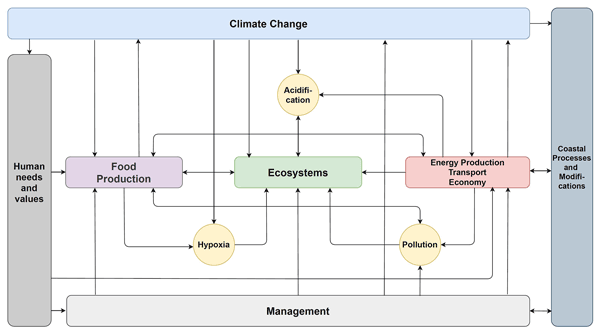
As part of the Baltic Earth Assessment Reports (BEAR), we present an inventory and discussion of different human-induced factors and processes affecting the environment of the Baltic Sea region and their interrelations. Some are naturally occurring and modified by human activities, others are completely human-induced, and they are all interrelated to different degrees. The findings from this study can largely be transferred to other comparable marginal and coastal seas in the world.
Ralf Weisse, Inga Dailidienė, Birgit Hünicke, Kimmo Kahma, Kristine Madsen, Anders Omstedt, Kevin Parnell, Tilo Schöne, Tarmo Soomere, Wenyan Zhang, and Eduardo Zorita
Earth Syst. Dynam., 12, 871–898, https://doi.org/10.5194/esd-12-871-2021, https://doi.org/10.5194/esd-12-871-2021, 2021
Short summary
Short summary
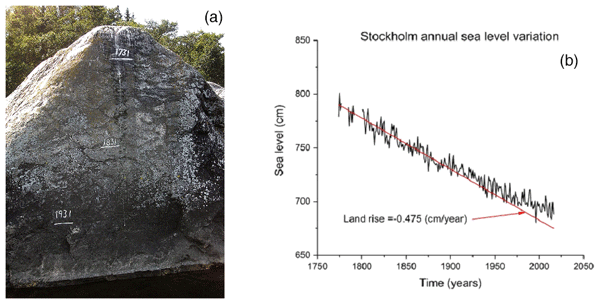
The study is part of the thematic Baltic Earth Assessment Reports – a series of review papers summarizing the knowledge around major Baltic Earth science topics. It concentrates on sea level dynamics and coastal erosion (its variability and change). Many of the driving processes are relevant in the Baltic Sea. Contributions vary over short distances and across timescales. Progress and research gaps are described in both understanding details in the region and in extending general concepts.

Nadezhda Kudryavtseva, Tarmo Soomere, and Rain Männikus
Nat. Hazards Earth Syst. Sci., 21, 1279–1296, https://doi.org/10.5194/nhess-21-1279-2021, https://doi.org/10.5194/nhess-21-1279-2021, 2021
Short summary
Short summary
We demonstrate a finding of a very sudden change in the nature of water level extremes in the Gulf of Riga which coincides with weakening of correlation with North Atlantic Oscillation. The shape of the distribution is variable with time; it abruptly changed for several years and was suddenly restored. If similar sudden changes happen in other places in the world, not taking into account the non-stationarity can lead to significant underestimation of future risks from extreme-water-level events.
Marcus Reckermann, Anders Omstedt, Tarmo Soomere, Juris Aigars, Naveed Akhtar, Magdalena Bełdowska, Jacek Bełdowski, Tom Cronin, Michał Czub, Margit Eero, Kari Petri Hyytiäinen, Jukka-Pekka Jalkanen, Anders Kiessling, Erik Kjellström, Karol Kuliński, Xiaoli Guo Larsén, Michelle McCrackin, H. E. Markus Meier, Sonja Oberbeckmann, Kevin Parnell, Cristian Pons-Seres de Brauwer, Anneli Poska, Jarkko Saarinen, Beata Szymczycha, Emma Undeman, Anders Wörman, and Eduardo Zorita
Earth Syst. Dynam., 13, 1–80, https://doi.org/10.5194/esd-13-1-2022, https://doi.org/10.5194/esd-13-1-2022, 2022
Short summary
Short summary
As part of the Baltic Earth Assessment Reports (BEAR), we present an inventory and discussion of different human-induced factors and processes affecting the environment of the Baltic Sea region and their interrelations. Some are naturally occurring and modified by human activities, others are completely human-induced, and they are all interrelated to different degrees. The findings from this study can largely be transferred to other comparable marginal and coastal seas in the world.
Ralf Weisse, Inga Dailidienė, Birgit Hünicke, Kimmo Kahma, Kristine Madsen, Anders Omstedt, Kevin Parnell, Tilo Schöne, Tarmo Soomere, Wenyan Zhang, and Eduardo Zorita
Earth Syst. Dynam., 12, 871–898, https://doi.org/10.5194/esd-12-871-2021, https://doi.org/10.5194/esd-12-871-2021, 2021
Short summary
Short summary
The study is part of the thematic Baltic Earth Assessment Reports – a series of review papers summarizing the knowledge around major Baltic Earth science topics. It concentrates on sea level dynamics and coastal erosion (its variability and change). Many of the driving processes are relevant in the Baltic Sea. Contributions vary over short distances and across timescales. Progress and research gaps are described in both understanding details in the region and in extending general concepts.
Nadezhda Kudryavtseva, Tarmo Soomere, and Rain Männikus
Nat. Hazards Earth Syst. Sci., 21, 1279–1296, https://doi.org/10.5194/nhess-21-1279-2021, https://doi.org/10.5194/nhess-21-1279-2021, 2021
Short summary
Short summary
We demonstrate a finding of a very sudden change in the nature of water level extremes in the Gulf of Riga which coincides with weakening of correlation with North Atlantic Oscillation. The shape of the distribution is variable with time; it abruptly changed for several years and was suddenly restored. If similar sudden changes happen in other places in the world, not taking into account the non-stationarity can lead to significant underestimation of future risks from extreme-water-level events.
Cited articles
Aagaard, T., Brinkkemper, J., Christensen, D. F., Hughes, M. G., and Ruessink, G.: Surf zone turbulence and suspended sediment dynamics – A review, J. Mar. Sci. Eng., 9, 1300, https://doi.org/10.3390/jmse9111300, 2021.
Barzehkar, M., Parnell, K. E., Soomere, T., and Koivisto, M.: Offshore wind power plant site selection in the Baltic Sea, Reg. Stud Mar. Sci., 73, 103469, https://doi.org/10.1016/j.rsma.2024.103469, 2024.
Bernatchez, P. and Fraser, C.: Evolution of coastal defence structures and consequences for beach width trends, Quebec, Canada, J. Coastal Res., 28, 1550–1566, https://doi.org/10.2112/JCOASTRES-D-10-00189.1, 2012.
Bertina, L., Krievans, M., Burlakovs, J., and Lapinskis, J.: Coastal development of Daugavgriva Island, located near the Gulf of Riga, Proc. Latvian Acad. Sci. B, 69, 290–298, https://doi.org/10.1515/prolas-2015-0045, 2015.
Björkqvist, J.-V., Tuomi, L., Tollman, N., Kangas, A., Pettersson, H., Marjamaa, R., Jokinen, H., and Fortelius, C.: Brief communication: Characteristic properties of extreme wave events observed in the northern Baltic Proper, Baltic Sea, Nat. Hazards Earth Syst. Sci., 17, 1653–1658, https://doi.org/10.5194/nhess-17-1653-2017, 2017.
Björkqvist, J.-V., Lukas, I., Alari, V., van Vledder, G. P., Hulst, S., Pettersson, H., Behrens, A., and Männik, A.: Comparing a 41 year model hindcast with decades of wave measurements from the Baltic Sea, Ocean Eng., 152, 57–71, https://doi.org/10.1016/j.oceaneng.2018.01.048, 2018.
Björkqvist, J.-V., Rikka, S., Alari, V., Männik, A., Tuomi, L., and Pettersson, H.: Wave height return periods from combined measurement–model data: a Baltic Sea case study, Nat. Hazards Earth Syst. Sci., 20, 3593–3609, https://doi.org/10.5194/nhess-20-3593-2020, 2020.
Björkqvist, J.-V., Pärt, S., Alari, V., Rikka, S., Lindgren, E., and Tuomi, L.: Swell hindcast statistics for the Baltic Sea, Ocean Sci., 17, 1815–1829, https://doi.org/10.5194/os-17-1815-2021, 2021.
Booij, N., Ris, R. C., and Holthuijsen, L. H.: A third-generation wave model for coastal regions: 1. model description and validation, J. Geophys. Res.-Oceans, 104, 7649–7666, https://doi.org/10.1029/98JC02622, 1999.
Bulleri, F. and Chapman, M. G.: The introduction of coastal infrastructure as a driver of change in marine environments, J. Appl. Ecol., 47, 26–35, https://doi.org/10.1111/j.1365-2664.2009.01751.x, 2010.
Cappucci, S., Bertoni, D., Cipriani, L. E., Boninsegni, G., and Sarti, G.: Assessment of the anthropogenic sediment budget of a littoral cell system (Northern Tuscany, Italy), Water, 12, 3240, https://doi.org/10.3390/w12113240, 2020.
Eberhards, G. and Lapinskis, J.: Processes on the Latvian coast of the Baltic Sea: atlas, Riga, University of Latvia, Riga, ISBN 9789984450209, 2008.
Eberhards, G., Lapinskis, J., and Saltupe, B.: Hurricane Erwin 2005 coastal erosion in Latvia, Baltica, 19, 10–19, 2006.
Eberhards, G., Grine, I., Lapinskis, J., Purgalis, I., Saltupe, B., and Torklere, A.: Changes in Latvia's seacoast (1935–2007), Baltica, 22, 11–22, 2009.
Eelsalu, M., Org, M., and Soomere, T.: Visually observed wave climate in the Gulf of Riga, in: The 6th IEEE/OES Baltic Symposium Measuring and Modeling of Multi-Scale Interactions in the Marine Environment, IEEE Conference Publications, 26–29 May 2014, Tallinn, Estonia, https://doi.org/10.1109/BALTIC.2014.6887829, 2014.
Eelsalu, M., Parnell, K. E., and Soomere, T.: Sandy beach evolution in the low-energy microtidal Baltic Sea: attribution of changes to hydrometeorological forcing, Geomorphology, 414, 108383, https://doi.org/10.1016/j.geomorph.2022.108383, 2022.
Eelsalu, M., Viigand, K., and Soomere, T.: Quantification of sediment budget in extensively developed urban areas: a case study of Tallinn Bay, the Baltic Sea, Regional Studies in Marine Science, 67, 103199, https://doi.org/10.1016/j.rsma.2023.103199, 2023.
Eelsalu, M., Soomere, T., and Jankowski, M. Z.: Climate change driven alongshore variations of directional forcing of sediment transport on the eastern Baltic Sea coast, J. Coastal Res., 113, 256–260, https://doi.org/10.2112/JCR-SI113-051.1, 2024a.
Eelsalu, M., Viigand, K., Soomere, T., and Parnell, K. E.: Systematic analysis of alongshore sediment transport patterns in varying sea level conditions for evaluating stability of the coastal areas in the microtidal Baltic Sea, J. Coastal Res., 113, 53–57, https://doi.org/10.2112/JCR-SI113-011.1, 2024b.
Eelsalu, M., Piho, L., Aigars, J., Kelpšaitė-Rimkienė, L., Kondrat, V., Kruusmaa, M., Parnell, K. E., Ristolainen, A., Šakurova, I., Skudra, M., Viška, M., and Soomere, T.: Exponential distribution of wave-driven near-bed water speeds under short-crested waves: a case study in the eastern Gulf of Riga, the Baltic Sea, P. Est. Acad. Sci., 74, 23–42, https://doi.org/10.3176/proc.2025.1.03, 2025a.
Eelsalu, M., Soomere, T., Parnell, K. E., and Viška, M.: Attribution of alterations in coastal processes in the southern and eastern Baltic Sea to climate change driven modifications of coastal drivers, Oceanologia, 67, 67103, https://doi.org/10.5697/LXTZ5389, 2025b.
Feistel, R., Nausch, G., and Wasmund, R.: State and evolution of the Baltic Sea, 1952–2005, Wiley, Hoboken, New Jersey, https://doi.org/10.1002/9780470283134, 2005.
Giudici, A., Jankowski, M. Z., Männikus, R., Najafzadeh, F., Suursaar, Ü., and Soomere, T.: A comparison of Baltic Sea wave properties simulated using two modelled wind data sets, Estuar. Coast. Shelf S., 290, 108401, https://doi.org/10.1016/j.ecss.2023.108401, 2023.
Harff, J., Deng, J. J., Dudzinska-Nowak, J., Fröhle, P., Groh, A., Hünicke, B., Soomere, T., and Zhang, W. Y.: What determines the change of coastlines in the Baltic Sea?, in: Coastline Changes of the Baltic Sea from South to East: Past and Future Projection, Coastal Research Library, vol. 19, edited by: Harff, J., Furmańczyk, K., and von Storch, H., Springer, 15–35, https://doi.org/10.1007/978-3-319-49894-2_2, 2017.
Hersbach, H., Bell, B., Berrisford, P., Hirahara, S., Horanyi, A., Munoz-Sabater, J., Nicolas, J., Peubey, C., Radu, R., Schepers, D., Simmons, A., Soci, C., Abdalla, S., Abellan, X., Balsamo, G., Bechtold, P., Biavati, G., Bidlot, J., Bonavita, M., De Chiara, G., Dahlgren, P., Dee, D., Diamantakis, M., Dragani, R., Flemming, J., Forbes, R., Fuentes, M., Geer, A., Haimberger, L., Healy, S., Hogan, R. J., Holm, E., Janiskova, M., Keeley, S., Laloyaux, P., Lopez, P., Lupu, C., Radnoti, G., de Rosnay, P., Rozum, I., Vamborg, F., Villaume, S., and Thepaut, J. N.: The ERA5 global reanalysis, Q. J. Roy. Meteor. Soc., 146, 1999–2049, https://doi.org/10.1002/qj.3803, 2020.
Hünicke, B., Zorita, E., Soomere, T., Madsen, K. S., Johansson, M., and Suursaar, Ü.: Recent change – Sea level and wind waves, in: Second Assessment of Climate Change for the Baltic Sea Basin, Regional Climate Studies, edited by: The BACC II Author Team, Springer, 155–185, https://doi.org/10.1007/978-3-319-16006-1_9, 2015.
Jankowski, M. Z., Soomere, T., Parnell, K. E., and Eelsalu, M.: Alongshore sediment transport in the eastern Baltic Sea, J. Coastal Res., 113, 261–265, https://doi.org/10.2112/JCR-SI113-052.1, 2024.
Karpin, V., Heinsalu, A., Ojala, A. E. K., and Virtasalo, J.: Offshore murtoos indicate warm-based Fennoscandian ice-sheet conditions during the Bølling warming in the northern Gulf of Riga, Baltic Sea, Geomorphology, 430, 108655, https://doi.org/10.1016/j.geomorph.2023.108655, 2023.
Kinsela, M. A., Morris, B. D., Linklater, M., and Hanslow, D. J.: Second-pass assessment of potential exposure to shoreline change in new south Wales, Australia, using sediment compartments framework, J. Mar. Sci. Eng., 5, 61, https://doi.org/10.3390/jmse5040061, 2017.
Knaps, R. J.: Sediment transport near the coasts of the Eastern Baltic, in: Development of sea shores under the conditions of oscillations of the Earth's crust, Valgus, Tallinn, 21–29, 1966.
Lapinskis, J.: Coastal sediment balance in the eastern part of the Gulf of Riga (2005–2016), Baltica, 30, 87–95, https://doi.org/10.5200/baltica.2017.30.10, 2017.
Larson, M., Hoan, L. X., and Hanson, H.: Direct formula to compute wave height and angle at incipient breaking, J. Waterw. Port C. Div., 136, 119–122, https://doi.org/10.1061/(ASCE)WW.1943-5460.0000030, 2010.
Lentz, S. and Raubenheimer, B.: Field observations of wave setup, J. Geophys. Res.-Oceans, 104, 867–875, https://doi.org/10.1029/1999JC900239, 1999.
Leppäranta, M. and Myrberg, K.: Physical Oceanography of the Baltic Sea, Springer Science & Business Media, Praxis, Berlin, Heidelberg, https://doi.org/10.1007/978-3-540-79703-6, 2009.
Luijendijk, A., Hagenaars, G., Ranasinghe, R., Baart, F., Donchyts, G., and Aarninkhof, S.: The state of the world's beaches, Sci. Rep.-UK, 8, 6641, https://doi.org/10.1038/s41598-018-24630-6, 2018.
Männikus, R. and Soomere, T.: Directional variation of return periods of water level extremes in Moonsund and in the Gulf of Riga. Baltic Sea, Reg. Stud. Mar. Sci., 57, 102741, https://doi.org/10.1016/j.rsma.2022.102741, 2023.
Männikus, R., Soomere, T., and Kudryavtseva, N.: Identification of mechanisms that drive water level extremes from in situ measurements in the Gulf of Riga during 1961–2017, Cont. Shelf Res., 182, 22–36, https://doi.org/10.1016/j.csr.2019.05.014, 2019.
Männikus, R., Soomere, T., and Suursaar, Ü.: How do simple wave models perform compared with sophisticated models and measurements in the Gulf of Finland?, Est. J. Earth Sci., 73, 98–111, https://doi.org/10.3176/earth.2024.10, 2024.
Najafzadeh, F. and Soomere, T.: Impact of changes in sea ice cover on wave climate of semi-enclosed seasonally ice-covered water bodies on temperate latitudes: a case study in the Gulf of Riga, Est. J. Earth Sci., 73, 26–36, https://doi.org/10.3176/earth.2024.03, 2024.
Najafzadeh, F., Jankowski, M. Z., Giudici, A., Männikus, A., Suursaar, Ü., Viška, M., and Soomere, T.: Spatiotemporal variability of wave climate in the Gulf of Riga, Oceanologia, 66, 56–77, https://doi.org/10.1016/j.oceano.2023.11.001, 2024.
Power, H. E., Hughes, M. G., Aagaard, T., and Baldock, T. E.: Nearshore wave height variation in unsaturated surf, J. Geophys. Res.-Oceans, 115, C08030, https://doi.org/10.1029/2009JC005758, 2010.
Räämet, A. and Soomere, T.: The wave climate and its seasonal variability in the northeastern Baltic Sea, Est. J. Earth Sci., 59, 100–113, https://doi.org/10.3176/earth.2010.1.08, 2010.
Raubenheimer, B., Guza, R. T., and Elgar, S.: Wave transformation across the inner surf zone, J. Geophys. Res.-Oceans, 101, 25589–25597, https://doi.org/10.1029/96JC02433, 1996.
Raubenheimer, B., Guza, R. T., and Elgar, S.: Field observations of set-down and set-up, J. Geophys. Res.-Oceans, 106, 4629–4638, https://doi.org/10.1029/2000JC000572, 2001.
Różyński, G.: Coastal protection challenges after heavy storms on the Polish coast, Cont. Shelf Res., 266, 105080, https://doi.org/10.1016/j.csr.2023.105080, 2023.
Šakurova, I., Kondrat, V., Baltranaitė, E., Gardauskė, V., Kelpšaitė-Rimkienė, L., Soomere, T., and Parnell, K. E.: Initial adjustment of underwater profiles after nourishment in a mild wave climate: a case study near Klaipėda, the Baltic Sea, Est. J. Earth Sci., 74, 22–33, https://doi.org/10.3176/earth.2025.02, 2025.
Sallenger, A. H. and Holman, R. A.: Wave energy saturation on a natural beach of variable slope, J. Geophys. Res.-Oceans, 90, 11939–11944, https://doi.org/10.1029/JC090iC06p11939, 1985.
Skudra, M. and Lips, U.: Characteristics and inter-annual changes in temperature, salinity and density distribution in the Gulf of Riga, Oceanologia, 59, 37–48, https://doi.org/10.1016/j.oceano.2016.07.001, 2017.
Soomere, T.: Extreme wind speeds and spatially uniform wind events in the Baltic Proper, Proc. Estonian Acad. Sci. Eng., 7, 195–211, https://doi.org/10.3176/eng.2001.3.01, 2001.
Soomere, T.: Anisotropy of wind and wave regimes in the Baltic proper, J. Sea Res., 49, 305–316, https://doi.org/10.1016/S1385-1101(03)00034-0, 2003.
Soomere, T. and Eelsalu, M.: On the wave energy potential along the eastern Baltic Sea coast, Renew. Energ., 71, 221–233, https://doi.org/10.1016/j.renene.2014.05.025, 2014.
Soomere, T. and Keevallik, S.: Anisotropy of moderate and strong winds in the Baltic Proper, Proc. Estonian Acad. Sci. Eng., 7, 35–49, https://doi.org/10.3176/eng.2001.1.04, 2001.
Soomere, T. and Räämet, A.: Spatial patterns of the wave climate in the Baltic Proper and the Gulf of Finland, Oceanologia, 53, 335–371, https://doi.org/10.5697/oc.53-1-TI.335, 2011.
Soomere, T. and Räämet, A.: Decadal changes in the Baltic Sea wave heights, J. Marine Syst., 129, 86–95, https://doi.org/10.1016/j.jmarsys.2013.03.009, 2014.
Soomere, T. and Viška, M.: Simulated sediment transport along the eastern coast of the Baltic Sea, J. Marine Syst., 129, 96–105, https://doi.org/10.1016/j.jmarsys.2013.02.001, 2014.
Soomere, T., Pindsoo, K., Bishop, S. R., Käärd, A., and Valdmann, A.: Mapping wave set-up near a complex geometric urban coastline, Nat. Hazards Earth Syst. Sci., 13, 3049–3061, https://doi.org/10.5194/nhess-13-3049-2013, 2013.
Soomere, T., Bishop, S. R., Viška, M., and Räämet, A.: An abrupt change in winds that may radically affect the coasts and deep sections of the Baltic Sea, Clim. Res., 62, 163–171, https://doi.org/10.3354/cr01269, 2015.
Soomere, T., Männikus, R., Pindsoo, K., Kudryavtseva, N., and Eelsalu, M.: Modification of closure depths by synchronisation of severe seas and high water levels, Geo-Mar. Lett., 37, 35–46, https://doi.org/10.1007/s00367-016-0471-5, 2017.
Soomere, T., Eelsalu, M., Viigand, K., and Giudici, A.: Linking changes in the directional distribution of moderate and strong winds with changes in wave properties in the eastern Baltic proper, J. Coastal Res., 113, 190–194, https://doi.org/10.2112/JCR-SI113-038.1, 2024.
Susilowati, Y., Nur, W. H., Sulaiman, A., Kumoro, Y., and Yunarto: Study of dynamics of coastal sediment cell boundary in Cirebon coastal area based on integrated shoreline Montecarlo model and remote sensing data, Regional Studies in Marine Science, 52, 102268, https://doi.org/10.1016/j.rsma.2022.102268, 2022.
Suursaar, Ü., Kullas, T., and Otsmann, M.: A model study of the sea level variations in the Gulf of Riga and the Väinameri Sea, Cont. Shelf Res., 22, 2001–2019, https://doi.org/10.1016/S0278-4343(02)00046-8, 2002.
Thom, B. G., Eliot, I., Eliot, M., Harvey, N., Rissik, D., Sharples, C., Short, A. D., and Woodroffe, C. D.: National sediment compartment framework for Australian coastal management, Ocean Coast. Manage., 154, 103–120, https://doi.org/10.1016/j.ocecoaman.2018.01.001, 2018.
Tõnisson, H., Orviku, K., Lapinskis, J., Gulbinskas, S., and Zaromskis, R.: The Baltic States – Estonia, Latvia and Lithuania, in: Coastal Erosion and Protection in Europe, edited by: Pranzini, E. and Williams, A., Routledge, London, 47–80, https://doi.org/10.4324/9780203128558, 2013.
Tõnisson, H., Suursaar, Ü., Alari, V., Muru, M., Rivis, R., Kont, A., and Viitak, M.: Measurement and model simulations of hydrodynamic parameters, observations of coastal changes and experiments with indicator sediments to analyse the impact of storm St. Jude in October, 2013, J. Coastal Res., 75, 1257–1261, https://doi.org/10.2112/SI75-25, 2016.
Tsyrulnikov, A., Tuuling, I., and Hang, T.: Streamlined topographical features in and around the Gulf of Riga as evidence of Late Weichselian glacial dynamics, Geol. Q., 52, 81–89, 2008.
Tsyrulnikov, A., Tuuling, I., Kalm, V., Hang, T., and Flodén, T.: Late Weichselian and Holocene seismostratigraphy and depositional history of the Gulf of Riga, NE Baltic Sea, Boreas, 41, 673–689, https://doi.org/10.1111/j.1502-3885.2012.00257.x, 2012.
Ulsts, V.: Latvian coastal zone of the Baltic Sea, State Geological Survey of Latvia, ISBN 9789984929903, 1998.
Ulsts, V. and Bulgakova, J.: General lithological and geomorphological map of Latvian shore zone – Baltic Sea and Gulf of Riga, State Geological Survey of Latvia, Riga, ISBN 9984929906, 1998.
USACE: Coastal Engineering Manual, Manual No. 1110-2-1100, Department of the Army, US Army Corps of Engineers, https://www.publications.usace.army.mil/USACE-Publications/Engineer-Manuals/u43544q/636F617374616C20656E67696E656572696E67206D616E75616C/ (last access: 16 January 2025), 2002.
Villasante, S., Richter, K., Bailey, J., Blenckner, T., Farrell, E., Mongruel, R., Timmermann, K., Bouma, T., Melaku Canu, D., Chen, M., Lachs, L., Payo, A., and Sousa Pinto, I.: Building Coastal Resilience in Europe, Position Paper 27 of the European Marine Board, edited by: Alexander, B., Muñiz Piniella, A., Kellett, P., Rodriguez Perez, A., Van Elslander, J., Bayo Ruiz, F., and Heymans, J. J., Ostend, Belgium, https://doi.org/10.5281/zenodo.8224055, 2023.
Viška, M. and Soomere, T.: Long-term variations of simulated sediment transport along the eastern Baltic Sea coast as a possible indicator of climate change, in: Publication No. 53, 7th Study Conference on BALTEX, Conference Proceedings, 10–14 June 2013, Borgholm, Island of Öland, Sweden, edited by: Reckermann, M. and Köppen, S., International BALTEX Secretariat, 99–100, https://www.baltex-research.eu/oland2013/material/Proceedings_Final_web.pdf (last access: 16 January 2025), 2013a.
Viška, M. and Soomere, T.: Simulated and observed reversals of wave-driven alongshore sediment transport at the eastern Baltic Sea coast, Baltica, 26, 145–156, https://doi.org/10.5200/baltica.2013.26.15, 2013b.
Short summary
Seemingly interconnected beaches are often separated by human-made obstacles and natural divergence areas of sediment flux. We decompose the sedimentary shores of the Gulf of Riga into five naturally almost isolated compartments based on the analysis of wave-driven sediment flux. The western, southern, and eastern shores have quite different and fragmented sediment transport regimes. The transport rates along different shore segments show extensive interannual variations but no explicit trends.
Seemingly interconnected beaches are often separated by human-made obstacles and natural...


