
Articles | Volume 22, issue 1
https://doi.org/10.5194/os-22-609-2026
© Author(s) 2026. This work is distributed under
the Creative Commons Attribution 4.0 License.
the Creative Commons Attribution 4.0 License.
https://doi.org/10.5194/os-22-609-2026
© Author(s) 2026. This work is distributed under
the Creative Commons Attribution 4.0 License.
the Creative Commons Attribution 4.0 License.
Research article
| 
12 Feb 2026
Research article |
| 12 Feb 2026
| 12 Feb 2026
Modelling seawater pCO2 and pH in the Canary Islands region based on satellite measurements and machine learning techniques
Irene Sánchez-Mendoza
Instituto de Oceanografía y Cambio Global, QUIMA, Universidad de Las Palmas de Gran Canaria, 35017 Las Palmas de Gran Canaria, Spain
Melchor González-Dávila
CORRESPONDING AUTHOR

Instituto de Oceanografía y Cambio Global, QUIMA, Universidad de Las Palmas de Gran Canaria, 35017 Las Palmas de Gran Canaria, Spain
David González-Santana
Instituto de Oceanografía y Cambio Global, QUIMA, Universidad de Las Palmas de Gran Canaria, 35017 Las Palmas de Gran Canaria, Spain
David Curbelo-Hernández
Instituto de Oceanografía y Cambio Global, QUIMA, Universidad de Las Palmas de Gran Canaria, 35017 Las Palmas de Gran Canaria, Spain
David Estupiñán-Santana
Instituto de Oceanografía y Cambio Global, QUIMA, Universidad de Las Palmas de Gran Canaria, 35017 Las Palmas de Gran Canaria, Spain
Aridane G. González
Instituto de Oceanografía y Cambio Global, QUIMA, Universidad de Las Palmas de Gran Canaria, 35017 Las Palmas de Gran Canaria, Spain
J. Magdalena Santana-Casiano
Instituto de Oceanografía y Cambio Global, QUIMA, Universidad de Las Palmas de Gran Canaria, 35017 Las Palmas de Gran Canaria, Spain
Related authors
No articles found.
Li-Qing Jiang, Amanda Fay, Jens Daniel Müller, Luke Gregor, Alizée Roobaert, Lydia Keppler, Dustin Carroll, Siv K. Lauvset, Tim DeVries, Judith Hauck, Christian Rödenbeck, Nicolas Metzl, Andrea J. Fassbender, Jean-Pierre Gattuso, Peter Landschützer, Rik Wanninkhof, Christopher Sabine, Simone R. Alin, Mario Hoppema, Are Olsen, Matthew P. Humphreys, Kunal Chakraborty, Ana C. Franco, Kumiko Azetsu-Scott, Dorothee C. E. Bakker, Leticia Barbero, Nicholas R. Bates, Nicole Besemer, Henry C. Bittig, Albert E. Boyd, Daniel Broullón, Wei-Jun Cai, Brendan R. Carter, Thi-Tuyet-Trang Chau, Chen-Tung Arthur Chen, Frédéric Cyr, John E. Dore, Ian Enochs, Richard A. Feely, Hernan E. Garcia, Marion Gehlen, Prasanna Kanti Ghoshal, Lucas Gloege, Melchor González-Dávila, Nicolas Gruber, Debby Ianson, Yosuke Iida, Masao Ishii, Apurva Padamnabh Joshi, Esther Kennedy, Alex Kozyr, Nico Lange, Claire Lo Monaco, Derek P. Manzello, Galen A. McKinley, Natalie M. Monacci, Xose A. Padin, Ana M. Palacio-Castro, Fiz F. Pérez, J. Magdalena Santana-Casiano, Jonathan Sharp, Adrienne Sutton, Jim Swift, Toste Tanhua, Maciej Telszewski, Jens Terhaar, Ruben van Hooidonk, Anton Velo, Andrew J. Watson, Angelicque E. White, Zelun Wu, Liang Xue, Hyelim Yoo, Jiye Zeng, and Guorong Zhong
Earth Syst. Sci. Data, 18, 1405–1462, https://doi.org/10.5194/essd-18-1405-2026, https://doi.org/10.5194/essd-18-1405-2026, 2026
Short summary
Short summary
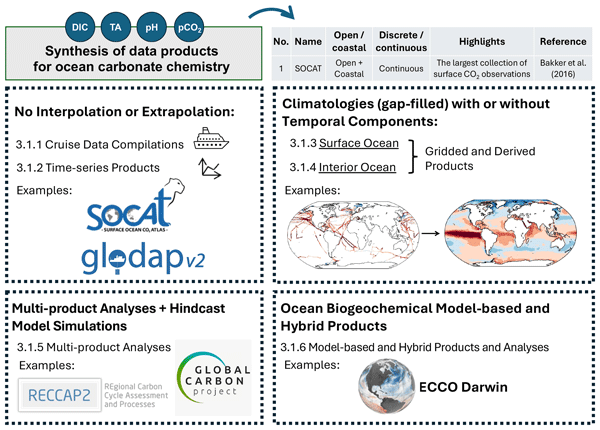
This review article provides an overview of 68 existing ocean carbonate chemistry data products and data product sets, encompassing a broad range of types, including compilations of cruise datasets, gap-filled observational products, model simulations, and more. It is designed to help researchers identify and access the data products that best support their scientific objectives, thereby facilitating progress in understanding the ocean's changing carbonate chemistry.
David Curbelo-Hernández, David González-Santana, Aridane G. González, J. Magdalena Santana-Casiano, and Melchor González-Dávila
Biogeosciences, 22, 3329–3356, https://doi.org/10.5194/bg-22-3329-2025, https://doi.org/10.5194/bg-22-3329-2025, 2025
Short summary
Short summary
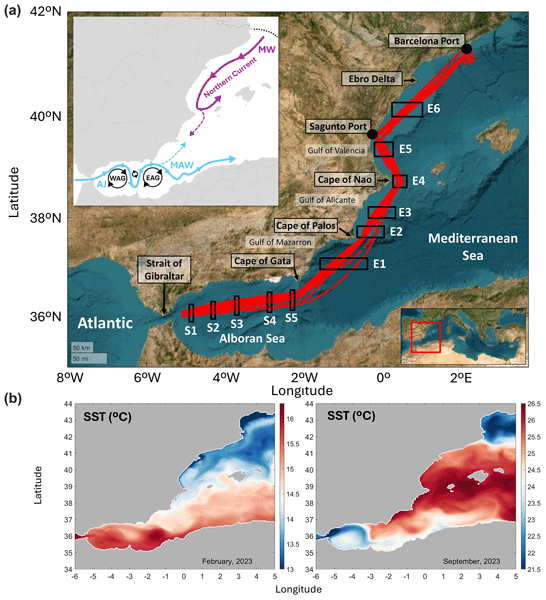
This study offers a unique high-resolution dataset (2019–2024) on surface physicochemical properties in the western Mediterranean Sea. It reveals accelerated surface warming, significantly altering CO2 levels and pH. Currently a net CO2 sink, the region may become a CO2 source by 2030 due to weakening in-gassing. The research highlights the value of VOS (volunteer observing ship) lines for monitoring climate impacts and emphasizes the need for ongoing observations to enhance long-term trend accuracy and future projections.
David Curbelo-Hernández, Fiz F. Pérez, Melchor González-Dávila, Sergey V. Gladyshev, Aridane G. González, David González-Santana, Antón Velo, Alexey Sokov, and J. Magdalena Santana-Casiano
Biogeosciences, 21, 5561–5589, https://doi.org/10.5194/bg-21-5561-2024, https://doi.org/10.5194/bg-21-5561-2024, 2024
Short summary
Short summary
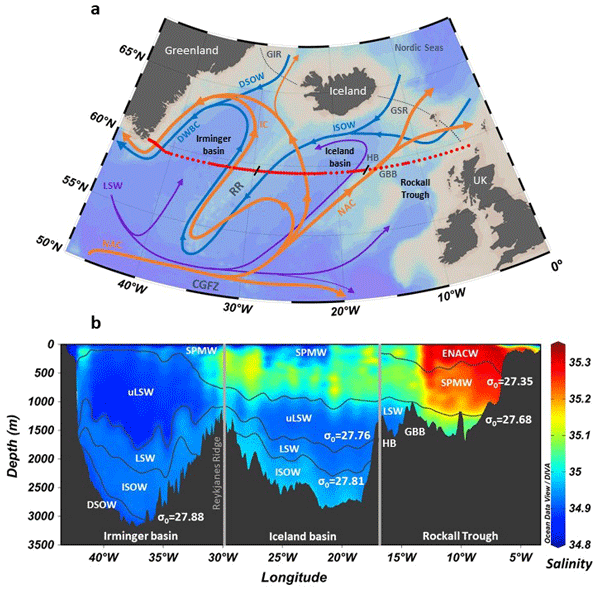
The study evaluated CO2–carbonate system dynamics in the North Atlantic subpolar gyre during 2009–2019. Significant ocean acidification, largely due to rising anthropogenic CO2 levels, was found. Cooling, freshening, and enhanced convective processes intensified this trend, affecting calcite and aragonite saturation. The findings contribute to a deeper understanding of ocean acidification and improve our knowledge about its impact on marine ecosystems.
Milagros Rico, Paula Santiago-Díaz, Guillermo Samperio-Ramos, Melchor González-Dávila, and Juana Magdalena Santana-Casiano
Biogeosciences, 21, 4381–4394, https://doi.org/10.5194/bg-21-4381-2024, https://doi.org/10.5194/bg-21-4381-2024, 2024
Short summary
Short summary
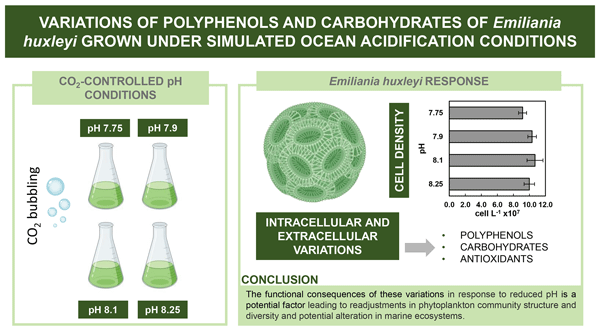
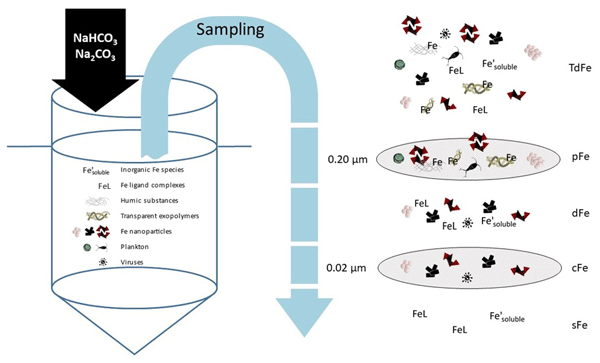
Changes in pH generate stress conditions, either because high pH drastically decreases the availability of trace metals such as Fe(II), a restrictive element for primary productivity, or because reactive oxygen species are increased with low pH. The metabolic functions and composition of microalgae can be affected. These modifications in metabolites are potential factors leading to readjustments in phytoplankton community structure and diversity and possible alteration in marine ecosystems.
David González-Santana, María Segovia, Melchor González-Dávila, Librada Ramírez, Aridane G. González, Leonardo J. Pozzo-Pirotta, Veronica Arnone, Victor Vázquez, Ulf Riebesell, and J. Magdalena Santana-Casiano
Biogeosciences, 21, 2705–2715, https://doi.org/10.5194/bg-21-2705-2024, https://doi.org/10.5194/bg-21-2705-2024, 2024
Short summary
Short summary
In a recent experiment off the coast of Gran Canaria (Spain), scientists explored a method called ocean alkalinization enhancement (OAE), where carbonate minerals were added to seawater. This process changed the levels of certain ions in the water, affecting its pH and buffering capacity. The researchers were particularly interested in how this could impact the levels of essential trace metals in the water.
Christoph Heinze, Thorsten Blenckner, Peter Brown, Friederike Fröb, Anne Morée, Adrian L. New, Cara Nissen, Stefanie Rynders, Isabel Seguro, Yevgeny Aksenov, Yuri Artioli, Timothée Bourgeois, Friedrich Burger, Jonathan Buzan, B. B. Cael, Veli Çağlar Yumruktepe, Melissa Chierici, Christopher Danek, Ulf Dieckmann, Agneta Fransson, Thomas Frölicher, Giovanni Galli, Marion Gehlen, Aridane G. González, Melchor Gonzalez-Davila, Nicolas Gruber, Örjan Gustafsson, Judith Hauck, Mikko Heino, Stephanie Henson, Jenny Hieronymus, I. Emma Huertas, Fatma Jebri, Aurich Jeltsch-Thömmes, Fortunat Joos, Jaideep Joshi, Stephen Kelly, Nandini Menon, Precious Mongwe, Laurent Oziel, Sólveig Ólafsdottir, Julien Palmieri, Fiz F. Pérez, Rajamohanan Pillai Ranith, Juliano Ramanantsoa, Tilla Roy, Dagmara Rusiecka, J. Magdalena Santana Casiano, Yeray Santana-Falcón, Jörg Schwinger, Roland Séférian, Miriam Seifert, Anna Shchiptsova, Bablu Sinha, Christopher Somes, Reiner Steinfeldt, Dandan Tao, Jerry Tjiputra, Adam Ulfsbo, Christoph Völker, Tsuyoshi Wakamatsu, and Ying Ye
Biogeosciences Discuss., https://doi.org/10.5194/bg-2023-182, https://doi.org/10.5194/bg-2023-182, 2023
Revised manuscript not accepted
Short summary
Short summary
For assessing the consequences of human-induced climate change for the marine realm, it is necessary to not only look at gradual changes but also at abrupt changes of environmental conditions. We summarise abrupt changes in ocean warming, acidification, and oxygen concentration as the key environmental factors for ecosystems. Taking these abrupt changes into account requires greenhouse gas emissions to be reduced to a larger extent than previously thought to limit respective damage.
Elise S. Droste, Mario Hoppema, Melchor González-Dávila, Juana Magdalena Santana-Casiano, Bastien Y. Queste, Giorgio Dall'Olmo, Hugh J. Venables, Gerd Rohardt, Sharyn Ossebaar, Daniel Schuller, Sunke Trace-Kleeberg, and Dorothee C. E. Bakker
Ocean Sci., 18, 1293–1320, https://doi.org/10.5194/os-18-1293-2022, https://doi.org/10.5194/os-18-1293-2022, 2022
Short summary
Short summary
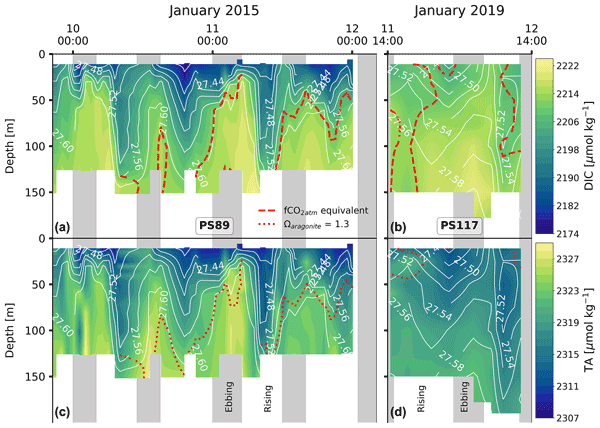
Tides affect the marine carbonate chemistry of a coastal polynya neighbouring the Ekström Ice Shelf by movement of seawater with different physical and biogeochemical properties. The result is that the coastal polynya in the summer can switch between being a sink or a source of CO2 multiple times a day. We encourage consideration of tides when collecting in polar coastal regions to account for tide-driven variability and to avoid overestimations or underestimations of air–sea CO2 exchange.
Cited articles
AEMET: Centro de Investigación Atmosférica de Izaña, Medidas de CO2, https://gml.noaa.gov/aftp/data/trace_gases/co2/flask/surface/txt/co2_izo_surface-flask_1_ccgg_event.txt (last access: 26 May 2025), 2024.
Allen, R. G., Pereira, L. S., Raes, D., and Smith, M.: Crop evapotranspiration-Guidelines for computing crop water requirements-FAO Irrigation and drainage paper 56, Fao, Rome, ISBN 92-5-104219-5, 1998.
Bai, Y., Cai, W.-J., He, X., Zhai, W., Pan, D., Dai, M., and Yu, P.: A mechanistic semi- analytical method for remotely sensing sea surface pCO2 in river-dominated coastal oceans: A case study from the East China Sea, J. Geophys. Res. Ocean., 120, 2331–2349, https://doi.org/10.1002/2014JC010632, 2015.
Bange, H. W., Mongwe, P., Shutler, J. D., Arévalo-Martínez, D. L., Bianchi, D., Lauvset, S. K., Liu, C., Löscher, C. R., Martins, H., Rosentreter, J. A., Schmale, O., Steinhoff, T., Upstill-Goddard, R. C., Wanninkhof, R., Wilson, S. T., and Xie, H.: Advances in understanding of air–sea exchange and cycling of greenhouse gases in the upper ocean, Elem. Sci. Anth., 12, https://doi.org/10.1525/elementa.2023.00044, 2024.
Bates, N. R., Astor, Y. M., Church, M. J., Currie, K., Dore, J. E., González-Dávila, M., Lorenzoni, L., Muller-Karger, F., Olafsson, J., and Santana-Casiano, J. M.: A Time-Series View of Changing Surface Ocean Chemistry Due to Ocean Uptake of Anthropogenic CO2 and Ocean Acidification, Oceanography, 27, 126–141, https://doi.org/10.5670/oceanog.2014.16, 2014.
Boehme, S. E., Sabine, C. L., and Reimers, C. E.: CO2 fluxes from a coastal transect: A time- series approach, Mar. Chem. 63, 49–67, https://doi.org/10.1016/S0304-4203(98)00050-4, 1998.
Borges, A. V., Delille, B., and Frankignoulle, M.: Budgeting sinks and sources of CO2 in the coastal ocean: Diversity of ecosystem counts, Geophys. Res. Lett., 32, 1–4, https://doi.org/10.1029/2005GL023053, 2005.
Breiman, L.: Bagging predictors, Mach. Learn., 24, 123–140, https://doi.org/10.1007/BF00058655, 1996.
Cai, W. J., Dai, M., and Wang, Y.: Air-sea exchange of carbon dioxide in ocean margins: A province-based synthesis, Geophys. Res. Lett., 33, 2–5, https://doi.org/10.1029/2006GL026219, 2006.
Cao, Z., Yang, W., Zhao, Y., Guo, X., Yin, Z., Du, C., Zhao, H., and Dai, M.: Diagnosis of CO2 dynamics and fluxes in global coastal oceans, Natl. Sci. Rev., 7, 786–797, https://doi.org/10.1093/nsr/nwz105, 2020.
Chen, S., Hu, C., Byrne, R. H., Robbins, L. L., and Yang, B.: Remote estimation of surface pCO2 on the West Florida Shelf, Cont. Shelf Res., 128, 10–25, https://doi.org/10.1016/j.csr.2016.09.004, 2016.
Chen, S., Hu, C., Barnes, B. B., Wanninkhof, R., Cai, W. J., Barbero, L., and Pierrot, D.: A machine learning approach to estimate surface ocean pCO2 from satellite measurements, Remote Sens. Environ., 228, 203–226, https://doi.org/10.1016/j.rse.2019.04.019, 2019.
Curbelo-Hernández, D., González-Dávila, M., González, A. G., González-Santana, D., and Santana-Casiano, J. M.: CO2 fluxes in the Northeast Atlantic Ocean based on measurements from a surface ocean observation platform, Sci. Total Environ., 775, 145804, https://doi.org/10.1016/j.scitotenv.2021.145804, 2021.
Curbelo-Hernández, D., Santana Casiano, J. M., González González, A., González Santana, D., and González Dávila, M.: Air-Sea CO2 Exchange in the Strait of Gibraltar, Front. Mar. Sci., 8, 745304, https://doi.org/10.3389/fmars.2021.745304, 2022.
Curbelo Hernández, D., Santana Casiano, J. M., González González, A., González Santana, D., and González Dávila, M.: Air-Sea CO2 Exchange in the Strait of Gibraltar, Front. Mar. Sc., 8, 745304, https://doi.org/10.3389/fmars.2021.745304, 2022.
Dai, M., Su, J., Zhao, Y., Hofmann, E. E., Cao, Z., Cai, W.-J., Gan, J., Lacroix, F., Laurelle, G. G., Meng, F., Müller, J. D., Regnier, P. A. G., Wang, G., and Wang, Z.: Carbon fluxes in the coastal ocean: Synthesis, boundary processes and future trends. Annu. Rev. Earth Pl. Sci., 50, 593–626, https://doi.org/10.1146/annurev-earth-032320-090746, 2022.
Davenport, R., Neuer, S., Hernandez-Guerra, A., Rueda, M. J., Llinas, O., Fischer, G., and Wefer, G.: Seasonal and interannual pigment concentration in the Canary Islands region from CZCS data and comparison with observations from the ESTOC, Int. J. Remote Sens., 20, 1419–1433, https://doi.org/10.1080/014311699212803, 1999.
Dickson, A. G., Sabine, C. L., and Christian, J. R. (Eds.): Guide to best practices for ocean CO2 measurement. Sidney, British Columbia, North Pacific Marine Science Organization, PICES Special Publication 3, IOCCP Report 8, 191 pp., https://doi.org/10.25607/OBP-1342, 2007.
Doney, S. C., Fabry, V. J., Feely, R. A., and Kleypas, J. A.: Ocean acidification: The other CO2 problem, Ann. Rev. Mar. Sci., 1, 169–192, https://doi.org/10.1146/annurev.marine.010908.163834, 2009.
Dorogush, A. V., Ershov, V., and Gulin, A.: CatBoost: gradient boosting with categorical features support, ArXiv [preprint], https://doi.org/10.48550/arXiv.1810.11363, 2018.
Duke, P. J., Hamme, R. C., Ianson, D., Landschützer, P., Swart, N. C., and Covert, P. A.: High-resolution neural network demonstrates strong CO2 source-sink juxtaposition in the coastal zone, J. Geophys. Res.-Oceans, 129, e2024JC021134, https://doi.org/10.1029/2024JC021134, 2024.
Fennel, K., Wilkin, J., Previdi, M., and Najjar, R.: Denitrification effects on air-sea CO2 flux in the coastal ocean: Simulations for the northwest North Atlantic, Geophys. Res. Lett., 35, https://doi.org/10.1029/2008GL036147, 2008.
Ford, D. J., Tilstone, G. H., Shutler, J. D., and Kitidis, V.: Derivation of seawater pCO2 from net community production identifies the South Atlantic Ocean as a CO2 source, Biogeosciences, 19, 93–115, https://doi.org/10.5194/bg-19-93-2022, 2022.
Friedrich, T. and Oschlies, A.: Neural network-based estimates of North Atlantic surface pCO2 from satellite data: A methodological study, J. Geophys. Res.-Oceans, 114, https://doi.org/10.1029/2007JC004646, 2009.
Frölicher, T. L. and Laufkötter, C.: Emerging risks from marine heat waves, Nat. Commun., 9, 650, https://doi.org/10.1038/s41467-018-03163-6, 2018.
Gattuso, J. P., Frankignoulle, M., and Wollast, R.: Carbon and carbonate metabolism in coastal aquatic ecosystems, Annu. Rev. Ecol. Syst., 29, 405–434, https://doi.org/10.1146/annurev.ecolsys.29.1.405, 1998.
González, A. G., Aldrich-Rodríguez, A., González-Santana, D., González-Dávila, M., and Santana-Casiano, J. M.: Seasonal variability of coastal pH and CO2 using an oceanographic buoy in the Canary Islands, Frontiers in Marine Science, 11, https://doi.org/10.3389/fmars.2024.1337929, 2024.
González-Dávila, M. and Santana-Casiano, J. M.: Long-term trends of pH and inorganic carbon in the Eastern North Atlantic: the ESTOC site, Front. Mar. Sci., 10, https://doi.org/10.3389/fmars.2023.1236214, 2023.
Gonzalez-Davila, M. and Santana-Casiano, J. M.: Canary Islands pCO2/pH data from 2019 to 2024 using VOS and Buoys data, Zenodo [data set], https://doi.org/10.5281/zenodo.16780085, 2025.
González-Dávila, M., Santana-Casiano, J. M., Rueda, M. J., Llinás, O., and González-Dávila, E. F.: Seasonal and interannual variability of sea-surface carbon dioxide species at the European Station for time series in the Ocean at the Canary Islands (ESTOC) between 1996 and 2000, Glob. Biogeochem. Cy., 17, https://doi.org/10.1029/2002gb001993, 2003.
González-Dávila, M., Santana-Casiano, J. M., Rueda, M. J., and Llinás, O.: The water column distribution of carbonate system variables at the ESTOC site from 1995 to 2004, Biogeosciences, 7, 3067–3081, https://doi.org/10.5194/bg-7-3067-2010, 2010.
Gregor, L., Shutler, J., and Gruber, N.: High-Resolution Variability of the Ocean Carbon Sink, Glob. Biogeochem. Cy., 38, https://doi.org/10.1029/2024GB008127, 2024.
Gruber, N., Keeling, C. D., and Bates, N. R.: Interannual variability in the North Atlantic ocean carbon sink, Science, 298, 2374–2378, https://doi.org/10.1126/science.1077077, 2002.
Hobday, A. J., Alexander, L. V., Perkins, S. E., Smale, D. A., Straub, S. C., Oliver, E. C., and Wernberg, T.: A hierarchical approach to defining marine heatwaves. Prog. Oceanogr., 141, 227-238. https://doi.org/10.1016/j.pocean.2015.12.014, 2016.
Holbrook, N. J., Scannell, H. A., Sen Gupta, A., Benthuysen, J. A., Feng, M., Oliver, E. C., and Wernberg, T.: A global assessment of marine heatwaves and their drivers, Nat. Commun., 10, 2624, https://doi.org/10.1038/s41467-019-10206-z, 2019.
Ikawa, H., Faloona, I., Kochendorfer, J., Paw U, K. T., and Oechel, W. C.: Air–sea exchange of CO2 at a Northern California coastal site along the California Current upwelling system, Biogeosciences, 10, 4419–4432, https://doi.org/10.5194/bg-10-4419-2013, 2013.
Irene, S.-M., Gonzalez-Davila, M., and Santana Casiano, J. M.: Models for predicting the partial pressure of CO2 in seawater (pCO2,sw) using different machine Learning approaches, Zenodo [code], https://doi.org/10.5281/zenodo.16780313, 2025.
Jo, Y.-H., Dai, M., Zhai, W., Yan, X.-H., and Shang, S.: On the variations of sea surface pCO2 in the northern South China Sea: A remote sensing based neural network approach, J. Geophys. Res., 117, C08022, https://doi.org/10.1029/2011JC007745, 2012-
Laruelle, G. G., Lauerwald, R., Pfeil, B., and Regnier, P.: Regionalized global budget of the CO2 exchange at the air-water interface in continental shelf seas, Global Biogeochem. Cy., 1199–1214, https://doi.org/10.1111/1462-2920.13280, 2014.
Lan, X., Petron, G., Baugh, K., Crotwell, A. M., Crotwell, M. J., DeVogel, S., Madronich, M., Mauss, J., Mefford, T., Moglia, E., Morris, S., Mund, J. W., Searle, A., Thoning, K. W., Wolter, S., and Miller, J.: Atmospheric Carbon Dioxide Dry Air Mole Fractions from the NOAA GML Global Greenhouse Gas Reference Network, Version: 2025-08-15, Carbon Cycle Cooperative Global Air Sampling Network: 1967–Present [data set], https://doi.org/10.15138/wkgj-f215, 2025.
Landschützer, P., Gruber, N., Bakker, D. C. E., and Schuster, U.: Recent variability of the global ocean carbon sink, Global Biogeochem. Cy., 28, 927–949. https://doi.org/10.1002/2014GB004853, 2014.
Lefèvre, N. and Taylor, A.: Estimating pCO2 from sea surface temperatures in the Atlantic gyres, Deep-Sea Res. Pt. I, 49, 539–554, https://doi.org/10.1016/s0967-0637(01)00064-4, 2002.
Le Quéré, C., Raupach, M. R., Canadell, J. G., Marland, G., Bopp, L., Ciais, P., Conway, T. J., Doney, S. C., Feely, R. A., Foster, P., Friedlingstein, P., Gurney, K., Houghton, R. A., House, J. I., Huntingford, C., Levy, P. E., Lomas, M. R., Majkut, J., Metzl, N., Ometto, J. P., Peters, G. P., Prentice, I. C., Randerson, J. T., Running, S. W., Sarmiento, J. L., Schuster, U., Sitch, S., Takahashi, T., Viovy, N., Van Der Werf, G. R., and Woodward, F. I.: Trends in the sources and sinks of carbon dioxide, Nat. Geosci., 2, 831–836, https://doi.org/10.1038/ngeo689, 2009.
Lohrenz, S. E., Cai, W.-J., Chakraborty, S., Huang, W.-J., Guo, X., He, R., Xue, Z., Fennel, K., Howden, S., and Tian, H.: Satellite estimation of coastal pCO2 and air-sea flux of carbon dioxide in the northern Gulf of Mexico, Remote Sens. Environ., 207, 71–83, https://doi.org/10.1016/j.rse.2017.12.039, 2018.
Lueker, T. J., Dickson, A. G., and Keeling, C. D.: Ocean pCO2 calculated from dissolved inorganic carbon, alkalinity, and equations for K1 and K2: Validation based on laboratory measurements of CO2 in gas and seawater at equilibrium, Mar. Chem., 70, 105–119, https://doi.org/10.1016/S0304-4203(00)00022-0, 2000.
Mintrop, L., Pérez, F. F., González-Dávila, M., Santana-Casiano, J. M., and Körtzinger, A.: Alkalinity determination by potentiometry: intercalibration using three different methods, Ciencias Mar., 26, 23–27, https://doi.org/10.7773/cm.v26i1.573, 2000.
Pelegrí, J. L., Arístegui, J., Cana, L., González-Dávila, M., Hernández-Guerra, A., Hernández-León, S., Marrero-Díaz, A., Montero, M. F., Sangrá, P., and Santana-Casiano, M.: Coupling between the open ocean and the coastal upwelling region off northwest Africa: water recirculation and offshore pumping of organic matter, J. Mar. Syst., 54 (1–4), https://doi.org/10.1016/j.jmarsys.2004.07.003, 2005.
Pelegrí, J. L., Csanady, G. T., and Martins, A.: The north Atlantic nutrient stream, Journal of Oceanography, 52, 275–299, 1996.
Pierrot, D., Neill, C., Sullivan, K., Castle, R., Wanninkhof, R., Lüger, H., Johannessen, T., Olsen, A., Feely, R. A., and Cosca, C. E.: Recommendations for autonomous underway pCO2 measuring systems and data-reduction routines, Deep-Sea Res. Pt. II, 56, 512–522, https://doi.org/10.1016/j.dsr2.2008.12.005, 2009.
Qian, L., Chen, Z., Huang, Y., and Stanford, R. J.: Employing categorical boosting (CatBoost) and meta-heuristic algorithms for predicting the urban gas consumption, Urban Climate, 51, https://doi.org/10.1016/j.uclim.2023.101647, 2023.
Prokhorenkova, L., Gusev, G., Vorobev, A., Dorogush, A. V., and Gulin, A.: CatBoost: unbiased boosting with categorical features, 32nd Conference on Neural Information Processing Systems (NeurIPS 2018), Montréal, Canada, https://github.com/catboost/catboost (last access: 23 January 2026), 2018.
Regnier, P., Resplandy, L., Najjar, R. G., and Ciais, P.: The land-to-ocean loops of the global carbon cycle, Nature, 603, 401–410, https://doi.org/10.1038/s41586-021-04339-9, 2022.
R Core Team: A language and environment for statistical computing. R Foundation for Statistical Computing, Vienna, Austria, https://www.r-project.org/ (last access: 23 January 2026), 2019.
Resplandy, L., Hogikyan, A., Müller, J. D., Najjar, R. G., Bange, H. W., Bianchi, D., Weber, T., Cia, W.-J., Doney, S. C., Fennel, K., Gehlen, M., Hauck, J., Lacroix, F., Landschützer, P., Le Quéré, C., Roobaert, A., Schwinger, J., Berthet, S., Bopp, L., Chau, T. T. T., Dai, M., Gruber, N., Ilyina, T., Kock, A., Manizza, M., Lachkar, Z., Laurelle, G. G., Liao, E., Lima, E. D., Nissen, C., Rödenbeck, C., Séférian, R., Toyama, K., Tsujino, H., and Regnier, P.: A synthesis of global coastal ocean greenhouse gas fluxes, Glob. Biogeochem. Cy., 38, e2023GB007803, https://doi.org/10.1029/2023GB007803, 2024.
Roobaert, A., Laruelle, G. G., Landschützer, P., Gruber, N., Chou, L., and Regnier, P.: The spatiotemporal dynamics of the sources and sinks of CO2 in the global coastal ocean, Global Biogeochem. Cy., 33, 1693–1714, https://doi.org/10.1029/2019GB006239, 2019.
Roobaert, A., Resplandy, L., Laruelle, G. G., Liao, E., and Regnier, P.: Unraveling the physical and biological controls of the global coastal CO2 sink, Global Biogeochem. Cy., 38, e2023GB007799, https://doi.org/10.1029/2023GB007799, 2024.
Santana-Casiano, J. M., González-Dávila, M., Laglera-Baquer, L. M., and Rodríguez-Somoza, M. J.: Carbon dioxide system in the Canary region during October 1995, Sci. Mar., 65, 41–49, https://doi.org/10.3989/scimar.2001.65s141, 2001.
Santana-Casiano, J. M., González-Dávila, M., Rueda, M. J., Llinás, O., and González-Dávila, E. F.: The interannual variability of oceanic CO2 parameters in the northeast Atlantic subtropical gyre at the ESTOC site, Global Biogeochem. Cy., 21, https://doi.org/10.1029/2006GB002788, 2007.
Santana-Casiano, J. M., González-Dávila, M., Laglera-Baquer, L. M., and Rodríguez-Somoza, M. J.: Carbon dioxide system in the Canary region during October 1995, Sci. Mar., 65, 41–49, https://doi.org/10.3989/scimar.2001.65s141, 2021.
Sarmiento, J., Gruber, N., and McElroy, M.: Ocean Biogeochemical Dynamics, Phys. Today, 60, 65, https://doi.org/10.1063/1.2754608, 2007.
Schlitzer, R.: Ocean data view, https://odv.awi.de (last access: 10 July 2025) 2022.
Shadwick, E. H., Thomas, H., Comeau, A., Craig, S. E., Hunt, C. W., and Salisbury, J. E.: Air-Sea CO2 fluxes on the Scotian Shelf: seasonal to multi-annual variability, Biogeosciences, 7, 3851–3867, https://doi.org/10.5194/bg-7-3851-2010, 2010.
Siegenthaler, U. and Sarmiento, J. L.: Atmospheric carbon dioxide and the ocean, Nature 399, 119–125, https://doi.org/10.1038/340301a0, 1993.
Signorini, S. R., Mannino, A., Najjar Jr., R. G., Friedrichs, M. A. M., Cai, W.-J., Salisbury, J., Wang, Z. A., Thomas, H., and Shadwick, E.: Surface ocean pCO2 seasonality and sea-air CO2 flux estimates for the North American east coast, J. Geophys. Res. Ocean, 118, 5439–5460. https://doi.org/10.1002/jgrc.20369, 2013.
Sun, H., He, Y., Chen., Y., and Zhao, B.: Space-Time Sea Surface pCO2 estimation in the North Atlantic based on CatBoost, Remote Sens., 13, 2805, https://doi.org/10.3390/rs13142805, 2021.
Takahashi, T., Olafsson, J., Goddard, J. G., Chipman, D. W., and Sutherland, S. C.: Seasonal variation of CO2 and nutrients in the high-latitude surface oceans: A comparative study, Global Biogeochem. Cy., 7, 843–878, https://doi.org/10.1029/93GB02263, 1993.
Takahashi, T., Sutherland, S. C., Sweeney, C., Poisson, A., Metzl, N., Tilbrook, B., Bates, N., Wannikhof, R., Feely, R. A., Sabine, C., Olafsson, J., and Nojiri, Y.: Global air-sea flux of CO2 based on surface ocean pCO2, and seasonal biological and temperature effects, Deep. Res. II, 49, 1601–1622, https://doi.org/10.1016/S0967-0645(02)00003-6, 2002.
Takahashi, T., Sutherland, S. C., Wanninkhof, R., Sweeney, C., Feely, R. A., Chipman, D. W., Hales, B., Friederich, G., Chavez, F., Sabine, C., Watson, A., Bakker, D. C. E., Schuster, U., Metzl, N., Yoshikawa-Inoue, H., Ishii, M., Midorikawa, T., Nojiri, Y., Körtzinger, A., Steinhoff, T., Hoppema, M., Olafsson, J., Arnarson, T. S., Tilbrook, B., Johannessen, T., Olsen, A., Bellerby, R., Wong, C. S., Delille, B., Bates, N. R., and de Baar, H. J. W.: Climatological mean and decadal change in surface ocean pCO2, and net sea-air CO2 flux over the global oceans, Deep. Res. II, 56, 554–577, https://doi.org/10.1016/j.dsr2.2008.12.009, 2009.
Telszewski, M., Chazottes, A., Schuster, U., Watson, A. J., Moulin, C., Bakker, D. C. E., González-Dávila, M., Johannessen, T., Körtzinger, A., Lüger, H., Olsen, A., Omar, A., Padin, X. A., Ríos, A. F., Steinhoff, T., Santana-Casiano, M., Wallace, D. W. R., and Wanninkhof, R.: Estimating the monthly pCO2 distribution in the North Atlantic using a self-organizing neural network, Biogeosciences, 6, 1405–1421, https://doi.org/10.5194/bg-6-1405-2009, 2009.
Varela, R., de Castro, M., Costoya, X., Días, J. M., and Gómez-Gesteira, M.: Influence of the cnary upwelling system on SST during the unprecedented 2023 North Atlantic marine heatwave, Sci. Total Environ., 949, 175043, https://doi.org/10.1016/j.scitotenv.2024.175043, 2024.
Wang, S.-C.: Artificial Neural Network BT – Interdisciplinary Computing in Java Programming, edited by: Wang, S.-C., Springer US, Boston, MA, 81–100, https://doi.org/10.1007/978-1-4615-0377-4_5, 2003.
Wanninkhof, R.: Relationship between wind speed and gas exchange over the ocean revisited revisited, Limnol. Oceanogr. Methods, 12, 351–362, https://doi.org/10.4319/lom.2014.12.351, 2014.
Wanninkhof, R., Pierrot, D., Sullivan, K., Mears, P., and Barbero, L.: Comparison of discrete and underway CO2 measurements: Inferences on the temperature dependence of the fugacity of CO2 in seawater, Marine Chemistry, 247, 104178, https://doi.org/10.1016/j.marchem.2022.104178, 2022.
Weiss, R. F.: The solubility of nitrogen, oxygen and argon in water and seawater, Deep Sea Res. Oceanogr. Abstr., 17, 721–735, https://doi.org/10.1016/0011-7471(70)90037-9, 1970.
Wu, Z., Vermeulen, A., Sawa, Y., Karstens, U., Peters, W., de Kok, R., Lan, X., Nagai, Y., Ogi, A., and Tarasova, O.: Investigating the differences in calculating global mean surface CO2 abundance: the impact of analysis methodologies and site selection, Atmos. Chem. Phys., 24, 1249–1264, https://doi.org/10.5194/acp-24-1249-2024, 2024.
Yu, L.: Variability and Uncertainty of Satellite Sea Surface Salinity in the Subpolar North Atlantic (2010–2019), Remote Sens., 12, 2092, https://doi.org/10.3390/rs12132092, 2020.
Zeebe, R. E.: History of seawater carbonate chemistry, atmospheric CO2, and ocean acidification, Annu. Rev. Earth Pl. Sci., 40, 141–165, https://doi.org/10.1146/annurev-earth-042711-105521, 2012.
Short summary
Satellite and machine-learning methods now allow monitoring of pCO2,sw and acidity. Using ship and buoy data at the Canary Islands from 2019–2024, models (especially bagging) estimated CO2 and pH with high accuracy. Results show rapidly rising ocean CO2 and increasing acidification, driven by higher atmospheric CO2 and warming, including the 2023 marine heatwave. The region shifted from a weak CO2 sink to a strong source by 2024.
Satellite and machine-learning methods now allow monitoring of pCO2,sw and acidity. Using ship...


