
Articles | Volume 22, issue 5
https://doi.org/10.5194/os-22-2809-2026
© Author(s) 2026. This work is distributed under the Creative Commons Attribution 4.0 License.
Special issue:
Research article
| 
14 Sep 2026
Research article |
| 14 Sep 2026
| 14 Sep 2026
Evaluation of a coupled regional reanalysis for the Mediterranean region covering the period 1993–2024

Related authors
EGUsphere, 2026
This preprint is open for discussion and under review for Ocean Science (OS).
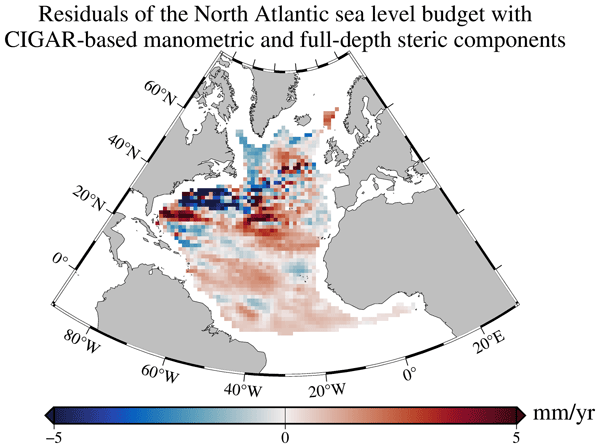
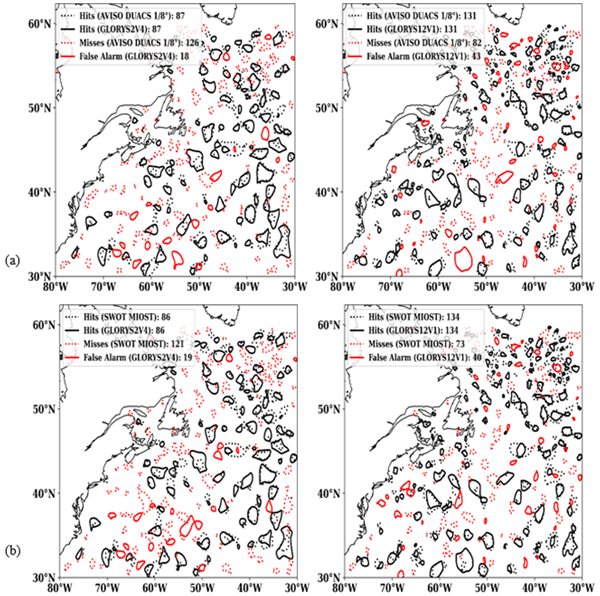
Ocean Sci., 22, 2863–2902, 2026
EGUsphere, 2026
This preprint is open for discussion and under review for Ocean Science (OS).
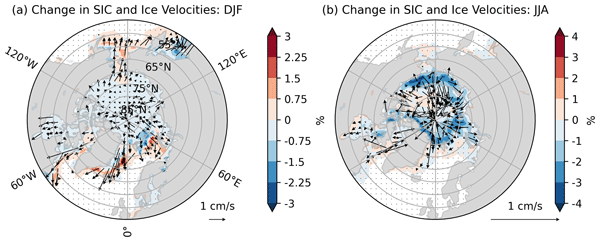
Weather Clim. Dynam., 7, 1593–1618, 2026
EGUsphere, 2026
Preprint archived
Earth Syst. Sci. Data Discuss., 2026
Preprint under review for ESSD
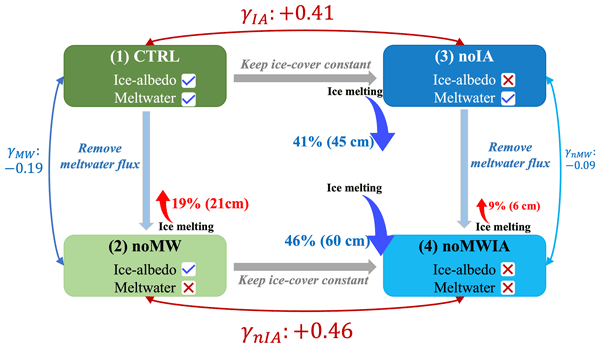
The Cryosphere, 19, 6807–6826, 2025
Geosci. Model Dev., 18, 4789–4804, 2025
Geosci. Model Dev., 17, 5145–5165, 2024
Geosci. Model Dev., 16, 4811–4833, 2023
Cited articles
Adler, R. F., Huffman, G. J., Chang, A., Ferraro, R., Xie, P., Janowiak, J., Rudolf, B., Schneider, U., Curtis, S., Bolvin, D., Gruber, A., Susskind, J., and Arkin, P.: The Version-2 Global Precipitation Climatology Project (GPCP) Monthly Precipitation Analysis (1979–Present), J. Hydrometeorol., 4, 1147–1167, https://doi.org/10.1175/1525-7541(2003)004<1147:TVGPCP>2.0.CO;2, 2003.
Aydogdu, A., Miraglio, P., Escudier, R., Clementi, E., and Masina, S.: The dynamical role of upper layer salinity in the Mediterranean Sea, in: 7th edition of the Copernicus Ocean State Report (OSR7), edited by: von Schuckmann, K., Moreira, L., Le Traon, P.-Y., Grégoire, M., Marcos, M., Staneva, J., Brasseur, P., Garric, G., Lionello, P., Karstensen, J., and Neukermans, G., Copernicus Publications, State Planet, 1-osr7, 6, https://doi.org/10.5194/sp-1-osr7-6-2023, 2023.
Ballarotta, M., Ubelmann, C., Veillard, P., Prandi, P., Etienne, H., Mulet, S., Faugère, Y., Dibarboure, G., Morrow, R., and Picot, N.: Improved global sea surface height and current maps from remote sensing and in situ observations, Earth Syst. Sci. Data, 15, 295–315, https://doi.org/10.5194/essd-15-295-2023, 2023.
Beranová, R., Huth, R., and Vít, V.: A multidataset analysis of precipitation trends in Europe, J. Hydrometeorol., 26, 1003–1015, https://doi.org/10.1175/JHM-D-24-0114.1, 2025.
Bhargava, K., Kalnay, E., Carton, J. A., and Yang, F.: Estimation of systematic errors in the GFS using analysis increments, J. Geophys. Res.-Atmos., 123, 1626–1637, https://doi.org/10.1002/2017JD027423, 2018.


