
Articles | Volume 22, issue 4
https://doi.org/10.5194/os-22-2621-2026
© Author(s) 2026. This work is distributed under
the Creative Commons Attribution 4.0 License.
the Creative Commons Attribution 4.0 License.
https://doi.org/10.5194/os-22-2621-2026
© Author(s) 2026. This work is distributed under
the Creative Commons Attribution 4.0 License.
the Creative Commons Attribution 4.0 License.
Research article
| 
28 Aug 2026
Research article |
| 28 Aug 2026
| 28 Aug 2026
Krill defecation at depth reduces carbon flux attenuation in the Weddell Sea euphotic zone
Florence Atherden
CORRESPONDING AUTHOR

British Antarctic Survey, Cambridge, UK
Emily Rowlands
British Antarctic Survey, Cambridge, UK
Gareth Flint
British Antarctic Survey, Cambridge, UK
Sophie Fielding
British Antarctic Survey, Cambridge, UK
Katrin Schmidt
University of Plymouth, Plymouth, UK
Elaine Fileman
Plymouth Marine Laboratory, Plymouth, UK
Maren Richter
University of East Anglia, Norwich, UK
Bethany Wilkinson
Plymouth Marine Laboratory, Plymouth, UK
Angus Atkinson
Plymouth Marine Laboratory, Plymouth, UK
Clara Manno
CORRESPONDING AUTHOR
British Antarctic Survey, Cambridge, UK
Related authors
Meredith G. Meyer, Robert J. W. Brewin, Xuerong Sun, Clara Manno, Florence Atherden, Sasha J. Kramer, Giorgio Dall'Olmo, and Karen J. Heywood
EGUsphere, https://doi.org/10.5194/egusphere-2026-3148, https://doi.org/10.5194/egusphere-2026-3148, 2026
Short summary
Short summary
Antarctica is a key region for carbon cycling and export. The efficiency of carbon export has been linked to the type of phytoplankton dominating the system. Our results suggest diatoms, haptophytes, and cryptophytes are present in all water column samples despite substantial physical differences between sampling locations. Our data shows a strong relationship between the proportion of diatoms, haptophytes, and cryptophytes relative to all other phytoplankton and the magnitude of carbon flux.
Charles Thorpe-Morgan, Emily Rowlands, Petra ten Hoopen, Rachael Sanders, Michael P. Meredith, Katharine R. Hendry, Yevgeny Aksenov, Ben Evans, Helen J. Peat, Bryan M. Spears, Adrian P. Martin, and Geraint A. Tarling
Earth Syst. Sci. Data Discuss., https://doi.org/10.5194/essd-2026-624, https://doi.org/10.5194/essd-2026-624, 2026
Preprint under review for ESSD
Short summary
Short summary
The Artificial Intelligence for Stable Isotope Tracers (AISIT) project unified disparate pan-arctic δ18O and ancillary data into one AI-ready database, harmonised under unified quality control and adhering to Findable, Accessible, Interoperable and Reusable principles. Drawn from repositories, cruises, campaigns and private communications, it holds 45,714 δ18O and 5531 barium measurements from 99 datasets spanning 1967–2025, giving oceanographers and modellers a rich, harmonised resource.
Robert J. W. Brewin, Bethany Wilkinson, Xuerong Sun, Giorgio Dall'Olmo, Gavin H. Tilstone, Katharine R. Hendry, Sarah Breimann, Ian Brown, Angus Atkinson, Katrin Schmidt, Elisabetta Canuti, Meredith G. Meyer, Qi Zheng, Johannes J. Viljoen, Tom Bell, and Karen J. Heywood
EGUsphere, https://doi.org/10.5194/egusphere-2026-4398, https://doi.org/10.5194/egusphere-2026-4398, 2026
This preprint is open for discussion and under review for Ocean Science (OS).
Short summary
Short summary
Phytoplankton are the foundation of the Antarctic food web. Their size affects carbon storage in the ocean and energy transfer to krill, fish, and whales. Because the northwestern Weddell Sea is rarely sampled, little is known about phytoplankton size there. Using ship-based measurements and satellite data, we found medium-sized phytoplankton dominate rather than the smallest types that dominate warmer oceans. This provides a baseline for tracking ecosystem responses to climate change.
Angus Atkinson, Evgeny Pakhomov, Simeon Hill, Guang Yang, Emilce Rombola, Peter Ward, Christian Reiss, Katrin Schmidt, Valentina Kasyan, Geraint Tarling, Cecilia Liszka, Emma Cavan, and Petra ten Hoopen
Earth Syst. Sci. Data Discuss., https://doi.org/10.5194/essd-2026-450, https://doi.org/10.5194/essd-2026-450, 2026
Preprint under review for ESSD
Short summary
Short summary
Antarctic krill are a key species in the Southern Ocean and support a major fishery. Knowledge of their early life cycle is key to understanding krill population dynamics and essential for fisheries management in a warming climate. Here we have put together a series of fragmented datasets on the various larval stages spanning 1926–2024 into a single database of 10,762 circumpolar net-sampling abundance records.
Meredith G. Meyer, Robert J. W. Brewin, Xuerong Sun, Clara Manno, Florence Atherden, Sasha J. Kramer, Giorgio Dall'Olmo, and Karen J. Heywood
EGUsphere, https://doi.org/10.5194/egusphere-2026-3148, https://doi.org/10.5194/egusphere-2026-3148, 2026
Short summary
Short summary
Antarctica is a key region for carbon cycling and export. The efficiency of carbon export has been linked to the type of phytoplankton dominating the system. Our results suggest diatoms, haptophytes, and cryptophytes are present in all water column samples despite substantial physical differences between sampling locations. Our data shows a strong relationship between the proportion of diatoms, haptophytes, and cryptophytes relative to all other phytoplankton and the magnitude of carbon flux.
Laura Rose Taylor, Katharine R. Hendry, Helen M. Williams, and Clara Manno
EGUsphere, https://doi.org/10.5194/egusphere-2026-2459, https://doi.org/10.5194/egusphere-2026-2459, 2026
Short summary
Short summary
Carbon export from the surface to deep ocean is a key process regulating atmospheric CO2. In Ryder Bay, Western Antarctic Peninsula, zooplankton faecal pellets were found to dominate summer carbon flux, with a chemical composition suggesting feeding on degraded seafloor material in addition to surface-produced algae. These findings suggest organic matter exported from Antarctic coastal shelves may carry distinct chemical signatures, with implications for constraining regional carbon budgets.
Lodewijk van Walraven, James Scott, Sophie Pitois, Joseph Ribeiro, Hayden Close, James Pettigrew, Cecilia M. Liszka, Elaine Fileman, Jeroen Hoekendijk, Pieter Hovenkamp, Robbert Jak, Joost van Dalen, and Dick van Oevelen
Earth Syst. Sci. Data Discuss., https://doi.org/10.5194/essd-2026-215, https://doi.org/10.5194/essd-2026-215, 2026
Preprint under review for ESSD
Short summary
Short summary
PlanktoShare offers a large collection of carefully labelled plankton images collected using the Pi-10 Plankton Imager in the North-East Atlantic. It was created to overcome inconsistent naming across datasets and to support reliable classification. By standardizing taxonomic details and storing extra traits separately, the database enables sharing and combining learning sets. This helps expand global monitoring efforts and strengthens future plankton imaging research.
Andrea J. McEvoy, Angus Atkinson, Ruth L. Airs, Rachel Brittain, Ian Brown, Elaine S. Fileman, Helen S. Findlay, Caroline L. McNeill, Clare Ostle, Tim J. Smyth, Paul J. Somerfield, Karen Tait, Glen A. Tarran, Simon Thomas, Claire E. Widdicombe, E. Malcolm S. Woodward, Amanda Beesley, David V. P. Conway, James Fishwick, Hannah Haines, Carolyn Harris, Roger Harris, Pierre Hélaouët, David Johns, Penelope K. Lindeque, Thomas Mesher, Abigail McQuatters-Gollop, Joana Nunes, Frances Perry, Ana M. Queiros, Andrew Rees, Saskia Rühl, David Sims, Ricardo Torres, and Stephen Widdicombe
Earth Syst. Sci. Data, 15, 5701–5737, https://doi.org/10.5194/essd-15-5701-2023, https://doi.org/10.5194/essd-15-5701-2023, 2023
Short summary
Short summary
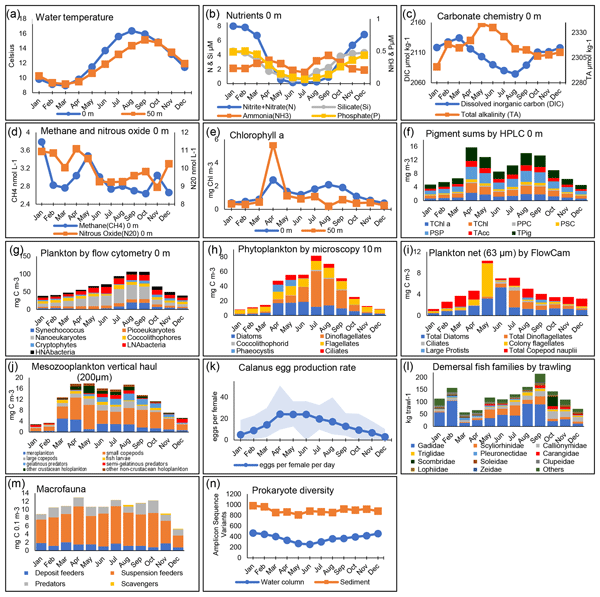
Western Channel Observatory is an oceanographic time series and biodiversity reference site within 40 km of Plymouth (UK), sampled since 1903. Differing levels of reporting and formatting hamper the use of the valuable individual datasets. We provide the first summary database as monthly averages where comparisons can be made of the physical, chemical and biological data. We describe the database, illustrate its utility to examine seasonality and longer-term trends, and summarize previous work.
Anna Belcher, Sian F. Henley, Katharine Hendry, Marianne Wootton, Lisa Friberg, Ursula Dallman, Tong Wang, Christopher Coath, and Clara Manno
Biogeosciences, 20, 3573–3591, https://doi.org/10.5194/bg-20-3573-2023, https://doi.org/10.5194/bg-20-3573-2023, 2023
Short summary
Short summary
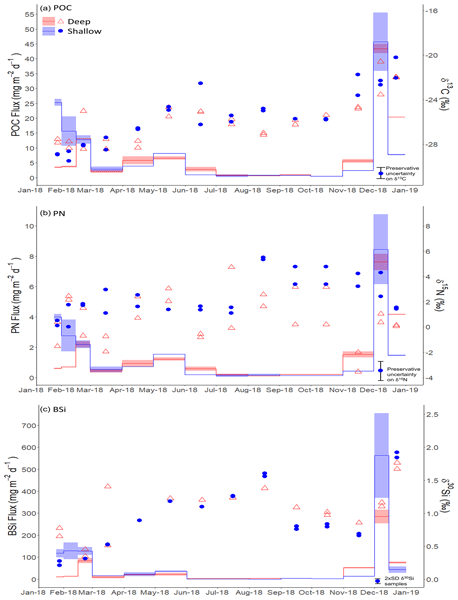
The oceans play a crucial role in the uptake of atmospheric carbon dioxide, particularly the Southern Ocean. The biological pumping of carbon from the surface to the deep ocean is key to this. Using sediment trap samples from the Scotia Sea, we examine biogeochemical fluxes of carbon, nitrogen, and biogenic silica and their stable isotope compositions. We find phytoplankton community structure and physically mediated processes are important controls on particulate fluxes to the deep ocean.
Clare Ostle, Kevin Paxman, Carolyn A. Graves, Mathew Arnold, Luis Felipe Artigas, Angus Atkinson, Anaïs Aubert, Malcolm Baptie, Beth Bear, Jacob Bedford, Michael Best, Eileen Bresnan, Rachel Brittain, Derek Broughton, Alexandre Budria, Kathryn Cook, Michelle Devlin, George Graham, Nick Halliday, Pierre Hélaouët, Marie Johansen, David G. Johns, Dan Lear, Margarita Machairopoulou, April McKinney, Adam Mellor, Alex Milligan, Sophie Pitois, Isabelle Rombouts, Cordula Scherer, Paul Tett, Claire Widdicombe, and Abigail McQuatters-Gollop
Earth Syst. Sci. Data, 13, 5617–5642, https://doi.org/10.5194/essd-13-5617-2021, https://doi.org/10.5194/essd-13-5617-2021, 2021
Short summary
Short summary
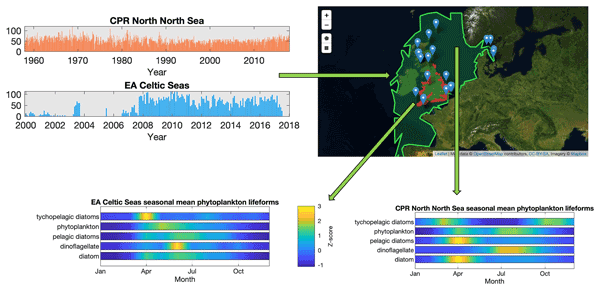
Plankton form the base of the marine food web and are sensitive indicators of environmental change. The Plankton Lifeform Extraction Tool brings together disparate plankton datasets into a central database from which it extracts abundance time series of plankton functional groups, called
lifeforms, according to shared biological traits. This tool has been designed to make complex plankton datasets accessible and meaningful for policy, public interest, and scientific discovery.
Cited articles
Alldredge, A. L. and Silver, M. W.: Characteristics, dynamics and significance of marine snow, Prog. Oceanogr., 20, 41–82, https://doi.org/10.1016/0079-6611(88)90053-5, 1988.
Arrigo, K. R., Robinson, D. H., Worthen, D. L., Dunbar, R. B., DiTullio, G. R., VanWoert, M., and Lizotte, M. P.: Phytoplankton Community Structure and the Drawdown of Nutrients and CO2 in the Southern Ocean, Science, 283, 365–367, https://doi.org/10.1126/science.283.5400.365, 1999.
Arrigo, K. R., van Dijken, G. L., and Bushinsky, S.: Primary production in the Southern Ocean, 1997–2006, J. Geophys. Res.-Oceans, 113, https://doi.org/10.1029/2007JC004551, 2008.
Atherden, F., Rowlands, E., and Manno, C.: POC and PON flux data from the western Weddell Sea (Feburary 2024) during the PICCOLO research cruise SD035, British Oceanographic data centre [data set], https://doi.org/10.5285/47f15a7a-de57-dc68-e063-7086abc0ccb7, 2026a.
Atherden, F., Rowlands, E., and Manno, C.: Faecal pellet volume flux, size and shape data, and krill egg flux sampled using a drifting sediment trap from the western Weddell Sea (Feburary 2024) during the PICCOLO research cruise SD035, British Oceanographic data centre [data set], https://doi.org/10.5285/4aa06690-48e3-0212-e063-7086abc0af43, 2026b.
Atkinson, A., Schmidt, K., Fielding, S., Kawaguchi, S., and Geissler, P. A.: Variable food absorption by Antarctic krill: Relationships between diet, egestion rate and the composition and sinking rates of their fecal pellets, Deep-Sea Res. Pt. II, 59–60, 147–158, https://doi.org/10.1016/j.dsr2.2011.06.008, 2012.
Atkinson, A., Hill, S. L., Pakhomov, E. A., Siegel, V., Anadon, R., Chiba, S., Daly, K. L., Downie, R., Fielding, S., Fretwell, P., Gerrish, L., Hosie, G. W., Jessopp, M. J., Kawaguchi, S., Krafft, B. A., Loeb, V., Nishikawa, J., Peat, H. J., Reiss, C. S., Ross, R. M., Quetin, L. B., Schmidt, K., Steinberg, D. K., Subramaniam, R. C., Tarling, G. A., and Ward, P.: KRILLBASE: a circumpolar database of Antarctic krill and salp numerical densities, 1926–2016, Earth Syst. Sci. Data, 9, 193–210, https://doi.org/10.5194/essd-9-193-2017, 2017.
Azam, F., Fenchel, T., Field, J. G., Gray, J. S., Meyer-Reil, L. A., and Thingstad, F.: The Ecological Role of Water-Column Microbes in the Sea, Mar. Ecol.-Prog. Ser., 10, 257–263, https://doi.org/10.3354/meps010257, 1983.
Bahlburg, D., Hüppe, L., Böhrer, T., Thorpe, S. E., Murphy, E. J., Berger, U., and Meyer, B.: Plasticity and seasonality of the vertical migration behaviour of Antarctic krill using acoustic data from fishing vessels, R. Soc. Open Sci., 10, https://doi.org/10.1098/rsos.230520, 2023.
Baker, C. A., Estapa, M. L., Iversen, M., Lampitt, R., and Buesseler, K.: Are all sediment traps created equal? An intercomparison study of carbon export methodologies at the PAP-SO site, Prog. Oceanogr., 184, 102317, https://doi.org/10.1016/j.pocean.2020.102317, 2020.
Baker, C. A., Martin, A. P., Yool, A., and Popova, E.: Biological Carbon Pump Sequestration Efficiency in the North Atlantic: A Leaky or a Long‐Term Sink?, Global Biogeochem. Cy., 36, https://doi.org/10.1029/2021GB007286, 2022.
Balaguer, J., Koch, F., Flintrop, C. M., Völkner, C., Iversen, M. H., and Trimborn, S.: Iron and manganese availability drives primary production and carbon export in the Weddell Sea, Curr. Biol., 33, 4405–4414, https://doi.org/10.1016/j.cub.2023.08.086, 2023.
Bathmann, U., Fischer, G., Moller, P. J., and Gerdes, D.: Short-term variations in particulate matter sedimentation off Kapp Norvegia, Weddell Sea, Antarctica: relation to water mass advection, ice cover, plankton biomass and feeding activity, Polar Biol., 11, https://doi.org/10.1007/BF00240207, 1991.
Belcher, A., Tarling, G. A., Manno, C., Atkinson, A., Ward, P., Skaret, G., Fielding, S., Henson, S. A., and Sanders, R.: The potential role of Antarctic krill faecal pellets in efficient carbon export at the marginal ice zone of the South Orkney Islands in spring, Polar Biol., 40, 2001–2013, https://doi.org/10.1007/s00300-017-2118-z, 2017.
Belcher, A., Henson, S. A., Manno, C., Hill, S. L., Atkinson, A., Thorpe, S. E., Fretwell, P., Ireland, L., and Tarling, G. A.: Krill faecal pellets drive hidden pulses of particulate organic carbon in the marginal ice zone, Nat. Commun., 10, 889, https://doi.org/10.1038/s41467-019-08847-1, 2019.
Boyd, P. W., Arrigo, K. R., Ardyna, M., Halfter, S., Huckstadt, L., Kuhn, A. M., Lannuzel, D., Neukermans, G., Novaglio, C., Shadwick, E. H., Swart, S., and Thomalla, S. J.: The role of biota in the Southern Ocean carbon cycle, Nat. Rev. Earth Environ., 5, 390–408, https://doi.org/10.1038/s43017-024-00531-3, 2024.
Brierley, A. S., Fernandes, P. G., Brandon, M. A., Armstrong, F., Millard, N. W., McPhail, S. D., Stevenson, P., Pebody, M., Perrett, J., Squires, M., Bone, D. G., and Griffiths, G.: Antarctic Krill Under Sea Ice: Elevated Abundance in a Narrow Band Just South of Ice Edge, Science, 295, 1890–1892, https://doi.org/10.1126/science.1068574, 2002.
Briggs, N., Dall'Olmo, G., and Claustre, H.: Major role of particle fragmentation in regulating biological sequestration of CO2 by the oceans, Science, 367, 791–793, https://doi.org/10.1126/science.aay1790, 2020.
Brown, P. J., Jullion, L., Landschützer, P., Bakker, D. C. E., Naveira Garabato, A. C., Meredith, M. P., Torres‐Valdés, S., Watson, A. J., Hoppema, M., Loose, B., Jones, E. M., Telszewski, M., Jones, S. D., and Wanninkhof, R.: Carbon dynamics of the Weddell Gyre, Southern Ocean, Global Biogeochem. Cy., 29, 288–306, https://doi.org/10.1002/2014GB005006, 2015.
Buesseler, K. O. and Boyd, P. W.: Shedding light on processes that control particle export and flux attenuation in the twilight zone of the open ocean, Limnol. Oceanogr., 54, https://doi.org/10.4319/lo.2009.54.4.1210, 2009.
Buesseler, K. O., Steinberg, D. K., Michaels, A. F., Johnson, R. J., Andrews, J. E., Valdes, J. R., and Price, J. F.: A comparison of the quantity and composition of material caught in a neutrally buoyant versus surface-tethered sediment trap, Deep-Sea Res. Pt. I, 47, 277–294, https://doi.org/10.1016/S0967-0637(99)00056-4, 2000.
Buesseler, K. O., Boyd, P. W., Black, E. E., and Siegel, D. A.: Metrics that matter for assessing the ocean biological carbon pump, P. Natl. Acad. Sci., 117, 9679–9687, https://doi.org/10.1073/pnas.1918114117, 2020.
Cadée, G. C.: Organic carbon in the upper layer and its sedimentation during the ice-retreat period in the Scotia-Weddell Sea, 1988, Polar Biol., 12, https://doi.org/10.1007/BF00238267, 1992.
Carlson, C. A., Hansell, D. A., Peltzer, E. T., and Smith, W. O.: Stocks and dynamics of dissolved and particulate organic matter in the southern Ross Sea, Antarctica, Deep-Sea Res. Pt. II, 47, 3201–3225, https://doi.org/10.1016/S0967-0645(00)00065-5, 2000.
Cavan, E. L., Le Moigne, F. A. C., Poulton, A. J., Tarling, G. A., Ward, P., Daniels, C. J., Fragoso, G. M., and Sanders, R. J.: Attenuation of particulate organic carbon flux in the Scotia Sea, Southern Ocean, is controlled by zooplankton fecal pellets, Geophys. Res. Lett., 42, 821–830, https://doi.org/10.1002/2014GL062744, 2015.
Cavan, E. L., Belcher, A., Atkinson, A., Tarling, G. A., and Hill, S. L.: The potential role of Antarctic krill faecal pellets in efficient carbon export at the marginal ice zone of the South Orkney Islands in spring, Polar Biol., 40, 2001–2013, https://doi.org/10.1007/s00300-017-2118-z, 2017.
Cavan, E. L., Belcher, A., Atkinson, A., Hill, S. L., Kawaguchi, S., McCormack, S., Meyer, B., Nicol, S., Ratnarajah, L., Schmidt, K., Steinberg, D. K., Tarling, G. A., and Boyd, P. W.: The importance of Antarctic krill in biogeochemical cycles, Nat. Commun., 10, 4742, https://doi.org/10.1038/s41467-019-12668-7, 2019.
Clarke, A. and Tyler, P. A.: Adult Antarctic Krill Feeding at Abyssal Depths, Curr. Biol., 18, 282–285, https://doi.org/10.1016/j.cub.2008.01.059, 2008.
Copin-Montegut, C. and Copin-Montegut, G.: Stoichiometry of carbon, nitrogen, and phosphorus in marine particulate matter, Deep-Sea Res. Pt. A, 30, 31–46, https://doi.org/10.1016/0198-0149(83)90031-6, 1983.
Cozzi, S. and Cantoni, C.: Stable isotope (δ13C and δ15N) composition of particulate organic matter, nutrients and dissolved organic matter during spring ice retreat at Terra Nova Bay, Antarct. Sci., 23, 43–56, https://doi.org/10.1017/S0954102010000611, 2011.
Daly, K. L. and Macaulay, M. C.: Abundance and distribution of krill in the ice edge zone of the Weddell Sea, austral spring 1983, Deep-Sea Res. Pt. A, 35, 21–41, https://doi.org/10.1016/0198-0149(88)90055-6, 1988.
de Boyer Montégut, C., Madec, G., Fischer, A. S., Lazar, A., and Iudicone, D.: Mixed layer depth over the global ocean: An examination of profile data and a profile‐based climatology, J. Geophys. Res.-Oceans, 109, https://doi.org/10.1029/2004JC002378, 2004.
DeVries, T.: The Ocean Carbon Cycle, Annu. Rev. Environ. Resour., 47, 317–341, https://doi.org/10.1146/annurev-environ-120920-111307, 2022.
Dunbar, R. B.: Sediment trap experiments on the Antarctic continental margin, Antarct. J. US., 19, 70–71, 1984.
El-Sayed, S. Z. and Taguchi, S.: Primary production and standing crop of phytoplankton along the ice-edge in the Weddell Sea, Deep-Sea Res. Pt. A, 28, 1017–1032, https://doi.org/10.1016/0198-0149(81)90015-7, 1981.
Freudenthal, T., Neuer, S., Meggers, H., Davenport, R., and Wefer, G.: Influence of lateral particle advection and organic matter degradation on sediment accumulation and stable nitrogen isotope ratios along a productivity gradient in the Canary Islands region, Mar. Geol., 177, 93–109, https://doi.org/10.1016/S0025-3227(01)00126-8, 2001.
GEBCO Compilation Group: GEBCO 2025 Grid, NERC EDS British Oceanographic Data Centre NOC, https://doi.org/10.5285/37c52e96-24ea-67ce-e063-7086abc05f29, 2025.
George, R. Y. and Stromberg, J.-O.: Development of eggs of Antarctic krill Euphausia superba in relation to pressure, Polar Biol., 4, 125–133, https://doi.org/10.1007/BF00263875, 1985.
Goldthwait, S., Carlson, C., Henderson, G., and Alldredge, A.: Effects of physical fragmentation on remineralization of marine snow, Mar. Ecol.-Prog. Ser., 305, 59–65, https://doi.org/10.3354/meps305059, 2005.
Guihen, D., Fielding, S., Murphy, E. J., Heywood, K. J., and Griffiths, G.: An assessment of the use of ocean gliders to undertake acoustic measurements of zooplankton: the distribution and density of Antarctic krill (Euphausia superba) in the Weddell Sea., Limnol. Oceanogr.-Meth., 12, 373–389, https://doi.org/10.4319/lom.2014.12.373, 2014.
Halfter, S., Cavan, E. L., Butterworth, P., Swadling, K. M., and Boyd, P. W.: “Sinking dead” – How zooplankton carcasses contribute to particulate organic carbon flux in the subantarctic Southern Ocean, Limnol. Oceanogr., 67, 13–25, https://doi.org/10.1002/lno.11971, 2022.
Harrington, S. A. and Ikeda, T.: Laboratory observations on spawning, brood size and egg hatchability of the Antarctic krill Euphausia superba from Prydz Bay, Antarctica, Mar. Biol., 92, 231–235, https://doi.org/10.1007/BF00392840, 1986.
Hoppe, C. J. M., Klaas, C., Ossebaar, S., Soppa, M. A., Cheah, W., Laglera, L. M., Santos-Echeandia, J., Rost, B., Wolf-Gladrow, D. A., Bracher, A., Hoppema, M., Strass, V., and Trimborn, S.: Controls of primary production in two phytoplankton blooms in the Antarctic Circumpolar Current, Deep-Sea Res. Pt. II, 138, 63–73, https://doi.org/10.1016/j.dsr2.2015.10.005, 2017.
Hoppema, M.: Weddell Sea is a globally significant contributor to deep-sea sequestration of natural carbon dioxide, Deep-Sea Res. Pt. I, 51, 1169–1177, https://doi.org/10.1016/j.dsr.2004.02.011, 2004.
Ikeda, T.: Metabolic rate and elemental composition (C and N) of embryos and non-feeding early larval stages of Antarctic krill (Euphausia superba Dana), J. Exp. Mar. Biol. Ecol., 90, 119–127, https://doi.org/10.1016/0022-0981(85)90114-5, 1985.
Isla, E., Gerdes, D., Palanques, A., Gili, J.-M., and Arntz, W.: Particle fluxes and tides near the continental ice edge on the eastern Weddell Sea shelf, Deep-Sea Res. Pt. II, 53, 866–874, https://doi.org/10.1016/j.dsr2.2006.02.010, 2006.
Johnson, G. C.: Quantifying Antarctic Bottom Water and North Atlantic Deep Water volumes, J. Geophys. Res.-Oceans, 113, https://doi.org/10.1029/2007JC004477, 2008.
Joshi, M., Mestas-Nuñez, A. M., Ackley, S. F., Arndt, S., Macdonald, G. J., and Haas, C.: Seasonal and Interannual Variations in Sea Ice Thickness in the Weddell Sea, Antarctica (2019–2022) Using ICESat-2, Remote Sens., 16, 3909, https://doi.org/10.3390/rs16203909, 2024.
Kennedy, H., Thomas, D., Kattner, G., Haas, C., and Dieckmann, G.: Particulate organic matter in Antarctic summer sea ice: concentration and stable isotopic composition, Mar. Ecol.-Prog. Ser., 238, 1–13, https://doi.org/10.3354/meps238001, 2002.
Klunder, M. B., Laan, P., De Baar, H. J. W., Middag, R., Neven, I., and Van Ooijen, J.: Dissolved Fe across the Weddell Sea and Drake Passage: impact of DFe on nutrient uptake, Biogeosciences, 11, 651–669, https://doi.org/10.5194/bg-11-651-2014, 2014.
Lacour, L., Llort, J., Briggs, N., Strutton, P. G., and Boyd, P. W.: Seasonality of downward carbon export in the Pacific Southern Ocean revealed by multi-year robotic observations, Nat. Commun., 14, 1278, https://doi.org/10.1038/s41467-023-36954-7, 2023.
Lannuzel, D., Vancoppenolle, M., van der Merwe, P., de Jong, J., Meiners, K. M., Grotti, M., Nishioka, J., and Schoemann, V.: Iron in sea ice: Review and new insights, Elementa: Science of the Anthropocene, 4, https://doi.org/10.12952/journal.elementa.000130, 2016.
Liszka, C. M., Manno, C., Stowasser, G., Robinson, C., and Tarling, G. A.: Mesozooplankton Community CompositionControls Fecal Pellet Flux and Remineralization Depth in the Southern Ocean, Front. Mar. Sci., 6, https://doi.org/10.3389/fmars.2019.00230, 2019.
Manno, C., Stowasser, G., Enderlein, P., Fielding, S., and Tarling, G. A.: The contribution of zooplankton faecal pellets to deep-carbon transport in the Scotia Sea (Southern Ocean), Biogeosciences, 12, 1955–1965, https://doi.org/10.5194/bg-12-1955-2015, 2015.
Manno, C., Fielding, S., Stowasser, G., Murphy, E. J., Thorpe, S. E., and Tarling, G. A.: Continuous moulting by Antarctic krill drives major pulses of carbon export in the north Scotia Sea, Southern Ocean, Nat. Commun., 11, 6051, https://doi.org/10.1038/s41467-020-19956-7, 2020.
Manno, C., Stowasser, G., Fielding, S., Apeland, B., and Tarling, G. A.: Deep carbon export peaks are driven by different biological pathways during the extended Scotia Sea (Southern Ocean) bloom, Deep-Sea. Res. Pt. 2, 205, https://doi.org/10.1016/j.dsr2.2022.105183, 2022.
Manno, C., Corsi, I., Rowlands, E., and Bergami, E.: Plastics counteract the ability of Antarctic krill to promote the blue carbon pathway in the deep ocean, Mar. Pollut. Bull., 209, 117238, https://doi.org/10.1016/j.marpolbul.2024.117238, 2024.
Martin, J. H., Knauer, G. A., Karl, D. M., and Broenkow, W. W.: VERTEX: carbon cycling in the northeast Pacific, Deep-Sea Res. Pt. A, 34, 267–285, https://doi.org/10.1016/0198-0149(87)90086-0, 1987.
Mayor, D. J., Sanders, R., Giering, S. L. C., and Anderson, T. R.: Microbial gardening in the ocean's twilight zone: Detritivorous metazoans benefit from fragmenting, rather than ingesting, sinking detritus, BioEssays, 36, 1132–1137, https://doi.org/10.1002/bies.201400100, 2014.
Michels, J., Dieckmann, G. S., Thomas, D. N., Schnack-Schiel, S. B., Krell, A., Assmy, P., Kennedy, H., Papadimitriou, S., and Cisewski, B.: Short-term biogenic particle flux under late spring sea ice in the western Weddell Sea, Deep-Sea Res. Pt. II, 55, 1024–1039, https://doi.org/10.1016/j.dsr2.2007.12.019, 2008.
Middag, R., de Baar, H. J. W., Klunder, M. B., and Laan, P.: Fluxes of dissolved aluminium and manganese to the Weddell Sea and indications for manganese co‐limitation, Limnol. Oceanogr., 58, 287–300, https://doi.org/10.4319/lo.2013.58.1.0287, 2013.
Le Moigne, F. A. C.: Pathways of Organic Carbon Downward Transport by the Oceanic Biological Carbon Pump, Front. Mar. Sci., 6, https://doi.org/10.3389/fmars.2019.00634, 2019.
Le Moigne, F. A. C., Poulton, A. J., Henson, S. A., Daniels, C. J., Fragoso, G. M., Mitchell, E., Richier, S., Russell, B. C., Smith, H. E. K., Tarling, G. A., Young, J. R., and Zubkov, M.: Carbon export efficiency and phytoplankton community composition in the Atlantic sector of the Arctic Ocean, J. Geophys. Res.-Oceans, 120, 3896–3912, https://doi.org/10.1002/2015JC010700, 2015.
Mouw, C. B., Barnett, A., McKinley, G. A., Gloege, L., and Pilcher, D.: Global ocean particulate organic carbon flux merged with satellite parameters, Earth Syst. Sci. Data, 8, 531–541, https://doi.org/10.5194/essd-8-531-2016, 2016.
Niemi, A. and Michel, C.: Temporal and spatial variability in sea-ice carbon : nitrogen ratios on Canadian Arctic shelves, Elementa: Science of the Anthropocene, 3, https://doi.org/10.12952/journal.elementa.000078, 2015.
Nissen, C., Timmermann, R., Hoppema, M., Gürses, Ö., and Hauck, J.: Abruptly attenuated carbon sequestration with Weddell Sea dense waters by 2100, Nat. Commun., 13, 3402, https://doi.org/10.1038/s41467-022-30671-3, 2022.
Orsi, A. H., Johnson, G. C., and Bullister, J. L.: Circulation, mixing, and production of Antarctic Bottom Water, Prog. Oceanogr., 43, 55–109, https://doi.org/10.1016/S0079-6611(99)00004-X, 1999.
Pauli, N.-C., Flintrop, C. M., Konrad, C., Pakhomov, E. A., Swoboda, S., Koch, F., Wang, X.-L., Zhang, J.-C., Brierley, A. S., Bernasconi, M., Meyer, B., and Iversen, M. H.: Krill and salp faecal pellets contribute equally to the carbon flux at the Antarctic Peninsula, Nat. Commun., 12, 7168, https://doi.org/10.1038/s41467-021-27436-9, 2021.
Perhirin, M., Aumont, O., Maps, F., and Ayata, S.-D.: Meta-analysis of the role of zooplankton faecal pellets in ocean carbon export flux, ICES J.f Mar. Sci., 82, https://doi.org/10.1093/icesjms/fsaf180, 2025.
Perry, F. A., Kawaguchi, S., Atkinson, A., Sailley, S. F., Tarling, G. A., Mayor, D. J., Lucas, C. H., King, R., and Cooper, A.: Temperature–Induced Hatch Failure and Nauplii Malformation in Antarctic Krill, Front. Mar. Sci., 7, https://doi.org/10.3389/fmars.2020.00501, 2020.
Pudsey, C. J. and King, P.: Particle fluxes, benthic processes and the palaeoenvironmental record in the Northern Weddell Sea, Deep-Sea Res. Pt. I, 44, 1841–1876, https://doi.org/10.1016/S0967-0637(97)00064-2, 1997.
Quetin, L. B. and Ross, R. M.: Environmental Variability and Its Impact on the Reproductive Cycle of Antarctic Krill, Am. Zool., 41, 74–89, https://doi.org/10.1093/icb/41.1.74, 2001.
Redfield, A. C.: On the Proportions of Organic Derivatives in Sea Water and Their Relation to the Composition of Plankton, James Johnstone Memorial Volume, University Press of Liverpool, 176–192, 1934.
Richter, M. E., Zheng, Y., Nicholls, K., Boehme, L., McAfee, C., Singh, C., Bell, T., and Heywood, K.: CTD data near floating sediment trap deployments on the western Weddell Sea continental shelf during early 2024 (1.0.0), Zenodo [data set], https://doi.org/10.5281/zenodo.20849254, 2026.
Robinson, C., Serret, P., Tilstone, G., Teira, E., Zubkov, M. V, Rees, A. P., and Woodward, E. M. S.: Plankton respiration in the Eastern Atlantic Ocean, Deep-Sea Res. Pt. I, 49, 787–813, https://doi.org/10.1016/S0967-0637(01)00083-8, 2002.
Salyuk, P. A., Glukhovets, D. I., Latushkin, A. A., Kalinina, O. Yu., Shtraikhert, E. A., Sapozhnikov, P. V., Mosharov, S. A., Stepochkin, I. E., Lipinskaya, N. A., Gorbov, M. I., and Klimenko, S. K.: Extreme underestimation of satellite-derived chlorophyll-a concentration in the northwestern Weddell Sea during a phytoplankton bloom and its reasons, J. Marine Syst., 252, 104159, https://doi.org/10.1016/j.jmarsys.2025.104159, 2025.
Schmidt, K., Atkinson, A., Steigenberger, S., Fielding, S., Lindsay, M. C. M., Pond, D. W., Tarling, G. A., Klevjer, T. A., Allen, C. S., Nicol, S., and Achterberg, E. P.: Seabed foraging by Antarctic krill: Implications for stock assessment, bentho‐pelagic coupling, and the vertical transfer of iron, Limnol. Oceanogr., 56, 1411–1428, https://doi.org/10.4319/lo.2011.56.4.1411, 2011.
Schmidt, K., Brown, T. A., Belt, S. T., Ireland, L. C., Taylor, K. W. R., Thorpe, S. E., Ward, P., and Atkinson, A.: Do pelagic grazers benefit from sea ice? Insights from the Antarctic sea ice proxy IPSO25, Biogeosciences, 15, 1987–2006, https://doi.org/10.5194/bg-15-1987-2018, 2018.
Semper, S. and Darelius, E.: Seasonal resonance of diurnal coastal trapped waves in the southern Weddell Sea, Antarctica, Ocean Sci., 13, 77–93, https://doi.org/10.5194/os-13-77-2017, 2017.
Smith, A. J. R., Wotherspoon, S., Ratnarajah, L., Cutter, G. R., Macaulay, G. J., Hutton, B., King, R., Kawaguchi, S., and Cox, M. J.: Antarctic krill vertical migrations modulate seasonal carbon export, Science, 387, https://doi.org/10.1126/science.adq5564, 2025.
Smith, K. L., Ruhl, H. A., Huffard, C. L., Messié, M., and Kahru, M.: Episodic organic carbon fluxes from surface ocean to abyssal depths during long-term monitoring in NE Pacific, P. Natl. Acad. Sci., 115, 12235–12240, https://doi.org/10.1073/pnas.1814559115, 2018.
Smith, W. O. and Nelson, D. M.: Phytoplankton Bloom Produced by a Receding Ice Edge in the Ross Sea: Spatial Coherence with the Density Field, Science, 227, 163–166, https://doi.org/10.1126/science.227.4683.163, 1985.
Spreen, G., Kaleschke, L., and Heygster, G.: Sea ice remote sensing using AMSR‐E 89‐GHz channels, J. Geophys. Res.-Oceans, 113, https://doi.org/10.1029/2005JC003384, 2008.
Steinberg, D. K. and Landry, M. R.: Zooplankton and the Ocean Carbon Cycle, Annu. Rev. Mar. Sci., 9, 413–444, https://doi.org/10.1146/annurev-marine-010814-015924, 2017.
Steinke, K. B., Bernard, K. S., Reiss, C. S., Walsh, J., Correa, G. M., and Stammerjohn, S. E.: Factors impacting the timing of reproductive development in female Antarctic krill at the northwestern Antarctic Peninsula, Front. Mar. Sci., 11, https://doi.org/10.3389/fmars.2024.1383175, 2024.
Talley, L. D.: Closure of the global overturning circulation through the Indian, Pacific, and Southern Oceans: Schematics and transports, Oceanography, 26, 80–97, https://doi.org/10.5670/oceanog.2013.07, 2013.
Tanioka, T., Garcia, C. A., Larkin, A. A., Garcia, N. S., Fagan, A. J., and Martiny, A. C.: Global patterns and predictors of C : N : P in marine ecosystems, Commun. Earth Environ., 3, 271, https://doi.org/10.1038/s43247-022-00603-6, 2022.
Tarling, G. A., Thorpe, S. E., Fielding, S., Klevjer, T., Ryabov, A., and Somerfield, P. J.: Varying depth and swarm dimensions of open-ocean Antarctic krill Euphausia superba Dana, 1850 (Euphausiacea) over diel cycles, J. Crustacean Biol., 38, 1–12, 2018.
Thomas, D. N., Kennedy, H. A., Kattner, G., Gerdes, D., Gough, C., and Dieckmann, G. S.: Biogeochemistry of platelet ice: Its influence on particle flux under fast ice in the Weddell Sea, Antarctica, Polar Biol., 24, 486–496, https://doi.org/10.1007/s003000100243, 2001.
Trinh, R., Ducklow, H. W., Steinberg, D. K., and Fraser, W. R.: Krill body size drives particulate organic carbon export in West Antarctica, Nature, 618, 526–530, https://doi.org/10.1038/s41586-023-06041-4, 2023.
Turner, J. T.: Zooplankton fecal pellets, marine snow, phytodetritus and the ocean's biological pump, Prog. Oceanogr., 130, 205–248, https://doi.org/10.1016/j.pocean.2014.08.005, 2015.
Volk, T. and Hoffert, M. I.: The Carbon cycle and atmospheric CO2: natural variations, Archean to present, edited by: Sundquist, E. T. and Broecker, W. S., American Geophysical Union, 627 pp., 1985.
von Berg, L., Prend, C. J., Campbell, E. C., Mazloff, M. R., Talley, L. D., and Gille, S. T.: Weddell Sea Phytoplankton Blooms Modulated by Sea Ice Variability and Polynya Formation, Geophys. Res. Lett., 47, https://doi.org/10.1029/2020GL087954, 2020.
von Bodungen, B.: Phytoplankton growth and krill grazing during spring in the Bransfield Strait, Antarctica – Implications from sediment trap collections, Polar Biol., 6, 153–160, https://doi.org/10.1007/BF00274878, 1986.
Wakeham, S. G., Lee, C., Hedges, J. I., Hernes, P. J., and Peterson, M. J.: Molecular indicators of diagenetic status in marine organic matter, Geochim. Cosmochim. Ac., 61, 5363–5369, https://doi.org/10.1016/S0016-7037(97)00312-8, 1997.
Wefer, G., Fischer, G., Fütterer, D. K., Gersonde, R., Honjo, S., and Ostermann, D.: Particle Sedimentation and Productivity in Antarctic Waters of the Atlantic Sector, in: Geological History of the Polar Oceans: Arctic versus Antarctic, Springer Netherlands, Dordrecht, 363–379, https://doi.org/10.1007/978-94-009-2029-3_20, 1990.
Whitehouse, M., Atkinson, A., Ward, P., Korb, R., Rothery, P., and Fielding, S.: Role of krill versus bottom-up factors in controlling phytoplankton biomass in the northern Antarctic waters of South Georgia, Mar. Ecol.-Prog. Ser., 393, 69–82, https://doi.org/10.3354/meps08288, 2009.
Wilkinson, B.: Chlorophyll-a samples collected in the Southern Ocean on cruise SD035 in January–March 2024 as part of PICCOLO, NERC EDS British Oceanographic Data Centre NOC [data set], https://doi.org/10.5285/4f7aed48-816a-d8cf-e063-7086abc055b4, 2026.
Yoshida, T., Virtue, P., Kawaguchi, S., and Nichols, P. D.: Factors determining the hatching success of Antarctic krill Euphausia superba embryo: lipid and fatty acid composition, Mar. Biol., 158, 2313–2325, https://doi.org/10.1007/s00227-011-1735-2, 2011.
Zhou, S., Meijers, A. J. S., Meredith, M. P., Abrahamsen, E. P., Holland, P. R., Silvano, A., Sallée, J.-B., and Østerhus, S.: Slowdown of Antarctic Bottom Water export driven by climatic wind and sea-ice changes, Nat. Clim. Change, 13, 701–709, https://doi.org/10.1038/s41558-023-01695-4, 2023.
Short summary
The Southern Ocean influences global climate, in part, through biological production of carbon-rich particles which trap atmospheric CO2 in the deep ocean. Our study highlights that krill defecating at 50–100 m and injecting carbon-rich pellets effectively counteracts the "typical" scenario where the quantity of particles rapidly decreases from the surface, ultimately increasing how much atmospheric carbon is stored. These processes are of global benefit, but vulnerable in a changing climate.
The Southern Ocean influences global climate, in part, through biological production of...


