Articles | Volume 22, issue 4
https://doi.org/10.5194/os-22-2471-2026
© Author(s) 2026. This work is distributed under
the Creative Commons Attribution 4.0 License.
https://doi.org/10.5194/os-22-2471-2026
© Author(s) 2026. This work is distributed under
the Creative Commons Attribution 4.0 License.
High current speed events in a harbor channel driven by resonant sub-hourly sea level dynamics: an example from Varna, Black Sea
Department of Marine Systems, Tallinn University of Technology, Tallinn, EE12618, Estonia
Laura Piho
Centre for Biorobotics, Tallinn University of Technology, Tallinn, EE12618, Estonia
Maarja Kruusmaa
Centre for Biorobotics, Tallinn University of Technology, Tallinn, EE12618, Estonia
Related authors
Amirhossein Barzandeh, Matjaž Ličer, Marko Rus, Matej Kristan, Ilja Maljutenko, Jüri Elken, Priidik Lagemaa, and Rivo Uiboupin
Ocean Sci., 21, 1315–1327, https://doi.org/10.5194/os-21-1315-2025, https://doi.org/10.5194/os-21-1315-2025, 2025
Short summary
Short summary
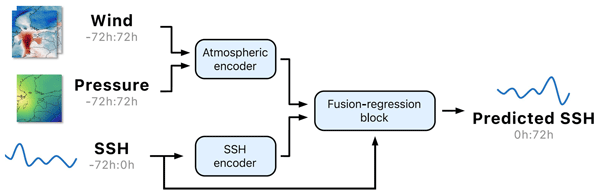
We evaluated a deep-learning model, HIDRA2, for predicting sea levels along the Estonian coast and compared it to traditional numerical models. HIDRA2 performed better overall, offering faster forecasts and valuable uncertainty estimates using ensemble predictions.
Jüri Elken, Ilja Maljutenko, Priidik Lagemaa, Rivo Uiboupin, and Urmas Raudsepp
State Planet, 4-osr8, 9, https://doi.org/10.5194/sp-4-osr8-9-2024, https://doi.org/10.5194/sp-4-osr8-9-2024, 2024
Short summary
Short summary
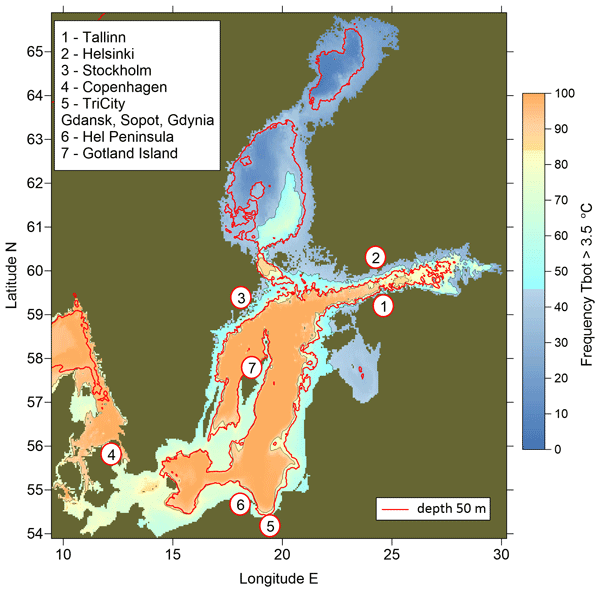
Baltic deep water is generally warmer than surface water during winter when district heating is required. Depending on the location, depth, and oceanographic situation, bottom water of Tallinn Bay can be used as an energy source for seawater heat pumps until the end of February, covering the major time interval when heating is needed. Episodically, there are colder-water events when seawater heat extraction has to be complemented by other sources of heating energy.
Amirhossein Barzandeh, Matjaž Ličer, Marko Rus, Matej Kristan, Ilja Maljutenko, Jüri Elken, Priidik Lagemaa, and Rivo Uiboupin
Ocean Sci., 21, 1315–1327, https://doi.org/10.5194/os-21-1315-2025, https://doi.org/10.5194/os-21-1315-2025, 2025
Short summary
Short summary
We evaluated a deep-learning model, HIDRA2, for predicting sea levels along the Estonian coast and compared it to traditional numerical models. HIDRA2 performed better overall, offering faster forecasts and valuable uncertainty estimates using ensemble predictions.
Jüri Elken, Ilja Maljutenko, Priidik Lagemaa, Rivo Uiboupin, and Urmas Raudsepp
State Planet, 4-osr8, 9, https://doi.org/10.5194/sp-4-osr8-9-2024, https://doi.org/10.5194/sp-4-osr8-9-2024, 2024
Short summary
Short summary
Baltic deep water is generally warmer than surface water during winter when district heating is required. Depending on the location, depth, and oceanographic situation, bottom water of Tallinn Bay can be used as an energy source for seawater heat pumps until the end of February, covering the major time interval when heating is needed. Episodically, there are colder-water events when seawater heat extraction has to be complemented by other sources of heating energy.
Cited articles
Abbs, D. J. and Physick, W. L.: Sea-breeze observations and modelling: a review, Aust. Meteorol. Mag., 41, 7–19, https://doi.org/10.1071/ES92031, 1992.
Balić, M. and Šepić, J.: SHELDA: Sub-hourly European Quality Controlled Sea Level Dataset, Earth Syst. Sci. Data Discuss. [preprint], https://doi.org/10.5194/essd-2025-767, in review, 2025.
Barantiev, D., Novitsky, M., and Batchvarova, E.: Meteorological observations of the coastal boundary layer structure at the Bulgarian Black Sea coast, Adv. Sci. Res., 6, 251–259, https://doi.org/10.5194/asr-6-251-2011, 2011.
Barzandeh, A., Ličer, M., Rus, M., Kristan, M., Maljutenko, I., Elken, J., Lagemaa, P., and Uiboupin, R.: Application of the HIDRA2 deep-learning model for sea level forecasting along the Estonian coast of the Baltic Sea, Ocean Sci., 21, 1315–1327, https://doi.org/10.5194/os-21-1315-2025, 2025.
Catalán, P. A., Cortés, P. I., Sáez, F., Carvajal, M., and Cienfuegos, R.: Toward the classification of bays based on their resonant response to tsunamis, J. Geophys. Res.-Oceans, 130, e2025JC022446, https://doi.org/10.1029/2025JC022446, 2025.
Cerralbo, P., Grifoll, M., Valle-Levinson, A., and Espino, M.: Tidal transformation and resonance in a short, microtidal Mediterranean estuary (Alfacs Bay in Ebre delta), Estuar. Coast. Shelf S., 145, 57–68, https://doi.org/10.1016/j.ecss.2014.04.020, 2014.
Ciliberti, S. A., Jansen, E., Coppini, G., Peneva, E., Azevedo, D., Causio, S., Stefanizzi, L., Creti, S., Lecci, R., Lima, L., Ilicak, M., Pinardi, N., and Palazov, A.: The Black Sea Physics Analysis and Forecasting System within the Framework of the Copernicus Marine Service, J. Mar. Sci. Eng., 10, https://doi.org/10.3390/jmse10010048, 2022.
Cummins, P. F., Karsten, R. H., and Arbic, B. K.: The Semi-Diurnal Tide in Hudson Strait as a Resonant Channel Oscillation, Atmmos.-Ocean, 48, 163–176, https://doi.org/10.3137/OC307.2010, 2010.
Cushman-Roisin, B. and Beckers, J. M.: Introduction to Geophysical Fluid Dynamics: Physical and Numerical Aspects, Academic Press, Cambridge, MA, 875 pp., ISBN 978-0-12-088759-0, 2011.
Doelman, A., Koenderink, A. F., and Maas, L. R.: Quasi-periodically forced nonlinear Helmholtz oscillators, Physica D, 164, 1–27, https://doi.org/10.1016/S0167-2789(02)00361-5, 2002.
Egerer, M., Ristolainen, A., Piho, L., Vihman, L., and Kruusmaa, M.: Hall Effect Sensor-Based Low-Cost Flow Monitoring Device: Design and Validation, IEEE Sens. J., 24, 5986–5997, https://doi.org/10.1109/JSEN.2024.3354194, 2024.
Egerer, M., Piho, L., Zhakanov, B., Kruusmaa, M., Ganchev, T., Stanev, A., Todorov, M., and Ristolainen, A.: Exploring Hydrodynamic Patterns Using the Hydromast: Varna Port Case Study, in: OCEANS 2025 Brest, IEEE, 1–7, https://doi.org/10.1109/OCEANS58557.2025.11104387, 2025.
Elken, J., Barzandeh, A., Maljutenko, I., and Rikka, S.: Reconstruction of Baltic Gridded Sea Levels from Tide Gauge and Altimetry Observations Using Spatiotemporal Statistics from Reanalysis, Remote Sens., 16, https://doi.org/10.3390/rs16152702, 2024.
Gao, J., Ji, C., Gaidai, O., and Liu, Y.: Numerical study of infragravity waves amplification during harbor resonance, Ocean Eng., 116, 90–100, https://doi.org/10.1016/j.oceaneng.2016.02.032, 2016.
Giese, G. S. and Chapman, D. C.: Coastal seiches, Oceanus, 36, 38–46, 1993.
Hill, D. F.: Transient and steady-state amplitudes of forced waves in rectangular basins, Phys. Fluids, 15, 1576–1587, https://doi.org/10.1063/1.1569917, 2003.
Kanarik, H., Tuomi, L., Alenius, P., Miettunen, E., Johansson, M., Roine, T., Westerlund, A., and Kahma, K. K.: Currents and their drivers in the Archipelago Sea: insights from ADCP measurements, Ocean Sci., 21, 2125–2147, https://doi.org/10.5194/os-21-2125-2025, 2025.
Kärnä, T., Ljungemyr, P., Falahat, S., Ringgaard, I., Axell, L., Korabel, V., Murawski, J., Maljutenko, I., Lindenthal, A., Jandt-Scheelke, S., Verjovkina, S., Lorkowski, I., Lagemaa, P., She, J., Tuomi, L., Nord, A., and Huess, V.: Nemo-Nordic 2.0: operational marine forecast model for the Baltic Sea, Geosci. Model Dev., 14, 5731–5749, https://doi.org/10.5194/gmd-14-5731-2021, 2021.
LeBlond, P. H. and Mysak, L. A.: Waves in the Ocean, Elsevier Oceanography Series, Vol. 20, Elsevier, ISBN 9780080879772, 1981.
Lighthill, M. J. and Whitham, G. B.: On kinematic waves I. Flood movement in long rivers, P. R. Soc. Lond. A, 229, 281–316, https://doi.org/10.1098/rspa.1955.0088, 1955.
Luettich Jr, R. A., Carr, S. D., Reynolds-Fleming, J. V., Fulcher, C. W., and McNinch, J. E.: Semi-diurnal seiching in a shallow, micro-tidal lagoonal estuary, Cont. Shelf Res., 22, 1669–1681, https://doi.org/10.1016/S0278-4343(02)00031-6, 2002.
Maas, L. R.: On the nonlinear Helmholtz response of almost-enclosed tidal basins with sloping bottoms, J. Fluid Mech., 349, 361–380, https://doi.org/10.1017/S0022112097006824, 1997.
Medvedev, I. P.: Numerical Modeling of Meteorological Sea Level Oscillations in the Black Sea, Oceanology, 62, 471–481, https://doi.org/10.1134/S0001437022040087, 2022.
Medvedev, I. P. and Kulikov, E. A.: Spectrum of Mesoscale Sea Level Oscillations in the Northern Black Sea: Tides, Seiches, and Inertial Oscillations, Oceanology, 56, 6–13, https://doi.org/10.1134/S0001437016010094, 2016.
Medvedev, I. P., Rabinovich, A. B., and Šepić, J.: Destructive coastal sea level oscillations generated by Typhoon Maysak in the Sea of Japan in September 2020, Sci. Rep., 12, 8463, https://doi.org/10.1038/s41598-022-12189-2, 2022.
Méhauté, B. L., Wilson, B. W., Miles, J., and Munk, W.: Closure to “Harbor Paradox”, J. Waterway Div.-ASCE, 88, 173–195, https://doi.org/10.1061/JWHEAU.0000275, 1962.
Miles, J. and Munk, W.: Harbor paradox, J. Waterway Div.-ASCE, 87, 111–132, https://doi.org/10.1061/JWHEAU.0000223, 1961.
Miles, J. W.: Harbor seiching, Annu. Rev. Fluid Mech., 6, 17–33, https://doi.org/10.1146/annurev.fl.06.010174.000313, 1974.
Miles, J. W. and Lee, Y. K.: Helmholtz resonance of harbours, J. Fluid Mech., 67, 445–464, https://doi.org/10.1017/S0022112075000407, 1975.
Miller, A. and Luscher, A.: NOAA's national water level observation network (NWLON), J. Oper. Oceanogr., 12, S57–S66, https://doi.org/10.1080/1755876X.2018.1523301, 2019.
Mohr, S., Kunz, M., Richter, A., and Ruck, B.: Statistical characteristics of convective wind gusts in Germany, Nat. Hazards Earth Syst. Sci., 17, 957–969, https://doi.org/10.5194/nhess-17-957-2017, 2017.
Panaitescu, F. V., Panaitescu, M., Panait, C., Scupi, A. A., Stan, L., Faitar, C., Suciu, G., Silion, M., Stefanescu, S., Capbun, N., and Zlatev, N.: Metocean specifications for wind data base on the Black Sea, J. Mar. Techn. Envir., 2, 58–64, https://doi.org/10.53464/JMTE.02.2023.10, 2023.
ORDER No Z-160/VARNA: 6 March 2026, Capt. VALENTIN ENCHEV, Director of Maritime Administration, Varna Directorate, Harbour Master of port of Varna, https://www.marad.bg/sites/default/files/upload/documents/2026-04/Order 160-2026_0.pdf (last access: 6 July 2026), 2026.
Park, J., MacMahan, J., Sweet, W. V., and Kotun, K.: Continuous seiche in bays and harbors, Ocean Sci., 12, 355–368, https://doi.org/10.5194/os-12-355-2016, 2016.
Pellikka, H., Šepić, J., Lehtonen, I., and Vilibić, I.: Meteotsunamis in the northern Baltic Sea and their relation to synoptic patterns, Weather Clim. Extrem., 38, https://doi.org/10.1016/j.wace.2022.100527, 2022.
Piho, L. and Ristolainen, A.: Water Flow Velocity, Direction, and Pressure Measurements in Varna Port (February-May 2025), TalTech Data Repository [data set], https://doi.org/10.48726/x61m4-dgg28, 2026.
Rabinovich, A. B.: Seiches and harbor oscillations, in: Handbook of Coastal and Ocean Engineering, edited by: Kim, Y. C., World Scientific, Singapore, 193–236, ISBN 9789814470605, 2009.
Ramos-Alcántara, J., Agulles, M., Gomis, D., and Jordà, G.: Quantifying the contributors to extreme sea level events in a Mediterranean microtidal region at high spatio-temporal resolution, Clim. Dynam., 63, https://doi.org/10.1007/s00382-025-07653-4, 2025.
Ruić, K., Šepić, J., Mlinar, M., and Međugorac, I.: Contribution of high-frequency (T<2 h) sea level oscillations to the Adriatic sea level maxima, Nat. Hazards, 116, 3747–3777, https://doi.org/10.1007/s11069-023-05834-0, 2023.
Sammartino, S., Garrido, J. S., Delgado, J., Naranjo, C., Aldeanueva, F. C., and Lafuente, J. G.: Experimental and numerical characterization of harbor oscillations in the port of Málaga, Spain, Ocean Eng., 88, 110–119, https://doi.org/10.1016/j.oceaneng.2014.06.011, 2014.
Seo, J. Y., Choi, B. J., Choi, S. M., Ryu, J., and Ha, H. K.: Contribution of coastal seiches to sediment transport in a microtidal semi-enclosed bay, Front. Mar. Sci., 11, https://doi.org/10.3389/fmars.2024.1392435, 2024.
Šepić, J., Vilibić, I., Rabinovich, A. B., and Monserrat, S.: Widespread tsunami-like waves of 23–27 June in the Mediterranean and Black Seas generated by high-altitude atmospheric forcing, Sci. Rep., 5, https://doi.org/10.1038/srep11682, 2015.
Stanev, E. V.: Understanding Black Sea dynamics: overview of recent numerical modelling, Oceanography, 18, 56–75, https://doi.org/10.5670/oceanog.2005.42, 2005.
Stanev, E. V. and Ricker, M.: The Fate of Marine Litter in Semi-Enclosed Seas: A Case Study of the Black Sea, Front. Mar. Sci., 6, https://doi.org/10.3389/fmars.2019.00660, 2019.
Steinheuer, J., Beyrich, F., and Löhnert, U.: Exploiting the full potential of Doppler lidars: High-resolution wind-gust profiling in significant weather, Q. J. Roy. Meteor. Soc., 151, e4961, https://doi.org/10.1002/qj.4961, 2025.
Sun, Q. and Niu, X.: Harbor resonance triggered by atmospherically driven edge waves, Ocean Eng., 224, 108735, https://doi.org/10.1016/j.oceaneng.2021.108735, 2021.
Teng, M. H. and Wu, T. Y.: Nonlinear water waves in channels of arbitrary shape, J. Fluid Mech., 242, 211–233, https://doi.org/10.1017/S0022112092002349, 1992.
Trukhchev, D., Bachvarova, E., Krastev, A., and Georgiev, S.: Features of the Hydrological Structure of Varna Lakes and the Atmospheric Impact on the Water Area in the Period 2022–2023, Proc. Bulg. Acad. Sci., 78, 873–883, https://doi.org/10.7546/CRABS.2025.06.10, 2025.
Valiani, A. and Caleffi, V.: A one-dimensional augmented Shallow Water Equations system for channels of arbitrary cross-section, Adv. Water Res., 189, https://doi.org/10.1016/j.advwatres.2024.104735, 2024.
Van der Hoven, I.: Power spectrum of horizontal wind speed in the frequency range from 0.0007 to 900 cycles per hour, J. Meteorol., 14, 160–164, https://doi.org/10.1175/1520-0469(1957)014<0160:PSOHWS>2.0.CO;2, 1957.
Vilibić, I., Denamiel, C., Zemunik, P., and Monserrat, S.: The Mediterranean and Black Sea meteotsunamis: an overview, Nat. Hazards, 106, 1223–1267, https://doi.org/10.1007/s11069-020-04306-z, 2021.
Vilibić, I., Zemunik Selak, P., and Šepić, J.: Meteorological tsunamis: from local hazard to global relevance, Rev. Geophys., 63, e2024RG000867, https://doi.org/10.1029/2024RG000867, 2025.
Williams, D. A., Horsburgh, K. J., Schultz, D. M., and Hughes, C. W.: Proudman resonance with tides, bathymetry and variable atmospheric forcings, Nat. Hazards., 106, 1169–1194, https://doi.org/10.1007/s11069-020-03896-y, 2021.
Yakushev, E., Berezina, A., Yakubov, S., Novikov, M., Ghaffari, P., Dzhurova, B., Hristova, O., Vogt, R., and Ranneklev, S.: Model-based analysis of seasonal hypoxia: The Varna Lake–Bay case study, Ecol. Mod., 515, https://doi.org/10.1016/j.ecolmodel.2026.111535, 2026.
Zheng, Z., Dong, G., and Ma, X.: Special modes with narrow amplification diagrams in harbor oscillations: definition and parametric study, Ocean Dynam., 74, 511–523, https://doi.org/10.1007/s10236-024-01616-9, 2024.
Short summary
Three novel Hydromast stations revealed occasional high-amplitude current and water-level oscillations in the 2.4-km-long navigation channel, with dominant periods of 37 and 19 minutes. The oscillation events reflect resonant long-wave forcing from the open sea. The maximum changes in currents and sea level – 0.8 m s−1 and 0.8 m – are harmful to ship navigation, harbor operations, and coastal management. Approaches for detecting and forecasting strong sub-hourly oscillations are discussed.
Three novel Hydromast stations revealed occasional high-amplitude current and water-level...