
Articles | Volume 22, issue 3
https://doi.org/10.5194/os-22-2083-2026
© Author(s) 2026. This work is distributed under
the Creative Commons Attribution 4.0 License.
the Creative Commons Attribution 4.0 License.
https://doi.org/10.5194/os-22-2083-2026
© Author(s) 2026. This work is distributed under
the Creative Commons Attribution 4.0 License.
the Creative Commons Attribution 4.0 License.
Research article
| 
01 Jul 2026
Research article |
| 01 Jul 2026
| 01 Jul 2026
A Digital Twin Ocean: can we improve coastal ocean forecasts using targeted marine autonomy?

Plymouth Marine Laboratory, Plymouth, PL1 2LP, UK
National Centre for Earth Observation, Leicester, LE4 5SP, UK
Deep Banerjee
Plymouth Marine Laboratory, Plymouth, PL1 2LP, UK
National Centre for Earth Observation, Leicester, LE4 5SP, UK
David Ford
Met Office, Exeter, EX1 3PB, UK
Ke Wang
Shanghai Jiao Tong University, Shanghai, 200240, China
University of Exeter, Exeter, EX4 4PY, UK
Jozef Skákala
Plymouth Marine Laboratory, Plymouth, PL1 2LP, UK
National Centre for Earth Observation, Leicester, LE4 5SP, UK
Juliane Wihsgott
Plymouth Marine Laboratory, Plymouth, PL1 2LP, UK
Prathyush P. Menon
University of Exeter, Exeter, EX4 4PY, UK
Susan Kay
Plymouth Marine Laboratory, Plymouth, PL1 2LP, UK
Met Office, Exeter, EX1 3PB, UK
Daniel Clewley
Plymouth Marine Laboratory, Plymouth, PL1 2LP, UK
National Centre for Earth Observation, Leicester, LE4 5SP, UK
Andrea Rochner
Met Office, Exeter, EX1 3PB, UK
Emma Sullivan
Plymouth Marine Laboratory, Plymouth, PL1 2LP, UK
National Centre for Earth Observation, Leicester, LE4 5SP, UK
Matthew Palmer
Plymouth Marine Laboratory, Plymouth, PL1 2LP, UK
Related authors
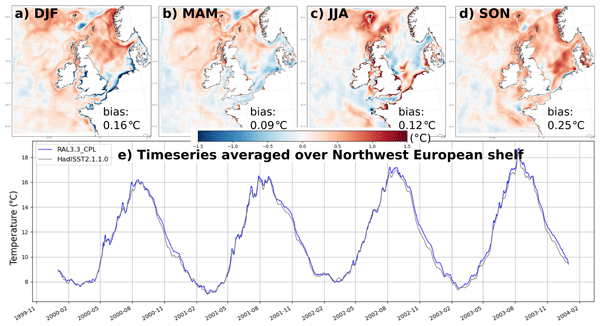
Ségolène Berthou, Juan Manuel Castillo, Vivian Fraser-Leonhardt, Sana Mahmood, Nefeli Makrygianni, Alex Arnold, Claudio Sanchez, Huw W. Lewis, Dale Partridge, Martin Best, Lucy Bricheno, Helen Davies, Douglas B. Clark, James R. Clark, Jeff A. Polton, Andrew Saulter, Chris J. Short, Jonathan Tinker, Simon Tucker, and Maisie Wright
Geosci. Model Dev., 19, 8535–8564, https://doi.org/10.5194/gmd-19-8535-2026, https://doi.org/10.5194/gmd-19-8535-2026, 2026
Short summary
Short summary
The UK’s new RCS-UKC4 (Regional Coupled Suite – UK Coupled domain version 4) system combines atmosphere, ocean, waves, land, rivers, and biogeochemistry models to improve coastal weather and climate predictions. It offers better storm wave predictions, more accurate river flows, and captures rapid sea-level changes. These advances help predict multiple hazards more reliably, supporting safer communities and helping better planning.
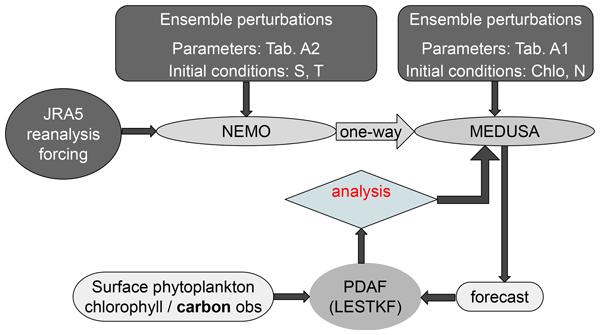
Yumeng Chen, Dale Partridge, and Lars Nerger
Geosci. Model Dev., 19, 7589–7613, https://doi.org/10.5194/gmd-19-7589-2026, https://doi.org/10.5194/gmd-19-7589-2026, 2026
Short summary
Short summary
Operational marine ecosystem forecasts traditionally rely on combining phytoplankton chlorophyll observations with model forecasts. However, using our newly developed ensemble data assimilation system, we demonstrate that assimilating phytoplankton carbon data leads to more balanced phytoplankton estimates and adjusts estimates of global ocean carbon.
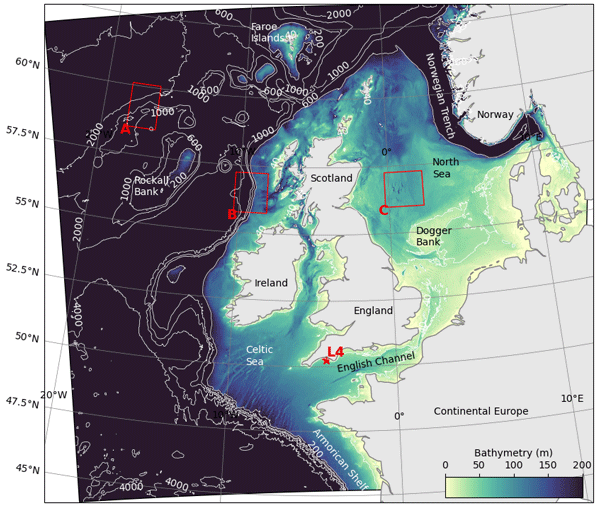
Dale Partridge, Ségolène Berthou, Rebecca Millington, James R. Clark, Lucy Bricheno, Juan Manuel Castillo, Julia Rulent, and Huw Lewis
Ocean Sci., 22, 345–366, https://doi.org/10.5194/os-22-345-2026, https://doi.org/10.5194/os-22-345-2026, 2026
Short summary
Short summary
Phytoplankton blooms are governed by the availability of light and nutrients, both of which are affected by mixing in the upper layers of the ocean, which is impacted by wave activity on the surface. Most numerical ocean models estimate waves through a parameterisation, here we explicitly resolve waves through a coupled wave model to examine the impact on the strength and timing of phytoplankton blooms, particular during storms when wave activity is elevated.
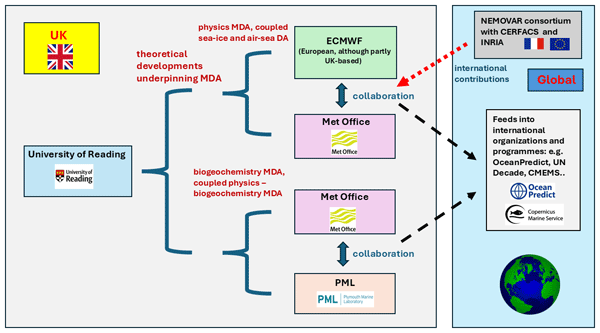
Jozef Skákala, David Ford, Keith Haines, Amos Lawless, Matthew J. Martin, Philip Browne, Marcin Chrust, Stefano Ciavatta, Alison Fowler, Daniel Lea, Matthew Palmer, Andrea Rochner, Jennifer Waters, Hao Zuo, Deep S. Banerjee, Mike Bell, Davi M. Carneiro, Yumeng Chen, Susan Kay, Dale Partridge, Martin Price, Richard Renshaw, Georgy Shapiro, and James While
Ocean Sci., 21, 1709–1734, https://doi.org/10.5194/os-21-1709-2025, https://doi.org/10.5194/os-21-1709-2025, 2025
Short summary
Short summary
UK marine data assimilation (MDA) involves a closely collaborating research community. In this paper, we offer both an overview of the state of the art and a vision for the future across all of the main areas of UK MDA, ranging from physics to biogeochemistry to coupled DA. We discuss the current UK MDA stakeholder applications, highlight theoretical developments needed to advance our systems, and reflect upon upcoming opportunities with respect to hardware and observational missions.
Jeff Polton, James Harle, Jason Holt, Anna Katavouta, Dale Partridge, Jenny Jardine, Sarah Wakelin, Julia Rulent, Anthony Wise, Katherine Hutchinson, David Byrne, Diego Bruciaferri, Enda O'Dea, Michela De Dominicis, Pierre Mathiot, Andrew Coward, Andrew Yool, Julien Palmiéri, Gennadi Lessin, Claudia Gabriela Mayorga-Adame, Valérie Le Guennec, Alex Arnold, and Clément Rousset
Geosci. Model Dev., 16, 1481–1510, https://doi.org/10.5194/gmd-16-1481-2023, https://doi.org/10.5194/gmd-16-1481-2023, 2023
Short summary
Short summary
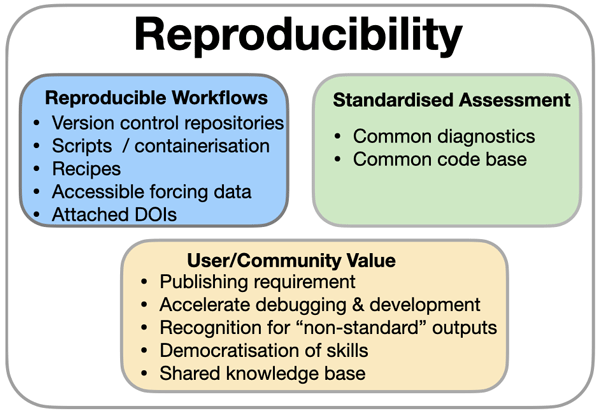
The aim is to increase the capacity of the modelling community to respond to societally important questions that require ocean modelling. The concept of reproducibility for regional ocean modelling is developed: advocating methods for reproducible workflows and standardised methods of assessment. Then, targeting the NEMO framework, we give practical advice and worked examples, highlighting key considerations that will the expedite development cycle and upskill the user community.
Xin Meng, Claire Mahaffey, Juliane Wihsgott, and Jonathan Sharples
Biogeosciences, 23, 6915–6929, https://doi.org/10.5194/bg-23-6915-2026, https://doi.org/10.5194/bg-23-6915-2026, 2026
Short summary
Short summary
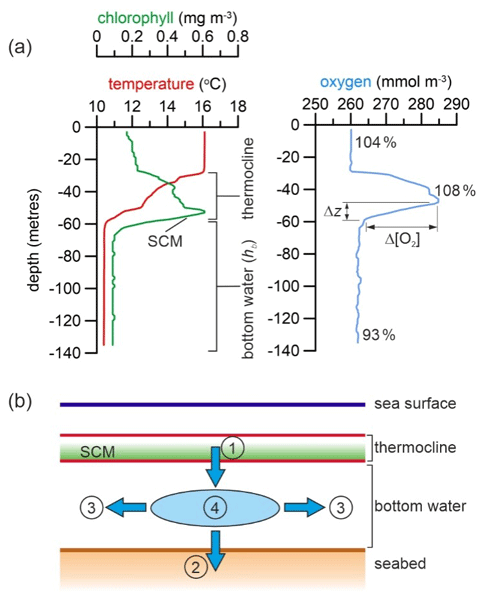
Summer oxygen loss in Celtic Sea bottom waters was investigated using ship observations and an oxygen budget. Seasonal layering cuts deep water off from the air, while microbes breaking down organic matter consume most oxygen. Winds can mix oxygen downward, but warming may worsen oxygen loss by speeding microbial activity and lowering oxygen solubility. This could push parts of the shelf sea toward oxygen deficiency, with risks for seafloor life and ecosystem health.
Ségolène Berthou, Juan Manuel Castillo, Vivian Fraser-Leonhardt, Sana Mahmood, Nefeli Makrygianni, Alex Arnold, Claudio Sanchez, Huw W. Lewis, Dale Partridge, Martin Best, Lucy Bricheno, Helen Davies, Douglas B. Clark, James R. Clark, Jeff A. Polton, Andrew Saulter, Chris J. Short, Jonathan Tinker, Simon Tucker, and Maisie Wright
Geosci. Model Dev., 19, 8535–8564, https://doi.org/10.5194/gmd-19-8535-2026, https://doi.org/10.5194/gmd-19-8535-2026, 2026
Short summary
Short summary
The UK’s new RCS-UKC4 (Regional Coupled Suite – UK Coupled domain version 4) system combines atmosphere, ocean, waves, land, rivers, and biogeochemistry models to improve coastal weather and climate predictions. It offers better storm wave predictions, more accurate river flows, and captures rapid sea-level changes. These advances help predict multiple hazards more reliably, supporting safer communities and helping better planning.
Yumeng Chen, Dale Partridge, and Lars Nerger
Geosci. Model Dev., 19, 7589–7613, https://doi.org/10.5194/gmd-19-7589-2026, https://doi.org/10.5194/gmd-19-7589-2026, 2026
Short summary
Short summary
Operational marine ecosystem forecasts traditionally rely on combining phytoplankton chlorophyll observations with model forecasts. However, using our newly developed ensemble data assimilation system, we demonstrate that assimilating phytoplankton carbon data leads to more balanced phytoplankton estimates and adjusts estimates of global ocean carbon.
Jozef Skakala, Ieuan Higgs, and David Moffat
EGUsphere, https://doi.org/10.48550/arXiv.2606.27168, https://doi.org/10.48550/arXiv.2606.27168, 2026
This preprint is open for discussion and under review for Biogeosciences (BG).
Short summary
Short summary
Artificial intelligence (AI)-based forecasting is increasingly used in weather and ocean prediction. While most efforts focus on ocean physics, AI has strong potential for marine biogeochemistry, where models are computationally expensive and often biased. We show that AI-based emulators can deliver highly useful marine biogeochemistry forecasts across a wide range of timescales and produce outputs of varying complexity. They can also provide important insights into the emulated model behavior.
Jozef Skákala, Shubha Sathyendranath, Yuri Artioli, Deep S. Banerjee, Heather Bouman, Robert J. W. Brewin, Momme Butenschön, Stefano Ciavatta, Stephanie Dutkiewicz, Yanna Fidai, David Ford, Grinson George, Karen Guihou, Bror Jönsson, Marija Bačeković Koloper, Žarko Kovač, Lekshmi Krishnakumary, Gemma Kulk, Charlotte Laufkötter, Gennadi Lessin, Jann Paul Mattern, Angélique Melet, Alexandre Mignot, David Moffat, Fanny Monteiro, Mayra Rodriguez Bennadji, Cécile S. Rousseaux, Ranjini Swaminathan, Osvaldo Ulloa, and Jerry Tjiputra
Ocean Sci., 22, 1457–1481, https://doi.org/10.5194/os-22-1457-2026, https://doi.org/10.5194/os-22-1457-2026, 2026
Short summary
Short summary
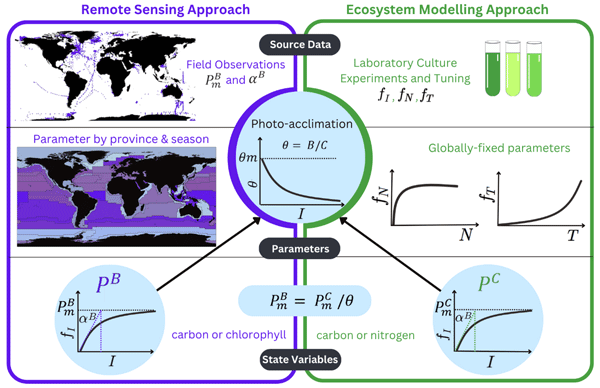
Marine primary production (PP) is a key component of the Earth's climate system, but its current estimates and future projections are highly uncertain. We review the PP uncertainties and discuss their sources both across the ecosystem and satellite models. We propose to reduce the PP uncertainties by better addressing the PP model structures and parametrizations. We also argue that for many models it is desirable to consider spatial and temporal variability in the model parameter values.
Cecilia Chavana-Bryant, Phil Wilkes, Wanxin Yang, Andrew Burt, Peter Vines, Amy C. Bennett, Georgia C. Pickavance, Declan L. M. Cooper, Simon L. Lewis, Oliver L. Phillips, Benjamin Brede, Alvaro Lau, Martin Herold, Iain M. McNicol, Edward T. A. Mitchard, David A. Coomes, Toby D. Jackson, Löic Makaga, Heddy O. Milamizokou Napo, Alfred Ngomanda, Stephan Ntie, Vincent Medjibe, Pacôme Dimbonda, Luna Soenens, Virginie Daelemans, Laetitia Proux, Reuben Nilus, Nicolas Labrière, Kathryn Jeffery, David F. R. P. Burslem, Dan Clewley, David Moffat, Lan Qie, Harm Bartholomeus, Gregoire Vincent, Nicolas Barbier, Geraldine Derroire, Katharine Abernethy, Klaus Scipal, and Mathias Disney
Earth Syst. Sci. Data, 18, 1243–1274, https://doi.org/10.5194/essd-18-1243-2026, https://doi.org/10.5194/essd-18-1243-2026, 2026
Short summary
Short summary
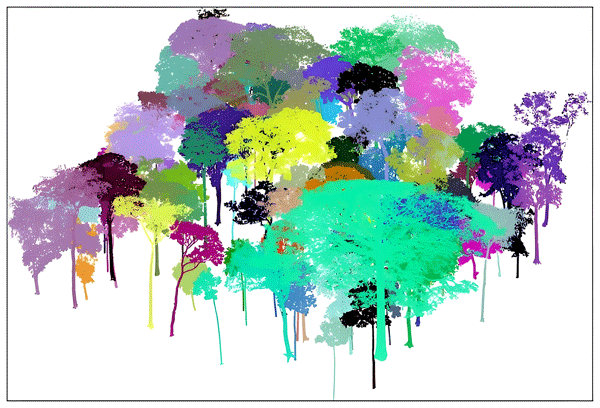
The ForestScan project provides a comprehensive set of datasets of tropical forest 3D structural measurements using terrestrial, unpiloted aerial vehicle and aerial laser scanning, plus tree census data. Collected at three sites in French Guiana, Gabon, and Malaysia, these datasets are crucial for calibrating and validating earth observation-derived forest biomass estimates, therefore, expanding and enhancing their use, and aiding global conservation efforts.
Dale Partridge, Ségolène Berthou, Rebecca Millington, James R. Clark, Lucy Bricheno, Juan Manuel Castillo, Julia Rulent, and Huw Lewis
Ocean Sci., 22, 345–366, https://doi.org/10.5194/os-22-345-2026, https://doi.org/10.5194/os-22-345-2026, 2026
Short summary
Short summary
Phytoplankton blooms are governed by the availability of light and nutrients, both of which are affected by mixing in the upper layers of the ocean, which is impacted by wave activity on the surface. Most numerical ocean models estimate waves through a parameterisation, here we explicitly resolve waves through a coupled wave model to examine the impact on the strength and timing of phytoplankton blooms, particular during storms when wave activity is elevated.

Ieuan Higgs, Ross Bannister, Jozef Skákala, Alberto Carrassi, and Stefano Ciavatta
Biogeosciences, 23, 315–344, https://doi.org/10.5194/bg-23-315-2026, https://doi.org/10.5194/bg-23-315-2026, 2026
Short summary
Short summary
We explored how machine learning can improve computer models that simulate ocean ecosystems. These models help us understand how the ocean works, but they often struggle due to limited observations and complex processes. Our approach uses machine learning to better connect the parts of the system we can observe with those we cannot. This leads to more accurate and efficient predictions, offering a promising way to improve future ocean monitoring and forecasting tools.
Deep S. Banerjee and Jozef Skákala
Biogeosciences, 22, 3769–3784, https://doi.org/10.5194/bg-22-3769-2025, https://doi.org/10.5194/bg-22-3769-2025, 2025
Short summary
Short summary
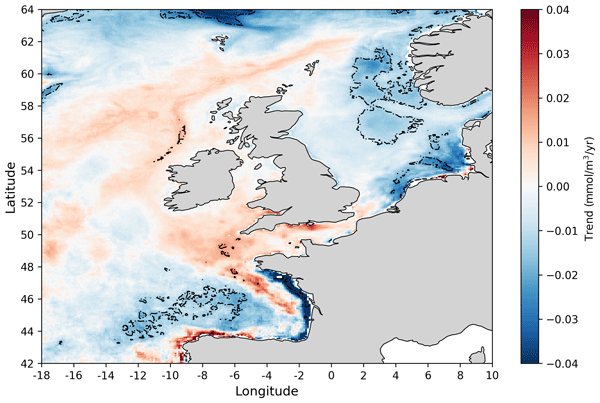
Nitrate is a crucial nutrient in oceans, whose excess can trigger uncontrolled algae growth that damages marine ecosystems. We used machine learning to generate skilled, gap-free, bi-decadal surface nitrate data from sparse observations, revealing areas on the North-West European Shelf that are more vulnerable to excess algae growth if nutrient pollution occurs. We also looked at bi-decadal trends in coastal nitrate and the impact of winter nitrate on spring phytoplankton blooms.
Jozef Skákala, David Ford, Keith Haines, Amos Lawless, Matthew J. Martin, Philip Browne, Marcin Chrust, Stefano Ciavatta, Alison Fowler, Daniel Lea, Matthew Palmer, Andrea Rochner, Jennifer Waters, Hao Zuo, Deep S. Banerjee, Mike Bell, Davi M. Carneiro, Yumeng Chen, Susan Kay, Dale Partridge, Martin Price, Richard Renshaw, Georgy Shapiro, and James While
Ocean Sci., 21, 1709–1734, https://doi.org/10.5194/os-21-1709-2025, https://doi.org/10.5194/os-21-1709-2025, 2025
Short summary
Short summary
UK marine data assimilation (MDA) involves a closely collaborating research community. In this paper, we offer both an overview of the state of the art and a vision for the future across all of the main areas of UK MDA, ranging from physics to biogeochemistry to coupled DA. We discuss the current UK MDA stakeholder applications, highlight theoretical developments needed to advance our systems, and reflect upon upcoming opportunities with respect to hardware and observational missions.
Davi Mignac, Jennifer Waters, Daniel J. Lea, Matthew J. Martin, James While, Anthony T. Weaver, Arthur Vidard, Catherine Guiavarc'h, Dave Storkey, David Ford, Edward W. Blockley, Jonathan Baker, Keith Haines, Martin R. Price, Michael J. Bell, and Richard Renshaw
Geosci. Model Dev., 18, 3405–3425, https://doi.org/10.5194/gmd-18-3405-2025, https://doi.org/10.5194/gmd-18-3405-2025, 2025
Short summary
Short summary
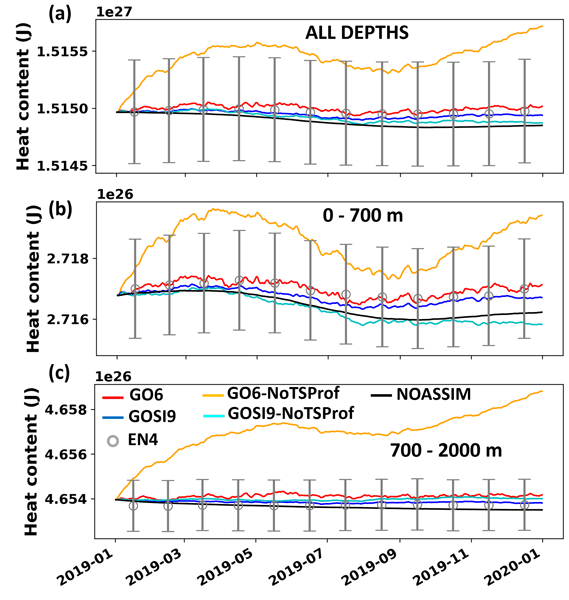
We describe major improvements of the Met Office's global ocean–sea ice forecasting system. The models and the way observations are used to improve the forecasts were changed, which led to a significant error reduction of 1 d forecasts. The new system performance in past conditions, where subsurface observations are scarce, was improved with more consistent ocean heat content estimates. The new system will be of better use for climate studies and will provide improved forecasts for end users.
Jorn Bruggeman, Karsten Bolding, Lars Nerger, Anna Teruzzi, Simone Spada, Jozef Skákala, and Stefano Ciavatta
Geosci. Model Dev., 17, 5619–5639, https://doi.org/10.5194/gmd-17-5619-2024, https://doi.org/10.5194/gmd-17-5619-2024, 2024
Short summary
Short summary
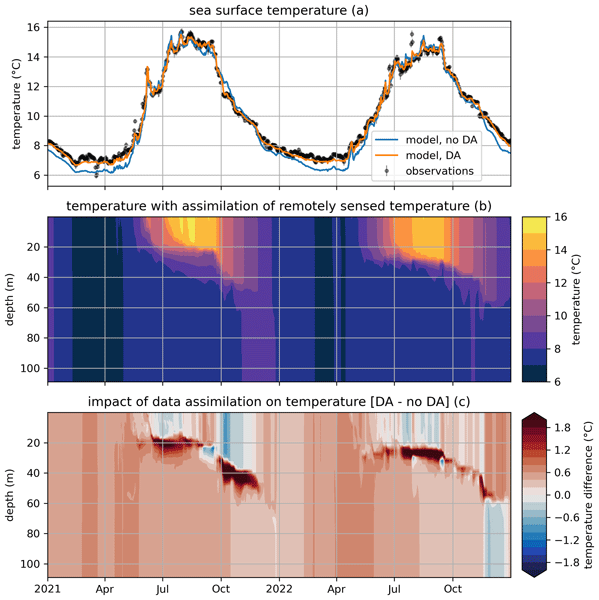
To understand and predict the ocean’s capacity for carbon sequestration, its ability to supply food, and its response to climate change, we need the best possible estimate of its physical and biogeochemical properties. This is obtained through data assimilation which blends numerical models and observations. We present the Ensemble and Assimilation Tool (EAT), a flexible and efficient test bed that allows any scientist to explore and further develop the state of the art in data assimilation.
Charlotte A. J. Williams, Tom Hull, Jan Kaiser, Claire Mahaffey, Naomi Greenwood, Matthew Toberman, and Matthew R. Palmer
Biogeosciences, 21, 1961–1971, https://doi.org/10.5194/bg-21-1961-2024, https://doi.org/10.5194/bg-21-1961-2024, 2024
Short summary
Short summary
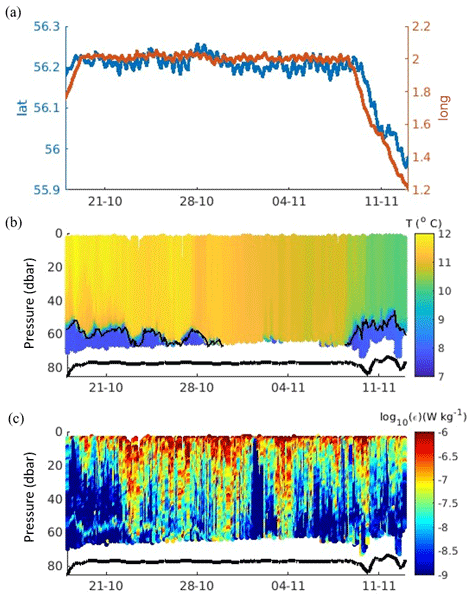
Oxygen (O2) is a key indicator of ocean health. The risk of O2 loss in the productive coastal/continental slope regions is increasing. Autonomous underwater vehicles equipped with O2 optodes provide lots of data but have problems resolving strong vertical O2 changes. Here we show how to overcome this and calculate how much O2 is supplied to the low-O2 bottom waters via mixing. Bursts in mixing supply nearly all of the O2 to bottom waters in autumn, stopping them reaching ecologically low levels.
Ieuan Higgs, Jozef Skákala, Ross Bannister, Alberto Carrassi, and Stefano Ciavatta
Biogeosciences, 21, 731–746, https://doi.org/10.5194/bg-21-731-2024, https://doi.org/10.5194/bg-21-731-2024, 2024
Short summary
Short summary
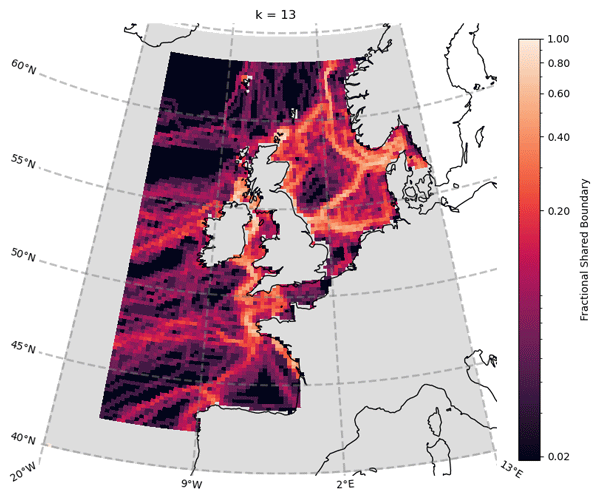
A complex network is a way of representing which parts of a system are connected to other parts. We have constructed a complex network based on an ecosystem–ocean model. From this, we can identify patterns in the structure and areas of similar behaviour. This can help to understand how natural, or human-made, changes will affect the shelf sea ecosystem, and it can be used in multiple future applications such as improving modelling, data assimilation, or machine learning.
Jeff Polton, James Harle, Jason Holt, Anna Katavouta, Dale Partridge, Jenny Jardine, Sarah Wakelin, Julia Rulent, Anthony Wise, Katherine Hutchinson, David Byrne, Diego Bruciaferri, Enda O'Dea, Michela De Dominicis, Pierre Mathiot, Andrew Coward, Andrew Yool, Julien Palmiéri, Gennadi Lessin, Claudia Gabriela Mayorga-Adame, Valérie Le Guennec, Alex Arnold, and Clément Rousset
Geosci. Model Dev., 16, 1481–1510, https://doi.org/10.5194/gmd-16-1481-2023, https://doi.org/10.5194/gmd-16-1481-2023, 2023
Short summary
Short summary
The aim is to increase the capacity of the modelling community to respond to societally important questions that require ocean modelling. The concept of reproducibility for regional ocean modelling is developed: advocating methods for reproducible workflows and standardised methods of assessment. Then, targeting the NEMO framework, we give practical advice and worked examples, highlighting key considerations that will the expedite development cycle and upskill the user community.
Marion Mittermaier, Rachel North, Jan Maksymczuk, Christine Pequignet, and David Ford
Ocean Sci., 17, 1527–1543, https://doi.org/10.5194/os-17-1527-2021, https://doi.org/10.5194/os-17-1527-2021, 2021
Short summary
Short summary
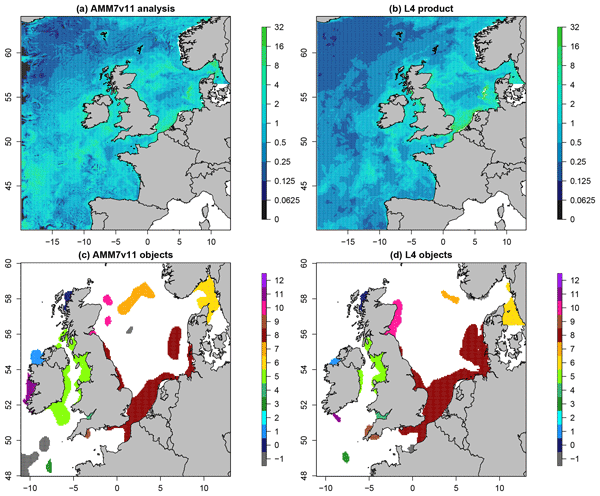
Regions of enhanced chlorophyll-a concentrations can be identified by applying a threshold to the concentration value to a forecast and observed field (or analysis). These regions can then be treated and analysed as features using diagnostic techniques to consider of the evolution of the chlorophyll-a blooms in space and time. This allows us to understand whether the biogeochemistry in the model has any skill in predicting these blooms, their location, intensity, onset, duration and demise.
Cited articles
Baretta, J., Ebenhöh, W., and Ruardij, P.: The European regional seas ecosystem model, a complex marine ecosystem model, Neth. J. Sea Res., 33, 233–246, 1995. a
Bittig, H. C., Fiedler, B., Scholz, R., Krahmann, G., and Körtzinger, A.: Time response of oxygen optodes on profiling platforms and its dependence on flow speed and temperature, Limnol. Oceanogr. Meth., 12, 617–636, 2014. a
Blackford, J.: An analysis of benthic biological dynamics in a North Sea ecosystem model, J. Sea Res., 38, 213–230, 1997. a
Bruggeman, J. and Bolding, K.: A general framework for aquatic biogeochemical models, Environ. Modell. Softw., 61, 249–265, 2014. a
Buck, J. J., Lopex, A. L., Hawes, N., Allsup, B., Dobra, T., Ferreira, T., Kokkinaki, A., Morris, A., Lacerda, B., Patmore, R., Polton, J., Williams, C., Woodward, S., and NOC MARS C2 devleopment team: A Marine Autonomous Systems Digital Twin; Bringing value to researchers, data users and vehicle operations, in: OCEANS 2024-Halifax, IEEE, 1–4, https://doi.org/10.1109/OCEANS55160.2024.10754481, 2024. a
Butenschön, M., Clark, J., Aldridge, J. N., Allen, J. I., Artioli, Y., Blackford, J., Bruggeman, J., Cazenave, P., Ciavatta, S., Kay, S., Lessin, G., van Leeuwen, S., van der Molen, J., de Mora, L., Polimene, L., Sailley, S., Stephens, N., and Torres, R.: ERSEM 15.06: a generic model for marine biogeochemistry and the ecosystem dynamics of the lower trophic levels, Geosci. Model Dev., 9, 1293–1339, https://doi.org/10.5194/gmd-9-1293-2016, 2016. a
EU CMEMS (E.U. Copernicus Marine Service Information): Baltic Sea Physics Analysis and Forecast, Marine Data Store (MDS), https://doi.org/10.48670/moi-00010, 2024. a
Ford, D. A., Edwards, K. P., Lea, D., Barciela, R. M., Martin, M. J., and Demaria, J.: Assimilating GlobColour ocean colour data into a pre-operational physical-biogeochemical model, Ocean Sci., 8, 751–771, https://doi.org/10.5194/os-8-751-2012, 2012. a
Ford, D. A., Grossberg, S., Rinaldi, G., Menon, P. P., Palmer, M. R., Skákala, J., Smyth, T., Williams, C. A., Lorenzo Lopez, A., and Ciavatta, S.: A solution for autonomous, adaptive monitoring of coastal ocean ecosystems: Integrating ocean robots and operational forecasts, Front. Mar. Sci., 9, 1067174, https://doi.org/10.3389/fmars.2022.1067174, 2022. a, b, c, d, e, f, g, h, i, j
Fowler, A. M., Skákala, J., and Ford, D.: Validating and improving the uncertainty assumptions for the assimilation of ocean-colour-derived chlorophyll a into a marine biogeochemistry model of the Northwest European Shelf Seas, Q. J. Roy. Meteor. Soc., 149, 300–324, 2023. a
Garau, B., Ruiz, S., Zhang, W. G., Pascual, A., Heslop, E., Kerfoot, J., and Tintoré, J.: Thermal Lag Correction on Slocum CTD Glider Data, J. Atmos. Ocean. Tech., 28, 1065–1071, https://doi.org/10.1175/JTECH-D-10-05030.1, 2011. a, b
Graham, J. A., O'Dea, E., Holt, J., Polton, J., Hewitt, H. T., Furner, R., Guihou, K., Brereton, A., Arnold, A., Wakelin, S., Castillo Sanchez, J. M., and Mayorga Adame, C. G.: AMM15: a new high-resolution NEMO configuration for operational simulation of the European north-west shelf, Geosci. Model Dev., 11, 681–696, https://doi.org/10.5194/gmd-11-681-2018, 2018. a
Halvorsen, D. Ø., Chiatante, C., Penne, C. L., Singh, A., Bakken, S., Fragoso, G. M., Birkeland, R., Dallolio, A., Garrett, J. L., Johansen, T. A., Ellingsen, I. H., and Alver, M. O.: Operational Closed-Loop System for Multi-Scale Chlorophyll-a Monitoring along the Norwegian Coast, Front. Mar. Sci., 13, https://doi.org/10.3389/fmars.2026.1688255, 2026. a
Lee, J.-H., Nam, Y.-S., Kim, Y., Liu, Y., Lee, J., and Yang, H.: Real-time digital twin for ship operation in waves, Ocean Eng., 266, 112867, https://doi.org/10.1016/j.oceaneng.2022.112867, 2022. a
Lindgren, F., Rue, H., and Lindström, J.: An explicit link between Gaussian fields and Gaussian Markov random fields: the stochastic partial differential equation approach, J. Roy. Stat. Soc. Ser. B, 73, 423–498, 2011. a
Madec, G. and the NEMO team: NEMO ocean engine, v3.6, Institut Pierre-Simon Laplace, France, Zenodo, https://doi.org/10.5281/zenodo.1472492, 2016. a
Mansfield, T., Wihsgott, J., Skakala, J., Menon, P., Gardner, E., Kay, S., and Palmer, M.: Lessons Learned in Establishing an Environmental Digital Twin, OCEANS 2025 Brest, 1–10, https://doi.org/10.1109/OCEANS58557.2025.11104760, 2025. a
Marine Systems Modelling group, PML: ERSEM, Zenodo [code], https://doi.org/10.5281/zenodo.18664914, 2026. a
McEwan, R., Kay, S., and Ford, D.: Quality Information Document for the CMEMS North West European Shelf Biogeochemical Analysis and Forecast, Tech. rep., Copernicus Marine Environment Monitoring Service, Zenodo, https://doi.org/10.5281/zenodo.4746438, 2021. a
Mogensen, K., Balmaseda, M., Weaver, A., Martin, M., and Vidard, A.: NEMOVAR: A variational data assimilation system for the NEMO ocean model, ECMWF Newsletter, 120, 17–22, 2009. a
O'Dea, E., Furner, R., Wakelin, S., Siddorn, J., While, J., Sykes, P., King, R., Holt, J., and Hewitt, H.: The CO5 configuration of the 7 km Atlantic Margin Model: large-scale biases and sensitivity to forcing, physics options and vertical resolution, Geosci. Model Dev., 10, 2947–2969, https://doi.org/10.5194/gmd-10-2947-2017, 2017. a, b
Palmí-Perales, F., Lindgren, F., and Gómez-Rubio, V.: Bayesian inference for case-control point pattern data in spatial epidemiology with the\texttt {inlabru} R package, arXiv [preprint], https://doi.org/10.48550/arXiv.2503.14954, 2025. a
Raza, M., Prokopova, H., Huseynzade, S., Azimi, S., and Lafond, S.: Towards integrated digital-twins: An application framework for autonomous maritime surface vessel development, J. Mar. Sci. Eng., 10, 1469, https://doi.org/10.3390/jmse10101469, 2022. a
Rue, H., Martino, S., and Chopin, N.: Approximate Bayesian inference for latent Gaussian models by using integrated nested Laplace approximations, J. Roy. Stat. Soc. Ser. B, 71, 319–392, https://doi.org/10.1111/j.1467-9868.2008.00700.x, 2009. a
Salim, M. F., Satoto, T. B. T., and Danardono: Predicting spatio-temporal dynamics of dengue using INLA (integrated nested laplace approximation) in Yogyakarta, Indonesia, BMC Public Health, 25, 1–17, https://doi.org/10.1186/s12889-025-22545-2, 2025. a
Satake, M., Tanaka, Y., Ishikura, Y., Oshima, Y., Naoki, H., and Yasumoto, T.: Gymnocin-B with the largest contiguous polyether rings from the red tide dinoflagellate, Karenia (formerly Gymnodinium) mikimotoi, Tetrahedron Lett., 46, 3537–3540, 2005. a
Schmechtig, C., Wong, A., Maurer, T. l., Bittig, H., and Thierry, V.: Argo quality control manual for biogeochemical data, Report, https://doi.org/10.13155/40879, 2023. a
Siddorn, J. and Furner, R.: An analytical stretching function that combines the best attributes of geopotential and terrain-following vertical coordinates, Ocean Model., 66, 1–13, 2013. a
Silke, J., O'Beirn, F., and Cronin, M.: Karenia mikimotoi: an exceptional dinoflagellate bloom in western Irish waters, summer 2005, Mar. Environ. Health Ser., 21, 1–28, 2005. a
Skákala, J., Ford, D., Bruggeman, J., Hull, T., Kaiser, J., King, R. R., Loveday, B., Palmer, M. R., Smyth, T., Williams, C. A. J., and Ciavatta, S.: Towards a Multi-Platform Assimilative System for North Sea Biogeochemistry, J. Geophys. Res.-Oceans, 126, https://doi.org/10.1029/2020JC016649, 2021. a, b
Skakala, J., Awty-Carroll, K., Menon, P. P., Wang, K., and Lessin, G.: Future digital twins: emulating a highly complex marine biogeochemical model with machine learning to predict hypoxia, Front. Mar. Sci., 10, 1058837, https://doi.org/10.3389/fmars.2023.1058837, 2023. a
Steinmetz, F., Deschamps, P.-Y., and Ramon, D.: Atmospheric correction in presence of sun glint: application to MERIS, Opt. Express, 19, 9783–9800, https://doi.org/10.1364/OE.19.009783, 2011. a
Sunderland, A., Partridge, D., Wathen, M., and Porter, A.: ARCHER2-eCSE04-6 Optimising NEMO-ERSEM for High Resolution, Zenodo, https://doi.org/10.5281/zenodo.7732984, 2023. a
Tangen, K.: Blooms of Gyrodinium aureolum (Dinophygeae) in North European waters, accompanied by mortality in marine organisms, Sarsia, 63, 123–133, 1977. a
Testor, P., de Young, B., Rudnick, D. L., Glenn, S., Hayes, D., Lee, C. M., Pattiaratchi, C., Hill, K., Heslop, E., Turpin, V., Alenius, P., Barrera, C., Barth, J. A., Beaird, N., Bécu, G., Bosse, A., Bourrin, F., Brearley, J. A., Chao, Y., Chen, S., Chiggiato, J., Coppola, L., Crout, R., Cummings, J., Curry, B., Curry, R., Davis, R., Desai, K., DiMarco, S., Edwards, C., Fielding, S., Fer, I., Frajka-Williams, E., Gildor, H., Goni, G., Gutierrez, D., Haugan, P., Hebert, D., Heiderich, J., Henson, S., Heywood, K., Hogan, P., Houpert, L., Huh, S., E. Inall, M., Ishii, M., Ito, S.-i., Itoh, S., Jan, S., Kaiser, J., Karstensen, J., Kirkpatrick, B., Klymak, J., Kohut, J., Krahmann, G., Krug, M., McClatchie, S., Marin, F., Mauri, E., Mehra, A., P. Meredith, M., Meunier, T., Miles, T., Morell, J. M., Mortier, L., Nicholson, S., O'Callaghan, J., O'Conchubhair, D., Oke, P., Pallàs-Sanz, E., Palmer, M., Park, J., Perivoliotis, L., Poulain, P.-M., Perry, R., Queste, B., Rainville, L., Rehm, E., Roughan, M., Rome, N., Ross, T., Ruiz, S., Saba, G., Schaeffer, A., Schönau, M., Schroeder, K., Shimizu, Y., Sloyan, B. M., Smeed, D., Snowden, D., Song, Y., Swart, S., Tenreiro, M., Thompson, A., Tintore, J., Todd, R. E., Toro, C., Venables, H., Wagawa, T., Waterman, S., Watlington, R. A., and Wilson, D.: OceanGliders: A Component of the Integrated GOOS, Front. Mar. Sci., 6, https://doi.org/10.3389/fmars.2019.00422, 2019. a
Tonani, M., Sykes, P., King, R. R., McConnell, N., Péquignet, A.-C., O'Dea, E., Graham, J. A., Polton, J., and Siddorn, J.: The impact of a new high-resolution ocean model on the Met Office North-West European Shelf forecasting system, Ocean Sci., 15, 1133–1158, https://doi.org/10.5194/os-15-1133-2019, 2019. a, b, c, d, e, f, g, h
Tzachor, A., Hendel, O., and Richards, C. E.: Digital twins: a stepping stone to achieve ocean sustainability?, npj Ocean Sustain., 2, https://doi.org/10.1038/s44183-023-00023-9, 2023. a, b
Wang, K., Menon, P. P., Veenman, J., and Bennani, S.: Safety exploration using Gaussian process classification for uncertain systems, Reliab. Eng. Syst. Safe., 256, 110680, https://doi.org/10.1016/j.ress.2024.110680, 2025. a
Waters, J., Lea, D. J., Martin, M. J., Mirouze, I., Weaver, A., and While, J.: Implementing a variational data assimilation system in an operational 1/4 degree global ocean model, Q. J. Roy. Meteor. Soc., 141, 333–349, 2015. a
Williams, C. A. J., Davis, C. E., Palmer, M. R., Sharples, J., and Mahaffey, C.: The Three Rs: Resolving Respiration Robotically in Shelf Seas, Geophys. Res. Lett., 49, e2021GL096921, https://doi.org/10.1029/2021GL096921, 2022. a
Williams, C. A. J., Hull, T., Kaiser, J., Mahaffey, C., Greenwood, N., Toberman, M., and Palmer, M. R.: Vertical mixing alleviates autumnal oxygen deficiency in the central North Sea, Biogeosciences, 21, 1961–1971, https://doi.org/10.5194/bg-21-1961-2024, 2024. a
Wong, A. P. S., Gilson, J., and Cabanes, C.: Argo salinity: bias and uncertainty evaluation, Earth Syst. Sci. Data, 15, 383–393, https://doi.org/10.5194/essd-15-383-2023, 2023. a
Short summary
This study outlines the development and testing of a Digital Twin Ocean (DTO) framework, aimed at improving coastal ocean forecasts through the use of autonomous underwater gliders. A fleet of gliders were deployed in the western English Channel during August–September 2024 to collect measurements of temperature, salinity, chlorophyll and oxygen, aiming to track the movement of the harmful algal bloom Karenia mikimotoi.
This study outlines the development and testing of a Digital Twin Ocean (DTO) framework, aimed...


