
Articles | Volume 22, issue 3
https://doi.org/10.5194/os-22-1457-2026
© Author(s) 2026. This work is distributed under
the Creative Commons Attribution 4.0 License.
the Creative Commons Attribution 4.0 License.
Special issue:
https://doi.org/10.5194/os-22-1457-2026
© Author(s) 2026. This work is distributed under
the Creative Commons Attribution 4.0 License.
the Creative Commons Attribution 4.0 License.
Review article
| Highlight paper
| 
11 May 2026
Review article | Highlight paper |
| 11 May 2026
| 11 May 2026
Modelling primary production: multitude of theories, or multitude of languages?
Jozef Skákala
CORRESPONDING AUTHOR

Plymouth Marine Laboratory, Plymouth, UK
National Centre for Earth Observation, Plymouth, UK
Shubha Sathyendranath
Plymouth Marine Laboratory, Plymouth, UK
National Centre for Earth Observation, Plymouth, UK
Yuri Artioli
Plymouth Marine Laboratory, Plymouth, UK
Deep S. Banerjee
Plymouth Marine Laboratory, Plymouth, UK
National Centre for Earth Observation, Plymouth, UK
Heather Bouman
Department of Earth Sciences, University of Oxford, Oxford, UK
Robert J. W. Brewin
Department of Earth and Environmental Sciences, University of Exeter, Penryn Campus, Penryn, UK
Momme Butenschön
Euro-Mediterranean Center on Climate Change (CMCC), Bologna, Italy
Stefano Ciavatta
Mercator Ocean International, Toulouse, France
Stephanie Dutkiewicz
Department of Earth, Atmospheric and Planetary Sciences, Massachusetts Institute of Technology, Cambridge, USA
Yanna Fidai
Plymouth Marine Laboratory, Plymouth, UK
David Ford
Met Office, Exeter, UK
Grinson George
Indian Council of Agricultural Research (ICAR) – Central Marine Fisheries Research Institute, Cochin, India
Karen Guihou
Mercator Ocean International, Toulouse, France
Bror Jönsson
Institute for the Study of Earth, Oceans, and Space, University of New Hampshire, Durham, USA
Marija Bačeković Koloper
Department of Physics, Faculty of Science, University of Split, Split, Croatia
Žarko Kovač
Department of Physics, Faculty of Science, University of Split, Split, Croatia
Lekshmi Krishnakumary
Plymouth Marine Laboratory, Plymouth, UK
Gemma Kulk
Plymouth Marine Laboratory, Plymouth, UK
National Centre for Earth Observation, Plymouth, UK
Charlotte Laufkötter
Faculty of Science, University of Bern, Bern, Switzerland
Gennadi Lessin
Plymouth Marine Laboratory, Plymouth, UK
Jann Paul Mattern
Ocean Sciences Department, University of California Santa Cruz, Santa Cruz, USA
Angélique Melet
Mercator Ocean International, Toulouse, France
Alexandre Mignot
Mercator Ocean International, Toulouse, France
David Moffat
Plymouth Marine Laboratory, Plymouth, UK
National Centre for Earth Observation, Plymouth, UK
Fanny Monteiro
School of Geographical Sciences, University of Bristol, Bristol, UK
Centre for Ice, Cryosphere, Carbon and Climate, Department of Geosciences, UiT The Arctic University of Norway, Tromsø, Norway
Mayra Rodriguez Bennadji
Centre for Environmental Intelligence, University of Exeter, Exeter, UK
Cécile S. Rousseaux
The Ocean Ecology Laboratory, National Aeronautics and Space Administration (NASA), Greenbelt, USA
Ranjini Swaminathan
Department of Meteorology and National Centre for Earth Observation, University of Reading, Reading, UK
Osvaldo Ulloa
Department of Oceanography and Millenium Institute of Oceanography, Universidad de Concepción, Concepción, Chile
Jerry Tjiputra
NORCE Research AS, Bergen, Norway
Related authors
Jozef Skakala, Ieuan Higgs, and David Moffat
EGUsphere, https://doi.org/10.48550/arXiv.2606.27168, https://doi.org/10.48550/arXiv.2606.27168, 2026
Short summary
Short summary
Artificial intelligence (AI)-based forecasting is increasingly used in weather and ocean prediction. While most efforts focus on ocean physics, AI has strong potential for marine biogeochemistry, where models are computationally expensive and often biased. We show that AI-based emulators can deliver highly useful marine biogeochemistry forecasts across a wide range of timescales and produce outputs of varying complexity. They can also provide important insights into the emulated model behavior.
Dale Partridge, Deep Banerjee, David Ford, Ke Wang, Jozef Skákala, Juliane Wihsgott, Prathyush P. Menon, Susan Kay, Daniel Clewley, Andrea Rochner, Emma Sullivan, and Matthew Palmer
Ocean Sci., 22, 2083–2100, https://doi.org/10.5194/os-22-2083-2026, https://doi.org/10.5194/os-22-2083-2026, 2026
Short summary
Short summary
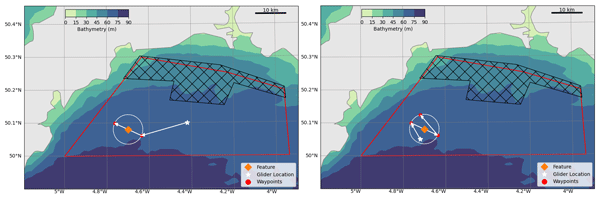
This study outlines the development and testing of a Digital Twin Ocean (DTO) framework, aimed at improving coastal ocean forecasts through the use of autonomous underwater gliders. A fleet of gliders were deployed in the western English Channel during August–September 2024 to collect measurements of temperature, salinity, chlorophyll and oxygen, aiming to track the movement of the harmful algal bloom Karenia mikimotoi.

Ieuan Higgs, Ross Bannister, Jozef Skákala, Alberto Carrassi, and Stefano Ciavatta
Biogeosciences, 23, 315–344, https://doi.org/10.5194/bg-23-315-2026, https://doi.org/10.5194/bg-23-315-2026, 2026
Short summary
Short summary
We explored how machine learning can improve computer models that simulate ocean ecosystems. These models help us understand how the ocean works, but they often struggle due to limited observations and complex processes. Our approach uses machine learning to better connect the parts of the system we can observe with those we cannot. This leads to more accurate and efficient predictions, offering a promising way to improve future ocean monitoring and forecasting tools.
Deep S. Banerjee and Jozef Skákala
Biogeosciences, 22, 3769–3784, https://doi.org/10.5194/bg-22-3769-2025, https://doi.org/10.5194/bg-22-3769-2025, 2025
Short summary
Short summary
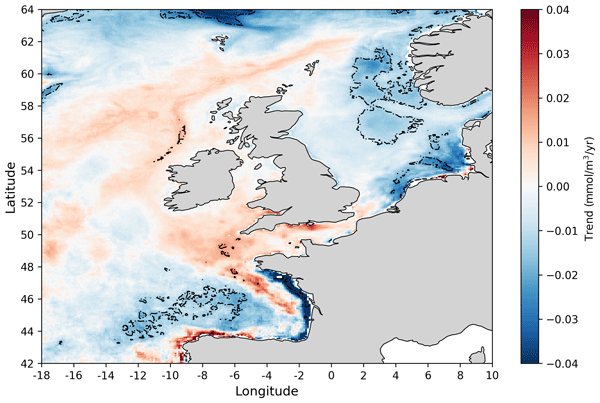
Nitrate is a crucial nutrient in oceans, whose excess can trigger uncontrolled algae growth that damages marine ecosystems. We used machine learning to generate skilled, gap-free, bi-decadal surface nitrate data from sparse observations, revealing areas on the North-West European Shelf that are more vulnerable to excess algae growth if nutrient pollution occurs. We also looked at bi-decadal trends in coastal nitrate and the impact of winter nitrate on spring phytoplankton blooms.
Jozef Skákala, David Ford, Keith Haines, Amos Lawless, Matthew J. Martin, Philip Browne, Marcin Chrust, Stefano Ciavatta, Alison Fowler, Daniel Lea, Matthew Palmer, Andrea Rochner, Jennifer Waters, Hao Zuo, Deep S. Banerjee, Mike Bell, Davi M. Carneiro, Yumeng Chen, Susan Kay, Dale Partridge, Martin Price, Richard Renshaw, Georgy Shapiro, and James While
Ocean Sci., 21, 1709–1734, https://doi.org/10.5194/os-21-1709-2025, https://doi.org/10.5194/os-21-1709-2025, 2025
Short summary
Short summary
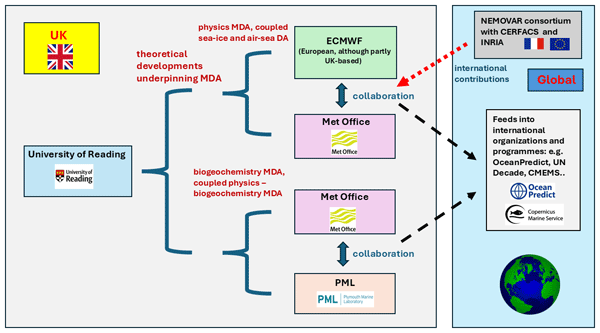
UK marine data assimilation (MDA) involves a closely collaborating research community. In this paper, we offer both an overview of the state of the art and a vision for the future across all of the main areas of UK MDA, ranging from physics to biogeochemistry to coupled DA. We discuss the current UK MDA stakeholder applications, highlight theoretical developments needed to advance our systems, and reflect upon upcoming opportunities with respect to hardware and observational missions.
Jorn Bruggeman, Karsten Bolding, Lars Nerger, Anna Teruzzi, Simone Spada, Jozef Skákala, and Stefano Ciavatta
Geosci. Model Dev., 17, 5619–5639, https://doi.org/10.5194/gmd-17-5619-2024, https://doi.org/10.5194/gmd-17-5619-2024, 2024
Short summary
Short summary
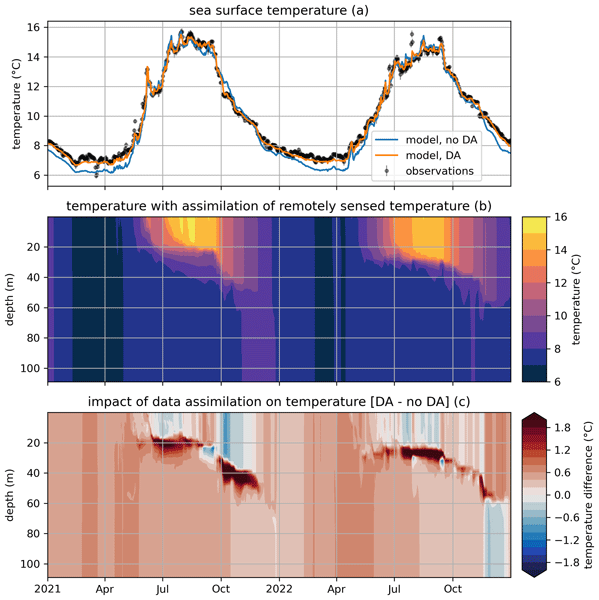
To understand and predict the ocean’s capacity for carbon sequestration, its ability to supply food, and its response to climate change, we need the best possible estimate of its physical and biogeochemical properties. This is obtained through data assimilation which blends numerical models and observations. We present the Ensemble and Assimilation Tool (EAT), a flexible and efficient test bed that allows any scientist to explore and further develop the state of the art in data assimilation.
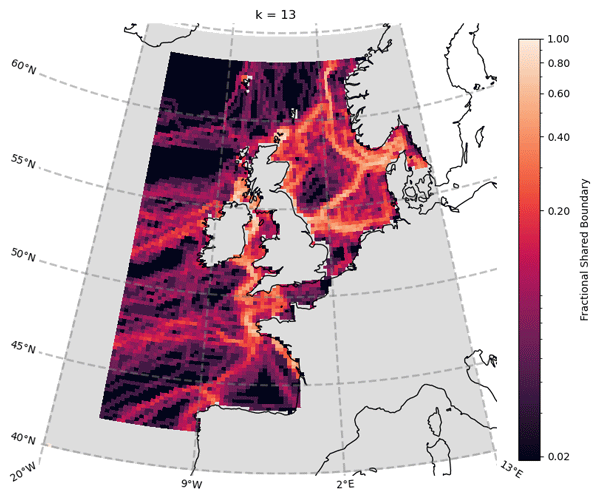
Ieuan Higgs, Jozef Skákala, Ross Bannister, Alberto Carrassi, and Stefano Ciavatta
Biogeosciences, 21, 731–746, https://doi.org/10.5194/bg-21-731-2024, https://doi.org/10.5194/bg-21-731-2024, 2024
Short summary
Short summary
A complex network is a way of representing which parts of a system are connected to other parts. We have constructed a complex network based on an ecosystem–ocean model. From this, we can identify patterns in the structure and areas of similar behaviour. This can help to understand how natural, or human-made, changes will affect the shelf sea ecosystem, and it can be used in multiple future applications such as improving modelling, data assimilation, or machine learning.
Nicola A. Wiseman, Joost de Vries, Alex J. Poulton, Nichole J. Marsh, Levi J. Wolf, and Fanny M. Monteiro
EGUsphere, https://doi.org/10.5194/egusphere-2026-6172, https://doi.org/10.5194/egusphere-2026-6172, 2026
This preprint is open for discussion and under review for Biogeosciences (BG).
Short summary
Short summary
Coccolithophores are tiny ocean organisms that make calcium carbonate, influencing how the ocean stores and moves carbon. We used machine learning to estimate their calcium carbonate production across the global ocean. We find that most production occurs in subtropical oceans, rather than high-latitude blooms that receive most attention, and that much occurs below the sunlit surface. These findings show where observations are needed to understand the ocean carbon cycle.
Charles Koven, Benjamin M. Sanderson, Abigail L. S. Swann, Victor Brovkin, John Dunne, Rosie A. Fisher, Tomohiro Hajima, Chris D. Jones, Spencer K. Liddicoat, Anastasia Romanou, Roland Séférian, Norman J. Steinert, Jerry Tjiputra, Tilo Ziehn, Tatiana Ilyina, Nancy Y. Kiang, David M. Lawrence, Peter Lawrence, Hongmei Li, Jorg Schwinger, and Lori T. Sentman
EGUsphere, https://doi.org/10.5194/egusphere-2026-5381, https://doi.org/10.5194/egusphere-2026-5381, 2026
This preprint is open for discussion and under review for Earth System Dynamics (ESD).
Short summary
Short summary
We use a set of climate models to ask how aspects of climate beyond global mean temperatures would differ if we first emit, and then remove, a given amount of CO2, compared to a case where the CO2 hadn't been emitted. We show that precipitation increases, and that land cools relative to the ocean. Models disagree on many of the finer-scale regional changes, but they do agree that many of the regional changes that occur under positive and then negative emissions also occur under zero emissions.
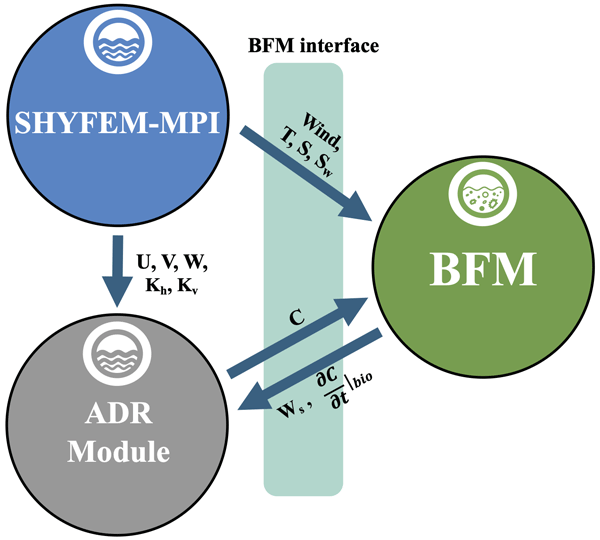
Jacopo Alessandri, Giulia Bonino, Tomas Lovato, Momme Butenschön, Lorenzo Mentaschi, Giorgia Verri, Ivan Federico, and Nadia Pinardi
Geosci. Model Dev., 19, 9301–9324, https://doi.org/10.5194/gmd-19-9301-2026, https://doi.org/10.5194/gmd-19-9301-2026, 2026
Short summary
Short summary
Coastal seas are strongly shaped by complex coastlines, shallow depths, and inputs from rivers, which influence marine life and water quality. This study introduces a new high-resolution modelling system that combines ocean circulation and marine ecosystem processes on unstructured grids. Applied to the northern Adriatic Sea, the model realistically captures seasonal changes in key biogeochemical variables, offering improved tools to support coastal environmental management.
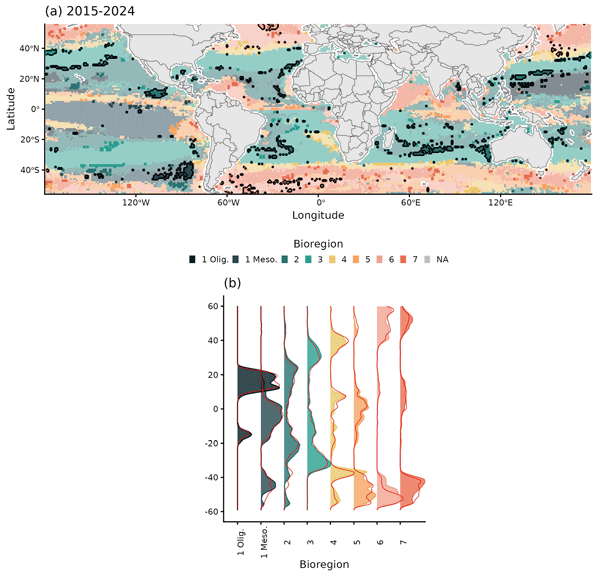
Wilhem Riom, Nicolas Mayot, Alexandre Mignot, Vincent Taillandier, and Fabrizio D'Ortenzio
State Planet, 7-osr10, 4, https://doi.org/10.5194/sp-7-osr10-4-2026, https://doi.org/10.5194/sp-7-osr10-4-2026, 2026
Short summary
Short summary
Over the ocean, phytoplankton (the microscopic algae at the basis of the marine foodweb) present characteristic cyclical patterns modulated by the passage of seasons. Climate change is modifying the marine environment and these seasonal cycles. This study presents a method that identifies the geographical displacement of these cycles applied over the last 30 years of satellite observations. It suggests that cycles normally typical of low latitude regions are extending towards high latitudes.
Mark J. Hopwood, Raphaël Savelli, Martha Gledhill, Dustin Carroll, Laramie Jensen, and Stephanie Dutkiewicz
EGUsphere, https://doi.org/10.5194/egusphere-2026-5351, https://doi.org/10.5194/egusphere-2026-5351, 2026
This preprint is open for discussion and under review for Biogeosciences (BG).
Short summary
Short summary
A long-standing hypothesis is that rivers have little direct relevance to the biogeochemistry of dissolved Fe in the ocean. Efficient removal of Fe in estuaries is thought to limit transfer of riverine Fe to offshore ecosystems. However, recent observations in the Arctic and South Atlantic suggest rivers are dominant Fe sources to these ocean regions. The observed Fe-rich river plumes are absent in biogeochemical models, indicating a refinement of budget and model representations is needed.
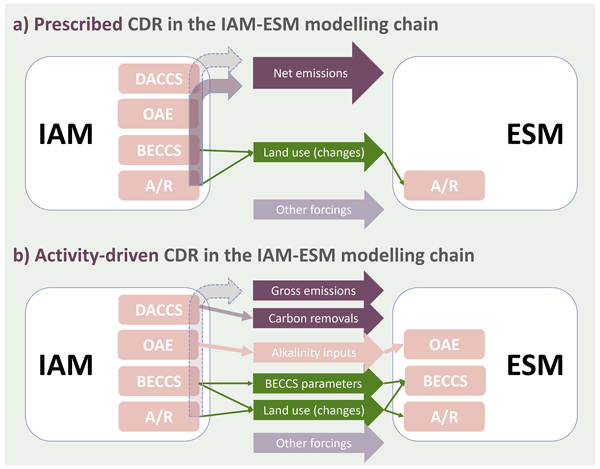
Jörg Schwinger, Leon Merfort, Nico Bauer, Raffaele Bernardello, Momme Butenschön, Timothée Bourgeois, Matthew J. Gidden, Shraddha Gupta, Hanna Lee, Nadine Mengis, Yiannis Moustakis, Helene Muri, Lars Nieradzik, Daniele Peano, Julia Pongratz, Pascal Sauer, Etienne Tourigny, and David Wårlind
Earth Syst. Dynam., 17, 1341–1363, https://doi.org/10.5194/esd-17-1341-2026, https://doi.org/10.5194/esd-17-1341-2026, 2026
Short summary
Short summary
Earth system models can simulate CO2 removal by representing the activity that draws down atmospheric CO2, e.g. growing bioenergy crops for energy production with carbon capture and storage or enhancing the oceans’ alkalinity. We describe a simulation framework, spanning the modeling chain from integrated assessment to Earth system models, that allows separating the intrinsic efficiency of CO2 removal and the overall atmospheric CO2 reduction, the latter being affected by Earth system feedbacks.
Alexandre Mignot, Nina Bednaršek, Sarah Albernhe, Stefano Ciavatta, Patrick Lehodey, and Jules Lehodey
State Planet Discuss., https://doi.org/10.5194/sp-2026-21, https://doi.org/10.5194/sp-2026-21, 2026
Preprint under review for SP
Short summary
Short summary
Tiny sea snails called pteropods build delicate shells that dissolve as the ocean absorbs carbon dioxide, while warming shrinks the areas where they can live. Using satellite-based ocean data from 1995 to 2025, we built two indicators that track, worldwide, how much shell damage occurs and how much suitable habitat remains. Over three decades, shell damage rose and suitable habitat shrank, confirming that both acidification and warming are reshaping where these animals can survive.
Jerry F. Tjiputra, Dirk Olivié, Jörg Schwinger, Nadine Goris, Norman J. Steinert, Rosie Fisher, and Huiji Lee
EGUsphere, https://doi.org/10.5194/egusphere-2026-5188, https://doi.org/10.5194/egusphere-2026-5188, 2026
This preprint is open for discussion and under review for Earth System Dynamics (ESD).
Short summary
Short summary
Without radical changes in anthropogenic CO2 emissions, global warming will likely exceed 2 degrees. This study uses an Earth system model to investigate the physical and biogeochemical responses to stratospheric aerosol injection (SAI) to limit global warming. Depending on the deployment location, SAI influences the evolution of the Atlantic Meridional Overturning Circulation, which induces long-term spatially heterogeneous projected temperature and other climatic changes.
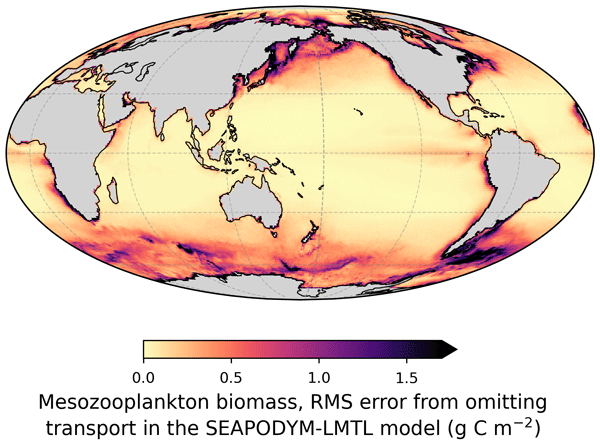
Jules Victor Lehodey, Alexandre Mignot, Alexandre Ganachaud, Sarah Albernhe, and Simon Nicol
Geosci. Model Dev., 19, 8349–8366, https://doi.org/10.5194/gmd-19-8349-2026, https://doi.org/10.5194/gmd-19-8349-2026, 2026
Short summary
Short summary
Marine zooplankton transfer energy from microscopic algae to fish and larger predators. Understanding their distribution helps predict how oceans respond to climate change. We developed SeapoPym, a freely available model that simulates zooplankton using ocean temperature and plant productivity. This tool lets scientists test biological hypotheses and estimate parameters from observations.
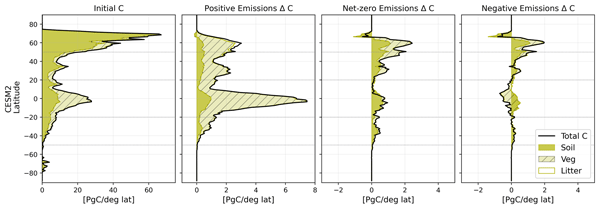
Abigail L. S. Swann, Charles D. Koven, Cristian Proistosecu, Rosie A. Fisher, Benjamin M. Sanderson, Victor Brovkin, Tomohiro Hajima, Chris D. Jones, Nancy Y. Kiang, David M. Lawrence, Spencer Liddicoat, Hannah Liddy, Anastasia Romanou, Roland Séférian, Lori T. Sentman, Norman J. Steinert, Jerry Tjiputra, and Tilo Ziehn
Earth Syst. Dynam., 17, 1237–1275, https://doi.org/10.5194/esd-17-1237-2026, https://doi.org/10.5194/esd-17-1237-2026, 2026
Short summary
Short summary
We analyzed simulations from Earth system models (ESM) with a constant rate of emissions, zero emissions, and negative emissions of CO2 to quantify the response of land carbon sinks. We found that under positive emissions vegetation in the tropics gained carbon. Under zero emissions and negative emissions most ESMs lost carbon from vegetation in the tropics but gained carbon in mid- and high-latitudes, mostly in soils. Our findings imply that tropical carbon is vulnerable under zero emissions.
Salem Ibrahim Salem, Andre Valente, Shubha Sathyendranath, Andrei Chuprin, Théo Renard, Jaime Pitarch, Ruth Airs, Moreno Ana, Maria-Manuel Angelico, David Antoine, Robert Arnone, Florinda Artuso, Paulo O. Oliveira, William Balch, Kathryn Barker, Ray Barlow, Simon Bélanger, Marco Bellacicco, Jean-François Berthon, Şükrü Beşiktepe, Francesco Bignami, Yngve Borsheim, Astrid Bracher, Federica Braga, Vittorio Brando, Robert J. W. Brewin, Vanda Brotas, Elisabetta Canuti, Francisco P. Chavez, Andrés Cianca, Hervé Claustre, Lesley Clementson, Simone Colella, Raul Costa, Cristina Nunes, Richard Crout, Emmanuel Devred, Annalisa Di Cicco, Federico Falcini, Ivan Farace, Afonso Ferreira, Scott Freeman, Robert Frouin, Carlos García-Soto, Isabella Giardina, Stuart W. Gibb, Arthur Gleason, Ralf Goericke, Richard Gould, Michael Grant, Nathalie Guillocheau, Hiroto Higa, Stanford B. Hooker, Chuamin Hu, Joji Ishizaka, Thomas Jackson, Mati Kahru, Milton Kampel, Bokyung Kim, Holger Klein, Piotr Kowalczuk, Susanne Kratzer, Raphael Kudela, Antonia Lai, Rosario Lavezza, Jesus Ledesma, Huiwon Lee, Steven Lohrenz, Hubert Loisel, Vivian Lutz, Antonio Mannino, Francesca Margiotta, Victor Martinez-Vicente, Salvatore Marullo, Luca Massi, Patricia Matrai, Atsushi Matsuoka, David McKee, Chiara Melillo, Carlos B. Mendes, Brian G. Mitchell, Tiffany Moisan, Enrique Montes, Frank Muller-Karger, Aimee Neeley, Michael Novak, Leonie O'Dowd, Michael Ondrusek, Emanuele Organelli, Heeyoon Park, Trevor Platt, Francesca Polonelli, Alex Poulton, Mariella Ragni, Michel Repecaud, Maurizio Ribera d’Alcalà, Tamara Rodriguez-Ramos, Rüdiger Röttgers, Manuel Ruiz-Villarreal, Michela Sammartino, Rosalia Santoleri, Gian Marco Scarpa, Thomas Schroeder, Valeria Segura, Timothy Smyth, Denise Smythe-Wright, Heidi M. Sosik, Joanna Stoń-Egiert, Malcolm Taberner, Jing Tan, Rob Thomas, Crystal Thomas, Gavin Tilstone, Andreia Tracana, Michael Twardowski, Vincenzo Vellucci, Gianluca Volpe, Kenneth Voss, Jeremy Werdell, Marcel Wernand, Bozena Wojtasiewicz, Simon Wright, Sunmi Yang, Giuseppe Zibordi, Maria Laura Zoffoli, and Steve Groom
Earth Syst. Sci. Data Discuss., https://doi.org/10.5194/essd-2026-539, https://doi.org/10.5194/essd-2026-539, 2026
Preprint under review for ESSD
Short summary
Short summary
This paper presents the fourth version of the ESA Ocean Colour Climate Change Initiative global in situ bio-optical database. The updated compilation combines observations from many international data sources collected between 1996 and 2025 and includes major expansions in coverage and variables. The dataset provides a consistent reference for validating satellite ocean-colour products and supports algorithm development and long-term climate studies.
Natalija Suhareva, Per Juel Hansen, Yuri Artioli, Sam Dupont, Kirsten Isensee, Steve Widdicombe, and Henrik Oksfeldt Enevoldsen
EGUsphere, https://doi.org/10.5194/egusphere-2026-4577, https://doi.org/10.5194/egusphere-2026-4577, 2026
This preprint is open for discussion and under review for Ocean Science (OS).
Short summary
Short summary
Understanding marine responses to warmer, more acidic oceans is difficult because ocean conditions often change continuously, while biological responses may shift between distinct periods. We addressed this challenge by developing a method. Tests with simulated biological records showed that it accurately estimated the specified rates and directions and detected shifts in most tested cases. The method can help monitoring programmes compare changes across species, ecosystems and locations.
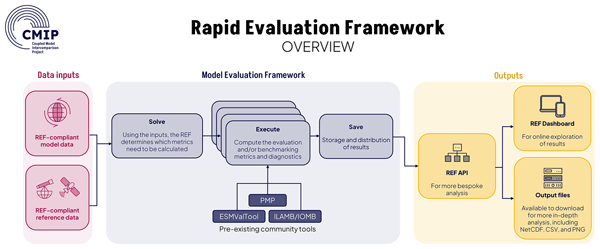
Forrest M. Hoffman, Birgit Hassler, Ranjini Swaminathan, Jared Lewis, Bouwe Andela, Nathan Collier, Dóra Hegedűs, Jiwoo Lee, Charlotte Pascoe, Mika Pflüger, Martina Stockhause, Paul Ullrich, Min Xu, Lisa Bock, Felicity Chun, Bettina K. Gier, Douglas I. Kelley, Axel Lauer, Julien Lenhardt, Manuel Schlund, Mohanan G. Sreeush, Katja Weigel, Ed Blockley, Rebecca Beadling, Romain Beucher, Demiso D. Dugassa, Valerio Lembo, Jianhua Lu, Swen Brands, Jerry Tjiputra, Elizaveta Malinina, Brian Medeiros, Enrico Scoccimarro, Jeremy Walton, Phil Kershaw, André Lanfer Marquez, Malcolm J. Roberts, Eleanor O'Rourke, Beth Dingley, Briony Turner, Helene Hewitt, and John P. Dunne
Geosci. Model Dev., 19, 7415–7455, https://doi.org/10.5194/gmd-19-7415-2026, https://doi.org/10.5194/gmd-19-7415-2026, 2026
Short summary
Short summary
The Rapid Evaluation Framework (REF) is a community-driven platform for benchmarking and performance assessment of Earth system models. Built upon four disparate community evaluation tools, the REF is designed to provide model-data comparisons for the Assessment Fast Track for the Seventh Phase of the Coupled Model Intercomparison Project. The REF will be run at the Earth System Grid Federation to enable model devleopers and scientists to quickly identify model biases and performance issues.
Elodie Gutknecht, Bruno Levier, Romain Escudier, Guillaume Reffray, Sylvain Cailleau, Stefano Ciavatta, Muriel Lux, Michelle Devlin, Lisette Enserink, Naomi Greenwood, and Hjalte Parner
State Planet Discuss., https://doi.org/10.5194/sp-2026-8, https://doi.org/10.5194/sp-2026-8, 2026
Preprint under review for SP
Short summary
Short summary
Declining oxygen levels near the seafloor can harm marine ecosystems. We investigated oxygen conditions across the North-East Atlantic shelf seas using ocean modelling. We found that low oxygen affects around one quarter of the shelf, with some areas experiencing severe oxygen loss, and that oxygen levels have decreased in recent decades beyond currently recognized vulnerable zones. These results highlight the need for continued monitoring and improved protection of marine environments.
Robert J. W. Brewin, Bethany Wilkinson, Xuerong Sun, Giorgio Dall'Olmo, Gavin H. Tilstone, Katharine R. Hendry, Sarah Breimann, Ian Brown, Angus Atkinson, Katrin Schmidt, Elisabetta Canuti, Meredith G. Meyer, Qi Zheng, Johannes J. Viljoen, Tom Bell, and Karen J. Heywood
EGUsphere, https://doi.org/10.5194/egusphere-2026-4398, https://doi.org/10.5194/egusphere-2026-4398, 2026
This preprint is open for discussion and under review for Ocean Science (OS).
Short summary
Short summary
Phytoplankton are the foundation of the Antarctic food web. Their size affects carbon storage in the ocean and energy transfer to krill, fish, and whales. Because the northwestern Weddell Sea is rarely sampled, little is known about phytoplankton size there. Using ship-based measurements and satellite data, we found medium-sized phytoplankton dominate rather than the smallest types that dominate warmer oceans. This provides a baseline for tracking ecosystem responses to climate change.
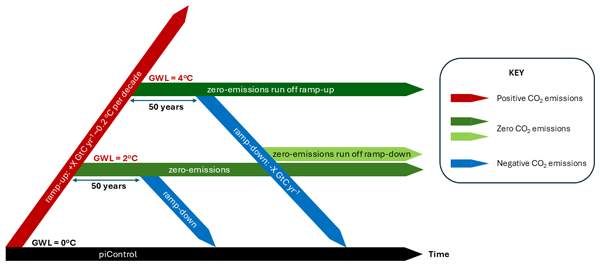
Colin Jones, Isaline Bossert, Donovan P. Dennis, Hazel A. Jeffery, Chris D. Jones, Torben Koenigk, Sina Loriani, Benjamin Sanderson, Roland Séférian, Klaus Wyser, Shuting Yang, Manabu Abe, Sebastian Bathiany, Pascale Braconnot, Victor Brovkin, Friedrich A. Burger, Patrica Cadule, Frederic S. Castruccio, Gokhan Danabasoglu, Andrea Dittus, Jonathan F. Donges, Friederike Fröb, Thomas L. Frölicher, Goran Georgievski, Chuncheng Guo, Aixue Hu, Peter Lawrence, Paul Lerner, José Licón-Saláiz, Bette Otto-Bliesner, Anastasia Romanou, Elena Shevliakova, Yona Silvy, Didier Swingedouw, Jerry Tjiputra, Jeremy Walton, Andy Wiltshire, Ricarda Winkelmann, Richard Wood, Tokuta Yokohata, and Tilo Ziehn
Geosci. Model Dev., 19, 6941–6966, https://doi.org/10.5194/gmd-19-6941-2026, https://doi.org/10.5194/gmd-19-6941-2026, 2026
Short summary
Short summary
We introduce a new Earth system model experiment protocol to help researchers understand how Earth might respond to positive, zero, and negative carbon emissions. This protocol enables different models to be compared following similar warming and cooling rates. Researchers use the models to explore how the Earth reacts to different climate futures, including the risk of tipping points being exceeded and whether changes can be reversed. The results will support improved long-term climate policy.
Jozef Skakala, Ieuan Higgs, and David Moffat
EGUsphere, https://doi.org/10.48550/arXiv.2606.27168, https://doi.org/10.48550/arXiv.2606.27168, 2026
Short summary
Short summary
Artificial intelligence (AI)-based forecasting is increasingly used in weather and ocean prediction. While most efforts focus on ocean physics, AI has strong potential for marine biogeochemistry, where models are computationally expensive and often biased. We show that AI-based emulators can deliver highly useful marine biogeochemistry forecasts across a wide range of timescales and produce outputs of varying complexity. They can also provide important insights into the emulated model behavior.
Vijith Vijayakumaran, Rebecca Millington, Jorn Bruggeman, Josefine Hahn, Helen Powley, Gennadi Lessin, Anja Lindenthal, Corinna Schrum, and Ute Daewel
EGUsphere, https://doi.org/10.5194/egusphere-2026-3078, https://doi.org/10.5194/egusphere-2026-3078, 2026
This preprint is open for discussion and under review for Geoscientific Model Development (GMD).
Short summary
Short summary
We present ECOSMO End-to-End v2.0, a set of fish and macrobenthos functional-group modules that can be two-way coupled to lower-trophic-level marine ecosystem models. Using a one-dimensional setup, we tested these plug-and-play modules coupled to three models used in the Copernicus Marine Service framework. Simulations show that macrobenthos increase bottom-layer nutrients and are essential for realistic fish production, while fish and macrobenthos strengthen top-down control on plankton.
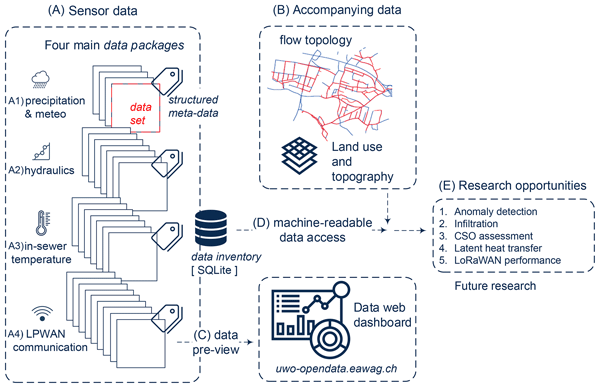
Frank Blumensaat, Simon Bloem, Christian Ebi, Andy Disch, Christian Förster, Max Maurer, Mayra Rodriguez, and Jörg Rieckermann
Earth Syst. Sci. Data, 18, 5187–5208, https://doi.org/10.5194/essd-18-5187-2026, https://doi.org/10.5194/essd-18-5187-2026, 2026
Short summary
Short summary
Detailed monitoring of urban drainage systems is challenging due to the hazardous environment, the required expertise and resources. The Fehraltorf Urban Water Observatory provides a unique dataset with 124 sensors observing rainfall-runoff, wastewater and in-sewer temperatures as well as wireless sensor network performance for three years. To enhance usability, systematic meta-data, sewer infrastructure, and a hydrodynamic model are included.
Aaron Alexander Naidoo-Bagwell, Fanny Monteiro, Nathan Briggs, and Stephanie Henson
EGUsphere, https://doi.org/10.5194/egusphere-2026-3278, https://doi.org/10.5194/egusphere-2026-3278, 2026
Short summary
Short summary
We use a particle model to see the impact of fragmentation on particle flux and size with depth. We find, to reproduce the initial decrease in particle size observations, fragmentation must be included in the model, thus there is a need for future modelling studies to include it. We mimic seasonal conditions, finding the contribution of fragmentation to flux reduction increases at periods of high flux, thus the role of fragmentation may vary regionally and rely on productivity.
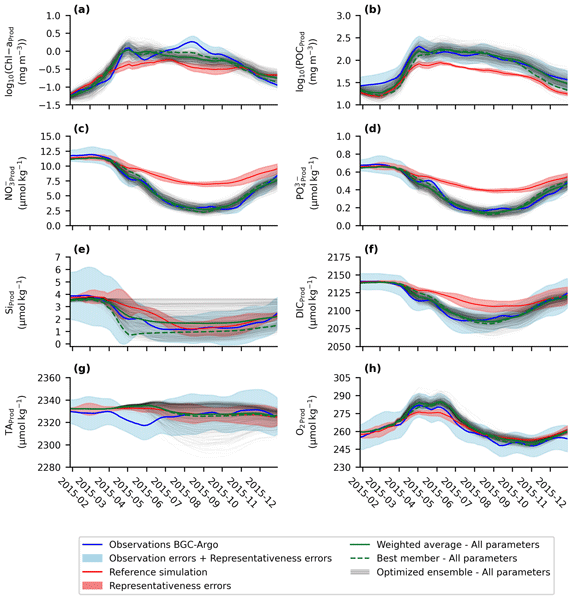
Quentin Hyvernat, Alexandre Mignot, Elodie Gutknecht, Giovanni Ruggiero, Coralie Perruche, Guillaume Samson, Raphaëlle Sauzède, Olivier Aumont, Hervé Claustre, and Fabrizio D'Ortenzio
Biogeosciences, 23, 4967–4998, https://doi.org/10.5194/bg-23-4967-2026, https://doi.org/10.5194/bg-23-4967-2026, 2026
Short summary
Short summary
We introduce an iterative Importance Sampling framework to optimize the Pelagic Interaction Scheme for Carbon and Ecosystem Studies (PISCES) model using 20 metrics from Biogeochemical-Argo data. Three strategies are compared: 29 main-effect, 66 including interaction effects, and all 95 parameters. All yield statistically indistinguishable skill gains, reducing error by 54–56 %. Optimizing all 95 parameters is recommended for comprehensive uncertainty quantification. The optimized set also improves skill in a three-dimensional regional simulation.
Dale Partridge, Deep Banerjee, David Ford, Ke Wang, Jozef Skákala, Juliane Wihsgott, Prathyush P. Menon, Susan Kay, Daniel Clewley, Andrea Rochner, Emma Sullivan, and Matthew Palmer
Ocean Sci., 22, 2083–2100, https://doi.org/10.5194/os-22-2083-2026, https://doi.org/10.5194/os-22-2083-2026, 2026
Short summary
Short summary
This study outlines the development and testing of a Digital Twin Ocean (DTO) framework, aimed at improving coastal ocean forecasts through the use of autonomous underwater gliders. A fleet of gliders were deployed in the western English Channel during August–September 2024 to collect measurements of temperature, salinity, chlorophyll and oxygen, aiming to track the movement of the harmful algal bloom Karenia mikimotoi.
Meredith G. Meyer, Robert J. W. Brewin, Xuerong Sun, Clara Manno, Florence Atherden, Sasha J. Kramer, Giorgio Dall'Olmo, and Karen J. Heywood
EGUsphere, https://doi.org/10.5194/egusphere-2026-3148, https://doi.org/10.5194/egusphere-2026-3148, 2026
Short summary
Short summary
Antarctica is a key region for carbon cycling and export. The efficiency of carbon export has been linked to the type of phytoplankton dominating the system. Our results suggest diatoms, haptophytes, and cryptophytes are present in all water column samples despite substantial physical differences between sampling locations. Our data shows a strong relationship between the proportion of diatoms, haptophytes, and cryptophytes relative to all other phytoplankton and the magnitude of carbon flux.
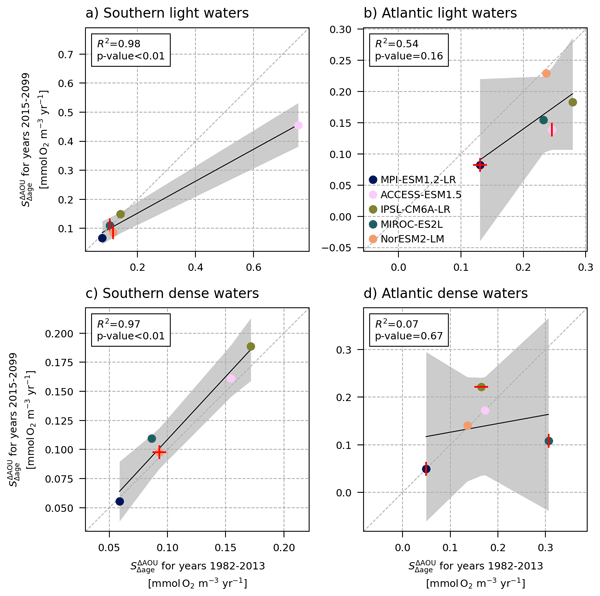
Damien Couespel, Xabier Davila, Nadine Goris, Emil Jeansson, Siv K. Lauvset, and Jerry Tjiputra
Biogeosciences, 23, 3433–3466, https://doi.org/10.5194/bg-23-3433-2026, https://doi.org/10.5194/bg-23-3433-2026, 2026
Short summary
Short summary
Remineralised carbon storage is projected to increase along the 21st century, but the magnitude of increase varies depending on the Earth system models. To constrain projections, we explore the relationship between remineralised carbon and deep ocean circulation. We show that the sensitivity of remineralised carbon to circulation slowdown varies considerably between models. More observational data and a larger model ensemble is needed to constrain projections of remineralised carbon storage.
Benjamin M. Sanderson, Marit Sandstad, Alejandro Romero-Prieto, Stuart Jenkins, Charles Koven, Glen Peters, Roland Séfèrian, Andrew H. MacDougall, Ashwin Seshadri, Victor Brovkin, John Dunne, Abigail L. S. Swann, Torben Koenigk, Rosie A. Fisher, David Hohn, Tatiana Ilyina, Chris D. Jones, Hongmei Li, Peter Lawrence, Spencer Liddicoat, Nadine Mengis, Anastasia Romanou, Lori T. Sentman, Chris Smith, Norman J. Steinert, Jerry Tjiputra, and Tilo Ziehn
EGUsphere, https://doi.org/10.5194/egusphere-2026-1875, https://doi.org/10.5194/egusphere-2026-1875, 2026
Short summary
Short summary
When humanity stops emitting carbon dioxide, will temperatures keep rising, stabilize, or fall? Our study reveals in most models, temperatures remain nearly stable, but this hides a balance between the warming in response to radiation imbalance, and the cooling due to uptake of carbon in the land and ocean. Understanding this balance helps refine how much more CO2 we can safely emit.
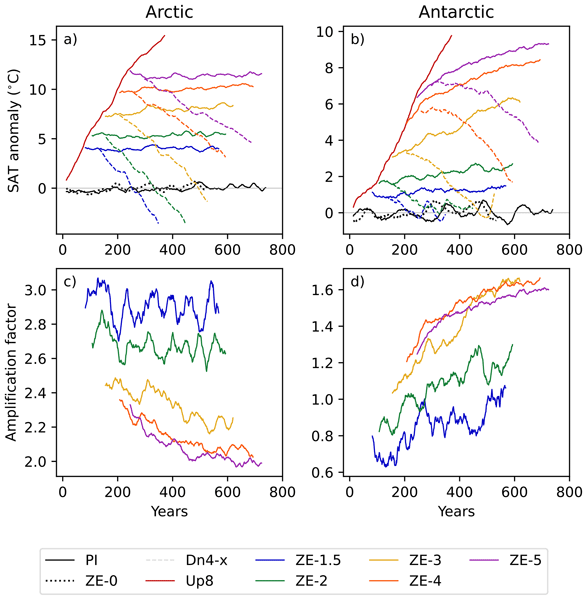
Robin S. Smith, Tarkan A. Bilge, Thomas J. Bracegirdle, Paul R. Holland, Till Kuhlbrodt, Charlotte Lang, Spencer Liddicoat, Tom Mitcham, Jane Mulcahy, Kaitlin A. Naughten, Andrew Orr, Julien Palmieri, Antony J. Payne, Steven Rumbold, Marc Stringer, Ranjini Swaminathan, Sarah Taylor, Jeremy Walton, and Colin Jones
Earth Syst. Dynam., 17, 475–493, https://doi.org/10.5194/esd-17-475-2026, https://doi.org/10.5194/esd-17-475-2026, 2026
Short summary
Short summary
There is a dangerous amount of uncertainty in our predictions of climate change in polar regions because some of feedbacks that might lead to changes that are too rapid for us to adapt to, or that cannot be reversed. We have run a set of simulations with a state-of-the-art Earth System Model that helps improve our understanding of how climate in these regions might change. Some of the aspects we investigate are reversible but many are not, especially those affecting ice sheets and sea level.
Jann Paul Mattern, Yuichiro Takeshita, Carlos Rocha, and Christopher A. Edwards
Biogeosciences, 23, 2621–2639, https://doi.org/10.5194/bg-23-2621-2026, https://doi.org/10.5194/bg-23-2621-2026, 2026
Short summary
Short summary
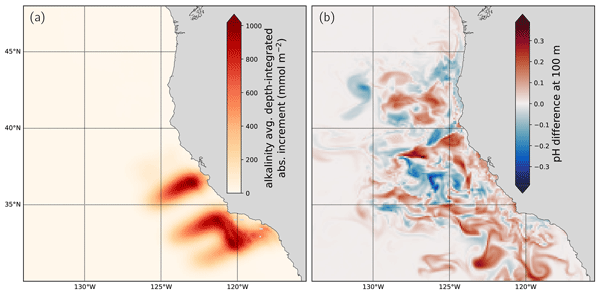
We improve coastal ocean carbonate system estimates by assimilating glider pH and alkalinity data into a regional biogeochemical model. Joint assimilation with physical observations successfully improves pH estimates while maintaining physical estimates. A hybrid approach combining dynamical models with statistical methods produces accurate pH estimates without requiring biogeochemical models, offering an alternative solution for ocean acidification monitoring.
Gabriela Martinez Balbontin, Julien Jouanno, Rachid Benshila, Julien Lamouroux, Coralie Perruche, and Stefano Ciavatta
Biogeosciences, 23, 2601–2620, https://doi.org/10.5194/bg-23-2601-2026, https://doi.org/10.5194/bg-23-2601-2026, 2026
Short summary
Short summary
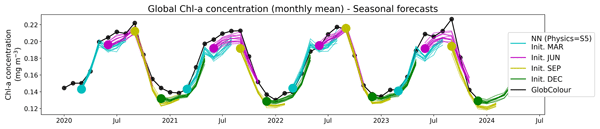
This study uses machine learning to predict global sea surface chlorophyll a, which is important for monitoring marine ecosystems and the carbon cycle. Using forecasts of sea surface temperature, salinity, height, and mixed layer depth, we generate global predictions up to six months ahead in just minutes. Our approach matches state-of-the-art numerical methods while being faster and more resource-efficient.
Joost de Vries, Fanny M. Monteiro, Alex J. Poulton, Nicola A. Wiseman, and Levi J. Wolf
EGUsphere, https://doi.org/10.1101/2025.09.11.675535, https://doi.org/10.1101/2025.09.11.675535, 2026
Short summary
Short summary
Calcifying phytoplankton ('coccolithophores') are a diverse group of organisms which play a key role in the ocean's carbon cycle. Despite the diversity of these organisms, they are generally viewed as a single group with a uniform response to climate change. Here we show using global machine learning stock estimates that doing so risks biasing our understanding of the role of these organisms in the carbon cycle and their response to environmental changes.
Markus Adloff, Frerk Pöppelmeier, Ashley Dinauer, Charlotte Laufkötter, and Fortunat Joos
EGUsphere, https://doi.org/10.5194/egusphere-2026-275, https://doi.org/10.5194/egusphere-2026-275, 2026
Short summary
Short summary
Carbon cycle models need to account for the recycling of marine particulate matter is recycled in the ocean to simulate marine biogeochemistry. Here, we show that a more complex representation than often-employed static exponential remineralisation profiles better captures key features of the marine biogeochemistry of a glacial ocean and alters the sensitivity of the marine carbon sink and marine oxygenation to warming.
Cecilia Chavana-Bryant, Phil Wilkes, Wanxin Yang, Andrew Burt, Peter Vines, Amy C. Bennett, Georgia C. Pickavance, Declan L. M. Cooper, Simon L. Lewis, Oliver L. Phillips, Benjamin Brede, Alvaro Lau, Martin Herold, Iain M. McNicol, Edward T. A. Mitchard, David A. Coomes, Toby D. Jackson, Löic Makaga, Heddy O. Milamizokou Napo, Alfred Ngomanda, Stephan Ntie, Vincent Medjibe, Pacôme Dimbonda, Luna Soenens, Virginie Daelemans, Laetitia Proux, Reuben Nilus, Nicolas Labrière, Kathryn Jeffery, David F. R. P. Burslem, Dan Clewley, David Moffat, Lan Qie, Harm Bartholomeus, Gregoire Vincent, Nicolas Barbier, Geraldine Derroire, Katharine Abernethy, Klaus Scipal, and Mathias Disney
Earth Syst. Sci. Data, 18, 1243–1274, https://doi.org/10.5194/essd-18-1243-2026, https://doi.org/10.5194/essd-18-1243-2026, 2026
Short summary
Short summary
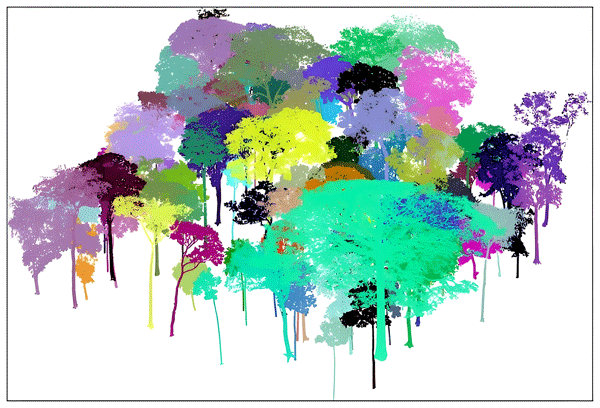
The ForestScan project provides a comprehensive set of datasets of tropical forest 3D structural measurements using terrestrial, unpiloted aerial vehicle and aerial laser scanning, plus tree census data. Collected at three sites in French Guiana, Gabon, and Malaysia, these datasets are crucial for calibrating and validating earth observation-derived forest biomass estimates, therefore, expanding and enhancing their use, and aiding global conservation efforts.

Raphaël Savelli, Dustin Carroll, Dimitris Menemenlis, Jonathan M. Lauderdale, Clément Bertin, Stephanie Dutkiewicz, Manfredi Manizza, A. Anthony Bloom, Karel Castro-Morales, Charles E. Miller, Marc Simard, Kevin W. Bowman, and Hong Zhang
Geosci. Model Dev., 19, 867–885, https://doi.org/10.5194/gmd-19-867-2026, https://doi.org/10.5194/gmd-19-867-2026, 2026
Short summary
Short summary
Accounting for carbon and nutrients in rivers is essential for resolving carbon dioxide (CO2) exchanges between the ocean and the atmosphere. In this study, we add the effect of present-day rivers to a pioneering global-ocean biogeochemistry model. This study highlights the challenge for global ocean numerical models to cover the complexity of the flow of water and carbon across the Land-to-Ocean Aquatic Continuum.
Daniel J. Ford, Gemma Kulk, Shubha Sathyendranath, and Jamie D. Shutler
Earth Syst. Sci. Data, 18, 569–584, https://doi.org/10.5194/essd-18-569-2026, https://doi.org/10.5194/essd-18-569-2026, 2026
Short summary
Short summary
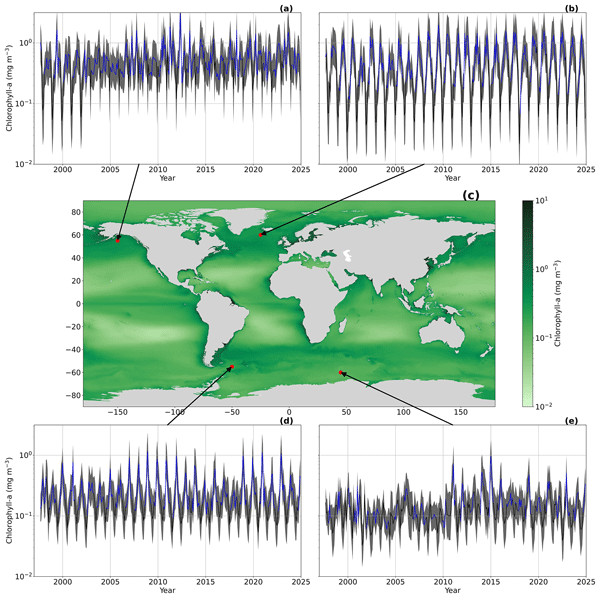
Chlorophyll a is routinely monitored using ocean colour satellites, however, these data records have gaps. Here we present a methodology to provide a spatially and temporally complete chlorophyll-a record, using Biogeochemical Argo floats as a constraint on wintertime chlorophyll-a, and a statistical kriging approach to fill cloud gaps. Thereby, providing a complete record at monthly 0.25° resolution between 1997 and 2024, consistent to the underlying climate data record.
Žarko Kovač, Marija Bačeković Koloper, Shubha Sathyendranath, Gemma Kulk, Heather Bouman, and Leon Ćatipović
Earth Syst. Sci. Data Discuss., https://doi.org/10.5194/essd-2025-820, https://doi.org/10.5194/essd-2025-820, 2026
Revised manuscript under review for ESSD
Short summary
Short summary
We provide a new global dataset of photosynthesis parameters estimated from more than 6000 in situ primary production profiles. Using an inverse modelling approach, we recover 4160 parameter pairs that expand global coverage and support improved marine primary production modelling. The dataset is publicly available through Zenodo repository.
Ieuan Higgs, Ross Bannister, Jozef Skákala, Alberto Carrassi, and Stefano Ciavatta
Biogeosciences, 23, 315–344, https://doi.org/10.5194/bg-23-315-2026, https://doi.org/10.5194/bg-23-315-2026, 2026
Short summary
Short summary
We explored how machine learning can improve computer models that simulate ocean ecosystems. These models help us understand how the ocean works, but they often struggle due to limited observations and complex processes. Our approach uses machine learning to better connect the parts of the system we can observe with those we cannot. This leads to more accurate and efficient predictions, offering a promising way to improve future ocean monitoring and forecasting tools.
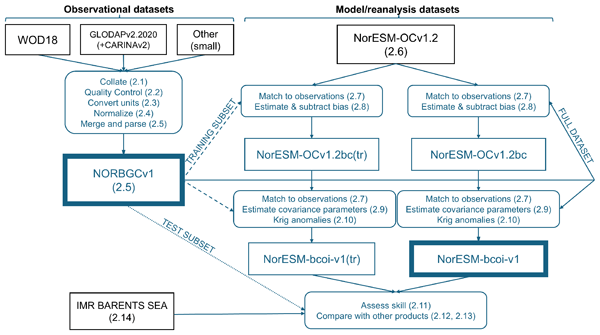
Philip J. Wallhead, Jörg Schwinger, Jerry Tjiputra, Trond Kristiansen, and Richard G. J. Bellerby
Earth Syst. Sci. Data, 17, 6763–6805, https://doi.org/10.5194/essd-17-6763-2025, https://doi.org/10.5194/essd-17-6763-2025, 2025
Short summary
Short summary
We developed a novel method to combine ocean data from observations and models, and applied it to produce gridded estimates of nutrients, oxygen, dissolved inorganic carbon and total alkalinity concentrations at latitudes >40° N and years 1980–2020. The new estimates showed improved accuracy and coverage relative to previous estimates, but highlighted remaining uncertainty in some poorly sampled regions. The work was largely motivated by a need for accurate input data for regional ocean models.
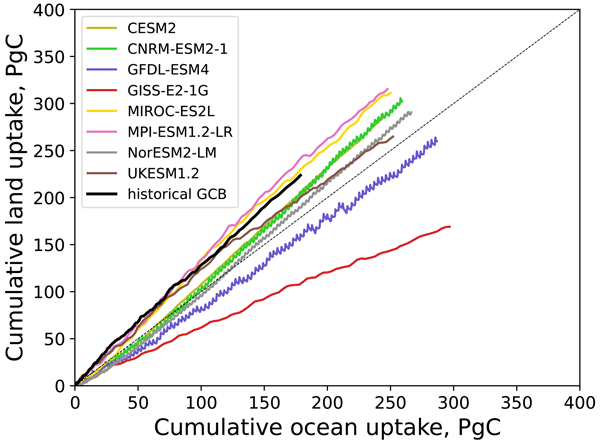
Victor Brovkin, Benjamin M. Sanderson, Noel G. Brizuela, Tomohiro Hajima, Tatiana Ilyina, Chris D. Jones, Charles Koven, David Lawrence, Peter Lawrence, Hongmei Li, Spencer Liddcoat, Anastasia Romanou, Roland Séférian, Lori T. Sentman, Abigail L. S. Swann, Jerry Tjiputra, Tilo Ziehn, and Alexander J. Winkler
Earth Syst. Dynam., 16, 2021–2034, https://doi.org/10.5194/esd-16-2021-2025, https://doi.org/10.5194/esd-16-2021-2025, 2025
Short summary
Short summary
Idealized experiments with Earth system models provide a basis for understanding the response of the carbon cycle to emissions. We show that most models exhibit a quasi-linear relationship between cumulative carbon uptake on land and in the ocean and hypothesize that this relationship does not depend on emission pathways. We reduce the coupled system to only one differential equation, which represents a powerful simplification of the Earth system dynamics as a function of fossil fuel emissions.
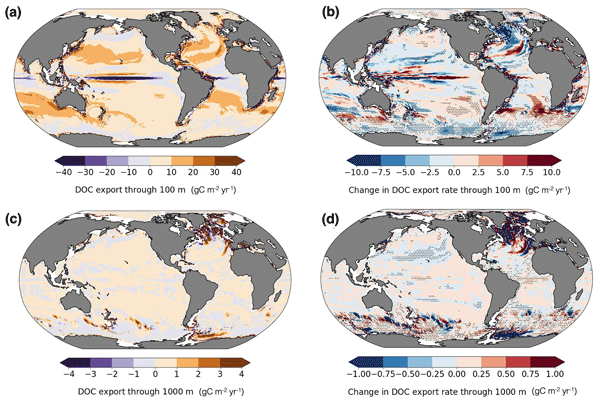
Lana Flanjak, Aaron Wienkers, and Charlotte Laufkötter
Biogeosciences, 22, 6877–6894, https://doi.org/10.5194/bg-22-6877-2025, https://doi.org/10.5194/bg-22-6877-2025, 2025
Short summary
Short summary
We used a global ocean model to explore how dissolved organic carbon is produced and transported in the ocean, both under present-day and future climate conditions. Our results suggest that climate change will reduce the export of this carbon to deeper layers due to weaker ocean circulation and mixing. This highlights the importance of physical transport in shaping ocean carbon dynamics and its sensitivity to a warming climate.
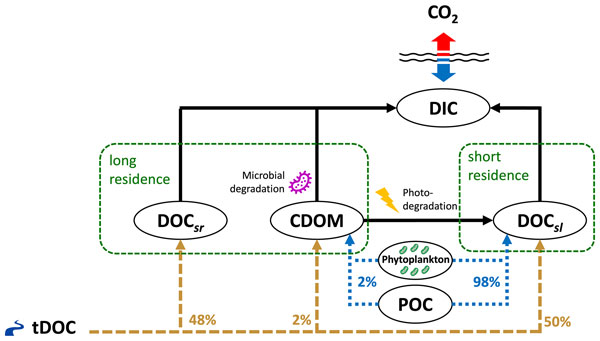
Clément Bertin, Vincent Le Fouest, Dustin Carroll, Stephanie Dutkiewicz, Dimitris Menemenlis, Atsushi Matsuoka, Manfredi Manizza, and Charles E. Miller
Biogeosciences, 22, 6607–6629, https://doi.org/10.5194/bg-22-6607-2025, https://doi.org/10.5194/bg-22-6607-2025, 2025
Short summary
Short summary
We adjusted a model of the Mackenzie River region to account for the riverine export of organic matter that affects light in the water. We show that such export causes a delay in the phytoplankton growth by two weeks and raises the water surface temperature by 1.7 °C. We found that temperature increase turns this coastal region from a sink of carbon dioxide to an emitter. Our findings suggest that rising exports of organic matter can significantly affect the carbon cycle in Arctic coastal areas.
Lise Seland Graff, Jerry Tjiputra, Ada Gjermundsen, Andreas Born, Jens Boldingh Debernard, Heiko Goelzer, Yan-Chun He, Petra Margaretha Langebroek, Aleksi Nummelin, Dirk Olivié, Øyvind Seland, Trude Storelvmo, Mats Bentsen, Chuncheng Guo, Andrea Rosendahl, Dandan Tao, Thomas Toniazzo, Camille Li, Stephen Outten, and Michael Schulz
Earth Syst. Dynam., 16, 1671–1698, https://doi.org/10.5194/esd-16-1671-2025, https://doi.org/10.5194/esd-16-1671-2025, 2025
Short summary
Short summary
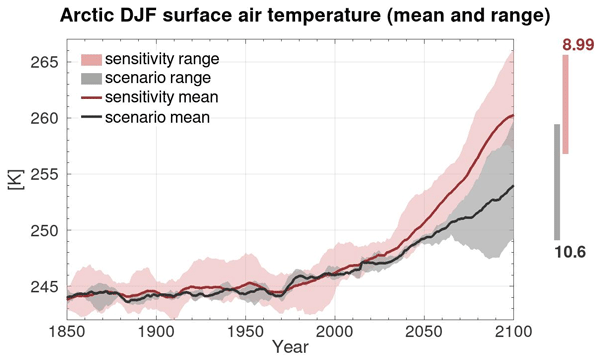
The magnitude of future Arctic amplification is highly uncertain. Using the Norwegian Earth System Model, we explore the effect of improving the representation of clouds, ocean eddies, the Greenland ice sheet, sea ice, and ozone on the projected Arctic winter warming in a coordinated experiment set. These improvements all lead to enhanced projected Arctic warming, with the largest changes found in the sea ice retreat regions and the largest uncertainty found on the Atlantic side.
Benjamin M. Sanderson, Victor Brovkin, Rosie A. Fisher, David Hohn, Tatiana Ilyina, Chris D. Jones, Torben Koenigk, Charles Koven, Hongmei Li, David M. Lawrence, Peter Lawrence, Spencer Liddicoat, Andrew H. MacDougall, Nadine Mengis, Zebedee Nicholls, Eleanor O'Rourke, Anastasia Romanou, Marit Sandstad, Jörg Schwinger, Roland Séférian, Lori T. Sentman, Isla R. Simpson, Chris Smith, Norman J. Steinert, Abigail L. S. Swann, Jerry Tjiputra, and Tilo Ziehn
Geosci. Model Dev., 18, 5699–5724, https://doi.org/10.5194/gmd-18-5699-2025, https://doi.org/10.5194/gmd-18-5699-2025, 2025
Short summary
Short summary
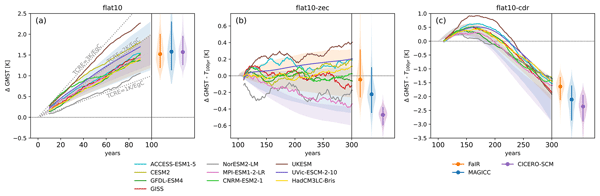
This study investigates how climate models warm in response to simplified carbon emissions trajectories, refining the understanding of climate reversibility and commitment. Metrics are defined for warming response to cumulative emissions and for the cessation of emissions or ramp-down to net-zero and net-negative levels. Results indicate that previous concentration-driven experiments may have overstated the Zero Emissions Commitment due to emissions rates exceeding historical levels.
Jozef Skákala, David Ford, Keith Haines, Amos Lawless, Matthew J. Martin, Philip Browne, Marcin Chrust, Stefano Ciavatta, Alison Fowler, Daniel Lea, Matthew Palmer, Andrea Rochner, Jennifer Waters, Hao Zuo, Deep S. Banerjee, Mike Bell, Davi M. Carneiro, Yumeng Chen, Susan Kay, Dale Partridge, Martin Price, Richard Renshaw, Georgy Shapiro, and James While
Ocean Sci., 21, 1709–1734, https://doi.org/10.5194/os-21-1709-2025, https://doi.org/10.5194/os-21-1709-2025, 2025
Short summary
Short summary
UK marine data assimilation (MDA) involves a closely collaborating research community. In this paper, we offer both an overview of the state of the art and a vision for the future across all of the main areas of UK MDA, ranging from physics to biogeochemistry to coupled DA. We discuss the current UK MDA stakeholder applications, highlight theoretical developments needed to advance our systems, and reflect upon upcoming opportunities with respect to hardware and observational missions.
Deep S. Banerjee and Jozef Skákala
Biogeosciences, 22, 3769–3784, https://doi.org/10.5194/bg-22-3769-2025, https://doi.org/10.5194/bg-22-3769-2025, 2025
Short summary
Short summary
Nitrate is a crucial nutrient in oceans, whose excess can trigger uncontrolled algae growth that damages marine ecosystems. We used machine learning to generate skilled, gap-free, bi-decadal surface nitrate data from sparse observations, revealing areas on the North-West European Shelf that are more vulnerable to excess algae growth if nutrient pollution occurs. We also looked at bi-decadal trends in coastal nitrate and the impact of winter nitrate on spring phytoplankton blooms.
Kirsty M. Edgar, Maria Grigoratou, Fanny M. Monteiro, Ruby Barrett, Rui Ying, and Daniela N. Schmidt
Biogeosciences, 22, 3463–3483, https://doi.org/10.5194/bg-22-3463-2025, https://doi.org/10.5194/bg-22-3463-2025, 2025
Short summary
Short summary
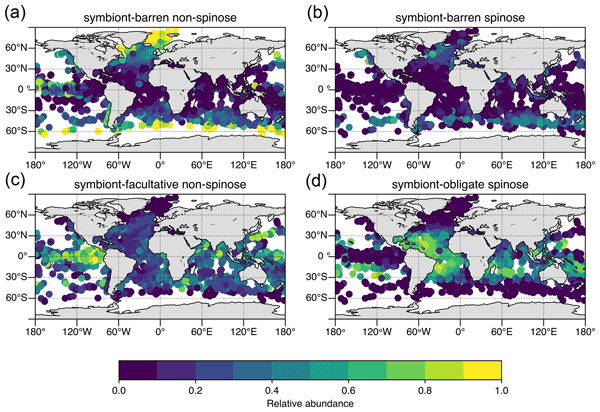
Planktic foraminifera are microscopic marine organisms whose calcium carbonate shells provide valuable insights into past ocean conditions. A promising means of understanding foraminiferal ecology and their environmental interactions is to constrain their key functional traits relating to feeding, symbioses, motility, calcification, and reproduction. Here we review what we know of their functional traits, key gaps in our understanding, and suggestions on how to fill them.
Samantha Siedlecki, Stanley Nmor, Gennadi Lessin, Kelly Kearney, Subhadeep Rakshit, Colleen Petrik, Jessica Luo, Cristina Schultz, Dalton Sasaki, Kayla Gillen, Anh Pham, Christopher Somes, Damian Brady, Jeremy Testa, Christophe Rabouille, Isa Elegbede, and Olivier Sulpis
EGUsphere, https://doi.org/10.5194/egusphere-2025-1846, https://doi.org/10.5194/egusphere-2025-1846, 2025
Preprint archived
Short summary
Short summary
Benthic biogeochemical models are essential for simulating seafloor carbon cycling and climate feedbacks, yet vary widely in structure and assumptions. This paper introduces SedBGC_MIP, a community initiative to compare existing models, refine key processes, and assess uncertainty. We highlight discrepancies through case studies and introduce needs including observational benchmarks. Ultimately, we seek to improve climate and resource projections.
Qi Zheng, Johannes J. Viljoen, Xuerong Sun, Žarko Kovač, Shubha Sathyendranath, and Robert J. W. Brewin
Biogeosciences, 22, 3253–3278, https://doi.org/10.5194/bg-22-3253-2025, https://doi.org/10.5194/bg-22-3253-2025, 2025
Short summary
Short summary
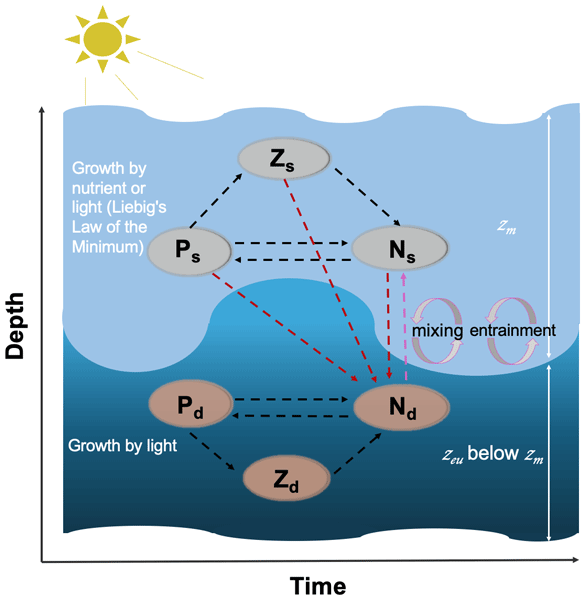
Phytoplankton contribute to half of Earth’s primary production, but not a lot is known about subsurface phytoplankton, living at the base of the sunlit ocean. We develop a two-layered box model to simulate phytoplankton seasonal and interannual variations in different depth layers of the ocean. Our model captures seasonal and long-term trends of the two layers, explaining how they respond to a warming ocean, furthering our understanding of how phytoplankton are responding to climate change.
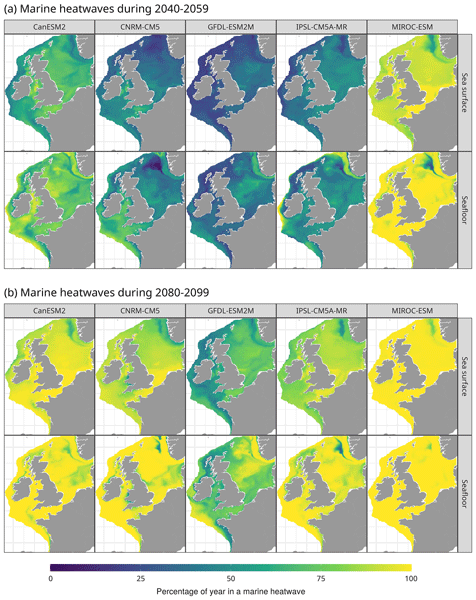
Robert J. Wilson, Yuri Artioli, Giovanni Galli, James Harle, Jason Holt, Ana M. Queirós, and Sarah Wakelin
Ocean Sci., 21, 1255–1270, https://doi.org/10.5194/os-21-1255-2025, https://doi.org/10.5194/os-21-1255-2025, 2025
Short summary
Short summary
Marine heatwaves are of growing concern around the world. We use a state-of-the-art ensemble of downscaled climate models to project how often heatwaves will occur in the future across northwestern Europe under a high-emission scenario. The projections show that, without emission reductions, heatwaves will occur more than half of the time in the future. We show that the seafloor is expected to experience much more frequent heatwaves than the sea surface in the future.
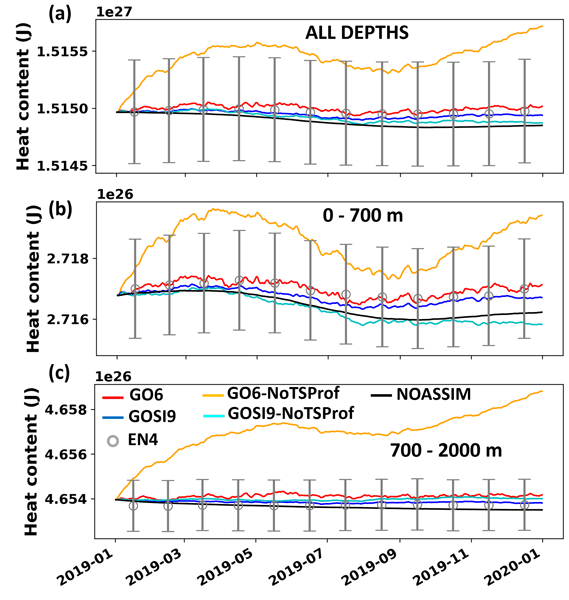
Davi Mignac, Jennifer Waters, Daniel J. Lea, Matthew J. Martin, James While, Anthony T. Weaver, Arthur Vidard, Catherine Guiavarc'h, Dave Storkey, David Ford, Edward W. Blockley, Jonathan Baker, Keith Haines, Martin R. Price, Michael J. Bell, and Richard Renshaw
Geosci. Model Dev., 18, 3405–3425, https://doi.org/10.5194/gmd-18-3405-2025, https://doi.org/10.5194/gmd-18-3405-2025, 2025
Short summary
Short summary
We describe major improvements of the Met Office's global ocean–sea ice forecasting system. The models and the way observations are used to improve the forecasts were changed, which led to a significant error reduction of 1 d forecasts. The new system performance in past conditions, where subsurface observations are scarce, was improved with more consistent ocean heat content estimates. The new system will be of better use for climate studies and will provide improved forecasts for end users.

Gianpiero Cossarini, Andrew Moore, Stefano Ciavatta, and Katja Fennel
State Planet, 5-opsr, 12, https://doi.org/10.5194/sp-5-opsr-12-2025, https://doi.org/10.5194/sp-5-opsr-12-2025, 2025
Short summary
Short summary
Marine biogeochemistry refers to the cycling of chemical elements resulting from physical transport, chemical reaction, uptake, and processing by living organisms. Biogeochemical models can have a wide range of complexity, from a single nutrient to fully explicit representations of multiple nutrients, trophic levels, and functional groups. Uncertainty sources are the lack of knowledge about the parameterizations, the initial and boundary conditions, and the lack of observations.
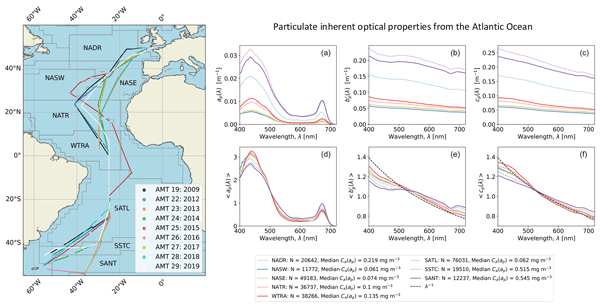
Thomas M. Jordan, Giorgio Dall'Olmo, Gavin Tilstone, Robert J. W. Brewin, Francesco Nencioli, Ruth Airs, Crystal S. Thomas, and Louise Schlüter
Earth Syst. Sci. Data, 17, 493–516, https://doi.org/10.5194/essd-17-493-2025, https://doi.org/10.5194/essd-17-493-2025, 2025
Short summary
Short summary
We present a compilation of water optical properties and phytoplankton pigments from the surface of the Atlantic Ocean collected during nine cruises between 2009 and 2019. We derive continuous Chlorophyll a concentrations (a biomass proxy) from water absorption. We then illustrate geographical variations and relationships for water optical properties, Chlorophyll a, and other pigments. The dataset will be useful to researchers in ocean optics, remote sensing, ecology, and biogeochemistry.
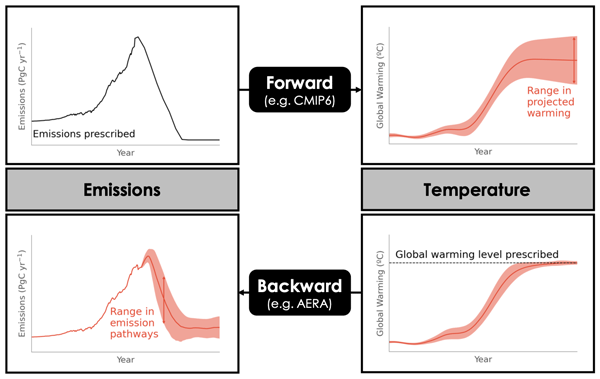
Yona Silvy, Thomas L. Frölicher, Jens Terhaar, Fortunat Joos, Friedrich A. Burger, Fabrice Lacroix, Myles Allen, Raffaele Bernardello, Laurent Bopp, Victor Brovkin, Jonathan R. Buzan, Patricia Cadule, Martin Dix, John Dunne, Pierre Friedlingstein, Goran Georgievski, Tomohiro Hajima, Stuart Jenkins, Michio Kawamiya, Nancy Y. Kiang, Vladimir Lapin, Donghyun Lee, Paul Lerner, Nadine Mengis, Estela A. Monteiro, David Paynter, Glen P. Peters, Anastasia Romanou, Jörg Schwinger, Sarah Sparrow, Eric Stofferahn, Jerry Tjiputra, Etienne Tourigny, and Tilo Ziehn
Earth Syst. Dynam., 15, 1591–1628, https://doi.org/10.5194/esd-15-1591-2024, https://doi.org/10.5194/esd-15-1591-2024, 2024
Short summary
Short summary
The adaptive emission reduction approach is applied with Earth system models to generate temperature stabilization simulations. These simulations provide compatible emission pathways and budgets for a given warming level, uncovering uncertainty ranges previously missing in the Coupled Model Intercomparison Project scenarios. These target-based emission-driven simulations offer a more coherent assessment across models for studying both the carbon cycle and its impacts under climate stabilization.
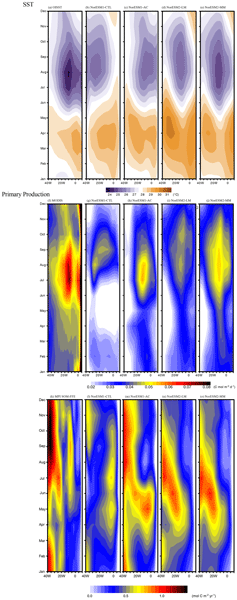
Shunya Koseki, Lander R. Crespo, Jerry Tjiputra, Filippa Fransner, Noel S. Keenlyside, and David Rivas
Biogeosciences, 21, 4149–4168, https://doi.org/10.5194/bg-21-4149-2024, https://doi.org/10.5194/bg-21-4149-2024, 2024
Short summary
Short summary
We investigated how the physical biases of an Earth system model influence the marine biogeochemical processes in the tropical Atlantic. With four different configurations of the model, we have shown that the versions with better SST reproduction tend to better represent the primary production and air–sea CO2 flux in terms of climatology, seasonal cycle, and response to climate variability.
Jorn Bruggeman, Karsten Bolding, Lars Nerger, Anna Teruzzi, Simone Spada, Jozef Skákala, and Stefano Ciavatta
Geosci. Model Dev., 17, 5619–5639, https://doi.org/10.5194/gmd-17-5619-2024, https://doi.org/10.5194/gmd-17-5619-2024, 2024
Short summary
Short summary
To understand and predict the ocean’s capacity for carbon sequestration, its ability to supply food, and its response to climate change, we need the best possible estimate of its physical and biogeochemical properties. This is obtained through data assimilation which blends numerical models and observations. We present the Ensemble and Assimilation Tool (EAT), a flexible and efficient test bed that allows any scientist to explore and further develop the state of the art in data assimilation.
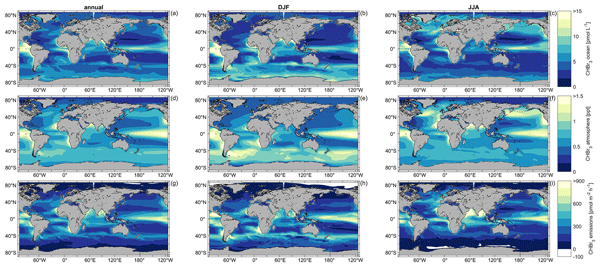
Dennis Booge, Jerry F. Tjiputra, Dirk J. L. Olivié, Birgit Quack, and Kirstin Krüger
Earth Syst. Dynam., 15, 801–816, https://doi.org/10.5194/esd-15-801-2024, https://doi.org/10.5194/esd-15-801-2024, 2024
Short summary
Short summary
Oceanic bromoform, produced by algae, is an important precursor of atmospheric bromine, highlighting the importance of implementing these emissions in climate models. The simulated mean oceanic concentrations align well with observations, while the mean atmospheric values are lower than the observed ones. Modelled annual mean emissions mostly occur from the sea to the air and are driven by oceanic concentrations, sea surface temperature, and wind speed, which depend on season and location.
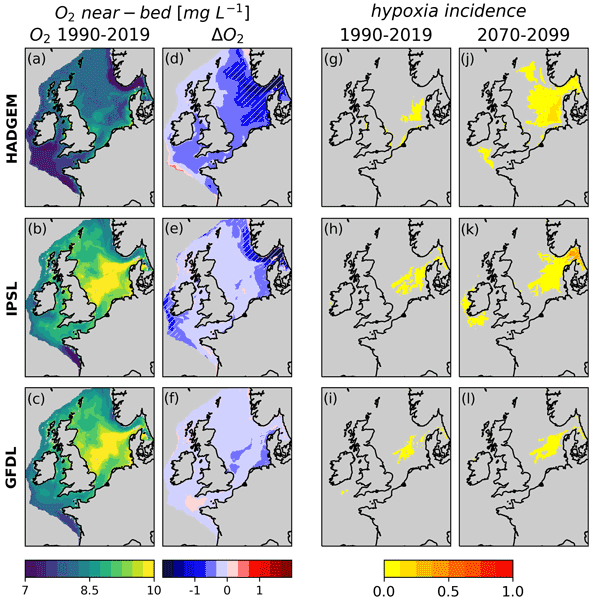
Giovanni Galli, Sarah Wakelin, James Harle, Jason Holt, and Yuri Artioli
Biogeosciences, 21, 2143–2158, https://doi.org/10.5194/bg-21-2143-2024, https://doi.org/10.5194/bg-21-2143-2024, 2024
Short summary
Short summary
This work shows that, under a high-emission scenario, oxygen concentration in deep water of parts of the North Sea and Celtic Sea can become critically low (hypoxia) towards the end of this century. The extent and frequency of hypoxia depends on the intensity of climate change projected by different climate models. This is the result of a complex combination of factors like warming, increase in stratification, changes in the currents and changes in biological processes.
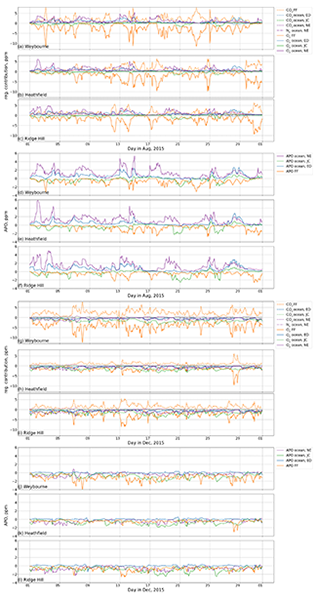
Hannah Chawner, Eric Saboya, Karina E. Adcock, Tim Arnold, Yuri Artioli, Caroline Dylag, Grant L. Forster, Anita Ganesan, Heather Graven, Gennadi Lessin, Peter Levy, Ingrid T. Luijkx, Alistair Manning, Penelope A. Pickers, Chris Rennick, Christian Rödenbeck, and Matthew Rigby
Atmos. Chem. Phys., 24, 4231–4252, https://doi.org/10.5194/acp-24-4231-2024, https://doi.org/10.5194/acp-24-4231-2024, 2024
Short summary
Short summary
The quantity of atmospheric potential oxygen (APO), derived from coincident measurements of carbon dioxide (CO2) and oxygen (O2), has been proposed as a tracer for fossil fuel CO2 emissions. In this model sensitivity study, we examine the use of APO for this purpose in the UK and compare our model to observations. We find that our model simulations are most sensitive to uncertainties relating to ocean fluxes and boundary conditions.
Joost de Vries, Fanny Monteiro, Gerald Langer, Colin Brownlee, and Glen Wheeler
Biogeosciences, 21, 1707–1727, https://doi.org/10.5194/bg-21-1707-2024, https://doi.org/10.5194/bg-21-1707-2024, 2024
Short summary
Short summary
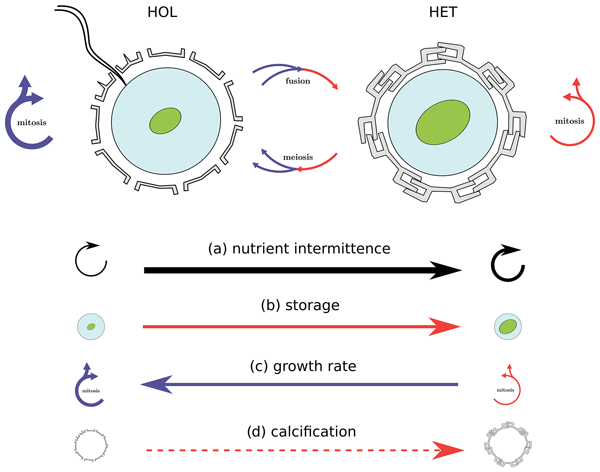
Calcifying phytoplankton (coccolithophores) utilize a life cycle in which they can grow and divide into two different phases. These two phases (HET and HOL) vary in terms of their physiology and distributions, with many unknowns about what the key differences are. Using a combination of lab experiments and model simulations, we find that nutrient storage is a critical difference between the two phases and that this difference allows them to inhabit different nitrogen input regimes.
Aaron A. Naidoo-Bagwell, Fanny M. Monteiro, Katharine R. Hendry, Scott Burgan, Jamie D. Wilson, Ben A. Ward, Andy Ridgwell, and Daniel J. Conley
Geosci. Model Dev., 17, 1729–1748, https://doi.org/10.5194/gmd-17-1729-2024, https://doi.org/10.5194/gmd-17-1729-2024, 2024
Short summary
Short summary
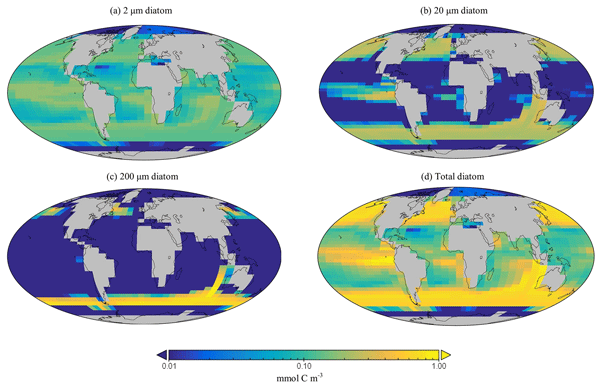
As an extension to the EcoGEnIE 1.0 Earth system model that features a diverse plankton community, EcoGEnIE 1.1 includes siliceous plankton diatoms and also considers their impact on biogeochemical cycles. With updates to existing nutrient cycles and the introduction of the silicon cycle, we see improved model performance relative to observational data. Through a more functionally diverse plankton community, the new model enables more comprehensive future study of ocean ecology.
Ieuan Higgs, Jozef Skákala, Ross Bannister, Alberto Carrassi, and Stefano Ciavatta
Biogeosciences, 21, 731–746, https://doi.org/10.5194/bg-21-731-2024, https://doi.org/10.5194/bg-21-731-2024, 2024
Short summary
Short summary
A complex network is a way of representing which parts of a system are connected to other parts. We have constructed a complex network based on an ecosystem–ocean model. From this, we can identify patterns in the structure and areas of similar behaviour. This can help to understand how natural, or human-made, changes will affect the shelf sea ecosystem, and it can be used in multiple future applications such as improving modelling, data assimilation, or machine learning.
Ali Asaadi, Jörg Schwinger, Hanna Lee, Jerry Tjiputra, Vivek Arora, Roland Séférian, Spencer Liddicoat, Tomohiro Hajima, Yeray Santana-Falcón, and Chris D. Jones
Biogeosciences, 21, 411–435, https://doi.org/10.5194/bg-21-411-2024, https://doi.org/10.5194/bg-21-411-2024, 2024
Short summary
Short summary
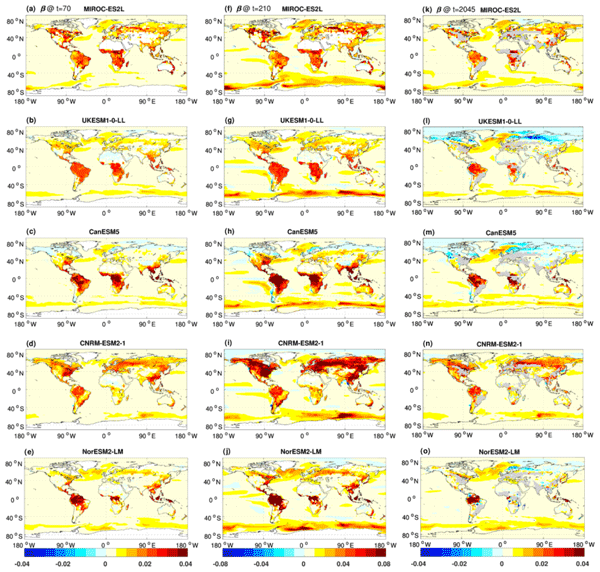
Carbon cycle feedback metrics are employed to assess phases of positive and negative CO2 emissions. When emissions become negative, we find that the model disagreement in feedback metrics increases more strongly than expected from the assumption that the uncertainties accumulate linearly with time. The geographical patterns of such metrics over land highlight that differences in response between tropical/subtropical and temperate/boreal ecosystems are a major source of model disagreement.
Lee de Mora, Ranjini Swaminathan, Richard P. Allan, Jerry C. Blackford, Douglas I. Kelley, Phil Harris, Chris D. Jones, Colin G. Jones, Spencer Liddicoat, Robert J. Parker, Tristan Quaife, Jeremy Walton, and Andrew Yool
Earth Syst. Dynam., 14, 1295–1315, https://doi.org/10.5194/esd-14-1295-2023, https://doi.org/10.5194/esd-14-1295-2023, 2023
Short summary
Short summary
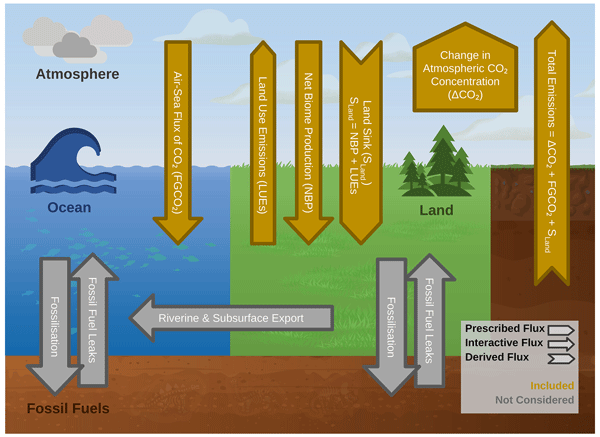
We investigate the flux of carbon from the atmosphere into the land surface and ocean for multiple models and over a range of future scenarios. We did this by comparing simulations after the same change in the global-mean near-surface temperature. Using this method, we show that the choice of scenario can impact the carbon allocation to the land, ocean, and atmosphere. Scenarios with higher emissions reach the same warming levels sooner, but also with relatively more carbon in the atmosphere.
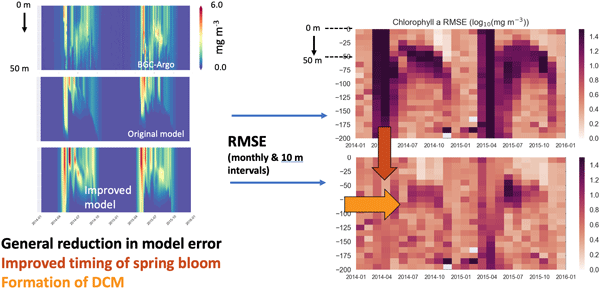
Veli Çağlar Yumruktepe, Erik Askov Mousing, Jerry Tjiputra, and Annette Samuelsen
Geosci. Model Dev., 16, 6875–6897, https://doi.org/10.5194/gmd-16-6875-2023, https://doi.org/10.5194/gmd-16-6875-2023, 2023
Short summary
Short summary
We present an along BGC-Argo track 1D modelling framework. The model physics is constrained by the BGC-Argo temperature and salinity profiles to reduce the uncertainties related to mixed layer dynamics, allowing the evaluation of the biogeochemical formulation and parameterization. We objectively analyse the model with BGC-Argo and satellite data and improve the model biogeochemical dynamics. We present the framework, example cases and routines for model improvement and implementations.
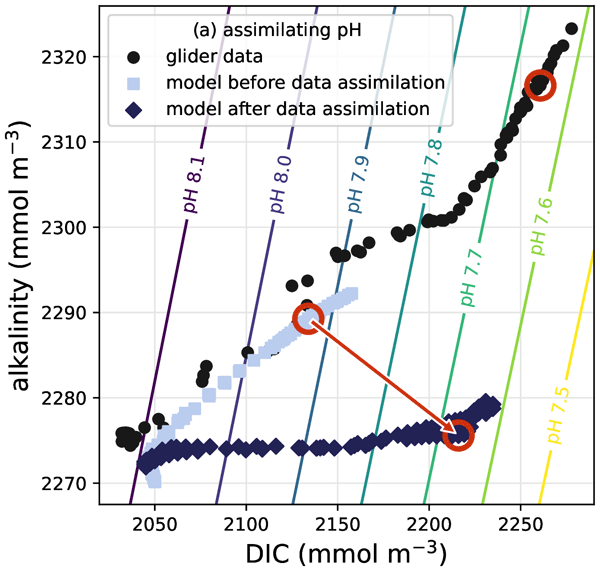
Katja Fennel, Matthew C. Long, Christopher Algar, Brendan Carter, David Keller, Arnaud Laurent, Jann Paul Mattern, Ruth Musgrave, Andreas Oschlies, Josiane Ostiguy, Jaime B. Palter, and Daniel B. Whitt
State Planet, 2-oae2023, 9, https://doi.org/10.5194/sp-2-oae2023-9-2023, https://doi.org/10.5194/sp-2-oae2023-9-2023, 2023
Short summary
Short summary
This paper describes biogeochemical models and modelling techniques for applications related to ocean alkalinity enhancement (OAE) research. Many of the most pressing OAE-related research questions cannot be addressed by observation alone but will require a combination of skilful models and observations. We present illustrative examples with references to further information; describe limitations, caveats, and future research needs; and provide practical recommendations.
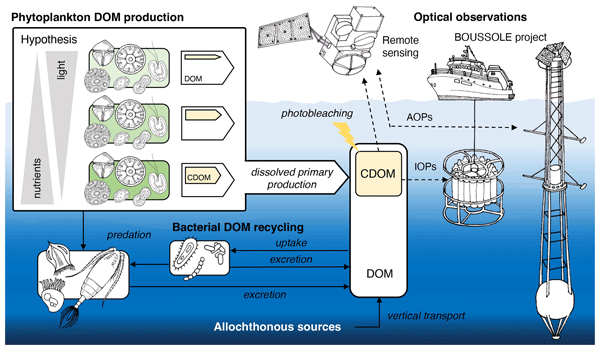
Eva Álvarez, Gianpiero Cossarini, Anna Teruzzi, Jorn Bruggeman, Karsten Bolding, Stefano Ciavatta, Vincenzo Vellucci, Fabrizio D'Ortenzio, David Antoine, and Paolo Lazzari
Biogeosciences, 20, 4591–4624, https://doi.org/10.5194/bg-20-4591-2023, https://doi.org/10.5194/bg-20-4591-2023, 2023
Short summary
Short summary
Chromophoric dissolved organic matter (CDOM) interacts with the ambient light and gives the waters of the Mediterranean Sea their colour. We propose a novel parameterization of the CDOM cycle, whose parameter values have been optimized by using the data of the monitoring site BOUSSOLE. Nutrient and light limitations for locally produced CDOM caused aCDOM(λ) to covary with chlorophyll, while the above-average CDOM concentrations observed at this site were maintained by allochthonous sources.
Christoph Heinze, Thorsten Blenckner, Peter Brown, Friederike Fröb, Anne Morée, Adrian L. New, Cara Nissen, Stefanie Rynders, Isabel Seguro, Yevgeny Aksenov, Yuri Artioli, Timothée Bourgeois, Friedrich Burger, Jonathan Buzan, B. B. Cael, Veli Çağlar Yumruktepe, Melissa Chierici, Christopher Danek, Ulf Dieckmann, Agneta Fransson, Thomas Frölicher, Giovanni Galli, Marion Gehlen, Aridane G. González, Melchor Gonzalez-Davila, Nicolas Gruber, Örjan Gustafsson, Judith Hauck, Mikko Heino, Stephanie Henson, Jenny Hieronymus, I. Emma Huertas, Fatma Jebri, Aurich Jeltsch-Thömmes, Fortunat Joos, Jaideep Joshi, Stephen Kelly, Nandini Menon, Precious Mongwe, Laurent Oziel, Sólveig Ólafsdottir, Julien Palmieri, Fiz F. Pérez, Rajamohanan Pillai Ranith, Juliano Ramanantsoa, Tilla Roy, Dagmara Rusiecka, J. Magdalena Santana Casiano, Yeray Santana-Falcón, Jörg Schwinger, Roland Séférian, Miriam Seifert, Anna Shchiptsova, Bablu Sinha, Christopher Somes, Reiner Steinfeldt, Dandan Tao, Jerry Tjiputra, Adam Ulfsbo, Christoph Völker, Tsuyoshi Wakamatsu, and Ying Ye
Biogeosciences Discuss., https://doi.org/10.5194/bg-2023-182, https://doi.org/10.5194/bg-2023-182, 2023
Revised manuscript not accepted
Short summary
Short summary
For assessing the consequences of human-induced climate change for the marine realm, it is necessary to not only look at gradual changes but also at abrupt changes of environmental conditions. We summarise abrupt changes in ocean warming, acidification, and oxygen concentration as the key environmental factors for ecosystems. Taking these abrupt changes into account requires greenhouse gas emissions to be reduced to a larger extent than previously thought to limit respective damage.
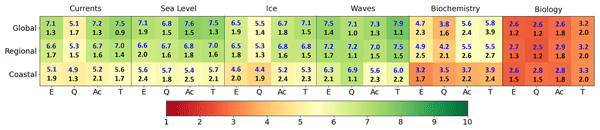
Stefania A. Ciliberti, Enrique Alvarez Fanjul, Jay Pearlman, Kirsten Wilmer-Becker, Pierre Bahurel, Fabrice Ardhuin, Alain Arnaud, Mike Bell, Segolene Berthou, Laurent Bertino, Arthur Capet, Eric Chassignet, Stefano Ciavatta, Mauro Cirano, Emanuela Clementi, Gianpiero Cossarini, Gianpaolo Coro, Stuart Corney, Fraser Davidson, Marie Drevillon, Yann Drillet, Renaud Dussurget, Ghada El Serafy, Katja Fennel, Marcos Garcia Sotillo, Patrick Heimbach, Fabrice Hernandez, Patrick Hogan, Ibrahim Hoteit, Sudheer Joseph, Simon Josey, Pierre-Yves Le Traon, Simone Libralato, Marco Mancini, Pascal Matte, Angelique Melet, Yasumasa Miyazawa, Andrew M. Moore, Antonio Novellino, Andrew Porter, Heather Regan, Laia Romero, Andreas Schiller, John Siddorn, Joanna Staneva, Cecile Thomas-Courcoux, Marina Tonani, Jose Maria Garcia-Valdecasas, Jennifer Veitch, Karina von Schuckmann, Liying Wan, John Wilkin, and Romane Zufic
State Planet, 1-osr7, 2, https://doi.org/10.5194/sp-1-osr7-2-2023, https://doi.org/10.5194/sp-1-osr7-2-2023, 2023
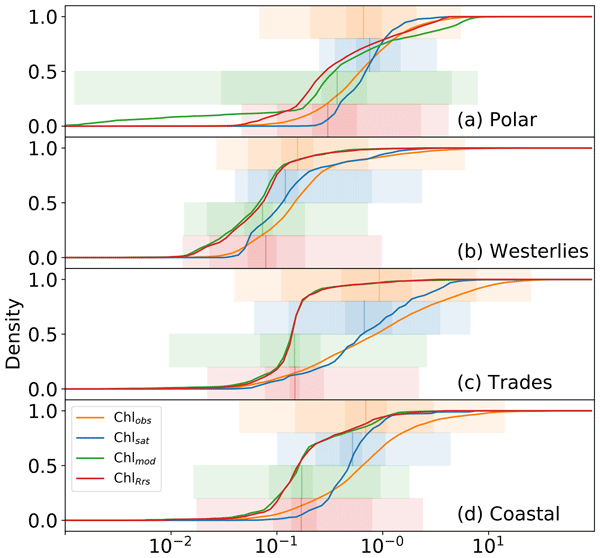
Bror F. Jönsson, Christopher L. Follett, Jacob Bien, Stephanie Dutkiewicz, Sangwon Hyun, Gemma Kulk, Gael L. Forget, Christian Müller, Marie-Fanny Racault, Christopher N. Hill, Thomas Jackson, and Shubha Sathyendranath
Geosci. Model Dev., 16, 4639–4657, https://doi.org/10.5194/gmd-16-4639-2023, https://doi.org/10.5194/gmd-16-4639-2023, 2023
Short summary
Short summary
While biogeochemical models and satellite-derived ocean color data provide unprecedented information, it is problematic to compare them. Here, we present a new approach based on comparing probability density distributions of model and satellite properties to assess model skills. We also introduce Earth mover's distances as a novel and powerful metric to quantify the misfit between models and observations. We find that how 3D chlorophyll fields are aggregated can be a significant source of error.
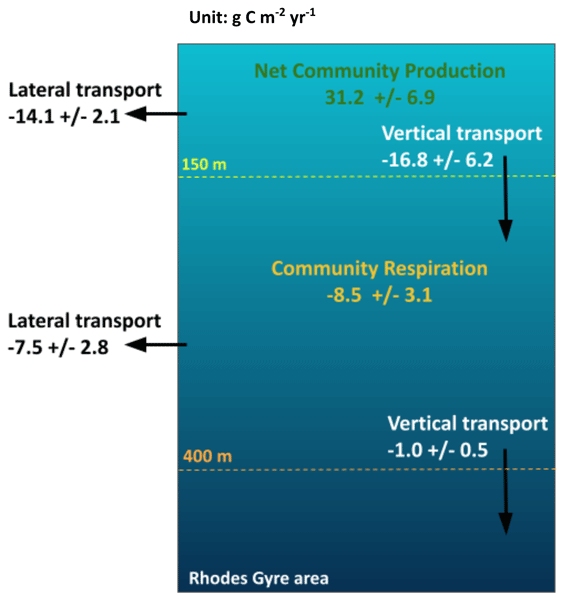
Joelle Habib, Caroline Ulses, Claude Estournel, Milad Fakhri, Patrick Marsaleix, Mireille Pujo-Pay, Marine Fourrier, Laurent Coppola, Alexandre Mignot, Laurent Mortier, and Pascal Conan
Biogeosciences, 20, 3203–3228, https://doi.org/10.5194/bg-20-3203-2023, https://doi.org/10.5194/bg-20-3203-2023, 2023
Short summary
Short summary
The Rhodes Gyre, eastern Mediterranean Sea, is the main Levantine Intermediate Water formation site. In this study, we use a 3D physical–biogeochemical model to investigate the seasonal and interannual variability of organic carbon dynamics in the gyre. Our results show its autotrophic nature and its high interannual variability, with enhanced primary production, downward exports, and onward exports to the surrounding regions during years marked by intense heat losses and deep mixed layers.
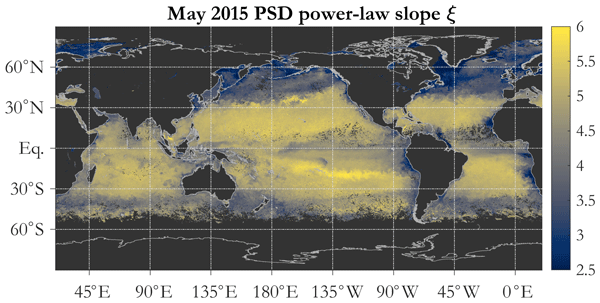
Tihomir S. Kostadinov, Lisl Robertson Lain, Christina Eunjin Kong, Xiaodong Zhang, Stéphane Maritorena, Stewart Bernard, Hubert Loisel, Daniel S. F. Jorge, Ekaterina Kochetkova, Shovonlal Roy, Bror Jonsson, Victor Martinez-Vicente, and Shubha Sathyendranath
Ocean Sci., 19, 703–727, https://doi.org/10.5194/os-19-703-2023, https://doi.org/10.5194/os-19-703-2023, 2023
Short summary
Short summary
We present a remote sensing algorithm to estimate the size distribution of particles suspended in natural near-surface ocean water using ocean color data. The algorithm can be used to estimate the abundance and carbon content of phytoplankton, photosynthesizing microorganisms that are at the basis of the marine food web and play an important role in Earth’s carbon cycle and climate. A merged, multi-sensor satellite data set and the model scientific code are provided.
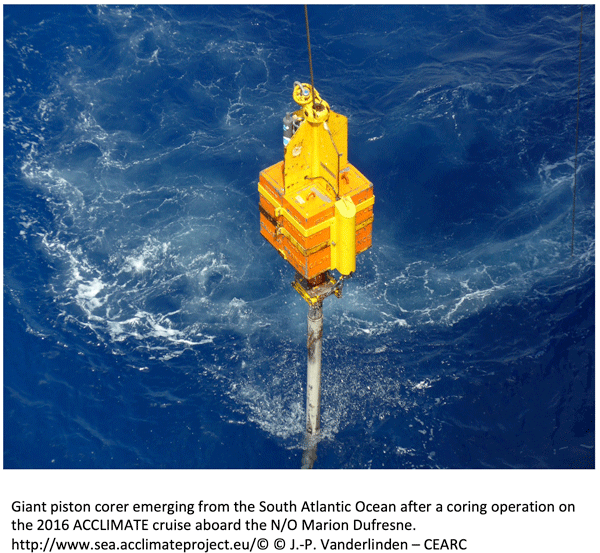
Claire Waelbroeck, Jerry Tjiputra, Chuncheng Guo, Kerim H. Nisancioglu, Eystein Jansen, Natalia Vázquez Riveiros, Samuel Toucanne, Frédérique Eynaud, Linda Rossignol, Fabien Dewilde, Elodie Marchès, Susana Lebreiro, and Silvia Nave
Clim. Past, 19, 901–913, https://doi.org/10.5194/cp-19-901-2023, https://doi.org/10.5194/cp-19-901-2023, 2023
Short summary
Short summary
The precise geometry and extent of Atlantic circulation changes that accompanied rapid climate changes of the last glacial period are still unknown. Here, we combine carbon isotopic records from 18 Atlantic sediment cores with numerical simulations and decompose the carbon isotopic change across a cold-to-warm transition into remineralization and circulation components. Our results show that the replacement of southern-sourced by northern-sourced water plays a dominant role below ~ 3000 m depth.
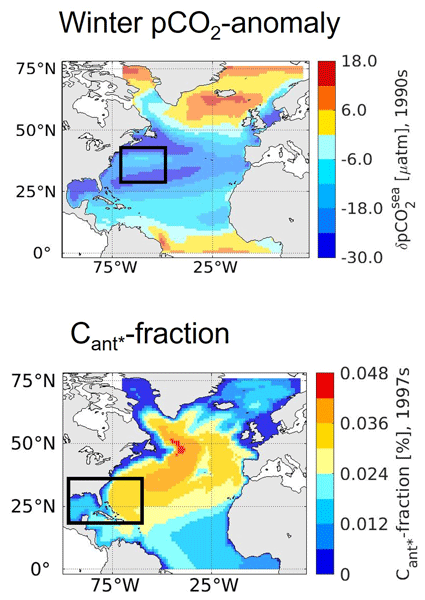
Nadine Goris, Klaus Johannsen, and Jerry Tjiputra
Geosci. Model Dev., 16, 2095–2117, https://doi.org/10.5194/gmd-16-2095-2023, https://doi.org/10.5194/gmd-16-2095-2023, 2023
Short summary
Short summary
Climate projections of a high-CO2 future are highly uncertain. A new study provides a novel approach to identifying key regions that dynamically explain the model uncertainty. To yield an accurate estimate of the future North Atlantic carbon uptake, we find that a correct simulation of the upper- and interior-ocean volume transport at 25–30° N is key. However, results indicate that models rarely perform well for both indicators and point towards inconsistencies within the model ensemble.
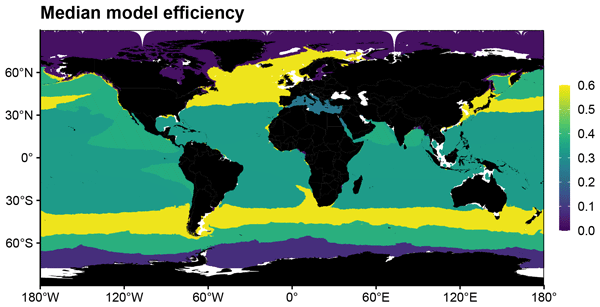
Alexandre Mignot, Hervé Claustre, Gianpiero Cossarini, Fabrizio D'Ortenzio, Elodie Gutknecht, Julien Lamouroux, Paolo Lazzari, Coralie Perruche, Stefano Salon, Raphaëlle Sauzède, Vincent Taillandier, and Anna Teruzzi
Biogeosciences, 20, 1405–1422, https://doi.org/10.5194/bg-20-1405-2023, https://doi.org/10.5194/bg-20-1405-2023, 2023
Short summary
Short summary
Numerical models of ocean biogeochemistry are becoming a major tool to detect and predict the impact of climate change on marine resources and monitor ocean health. Here, we demonstrate the use of the global array of BGC-Argo floats for the assessment of biogeochemical models. We first detail the handling of the BGC-Argo data set for model assessment purposes. We then present 23 assessment metrics to quantify the consistency of BGC model simulations with respect to BGC-Argo data.
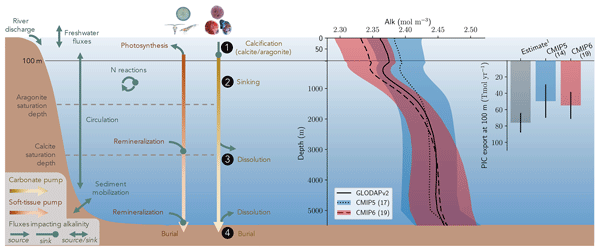
Alban Planchat, Lester Kwiatkowski, Laurent Bopp, Olivier Torres, James R. Christian, Momme Butenschön, Tomas Lovato, Roland Séférian, Matthew A. Chamberlain, Olivier Aumont, Michio Watanabe, Akitomo Yamamoto, Andrew Yool, Tatiana Ilyina, Hiroyuki Tsujino, Kristen M. Krumhardt, Jörg Schwinger, Jerry Tjiputra, John P. Dunne, and Charles Stock
Biogeosciences, 20, 1195–1257, https://doi.org/10.5194/bg-20-1195-2023, https://doi.org/10.5194/bg-20-1195-2023, 2023
Short summary
Short summary
Ocean alkalinity is critical to the uptake of atmospheric carbon and acidification in surface waters. We review the representation of alkalinity and the associated calcium carbonate cycle in Earth system models. While many parameterizations remain present in the latest generation of models, there is a general improvement in the simulated alkalinity distribution. This improvement is related to an increase in the export of biotic calcium carbonate, which closer resembles observations.
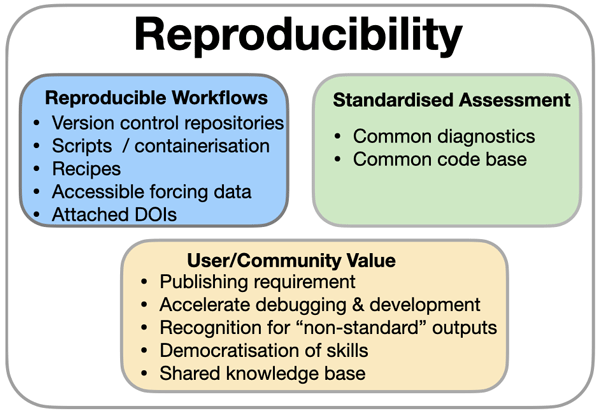
Jeff Polton, James Harle, Jason Holt, Anna Katavouta, Dale Partridge, Jenny Jardine, Sarah Wakelin, Julia Rulent, Anthony Wise, Katherine Hutchinson, David Byrne, Diego Bruciaferri, Enda O'Dea, Michela De Dominicis, Pierre Mathiot, Andrew Coward, Andrew Yool, Julien Palmiéri, Gennadi Lessin, Claudia Gabriela Mayorga-Adame, Valérie Le Guennec, Alex Arnold, and Clément Rousset
Geosci. Model Dev., 16, 1481–1510, https://doi.org/10.5194/gmd-16-1481-2023, https://doi.org/10.5194/gmd-16-1481-2023, 2023
Short summary
Short summary
The aim is to increase the capacity of the modelling community to respond to societally important questions that require ocean modelling. The concept of reproducibility for regional ocean modelling is developed: advocating methods for reproducible workflows and standardised methods of assessment. Then, targeting the NEMO framework, we give practical advice and worked examples, highlighting key considerations that will the expedite development cycle and upskill the user community.

Rui Ying, Fanny M. Monteiro, Jamie D. Wilson, and Daniela N. Schmidt
Geosci. Model Dev., 16, 813–832, https://doi.org/10.5194/gmd-16-813-2023, https://doi.org/10.5194/gmd-16-813-2023, 2023
Short summary
Short summary
Planktic foraminifera are marine-calcifying zooplankton; their shells are widely used to measure past temperature and productivity. We developed ForamEcoGEnIE 2.0 to simulate the four subgroups of this organism. We found that the relative abundance distribution agrees with marine sediment core-top data and that carbon export and biomass are close to sediment trap and plankton net observations respectively. This model provides the opportunity to study foraminiferal ecology in any geological era.
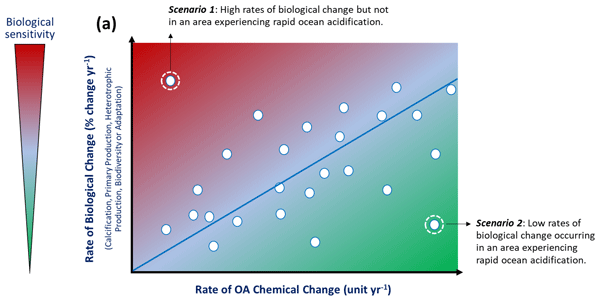
Steve Widdicombe, Kirsten Isensee, Yuri Artioli, Juan Diego Gaitán-Espitia, Claudine Hauri, Janet A. Newton, Mark Wells, and Sam Dupont
Ocean Sci., 19, 101–119, https://doi.org/10.5194/os-19-101-2023, https://doi.org/10.5194/os-19-101-2023, 2023
Short summary
Short summary
Ocean acidification is a global perturbation of the ocean carbonate chemistry as a consequence of increased carbon dioxide concentration in the atmosphere. While great progress has been made over the last decade for chemical monitoring, ocean acidification biological monitoring remains anecdotal. This is a consequence of a lack of standards, general methodological framework, and overall methodology. This paper presents methodology focusing on sensitive traits and rates of change.

Shuang Gao, Jörg Schwinger, Jerry Tjiputra, Ingo Bethke, Jens Hartmann, Emilio Mayorga, and Christoph Heinze
Biogeosciences, 20, 93–119, https://doi.org/10.5194/bg-20-93-2023, https://doi.org/10.5194/bg-20-93-2023, 2023
Short summary
Short summary
We assess the impact of riverine nutrients and carbon (C) on projected marine primary production (PP) and C uptake using a fully coupled Earth system model. Riverine inputs alleviate nutrient limitation and thus lessen the projected PP decline by up to 0.7 Pg C yr−1 globally. The effect of increased riverine C may be larger than the effect of nutrient inputs in the future on the projected ocean C uptake, while in the historical period increased nutrient inputs are considered the largest driver.
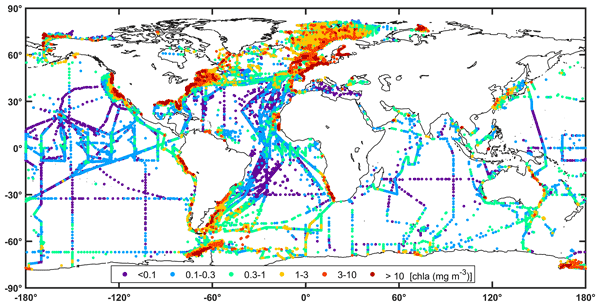
André Valente, Shubha Sathyendranath, Vanda Brotas, Steve Groom, Michael Grant, Thomas Jackson, Andrei Chuprin, Malcolm Taberner, Ruth Airs, David Antoine, Robert Arnone, William M. Balch, Kathryn Barker, Ray Barlow, Simon Bélanger, Jean-François Berthon, Şükrü Beşiktepe, Yngve Borsheim, Astrid Bracher, Vittorio Brando, Robert J. W. Brewin, Elisabetta Canuti, Francisco P. Chavez, Andrés Cianca, Hervé Claustre, Lesley Clementson, Richard Crout, Afonso Ferreira, Scott Freeman, Robert Frouin, Carlos García-Soto, Stuart W. Gibb, Ralf Goericke, Richard Gould, Nathalie Guillocheau, Stanford B. Hooker, Chuamin Hu, Mati Kahru, Milton Kampel, Holger Klein, Susanne Kratzer, Raphael Kudela, Jesus Ledesma, Steven Lohrenz, Hubert Loisel, Antonio Mannino, Victor Martinez-Vicente, Patricia Matrai, David McKee, Brian G. Mitchell, Tiffany Moisan, Enrique Montes, Frank Muller-Karger, Aimee Neeley, Michael Novak, Leonie O'Dowd, Michael Ondrusek, Trevor Platt, Alex J. Poulton, Michel Repecaud, Rüdiger Röttgers, Thomas Schroeder, Timothy Smyth, Denise Smythe-Wright, Heidi M. Sosik, Crystal Thomas, Rob Thomas, Gavin Tilstone, Andreia Tracana, Michael Twardowski, Vincenzo Vellucci, Kenneth Voss, Jeremy Werdell, Marcel Wernand, Bozena Wojtasiewicz, Simon Wright, and Giuseppe Zibordi
Earth Syst. Sci. Data, 14, 5737–5770, https://doi.org/10.5194/essd-14-5737-2022, https://doi.org/10.5194/essd-14-5737-2022, 2022
Short summary
Short summary
A compiled set of in situ data is vital to evaluate the quality of ocean-colour satellite data records. Here we describe the global compilation of bio-optical in situ data (spanning from 1997 to 2021) used for the validation of the ocean-colour products from the ESA Ocean Colour Climate Change Initiative (OC-CCI). The compilation merges and harmonizes several in situ data sources into a simple format that could be used directly for the evaluation of satellite-derived ocean-colour data.
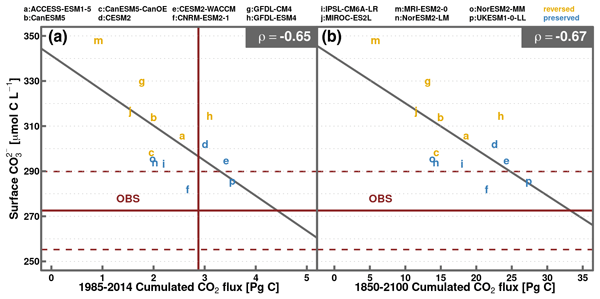
Pradeebane Vaittinada Ayar, Laurent Bopp, Jim R. Christian, Tatiana Ilyina, John P. Krasting, Roland Séférian, Hiroyuki Tsujino, Michio Watanabe, Andrew Yool, and Jerry Tjiputra
Earth Syst. Dynam., 13, 1097–1118, https://doi.org/10.5194/esd-13-1097-2022, https://doi.org/10.5194/esd-13-1097-2022, 2022
Short summary
Short summary
The El Niño–Southern Oscillation is the main driver for the natural variability of global atmospheric CO2. It modulates the CO2 fluxes in the tropical Pacific with anomalous CO2 influx during El Niño and outflux during La Niña. This relationship is projected to reverse by half of Earth system models studied here under the business-as-usual scenario. This study shows models that simulate a positive bias in surface carbonate concentrations simulate a shift in the ENSO–CO2 flux relationship.

Reint Fischer, Delphine Lobelle, Merel Kooi, Albert Koelmans, Victor Onink, Charlotte Laufkötter, Linda Amaral-Zettler, Andrew Yool, and Erik van Sebille
Biogeosciences, 19, 2211–2234, https://doi.org/10.5194/bg-19-2211-2022, https://doi.org/10.5194/bg-19-2211-2022, 2022
Short summary
Short summary
Since current estimates show that only about 1 % of the all plastic that enters the ocean is floating at the surface, we look at subsurface processes that can cause vertical movement of (micro)plastic. We investigate how modelled algal attachment and the ocean's vertical movement can cause particles to sink and oscillate in the open ocean. Particles can sink to depths of > 5000 m in regions with high wind intensity and mainly remain close to the surface with low winds and biological activity.
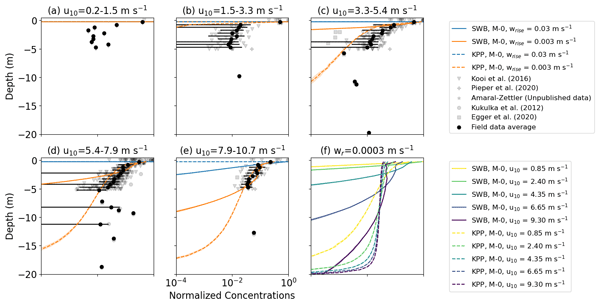
Victor Onink, Erik van Sebille, and Charlotte Laufkötter
Geosci. Model Dev., 15, 1995–2012, https://doi.org/10.5194/gmd-15-1995-2022, https://doi.org/10.5194/gmd-15-1995-2022, 2022
Short summary
Short summary
Turbulent mixing is a vital process in 3D modeling of particle transport in the ocean. However, since turbulence occurs on very short spatial scales and timescales, large-scale ocean models generally have highly simplified turbulence representations. We have developed parametrizations for the vertical turbulent transport of buoyant particles that can be easily applied in a large-scale particle tracking model. The predicted vertical concentration profiles match microplastic observations well.
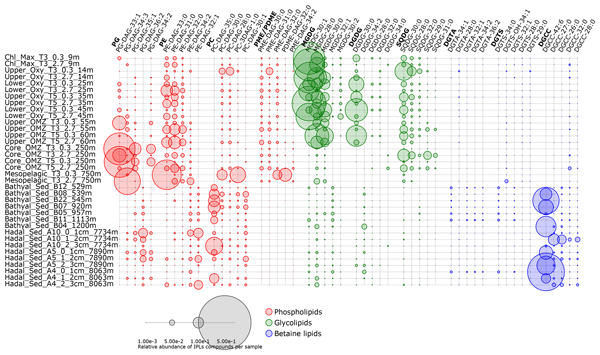
Edgart Flores, Sebastian I. Cantarero, Paula Ruiz-Fernández, Nadia Dildar, Matthias Zabel, Osvaldo Ulloa, and Julio Sepúlveda
Biogeosciences, 19, 1395–1420, https://doi.org/10.5194/bg-19-1395-2022, https://doi.org/10.5194/bg-19-1395-2022, 2022
Short summary
Short summary
In this study, we investigate the chemical diversity and abundance of microbial lipids as markers of organic matter sources in the deepest points of the Atacama Trench sediments and compare them to similar lipid stocks in shallower surface sediments and in the overlying water column. We evaluate possible organic matter provenance and some potential chemical adaptations of the in situ microbial community to the extreme conditions of high hydrostatic pressure in hadal realm.
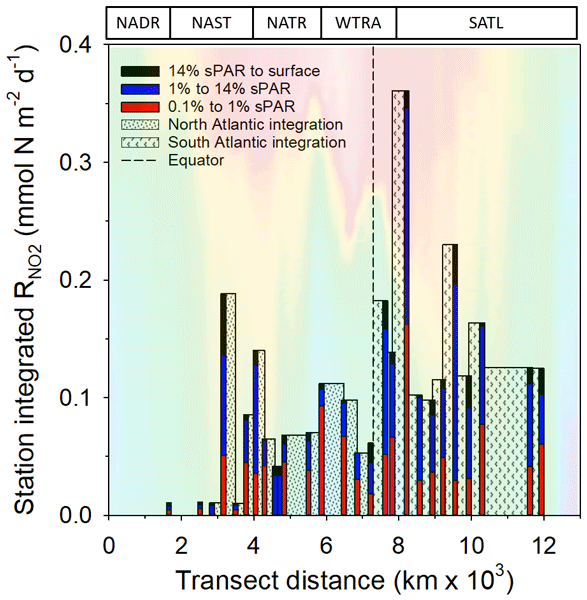
Darren R. Clark, Andrew P. Rees, Charissa M. Ferrera, Lisa Al-Moosawi, Paul J. Somerfield, Carolyn Harris, Graham D. Quartly, Stephen Goult, Glen Tarran, and Gennadi Lessin
Biogeosciences, 19, 1355–1376, https://doi.org/10.5194/bg-19-1355-2022, https://doi.org/10.5194/bg-19-1355-2022, 2022
Short summary
Short summary
Measurements of microbial processes were made in the sunlit open ocean during a research cruise (AMT19) between the UK and Chile. These help us to understand how microbial communities maintain the function of remote ecosystems. We find that the nitrogen cycling microbes which produce nitrite respond to changes in the environment. Our insights will aid the development of models that aim to replicate and ultimately project how marine environments may respond to ongoing climate change.
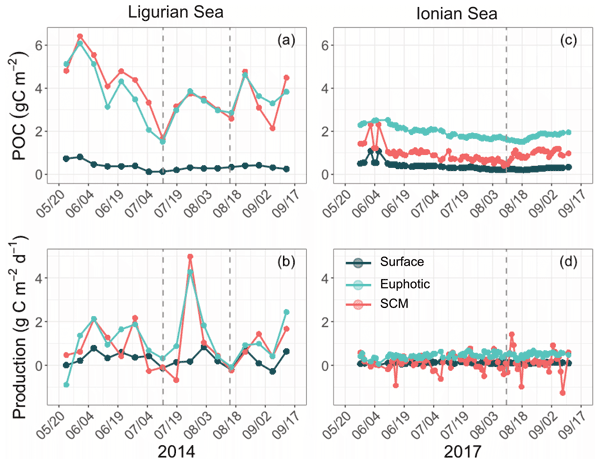
Marie Barbieux, Julia Uitz, Alexandre Mignot, Collin Roesler, Hervé Claustre, Bernard Gentili, Vincent Taillandier, Fabrizio D'Ortenzio, Hubert Loisel, Antoine Poteau, Edouard Leymarie, Christophe Penkerc'h, Catherine Schmechtig, and Annick Bricaud
Biogeosciences, 19, 1165–1194, https://doi.org/10.5194/bg-19-1165-2022, https://doi.org/10.5194/bg-19-1165-2022, 2022
Short summary
Short summary
This study assesses marine biological production in two Mediterranean systems representative of vast desert-like (oligotrophic) areas encountered in the global ocean. We use a novel approach based on non-intrusive high-frequency in situ measurements by two profiling robots, the BioGeoChemical-Argo (BGC-Argo) floats. Our results indicate substantial yet variable production rates and contribution to the whole water column of the subsurface layer, typically considered steady and non-productive.
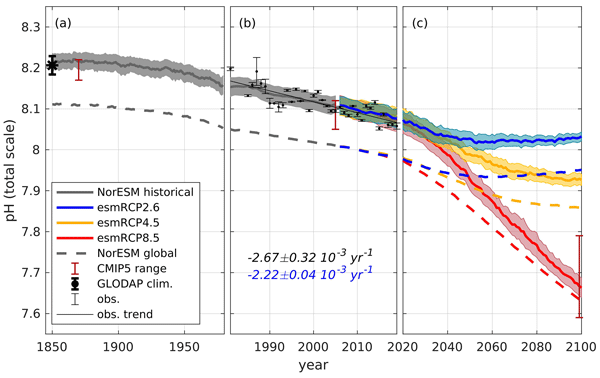
Filippa Fransner, Friederike Fröb, Jerry Tjiputra, Nadine Goris, Siv K. Lauvset, Ingunn Skjelvan, Emil Jeansson, Abdirahman Omar, Melissa Chierici, Elizabeth Jones, Agneta Fransson, Sólveig R. Ólafsdóttir, Truls Johannessen, and Are Olsen
Biogeosciences, 19, 979–1012, https://doi.org/10.5194/bg-19-979-2022, https://doi.org/10.5194/bg-19-979-2022, 2022
Short summary
Short summary
Ocean acidification, a direct consequence of the CO2 release by human activities, is a serious threat to marine ecosystems. In this study, we conduct a detailed investigation of the acidification of the Nordic Seas, from 1850 to 2100, by using a large set of samples taken during research cruises together with numerical model simulations. We estimate the effects of changes in different environmental factors on the rate of acidification and its potential effects on cold-water corals.
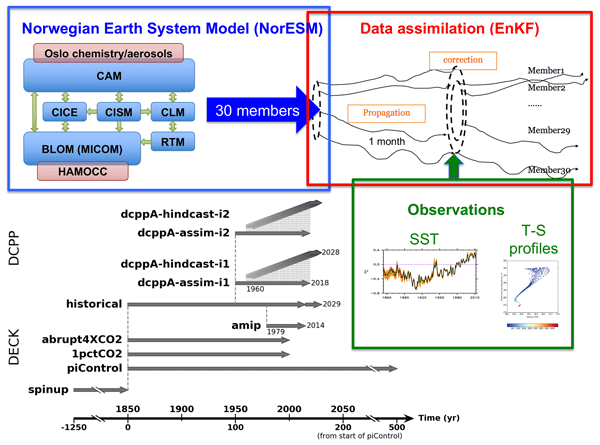
Ingo Bethke, Yiguo Wang, François Counillon, Noel Keenlyside, Madlen Kimmritz, Filippa Fransner, Annette Samuelsen, Helene Langehaug, Lea Svendsen, Ping-Gin Chiu, Leilane Passos, Mats Bentsen, Chuncheng Guo, Alok Gupta, Jerry Tjiputra, Alf Kirkevåg, Dirk Olivié, Øyvind Seland, Julie Solsvik Vågane, Yuanchao Fan, and Tor Eldevik
Geosci. Model Dev., 14, 7073–7116, https://doi.org/10.5194/gmd-14-7073-2021, https://doi.org/10.5194/gmd-14-7073-2021, 2021
Short summary
Short summary
The Norwegian Climate Prediction Model version 1 (NorCPM1) is a new research tool for performing climate reanalyses and seasonal-to-decadal climate predictions. It adds data assimilation capability to the Norwegian Earth System Model version 1 (NorESM1) and has contributed output to the Decadal Climate Prediction Project (DCPP) as part of the sixth Coupled Model Intercomparison Project (CMIP6). We describe the system and evaluate its baseline, reanalysis and prediction performance.
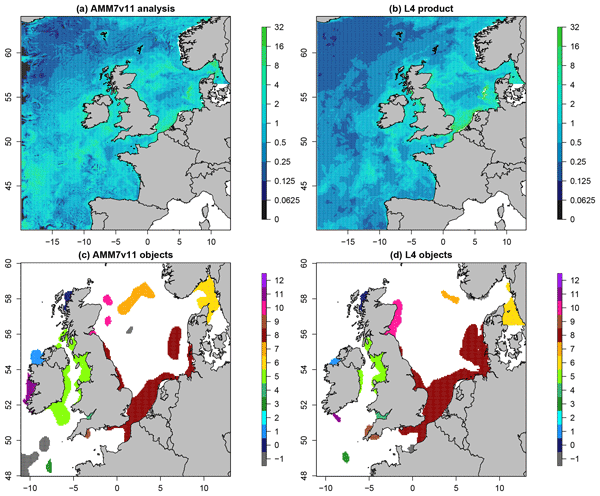
Marion Mittermaier, Rachel North, Jan Maksymczuk, Christine Pequignet, and David Ford
Ocean Sci., 17, 1527–1543, https://doi.org/10.5194/os-17-1527-2021, https://doi.org/10.5194/os-17-1527-2021, 2021
Short summary
Short summary
Regions of enhanced chlorophyll-a concentrations can be identified by applying a threshold to the concentration value to a forecast and observed field (or analysis). These regions can then be treated and analysed as features using diagnostic techniques to consider of the evolution of the chlorophyll-a blooms in space and time. This allows us to understand whether the biogeochemistry in the model has any skill in predicting these blooms, their location, intensity, onset, duration and demise.
Cited articles
Amirian, M., Finkel, Z. V., Devred, E., and Irwin, A. J.: Parameterization of photoinhibition for phytoplankton, Commun. Earth Environ., 6, 707, https://doi.org/10.1038/s43247-025-02686-3, 2025.
Anderson, S. I., Barton, A. D., Clayton, S., Dutkiewicz, S., and Rynearson, T.: Marine phytoplankton functional types exhibit diverse responses to thermal change, Nat. Commun., 12, 6511, https://doi.org/10.1038/s41467-021-26651-8, 2021.
Antoine, D., André, J.-M., and Morel, A.: Oceanic primary production: 2. Estimation at global scale from satellite (Coastal Zone Color Scanner) chlorophyll, Global Biogeochem. Cy., 10, 57–69, https://doi.org/10.1029/95GB02832, 1996.
Arteaga, L. A., Behrenfeld, M. J., Boss, E., and Westberry, T. K.: Vertical structure in phytoplankton growth and productivity inferred from biogeochemical-Argo floats and the carbon-based productivity model, Global Biogeochem. Cy., 36, e2022GB007389, https://doi.org/10.1029/2022GB007389, 2022.
Aumont, O., Ethé, C., Tagliabue, A., Bopp, L., and Gehlen, M.: PISCES-v2: an ocean biogeochemical model for carbon and ecosystem studies, Geosci. Model Dev., 8, 2465–2513, https://doi.org/10.5194/gmd-8-2465-2015, 2015.
Behrenfeld, M. J. and Falkowski, P. G.: Photosynthetic rates derived from satellite-based chlorophyll concentration, Limnol. Oceanogr., 42, 1–20, https://doi.org/10.4319/lo.1997.42.1.0001, 1997.
Behrenfeld, M. J., Boss, E., Siegel, D. A., and Shea, D. M.: Carbon-based ocean productivity and phytoplankton physiology from space, Global Biogeochem. Cy., 19, GB1006, https://doi.org/10.1029/2004GB002299, 2005.
Bergas-Masso, E., Hamilton, D. S., Myriokefalitakis, S., Rathod, S., Gonçalves Ageitos, M., and Pérez García-Pando, C.: Future climate-driven fires may boost ocean productivity in the iron-limited North Atlantic, Nat. Clim. Change, 15, 1–9, https://doi.org/10.1038/s41558-025-02356-4, 2025.
Blackford, J. C., Allen, J. I., and Gilbert, F. J.: Ecosystem dynamics at six contrasting sites: a generic modelling study, J. Mar. Syst., 52, 191–215, 2004.
Bopp, L., Resplandy, L., Orr, J. C., Doney, S. C., Dunne, J. P., Gehlen, M., Halloran, P., Heinze, C., Ilyina, T., Séférian, R., Tjiputra, J., and Vichi, M.: Multiple stressors of ocean ecosystems in the 21st century: projections with CMIP5 models, Biogeosciences, 10, 6225–6245, https://doi.org/10.5194/bg-10-6225-2013, 2013.
Bopp, L., Aumont, O., Kwiatkowski, L., Clerc, C., Dupont, L., Ethé, C., Gorgues, T., Séférian, R., and Tagliabue, A.: Diazotrophy as a key driver of the response of marine net primary productivity to climate change, Biogeosciences, 19, 4267–4285, https://doi.org/10.5194/bg-19-4267-2022, 2022.
Bouman, H. A., Platt, T., Doblin, M., Figueiras, M. G., Gudmundsson, K., Gudfinnsson, H. G., Huang, B., Hickman, A., Hiscock, M., Jackson, T., Lutz, V. A., Mélin, F., Rey, F., Pepin, P., Segura, V., Tilstone, G. H., van Dongen-Vogels, V., and Sathyendranath, S.: Photosynthesis–irradiance parameters of marine phytoplankton: synthesis of a global data set, Earth Syst. Sci. Data, 10, 251–266, https://doi.org/10.5194/essd-10-251-2018, 2018.
Brewin, R. J., Sathyendranath, S., Kulk, G., Rio, M. H., Concha, J.A., Bell, T. G., Bracher, A., Fichot, C., Frölicher, T. L., Galí, M., Hansell, D. A., Kostadinov, T. S., Mitchell, C., Neeley, A. R., Organelli, E., Richardson, K., Rousseaux, C., Shen, F., Stramski, D., Tzortziou, M., and Woolf, D. K.: Ocean carbon from space: current status and priorities for the next decade, Earth-Sci. Rev., 240, 104386, https://doi.org/10.1016/j.earscirev.2023.104386, 2023.
Brewin, R. J. W., Tilstone, G. H., Jackson, T., Cain, T., and Miller, P. I.: Modelling size-fractionated primary production in the Atlantic Ocean from remote sensing, Prog. Oceanogr., 158, 130–149, https://doi.org/10.1016/j.pocean.2017.02.002, 2017.
Britten, G. L., Jönsson, B., Kulk, G., Bouman, H. A., Follows, M. J., and Sathyendranath, S.: Predicting photosynthesis–irradiance relationships from satellite remote‐sensing observations, Limnol. Oceanogr. Lett., 10, 967–976, https://doi.org/10.1002/lol2.70062, 2025.
Butenschön, M., Clark, J., Aldridge, J. N., Allen, J. I., Artioli, Y., Blackford, J., Bruggeman, J., Cazenave, P., Ciavatta, S., Kay, S., Lessin, G., van Leeuwen, S., van der Molen, J., de Mora, L., Polimene, L., Sailley, S., Stephens, N., and Torres, R.: ERSEM 15.06: a generic model for marine biogeochemistry and the ecosystem dynamics of the lower trophic levels, Geosci. Model Dev., 9, 1293–1339, https://doi.org/10.5194/gmd-9-1293-2016, 2016.
Carr, M. E., Friedrichs, M. A., Schmeltz, M., Aita, M. N., Antoine, D., Arrigo, K. R., Asanuma, I., Aumont, O., Barber, R., Behrenfeld, M. J., and Bidigare, R. R.: A comparison of global estimates of marine primary production from ocean color, Deep-Sea Res. Pt. II, 53, 741–770, https://doi.org/10.1016/j.dsr2.2006.01.028, 2006.
Chai, F., Johnson, K. S., Claustre, H., Xing, X., Wang, Y., Boss, E., Riser, S., Fennel, K., Schofield, O., and Sutton, A.: Monitoring ocean biogeochemistry with autonomous platforms, Nat. Rev. Earth Environ., 1, 315–326, https://doi.org/10.1038/s43017-020-0053-y, 2020.
Ciavatta, S., Lazzari, P., Álvarez, E., Bertino, L., Bolding, K., Bruggeman, J., Capet, A., Cossarini, G., Daryabor, F., Nerger, L., Popov, M., Skákala, J., Spada, S., Teruzzi, A., Wakamatsu, T., Yumruktepe, V. C., and Brasseur, P.: Control of simulated ocean ecosystem indicators by biogeochemical observations, Prog. Oceanogr., 231, 103384, https://doi.org/10.1016/j.pocean.2024.103384, 2025.
Claustre, H., Johnson, K. S., and Takeshita, Y.: Observing the global ocean with Biogeochemical-Argo, Annu. Rev. Mar. Sci., 12, 23–48, https://doi.org/10.1146/annurev-marine-010419-010956, 2020.
Daewel, U. and Schrum, C.: Simulating long-term dynamics of the coupled North Sea and Baltic Sea ecosystem with ECOSMO II: model description and validation, J. Mar. Syst., 119, 30–49, https://doi.org/10.1016/j.jmarsys.2013.03.008, 2013.
Dai, R., Wen, Z., Hong, H., Browning, T. J., Hu, X., Chen, Z., Liu, X., Dai, M., Morel, F. M. M., and Shi, D.: Eukaryotic phytoplankton drive a decrease in primary production in response to elevated CO2 in the tropical and subtropical oceans, P. Natl. Acad. Sci. USA, 122, e2423680122, https://doi.org/10.1073/pnas.2423680122, 2025.
Doléac, S., Lévy, M., El Hourany, R., and Bopp, L.: Toward more robust net primary production projections in the North Atlantic Ocean, Biogeosciences, 22, 841–862, https://doi.org/10.5194/bg-22-841-2025, 2025.
Doney, S., Bopp, L., and Long, M.: Historical and future trends in ocean climate and biogeochemistry, Oceanography, 27, 108–119, https://doi.org/10.5670/oceanog.2014.14, 2014.
Doron, M., Brasseur, P., Brankart, J.-M., Losa, S. N., and Melet, A.: Stochastic estimation of biogeochemical parameters from GlobColour ocean colour satellite data in a North Atlantic 3D ocean coupled physical–biogeochemical model, J. Mar. Syst., 117, 81–95, https://doi.org/10.1016/j.jmarsys.2013.03.002, 2013.
Droop, M. R.: The nutrient status of algal cells in continuous culture, J. Mar. Biol. Assoc. UK, 54, 825–855, https://doi.org/10.1016/0924-7963(94)00031-6, 1974.
Dutkiewicz, S., Scott, J. R., and Follows, M. J.: Winners and losers: ecological and biogeochemical changes in a warming ocean, Global Biogeochem. Cy., 27, 463–477, https://doi.org/10.1002/gbc.20042, 2013.
Dutkiewicz, S., Hickman, A. E., Jahn, O., Gregg, W. W., Mouw, C. B., and Follows, M. J.: Capturing optically important constituents and properties in a marine biogeochemical and ecosystem model, Biogeosciences, 12, 4447–4481, https://doi.org/10.5194/bg-12-4447-2015, 2015.
Dutkiewicz, S., Cermeño, P., Jahn, O., Follows, M. J., Hickman, A. E., Taniguchi, D. A., and Ward, B. A.: Dimensions of marine phytoplankton diversity, Biogeosciences, 17, 609–634, https://doi.org/10.5194/bg-17-609-2020, 2020.
Eppley, R. W.: Temperature and phytoplankton growth in the sea, Fish. Bull., 70, 1063–1085, 1972.
Fasham, M. J. R., Ducklow, H. W., and McKelvie, S. M.: A nitrogen-based model of plankton dynamics in the oceanic mixed layer, J. Mar. Res., 48, 591–639, https://doi.org/10.1357/002224090784984678, 1990.
Fennel, K., Gehlen, M., Brasseur, P., Brown, C. W., Ciavatta, S., Cossarini, G., Crise, A., Edwards, C. A., Ford, D., Friedrichs, M. A. M., Grégoire, M., Jones, E., Kim, H.-C., Lamouroux, J., and Murtugudde, R.: Advancing marine biogeochemical and ecosystem reanalyses and forecasts as tools for monitoring and managing ecosystem health, Front. Mar. Science, 6, 89, https://doi.org/10.3389/fmars.2019.00089, 2019.
Fennel, K., Mattern, J. P., Doney, S. C., Bopp, L., Moore, A. M., Wang, B., and Yu, L.: Ocean biogeochemical modelling, Nat. Rev. Meth. Prim., 2, 76, https://doi.org/10.1038/s43586-022-00154-2, 2022.
Field, C. B., Behrenfeld, M. J., Randerson, J. T., and Falkowski, P.: Primary production of the biosphere: integrating terrestrial and oceanic components, Science, 281, 237–240, https://doi.org/10.1126/science.281.5374.237, 1998.
Flynn, K. J. and Mitra, A.: Feeding in mixoplankton enhances phototrophy J. Plankt. Res., 45, 636–651, https://doi.org/10.1093/plankt/fbad028, 2023.
Franks, P. J. S.: NPZ models of plankton dynamics: their construction, coupling to physics, and application, J. Oceanogr., 58, 379–387, https://doi.org/10.1023/A:1015874028196, 2002.
Friedrichs, M. A., Dusenberry, J. A., Anderson, L. A., Armstrong, R. A., Chai, F., Christian, J. R., Doney, S. C., Dunne, J., Fujii, M., Hood, R., McGillicuddy, D. J., Moore, K. J., Schartau, M., Spitz, Y. H., and Wiggert, J.: Assessment of skill and portability in regional marine biogeochemical models: role of multiple planktonic groups, J. Geophys. Res.-Oceans, 112, C08001, https://doi.org/10.1029/2006JC003852, 2007.
Friedrichs, M. A. M., Carr, M.-E., Barber, R. T., Scardi, M., Antoine, D., Armstrong, R. A., Asanuma I., Behrenfeld, M., Buitenhuis, E. T., Chai, F., Christian, J. R., Ciotti, A. M., Doney, S. C., Dowell, M., Dunne, J., Gentilli, B., Gregg, W., Hoepffner, N., Ishizaka, J., Kameda, T., and Winguth, A.: Assessing the uncertainties of model estimates of primary productivity in the tropical Pacific Ocean, J. Mar. Syst., 76, 113–133, https://doi.org/10.1016/j.jmarsys.2008.05.010, 2009.
Frölicher, T. L., Rodgers, K. B., Stock, C. A., and Cheung, W. W. L.: Sources of uncertainties in 21st century projections of potential ocean ecosystem stressors, Global Biogeochem. Cy., 30, 1224–1243, https://doi.org/10.1002/2015GB005338, 2016.
Garcia, H. E., Weathers, K. W., Paver, C. R., Smolyar, I., Boyer, T. P., Locarnini, M. M., Zweng, M. M., Mishonov, A. V., Baranova, O. K., and Seidov, D.: World ocean atlas 2018, volume 4: dissolved inorganic nutrients (phosphate, nitrate and nitrate + nitrite, silicate), NOAA Atlas NESDIS 84, NOAA, https://doi.org/10.25923/ng6j-ey81, 2019.
Gastineau, G. and Soden, B. J.: Model projected changes of extreme wind events in response to global warming, Geophys. Res. Lett., 36, L10810, https://doi.org/10.1029/2009GL037500, 2009.
Gattuso, J.-P., Frankignoulle, M., and Wollast, R.: Carbon and carbonate metabolism in coastal aquatic ecosystems, Annu. Rev. Ecol. Syst., 29, 405–434, https://doi.org/10.1146/annurev.ecolsys.29.1.405, 1998.
Geider, R. J., MacIntyre, H. L., and Kana, T. M.: Dynamic model of phytoplankton growth and acclimation: responses of the balanced growth rate and the chlorophyll a: carbon ratio to light, nutrient limitation and temperature, Mar. Ecol. Prog.-Ser., 148, 187–200, https://doi.org/10.3354/meps148187, 1997.
Geider, R. J., MacIntyre, H. L., and Kana, T. M.: A dynamic regulatory model of phytoplankton acclimation to light, nutrients and temperature, Limnol. Oceanogr., 43, 679–694, https://doi.org/10.4319/lo.1998.43.4.0679, 1998.
Gentile, E. S., Zhao, M., and Hodges, K.: Poleward intensification of midlatitude extreme winds under warmer climate, Clim. Atmos. Sci., 6, 1–10, https://doi.org/10.1038/s41612-023-00540-x, 2023.
Gentleman, W.: A chronology of plankton dynamics in silico: how computer models have been used to study marine ecosystems, Hydrobiologia, 480, 69–85, https://doi.org/10.1023/A:1021289119442, 2002.
Gharamti, M. E., Samuelsen, A., Bertino, L., Simon, E., Korosov, A., and Daewel, U.: Online tuning of ocean biogeochemical model parameters using ensemble estimation techniques: application to a one-dimensional model in the North Atlantic, J. Mar. Syst., 168, 1–6, https://doi.org/10.1016/j.jmarsys.2017.01.005, 2017a.
Gharamti, M. E., Tjiputra, J., Bethke, I., Samuelsen, A., Skjelvan, I., Bentsen, M., and Bertino, L.: Ensemble data assimilation for ocean biogeochemical state and parameter estimation at different sites, Ocean Model., 112, 65–89, https://doi.org/10.1016/j.ocemod.2017.02.004, 2017b.
Gregg, W. W. and Rousseaux, C. S.: Directional and spectral irradiance in ocean models: effects on simulated global phytoplankton, nutrients, and primary production, Front. Mar. Sci., 3, 240, https://doi.org/10.3389/fmars.2016.00240, 2016.
Gregg, W. W. and Rousseaux, C. S.: Global ocean primary production trends in the modern ocean color satellite record (1998–2015), Environ. Res. Lett., 14, 124011, https://doi.org/10.1088/1748-9326/ab4667, 2019.
Grégoire, M. and Soetaert, K.: Carbon, nitrogen, oxygen and sulfide budgets in the Black Sea: a biogeochemical model of the whole water column coupling the oxic and anoxic parts, Ecol. Model., 221, 2287–2301, https://doi.org/10.1016/j.ecolmodel.2010.07.013, 2010.
Grégoire, M., Raick, C., and Soetaert, K.: Numerical modeling of the central Black Sea ecosystem functioning during the eutrophication phase, Prog. Oceanogr., 76, 286–333, https://doi.org/10.1016/j.pocean.2007.10.004, 2008.
Gulev, S. K., Thorne, P. W., Ahn, J., Dentener, F. J., Domingues, C. M., Gerland, S., Gong, D., Kaufman, D. S., Nnamchi, H. C., Quaas, J., Rivera, J. A., Sathyendranath, S., Smith, S. L., Trewin, B., von Schuckmann, K., and Vose, R. S.: Changing state of the climate system, in: Climate Change 2021: The Physical Science Basis, Contribution of Working Group I to the Sixth Assessment Report of the Intergovernmental Panel on Climate Change, edited by: Masson-Delmotte, V., Zhai, P., Pirani, A., Connors, S. L., Péan, C., Berger, S., Caud, N., Chen, Y., Goldfarb, L., Gomis, M. I., Huang, M., Yelekci, O., Yu, R., Zhou, B., Lonnoy, E., Maycock, T. K., Waterfield, T., Leitzell, K., and Caud, N., Cambridge University Press, Cambridge, UK and New York, NY, USA, 287–422, https://doi.org/10.1017/9781009157896.004, 2021.
Halsey, K. H., Milligan, A. J., and Behrenfeld, M. J.: Linking time-dependent carbon-fixation efficiencies in Dunaliella tertiolecta (Chlorophyceae) to underlying metabolic pathways, J. Phycol., 47, 66–76, https://doi.org/10.1111/j.1529-8817.2010.00945.x, 2011.
Henson, S., Baker, C. A., Halloran, P., McQuatters-Gollop, A., Painter, S., Planchat, A., and Tagliabue, A.: Knowledge gaps in quantifying the climate change response of biological storage of carbon in the ocean, Earth's Future, 12, e2023EF004375, https://doi.org/10.1029/2023EF004375, 2024.
Hewitt, C. D., Guglielmo, F., Joussaume, S., Bessembinder, J., Christel, I., Doblas-Reyes, F. J., Djurdjevic, V., Garrett, N., Kjellström, N., Krzic, A., Máñez Costa, M., and St. Clair, L.: Recommendations for future research priorities for climate modeling and climate services, B. Am. Meteorol. Soc., 102, E578–E588, https://doi.org/10.1175/BAMS-D-20-0103.1, 2021.
IOCCG: Synergy between ocean colour and biogeochemical/ecosystem models, edited by: Dutkiewicz, S., IOCCG Report Series No. 19, International Ocean Colour Coordinating Group, Dartmouth, Canada, https://doi.org/10.25607/OBP-711, 2020.
IOCCG: Aquatic primary productivity field protocols for satellite validation and model synthesis, IOCCG Ocean Optics and Biogeochemistry Protocols for Satellite Ocean Colour Sensor Validation, Vol. 7.0, edited by: Balch, W. M., Carranza, M., Cetinic, I., Chaves, J. E., Duhamel, S., Fassbender, A., Fernandez-Carrera, A., Ferron, S., Garcia-Martin, E., Goes, J., Gomes, H., Gundersen, K., Halsey, K., Hirawake, T., Isada, T., Juranek, L., Kulk, G., Langdon, C., Letelier, R., Lopez-Sandoval, D., Mannino, A., Marra, J. F., Neale, P., Nicholson, D., Silsbe, G., Stanley, R. H., and Vandermeulen, R. A., IOCCG, Dartmouth, NS, Canada, https://doi.org/10.25607/OBP-1835, 2022.
IPCC: IPCC special report on the ocean and cryosphere in a changing climate, edited by: Hock, R., Rasul, G., Adler, C., Caceres, B., Gruber, S., Hirabyashi, Y., Jackson, M., Kaab, A., Kang, S., Kutuzov, S., Milner, A., Molau, U., Morin, S., Orlove, B., and Steltzer, H., Intergovernmental Panel on Climate Change, https://doi.org/10.1017/9781009157964, 2019.
IPCC: Climate Change 2021 – The Physical Science Basis, in: Contribution of Working Group I to the Sixth Assessment Report of the Intergovernmental Panel on Climate Change, edited by: Masson-Delmotte, V., Zhai, P., Pirani, A., Connors, S. L., Péan, C., Berger, S., Caud, N., Chen, Y., Goldfarb, L., Gomis, M. I., Huang, M., Leitzell, K., Lonnoy, E., Matthews, J. B. R., Maycock, T. K., Waterfield, T., Yelekçi, O., Yu, R., and Zhou, B., Cambridge University Press, https://doi.org/10.1017/9781009157896, 2021.
Jackson, T., Sathyendranath, S., and Platt, T.: An exact solution for modeling photoacclimation of the carbon-to-chlorophyll ratio in phytoplankton, Front. Mar. Sci., 4, 283, https://doi.org/10.3389/fmars.2017.00283, 2017.
Jassby, A. D. and Platt, T.: Mathematical formulation of the relationship between photosynthesis and light for phytoplankton, Limnol. Oceanogr., 21, 540–547, 1976.
Jin, P., Hutchins, D. A., and Gao, K.: The impacts of ocean acidification on marine food quality and its potential food chain consequences, Front. Mar. Sci., 7, 543979, https://doi.org/10.3389/fmars.2020.543979, 2020.
Jones, C. G., Adloff, F., Booth, B. B. B., Cox, P. M., Eyring, V., Friedlingstein, P., Frieler, K., Hewitt, H. T., Jeffery, H. A., Joussaume, S., Koenigk, T., Lawrence, B. N., O'Rourke, E., Roberts, M. J., Sanderson, B. M., Séférian, R., Somot, S., Vidale, P. L., van Vuuren, D., Acosta, M., Bentsen, M., Bernardello, R., Betts, R., Blockley, E., Boé, J., Bracegirdle, T., Braconnot, P., Brovkin, V., Buontempo, C., Doblas-Reyes, F., Donat, M., Epicoco, I., Falloon, P., Fiore, S., Frölicher, T., Fučkar, N. S., Gidden, M. J., Goessling, H. F., Graversen, R. G., Gualdi, S., Gutiérrez, J. M., Ilyina, T., Jacob, D., Jones, C. D., Juckes, M., Kendon, E., Kjellström, E., Knutti, R., Lowe, J., Mizielinski, M., Nassisi, P., Obersteiner, M., Regnier, P., Roehrig, R., Salas y Mélia, D., Schleussner, C.-F., Schulz, M., Scoccimarro, E., Terray, L., Thiemann, H., Wood, R. A., Yang, S., and Zaehle, S.: Bringing it all together: science priorities for improved understanding of Earth system change and to support international climate policy, Earth Syst. Dynam., 15, 1319–1351, https://doi.org/10.5194/esd-15-1319-2024, 2024.
Kiefer, D. A. and Mitchell, B. G.: A simple, steady state description of phytoplankton growth based on absorption cross section and quantum efficiency, Limnol. Oceanogr., 28, 770–776, 1983.
Kim, H. H., Laufkötter, C., Lovato, T., Doney, S. C., and Ducklow, H. W.: Projected 21st-century changes in marine heterotrophic bacteria under climate change, Front. Microbiol., 14, 1049579, https://doi.org/10.1016/j.pocean.2017.10.013, 2023.
Kishi, M. J., Kashiwai, M., Ware, D. M., Megrey, B. A., Eslinger, D. L., Werner, F. E., Noguchi-Aita, M., Azumaya, T., Fujii, M., Hashimoto, S., and Huang, D.: NEMURO – a lower trophic level model for the North Pacific marine ecosystem, Ecol. Model., 202, 12–25, 2007.
Kovač, Ž., Platt, T., Sathyendranath, S., and Morović, M.: Recovery of photosynthesis parameters from in situ profiles of phytoplankton production, ICES J. Mar. Sci., 73, 275–285, https://doi.org/10.1093/icesjms/fsv204, 2016a.
Kovač, Ž., Platt, T., Sathyendranath, S., and Morović, M.: Analytical solution for the vertical profile of daily production in the ocean, J. Geophys. Res.-Oceans, 121, https://doi.org/10.1002/2015JC011293, 2016b.
Kovač, Ž., Platt, T., Sathyendranath, S., and Antunović, S.: Models for estimating photosynthesis parameters from in situ production profiles, Prog. Oceanogr., 159, 255–266, https://doi.org/10.3389/fmicb.2023.1049579, 2017.
Kovač, Ž., Platt, T., Sathyendranath, S., and Lomas, M. W.: Extraction of photosynthesis parameters from time series measurements of in situ production: Bermuda Atlantic Time-Series Study, Remote Sens., 10, 915, https://doi.org/10.3390/rs10060915, 2018.
Kovárová-Kovar, K. and Egli, T.: Growth kinetics of suspended microbial cells: from single-substrate-controlled growth to mixed-substrate kinetics, Microbiol. Molec. Biol. Rev., 62, 646–666, 1998.
Krinos, A. I., Shapiro, S. K., Li, W., Haley, S. T., Dyhrman, S. T., Dutkiewicz, S., Follows, M. J., and Alexander, H.: Intraspecific diversity in thermal performance determines phytoplankton ecological niche, Ecol. Lett., 28, e70055, https://doi.org/10.1111/ele.70055, 2025.
Kulk, G., Platt, T., Dingle, J., Jackson, T., Jönsson, B. F., Bouman, H. A., Babin, M., Brewin, R. J. W., Doblin, M., Estrada, M., Figueiras, F. G., Furuya, K., González-Benítez, N., Gudfinnsson, H. G., Gudmundsson, K., Huang, B., Isada, T., Kovač, Ž., Lutz, V. A., Marañón, E., Raman, M., Richardson, K., Rozema, P. D., Poll, W. H., Segura, V., Tilstone, G. H., Uitz, J., van Dongen-Vogels, V., Yoshikawa, T., and Sathyendranath, S.: Primary production, an index of climate change in the ocean: satellite-based estimates over two decades, Remote Sens., 12, 826, https://doi.org/10.3390/rs12050826, 2020.
Kulk, G., Platt, T., Dingle, J., Jackson, T., Jönsson, B.F., Bouman, H. A., Babin, M., Brewin, R. J. W., Doblin, M., Estrada, M., Figueiras, F. G., Furuya, K., González-Benítez, N., Gudfinnsson, H. G., Gudmundsson, K., Huang, B., Isada, T., Kovač, Ž., Lutz, V. A., Marañón, E., Raman, M., Richardson, K., Rozema, P. D., Poll, W. H., Segura, V., Tilstone, G. H., Uitz, J., van Dongen-Vogels, V., Yoshikawa, T., and Sathyendranath, S.: Correction: Primary production, an index of climate change in the ocean, Remote Sens., 13, 3462, https://doi.org/10.3390/rs13173462, 2021.
Kwiatkowski, L., Bopp, L., Aumont, O., Ciais, P., Cox, P. M., Laufkötter, C., Li, Y., and Séférian, R.: Emergent constraints on projections of declining primary production in the tropical oceans, Nat. Clim. Change, 7, 355–358, 2017.
Kwiatkowski, L., Torres, O., Bopp, L., Aumont, O., Chamberlain, M., Christian, J. R., Dunne, J. P., Gehlen, M., Ilyina, T., John, J. G., Lenton, A., Li, H., Lovenduski, N. S., Orr, J. C., Palmieri, J., Santana-Falcón, Y., Schwinger, J., Séférian, R., Stock, C. A., Tagliabue, A., Takano, Y., Tjiputra, J., Toyama, K., Tsujino, H., Watanabe, M., Yamamoto, A., Yool, A., and Ziehn, T.: Twenty-first century ocean warming, acidification, deoxygenation, and upper-ocean nutrient and primary production decline from CMIP6 model projections, Biogeosciences, 17, 3439–3470, https://doi.org/10.5194/bg-17-3439-2020, 2020.
Kyewalyanga, M., Platt, T., and Sathyendranath, S.: Ocean primary production calculated by spectral and broadband models, Mar. Ecol. Prog.-Ser., 85, 171–185, https://doi.org/10.3354/meps085171, 1992.
Kyewalyanga, M. N., Platt, T., and Sathyendranath, S.: Estimation of the photosynthetic action spectrum: implications for primary production models, Marine Ecol. Prog.-Ser., 146, 207–223, 1997.
Laufkötter, C., Vogt, M., Gruber, N., Aita-Noguchi, M., Aumont, O., Bopp, L., Buitenhuis, E., Doney, S. C., Dunne, J., Hashioka, T., Hauck, J., Hirata, T., John, J., Le Quéré, C., Lima, I. D., Nakano, H., Seferian, R., Totterdell, I., Vichi, M., and Völker, C.: Drivers and uncertainties of future global marine primary production in marine ecosystem models, Biogeosciences, 12, 6955–6984, https://doi.org/10.5194/bg-12-6955-2015, 2015.
Lee, S. and Yoo, S.: Interannual variability of the phytoplankton community by the changes in vertical mixing and atmospheric deposition in the Ulleung Basin, East Sea: A modelling study, Ecol. Model., 322, 31–47, 2016.
Lee, Z., Marra, J., Perry, M. J., and Kahru, M.: Estimating oceanic primary productivity from ocean color remote sensing: A strategic assessment, J. Mar. Syst., 149, 50–59, https://doi.org/10.1016/j.jmarsys.2014.11.015, 2015.
Lee, Y. J., Matrai, P. A., Friedrichs, M. A. M., Saba, V. S., Antoine, D., Ardyna, M., Asanuma, I., Babin, M., Belanger, S., Benoît-Gagné, M., Devred, E., Fernandez-Mendez, M., Gentili, B., Hirawake, T., Kang, S.-H., Kameda, T., Katlein, C., Lee, S. H., Lee, Z., Melin, F., Scardi, M., Smyth, T. J., Tang, S., Turpie, K. R., Waters, K. J., and Westberry, T. K.: An assessment of ocean color model estimates of primary productivity in the Arctic Ocean, J. Geophys. Res.-Oceans, 120, 6508–6541, 2015.
Leeds, W. B., Wikle, C. K., Fiechter, J., Brown, J., and Milliff, R. F.: Modeling 3-D spatio-temporal biogeochemical processes with a forest of 1-D statistical emulators, Environmetrics, 24, 1–12, https://doi.org/10.1002/env.2187, 2013.
Liu, H., Li, D., Chen, Q., Feng, J., Qi, J., and Yin, B.: The multiscale variability of global extreme wind and wave events and their relationships with climate modes, Ocean Eng., 307, 118239, https://doi.org/10.1016/j.oceaneng.2024.118239, 2024.
Longhurst, A., Sathyendranath, S., Platt, T., and Caverhill, C.: An estimate of global primary production in the ocean from satellite radiometer data, J. Plankt. Res., 17, 1245–1271, 1995.
Longhurst, A. R.: Ecological Geography of the Sea, in: 2nd Edn., Elsevier Academic Press, Cambridge, USA, ISBN 13:978-0-1245-5521-1, 2007.
Löptien, U. and Dietze, H.: Reciprocal bias compensation and ensuing uncertainties in model-based climate projections: pelagic biogeochemistry versus ocean mixing, Biogeosciences, 16, 1865–1881, https://doi.org/10.5194/bg-16-1865-2019, 2019.
Lurin, B., Rasool, S. I., Cramer, W., and Moore, B.: Global terrestrial net primary production, Global Change News Lett., 19, 6–8, 1994.
Luypaert, T., Hagan, J. G., McCarthy, M. L., and Poti, M.: Status of marine biodiversity in the Anthropocene, YOUMARES, 9, 57–82, 2020.
Maishal, S.: Decadal changes in global Oceanic Primary Productivity and its drivers, Ocean-Land-Atmos. Res., 3, 0066, https://doi.org/10.34133/olar.0066, 2024.
Marshak, A. R. and Link, J. S.: Primary production ultimately limits fisheries economic performance, Sci. Rep., 11, 12154, https://doi.org/10.1038/s41598-021-91599-0, 2021.
Mattern, J. P., Fennel, K., and Dowd, M.: Estimating time-dependent parameters for a biological ocean model using an emulator approach, J. Mar. Syst., 96, 32–47, 2012.
Mattern, J. P., Fennel, K., and Dowd, M.: Periodic time‐dependent parameters improving forecasting abilities of biological ocean models, Geophys. Res. Lett., 41, 6848–6854, https://doi.org/10.1002/2014GL061178, 2014.
Michaelis, L. and Menten, M. L.: Die kinetik der invertinwirkung, Biochem. Z., 49, 352, 1913.
Mitra, A., Caron, D. A., Faure, E., Flynn, K. J., Leles, S. G., Hansen, P. J., McManus, G. B., Not, F., do Rosario Gomes, H., Santoferrara, L. F., and Stoecker, D. K.: The Mixoplankton Database (MDB): Diversity of photo-phago-trophic plankton in form, function, and distribution across the global ocean, J. Eukaryot. Microbiol., 70, e12972, https://doi.org/10.1111/jeu.12972, 2023.
Myksvoll, M. S., Sandø, A. B., Tjiputra, J., Samuelsen, A., Yumruktepe, V. Ç., Li, C., Mousing, E. A., Bettencourt, J. P., and Ottersen, G.: Key physical processes and their model representation for projecting climate impacts on subarctic Atlantic net primary production: A synthesis, Prog. Oceanogr., 217, 103084, https://doi.org/10.1016/j.pocean.2023.103084, 2023.
Norberg, J.: Biodiversity and ecosystem functioning: A complex adaptive systems approach, Limnol. Oceanogr., 49, 1269–1277, 2004.
Pastres, R., Ciavatta, S., and Solidoro, C.: The Extended Kalman Filter (EKF) as a tool for the assimilation of high frequency water quality data, Ecol. Model., 170, 227–235, 2003.
Platt, T. and Sathyendranath, S.: Oceanic primary production: Estimation by remote sensing at local and regional scales, Science, 241, 1613–1620, 1988.
Platt, T. and Sathyendranath, S.: Biological production models as elements of coupled atmosphere–ocean models for climate research, J. Geophys. Res., 96, 2585–2592, 1991.
Platt, T., Sathyendranath, S., and Ravindran, P.: Primary production by phytoplankton: analytic solutions for daily rates per unit area of water surface, P. Roy. Soc. Lond. B, 241, 101–111, 1990.
Platt, T. and Sathyendranath, S.: Estimators of primary production for interpretation of remotely sensed data on ocean color, J. Geophys. Res., 98, 14561–14576, 1993.
Platt, T. and Sathyendranath, S.: Modelling primary production IV (in Japanese), Aquabiology, 19, 229–232, 1997.
Platt, T., Gallegos, C. L., and Harrison, W. G.: Photoinhibition of photosynthesis in natural assemblages of marine phytoplankton, J. Mar. Res., 38, 4, https://elischolar.library.yale.edu/journal_of_marine_research/1525, 1980.
Radtke, H., Lipka, M., Bunke, D., Morys, C., Woelfel, J., Cahill, B., Böttcher, M. E., Forster, S., Leipe, T., Rehder, G., and Neumann, T.: Ecological ReGional Ocean Model with vertically resolved sediments (ERGOM SED 1.0): coupling benthic and pelagic biogeochemistry of the south-western Baltic Sea, Geosci. Model Dev., 12, 275–320, https://doi.org/10.5194/gmd-12-275-2019, 2019.
Ratnarajah, L., Abu-Alhaija, R., Atkinson, A., Batten, S., Bax, N. J., Bernard, K. S., Canonico, G., Cornils, A., Everett, J. D., Grigoratou, M., and Ishak, N. H.: Monitoring and modelling marine zooplankton in a changing climate, Nat. Commun., 14, 564, https://doi.org/10.1038/s41467-023-36241-5, 2023.
Regaudie-de-Gioux, A., Lasternas, S., Agustí, S., and Duarte, C. M.: Comparing marine primary production estimates through different methods and development of conversion equations, Front. Mar. Sci., 1, 19, https://doi.org/10.3389/fmars.2014.00019, 2014.
Rohr, T., Richardson, A. J., Lenton, A., Chamberlain, M. A., and Shadwick, E. H.: Zooplankton grazing is the largest source of uncertainty for marine carbon cycling in CMIP6 models, Commun. Earth Environ., 4, 212, https://doi.org/10.1038/s43247-023-00871-w, 2023.
Roy, S., Broomhead, D. S., Platt, T., Sathyendranath, S., and Ciavatta, S.: Sequential variations of phytoplankton growth and mortality in an NPZ model: A remote-sensing-based assessment, J. Mar. Syst., 92, 16–29, 2012.
Ryan-Keogh, T. J., Tagliabue, A., and Thomalla, S. J.: Global decline in net primary production underestimated by climate models, Commun. Earth Environ., 6, 75, https://doi.org/10.1038/s43247-025-02051-4, 2025.
Saba, V. S., Friedrichs, M. A. M., Carr, M.-E., Antoine, D., Armstrong, R. A., Asanuma, I., Aumont, O., Bates, N. R., Behrenfeld, M. J., Bennington, V., Bopp, L., Bruggeman, J., Buitenhuis, E. T., Church, M. J., Ciotti, A. M., Doney, S. C., Dowell, M., Dunne, J., Dutkiewicz, S., Gregg, W., Hoepffner, N., Hyde, K. J. W., Ishizaka, J., Kameda, T., Karl, D. M., Lima, I., Lomas, M. W., Marra, J., McKinley, G. A., Mélin, F., Moore, J. K., Morel, A., O'Reilly, J., Salihoglu, B., Scardi, M., Smyth, T., Tang, S., Tjiputra, J., Uitz, J., Vichi, M,, Waters, K., Westberry, T. K., and Yool, A.: Challenges of modeling depth-integrated marine primary productivity over multiple decades: a case study at BATS and HOT, Global Biogeochem. Cy., 24, GB3020, https://doi.org/10.1029/2009GB003655, 2010.
Sathyendranath, S. and Platt, T.: Computation of aquatic primary production: extended formalism to include the effect of angular and spectral distribution of light, Limnol. Oceanogr., 34, 188–198, 1989.
Sathyendranath, S. and Platt, T.: Spectral effects in bio-optical control on the ocean system, Oceanologia, 49, 5–39, 2007.
Sathyendranath, S., Platt, T., Caverhill, C. M., Warnock, R. E., and Lewis, M. R.: Remote sensing of oceanic primary production: computations using a spectral model, Deep-Sea Res. Pt. I, 36, 431–453, 1989.
Sathyendranath, S., Stuart, V., Nair, A., Oka, K., Nakane, T., Bouman, H., Forget, M.-H., Maass, H., and Platt, T.: Carbon-to-chlorophyll ratio and growth rate of phytoplankton in the sea, Mar. Ecol. Prog.-Ser., 383, 73–84, 2009.
Sathyendranath, S., Brewin, R. J. W., Brockmann, C., Brotas, V., Calton, B., Chuprin, A., Cipollini, C. P., Couto, A. B., Dingle, J., Doerffer, R., Donlon, C., Dowell, M., Farman, A., Grant, M., Groom, S., Horseman, A., Jackson, T., Krasemann, H., Lavender, S., Martinez-Vicente, V., Mazeran, C., Mélin, F., Moore, T. S., Müller, D., Regner, P., Roy, S., Steele, C. J., Steinmetz, F., Swinton, J., Taberner, M., Thompson, A., Valente, A., Zühlke, M., Brando, V. E., Feng, H., Feldman, G., Franz, B. A., Frouin, R., Gould, R. W., Hooker, S. B., Kahru, M., Kratzer, S., Mitchell, B. G., MullerKarger, F. E., Sosik, H. M., Voss, K. J., Werdell, J., and Platt, T.: An ocean-colour time series for use in climate studies: The experience of the Ocean-Colour Climate Change Initiative (OC-CCI), Sensors, 19, 4285, https://doi.org/10.3390/s19194285, 2019.
Sathyendranath, S., Platt, T., Kovač, Ž., Dingle, J., Jackson, T., Brewin, R. J. W., Franks, P., Marañón, E., Kulk, G., and Bouman, H. A.: Reconciling models of primary production and photoacclimation, Appl. Optics, 59, C100–C114, 2020.
Sathyendranath, S., Brewin, R. J. W., Ciavatta, S., Jackson, T., Kulk, G., Jönsson, B., Martínez Vicente, V., and Platt, T.: Ocean Biology Studied from Space, Surv. Geophys., 44, 1287–1308, 2023.
Schartau, M., Wallhead, P., Hemmings, J., Löptien, U., Kriest, I., Krishna, S., Ward, B. A., Slawig, T., and Oschlies, A.: Reviews and syntheses: parameter identification in marine planktonic ecosystem modelling, Biogeosciences, 14, 1647–1701, https://doi.org/10.5194/bg-14-1647-2017, 2017.
Schmidtko, S., Stramma, L., and Visbeck, M.: Decline in global oceanic oxygen content during the past five decades, Nature, 542, 335–339, 2017.
Séférian, R., Berthet, S., Yool, A., Palmieri, J., Bopp, L., Tagliabue, A., Kwiatkowski, L., Aumont, O., Christian, J., Dunne, J., Gehlen, M., Ilyina, T., John, J. G., Li, H., Long, M. C., Luo, J. Y., Nakano, H., Romanou, A., Schwinger, J., Stock, C., Santana-Falcón, Y., Takano, Y., Tjiputra, J., Tsujino, H., Watanabe, M., Wu, T., Wu, F., and Yamamoto, A.: Tracking improvement in simulated marine biogeochemistry between CMIP5 and CMIP6, Curr. Clim. Change Rep., 6, 95–119, 2020.
Shigemitsu, M., Okunishi, T., Nishioka, J., Sumata, H., Hashioka, T., Aita, M. N., Smith, S. L., Yoshie, N., Okada, N., and Yamanaka, Y.: Development of a one-dimensional ecosystem model including the iron cycle applied to the Oyashio region, western subarctic Pacific, J. Geophys. Res.- Oceans, 117, C06021, https://doi.org/10.1029/2011JC007689, 2012.
Silsbe, G. M., Behrenfeld, M. J., Halsey, K. H., Milligan, A. J., and Westberry, T. K.: The CAFE model: A net production model for global ocean phytoplankton, Global Biogeochem. Cy., 30, 1756–1777, 2016.
Silsbe, G. M., Fox, J., Westberry, T. K., and Hasley, K.: Global declines in net primary production in the ocean color era, Nat. Commun., 16, 5821, https://doi.org/10.1038/s41467-025-60906-y, 2025.
Simon, E., Samuelsen, A., and Bertino, L.: Experiences in multiyear combined state–parameter estimation with an ecosystem model of the North Atlantic and Arctic Oceans using the Ensemble Kalman Filter, J. Mar. Syst., 152, 1–7, 2015.
Singh, T., Counillon, F., Tjiputra, J., and Wang, Y.: A novel ensemble-based parameter estimation for improving ocean biogeochemistry in an Earth system model, J. Adv. Model. Earth Syst., 17, e2024MS004237, https://doi.org/10.1029/2024MS004237, 2025.
Skákala, J., Wakamatsu, T., Bertino, L., Teruzzi, A., Lazzari, P., Alvarez, E., Cossarini, G., Spada, S., Nerger, L., Vliegen, S., Brankart, J. M., and Brasseur, P.: SEAMLESS Target indicator quality in CMEMS MFCs (D6.1), Zenodo [data set], https://doi.org/10.5281/zenodo.10522305, 2024.
Smith, E. L.: Photosynthesis in relation to light and carbon dioxide, P. Natl. Acad. Sci. USA, 22, 504–511, https://doi.org/10.1073/pnas.22.8.50, 1936.
Smith, S. L., Yamanaka, Y., Pahlow, M., and Oschlies, A.: Optimal uptake kinetics: physiological acclimation explains the pattern of nitrate uptake by phytoplankton in the ocean, Mar. Ecol. Prog.-Ser., 384, 1–12, 2009.
Steele, J. H.: Environmental control of photosynthesis in the sea, Limnol. Oceanogr., 7, 137–150, 1962.
Steele, J. H., and Henderson, E. W.: The role of predation in plankton models, J. Plankt. Res., 14, 157–172, 1992.
Steinacher, M., Joos, F., Frölicher, T. L., Bopp, L., Cadule, P., Cocco, V., Doney, S. C., Gehlen, M., Lindsay, K., Moore, J. K., Schneider, B., and Segschneider, J.: Projected 21st century decrease in marine productivity: a multi-model analysis, Biogeosciences, 7, 979–1005, https://doi.org/10.5194/bg-7-979-2010, 2010.
Stock, C. A.: Comparing apples to oranges: Perspectives on satellite-based primary production estimates drawn from a global biogeochemical model, J. Mar. Res., 77, S, https://elischolar.library.yale.edu/journal_of_marine_research/480, 2019.
Stock, C. A., Dunne, J. P., Fan, S., Ginoux, P., John, J., Krasting, J. P., Laufkötter, C., Paulot, F., and Zadeh, N.: Ocean biogeochemistry in GFDL's Earth System Model 4.1 and its response to increasing atmospheric CO2, J. Adv. Model. Earth Syst., 12, e2019MS002043, https://doi.org/10.1029/2019MS002043, 2020.
Stock, C. A., Dunne, J. P., Luo, J. Y., Ross, A. C., Van Oostende, N., Zadeh, N., Cordero, T. J., Liu, X., and Teng, Y. C.: Photoacclimation and photoadaptation sensitivity in a global ocean ecosystem model, J. Adv. Model. Earth Syst., 17, e2024MS004701, https://doi.org/10.1029/2024MS004701, 2025.
Tagliabue, A., Kwiatkowski, L., Bopp, L., Butenschön, M., Cheung, W., Lengaigne, M., and Vialard, J.: Persistent uncertainties in ocean net primary production climate change projections at regional scales raise challenges for assessing impacts on ecosystem services, Front. Clim., 3, 738224, https://doi.org/10.3389/fclim.2021.738224, 2021.
Tao, Z., Wang, Y., Ma, S., Lv, T., Zhou, X.: A phytoplankton class-specific marine primary productivity model using MODIS data, IEEE J. Select. Top. Appl. Earth Obs. Remote Sensi., 10, 5519–5528, https://doi.org/10.1109/JSTARS.2017.2747770, 2017.
Thomas, M. K., Kremer, C. T., and Litchman, E.: Phytoplankton temperature trait biogeography, Global Ecol. Biogeogr., 25, 75–86, 2016.
Tjiputra, J. F., Polzin, D., and Winguth, A. M.: Assimilation of seasonal chlorophyll and nutrient data into an adjoint three‐dimensional ocean carbon cycle model: Sensitivity analysis and ecosystem parameter optimization, Global Biogeochem. Cy., 21, https://doi.org/10.1029/2006GB002745, 2007.
Tjiputra, J. F., Couespel, D., and Sanders, R.: Marine ecosystem role in setting up preindustrial and future climate, Nat. Commun., 16, 2206, https://doi.org/10.1038/s41467-025-57371-y, 2025.
Totterdell, I. J.: Description and evaluation of the Diat-HadOCC model v1.0: the ocean biogeochemical component of HadGEM2-ES, Geosci. Model Dev., 12, 4497–4549, https://doi.org/10.5194/gmd-12-4497-2019, 2019.
Uitz, J., Claustre, H., Gentili, B., and Stramski, D.: Phytoplankton class‐specific primary production in the world's oceans: Seasonal and interannual variability from satellite observations, Global Biogeochem. Cy., 24, https://doi.org/10.1029/2009GB003680, 2010.
Vichi, M., Pinardi, N., and Masina, S.: A generalized model of pelagic biogeochemistry for the global ocean ecosystem. Part I: Theory, J. Mar. Syst., 64, 89–109, 2007.
Vichi, M., Lovato, T., Lazzari, P., Cossarini, G., Gutierrez Mlot, E., Mattia, G., Masina, S., McKiver, W. J., Pinardi, N., Solidoro, C., and Tedesco, L.: The Biogeochemical Flux Model (BFM): Equation Description and User Manual, BFM version 5.1, BFM Report series N. 1, Release 1.1, Bologna, Italy, ResearchGate, https://doi.org/10.13140/RG.2.1.2176.9444, 2015.
Ward, B. A., Dutkiewicz, S., Jahn, O., and Follows, M. J.: A size-structured food-web model for the global ocean, Limnol. Oceanogr., 57, 1877–1891, 2012.
Webb, W. L., Newton, M., and Starr, D.: Carbon dioxide exchange of Alnus rubra: a mathematical model, Oecologia, 17, 281–291, 1974.
Westberry, T., Behrenfeld, M. J., Siegel, D. A., and Boss, E.: Carbon‐based primary productivity modeling with vertically resolved photoacclimation, Global Biogeochem. Cy., 22, https://doi.org/10.1029/2007GB003078, 2008.
Wu, Z., Dutkiewicz, S., Jahn, O., Sher, D., White, A., and Follows, M. J.: Modeling photosynthesis and exudation in subtropical oceans, Global Biogeochem. Cy., 35, https://doi.org/10.1029/2021GB006941, 2021.
Xiao, Y. and Friedrichs, M. A. M.: Using biogeochemical data assimilation to assess the relative skill of multiple ecosystem models in the Mid-Atlantic Bight: effects of increasing the complexity of the planktonic food web, Biogeosciences, 11, 3015–3030, https://doi.org/10.5194/bg-11-3015-2014, 2014.
Yool, A., Popova, E. E., and Anderson, T. R.: MEDUSA-2.0: an intermediate complexity biogeochemical model of the marine carbon cycle for climate change and ocean acidification studies, Geosci. Model Dev., 6, 1767–1811, https://doi.org/10.5194/gmd-6-1767-2013, 2013.
Young, I. R. and Ribal, A.: Multiplatform evaluation of global trends in wind speed and wave height, Science, 364, 548–552, 2019.
Yumruktepe, V. Ç., Samuelsen, A., and Daewel, U.: ECOSMO II(CHL): a marine biogeochemical model for the North Atlantic and the Arctic, Geosci. Model Dev., 15, 3901–3921, https://doi.org/10.5194/gmd-15-3901-2022, 2022.
Zheng, Q., Viljoen, J. J., Sun, X., Kovač, Ž., Sathyendranath, S., and Brewin, R. J. W.: Simulating vertical phytoplankton dynamics in a stratified ocean using a two-layered ecosystem model, Biogeosciences, 22, 3253–3278, https://doi.org/10.5194/bg-22-3253-2025, 2025.
Editorial statement
This paper tackles uncertainty in modelling marine primary production. This is a globally important problem that is fundamental to marine biogeochemistry and climate projections. It will likely be of broad interest within the wider oceanographic community but also beyond, as it has a broader relevance to the carbon cycle. The paper attempts to reconcile two different modelling approaches on a fundamental level.
This paper tackles uncertainty in modelling marine primary production. This is a globally...
Short summary
Marine primary production (PP) is a key component of the Earth's climate system, but its current estimates and future projections are highly uncertain. We review the PP uncertainties and discuss their sources both across the ecosystem and satellite models. We propose to reduce the PP uncertainties by better addressing the PP model structures and parametrizations. We also argue that for many models it is desirable to consider spatial and temporal variability in the model parameter values.
Marine primary production (PP) is a key component of the Earth's climate system, but its current...


Special issue