
Articles | Volume 22, issue 2
https://doi.org/10.5194/os-22-1195-2026
© Author(s) 2026. This work is distributed under
the Creative Commons Attribution 4.0 License.
the Creative Commons Attribution 4.0 License.
https://doi.org/10.5194/os-22-1195-2026
© Author(s) 2026. This work is distributed under
the Creative Commons Attribution 4.0 License.
the Creative Commons Attribution 4.0 License.
Research article
| 
20 Apr 2026
Research article |
| 20 Apr 2026
| 20 Apr 2026
Nordic overturning increases as AMOC weakens in response to global warming
Sasha Roewer
CORRESPONDING AUTHOR

RD1 – Earth System Analysis, Potsdam-Institute for Climate Impact Research (PIK), Member of the Leibniz Association, Potsdam, Brandenburg, Germany
current address: IMPRS-ESM, Max Planck Institute for Meteorology, Hamburg, Germany
Lukas Fiedler
RD1 – Earth System Analysis, Potsdam-Institute for Climate Impact Research (PIK), Member of the Leibniz Association, Potsdam, Brandenburg, Germany
current address: IMPRS-ESM, Max Planck Institute for Meteorology, Hamburg, Germany
current address: Earth and Society Research Hub (ESRAH), University of Hamburg, Hamburg, Germany
Marius Årthun
Geophysical Institute, University of Bergen, and Bjerknes Centre for Climate Research, Bergen, Norway
Willem Huiskamp
RD1 – Earth System Analysis, Potsdam-Institute for Climate Impact Research (PIK), Member of the Leibniz Association, Potsdam, Brandenburg, Germany
Stefan Rahmstorf
RD1 – Earth System Analysis, Potsdam-Institute for Climate Impact Research (PIK), Member of the Leibniz Association, Potsdam, Brandenburg, Germany
Related authors
No articles found.
Chantelle Burton, Francesca Di Giuseppe, Matthew W. Jones, Douglas I. Kelley, Maria L. F. Barbosa, Joe McNorton, Robert Potts, Carlota Segura-Garcia, John T. Abatzoglou, Iulian Alin Rosu, Niels Andela, Liana O. Anderson, Sally Archibald, Esther Brambleby, Emilio Chuvieco, Andy Ciavarella, Hamish Clarke, Francisco de la Barrera, Carlos M. Di Bella, Enza Di Tomaso, Kebonye Dintwe, Tim S. Doherty, Victoria M. Donovan, Jonathan M. Eden, Paulo M. Fernandes, Lukas Fiedler, Louis Giglio, Olivia Haas, Douglas Hamilton, Stijn Hantson, Sarah Harris, Andrew J. Hartley, Theodore R. Keeping, Crystal A. Kolden, Jean-Luc Kouassi, Elena Kukavskaya, Seppe Lampe, Zhongwei Liu, Guilherme Mataveli, Sarah Meier, Duarte Oom, Mark Parrington, Yuquan Qu, Victor Resco de Dios, Julien Ruffault, Mojtaba Sadegh, Cristina Santín, Fernando Sedano, Jacquelyn K. Shuman, Patrícia S. Silva, Fiona R. Spuler, Carmen B. Steinmann, Veerachai Tanpipat, Miguel Ángel Torres-Vazquez, Marco Turco, Guido R. van der Werf, Dave van Wees, Sander Veraverbeke, Jakob B. Wessel, and Bo Zheng
Earth Syst. Sci. Data Discuss., https://doi.org/10.5194/essd-2026-587, https://doi.org/10.5194/essd-2026-587, 2026
Preprint under review for ESSD
Short summary
Short summary
The third State of Wildfires report examines extreme wildfire events from 2025 to early 2026. It analyses key regional events in Midwestern Canadian Shield Forests, Northwest Iberia, and Chilean Temperate Forests and Matorral, assessing their impacts, drivers, and attributing them to climate change. Climate change greatly increased the likelihood of these fires, and without strong mitigation, such events will become more frequent.
Anna Höse, Moritz Kreuzer, Willem Huiskamp, Stefan Petri, and Georg Feulner
Earth Syst. Dynam., 17, 1025–1059, https://doi.org/10.5194/esd-17-1025-2026, https://doi.org/10.5194/esd-17-1025-2026, 2026
Short summary
Short summary
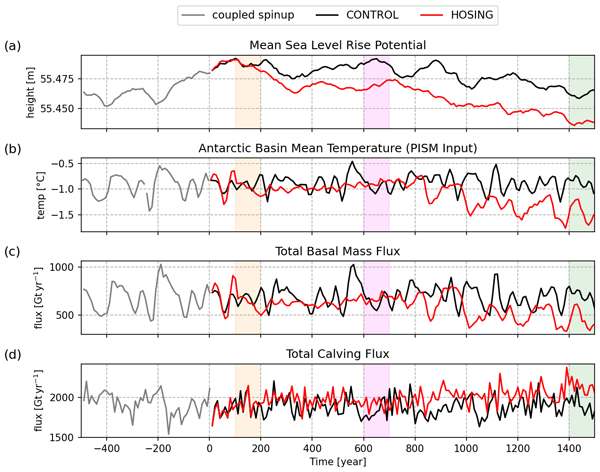
This research investigates the interactions between the Atlantic Meridional Overturning Circulation (AMOC) and the Antarctic Ice Sheet, which are both recognized as critical climate tipping elements in the Earth system. We conduct a computer simulation with artificial freshwater input in the North Atlantic to collapse the AMOC for 1500 years. Our findings show no destabilization of the Antarctic Ice Sheet induced by changes in the Southern Ocean during this period.
Niki Lohmann, David Strahl, Annika Högner, Willem Huiskamp, Matthias Boehm, and Nico Wunderling
Nonlin. Processes Geophys., 33, 313–334, https://doi.org/10.5194/npg-33-313-2026, https://doi.org/10.5194/npg-33-313-2026, 2026
Short summary
Short summary
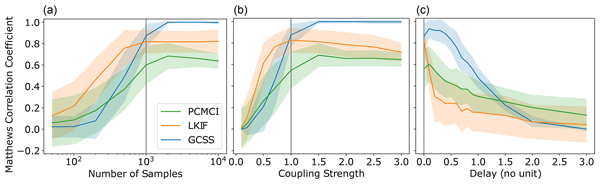
Causal inference methods could be used to study the interaction of climate tipping elements, which may degrade abruptly due to climate change. We compare three of these methods to determine their reliability and apply two of them to the Arctic summer sea ice and the Atlantic Meridional Overturning Circulation (AMOC). Our results imply that a weaker AMOC would stabilize Arctic summer sea ice, and that a loss of Arctic summer sea ice would likely stabilize the AMOC in the short term.
Stefan Rahmstorf and Levke Caesar
EGUsphere, https://doi.org/10.5194/egusphere-2026-2110, https://doi.org/10.5194/egusphere-2026-2110, 2026
Short summary
Short summary
The Atlantic Ocean circulation has a big impact on climate, not only on European temperatures. There has been a longstanding concern that it could slow down or even shut down in response to global warming. While climate models predict that, it is debated whether a slowing is already underway. Here we discuss the available data and conclude that it is very likely that indeed the circulation is already slowing down.

Jakob Dörr, Carlo Mans, Marius Årthun, Kristofer Döös, Dafydd Gwyn Evans, and Yanchun He
Ocean Sci., 22, 565–585, https://doi.org/10.5194/os-22-565-2026, https://doi.org/10.5194/os-22-565-2026, 2026
Short summary
Short summary
The Arctic Ocean plays a key role in the global ocean circulation by producing dense waters that feed the lower limb of the Atlantic meridional overturning circulation (AMOC). We use a high-resolution ocean simulation to investigate the pathways and mechanisms through which these dense waters are formed in the Arctic. Our results show that surface cooling in the Barents Sea dominates the dense water production, but that internal mixing plays a role at high densities.
Douglas I. Kelley, Chantelle Burton, Francesca Di Giuseppe, Matthew W. Jones, Maria L. F. Barbosa, Esther Brambleby, Joe R. McNorton, Zhongwei Liu, Anna S. I. Bradley, Katie Blackford, Eleanor Burke, Andrew Ciavarella, Enza Di Tomaso, Jonathan Eden, Igor José M. Ferreira, Lukas Fiedler, Andrew J. Hartley, Theodore R. Keeping, Seppe Lampe, Anna Lombardi, Guilherme Mataveli, Yuquan Qu, Patrícia S. Silva, Fiona R. Spuler, Carmen B. Steinmann, Miguel Ángel Torres-Vázquez, Renata Veiga, Dave van Wees, Jakob B. Wessel, Emily Wright, Bibiana Bilbao, Mathieu Bourbonnais, Cong Gao, Carlos M. Di Bella, Kebonye Dintwe, Victoria M. Donovan, Sarah Harris, Elena A. Kukavskaya, Aya Brigitte N'Dri, Cristina Santín, Galia Selaya, Johan Sjöström, John T. Abatzoglou, Niels Andela, Rachel Carmenta, Emilio Chuvieco, Louis Giglio, Douglas S. Hamilton, Stijn Hantson, Sarah Meier, Mark Parrington, Mojtaba Sadegh, Jesus San-Miguel-Ayanz, Fernando Sedano, Marco Turco, Guido R. van der Werf, Sander Veraverbeke, Liana O. Anderson, Hamish Clarke, Paulo M. Fernandes, and Crystal A. Kolden
Earth Syst. Sci. Data, 17, 5377–5488, https://doi.org/10.5194/essd-17-5377-2025, https://doi.org/10.5194/essd-17-5377-2025, 2025
Short summary
Short summary
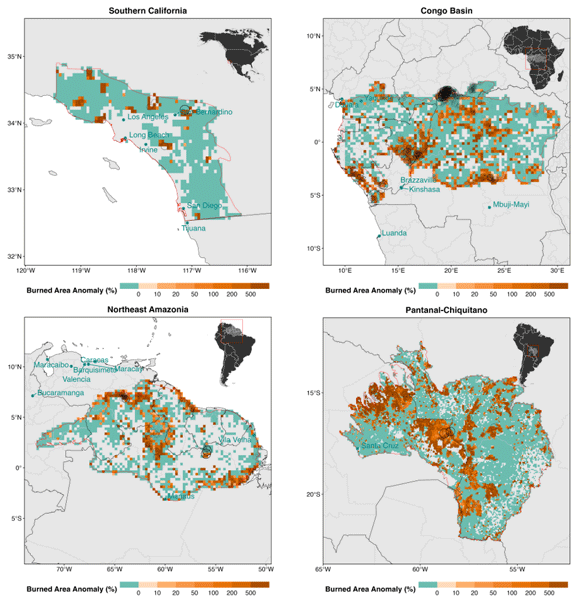
The second State of Wildfires report examines extreme wildfire events from 2024 to early 2025. It analyses key regional events in Southern California, Northeast Amazonia, Pantanal–Chiquitano, and the Congo Basin, assessing their drivers and predictability and attributing them to climate change and land use. Seasonal outlooks and decadal projections are provided. Climate change greatly increased the likelihood of these fires, and without strong mitigation, such events will become more frequent.
Ricarda Winkelmann, Donovan P. Dennis, Jonathan F. Donges, Sina Loriani, Ann Kristin Klose, Jesse F. Abrams, Jorge Alvarez-Solas, Torsten Albrecht, David Armstrong McKay, Sebastian Bathiany, Javier Blasco Navarro, Victor Brovkin, Eleanor Burke, Gokhan Danabasoglu, Reik V. Donner, Markus Drüke, Goran Georgievski, Heiko Goelzer, Anna B. Harper, Gabriele Hegerl, Marina Hirota, Aixue Hu, Laura C. Jackson, Colin Jones, Hyungjun Kim, Torben Koenigk, Peter Lawrence, Timothy M. Lenton, Hannah Liddy, José Licón-Saláiz, Maxence Menthon, Marisa Montoya, Jan Nitzbon, Sophie Nowicki, Bette Otto-Bliesner, Francesco Pausata, Stefan Rahmstorf, Karoline Ramin, Alexander Robinson, Johan Rockström, Anastasia Romanou, Boris Sakschewski, Christina Schädel, Steven Sherwood, Robin S. Smith, Norman J. Steinert, Didier Swingedouw, Matteo Willeit, Wilbert Weijer, Richard Wood, Klaus Wyser, and Shuting Yang
EGUsphere, https://doi.org/10.5194/egusphere-2025-1899, https://doi.org/10.5194/egusphere-2025-1899, 2025
Short summary
Short summary
The Tipping Points Modelling Intercomparison Project (TIPMIP) is an international collaborative effort to systematically assess tipping point risks in the Earth system using state-of-the-art coupled and stand-alone domain models. TIPMIP will provide a first global atlas of potential tipping dynamics, respective critical thresholds and key uncertainties, generating an important building block towards a comprehensive scientific basis for policy- and decision-making.
Matteo Willeit, Andrey Ganopolski, Neil R. Edwards, and Stefan Rahmstorf
Clim. Past, 20, 2719–2739, https://doi.org/10.5194/cp-20-2719-2024, https://doi.org/10.5194/cp-20-2719-2024, 2024
Short summary
Short summary
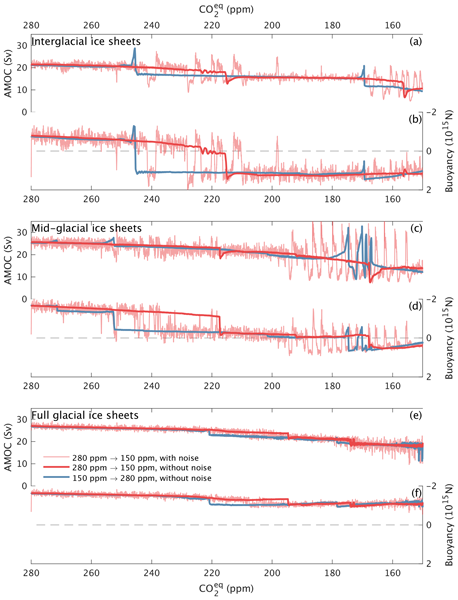
Using an Earth system model that can simulate Dansgaard–Oeschger-like events, we show that conditions under which millennial-scale climate variability occurs are related to the integrated surface buoyancy flux over the northern North Atlantic. This newly defined buoyancy measure explains why millennial-scale climate variability arising from abrupt changes in the Atlantic meridional overturning circulation occurred for mid-glacial conditions but not for interglacial or full glacial conditions.
David B. Bonan, Jakob Dörr, Robert C. J. Wills, Andrew F. Thompson, and Marius Årthun
The Cryosphere, 18, 2141–2159, https://doi.org/10.5194/tc-18-2141-2024, https://doi.org/10.5194/tc-18-2141-2024, 2024
Short summary
Short summary
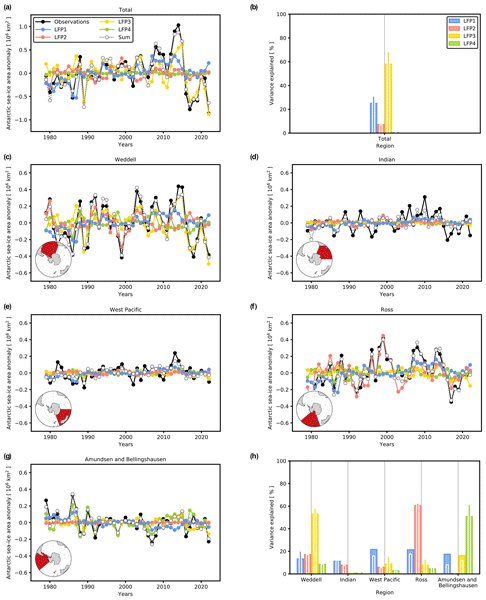
Antarctic sea ice has exhibited variability over satellite records, including a period of gradual expansion and a period of sudden decline. We use a novel statistical method to identify sources of variability in observed Antarctic sea ice changes. We find that the gradual increase in sea ice is likely related to large-scale temperature trends, and periods of abrupt sea ice decline are related to specific flavors of equatorial tropical variability known as the El Niño–Southern Oscillation.
Jakob Simon Dörr, David B. Bonan, Marius Årthun, Lea Svendsen, and Robert C. J. Wills
The Cryosphere, 17, 4133–4153, https://doi.org/10.5194/tc-17-4133-2023, https://doi.org/10.5194/tc-17-4133-2023, 2023
Short summary
Short summary
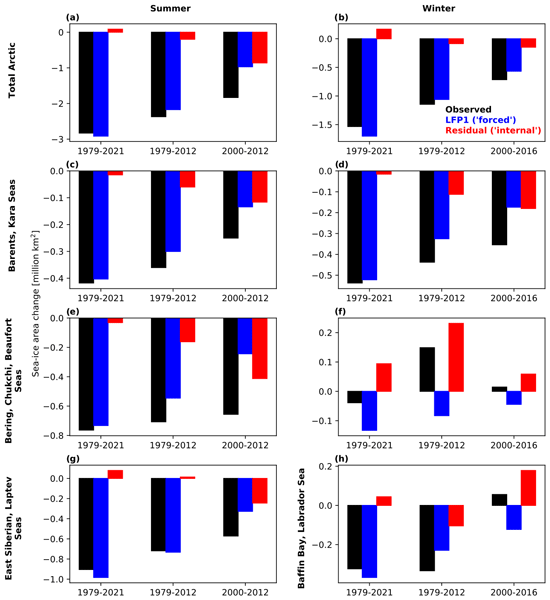
The Arctic sea-ice cover is retreating due to climate change, but this retreat is influenced by natural (internal) variability in the climate system. We use a new statistical method to investigate how much internal variability has affected trends in the summer and winter Arctic sea-ice cover using observations since 1979. Our results suggest that the impact of internal variability on sea-ice retreat might be lower than what climate models have estimated.

Ole Rieke, Marius Årthun, and Jakob Simon Dörr
The Cryosphere, 17, 1445–1456, https://doi.org/10.5194/tc-17-1445-2023, https://doi.org/10.5194/tc-17-1445-2023, 2023
Short summary
Short summary
The Barents Sea is the region of most intense winter sea ice loss, and future projections show a continued decline towards ice-free conditions by the end of this century but with large fluctuations. Here we use climate model simulations to look at the occurrence and drivers of rapid ice change events in the Barents Sea that are much stronger than the average ice loss. A better understanding of these events will contribute to improved sea ice predictions in the Barents Sea.
Cited articles
Årthun, M.: Surface-Forced Variability in the Nordic Seas Overturning Circulation and Overflows, Geophys. Res. Lett., 50, e2023GL104158, https://doi.org/10.1029/2023GL104158, 2023. a
Årthun, M., Asbjørnsen, H., Chafik, L., Johnson, H. L., and Våge, K.: Future strengthening of the Nordic Seas overturning circulation, Nat. Commun., 14, 2065, https://doi.org/10.1038/s41467-023-37846-6, 2023. a, b, c, d
Årthun, M., Brakstad, A., Dörr, J., Johnson, H. L., Mans, C., Semper, S., and Våge, K.: Atlantification drives recent strengthening of the Arctic overturning circulation, Sci. Adv., 11, eadu1794, https://doi.org/10.1126/sciadv.adu1794, 2025. a
Berk, J. van den, Drijfhout, S. S., and Hazeleger, W.: Circulation adjustment in the Arctic and Atlantic in response to Greenland and Antarctic mass loss, Clim. Dynam., 57, 1689–1707, https://doi.org/10.1007/s00382-021-05755-3, 2021. a
Böning, C. W., Scheinert, M., Dengg, J., Biastoch, A., and Funk, A.: Decadal variability of subpolar gyre transport and its reverberation in the North Atlantic overturning, Geophys. Res. Lett., 33, https://doi.org/10.1029/2006GL026906, 2006. a, b
Bony, S., Dufresne, J.-L., Treut, H. L., Morcrette, J.-J., and Senior, C.: On dynamic and thermodynamic components of cloud changes, Clim. Dynam., 22, 71–86, https://doi.org/10.1007/s00382-003-0369-6, 2004. a
Bosse, A., Fer, I., Søiland, H., and Rossby, T.: Atlantic water transformation along its poleward pathway across the Nordic Seas, J. Geophys. Res.-Oceans, 123, 6428–6448, https://doi.org/10.1029/2018JC014147, 2018. a
Brakstad, A., Gebbie, G., Våge, K., Jeansson, E., and Ólafsdóttir, S. R.: Formation and pathways of dense water in the Nordic Seas based on a regional inversion, Prog. Oceanogr., 212, 102981, https://doi.org/10.1016/j.pocean.2023.102981, 2023. a
Bretones, A., Nisancioglu, K. H., Jensen, M. F., Brakstad, A., and Yang, S.: Transient Increase in Arctic Deep-Water Formation and Ocean Circulation under Sea Ice Retreat, J. Climate, 35, 109–124, https://doi.org/10.1175/JCLI-D-21-0152.1, 2022. a
Bryan, K.: Poleward Heat Transport by the Ocean: Observations and Models, Annu. Rev. Earth Pl. Sc., 10, 15–38, https://doi.org/10.1146/annurev.ea.10.050182.000311, 1982. a
Caesar, L., Rahmstorf, S., Robinson, A., Feulner, G., and Saba, V.: Observed fingerprint of a weakening Atlantic Ocean overturning circulation, Nature, 556, 191–196, https://doi.org/10.1038/s41586-018-0006-5, 2018. a, b, c
Caesar, L., McCarthy, G. D., Thornalley, D. J. R., Cahill, N., and Rahmstorf, S.: Current Atlantic Meridional Overturning Circulation Weakest in Last Millennium, Nat. Geosci., 14, 118–120, https://doi.org/10.1038/s41561-021-00699-z, 2021. a
Chafik, L., Holliday, N. P., Bacon, S., and Rossby, T.: Irminger Sea Is the Center of Action for Subpolar AMOC Variability, Geophys. Res. Lett., 49, https://doi.org/10.1029/2022GL099133, 2022. a, b
Chafik, L., Årthun, M., Langehaug, H. R., Nilsson, J., and Rossby, T.: The Nordic Seas overturning is modulated by northward-propagating thermohaline anomalies, Commun. Earth Environ., 6, 573, https://doi.org/10.1038/s43247-025-02557-x, 2025. a, b, c
Chemke, R., Zanna, L., and Polvani, L. M.: Identifying a Human Signal in the North Atlantic Warming Hole, Nat. Commun., 11, 1540, https://doi.org/10.1038/s41467-020-15285-x, 2020. a
Copernicus Climate Change Service: ORAS5 global ocean reanalysis monthly data from 1958 to present, Copernicus Climate Change Service (C3S) Climate Data Store (CDS), https://doi.org/10.24381/cds.67e8eeb7, 2021. a
Dagan, G., Stier, P., and Watson-Parris, D.: Aerosol Forcing Masks and Delays the Formation of the North Atlantic Warming Hole by Three Decades, Geophys. Res. Lett., 47, e2020GL090778, https://doi.org/10.1029/2020GL090778, 2020. a
Decuypère, M., Tremblay, L. B., and Dufour, C. O.: Impact of Ocean Heat transport on Arctic Sea Ice variability in the GFDL CM2-O model suite, J. Geophys. Res.-Oceans, 127, e2021JC017762, https://doi.org/10.1029/2021JC017762, 2022. a
Delworth, T. L., Rosati, A., Anderson, W., Adcroft, A. J., Balaji, V., Benson, R., Dixon, K., Griffies, S. M., Lee, H.-C., Pacanowski, R. C., Vecchi, G. A., Wittenberg, A. T., Zeng, F., and Zhang, R.: Simulated climate and climate change in the GFDL CM2.5 high-resolution coupled climate model, J. Climate, 25, 2755–2781, https://doi.org/10.1175/JCLI-D-11-00316.1, 2012. a, b
Diamond, R., Sime, L. C., Schroeder, D., Jackson, L. C., Holland, P. R., Alastrué de Asenjo, E., Bellomo, K., Danabasoglu, G., Hu, A., Jungclaus, J., Montoya, M., Meccia, V. L., Saenko, O. A., and Swingedouw, D.: A weakened AMOC could cause Southern Ocean temperature and sea-ice change on multidecadal timescales, J. Geophys. Res.-Oceans, 130, e2024JC022027, https://doi.org/10.1029/2024JC022027, 2025. a
Dickson, R. R. and Brown, J.: The production of North Atlantic Deep Water: Sources, rates, and pathways, J. Geophys. Res.-Oceans, 99, 12319–12341, https://doi.org/10.1029/94JC00530, 1994. a, b
Dima, M. and Lohmann, G.: Evidence for Two Distinct Modes of Large-Scale Ocean Circulation Changes over the Last Century, J. Climate, 23, 5–16, https://doi.org/10.1175/2009JCLI2867.1, 2010. a
Drijfhout, S., van Oldenborgh, G. J., and Cimatoribus, A.: Is a Decline of AMOC Causing the Warming Hole above the North Atlantic in Observed and Modeled Warming Patterns?, J. Climate, 25, 8373–8379, https://doi.org/10.1175/JCLI-D-12-00490.1, 2012. a
Drijfhout, S., Angevaare, J. R., Mecking, J., van Westen, R. M., and Rahmstorf, S.: Shutdown of northern Atlantic overturning after 2100 following deep mixing collapse in CMIP6 projections, Environ. Res. Lett., 20, 094062, https://doi.org/10.1088/1748-9326/adfa3b, 2025. a, b
Dörr, J., Årthun, M., Eldevik, T., and Sandø, A. B.: Expanding influence of Atlantic and Pacific Ocean heat transport on winter sea-ice variability in a warming Arctic, J. Geophys. Res.-Oceans, 129, e2023JC019900, https://doi.org/10.1029/2023JC019900, 2024. a
Fröhle, J., Handmann, P. V. K., and Biastoch, A.: Major sources of North Atlantic Deep Water in the subpolar North Atlantic from Lagrangian analyses in an eddy-rich ocean model, Ocean Sci., 18, 1431–1450, https://doi.org/10.5194/os-18-1431-2022, 2022. a
Gillard, L. C., Pennelly, C., Johnson, H. L., and Myers, P. G.: The Effects of Atmospheric and Lateral Buoyancy Fluxes on Labrador Sea Mixed Layer Depth, Ocean Model., 171, 101974, https://doi.org/10.1016/j.ocemod.2022.101974, 2022. a
Gillies, S: The shapely user manual, https://pypi.org/project/Shapely (last access: 15 April 2026), 2013. a
Gou, R., Lohmann, G., and Wu, L.: Atlantic Meridional Overturning Circulation Decline: Tipping Small Scales under Global Warming, Phys. Rev. Lett., 133, 034201, https://doi.org/10.1103/PhysRevLett.133.034201, 2024. a
Gregory, J. M., Dixon, K. W., Stouffer, R. J., Weaver, A. J., Driesschaert, E., Eby, M., Fichefet, T., Hasumi, H., Hu, A., Jungclaus, J. H., Kamenkovich, I. V., Levermann, A., Montoya, M., Murakami, S., Nawrath, S., Oka, A., Sokolov, A. P., and Thorpe, R. B.: A model intercomparison of changes in the Atlantic thermohaline circulation in response to increasing atmospheric CO2 concentration, Geophys. Res. Lett., 32, https://doi.org/10.1029/2005GL023209, 2005. a
Griffies, S. M., Winton, M., Anderson, W. G., Benson, R., Delworth, T. L., Dufour, C. O., Dunne, J. P., Goddard, P., Morrison, A. K., Rosati, A., Wittenberg, A. T., Yin, J., and Zhang, R.: Impacts on ocean heat from transient mesoscale eddies in a hierarchy of climate models, J. Climate, 28, 952–977, https://doi.org/10.1175/JCLI-D-14-00353.1, 2015. a, b
Holliday, N. P., Bersch, M., Berx, B., Chafik, L., Cunningham, S., Florindo-López, C., Hátún, H., Johns, W., Josey, S. A., Larsen, K. M. H., Mulet, S., Oltmanns, M., Reverdin, G., Rossby, T., Thierry, V., Valdimarsson, H., and Yashayaev, I.: Ocean circulation causes the largest freshening event for 120 years in eastern subpolar North Atlantic, Nat. Commun., 11, 585, https://doi.org/10.1038/s41467-020-14474-y, 2020. a
Hoyer, S. and Hamman, J.: xarray: N-D labeled arrays and datasets in Python, J. Open Res. Softw., 5, https://doi.org/10.5334/jors.148, 2017. a
Huang, J., Pickart, R. S., Huang, R. X., Lin, P., Brakstad, A., and Xu, F.: Sources and upstream pathways of the densest overflow water in the Nordic Seas, Nat. Commun., 11, 5389, https://doi.org/10.1038/s41467-020-19143-8, 2020. a
Jackson, L. C., Kahana, R., Graham, T., Ringer, M., A., Woollings, T., Mecking, J. V., and Wood, R., A.: Global and European climate impacts of a slowdown of the AMOC in a high resolution GCM, Clim. Dynam., 45, 3299–3316, https://doi.org/10.1007/s00382-015-2540-2, 2015. a
Jackson, L. C., Alastrué de Asenjo, E., Bellomo, K., Danabasoglu, G., Haak, H., Hu, A., Jungclaus, J., Lee, W., Meccia, V. L., Saenko, O., Shao, A., and Swingedouw, D.: Understanding AMOC stability: the North Atlantic Hosing Model Intercomparison Project, Geosci. Model Dev., 16, 1975–1995, https://doi.org/10.5194/gmd-16-1975-2023, 2023. a
Josey, S. A. and Marsh, R.: Surface freshwater flux variability and recent freshening of the North Atlantic in the eastern subpolar gyre, J. Geophys. Res.-Oceans, 110, https://doi.org/10.1029/2004JC002521, 2005. a
Keil, P., Mauritsen, T., Jungclaus, J., Hedemann, C., Olonscheck, D., and Ghosh, R.: Multiple drivers of the North Atlantic warming hole, Nat. Clim. Change, 10, 667–671, https://doi.org/10.1038/s41558-020-0819-8, 2020. a
Kuhlbrodt, T., Titz, S., Feudel, U., and Rahmstorf, S.: A simple model of seasonal open ocean convection, Ocean Dynam., 52, 36–49, https://doi.org/10.1007/s10236-001-8175-3, 2001. a
Kuhlbrodt, T., Griesel, A., Montoya, M., Levermann, A., Hofmann, M., and Rahmstorf, S.: On the driving processes of the Atlantic meridional overturning circulation, Rev. Geophys., 45, https://doi.org/10.1029/2004RG000166, 2007. a
Larsen, K. M. H., Hansen, B., Hátún, H., Johansen, G. E., Østerhus, S., and Olsen, S. M.: The Coldest and Densest Overflow Branch Into the North Atlantic is Stable in Transport, But Warming, Geophys. Res. Lett., 51, e2024GL110097, https://doi.org/10.1029/2024GL110097, 2024. a, b
Latif, M., Sun, J., Visbeck, M., and Bordbar, M., H.: Natural variability has dominated Atlantic Meridional Overturning Circulation since 1900, Nat. Clim. Change, 12, 455–460, https://doi.org/10.1038/s41558-022-01342-4, 2022. a
Levermann, A., Griesel, A., Hofmann, M., Montoya, M., and Rahmstorf, S.: Dynamic sea level changes following changes in the thermohaline circulation, Clim. Dynam., 24, 347–354, 2005. a
Li, K. Y. and Liu, W.: Weakened Atlantic Meridional Overturning Circulation Causes the Historical North Atlantic Warming Hole, Commun. Earth Environ., 6, 416, https://doi.org/10.1038/s43247-025-02403-0, 2025. a, b
Locarnini, R. A., Mishonov, A. V., Baranova, O. K., Reagan, J. R., Boyer, T. P., Seidov, D., Wang, Z., Garcia, H. E., Bouchard, C., Cross, S. L., Paver, C. R., and Dukhovskoy, D.: World Ocean Atlas 2023, Volume 1: Temperature, NOAA Atlas NESDIS; 89, National Centers for Environmental Information (U.S.) [data set], https://doi.org/10.25923/54bh-1613, 2024. a
Marshall, J. and Schott, F.: Open‐ocean convection: Observations, theory and models, Rev. Geophys., 37, 1–64, https://doi.org/10.1029/98RG02739, 1999. a
Mauritzen, C.: Production of dense overflow waters feeding the North Atlantic across the Greenland–Scotland Ridge. Part 1: Evidence for a revised circulation scheme, Deep-Sea Res. Pt. I, 43, 769–806, https://doi.org/10.1016/0967-0637(96)00037-4, 1996. a
McCarthy, G. D., Hug, G., Smeed, D., Morris, K. J., and Moat, B.: Signal and Noise in the Atlantic Meridional Overturning Circulation at 26° N, Geophys. Res. Lett., 52, e2025GL115055, https://doi.org/10.1029/2025GL115055, 2025. a
Msadek, R., Johns, W. E., Yeager, S. G., Danabasoglu, G., Delworth, T. L., and Rosati, A.: The Atlantic meridional heat transport at 26.5 N and its relationship with the MOC in the RAPID array and the GFDL and NCAR coupled models, J. Climate, 26, 4335–4356, 2013. a
Nycander, J., Hieronymus, M., and Roquet, F.: The nonlinear equation of state of sea water and the global water mass distribution, Geophys. Res. Lett., 42, 7714–7721, https://doi.org/10.1002/2015GL065525, 2015. a
Oldenburg, D., Armour, K. C., Thompson, L., and Bitz, C. M.: Distinct Mechanisms of Ocean Heat Transport Into the Arctic Under Internal Variability and Climate Change, Geophys. Res. Lett., 45, 7692–7700, https://doi.org/10.1029/2018gl078719, 2018. a
Olsen, S. M., Hansen, B., Quadfasel, D., and Østerhus, S.: Observed and modelled stability of overflow across the Greenland–Scotland ridge, Nature, 455, 519–522, https://doi.org/10.1038/nature07302, 2008. a
Orihuela-Pinto, B., England, M. H., and Taschetto, A. S.: Interbasin and interhemispheric impacts of a collapsed Atlantic Overturning Circulation, Nat. Clim. Change, 12, 558–565, https://doi.org/10.1038/s41558-022-01380-y, 2022. a
Pickart, R. S., Spall, M. A., Ribergaard, M. H., Moore, G. W. K., and Milliff, R. F.: Deep convection in the Irminger Sea forced by the Greenland tip jet, Nature, 424, 152–156, https://doi.org/10.1038/nature01729, 2003. a
Qasmi, S.: Past and future response of the North Atlantic warming hole to anthropogenic forcing, Earth Syst. Dynam., 14, 685–695, https://doi.org/10.5194/esd-14-685-2023, 2023. a
Rahmstorf, S., Box, J. E., Feulner, G., Mann, M. E., Robinson, A., Rutherford, S., and Schaffernicht, E. J.: Exceptional twentieth-century slowdown in Atlantic Ocean overturning circulation, Nat. Clim. Change, 5, 475–480, https://doi.org/10.1038/nclimate2554, 2015. a
Reagan, J. R., Boyer, T. P., García, H. E., Locarnini, R. A., Baranova, O. K., Bouchard, C., Cross, S. L., Mishonov, A. V., Paver, C. R., Seidov, D., Wang, Z., and Dukhovskoy, D.: World Ocean Atlas 2023, dataset: NCEI Accession 0270533, https://www.ncei.noaa.gov/products/world-ocean-atlas (last access: 22 November 2024), 2024a. a, b
Reagan, J. R., Seidov, D., Wang, Z., Dukhovskoy, D., Boyer, T. P., Locarnini, R. A., Baranova, O. K., Mishonov, A. V., Garcia, H. E., Bouchard, C., Cross, S. L., and Paver, C. R.: World Ocean Atlas 2023, Volume 2: Salinity, NOAA Atlas NESDIS; 90, National Centers for Environmental Information (U.S.) [data set], https://doi.org/10.25923/70qt-9574, 2024b. a
Ren, Q., Xie, S.-P., Peng, Q., Li, Y., and Wang, F.: Equatorial Atlantic mid-depth warming indicates Atlantic meridional overturning circulation slowdown, Commun. Earth Environ., 6, 819, https://doi.org/10.1038/s43247-025-02793-1, 2025. a
Roach, A., Aagaard, K., and Carsey, F.: Coupled ice‐ocean variability in the Greenland Sea, Atmos. Ocean, 31, 319–337, https://doi.org/10.1080/07055900.1993.9649474, 1993. a
Roewer, S.: sasharoewer/AMOC-NOC-BOX-MODEL: AMOC-NOC Box model (AMOC-NOC), Zenodo [code, data set], https://doi.org/10.5281/zenodo.19589770, 2026. a
Rossby, T., Chafik, L., and Houpert, L.: What can Hydrography Tell Us About the Strength of the Nordic Seas MOC Over the Last 70 to 100 Years?, Geophys. Res. Lett., 47, e2020GL087456, https://doi.org/10.1029/2020GL087456, 2020. a
Rudels, B.: Haline convection in the Greenland Sea, Deep-Sea Res. Pt. A, 37, 1491–1511, https://doi.org/10.1016/0198-0149(90)90139-M, 1990. a
Saba, V. S., Griffies, S. M., Anderson, W. G., Winton, M., Alexander, M. A., Delworth, T. L., Hare, J. A., Harrison, M. J., Rosati, A., Vecchi, G. A., and Zhang, R.: Enhanced warming of the Northwest Atlantic Ocean under climate change, J. Geophys. Res.-Oceans, 121, 118–132, https://doi.org/10.1002/2015JC011346, 2016. a, b
Shu, Q., Årthun, M., Wang, S., Song, Z., Zhang, M., and Qiao, F.: Arctic Ocean Amplification in a warming climate in CMIP6 models, Sci. Adv., 8, eabn9755, https://doi.org/10.1126/sciadv.abn9755, 2022. a
Steele, M., Morley, R., and Ermold, W.: PHC: A global ocean hydrography with a high-quality Arctic Ocean, J. Climate, 14, 2079–2087, https://doi.org/10.1175/1520-0442(2001)014<2079:PAGOHW>2.0.CO;2, 2001. a
Stouffer, R. J., Yin, J., Gregory, J. M., Dixon, K. W., Spelman, M. J., Hurlin, W., Weaver, A. J., Eby, M., Flato, G. M., Hasumi, H., Hu, A., Jungclaus, J. H., Kamenkovich, I. V., Levermann, A., Montoya, M., Murakami, S., Nawrath, S., Oka, A., Peltier, W. R., Robitaille, D. Y., Sokolov, A., Vettoretti, G., and Weber, S. L.: Investigating the Causes of the Response of the Thermohaline Circulation to Past and Future Climate Changes, J. Climate, 19, 1365–1387, https://doi.org/10.1175/JCLI3689.1, 2006. a
Trenberth, K. E. and Fasullo, J. T.: Atlantic meridional heat transports computed from balancing Earth's energy locally, Geophys. Res. Lett., 44, 1919–1927, https://doi.org/10.1002/2016GL072475, 2017. a
van Westen, R. M., den Toom, M., and Dijkstra, H. A.: Physics-based early warning signal shows that AMOC is on tipping course, Sci. Adv., 10, eadk1189, https://doi.org/10.1126/sciadv.adk1189, 2024. a, b
van Westen, R. M., Kliphuis, M., and Dijkstra, H. A.: Collapse of the Atlantic Meridional Overturning Circulation in a Strongly Eddying Ocean‐Only Model, Geophys. Res. Lett., 52, e2024GL114532, https://doi.org/10.1029/2024GL114532, 2025a. a, b
van Westen, R. M., van der Wiel, K., Falkena, S. K. J., and Selten, F.: Changing European hydroclimate under a collapsed AMOC in the Community Earth System Model, Hydrol. Earth Syst. Sci., 29, 6607–6630, https://doi.org/10.5194/hess-29-6607-2025, 2025b. a
Vellinga, M. and Wood, R. A.: Global Climatic Impacts of a Collapse of the Atlantic Thermohaline Circulation, Climatic Change, 54, 251–267, https://doi.org/10.1023/A:1016168827653, 2002. a, b
Weaver, A. J., Eby, M., Kienast, M., and Saenko, O. A.: Response of the Atlantic meridional overturning circulation to increasing atmospheric CO2: Sensitivity to mean climate state, Geophys. Res. Lett., 34, https://doi.org/10.1029/2006GL028756, 2007. a
Weijer, W., Cheng, W., Garuba, O. A., Hu, A., and Nadiga, B. T.: CMIP6 Models Predict Significant 21st Century Decline of the Atlantic Meridional Overturning Circulation, Geophys. Res. Lett., 47, e2019GL086075, https://doi.org/10.1029/2019GL086075, 2020. a
Wett, S., Rhein, M., Kieke, D., Mertens, C., and Moritz, M.: Meridional Connectivity of a 25-Year Observational AMOC Record at 47° N, Geophys. Res. Lett., 50, e2023GL103284, https://doi.org/10.1029/2023GL103284, 2023. a
Wood, R. A., Rodríguez, J. M., Smith, R. S., Jackson, L. C., and Hawkins, E.: Observable, low-order dynamical controls on thresholds of the Atlantic meridional overturning circulation, Clim. Dynam., 53, 6815–6834, https://doi.org/10.1007/s00382-019-04956-1, 2019. a, b
Worthington, E. L., Moat, B. I., Smeed, D. A., Mecking, J. V., Marsh, R., and McCarthy, G. D.: A 30-year reconstruction of the Atlantic meridional overturning circulation shows no decline, Ocean Sci., 17, 285–299, https://doi.org/10.5194/os-17-285-2021, 2021. a
Yang, Q., Dixon, T. H., Myers, P. G., Bonin, J., Chambers, D., van den Broeke, M. R., Ribergaard, M. H., and Mortensen, J.: Recent increases in Arctic freshwater flux affects Labrador Sea convection and Atlantic overturning circulation, Nat. Commun., 7, 10525, https://doi.org/10.1038/ncomms10525, 2016. a, b, c, d
Zhang, R. and Thomas, M.: Horizontal circulation across density surfaces contributes substantially to the long-term mean northern Atlantic Meridional Overturning Circulation, Commun. Earth Environ., 2, 112, https://doi.org/10.1038/s43247-021-00182-y, 2021. a
Zhu, C. and Liu, Z.: Weakening Atlantic Overturning Circulation Causes South Atlantic Salinity Pile-up, Nat. Clim. Change, 10, 998–1003, https://doi.org/10.1038/s41558-020-0897-7, 2020. a
Zhu, C., Liu, Z., Zhang, S., and Wu, L.: Likely accelerated weakening of Atlantic overturning circulation emerges in optimal salinity fingerprint, Nat. Commun., 14, 1245, https://doi.org/10.1038/s41467-023-36288-4, 2023. a
Download
The requested paper has a corresponding corrigendum published. Please read the corrigendum first before downloading the article.
- Article
(6157 KB) - Full-text XML
Short summary
The Atlantic Meridional Overturning Circulation (AMOC) is weakening in response to global warming, while the Nordic Seas Overturning Circulation (NOC) is projected to strengthen. We suggest a feedback mechanism in which a weakened AMOC leads to reduced salt transport into the North Atlantic, decreasing the density in that region and potentially strengthening the NOC.
The Atlantic Meridional Overturning Circulation (AMOC) is weakening in response to global...


