
Articles | Volume 21, issue 6
https://doi.org/10.5194/os-21-3397-2025
© Author(s) 2025. This work is distributed under
the Creative Commons Attribution 4.0 License.
the Creative Commons Attribution 4.0 License.
https://doi.org/10.5194/os-21-3397-2025
© Author(s) 2025. This work is distributed under
the Creative Commons Attribution 4.0 License.
the Creative Commons Attribution 4.0 License.
Research article
| 
10 Dec 2025
Research article |
| 10 Dec 2025
| 10 Dec 2025
Microstructure observations and mixing parameterizations along an Atlantic transect in very weak turbulence

NIOZ Royal Netherlands Institute for Sea Research, Den Burg, the Netherlands
Ocean and Earth Science, University of Southampton, Southampton, United Kingdom
Sjoerd Groeskamp
NIOZ Royal Netherlands Institute for Sea Research, Den Burg, the Netherlands
Bieito Fernandez Castro
Ocean and Earth Science, University of Southampton, Southampton, United Kingdom
Hans van Haren
NIOZ Royal Netherlands Institute for Sea Research, Den Burg, the Netherlands
Related authors
No articles found.
Hans van Haren
Ocean Sci., 22, 1919–1936, https://doi.org/10.5194/os-22-1919-2026, https://doi.org/10.5194/os-22-1919-2026, 2026
Short summary
Short summary
Turbulence is vital for life, also in 2500-m deep Mediterranean waters. Yearlong observations with about 3000 high-resolution temperature sensors show: About half the time, relatively warm stratified waters are moved from 100’s of meters higher levels to near the seafloor. These internal-wave and eddy-induced motions are three times more turbulent than those induced via general geothermal heating from below, and about ten times more turbulent than those from open-ocean processes.
Hans van Haren
Ocean Sci., 22, 1501–1513, https://doi.org/10.5194/os-22-1501-2026, https://doi.org/10.5194/os-22-1501-2026, 2026
Short summary
Short summary
In this paper, heights of moored oceanographic instrumentation are determined from high-resolution temperature data. Unfortunately pressure-corrected data could not be used from near-homogeneous conditions due to short-term electronic drift. Instead, a satisfactory height determination was found during relatively strong stratification and large turbulence activity. By using turbulence data across a strong temperature gradient, significant height variations were detectable to within ±0.2 m.
Miriam F. Sterl, Carlo J. Mans, Alberto C. Naveira Garabato, and Sjoerd Groeskamp
EGUsphere, https://doi.org/10.5194/egusphere-2026-2566, https://doi.org/10.5194/egusphere-2026-2566, 2026
Short summary
Short summary
Large oceanic 'whirls', called eddies, can mix ocean properties such as heat or salt. The mixing strength is tricky to measure directly. We present a new method to derive the mixing strength based on data from a mooring; a cable from the seafloor to the surface, with instruments along it. We apply our method to a mooring in the Southern Ocean and show that it confirms some important features predicted from theory. The method can be a valuable tool to increase our understanding of ocean mixing.

Sjoerd Groeskamp
Ocean Sci., 22, 501–529, https://doi.org/10.5194/os-22-501-2026, https://doi.org/10.5194/os-22-501-2026, 2026
Short summary
Short summary
We can accurately estimate sea level height using sattelites and measurements, but we don’t understand all the processes that change sea level. Such as the impact of ocean mixing or how sunlight penetrates into the deep ocean This study quantifies the magnitude and uncertainty of many such processes. We find that sea level rise is not understood in detail and we need more ocean observations to improve our understanding, because these processes will impact future sea level rise.
Hans van Haren
EGUsphere, https://doi.org/10.5194/egusphere-2026-188, https://doi.org/10.5194/egusphere-2026-188, 2026
Preprint archived
Short summary
Short summary
The Mediterranean Sea is known for its limited tidal motions. For example, surface barotropic tidal elevations have an amplitude of 0.1 m in the Northwestern Mediterranean. As is demonstrated in this paper, such small tides are noticeable in temperature records at the 2500-m deep seafloor, but only under near-homogeneous conditions. After correcting for pressure effects, the observed internal-wave temperature signals may thus be corrected for 1.5x10⁻⁵-°C amplitude semidiurnal barotropic tides.
Hans van Haren
EGUsphere, https://doi.org/10.5194/egusphere-2026-195, https://doi.org/10.5194/egusphere-2026-195, 2026
Preprint archived
Short summary
Short summary
Occasionally, high-resolution temperature sensors moored close to the 2550-m deep Mediterranean seafloor register minute-long flashes of 0.0005–0.001 °C warmer than the environment. A movie shows traveling heat flashes, most likely with internal-wave instabilities in overlying stratified waters. The instabilities seem to release the flashes from a geothermally heated seafloor of which turbulence convection is suppressed by warmer waters from above.
Hans van Haren
EGUsphere, https://doi.org/10.5194/egusphere-2026-193, https://doi.org/10.5194/egusphere-2026-193, 2026
Preprint archived
Short summary
Short summary
3D high-resolution observations are used to investigate whether the interaction between energy-abundant (sub-)mesoscale eddies and internal waves can lead to turbulence generation in the deep Mediterranean. This may prove important for replenishment of nutrients for deep-sea life and circulation. Spectral power-laws demonstrate a dominance of convection-turbulence, which leads to a modification of the model for energy cascade in the deep sea.
Hans van Haren and Henk de Haas
Ocean Sci., 21, 1125–1140, https://doi.org/10.5194/os-21-1125-2025, https://doi.org/10.5194/os-21-1125-2025, 2025
Short summary
Short summary
Turbulent water motions are important for the exchange of momentum, heat, nutrients, and suspended matter in the deep sea. The shape of the marine topography influences most water turbulence via breaking internal waves at critically sloping seafloors. In this paper, the concept of critical slopes is revisited from a global internal wave turbulence viewpoint using seafloor topography and moored temperature sensor data. The potential robustness of the seafloor–internal wave interaction is discussed.
Hans van Haren
Ocean Sci., 21, 555–565, https://doi.org/10.5194/os-21-555-2025, https://doi.org/10.5194/os-21-555-2025, 2025
Short summary
Short summary
Ocean circulations include small-scale processes like transport through sub-mesoscale eddies and turbulence by internal wave breaking. Knowledge is lacking on the interaction between the different processes. In deep, weakly stratified waters, continuous spectral slopes are observed that extend from sub-mesoscales across the internal wave band to the turbulence range. Such correspondence is suggested as being a potential feedback mechanism stabilizing large-scale ocean circulations.
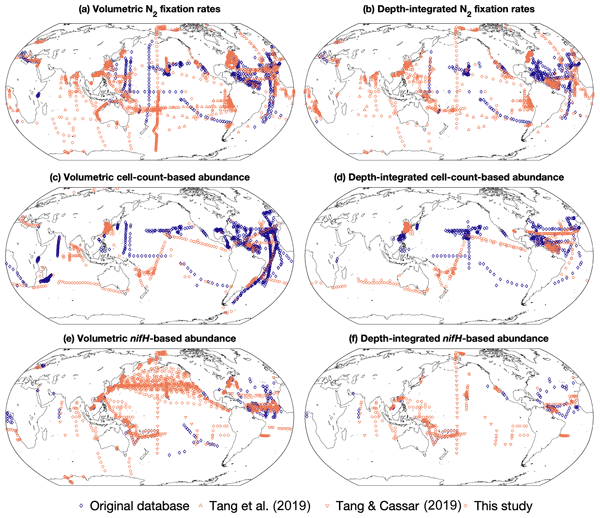
Zhibo Shao, Yangchun Xu, Hua Wang, Weicheng Luo, Lice Wang, Yuhong Huang, Nona Sheila R. Agawin, Ayaz Ahmed, Mar Benavides, Mikkel Bentzon-Tilia, Ilana Berman-Frank, Hugo Berthelot, Isabelle C. Biegala, Mariana B. Bif, Antonio Bode, Sophie Bonnet, Deborah A. Bronk, Mark V. Brown, Lisa Campbell, Douglas G. Capone, Edward J. Carpenter, Nicolas Cassar, Bonnie X. Chang, Dreux Chappell, Yuh-ling Lee Chen, Matthew J. Church, Francisco M. Cornejo-Castillo, Amália Maria Sacilotto Detoni, Scott C. Doney, Cecile Dupouy, Marta Estrada, Camila Fernandez, Bieito Fernández-Castro, Debany Fonseca-Batista, Rachel A. Foster, Ken Furuya, Nicole Garcia, Kanji Goto, Jesús Gago, Mary R. Gradoville, M. Robert Hamersley, Britt A. Henke, Cora Hörstmann, Amal Jayakumar, Zhibing Jiang, Shuh-Ji Kao, David M. Karl, Leila R. Kittu, Angela N. Knapp, Sanjeev Kumar, Julie LaRoche, Hongbin Liu, Jiaxing Liu, Caroline Lory, Carolin R. Löscher, Emilio Marañón, Lauren F. Messer, Matthew M. Mills, Wiebke Mohr, Pia H. Moisander, Claire Mahaffey, Robert Moore, Beatriz Mouriño-Carballido, Margaret R. Mulholland, Shin-ichiro Nakaoka, Joseph A. Needoba, Eric J. Raes, Eyal Rahav, Teodoro Ramírez-Cárdenas, Christian Furbo Reeder, Lasse Riemann, Virginie Riou, Julie C. Robidart, Vedula V. S. S. Sarma, Takuya Sato, Himanshu Saxena, Corday Selden, Justin R. Seymour, Dalin Shi, Takuhei Shiozaki, Arvind Singh, Rachel E. Sipler, Jun Sun, Koji Suzuki, Kazutaka Takahashi, Yehui Tan, Weiyi Tang, Jean-Éric Tremblay, Kendra Turk-Kubo, Zuozhu Wen, Angelicque E. White, Samuel T. Wilson, Takashi Yoshida, Jonathan P. Zehr, Run Zhang, Yao Zhang, and Ya-Wei Luo
Earth Syst. Sci. Data, 15, 3673–3709, https://doi.org/10.5194/essd-15-3673-2023, https://doi.org/10.5194/essd-15-3673-2023, 2023
Short summary
Short summary
N2 fixation by marine diazotrophs is an important bioavailable N source to the global ocean. This updated global oceanic diazotroph database increases the number of in situ measurements of N2 fixation rates, diazotrophic cell abundances, and nifH gene copy abundances by 184 %, 86 %, and 809 %, respectively. Using the updated database, the global marine N2 fixation rate is estimated at 223 ± 30 Tg N yr−1, which triplicates that using the original database.
Johan van der Molen, Sjoerd Groeskamp, and Leo R. M. Maas
Ocean Sci., 18, 1805–1816, https://doi.org/10.5194/os-18-1805-2022, https://doi.org/10.5194/os-18-1805-2022, 2022
Short summary
Short summary
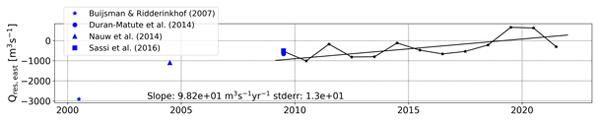
We studied the long-term mean flow through the Marsdiep tidal inlet in the Dutch Wadden Sea. We found that this flow, which is important for sediment, salt and nutrient balances, is reversing from net outflow to inflow. We hypothesise changes in tides in the North Sea caused this, due to increased stratification in response to global warming. Hence, we expect permanent inflow conditions within 1 decade, with potential effects on the sediment balance and the ecosystem of this World Heritage Site.
Pascal Perolo, Bieito Fernández Castro, Nicolas Escoffier, Thibault Lambert, Damien Bouffard, and Marie-Elodie Perga
Earth Syst. Dynam., 12, 1169–1189, https://doi.org/10.5194/esd-12-1169-2021, https://doi.org/10.5194/esd-12-1169-2021, 2021
Short summary
Short summary
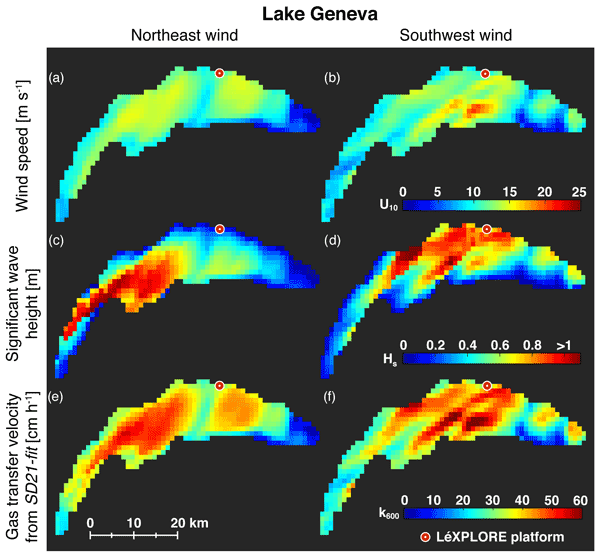
Wind blowing over the ocean creates waves that, by increasing the level of turbulence, promote gas exchange at the air–water interface. In this study, for the first time, we measured enhanced gas exchanges by wind-induced waves at the surface of a large lake. We adapted an ocean-based model to account for the effect of surface waves on gas exchange in lakes. We finally show that intense wind events with surface waves contribute disproportionately to the annual CO2 gas flux in a large lake.
Daniel Lee, Amandine Schaeffer, and Sjoerd Groeskamp
Ocean Sci., 17, 1341–1351, https://doi.org/10.5194/os-17-1341-2021, https://doi.org/10.5194/os-17-1341-2021, 2021
Short summary
Short summary
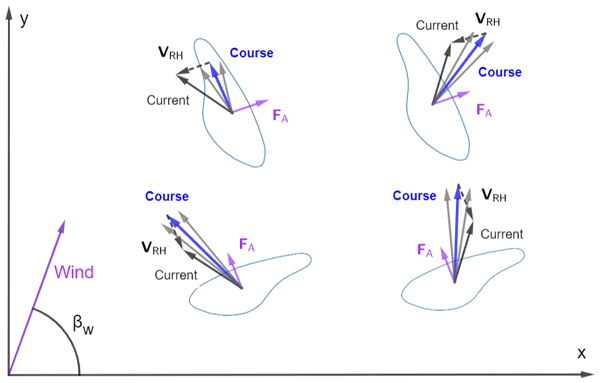
The bluebottle (Physalia physalis), or Portuguese man o' war, is well known for the painful stings caused by its tentacles. Its drifting dynamics have not been widely explored, with previous studies using simple assumptions to calculate its drift. Considering similarities with a sailboat, we present a new theoretical model for the drifting speed and course of the bluebottle in different wind and ocean conditions, providing new insights into the parameterization of its complex drifting dynamics.
Cited articles
Abernathey, R., Gnanadesikan, A., Pradal, M. A., and Sundermeyer, M. A.: Isopycnal mixing, Elsevier, 215–256, ISBN 9780128215128, https://doi.org/10.1016/B978-0-12-821512-8.00016-5, 2021. a
Asuero, A. G., Sayago, A., and González, A. G.: The correlation coefficient: An overview, Critical Reviews in Analytical Chemistry, 36, 41–59, https://doi.org/10.1080/10408340500526766, 2006. a
Barker, P. M. and McDougall, T. J.: Stabilizing Hydrographic Profiles with Minimal Change to the Water Masses, Journal of Atmospheric and Oceanic Technology, 34, 1935–1945, https://doi.org/10.1175/JTECH-D-16-0111.1, 2017. a
Baumann, T. M., Fer, I., Schulz, K., and Mohrholz, V.: Validating Finescale Parameterizations for the Eastern Arctic Ocean Internal Wave Field, Journal of Geophysical Research: Oceans, 128, https://doi.org/10.1029/2022JC018668, 2023. a, b
Bray, N. A. and Fofonoff, N. P.: Available Potential Energy for MODE Eddies, Journal of Physical Oceanography, 11, 30–47, https://doi.org/10.1175/1520-0485(1981)011<0030:APEFME>2.0.CO;2, 1981. a, b
Cael, B. B. and Mashayek, A.: Log-Skew-Normality of Ocean Turbulence, Physical Review Letters, 126, https://doi.org/10.1103/PhysRevLett.126.224502, 2021. a
Cairns, J. L. and Williams, G. O.: Internal wave observations from a midwater float, 2, Journal of Geophysical Research, 81, 1943–1950, https://doi.org/10.1029/jc081i012p01943, 1976. a, b
Castro, B. F., Roman, D. F., Ferron, B., Fontela, M., Lherminier, P., Naveira Garabato, A., Perez, F. F., Spingys, C., Polzin, K., and Velo, A.: Isopycnal Eddy Stirring Dominates Thermohaline Mixing in the Upper Subpolar North Atlantic, Journal of Geophysical Research: Oceans, 129, https://doi.org/10.1029/2023JC020817, 2024. a, b, c, d, e, f, g
Cherian, D. A., Guo, Y., and Bryan, F. O.: Assessing Modeled Mesoscale Stirring Using Microscale Observations, Journal of Physical Oceanography, 54, 1183–1194, https://doi.org/10.1175/JPO-D-23-0135.1, 2024. a
Chinn, B. S., Girton, J. B., and Alford, M. H.: The Impact of Observed Variations in the Shear-to-Strain Ratio of Internal Waves on Inferred Turbulent Diffusivities, Journal of Physical Oceanography, 46, 3299–3320, https://doi.org/10.1175/JPO-D-15-0161.1, 2016. a
Cimoli, L., Mashayek, A., Johnson, H. L., Marshall, D. P., Naveira Garabato, A. C., Whalen, C. B., Vic, C., de Lavergne, C., Alford, M. H., MacKinnon, J. A., and Talley, L. D.: Significance of Diapycnal Mixing Within the Atlantic Meridional Overturning Circulation, AGU Advances, 4, https://doi.org/10.1029/2022AV000800, 2023. a
Crawford, W. R.: A Comparison of Length Scales and Decay Times of Turbulence in Stably Stratified Flows, Journal of Physical Oceanography, 16, 1847–1854, https://doi.org/10.1175/1520-0485(1986)016<1847:ACOLSA>2.0.CO;2, 1986. a
Davis, R. E.: Diapycnal Mixing in the Ocean: Equations for Large-Scale Budgets, Journal of Physical Oceanography, 24, 777–800, https://doi.org/10.1175/1520-0485(1994)024<0777:DMITOE>2.0.CO;2, 1994. a, b, c
de Lavergne, C.: Global tidal mixing maps, SEANOE [data set], https://doi.org/10.17882/73082, 2020. a
de Lavergne, C., Falahat, S., Madec, G., Roquet, F., Nycander, J., and Vic, C.: Toward global maps of internal tide energy sinks, Ocean Modelling, 137, 52–75, https://doi.org/10.1016/j.ocemod.2019.03.010, 2019. a, b
de Lavergne, C., Vic, C., Madec, G., Roquet, F., Waterhouse, A. F., Whalen, C. B., Cuypers, Y., Bouruet-Aubertot, P., Ferron, B., and Hibiya, T.: A Parameterization of Local and Remote Tidal Mixing, Journal of Advances in Modeling Earth Systems, 12, https://doi.org/10.1029/2020MS002065, 2020. a, b, c, d, e
de Lavergne, C., Groeskamp, S., Zika, J., and Johnson, H. L.: The role of mixing in the large-scale ocean circulation, in: Ocean Mixing: Drivers, Mechanisms and Impacts, edited by: Meredith, M. and Naveira Garabato, A., lsevier, 35–63, E ISBN 9780128215128, https://doi.org/10.1016/B978-0-12-821512-8.00010-4, 2022. a
Dematteis, G., Boyer, A. L., Pollmann, F., Polzin, K. L., Alford, M. H., Whalen, C. B., and Lvov, Y. V.: Interacting internal waves explain global patterns of interior ocean mixing, Nature Communications, 15, 1–15, https://doi.org/10.1038/s41467-024-51503-6, 2024. a, b
Dillon, T. M.: Vertical Overturns: A Comparison of Thorpe and Ozmidov Length Scales, Journal of Geophysical Research: Oceans, 87, 9601–9613, https://doi.org/10.1029/jc087ic12p09601, 1982. a, b, c, d
Dougherty, J.: The anisotropy of turbulence at the meteor level, Journal of Atmospheric and Terrestrial Physics, 21, 210–213, https://doi.org/10.1016/002109169(61)90116-7, 1961. a, b
Fer, I., Peterson, A. K., and Ullgren, J. E.: Microstructure Measurements from an Underwater Glider in the Turbulent Faroe Bank Channel Overflow, Journal of Atmospheric and Oceanic Technology, 31, 1128–1150, https://doi.org/10.1175/JTECH-D-13-00221.1, 2014. a
Fernández Castro, B., Peña, M., Nogueira, E., Gilcoto, M., Broullón, E., Comesaña, A., Bouffard, D., Naveira Garabato, A. C., and Mouriño-Carballido, B.: Intense upper ocean mixing due to large aggregations of spawning fish, Nature Geoscience, 15, 287–292, https://doi.org/10.1038/s41561-022-00916-3, 2022. a
Ferris, L., Gong, D., Merrifield, S., and Laurent, L. S.: Contamination of Finescale Strain Estimates of Turbulent Kinetic Energy Dissipation by Frontal Physics, Journal of Atmospheric and Oceanic Technology, 39, 619–640, https://doi.org/10.1175/JTECH-D-21-0088.1, 2022. a, b
Ferron, B., Mercier, H., Speer, K., Gargett, A., and Polzin, K.: Mixing in the Romanche Fracture Zone, Journal of Physical Oceanography, 28, 1929–1945, https://doi.org/10.1175/1520-0485(1998)028<1929:MITRFZ>2.0.CO;2, 1998. a, b, c, d
Fine, E. C., Alford, M. H., MacKinnon, J. A., and Mickett, J. B.: Microstructure Mixing Observations and Finescale Parameterizations in the Beaufort Sea, Journal of Physical Oceanography, 51, 19–35, https://doi.org/10.1175/JPO-D-19-0233.1, 2021. a, b
Fox-Kemper, B., Adcroft, A., Böning, C. W., Chassignet, E. P., Curchitser, E., Danabasoglu, G., Eden, C., England, M. H., Gerdes, R., Greatbatch, R. J., Griffies, S. M., Hallberg, R. W., Hanert, E., Heimbach, P., Hewitt, H. T., Hill, C. N., Komuro, Y., Legg, S., Sommer, J. L., Masina, S., Marsland, S. J., Penny, S. G., Qiao, F., Ringler, T. D., Treguier, A. M., Tsujino, H., Uotila, P., and Yeager, S. G.: Challenges and Prospects in Ocean Circulation Models, Frontiers in Marine Science, 6, https://doi.org/10.3389/fmars.2019.00065, 2019. a
Frants, M., Damerell, G. M., Gille, S. T., Heywood, K. J., MacKinnon, J., and Sprintall, J.: An Assessment of Density-Based Finescale Methods for Estimating Diapycnal Diffusivity in the Southern Ocean, Journal of Atmospheric and Oceanic Technology, 30, 2647–2661, https://doi.org/10.1175/JTECH-D-12-00241.1, 2013. a
Friedrich, T., Timmermann, A., Decloedt, T., Luther, D. S., and Mouchet, A.: The effect of topography-enhanced diapycnal mixing on ocean and atmospheric circulation and marine biogeochemistry, Ocean Modelling, 39, 262–274, https://doi.org/10.1016/j.ocemod.2011.04.012, 2011. a
Galbraith, P. S. and Kelley, D. E.: Identifying Overturns in CTD Profiles, Journal of Atmospheric and Oceanic Technology, 13, 688–702, https://doi.org/10.1175/1520-0426(1996)013<0688:IOICP>2.0.CO;2, 1996. a, b, c
Ganachaud, A. and Wunsch, C.: Improved estimates of global ocean circulation, heat transport and mixing from hydrographic data, Nature, 408, 453–457, https://doi.org/10.1038/35044048, 2000. a
Gargett, A. and Garner, T.: Determining Thorpe Scales from Ship-Lowered CTD Density Profiles, Journal of Atmospheric and Oceanic Technology, 25, 1657–1670, https://doi.org/10.1175/2008JTECHO541.1, 2008. a, b
Garrett, C. and Munk, W.: Space-Time Scales of Internal Waves: A Progress Report, Journal of Geophysical Research, 80, https://doi.org/10.1029/JC080i003p00291, 1975. a, b
Goodman, L., Levine, E. R., and Lueck, R. G.: On Measuring the Terms of the Turbulent Kinetic Energy Budget from an AUV, Journal of Atmospheric and Oceanic Technology, 23, 977–990, https://doi.org/10.1175/JTECH1889.1, 2006. a
Graham, F. S. and McDougall, T. J.: Quantifying the Nonconservative Production of Conservative Temperature, Potential Temperature, and Entropy, Journal of Physical Oceanography, 43, 838–862, https://doi.org/10.1175/JPO-D-11-0188.1, 2013. a
Gregg, M. C.: Scaling Turbulent Dissipation in the Thermocline, Journal of Geophysical Research: Oceans, 94, 9686–9698, https://doi.org/10.1029/jc094ic07p09686, 1989. a, b
Gregg, M. C. and Kunze, E.: Shear and Strain in Santa Monica Basin, Journal of Geophysical Research, 96, 16709–16719, https://doi.org/10.1029/91jc01385, 1991. a
Gregg, M. C., Seim, H. E., and Percival, D. B.: Statistics of Shear and Turbulent Dissipation Profiles in Random Internal Wave Fields, Journal of Physical Oceanography, 23, 1777–1799, https://doi.org/10.1175/1520-0485(1993)023<1777:SOSATD>2.0.CO;2, 1993. a
Gregg, M. C., Sanford, T. B., and Winkel, D. P.: Reduced mixing from the breaking of internal waves in equatorial waters, Nature, 422, 513–515, https://doi.org/10.1038/nature01507, 2003. a, b
Gregg, M. C., D'Asaro, E. A., Riley, J. J., and Kunze, E.: Mixing Efficiency in the Ocean, Annual Review of Marine Science, 10, 443–473, https://doi.org/10.1146/annurev-marine-121916-063643, 2018. a, b
Groeskamp, S.: Groeskamp et al 2020 – mixing diffusivities, figshare [data set], https://doi.org/10.6084/m9.figshare.12554555.v2, 2020. a
Groeskamp, S.:VENM Matlab code, Github [code], https://github.com/Sjoerdgr/VENM, 2019. a
Groeskamp, S., Sloyan, B. M., Zika, J. D., and McDougall, T. J.: Mixing inferred from an ocean climatology and surface fluxes, Journal of Physical Oceanography, 47, 667–687, https://doi.org/10.1175/JPO-D-16-0125.1, 2017. a
Groeskamp, S., Barker, P. M., McDougall, T. J., Abernathey, R. P., and Griffies, S. M.: VENM: An Algorithm to Accurately Calculate Neutral Slopes and Gradients, Journal of Advances in Modeling Earth Systems, 11, 1917–1939, https://doi.org/10.1029/2019MS001613, 2019. a, b, c
Groeskamp, S., LaCasce, J. H., McDougall, T. J., and Rogé, M.: Full-Depth Global Estimates of Ocean Mesoscale Eddy Mixing From Observations and Theory, Geophysical Research Letters, 47, 1–12, https://doi.org/10.1029/2020GL089425, 2020. a, b, c, d
Hautala, S. L.: The abyssal and deep circulation of the Northeast Pacific Basin, Progress in Oceanography, 160, 68–82, https://doi.org/10.1016/j.pocean.2017.11.011, 2018. a
Howatt, T., Waterman, S., and Ross, T. T.: On Using the Finescale Parameterization and Thorpe Scales to Estimate Turbulence from Glider Data, Journal of Atmospheric and Oceanic Technology, 38, 1187–1204, https://doi.org/10.1175/JTECH-D-20-0144.1, 2021. a, b
Itsweire, E. C.: Measurements of vertical overturns in a stably stratified turbulent flow, Physics of Fluids, 27, 764–766, https://doi.org/10.1063/1.864704, 1984. a
Jackett, D. R. and McDougall, T. J.: A Neutral Density Variable for the World's Oceans, Journal of Physical Oceanography, 27, 237–263, https://doi.org/10.1175/1520-0485(1997)027<0237:ANDVFT>2.0.CO;2, 1997. a
Joyce, T. M.: A Note on the Lateral Mixing of Water Masses, Journal of Physical Oceanography, 7, 626–629, https://doi.org/10.1175/1520-0485(1977)007<0626:ANOTLM>2.0.CO;2, 1977. a, b
Kocsis, O., Prandke, H., Stips, A., Simon, A., and Wuest, A.: Comparison of dissipation of turbulent kinetic energy determined from shear and temperature microstructure, Journal of Marine Systems, 21, 67–84, https://doi.org/10.1016/S0924-7963(99)0006-8, 1999. a
Kraichnan, R. H.: Small-scale structure of a scalar field convected by turbulence, The Physics of Fluids, 11, 945–953, https://doi.org/10.1063/1.1692063, 1968. a, b, c, d
Kunze, E., Rosenfeld, L. K., Carter, G. S., and Gregg, M. C.: Internal Waves in Monterey Submarine Canyon, Journal of Physical Oceanography, 32, 1890–1913, https://doi.org/10.1175/1520-0485(2002)032<1890:IWIMSC>2.0.CO;2, 2002. a
Kunze, E., Firing, E., Hummon, J. M., Chereskin, T. K., and Thurnherr, A. M.: Global Abyssal Mixing Inferred from Lowered ADCP Shear and CTD Strain Profiles, Journal of Physical Oceanography, 36, 1553–1576, https://doi.org/10.1175/JPO2926.1, 2006. a, b, c, d
Kusters, N.: Mixation – Microstructure data, NIOZ dataverse [data set], https://doi.org/10.25850/nioz/7b.b.vj, 2025a. a
Kusters, N.: Nanoplastics 2 – Microstructure data, NIOZ dataverse [data set], https://doi.org/10.25850/nioz/7b.b.wj, 2025b. a
Kusters, N., Groeskamp, S., and McDougall, T. J.: Spiralling Inverse Method: A New Inverse Method to Estimate Ocean Mixing, Journal of Physical Oceanography, 54, 2289–2309, https://doi.org/10.1175/JPO-D-24-0009.1, 2024. a
LaCasce, J. H. and Groeskamp, S.: Baroclinic modes over rough bathymetry and the surface deformation radius, Journal of Physical Oceanography, 50, 2835–2847, https://doi.org/10.1175/JPO-D-20-0055.1, 2020. a
Laurent, L. S. and Schmitt, R. W.: The Contribution of Salt Fingers to Vertical Mixing in the North Atlantic Tracer Release Experiment, Journal of Physical Oceanography, 29, 1404–1424, https://doi.org/10.1175/1520-0485(1999)029<1404:TCOSFT>2.0.CO;2, 1999. a
Locarnini, R., Mishonov, A., Baranova, O., Boyer, T., Zweng, M., Garcia, H., Reagan, J., Seidov, D., Weathers, K., Paver, C., and Smolyar, I.: World Ocean Atlas 2018, Volume 1: Temperature, in: NOAA Atlas NESDIS 81, A. Mishonov Technical Editor, 2019. a
Lueck, R., Fer, I., Bluteau, C., Dengler, M., Holtermann, P., Inoue, R., Leboyer, A., Nicholson, S., Schulz, K., and Stevens, C.: Best practices recommendations for estimating dissipation rates from shear probes, Frontiers in Marine Science, https://doi.org/10.3389/fmars.2024.1334327, 2024. a, b, c, d, e, f
Lueck, R. G.: The Statistics of Oceanic Turbulence Measurements. Part I: Shear Variance and Dissipation Rates, Journal of Atmospheric and Oceanic Technology, 39, 1259–1271, https://doi.org/10.1175/JTECH-D-21-0051.1, 2022. a, b
Luketina, D. A. and Imberger, J.: Determining Turbulent Kinetic Energy Dissipation from Batchelor Curve Fitting, Journal of Atmospheric and Oceanic Technology, 18, 100–113, https://doi.org/10.1175/1520-0426(2001)018<0100:DTKEDF>2.0.CO;2, 2001. a
MacKinnon, J. A., Zhao, Z., Whalen, C. B., Waterhouse, A. F., Trossman, D. S., Sun, O. M., Laurent, L. C. S., Simmons, H. L., Polzin, K., Pinkel, R., Pickering, A., Norton, N. J., Nash, J. D., Musgrave, R., Merchant, L. M., Melet, A. V., Mater, B., Legg, S., Large, W. G., Kunze, E., Klymak, J. M., Jochum, M., Jayne, S. R., Hallberg, R. W., Griffies, S. M., Danabasoglu, G., Chassignet, E. P., Buijsman, M. C., Bryan, F. O., Briegleb, B. P., Barna, A., Arbic, B. K., Ansong, J. K., and Alford, M. H.: Climate Process Team on Internal Wave-Driven Ocean Mixing, Bulletin of the American Meteorological Society, 98, 2429–2454, https://doi.org/10.1175/BAMS-D-16-0030.1, 2017. a, b
Mater, B. D., Venayagamoorthy, S. K., Laurent, L. S., and Moum, J. N.: Biases in Thorpe-Scale Estimates of Turbulence Dissipation. Part I: Assessments from Large-Scale Overturns in Oceanographic Data, Journal of Physical Oceanography, 45, 2497–2521, https://doi.org/10.1175/JPO-D-14-0128.1, 2015. a, b, c, d, e
McDougall, T. J.: Potential Enthalpy: A Conservative Oceanic Variable for Evaluating Heat Content and Heat Fluxes, Journal of Physical Oceanography, 33, 945–963, https://doi.org/10.1175/1520-0485(2003)033<0945:PEACOV>2.0.CO;2, 2003. a
McDougall, T. J., Jackett, D. R., Millero, F. J., Pawlowicz, R., and Barker, P. M.: A global algorithm for estimating Absolute Salinity, Ocean Sci., 8, 1123–1134, https://doi.org/10.5194/os-8-1123-2012, 2012. a
Melet, A., Hallberg, R., Legg, S., and Polzin, K.: Sensitivity of the Ocean State to the Vertical Distribution of Internal-Tide-Driven Mixing, Journal of Physical Oceanography, 43, 602–615, https://doi.org/10.1175/JPO-D-12-055.1, 2013. a
Melet, A. V., Hallberg, R., and Marshall, D. P.: The role of ocean mixing in the climate system, in: Ocean Mixing: Drivers, Mechanisms and Impacts, Elsevier, 5–34, https://doi.org/10.1016/B978-0-12-821512-8.00009-8, 2022. a
Merrifield, S. T., Laurent, L. S., Owens, B., Thurnherr, A. M., and Toole, J. M.: Enhanced Diapycnal Diffusivity in Intrusive Regions of the Drake Passage, Journal of Physical Oceanography, 46, 1309–1321, https://doi.org/10.1175/JPO-D-15-0068.1, 2016. a, b
Millero, F. J., Feistel, R., Wright, D. G., and McDougall, T. J.: The composition of Standard Seawater and the definition of the Reference-Composition Salinity Scale, Deep-Sea Research Part I, 55, 50–72, https://doi.org/10.1016/j.dsr.2007.10.001, 2008. a
Munk, W. and Wunsch, C.: Abyssal recipes II: energetics of tidal and wind mixing, Deep-Sea Research I, 45, 1977–2010, https://doi.org/10.1016/S0967-0637(98)00070-3, 1998. a
Naveira Garabato, A. C., Polzin, K. L., King, B. A., Heywood, K. J., and Visbeck, M.: Widespread Intense Turbulent Mixing in the Southern Ocean, Science, 303, 210–213, https://doi.org/10.1126/science.1090929, 2004. a
Oakey, N.: Determination of the Rate of Dissipation of Turbulent Energy from Simultaneous Temperature and Velocity Shear Microstructure Measurements, Journal of Physical Oceanography, 12, 256–271, https://doi.org/10.1175/1520-0485(1982)012<0256:DOTROD>2.0.CO;2, 1982. a, b, c, d
Orúe-Echevarría, D., Polzin, K. L., Naveira Garabato, A. C., Forryan, A., and Pelegrí, J. L.: Mixing and Overturning Across the Brazil-Malvinas Confluence, Journal of Geophysical Research: Oceans, 128, https://doi.org/10.1029/2022JC018730, 2023. a, b
Osborn, T.: Estimates of the Local Rate of Vertical Diffusion from Dissipation Measurements, Journal of Physical Oceanography, 10, 83–89, https://doi.org/10.1175/1520-0485(1980)010<0083:EOTLRO>2.0.CO;2, 1980. a, b, c
Osborn, T. R. and Cox, C. S.: Oceanic Fine Structure, Geophysical Fluid Dynamics, 3, 321–345, https://doi.org/10.1080/03091927208236085, 1972. a, b, c
Park, Y.-H., Lee, J.-H., Durand, I., and Hong, C.-S.: Validation of Thorpe-scale-derived vertical diffusivities against microstructure measurements in the Kerguelen region, Biogeosciences, 11, 6927–6937, https://doi.org/10.5194/bg-11-6927-2014, 2014. a
Polzin, K. L., Toole, J. M., and Schmitt, R. W.: Finescale Parameterization of Turbulent Dissipation, Journal of Physical Oceanography, 25, 306–328, https://doi.org/10.1175/1520-0485(1995)025<0306:FPOTD>2.0.CO;2, 1995. a, b, c
Polzin, K. L., Toole, J. M., Ledwell, J. R., and Schmitt, R. W.: Spatial Variability of Turbulent Mixing in the Abyssal Ocean, Science, 276, 93–96, https://doi.org/10.1126/science.276.5309.93, 1997. a, b
Polzin, K. L., Naveira Garabato, A. C., Huussen, T. N., Sloyan, B. M., and Waterman, S.: Finescale parameterizations of turbulent dissipation, Journal of Geophysical Research: Oceans, 119, 1383–1419, https://doi.org/10.1002/2013JC008979, 2014. a, b, c
Pradal, M.-A. and Gnanadesikan, A.: How does the Redi parameter for mesoscale mixing impact global climate in an Earth System Model?, Journal of Advances in Modeling Earth Systems, 6, 586–601, https://doi.org/10.1002/2013MS000273, 2014. a
Roget, E., Pelegrí, J. L., Planella-Morato, J., Puigdefàbregas, J., Emelianov, M., Vallès-Casanova, I., and Orúe-Echevarria, D.: Diapycnal mixing in the Brazil-Malvinas confluence front, Progress in Oceanography, 211, https://doi.org/10.1016/j.pocean.2023.102968, 2023. a
Scheifele, B., Waterman, S., Merckelbach, L., and Carpenter, J. R.: Measuring the Dissipation Rate of Turbulent Kinetic Energy in Strongly Stratified, Low-Energy Environments: A Case Study From the Arctic Ocean, Journal of Geophysical Research: Oceans, 123, 5459–5480, https://doi.org/10.1029/2017JC013731, 2018. a, b, c, d, e, f, g
Sheehan, P. M. F., Damerell, G. M., Leadbitter, P. J., Heywood, K. J., and Hall, R. A.: Turbulent kinetic energy dissipation rate and associated fluxes in the western tropical Atlantic estimated from ocean glider observations, Ocean Sci., 19, 77–92, https://doi.org/10.5194/os-19-77-2023, 2023. a, b
Sloyan, B. M. and Rintoul, S. R.: Estimates of Area-Averaged Diapycnal Fluxes from Basin-Scale Budgets, Journal of Physical Oceanography, 30, 2320–2341, https://doi.org/10.1175/1520-0485(2000)030<2320:EOAADF>2.0.CO;2, 2000. a
Smyth, W. D., Moum, J. N., and Caldwell, D. R.: The Efficiency of Mixing in Turbulent Patches: Inferences from Direct Simulations and Microstructure Observations, Journal of Physical Oceanography, 31, 1969–1992, https://doi.org/10.1175/1520-0485(2001)031<1969:TEOMIT>2.0.CO;2, 2001. a, b
Spingys, C. P., Williams, R. G., Tuerena, R. E., Naveira Garabato, A., Vic, C., Forryan, A., and Sharples, J.: Observations of Nutrient Supply by Mesoscale Eddy Stirring and Small-Scale Turbulence in the Oligotrophic North Atlantic, Global Biogeochemical Cycles, 35, https://doi.org/10.1029/2021GB007200, 2021. a, b
Stern, M. E.: Lateral mixing of water masses, Deep-Sea Research, 14, 747–753, https://doi.org/10.1016/S0011-7471(67)80011-1, 1967. a
Sun, H., Yang, Q., Li, J., Zhao, W., and Tian, J.: Parameterization of Shear-To-Strain Ratio Used in Finescale Parameterization, Journal of Geophysical Research: Oceans, 129, https://doi.org/10.1029/2023JC020393, 2024. a
Tatebe, H., Tanaka, Y., Komuro, Y., and Hasumi, H.: Impact of deep ocean mixing on the climatic mean state in the Southern Ocean, Scientific Reports, 8, https://doi.org/10.1038/s41598-018-32768-6, 2018. a
Taylor, J. R., de Bruyn Kops, S. M., Caulfield, C. P., and Linden, P. F.: Testing the Assumptions Underlying Ocean Mixing Methodologies Using Direct Numerical Simulations, Journal of Physical Oceanography, 49, 2761–2779, https://doi.org/10.1175/JPO-D-19-0033.1, 2019. a
Thorpe, S. A.: Turbulence and mixing in a Scottish Loch, Philosophical Transactions of the Royal Society of London, 286, 125–181, https://doi.org/10.1098/rsta.1977.0112, 1977. a, b, c, d
Vachon, P. and Lueck, R.: A small combined temperature-conductivity probe, in: Proc. 1984 STD Conf. and Workshop, Marine Technology Society San Diego Section and MTS Oceanic Instrumentation Committee, 126–131, 1984. a
van Haren, H.: Challenger Deep internal wave turbulence events, Deep-Sea Research Part I, 165, https://doi.org/10.1016/j.dsr.2020.103400, 2020. a
van Haren, H. and Gostiaux, L.: Detailed internal wave mixing above a deep-ocean slope, Journal of Marine Research, 70, 173–197, 2012. a
van Haren, H. and Gostiaux, L.: Characterizing turbulent overturns in CTD-data, Dynamics of Atmospheres and Oceans, 66, 58–76, https://doi.org/10.1016/j.dynatmoce.2014.02.001, 2014. a, b
Van Haren, H., Oakey, N., and Garrett, C.: Measurements of internal wave band eddy fluxes above a sloping bottom, Journal of Marine Research, 52, 909–946, 1994. a
van Haren, H., Piccolroaz, S., Amadori, M., Toffolon, M., and Dijkstra, H. A.: Moored observations of turbulent mixing events in deep Lake Garda, Italy, Journal of Limnology, 80, https://doi.org/10.4081/jlimnol.2020.1983, 2020. a
Waterhouse, A. F., Mackinnon, J. A., Nash, J. D., Alford, M. H., Kunze, E., Simmons, H. L., Polzin, K. L., Laurent, L. C., Sun, O. M., Pinkel, R., Talley, L. D., Whalen, C. B., Huussen, T. N., Carter, G. S., Fer, I., Waterman, S., Naveira Garabato, A. C., Sanford, T. B., and Lee, C. M.: Global patterns of diapycnal mixing from measurements of the turbulent dissipation rate, Journal of Physical Oceanography, 44, 1854–1872, https://doi.org/10.1175/JPO-D-13-0104.1, 2014. a, b
Waterman, S., Naveira Garabato, A. C., and Polzin, K. L.: Internal Waves and Turbulence in the Antarctic Circumpolar Current, Journal of Physical Oceanography, 43, 259–282, https://doi.org/10.1175/JPO-D-11-0194.1, 2013. a, b
Whalen, C. B.: Best Practices for Comparing Ocean Turbulence Measurements across Spatiotemporal Scales, Journal of Atmospheric and Oceanic Technology, 38, 837–841, https://doi.org/10.1175/JTECH-D-20-0175.1, 2021. a
Whalen, C. B., de Lavergne, C., Naveira Garabato, A. C., Klymak, J. M., Mackinnon, J. A., and Sheen, K.: Internal wave-driven mixing: governing processes and consequences for climate, Nature Reviews Earth & Environment, 1, 606–621, https://doi.org/10.1038/s43017-020-0097-z%C3%AF, 2020. a
Wright, D. G., Pawlowicz, R., McDougall, T. J., Feistel, R., and Marion, G. M.: Absolute Salinity, “Density Salinity” and the Reference-Composition Salinity Scale: present and future use in the seawater standard TEOS-10, Ocean Sci., 7, 1–26, https://doi.org/10.5194/os-7-1-2011, 2011. a
Wunsch, C. and Ferrari, R.: Vertical Mixing, Energy, and the General Circulation of the Oceans, Annual Review of Fluid Mechanics, 36, 281–314, https://doi.org/10.1146/annurev.fluid.36.050802.122121, 2004. a
Wynne-Cattanach, B. L., Couto, N., Drake, H. F., Ferrari, R., Boyer, A. L., Mercier, H., Messias, M. J., Ruan, X., Spingys, C. P., van Haren, H., Voet, G., Polzin, K., Naveira Garabato, A. C., and Alford, M. H.: Observations of diapycnal upwelling within a sloping submarine canyon, Nature, 630, 884–890, https://doi.org/10.1038/s41586-024-07411-2, 2024. a
Yasuda, I., Fujio, S., Yanagimoto, D., Lee, K. J., Sasaki, Y., Zhai, S., Tanaka, M., Itoh, S., Tanaka, T., Hasegawa, D., Goto, Y., and Sasano, D.: Estimate of turbulent energy dissipation rate using free-fall and CTD-attached fast-response thermistors in weak ocean turbulence, Journal of Oceanography, 77, 17–28, https://doi.org/10.1007/s10872-020-00574-2, 2021. a, b
Zika, J. D., McDougall, T. J., and Sloyan, B. M.: A Tracer-Contour inverse method for estimating ocean circulation and mixing, Journal of Physical Oceanography, 40, 26–47, https://doi.org/10.1175/2009JPO4208.1, 2010. a
Zweng, M., Reagan, J., Seidov, D., Boyer, T., Locarcini, R., Garcia, H., and Mishonov, A.: World Ocean Atlas 2018, Volume 2: Salinity, in: NOAA Atlas NESDIS 82, edited by: Mishonov, A., p. 50, 2019. a
Short summary
This study compares both microstructure shear and thermistor data, and finds very weak dissipations rates down to O(10−12) W kg−1. The direct microstructure observations are compared to a finescale parameterization and Thorpe sorting method, for which we find good comparison. Insights into the relative roles between isoneutral and dianeutral mixing are obtained by using the triple decomposition framework.
This study compares both microstructure shear and thermistor data, and finds very weak...


