
Articles | Volume 22, issue 6
https://doi.org/10.5194/os-22-3537-2026
© Author(s) 2026. This work is distributed under
the Creative Commons Attribution 4.0 License.
the Creative Commons Attribution 4.0 License.
Special issue:
https://doi.org/10.5194/os-22-3537-2026
© Author(s) 2026. This work is distributed under
the Creative Commons Attribution 4.0 License.
the Creative Commons Attribution 4.0 License.
Research article
| 
03 Nov 2026
Research article |
| 03 Nov 2026
| 03 Nov 2026
Evaluation of sea ice variability in three ocean reanalyses and two regional models in the Barents and Kara Seas in 1991–2020

University of Helsinki, Institute for Atmospheric and Earth System Research/Physics, Helsinki, Finland
Finnish Meteorological Institute, Helsinki, Finland
Lucía Gutiérrez-Loza
NORCE Research AS, Bjerknes Centre for Climate Research, Bergen, Norway
Wolfgang Dorn
Alfred Wegener Institute, Helmholtz Centre for Polar and Marine Research, Potsdam, Germany
Siv K. Lauvset
NORCE Research AS, Bjerknes Centre for Climate Research, Bergen, Norway
Wieslaw Maslowski
Naval Postgraduate School, Monterey, CA, United States
Petteri Uotila
University of Helsinki, Institute for Atmospheric and Earth System Research/Physics, Helsinki, Finland
Related authors
Kristiina Verro, Cecilia Äijälä, Roberta Pirazzini, Ruzica Dadic, Damien Maure, Willem Jan van de Berg, Giacomo Traversa, Christiaan T. van Dalum, Petteri Uotila, Xavier Fettweis, Biagio Di Mauro, and Milla Johansson
The Cryosphere, 19, 4409–4436, https://doi.org/10.5194/tc-19-4409-2025, https://doi.org/10.5194/tc-19-4409-2025, 2025
Short summary
Short summary
Accurately representing Antarctic sea ice is essential for reliable climate and ocean model predictions. We evaluated how different models simulate the sea ice's sunlight reflectivity (called albedo) using field and satellite data. Models with simple albedo schemes performed well in limited cases but missed key processes. The advanced scheme in the MetROMS-UHel ocean model provided the most accurate results, including observed day–night albedo changes observed during a field campaign.
Cecilia Äijälä, Yafei Nie, Lucía Gutiérrez-Loza, Chiara De Falco, Siv Kari Lauvset, Bin Cheng, David Anthony Bailey, and Petteri Uotila
Geosci. Model Dev., 18, 4823–4853, https://doi.org/10.5194/gmd-18-4823-2025, https://doi.org/10.5194/gmd-18-4823-2025, 2025
Short summary
Short summary
The sea ice around Antarctica has experienced record lows in recent years. To understand these changes, models are needed. MetROMS-UHel is a new version of an ocean–sea ice model with updated sea ice code and the atmospheric data. We investigate the effect of our updates on different variables with a focus on sea ice and show an improved sea ice representation as compared with observations.
Matthew P. Humphreys, Siv K. Lauvset, Nico Lange, Henry C. Bittig, Brendan R. Carter, Mario Hoppema, Akihiko Murata, Are Olsen, Toste Tanhua, Adam Ulfsbo, Antón Velo, Ryan J. Woosley, Kumiko Azetsu-Scott, Jens D. Müller, and Fiz F. Pérez
Ocean Sci., 22, 3403–3414, https://doi.org/10.5194/os-22-3403-2026, https://doi.org/10.5194/os-22-3403-2026, 2026
Short summary
Short summary
The Global Ocean Data Analysis Project (GLODAP) collects oceanographic datasets from research cruises that are needed to study the marine carbon cycle. The datasets are quality controlled and adjusted where necessary to ensure consistency between cruises, and published as a global data product. Here, we present a new method for calculating the consistency adjustments called ‘furthest-first inversion’ which has been developed for the newest version of the data product.
Tereza Uhlíková, Timo Vihma, Alexey Yu Karpechko, and Petteri Uotila
The Cryosphere, 20, 4585–4604, https://doi.org/10.5194/tc-20-4585-2026, https://doi.org/10.5194/tc-20-4585-2026, 2026
Short summary
Short summary
Understanding of the local effects of sea-ice concentration variations on the Arctic atmosphere is a prerequisite for assessing the role of Arctic sea-ice decline in the climate system, including its influence on mid-latitudes. In our study, using data from atmospheric reanalysis, we present how the relationships of sea-ice concentration, temperature, and specific humidity and their direction change depending on region and season over the Arctic.
Nico Lange, Siv K. Lauvset, Brendan R. Carter, Matthew P. Humphreys, Ryan J. Woosley, Are Olsen, Henry C. Bittig, Alex Kozyr, Marta Álvarez, Kumiko Azetsu-Scott, Susan Becker, Peter J. Brown, Leticia Cotrim da Cunha, Larissa Dias, Mario Hoppema, Masao Ishii, Emil Jeansson, Akihiko Murata, Jens Daniel Müller, Fiz F. Pérez, Carsten Schirnick, Reiner Steinfeldt, Adam Ulfsbo, Anton Velo, and Toste Tanhua
Earth Syst. Sci. Data Discuss., https://doi.org/10.5194/essd-2026-496, https://doi.org/10.5194/essd-2026-496, 2026
Revised manuscript accepted for ESSD
Short summary
Short summary
GLODAP is a data product for ocean inorganic carbon and related biogeochemical variables measured by the chemical analysis of water bottle samples from scientific cruises. GLODAPv3 is the third version release of GLODAP. The data that are included have been subjected to extensive quality control, including systematic evaluation of systematic cruise differences. This version contains data from 1181 hydrographic cruises covering the world's oceans from 1972 to 2023.
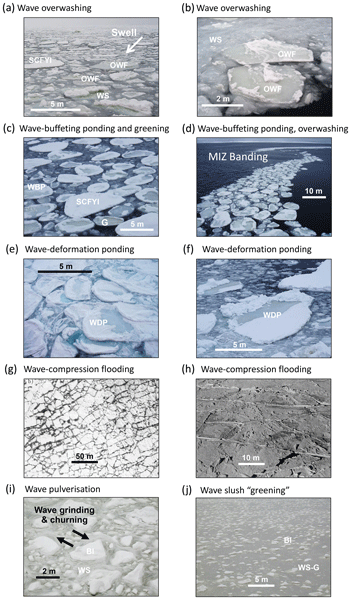
Robert A. Massom, Phillip A. Reid, Stephen G. Warren, Bonnie Light, Donald K. Perovich, Luke G. Bennetts, Petteri Uotila, Siobhan P. O'Farrell, Michael H. Meylan, Klaus M. Meiners, Pat Wongpan, Alexander D. Fraser, Alessandro Toffoli, Giulio Passerotti, Peter G. Strutton, Sean M. T. Chua, and Melissa Fedrigo
The Cryosphere, 20, 3271–3298, https://doi.org/10.5194/tc-20-3271-2026, https://doi.org/10.5194/tc-20-3271-2026, 2026
Short summary
Short summary
This paper advances understanding of why and how Antarctic sea ice can retreat so rapidly each summer, and identifies critical gaps in climate models, by highlighting 3 previously-neglected wave-driven processes and 5 associated feedbacks that accelerate seasonal ice melting and link physics to biology (wave flooding, wave pulverisation and wave greening). There are major implications for Earth’s radiation budget, Antarctic ecosystems and the accuracy of future sea-ice and climate projections.
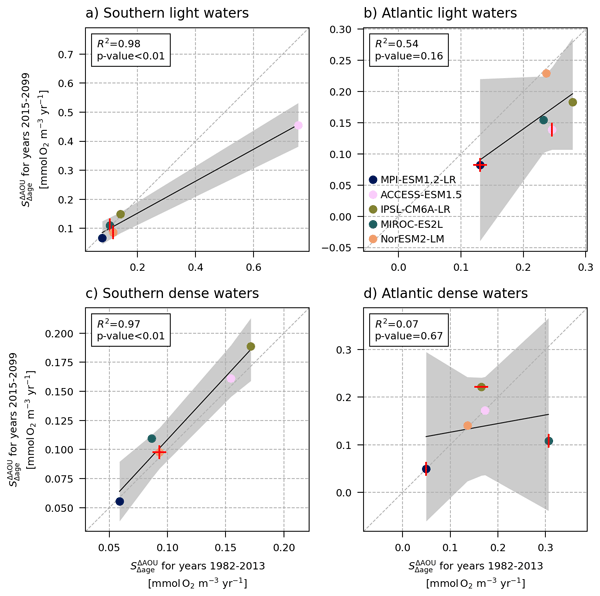
Damien Couespel, Xabier Davila, Nadine Goris, Emil Jeansson, Siv K. Lauvset, and Jerry Tjiputra
Biogeosciences, 23, 3433–3466, https://doi.org/10.5194/bg-23-3433-2026, https://doi.org/10.5194/bg-23-3433-2026, 2026
Short summary
Short summary
Remineralised carbon storage is projected to increase along the 21st century, but the magnitude of increase varies depending on the Earth system models. To constrain projections, we explore the relationship between remineralised carbon and deep ocean circulation. We show that the sensitivity of remineralised carbon to circulation slowdown varies considerably between models. More observational data and a larger model ensemble is needed to constrain projections of remineralised carbon storage.
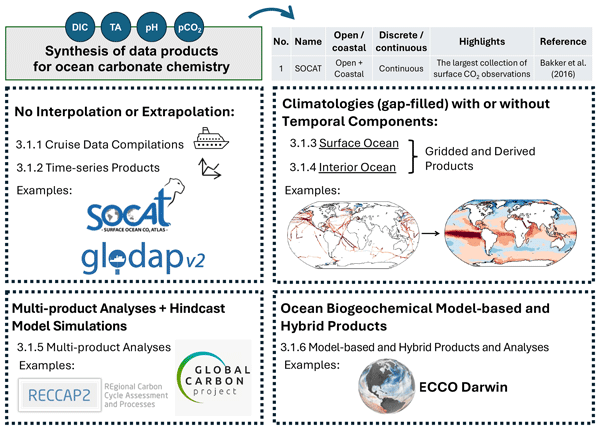
Li-Qing Jiang, Amanda Fay, Jens Daniel Müller, Luke Gregor, Alizée Roobaert, Lydia Keppler, Dustin Carroll, Siv K. Lauvset, Tim DeVries, Judith Hauck, Christian Rödenbeck, Nicolas Metzl, Andrea J. Fassbender, Jean-Pierre Gattuso, Peter Landschützer, Rik Wanninkhof, Christopher Sabine, Simone R. Alin, Mario Hoppema, Are Olsen, Matthew P. Humphreys, Kunal Chakraborty, Ana C. Franco, Kumiko Azetsu-Scott, Dorothee C. E. Bakker, Leticia Barbero, Nicholas R. Bates, Nicole Besemer, Henry C. Bittig, Albert E. Boyd, Daniel Broullón, Wei-Jun Cai, Brendan R. Carter, Thi-Tuyet-Trang Chau, Chen-Tung Arthur Chen, Frédéric Cyr, John E. Dore, Ian Enochs, Richard A. Feely, Hernan E. Garcia, Marion Gehlen, Prasanna Kanti Ghoshal, Lucas Gloege, Melchor González-Dávila, Nicolas Gruber, Debby Ianson, Yosuke Iida, Masao Ishii, Apurva Padamnabh Joshi, Esther Kennedy, Alex Kozyr, Nico Lange, Claire Lo Monaco, Derek P. Manzello, Galen A. McKinley, Natalie M. Monacci, Xose A. Padin, Ana M. Palacio-Castro, Fiz F. Pérez, J. Magdalena Santana-Casiano, Jonathan Sharp, Adrienne Sutton, Jim Swift, Toste Tanhua, Maciej Telszewski, Jens Terhaar, Ruben van Hooidonk, Anton Velo, Andrew J. Watson, Angelicque E. White, Zelun Wu, Liang Xue, Hyelim Yoo, Jiye Zeng, and Guorong Zhong
Earth Syst. Sci. Data, 18, 1405–1462, https://doi.org/10.5194/essd-18-1405-2026, https://doi.org/10.5194/essd-18-1405-2026, 2026
Short summary
Short summary
This review article provides an overview of 68 existing ocean carbonate chemistry data products and data product sets, encompassing a broad range of types, including compilations of cruise datasets, gap-filled observational products, model simulations, and more. It is designed to help researchers identify and access the data products that best support their scientific objectives, thereby facilitating progress in understanding the ocean's changing carbonate chemistry.

Rachael N. C. Sanders, Elaine L. McDonagh, Siv K. Lauvset, Charles E. Turner, Thomas W. N. Haine, Nadine Goris, and Richard Sanders
Ocean Sci., 22, 225–240, https://doi.org/10.5194/os-22-225-2026, https://doi.org/10.5194/os-22-225-2026, 2026
Short summary
Short summary
Oxygen is essential to marine life, but the amount of oxygen in the ocean has been decreasing in recent decades. Using observations of oxygen concentration interpolated across a section of the subtropical North Atlantic Ocean, we show that deoxygenation in the region is primarily driven by an increase in oxygen being consumed during remineralisation of organic matter. The impact of this is strongest at depths of around 600 m, where the process drives up to 70 % of the total deoxygenation.
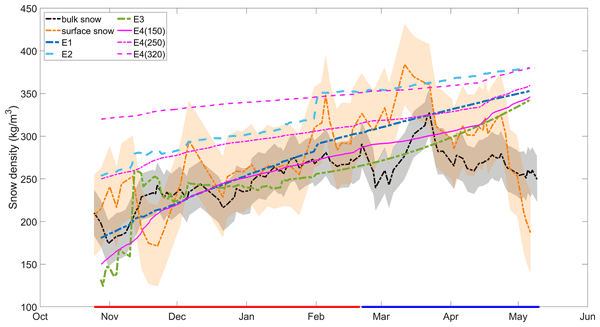
Yubing Cheng, Bin Cheng, Roberta Pirazzini, Amy R. Macfarlane, Timo Vihma, Wolfgang Dorn, Ruzica Dadic, Martin Schneebeli, Stefanie Arndt, and Annette Rinke
The Cryosphere, 19, 6001–6021, https://doi.org/10.5194/tc-19-6001-2025, https://doi.org/10.5194/tc-19-6001-2025, 2025
Short summary
Short summary
We study snow density from the MOSAiC expedition. Several snow density schemes were tested and compared with observation. A thermodynamic ice model was employed to assess the impact of snow density and precipitation on the thermal regime of sea ice. The parameterized mean snow densities are consistent with observations. Increased snow density reduces snow and ice temperatures, promoting ice growth, while increased precipitation leads to warmer snow and ice temperatures and reduced ice thickness.
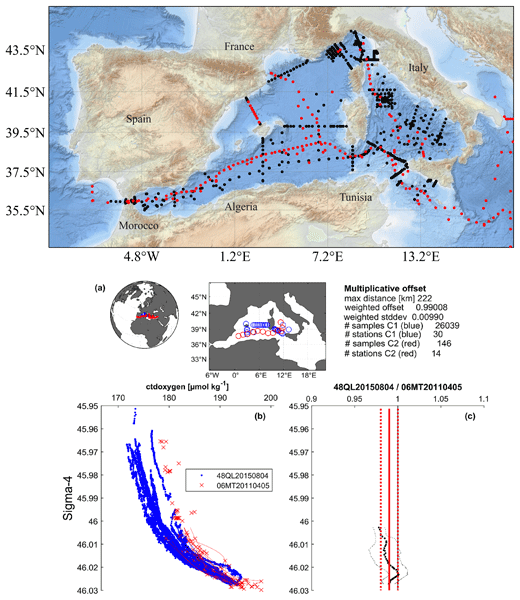
Malek Belgacem, Katrin Schroeder, Marta Álvarez, Siv K. Lauvset, Jacopo Chiggiato, Mireno Borghini, Carolina Cantoni, Tiziana Ciuffardi, and Stefania Sparnocchia
Earth Syst. Sci. Data, 17, 5315–5336, https://doi.org/10.5194/essd-17-5315-2025, https://doi.org/10.5194/essd-17-5315-2025, 2025
Short summary
Short summary
The Mediterranean Sea is changing rapidly, underscoring the urgent need for high-quality datasets to quantify trends and assess impacts on biogeochemical cycles. O2 is a key indicator of marine ecosystem health and plays a central role in CO2 and nutrient cycling. We compiled a regional-scale dataset of O2 in the western Mediterranean to provide a robust observational foundation for assessing O2 variability, associated with climate change, and anomalies related to deoxygenation processes.
Kristiina Verro, Cecilia Äijälä, Roberta Pirazzini, Ruzica Dadic, Damien Maure, Willem Jan van de Berg, Giacomo Traversa, Christiaan T. van Dalum, Petteri Uotila, Xavier Fettweis, Biagio Di Mauro, and Milla Johansson
The Cryosphere, 19, 4409–4436, https://doi.org/10.5194/tc-19-4409-2025, https://doi.org/10.5194/tc-19-4409-2025, 2025
Short summary
Short summary
Accurately representing Antarctic sea ice is essential for reliable climate and ocean model predictions. We evaluated how different models simulate the sea ice's sunlight reflectivity (called albedo) using field and satellite data. Models with simple albedo schemes performed well in limited cases but missed key processes. The advanced scheme in the MetROMS-UHel ocean model provided the most accurate results, including observed day–night albedo changes observed during a field campaign.
Cecilia Äijälä, Yafei Nie, Lucía Gutiérrez-Loza, Chiara De Falco, Siv Kari Lauvset, Bin Cheng, David Anthony Bailey, and Petteri Uotila
Geosci. Model Dev., 18, 4823–4853, https://doi.org/10.5194/gmd-18-4823-2025, https://doi.org/10.5194/gmd-18-4823-2025, 2025
Short summary
Short summary
The sea ice around Antarctica has experienced record lows in recent years. To understand these changes, models are needed. MetROMS-UHel is a new version of an ocean–sea ice model with updated sea ice code and the atmospheric data. We investigate the effect of our updates on different variables with a focus on sea ice and show an improved sea ice representation as compared with observations.
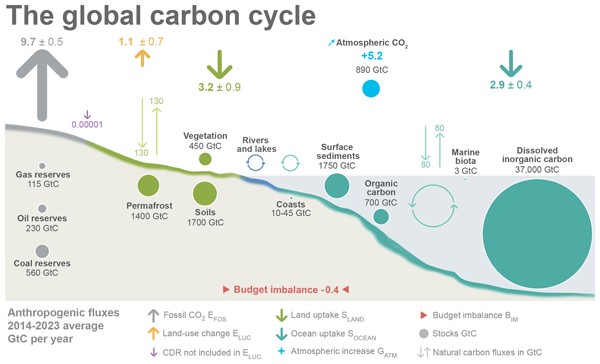
Pierre Friedlingstein, Michael O'Sullivan, Matthew W. Jones, Robbie M. Andrew, Judith Hauck, Peter Landschützer, Corinne Le Quéré, Hongmei Li, Ingrid T. Luijkx, Are Olsen, Glen P. Peters, Wouter Peters, Julia Pongratz, Clemens Schwingshackl, Stephen Sitch, Josep G. Canadell, Philippe Ciais, Robert B. Jackson, Simone R. Alin, Almut Arneth, Vivek Arora, Nicholas R. Bates, Meike Becker, Nicolas Bellouin, Carla F. Berghoff, Henry C. Bittig, Laurent Bopp, Patricia Cadule, Katie Campbell, Matthew A. Chamberlain, Naveen Chandra, Frédéric Chevallier, Louise P. Chini, Thomas Colligan, Jeanne Decayeux, Laique M. Djeutchouang, Xinyu Dou, Carolina Duran Rojas, Kazutaka Enyo, Wiley Evans, Amanda R. Fay, Richard A. Feely, Daniel J. Ford, Adrianna Foster, Thomas Gasser, Marion Gehlen, Thanos Gkritzalis, Giacomo Grassi, Luke Gregor, Nicolas Gruber, Özgür Gürses, Ian Harris, Matthew Hefner, Jens Heinke, George C. Hurtt, Yosuke Iida, Tatiana Ilyina, Andrew R. Jacobson, Atul K. Jain, Tereza Jarníková, Annika Jersild, Fei Jiang, Zhe Jin, Etsushi Kato, Ralph F. Keeling, Kees Klein Goldewijk, Jürgen Knauer, Jan Ivar Korsbakken, Xin Lan, Siv K. Lauvset, Nathalie Lefèvre, Zhu Liu, Junjie Liu, Lei Ma, Shamil Maksyutov, Gregg Marland, Nicolas Mayot, Patrick C. McGuire, Nicolas Metzl, Natalie M. Monacci, Eric J. Morgan, Shin-Ichiro Nakaoka, Craig Neill, Yosuke Niwa, Tobias Nützel, Lea Olivier, Tsuneo Ono, Paul I. Palmer, Denis Pierrot, Zhangcai Qin, Laure Resplandy, Alizée Roobaert, Thais M. Rosan, Christian Rödenbeck, Jörg Schwinger, T. Luke Smallman, Stephen M. Smith, Reinel Sospedra-Alfonso, Tobias Steinhoff, Qing Sun, Adrienne J. Sutton, Roland Séférian, Shintaro Takao, Hiroaki Tatebe, Hanqin Tian, Bronte Tilbrook, Olivier Torres, Etienne Tourigny, Hiroyuki Tsujino, Francesco Tubiello, Guido van der Werf, Rik Wanninkhof, Xuhui Wang, Dongxu Yang, Xiaojuan Yang, Zhen Yu, Wenping Yuan, Xu Yue, Sönke Zaehle, Ning Zeng, and Jiye Zeng
Earth Syst. Sci. Data, 17, 965–1039, https://doi.org/10.5194/essd-17-965-2025, https://doi.org/10.5194/essd-17-965-2025, 2025
Short summary
Short summary
The Global Carbon Budget 2024 describes the methodology, main results, and datasets used to quantify the anthropogenic emissions of carbon dioxide (CO2) and their partitioning among the atmosphere, land ecosystems, and the ocean over the historical period (1750–2024). These living datasets are updated every year to provide the highest transparency and traceability in the reporting of CO2, the key driver of climate change.
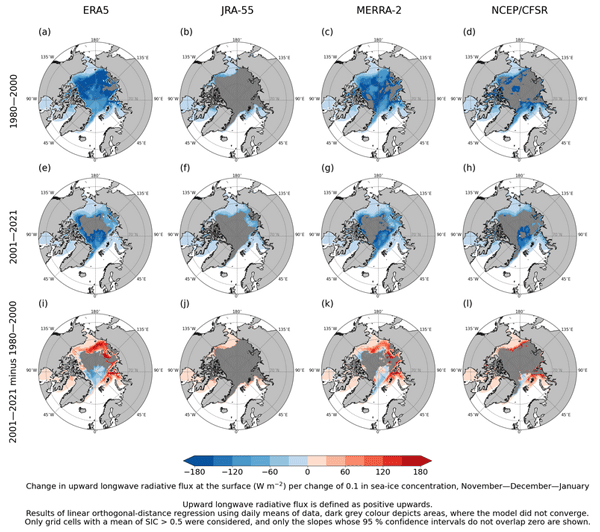
Tereza Uhlíková, Timo Vihma, Alexey Yu Karpechko, and Petteri Uotila
The Cryosphere, 19, 1031–1046, https://doi.org/10.5194/tc-19-1031-2025, https://doi.org/10.5194/tc-19-1031-2025, 2025
Short summary
Short summary
To better understand the local, regional, and global impacts of the recent rapid sea-ice decline in the Arctic, one of the key issues is to quantify the effects of sea-ice concentration on the surface radiative fluxes. We analyse these effects utilising four data sets called atmospheric reanalyses, and we evaluate uncertainties in these effects arising from inter-reanalysis differences in the sensitivity of the surface radiative fluxes to sea-ice concentration.
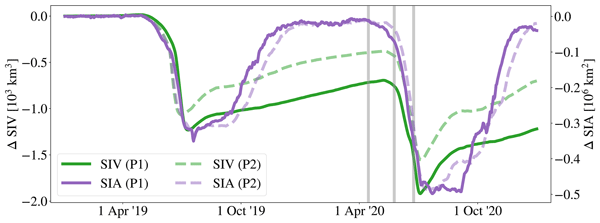
Lara Foth, Wolfgang Dorn, Annette Rinke, Evelyn Jäkel, and Hannah Niehaus
The Cryosphere, 18, 4053–4064, https://doi.org/10.5194/tc-18-4053-2024, https://doi.org/10.5194/tc-18-4053-2024, 2024
Short summary
Short summary
It is demonstrated that the explicit consideration of the cloud dependence of the snow surface albedo in a climate model results in a more realistic simulation of the surface albedo during the snowmelt period in late May and June. Although this improvement appears to be relatively insubstantial, it has significant impact on the simulated sea-ice volume and extent in the model due to an amplification of the snow/sea-ice albedo feedback, one of the main contributors to Arctic amplification.

Siv K. Lauvset, Nico Lange, Toste Tanhua, Henry C. Bittig, Are Olsen, Alex Kozyr, Marta Álvarez, Kumiko Azetsu-Scott, Peter J. Brown, Brendan R. Carter, Leticia Cotrim da Cunha, Mario Hoppema, Matthew P. Humphreys, Masao Ishii, Emil Jeansson, Akihiko Murata, Jens Daniel Müller, Fiz F. Pérez, Carsten Schirnick, Reiner Steinfeldt, Toru Suzuki, Adam Ulfsbo, Anton Velo, Ryan J. Woosley, and Robert M. Key
Earth Syst. Sci. Data, 16, 2047–2072, https://doi.org/10.5194/essd-16-2047-2024, https://doi.org/10.5194/essd-16-2047-2024, 2024
Short summary
Short summary
GLODAP is a data product for ocean inorganic carbon and related biogeochemical variables measured by the chemical analysis of water bottle samples from scientific cruises. GLODAPv2.2023 is the fifth update of GLODAPv2 from 2016. The data that are included have been subjected to extensive quality controlling, including systematic evaluation of measurement biases. This version contains data from 1108 hydrographic cruises covering the world's oceans from 1972 to 2021.
Nico Lange, Björn Fiedler, Marta Álvarez, Alice Benoit-Cattin, Heather Benway, Pier Luigi Buttigieg, Laurent Coppola, Kim Currie, Susana Flecha, Dana S. Gerlach, Makio Honda, I. Emma Huertas, Siv K. Lauvset, Frank Muller-Karger, Arne Körtzinger, Kevin M. O'Brien, Sólveig R. Ólafsdóttir, Fernando C. Pacheco, Digna Rueda-Roa, Ingunn Skjelvan, Masahide Wakita, Angelicque White, and Toste Tanhua
Earth Syst. Sci. Data, 16, 1901–1931, https://doi.org/10.5194/essd-16-1901-2024, https://doi.org/10.5194/essd-16-1901-2024, 2024
Short summary
Short summary
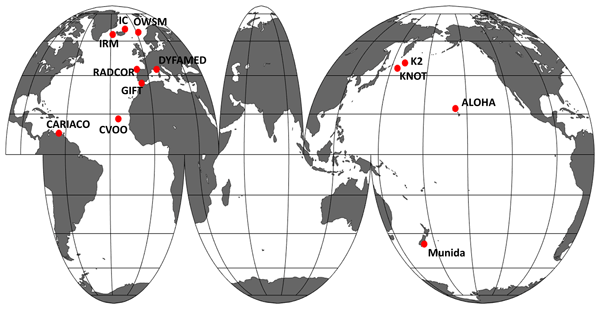
The Synthesis Product for Ocean Time Series (SPOTS) is a novel achievement expanding and complementing the biogeochemical data landscape by providing consistent and high-quality biogeochemical time-series data from 12 ship-based fixed time-series programs. SPOTS covers multiple unique marine environments and time-series ranges, including data from 1983 to 2021. All in all, it facilitates a variety of applications that benefit from the collective value of biogeochemical time-series observations.
Evelyn Jäkel, Sebastian Becker, Tim R. Sperzel, Hannah Niehaus, Gunnar Spreen, Ran Tao, Marcel Nicolaus, Wolfgang Dorn, Annette Rinke, Jörg Brauchle, and Manfred Wendisch
The Cryosphere, 18, 1185–1205, https://doi.org/10.5194/tc-18-1185-2024, https://doi.org/10.5194/tc-18-1185-2024, 2024
Short summary
Short summary
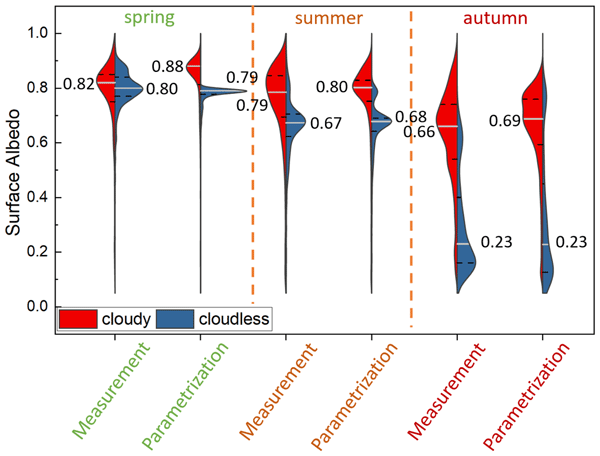
The results of the surface albedo scheme of a coupled regional climate model were evaluated against airborne and ground-based measurements conducted in the European Arctic in different seasons between 2017 and 2022. We found a seasonally dependent bias between measured and modeled surface albedo for cloudless and cloudy situations. The strongest effects of the albedo model bias on the net irradiance were most apparent in the presence of optically thin clouds.
Tereza Uhlíková, Timo Vihma, Alexey Yu Karpechko, and Petteri Uotila
The Cryosphere, 18, 957–976, https://doi.org/10.5194/tc-18-957-2024, https://doi.org/10.5194/tc-18-957-2024, 2024
Short summary
Short summary
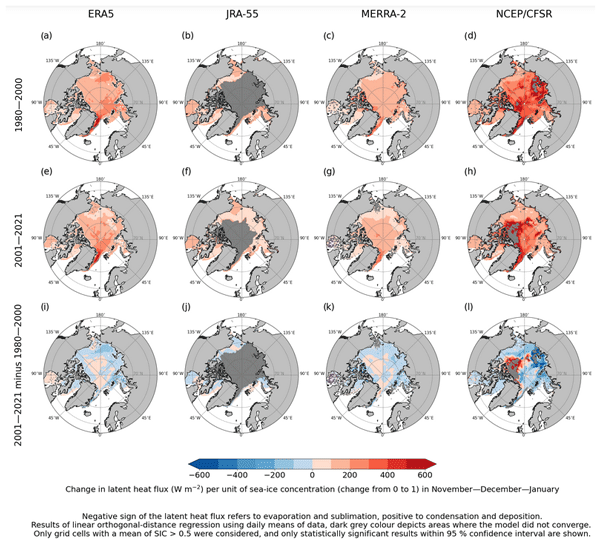
A prerequisite for understanding the local, regional, and hemispherical impacts of Arctic sea-ice decline on the atmosphere is to quantify the effects of sea-ice concentration (SIC) on the sensible and latent heat fluxes in the Arctic. We analyse these effects utilising four data sets called atmospheric reanalyses, and we evaluate uncertainties in these effects arising from inter-reanalysis differences in SIC and in the sensitivity of the latent and sensible heat fluxes to SIC.
Xiaoqiao Wang, Zhaoru Zhang, Michael S. Dinniman, Petteri Uotila, Xichen Li, and Meng Zhou
The Cryosphere, 17, 1107–1126, https://doi.org/10.5194/tc-17-1107-2023, https://doi.org/10.5194/tc-17-1107-2023, 2023
Short summary
Short summary
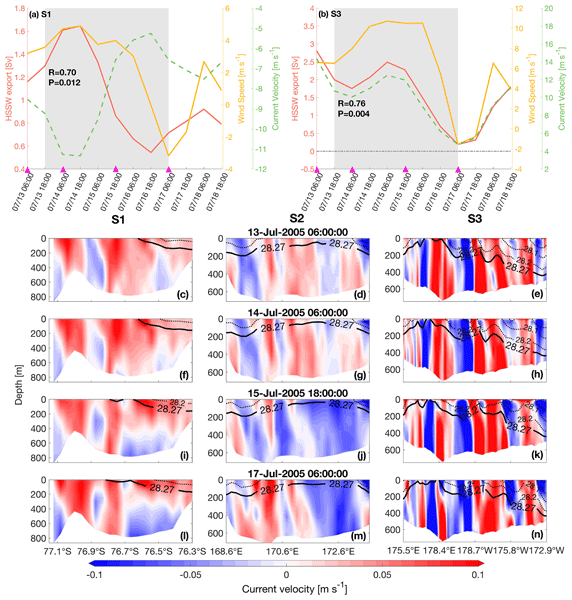
The bottom water of the global ocean originates from high-salinity water formed in polynyas in the Southern Ocean where sea ice coverage is low. This study reveals the impacts of cyclones on sea ice and water mass formation in the Ross Ice Shelf Polynya using numerical simulations. Sea ice production is rapidly increased caused by enhancement in offshore wind, promoting high-salinity water formation in the polynya. Cyclones also modulate the transport of this water mass by wind-driven currents.
Yafei Nie, Chengkun Li, Martin Vancoppenolle, Bin Cheng, Fabio Boeira Dias, Xianqing Lv, and Petteri Uotila
Geosci. Model Dev., 16, 1395–1425, https://doi.org/10.5194/gmd-16-1395-2023, https://doi.org/10.5194/gmd-16-1395-2023, 2023
Short summary
Short summary
State-of-the-art Earth system models simulate the observed sea ice extent relatively well, but this is often due to errors in the dynamic and other processes in the simulated sea ice changes cancelling each other out. We assessed the sensitivity of these processes simulated by the coupled ocean–sea ice model NEMO4.0-SI3 to 18 parameters. The performance of the model in simulating sea ice change processes was ultimately improved by adjusting the three identified key parameters.
Younjoo J. Lee, Wieslaw Maslowski, John J. Cassano, Jaclyn Clement Kinney, Anthony P. Craig, Samy Kamal, Robert Osinski, Mark W. Seefeldt, Julienne Stroeve, and Hailong Wang
The Cryosphere, 17, 233–253, https://doi.org/10.5194/tc-17-233-2023, https://doi.org/10.5194/tc-17-233-2023, 2023
Short summary
Short summary
During 1979–2020, four winter polynyas occurred in December 1986 and February 2011, 2017, and 2018 north of Greenland. Instead of ice melting due to the anomalous warm air intrusion, the extreme wind forcing resulted in greater ice transport offshore. Based on the two ensemble runs, representing a 1980s thicker ice vs. a 2010s thinner ice, a dominant cause of these winter polynyas stems from internal variability of atmospheric forcing rather than from the forced response to a warming climate.
Siv K. Lauvset, Nico Lange, Toste Tanhua, Henry C. Bittig, Are Olsen, Alex Kozyr, Simone Alin, Marta Álvarez, Kumiko Azetsu-Scott, Leticia Barbero, Susan Becker, Peter J. Brown, Brendan R. Carter, Leticia Cotrim da Cunha, Richard A. Feely, Mario Hoppema, Matthew P. Humphreys, Masao Ishii, Emil Jeansson, Li-Qing Jiang, Steve D. Jones, Claire Lo Monaco, Akihiko Murata, Jens Daniel Müller, Fiz F. Pérez, Benjamin Pfeil, Carsten Schirnick, Reiner Steinfeldt, Toru Suzuki, Bronte Tilbrook, Adam Ulfsbo, Anton Velo, Ryan J. Woosley, and Robert M. Key
Earth Syst. Sci. Data, 14, 5543–5572, https://doi.org/10.5194/essd-14-5543-2022, https://doi.org/10.5194/essd-14-5543-2022, 2022
Short summary
Short summary
GLODAP is a data product for ocean inorganic carbon and related biogeochemical variables measured by the chemical analysis of water bottle samples from scientific cruises. GLODAPv2.2022 is the fourth update of GLODAPv2 from 2016. The data that are included have been subjected to extensive quality controlling, including systematic evaluation of measurement biases. This version contains data from 1085 hydrographic cruises covering the world's oceans from 1972 to 2021.
Lucía Gutiérrez-Loza, Erik Nilsson, Marcus B. Wallin, Erik Sahlée, and Anna Rutgersson
Biogeosciences, 19, 5645–5665, https://doi.org/10.5194/bg-19-5645-2022, https://doi.org/10.5194/bg-19-5645-2022, 2022
Short summary
Short summary
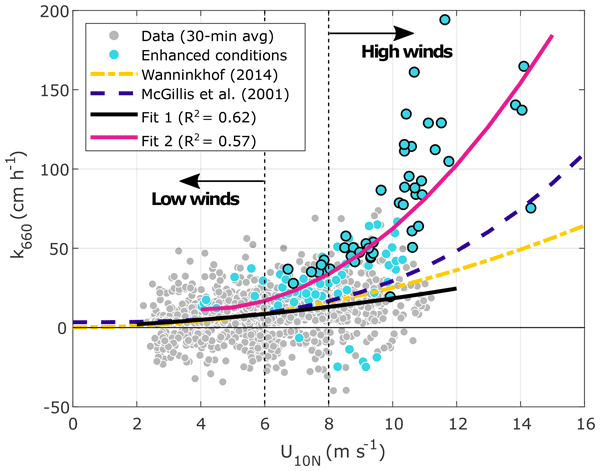
The exchange of CO2 between the ocean and the atmosphere is an essential aspect of the global carbon cycle and is highly relevant for the Earth's climate. In this study, we used 9 years of in situ measurements to evaluate the temporal variability in the air–sea CO2 fluxes in the Baltic Sea. Furthermore, using this long record, we assessed the effect of atmospheric and water-side mechanisms controlling the efficiency of the air–sea CO2 exchange under different wind-speed conditions.

Juha Karvonen, Eero Rinne, Heidi Sallila, Petteri Uotila, and Marko Mäkynen
The Cryosphere, 16, 1821–1844, https://doi.org/10.5194/tc-16-1821-2022, https://doi.org/10.5194/tc-16-1821-2022, 2022
Short summary
Short summary
We propose a method to provide sea ice thickness (SIT) estimates over a test area in the Arctic utilizing radar altimeter (RA) measurement lines and C-band SAR imagery. The RA data are from CryoSat-2, and SAR imagery is from Sentinel-1. By combining them we get a SIT grid covering the whole test area instead of only narrow measurement lines from RA. This kind of SIT estimation can be extended to cover the whole Arctic (and Antarctic) for operational SIT monitoring.
Pierre Friedlingstein, Matthew W. Jones, Michael O'Sullivan, Robbie M. Andrew, Dorothee C. E. Bakker, Judith Hauck, Corinne Le Quéré, Glen P. Peters, Wouter Peters, Julia Pongratz, Stephen Sitch, Josep G. Canadell, Philippe Ciais, Rob B. Jackson, Simone R. Alin, Peter Anthoni, Nicholas R. Bates, Meike Becker, Nicolas Bellouin, Laurent Bopp, Thi Tuyet Trang Chau, Frédéric Chevallier, Louise P. Chini, Margot Cronin, Kim I. Currie, Bertrand Decharme, Laique M. Djeutchouang, Xinyu Dou, Wiley Evans, Richard A. Feely, Liang Feng, Thomas Gasser, Dennis Gilfillan, Thanos Gkritzalis, Giacomo Grassi, Luke Gregor, Nicolas Gruber, Özgür Gürses, Ian Harris, Richard A. Houghton, George C. Hurtt, Yosuke Iida, Tatiana Ilyina, Ingrid T. Luijkx, Atul Jain, Steve D. Jones, Etsushi Kato, Daniel Kennedy, Kees Klein Goldewijk, Jürgen Knauer, Jan Ivar Korsbakken, Arne Körtzinger, Peter Landschützer, Siv K. Lauvset, Nathalie Lefèvre, Sebastian Lienert, Junjie Liu, Gregg Marland, Patrick C. McGuire, Joe R. Melton, David R. Munro, Julia E. M. S. Nabel, Shin-Ichiro Nakaoka, Yosuke Niwa, Tsuneo Ono, Denis Pierrot, Benjamin Poulter, Gregor Rehder, Laure Resplandy, Eddy Robertson, Christian Rödenbeck, Thais M. Rosan, Jörg Schwinger, Clemens Schwingshackl, Roland Séférian, Adrienne J. Sutton, Colm Sweeney, Toste Tanhua, Pieter P. Tans, Hanqin Tian, Bronte Tilbrook, Francesco Tubiello, Guido R. van der Werf, Nicolas Vuichard, Chisato Wada, Rik Wanninkhof, Andrew J. Watson, David Willis, Andrew J. Wiltshire, Wenping Yuan, Chao Yue, Xu Yue, Sönke Zaehle, and Jiye Zeng
Earth Syst. Sci. Data, 14, 1917–2005, https://doi.org/10.5194/essd-14-1917-2022, https://doi.org/10.5194/essd-14-1917-2022, 2022
Short summary
Short summary
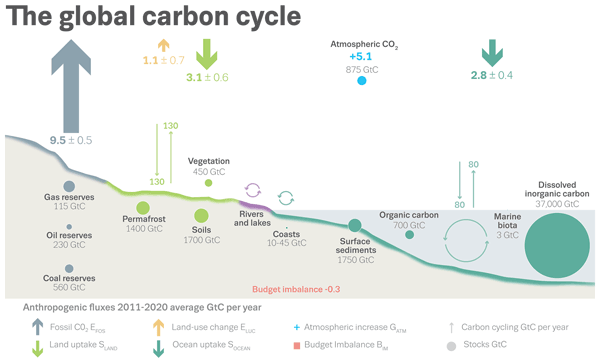
The Global Carbon Budget 2021 describes the data sets and methodology used to quantify the emissions of carbon dioxide and their partitioning among the atmosphere, land, and ocean. These living data are updated every year to provide the highest transparency and traceability in the reporting of CO2, the key driver of climate change.
Milena Veneziani, Wieslaw Maslowski, Younjoo J. Lee, Gennaro D'Angelo, Robert Osinski, Mark R. Petersen, Wilbert Weijer, Anthony P. Craig, John D. Wolfe, Darin Comeau, and Adrian K. Turner
Geosci. Model Dev., 15, 3133–3160, https://doi.org/10.5194/gmd-15-3133-2022, https://doi.org/10.5194/gmd-15-3133-2022, 2022
Short summary
Short summary
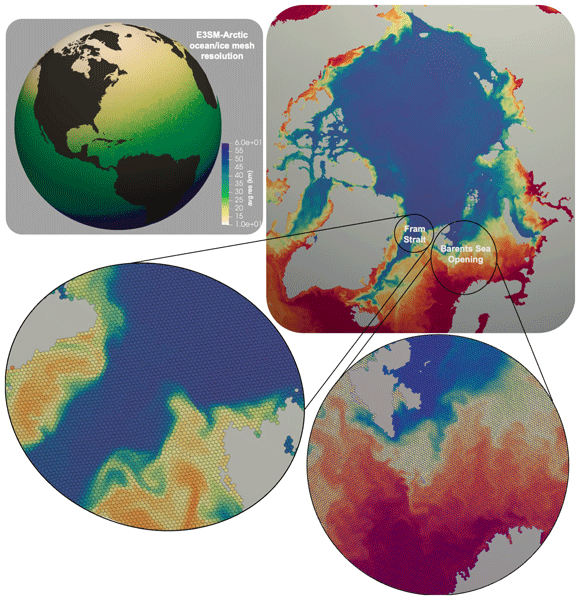
We present an Earth system model (ESM) simulation, E3SM-Arctic-OSI, with a refined grid to better resolve the Arctic ocean and sea-ice system and low spatial resolution elsewhere. The configuration satisfactorily represents many aspects of the Arctic system and its interactions with the sub-Arctic, while keeping computational costs at a fraction of those necessary for global high-resolution ESMs. E3SM-Arctic can thus be an efficient tool to study Arctic processes on climate-relevant timescales.
Ralf Döscher, Mario Acosta, Andrea Alessandri, Peter Anthoni, Thomas Arsouze, Tommi Bergman, Raffaele Bernardello, Souhail Boussetta, Louis-Philippe Caron, Glenn Carver, Miguel Castrillo, Franco Catalano, Ivana Cvijanovic, Paolo Davini, Evelien Dekker, Francisco J. Doblas-Reyes, David Docquier, Pablo Echevarria, Uwe Fladrich, Ramon Fuentes-Franco, Matthias Gröger, Jost v. Hardenberg, Jenny Hieronymus, M. Pasha Karami, Jukka-Pekka Keskinen, Torben Koenigk, Risto Makkonen, François Massonnet, Martin Ménégoz, Paul A. Miller, Eduardo Moreno-Chamarro, Lars Nieradzik, Twan van Noije, Paul Nolan, Declan O'Donnell, Pirkka Ollinaho, Gijs van den Oord, Pablo Ortega, Oriol Tintó Prims, Arthur Ramos, Thomas Reerink, Clement Rousset, Yohan Ruprich-Robert, Philippe Le Sager, Torben Schmith, Roland Schrödner, Federico Serva, Valentina Sicardi, Marianne Sloth Madsen, Benjamin Smith, Tian Tian, Etienne Tourigny, Petteri Uotila, Martin Vancoppenolle, Shiyu Wang, David Wårlind, Ulrika Willén, Klaus Wyser, Shuting Yang, Xavier Yepes-Arbós, and Qiong Zhang
Geosci. Model Dev., 15, 2973–3020, https://doi.org/10.5194/gmd-15-2973-2022, https://doi.org/10.5194/gmd-15-2973-2022, 2022
Short summary
Short summary
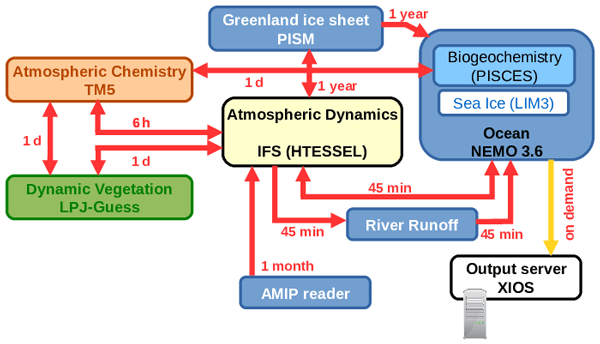
The Earth system model EC-Earth3 is documented here. Key performance metrics show physical behavior and biases well within the frame known from recent models. With improved physical and dynamic features, new ESM components, community tools, and largely improved physical performance compared to the CMIP5 version, EC-Earth3 represents a clear step forward for the only European community ESM. We demonstrate here that EC-Earth3 is suited for a range of tasks in CMIP6 and beyond.
Hanna K. Lappalainen, Tuukka Petäjä, Timo Vihma, Jouni Räisänen, Alexander Baklanov, Sergey Chalov, Igor Esau, Ekaterina Ezhova, Matti Leppäranta, Dmitry Pozdnyakov, Jukka Pumpanen, Meinrat O. Andreae, Mikhail Arshinov, Eija Asmi, Jianhui Bai, Igor Bashmachnikov, Boris Belan, Federico Bianchi, Boris Biskaborn, Michael Boy, Jaana Bäck, Bin Cheng, Natalia Chubarova, Jonathan Duplissy, Egor Dyukarev, Konstantinos Eleftheriadis, Martin Forsius, Martin Heimann, Sirkku Juhola, Vladimir Konovalov, Igor Konovalov, Pavel Konstantinov, Kajar Köster, Elena Lapshina, Anna Lintunen, Alexander Mahura, Risto Makkonen, Svetlana Malkhazova, Ivan Mammarella, Stefano Mammola, Stephany Buenrostro Mazon, Outi Meinander, Eugene Mikhailov, Victoria Miles, Stanislav Myslenkov, Dmitry Orlov, Jean-Daniel Paris, Roberta Pirazzini, Olga Popovicheva, Jouni Pulliainen, Kimmo Rautiainen, Torsten Sachs, Vladimir Shevchenko, Andrey Skorokhod, Andreas Stohl, Elli Suhonen, Erik S. Thomson, Marina Tsidilina, Veli-Pekka Tynkkynen, Petteri Uotila, Aki Virkkula, Nadezhda Voropay, Tobias Wolf, Sayaka Yasunaka, Jiahua Zhang, Yubao Qiu, Aijun Ding, Huadong Guo, Valery Bondur, Nikolay Kasimov, Sergej Zilitinkevich, Veli-Matti Kerminen, and Markku Kulmala
Atmos. Chem. Phys., 22, 4413–4469, https://doi.org/10.5194/acp-22-4413-2022, https://doi.org/10.5194/acp-22-4413-2022, 2022
Short summary
Short summary
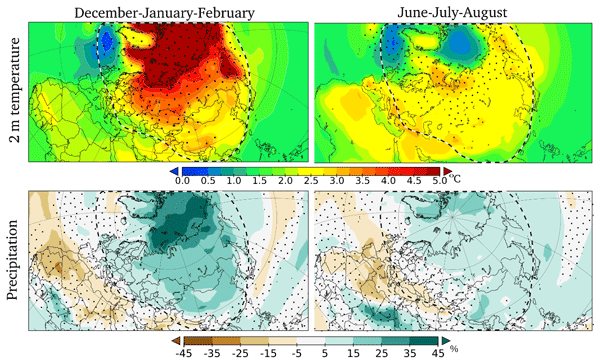
We summarize results during the last 5 years in the northern Eurasian region, especially from Russia, and introduce recent observations of the air quality in the urban environments in China. Although the scientific knowledge in these regions has increased, there are still gaps in our understanding of large-scale climate–Earth surface interactions and feedbacks. This arises from limitations in research infrastructures and integrative data analyses, hindering a comprehensive system analysis.
Klaus Dethloff, Wieslaw Maslowski, Stefan Hendricks, Younjoo J. Lee, Helge F. Goessling, Thomas Krumpen, Christian Haas, Dörthe Handorf, Robert Ricker, Vladimir Bessonov, John J. Cassano, Jaclyn Clement Kinney, Robert Osinski, Markus Rex, Annette Rinke, Julia Sokolova, and Anja Sommerfeld
The Cryosphere, 16, 981–1005, https://doi.org/10.5194/tc-16-981-2022, https://doi.org/10.5194/tc-16-981-2022, 2022
Short summary
Short summary
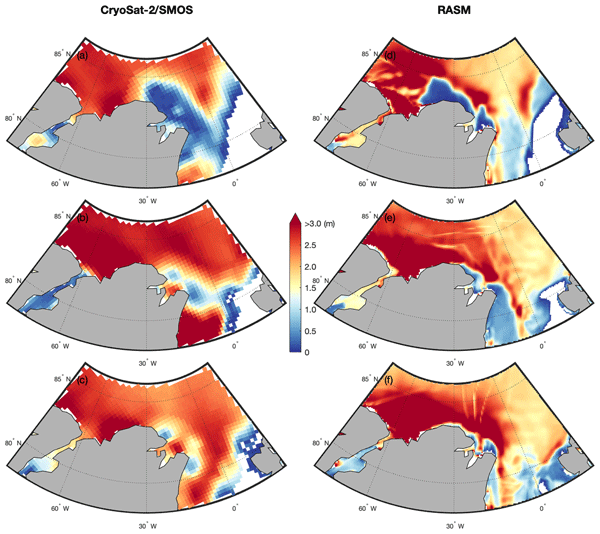
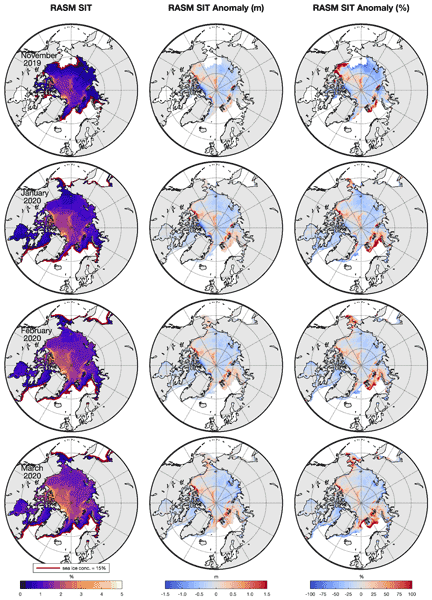
Sea ice thickness anomalies during the MOSAiC (Multidisciplinary drifting Observatory for the Study of Arctic Climate) winter in January, February and March 2020 were simulated with the coupled Regional Arctic climate System Model (RASM) and compared with CryoSat-2/SMOS satellite data. Hindcast and ensemble simulations indicate that the sea ice anomalies are driven by nonlinear interactions between ice growth processes and wind-driven sea-ice transports, with dynamics playing a dominant role.
Filippa Fransner, Friederike Fröb, Jerry Tjiputra, Nadine Goris, Siv K. Lauvset, Ingunn Skjelvan, Emil Jeansson, Abdirahman Omar, Melissa Chierici, Elizabeth Jones, Agneta Fransson, Sólveig R. Ólafsdóttir, Truls Johannessen, and Are Olsen
Biogeosciences, 19, 979–1012, https://doi.org/10.5194/bg-19-979-2022, https://doi.org/10.5194/bg-19-979-2022, 2022
Short summary
Short summary
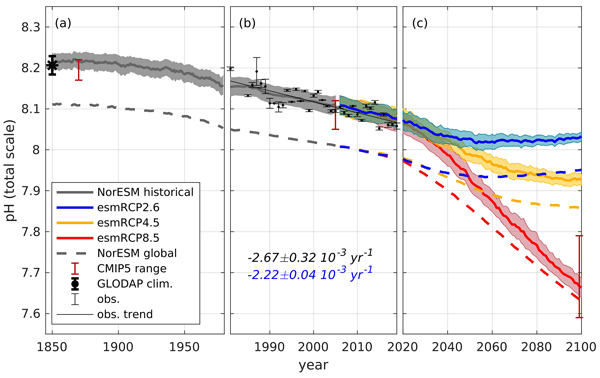
Ocean acidification, a direct consequence of the CO2 release by human activities, is a serious threat to marine ecosystems. In this study, we conduct a detailed investigation of the acidification of the Nordic Seas, from 1850 to 2100, by using a large set of samples taken during research cruises together with numerical model simulations. We estimate the effects of changes in different environmental factors on the rate of acidification and its potential effects on cold-water corals.

Yu Yan, Wei Gu, Andrea M. U. Gierisch, Yingjun Xu, and Petteri Uotila
Geosci. Model Dev., 15, 1269–1288, https://doi.org/10.5194/gmd-15-1269-2022, https://doi.org/10.5194/gmd-15-1269-2022, 2022
Short summary
Short summary
In this study, we developed NEMO-Bohai, an ocean–ice model for the Bohai Sea, China. This study presented the scientific design and technical choices of the parameterizations for the NEMO-Bohai model. The model was calibrated and evaluated with in situ and satellite observations of ocean and sea ice. NEMO-Bohai is intended to be a valuable tool for long-term ocean and ice simulations and climate change studies.
Jaclyn Clement Kinney, Karen M. Assmann, Wieslaw Maslowski, Göran Björk, Martin Jakobsson, Sara Jutterström, Younjoo J. Lee, Robert Osinski, Igor Semiletov, Adam Ulfsbo, Irene Wåhlström, and Leif G. Anderson
Ocean Sci., 18, 29–49, https://doi.org/10.5194/os-18-29-2022, https://doi.org/10.5194/os-18-29-2022, 2022
Short summary
Short summary
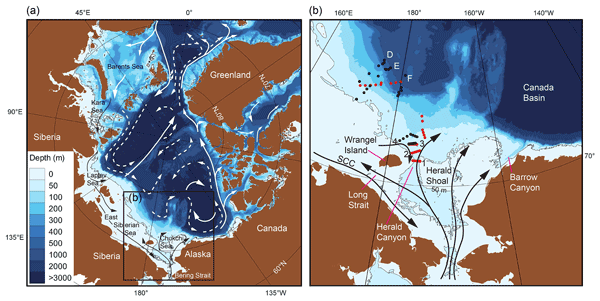
We use data crossing Herald Canyon in the Chukchi Sea collected in 2008 and 2014 together with numerical modelling to investigate the circulation in the western Chukchi Sea. A large fraction of water from the Chukchi Sea enters the East Siberian Sea south of Wrangel Island and circulates in an anticyclonic direction around the island. To assess the differences between years, we use numerical modelling results, which show that high-frequency variability dominates the flow in Herald Canyon.
Siv K. Lauvset, Nico Lange, Toste Tanhua, Henry C. Bittig, Are Olsen, Alex Kozyr, Marta Álvarez, Susan Becker, Peter J. Brown, Brendan R. Carter, Leticia Cotrim da Cunha, Richard A. Feely, Steven van Heuven, Mario Hoppema, Masao Ishii, Emil Jeansson, Sara Jutterström, Steve D. Jones, Maren K. Karlsen, Claire Lo Monaco, Patrick Michaelis, Akihiko Murata, Fiz F. Pérez, Benjamin Pfeil, Carsten Schirnick, Reiner Steinfeldt, Toru Suzuki, Bronte Tilbrook, Anton Velo, Rik Wanninkhof, Ryan J. Woosley, and Robert M. Key
Earth Syst. Sci. Data, 13, 5565–5589, https://doi.org/10.5194/essd-13-5565-2021, https://doi.org/10.5194/essd-13-5565-2021, 2021
Short summary
Short summary
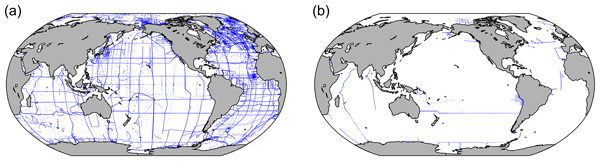
GLODAP is a data product for ocean inorganic carbon and related biogeochemical variables measured by the chemical analysis of water bottle samples from scientific cruises. GLODAPv2.2021 is the third update of GLODAPv2 from 2016. The data that are included have been subjected to extensive quality control, including systematic evaluation of measurement biases. This version contains data from 989 hydrographic cruises covering the world's oceans from 1972 to 2020.
Cited articles
Äijälä, C.: Code for Barents and Kara Seas model and reanalysis comparision analysis, Zenodo [code], https://doi.org/10.5281/zenodo.22141085, 2026. a
Årthun, M., Eldevik, T., Smedsrud, L. H., Skagseth, Ø., and Ingvaldsen, R. B.: Quantifying the Influence of Atlantic Heat on Barents Sea Ice Variability and Retreat, J. Climate, 25, https://doi.org/10.1175/JCLI-D-11-00466.1, 2012. a, b
Asbjørnsen, H., Årthun, M., Skagseth, Ø., and Eldevik, T.: Mechanisms Underlying Recent Arctic Atlantification, Geophys. Res. Lett., 47, e2020GL088036, https://doi.org/10.1029/2020GL088036, 2020. a
Aue, L., Röntgen, L., Dorn, W., Uotila, P., Vihma, T., Spreen, G., and Rinke, A.: Impact of three intense winter cyclones on the sea ice cover in the Barents Sea: A case study with a coupled regional climate model, Front. Earth Sci., 11, https://doi.org/10.3389/feart.2023.1112467, 2023. a
Balmaseda, M., Hernandez, F., Storto, A., Palmer, M., Alves, O., Shi, L., Smith, G., Toyoda, T., Valdivieso, M., Barnier, B., Behringer, D., Boyer, T., Chang, Y.-S., Chepurin, G., Ferry, N., Forget, G., Fujii, Y., Good, S., Guinehut, S., Haines, K., Ishikawa, Y., Keeley, S., Köhl, A., Lee, T., Martin, M., Masina, S., Masuda, S., Meyssignac, B., Mogensen, K., Parent, L., Peterson, K., Tang, Y., Yin, Y., Vernieres, G., Wang, X., Waters, J., Wedd, R., Wang, O., Xue, Y., Chevallier, M., Lemieux, J.-F., Dupont, F., Kuragano, T., Kamachi, M., Awaji, T., Caltabiano, A., Wilmer-Becker, K., and Gaillard, F.: The Ocean Reanalyses Intercomparison Project (ORA-IP), J. Oper. Oceanogr., 8, 80–97, https://doi.org/10.1080/1755876X.2015.1022329, 2015. a
Barnston, A. G. and Livezey, R. E.: Classification, seasonality and persistence of low-frequency atmospheric circulation patterns, Mon. Weather Rev., 115, 1083–1126, https://doi.org/10.1175/1520-0493(1987)115<1083:CSAPOL>2.0.CO;2, 1987. a
Bertino, L. and Xie, J.: Synthesis quality overview document (SQO) Associated to extended quality information document (QUID): CMEMS-ARC-QUID-002-003 QUID Version: 1.5 Associated to Product ID: ARCTIC_MULTIYEAR_PHY_002_003, https://documentation.marine.copernicus.eu/SQO/CMEMS-ARC-SQO-002-003.pdf (last access: 2 November 2026), 2025. a
Cassano, J. J., DuVivier, A., Roberts, A., Abel, M. R., Seefeldt, M., Brunke, M., Craig, A., Fisel, B., Gutowski, W., Hamman, J., Higgins, M., Maslowski, W., Nijssen, B., Osinski, R., and Zeng, X.: Development of the Regional Arctic System Model (RASM): Near-Surface Atmospheric Climate Sensitivity, J. Climate, 30, 5729–5753, https://doi.org/10.1175/JCLI-D-15-0775.1, 2017. a
Chassignet, E. P., Smith, L. T., Halliwell, G. R., and Bleck, R.: North Atlantic Simulations with the Hybrid Coordinate Ocean Model (HYCOM): Impact of the Vertical Coordinate Choice, Reference Pressure, and Thermobaricity, J. Phys. Oceanogr., 33, 2504–2526, https://doi.org/10.1175/1520-0485(2003)033<2504:NASWTH>2.0.CO;2, 2003. a
Chatterjee, S., Semmler, T., Screen, J., Furevik, T., Selivanova, J., Raj, R. P., Murukesh, N., and Ravichandran, A. M.: Atmosphere–Ocean–Sea Ice Feedbacks Sustain Recent Barents Sea Ice Loss despite Cooler Atlantic Water Inflow, J. Climate, 37, 6519–6532, https://doi.org/10.1175/JCLI-D-24-0020.1, 2024. a, b
Comiso, J. C.: Abrupt decline in the Arctic winter sea ice cover, Geophys. Res. Lett., 33, https://doi.org/10.1029/2006GL027341, 2006. a
Docquier, D., Fuentes-Franco, R., Koenigk, T., and Fichefet, T.: Sea Ice–Ocean Interactions in the Barents Sea Modeled at Different Resolutions, Front. Earth Sci., 8, https://doi.org/10.3389/feart.2020.00172, 2020. a
Donlon, C. J., Martin, M., Stark, J., Roberts-Jones, J., Fiedler, E., and Wimmer, W.: The Operational Sea Surface Temperature and Sea Ice Analysis (OSTIA) system, Remote Sens. Environ., 116, 140–158, https://doi.org/10.1016/j.rse.2010.10.017, 2012. a
Dorn, W.: HIRHAM–NAOSIM simulations for the period 1979–2021 with ice–ocean initialization from ORAS5 (P3), DOKU at DKRZ [data set], https://hdl.handle.net/21.14106/a6d312c42d4501e75bd9de9186b323206ff5a65b (last access: 20 June 2024), 2024. a
Dorn, W., Rinke, A., Köberle, C., Dethloff, K., and Gerdes, R.: Evaluation of the Sea-Ice Simulation in the Upgraded Version of the Coupled Regional Atmosphere-Ocean-Sea Ice Model HIRHAM–NAOSIM 2.0, Atmosphere, 10, 431, https://doi.org/10.3390/atmos10080431, 2019. a, b
Duan, C., Dong, S., Xie, Z., and Wang, Z.: Temporal variability and trends of sea ice in the Kara Sea and their relationship with atmospheric factors, Polar Sci., 20, 136–147, https://doi.org/10.1016/j.polar.2019.03.002, 2019b. a, b
Dörr, J., Årthun, M., Docquier, D., Li, C., and Eldevik, T.: Causal Links Between Sea-Ice Variability in the Barents-Kara Seas and Oceanic and Atmospheric Drivers, Geophys. Res. Lett., 51, e2024GL108195, https://doi.org/10.1029/2024GL108195, 2024. a, b, c
EU Copernicus Marine Service Information (CMEMS): TOPAZ4B, Marine Data Store (MDS) [data set], https://doi.org/10.48670/moi-00007, 2024. a, b, c
EUMETSAT: OSI SAF Global sea ice concentration climate data record 1978–2020, EUMETSAT [data set], https://doi.org/10.15770/EUM_SAF_OSI_0013, 2022. a, b
GEBCO Bathymetric Compilation Group: The GEBCO_2026 Grid – a continuous terrain model for oceans and land at 15 arc-second intervals, https://doi.org/10.5285/4f68d5c7-45eb-f999-e063-7086abc036fa, 2026. a
Gerland, S., Ingvaldsen, R. B., Reigstad, M., Sundfjord, A., Bogstad, B., Chierici, M., Hop, H., Renaud, P. E., Smedsrud, L. H., Stige, L. C., Årthun, M., Berge, J., Bluhm, B. A., Borgå, K., Bratbak, G., Divine, D. V., Eldevik, T., Eriksen, E., Fer, I., Fransson, A., Gradinger, R., Granskog, M. A., Haug, T., Husum, K., Johnsen, G., Jonassen, M. O., Jørgensen, L. L., Kristiansen, S., Larsen, A., Lien, V. S., Lind, S., Lindstrøm, U., Mauritzen, C., Melsom, A., Mernild, S. H., Müller, M., Nilsen, F., Primicerio, R., Søreide, J. E., van der Meeren, G. I., and Wassmann, P.: Still Arctic? – The changing Barents Sea, Elementa: Science of the Anthropocene, 11, 00088, https://doi.org/10.1525/elementa.2022.00088, 2023. a
Goessling, H. F., Tietsche, S., Day, J. J., Hawkins, E., and Jung, T.: Predictability of the Arctic sea ice edge, Geophys. Res. Lett., 43, 1642–1650, https://doi.org/10.1002/2015GL067232, 2016. a
Goosse, H., Kay, J. E., Armour, K. C., Bodas-Salcedo, A., Chepfer, H., Docquier, D., Jonko, A., Kushner, P. J., Lecomte, O., Massonnet, F., Park, H.-S., Pithan, F., Svensson, G., and Vancoppenolle, M.: Quantifying climate feedbacks in polar regions, Nat. Commun., 9, 1919, https://doi.org/10.1038/s41467-018-04173-0, 2018. a
Gouretski, V. and Reseghetti, F.: On depth and temperature biases in bathythermograph data: Development of a new correction scheme based on analysis of a global ocean database, Deep-Sea Res. Pt. I, 57, 812–833, https://doi.org/10.1016/j.dsr.2010.03.011, 2010. a
Hamman, J., Nijssen, B., Roberts, A., Craig, A., Maslowski, W., and Osinski, R.: The coastal streamflow flux in the Regional Arctic System Model, J. Geophys. Res.-Oceans, 122, 1683–1701, https://doi.org/10.1002/2016JC012323, 2017. a
Hersbach, H., Bell, B., Berrisford, P., Hirahara, S., Horányi, A., Muñoz-Sabater, J., Nicolas, J., Peubey, C., Radu, R., Schepers, D., Simmons, A., Soci, C., Abdalla, S., Abellan, X., Balsamo, G., Bechtold, P., Biavati, G., Bidlot, J., Bonavita, M., De Chiara, G., Dahlgren, P., Dee, D., Diamantakis, M., Dragani, R., Flemming, J., Forbes, R., Fuentes, M., Geer, A., Haimberger, L., Healy, S., Hogan, R. J., Hólm, E., Janisková, M., Keeley, S., Laloyaux, P., Lopez, P., Lupu, C., Radnoti, G., de Rosnay, P., Rozum, I., Vamborg, F., Villaume, S., and Thépaut, J.-N.: The ERA5 global reanalysis, Q. J. Roy. Meteor. Soc., 146, 1999–2049, https://doi.org/10.1002/qj.3803, 2020. a
Huang, B., Thorne, P. W., Banzon, V. F., Boyer, T., Chepurin, G., Lawrimore, J. H., Menne, M. J., Smith, T. M., Vose, R. S., and Zhang, H.-M.: Extended Reconstructed Sea Surface Temperature, Version 5 (ERSSTv5): Upgrades, Validations, and Intercomparisons, J. Climate, 30, 8179–8205, https://doi.org/10.1175/JCLI-D-16-0836.1, 2017. a
Hunke, E., Allard, R., Bailey, D., Blain, P., Craig, T., Damsgaard, A., Dupont, F., DuVivier, A., Grumbine, R., Holland, M., Jeffery, N., Lemieux, J.-F., Roberts, A., Turner, M., and Winton, M.: CICE Consortium/CICE Version 6.0.0, https://doi.org/10.5281/zenodo.1893041, 2018. a
Ingvaldsen, R. B., Assmann, K. M., Primicerio, R., Fossheim, M., Polyakov, I. V., and Dolgov, A. V.: Physical manifestations and ecological implications of Arctic Atlantification, Nature Reviews Earth and Environment, 2, 874–889, https://doi.org/10.1038/s43017-021-00228-x, 2021. a
International Hydrographic Organization (IHO) and Sieger, R.: Limits of oceans and seas in digitized, machine readable form, https://doi.org/10.1594/PANGAEA.777975, 2012. a
IPCC: Climate Change 2021: The Physical Science Basis, https://doi.org/10.1017/9781009157896, 2021. a
Kumar, A., Yadav, J., and Mohan, R.: Spatio-temporal change and variability of Barents–Kara sea ice, in the Arctic: Ocean and atmospheric implications, Sci. Total Environ., 753, 142046, https://doi.org/10.1016/j.scitotenv.2020.142046, 2021. a, b, c, d
Li, M., Ke, C., Cheng, B., Shen, X., He, Y., and Sha, D.: The Roles of Sea Ice Export, Atmospheric and Oceanic Factors in the Seasonal and Regional Variability of Arctic Sea Ice during 1979–2020, Remote Sens.-Basel, 14, https://doi.org/10.3390/rs14040904, 2022. a, b, c, d
Lind, S., Ingvaldsen, R. B., and Furevik, T.: Arctic warming hotspot in the northern Barents Sea linked to declining sea-ice import, Nat. Clim. Change, 8, 634–639, https://doi.org/10.1038/s41558-018-0205-y, 2018. a, b
Liu, Y., Losch, M., Tremblay, L. B., and Janout, M.: Landfast ice in the Kara Sea stabilizes the Arctic halocline and may slow down Atlantification of the Eurasian Basin, Communications Earth and Environment, 6, https://doi.org/10.1038/s43247-025-02360-8, 2025. a
Newman, M., Alexander, M. A., Ault, T. R., Cobb, K. M., Deser, C., Lorenzo, E. D., Mantua, N. J., Miller, A. J., Minobe, S., Nakamura, H., Schneider, N., Vimont, D. J., Phillips, A. S., Scott, J. D., and Smith, C. A.: The Pacific Decadal Oscillation, Revisited, J. Climate, 29, 4399–4427, https://doi.org/10.1175/JCLI-D-15-0508.1, 2016. a
NOAA CPC: East Atlantic/Western Russia, https://www.cpc.ncep.noaa.gov/data/teledoc/eawruss.shtml (last access: 2 June 2026), 2012. a
NOAA CPC: North Atlantic Oscillation (NAO) Index, https://www.cpc.ncep.noaa.gov/data/teledoc/nao.shtml (last access: 2 June 2026), 2026. a
NOAA NODC: monthly NH upper ocean mean temperature, https://climexp.knmi.nl/getindices.cgi?WMO=NODCData/temp700_nh&STATION=NH_upper_ocean_mean_temperature (last access: 2 June 2026), 2026. a
Onarheim, I. H., Eldevik, T., Smedsrud, L. H., and Stroeve, J. C.: Seasonal and Regional Manifestation of Arctic Sea Ice Loss, J. Climate, 31, 4917–4932, https://doi.org/10.1175/JCLI-D-17-0427.1, 2018. a
Powers, J. G., Klemp, J. B., Skamarock, W. C., Davis, C. A., Dudhia, J., Gill, D. O., Coen, J. L., Gochis, D. J., Ahmadov, R., Peckham, S. E., Grell, G. A., Michalakes, J., Trahan, S., Benjamin, S. G., Alexander, C. R., Dimego, G. J., Wang, W., Schwartz, C. S., Romine, G. S., Liu, Z., Snyder, C., Chen, F., Barlage, M. J., Yu, W., and Duda, M. G.: The Weather Research and Forecasting Model: Overview, System Efforts, and Future Directions, B. Am. Meteorol. Soc., 98, 1717–1737, https://doi.org/10.1175/BAMS-D-15-00308.1, 2017. a
Rinke, A. and Dethloff, K.: On the sensitivity of a regional Arctic climate model to initial and boundary conditions, Clim. Res., 14, 101–113, https://doi.org/10.3354/cr014101, 2000. a
Royal Netherlands Meteorological Institute (KNMI): Climate Explorer, https://climexp.knmi.nl (last access: 2 June 2026), 2026. a
Sallée, J.-B., Wienders, N., Speer, K., and Morrow, R.: Formation of Subantarctic Mode Water in the southeastern Indian Ocean, Ocean Dynamics, 56, 525–542, https://doi.org/10.1007/s10236-005-0054-x, 2006. a
Sallée, J.-B., Shuckburgh, E., Bruneau, N., Meijers, A. J. S., Bracegirdle, T. J., and Wang, Z.: Assessment of Southern Ocean mixed-layer depths in CMIP5 models: Historical bias and forcing response, J. Geophys. Res.-Oceans, 118, 1845–1862, https://doi.org/10.1002/jgrc.20157, 2013. a
Seefeldt, M. W., Cassano, J. J., Lee, Y. J., Maslowski, W., Craig, A. P., and Osinski, R.: Evaluation of dynamical downscaling in a fully coupled regional earth system model, Front. Earth Sci., 12, https://doi.org/10.3389/feart.2024.1392031, 2024. a
Seip, K. L. and Wang, H.: High-Resolution Lead–Lag Relations Between Barents Sea Temperatures, the AMOC and the AMO During 1971–2018, Atmosphere-Ocean, 61, 306–317, https://doi.org/10.1080/07055900.2023.2251426, 2023. a
Shabanov, P., Osadchiev, A., Shabanova, N., and Ogorodov, S.: Decline in Ice Coverage and Ice-Free Period Extension in the Kara and Laptev Seas during 1979–2022, Remote Sens.-Basel, 16, https://doi.org/10.3390/rs16111875, 2024. a, b
Skagseth, Ø., Furevik, T., Ingvaldsen, R., Loeng, H., Mork, K. A., Orvik, K. A., and Ozhigin, V.: Volume and Heat Transports to the Arctic Ocean Via the Norwegian and Barents Seas, in: Arctic–Subarctic Ocean Fluxes: Defining the Role of the Northern Seas in Climate, edited by: Dickson, R. R., Meincke, J., and Rhines, P., Springer Netherlands, Dordrecht, 45–64, https://doi.org/10.1007/978-1-4020-6774-7_3, 2008. a, b
Smedsrud, L. H., Esau, I., Ingvaldsen, R. B., Eldevik, T., Haugan, P. M., Li, C., Lien, V. S., Olsen, A., Omar, A. M., Otterå, O. H., Risebrobakken, B., Sandø, A. B., Semenov, V. A., and Sorokina, S. A.: The Role of the Barents Sea in the Arctic Climate System, Rev. Geophys., 51, 415–449, https://doi.org/10.1002/rog.20017, 2013. a, b
Smith, A. R., Jones, A. P., Briegleb, A. B. P., Bryan, A. F. O., Danabasoglu, A. G., Dennis, A. J. M., Dukowicz, A. J., Eden, A. C., Fox-Kemper, A. B., Gent, A. P. R., Hecht, A. M., Jayne, A. S., Jochum, A. M., Large, A. W. G., Lindsay, A. K., Maltrud, A. M., Norton, A. N. J., Peacock, A. S. L., Vertenstein, A. M., and Yeager, A. S.: The Parallel Ocean Program (POP) reference manual: Ocean component of the Community Climate System Model (CCSM), https://opensky.ucar.edu/islandora/object/manuscripts%3A825 (last access: 2 November 2026), 2010. a
Storto, A., Alvera-Azcárate, A., Balmaseda, M. A., Barth, A., Chevallier, M., Counillon, F., Domingues, C. M., Drevillon, M., Drillet, Y., Forget, G., Garric, G., Haines, K., Hernandez, F., Iovino, D., Jackson, L. C., Lellouche, J.-M., Masina, S., Mayer, M., Oke, P. R., Penny, S. G., Peterson, K. A., Yang, C., and Zuo, H.: Ocean Reanalyses: Recent Advances and Unsolved Challenges, Frontiers in Marine Science, 6, https://doi.org/10.3389/fmars.2019.00418, 2019. a, b
Stroeve, J. and Notz, D.: Changing state of Arctic sea ice across all seasons, Environ. Res. Lett., 13, 103001, https://doi.org/10.1088/1748-9326/aade56, 2018. a
Uotila, P., Goosse, H., Haines, K., Chevallier, M., Barthélemy, A., Bricaud, C., Carton, J., Fučkar, N., Garric, G., Iovino, D., Kauker, F., Korhonen, M., Lien, V. S., Marnela, M., Massonnet, F., Mignac, D., Peterson, K. A., Sadikni, R., Shi, L., Tietsche, S., Toyoda, T., Xie, J., and Zhang, Z.: An assessment of ten ocean reanalyses in the polar regions, Clim. Dynam., 52, 1613–1650, https://doi.org/10.1007/s00382-018-4242-z, 2019. a
van Oldenborgh, G. J., te Raa, L. A., Dijkstra, H. A., and Philip, S. Y.: Frequency- or amplitude-dependent effects of the Atlantic meridional overturning on the tropical Pacific Ocean, Ocean Sci., 5, 293–301, https://doi.org/10.5194/os-5-293-2009, 2009. a
Wang, Q., Wang, X., Wekerle, C., Danilov, S., Jung, T., Koldunov, N., Lind, S., Sein, D., Shu, Q., and Sidorenko, D.: Ocean Heat Transport Into the Barents Sea: Distinct Controls on the Upward Trend and Interannual Variability, Geophys. Res. Lett., 46, 13180–13190, https://doi.org/10.1029/2019GL083837, 2019. a, b
Xie, J., Bertino, L., Counillon, F., Lisæter, K. A., and Sakov, P.: Quality assessment of the TOPAZ4 reanalysis in the Arctic over the period 1991–2013, Ocean Sci., 13, 123–144, https://doi.org/10.5194/os-13-123-2017, 2017. a, b
Xie, J., Raj, R. P., Bertino, L., Martínez, J., Gabarró, C., and Catany, R.: Assimilation of sea surface salinities from SMOS in an Arctic coupled ocean and sea ice reanalysis, Ocean Sci., 19, 269–287, https://doi.org/10.5194/os-19-269-2023, 2023. a
Xiong, Z., Yan, Y., Xu, J., Yao, C., and Xu, Y.: Comparative analysis of sea ice conditions in five reanalysis datasets along the Northern Sea Route, Ocean Dynam., 75, 37, https://doi.org/10.1007/s10236-025-01684-5, 2025. a
Zhang, J. and Rothrock, D. A.: Modeling Global Sea Ice with a Thickness and Enthalpy Distribution Model in Generalized Curvilinear Coordinates, Mon. Weather Rev., 131, 845–861, https://doi.org/10.1175/1520-0493(2003)131<0845:MGSIWA>2.0.CO;2, 2003. a
Zhang, Y.-F., Bushuk, M., Winton, M., Hurlin, B., Yang, X., Delworth, T., and Jia, L.: Assimilation of Satellite-Retrieved Sea Ice Concentration and Prospects for September Predictions of Arctic Sea Ice, J. Climate, 34, 2107–2126, https://doi.org/10.1175/JCLI-D-20-0469.1, 2021. a
Zuo, H., Balmaseda, M. A., Tietsche, S., Mogensen, K., and Mayer, M.: The ECMWF operational ensemble reanalysis–analysis system for ocean and sea ice: a description of the system and assessment, Ocean Sci., 15, 779–808, https://doi.org/10.5194/os-15-779-2019, 2019. a, b, c, d
Short summary
The study compares ocean–atmosphere models, reanalyses, and satellite data for 1991–2020 in the Barents and Kara Seas, where Arctic sea‑ice loss has been greatest. The results evaluate how well these products asses sea ice and ocean temperature. Reanalyses and satellites show strong sea‑ice decline, while models show little or none – only one model shows a near-significant decline in the Barents Sea. Reanalyses also indicate stronger mixed‑layer warming then the models, especially in autumn.
The study compares ocean–atmosphere models, reanalyses, and satellite data for 1991–2020 in the...


Special issue
Altmetrics
Final-revised paper
Preprint