
Articles | Volume 22, issue 5
https://doi.org/10.5194/os-22-3479-2026
© Author(s) 2026. This work is distributed under
the Creative Commons Attribution 4.0 License.
the Creative Commons Attribution 4.0 License.
https://doi.org/10.5194/os-22-3479-2026
© Author(s) 2026. This work is distributed under
the Creative Commons Attribution 4.0 License.
the Creative Commons Attribution 4.0 License.
Research article
| 
28 Oct 2026
Research article |
| 28 Oct 2026
| 28 Oct 2026
A dynamical downscaling approach for the improved representation of sub-annual coastal sea level variability: the importance of shelf and slope ocean dynamics

NOAA Geophysical Fluid Dynamics Laboratory, Princeton, NJ, USA
John Krasting
NOAA Geophysical Fluid Dynamics Laboratory, Princeton, NJ, USA
Andrew Ross
NOAA Geophysical Fluid Dynamics Laboratory, Princeton, NJ, USA
Related authors
Gustavo M. Marques, Nora Loose, Elizabeth Yankovsky, Jacob M. Steinberg, Chiung-Yin Chang, Neeraja Bhamidipati, Alistair Adcroft, Baylor Fox-Kemper, Stephen M. Griffies, Robert W. Hallberg, Malte F. Jansen, Hemant Khatri, and Laure Zanna
Geosci. Model Dev., 15, 6567–6579, https://doi.org/10.5194/gmd-15-6567-2022, https://doi.org/10.5194/gmd-15-6567-2022, 2022
Short summary
Short summary
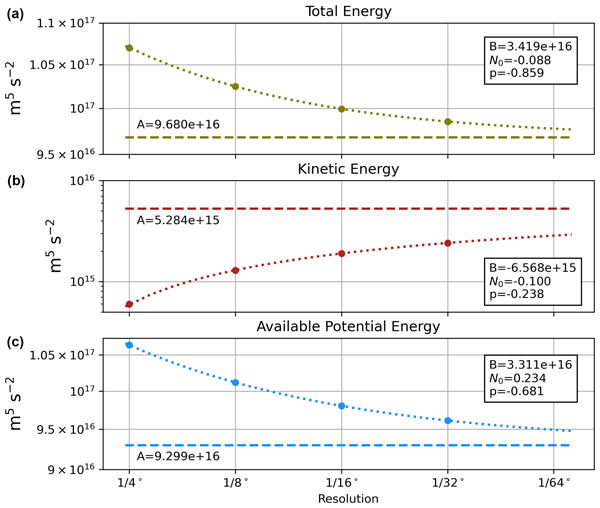
We present an idealized ocean model configuration and a set of simulations performed using varying horizontal grid spacing. While the model domain is idealized, it resembles important geometric features of the Atlantic and Southern oceans. The simulations described here serve as a framework to effectively study mesoscale eddy dynamics, to investigate the effect of mesoscale eddies on the large-scale dynamics, and to test and evaluate eddy parameterizations.
Michael Jacox, Dmitry Dukhovskoy, Jessie Liu, Michael Alexander, Elizabeth Drenkard, Andrew Ross, Natalie Freeman, Dillon Amaya, Steven Bograd, Allison Cluett, Nicole Lovenduski, Samuel Mogen, Mercedes Pozo Buil, Charles Stock, Wei Cheng, Albert Hermann, Liwei Jia, Nathaniel Johnson, Kelly Kearney, Colleen McHugh, and Darren Pilcher
EGUsphere, https://doi.org/10.5194/egusphere-2026-5844, https://doi.org/10.5194/egusphere-2026-5844, 2026
This preprint is open for discussion and under review for Ocean Science (OS).
Short summary
Short summary
We present a new system to predict conditions in the Northeast Pacific Ocean up to one year in advance. By comparing past forecasts with ocean measurements, we show that we can accurately predict temperature and oxygen levels several months in advance. These predictions will soon be available to the public, enabling coastal communities, managers, and industries to make better proactive decisions.
Vimal Koul, Andrew C. Ross, Charles Stock, Liping Zhang, Andrew T. Wittenberg, and Thomas Delworth
Ocean Sci., 22, 3017–3036, https://doi.org/10.5194/os-22-3017-2026, https://doi.org/10.5194/os-22-3017-2026, 2026
Short summary
Short summary
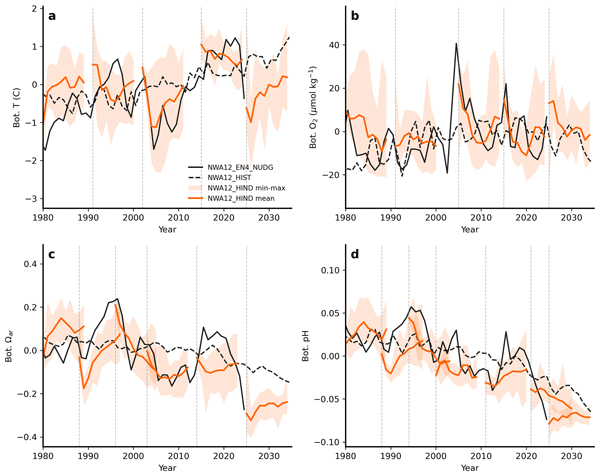
Predicting coastal ocean conditions years ahead has been difficult due to complex regional dynamics. This work shows we can forecast bottom temperature, oxygen, and acidity up to a decade ahead for the Northeast US Shelf. Our forecasts indicate increasing Labrador water may accelerate acidification, threatening shell-forming organisms. This provides a foundation for early warning systems to help communities and fisheries adapt proactively.
Andrew Ross, Charles Stock, Vimal Koul, Liwei Jia, Nathaniel Johnson, and Colleen McHugh
EGUsphere, https://doi.org/10.5194/egusphere-2026-5262, https://doi.org/10.5194/egusphere-2026-5262, 2026
This preprint is open for discussion and under review for Ocean Science (OS).
Short summary
Short summary
This paper examines the accuracy of forecasts of ocean oxygen and acidity, both critical for the healthy functioning of fish and marine ecosystems, along the continental shelf off the Northeast U.S. coastline. The forecasts are produced using a novel numerical model able to resolve fine oceanographic details. Comparison with a reference dataset shows that the model often accurately predicts oxygen and acidity up to several months in advance.
Gabriela Negrete García, Dax Matthews, Charles A. Stock, Brian Powell, Ryan R. Rykaczewski, Kisei Tanaka, Hannah Barkley, Tobias Friedrich, Jessica Y. Luo, Andrew C. Ross, and Yi-Cheng Teng
EGUsphere, https://doi.org/10.5194/egusphere-2026-1877, https://doi.org/10.5194/egusphere-2026-1877, 2026
This preprint is open for discussion and under review for Geoscientific Model Development (GMD).
Short summary
Short summary
Ocean waters near the Hawaiian Islands support billions of dollars in fisheries, tourism, and coral reefs, yet managing these resources requires understanding ocean dynamics at multiple scales. We developed and tested a high-resolution ocean model for the central North Pacific against satellite data, long-term ocean monitoring, and coral temperatures. The model reliably reproduced key patterns across all scales, offering a tool for forecasting fish habitat, reef health, and ocean acidification.
Dongmin Kim, Andrew C. Ross, Sang-Ik Shin, Fabian A. Gomez, Jasmin G. John, Denis L. Volkov, Sang-Ki Lee, Michael A. Alexander, and Charles A. Stock
Ocean Sci., 22, 1987–2009, https://doi.org/10.5194/os-22-1987-2026, https://doi.org/10.5194/os-22-1987-2026, 2026
Short summary
Short summary
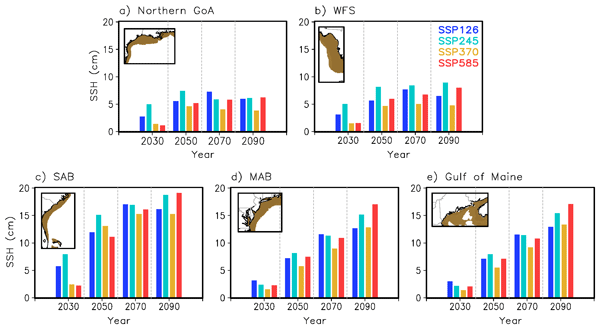
Using high-resolution Modular Ocean Model version 6, we projected Northwest Atlantic changes under four future emission scenarios. Results show a weakening Gulf Stream reduces upwelling, causing significant shelf warming and salinification. This also leads to dynamic sea-level rise along the US East Coast, particularly in the South Atlantic Bight, with critical implications for marine ecosystems and coastal risks.
Inseong Chang, Young Ho Kim, Young-Gyu Park, Hyunkeun Jin, Gyundo Pak, Andrew C. Ross, and Robert Hallberg
Geosci. Model Dev., 19, 3053–3074, https://doi.org/10.5194/gmd-19-3053-2026, https://doi.org/10.5194/gmd-19-3053-2026, 2026
Short summary
Short summary
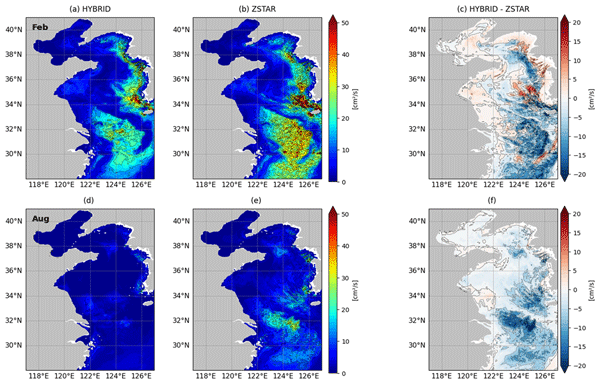
This study assesses how vertical coordinate choice shapes barotropic and baroclinic tide simulations in a high-resolution, MOM6 (Modular Ocean Model version 6) regional model. Focusing on the Yellow Sea under realistic forcing and seasonal stratification, we compare z* and z*-isopycnal hybrid to quantify coordinate-dependent impacts on tidal energetics and vertical structure. The results underscore that vertical representation is critical for accurately reproducing coastal stratification and tide–stratification interactions.

Inseong Chang, Young Ho Kim, Young-Gyu Park, Hyunkeun Jin, Gyundo Pak, Andrew C. Ross, and Robert Hallberg
Geosci. Model Dev., 19, 187–216, https://doi.org/10.5194/gmd-19-187-2026, https://doi.org/10.5194/gmd-19-187-2026, 2026
Short summary
Short summary
We conducted sensitivity experiments to examine how different vertical coordinates influence the representation of water masses and tides using a high-resolution regional ocean model for the Northwest Pacific. We found that the choice of vertical coordinate strongly affects the degree of artificial mixing, which in turn changes how well the model reproduces key ocean features. This highlights the importance of selecting a vertical coordinate when developing regional ocean models.
Enhui Liao, Laure Resplandy, Fan Yang, Yangyang Zhao, Sam Ditkovsky, Manon Malsang, Jenna Pearson, Andrew C. Ross, Robert Hallberg, and Charles Stock
Geosci. Model Dev., 18, 6553–6596, https://doi.org/10.5194/gmd-18-6553-2025, https://doi.org/10.5194/gmd-18-6553-2025, 2025
Short summary
Short summary
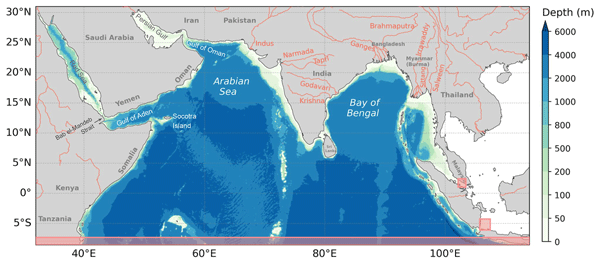
The northern Indian Ocean is central to the livelihoods and economies of countries that comprise about one-third of the world's population. We present a high-resolution (~10 km) ocean model that simulates seasonal and year-to-year variability in ocean, including currents, oxygen levels, and phytoplankton growth. This model is a powerful tool to study how climate change and human activities influence the northern Indian Ocean, which can be used for marine resource applications and management.
Elizabeth J. Drenkard, Charles A. Stock, Andrew C. Ross, Yi-Cheng Teng, Theresa Cordero, Wei Cheng, Alistair Adcroft, Enrique Curchitser, Raphael Dussin, Robert Hallberg, Claudine Hauri, Katherine Hedstrom, Albert Hermann, Michael G. Jacox, Kelly A. Kearney, Rémi Pagès, Darren J. Pilcher, Mercedes Pozo Buil, Vivek Seelanki, and Niki Zadeh
Geosci. Model Dev., 18, 5245–5290, https://doi.org/10.5194/gmd-18-5245-2025, https://doi.org/10.5194/gmd-18-5245-2025, 2025
Short summary
Short summary
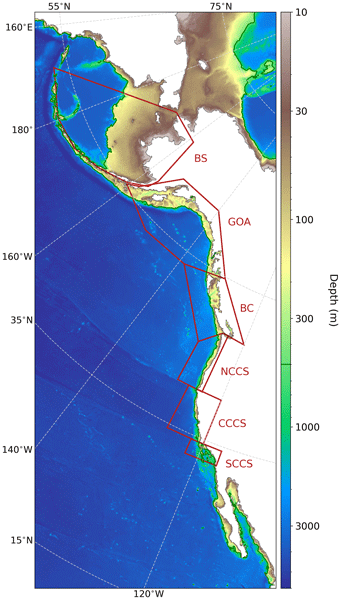
We made a new regional ocean model to assist fisheries and ecosystem managers in making decisions in the Northeast Pacific Ocean (NEP). We found that the model did well simulating past ocean conditions like temperature and nutrient and oxygen levels and can even reproduce metrics used by, and important to, ecosystem managers.
Andrew C. Ross, Charles A. Stock, Vimal Koul, Thomas L. Delworth, Feiyu Lu, Andrew Wittenberg, and Michael A. Alexander
Ocean Sci., 20, 1631–1656, https://doi.org/10.5194/os-20-1631-2024, https://doi.org/10.5194/os-20-1631-2024, 2024
Short summary
Short summary
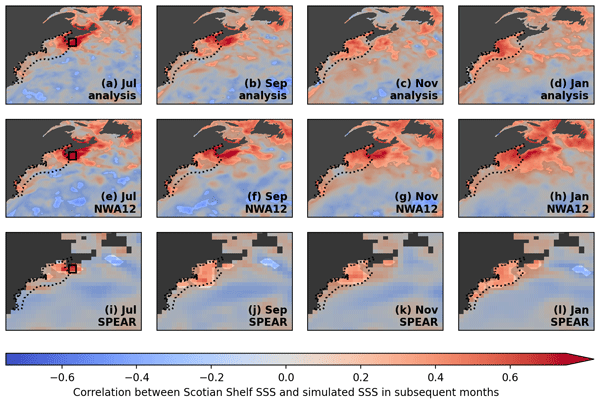
In this paper, we use a high-resolution regional ocean model to downscale seasonal ocean forecasts from the Seamless System for Prediction and EArth System Research (SPEAR) model of the Geophysical Fluid Dynamics Laboratory (GFDL). We find that the downscaled model has significantly higher prediction skill in many cases.
Jiwoo Lee, Peter J. Gleckler, Min-Seop Ahn, Ana Ordonez, Paul A. Ullrich, Kenneth R. Sperber, Karl E. Taylor, Yann Y. Planton, Eric Guilyardi, Paul Durack, Celine Bonfils, Mark D. Zelinka, Li-Wei Chao, Bo Dong, Charles Doutriaux, Chengzhu Zhang, Tom Vo, Jason Boutte, Michael F. Wehner, Angeline G. Pendergrass, Daehyun Kim, Zeyu Xue, Andrew T. Wittenberg, and John Krasting
Geosci. Model Dev., 17, 3919–3948, https://doi.org/10.5194/gmd-17-3919-2024, https://doi.org/10.5194/gmd-17-3919-2024, 2024
Short summary
Short summary
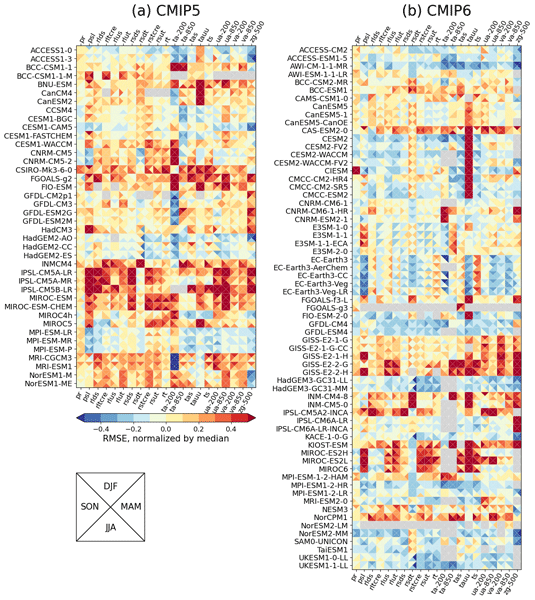
We introduce an open-source software, the PCMDI Metrics Package (PMP), developed for a comprehensive comparison of Earth system models (ESMs) with real-world observations. Using diverse metrics evaluating climatology, variability, and extremes simulated in thousands of simulations from the Coupled Model Intercomparison Project (CMIP), PMP aids in benchmarking model improvements across generations. PMP also enables efficient tracking of performance evolutions during ESM developments.
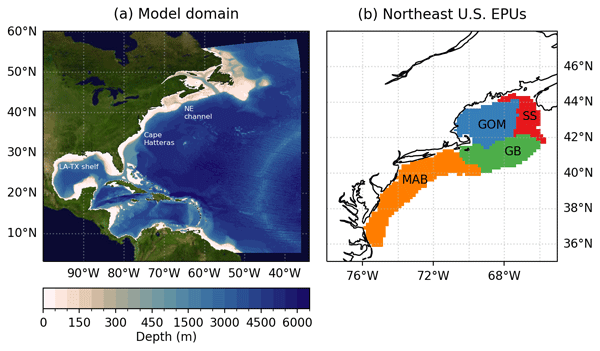
Andrew C. Ross, Charles A. Stock, Alistair Adcroft, Enrique Curchitser, Robert Hallberg, Matthew J. Harrison, Katherine Hedstrom, Niki Zadeh, Michael Alexander, Wenhao Chen, Elizabeth J. Drenkard, Hubert du Pontavice, Raphael Dussin, Fabian Gomez, Jasmin G. John, Dujuan Kang, Diane Lavoie, Laure Resplandy, Alizée Roobaert, Vincent Saba, Sang-Ik Shin, Samantha Siedlecki, and James Simkins
Geosci. Model Dev., 16, 6943–6985, https://doi.org/10.5194/gmd-16-6943-2023, https://doi.org/10.5194/gmd-16-6943-2023, 2023
Short summary
Short summary
We evaluate a model for northwest Atlantic Ocean dynamics and biogeochemistry that balances high resolution with computational economy by building on the new regional features in the MOM6 ocean model and COBALT biogeochemical model. We test the model's ability to simulate impactful historical variability and find that the model simulates the mean state and variability of most features well, which suggests the model can provide information to inform living-marine-resource applications.
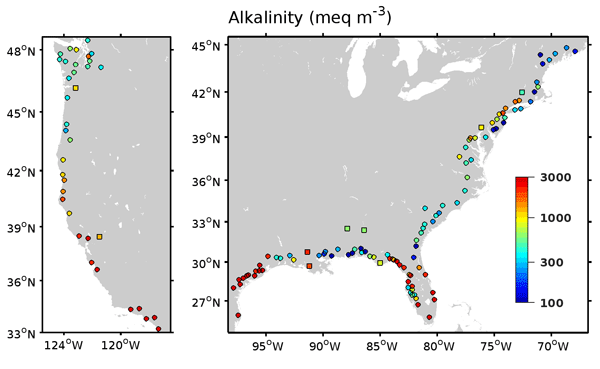
Fabian A. Gomez, Sang-Ki Lee, Charles A. Stock, Andrew C. Ross, Laure Resplandy, Samantha A. Siedlecki, Filippos Tagklis, and Joseph E. Salisbury
Earth Syst. Sci. Data, 15, 2223–2234, https://doi.org/10.5194/essd-15-2223-2023, https://doi.org/10.5194/essd-15-2223-2023, 2023
Short summary
Short summary
We present a river chemistry and discharge dataset for 140 rivers in the United States, which integrates information from the Water Quality Database of the US Geological Survey (USGS), the USGS’s Surface-Water Monthly Statistics for the Nation, and the U.S. Army Corps of Engineers. This dataset includes dissolved inorganic carbon and alkalinity, two key properties to characterize the carbonate system, as well as nutrient concentrations, such as nitrate, phosphate, and silica.
Gustavo M. Marques, Nora Loose, Elizabeth Yankovsky, Jacob M. Steinberg, Chiung-Yin Chang, Neeraja Bhamidipati, Alistair Adcroft, Baylor Fox-Kemper, Stephen M. Griffies, Robert W. Hallberg, Malte F. Jansen, Hemant Khatri, and Laure Zanna
Geosci. Model Dev., 15, 6567–6579, https://doi.org/10.5194/gmd-15-6567-2022, https://doi.org/10.5194/gmd-15-6567-2022, 2022
Short summary
Short summary
We present an idealized ocean model configuration and a set of simulations performed using varying horizontal grid spacing. While the model domain is idealized, it resembles important geometric features of the Atlantic and Southern oceans. The simulations described here serve as a framework to effectively study mesoscale eddy dynamics, to investigate the effect of mesoscale eddies on the large-scale dynamics, and to test and evaluate eddy parameterizations.
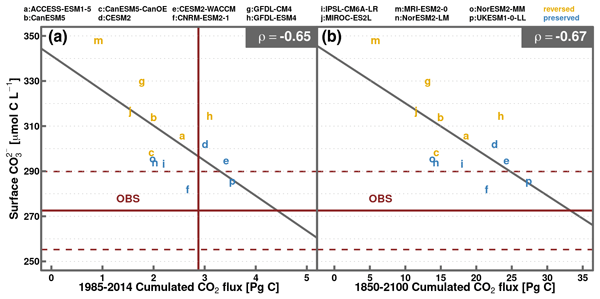
Pradeebane Vaittinada Ayar, Laurent Bopp, Jim R. Christian, Tatiana Ilyina, John P. Krasting, Roland Séférian, Hiroyuki Tsujino, Michio Watanabe, Andrew Yool, and Jerry Tjiputra
Earth Syst. Dynam., 13, 1097–1118, https://doi.org/10.5194/esd-13-1097-2022, https://doi.org/10.5194/esd-13-1097-2022, 2022
Short summary
Short summary
The El Niño–Southern Oscillation is the main driver for the natural variability of global atmospheric CO2. It modulates the CO2 fluxes in the tropical Pacific with anomalous CO2 influx during El Niño and outflux during La Niña. This relationship is projected to reverse by half of Earth system models studied here under the business-as-usual scenario. This study shows models that simulate a positive bias in surface carbonate concentrations simulate a shift in the ENSO–CO2 flux relationship.
Cited articles
Adcroft, A., Anderson, W., Balaji, V., Blanton, C., Bushuk, M., Dufour, C., Dunne, J., Griffies, S., Hallberg, R., Harrison, M., Held, I., Jansen, M., John, J., Krasting, J., Langenhorst, A., Legg, S., Liang, Z., McHugh, C., Radhakrishnan, A., Reichl, B., Rosati, A., Samuels, B., Shao, A., Stouffer, R., Winton, M., Wittenberg, A., Xiang, B., Zadeh, N., and Zhang, R.: The GFDL Global Ocean and Sea Ice Model OM4.0: Model Description and Simulation Features, J. Adv. Model. Earth Sy., 11, https://doi.org/10.1029/2019MS001726, 2019. a
Alexander, M., Scott, J., Jacox, M., Amaya, D., and Wilczynski, L.: Processes That Influence Bottom Temperatures in the California Current System, J. Geophys. Res.-Oceans, 130, https://doi.org/10.1029/2024JC021886, 2025. a
Apecechea, M., Melet, A., Reffray, G., and Thieblemont, R.: Impact of dynamical downscaling on sea level projections in the north-east Atlantic ocean and regional seas, J. Geophys. Res.-Oceans, 130, https://doi.org/10.1029/2025JC022737, 2025. a
Calafat, F., Wahl, T., Lindsten, F., Williams, J., and Frajka-Williams, E.: Coherent modulation of the sea-level annual cycle in the United States by Atlantic Rossby waves, Nat. Commun., 9, https://doi.org/10.1038/s41467-018-04898-y, 2018. a
Camargo, C., Piecuch, C., and Raubenheimer, B.: Do Ocean Dynamics Contribute to Coastal Floods? A Case Study of the Shelfbreak Jet and Coastal Sea Level Along Southern New England (US), Earths Future, 13, https://doi.org/10.1029/2025EF006708, 2025. a, b
Codiga, D.: Unified Tidal Analysis and Prediction Using the UTide Matlab Functions, Technical Report, Graduate School of Oceanography, University of Rhode Island, https://www.po.gso.uri.edu/~codiga/utide/2011Codiga-UTide-Report.pdf (last access: 12 July 2025), 2011. a
Delworth, T., Cooke, W., Adcroft, A., Bushuk, M., Chen, J., Dunne, K., Ginoux, P., Gudgel, R., Hallberg, R., Harris, L., Harrison, M., Johnson, N., Kapnick, S., Lin, S., Lu, F., Malyshev, S., Milly, P., Murakami, H., Naik, V., Pascale, S., Paynter, D., Rosati, A., Schwarzkopf, M., Shevliakova, E., Underwood, S., Wittenberg, A., Xiang, B., Yang, X., Zeng, F., Zhang, F., Zhang, L., and Zhao, M.: SPEAR: The Next Generation GFDL Modeling System for Seasonal to Multidecadal Prediction and Projection, J. Adv. Model. Earth Sy., 12, https://doi.org/10.1029/2019MS001895, 2020. a, b
Donatelli, C., Little, C. M., Ponte, R. M., and Yeager, S. G.: Spatiotemporal properties of intrinsic sea level variability along the southeastern United States coastline, Ocean Sci., 21, 2367–2377, https://doi.org/10.5194/os-21-2367-2025, 2025. a, b, c
Dusek, G., Sweet, W., Widlansky, M., Thompson, P., and Marra, J.: A novel statistical approach to predict seasonal high tide flooding, Frontiers in Marine Science, 9, https://doi.org/10.3389/fmars.2022.1073792, 2022. a
E.U. Copernicus Marine Service Information (CMEMS). Marine Data Store (MDS): Global Ocean Physics Reanalysis, E.U. Copernicus Marine Service Information (CMEMS). Marine Data Store (MDS) [data set], https://doi.org/10.48670/moi-00021, 2026. a
Ezer, T.: Can the Gulf Stream induce short-term fluctuations in sea level along the US East Coast? A modeling study, Ocean Dynam., 66, https://doi.org/10.1007/s10236-016-0928-0, 2016. a
Ezer, T. and Atkinson, L.: Accelerated flooding along the U. S. East Coast: On the impact of sea-level rise, tides, storms, the Gulf Stream, and the North Atlantic Oscillations, Earths Future, 2, https://doi.org/10.1002/2014EF000252, 2014. a
Gregory, J., Griffies, S., Hughes, C., Lowe, J., Church, J., Fukimori, I., Gomez, N., Kopp, R., Landerer, F., Cozannet, G., Ponte, R., Stammer, D., Tamisiea, M., and van de Wal, R.: Concepts and terminology for sea level: mean, variability and change, both local and global, Surv. Geophys., 40, https://doi.org/10.1007/s10712-019-09525-z, 2019. a
Hermans, T., Tinker, J., Palmer, M., Katsman, C., Vermeersen, B., and Slangen, A.: Improving sea-level projections on the Northwestern European shelf using dynamical downscaling, Clim. Dynam., 54, https://doi.org/10.1007/s00382-019-05104-5, 2020. a
Hersbach, H., Bell, B., Berrisford, P., Hirahara, S., Horányi, A., Muñoz-Sabater, J., Nicolas, J., Peubey, C., Radu, R., Schepers, D., Simmons, A., Soci, C., Abdalla, S., Abellan, X., Balsamo, G., Bechtold, P., Biavati, G., Bidlot, J., Bonavita, M., De Chiara, G., Dahlgren, P., Dee, D., Diamantakis, M., Dragani, R., Flemming, J., Forbes, R., Fuentes, M., Geer, A., Haimberger, L., Healy, S., Hogan, R. J., Hólm, E., Janisková, M., Keeley, S., Laloyaux, P., Lopez, P., Lupu, C., Radnoti, G. amd de Rosnay, P., Rozum, I., Vamborg, F., Villaume, S., and Thépaut, J.-N.: ERA5 Global Reanalysis, Q. J. Roy. Meteor. Soc., https://doi.org/10.1002/qj.3803, 2020. a
Hovenga, P., Newman, M., Albers, J., Sweet, W., Dusek, G., Xu, T., Callahan, J., Shin, S., and Compo, G.: Using stochastically generated skewed distributions to represent hourly nontidal residual water levels at United States tide gauges, Frontiers in Marine Science, 12, https://doi.org/10.3389/fmars.2025.1618367, 2025. a
Hughes, C. and Williams, S.: The color of sea level: Importance of spatial variations in spectral shape for assessing the significance of trends, J. Geophys. Res.-Oceans, 115, https://doi.org/10.1029/2010JC006102, 2010. a
Jacox, M., Buil, M., Brodie, S., Alexander, M., Amaya, D., Bograd, S., Edwards, C., Fiechter, J., Hazen, E., Hervieux, G., and Tommasi, D.: Downscaled seasonal forecasts for the California Current System: Skill assessment and prospects for living marine resource applications, PLOS Climate, 2, https://doi.org/10.1371/journal.pclm.0000245, 2023. a
Lee, J., Yang, X., Chang, E., Murakami, H., and Cooke, W.: Sensitivity of Northern Hemisphere Extratropical Cyclone Properties to Atmospheric Resolution in the GFDL SPEAR Model, J. Climate, 39, 3615–3630, https://doi.org/10.1175/JCLI-D-24-0770.1, 2025. a
Lellouche, J.-M., Greiner, E., Bourdalle-Badie, R., Garric, G., Melet, A., Drevilon, M., Bricaud, C., Hamon, M., Le Galloudec, O., Regnier, C., Candela, T., Testut, C.-E., Gasparin, F., Ruggerio, G., Benkiran, M., Drillet, Y., and Le Traon, P.-Y.: The Copernicus Global
Lentz, S.: Wind-Driven Along-Coast Pressure Gradients in the Middle Atlantic Bight, J. Geophys. Res.-Oceans, 129, https://doi.org/10.1029/2024JC021271, 2024. a, b
Li, D., Chang, P., Yeager, S., Danabasoglu, G., Castruccio, F., Small, J., Wang, H., Zhang, Q., and Gopal, A.: The Impact of Horizontal Resolution on Projected Sea-Level Rise Along US East Continental Shelf With the Community Earth System Model, J. Adv. Model. Earth Sy., 14, https://doi.org/10.1029/2021MS002868, 2022. a, b
Little, C., Hu, A., Hughes, C., McCarthy, G., Piecuch, C., Ponte, R., and Thomas, M.: The relationship between U. S. east coast sea level and the Atlantic meridional overturning circulation: a review, J. Geophys. Res.-Oceans, 124, https://doi.org/10.1029/2019JC015152, 2019. a, b
Little, C., Yeager, S., Ponte, R., Chang, P., and Kim, W.: Influence of Ocean Model Horizontal Resolution on the Representation of Global Annual-To-Multidecadal Coastal Sea Level Variability, J. Geophys. Res.-Oceans, 129, https://doi.org/10.1029/2024JC021679, 2024. a
Little, C., Yeager, S., Ponte, R., and Donatelli, C.: Blocked coastal propagation inhibits model representation of southeast United States coastal sea level variability, J. Atmos. Ocean. Tech., 53, https://doi.org/10.1029/2025GL118781, 2026. a, b, c, d
Liu, Z., Minobe, S., Sasaki, Y., and Terada, M.: Dynamical downscaling of future sea level change in the western north Pacific using ROMS, J. Oceanogr., 72, https://doi.org/10.1007/s10872-016-0390-0, 2016. a
Long, X., Shin, S., and Newman, M.: Statistical Downscaling of Seasonal Forecasts of Sea Level Anomalies for U. S. Coasts, Geophys. Res. Lett., 50, https://doi.org/10.1029/2022GL100271, 2023. a
Lu, F., Harrison, M., Rosati, A., Delworth, T., Yang, X., Cooke, W., Jia, L., McHugh, C., Johnson, N., Bushuk, M., Zhang, Y., and Adcroft, A.: GFDL's SPEAR Seasonal Prediction System: Initialization and Ocean Tendency Adjustment (OTA) for Coupled Model Predictions, J. Adv. Model. Earth Sy., 12, https://doi.org/10.1029/2020MS002149, 2020. a
Maghsoodifar, F., Radfar, S., Moftakhari, H., and Moradkhani, H.: Establishing closure criteria for coastal roadways under flooding conditions, Int. J. Disast. Risk Re., 130, https://doi.org/10.1016/j.ijdrr.2025.105805, 2025. a
Minobe, S., Terada, M., Qiu, B., and Schneider, N.: Western Boundary Sea Level: A Theory, Rule of Thumb, and Application to Climate Models, J. Phys. Oceanogr., 47, https://doi.org/10.1175/JPO-D-16-0144.1, 2017. a
Piecuch, C. and Ponte, R.: Inverted barometer contributions to recent sea level changes along the northeast coast of America, Ocean Sci., 42, https://doi.org/10.1002/2015GL064580, 2015. a
Piecuch, C., Das, S., Gorrell, L., Dangendorf, S., Hamlington, B., Thompson, P., and Wahl, T.: Impact-Based Thresholds for Investigation of High-Tide Flooding in the United States, Earths Future, 13, https://doi.org/10.1029/2024EF005850, 2025. a
Ponte, R.: Low-Frequency Sea Level Variability and the Inverted Barometer Effect, J. Atmos. Ocean. Tech., 23, https://doi.org/10.1175/JTECH1864.1, 2006. a
Qu, Y., Jevrejeva, S., Fang, J., and Wang, S.: Projected changes in sea level seasonal cycle alter global coastal flood hazards, Environ. Res. Lett., 21, https://doi.org/10.1088/1748-9326/ae3b57, 2026. a
Rose, L., Widlanksy, M., Feng, X., Thompson, P., Asher, T., Dusek, G., Blanton, B., Luettich, R., Callahan, J., Brooks, W., Keeney, A., Haddad, J., Sweet, W., Genz, A., Hovenga, P., Marra, J., and Tilson, J.: Assessment of water levels from 43 years of NOAA's Coastal Ocean Reanalysis (CORA) for the Gulf Coast of Mexico and East Coasts, Frontiers in Marine Science, 11, https://doi.org/10.3389/fmars.2024.1381228, 2024. a
Ross, A. C., Stock, C. A., Adcroft, A., Curchitser, E., Hallberg, R., Harrison, M. J., Hedstrom, K., Zadeh, N., Alexander, M., Chen, W., Drenkard, E. J., du Pontavice, H., Dussin, R., Gomez, F., John, J. G., Kang, D., Lavoie, D., Resplandy, L., Roobaert, A., Saba, V., Shin, S.-I., Siedlecki, S., and Simkins, J.: A high-resolution physical–biogeochemical model for marine resource applications in the northwest Atlantic (MOM6-COBALT-NWA12 v1.0), Geosci. Model Dev., 16, 6943–6985, https://doi.org/10.5194/gmd-16-6943-2023, 2023. a, b
Steinberg, J.: Analysis scripts for “A dynamical downscaling approach for the improved representation of sub-annual coastal sea level variability: the importance of shelf and slope ocean dynamics” (Steinberg, Krasting, Ross) [Dataset], Zenodo [data set], https://doi.org/10.5281/zenodo.23548283, 2026a (data also available at: https://github.com/jakesteinberg/NWA12-seasonal-forecasts, last access: 22 October 2026). a
Steinberg, J.: NWA12 and SPEAR model output used in analyses and to generate figures in the manuscript “A dynamical downscaling approach for the improved representation of sub-annual coastal sea level variability: the importance of shelf and slope ocean dynamics” (Steinberg, Krasting, Ross) [Dataset], Zenodo [data set], https://doi.org/10.5281/zenodo.20415501, 2026b. a
Suzuki, T., Yamagami, Y., Kurogi, M., Kawasaki, T., Komuro, Y., and Tatebe, H.: A dynamical downscaling of global climate change projections using an eddy-resolving OGCM: application to sea level changes around Japan, J. Oceanogr., https://doi.org/10.1007/s10872-026-00804-z, 2026. a
Sweet, W. V., Hamlington, B. D., Kopp, R. E., Weaver, C. P., Barnard, P. L., Bekaert, D., Brooks, W., Craghan, M., Dusek, G., Frederikse, T., Garner, G., Genz, A. S., Krasting, J. P., Larour, E., Marcy, D., Marra, J. J., Obeysekera, J., Osler, M., Pendleton, M., Roman, D., Schmied, L., Veatch, W., White, K. D., and Zuzak, C.: Global and Regional Sea Level Rise Scenarios for the United States: Up-dated Mean Projections and Extreme Water Level Probabilities Along U. S. Coastlines, NOAA Technical Report NOS 01, National Oceanic and Atmospheric Administration, National Ocean Service, Silver Spring, MD, 2022. a
Sweet, W. V., Genz, A., Menendez, M., Marra, J., and Obeysekera, J.: Implications of Variability and Trends in Coastal Extreme Water Levels, Geophys. Res. Lett., 51, e2024GL108864, https://doi.org/10.1029/2024GL108864, 2024. a
Thompson, P., Widlansky, M., Hamlington, B., Merrifield, M., Marra, J., Mitchum, G., and Sweet, W.: Rapid increases and extreme months in projections of United States high-tide flooding, Nat. Clim. Change, 11, https://doi.org/10.1038/s41558-021-01077-8, 2021. a
Volkov, D., Zhang, K., Johns, W., Willis, J., Hobbs, W., Goes, M., Zhang, H., and Menemenlis, D.: Atlantic meridional overturning circulation increases flood risk along the United States southeast coast, Nat. Commun., 14, https://doi.org/10.1038/s41467-023-40848-z, 2023. a, b, c, d
Wang, O., Lee, T., Piecuch, C., Fukumori, I., Fenty, I., Frederikse, T., Menemenlis, D., Ponte, R., and Zhang, H.: Local and Remote Forcing of Interannual Sea-Level Variability at Nantucket Island, J. Geophys. Res.-Oceans, 127, https://doi.org/10.1029/2021JC018275, 2022. a, b, c
Wang, O., Lee, T., Frederikse, T., Ponte, R., Fenty, I., and Fukumori, I.: What Forcing Mechanisms Affect the Interannual Sea Level Covariability Between the Northeast and Southeast Coasts of the United States?, J. Geophys. Res.-Oceans, 129, https://doi.org/10.1029/2023JC019873, 2024. a
Wise, A., Hughes, C., and Polton, J.: Bathymetric Influence on the Coastal Sea Level Response to Ocean Gyres at Western Boundaries, J. Phys. Oceanogr., 48, https://doi.org/10.1175/JPO-D-18-0007.1, 2018. a, b
Wise, A., Polton, J., Hughes, C., and Huthnance, J.: Idealised modelling of offshore-forced sea leve hot spots and boundary waves along the North American East Coast, Ocean Model., 155, https://doi.org/10.1016/j.ocemod.2020.101706, 2020. a, b
Woodworth, P., Hunter, J., Marcos, M., Caldwell, P., Menendez, M., and Haigh, I.: Towards a global higher-frequency sea level dataset, Geoscientific Data, 3, https://doi.org/10.1002/gdj3.42, 2016. a, b
Wu, T. and He, R.: Gulf Stream Near Cape Hatteras Modulates Sea Level Variability Along the Southeastern Coast of North America, Geophys. Res. Lett., 52, https://doi.org/10.1029/2024GL112776, 2025. a
Xu, G., Chang, P., Danabasoglu, G., Castruccio, F., Yeager, S., Zhang, Q., Kurian, J., Small, J., Bates, S., and Shepard, C.: Storm-permitting climate modeling highlights storm frequency's role in future extreme sea level changes along US East and Gulf Coasts, npj Clim. Atmos. Sci., 9, https://doi.org/10.1038/s41612-025-01274-8, 2026. a
Yin, J., Schlesinger, M., and Stouffer, R.: Model projections of rapid sea-level rise on the northeast coast of the United States, Nat. Geosci., 2, https://doi.org/10.1038/ngeo462, 2009. a
Zhang, L., Delworth, T., Koul, V., Ross, A., Stock, C., Yang, X., Zeng, F., Wittenberg, A., Zhao, J., Gu, Q., and Li, S.: Skillful multiyear prediction of flood frequency along the US Northeast Coast using a high-resolution modeling system, Science Advances, 11, https://doi.org/10.1126/sciadv.ads4419, 2025. a
Short summary
To improve forecasts, we build and analyze an ensemble of year-long hindcasts of sea level in the northwest Atlantic Ocean. With a focus at US East Coast tide gauge stations, we reveal regional differences in simulated variability resulting from different parent and downscaled ocean model horizontal resolution. We consider differences among parent model, downscaled model, and observed variability as a function of frequency and find downscaled enhancements increase with decreasing latitude.
To improve forecasts, we build and analyze an ensemble of year-long hindcasts of sea level in...


Altmetrics
Final-revised paper
Preprint