
Articles | Volume 22, issue 1
https://doi.org/10.5194/os-22-345-2026
© Author(s) 2026. This work is distributed under
the Creative Commons Attribution 4.0 License.
the Creative Commons Attribution 4.0 License.
https://doi.org/10.5194/os-22-345-2026
© Author(s) 2026. This work is distributed under
the Creative Commons Attribution 4.0 License.
the Creative Commons Attribution 4.0 License.
Research article
| 
02 Feb 2026
Research article |
| 02 Feb 2026
| 02 Feb 2026
Impact of waves on phytoplankton activity on the Northwest European Shelf: insights from observations and km-scale coupled models

Plymouth Marine Laboratory, Plymouth, PL1 2LP, UK
National Centre for Earth Observation, Leicester, LE4 5SP, UK
Ségolène Berthou
Met Office, Exeter, EX1 3PB, UK
Rebecca Millington
Plymouth Marine Laboratory, Plymouth, PL1 2LP, UK
James R. Clark
Plymouth Marine Laboratory, Plymouth, PL1 2LP, UK
Lucy Bricheno
National Oceanography Centre, Liverpool, L3 5DA, UK
Juan Manuel Castillo
Met Office, Exeter, EX1 3PB, UK
Julia Rulent
National Oceanography Centre, Liverpool, L3 5DA, UK
Huw Lewis
Met Office, Exeter, EX1 3PB, UK
Related authors
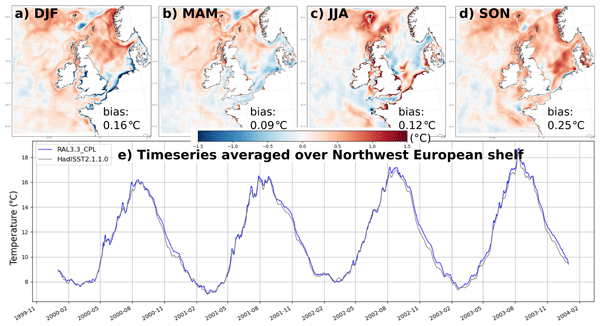
Ségolène Berthou, Juan Manuel Castillo, Vivian Fraser-Leonhardt, Sana Mahmood, Nefeli Makrygianni, Alex Arnold, Claudio Sanchez, Huw W. Lewis, Dale Partridge, Martin Best, Lucy Bricheno, Helen Davies, Douglas B. Clark, James R. Clark, Jeff A. Polton, Andrew Saulter, Chris J. Short, Jonathan Tinker, Simon Tucker, and Maisie Wright
Geosci. Model Dev., 19, 8535–8564, https://doi.org/10.5194/gmd-19-8535-2026, https://doi.org/10.5194/gmd-19-8535-2026, 2026
Short summary
Short summary
The UK’s new RCS-UKC4 (Regional Coupled Suite – UK Coupled domain version 4) system combines atmosphere, ocean, waves, land, rivers, and biogeochemistry models to improve coastal weather and climate predictions. It offers better storm wave predictions, more accurate river flows, and captures rapid sea-level changes. These advances help predict multiple hazards more reliably, supporting safer communities and helping better planning.
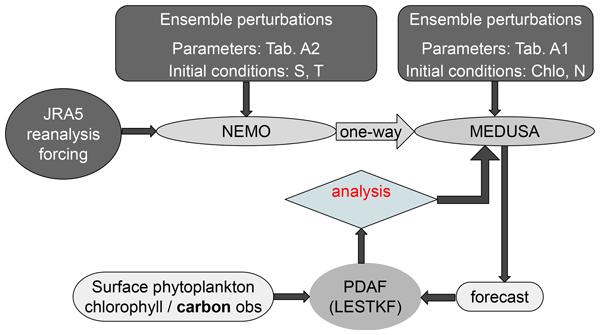
Yumeng Chen, Dale Partridge, and Lars Nerger
Geosci. Model Dev., 19, 7589–7613, https://doi.org/10.5194/gmd-19-7589-2026, https://doi.org/10.5194/gmd-19-7589-2026, 2026
Short summary
Short summary
Operational marine ecosystem forecasts traditionally rely on combining phytoplankton chlorophyll observations with model forecasts. However, using our newly developed ensemble data assimilation system, we demonstrate that assimilating phytoplankton carbon data leads to more balanced phytoplankton estimates and adjusts estimates of global ocean carbon.
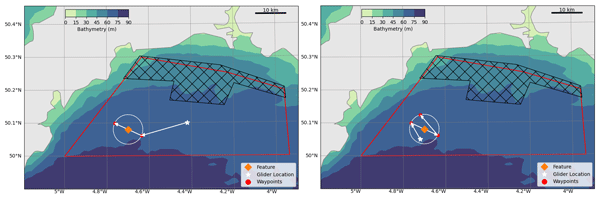
Dale Partridge, Deep Banerjee, David Ford, Ke Wang, Jozef Skákala, Juliane Wihsgott, Prathyush P. Menon, Susan Kay, Daniel Clewley, Andrea Rochner, Emma Sullivan, and Matthew Palmer
Ocean Sci., 22, 2083–2100, https://doi.org/10.5194/os-22-2083-2026, https://doi.org/10.5194/os-22-2083-2026, 2026
Short summary
Short summary
This study outlines the development and testing of a Digital Twin Ocean (DTO) framework, aimed at improving coastal ocean forecasts through the use of autonomous underwater gliders. A fleet of gliders were deployed in the western English Channel during August–September 2024 to collect measurements of temperature, salinity, chlorophyll and oxygen, aiming to track the movement of the harmful algal bloom Karenia mikimotoi.
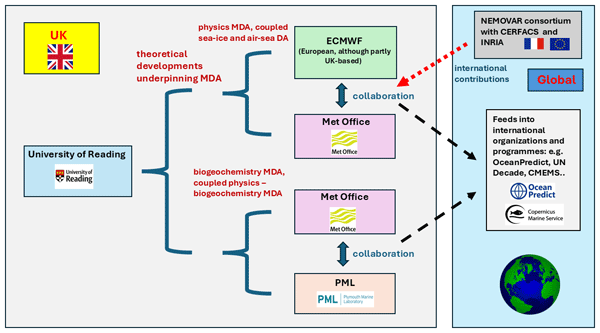
Jozef Skákala, David Ford, Keith Haines, Amos Lawless, Matthew J. Martin, Philip Browne, Marcin Chrust, Stefano Ciavatta, Alison Fowler, Daniel Lea, Matthew Palmer, Andrea Rochner, Jennifer Waters, Hao Zuo, Deep S. Banerjee, Mike Bell, Davi M. Carneiro, Yumeng Chen, Susan Kay, Dale Partridge, Martin Price, Richard Renshaw, Georgy Shapiro, and James While
Ocean Sci., 21, 1709–1734, https://doi.org/10.5194/os-21-1709-2025, https://doi.org/10.5194/os-21-1709-2025, 2025
Short summary
Short summary
UK marine data assimilation (MDA) involves a closely collaborating research community. In this paper, we offer both an overview of the state of the art and a vision for the future across all of the main areas of UK MDA, ranging from physics to biogeochemistry to coupled DA. We discuss the current UK MDA stakeholder applications, highlight theoretical developments needed to advance our systems, and reflect upon upcoming opportunities with respect to hardware and observational missions.
Jeff Polton, James Harle, Jason Holt, Anna Katavouta, Dale Partridge, Jenny Jardine, Sarah Wakelin, Julia Rulent, Anthony Wise, Katherine Hutchinson, David Byrne, Diego Bruciaferri, Enda O'Dea, Michela De Dominicis, Pierre Mathiot, Andrew Coward, Andrew Yool, Julien Palmiéri, Gennadi Lessin, Claudia Gabriela Mayorga-Adame, Valérie Le Guennec, Alex Arnold, and Clément Rousset
Geosci. Model Dev., 16, 1481–1510, https://doi.org/10.5194/gmd-16-1481-2023, https://doi.org/10.5194/gmd-16-1481-2023, 2023
Short summary
Short summary
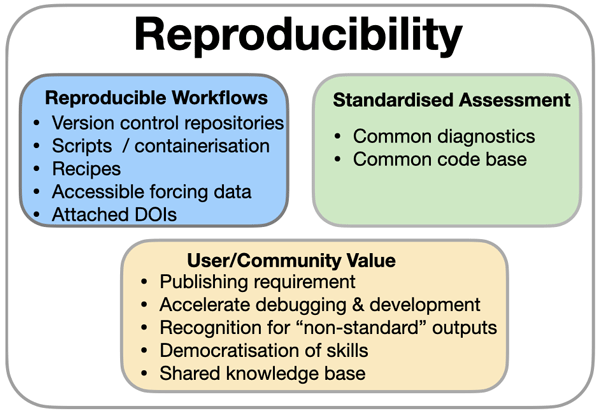
The aim is to increase the capacity of the modelling community to respond to societally important questions that require ocean modelling. The concept of reproducibility for regional ocean modelling is developed: advocating methods for reproducible workflows and standardised methods of assessment. Then, targeting the NEMO framework, we give practical advice and worked examples, highlighting key considerations that will the expedite development cycle and upskill the user community.
Ségolène Berthou, Juan Manuel Castillo, Vivian Fraser-Leonhardt, Sana Mahmood, Nefeli Makrygianni, Alex Arnold, Claudio Sanchez, Huw W. Lewis, Dale Partridge, Martin Best, Lucy Bricheno, Helen Davies, Douglas B. Clark, James R. Clark, Jeff A. Polton, Andrew Saulter, Chris J. Short, Jonathan Tinker, Simon Tucker, and Maisie Wright
Geosci. Model Dev., 19, 8535–8564, https://doi.org/10.5194/gmd-19-8535-2026, https://doi.org/10.5194/gmd-19-8535-2026, 2026
Short summary
Short summary
The UK’s new RCS-UKC4 (Regional Coupled Suite – UK Coupled domain version 4) system combines atmosphere, ocean, waves, land, rivers, and biogeochemistry models to improve coastal weather and climate predictions. It offers better storm wave predictions, more accurate river flows, and captures rapid sea-level changes. These advances help predict multiple hazards more reliably, supporting safer communities and helping better planning.
Yumeng Chen, Dale Partridge, and Lars Nerger
Geosci. Model Dev., 19, 7589–7613, https://doi.org/10.5194/gmd-19-7589-2026, https://doi.org/10.5194/gmd-19-7589-2026, 2026
Short summary
Short summary
Operational marine ecosystem forecasts traditionally rely on combining phytoplankton chlorophyll observations with model forecasts. However, using our newly developed ensemble data assimilation system, we demonstrate that assimilating phytoplankton carbon data leads to more balanced phytoplankton estimates and adjusts estimates of global ocean carbon.
Vijith Vijayakumaran, Rebecca Millington, Jorn Bruggeman, Josefine Hahn, Helen Powley, Gennadi Lessin, Anja Lindenthal, Corinna Schrum, and Ute Daewel
EGUsphere, https://doi.org/10.5194/egusphere-2026-3078, https://doi.org/10.5194/egusphere-2026-3078, 2026
This preprint is open for discussion and under review for Geoscientific Model Development (GMD).
Short summary
Short summary
We present ECOSMO End-to-End v2.0, a set of fish and macrobenthos functional-group modules that can be two-way coupled to lower-trophic-level marine ecosystem models. Using a one-dimensional setup, we tested these plug-and-play modules coupled to three models used in the Copernicus Marine Service framework. Simulations show that macrobenthos increase bottom-layer nutrients and are essential for realistic fish production, while fish and macrobenthos strengthen top-down control on plankton.
Rajesh Kumar, Claudio Sanchez, Juan Manuel Castillo, Jian-Guo Li, Bijoy Thompson, Pratiman Patel, Alvin Ng, Kaushik Sasmal, Kalli Furtado, Hailin Yan, Liu Jianyu, and Hugh Zhang
EGUsphere, https://doi.org/10.5194/egusphere-2026-2024, https://doi.org/10.5194/egusphere-2026-2024, 2026
Short summary
Short summary
Weather over Southeast Asia is shaped by complex interactions between the air, ocean, and waves. We developed a high-resolution model that links these processes to better understand and predict rainfall patterns in the region. The results show that ocean–atmosphere interactions improve the representation and prediction of squall events that affect daily life in Singapore and surrounding regions. This work supports more accurate weather forecasting in the region.
Piyali Goswami, Ségolène Berthou, Theodore G. Shepherd, Ambrogio Volonté, Sana Mahmood, Juan Manuel Castillo, Anne-Christine Péquignet, Yong-June Park, Mark Worsfold, Regina Rodrigues, and Magdalena A. Balmaseda
Nat. Hazards Earth Syst. Sci., 26, 3213–3230, https://doi.org/10.5194/nhess-26-3213-2026, https://doi.org/10.5194/nhess-26-3213-2026, 2026
Short summary
Short summary
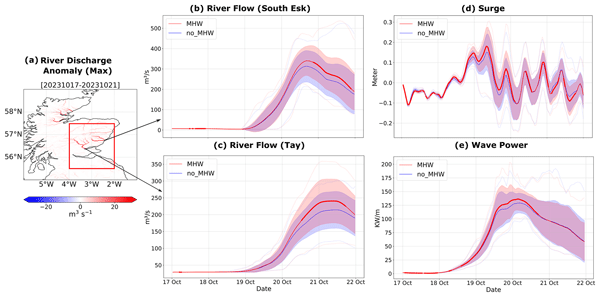
We examined how a marine heatwave - period of unusually warm ocean conditions - affected flooding and coastal erosion during a storm in northwest Europe. Using a state-of-the-art regional coupled model at km-scale, we compared simulations with and without the marine heatwave to isolate its effects on the storm hazards. Warmer shallow seas intensified rainfall, winds and surface depression of the storm, which integrated into larger increases of surge, wave power and river flows.
Nefeli Makrygianni, Ségolène Berthou, David L. A. Flack, Cindy Lebeaupin Brossier, Jonathan Beuvier, Juan Manuel Castillo, Emiliano Renzi, Clare O'Neill, Daniel Peláez-Zapata, Frederic Dias, Huw Lewis, and Diego Bruciaferri
Nat. Hazards Earth Syst. Sci., 26, 3185–3211, https://doi.org/10.5194/nhess-26-3185-2026, https://doi.org/10.5194/nhess-26-3185-2026, 2026
Short summary
Short summary
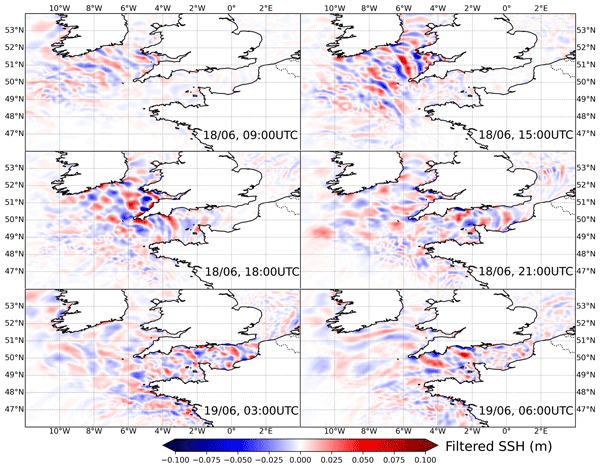
Meteotsunamis are rare but dangerous anomalous waves triggered by atmospheric disturbances, they are not currently forecast in Northwest Europe. We analysed the strongest recorded event on June 18, 2022, which reached 1 m amplitude. We showed high-resolution, high-frequency coupled models can represent such events up to three days ahead and help better understand their atmospheric triggers. These models, together with improved observations, can enhance early warnings and coastal safety.
Dale Partridge, Deep Banerjee, David Ford, Ke Wang, Jozef Skákala, Juliane Wihsgott, Prathyush P. Menon, Susan Kay, Daniel Clewley, Andrea Rochner, Emma Sullivan, and Matthew Palmer
Ocean Sci., 22, 2083–2100, https://doi.org/10.5194/os-22-2083-2026, https://doi.org/10.5194/os-22-2083-2026, 2026
Short summary
Short summary
This study outlines the development and testing of a Digital Twin Ocean (DTO) framework, aimed at improving coastal ocean forecasts through the use of autonomous underwater gliders. A fleet of gliders were deployed in the western English Channel during August–September 2024 to collect measurements of temperature, salinity, chlorophyll and oxygen, aiming to track the movement of the harmful algal bloom Karenia mikimotoi.
Jozef Skákala, David Ford, Keith Haines, Amos Lawless, Matthew J. Martin, Philip Browne, Marcin Chrust, Stefano Ciavatta, Alison Fowler, Daniel Lea, Matthew Palmer, Andrea Rochner, Jennifer Waters, Hao Zuo, Deep S. Banerjee, Mike Bell, Davi M. Carneiro, Yumeng Chen, Susan Kay, Dale Partridge, Martin Price, Richard Renshaw, Georgy Shapiro, and James While
Ocean Sci., 21, 1709–1734, https://doi.org/10.5194/os-21-1709-2025, https://doi.org/10.5194/os-21-1709-2025, 2025
Short summary
Short summary
UK marine data assimilation (MDA) involves a closely collaborating research community. In this paper, we offer both an overview of the state of the art and a vision for the future across all of the main areas of UK MDA, ranging from physics to biogeochemistry to coupled DA. We discuss the current UK MDA stakeholder applications, highlight theoretical developments needed to advance our systems, and reflect upon upcoming opportunities with respect to hardware and observational missions.
Mike Bush, David L. A. Flack, Huw W. Lewis, Sylvia I. Bohnenstengel, Chris J. Short, Charmaine Franklin, Adrian P. Lock, Martin Best, Paul Field, Anne McCabe, Kwinten Van Weverberg, Segolene Berthou, Ian Boutle, Jennifer K. Brooke, Seb Cole, Shaun Cooper, Gareth Dow, John Edwards, Anke Finnenkoetter, Kalli Furtado, Kate Halladay, Kirsty Hanley, Margaret A. Hendry, Adrian Hill, Aravindakshan Jayakumar, Richard W. Jones, Humphrey Lean, Joshua C. K. Lee, Andy Malcolm, Marion Mittermaier, Saji Mohandas, Stuart Moore, Cyril Morcrette, Rachel North, Aurore Porson, Susan Rennie, Nigel Roberts, Belinda Roux, Claudio Sanchez, Chun-Hsu Su, Simon Tucker, Simon Vosper, David Walters, James Warner, Stuart Webster, Mark Weeks, Jonathan Wilkinson, Michael Whitall, Keith D. Williams, and Hugh Zhang
Geosci. Model Dev., 18, 3819–3855, https://doi.org/10.5194/gmd-18-3819-2025, https://doi.org/10.5194/gmd-18-3819-2025, 2025
Short summary
Short summary
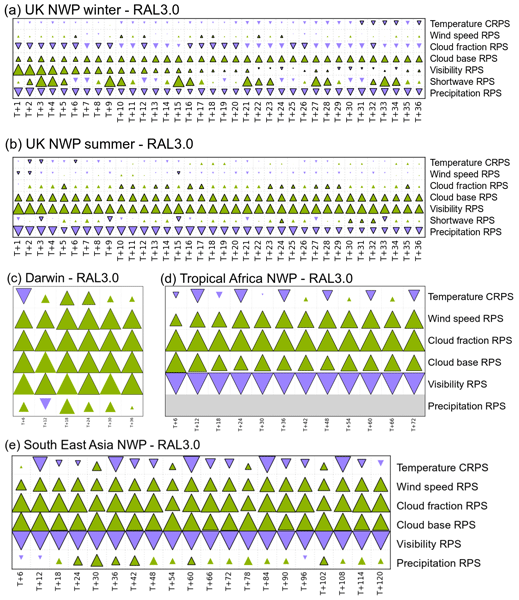
RAL configurations define settings for the Unified Model atmosphere and Joint UK Land Environment Simulator. The third version of the Regional Atmosphere and Land (RAL3) science configuration for kilometre- and sub-kilometre-scale modelling represents a major advance compared to previous versions (RAL2) by delivering a common science definition for applications in tropical and mid-latitude regions. RAL3 has more realistic precipitation distributions and an improved representation of clouds and visibility.
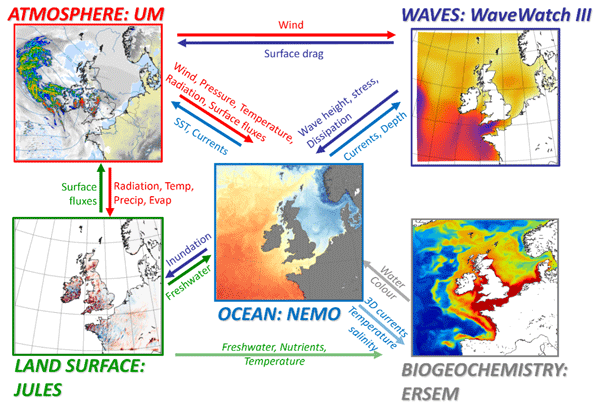
Ségolène Berthou, John Siddorn, Vivian Fraser-Leonhardt, Pierre-Yves Le Traon, and Ibrahim Hoteit
State Planet, 5-opsr, 20, https://doi.org/10.5194/sp-5-opsr-20-2025, https://doi.org/10.5194/sp-5-opsr-20-2025, 2025
Short summary
Short summary
Ocean forecasting is traditionally done independently from atmospheric, wave, or river modelling. We discuss the benefits and challenges of bringing all these modelling systems together for ocean forecasting.
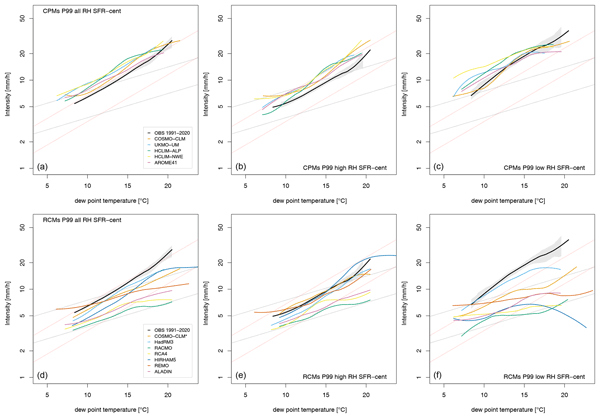
Geert Lenderink, Nikolina Ban, Erwan Brisson, Ségolène Berthou, Virginia Edith Cortés-Hernández, Elizabeth Kendon, Hayley J. Fowler, and Hylke de Vries
Hydrol. Earth Syst. Sci., 29, 1201–1220, https://doi.org/10.5194/hess-29-1201-2025, https://doi.org/10.5194/hess-29-1201-2025, 2025
Short summary
Short summary
Future extreme rainfall events are influenced by changes in both absolute and relative humidity. The impact of increasing absolute humidity is reasonably well understood, but the role of relative humidity decreases over land remains largely unknown. Using hourly observations from France and the Netherlands, we find that lower relative humidity generally leads to more intense rainfall extremes. This relation is only captured well in recently developed convection-permitting climate models.
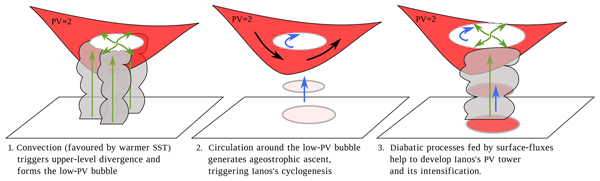
Claudio Sánchez, Suzanne Gray, Ambrogio Volonté, Florian Pantillon, Ségolène Berthou, and Silvio Davolio
Weather Clim. Dynam., 5, 1429–1455, https://doi.org/10.5194/wcd-5-1429-2024, https://doi.org/10.5194/wcd-5-1429-2024, 2024
Short summary
Short summary
Medicane Ianos was a very intense cyclone that led to harmful impacts over Greece. We explore what processes are important for the forecasting of Medicane Ianos, with the use of the Met Office weather model. There was a preceding precipitation event before Ianos’s birth, whose energetics generated a bubble in the tropopause. This bubble created the necessary conditions for Ianos to emerge and strengthen, and the processes are enhanced in simulations with a warmer Mediterranean Sea.
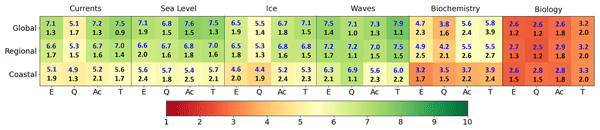
Stefania A. Ciliberti, Enrique Alvarez Fanjul, Jay Pearlman, Kirsten Wilmer-Becker, Pierre Bahurel, Fabrice Ardhuin, Alain Arnaud, Mike Bell, Segolene Berthou, Laurent Bertino, Arthur Capet, Eric Chassignet, Stefano Ciavatta, Mauro Cirano, Emanuela Clementi, Gianpiero Cossarini, Gianpaolo Coro, Stuart Corney, Fraser Davidson, Marie Drevillon, Yann Drillet, Renaud Dussurget, Ghada El Serafy, Katja Fennel, Marcos Garcia Sotillo, Patrick Heimbach, Fabrice Hernandez, Patrick Hogan, Ibrahim Hoteit, Sudheer Joseph, Simon Josey, Pierre-Yves Le Traon, Simone Libralato, Marco Mancini, Pascal Matte, Angelique Melet, Yasumasa Miyazawa, Andrew M. Moore, Antonio Novellino, Andrew Porter, Heather Regan, Laia Romero, Andreas Schiller, John Siddorn, Joanna Staneva, Cecile Thomas-Courcoux, Marina Tonani, Jose Maria Garcia-Valdecasas, Jennifer Veitch, Karina von Schuckmann, Liying Wan, John Wilkin, and Romane Zufic
State Planet, 1-osr7, 2, https://doi.org/10.5194/sp-1-osr7-2-2023, https://doi.org/10.5194/sp-1-osr7-2-2023, 2023
Mike Bush, Ian Boutle, John Edwards, Anke Finnenkoetter, Charmaine Franklin, Kirsty Hanley, Aravindakshan Jayakumar, Huw Lewis, Adrian Lock, Marion Mittermaier, Saji Mohandas, Rachel North, Aurore Porson, Belinda Roux, Stuart Webster, and Mark Weeks
Geosci. Model Dev., 16, 1713–1734, https://doi.org/10.5194/gmd-16-1713-2023, https://doi.org/10.5194/gmd-16-1713-2023, 2023
Short summary
Short summary
Building on the baseline of RAL1, the RAL2 science configuration is used for regional modelling around the UM partnership and in operations at the Met Office. RAL2 has been tested in different parts of the world including Australia, India and the UK. RAL2 increases medium and low cloud amounts in the mid-latitudes compared to RAL1, leading to improved cloud forecasts and a reduced diurnal cycle of screen temperature. There is also a reduction in the frequency of heavier precipitation rates.
Jeff Polton, James Harle, Jason Holt, Anna Katavouta, Dale Partridge, Jenny Jardine, Sarah Wakelin, Julia Rulent, Anthony Wise, Katherine Hutchinson, David Byrne, Diego Bruciaferri, Enda O'Dea, Michela De Dominicis, Pierre Mathiot, Andrew Coward, Andrew Yool, Julien Palmiéri, Gennadi Lessin, Claudia Gabriela Mayorga-Adame, Valérie Le Guennec, Alex Arnold, and Clément Rousset
Geosci. Model Dev., 16, 1481–1510, https://doi.org/10.5194/gmd-16-1481-2023, https://doi.org/10.5194/gmd-16-1481-2023, 2023
Short summary
Short summary
The aim is to increase the capacity of the modelling community to respond to societally important questions that require ocean modelling. The concept of reproducibility for regional ocean modelling is developed: advocating methods for reproducible workflows and standardised methods of assessment. Then, targeting the NEMO framework, we give practical advice and worked examples, highlighting key considerations that will the expedite development cycle and upskill the user community.
Juan Manuel Castillo, Huw W. Lewis, Akhilesh Mishra, Ashis Mitra, Jeff Polton, Ashley Brereton, Andrew Saulter, Alex Arnold, Segolene Berthou, Douglas Clark, Julia Crook, Ananda Das, John Edwards, Xiangbo Feng, Ankur Gupta, Sudheer Joseph, Nicholas Klingaman, Imranali Momin, Christine Pequignet, Claudio Sanchez, Jennifer Saxby, and Maria Valdivieso da Costa
Geosci. Model Dev., 15, 4193–4223, https://doi.org/10.5194/gmd-15-4193-2022, https://doi.org/10.5194/gmd-15-4193-2022, 2022
Short summary
Short summary
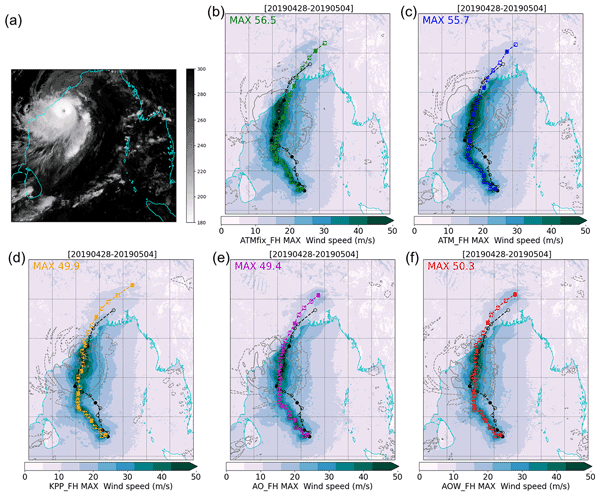
A new environmental modelling system has been developed to represent the effect of feedbacks between atmosphere, land, and ocean in the Indian region. Different approaches to simulating tropical cyclones Titli and Fani are demonstrated. It is shown that results are sensitive to the way in which the ocean response to cyclone evolution is captured in the system. Notably, we show how a more rigorous formulation for the near-surface energy budget can be included when air–sea coupling is included.

Julia Rulent, Lucy M. Bricheno, J. A. Mattias Green, Ivan D. Haigh, and Huw Lewis
Nat. Hazards Earth Syst. Sci., 21, 3339–3351, https://doi.org/10.5194/nhess-21-3339-2021, https://doi.org/10.5194/nhess-21-3339-2021, 2021
Short summary
Short summary
High coastal total water levels (TWLs) can lead to flooding and hazardous conditions for coastal communities and environment. In this research we are using numerical models to study the interactions between the three main components of the TWL (waves, tides, and surges) on UK and Irish coasts during winter 2013/14. The main finding of this research is that extreme waves and surges can indeed happen together, even at high tide, but they often occurred simultaneously 2–3 h before high tide.
Cited articles
Alari, V., Staneva, J., Øyvind Breivik, Bidlot, J.-R., Mogensen, K., and Janssen, P.: Surface wave effects on water temperature in the Baltic sea: simulations with the coupled NEMO-WAM model, Ocean Dynamics, 66, 917–930, https://doi.org/10.1007/s10236-016-0963-x, 2016. a
Babin, S. M., Carton, J. A., Dickey, T. D., and Wiggert, J. D.: Satellite evidence of hurricane-induced phytoplankton blooms in an oceanic desert, J. Geophys. Res.-Oceans, 109, https://doi.org/10.1029/2003JC001938, 2004. a
Behrenfeld, M. J.: Abandoning Sverdrup's critical depth hypothesis on phytoplankton blooms, Ecology, 91, 977–989, https://doi.org/10.1890/09-1207.1, 2010. a
Berthou, S., Siddorn, J., Fraser-Leonhardt, V., Le Traon, P.-Y., and Hoteit, I.: Towards Earth system modelling: coupled ocean forecasting, State of the Planet, 5-opsr, 20, https://doi.org/10.5194/sp-5-opsr-20-2025, 2025. a
Berthou, S., Castillo, J. M., Fraser-Leonhardt, V., Mahmood, S., Makrygianni, N., Arnold, A., Sanchez, C., Lewis, H. W., Partridge, D., Best, M., Bricheno, L., Davies, H., Clark, D., Clark, J. R., Polton, J., Saulter, A., Short, C. J., Tinker, J., and Tucker, S.: Km-scale regional coupled system for the Northwest European shelf for weather and climate applications: RCS-UKC4, EGUsphere [preprint], https://doi.org/10.5194/egusphere-2025-6216, 2026. a
Breivik, Ø., Mogensen, K., Jean-Raymond, B., Balmaseda, M. A., and Janssen, P.: Surface wave effects in the NEMO ocean model: Forced and coupled experiments, J. Geophys. Res.-Oceans, 120, 2973–2992, https://doi.org/10.1002/2014JC010565, 2015. a
Breivik, Ø., Bidlot, J.-R., and Janssen, P.: A Stokes drift approximation based on the Phillips spectrum, Ocean Model., 100, 49–56, https://doi.org/10.1016/j.ocemod.2016.01.005, 2016. a
Brody, S. R., Lozier, M. S., and Dunne, J. P.: A comparison of methods to determine phytoplankton bloom initiation, J. Geophys. Res.-Oceans, 118, 2345–2357, https://doi.org/10.1002/jgrc.20167, 2013. a
Bruciaferri, D., Tonani, M., Lewis, H. W., Siddorn, J. R., Saulter, A., Castillo Sanchez, J. M., Valiente, N. G., Conley, D., Sykes, P., Ascione, I., and McConnell, N.: The impact of ocean-wave coupling on the upper ocean circulation during storm events, J. Geophys. Res.-Oceans, 126, e2021JC017343, https://doi.org/10.1029/2021JC017343, 2021. a, b, c
Bruggeman, J. and Bolding, K.: A general framework for aquatic biogeochemical models, Environ. Modell. Softw., 61, 249–265, https://doi.org/10.1016/j.envsoft.2014.04.002, 2014. a
Butenschön, M., Clark, J., Aldridge, J. N., Allen, J. I., Artioli, Y., Blackford, J., Bruggeman, J., Cazenave, P., Ciavatta, S., Kay, S., Lessin, G., van Leeuwen, S., van der Molen, J., de Mora, L., Polimene, L., Sailley, S., Stephens, N., and Torres, R.: ERSEM 15.06: a generic model for marine biogeochemistry and the ecosystem dynamics of the lower trophic levels, Geosci. Model Dev., 9, 1293–1339, https://doi.org/10.5194/gmd-9-1293-2016, 2016. a, b
Cavaleri, L., Fox-Kemper, B., and Hemer, M.: Wind waves in the coupled climate system, B. Am. Meteorol. Soc., 93, 1651–1661, https://doi.org/10.1175/BAMS-D-11-00170.1, 2012. a
Couvelard, X., Lemarié, F., Samson, G., Redelsperger, J.-L., Ardhuin, F., Benshila, R., and Madec, G.: Development of a two-way-coupled ocean–wave model: assessment on a global NEMO(v3.6)–WW3(v6.02) coupled configuration, Geosci. Model Dev., 13, 3067–3090, https://doi.org/10.5194/gmd-13-3067-2020, 2020. a
Craig, P. D. and Banner, M. L.: Modeling wave-enhanced turbulence in the ocean surface layer, J. Phys. Oceanogr., 24, 2546–2559, https://doi.org/10.1175/1520-0485(1994)024<2546:MWETIT>2.0.CO;2, 1994. a, b, c
Cushing, D.: Plankton production and year-class strength in fish populations: an update of the match/mismatch hypothesis, in: Advances in Marine Biology, vol. 26, Academic Press, 249–293, https://doi.org/10.1016/S0065-2881(08)60202-3, 1990. a
Cyr, F., Lewis, K., Bélanger, D., Regular, P., Clay, S., and Devred, E.: Physical controls and ecological implications of the timing of the spring phytoplankton bloom on the Newfoundland and Labrador shelf, Limnology and Oceanography Letters, 9, 191–198, https://doi.org/10.1002/lol2.10347, 2024. a
EU Copernicus Marine Service Information: Global Ocean Biogeochemistry Analysis and Forecast, EU Copernicus Marine Service Information [data set], https://doi.org/10.48670/moi-00015, 2026. a
Filipot, J.-F., Ardhuin, F., and Babanin, A. V.: A unified deep-to-shallow water wave-breaking probability parameterization, J. Geophys. Res.-Oceans, 115, https://doi.org/10.1029/2009JC005448, 2010. a
Gentile, E. S., Gray, S. L., Barlow, J. F., Lewis, H. W., and Edwards, J. M.: The impact of atmosphere–ocean–wave coupling on the near-surface wind speed in forecasts of extratropical cyclones, Bound.-Lay. Meteorol., 180, 105–129, https://doi.org/10.1007/s10546-021-00614-4, 2021. a
Good, S. A., Martin, M. J., and Rayner, N. A.: EN4: Quality controlled ocean temperature and salinity profiles and monthly objective analyses with uncertainty estimates, J. Geophys. Res.-Oceans, 118, 6704–6716, https://doi.org/10.1002/2013JC009067, 2013. a
Graham, J. A., O'Dea, E., Holt, J., Polton, J., Hewitt, H. T., Furner, R., Guihou, K., Brereton, A., Arnold, A., Wakelin, S., Castillo Sanchez, J. M., and Mayorga Adame, C. G.: AMM15: a new high-resolution NEMO configuration for operational simulation of the European north-west shelf, Geosci. Model Dev., 11, 681–696, https://doi.org/10.5194/gmd-11-681-2018, 2018a. a, b
Graham, J. A., Rosser, J. P., O'Dea, E., and Hewitt, H. T.: Resolving shelf break exchange around the European northwest shelf, Geophys. Res. Lett., 45, 12,386–12,395, https://doi.org/10.1029/2018GL079399, 2018b. a, b
Gurvan, M., Bourdallé-Badie, R., Chanut, J., Clementi, E., Coward, A., Ethé, C., Iovino, D., Lea, D., Lévy, C., Lovato, T., Martin, N., Masson, S., Mocavero, S., Rousset, C., Storkey, D., Vancoppenolle, M., Müeller, S., Nurser, G., Bell, M., and Samson, G.: NEMO ocean engine, Zenodo [code], https://doi.org/10.5281/zenodo.3878122, 2019. a
Hasselmann, K.: Wave-driven inertial oscillations, Geophysical Fluid Dynamics, 1, 463–502, https://doi.org/10.1080/03091927009365783, 1970. a
Hasselmann, S., Hasselmann, K., Allender, J., and Barnett, T.: Computations and parameterizations of the nonlinear energy transfer in a gravity-wave specturm. Part II: Parameterizations of the nonlinear energy transfer for application in wave models, J. Phys. Oceanogr., 15, 1378–1391, 1985. a
Hobday, A. J., Oliver, E. C., Gupta, A. S., Benthuysen, J. A., Burrows, M. T., Donat, M. G., Holbrook, N. J., Moore, P. J., Thomsen, M. S., Wernberg, T., and Smale, D. A.: Categorizing and naming marine heatwaves, Oceanography, 31, 162–173, https://doi.org/10.5670/oceanog.2018.205, 2018. a
Huisman, J., van Oostveen, P., and Weissing, F. J.: Critical depth and critical turbulence: Two different mechanisms for the development of phytoplankton blooms, Limnol. Oceanogr., 44, 1781–1787, https://doi.org/10.4319/lo.1999.44.7.1781, 1999. a
Jardine, J. E., Palmer, M., Mahaffey, C., Holt, J., Wakelin, S., and Artioli, Y.: Climatic controls on the spring phytoplankton growing season in a temperate shelf sea, J. Geophys. Res.-Oceans, 127, e2021JC017209, https://doi.org/10.1029/2021JC017209, 2022. a, b
Ji, R., Edwards, M., Mackas, D. L., Runge, J. A., and Thomas, A. C.: Marine plankton phenology and life history in a changing climate: current research and future directions, J. Plankton Res., 32, 1355–1368, https://doi.org/10.1093/plankt/fbq062, 2010. a
Komen, G. J., Cavaleri, L., Donelan, M., Hasselmann, K., Hasselmann, S., and Janssen, P. A. E. M.: Dynamics and modelling of ocean waves, Cambridge University Press, https://doi.org/10.1017/CBO9780511628955, 1994. a
Lenhart, H.-J., Mills, D. K., Baretta-Bekker, H., van Leeuwen, S. M., van der Molen, J., Baretta, J. W., Blaas, M., Desmit, X., Kühn, W., Lacroix, G., Los, H. J., Ménesguen, A., Neves, R., Proctor, R., Ruardij, P., Skogen, M. D., Vanhoutte-Brunier, A., Villars, M. T., and Wakelin, S. L.: Predicting the consequences of nutrient reduction on the eutrophication status of the North Sea, J. Marine Syst., 81, 148–170, https://doi.org/10.1016/j.jmarsys.2009.12.014, contributions from Advances in Marine Ecosystem Modelling Research II 23–26 June 2008, Plymouth, UK, 2010. a
Lewis, H. W., Castillo Sanchez, J. M., Siddorn, J., King, R. R., Tonani, M., Saulter, A., Sykes, P., Pequignet, A.-C., Weedon, G. P., Palmer, T., Staneva, J., and Bricheno, L.: Can wave coupling improve operational regional ocean forecasts for the north-west European Shelf?, Ocean Sci., 15, 669–690, https://doi.org/10.5194/os-15-669-2019, 2019. a, b, c, d, e, f, g, h
Li, J.-G.: Propagation of ocean surface waves on a spherical multiple-cell grid, Journal of Computational Physics, 231, 8262–8277, https://doi.org/10.1016/j.jcp.2012.08.007, 2012. a
Li, Q., Reichl, B. G., Fox-Kemper, B., Adcroft, A. J., Belcher, S. E., Danabasoglu, G., Grant, A. L. M., Griffies, S. M., Hallberg, R., Hara, T., Harcourt, R. R., Kukulka, T., Large, W. G., McWilliams, J. C., Pearson, B., Sullivan, P. P., Van Roekel, L., Wang, P., and Zheng, Z.: Comparing ocean surface boundary vertical mixing schemes including langmuir turbulence, Journal of Advances in Modeling Earth Systems, 11, 3545–3592, https://doi.org/10.1029/2019MS001810, 2019. a, b
Liu, X., Pu, X., Qu, D., and Xu, Z.: The role of wave-induced mixing in spring phytoplankton bloom in the South Yellow Sea, Mar. Pollut. Bull., 211, 117374, https://doi.org/10.1016/j.marpolbul.2024.117374, 2025. a, b
McEvoy, A. J., Atkinson, A., Airs, R. L., Brittain, R., Brown, I., Fileman, E. S., Findlay, H. S., McNeill, C. L., Ostle, C., Smyth, T. J., Somerfield, P. J., Tait, K., Tarran, G. A., Thomas, S., Widdicombe, C. E., Woodward, E. M. S., Beesley, A., Conway, D. V. P., Fishwick, J., Haines, H., Harris, C., Harris, R., Hélaouët, P., Johns, D., Lindeque, P. K., Mesher, T., McQuatters-Gollop, A., Nunes, J., Perry, F., Queiros, A. M., Rees, A., Rühl, S., Sims, D., Torres, R., and Widdicombe, S.: The Western Channel Observatory: a century of physical, chemical and biological data compiled from pelagic and benthic habitats in the western English Channel, Earth Syst. Sci. Data, 15, 5701–5737, https://doi.org/10.5194/essd-15-5701-2023, 2023. a, b
Moon, I.-J., Ginis, I., and Hara, T.: Effect of surface waves on Charnock coefficient under tropical cyclones, Geophys. Res. Lett., 31, https://doi.org/10.1029/2004GL020988, 2004. a
O'Dea, E. J., Arnold, A. K., Edwards, K. P., Furner, R., Hyder, P., Martin, M. J., Siddorn, J. R., Storkey, D., While, J., Holt, J. T., and Liu, H.: An operational ocean forecast system incorporating NEMO and SST data assimilation for the tidally driven European North-West shelf, Journal of Operational Oceanography, 5, 3–17, https://doi.org/10.1080/1755876X.2012.11020128, 2012. a
Partridge, D.: AMM15 Biogeochemistry Setup Scripts, Zenodo [code], https://doi.org/10.5281/zenodo.18429695, 2026. a
Phillips, O. M.: The dynamics of the upper ocean, 2nd edn., Cambridge, p. 336, https://doi.org/10.1017/S0022112078212396, 1977. a, b
Pierson Jr., W. J. and Moskowitz, L.: A proposed spectral form for fully developed wind seas based on the similarity theory of S. A. Kitaigorodskii, J. Geophys. Res. (1896–1977), 69, 5181–5190, https://doi.org/10.1029/JZ069i024p05181, 1964. a
Polton, J., Harle, J., Holt, J., Katavouta, A., Partridge, D., Jardine, J., Wakelin, S., Rulent, J., Wise, A., Hutchinson, K., Byrne, D., Bruciaferri, D., O'Dea, E., De Dominicis, M., Mathiot, P., Coward, A., Yool, A., Palmiéri, J., Lessin, G., Mayorga-Adame, C. G., Le Guennec, V., Arnold, A., and Rousset, C.: Reproducible and relocatable regional ocean modelling: fundamentals and practices, Geosci. Model Dev., 16, 1481–1510, https://doi.org/10.5194/gmd-16-1481-2023, 2023. a
Powley, H. R., Bruggeman, J., Hopkins, J., Smyth, T., and Blackford, J.: Sensitivity of shelf sea marine ecosystems to temporal resolution of Meteorological Forcing, J. Geophys. Res.-Oceans, 125, e2019JC015922, https://doi.org/10.1029/2019JC015922, 2020. a
Powley, H. R., Polimene, L., Torres, R., Al Azhar, M., Bell, V., Cooper, D., Holt, J., Wakelin, S., and Artioli, Y.: Modelling terrigenous DOC across the north west European Shelf: Fate of riverine input and impact on air-sea CO2 fluxes, Sci. Total Environ., 912, 168938, https://doi.org/10.1016/j.scitotenv.2023.168938, 2024. a
Racault, M.-F., Le Quéré, C., Buitenhuis, E., Sathyendranath, S., and Platt, T.: Phytoplankton phenology in the global ocean, Ecol. Indic., 14, 152–163, 2012. a
Reffray, G., Bourdalle-Badie, R., and Calone, C.: Modelling turbulent vertical mixing sensitivity using a 1-D version of NEMO, Geosci. Model Dev., 8, 69–86, https://doi.org/10.5194/gmd-8-69-2015, 2015. a, b
Riley, G. A.: The relationship of vertical turbulence and spring diatom flowerings, J. Mar. Res., 78, https://elischolar.library.yale.edu/journal_of_marine_research/495, 1942. a
Rumyantseva, A., Henson, S., Martin, A., Thompson, A. F., Damerell, G. M., Kaiser, J., and Heywood, K. J.: Phytoplankton spring bloom initiation: The impact of atmospheric forcing and light in the temperate North Atlantic Ocean, Prog. Oceanogr., 178, 102202, https://doi.org/10.1016/j.pocean.2019.102202, 2019. a
Sathyendranath, S., Brewin, R., Brockmann, C., Brotas, V., Calton, B., Chuprin, A., Cipollini, P., Couto, A., Dingle, J., Doerffer, R., Donlon, C., Dowell, M., Farman, A., Grant, M., Groom, S., Horseman, A., Jackson, T., Krasemann, H., Lavender, S., Martinez-Vicente, V., Mazeran, C., Mélin, F., Moore, T., Müller, D., Regner, P., Roy, S., Steele, C., Steinmetz, F., Swinton, J., Taberner, M., Thompson, A., Valente, A., Zühlke, M., Brando, V., Feng, H., Feldman, G., Franz, B., Frouin, R., Gould, Jr., R., Hooker, S., Kahru, M., Kratzer, S., Mitchell, B., Muller-Karger, F., Sosik, H., Voss, K., Werdell, J., and Platt, T.: An ocean-colour time series for use in climate studies: the experience of the Ocean-Colour Climate Change Initiative (OC-CCI), Sensors, 19, 4285, https://doi.org/10.3390/s19194285, 2019. a, b, c, d
Sathyendranath, S., Jackson, T., Brockmann, C., Brotas, V., Calton, B., Chuprin, A., Clements, O., Cipollini, P., Danne, O., Dingle, J., Donlon, C., Grant, M., Groom, S., Krasemann, H., Lavender, S., Mazeran, C., Mélin, F., Müller, D., Steinmetz, F., Valente, A., Zühlke, M., Feldman, G., Franz, B., Frouin, R., Werdell, J., and Platt, T.: ESA Ocean Colour Climate Change Initiative: Monthly climatology of global ocean colour data products at 4 km resolution, Version 6.0, CEDA [data set], https://catalogue.ceda.ac.uk/uuid/690fdf8f229c4d04a2aa68de67beb733, 2023. a, b, c
Saulter, A., Li, J.-G., Bunney, C., and Palmer, T. E.: Process and resolution impacts on UK coastal wave predictions from operational global-regional wave models, SEMANTIC Scholar, https://api.semanticscholar.org/CorpusID:199494999 (last access: 29 January 2026), 2017. a
Sharples, J., Moore, C. M., and Abraham, E. R.: Internal tide dissipation, mixing, and vertical nitrate flux at the shelf edge of NE New Zealand, J. Geophys. Res.-Oceans, 106, 14069–14081, https://doi.org/10.1029/2000JC000604, 2001. a
Sharples, J., Ross, O. N., Scott, B. E., Greenstreet, S. P., and Fraser, H.: Inter-annual variability in the timing of stratification and the spring bloom in the North-western North Sea, Cont. Shelf. Res., 26, 733–751, https://doi.org/10.1016/j.csr.2006.01.011, 2006. a
Shi, W. and Wang, M.: Observations of a hurricane Katrina-induced phytoplankton bloom in the Gulf of Mexico, Geophys. Res. Lett., 34, https://doi.org/10.1029/2007GL029724, 2007. a
Simpson, D., Benedictow, A., Berge, H., Bergström, R., Emberson, L. D., Fagerli, H., Flechard, C. R., Hayman, G. D., Gauss, M., Jonson, J. E., Jenkin, M. E., Nyíri, A., Richter, C., Semeena, V. S., Tsyro, S., Tuovinen, J.-P., Valdebenito, Á., and Wind, P.: The EMEP MSC-W chemical transport model – technical description, Atmos. Chem. Phys., 12, 7825–7865, https://doi.org/10.5194/acp-12-7825-2012, 2012. a
Simpson, J. H. and Sharples, J.: Introduction to the Physical and Biological Oceanography of Shelf Seas, Cambridge University Press, https://doi.org/10.1017/CBO9781139034098, 2012. a, b
Skákala, J., Bruggeman, J., Brewin, R. J. W., Ford, D. A., and Ciavatta, S.: Improved representation of underwater light field and its impact on ecosystem dynamics: A study in the North Sea, J. Geophys. Res.-Oceans, 125, e2020JC016122, https://doi.org/10.1029/2020JC016122, 2020. a, b
Sverdrup, H. U.: On conditions for the vernal blooming of phytoplankton, Journal du Conseil, 18, 287–295, https://doi.org/10.1093/icesjms/18.3.287, 1953. a
Taylor, J. R. and Ferrari, R.: Shutdown of turbulent convection as a new criterion for the onset of spring phytoplankton blooms, Limnol. Oceanogr., 56, 2293–2307, https://doi.org/10.4319/lo.2011.56.6.2293, 2011. a
Tensubam, C. M., Babanin, A. V., and Dash, M. K.: Wave-coupled effects on oceanic biogeochemistry: Insights from a global ocean biogeochemical model in the Southern ocean, Earth and Space Science, 11, e2024EA003748, https://doi.org/10.1029/2024EA003748, 2024. a, b
Tolman, H.: The WAVEWATCH III Development Group: User manual and system documentation of WAVEWATCH III version 4.18, Technical Note, Environmental Modeling Center, National Centers for Environmental Prediction, National Weather Service, National Oceanic and Atmospheric Administration, US Department of Commerce, College Park, MD, https://cir.nii.ac.jp/crid/1370846639280532485 (last access: 29 January 2026), 2014. a
Tonani, M., Sykes, P., King, R. R., McConnell, N., Péquignet, A.-C., O'Dea, E., Graham, J. A., Polton, J., and Siddorn, J.: The impact of a new high-resolution ocean model on the Met Office North-West European Shelf forecasting system, Ocean Sci., 15, 1133–1158, https://doi.org/10.5194/os-15-1133-2019, 2019. a
Uchiyama, Y., McWilliams, J. C., and Shchepetkin, A. F.: Wave–current interaction in an oceanic circulation model with a vortex-force formalism: Application to the surf zone, Ocean Model., 34, 16–35, https://doi.org/10.1016/j.ocemod.2010.04.002, 2010. a
Valcke, S., Craig, T., and Coquart, L.: {OASIS3}-{MCT} 3.0, https://www.cerfacs.fr/oa4web/oasis3-mct_3.0/oasis3mct_UserGuide.pdf (last access: 29 January 2026), 2015. a
Valiente, N. G., Saulter, A., Edwards, J. M., Lewis, H. W., Castillo Sanchez, J. M., Bruciaferri, D., Christopher, B., and Siddorn, J.: The impact of wave model source terms and coupling strategies to rapidly developing waves across the north-west European shelf during extreme events, Journal of Marine Science and Engineering, 9, https://doi.org/10.3390/jmse9040403, 2021. a
van Leeuwen, S., Tett, P., Mills, D., and van der Molen, J.: Stratified and nonstratified areas in the North Sea: Long-term variability and biological and policy implications, J. Geophys. Res.-Oceans, 120, 4670–4686, https://doi.org/10.1002/2014JC010485, 2015. a
Virtanen, P., Gommers, R., Oliphant, T. E., Haberland, M., Reddy, T., Cournapeau, D., Burovski, E., Peterson, P., Weckesser, W., Bright, J., van der Walt, S. J., Brett, M., Wilson, J., Millman, K. J., Mayorov, N., Nelson, A. R. J., Jones, E., Kern, R., Larson, E., Carey, C. J., Polat, İ., Feng, Y., Moore, E. W., VanderPlas, J., Laxalde, D., Perktold, J., Cimrman, R., Henriksen, I., Quintero, E. A., Harris, C. R., Archibald, A. M., Ribeiro, A. H., Pedregosa, F., van Mulbregt, P., and SciPy 1.0 Contributors: SciPy 1.0: Fundamental algorithms for scientific computing in Python, Nature Methods, 17, 261–272, https://doi.org/10.1038/s41592-019-0686-2, 2020. a
Vörösmarty, C. J., Fekete, B. M., Meybeck, M., and Lammers, R. B.: Global system of rivers: Its role in organizing continental land mass and defining land-to-ocean linkages, Global Biogeochem. Cy., 14, 599–621, https://doi.org/10.1029/1999GB900092, 2000. a
Waniek, J.: The role of physical forcing in initiation of spring blooms in the northeast Atlantic, J. Marine Syst., 39, 57–82, 2003. a
Woollings, T., Hannachi, A., and Hoskins, B.: Variability of the north Atlantic eddy-driven jet stream, Q. J. Roy. Meteor. Soc., 136, 856–868, 2010. a
Young, E. F. and Holt, J. T.: Prediction and analysis of long-term variability of temperature and salinity in the Irish Sea, J. Geophys. Res.-Oceans, 112, https://doi.org/10.1029/2005JC003386, 2007. a
Zhang, X., Simons, R., Zheng, J., and Zhang, C.: A review of the state of research on wave-current interaction in nearshore areas, Ocean Eng., 243, 110202, https://doi.org/10.1016/j.oceaneng.2021.110202, 2022. a
Zhang, Y., Sevault, F., Pennel, R., and Baklouti, M.: Analysis of the impact of vertical variation and temporal frequency of the chlorophyll forcing field on modelled temperature in the Mediterranean Sea and potential implications for regional climate projections, Ocean Model., 194, 102490, https://doi.org/10.1016/j.ocemod.2024.102490, 2025. a
Short summary
Phytoplankton blooms are governed by the availability of light and nutrients, both of which are affected by mixing in the upper layers of the ocean, which is impacted by wave activity on the surface. Most numerical ocean models estimate waves through a parameterisation, here we explicitly resolve waves through a coupled wave model to examine the impact on the strength and timing of phytoplankton blooms, particular during storms when wave activity is elevated.
Phytoplankton blooms are governed by the availability of light and nutrients, both of which are...


