
Articles | Volume 22, issue 4
https://doi.org/10.5194/os-22-2375-2026
© Author(s) 2026. This work is distributed under
the Creative Commons Attribution 4.0 License.
the Creative Commons Attribution 4.0 License.
https://doi.org/10.5194/os-22-2375-2026
© Author(s) 2026. This work is distributed under
the Creative Commons Attribution 4.0 License.
the Creative Commons Attribution 4.0 License.
Research article
| 
11 Aug 2026
Research article |
| 11 Aug 2026
| 11 Aug 2026
Impact of mesoscale eddy parameterization on Arctic Atlantic Water circulation and heat transport in the eddy-permitting grey zone

Swedish Meteorological and Hydrological Institute Göteborgseskadernas plats 3, 426 71 Västra Frölunda, Sweden
Iréne Wåhlström
Swedish Meteorological and Hydrological Institute Göteborgseskadernas plats 3, 426 71 Västra Frölunda, Sweden
Sam T. Fredriksson
Swedish Meteorological and Hydrological Institute Göteborgseskadernas plats 3, 426 71 Västra Frölunda, Sweden
Related authors
Robinson Hordoir, Jarle Berntsen, Magnus Hieronymus, Per Pemberton, and Hjálmar Hátún
Geosci. Model Dev., 19, 2677–2690, https://doi.org/10.5194/gmd-19-2677-2026, https://doi.org/10.5194/gmd-19-2677-2026, 2026
Short summary
Short summary
Dense water created in high latitude regions flows at the bottom of the ocean, from one basin to the next, and contributes to the global ocean circulation. The flow between shallow and deeper basins occurs at straits such as the Faeroe Bank Channel as underwater streams of dense water. Their representation in ocean models is problematic. In the present article, we use a mathematical formulation of dense water plumes to show that the representation of these dense overflows can be improved.
Göran Björk, Göran Broström, Lars Arneborg, Anis Elyouncha, Daniel Bergman-Sjöstrand, and Per Pemberton
EGUsphere, https://doi.org/10.5194/egusphere-2026-785, https://doi.org/10.5194/egusphere-2026-785, 2026
Short summary
Short summary
During the 2023/2024 ice season, a high-resolution dataset of ice thickness was collected in the Bothnian Bay. The analysis of data revealed a significant frequency of thick deformed ice such that about 60 % was thicker than 1 m. Among the 5500 individually identified ice keels, 20 % had a keel depth larger than 5 m and 2 % a depth larger than 10 m. This type of high-resolution ice data can be of vital importance for design of offshore structures and evaluation of computer ice models.
Lars Arneborg, Magnus Hieronymus, Per Pemberton, Ye Liu, and Sam T. Fredriksson
Ocean Sci., 22, 761–775, https://doi.org/10.5194/os-22-761-2026, https://doi.org/10.5194/os-22-761-2026, 2026
Short summary
Short summary
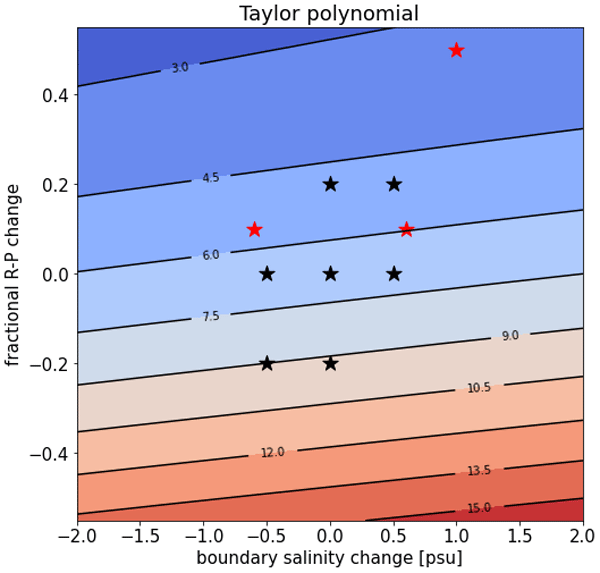
Climate change influences estuaries and their ecosystems not only by rising temperatures but also by salinity changes. This modeling study highlights the magnitude and causes of the Baltic Sea salinity sensitivity to fresh water forcing and changed ocean salinity. The large sensitivity to increased fresh water forcing is shown to be caused by dilution of fresh water within the estuary, recirculation of much of the outflow water back into the estuary, as well as decreasing inflows of ocean water.
Robinson Hordoir, Jarle Berntsen, Magnus Hieronymus, Per Pemberton, and Hjálmar Hátún
Geosci. Model Dev., 19, 2677–2690, https://doi.org/10.5194/gmd-19-2677-2026, https://doi.org/10.5194/gmd-19-2677-2026, 2026
Short summary
Short summary
Dense water created in high latitude regions flows at the bottom of the ocean, from one basin to the next, and contributes to the global ocean circulation. The flow between shallow and deeper basins occurs at straits such as the Faeroe Bank Channel as underwater streams of dense water. Their representation in ocean models is problematic. In the present article, we use a mathematical formulation of dense water plumes to show that the representation of these dense overflows can be improved.
Göran Björk, Göran Broström, Lars Arneborg, Anis Elyouncha, Daniel Bergman-Sjöstrand, and Per Pemberton
EGUsphere, https://doi.org/10.5194/egusphere-2026-785, https://doi.org/10.5194/egusphere-2026-785, 2026
Short summary
Short summary
During the 2023/2024 ice season, a high-resolution dataset of ice thickness was collected in the Bothnian Bay. The analysis of data revealed a significant frequency of thick deformed ice such that about 60 % was thicker than 1 m. Among the 5500 individually identified ice keels, 20 % had a keel depth larger than 5 m and 2 % a depth larger than 10 m. This type of high-resolution ice data can be of vital importance for design of offshore structures and evaluation of computer ice models.
Lars Arneborg, Magnus Hieronymus, Per Pemberton, Ye Liu, and Sam T. Fredriksson
Ocean Sci., 22, 761–775, https://doi.org/10.5194/os-22-761-2026, https://doi.org/10.5194/os-22-761-2026, 2026
Short summary
Short summary
Climate change influences estuaries and their ecosystems not only by rising temperatures but also by salinity changes. This modeling study highlights the magnitude and causes of the Baltic Sea salinity sensitivity to fresh water forcing and changed ocean salinity. The large sensitivity to increased fresh water forcing is shown to be caused by dilution of fresh water within the estuary, recirculation of much of the outflow water back into the estuary, as well as decreasing inflows of ocean water.
Itzel Ruvalcaba Baroni, Elin Almroth-Rosell, Lars Axell, Sam T. Fredriksson, Jenny Hieronymus, Magnus Hieronymus, Sandra-Esther Brunnabend, Matthias Gröger, Ivan Kuznetsov, Filippa Fransner, Robinson Hordoir, Saeed Falahat, and Lars Arneborg
Biogeosciences, 21, 2087–2132, https://doi.org/10.5194/bg-21-2087-2024, https://doi.org/10.5194/bg-21-2087-2024, 2024
Short summary
Short summary
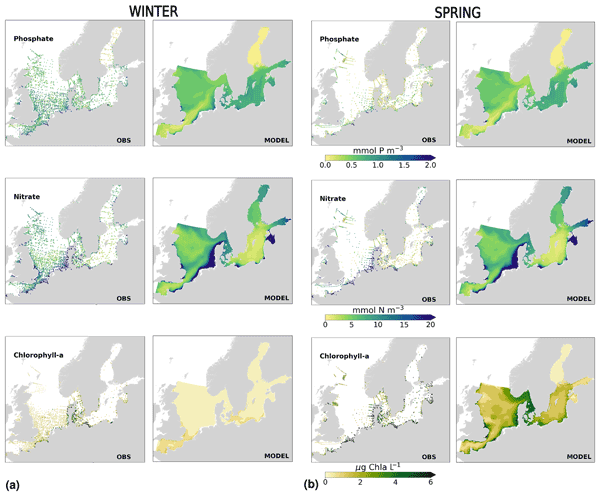
The health of the Baltic and North seas is threatened due to high anthropogenic pressure; thus, different methods to assess the status of these regions are urgently needed. Here, we validated a novel model simulating the ocean dynamics and biogeochemistry of the Baltic and North seas that can be used to create future climate and nutrient scenarios, contribute to European initiatives on de-eutrophication, and provide water quality advice and support on nutrient load reductions for both seas.
Jaclyn Clement Kinney, Karen M. Assmann, Wieslaw Maslowski, Göran Björk, Martin Jakobsson, Sara Jutterström, Younjoo J. Lee, Robert Osinski, Igor Semiletov, Adam Ulfsbo, Irene Wåhlström, and Leif G. Anderson
Ocean Sci., 18, 29–49, https://doi.org/10.5194/os-18-29-2022, https://doi.org/10.5194/os-18-29-2022, 2022
Short summary
Short summary
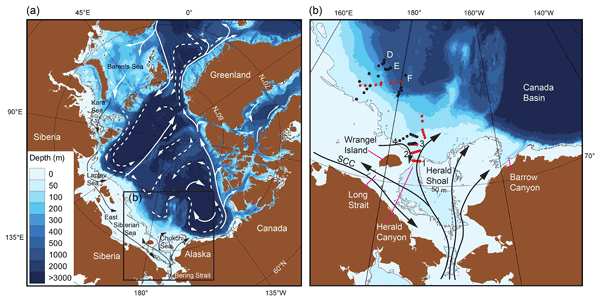
We use data crossing Herald Canyon in the Chukchi Sea collected in 2008 and 2014 together with numerical modelling to investigate the circulation in the western Chukchi Sea. A large fraction of water from the Chukchi Sea enters the East Siberian Sea south of Wrangel Island and circulates in an anticyclonic direction around the island. To assess the differences between years, we use numerical modelling results, which show that high-frequency variability dominates the flow in Herald Canyon.
Cited articles
Aaboe, S. and Nøst, O. A.: A Diagnostic Model of the Nordic Seas and Arctic Ocean Circulation: Quantifying the Effects of a Variable Bottom Density along a Sloping Topography, J. Phys. Oceanogr., 38, 2685–2703, https://doi.org/10.1175/2008JPO3862.1, 2008. a
Aaboe, S., Nøst, O. A., and Hansen, E.: Along-Slope Variability of Barotropic Transport in the Nordic Seas: Simplified Dynamics Tested against Observations, J. Geophys. Res., 114, 2685, https://doi.org/10.1007/978-1-4020-6774-7_7, 2009. a
Aksenov, Y., Ivanov, V. V., Nurser, A. J. G., Bacon, S., Polyakov, I. V., Coward, A. C., Naveira-Garabato, A. C., and Beszczynska-Möller, A.: The Arctic Circumpolar Boundary Current, J. Geophys. Res., 116, C09017, https://doi.org/10.1029/2010JC006637, 2011. a
AMAP: AMAP Assessment 2018: Arctic Ocean Acidification., Arctic Monitoring and Assessment Programme (AMAP), Tromsø, Norway, ISBN 978-82-7971-107-0, 2018. a
AMAP: AMAP Arctic Climate Change Update 2024: Key Trends and Impacts, Arctic Monitoring and Assessment Programme (AMAP), Tromsø, Norway, ISBN 978-82-7971-203-9, 2025. a
ARCTIC_MULTIYEAR_PHY_002_003: E.U. Copernicus Marine Service Information (CMEMS), Marine Data Store (MDS) [data set], https://doi.org/10.48670/moi-00007, last access: 6 August 2026. a, b, c
Bachman, S. D.: The GM+E Closure: A Framework for Coupling Backscatter with the Gent and McWilliams Parameterization, Ocean Model., 136, 85–106, https://doi.org/10.1016/j.ocemod.2019.02.006, 2019. a, b
Barton, B. I., Lenn, Y.-D., and Lique, C.: Observed Atlantification of the Barents Sea Causes the Polar Front to Limit the Expansion of Winter Sea Ice, J. Phys. Oceanogr., 48, 1849–1866, https://doi.org/10.1175/JPO-D-18-0003.1, 2018. a
Beszczynska-Möller, A., Fahrbach, E., Schauer, U., and Hansen, E.: Variability in Atlantic Water Temperature and Transport at the Entrance to the Arctic Ocean, 1997–2010, ICES J. Mar. Sci., 69, 852–863, https://doi.org/10.1093/icesjms/fss056, 2012. a
Blanke, B. and Delecluse, P.: Variability of the Tropical Atlantic Ocean Simulated by a General Circulation Model with Two Different Mixed-Layer Physics, J. Phys. Oceanogr., 23, 1363–1388, https://doi.org/10.1175/1520-0485(1993)023<1363:VOTTAO>2.0.CO;2, 1993. a
Born, A., Levermann, A., and Mignot, J.: Sensitivity of the Atlantic Ocean Circulation to a Hydraulic Overflow Parameterisation in a Coarse Resolution Model: Response of the Subpolar Gyre, Ocean Model., 27, 130–142, https://doi.org/10.1016/j.ocemod.2008.11.006, 2009. a, b
Bosse, A., Fer, I., Søiland, H., and Rossby, T.: Atlantic Water Transformation Along Its Poleward Pathway Across the Nordic Seas, J. Geophys. Res.-Oceans, 123, 6428–6448, https://doi.org/10.1029/2018JC014147, 2018. a
Broomé, S., Chafik, L., and Nilsson, J.: Mechanisms of decadal changes in sea surface height and heat content in the eastern Nordic Seas, Ocean Sci., 16, 715–728, https://doi.org/10.5194/os-16-715-2020, 2020. a
Chepurin, G. A., Carton, J. A., Sun, L., and Penny, S. G.: SODA4: a mesoscale ocean/sea ice reanalysis 1980–2024, EGUsphere [preprint], https://doi.org/10.5194/egusphere-2025-3810, 2025. a
Copernicus Climate Change Service: ORAS5 Global Ocean Reanalysis Monthly Data from 1958 to Present, Copernicus Climate Change Service (C3S) Climate Data Store (CDS) [data set], https://doi.org/10.24381/CDS.67E8EEB7, 2021. a, b
Dai, A.: Dai and Trenberth Global River Flow and Continental Discharge Dataset, NSF National Center for Atmospheric Research [data set], https://doi.org/10.5065/D6V69H1T, 2017. a, b
Dmitrenko, I. A., Kirillov, S. A., Tremblay, L. B., Bauch, D., Hölemann, J. A., Krumpen, T., Kassens, H., Wegner, C., Heinemann, G., and Schröder, D.: Impact of the Arctic Ocean Atlantic Water Layer on Siberian Shelf Hydrography, J. Geophys. Res.-Oceans, 115, https://doi.org/10.1029/2009JC006020, 2010. a
Dong, C., McWilliams, J. C., Liu, Y., and Chen, D.: Global Heat and Salt Transports by Eddy Movement, Nat. Commun., 5, 3294, https://doi.org/10.1038/ncomms4294, 2014. a
European Union-Copernicus Marine Service: Global Ocean Physics Reanalysis, Marine Data Store (MDS) [data set], https://doi.org/10.48670/MOI-00021, 2018. a
Flather, R. A.: A Storm Surge Prediction Model for the Northern Bay of Bengal with Application to the Cyclone Disaster in April 1991, J. Phys. Oceanogr., 24, 172–190, https://doi.org/10.1175/1520-0485(1994)024<0172:ASSPMF>2.0.CO;2, 1994. a
Fox-Kemper, B., Adcroft, A., Böning, C. W., Chassignet, E. P., Curchitser, E., Danabasoglu, G., Eden, C., England, M. H., Gerdes, R., Greatbatch, R. J., Griffies, S. M., Hallberg, R. W., Hanert, E., Heimbach, P., Hewitt, H. T., Hill, C. N., Komuro, Y., Legg, S., Le Sommer, J., Masina, S., Marsland, S. J., Penny, S. G., Qiao, F., Ringler, T. D., Treguier, A. M., Tsujino, H., Uotila, P., and Yeager, S. G.: Challenges and Prospects in Ocean Circulation Models, Front. Mar. Sci., 6, 65, https://doi.org/10.3389/fmars.2019.00065, 2019. a
Fredriksen, H., de Steur, L., von Appen, W.-J., Ingvaldsen, R., McPherson, R., Craig, L., Lenetsky, J., and Woodgate, R.: Pan-Arctic Gateway Transports since 2004, Norwegian Polar Institute [data set], https://doi.org/10.21334/NPOLAR.2025.80B69907, 2025. a
Garcia, H. E., Boyer, T. P., Baranova, O. K., Locarnini, R. A., Mishonov, A. V., Grodsky, A., Paver, C. R., Weathers, K. W., Smolyar, I. V., Reagan, J. R., Seidov, D., and Zweng, M. M.: World Ocean Atlas 2018: Product Documentation, Tech. rep., https://doi.org/10.25923/tzyw-rp36, 2019. a
Gent, P. R. and McWilliams, J. C.: Isopycnal Mixing in Ocean Circulation Models, J. Phys. Oceanogr., 20, 150–155, https://doi.org/10.1175/1520-0485(1990)020<0150:IMIOCM>2.0.CO;2, 1990. a, b
Griffies, S. M.: The Gent–McWilliams Skew Flux, J. Phys. Oceanogr., 28, 831–841, https://doi.org/10.1175/1520-0485(1998)028<0831:TGMSF>2.0.CO;2, 1998. a
Griffies, S. M., Winton, M., Anderson, W. G., Benson, R., Delworth, T. L., Dufour, C. O., Dunne, J. P., Goddard, P., Morrison, A. K., Rosati, A., Wittenberg, A. T., Yin, J., and Zhang, R.: Impacts on Ocean Heat from Transient Mesoscale Eddies in a Hierarchy of Climate Models, J. Climate, 28, 952–977, https://doi.org/10.1175/JCLI-D-14-00353.1, 2015. a, b
Hallberg, R.: Using a Resolution Function to Regulate Parameterizations of Oceanic Mesoscale Eddy Effects, Ocean Model., 72, 92–103, https://doi.org/10.1016/j.ocemod.2013.08.007, 2013. a, b, c, d
Heuzé, C., Zanowski, H., Karam, S., and Muilwijk, M.: The Deep Arctic Ocean and Fram Strait in CMIP6 Models, J. Climate, 36, 2551–2584, https://doi.org/10.1175/JCLI-D-22-0194.1, 2023. a
Hewitt, H., Fox-Kemper, B., Pearson, B., Roberts, M., and Klocke, D.: The Small Scales of the Ocean May Hold the Key to Surprises, Nat. Clim. Change, 12, 496–499, https://doi.org/10.1038/s41558-022-01386-6, 2022. a, b, c
Hirschi, J. J.-M., Barnier, B., Böning, C., Biastoch, A., Blaker, A. T., Coward, A., Danilov, S., Drijfhout, S., Getzlaff, K., Griffies, S. M., Hasumi, H., Hewitt, H., Iovino, D., Kawasaki, T., Kiss, A. E., Koldunov, N., Marzocchi, A., Mecking, J. V., Moat, B., Molines, J.-M., Myers, P. G., Penduff, T., Roberts, M., Treguier, A.-M., Sein, D. V., Sidorenko, D., Small, J., Spence, P., Thompson, L., Weijer, W., and Xu, X.: The Atlantic Meridional Overturning Circulation in High-Resolution Models, J. Geophys. Res.-Oceans, 125, e2019JC015522, https://doi.org/10.1029/2019JC015522, 2020. a
Holloway, G.: Observing Global Ocean Topostrophy, J. Geophys. Res., 113, https://doi.org/10.1029/2007JC004635, 2008. a
Holloway, G., Dupont, F., Golubeva, E., Häkkinen, S., Hunke, E., Jin, M., Karcher, M. J., Kauker, F., Maltrud, M., and Maqueda, M. A. M.: Water Properties and Circulation in Arctic Ocean Models, J. Geophys. Res., 112, C04S03, https://doi.org/10.1029/2006JC003642, 2007. a, b
Isachsen, P. E., Koszalka, I., and LaCasce, J. H.: Observed and Modeled Surface Eddy Heat Fluxes in the Eastern Nordic Seas, J. Geophys. Res.-Oceans, 117, https://doi.org/10.1029/2012JC007935, 2012. a, b
Jakobsson, M., Mayer, L. A., Nilsson, J., Stranne, C., Calder, B., O'Regan, M., Farrell, J. W., Cronin, T. M., Brüchert, V., Chawarski, J., Eriksson, B., Fredriksson, J., Gemery, L., Glueder, A., Holmes, F. A., Jerram, K., Kirchner, N., Mix, A., Muchowski, J., Prakash, A., Reilly, B., Thornton, B., Ulfsbo, A., Weidner, E., Åkesson, H., Handl, T., Ståhl, E., Boze, L.-G., Reed, S., West, G., and Padman, J.: Ryder Glacier in Northwest Greenland Is Shielded from Warm Atlantic Water by a Bathymetric Sill, Commun. Earth & Environ., 1, 1–10, https://doi.org/10.1038/s43247-020-00043-0, 2020. a
Jansen, M. F., Adcroft, A., Khani, S., and Kong, H.: Toward an Energetically Consistent, Resolution Aware Parameterization of Ocean Mesoscale Eddies, J. Adv. Model. Earth Sy., 11, 2844–2860, https://doi.org/10.1029/2019MS001750, 2019. a, b
Kallmyr, J.-A. H., Nilsson, J., Léon Chafik, and Isachsen, P. E.: The Time-Mean Arctic Ocean Circulation as Seen Through Satellite Altimetry and Hydrography, J. Geophys. Res.- Oceans, 130, e2024JC022203, https://doi.org/10.1029/2024JC022203, 2025. a, b
Karcher, M. J., Kauker, F., Gerdes, R., Hunke, E., and Zhang, J.: On the Dynamics of Atlantic Water Circulation in the Arctic Ocean, J. Geophys. Res., 112, C04S02, https://doi.org/10.1029/2006JC003630, 2007. a
Khosravi, N., Wang, Q., Koldunov, N., Hinrichs, C., Semmler, T., Danilov, S., and Jung, T.: The Arctic Ocean in CMIP6 Models: Biases and Projected Changes in Temperature and Salinity, Earth's Future, 10, e2021EF002282, https://doi.org/10.1029/2021EF002282, 2022. a
Klingbeil, K., Mohammadi-Aragh, M., Gräwe, U., and Burchard, H.: Quantification of Spurious Dissipation and Mixing – Discrete Variance Decay in a Finite-Volume Framework, Ocean Model., 81, 49–64, https://doi.org/10.1016/j.ocemod.2014.06.001, 2014. a
Kusters, N., Balwada, D., and Groeskamp, S.: Global Observational Estimates of Mesoscale Eddy-Driven Quasi-Stokes Velocity and Buoyancy Diffusivity, Geophys. Res. Lett., 52, e2025GL115802, https://doi.org/10.1029/2025GL115802, 2025. a, b, c, d
Lemieux, J.-F., Tremblay, L. B., Dupont, F., Plante, M., Smith, G. C., and Dumont, D.: A Basal Stress Parameterization for Modeling Landfast Ice, J. Geophys. Res., 120, 3157–3173, https://doi.org/10.1002/2014JC010678, 2015. a
Li, S., Lin, P., Dou, T., Xiao, C., Itoh, M., Kikuchi, T., and Qin, D.: Upwelling of Atlantic Water in Barrow Canyon, Chukchi Sea, J. Geophys. Res.-Oceans, 127, e2021JC017839, https://doi.org/10.1029/2021JC017839, 2022. a
Li, X., Wang, Q., Danilov, S., Koldunov, N., Liu, C., Müller, V., Sidorenko, D., and Jung, T.: Eddy Activity in the Arctic Ocean Projected to Surge in a Warming World, Nat. Clim. Change, 14, 156–162, https://doi.org/10.1038/s41558-023-01908-w, 2024. a, b
Lind, S., Ingvaldsen, R. B., and Furevik, T.: Arctic Warming Hotspot in the Northern Barents Sea Linked to Declining Sea-Ice Import, Nat. Clim. Change, 8, 634–639, https://doi.org/10.1038/s41558-018-0205-y, 2018. a
Liu, C., Wang, Q., Danilov, S., Koldunov, N., Müller, V., Li, X., Sidorenko, D., and Zhang, S.: Spatial Scales of Kinetic Energy in the Arctic Ocean, J. Geophys. Res.-Oceans, 129, e2023JC020013, https://doi.org/10.1029/2023JC020013, 2024. a
Madec, G., Bourdallé-Badie, R., Chanut, J., Clementi, E., Coward, A. C., Ethé, C., Iovino, D., Lea, D., Lévy, C., Lovato, T., Martin, N., Masson, S., Mocavero, S., Rousset, C., Storkey, D., Vancoppenolle, M., Muller, S., Nurser, A. J. G., Bell, M., and Samson, G.: NEMO Ocean Engine, Scientific Notes of Climate Modelling Center, Institut Pierre-Simon Laplace (IPSL), https://doi.org/10.5281/zenodo.3878122, 2019. a, b, c
Mak, J., Maddison, J. R., Marshall, D. P., and Munday, D. R.: Implementation of a Geometrically Informed and Energetically Constrained Mesoscale Eddy Parameterization in an Ocean Circulation Model, J. Phys. Oceanogr., 48, 2363–2382, https://doi.org/10.1175/JPO-D-18-0017.1, 2018. a, b, c
Marchesiello, P., McWilliams, J. C., and Shchepetkin, A.: Open Boundary Conditions for Long-Term Integration of Regional Oceanic Models, Ocean Model., 3, 1–20, https://doi.org/10.1016/S1463-5003(00)00013-5, 2001. a
Mayer, M., Tsubouchi, T., Winkelbauer, S., Larsen, K. M. H., Berx, B., Macrander, A., Iovino, D., Jónsson, S., and Renshaw, R.: Recent variations in oceanic transports across the Greenland–Scotland Ridge, in: 7th edition of the Copernicus Ocean State Report (OSR7), edited by: von Schuckmann, K., Moreira, L., Le Traon, P.-Y., Grégoire, M., Marcos, M., Staneva, J., Brasseur, P., Garric, G., Lionello, P., Karstensen, J., and Neukermans, G., Copernicus Publications, State Planet, 1-osr7, 14, https://doi.org/10.5194/sp-1-osr7-14-2023, 2023. a, b
Meneghello, G., Marshall, J., Lique, C., Isachsen, P. E., Doddridge, E., Campin, J.-M., Regan, H., and Talandier, C.: Genesis and Decay of Mesoscale Baroclinic Eddies in the Seasonally Ice-Covered Interior Arctic Ocean, J. Phys. Oceanogr., 51, 115–129, https://doi.org/10.1175/JPO-D-20-0054.1, 2021. a
Muilwijk, M., Smedsrud, L. H., Ilicak, M., and Drange, H.: Atlantic Water Heat Transport Variability in the 20th Century Arctic Ocean From a Global Ocean Model and Observations, J. Geophys. Res.-Oceans, 123, 8159–8179, https://doi.org/10.1029/2018JC014327, 2018. a
Muilwijk, M., Ilicak, M., Cornish, S. B., Danilov, S., Gelderloos, R., Gerdes, R., Haid, V., Haine, T. W. N., Johnson, H. L., Kostov, Y., Kovács, T., Lique, C., Marson, J. M., Myers, P. G., Scott, J., Smedsrud, L. H., Talandier, C., and Wang, Q.: Arctic Ocean Response to Greenland Sea Wind Anomalies in a Suite of Model Simulations, J. Geophys. Res.-Oceans, 124, 6286–6322, https://doi.org/10.1029/2019JC015101, 2019. a, b
Müller, V., Wang, Q., Koldunov, N., Danilov, S., Sidorenko, D., and Jung, T.: Variability of Eddy Kinetic Energy in the Eurasian Basin of the Arctic Ocean Inferred From a Model Simulation at 1-Km Resolution, J. Geophys. Res.-Oceans, 129, e2023JC020139, https://doi.org/10.1029/2023JC020139, 2024. a, b
Nummelin, A. and Isachsen, P. E.: Parameterizing Mesoscale Eddy Buoyancy Transport Over Sloping Topography, J. Adv. Model. Earth Sy., 16, e2023MS003806, https://doi.org/10.1029/2023MS003806, 2024. a
Østerhus, S., Woodgate, R. A., Valdimarsson, H., Turrell, B., de Steur, L., Quadfasel, D., Olsen, S. M., Moritz, M., Lee, C. M., Larsen, K. M. H., Jónsson, S., Johnson, C., Jochumsen, K., Hansen, B., Curry, B., Cunningham, S., and Berx, B.: Arctic Mediterranean Exchanges: A Consistent Volume Budget and Trends in Transports from Two Decades of Observations, Ocean Sci., 15, 379–399, https://doi.org/10.5194/os-15-379-2019, 2019. a, b, c, d
Pemberton, P., Wåhlström, I., and Fredriksson, S.: Dataset for Impact of Mesoscale Eddy Parameterization on Arctic Atlantic Water Circulation and Heat Transport in the Eddy-Permitting Grey Zone, Zenodo [data set], https://doi.org/10.5281/zenodo.20781603, 2026. a
Pnyushkov, A., Polyakov, I. V., Padman, L., and Nguyen, A. T.: Structure and dynamics of mesoscale eddies over the Laptev Sea continental slope in the Arctic Ocean, Ocean Sci., 14, 1329–1347, https://doi.org/10.5194/os-14-1329-2018, 2018. a
Polyakov, I. V., Rippeth, T. P., Fer, I., Alkire, M. B., Baumann, T. M., Carmack, E. C., Ingvaldsen, R., Ivanov, V. V., Janout, M., Lind, S., Padman, L., Pnyushkov, A. V., and Rember, R.: Weakening of Cold Halocline Layer Exposes Sea Ice to Oceanic Heat in the Eastern Arctic Ocean, J. Climate, 33, 8107–8123, https://doi.org/10.1175/JCLI-D-19-0976.1, 2020. a, b
Polyakov, I. V., Ingvaldsen, R. B., Pnyushkov, A. V., Bhatt, U. S., Francis, J. A., Janout, M., Kwok, R., and Skagseth, O.: Fluctuating Atlantic Inflows Modulate Arctic Atlantification, Science, 381, 972–979, https://doi.org/10.1126/science.adh5158, 2023. a, b
Rantanen, M., Karpechko, A. Y., Lipponen, A., Nordling, K., Hyvärinen, O., Ruosteenoja, K., Vihma, T., and Laaksonen, A.: The Arctic Has Warmed Nearly Four Times Faster than the Globe since 1979, Commun. Earth Environ., 3, 1–10, https://doi.org/10.1038/s43247-022-00498-3, 2022. a
Redi, M. H.: Oceanic Isopycnal Mixing by Coordinate Rotation, J. Phys. Oceanogr., 12, 1154–1158, https://doi.org/10.1175/1520-0485(1982)012<1154:OIMBCR>2.0.CO;2, 1982. a
Ruan, X., Couespel, D., Lévy, M., Li, J., Mak, J., and Wang, Y.: Combined Physical and Biogeochemical Assessment of Mesoscale Eddy Parameterisations in Ocean Models: Eddy-induced Advection at Eddy-Permitting Resolutions, Ocean Model., 190, 102396, https://doi.org/10.1016/j.ocemod.2024.102396, 2024. a, b
Rudels, B. and Carmack, E.: Arctic Ocean Water Mass Structure and Circulation, Oceanography, 35, 52–65, https://doi.org/10.5670/oceanog.2022.116, 2022. a
Rudels, B., Anderson, L. G., Eriksson, P., Fahrbach, E., Jakobsson, M., Jones, E. P., Melling, H., Prinsenberg, S., Schauer, U., and Yao, T.: Observations in the Ocean, in: The ACSYS Decade and Beyond, Atmospheric and Oceanographic Sciences Library 43, edited by: Lemke, P. and Jacobi, H.,, Springer Netherlands, Dordrecht, 117–198 https://doi.org/10.1007/978-94-007-2027-5_4, 2011. a, b, c
Rudels, B., Korhonen, M., Schauer, U., Pisarev, S., Rabe, B., and Wisotzki, A.: Circulation and Transformation of Atlantic Water in the Eurasian Basin and the Contribution of the Fram Strait Inflow Branch to the Arctic Ocean Heat Budget, Prog. Oceanogr., 132, 128–152, https://doi.org/10.1016/j.pocean.2014.04.003, 2015. a, b
Schauer, U. and Beszczynska-Möller, A.: Problems with estimation and interpretation of oceanic heat transport – conceptual remarks for the case of Fram Strait in the Arctic Ocean, Ocean Sci., 5, 487–494, https://doi.org/10.5194/os-5-487-2009, 2009. a
Schauer, U., Beszczynska-Möller, A., Walczowski, W., Fahrbach, E., Piechura, J., and Hansen, E.: Variation of Measured Heat Flow through the Fram Strait between 1997 and 2006, in: Arctic–Subarctic Ocean Fluxes, Springer, 65–85, https://doi.org/10.1007/978-1-4020-6774-7_4, 2008. a
Shu, Q., Wang, Q., Su, J., Li, X., and Qiao, F.: Assessment of the Atlantic Water Layer in the Arctic Ocean in CMIP5 Climate Models, Clim. Dynam., 53, 5279–5291, https://doi.org/10.1007/s00382-019-04870-6, 2019. a
Shu, Q., Wang, Q., Guo, C., Song, Z., Wang, S., He, Y., and Qiao, F.: Arctic Ocean simulations in the CMIP6 Ocean Model Intercomparison Project (OMIP), Geosci. Model Dev., 16, 2539–2563, https://doi.org/10.5194/gmd-16-2539-2023, 2023. a
Sjur, A. L. P., Isachsen, P. E., Nilsson, J., LaCasce, J. H., and Ryseth, M. D.: The Wind-Driven Time-Variable Circulation in the Arctic Mediterranean, J. Geophys. Res.-Oceans, 130, e2024JC021713, https://doi.org/10.1029/2024JC021713, 2025. a
Smedsrud, L. H., Ingvaldsen, R., Nilsen, J. E. Ø., and Skagseth, Ø.: Heat in the Barents Sea: transport, storage, and surface fluxes, Ocean Sci., 6, 219–234, https://doi.org/10.5194/os-6-219-2010, 2010. a, b
Smedsrud, L. H., Muilwijk, M., Brakstad, A., Madonna, E., Lauvset, S. K., Spensberger, C., Born, A., Eldevik, T., Drange, H., Jeansson, E., Li, C., Olsen, A., Skagseth, O., Slater, D. A., Straneo, F., Våge, K., and Årthun, M.: Nordic Seas Heat Loss, Atlantic Inflow, and Arctic Sea Ice Cover Over the Last Century, Rev. Geophys., 60, e2020RG000725, https://doi.org/10.1029/2020RG000725, 2022. a
Steele, M., Morley, R., and Ermold, W.: PHC: A Global Ocean Hydrography with a High-Quality Arctic Ocean, J. Climate, 14, 2079–2087, https://doi.org/10.1175/1520-0442(2001)014<2079:PAGOHW>2.0.CO;2, 2001. a
Stroeve, J. and Notz, D.: Changing State of Arctic Sea Ice across All Seasons, Environ. Res. Lett., 13, 103001, https://doi.org/10.1088/1748-9326/aade56, 2018. a
Treguier, A. M., Held, I. M., and Larichev, V. D.: Parameterization of Quasigeostrophic Eddies in Primitive Equation Ocean Models, J. Phys. Oceanogr., 27, 567–580, https://doi.org/10.1175/1520-0485(1997)027<0567:POQEIP>2.0.CO;2, 1997. a, b, c
Tsubouchi, T., Bacon, S., Naveira Garabato, A. C., Aksenov, Y., Laxon, S. W., Fahrbach, E., Beszczynska-Möller, A., Hansen, E., Lee, C. M., and Ingvaldsen, R. B.: The Arctic Ocean in Summer: A Quasi-Synoptic Inverse Estimate of Boundary Fluxes and Water Mass Transformation, J. Geophys. Res., 117, C01024, https://doi.org/10.1029/2011JC007174, 2012. a, b, c, d
Tsujino, H., Urakawa, S., Nakano, H., Small, R. J., Kim, W. M., Yeager, S. G., Danabasoglu, G., Suzuki, T., Bamber, J. L., Bentsen, M., Böning, C. W., Bozec, A., Chassignet, E. P., Curchitser, E., Boeira Dias, F., Durack, P. J., Griffies, S. M., Harada, Y., Ilicak, M., Josey, S. A., Kobayashi, C., Kobayashi, S., Komuro, Y., Large, W. G., Le Sommer, J., Marsland, S. J., Masina, S., Scheinert, M., Tomita, H., Valdivieso, M., and Yamazaki, D.: JRA-55 Based Surface Dataset for Driving Ocean–Sea-Ice Models (JRA55-do), Ocean Model., 130, 79–139, https://doi.org/10.1016/j.ocemod.2018.07.002, 2018. a
Vancoppenolle, M., Rousset, C., Blockley, E., Aksenov, Y., Feltham, D. L., Fichefet, T., Garric, G., Guemas, V., Iovino, D., Keeley, S., Madec, G., Massonnet, F., Ridley, J., Schroeder, D., and Tietsche, S.: SI3 – Sea Ice Modelling Integrated Initiative – the NEMO Sea Ice Engine, Tech. Rep. 4.2release_doc1.0, ISSN 1288-1619, Zenodo, https://doi.org/10.5281/zenodo.7534900, 2023. a
von Appen, W.-J., Baumann, T., Janout, M. A., Koldunov, N., Lenn, Y.-D., Pickart, R., Scott, R., and Wang, Q.: Eddy Kinetic Energy in the Arctic Ocean from Moored Velocity Observations, PANGAEA [data set], https://doi.org/10.1594/PANGAEA.941165, 2022. a, b
von Appen, W.-J., Baumann, T. M., Janout, M., Koldunov, N., and Lenn, Y.-D.: Eddies and the Distribution of Eddy Kinetic Energy in the Arctic Ocean, Oceanography, 35, 42–51, https://doi.org/10.5670/oceanog.2022.122, 2022a. a
von Appen, W.-J., Baumann, T., Janout, M. A., Koldunov, N., Lenn, Y.-D., Pickart, R., Scott, R., and Wang, Q.: Eddy kinetic energy in the Arctic Ocean from moored velocity observations PANGAEA [data set], https://doi.org/10.1594/PANGAEA.941165, 2022. a
Wang, Y., Greatbatch, R. J., Claus, M., and Sheng, J.: Decomposing Barotropic Transport Variability in a High-Resolution Model of the North Atlantic Ocean, J. Geophys. Res.-Oceans, 125, e2019JC015516, https://doi.org/10.1029/2019JC015516, 2020. a
Wefing, A.-M., Casacuberta, N., Christl, M., Gruber, N., and Smith, J. N.: Circulation timescales of Atlantic Water in the Arctic Ocean determined from anthropogenic radionuclides, Ocean Sci., 17, 111–129, https://doi.org/10.5194/os-17-111-2021, 2021. a
Wekerle, C., Wang, Q., Danilov, S., Schourup-Kristensen, V., von Appen, W.-J., and Jung, T.: Atlantic Water in the Nordic Seas: Locally Eddy-Permitting Ocean Simulation in a Global Setup, J. Geophys. Res.-Oceans, 122, 914–940, https://doi.org/10.1002/2016JC012121, 2017. a
Wekerle, C., McPherson, R., von Appen, W.-J., Wang, Q., Timmermann, R., Scholz, P., Danilov, S., Shu, Q., and Kanzow, T.: Atlantic Water Warming Increases Melt below Northeast Greenland's Last Floating Ice Tongue, Nat. Commun., 15, 1336, https://doi.org/10.1038/s41467-024-45650-z, 2024. a
Zhang, J. and Steele, M.: Effect of Vertical Mixing on the Atlantic Water Layer Circulation in the Arctic Ocean, J. Geophys. Res., 112, C04S04, https://doi.org/10.1029/2006JC003732, 2007. a
Short summary
Mesoscale ocean eddies (10–100 km) are crucial for transporting heat and salt in global circulation. While traditionally parameterized in ocean models, advances in computational power allow them to be partly resolved, questioning whether parameterizations should be used in this regime. We examine implications for Atlantic water circulation and heat transport to the Arctic, highlighting challenges in using – or omitting – mesoscale eddy parameterizations.
Mesoscale ocean eddies (10–100 km) are crucial for transporting heat and salt in global...


