
Articles | Volume 22, issue 4
https://doi.org/10.5194/os-22-2287-2026
© Author(s) 2026. This work is distributed under
the Creative Commons Attribution 4.0 License.
the Creative Commons Attribution 4.0 License.
https://doi.org/10.5194/os-22-2287-2026
© Author(s) 2026. This work is distributed under
the Creative Commons Attribution 4.0 License.
the Creative Commons Attribution 4.0 License.
Research article
| 
30 Jul 2026
Research article |
| 30 Jul 2026
| 30 Jul 2026
Climate modes synergistically influence marine heatwaves in the North Sea
Yuxin Lin
Department of Ocean Science and Engineering, Southern University of Science and Technology, Shenzhen, China
Institute of Coastal Systems – Analysis and Modeling, Helmholtz-Zentrum Hereon, Geesthacht, Germany

Department of Ocean Science and Engineering, Southern University of Science and Technology, Shenzhen, China
Center for Complex Flows and Soft Matter Research, Southern University of Science and Technology, Shenzhen, China
Feng Zhou
State Key Laboratory of Satellite Ocean Environment Dynamics, Second Institute of Oceanography, Ministry of Natural Resources, Hangzhou, China
Observation and Research Station of Yangtze River Delta Marine Ecosystems, Ministry of Natural Resources, Zhoushan, China
Qicheng Meng
State Key Laboratory of Satellite Ocean Environment Dynamics, Second Institute of Oceanography, Ministry of Natural Resources, Hangzhou, China
Observation and Research Station of Yangtze River Delta Marine Ecosystems, Ministry of Natural Resources, Zhoushan, China
Institute of Coastal Systems – Analysis and Modeling, Helmholtz-Zentrum Hereon, Geesthacht, Germany
Related authors
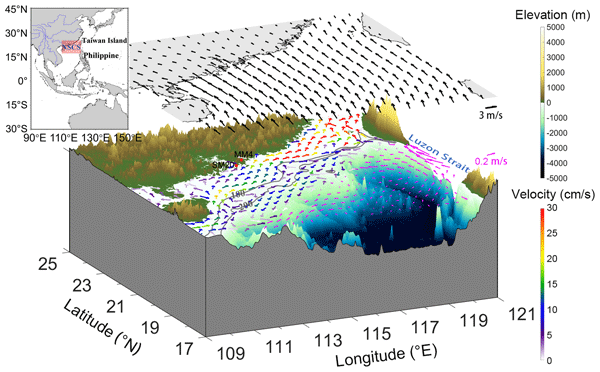
Yunping Song, Yuxin Lin, Peng Zhan, Zhiqiang Liu, and Zhongya Cai
Ocean Sci., 21, 3361–3374, https://doi.org/10.5194/os-21-3361-2025, https://doi.org/10.5194/os-21-3361-2025, 2025
Short summary
Short summary
To study summer coastal current changes in the Northern South China Sea (NSCS), we analyzed 2000–2022 observations and simulations, focusing on El Niño–Southern Oscillation (ENSO) and Pearl River freshwater impacts. During El Niño, uneven sea levels between the central and southern South China Sea strengthened northward currents. The Pearl River’s freshwater plume extended farther east, reducing nearshore salinity. Our findings highlight how local and remote factors interact to shape NSCS circulation dynamics.
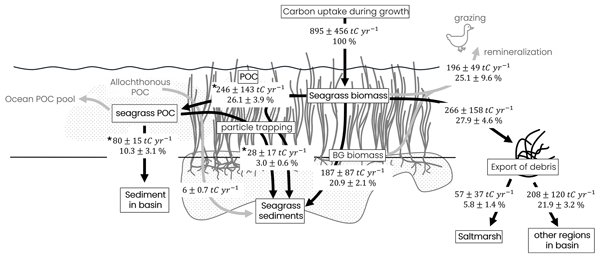
Veronika Mohr, Corinna Schrum, and Wenyan Zhang
Biogeosciences, 23, 5715–5739, https://doi.org/10.5194/bg-23-5715-2026, https://doi.org/10.5194/bg-23-5715-2026, 2026
Short summary
Short summary
Intertidal seagrass meadows are often considered important blue carbon ecosystems, but their role in highly dynamic environments is uncertain. Using a coupled hydrodynamic–ecosystem model, we quantify carbon uptake, burial, and export in a Wadden Sea tidal basin. We show that sequestration rates are low, depend on meadow persistence, and that a substantial fraction of seagrass carbon is redistributed within the basin and to salt marshes.
Guangchuang Zhang, Zhongya Cai, and Zhiqiang Liu
EGUsphere, https://doi.org/10.5194/egusphere-2026-3511, https://doi.org/10.5194/egusphere-2026-3511, 2026
Short summary
Short summary
Deep ocean waters eventually return toward the upper ocean, carrying heat, carbon, and nutrients. We used a global ocean data set and a tracking method to map where this return happens and how long it takes within 100 years. The Southern Ocean is the main gateway, while the Atlantic, Pacific, and Indian Oceans follow different routes and speeds. The results show that deep-ocean renewal is uneven, helping explain how the deep sea connects to climate, marine life, and future environmental change.
Lucas Porz, Jan Kossack, David Pogorzelski, and Wenyan Zhang
EGUsphere, https://doi.org/10.5194/egusphere-2026-3315, https://doi.org/10.5194/egusphere-2026-3315, 2026
Short summary
Short summary
As a major part of coastal “Blue Carbon” ecosystems, the seabed stores carbon originating from atmospheric CO2, especially where natural depressions trap sediment, such as in the Baltic Sea. Here, the amount of carbon stored in the surface of the seafloor is estimated to 1.3 billion tonnes. Computer simulations show that ocean currents transport a large amount of carbon-rich particles across maritime boundaries. These findings may be useful in making Blue Carbon accounting more robust.
Guangxi Cui, Ka-Veng Yuen, Ying Chen, Zhiqiang Liu, Dingqi Yang, Guangliang Liu, and Zhongya Cai
Earth Syst. Sci. Data Discuss., https://doi.org/10.5194/essd-2026-341, https://doi.org/10.5194/essd-2026-341, 2026
Revised manuscript accepted for ESSD
Short summary
Short summary
Most long-term satellite-based global current datasets capture only large-scale flows driven by pressure differences, missing important nonlinear motions. We used satellite data and a physics-informed deep learning method to create a new global dataset, including these previously missing components. Our currents are more accurate than traditional products, and we show that motions driven by nonlinear effects strongly influence the transport of heat, carbon, and nutrients in ocean.
Yang Cuizhu and Zhou Feng
EGUsphere, https://doi.org/10.5194/egusphere-2026-1581, https://doi.org/10.5194/egusphere-2026-1581, 2026
This preprint is open for discussion and under review for Biogeosciences (BG).
Short summary
Short summary
This paper investigates the influence of density on storm surges using a method based on equation derivation and analysis. The results indicate that density itself does not alter the accuracy of storm surge predictions; rather, it interacts with the storm surge to produce a coupling effect.
Yunping Song, Yuxin Lin, Peng Zhan, Zhiqiang Liu, and Zhongya Cai
Ocean Sci., 21, 3361–3374, https://doi.org/10.5194/os-21-3361-2025, https://doi.org/10.5194/os-21-3361-2025, 2025
Short summary
Short summary
To study summer coastal current changes in the Northern South China Sea (NSCS), we analyzed 2000–2022 observations and simulations, focusing on El Niño–Southern Oscillation (ENSO) and Pearl River freshwater impacts. During El Niño, uneven sea levels between the central and southern South China Sea strengthened northward currents. The Pearl River’s freshwater plume extended farther east, reducing nearshore salinity. Our findings highlight how local and remote factors interact to shape NSCS circulation dynamics.
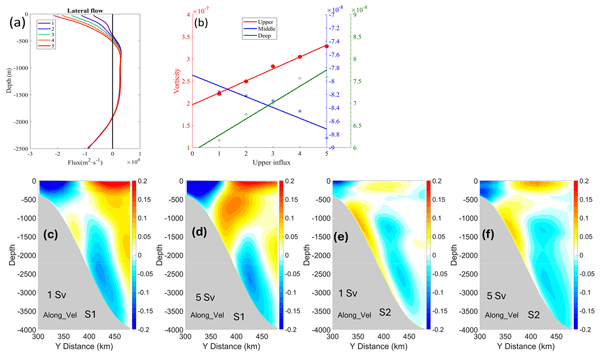
Qibang Tang, Zhongya Cai, and Zhiqiang Liu
Ocean Sci., 21, 1291–1301, https://doi.org/10.5194/os-21-1291-2025, https://doi.org/10.5194/os-21-1291-2025, 2025
Short summary
Short summary
The South China Sea is the largest semi-enclosed marginal sea in the western Pacific, featuring unique layered circulation with rotating currents in its upper, middle, and deep layers. This study uses simulations to explore how stronger currents in the upper layer influence circulation across the entire basin. The vorticity analyses show that the enhanced upper currents increase the strength of middle and deep currents, driven by changes in bottom pressure and cross-slope movements.
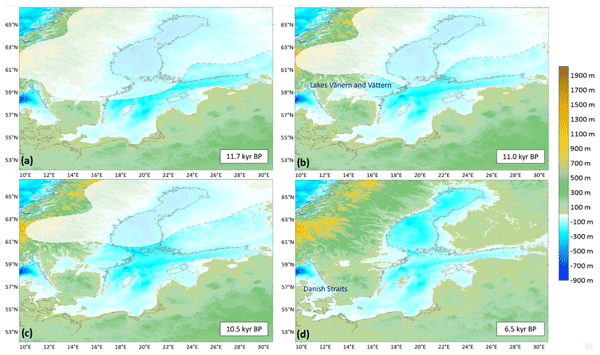
Jakub Miluch, Wenyan Zhang, Jan Harff, Andreas Groh, Peter Arlinghaus, and Celine Denker
Earth Syst. Dynam., 16, 585–605, https://doi.org/10.5194/esd-16-585-2025, https://doi.org/10.5194/esd-16-585-2025, 2025
Short summary
Short summary
We present a high-resolution paleogeographic reconstruction of the Baltic Sea for the Holocene period by combining eustatic sea-level change, glacio-isostatic movement, and sediment dynamics. In the northeastern part, morphological change is dominated by regression caused by post-glacial rebound that outpaces the eustatic sea level rise, whereas a transgression, together with active sediment erosion/deposition, constantly shapes the coastal morphology in the southeastern part.
Jialing Yao, Zhi Chen, Jianzhong Ge, and Wenyan Zhang
Biogeosciences, 21, 5435–5455, https://doi.org/10.5194/bg-21-5435-2024, https://doi.org/10.5194/bg-21-5435-2024, 2024
Short summary
Short summary
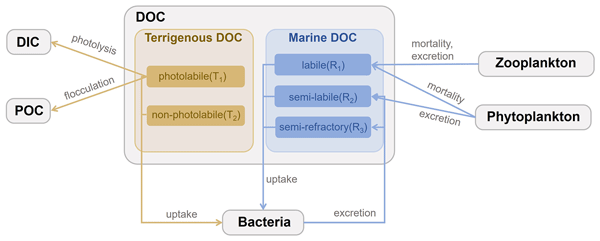
The transformation of dissolved organic carbon (DOC) in estuaries is vital for coastal carbon cycling. We studied source-to-sink pathways of DOC in the Changjiang Estuary using a physics–biogeochemistry model. Results showed a transition of DOC from a sink to a source in the plume area during summer, with a transition from terrestrial-dominant to marine-dominant DOC. Terrigenous and marine DOC exports account for about 31 % and 69 %, respectively.
Lucas Porz, Wenyan Zhang, Nils Christiansen, Jan Kossack, Ute Daewel, and Corinna Schrum
Biogeosciences, 21, 2547–2570, https://doi.org/10.5194/bg-21-2547-2024, https://doi.org/10.5194/bg-21-2547-2024, 2024
Short summary
Short summary
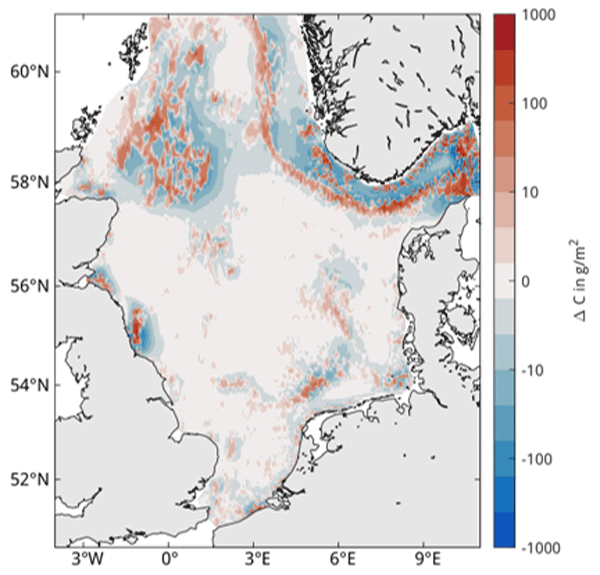
Seafloor sediments store a large amount of carbon, helping to naturally regulate Earth's climate. If disturbed, some sediment particles can turn into CO2, but this effect is not well understood. Using computer simulations, we found that bottom-contacting fishing gears release about 1 million tons of CO2 per year in the North Sea, one of the most heavily fished regions globally. We show how protecting certain areas could reduce these emissions while also benefitting seafloor-living animals.
Peter Arlinghaus, Corinna Schrum, Ingrid Kröncke, and Wenyan Zhang
Earth Surf. Dynam., 12, 537–558, https://doi.org/10.5194/esurf-12-537-2024, https://doi.org/10.5194/esurf-12-537-2024, 2024
Short summary
Short summary
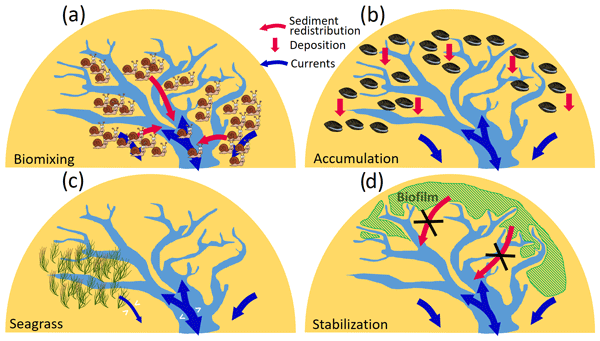
Benthos is recognized to strongly influence sediment stability, deposition, and erosion. This is well studied on small scales, but large-scale impact on morphological change is largely unknown. We quantify the large-scale impact of benthos by modeling the evolution of a tidal basin. Results indicate a profound impact of benthos by redistributing sediments on large scales. As confirmed by measurements, including benthos significantly improves model results compared to an abiotic scenario.
H. E. Markus Meier, Madline Kniebusch, Christian Dieterich, Matthias Gröger, Eduardo Zorita, Ragnar Elmgren, Kai Myrberg, Markus P. Ahola, Alena Bartosova, Erik Bonsdorff, Florian Börgel, Rene Capell, Ida Carlén, Thomas Carlund, Jacob Carstensen, Ole B. Christensen, Volker Dierschke, Claudia Frauen, Morten Frederiksen, Elie Gaget, Anders Galatius, Jari J. Haapala, Antti Halkka, Gustaf Hugelius, Birgit Hünicke, Jaak Jaagus, Mart Jüssi, Jukka Käyhkö, Nina Kirchner, Erik Kjellström, Karol Kulinski, Andreas Lehmann, Göran Lindström, Wilhelm May, Paul A. Miller, Volker Mohrholz, Bärbel Müller-Karulis, Diego Pavón-Jordán, Markus Quante, Marcus Reckermann, Anna Rutgersson, Oleg P. Savchuk, Martin Stendel, Laura Tuomi, Markku Viitasalo, Ralf Weisse, and Wenyan Zhang
Earth Syst. Dynam., 13, 457–593, https://doi.org/10.5194/esd-13-457-2022, https://doi.org/10.5194/esd-13-457-2022, 2022
Short summary
Short summary
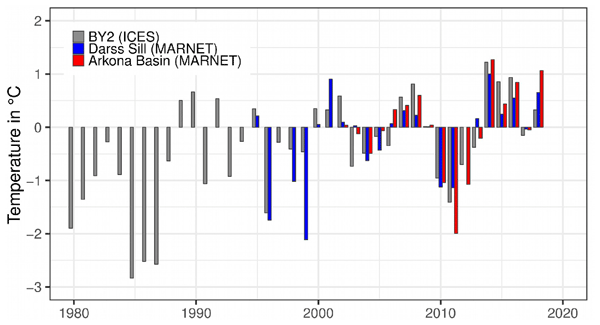
Based on the Baltic Earth Assessment Reports of this thematic issue in Earth System Dynamics and recent peer-reviewed literature, current knowledge about the effects of global warming on past and future changes in the climate of the Baltic Sea region is summarised and assessed. The study is an update of the Second Assessment of Climate Change (BACC II) published in 2015 and focuses on the atmosphere, land, cryosphere, ocean, sediments, and the terrestrial and marine biosphere.
Fanglou Liao, Xiao Hua Wang, and Zhiqiang Liu
Geosci. Model Dev., 15, 1129–1153, https://doi.org/10.5194/gmd-15-1129-2022, https://doi.org/10.5194/gmd-15-1129-2022, 2022
Short summary
Short summary
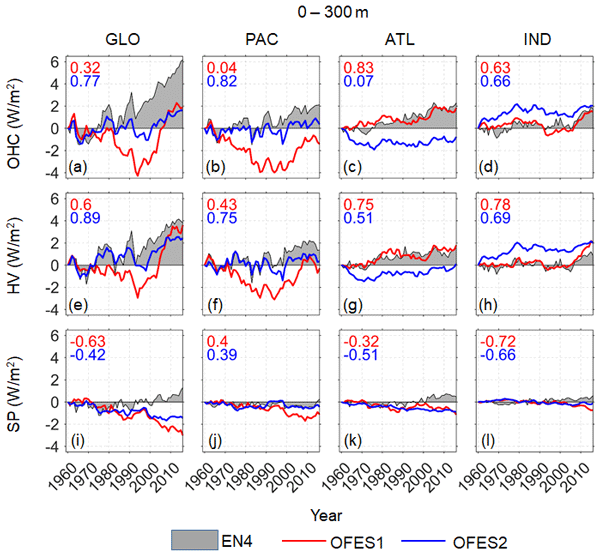
The ocean heat content (OHC) estimated using two eddying hindcast simulations, OFES1 and OFES2, was compared from 1960 to 2016, with observation-based results as a reference. Marked differences were found, especially in the Atlantic Ocean. These were related to the differences in the net surface heating, heat advection, and vertical heat diffusion. These documented differences may help the community better understand and use these quasi-global high-resolution datasets for their own purposes.
Cited articles
Ardilouze, C., Batté, L., Bunzel, F., Decremer, D., Déqué, M., Doblas-Reyes, F. J., Douville, H., Fereday, D., Guemas, V., MacLachlan, C., Müller, W., and Prodhomme, C.: Multi-model assessment of the impact of soil moisture initialization on mid-latitude summer predictability, Clim. Dynam., 49, 3959–3974, https://doi.org/10.1007/s00382-017-3555-7, 2017.
Artana, C., Rodrigues, R. R., Fevrier, J., and Coll, M.: Characteristics and drivers of marine heatwaves in the western South Atlantic, Commun. Earth Environ., 5, 555, https://doi.org/10.1038/s43247-024-01726-8, 2024.
Börgel, F., Frauen, C., Neumann, T., and Meier, M.: The Atlantic Multidecadal Oscillation controls the impact of the North Atlantic Oscillation on North European climate, Environ. Res. Lett., 15, https://doi.org/10.1088/1748-9326/aba925, 2020.
Brönnimann, S.: Impact of El Niño–Southern Oscillation on European climate, Rev. Geophys., 45, https://doi.org/10.1029/2006RG000199, 2007.
Chauhan, A., Smith, P., Rodrigues, F., Christensen, A., John, M., and Mariani, P.: Distribution and impacts of long-lasting marine heat waves on phytoplankton biomass, Front. Mar. Sci., 10, https://doi.org/10.3389/fmars.2023.1177571, 2023.
Chen, S., Chen, W., Wu, R., Yu, B., Graf, H.-F., Cai, Q., Ying, J., and Xing, W.: Atlantic multidecadal variability controls Arctic-ENSO connection, npj Clim. Atmos. Sci., 8, 44, https://doi.org/10.1038/s41612-025-00936-x, 2025.
Chen, W. and Staneva, J.: Characteristics and trends of marine heatwaves in the northwest European Shelf and the impacts on density stratification, in: 8th edition of the Copernicus Ocean State Report (OSR8), edited by: von Schuckmann, K., Moreira, L., Grégoire, M., Marcos, M., Staneva, J., Brasseur, P., Garric, G., Lionello, P., Karstensen, J., and Neukermans, G., Copernicus Publications, State Planet, 4-osr8, 7, https://doi.org/10.5194/sp-4-osr8-7-2024, 2024.
Chen, W., Staneva, J., Grayek, S., Schulz-Stellenfleth, J., and Greinert, J.: The role of heat wave events in the occurrence and persistence of thermal stratification in the southern North Sea, Nat. Hazards Earth Syst. Sci., 22, 1683–1698, https://doi.org/10.5194/nhess-22-1683-2022, 2022.
Copernicus Climate Change Service: ORAS5 global ocean reanalysis monthly data from 1958 to present, Copernicus Climate Change Service [data set], https://doi.org/10.24381/cds.67e8eeb7, 2021.
de Boisséson, E. and Balmaseda, M. A.: Predictability of marine heatwaves: assessment based on the ECMWF seasonal forecast system, Ocean Sci., 20, 265–278, https://doi.org/10.5194/os-20-265-2024, 2024.
Delworth, T. L. and Zeng, F.: The Impact of the North Atlantic Oscillation on Climate through Its Influence on the Atlantic Meridional Overturning Circulation, J. Climate, 29, 941–962, https://doi.org/10.1175/JCLI-D-15-0396.1, 2016.
Delworth, T. L., Zeng, F., Zhang, L., Zhang, R., Vecchi, G. A., and Yang, X.: The Central Role of Ocean Dynamics in Connecting the North Atlantic Oscillation to the Extratropical Component of the Atlantic Multidecadal Oscillation, J. Climate, 30, 3789–3805, https://doi.org/10.1175/JCLI-D-16-0358.1, 2017.
Deng, Y., Liu, Z., Zu, T., Hu, J., Gan, J., Lin, Y., Li, Z., Quan, Q., and Cai, Z.: Climatic Controls on the Interannual Variability of Shelf Circulation in the Northern South China Sea, J. Geophys. Res.-Oceans, 127, e2022JC018419, https://doi.org/10.1029/2022JC018419, 2022.
England, M. H., Li, Z., Huguenin, M. F., Kiss, A. E., Sen Gupta, A., Holmes, R. M., and Rahmstorf, S.: Drivers of the extreme North Atlantic marine heatwave during 2023, Nature, 642, 636–643, https://doi.org/10.1038/s41586-025-08903-5, 2025.
Fernández-Castillo, P., Losada, T., Rodríguez-Fonseca, B., García-Maroto, D., Mohino, E., and Durán, L.: Multidecadal variability of the ENSO early-winter teleconnection to Europe and implications for seasonal forecasting, npj Clim. Atmos. Sci., 8, 272, https://doi.org/10.1038/s41612-025-01160-3, 2025.
Frajka-Williams, E., Beaulieu, C., and Duchez, A.: Emerging negative Atlantic Multidecadal Oscillation index in spite of warm subtropics, Sci. Rep., 7, 11224, https://doi.org/10.1038/s41598-017-11046-x, 2017.
Gröger, M., Dutheil, C., Börgel, F., and Meier, M. H. E.: Drivers of marine heatwaves in a stratified marginal sea, Clim. Dynam., 62, 3231–3243, https://doi.org/10.1007/s00382-023-07062-5, 2024.
Hamdeno, M., Alvera-Azcárate, A., Krokos, G., and Hoteit, I.: Investigating the long-term variability of the Red Sea marine heatwaves and their relationship to different climate modes: focus on 2010 events in the northern basin, Ocean Sci., 20, 1087–1107, https://doi.org/10.5194/os-20-1087-2024, 2024. Hansen, F., Feser, F., and Zorita, E.: Day- and nighttime heatwave clusters over Europe and their physical drivers, EGU General Assembly 2024, Vienna, Austria, 14–19 April 2024, https://doi.org/10.5194/egusphere-egu24-16462, 2024.
Hersbach, H., Bell, B., Berrisford, P., Hirahara, S., Horányi, A., Muñoz Sabater, J., Nicolas, J., Peubey, C., Radu, R., Schepers, D., Simmons, A., Soci, C., Abdalla, S., Abellan, X., Balsamo, G., Bechtold, P., Biavati, G., Bidlot, J., Bonavita, M., and Thépaut, J. N.: The ERA5 global reanalysis, Q. J. Roy. Meteorol. Soc., 146, https://doi.org/10.1002/qj.3803, 2020.
Hersbach, H., Bell, B., Berrisford, P., Biavati, G., Horányi, A., Muñoz Sabater, J., Nicolas, J., Peubey, C., Radu, R., Rozum, I., Schepers, D., Simmons, A., Soci, C., Dee, D., and Thépaut, J.-N.: ERA5 monthly averaged data on single levels from 1940 to present, Copernicus Climate Change Service (C3S) Climate Data Store (CDS) [data set], https://doi.org/10.24381/cds.f17050d7, 2023.
Hobday, A. J. and Pecl, G. T.: Identification of global marine hotspots: sentinels for change and vanguards for adaptation action, Rev. Fish Biol. Fish., 24, 415–425, https://doi.org/10.1007/s11160-013-9326-6, 2014.
Hobday, A. J., Alexander, L. V., Perkins, S. E., Smale, D. A., Straub, S. C., Oliver, E. C. J., Benthuysen, J. A., Burrows, M. T., Donat, M. G., Feng, M., Holbrook, N. J., Moore, P. J., Scannell, H. A., Sen Gupta, A., and Wernberg, T.: A hierarchical approach to defining marine heatwaves, Prog. Oceanogr., 141, 227–238, https://doi.org/10.1016/j.pocean.2015.12.014, 2016.
Holbrook, N. J., Scannell, H. A., Sen Gupta, A., Benthuysen, J. A., Feng, M., Oliver, E. C. J., Alexander, L. V., Burrows, M. T., Donat, M. G., Hobday, A. J., Moore, P. J., Perkins-Kirkpatrick, S. E., Smale, D. A., Straub, S. C., and Wernberg, T.: A global assessment of marine heatwaves and their drivers, Nat. Commun., 10, 2624, https://doi.org/10.1038/s41467-019-10206-z, 2019.
Hou, J., Fang, Z., and Geng, X.: Recent Strengthening of the ENSO Influence on the Early Winter East Atlantic Pattern, Atmosphere, 14, 1809, https://doi.org/10.3390/atmos14121809, 2023.
Jacobeit, J.: Classifications in climate research, Phys. Chem. Earth Pt. A/B/C, 35, 411–421, https://doi.org/10.1016/j.pce.2009.11.010, 2010.
Jacox, M. G., Alexander, M. A., Amaya, D., Becker, E., Bograd, S. J., Brodie, S., Hazen, E. L., Pozo Buil, M., and Tommasi, D.: Global seasonal forecasts of marine heatwaves, Nature, 604, 486–490, https://doi.org/10.1038/s41586-022-04573-9, 2022.
Jain, A. K.: Data clustering: 50 years beyond K-means, Pattern Recog. Lett., 31, 651–666, https://doi.org/10.1016/j.patrec.2009.09.011, 2010.
Jiménez-Esteve, B. and Domeisen, D. I. V.: The Tropospheric Pathway of the ENSO–North Atlantic Teleconnection, J. Climate, 31, 4563–4584, https://doi.org/10.1175/JCLI-D-17-0716.1, 2018.
Josey, S. A. and Sinha, B.: Subpolar Atlantic Ocean mixed layer heat content variability is increasingly driven by an active ocean, Commun. Earth Environ., 3, 111, https://doi.org/10.1038/s43247-022-00433-6, 2022.
Kerr, R. A.: A North Atlantic Climate Pacemaker for the Centuries, Science, 288, 1984–1985, https://doi.org/10.1126/science.288.5473.1984, 2000.
Levine, A. F. Z., McPhaden, M. J., and Frierson, D. M. W.: The impact of the AMO on multidecadal ENSO variability, Geophys. Res. Lett., 44, 3877–3886, https://doi.org/10.1002/2017GL072524, 2017.
Lin, Y.: Climate Modes Synergistically Influence Marine Heatwaves in the North Sea, Zenodo [code], https://doi.org/10.5281/zenodo.20256573, 2025.
Liu, K., Xu, K., Zhu, C., and Liu, B.: Diversity of Marine Heatwaves in the South China Sea Regulated by ENSO Phase, J. Climate, 35, 877–893, https://doi.org/10.1175/JCLI-D-21-0309.1, 2022.
Liu, Q. Y., Wang, D., Wang, X., Shu, Y., Xie, Q., Chen, J., Liu, Q. Y., Wang, D., Wang, X., and Shu, Y.: Thermal variations in the South China Sea associated with the eastern and central Pacific El Nino events and their mechanisms, J. Geophys. Res.-Oceans, 119, 8955–8972, https://doi.org/10.1002/2014JC010429, 2014.
Lloyd, S.: Least squares quantization in PCM, IEEE T. Inform. Theory, 28, 129–137, https://doi.org/10.1109/TIT.1982.1056489, 1982.
Macovei, V.-A. Voynova, Y. G, Gehrung, M., and Petersen, W.: Ship-of-Opportunity, FerryBox-integrated, membrane-based sensor pCO2, temperature and salinity measurements in the surface North Sea since 2013, PANGAEA [data set], https://doi.org/10.1594/PANGAEA.930383, 2021.
Marin, M., Feng, M., Phillips, H. E., and Bindoff, N. L.: A Global, Multiproduct Analysis of Coastal Marine Heatwaves: Distribution, Characteristics, and Long-Term Trends, J. Geophys. Res.- Oceans, 126, e2020JC016708, https://doi.org/10.1029/2020JC016708, 2021.
Mathis, M. and Pohlmann, T.: Projection of physical conditions in the North Sea for the 21st century, Clim. Res., 61, 1–17, https://doi.org/10.3354/cr01232, 2014.
McAdam, R., Masina, S., and Gualdi, S.: Seasonal forecasting of subsurface marine heatwaves, Commun. Earth Environ., 4, 225, https://doi.org/10.1038/s43247-023-00892-5, 2023.
McGregor, S., Timmermann, A., Stuecker, M. F., England, M. H., Merrifield, M., Jin, F.-F., and Chikamoto, Y.: Recent Walker circulation strengthening and Pacific cooling amplified by Atlantic warming, Nat. Clim. Change, 4, 888–892, https://doi.org/10.1038/nclimate2330, 2014.
Mi, C., Yi, A., Xue, J., Dong, C., and Shan, H.: Forecasting summer marine heatwaves in the South China Sea using explainable machine learning models, Deep-Sea Res. Pt. I, 218, 104457, https://doi.org/10.1016/j.dsr.2025.104457, 2025.
Moat, B. I., Smeed, D. A., Frajka-Williams, E., Desbruyères, D. G., Beaulieu, C., Johns, W. E., Rayner, D., Sanchez-Franks, A., Baringer, M. O., Volkov, D., Jackson, L. C., and Bryden, H. L.: Pending recovery in the strength of the meridional overturning circulation at 26° N, Ocean Sci., 16, 863–874, https://doi.org/10.5194/os-16-863-2020, 2020.
Mohamed, B., Ibrahim, O., and Nagy, H.: Sea Surface Temperature Variability and Marine Heatwaves in the Black Sea, Remote Sens., 14, 2383, https://doi.org/10.3390/rs14102383, 2022.
Mohamed, B., Barth, A., and Alvera-Azcárate, A.: Extreme marine heatwaves and cold-spells events in the Southern North Sea: classifications, patterns, and trends, Front. Mar. Sci., 10, https://doi.org/10.3389/fmars.2023.1258117, 2023.
Mohamed, B., Barth, A., and Alvera-Azcárate, A.: The summer marine heatwaves in the North Sea in 2023, EGU General Assembly 2024, Vienna, Austria, 14–19 April 2024, EGU24-8900, https://doi.org/10.5194/egusphere-egu24-8900, 2024.
Mohamed, B., Barth, A., Van der Zande, D., and Alvera-Azcárate, A.: Amplified warming and marine heatwaves in the North Sea under a warming climate and their impacts, Ocean Sci., 21, 2505–2525, https://doi.org/10.5194/os-21-2505-2025, 2025.
Mooney, C.: Why some scientists are worried about a cold `blob' in the North Atlantic ocean, Washington Post, 24 September 2015, https://www.washingtonpost.com/news/energy-environment/wp/2015/09/24/why-some-scientists-are- worried-about-a-cold-blob-in-the-north-atlantic-ocean/?utm term=.24388ab9clec (last access: 27 July 2026), 2015.
Oliver, E. C. J., Perkins-Kirkpatrick, S. E., Holbrook, N. J., and Bindoff, N. L.: Anthropogenic and Natural Influences on Record 2016 Marine Heat waves, B. Am. Meteorol. Soc., 99, S44–S48, https://doi.org/10.1175/BAMS-D-17-0093.1, 2018a.
Oliver, E. C. J., Donat, M. G., Burrows, M. T., Moore, P. J., Smale, D. A., Alexander, L. V., Benthuysen, J. A., Feng, M., Sen Gupta, A., Hobday, A. J., Holbrook, N. J., Perkins-Kirkpatrick, S. E., Scannell, H. A., Straub, S. C., and Wernberg, T.: Longer and more frequent marine heatwaves over the past century, Nat. Commun., 9, 1324, https://doi.org/10.1038/s41467-018-03732-9, 2018b.
Oshika, M., Tachibana, Y., and Nakamura, T.: Impact of the winter North Atlantic Oscillation (NAO) on the Western Pacific (WP) pattern in the following winter through Arctic sea ice and ENSO: part I – observational evidence, Clim. Dynam., 45, 1355–1366, https://doi.org/10.1007/s00382-014-2384-1, 2015.
Patterson, M., Weisheimer, A., Befort, D. J., and O'Reilly, C. H.: The strong role of external forcing in seasonal forecasts of European summer temperature, Environ. Res. Lett., 17, 104033, https://doi.org/10.1088/1748-9326/ac9243, 2022.
Pearce, A., Lenanton, R., Jackson, G., Moore, J., Feng, M., and Gaughan, D.: The “marine heat wave” off Western Australia during the summer of 2010/11, Fisheries Research Report No. 222, Department of Fisheries, Western Australia, 40 pp., 2011.
Plaut, G. and Simonnet, E.: Large-scale circulation classification, weather regimes, and local climate over France, the Alps and Western Europe, Clim. Res., 17, 303–324, https://doi.org/10.3354/cr017303, 2001.
Podesta, G. and Glynn, P.: The 1997–98 El Niño event in Panama and Galápagos: An update of thermal stress indices relative to coral bleaching, Bull. Mar. Sci., 69, 43–59, 2001.
Quante, M. and Colijn, F.: North Sea Region Climate Change Assessment, Springer, https://doi.org/10.1007/978-3-319-39745-0, 2016.
Radin, C. and Nieves, V.: Unveiling Regional Climate Patterns Through Global Subsurface Ocean Temperature Data: An AI Multi-Layer Analysis Framework, Earth Syst. Environ., 8, 1673–1681, https://doi.org/10.1007/s41748-024-00409-w, 2024.
Radin, C., Nieves, V., Vicens-Miquel, M., and Alvarez-Morales, J. L.: Harnessing Machine Learning to Decode the Mediterranean's Climate Canvas and Forecast Sea Level Changes, Climate, 12, 127, https://doi.org/10.3390/cli12080127, 2024.
Rousseeuw, P. J.: Silhouettes: A graphical aid to the interpretation and validation of cluster analysis, J. Comput. Appl. Math., 20, 53–65, https://doi.org/10.1016/0377-0427(87)90125-7, 1987.
Santos, C. A. G., Brasil Neto, R. M., da Silva, R. M., and Costa, S. G. F.: Cluster Analysis Applied to Spatiotemporal Variability of Monthly Precipitation over Paraíba State Using Tropical Rainfall Measuring Mission (TRMM) Data, Remote Sens., 11, 637, https://doi.org/10.3390/rs11060637, 2019.
Saranya, J. S., Roxy, M. K., Dasgupta, P., and Anand, A.: Genesis and Trends in Marine Heatwaves Over the Tropical Indian Ocean and Their Interaction With the Indian Summer Monsoon, J. Geophys. Res.-Oceans, 127, e2021JC017427, https://doi.org/10.1029/2021JC017427, 2022.
Scaife, A. A., Dunstone, N., Hardiman, S., Ineson, S., Li, C., Lu, R., Pang, B., Klein-Tank, A., Smith, D., Van Niekerk, A., Renwick, J., and Williams, N.: ENSO affects the North Atlantic Oscillation 1 year later, Science, 386, 82–86, https://doi.org/10.1126/science.adk4671, 2024.
Scannell, H. A., Pershing, A. J., Alexander, M. A., Thomas, A. C., and Mills, K. E.: Frequency of marine heatwaves in the North Atlantic and North Pacific since 1950, Geophys. Res. Lett., 43, 2069–2076, https://doi.org/10.1002/2015GL067308, 2016.
Shackelford, K., DeMott, C. A., van Leeuwen, P. J., and Barnes, E. A.: A Regimes-Based Approach to Identifying Seasonal State-Dependent Prediction Skill, J. Geophys. Res.-Atmos., 130, e2024JD042917, https://doi.org/10.1029/2024JD042917, 2025.
Sun, C., Li, J., and Jin, F.-F.: A delayed oscillator model for the quasi-periodic multidecadal variability of the NAO, Clim. Dynam., 45, 2083–2099, https://doi.org/10.1007/s00382-014-2459-z, 2015.
Syakur, M. A., Khotimah, B. K., Rochman, E. M. S., and Satoto, B. D.: Integration K-Means Clustering Method and Elbow Method For Identification of The Best Customer Profile Cluster, IOP Conf. Ser.: Mater. Sci. Eng., 336, 012017, https://doi.org/10.1088/1757-899X/336/1/012017, 2018.
Takaya, K. and Nakamura, H.: A Formulation of a Phase-Independent Wave-Activity Flux for Stationary and Migratory Quasigeostrophic Eddies on a Zonally Varying Basic Flow, J. Atmos. Sci., 58, 608–627, https://doi.org/10.1175/1520-0469(2001)058<0608:AFOAPI>2.0.CO;2, 2001.
Tan, W., Wang, X., Wang, W., Wang, C., and Zuo, J.: Different Responses of Sea Surface Temperature in the South China Sea to Various El Niño Events during Boreal Autumn, J. Climate, 29, 1127–1142, https://doi.org/10.1175/JCLI-D-15-0338.1, 2016.
Thornton, H. E., Smith, D. M., Scaife, A. A., and Dunstone, N. J.: Seasonal Predictability of the East Atlantic Pattern in Late Autumn and Early Winter, Geophys. Res. Lett., 50, e2022GL100712, https://doi.org/10.1029/2022GL100712, 2023.
Trenberth, K. E. and Shea, D. J.: Atlantic hurricanes and natural variability in 2005, Geophys. Res. Lett., 33, https://doi.org/10.1029/2006GL026894, 2006.
van der Molen, J. and Pätsch, J.: An overview of Atlantic forcing of the North Sea with focus on oceanography and biogeochemistry, J. Sea Res., 189, 102281, https://doi.org/10.1016/j.seares.2022.102281, 2022.
Vogt, L., Burger, F., Griffies, S., and Frölicher, T.: Local Drivers of Marine Heatwaves: A Global Analysis With an Earth System Model, Front. Clim., 4, https://doi.org/10.3389/fclim.2022.847995, 2022.
Wang, Y. and Zhou, Y.: Seasonal dynamics of global marine heatwaves over the last four decades, Front. Mar. Sci., 11, https://doi.org/10.3389/fmars.2024.1406416, 2024.
Wicker, W., Harnik, N., Pyrina, M., and Domeisen, D. I. V.: Heatwave Location Changes in Relation to Rossby Wave Phase Speed, Geophys. Res. Lett., 51, e2024GL108159, https://doi.org/10.1029/2024GL108159, 2024.
Woollings, T., Barriopedro, D., Methven, J., Son, S.-W., Martius, O., Harvey, B., Sillmann, J., Lupo, A. R., and Seneviratne, S.: Blocking and its Response to Climate Change, Curr. Clim. Change Rep., 4, 287–300, https://doi.org/10.1007/s40641-018-0108-z, 2018.
Worsfold, M.: Global Ocean OSTIA Sea Surface Temperature and Sea Ice Reprocessed, EU Copernicus Marine Service Information (CMEMS), Marine Data Store (MDS) [data set], https://doi.org/10.48670/moi-00168, 2025.
Worsfold, M., Good, S., Atkinson, C., and Embury, O.: Presenting a Long-Term, Reprocessed Dataset of Global Sea Surface Temperature Produced Using the OSTIA System, Remote Sens., 16, 3358, https://doi.org/10.3390/rs16183358, 2024.
Xue, J., Zhang, W., Zhang, Y., Luo, J.-J., Zhu, H., Sun, C., and Yamagata, T.: Interdecadal modulation of Ningaloo Niño/Niña strength in the Southeast Indian Ocean by the Atlantic Multidecadal Oscillation, Nat. Commun., 16, 1966, https://doi.org/10.1038/s41467-025-57160-7, 2025.
Yan, Y., Chai, F., Xue, H., and Wang, G.: Record-Breaking Sea Surface Temperatures in the Yellow and East China Seas, J. Geophys. Res.-Oceans, 125, e2019JC015883, https://doi.org/10.1029/2019JC015883, 2020.
Zhao, Z. and Marin, M.: A MATLAB toolbox to detect and analyze marine heatwaves Software, J. Open Sour. Softw., 4, https://doi.org/10.21105/joss.01124, 2019.
Zuo, H., Balmaseda, M. A., Tietsche, S., Mogensen, K., and Mayer, M.: The ECMWF operational ensemble reanalysis–analysis system for ocean and sea ice: a description of the system and assessment, Ocean Sci., 15, 779–808, https://doi.org/10.5194/os-15-779-2019, 2019.
Short summary
Marine heatwaves, periods of unusually warm sea temperatures, are increasing worldwide. Using observed sea surface temperature data and statistical clustering, this study shows that the North Sea contains two regions with different seasonal responses to climate patterns. Winter heatwaves in the south are driven by regional circulation, while summer events in the north reflect Atlantic and Pacific influences. These insights can help improve regional forecasting.
Marine heatwaves, periods of unusually warm sea temperatures, are increasing worldwide. Using...


