Articles | Volume 22, issue 1
https://doi.org/10.5194/os-22-209-2026
© Author(s) 2026. This work is distributed under
the Creative Commons Attribution 4.0 License.
Special issue:
https://doi.org/10.5194/os-22-209-2026
© Author(s) 2026. This work is distributed under
the Creative Commons Attribution 4.0 License.
Observations of tracer ventilation in the Cape Basin, Agulhas Current Retroflection

Renske Koets
CORRESPONDING AUTHOR
Department of Marine Sciences, University of Gothenburg, Gothenburg, Sweden
Sebastiaan Swart
Department of Marine Sciences, University of Gothenburg, Gothenburg, Sweden
Department of Oceanography, University of Cape Town, Rondebosch, South Africa
Kathleen Donohue
Graduate School of Oceanography, University of Rhode Island, Narragansett, USA
Marcel du Plessis
Department of Marine Sciences, University of Gothenburg, Gothenburg, Sweden
Related authors
No articles found.
Jeong-Yeob Chae, Kathleen A. Donohue, and Jae-Hun Park
EGUsphere, https://doi.org/10.5194/egusphere-2025-5546, https://doi.org/10.5194/egusphere-2025-5546, 2025
Short summary
Short summary
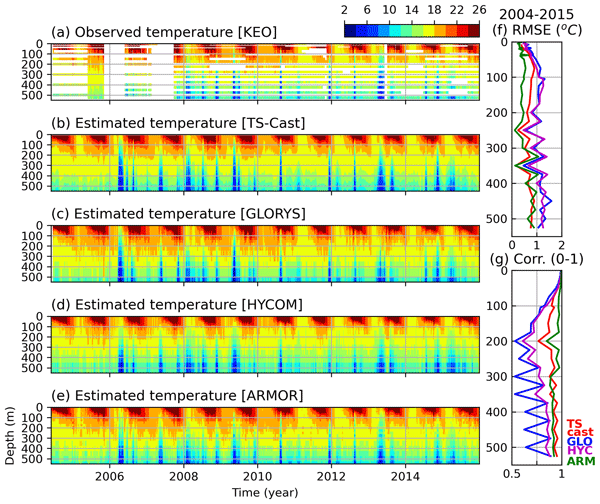
We introduce TS-Cast, a novel deep neural network that reconstructs subsurface thermohaline structures from satellite observations (ADT, SST, and SSS). Validated against independent time-series data, TS-Cast achieves RMSE < 1 °C and < 0.1 psu in the upper 500 m of the Kuroshio Extension, comparable or surpassing data-assimilated numerical models. Critically, we demonstrate that the physical limitations of the input satellite data fundamentally constrain the model's predictive skill.
Estel Font, Esther Portela, Sebastiaan Swart, Mauro Pinto-Juica, and Bastien Y. Queste
EGUsphere, https://doi.org/10.5194/egusphere-2025-3782, https://doi.org/10.5194/egusphere-2025-3782, 2025
Short summary
Short summary
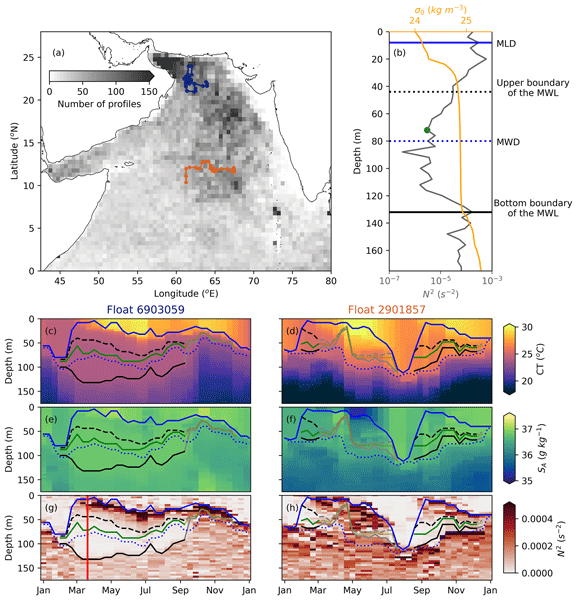
In the Sea of Oman, mode waters form at the surface in winter and are trapped beneath a warmer surface layer in spring, linking the surface ocean and the oxygen minimum zone. Using data from ocean gliders, our study examines how this layer evolves. Changes occur along layers of equal density, with brief episodes of vertical mixing, enhanced by eddies. Glider data reveal more variability than monthly means, showing the need for sustained glider observations to understand future ecosystem impacts.
Estel Font, Sebastiaan Swart, Puthenveettil Narayana Vinayachandran, and Bastien Y. Queste
Ocean Sci., 21, 1349–1368, https://doi.org/10.5194/os-21-1349-2025, https://doi.org/10.5194/os-21-1349-2025, 2025
Short summary
Short summary
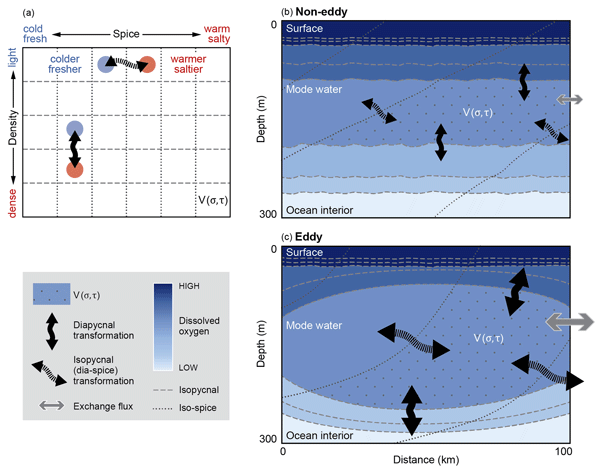
Mode water is formed annually and sits between the warm surface water and deeper older waters. In the Arabian Sea, it plays a crucial role in regulating ocean heat and oxygen variability by acting as a doorway between the surface and deeper waters. Using observations and models, we show that its formation is primarily driven by atmospheric forcing, though ocean currents, eddies, and biological heating also influence its life cycle. This water mass contributes up to 40 % of the region's oxygen content.
Kirtana Naëck, Jacqueline Boutin, Sebastiaan Swart, Marcel du Plessis, Liliane Merlivat, Laurence Beaumont, Antonio Lourenco, Francesco d'Ovidio, Louise Rousselet, Brian Ward, and Jean-Baptiste Sallée
Biogeosciences, 22, 1947–1968, https://doi.org/10.5194/bg-22-1947-2025, https://doi.org/10.5194/bg-22-1947-2025, 2025
Short summary
Short summary
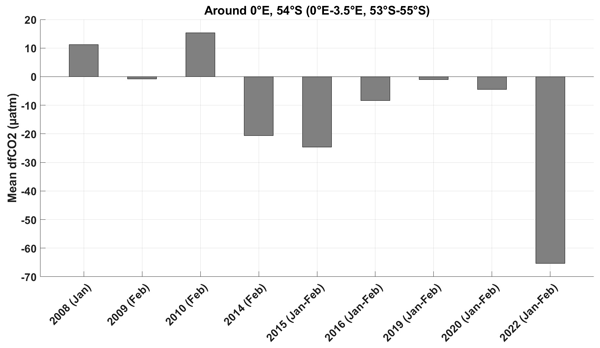
In summer 2022, a CARbon Interface OCean Atmosphere (CARIOCA) drifting buoy observed an anomalously strong ocean carbon sink in the subpolar Southern Ocean associated with large plumes of chlorophyll a. Lagrangian backward trajectories indicate that these waters originated from the sea ice edge in spring 2021. Our study highlights the northward migration of the CO2 sink associated with early sea ice retreat.
Blandine Jacob, Bastien Y. Queste, and Marcel D. du Plessis
Ocean Sci., 21, 359–379, https://doi.org/10.5194/os-21-359-2025, https://doi.org/10.5194/os-21-359-2025, 2025
Short summary
Short summary
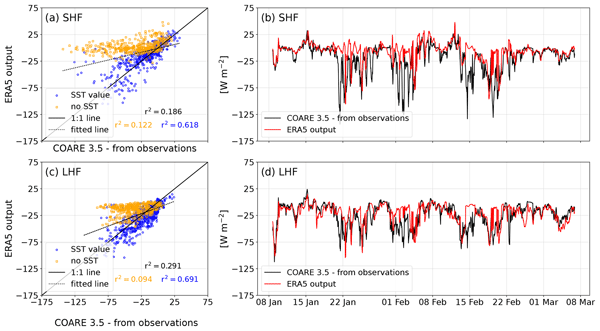
Few observations exist in the Amundsen Sea. Consequently, studies rely on reanalysis (e.g., ERA5) to investigate how the atmosphere affects ocean variability (e.g., sea-ice formation and melt). We use data collected along ice shelves to show that cold, dry air blowing from Antarctica triggers large ocean heat loss, which is underestimated by ERA5. We then use an ocean model to show that this bias has an important impact on the ocean, with implications for sea-ice forecasts.
Ria Oelerich, Karen J. Heywood, Gillian M. Damerell, Marcel du Plessis, Louise C. Biddle, and Sebastiaan Swart
Ocean Sci., 19, 1465–1482, https://doi.org/10.5194/os-19-1465-2023, https://doi.org/10.5194/os-19-1465-2023, 2023
Short summary
Short summary
At the southern boundary of the Antarctic Circumpolar Current, relatively warm waters encounter the colder waters surrounding Antarctica. Observations from underwater vehicles and altimetry show that medium-sized cold-core eddies influence the southern boundary's barrier properties by strengthening the slopes of constant density lines across it and amplifying its associated jet. As a result, the ability of exchanging properties, such as heat, across the southern boundary is reduced.
Cited articles
Abarbanel, H., Holm, D., Marsden, J., and Ratiu, T.: Richardson Number Criterion for the Nonlinear Stability of Three-Dimensional Stratified Flow, Physical Review Letters, 52, https://doi.org/10.1103/PhysRevLett.52.2352, 1984. a
Abernathey, R. A.: Hydrostatic and Geostrophic Balance, GitHub, https://rabernat.github.io/intro_to_physical_oceanography/06_hydrostatic_geostrophic.html (last access: 23 October 2024), 2024. a
Balwada, D., Gray, A., Dove, L., and Thompson, A.: Tracer Stirring and Variability in the Antarctic Circumpolar Current Near the Southwest Indian Ridge, Journal of Geophysical Research: Oceans, 129, https://doi.org/10.1029/2023JC019811, 2024. a, b
Beal, L. M., De Ruijter, W. P. M., Biastoch, A., Zahn, R., Cronin, M., Hermes, J., Lutjeharms, J., Quartly, G., Tozuka, T., Baker-Yeboah, S., Bornman, T., Cipollini, P., Dijkstra, H., Hall, I., Park, W., Peeters, F., Penven, P., Ridderinkhof, H., Zinke, J., and 136, S. W. G.: On the role of the Agulhas system in ocean circulation and climate, Nature, 472, 429–436, https://doi.org/10.1038/nature09983, 2011. a, b, c
Bennett, J. S., Stahr, F. R., Eriksen, C. C., Renken, M. C., Snyder, W. E., and Van Uffelen, L. J.: Assessing Seaglider Model-Based Position Accuracy on an Acoustic Tracking Range, Journal of Atmospheric and Oceanic Technology, 38, 1111–1123, https://doi.org/10.1175/JTECH-D-20-0091.1, 2021. a
Berta, M., Ursella, L., Nencioli, F., Doglioli, A. M., Petrenko, A. A., and Cosoli, S.: Surface transport in the Northeastern Adriatic Sea from FSLE analysis of HF radar measurements, Journal of Marine Systems, 224, 103681, https://doi.org/10.1016/j.csr.2014.01.016, 2022. a
Bettencourt, J. H., López, C., Hernández-García, E., Montes, I., Sudre, J., Dewitte, B., Paulmier, A., and Garçon, V.: Boundaries of the Peruvian oxygen minimum zone shaped by coherent mesoscale dynamics, Nature Geoscience, 8, 937–940, https://doi.org/10.1038/ngeo2570, 2015. a, b
Boebel, O., Lutjeharms, J., Schmid, C., Zenk, W., Rossby, T., and Barron, C.: The Cape Cauldron: a regime of turbulent inter-ocean exchange, Deep Sea Research Part II: Topical Studies in Oceanography, 50, 57–86, https://doi.org/10.1016/S0967-0645(02)00379-X, 2003. a
Boyd, P. W., Claustre, H., Levy, M., Siegel, D. A., and Weber, T.: Multi-faceted particle pumps drive carbon sequestration in the ocean, Nature, 568, 327–335, https://doi.org/10.1038/s41586-019-1098-2, 2019. a
Briggs, N., Perry, M. J., Cetinié, I., Lee, C., D'Asaro, E., Gray, A. M., and Rehm, E.: High-resolution observations of aggregate flux during a sub-polar North Atlantic spring bloom, Deep Sea Research Part I: Oceanographic Research Papers, 58, 1031–1039, https://doi.org/10.1016/j.dsr.2011.07.007, 2011. a
Callies, J. and Ferrari, R.: Baroclinic Instability in the Presence of Convection, Journal of Physical Oceanography, 48, 45–60, https://doi.org/10.1175/JPO-D-17-0028.1, 2018. a
Chen, M. L. and Schofield, O.: Spatial and Seasonal Controls on Eddy Subduction in the Southern Ocean, Geophysical Research Letters, 51, e2024GL109246, https://doi.org/10.1029/2024GL109246, e2024GL109246 2024GL109246, 2024. a, b
de Boyer Montégut, C., Madec, G., Fischer, A. S., Lazar, A., and Iudicone, D.: Mixed layer depth over the global ocean: An examination of profile data and a profile-based climatology, Journal of Geophysical Research: Oceans, 109, https://doi.org/10.1029/2004JC002378, 2004. a
Dove, L. A., Thompson, A. F., Balwada, D., and Gray, A. R.: Observational Evidence of Ventilation Hotspots in the Southern Ocean, Journal of Geophysical Research: Oceans, 126, e2021JC017178, https://doi.org/10.1029/2021JC017178, 2021. a, b, c
Dove, L. A., Balwada, D., Thompson, A. F., and Gray, A. R.: Enhanced Ventilation in Energetic Regions of the Antarctic Circumpolar Current, Geophysical Research Letters, 49, e2021GL097574, https://doi.org/10.1029/2021GL097574, 2022. a, b
du Plessis, M., Swart, S., Ansorge, I. J., Mahadevan, A., and Thompson, A. F.: Southern Ocean Seasonal Restratification Delayed by Submesoscale Wind–Front Interactions, Journal of Physical Oceanography, 49, 1035–1053, https://doi.org/10.1175/JPO-D-18-0136.1, 2019. a
Dudley B, C., Roland A, d., Michael G, S., Naggar, K. E., and Siwertz, N.: Geographical Variability of the First Baroclinic Rossby Radius of Deformation, Journal of Physical Oceanography, 28, 433–460, https://doi.org/10.1175/1520-0485(1998)028<0433:GVOTFB>2.0.CO;2, 1998. a
E.U. Copernicus Marine Service Information (CMEMS): Global Ocean Gridded L 4 Sea Surface Heights And Derived Variables Reprocessed 1993 Ongoing, Marine Data Store (MDS) [data set], https://doi.org/10.48670/moi-00148, 2024. a
E.U. Copernicus Marine Service Information (CMEMS): Global Ocean OSTIA Sea Surface Temperature and Sea Ice Reprocessed, Marine Data Store (MDS) [data set], https://doi.org/10.48670/moi-00168, 2025. a
Freilich, M. and Mahadevan, A.: Coherent Pathways for Subduction From the Surface Mixed Layer at Ocean Fronts, Journal of Geophysical Research: Oceans, 126, https://doi.org/10.1029/2020JC017042, 2021. a
Fu, Y., Wang, C., Brandt, P., and Greatbatch, R. J.: Interannual Variability of Antarctic Intermediate Water in the Tropical North Atlantic, Journal of Geophysical Research: Oceans, 124, 4044–4057, https://doi.org/10.1029/2018JC014878, 2019. a, b
Garau, B., Ruiz, S., Zhang, W. G., Pascual, A., Heslop, E., Kerfoot, J., and Tintoré, J.: Thermal Lag Correction on Slocum CTD Glider Data, Journal of Atmospheric and Oceanic Technology, 28, 1065–1071, https://doi.org/10.1175/JTECH-D-10-05030.1, 2011. a
Giulivi, C. F. and Gordon, A. L.: Isopycnal displacements within the Cape Basin thermocline as revealed by the Hydrographic Data Archive, Deep Sea Research Part I: Oceanographic Research Papers, 53, 1285–1300, https://doi.org/10.1016/j.dsr.2006.05.011, 2006. a
Gregor, L., Ryan-Keogh, T. J., Nicholson, S.-A., du Plessis, M., Giddy, I., and Swart, S.: GliderTools: A Python Toolbox for Processing Underwater Glider Data, Frontiers in Marine Science, 6, https://doi.org/10.3389/fmars.2019.00738, 2019. a, b
Guo, M., Xing, X., Xiu, P., Dall'Olmo, G., Chen, W., and Chai, F.: Efficient biological carbon export to the mesopelagic ocean induced by submesoscale fronts, Nature Communications, 15, 580, https://doi.org/10.1038/s41467-024-44846-7, 2024. a
Ito, T., Follows, M. J., and Boyle, E. A.: Is AOU a good measure of respiration in the oceans?, Geophysical Research Letters, 31, https://doi.org/10.1029/2004GL020900, 2004. a
Kersalé, M., Lamont, T., Speich, S., Terre, T., Laxenaire, R., Roberts, M. J., van den Berg, M. A., and Ansorge, I. J.: Moored observations of mesoscale features in the Cape Basin: characteristics and local impacts on water mass distributions, Ocean Sci., 14, 923–945, https://doi.org/10.5194/os-14-923-2018, 2018. a, b
Kwon, E. Y., Primeau, F., and Sarmiento, J. L.: The impact of remineralization depth on the air–sea carbon balance, Nature Geoscience, 2, 630–635, https://doi.org/10.1038/ngeo612, 2009. a
Lacour, L., Briggs, N., Claustre, H., Ardyna, M., and Dall'Olmo, G.: The Intraseasonal Dynamics of the Mixed Layer Pump in the Subpolar North Atlantic Ocean: A Biogeochemical-Argo Float Approach, Global Biogeochemical Cycles, 33, https://doi.org/10.1029/2018GB005997, 2019. a
Laxenaire, R., Speich, S., and Stegner, A.: Agulhas ring heat content and transport in the South Atlantic estimated by combining satellite altimetry and Argo profiling floats data, Journal of Geophysical Research: Oceans, 123, 7794–7809, https://doi.org/10.1029/2019JC015511, 2020. a
Leif N, T. and Joyce M, T.: Subduction on the northern and southern flanks of the Gulf Stream, Journal of Physical Oceanography, 40, 429–438, https://doi.org/10.1175/2009JPO4187.1, 2010. a
Liu, M. and Tanhua, T.: Water masses in the Atlantic Ocean: water mass ages and ventilation, EGUsphere [preprint], https://doi.org/10.5194/egusphere-2024-1362, 2024. a, b
Lévy, M., Ferrari, R., Franks, P. J. S., Martin, A. P., and Rivière, P.: Bringing physics to life at the submesoscale, Geophysical Research Letters, 39, https://doi.org/10.1029/2012GL052756, 2012. a
Moura, R., de Souza, R. B., Casagrande, F., and da Silva Lindemann, D.: Air–sea heat fluxes variations in the Southern Atlantic Ocean: Present-day and future climate scenarios, International Journal of Climatology, 44, 3136–3153, https://doi.org/10.1002/joc.8517, 2024. a
Novelli, G.: Processed CTD collected in the Cape Basin South Atlantic between 2023-03-04 and 2023-03-29 during the QUICCHE mission on board RV Roger Revelle, Zenodo [data set], https://doi.org/10.5281/zenodo.15192621, 2025. a
Patmore, R. D., Ferreira, D., Marshall, D. P., du Plessis, M. D., Brearley, J. A., and Swart, S.: Evaluating Existing Ocean Glider Sampling Strategies for Submesoscale Dynamics, Journal of Atmospheric and Oceanic Technology, 41, 647–663, https://doi.org/10.1175/JTECH-D-23-0055.1, 2024. a
Penven, P., Lutjeharms, J. R. E., and Florenchie, P.: Madagascar: A pacemaker for the Agulhas Current system?, Geophysical Research Letters, 33, https://doi.org/10.1029/2006GL026854, 2006. a
Pham, H. T., Verma, V., Sarkar, S., Shcherbina, A. Y., and D'Asaro, E. A.: Rapid Downwelling of Tracer Particles Across the Boundary Layer and Into the Pycnocline at Submesoscale Ocean Fronts, Geophysical Research Letters, 51, e2024GL109674, https://doi.org/10.1029/2024GL109674, e2024GL109674 2024GL109674, 2024. a
Koets, R.: renskekoets/Ventilation_Cape_Basin: Ventilation Cape Basin, Version v1, Zenodo [code], https://doi.org/10.5281/zenodo.18215721 2026. a
Reynolds, R. A., Stramski, D., and Mitchell, B. G.: A chlorophyll-dependent semianalytical reflectance model derived from field measurements of absorption and backscattering coefficients within the Southern Ocean, Journal of Geophysical Research: Oceans, 106, 7125–7138, https://doi.org/10.1029/1999JC000311, 2001. a
Richardson, P. L.: Eddy kinetic energy in the North Atlantic from surface drifters, Journal of Geophysical Research: Oceans, 88, 4355–4367, https://doi.org/10.1029/JC088iC07p04355, 1983. a
Ricour, F., Guidi, L., Gehlen, M., DeVries, T., and Legendre, L.: Century-scale carbon sequestration flux throughout the ocean by the biological pump, Nature Geoscience, 16, 1105–1113, https://doi.org/10.1038/s41561-023-01318-9, 2023. a
Roullet, G., McWilliams, J. C., Capet, X., and Molemaker, M. J.: Properties of Steady Geostrophic Turbulence with Isopycnal Outcropping, Journal of Physical Oceanography, 42, 18–38, https://doi.org/10.1175/JPO-D-11-09.1, 2012. a
Ruan, X., Thompson, A. F., Flexas, M. M., and Sprintall, J.: Contribution of topographically generated submesoscale turbulence to Southern Ocean overturning, Nature Geoscience, 10, 840–845, https://doi.org/10.1038/ngeo3053, 2017. a
Rühs, S., Schmidt, C., Schubert, R., Schulzki, T. G., Schwarzkopf, F. U., Le Bars, D., and Biastoch, A.: Robust estimates for the decadal evolution of Agulhas leakage from the 1960s to the 2010s, Communications Earth & Environment, 3, 318, https://doi.org/10.1038/s43247-022-00643-y, 2022. a, b, c
Schmid, C., Boebel, O., Zenk, W., Lutjeharms, J., Garzoli, S., Richardson, P., and Barron, C.: Early evolution of an Agulhas Ring, Deep Sea Research Part II: Topical Studies in Oceanography, 50, 141–166, https://doi.org/10.1016/S0967-0645(02)00382-X, inter-ocean exchange around southern Africa, 2003. a
Schubert, R., Gula, J., and Biastoch, A.: Submesoscale flows impact Agulhas leakage in ocean simulations, Communications Earth & Environment, 2, 197, https://doi.org/10.1038/s43247-021-00271-y, 2021. a, b
Shcherbina, A. Y., Gregg, M. C., Alford, M. H., and Harcourt, R. R.: Characterizing Thermohaline Intrusions in the North Pacific Subtropical Frontal Zone, Journal of Physical Oceanography, 39, 2735–2756, https://doi.org/10.1175/2009JPO4190.1, 2009. a
Siegelman, L.: Energetic Submesoscale Dynamics in the Ocean Interior, Journal of Physical Oceanography, 50, https://doi.org/10.1175/JPO-D-19-0253.1, 2020. a
Sudre, F., Hernández-Carrasco, I., Mazoyer, C., Sudre, J., Dewitte, B., Garçon, V., and Rossi, V.: An ocean front dataset for the Mediterranean sea and southwest Indian ocean, Scientific Data, 10, 730, https://doi.org/10.1038/s41597-023-02615-z, 2023. a, b
Swart, S. and Edholm, J.: Dataset from autonomous assets collected during the QUICCHE field campaign in the Cape Cauldron, Zenodo [data set], https://doi.org/10.5281/zenodo.15189207, 2025. a
Swart, S., du Plessis, M. D., Thompson, A. F., Biddle, L. C., Giddy, I., Linders, T., Mohrmann, M., and Nicholson, S.-A.: Submesoscale Fronts in the Antarctic Marginal Ice Zone and Their Response to Wind Forcing, Geophysical Research Letters, 47, e2019GL086649, https://doi.org/10.1029/2019GL086649, 2020. a
Thompson, A. F., Lazar, A., Buckingham, C., Garabato, A. C. N., Damerell, G. M., and Heywood, K. J.: Open-Ocean Submesoscale Motions: A Full Seasonal Cycle of Mixed Layer Instabilities from Gliders, Journal of Physical Oceanography, 46, 1285–1307, https://doi.org/10.1175/JPO-D-15-0170.1, 2016. a
Tu, J., Wu, J., Fan, D., Liu, Z., Zhang, Q., and Smyth, W.: Shear Instability and Turbulent Mixing by Kuroshio Intrusion Into the Changjiang River Plume, Geophysical Research Letters, 51, e2024GL110957, https://doi.org/10.1029/2024GL110957, 2024. a, b, c
Wang, B. and Fennel, K.: An Assessment of Vertical Carbon Flux Parameterizations Using Backscatter Data From BGC Argo, Geophysical Research Letters, 50, e2022GL101220, https://doi.org/10.1029/2022GL101220, 2023. a
Wang, T., Suga, T., and Kouketsu, S.: Spiciness anomalies in the upper North Pacific based on Argo observations, Frontiers in Marine Science, 9, https://doi.org/10.3389/fmars.2022.1006042, 2022. a
Xia, X., Hong, Y., Du, Y., and Xiu, P.: Three Types of Antarctic Intermediate Water Revealed by a Machine Learning Approach, Geophysical Research Letters, 49, e2022GL099445, https://doi.org/10.1029/2022GL099445, 2022. a
Yu, X., Barkan, R., and Garabato, A. C. N.: Intensification of submesoscale frontogenesis and forward energy cascade driven by upper-ocean convergent flows, Nature Communications, 15, 9214, https://doi.org/10.1038/s41467-024-53551-4, 2024. a
Zhang, X., Hu, L., and He, M.-X.: Scattering by pure seawater: Effect of salinity, Opt. Express, 17, 5698–5710, https://doi.org/10.1364/OE.17.005698, 2009. a
Zhu, R., Yang, H., Li, M., Chen, Z., Ma, X., Cai, J., and Wu, L.: Observations reveal vertical transport induced by submesoscale front, Scientific Reports, 14, 4407, https://doi.org/10.1038/s41598-024-54940-x, 2024. a
Short summary
The Cape Basin is a dynamic region where warm, salty Indian Ocean waters meet cooler Atlantic waters. Mixing between these waters drives ventilation, the transport of surface waters to deeper layers in the ocean. Using high-resolution observations from an autonomous Seaglider combined with satellite altimetry we provide new evidence on how small-scale ocean dynamics contribute to ventilation in the Cape Basin, with broader implications on ocean circulation.
The Cape Basin is a dynamic region where warm, salty Indian Ocean waters meet cooler Atlantic...
Special issue