
Articles | Volume 22, issue 3
https://doi.org/10.5194/os-22-1835-2026
© Author(s) 2026. This work is distributed under
the Creative Commons Attribution 4.0 License.
the Creative Commons Attribution 4.0 License.
https://doi.org/10.5194/os-22-1835-2026
© Author(s) 2026. This work is distributed under
the Creative Commons Attribution 4.0 License.
the Creative Commons Attribution 4.0 License.
Research article
| 
17 Jun 2026
Research article |
| 17 Jun 2026
| 17 Jun 2026
Radionuclides as tracers of Arctic outflows: pathways, water mass mixing, and freshwater input to Davis Strait and the Labrador Sea
Lisa G. T. Leist
CORRESPONDING AUTHOR

Institute of Biogeochemistry and Pollutant Dynamics, Department of Environmental Systems Science, ETH Zurich, Zurich, Switzerland
Maxi Castrillejo
Institute of Earth Sciences, University of Lausanne, Lausanne, Switzerland
Kumiko Azetsu-Scott
Bedford Institute of Oceanography, Dartmouth, Nova Scotia, Canada
Craig Lee
Applied Physics Laboratory, University of Washington, Seattle, Washington, USA
Jed Lenetsky
Department of Atmospheric and Oceanic Sciences and Institute of Arctic and Alpine Research, University of Colorado – Boulder, Boulder, Colorado, USA
Marc Ringuette
Bedford Institute of Oceanography, Dartmouth, Nova Scotia, Canada
Christof Vockenhuber
Institute of Biogeochemistry and Pollutant Dynamics, Department of Environmental Systems Science, ETH Zurich, Zurich, Switzerland
Laboratory of Ion Beam Physics, Department of Physics, ETH Zurich, Zurich, Switzerland
Habacuc Pérez-Tribouillier
Institute of Biogeochemistry and Pollutant Dynamics, Department of Environmental Systems Science, ETH Zurich, Zurich, Switzerland
Laboratory of Ion Beam Physics, Department of Physics, ETH Zurich, Zurich, Switzerland
Catherine Jeandel
LEGOS, Université de Toulouse, CNRS, IRD, CNES, UPS, Toulouse, France
Jean-Éric Tremblay
Département de biologie, Québec Océan and Takuvik Joint International Laboratory (UMI 3376), Université Laval (Canada)-CNRS (France), Université Laval, Québec, Canada
Núria Casacuberta
CORRESPONDING AUTHOR
Institute of Biogeochemistry and Pollutant Dynamics, Department of Environmental Systems Science, ETH Zurich, Zurich, Switzerland
Laboratory of Ion Beam Physics, Department of Physics, ETH Zurich, Zurich, Switzerland
Related authors
No articles found.

Marcel Scheiwiller, Anne-Marie Wefing, Habacuc Pérez-Tribouillier, Christof Vockenhuber, Paul A. Dodd, Justin P. Gwynn, and Núria Casacuberta
Ocean Sci., 22, 2779–2808, https://doi.org/10.5194/os-22-2779-2026, https://doi.org/10.5194/os-22-2779-2026, 2026
Short summary
Short summary
We used man-made chemical markers to study how warm Atlantic origin water moves through the Arctic Ocean. Comparing Fram Strait observations from 2016 to 2021, we found stronger mixing in 2020 and longer transit times in 2021. This variability matters because these waters carry heat into the Arctic Ocean, intensifying its warming. Our findings help improve predictions of the Arctic Ocean climate response and its wider effects on ocean circulation.
Haley D. Geizer, Francesco Bisiach, Alexandre Normandeau, Maria Armstrong, Stephan Hamisch, Silas W. Jones, Casey R. J. Hubert, Kumiko Azetsu-Scott, Paul V. R. Snelgrove, Christopher W. Hunt, Michelle Saunders, Rodd Laing, and Christopher K. Algar
EGUsphere, https://doi.org/10.5194/egusphere-2026-5292, https://doi.org/10.5194/egusphere-2026-5292, 2026
This preprint is open for discussion and under review for Biogeosciences (BG).
Short summary
Short summary
This study pairs direct measurements, a reactive transport model and 16S rRNA sequencing to assess benthic metabolisms in sediment from two subarctic fjords. Model results and predicted microbial communities aligned and indicate denitrification may be a significant process for cold and well-ventilated fjords. Organic carbon burial rates for fjords in the region were estimated and suggest they are important sites of carbon sequestration for at least a 200-year timescale.
Nico Lange, Siv K. Lauvset, Brendan R. Carter, Matthew P. Humphreys, Ryan J. Woosley, Are Olsen, Henry C. Bittig, Alex Kozyr, Marta Álvarez, Kumiko Azetsu-Scott, Susan Becker, Peter J. Brown, Leticia Cotrim da Cunha, Larissa Dias, Mario Hoppema, Masao Ishii, Emil Jeansson, Akihiko Murata, Jens Daniel Müller, Fiz F. Pérez, Carsten Schirnick, Reiner Steinfeldt, Adam Ulfsbo, Anton Velo, and Toste Tanhua
Earth Syst. Sci. Data Discuss., https://doi.org/10.5194/essd-2026-496, https://doi.org/10.5194/essd-2026-496, 2026
Revised manuscript under review for ESSD
Short summary
Short summary
GLODAP is a data product for ocean inorganic carbon and related biogeochemical variables measured by the chemical analysis of water bottle samples from scientific cruises. GLODAPv3 is the third version release of GLODAP. The data that are included have been subjected to extensive quality control, including systematic evaluation of systematic cruise differences. This version contains data from 1181 hydrographic cruises covering the world's oceans from 1972 to 2023.
Hyelim Yoo, Li-Qing Jiang, Chris Langdon, Alex Kozyr, Simone R. Alin, Jose Martin Hernandez Ayon, Kumiko Azetsu-Scott, Leticia Barbero, Nicole Besemer, Albert Boyd, Jean R. Brodeur, Wei-Jun Cai, Brendan R. Carter, Cecilia Chapa, Eugene Colbourne, Jessica N. Cross, Ian Enochs, Leticia Espinosa-Carreon, Richard A. Feely, Karina E. Giesbrecht, Helen Gurney-Smith, Burke Hales, Naomi Harada, James Hooper, Christopher W. Hunt, Debby Ianson, Mike Jankulak, Terrence M. Joyce, Esther G. Kennedy, Brian A. King, Arne Körtzinger, Matthias Lankhorst, Gary Maillet, Derek Manzello, Anna K. McLaskey, Viviane V. Menezes, Nicolas Metzl, Christine Michel, Natalie M. Monacci, Julio M. Morell, Akihiko Murata, Jan Newton, Emily O'Grady, Ana M. Palacio-Castro, Denis Pierrot, Marc Ringuette, Christopher Sabine, Joseph E. Salisbury, Akash R. Sastri, Ute Schuster, Uwe Send, Ryan Smith, Michel Starr, James H. Swift, Lynne D. Talley, Helmuth Thomas, Douglas W. R. Wallace, Zhaohui Aleck Wang, Rik Wanninkhof, Chi S. Wong, Patricia L. Yager, and Igor Yashayaev
Earth Syst. Sci. Data Discuss., https://doi.org/10.5194/essd-2026-516, https://doi.org/10.5194/essd-2026-516, 2026
Preprint under review for ESSD
Short summary
Short summary
The coastal Ocean Data Analysis Product in North America (CODAP-NA, Version 2026) substantially increased both the spatial and temporal coverage of coastal biogeochemical measurements across North American continental shelves. This version comprises 446 cruises, 31,864 hydrographic profiles, and 195,489 discrete data records covering continental shelf environments from Alaska to Mexico in the west and from Canada to the Caribbean in the east from 1981 to 2024.
Matthew P. Humphreys, Siv K. Lauvset, Nico Lange, Henry C. Bittig, Brendan R. Carter, Mario Hoppema, Akihiko Murata, Are Olsen, Toste Tanhua, Adam Ulfsbo, Antón Velo, Ryan J. Woosley, Kumiko Azetsu-Scott, Jens D. Müller, and Fiz F. Pérez
EGUsphere, https://doi.org/10.5194/egusphere-2026-3063, https://doi.org/10.5194/egusphere-2026-3063, 2026
Short summary
Short summary
The Global Ocean Data Analysis Project (GLODAP) collects oceanographic datasets from research cruises that are needed to study the marine carbon cycle. The datasets are quality controlled and adjusted where necessary to ensure consistency between cruises, and published as a global data product. Here, we present a new method for calculating the consistency adjustments called ‘furthest-first inversion’ which has been developed for the newest version of the data product.
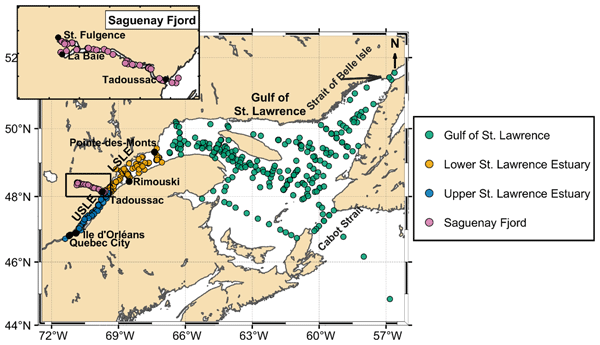
William A. Nesbitt, Alfonso O. Mucci, Toste Tanhua, Yves Gélinas, Jean-Éric Tremblay, Gwénaëlle Chaillou, Ludovic Pascal, Caroline Fradette, Lennart Gerke, Samuel W. Stevens, Mathilde Jutras, Marjolaine Blais, Martine Lizotte, Michel Starr, and Douglas W. R. Wallace
Earth Syst. Sci. Data, 18, 3609–3634, https://doi.org/10.5194/essd-18-3609-2026, https://doi.org/10.5194/essd-18-3609-2026, 2026
Short summary
Short summary
Over the past few decades, the St. Lawrence Estuary and Gulf have shown clear trends in oxygen depletion and acidification. This data description paper brings together twenty years of measurements from the St. Lawrence Estuary, Gulf of St. Lawrence, and Saguenay Fjord, carefully performing quality control procedures on data, and makes them publicly available. The resulting dataset supports future research, monitoring, and environmental management in this sensitive marine system.
Niklas Kappelt, Piers Larkman, Pascal Bohleber, Florian Adolphi, Marcus Christl, Christof Vockenhuber, Philip Gautschi, Eric Wolff, and Raimund Muscheler
EGUsphere, https://doi.org/10.5194/egusphere-2026-790, https://doi.org/10.5194/egusphere-2026-790, 2026
This preprint is open for discussion and under review for The Cryosphere (TC).
Short summary
Short summary
10Be is a radionuclide often measured in ice cores to reconstruct the solar magnetic field and geomagnetic field, as well as to date ice based on its half-life of 1.387 million years. Previous measurements in deep ice from Antarctica showed a decrease in concentrations with age. We analysed the influence of the sample preparation procedure and were able to show that the use of ion exchange columns can lead to decreasing concentrations, an effect which is amplified at greater depths and ages.
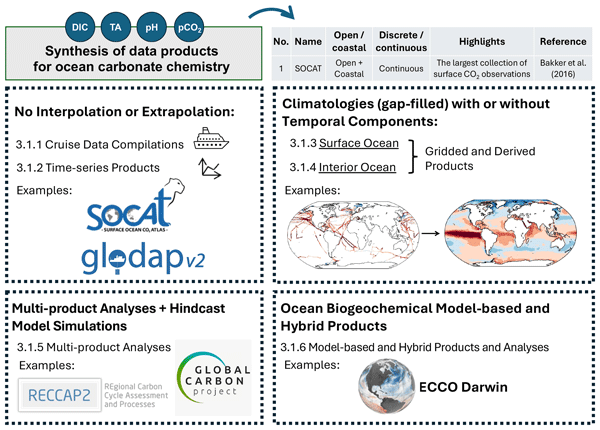
Li-Qing Jiang, Amanda Fay, Jens Daniel Müller, Luke Gregor, Alizée Roobaert, Lydia Keppler, Dustin Carroll, Siv K. Lauvset, Tim DeVries, Judith Hauck, Christian Rödenbeck, Nicolas Metzl, Andrea J. Fassbender, Jean-Pierre Gattuso, Peter Landschützer, Rik Wanninkhof, Christopher Sabine, Simone R. Alin, Mario Hoppema, Are Olsen, Matthew P. Humphreys, Kunal Chakraborty, Ana C. Franco, Kumiko Azetsu-Scott, Dorothee C. E. Bakker, Leticia Barbero, Nicholas R. Bates, Nicole Besemer, Henry C. Bittig, Albert E. Boyd, Daniel Broullón, Wei-Jun Cai, Brendan R. Carter, Thi-Tuyet-Trang Chau, Chen-Tung Arthur Chen, Frédéric Cyr, John E. Dore, Ian Enochs, Richard A. Feely, Hernan E. Garcia, Marion Gehlen, Prasanna Kanti Ghoshal, Lucas Gloege, Melchor González-Dávila, Nicolas Gruber, Debby Ianson, Yosuke Iida, Masao Ishii, Apurva Padamnabh Joshi, Esther Kennedy, Alex Kozyr, Nico Lange, Claire Lo Monaco, Derek P. Manzello, Galen A. McKinley, Natalie M. Monacci, Xose A. Padin, Ana M. Palacio-Castro, Fiz F. Pérez, J. Magdalena Santana-Casiano, Jonathan Sharp, Adrienne Sutton, Jim Swift, Toste Tanhua, Maciej Telszewski, Jens Terhaar, Ruben van Hooidonk, Anton Velo, Andrew J. Watson, Angelicque E. White, Zelun Wu, Liang Xue, Hyelim Yoo, Jiye Zeng, and Guorong Zhong
Earth Syst. Sci. Data, 18, 1405–1462, https://doi.org/10.5194/essd-18-1405-2026, https://doi.org/10.5194/essd-18-1405-2026, 2026
Short summary
Short summary
This review article provides an overview of 68 existing ocean carbonate chemistry data products and data product sets, encompassing a broad range of types, including compilations of cruise datasets, gap-filled observational products, model simulations, and more. It is designed to help researchers identify and access the data products that best support their scientific objectives, thereby facilitating progress in understanding the ocean's changing carbonate chemistry.
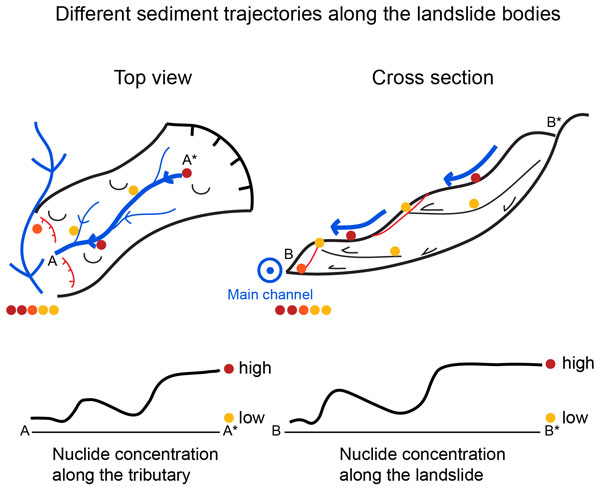
Chantal Schmidt, David Mair, Naki Akçar, Marcus Christl, Negar Haghipour, Christof Vockenhuber, Philip Gautschi, Brian McArdell, and Fritz Schlunegger
Earth Surf. Dynam., 14, 33–53, https://doi.org/10.5194/esurf-14-33-2026, https://doi.org/10.5194/esurf-14-33-2026, 2026
Short summary
Short summary
Our study examines erosion in a small, pre-Alpine basin by using cosmogenic nuclides in river sediments. Based on a dense measuring network we were able to distinguish two main zones: an upper zone with slow erosion of surface material, and a steeper, lower zone where faster erosion is driven by landslides. The data suggests that sediment has been constantly produced over thousands of years, indicating a stable, long-term balance between contrasting erosion processes.
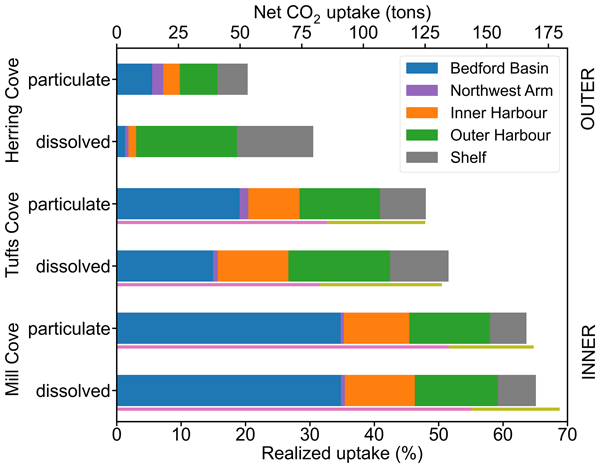
Arnaud Laurent, Bin Wang, Dariia Atamanchuk, Subhadeep Rakshit, Kumiko Azetsu-Scott, Chris Algar, and Katja Fennel
Biogeosciences, 23, 115–135, https://doi.org/10.5194/bg-23-115-2026, https://doi.org/10.5194/bg-23-115-2026, 2026
Short summary
Short summary
Surface ocean alkalinity enhancement, through the release of alkaline materials, is a technology that could increase the storage of anthropogenic carbon in the ocean. Halifax Harbour (Canada) is a current test site for operational alkalinity addition. Here, we present a model of Halifax Harbour that simulates alkalinity addition at various locations of the harbour and quantifies the resulting net CO2 uptake. The model can be relocated to study alkalinity addition in other coastal systems.
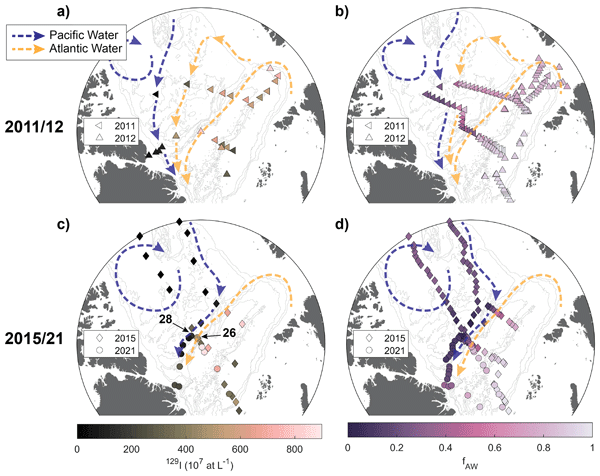
Anne-Marie Wefing, Annabel Payne, Marcel Scheiwiller, Christof Vockenhuber, Marcus Christl, Toste Tanhua, and Núria Casacuberta
Ocean Sci., 21, 3311–3340, https://doi.org/10.5194/os-21-3311-2025, https://doi.org/10.5194/os-21-3311-2025, 2025
Short summary
Short summary
Here we used the anthropogenic radionuclides I-129 and U-236 as tracers for Atlantic Water circulation in the Arctic Ocean. New data collected in 2021 allowed to assess the distribution of Atlantic Water and mixing with Pacific-origin water in the surface layer in that year. By using historical tracer data from 2011 to 2021, we looked into temporal changes of the circulation and found slightly older waters in the central Arctic Ocean in 2021 compared to 2015.
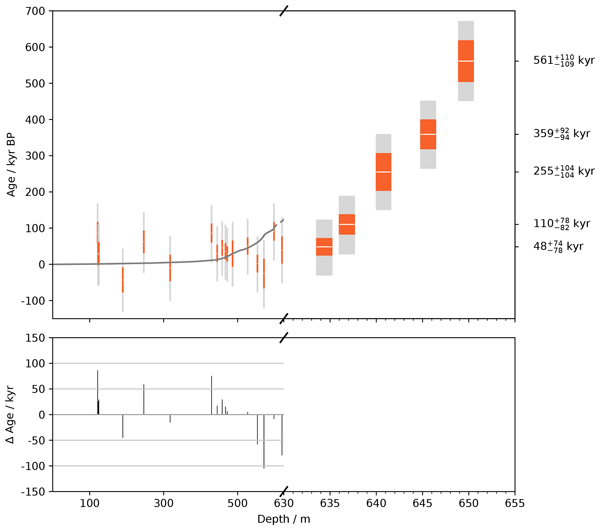
Niklas Kappelt, Eric Wolff, Marcus Christl, Christof Vockenhuber, Philip Gautschi, and Raimund Muscheler
Clim. Past, 21, 1585–1594, https://doi.org/10.5194/cp-21-1585-2025, https://doi.org/10.5194/cp-21-1585-2025, 2025
Short summary
Short summary
By measuring the radioactive decay of atmospherically produced 36Cl and 10Be in an ice core drilled in West Antarctica, we were able to determine the age of the deepest sample close to bedrock to be about 550 thousand years old. This means that the ice in this location, known as Skytrain Ice Rise, has survived several warm periods in the past, at least since marine isotope stage 11.

Siv K. Lauvset, Nico Lange, Toste Tanhua, Henry C. Bittig, Are Olsen, Alex Kozyr, Marta Álvarez, Kumiko Azetsu-Scott, Peter J. Brown, Brendan R. Carter, Leticia Cotrim da Cunha, Mario Hoppema, Matthew P. Humphreys, Masao Ishii, Emil Jeansson, Akihiko Murata, Jens Daniel Müller, Fiz F. Pérez, Carsten Schirnick, Reiner Steinfeldt, Toru Suzuki, Adam Ulfsbo, Anton Velo, Ryan J. Woosley, and Robert M. Key
Earth Syst. Sci. Data, 16, 2047–2072, https://doi.org/10.5194/essd-16-2047-2024, https://doi.org/10.5194/essd-16-2047-2024, 2024
Short summary
Short summary
GLODAP is a data product for ocean inorganic carbon and related biogeochemical variables measured by the chemical analysis of water bottle samples from scientific cruises. GLODAPv2.2023 is the fifth update of GLODAPv2 from 2016. The data that are included have been subjected to extensive quality controlling, including systematic evaluation of measurement biases. This version contains data from 1108 hydrographic cruises covering the world's oceans from 1972 to 2021.
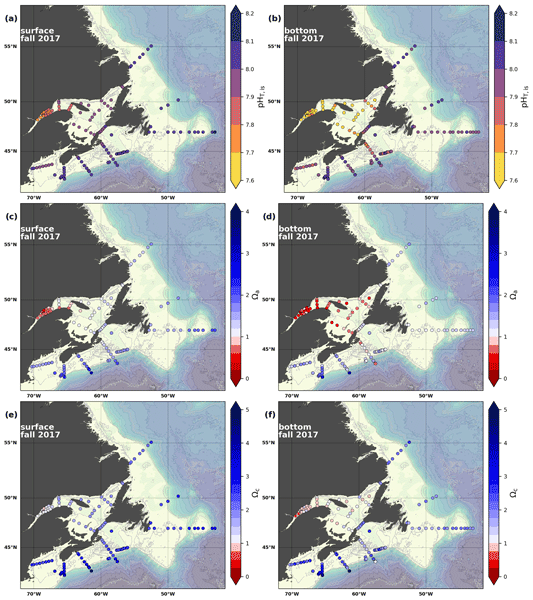
Olivia Gibb, Frédéric Cyr, Kumiko Azetsu-Scott, Joël Chassé, Darlene Childs, Carrie-Ellen Gabriel, Peter S. Galbraith, Gary Maillet, Pierre Pepin, Stephen Punshon, and Michel Starr
Earth Syst. Sci. Data, 15, 4127–4162, https://doi.org/10.5194/essd-15-4127-2023, https://doi.org/10.5194/essd-15-4127-2023, 2023
Short summary
Short summary
The ocean absorbs large quantities of carbon dioxide (CO2) released into the atmosphere as a result of the burning of fossil fuels. This, in turn, causes ocean acidification, which poses a major threat to global ocean ecosystems. In this study, we compiled 9 years (2014–2022) of ocean carbonate data (i.e., ocean acidification parameters) collected in Atlantic Canada as part of the Atlantic Zone Monitoring Program.
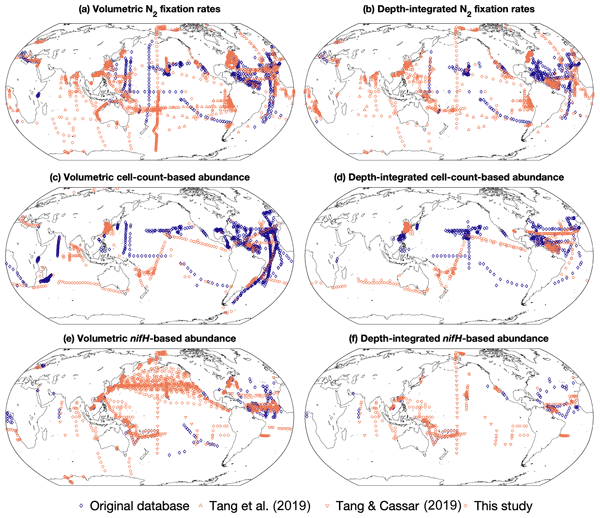
Zhibo Shao, Yangchun Xu, Hua Wang, Weicheng Luo, Lice Wang, Yuhong Huang, Nona Sheila R. Agawin, Ayaz Ahmed, Mar Benavides, Mikkel Bentzon-Tilia, Ilana Berman-Frank, Hugo Berthelot, Isabelle C. Biegala, Mariana B. Bif, Antonio Bode, Sophie Bonnet, Deborah A. Bronk, Mark V. Brown, Lisa Campbell, Douglas G. Capone, Edward J. Carpenter, Nicolas Cassar, Bonnie X. Chang, Dreux Chappell, Yuh-ling Lee Chen, Matthew J. Church, Francisco M. Cornejo-Castillo, Amália Maria Sacilotto Detoni, Scott C. Doney, Cecile Dupouy, Marta Estrada, Camila Fernandez, Bieito Fernández-Castro, Debany Fonseca-Batista, Rachel A. Foster, Ken Furuya, Nicole Garcia, Kanji Goto, Jesús Gago, Mary R. Gradoville, M. Robert Hamersley, Britt A. Henke, Cora Hörstmann, Amal Jayakumar, Zhibing Jiang, Shuh-Ji Kao, David M. Karl, Leila R. Kittu, Angela N. Knapp, Sanjeev Kumar, Julie LaRoche, Hongbin Liu, Jiaxing Liu, Caroline Lory, Carolin R. Löscher, Emilio Marañón, Lauren F. Messer, Matthew M. Mills, Wiebke Mohr, Pia H. Moisander, Claire Mahaffey, Robert Moore, Beatriz Mouriño-Carballido, Margaret R. Mulholland, Shin-ichiro Nakaoka, Joseph A. Needoba, Eric J. Raes, Eyal Rahav, Teodoro Ramírez-Cárdenas, Christian Furbo Reeder, Lasse Riemann, Virginie Riou, Julie C. Robidart, Vedula V. S. S. Sarma, Takuya Sato, Himanshu Saxena, Corday Selden, Justin R. Seymour, Dalin Shi, Takuhei Shiozaki, Arvind Singh, Rachel E. Sipler, Jun Sun, Koji Suzuki, Kazutaka Takahashi, Yehui Tan, Weiyi Tang, Jean-Éric Tremblay, Kendra Turk-Kubo, Zuozhu Wen, Angelicque E. White, Samuel T. Wilson, Takashi Yoshida, Jonathan P. Zehr, Run Zhang, Yao Zhang, and Ya-Wei Luo
Earth Syst. Sci. Data, 15, 3673–3709, https://doi.org/10.5194/essd-15-3673-2023, https://doi.org/10.5194/essd-15-3673-2023, 2023
Short summary
Short summary
N2 fixation by marine diazotrophs is an important bioavailable N source to the global ocean. This updated global oceanic diazotroph database increases the number of in situ measurements of N2 fixation rates, diazotrophic cell abundances, and nifH gene copy abundances by 184 %, 86 %, and 809 %, respectively. Using the updated database, the global marine N2 fixation rate is estimated at 223 ± 30 Tg N yr−1, which triplicates that using the original database.
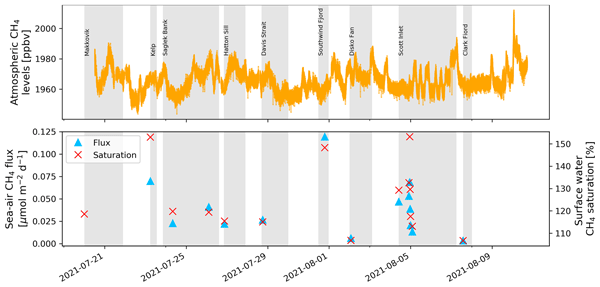
Judith Vogt, David Risk, Evelise Bourlon, Kumiko Azetsu-Scott, Evan N. Edinger, and Owen A. Sherwood
Biogeosciences, 20, 1773–1787, https://doi.org/10.5194/bg-20-1773-2023, https://doi.org/10.5194/bg-20-1773-2023, 2023
Short summary
Short summary
The release of the greenhouse gas methane from Arctic submarine sources could exacerbate climate change in a positive feedback. Continuous monitoring of atmospheric methane levels over a 5100 km voyage in the western margin of the Labrador Sea and Baffin Bay revealed above-global averages likely affected by both onshore and offshore methane sources. Instantaneous sea–air methane fluxes were near zero at all measured stations, including a persistent cold-seep location.
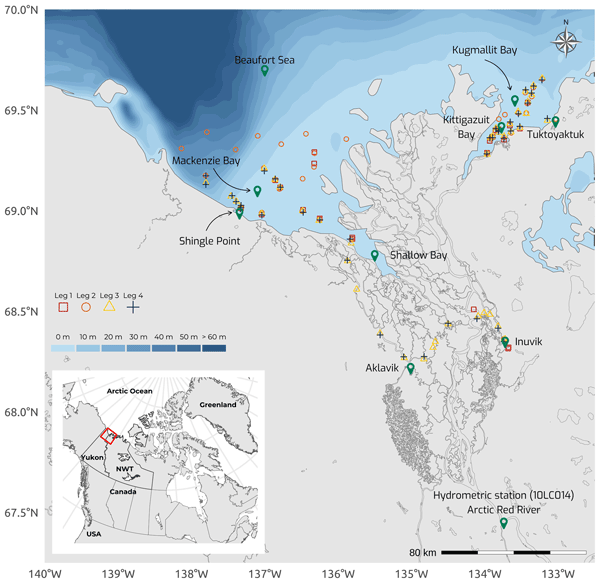
Martine Lizotte, Bennet Juhls, Atsushi Matsuoka, Philippe Massicotte, Gaëlle Mével, David Obie James Anikina, Sofia Antonova, Guislain Bécu, Marine Béguin, Simon Bélanger, Thomas Bossé-Demers, Lisa Bröder, Flavienne Bruyant, Gwénaëlle Chaillou, Jérôme Comte, Raoul-Marie Couture, Emmanuel Devred, Gabrièle Deslongchamps, Thibaud Dezutter, Miles Dillon, David Doxaran, Aude Flamand, Frank Fell, Joannie Ferland, Marie-Hélène Forget, Michael Fritz, Thomas J. Gordon, Caroline Guilmette, Andrea Hilborn, Rachel Hussherr, Charlotte Irish, Fabien Joux, Lauren Kipp, Audrey Laberge-Carignan, Hugues Lantuit, Edouard Leymarie, Antonio Mannino, Juliette Maury, Paul Overduin, Laurent Oziel, Colin Stedmon, Crystal Thomas, Lucas Tisserand, Jean-Éric Tremblay, Jorien Vonk, Dustin Whalen, and Marcel Babin
Earth Syst. Sci. Data, 15, 1617–1653, https://doi.org/10.5194/essd-15-1617-2023, https://doi.org/10.5194/essd-15-1617-2023, 2023
Short summary
Short summary
Permafrost thaw in the Mackenzie Delta region results in the release of organic matter into the coastal marine environment. What happens to this carbon-rich organic matter as it transits along the fresh to salty aquatic environments is still underdocumented. Four expeditions were conducted from April to September 2019 in the coastal area of the Beaufort Sea to study the fate of organic matter. This paper describes a rich set of data characterizing the composition and sources of organic matter.
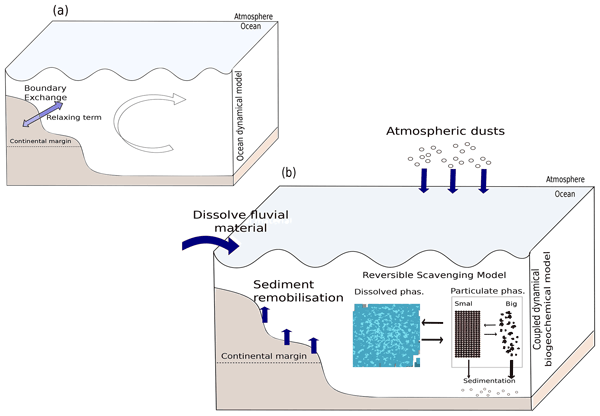
Mohamed Ayache, Jean-Claude Dutay, Kazuyo Tachikawa, Thomas Arsouze, and Catherine Jeandel
Biogeosciences, 20, 205–227, https://doi.org/10.5194/bg-20-205-2023, https://doi.org/10.5194/bg-20-205-2023, 2023
Short summary
Short summary
The neodymium (Nd) is one of the most useful tracers to fingerprint water mass provenance. However, the use of Nd is hampered by the lack of adequate quantification of the external sources. Here, we present the first simulation of dissolved Nd concentration and Nd isotopic composition in the Mediterranean Sea using a high-resolution model. We aim to better understand how the various external sources affect the Nd cycle and particularly assess how it is impacted by atmospheric inputs.
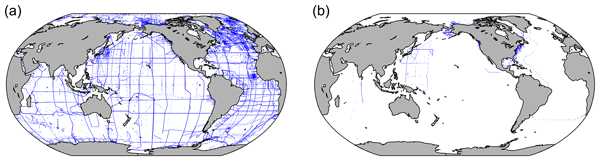
Siv K. Lauvset, Nico Lange, Toste Tanhua, Henry C. Bittig, Are Olsen, Alex Kozyr, Simone Alin, Marta Álvarez, Kumiko Azetsu-Scott, Leticia Barbero, Susan Becker, Peter J. Brown, Brendan R. Carter, Leticia Cotrim da Cunha, Richard A. Feely, Mario Hoppema, Matthew P. Humphreys, Masao Ishii, Emil Jeansson, Li-Qing Jiang, Steve D. Jones, Claire Lo Monaco, Akihiko Murata, Jens Daniel Müller, Fiz F. Pérez, Benjamin Pfeil, Carsten Schirnick, Reiner Steinfeldt, Toru Suzuki, Bronte Tilbrook, Adam Ulfsbo, Anton Velo, Ryan J. Woosley, and Robert M. Key
Earth Syst. Sci. Data, 14, 5543–5572, https://doi.org/10.5194/essd-14-5543-2022, https://doi.org/10.5194/essd-14-5543-2022, 2022
Short summary
Short summary
GLODAP is a data product for ocean inorganic carbon and related biogeochemical variables measured by the chemical analysis of water bottle samples from scientific cruises. GLODAPv2.2022 is the fourth update of GLODAPv2 from 2016. The data that are included have been subjected to extensive quality controlling, including systematic evaluation of measurement biases. This version contains data from 1085 hydrographic cruises covering the world's oceans from 1972 to 2021.
Flavienne Bruyant, Rémi Amiraux, Marie-Pier Amyot, Philippe Archambault, Lise Artigue, Lucas Barbedo de Freitas, Guislain Bécu, Simon Bélanger, Pascaline Bourgain, Annick Bricaud, Etienne Brouard, Camille Brunet, Tonya Burgers, Danielle Caleb, Katrine Chalut, Hervé Claustre, Véronique Cornet-Barthaux, Pierre Coupel, Marine Cusa, Fanny Cusset, Laeticia Dadaglio, Marty Davelaar, Gabrièle Deslongchamps, Céline Dimier, Julie Dinasquet, Dany Dumont, Brent Else, Igor Eulaers, Joannie Ferland, Gabrielle Filteau, Marie-Hélène Forget, Jérome Fort, Louis Fortier, Martí Galí, Morgane Gallinari, Svend-Erik Garbus, Nicole Garcia, Catherine Gérikas Ribeiro, Colline Gombault, Priscilla Gourvil, Clémence Goyens, Cindy Grant, Pierre-Luc Grondin, Pascal Guillot, Sandrine Hillion, Rachel Hussherr, Fabien Joux, Hannah Joy-Warren, Gabriel Joyal, David Kieber, Augustin Lafond, José Lagunas, Patrick Lajeunesse, Catherine Lalande, Jade Larivière, Florence Le Gall, Karine Leblanc, Mathieu Leblanc, Justine Legras, Keith Lévesque, Kate-M. Lewis, Edouard Leymarie, Aude Leynaert, Thomas Linkowski, Martine Lizotte, Adriana Lopes dos Santos, Claudie Marec, Dominique Marie, Guillaume Massé, Philippe Massicotte, Atsushi Matsuoka, Lisa A. Miller, Sharif Mirshak, Nathalie Morata, Brivaela Moriceau, Philippe-Israël Morin, Simon Morisset, Anders Mosbech, Alfonso Mucci, Gabrielle Nadaï, Christian Nozais, Ingrid Obernosterer, Thimoté Paire, Christos Panagiotopoulos, Marie Parenteau, Noémie Pelletier, Marc Picheral, Bernard Quéguiner, Patrick Raimbault, Joséphine Ras, Eric Rehm, Llúcia Ribot Lacosta, Jean-François Rontani, Blanche Saint-Béat, Julie Sansoulet, Noé Sardet, Catherine Schmechtig, Antoine Sciandra, Richard Sempéré, Caroline Sévigny, Jordan Toullec, Margot Tragin, Jean-Éric Tremblay, Annie-Pier Trottier, Daniel Vaulot, Anda Vladoiu, Lei Xue, Gustavo Yunda-Guarin, and Marcel Babin
Earth Syst. Sci. Data, 14, 4607–4642, https://doi.org/10.5194/essd-14-4607-2022, https://doi.org/10.5194/essd-14-4607-2022, 2022
Short summary
Short summary
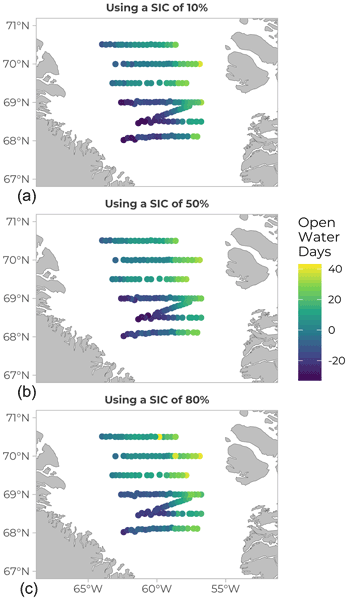
This paper presents a dataset acquired during a research cruise held in Baffin Bay in 2016. We observed that the disappearance of sea ice in the Arctic Ocean increases both the length and spatial extent of the phytoplankton growth season. In the future, this will impact the food webs on which the local populations depend for their food supply and fisheries. This dataset will provide insight into quantifying these impacts and help the decision-making process for policymakers.
Cynthia Evelyn Bluteau, Peter S. Galbraith, Daniel Bourgault, Vincent Villeneuve, and Jean-Éric Tremblay
Ocean Sci., 17, 1509–1525, https://doi.org/10.5194/os-17-1509-2021, https://doi.org/10.5194/os-17-1509-2021, 2021
Short summary
Short summary
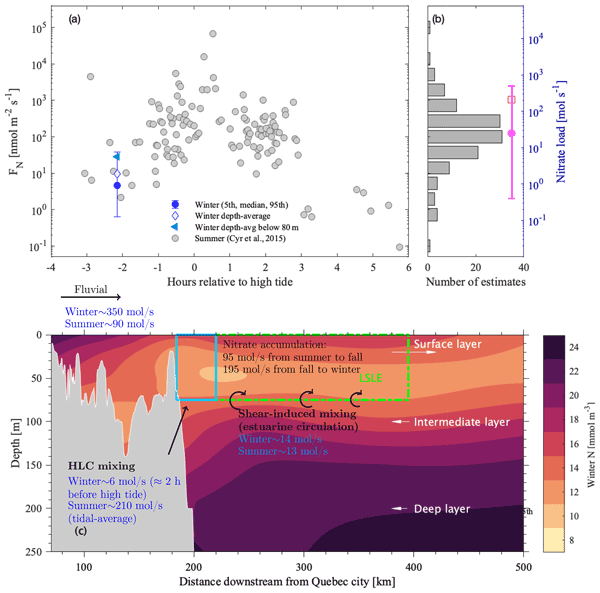
In 2018, the Canadian Coast Guard approved a science team to sample in tandem with its ice-breaking and ship escorting operations. This collaboration provided the first mixing observations during winter that covered the largest spatial extent of the St. Lawrence Estuary and the Gulf of St. Lawrence ever measured in any season. Contrary to previous assumptions, we demonstrate that fluvial nitrate inputs from upstream (i.e., Great Lakes) are the most significant source of nitrate in the estuary.
Cited articles
Aagaard, K. and Carmack, E. C.: The role of sea ice and other fresh water in the Arctic circulation, J. Geophys. Res.-Oceans, 94, 14485–14498, https://doi.org/10.1029/jc094ic10p14485, 1989. a
Amundsen Science Data Collection: 2024. CTD-Rosette data collected by the CCGS Amundsen in the Canadian Arctic, Processed data, Canadian Cryospheric Information Network (CCIN), Waterloo, Canada [data set], https://doi.org/10.5884/12713, 2024. a
Azetsu‐Scott, K., Clarke, A., Falkner, K., Hamilton, J., Jones, E. P., Lee, C., Petrie, B., Prinsenberg, S., Starr, M., and Yeats, P.: Calcium carbonate saturation states in the waters of the Canadian Arctic Archipelago and the Labrador Sea, J. Geophys. Res.-Oceans, 115, 2009JC005917, https://doi.org/10.1029/2009JC005917, 2010. a
Bailey, W. B.: On the Origin of Deep Baffin Bay Water, Journal of the Fisheries Research Board of Canada, 13, 303–308, https://doi.org/10.1139/f56-020, 1956. a, b
Bamber, J. L., Tedstone, A. J., King, M. D., Howat, I. M., Enderlin, E. M., Van Den Broeke, M. R., and Noel, B.: Land Ice Freshwater Budget of the Arctic and North Atlantic Oceans: 1. Data, Methods, and Results, J. Geophys. Res.-Oceans, 123, 1827–1837, https://doi.org/10.1002/2017JC013605, 2018. a, b
Bower, A. S., Lozier, M. S., Gary, S. F., and Böning, C. W.: Interior pathways of the North Atlantic meridional overturning circulation, Nature, 459, 243–247, https://doi.org/10.1038/nature07979, 2009. a
Carmack, E. C., Yamamoto‐Kawai, M., Haine, T. W. N., Bacon, S., Bluhm, B. A., Lique, C., Melling, H., Polyakov, I. V., Straneo, F., Timmermans, M., and Williams, W. J.: Freshwater and its role in the Arctic Marine System: Sources, disposition, storage, export, and physical and biogeochemical consequences in the Arctic and global oceans, J. Geophys. Res.-Biogeosci., 121, 675–717, https://doi.org/10.1002/2015jg003140, 2016. a
Casacuberta, N. and Smith, J. N.: Nuclear Reprocessing Tracers Illuminate Flow Features and Connectivity Between the Arctic and Subpolar North Atlantic Oceans, Annu. Rev. Mar. Sci., 15, 203–221, https://doi.org/10.1146/annurev-marine-032122-112413, 2023. a, b
Casacuberta, N., Masqué, P., Henderson, G., Rutgers van-der Loeff, M., Bauch, D., Vockenhuber, C., Daraoui, A., Walther, C., Synal, H.-A., and Christl, M.: First 236U data from the Arctic Ocean and use of 236U/238U and 129I/236U as a new dual tracer, Earth Planet. Sc. Lett., 440, 127–134, https://doi.org/10.1016/j.epsl.2016.02.020, 2016. a
Castrillejo, M., Casacuberta, N., Christl, M., Vockenhuber, C., Synal, H.-A., García-Ibáñez, M. I., Lherminier, P., Sarthou, G., Garcia-Orellana, J., and Masqué, P.: Tracing water masses with 129I and 236U in the subpolar North Atlantic along the GEOTRACES GA01 section, Biogeosciences, 15, 5545–5564, https://doi.org/10.5194/bg-15-5545-2018, 2018. a, b, c, d, e, f, g, h, i
Chanut, J., Barnier, B., Large, W., Debreu, L., Penduff, T., Molines, J. M., and Mathiot, P.: Mesoscale Eddies in the Labrador Sea and Their Contribution to Convection and Restratification, J. Phys. Oceanogr., 38, 1617–1643, https://doi.org/10.1175/2008JPO3485.1, 2008. a, b
Christl, M., Vockenhuber, C., Kubik, P., Wacker, L., Lachner, J., Alfimov, V., and Synal, H.-A.: The ETH Zurich AMS facilities: Performance parameters and reference materials, Nucl. Instrum. Meth. B, 294, 29–38, https://doi.org/10.1016/j.nimb.2012.03.004, 2013. a
Christl, M., Casacuberta, N., Vockenhuber, C., Elsässer, C., Bailly du Bois, P., Herrmann, J., and Synal, H.: Reconstruction of the 236U input function for the Northeast Atlantic Ocean: Implications for 129I/236U and 236U/238U-based tracer ages, J. Geophys. Res.-Oceans, 120, 7282–7299, https://doi.org/10.1002/2015JC011116, 2015. a
Christl, M., Gautschi, P., Maxeiner, S., Müller, A. M., Vockenhuber, C., and Synal, H.-A.: 236U analyses with the ETH Zurich MILEA prototype system, Nucl. Instrum. Meth. B, 534, 61–71, https://doi.org/10.1016/j.nimb.2022.11.009, 2023. a, b
Clarke, R. A. and Gascard, J.-C.: The Formation of Labrador Sea Water. Part I: Large-Scale Processes, J. Phys. Oceanogr., 13, 1764–1778, https://doi.org/10.1175/1520-0485(1983)013<1764:TFOLSW>2.0.CO;2, 1983. a, b
Cuny, J., Rhines, P. B., Niiler, P. P., and Bacon, S.: Labrador Sea Boundary Currents and the Fate of the Irminger Sea Water, J. Phys. Oceanogr., 32, 627–647, https://doi.org/10.1175/1520-0485(2002)032<0627:LSBCAT>2.0.CO;2, 2002. a, b
Cuny, J., Rhines, P. B., and Ron Kwok: Davis Strait volume, freshwater and heat fluxes, Deep-Sea Res. Pt. I, 52, 519–542, https://doi.org/10.1016/j.dsr.2004.10.006, 2005. a, b, c
Curry, B., Lee, C. M., and Petrie, B.: Volume, Freshwater, and Heat Fluxes through Davis Strait, 2004–05*, J. Phys. Oceanogr., 41, 429–436, https://doi.org/10.1175/2010JPO4536.1, 2011. a, b, c
Dale, D., Christl, M., Vockenhuber, C., Macrander, A., Ólafsdóttir, S., Middag, R., and Casacuberta, N.: Tracing Ocean Circulation and Mixing From the Arctic to the Subpolar North Atlantic Using the 129I–236U Dual Tracer, J. Geophys. Res.-Oceans, 129, e2024JC021211, https://doi.org/10.1029/2024JC021211, 2024. a, b, c, d, e, f, g, h, i, j, k, l, m, n, o, p, q
Dickson, R. R. and Brown, J.: The production of North Atlantic Deep Water: Sources, rates, and pathways, J. Geophys. Res.-Oceans, 99, 12319–12341, https://doi.org/10.1029/94JC00530, 1994. a
Dunlap, E. and Tang, C. C.: Modelling the Mean Circulation of Baffin Bay, Atmos. Ocean, 44, 99–109, https://doi.org/10.3137/ao.440107, 2006. a
Duyck, E., Foukal, N. P., and Frajka-Williams, E.: Circulation of Baffin Bay and Hudson Bay waters on the Labrador shelf and into the subpolar North Atlantic, Ocean Sci., 21, 241–260, https://doi.org/10.5194/os-21-241-2025, 2025. a, b
García-Ibáñez, M. I., Pardo, P. C., Carracedo, L. I., Mercier, H., Lherminier, P., Ríos, A. F., and Pérez, F. F.: Structure, transports and transformations of the water masses in the Atlantic Subpolar Gyre, Prog. Oceanogr., 135, 18–36, https://doi.org/10.1016/j.pocean.2015.03.009, 2015. a, b, c, d, e, f
García-Ibáñez, M. I., Pérez, F. F., Lherminier, P., Zunino, P., Mercier, H., and Tréguer, P.: Water mass distributions and transports for the 2014 GEOVIDE cruise in the North Atlantic, Biogeosciences, 15, 2075–2090, https://doi.org/10.5194/bg-15-2075-2018, 2018. a, b, c
Gardner, A. S., Moholdt, G., Wouters, B., Wolken, G. J., Burgess, D. O., Sharp, M. J., Cogley, J. G., Braun, C., and Labine, C.: Sharply increased mass loss from glaciers and ice caps in the Canadian Arctic Archipelago, Nature, 473, 357–360, https://doi.org/10.1038/nature10089, 2011. a
Gelderloos, R., Katsman, C. A., and Drijfhout, S. S.: Assessing the Roles of Three Eddy Types in Restratifying the Labrador Sea after Deep Convection, J. Phys. Oceanogr., 41, 2102–2119, https://doi.org/10.1175/JPO-D-11-054.1, 2011. a
Gou, R., Pennelly, C., and Myers, P. G.: The Changing Behavior of the West Greenland Current System in a Very High‐Resolution Model, J. Geophys. Res.-Oceans, 127, https://doi.org/10.1029/2022JC018404, 2022. a, b, c, d
Grenier, M., Brown, K., Colombo, M., Belhadj, M., Baconnais, I., Pham, V., Soon, M., Myers, P., Jeandel, C., and François, R.: Controlling factors and impacts of river-borne neodymium isotope signatures and rare earth element concentrations supplied to the Canadian Arctic Archipelago, Earth Planet. Sc. Lett., 578, 117341, https://doi.org/10.1016/j.epsl.2021.117341, 2022. a
Haine, T. W., Curry, B., Gerdes, R., Hansen, E., Karcher, M., Lee, C., Rudels, B., Spreen, G., De Steur, L., Stewart, K. D., and Woodgate, R.: Arctic freshwater export: Status, mechanisms, and prospects, Global Planet. Change, 125, 13–35, https://doi.org/10.1016/j.gloplacha.2014.11.013 2015. a, b, c
Holland, D. M., Thomas, R. H., De Young, B., Ribergaard, M. H., and Lyberth, B.: Acceleration of Jakobshavn Isbræ triggered by warm subsurface ocean waters, Nat. Geosci., 1, 659–664, https://doi.org/10.1038/ngeo316, 2008. a
Holliday, N. P., Bacon, S., Allen, J., and McDonagh, E. L.: Circulation and Transport in the Western Boundary Currents at Cape Farewell, Greenland, J. Phys. Oceanogr., 39, 1854–1870, https://doi.org/10.1175/2009JPO4160.1, 2009. a
Huang, J., Pickart, R. S., Bahr, F., McRaven, L. T., Tremblay, J.-R., Michel, C., Jeansson, E., Kopec, B., Welker, J. M., and Ólafsdóttir, S. R.: Water mass evolution and general circulation of Baffin Bay: Observations from two shipboard surveys in 2021, Prog. Oceanogr., 229, 103322, https://doi.org/10.1016/j.pocean.2024.103322, 2024. a, b, c, d, e, f, g, h, i, j, k, l, m, n, o, p, q, r, s, t, u, v, w, x, y, z, aa, ab
Hughes, K. G., Klymak, J. M., Hu, X., and Myers, P. G.: Water mass modification and mixing rates in a 1/12° simulation of the Canadian Arctic Archipelago: MIXING IN THE CANADIAN ARCHIPELAGO, J. Geophys. Res.-Oceans, 122, 803–820, https://doi.org/10.1002/2016JC012235, 2017. a
Hátún, H., Eriksen, C. C., and Rhines, P. B.: Buoyant Eddies Entering the Labrador Sea Observed with Gliders and Altimetry, J. Phys. Oceanogr., 37, 2838–2854, https://doi.org/10.1175/2007JPO3567.1, 2007. a, b
IOC SCOR and IAPSO: The international thermodynamic equation of seawater – 2010: Calculation and use of thermodynamic properties., Intergovernmental Oceanographic Commission, Manuals and Guides No. 56, UNESCO (English), 196 pp., https://www.teos-10.org/pubs/gsw/html/gsw_CT_from_t.html (last access: 26 May 2026), 2010. a
Jackson, J. M., Lique, C., Alkire, M., Steele, M., Lee, C. M., Smethie, W. M., and Schlosser, P.: On the waters upstream of Nares Strait, Arctic Ocean, from 1991 to 2012, Cont. Shelf Res., 73, 83–96, https://doi.org/10.1016/j.csr.2013.11.025, 2014. a, b, c
Jones, E. P., Swift, J. H., Anderson, L. G., Lipizer, M., Civitarese, G., Falkner, K. K., Kattner, G., and McLaughlin, F.: Tracing Pacific water in the North Atlantic Ocean, J. Geophys. Res.-Oceans, 108, https://doi.org/10.1029/2001JC001141, 2003. a, b
Komuro, Y. and Hasumi, H.: Intensification of the Atlantic Deep Circulation by the Canadian Archipelago Throughflow, J. Phys. Oceanogr., 35, 775–789, https://doi.org/10.1175/JPO2709.1, 2005. a
Lavender, K. L., Brechner Owens, W., and Davis, R. E.: The mid-depth circulation of the subpolar North Atlantic Ocean as measured by subsurface floats, Deep-Sea Res. Pt. I, 52, 767–785, https://doi.org/10.1016/j.dsr.2004.12.007, 2005. a
Le Bras, I. A.-A.: Labrador sea water spreading and the Atlantic meridional overturning circulation, Philos. T. Roy. Soc. A, 381, 20220189, https://doi.org/10.1098/rsta.2022.0189, 2023. a
Lehmann, N., Kienast, M., Granger, J., Bourbonnais, A., Altabet, M. A., and Tremblay, J.: Remote Western Arctic Nutrients Fuel Remineralization in Deep Baffin Bay, Global Biogeochem. Cy., 33, 649–667, https://doi.org/10.1029/2018GB006134, 2019. a
Lehmann, N., Kienast, M., Granger, J., and Tremblay, J.: Physical and Biogeochemical Influences on Nutrients Through the Canadian Arctic Archipelago: Insights From Nitrate Isotope Ratios, J. Geophys. Res.-Oceans, 127, e2021JC018179, https://doi.org/10.1029/2021JC018179, 2022. a, b, c, d, e, f, g, h, i, j, k, l, m, n, o, p, q
Leist, L. and Casacuberta, N.: 129I and 236U seawater data collected near Davis Strait and along the AR7W Line, in 2022, Zenodo [data set], https://doi.org/10.5281/zenodo.16914587, 2025. a, b, c
Leist, L. G. T., Castrillejo, M., Smith, J. N., Christl, M., Vockenhuber, C., Velo, A., Lherminier, P., and Casacuberta, N.: 129I and 236U distribution in the subpolar North Atlantic unravels water mass provenance in AR7W and A25 lines, Front. Marine Sci., 11, 1470675, https://doi.org/10.3389/fmars.2024.1470675, 2024. a, b, c, d, e, f, g, h, i, j, k, l, m, n, o
Li, J., Pickart, R. S., Lin, P., Bahr, F., Arrigo, K. R., Juranek, L., and Yang, X.: The Atlantic Water Boundary Current in the Chukchi Borderland and Southern Canada Basin, J. Geophys. Res.-Oceans, 125, e2020JC016197, https://doi.org/10.1029/2020JC016197, 2020. a
Lilly, J. M., Rhines, P. B., Schott, F., Lavender, K., Lazier, J., Send, U., and D'Asaro, E.: Observations of the Labrador Sea eddy field, Prog. Oceanogr., 59, 75–176, https://doi.org/10.1016/j.pocean.2003.08.013, 2003. a, b
Lin, P., Pickart, R. S., Torres, D. J., and Pacini, A.: Evolution of the Freshwater Coastal Current at the Southern Tip of Greenland, J. Phys. Oceanogr., 48, 2127–2140, https://doi.org/10.1175/JPO-D-18-0035.1, 2018. a
Lin, P., Pickart, R. S., Moore, G., Spall, M. A., and Hu, J.: Characteristics and dynamics of wind-driven upwelling in the Alaskan Beaufort Sea based on six years of mooring data, Deep-Sea Res. Pt. II, 162, 79–92, https://doi.org/10.1016/j.dsr2.2018.01.002, 2019. a
Lique, C., Treguier, A. M., Blanke, B., and Grima, N.: On the origins of water masses exported along both sides of Greenland: A Lagrangian model analysis, J. Geophys. Res.-Oceans, 115, https://doi.org/10.1029/2009JC005316, 2010. a
Lobb, J., Carmack, E. C., Ingram, R. G., and Weaver, A. J.: Structure and mixing across an Arctic/Atlantic front in northern Baffin Bay, Geophys. Res. Lett., 30, 2003GL017755, https://doi.org/10.1029/2003GL017755, 2003. a, b, c
Lozier, M. S.: Overturning in the subpolar North Atlantic: a review, Philos. T. Roy. Soc. A, 381, 20220191, https://doi.org/10.1098/rsta.2022.0191, 2023. a
Malles, J.-H., Marzeion, B., and Myers, P. G.: Freshwater input from glacier melt outside Greenland alters modeled northern high-latitude ocean circulation, Earth Syst. Dynam., 16, 347–377, https://doi.org/10.5194/esd-16-347-2025, 2025. a, b, c
Marson, J. M., Myers, P. G., Hu, X., Petrie, B., Azetsu‐Scott, K., and Lee, C. M.: Cascading off the West Greenland Shelf: A numerical perspective, J. Geophys. Res.-Oceans, 122, 5316–5328, https://doi.org/10.1002/2017JC012801, 2017. a, b, c, d
McGeehan, T. and Maslowski, W.: Evaluation and control mechanisms of volume and freshwater export through the Canadian Arctic Archipelago in a high‐resolution pan‐Arctic ice‐ocean model, J. Geophys. Res.-Oceans, 117, 2011JC007261, https://doi.org/10.1029/2011JC007261, 2012. a
Melling, H., Lake, R., Topham, D., and Fissel, D.: Oceanic thermal structure in the western Canadian Arctic, Cont. Shelf Res., 3, 233–258, https://doi.org/10.1016/0278-4343(84)90010-4, 1984. a, b
Melling, H., Gratton, Y., and Ingram, G.: Ocean circulation within the North Water polynya of Baffin Bay, Atmos.-Ocean, 39, 301–325, https://doi.org/10.1080/07055900.2001.9649683, 2001. a
Melling, H., Agnew, T. A., Falkner, K. K., Greenberg, D. A., Lee, C. M., Münchow, A., Petrie, B., Prinsenberg, S. J., Samelson, R. M., and Woodgate, R. A.: Fresh-Water Fluxes via Pacific and Arctic Outflows Across the Canadian Polar Shelf, edited by: Dickson, R. R., Meincke, J., and Rhines, P., Arctic–Subarctic Ocean Fluxes, Springer, Dordrecht, https://doi.org/10.1007/978-1-4020-6774-7_10, 2008. a, b
Myers, P. G., Donnelly, C., and Ribergaard, M. H.: Structure and variability of the West Greenland Current in Summer derived from 6 repeat standard sections, Prog. Oceanogr., 80, 93–112, https://doi.org/10.1016/j.pocean.2008.12.003, 2009. a
Münchow, A. and Melling, H.: Ocean current observations from Nares Strait to the west of Greenland: Interannual to tidal variability and forcing, J. Mar. Res., 66, https://elischolar.library.yale.edu/journal_of_marine_research/216 (last access: 26 May 2026), 2008. a
Münchow, A., Melling, H., and Falkner, K. K.: An Observational Estimate of Volume and Freshwater Flux Leaving the Arctic Ocean through Nares Strait, J. Phys. Oceanogr., 36, 2025–2041, https://doi.org/10.1175/JPO2962.1, 2006. a, b
Münchow, A., Falkner, K. K., and Melling, H.: Baffin Island and West Greenland Current Systems in northern Baffin Bay, Prog. Oceanogr., 132, 305–317, https://doi.org/10.1016/j.pocean.2014.04.001, 2015. a, b
Pacini, A. and Pickart, R. S.: Meanders of the West Greenland Current near Cape Farewell, Deep-Sea Res. Pt. I, 179, 103664, https://doi.org/10.1016/j.dsr.2021.103664, 2022. a
Payne, A.: Anthropogenic Radionuclides as Tracers of Transport, Mixing, Carbon Storage and Freshwater sources in the Canadian Arctic Ocean, PhD thesis, ETH Zurich, https://doi.org/10.3929/ethz-c-000798056, 2026. a
Payne, A., Wefing, A., Christl, M., Vockenhuber, C., Williams, W., Smith, J. N., and Casacuberta, N.: Circulation Timescales and Pathways of Atlantic Water in the Canada Basin: Insights From Transient Tracers 129I and 236U, J. Geophys. Res.-Oceans, 129, e2023JC020813, https://doi.org/10.1029/2023JC020813, 2024. a, b, c, d, e, f, g, h, i, j, k, l, m, n, o, p
Pelle, T., Myers, P. G., Hamilton, A., Mazloff, M., Soderlund, K. M., Beem, L., Blankenship, D. D., Grima, C., Habbal, F., Skidmore, M., and Greenbaum, J. S.: Ocean circulation, sea ice, and productivity simulated in Jones Sound, Canadian Arctic Archipelago, between 2003–2016, Ocean Sci., 22, 187–208, https://doi.org/10.5194/os-22-187-2026, 2026. a, b
Pickart, R. S. and Spall, M. A.: Impact of Labrador Sea Convection on the North Atlantic Meridional Overturning Circulation, J. Phys. Oceanogr., 37, 2207–2227, https://doi.org/10.1175/JPO3178.1, 2007. a, b
Pickart, R. S., Moore, G. W. K., Torres, D. J., Fratantoni, P. S., Goldsmith, R. A., and Yang, J.: Upwelling on the continental slope of the Alaskan Beaufort Sea: Storms, ice, and oceanographic response, J. Geophys. Res.-Oceans, 114, https://doi.org/10.1029/2008jc005009, 2009. a, b
Pickart, R. S., Spall, M. A., and Mathis, J. T.: Dynamics of upwelling in the Alaskan Beaufort Sea and associated shelf–basin fluxes, Deep-Sea Res. Pt. I, 76, 35–51, https://doi.org/10.1016/j.dsr.2013.01.007, 2013. a
Planat, N., Tremblay, L. B., Dufour, C. O., and Straub, D.: Seasonal and Decadal Geostrophic Pathways of Pacific and Atlantic Waters in the Arctic Amerasian Basin From Observations, J. Geophys. Res.-Oceans, 130, e2024JC021560, https://doi.org/10.1029/2024JC021560, 2025. a
Polyakov, I. V., Pnyushkov, A. V., Alkire, M. B., Ashik, I. M., Baumann, T. M., Carmack, E. C., Goszczko, I., Guthrie, J., Ivanov, V. V., Kanzow, T., Krishfield, R., Kwok, R., Sundfjord, A., Morison, J., Rember, R., and Yulin, A.: Greater role for Atlantic inflows on sea-ice loss in the Eurasian Basin of the Arctic Ocean, Science, 356, 285–291, https://doi.org/10.1126/science.aai8204, 2017. a
Polyakov, I. V., Pnyushkov, A. V., Charette, M., Cho, K.-H., Jung, J., Kipp, L., Muilwijk, M., Whitmore, L., Yang, E. J., and Yoo, J.: Atlantification advances into the Amerasian Basin of the Arctic Ocean, Sci. Adv., 11, eadq7580, https://doi.org/10.1126/sciadv.adq7580, 2025. a
Prinsenberg, S. and Hamilton, J.: Monitoring the volume, freshwater and heat fluxes passing through Lancaster sound in the Canadian arctic archipelago, Atmos. Ocean, 43, 1–22, https://doi.org/10.3137/ao.430101, 2005. a, b, c
Rabe, B., Münchow, A., Johnson, H. L., and Melling, H.: Nares Strait hydrography and salinity field from a 3‐year moored array, J. Geophys. Res.-Oceans, 115, 2009JC005966, https://doi.org/10.1029/2009JC005966, 2010. a, b
Rantanen, M., Karpechko, A. Y., Lipponen, A., Nordling, K., Hyvärinen, O., Ruosteenoja, K., Vihma, T., and Laaksonen, A.: The Arctic has warmed nearly four times faster than the globe since 1979, Commun. Earth Environ., 3, 168, https://doi.org/10.1038/s43247-022-00498-3, 2022. a
Rhein, M., Steinfeldt, R., Kieke, D., Stendardo, I., and Yashayaev, I.: Ventilation variability of Labrador Sea Water and its impact on oxygen and anthropogenic carbon: a review, Philos. T. Roy. Soc. A, 375, 20160321, https://doi.org/10.1098/rsta.2016.0321, 2017. a
Rudels, B.: The outflow of polar water through the Arctic Archipelago and the oceanographic conditions in Baffin Bay, Polar Res., 4, 161–180, https://doi.org/10.1111/j.1751-8369.1986.tb00528.x, 1986. a, b
Rudels, B., Jones, E. P., Anderson, L. G., and Kattner, G.: On the Intermediate Depth Waters of the Arctic Ocean, in: Geophysical Monograph Series, edited by: Johannessen, O. M., Muench, R. D., and Overland, J. E., 33–46, American Geophysical Union, ISBN 978-1-118-66388-2, https://doi.org/10.1029/GM085p0033, 1994. a
Rysgaard, S., Boone, W., Carlson, D., Sejr, M. K., Bendtsen, J., Juul‐Pedersen, T., Lund, H., Meire, L., and Mortensen, J.: An Updated View on Water Masses on the pan‐West Greenland Continental Shelf and Their Link to Proglacial Fjords, J. Geophys. Res.-Oceans, 125, https://doi.org/10.1029/2019JC015564, 2020. a
Schmidt, S. and Send, U.: Origin and Composition of Seasonal Labrador Sea Freshwater, J. Phys. Oceanogr., 37, 1445–1454, https://doi.org/10.1175/JPO3065.1, 2007. a
Shadwick, E., Thomas, H., Gratton, Y., Leong, D., Moore, S., Papakyriakou, T., and Prowe, A.: Export of Pacific carbon through the Arctic Archipelago to the North Atlantic, Cont. Shelf Res., 31, 806–816, https://doi.org/10.1016/j.csr.2011.01.014, 2011. a, b, c
Sherwood, O. A., Davin, S. H., Lehmann, N., Buchwald, C., Edinger, E. N., Lehmann, M. F., and Kienast, M.: Stable isotope ratios in seawater nitrate reflect the influence of Pacific water along the northwest Atlantic margin, Biogeosciences, 18, 4491–4510, https://doi.org/10.5194/bg-18-4491-2021, 2021. a, b
Shroyer, E. L., Samelson, R. M., Padman, L., and Münchow, A.: Modeled ocean circulation in Nares Strait and its dependence on landfast-ice cover, J. Geophys. Res.-Oceans, 120, 7934–7959, https://doi.org/10.1002/2015JC011091, 2015. a
Straneo, F. and Saucier, F.: The outflow from Hudson Strait and its contribution to the Labrador Current, Deep-Sea Res. Pt. I, 55, 926–946, https://doi.org/10.1016/j.dsr.2008.03.012, 2008. a, b
Sutherland, D. A., Pickart, R. S., Peter Jones, E., Azetsu-Scott, K., Jane Eert, A., and Ólafsson, J.: Freshwater composition of the waters off southeast Greenland and their link to the Arctic Ocean, J. Geophys. Res., 114, C05020, https://doi.org/10.1029/2008JC004808, 2009. a
Tang, C. C., Ross, C. K., Yao, T., Petrie, B., DeTracey, B. M., and Dunlap, E.: The circulation, water masses and sea-ice of Baffin Bay, Prog. Oceanogr., 63, 183–228, https://doi.org/10.1016/j.pocean.2004.09.005, 2004. a, b, c
Tanhua, T.: Spreading of overflow water from the Greenland to the Labrador Sea, Geophys. Res. Lett., 32, L10605, https://doi.org/10.1029/2005GL022700, 2005. a
The IMBIE Team: Mass balance of the Greenland Ice Sheet from 1992 to 2018, Nature, 579, 233–239, https://doi.org/10.1038/s41586-019-1855-2, 2020. a
Top, Z., Clarke, W. B., Eismont, W. C., and Jones, E. P.: Radiogenic helium in Baffin Bay bottom water, J. Mar. Res., 38, 435–452, https://elischolar.library.yale.edu/journal_of_marine_research/1514 (last access: 26 May 2026), 1980. a
Vandecrux, B., Fausto, R. S., Box, J. E., Covi, F., Hock, R., Rennermalm, Å. K., Heilig, A., Abermann, J., van As, D., Bjerre, E., Fettweis, X., Smeets, P. C. J. P., Kuipers Munneke, P., van den Broeke, M. R., Brils, M., Langen, P. L., Mottram, R., and Ahlstrøm, A. P.: Recent warming trends of the Greenland ice sheet documented by historical firn and ice temperature observations and machine learning, The Cryosphere, 18, 609–631, https://doi.org/10.5194/tc-18-609-2024, 2024. a
Vincent, R. F.: A Study of the North Water Polynya Ice Arch using Four Decades of Satellite Data, Sci. Rep., 9, 20278, https://doi.org/10.1038/s41598-019-56780-6, 2019. a
Vockenhuber, C., Casacuberta, N., Christl, M., and Synal, H.-A.: Accelerator Mass Spectrometry of 129I towards its lower limits, Nucl. Instrum. Meth. B, 361, 445–449, https://doi.org/10.1016/j.nimb.2015.01.061, 2015. a
Wang, H., Legg, S., and Hallberg, R.: The Effect of Arctic Freshwater Pathways on North Atlantic Convection and the Atlantic Meridional Overturning Circulation, J. Climate, 31, 5165–5188, https://doi.org/10.1175/JCLI-D-17-0629.1, 2018. a
Wang, Q., Myers, P. G., Hu, X., and Bush, A. B.: Flow Constraints on Pathways through the Canadian Arctic Archipelago, Atmos. Ocean, 50, 373–385, https://doi.org/10.1080/07055900.2012.704348, 2012. a, b
Wang, Q., Shu, Q., Wang, S., Beszczynska-Moeller, A., Danilov, S., Steur, L., Haine, T. W. N., Karcher, M., Lee, C. M., Myers, P. G., Polyakov, I. V., Provost, C., Skagseth, t., Spreen, G., and Woodgate, R.: A Review of Arctic–Subarctic Ocean Linkages: Past Changes, Mechanisms, and Future Projections, Ocean-Land-Atmos. Res., 2, 0013, https://doi.org/10.34133/olar.0013, 2023. a
Wang, Q., Shu, Q., and Wang, F.: Recent emergence of Arctic atlantification dominated by climate warming, Sci. Adv., 10, eadq5235, https://doi.org/10.1126/sciadv.adq5235, 2024. a
Wefing, A., Christl, M., Vockenhuber, C., Rutgers van der Loeff, M., and Casacuberta, N.: Tracing Atlantic Waters Using 129I and 236U in the Fram Strait in 2016, J. Geophys. Res.-Oceans, 124, 882–896, https://doi.org/10.1029/2018JC014399, 2019. a, b, c
Wefing, A.-M., Payne, A., Scheiwiller, M., Vockenhuber, C., Christl, M., Tanhua, T., and Casacuberta, N.: Changes in water mass composition and circulation in the central Arctic Ocean between 2011 and 2021 inferred from tracer observations, Ocean Sci., 21, 3311–3340, https://doi.org/10.5194/os-21-3311-2025, 2025. a, b, c, d, e, f, g, h
Weijer, W., Haine, T. W. N., Siddiqui, A. H., Cheng, W., Veneziani, M., and Kurtakoti, P.: INTERACTIONS BETWEEN THE ARCTIC MEDITERRANEAN AND THE ATLANTIC MERIDIONAL OVERTURNING CIRCULATION: A REVIEW, Oceanography, 35, 118–127, https://www.jstor.org/stable/27182704 (last access: 26 May 2026), 2022. a
Yamamoto‐Kawai, M., McLaughlin, F. A., Carmack, E. C., Nishino, S., and Shimada, K.: Freshwater budget of the Canada Basin, Arctic Ocean, from salinity, δ18O, and nutrients, J. Geophys. Res.-Oceans, 113, 2006JC003858, https://doi.org/10.1029/2006JC003858, 2008. a
Yang, J.: The Seasonal Variability of the Arctic Ocean Ekman Transport and Its Role in the Mixed Layer Heat and Salt Fluxes, J. Climate, 19, 5366–5387, https://doi.org/10.1175/jcli3892.1, 2006. a
Yao, T. and Tang, C. L.: The formation and maintenance of the North Water Polynya, Atmos. Ocean, 41, 187–201, https://doi.org/10.3137/ao.410301, 2003. a, b
Yashayaev, I.: Intensification and shutdown of deep convection in the Labrador Sea were caused by changes in atmospheric and freshwater dynamics, Commun. Earth Environ., 5, 156, https://doi.org/10.1038/s43247-024-01296-9, 2024. a
Zhang, J., Weijer, W., Steele, M., Cheng, W., Verma, T., and Veneziani, M.: Labrador Sea freshening linked to Beaufort Gyre freshwater release, Nat. Commun., 12, 1229, https://doi.org/10.1038/s41467-021-21470-3, 2021a. a, b, c, d
Zhang, Y., Chen, C., Beardsley, R. C., Gao, G., Lai, Z., Curry, B., Lee, C. M., Lin, H., Qi, J., and Xu, Q.: Studies of the Canadian Arctic Archipelago water transport and its relationship to basin‐local forcings: Results from AO‐FVCOM, J. Geophys. Res.-Oceans, 121, 4392–4415, https://doi.org/10.1002/2016JC011634, 2016. a
Zhang, Y., Chen, C.-S., Shen, X.-Y., Xu, D.-Y., Shao, W.-Z., Beardsley, R. C., Chang, L., and Feng, G.-P.: Role of sea level pressure in variations of the Canadian Arctic Archipelago throughflow, Advances in Climate Change Research, 12, 539–552, https://doi.org/10.1016/j.accre.2021.07.009, 2021b. a
Zou, S., Lozier, M. S., Li, F., Abernathey, R., and Jackson, L.: Density-compensated overturning in the Labrador Sea, Nat. Geosci., 13, 121–126, https://doi.org/10.1038/s41561-019-0517-1, 2020. a
Zou, S., Bower, A. S., Lozier, M. S., and Furey, H. H.: Deep ocean circulation in the subpolar North Atlantic observed by acoustically-tracked floats, Prog. Oceanogr., 211, 102975, https://doi.org/10.1016/j.pocean.2023.102975, 2023. a
Zou, S., Petit, T., Li, F., and Lozier, M. S.: Observation-Based Estimates of Water Mass Transformation and Formation in the Labrador Sea, J. Phys. Oceanogr., 54, 1411–1429, https://doi.org/10.1175/JPO-D-23-0235.1, 2024. a
Zweng, M. M. and Münchow, A.: Warming and freshening of Baffin Bay, 1916–2003, J. Geophys. Res.-Oceans, 111, 2005JC003093, https://doi.org/10.1029/2005JC003093, 2006. a
Short summary
The Arctic and Atlantic Oceans are connected by narrow passages, and the exchange of waters affect global climate. Using artificial radionuclides from nuclear reprocessing discharges, we traced the origin of water masses from the Arctic to the Labrador Sea. Results show that waters from Canadian Arctic origin entering via Lancaster Sound are a key freshwater source to the Labrador Sea. These flows strongly influence the formation of deep waters in the Atlantic, vital for the global circulation.
The Arctic and Atlantic Oceans are connected by narrow passages, and the exchange of waters...


