Articles | Volume 22, issue 3
https://doi.org/10.5194/os-22-1501-2026
© Author(s) 2026. This work is distributed under
the Creative Commons Attribution 4.0 License.
https://doi.org/10.5194/os-22-1501-2026
© Author(s) 2026. This work is distributed under
the Creative Commons Attribution 4.0 License.
Determination of the height of deep-sea mooring lines above seafloor using turbulence measurements
Hans van Haren
CORRESPONDING AUTHOR
Royal Netherlands Institute for Sea Research (NIOZ), P.O. Box 59, 1790 AB Den Burg, the Netherlands
Related authors
Hans van Haren
EGUsphere, https://doi.org/10.5194/egusphere-2026-188, https://doi.org/10.5194/egusphere-2026-188, 2026
This preprint is open for discussion and under review for Ocean Science (OS).
Short summary
Short summary
The Mediterranean Sea is known for its limited tidal motions. For example, surface barotropic tidal elevations have an amplitude of 0.1 m in the Northwestern Mediterranean. As is demonstrated in this paper, such small tides are noticeable in temperature records at the 2500-m deep seafloor, but only under near-homogeneous conditions. After correcting for pressure effects, the observed internal-wave temperature signals may thus be corrected for 1.5x10⁻⁵-°C amplitude semidiurnal barotropic tides.
Hans van Haren
EGUsphere, https://doi.org/10.5194/egusphere-2026-190, https://doi.org/10.5194/egusphere-2026-190, 2026
Short summary
Short summary
Turbulence is vital for life, also in 2500-m deep Mediterranean waters. Yearlong observations with about 3000 high-resolution temperature sensors show: About half the time, relatively warm stratified waters are moved from 100’s of meters higher levels to near the seafloor. These internal-wave and eddy-induced motions are three times more turbulent than those induced via general geothermal heating from below, and about ten times more turbulent than those from open-ocean processes.
Hans van Haren
EGUsphere, https://doi.org/10.5194/egusphere-2026-195, https://doi.org/10.5194/egusphere-2026-195, 2026
This preprint is open for discussion and under review for Ocean Science (OS).
Short summary
Short summary
Occasionally, high-resolution temperature sensors moored close to the 2550-m deep Mediterranean seafloor register minute-long flashes of 0.0005–0.001 °C warmer than the environment. A movie shows traveling heat flashes, most likely with internal-wave instabilities in overlying stratified waters. The instabilities seem to release the flashes from a geothermally heated seafloor of which turbulence convection is suppressed by warmer waters from above.
Hans van Haren
EGUsphere, https://doi.org/10.5194/egusphere-2026-193, https://doi.org/10.5194/egusphere-2026-193, 2026
Preprint archived
Short summary
Short summary
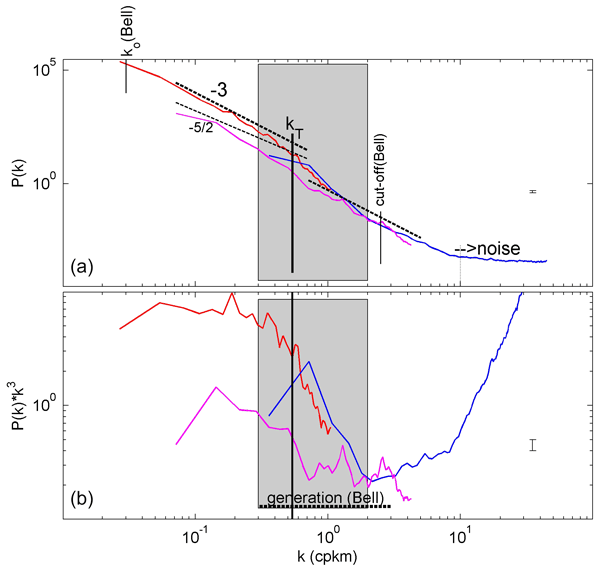
3D high-resolution observations are used to investigate whether the interaction between energy-abundant (sub-)mesoscale eddies and internal waves can lead to turbulence generation in the deep Mediterranean. This may prove important for replenishment of nutrients for deep-sea life and circulation. Spectral power-laws demonstrate a dominance of convection-turbulence, which leads to a modification of the model for energy cascade in the deep sea.
Niek Kusters, Sjoerd Groeskamp, Bieito Fernandez Castro, and Hans van Haren
Ocean Sci., 21, 3397–3426, https://doi.org/10.5194/os-21-3397-2025, https://doi.org/10.5194/os-21-3397-2025, 2025
Short summary
Short summary
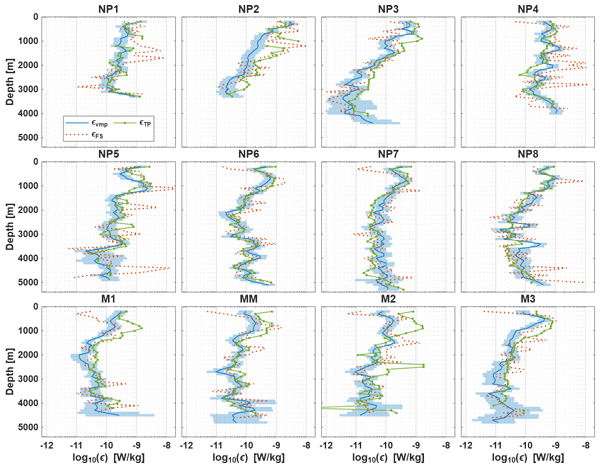
This study compares both microstructure shear and thermistor data, and finds very weak dissipations rates down to O(10−12) W kg−1. The direct microstructure observations are compared to a finescale parameterization and Thorpe sorting method, for which we find good comparison. Insights into the relative roles between isoneutral and dianeutral mixing are obtained by using the triple decomposition framework.
Hans van Haren and Henk de Haas
Ocean Sci., 21, 1125–1140, https://doi.org/10.5194/os-21-1125-2025, https://doi.org/10.5194/os-21-1125-2025, 2025
Short summary
Short summary
Turbulent water motions are important for the exchange of momentum, heat, nutrients, and suspended matter in the deep sea. The shape of the marine topography influences most water turbulence via breaking internal waves at critically sloping seafloors. In this paper, the concept of critical slopes is revisited from a global internal wave turbulence viewpoint using seafloor topography and moored temperature sensor data. The potential robustness of the seafloor–internal wave interaction is discussed.
Hans van Haren
Ocean Sci., 21, 555–565, https://doi.org/10.5194/os-21-555-2025, https://doi.org/10.5194/os-21-555-2025, 2025
Short summary
Short summary
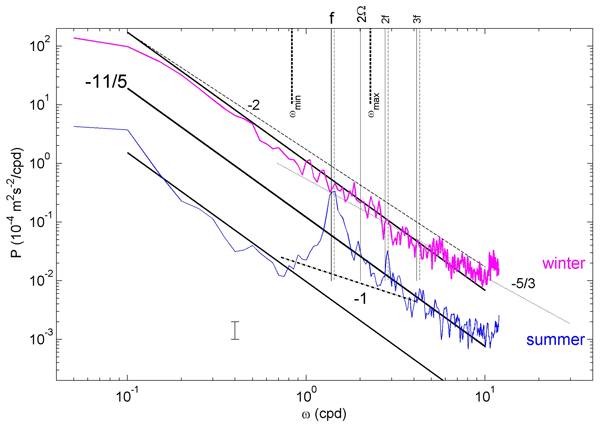
Ocean circulations include small-scale processes like transport through sub-mesoscale eddies and turbulence by internal wave breaking. Knowledge is lacking on the interaction between the different processes. In deep, weakly stratified waters, continuous spectral slopes are observed that extend from sub-mesoscales across the internal wave band to the turbulence range. Such correspondence is suggested as being a potential feedback mechanism stabilizing large-scale ocean circulations.
Hans van Haren
EGUsphere, https://doi.org/10.5194/egusphere-2026-188, https://doi.org/10.5194/egusphere-2026-188, 2026
This preprint is open for discussion and under review for Ocean Science (OS).
Short summary
Short summary
The Mediterranean Sea is known for its limited tidal motions. For example, surface barotropic tidal elevations have an amplitude of 0.1 m in the Northwestern Mediterranean. As is demonstrated in this paper, such small tides are noticeable in temperature records at the 2500-m deep seafloor, but only under near-homogeneous conditions. After correcting for pressure effects, the observed internal-wave temperature signals may thus be corrected for 1.5x10⁻⁵-°C amplitude semidiurnal barotropic tides.
Hans van Haren
EGUsphere, https://doi.org/10.5194/egusphere-2026-190, https://doi.org/10.5194/egusphere-2026-190, 2026
Short summary
Short summary
Turbulence is vital for life, also in 2500-m deep Mediterranean waters. Yearlong observations with about 3000 high-resolution temperature sensors show: About half the time, relatively warm stratified waters are moved from 100’s of meters higher levels to near the seafloor. These internal-wave and eddy-induced motions are three times more turbulent than those induced via general geothermal heating from below, and about ten times more turbulent than those from open-ocean processes.
Hans van Haren
EGUsphere, https://doi.org/10.5194/egusphere-2026-195, https://doi.org/10.5194/egusphere-2026-195, 2026
This preprint is open for discussion and under review for Ocean Science (OS).
Short summary
Short summary
Occasionally, high-resolution temperature sensors moored close to the 2550-m deep Mediterranean seafloor register minute-long flashes of 0.0005–0.001 °C warmer than the environment. A movie shows traveling heat flashes, most likely with internal-wave instabilities in overlying stratified waters. The instabilities seem to release the flashes from a geothermally heated seafloor of which turbulence convection is suppressed by warmer waters from above.
Hans van Haren
EGUsphere, https://doi.org/10.5194/egusphere-2026-193, https://doi.org/10.5194/egusphere-2026-193, 2026
Preprint archived
Short summary
Short summary
3D high-resolution observations are used to investigate whether the interaction between energy-abundant (sub-)mesoscale eddies and internal waves can lead to turbulence generation in the deep Mediterranean. This may prove important for replenishment of nutrients for deep-sea life and circulation. Spectral power-laws demonstrate a dominance of convection-turbulence, which leads to a modification of the model for energy cascade in the deep sea.
Niek Kusters, Sjoerd Groeskamp, Bieito Fernandez Castro, and Hans van Haren
Ocean Sci., 21, 3397–3426, https://doi.org/10.5194/os-21-3397-2025, https://doi.org/10.5194/os-21-3397-2025, 2025
Short summary
Short summary
This study compares both microstructure shear and thermistor data, and finds very weak dissipations rates down to O(10−12) W kg−1. The direct microstructure observations are compared to a finescale parameterization and Thorpe sorting method, for which we find good comparison. Insights into the relative roles between isoneutral and dianeutral mixing are obtained by using the triple decomposition framework.
Hans van Haren and Henk de Haas
Ocean Sci., 21, 1125–1140, https://doi.org/10.5194/os-21-1125-2025, https://doi.org/10.5194/os-21-1125-2025, 2025
Short summary
Short summary
Turbulent water motions are important for the exchange of momentum, heat, nutrients, and suspended matter in the deep sea. The shape of the marine topography influences most water turbulence via breaking internal waves at critically sloping seafloors. In this paper, the concept of critical slopes is revisited from a global internal wave turbulence viewpoint using seafloor topography and moored temperature sensor data. The potential robustness of the seafloor–internal wave interaction is discussed.
Hans van Haren
Ocean Sci., 21, 555–565, https://doi.org/10.5194/os-21-555-2025, https://doi.org/10.5194/os-21-555-2025, 2025
Short summary
Short summary
Ocean circulations include small-scale processes like transport through sub-mesoscale eddies and turbulence by internal wave breaking. Knowledge is lacking on the interaction between the different processes. In deep, weakly stratified waters, continuous spectral slopes are observed that extend from sub-mesoscales across the internal wave band to the turbulence range. Such correspondence is suggested as being a potential feedback mechanism stabilizing large-scale ocean circulations.
Cited articles
Adrián-Martínez, S., Ageron, M., Aharonian, F., Aiello, S., Albert, A., et al.: Letter of intent for KM3NeT 2.0, J. Phys. G., 43, 084001, https://doi.org/10.1088/0954-3899/43/8/084001, 2016.
Bolgiano, R.: Turbulent spectra in a stably stratifed atmosphere, J. Geophys. Res., 64, 2226–2229, https://doi.org/10.1029/JZ064i012p02226, 1959.
de Lavergne, C., Vic, C., Madec, G., Roquet, F., Waterhouse, A. F., Whalen, C. B., Cuypers, Y., Bouruet-Aubertot, P., Ferron, B., and Hibiya, T.: A parameterization of local and remote tidal mixing, J. Adv. Model. Earth Sy., 12, e2020MS002065, https://doi.org/10.1029/2020MS002065, 2020.
Gregg, M. C.: Scaling turbulent dissipation in the thermocline, J. Geophys. Res., 94, 9686–9698, https://doi.org/10.1029/JC094iC07p09686, 1989.
IOC, SCOR, and IAPSO: The International Thermodynamic Equation of Seawater – 2010: Calculation and Use of Thermodynamic Properties, Intergovernmental Oceanographic Commission, Manuals and Guides No. 56, UNESCO, Paris (F), 196 pp., https://unesdoc.unesco.org/ark:/48223/pf0000188170 (last access: 6 May 2026), 2010.
Kolmogorov, A. N.: The local structure of turbulence in incompressible viscous fluid for very large Reynolds numbers, Dokl. Akad. Nauk SSSR, 30, 301–305, 1941.
Marshall, J. and Schott, F.: Open-ocean convection: Observations, theory, and models, Rev. Geophys., 37, 1–64, https://doi.org/10.1029/98RG02739, 1999.
Obukhov, A. M.: Effect of buoyancy forces on the structure of temperature field in a turbulent flow, Dokl. Akad. Nauk SSSR, 125, 1246–1248, 1959.
Thorpe, S. A.: Turbulence and mixing in a Scottish loch, Philos. T. Roy. Soc. Lond. A, 286, 125–181, https://doi.org/10.1098/rsta.1977.0112, 1977.
van Haren, H.: Philosophy and application of high-resolution temperature sensors for stratified waters, Sensors, 18, 3184, https://doi.org/10.3390/s18103184, 2018.
van Haren, H.: Thermistor string corrections in data from very weakly stratified deep-ocean waters, Deep-Sea Res. I, 189, 103870, https://doi.org/10.1016/j.dsr.2022.103870, 2022.
van Haren, H.: How and what turbulent are deep Mariana Trench waters?, Dyn. Atmos. Oc., 103, 101372, https://doi.org/10.1016/j.dynatmoce.2023.101372, 2023.
van Haren, H.: Large-ring mooring current meter and CTD data, Mendeley Data, V1 [data set], https://doi.org/10.17632/f8kfwcvtdn.1, 2025.
van Haren, H.: Processed temperature data to: Determination of the height of deep-sea mooring lines above seafloor using turbulence measurements, Mendeley Data, V1 [data set], https://doi.org/10.17632/24n7dwjhpn.1, 2026.
van Haren, H. and Bosveld, F. C.: Internal wave and turbulence observations with very high-resolution temperature sensors along the Cabauw mast, J. Atmos. Ocean. Tech., 39, 1149–1165, https://doi.org/10.1175/JTECH-D-21-0153.1, 2022.
van Haren, H. and Gostiaux, L.: Detailed internal wave mixing observed above a deep-ocean slope, J. Mar. Res., 70, 173–197, https://elischolar.library.yale.edu/journal_of_marine_research/337 (last access: 6 May 2026), 2012.
van Haren, H., Bakker, R., Witte, Y., Laan, M., and van Heerwaarden, J.: Half a cubic hectometer mooring-array 3D-T of 3000 temperature sensors in the deep sea, J. Atmos. Ocean. Tech., 38, 1585–1597, https://doi.org/10.1175/JTECH-D-21-0045.1, 2021.
van Haren, H., Adriani, O., Albert, A., Alhebsi, A. R., Alshalloudi, S., et al.: Whipped and mixed warm clouds in the deep sea, Geophys. Res. Lett., 53, e2025GL119998, https://doi.org/10.1029/2025GL119998, 2026.
Yasuda, I., Fujio, S., Yanagimoto, D., Lee, K. J., Sasaki, Y., Zhai, S., Tanaka, M., Itoh, S., Tanaka, T., Hasegawa, D., Goto, Y., and Sasano, D.: Estimate of turbulent energy dissipation rate using free-fall and CTDattached fastresponse thermistors in weak ocean turbulence, J. Oceanogr., 77, 17–28, https://doi.org/10.1007/s10872-020-00574-2, 2021.
Short summary
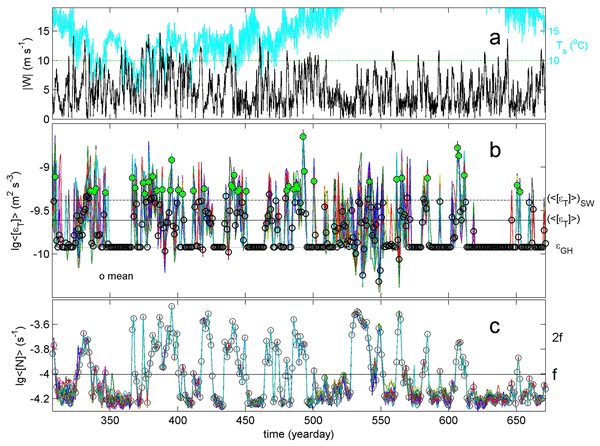
In this paper, heights of moored oceanographic instrumentation are determined from high-resolution temperature data. Unfortunately pressure-corrected data could not be used from near-homogeneous conditions due to short-term electronic drift. Instead, a satisfactory height determination was found during relatively strong stratification and large turbulence activity. By using turbulence data across a strong temperature gradient, significant height variations were detectable to within ±0.2 m.
In this paper, heights of moored oceanographic instrumentation are determined from...