
Articles | Volume 22, issue 2
https://doi.org/10.5194/os-22-1391-2026
© Author(s) 2026. This work is distributed under
the Creative Commons Attribution 4.0 License.
the Creative Commons Attribution 4.0 License.
https://doi.org/10.5194/os-22-1391-2026
© Author(s) 2026. This work is distributed under
the Creative Commons Attribution 4.0 License.
the Creative Commons Attribution 4.0 License.
Research article
| 
29 Apr 2026
Research article |
| 29 Apr 2026
| 29 Apr 2026
Transient tracer observations in the Gulf of St. Lawrence reveal shift from younger to older inflow waters

GEOMAR Helmholtz Centre for Ocean Research Kiel, Kiel, 24148, Germany
[C]Worthy, LLC, Boulder, CO, 80302, USA
Toste Tanhua
GEOMAR Helmholtz Centre for Ocean Research Kiel, Kiel, 24148, Germany
William A. Nesbitt
Department of Oceanography, Dalhousie University, Halifax, B3H 4R2, Canada
Samuel W. Stevens
Department of Earth and Ocean Sciences, The University of British Columbia, Vancouver, V6T 1Z4, Canada
Hakai Institute, Heriot Bay, British Columbia, V9W 0B7, Canada
Douglas W. R. Wallace
Department of Oceanography, Dalhousie University, Halifax, B3H 4R2, Canada
Related authors
Ulla K. Heede, Matthew C. Long, Alicia Karspeck, Scott Bachman, Nora Loose, Dafydd Stephenson, David T. Ho, Lennart Gerke, Tobias Koffman, Alice Benoit-Cattin, Sara Harðardóttir, and Andreas Macrander
EGUsphere, https://doi.org/10.5194/egusphere-2026-2920, https://doi.org/10.5194/egusphere-2026-2920, 2026
Short summary
Short summary
We use a new open-source ocean model system to conduct simulations of a fjord in Iceland and study how adding alkaline material to seawater can remove CO2 from the air. We compare the model with field data to evaluate the model's accuracy. From our simulations, we show that the added alkaline material creates a short-lived, detectable signal in ocean chemistry in the fjord. Our motivation is to show how this ocean model system can support alkalinity enhancement field trials.
William A. Nesbitt, Alfonso O. Mucci, Toste Tanhua, Yves Gélinas, Jean-Éric Tremblay, Gwénaëlle Chaillou, Ludovic Pascal, Caroline Fradette, Lennart Gerke, Samuel W. Stevens, Mathilde Jutras, Marjolaine Blais, Martine Lizotte, Michel Starr, and Douglas W. R. Wallace
Earth Syst. Sci. Data, 18, 3609–3634, https://doi.org/10.5194/essd-18-3609-2026, https://doi.org/10.5194/essd-18-3609-2026, 2026
Short summary
Short summary
Over the past few decades, the St. Lawrence Estuary and Gulf have shown clear trends in oxygen depletion and acidification. This data description paper brings together twenty years of measurements from the St. Lawrence Estuary, Gulf of St. Lawrence, and Saguenay Fjord, carefully performing quality control procedures on data, and makes them publicly available. The resulting dataset supports future research, monitoring, and environmental management in this sensitive marine system.
William A. Nesbitt, Samuel W. Stevens, Alfonso O. Mucci, Lennart Gerke, Toste Tanhua, Gwénaëlle Chaillou, and Douglas W. R. Wallace
Ocean Sci., 21, 2179–2195, https://doi.org/10.5194/os-21-2179-2025, https://doi.org/10.5194/os-21-2179-2025, 2025
Short summary
Short summary
We combine two decades of oxygen data with new carbon observations and a tracer-informed model to quantify oxygen loss and carbon buildup in the deep waters of the Gulf and Lower St. Lawrence Estuary. We then test a novel idea: reoxygenating these waters with the oxygen produced as a by-product from green-hydrogen production. Our results suggest this could significantly reduce hypoxia, though full recovery would require larger inputs.
Haichao Guo, Wolfgang Koeve, Andreas Oschlies, Yan-Chun He, Tronje Peer Kemena, Lennart Gerke, and Iris Kriest
Ocean Sci., 21, 1167–1182, https://doi.org/10.5194/os-21-1167-2025, https://doi.org/10.5194/os-21-1167-2025, 2025
Short summary
Short summary
We evaluated the effectiveness of the inverse Gaussian transit time distribution (IG-TTD) with respect to estimating the mean state and temporal changes of seawater age, defined as the duration since water last had contact with the atmosphere, within the tropical thermocline. Results suggest that the IG-TTD underestimates seawater age. Moreover, the IG-TTD constrained by a single tracer gives spurious trends in water age. Incorporating an additional tracer improves IG-TTD's accuracy for estimating temporal change of seawater age.
Mian Liu and Toste Tanhua
Ocean Sci., 22, 2595–2620, https://doi.org/10.5194/os-22-2595-2026, https://doi.org/10.5194/os-22-2595-2026, 2026
Short summary
Short summary
We measured the age of Atlantic waters using man-made gases and a radioactive isotope. Age increases with depth: young surface waters are about 30 years old, deep Antarctic water reaches 100 years, and the oldest bottom water is roughly 120 years. The western Atlantic is younger and better ventilated than the east. These patterns help estimate deep-sea oxygen use and are key for climate models and marine ecosystems.
Nico Lange, Siv K. Lauvset, Brendan R. Carter, Matthew P. Humphreys, Ryan J. Woosley, Are Olsen, Henry C. Bittig, Alex Kozyr, Marta Álvarez, Kumiko Azetsu-Scott, Susan Becker, Peter J. Brown, Leticia Cotrim da Cunha, Larissa Dias, Mario Hoppema, Masao Ishii, Emil Jeansson, Akihiko Murata, Jens Daniel Müller, Fiz F. Pérez, Carsten Schirnick, Reiner Steinfeldt, Adam Ulfsbo, Anton Velo, and Toste Tanhua
Earth Syst. Sci. Data Discuss., https://doi.org/10.5194/essd-2026-496, https://doi.org/10.5194/essd-2026-496, 2026
Preprint under review for ESSD
Short summary
Short summary
GLODAP is a data product for ocean inorganic carbon and related biogeochemical variables measured by the chemical analysis of water bottle samples from scientific cruises. GLODAPv3 is the third version release of GLODAP. The data that are included have been subjected to extensive quality control, including systematic evaluation of systematic cruise differences. This version contains data from 1181 hydrographic cruises covering the world's oceans from 1972 to 2023.
Hyelim Yoo, Li-Qing Jiang, Chris Langdon, Alex Kozyr, Simone R. Alin, Jose Martin Hernandez Ayon, Kumiko Azetsu-Scott, Leticia Barbero, Nicole Besemer, Albert Boyd, Jean R. Brodeur, Wei-Jun Cai, Brendan R. Carter, Cecilia Chapa, Eugene Colbourne, Jessica N. Cross, Ian Enochs, Leticia Espinosa-Carreon, Richard A. Feely, Karina E. Giesbrecht, Helen Gurney-Smith, Burke Hales, Naomi Harada, James Hooper, Christopher W. Hunt, Debby Ianson, Mike Jankulak, Terrence M. Joyce, Esther G. Kennedy, Brian A. King, Arne Körtzinger, Matthias Lankhorst, Gary Maillet, Derek Manzello, Anna K. McLaskey, Viviane V. Menezes, Nicolas Metzl, Christine Michel, Natalie M. Monacci, Julio M. Morell, Akihiko Murata, Jan Newton, Emily O'Grady, Ana M. Palacio-Castro, Denis Pierrot, Marc Ringuette, Christopher Sabine, Joseph E. Salisbury, Akash R. Sastri, Ute Schuster, Uwe Send, Ryan Smith, Michel Starr, James H. Swift, Lynne D. Talley, Helmuth Thomas, Douglas W. R. Wallace, Zhaohui Aleck Wang, Rik Wanninkhof, Chi S. Wong, Patricia L. Yager, and Igor Yashayaev
Earth Syst. Sci. Data Discuss., https://doi.org/10.5194/essd-2026-516, https://doi.org/10.5194/essd-2026-516, 2026
Preprint under review for ESSD
Short summary
Short summary
The coastal Ocean Data Analysis Product in North America (CODAP-NA, Version 2026) substantially increased both the spatial and temporal coverage of coastal biogeochemical measurements across North American continental shelves. This version comprises 446 cruises, 31,864 hydrographic profiles, and 195,489 discrete data records covering continental shelf environments from Alaska to Mexico in the west and from Canada to the Caribbean in the east from 1981 to 2024.
Marta Álvarez, Maribel I. García-Ibáñez, Nico Lange, Alex Kozyr, Antón Velo, Toste Tanhua, Giuseppe Civitarese, Carolina Cantoni, Malek Belgacem, Katrin Schroeder, Rubén Acerbi, Laurent Coppola, Thibaut Wagener, Noelia M. Fajar, Susana Flecha, Michele Giani, Louisa Giannoudi, Elisa F. Guallart, Abed El Rahman Hassoun, Emma I. Huertas, Valeria Ibello, Mehdia A. Keraghel, Férial Louanchi, Anna Luchetta, Fiz F. Pérez, Carsten Schirnick, Ekaterini Souvermezoglou, Lidia Urbini, Montserrat Vidal, and Patrizia Ziveri
Earth Syst. Sci. Data, 18, 4915–4941, https://doi.org/10.5194/essd-18-4915-2026, https://doi.org/10.5194/essd-18-4915-2026, 2026
Short summary
Short summary
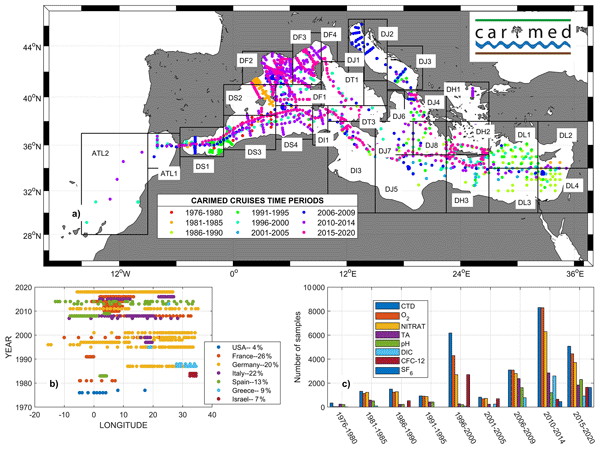
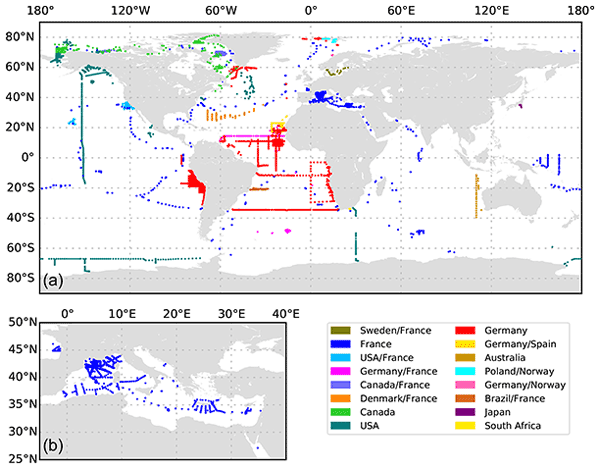
CARIMED (CARbon, tracers, and ancillary data In the MEDiterranean Sea) is a high-quality, FAIR (Findability, Accessibility, Interoperability, and Reusability) dataset integrating hydrographic, biogeochemical, and transient tracer data from 46 research cruises (1976–2018) across the Mediterranean Sea. The data underwent rigorous, basin-adapted quality control to remove systematic biases, unifying four decades of fragmented data, delivering two complementary products: the aggregated original cruise data product and the bias-adjusted data synthesis product.
Ulla K. Heede, Matthew C. Long, Alicia Karspeck, Scott Bachman, Nora Loose, Dafydd Stephenson, David T. Ho, Lennart Gerke, Tobias Koffman, Alice Benoit-Cattin, Sara Harðardóttir, and Andreas Macrander
EGUsphere, https://doi.org/10.5194/egusphere-2026-2920, https://doi.org/10.5194/egusphere-2026-2920, 2026
Short summary
Short summary
We use a new open-source ocean model system to conduct simulations of a fjord in Iceland and study how adding alkaline material to seawater can remove CO2 from the air. We compare the model with field data to evaluate the model's accuracy. From our simulations, we show that the added alkaline material creates a short-lived, detectable signal in ocean chemistry in the fjord. Our motivation is to show how this ocean model system can support alkalinity enhancement field trials.
Matthew P. Humphreys, Siv K. Lauvset, Nico Lange, Henry C. Bittig, Brendan R. Carter, Mario Hoppema, Akihiko Murata, Are Olsen, Toste Tanhua, Adam Ulfsbo, Antón Velo, Ryan J. Woosley, Kumiko Azetsu-Scott, Jens D. Müller, and Fiz F. Pérez
EGUsphere, https://doi.org/10.5194/egusphere-2026-3063, https://doi.org/10.5194/egusphere-2026-3063, 2026
Short summary
Short summary
The Global Ocean Data Analysis Project (GLODAP) collects oceanographic datasets from research cruises that are needed to study the marine carbon cycle. The datasets are quality controlled and adjusted where necessary to ensure consistency between cruises, and published as a global data product. Here, we present a new method for calculating the consistency adjustments called ‘furthest-first inversion’ which has been developed for the newest version of the data product.
William A. Nesbitt, Alfonso O. Mucci, Toste Tanhua, Yves Gélinas, Jean-Éric Tremblay, Gwénaëlle Chaillou, Ludovic Pascal, Caroline Fradette, Lennart Gerke, Samuel W. Stevens, Mathilde Jutras, Marjolaine Blais, Martine Lizotte, Michel Starr, and Douglas W. R. Wallace
Earth Syst. Sci. Data, 18, 3609–3634, https://doi.org/10.5194/essd-18-3609-2026, https://doi.org/10.5194/essd-18-3609-2026, 2026
Short summary
Short summary
Over the past few decades, the St. Lawrence Estuary and Gulf have shown clear trends in oxygen depletion and acidification. This data description paper brings together twenty years of measurements from the St. Lawrence Estuary, Gulf of St. Lawrence, and Saguenay Fjord, carefully performing quality control procedures on data, and makes them publicly available. The resulting dataset supports future research, monitoring, and environmental management in this sensitive marine system.
Li-Qing Jiang, Amanda Fay, Jens Daniel Müller, Luke Gregor, Alizée Roobaert, Lydia Keppler, Dustin Carroll, Siv K. Lauvset, Tim DeVries, Judith Hauck, Christian Rödenbeck, Nicolas Metzl, Andrea J. Fassbender, Jean-Pierre Gattuso, Peter Landschützer, Rik Wanninkhof, Christopher Sabine, Simone R. Alin, Mario Hoppema, Are Olsen, Matthew P. Humphreys, Kunal Chakraborty, Ana C. Franco, Kumiko Azetsu-Scott, Dorothee C. E. Bakker, Leticia Barbero, Nicholas R. Bates, Nicole Besemer, Henry C. Bittig, Albert E. Boyd, Daniel Broullón, Wei-Jun Cai, Brendan R. Carter, Thi-Tuyet-Trang Chau, Chen-Tung Arthur Chen, Frédéric Cyr, John E. Dore, Ian Enochs, Richard A. Feely, Hernan E. Garcia, Marion Gehlen, Prasanna Kanti Ghoshal, Lucas Gloege, Melchor González-Dávila, Nicolas Gruber, Debby Ianson, Yosuke Iida, Masao Ishii, Apurva Padamnabh Joshi, Esther Kennedy, Alex Kozyr, Nico Lange, Claire Lo Monaco, Derek P. Manzello, Galen A. McKinley, Natalie M. Monacci, Xose A. Padin, Ana M. Palacio-Castro, Fiz F. Pérez, J. Magdalena Santana-Casiano, Jonathan Sharp, Adrienne Sutton, Jim Swift, Toste Tanhua, Maciej Telszewski, Jens Terhaar, Ruben van Hooidonk, Anton Velo, Andrew J. Watson, Angelicque E. White, Zelun Wu, Liang Xue, Hyelim Yoo, Jiye Zeng, and Guorong Zhong
Earth Syst. Sci. Data, 18, 1405–1462, https://doi.org/10.5194/essd-18-1405-2026, https://doi.org/10.5194/essd-18-1405-2026, 2026
Short summary
Short summary
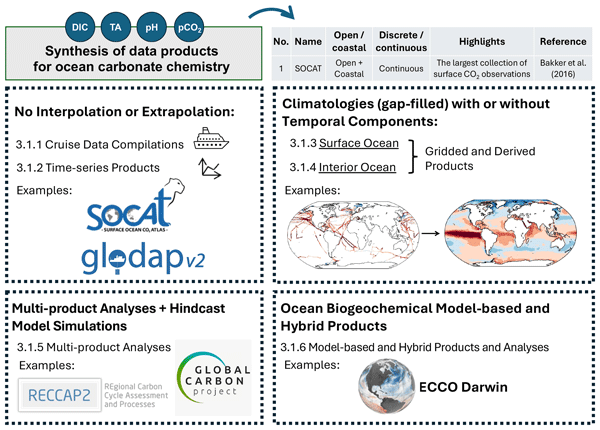
This review article provides an overview of 68 existing ocean carbonate chemistry data products and data product sets, encompassing a broad range of types, including compilations of cruise datasets, gap-filled observational products, model simulations, and more. It is designed to help researchers identify and access the data products that best support their scientific objectives, thereby facilitating progress in understanding the ocean's changing carbonate chemistry.
Anne-Marie Wefing, Annabel Payne, Marcel Scheiwiller, Christof Vockenhuber, Marcus Christl, Toste Tanhua, and Núria Casacuberta
Ocean Sci., 21, 3311–3340, https://doi.org/10.5194/os-21-3311-2025, https://doi.org/10.5194/os-21-3311-2025, 2025
Short summary
Short summary
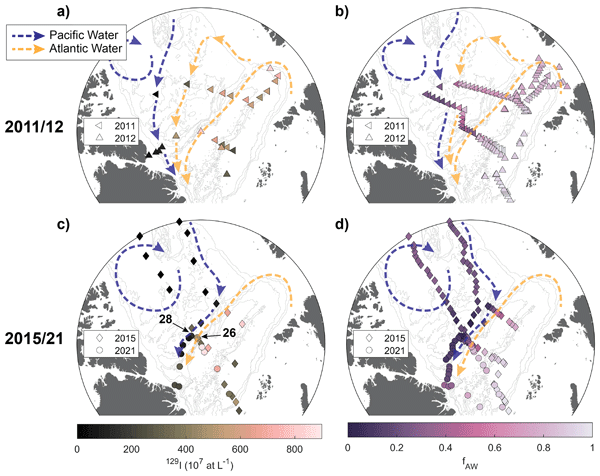
Here we used the anthropogenic radionuclides I-129 and U-236 as tracers for Atlantic Water circulation in the Arctic Ocean. New data collected in 2021 allowed to assess the distribution of Atlantic Water and mixing with Pacific-origin water in the surface layer in that year. By using historical tracer data from 2011 to 2021, we looked into temporal changes of the circulation and found slightly older waters in the central Arctic Ocean in 2021 compared to 2015.
William A. Nesbitt, Samuel W. Stevens, Alfonso O. Mucci, Lennart Gerke, Toste Tanhua, Gwénaëlle Chaillou, and Douglas W. R. Wallace
Ocean Sci., 21, 2179–2195, https://doi.org/10.5194/os-21-2179-2025, https://doi.org/10.5194/os-21-2179-2025, 2025
Short summary
Short summary
We combine two decades of oxygen data with new carbon observations and a tracer-informed model to quantify oxygen loss and carbon buildup in the deep waters of the Gulf and Lower St. Lawrence Estuary. We then test a novel idea: reoxygenating these waters with the oxygen produced as a by-product from green-hydrogen production. Our results suggest this could significantly reduce hypoxia, though full recovery would require larger inputs.
Haichao Guo, Wolfgang Koeve, Andreas Oschlies, Yan-Chun He, Tronje Peer Kemena, Lennart Gerke, and Iris Kriest
Ocean Sci., 21, 1167–1182, https://doi.org/10.5194/os-21-1167-2025, https://doi.org/10.5194/os-21-1167-2025, 2025
Short summary
Short summary
We evaluated the effectiveness of the inverse Gaussian transit time distribution (IG-TTD) with respect to estimating the mean state and temporal changes of seawater age, defined as the duration since water last had contact with the atmosphere, within the tropical thermocline. Results suggest that the IG-TTD underestimates seawater age. Moreover, the IG-TTD constrained by a single tracer gives spurious trends in water age. Incorporating an additional tracer improves IG-TTD's accuracy for estimating temporal change of seawater age.

Siv K. Lauvset, Nico Lange, Toste Tanhua, Henry C. Bittig, Are Olsen, Alex Kozyr, Marta Álvarez, Kumiko Azetsu-Scott, Peter J. Brown, Brendan R. Carter, Leticia Cotrim da Cunha, Mario Hoppema, Matthew P. Humphreys, Masao Ishii, Emil Jeansson, Akihiko Murata, Jens Daniel Müller, Fiz F. Pérez, Carsten Schirnick, Reiner Steinfeldt, Toru Suzuki, Adam Ulfsbo, Anton Velo, Ryan J. Woosley, and Robert M. Key
Earth Syst. Sci. Data, 16, 2047–2072, https://doi.org/10.5194/essd-16-2047-2024, https://doi.org/10.5194/essd-16-2047-2024, 2024
Short summary
Short summary
GLODAP is a data product for ocean inorganic carbon and related biogeochemical variables measured by the chemical analysis of water bottle samples from scientific cruises. GLODAPv2.2023 is the fifth update of GLODAPv2 from 2016. The data that are included have been subjected to extensive quality controlling, including systematic evaluation of measurement biases. This version contains data from 1108 hydrographic cruises covering the world's oceans from 1972 to 2021.
Nico Lange, Björn Fiedler, Marta Álvarez, Alice Benoit-Cattin, Heather Benway, Pier Luigi Buttigieg, Laurent Coppola, Kim Currie, Susana Flecha, Dana S. Gerlach, Makio Honda, I. Emma Huertas, Siv K. Lauvset, Frank Muller-Karger, Arne Körtzinger, Kevin M. O'Brien, Sólveig R. Ólafsdóttir, Fernando C. Pacheco, Digna Rueda-Roa, Ingunn Skjelvan, Masahide Wakita, Angelicque White, and Toste Tanhua
Earth Syst. Sci. Data, 16, 1901–1931, https://doi.org/10.5194/essd-16-1901-2024, https://doi.org/10.5194/essd-16-1901-2024, 2024
Short summary
Short summary
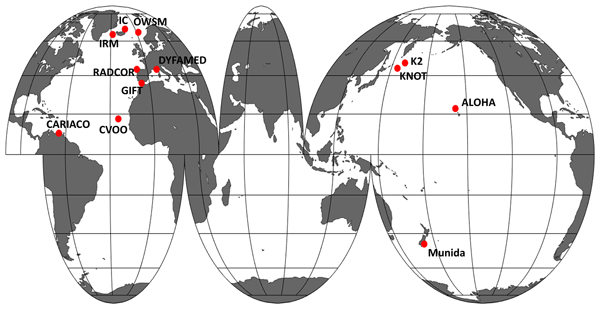
The Synthesis Product for Ocean Time Series (SPOTS) is a novel achievement expanding and complementing the biogeochemical data landscape by providing consistent and high-quality biogeochemical time-series data from 12 ship-based fixed time-series programs. SPOTS covers multiple unique marine environments and time-series ranges, including data from 1983 to 2021. All in all, it facilitates a variety of applications that benefit from the collective value of biogeochemical time-series observations.
Alizée Dale, Marion Gehlen, Douglas W. R. Wallace, Germain Bénard, Christian Éthé, and Elena Alekseenko
EGUsphere, https://doi.org/10.5194/egusphere-2023-2538, https://doi.org/10.5194/egusphere-2023-2538, 2023
Preprint archived
Short summary
Short summary
Diatom, which is at the base of a productive food chain that supports valuable fisheries, dominates the total primary production of the Labrador Sea (LS). The synthesis of biogenic silica frustules makes them peculiar among phytoplankton but also dependent on dissolved silicate (DSi). Regular oceanographic surveys show declining DSi concentrations since the mid-1990s. With a model-based approach, we show that weakening deep winter convection was the proximate cause of DSi decline in the LS.
Mathilde Jutras, Alfonso Mucci, Gwenaëlle Chaillou, William A. Nesbitt, and Douglas W. R. Wallace
Biogeosciences, 20, 839–849, https://doi.org/10.5194/bg-20-839-2023, https://doi.org/10.5194/bg-20-839-2023, 2023
Short summary
Short summary
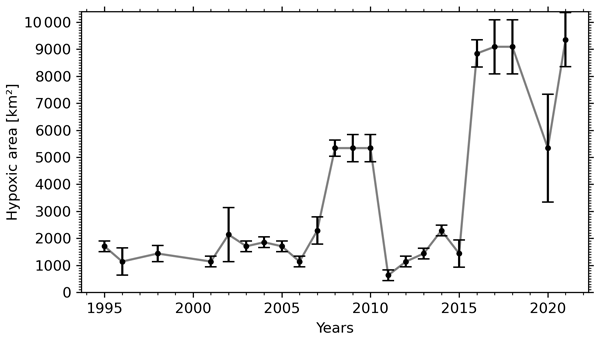
The deep waters of the lower St Lawrence Estuary and gulf have, in the last decades, experienced a strong decline in their oxygen concentration. Below 65 µmol L-1, the waters are said to be hypoxic, with dire consequences for marine life. We show that the extent of the hypoxic zone shows a seven-fold increase in the last 20 years, reaching 9400 km2 in 2021. After a stable period at ~ 65 µmol L⁻¹ from 1984 to 2019, the oxygen level also suddenly decreased to ~ 35 µmol L-1 in 2020.
Siv K. Lauvset, Nico Lange, Toste Tanhua, Henry C. Bittig, Are Olsen, Alex Kozyr, Simone Alin, Marta Álvarez, Kumiko Azetsu-Scott, Leticia Barbero, Susan Becker, Peter J. Brown, Brendan R. Carter, Leticia Cotrim da Cunha, Richard A. Feely, Mario Hoppema, Matthew P. Humphreys, Masao Ishii, Emil Jeansson, Li-Qing Jiang, Steve D. Jones, Claire Lo Monaco, Akihiko Murata, Jens Daniel Müller, Fiz F. Pérez, Benjamin Pfeil, Carsten Schirnick, Reiner Steinfeldt, Toru Suzuki, Bronte Tilbrook, Adam Ulfsbo, Anton Velo, Ryan J. Woosley, and Robert M. Key
Earth Syst. Sci. Data, 14, 5543–5572, https://doi.org/10.5194/essd-14-5543-2022, https://doi.org/10.5194/essd-14-5543-2022, 2022
Short summary
Short summary
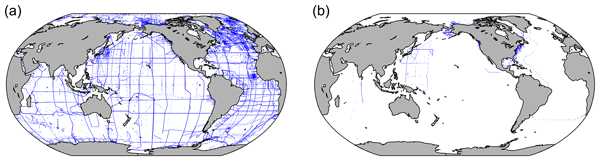
GLODAP is a data product for ocean inorganic carbon and related biogeochemical variables measured by the chemical analysis of water bottle samples from scientific cruises. GLODAPv2.2022 is the fourth update of GLODAPv2 from 2016. The data that are included have been subjected to extensive quality controlling, including systematic evaluation of measurement biases. This version contains data from 1085 hydrographic cruises covering the world's oceans from 1972 to 2021.
Pierre Friedlingstein, Michael O'Sullivan, Matthew W. Jones, Robbie M. Andrew, Luke Gregor, Judith Hauck, Corinne Le Quéré, Ingrid T. Luijkx, Are Olsen, Glen P. Peters, Wouter Peters, Julia Pongratz, Clemens Schwingshackl, Stephen Sitch, Josep G. Canadell, Philippe Ciais, Robert B. Jackson, Simone R. Alin, Ramdane Alkama, Almut Arneth, Vivek K. Arora, Nicholas R. Bates, Meike Becker, Nicolas Bellouin, Henry C. Bittig, Laurent Bopp, Frédéric Chevallier, Louise P. Chini, Margot Cronin, Wiley Evans, Stefanie Falk, Richard A. Feely, Thomas Gasser, Marion Gehlen, Thanos Gkritzalis, Lucas Gloege, Giacomo Grassi, Nicolas Gruber, Özgür Gürses, Ian Harris, Matthew Hefner, Richard A. Houghton, George C. Hurtt, Yosuke Iida, Tatiana Ilyina, Atul K. Jain, Annika Jersild, Koji Kadono, Etsushi Kato, Daniel Kennedy, Kees Klein Goldewijk, Jürgen Knauer, Jan Ivar Korsbakken, Peter Landschützer, Nathalie Lefèvre, Keith Lindsay, Junjie Liu, Zhu Liu, Gregg Marland, Nicolas Mayot, Matthew J. McGrath, Nicolas Metzl, Natalie M. Monacci, David R. Munro, Shin-Ichiro Nakaoka, Yosuke Niwa, Kevin O'Brien, Tsuneo Ono, Paul I. Palmer, Naiqing Pan, Denis Pierrot, Katie Pocock, Benjamin Poulter, Laure Resplandy, Eddy Robertson, Christian Rödenbeck, Carmen Rodriguez, Thais M. Rosan, Jörg Schwinger, Roland Séférian, Jamie D. Shutler, Ingunn Skjelvan, Tobias Steinhoff, Qing Sun, Adrienne J. Sutton, Colm Sweeney, Shintaro Takao, Toste Tanhua, Pieter P. Tans, Xiangjun Tian, Hanqin Tian, Bronte Tilbrook, Hiroyuki Tsujino, Francesco Tubiello, Guido R. van der Werf, Anthony P. Walker, Rik Wanninkhof, Chris Whitehead, Anna Willstrand Wranne, Rebecca Wright, Wenping Yuan, Chao Yue, Xu Yue, Sönke Zaehle, Jiye Zeng, and Bo Zheng
Earth Syst. Sci. Data, 14, 4811–4900, https://doi.org/10.5194/essd-14-4811-2022, https://doi.org/10.5194/essd-14-4811-2022, 2022
Short summary
Short summary
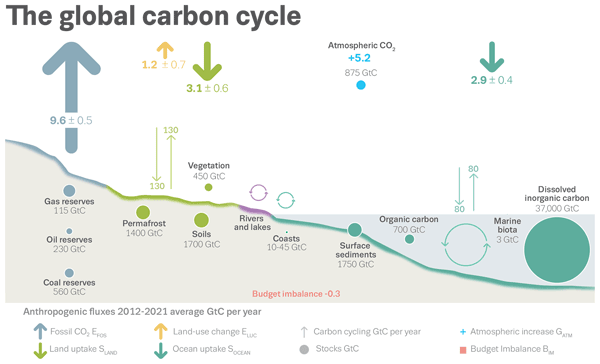
The Global Carbon Budget 2022 describes the datasets and methodology used to quantify the anthropogenic emissions of carbon dioxide (CO2) and their partitioning among the atmosphere, the land ecosystems, and the ocean. These living datasets are updated every year to provide the highest transparency and traceability in the reporting of CO2, the key driver of climate change.
Rainer Kiko, Marc Picheral, David Antoine, Marcel Babin, Léo Berline, Tristan Biard, Emmanuel Boss, Peter Brandt, Francois Carlotti, Svenja Christiansen, Laurent Coppola, Leandro de la Cruz, Emilie Diamond-Riquier, Xavier Durrieu de Madron, Amanda Elineau, Gabriel Gorsky, Lionel Guidi, Helena Hauss, Jean-Olivier Irisson, Lee Karp-Boss, Johannes Karstensen, Dong-gyun Kim, Rachel M. Lekanoff, Fabien Lombard, Rubens M. Lopes, Claudie Marec, Andrew M. P. McDonnell, Daniela Niemeyer, Margaux Noyon, Stephanie H. O'Daly, Mark D. Ohman, Jessica L. Pretty, Andreas Rogge, Sarah Searson, Masashi Shibata, Yuji Tanaka, Toste Tanhua, Jan Taucher, Emilia Trudnowska, Jessica S. Turner, Anya Waite, and Lars Stemmann
Earth Syst. Sci. Data, 14, 4315–4337, https://doi.org/10.5194/essd-14-4315-2022, https://doi.org/10.5194/essd-14-4315-2022, 2022
Short summary
Short summary
The term
marine particlescomprises detrital aggregates; fecal pellets; bacterioplankton, phytoplankton and zooplankton; and even fish. Here, we present a global dataset that contains 8805 vertical particle size distribution profiles obtained with Underwater Vision Profiler 5 (UVP5) camera systems. These data are valuable to the scientific community, as they can be used to constrain important biogeochemical processes in the ocean, such as the flux of carbon to the deep sea.
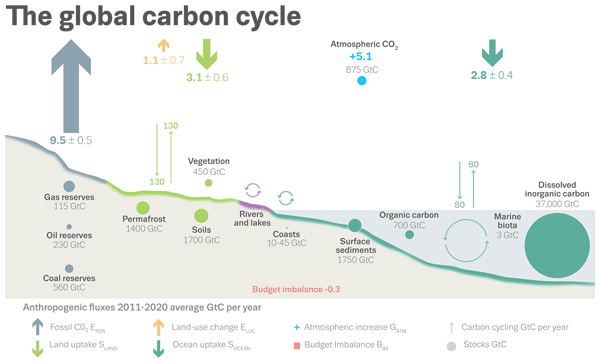
Pierre Friedlingstein, Matthew W. Jones, Michael O'Sullivan, Robbie M. Andrew, Dorothee C. E. Bakker, Judith Hauck, Corinne Le Quéré, Glen P. Peters, Wouter Peters, Julia Pongratz, Stephen Sitch, Josep G. Canadell, Philippe Ciais, Rob B. Jackson, Simone R. Alin, Peter Anthoni, Nicholas R. Bates, Meike Becker, Nicolas Bellouin, Laurent Bopp, Thi Tuyet Trang Chau, Frédéric Chevallier, Louise P. Chini, Margot Cronin, Kim I. Currie, Bertrand Decharme, Laique M. Djeutchouang, Xinyu Dou, Wiley Evans, Richard A. Feely, Liang Feng, Thomas Gasser, Dennis Gilfillan, Thanos Gkritzalis, Giacomo Grassi, Luke Gregor, Nicolas Gruber, Özgür Gürses, Ian Harris, Richard A. Houghton, George C. Hurtt, Yosuke Iida, Tatiana Ilyina, Ingrid T. Luijkx, Atul Jain, Steve D. Jones, Etsushi Kato, Daniel Kennedy, Kees Klein Goldewijk, Jürgen Knauer, Jan Ivar Korsbakken, Arne Körtzinger, Peter Landschützer, Siv K. Lauvset, Nathalie Lefèvre, Sebastian Lienert, Junjie Liu, Gregg Marland, Patrick C. McGuire, Joe R. Melton, David R. Munro, Julia E. M. S. Nabel, Shin-Ichiro Nakaoka, Yosuke Niwa, Tsuneo Ono, Denis Pierrot, Benjamin Poulter, Gregor Rehder, Laure Resplandy, Eddy Robertson, Christian Rödenbeck, Thais M. Rosan, Jörg Schwinger, Clemens Schwingshackl, Roland Séférian, Adrienne J. Sutton, Colm Sweeney, Toste Tanhua, Pieter P. Tans, Hanqin Tian, Bronte Tilbrook, Francesco Tubiello, Guido R. van der Werf, Nicolas Vuichard, Chisato Wada, Rik Wanninkhof, Andrew J. Watson, David Willis, Andrew J. Wiltshire, Wenping Yuan, Chao Yue, Xu Yue, Sönke Zaehle, and Jiye Zeng
Earth Syst. Sci. Data, 14, 1917–2005, https://doi.org/10.5194/essd-14-1917-2022, https://doi.org/10.5194/essd-14-1917-2022, 2022
Short summary
Short summary
The Global Carbon Budget 2021 describes the data sets and methodology used to quantify the emissions of carbon dioxide and their partitioning among the atmosphere, land, and ocean. These living data are updated every year to provide the highest transparency and traceability in the reporting of CO2, the key driver of climate change.
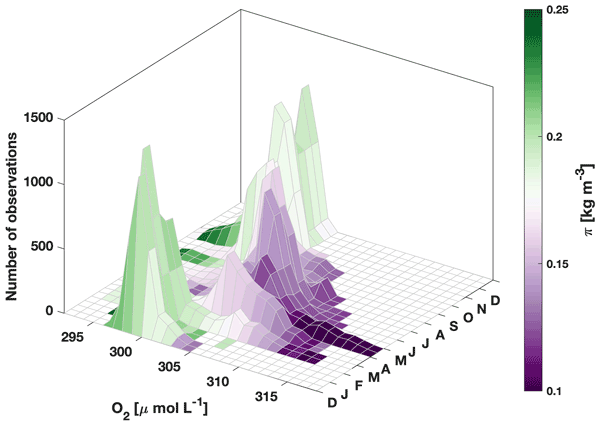
Jannes Koelling, Dariia Atamanchuk, Johannes Karstensen, Patricia Handmann, and Douglas W. R. Wallace
Biogeosciences, 19, 437–454, https://doi.org/10.5194/bg-19-437-2022, https://doi.org/10.5194/bg-19-437-2022, 2022
Short summary
Short summary
In this study, we investigate oxygen variability in the deep western boundary current in the Labrador Sea from multiyear moored records. We estimate that about half of the oxygen taken up in the interior Labrador Sea by air–sea gas exchange during deep water formation is exported southward the same year. Our results underline the complexity of the oxygen uptake and export in the Labrador Sea and highlight the important role this region plays in supplying oxygen to the deep ocean.
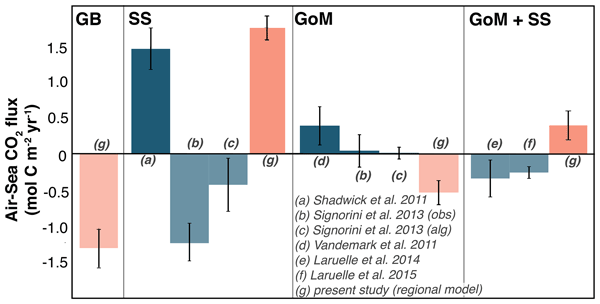
Krysten Rutherford, Katja Fennel, Dariia Atamanchuk, Douglas Wallace, and Helmuth Thomas
Biogeosciences, 18, 6271–6286, https://doi.org/10.5194/bg-18-6271-2021, https://doi.org/10.5194/bg-18-6271-2021, 2021
Short summary
Short summary
Using a regional model of the northwestern North Atlantic shelves in combination with a surface water time series and repeat transect observations, we investigate surface CO2 variability on the Scotian Shelf. The study highlights a strong seasonal cycle in shelf-wide pCO2 and spatial variability throughout the summer months driven by physical events. The simulated net flux of CO2 on the Scotian Shelf is out of the ocean, deviating from the global air–sea CO2 flux trend in continental shelves.
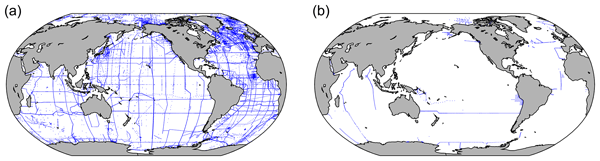
Siv K. Lauvset, Nico Lange, Toste Tanhua, Henry C. Bittig, Are Olsen, Alex Kozyr, Marta Álvarez, Susan Becker, Peter J. Brown, Brendan R. Carter, Leticia Cotrim da Cunha, Richard A. Feely, Steven van Heuven, Mario Hoppema, Masao Ishii, Emil Jeansson, Sara Jutterström, Steve D. Jones, Maren K. Karlsen, Claire Lo Monaco, Patrick Michaelis, Akihiko Murata, Fiz F. Pérez, Benjamin Pfeil, Carsten Schirnick, Reiner Steinfeldt, Toru Suzuki, Bronte Tilbrook, Anton Velo, Rik Wanninkhof, Ryan J. Woosley, and Robert M. Key
Earth Syst. Sci. Data, 13, 5565–5589, https://doi.org/10.5194/essd-13-5565-2021, https://doi.org/10.5194/essd-13-5565-2021, 2021
Short summary
Short summary
GLODAP is a data product for ocean inorganic carbon and related biogeochemical variables measured by the chemical analysis of water bottle samples from scientific cruises. GLODAPv2.2021 is the third update of GLODAPv2 from 2016. The data that are included have been subjected to extensive quality control, including systematic evaluation of measurement biases. This version contains data from 989 hydrographic cruises covering the world's oceans from 1972 to 2020.
Cited articles
Azetsu-Scott, K., Jones, E. P., and Gershey, R. M.: Distribution and ventilation of water masses in the Labrador Sea inferred from CFCs and carbon tetrachloride, Mar. Chem., 94, 55–66, https://doi.org/10.1016/j.marchem.2004.07.015, 2005.
Blais, M., Galbraith, P. S., Plourde, S., and Fisheries, C. L.: Chemical and Biological Oceanographic Conditions in the Estuary and Gulf of St. Lawrence during 2022, Can. Tech. Rep. Hydrogr. Ocean Sci., 357, https://doi.org/10.13140/RG.2.2.24613.88806, 2023.
Blais, M., Galbraith, P. S., Lizotte, M., Clay, S. A., and Starr, M.: Chemical and Biological Oceanographic Conditions in the Estuary and Gulf of St. Lawrence During 2023, report, Can. Tech. Rep. Hydrogr. Ocean Sci., 385, 84 pp., 2024.
Brickman, D., Hebert, D., and Wang, Z.: Mechanism for the recent ocean warming events on the Scotian Shelf of eastern Canada, Cont. Shelf Res., 156, 11–22, https://doi.org/10.1016/j.csr.2018.01.001, 2018.
Bugden, G. L.: Oceanographic conditions in the deeper waters of the Gulf of St. Lawrence in relation to local and oceanic forcing, NAFO Scientific Council Studies Documents, 88, 1–36, 1988.
Bullister, J. L. and Warner, M. J.: Atmospheric Histories (1765–2022) for CFC-11, CFC-12, CFC-113, CCl4, SF6 and N2O (NCEI Accession 0164584), [CFC-12, SF6], NOAA National Centers for Environmental Information [data set], https://doi.org/10.3334/cdiac/otg.cfc_atm_hist_2015, 2017.
Bullister, J. L., Wisegarver, D. P., and Menzia, F. A.: The solubility of sulfur hexafluoride in water and seawater, Deep-Sea Res. Pt. I, 49, 175–187, https://doi.org/10.1016/S0967-0637(01)00051-6, 2002.
Claret, M., Galbraith, E. D., Palter, J. B., Bianchi, D., Fennel, K., Gilbert, D., and Dunne, J. P.: Rapid coastal deoxygenation due to ocean circulation shift in the northwest Atlantic, Nat. Clim. Change, https://doi.org/10.1038/s41558-018-0263-1, 2018.
DeGrandpre, M. D., Körtzinger, A., Send, U., Wallace, D. W. R., and Bellerby, R. G. J.: Uptake and sequestration of atmospheric CO2 in the Labrador Sea deep convection region, Geophys. Res. Lett., 33, https://doi.org/10.1029/2006GL026881, 2006.
Diaz, R. J. and Rosenberg, R.: Spreading Dead Zones and Consequences for Marine Ecosystems, Science, 321, 926–929, https://doi.org/10.1126/science.1156401, 2008.
Dickie, L. and Trites, R.: The Gulf of St. Lawrence, in: Ecosystems of the World: Estuaries and enclosed seas, edited by: Ketchum, B., Elsevier, New York, NY, ISBN 0-444-41921-7, 1983.
Fennel, K. and Testa, J. M.: Biogeochemical Controls on Coastal Hypoxia, Annu. Rev. Mar. Sci., 11, 105–130, https://doi.org/10.1146/annurev-marine-010318-095138, 2019.
Fine, R. A.: Observations of CFCs and SF6 as ocean tracers, Annu. Rev. Mar. Sci., 3, 173–195, https://doi.org/10.1146/annurev.marine.010908.163933, 2011.
Galbraith, P. S.: Winter water masses in the Gulf of St. Lawrence, J. Geophys. Res.-Atmos., 111, https://doi.org/10.1029/2005JC003159, 2006.
Galbraith, P. S., Chassé, J., Shaw, J.-L., Dumas, J., and Bourassa, M.-N.: Physical Oceanographic Conditions in the Gulf of St. Lawrence during 2023, report, Can. Tech. Rep. Hydrogr. Ocean Sci., 378, 91 pp., 2024.
Genovesi, L., de Vernal, A., Thibodeau, B., Hillaire-Marcel, C., Mucci, A., and Gilbert, D.: Recent changes in bottom water oxygenation and temperature in the gulf of st. Lawrence: Micropaleontological and geochemical evidence, Limnol. Oceanogr., 56, 1319–1329, https://doi.org/10.4319/lo.2011.56.4.1319, 2011.
Gerke, L., Arck, Y., and Tanhua, T.: Temporal Variability of Ventilation in the Eurasian Arctic Ocean, J. Geophys. Res.-Oceans, 129, https://doi.org/10.1029/2023JC020608, 2024.
Gilbert, D.: Propagation of temperature signals from the northwest Atlantic continental shelf edge into the Laurentian Channel, in: ICES Council Meeting, N:07, 12 pp., 2004.
Gilbert, D. and Pettigrew, B.: Interannual variability (1948–1994) of the CIL core temperature in the Gulf of St. Lawrence, Can. J. Fish. Aquat. Sci., 54, 57–67, 1997.
Gilbert, D., Sundby, B., Gobeil, C., Mucci, A., and Tremblay, G. H.: A seventy-two-year record of diminishing deep-water oxygen in the St. Lawrence estuary: The northwest Atlantic connection, Limnol. Oceanogr., 50, 1654–1666, https://doi.org/10.4319/lo.2005.50.5.1654, 2005.
Grantham, B. A., Chan, F., Nielsen, K. J., Fox, D. S., Barth, J. A., Huyer, A., Lubchenco, J., and Menge, B. A.: Upwelling-driven nearshore hypoxia signals ecosystem and oceanographic changes in the northeast Pacific, Nature, 429, 749–754, https://doi.org/10.1038/nature02605, 2004.
Guo, H., Koeve, W., Oschlies, A., He, Y.-C., Kemena, T. P., Gerke, L., and Kriest, I.: Dual-tracer constraints on the inverse Gaussian transit time distribution improve the estimation of water mass ages and their temporal trends in the tropical thermocline, Ocean Sci., 21, 1167–1182, https://doi.org/10.5194/os-21-1167-2025, 2025.
Haine, T. W. N. and Richards, K. J.: The influence of the seasonal mixed layer on oceanic uptake of CFCs, J. Geophys. Res., 100, 10727–10744, 1995.
Hall, T. M. and Plumb, R. A.: Age as a diagnostic of stratospheric transport, J. Geophys. Res.-Atmos., 99, 1059–1070, 1994.
Joint Committee for Guides in Metrology (JCGM): Evaluation of measurement data-Supplement 1 to the “Guide to the expression of uncertainty in measurement” – Propagation of distributions using a Monte Carlo method, https://doi.org/10.59161/JCGM101-2008, 2008.
Joyce, T. M. and Zhang, R.: Notes and correspondence: On the Path of the Gulf Stream and the Atlantic meridional overturning circulation, J. Climate, 23, 3146–3154, https://doi.org/10.1175/2010JCLI3310.1, 2010.
Jutras, M., Dufour, C. O., Mucci, A., Cyr, F., and Gilbert, D.: Temporal Changes in the Causes of the Observed Oxygen Decline in the St. Lawrence Estuary, J. Geophys. Res.-Oceans, 125, https://doi.org/10.1029/2020JC016577, 2020.
Jutras, M., Dufour, C. O., Mucci, A., and Talbot, L. C.: Large-scale control of the retroflection of the Labrador Current, Nat. Commun., 14, https://doi.org/10.1038/s41467-023-38321-y, 2023a.
Jutras, M., Mucci, A., Chaillou, G., Nesbitt, W. A., and Wallace, D. W. R.: Temporal and spatial evolution of bottom-water hypoxia in the St Lawrence estuarine system, Biogeosciences, 20, 839–849, https://doi.org/10.5194/bg-20-839-2023, 2023b.
Khatiwala, S., Visbeck, M., and Schlosser, P.: Age tracers in an ocean GCM, Deep-Sea Res. Pt. I, 48, 1423–1441, 2001.
Koutitonsky, V. G. and Budgen, G. L.: The physical oceanography of the Gulf of St. Lawrence : a review with emphasis on the synoptic variability of the motion, Can. Spec. Publ. Fish. Aquat. Sci., 113, 57–90, 1991.
Lauvset, S. K., Lange, N., Tanhua, T., Bittig, H. C., Olsen, A., Kozyr, A., Alin, S., Álvarez, M., Azetsu-Scott, K., Barbero, L., Becker, S., Brown, P. J., Carter, B. R., da Cunha, L. C., Feely, R. A., Hoppema, M., Humphreys, M. P., Ishii, M., Jeansson, E., Jiang, L.-Q., Jones, S. D., Lo Monaco, C., Murata, A., Müller, J. D., Pérez, F. F., Pfeil, B., Schirnick, C., Steinfeldt, R., Suzuki, T., Tilbrook, B., Ulfsbo, A., Velo, A., Woosley, R. J., and Key, R. M.: GLODAPv2.2022: the latest version of the global interior ocean biogeochemical data product, Earth Syst. Sci. Data, 14, 5543–5572, https://doi.org/10.5194/essd-14-5543-2022, 2022.
Lauzier, L. M. and Trites, R. W.: The Deep Waters in the Laurentian Channel, J. Fish. Res. Board Can., 15, 1247–1257, https://doi.org/10.1139/f58-068, 1958.
Lehmann, M. F., Barnett, B., Geĺinas, Y., Gilbert, D., Maranger, R. J., Mucci, A., Sundby, B., and Thibodeau, B.: Aerobic respiration and hypoxia in the lower st. lawrence estuary: Stable isotope ratios of dissolved oxygen constrain oxygen sink partitioning, Limnol. Oceanogr., 54, 2157–2169, https://doi.org/10.4319/lo.2009.54.6.2157, 2009.
Liu, M. and Tanhua, T.: Water masses in the Atlantic Ocean: characteristics and distributions, Ocean Sci., 17, 463–486, https://doi.org/10.5194/os-17-463-2021, 2021.
McLellan, H. J.: On the Distinctness and Origin of the Slope Water off the Scotian Shelf and its Easterly Flow South of the Grand Banks, J. Fish. Res. Board Can., 14, 213–239, https://doi.org/10.1139/f57-011, 1957.
Mucci, A., Starr, M., Gilbert, D., and Sundby, B.: Acidification of Lower St. Lawrence estuary bottom waters, Atmos. Ocean, 49, 206–218, https://doi.org/10.1080/07055900.2011.599265, 2011.
Nesbitt, W. A., Stevens, S. W., Mucci, A. O., Gerke, L., Tanhua, T., Chaillou, G., and Wallace, D. W. R.: The coupled oxygen and carbon dynamics in the subsurface waters of the Gulf and Lower St. Lawrence Estuary and implications for artificial oxygenation, Ocean Sci., 21, 2179–2195, https://doi.org/10.5194/os-21-2179-2025, 2025.
Nesbitt, W., Mucci, A., Tanhua, T., Gelinas, Y., Tremblay, J.-É., Chaillou, G., Pascal, L., Fradette, C., Gerke, L., Stevens, S., Jutras, M., Blais, M., Lizotte, M., Starr, M., and Wallace, D.: Gulf of St. Lawrence and Estuary Dataset: A Quality-Controlled Data Product for Biogeochemistry, St. Lawrence Global Observatory [data set], https://doi.org/10.26071/d6f3fdfc-788d-48ff, 2026.
Raimondi, L., Tanhua, T., Azetsu-Scott, K., Yashayaev, I., and Wallace, D. W. R.: A 30-Year Time Series of Transient Tracer-Based Estimates of Anthropogenic Carbon in the Central Labrador Sea, J. Geophys. Res.-Oceans, 126, https://doi.org/10.1029/2020JC017092, 2021.
Rousseau, S., Lavoie, D., Jutras, M., and Chassé, J.: Transit time of deep and intermediate waters in the Gulf of St. Lawrence, Ocean Model., 195, https://doi.org/10.1016/j.ocemod.2025.102526, 2025.
Saucier, F. J., Roy, F., Gilbert, D., Pellerin, P., and Ritchie, H.: Modeling the formation and circulation processes of water masses and sea ice in the Gulf of St. Lawrence, Canada, J. Geophys. Res.-Oceans, 108, https://doi.org/10.1029/2000jc000686, 2003.
Schneider, A., Tanhua, T., Körtzinger, A., and Wallace, D. W. R.: An evaluation of tracer fields and anthropogenic carbon in the equatorial and the tropical North Atlantic, Deep-Sea Res., 67, 85–97, https://doi.org/10.1016/j.dsr.2012.05.007, 2012.
Shao, A. E., Mecking, S., Thompson, L. A., and Sonnerup, R. E.: Evaluating the use of 1-D transit time distributions to infer the mean state and variability of oceanic ventilation, J. Geophys. Res.-Oceans, 121, 6650–6670, https://doi.org/10.1002/2016JC011900, 2016.
Shaw, J. L. and Galbraith, P. S.: Climatology of Transport in the Strait of Belle Isle, J. Geophys. Res.-Oceans, 128, https://doi.org/10.1029/2022JC019084, 2023.
Sonnerup, R. E., Mecking, S., and Bullister, J. L.: Transit time distributions and oxygen utilization rates in the Northeast Pacific Ocean from chlorofluorocarbons and sulfur hexafluoride, Deep-Sea Res. Pt. I, 72, 61–71, https://doi.org/10.1016/j.dsr.2012.10.013, 2013.
Stevens, S. W., Pawlowicz, R., Tanhua, T., Gerke, L., Nesbitt, W. A., Drozdowski, A., Chassé, J., and Wallace, D. W. R.: Deep inflow transport and dispersion in the Gulf of St. Lawrence revealed by a tracer release experiment, Commun. Earth Environ., 5, 1–13, https://doi.org/10.1038/s43247-024-01505-5, 2024.
Stöven, T. and Tanhua, T.: Ventilation of the Mediterranean Sea constrained by multiple transient tracer measurements, Ocean Sci., 10, 439–457, https://doi.org/10.5194/os-10-439-2014, 2014.
Stöven, T., Tanhua, T., Hoppema, M., and Bullister, J. L.: Perspectives of transient tracer applications and limiting cases, Ocean Sci., 11, 699–718, https://doi.org/10.5194/os-11-699-2015, 2015.
Talley, L. D., Feely, R. A., Sloyan, B. M., Wanninkhof, R., Baringer, M. O., Bullister, J. L., Carlson, C. A., Doney, S. C., Fine, R. A., Firing, E., Gruber, N., Hansell, D. A., Ishii, M., Johnson, G. C., Katsumata, K., Key, R. M., Kramp, M., Langdon, C., Macdonald, A. M., Mathis, J. T., McDonagh, E. L., Mecking, S., Millero, F. J., Mordy, C. W., Nakano, T., Sabine, C. L., Smethie, W. M., Swift, J. H., Tanhua, T., Thurnherr, A. M., Warner, M. J., and Zhang, J.-Z.: Changes in Ocean Heat, Carbon Content, and Ventilation: A Review of the First Decade of GO-SHIP Global Repeat Hydrography, Annu. Rev. Mar. Sci., 8, 185–215, https://doi.org/10.1146/annurev-marine-052915-100829, 2016.
Tanhua, T., Anders Olsson, K., and Fogelqvist, E.: A first study of SF 6 as a transient tracer in the Southern Ocean, Deep-Sea. Res. Pt. II, 51, 2683–2699, https://doi.org/10.1016/j.dsr2.2001.02.001, 2004.
Tanhua, T., Olsson, K. A., and Jeansson, E.: Formation of Denmark Strait overflow water and its hydro-chemical composition, J. Marine Syst., 57, 264–288, https://doi.org/10.1016/j.jmarsys.2005.05.003, 2005a.
Tanhua, T., Bulsiewicz, K., and Rhein, M.: Spreading of overflow water from the Greenland to the Labrador Sea, Geophys. Res. Lett., 32, 1–4, https://doi.org/10.1029/2005GL022700, 2005b.
Tanhua, T., Waugh, D. W., and Wallace, D. W. R.: Use of SF6 to estimate anthropogenic CO2 in the upper ocean, J. Geophys. Res.-Oceans, 113, https://doi.org/10.1029/2007JC004416, 2008.
Thibodeau, B., de Vernal, A., and Mucci, A.: Recent eutrophication and consequent hypoxia in the bottom waters of the Lower St. Lawrence Estuary: Micropaleontological and geochemical evidence, Mar. Geol., 231, 37–50, https://doi.org/10.1016/j.margeo.2006.05.010, 2006.
Trossman, D. S., Thompson, L., Mecking, S., and Warner, M. J.: On the formation, ventilation, and erosion of mode waters in the North Atlantic and Southern Oceans, J. Geophys. Res.-Oceans, 117, https://doi.org/10.1029/2012JC008090, 2012.
Walker, S. J., Weiss, R. F., and Salameh, P. K.: Reconstructed histories of the annual mean atmospheric mole fractions for the halocarbons CFC-11, CFC-12, CFC-113, and carbon tetrachloride, J. Geophys. Res.-Oceans, 105, 14285–14296, https://doi.org/10.1029/1999jc900273, 2000.
Warner, M. J. and Weiss, R. F.: Solubilities of chlorofluorocarbons 11 and 12 in water and seawater, Deep-Sea Res., 32, 1485–1497, https://doi.org/10.1016/0198-0149(85)90099-8, 1985.
Waugh, D. W., Vollmer, M. K., Weiss, R. F., Haine, T. W. N., and Hall, T. M.: Transit time distributions in Lake Issyk-Kul, Geophys. Res. Lett., 29, https://doi.org/10.1029/2002gl016201, 2002.
Waugh, D. W., Hall, T. M., and Haine, T. W. N.: Relationships among tracer ages, J. Geophys. Res., 108, https://doi.org/10.1029/2002jc001325, 2003.
Short summary
Transient tracer data, measured for the first time in 2022 in the Gulf of St. Lawrence, reveal older deep waters in the east than the west, contrary to expected estuarine circulation, indicating increased influence of older, warmer, less oxygenated North Atlantic Central Water over younger, oxygen-rich Labrador Current Water. While consistent with previous reports of increasing NACW contribution, our results contradict claims of a complete shift to NACW by 2021, showing that LCW still persists.
Transient tracer data, measured for the first time in 2022 in the Gulf of St. Lawrence, reveal...


