
Articles | Volume 22, issue 1
https://doi.org/10.5194/os-22-101-2026
© Author(s) 2026. This work is distributed under
the Creative Commons Attribution 4.0 License.
the Creative Commons Attribution 4.0 License.
https://doi.org/10.5194/os-22-101-2026
© Author(s) 2026. This work is distributed under
the Creative Commons Attribution 4.0 License.
the Creative Commons Attribution 4.0 License.
Research article
| 
13 Jan 2026
Research article |
| 13 Jan 2026
| 13 Jan 2026
Passive acoustic monitoring from profiling floats as a pathway to scalable autonomous observations of global surface wind
Louise Delaigue
CORRESPONDING AUTHOR

Sorbonne Université, CNRS, Laboratoire d'Océanographie de Villefranche, LOV, 06230 Villefranche-sur-Mer, France
Pierre Cauchy
Institut des sciences de la mer (ISMER), Université du Québec à Rimouski (UQAR), Rimouski, Québec, Canada
Dorian Cazau
ENSTA, Lab-STICC, UMR CNRS 6285, Brest, France
Julien Bonnel
Marine Physical Laboratory, Scripps Institution of Oceanography, University of California San Diego, La Jolla, CA 92093, USA
Sara Pensieri
Institute for the Study of Anthropic Impact and Sustainability in the Marine Environment (IAS), Consiglio Nazionale delle Ricerche (CNR), Genoa, Italy
Roberto Bozzano
Institute for the Study of Anthropic Impact and Sustainability in the Marine Environment (IAS), Consiglio Nazionale delle Ricerche (CNR), Genoa, Italy
Anatole Gros-Martial
Centre d'Études Biologiques de Chizé, CNRS, Villiers-en-bois, France
Christophe Schaeffer
NKE Instrumentation, Hennebont, France
Arnaud David
NKE Instrumentation, Hennebont, France
Paco Stil
Sorbonne Université, CNRS, Laboratoire d'Océanographie de Villefranche, LOV, 06230 Villefranche-sur-Mer, France
Antoine Poteau
Sorbonne Université, CNRS, Laboratoire d'Océanographie de Villefranche, LOV, 06230 Villefranche-sur-Mer, France
Catherine Schmechtig
OSU Ecce Terra, UAR 3455, CNRS, Sorbonne Université, Paris CEDEX, France
Edouard Leymarie
Sorbonne Université, CNRS, Laboratoire d'Océanographie de Villefranche, LOV, 06230 Villefranche-sur-Mer, France
Hervé Claustre
Sorbonne Université, CNRS, Laboratoire d'Océanographie de Villefranche, LOV, 06230 Villefranche-sur-Mer, France
Related authors
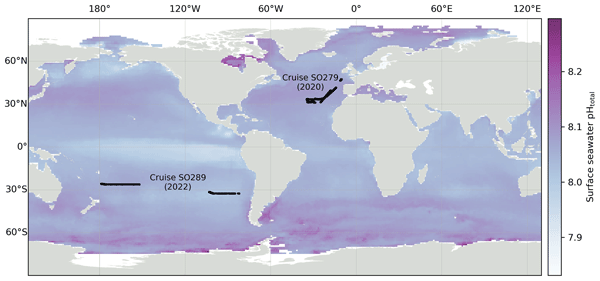
Louise Delaigue, Gert-Jan Reichart, Li Qiu, Eric P. Achterberg, Yasmina Ourradi, Chris Galley, André Mutzberg, and Matthew P. Humphreys
Biogeosciences, 22, 5103–5121, https://doi.org/10.5194/bg-22-5103-2025, https://doi.org/10.5194/bg-22-5103-2025, 2025
Short summary
Short summary
Our study analysed pH in ocean surface waters to understand how it fluctuates with changes in temperature, salinity, and biological activities. We found that temperature mainly controls daily pH variations, but biological processes also play a role, especially in affecting CO2 levels between the ocean and atmosphere. Our research shows how these factors together maintain the balance of ocean chemistry, which is crucial for predicting changes in marine environments.
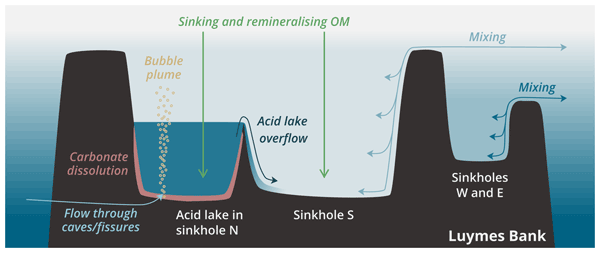
Matthew P. Humphreys, Erik H. Meesters, Henk de Haas, Szabina Karancz, Louise Delaigue, Karel Bakker, Gerard Duineveld, Siham de Goeyse, Andreas F. Haas, Furu Mienis, Sharyn Ossebaar, and Fleur C. van Duyl
Biogeosciences, 19, 347–358, https://doi.org/10.5194/bg-19-347-2022, https://doi.org/10.5194/bg-19-347-2022, 2022
Short summary
Short summary
A series of submarine sinkholes were recently discovered on Luymes Bank, part of Saba Bank, a carbonate platform in the Caribbean Netherlands. Here, we investigate the waters inside these sinkholes for the first time. One of the sinkholes contained a body of dense, low-oxygen and low-pH water, which we call the
acid lake. We use measurements of seawater chemistry to work out what processes were responsible for forming the acid lake and discuss the consequences for the carbonate platform.
Salem Ibrahim Salem, Andre Valente, Shubha Sathyendranath, Andrei Chuprin, Théo Renard, Jaime Pitarch, Ruth Airs, Moreno Ana, Maria-Manuel Angelico, David Antoine, Robert Arnone, Florinda Artuso, Paulo O. Oliveira, William Balch, Kathryn Barker, Ray Barlow, Simon Bélanger, Marco Bellacicco, Jean-François Berthon, Şükrü Beşiktepe, Francesco Bignami, Yngve Borsheim, Astrid Bracher, Federica Braga, Vittorio Brando, Robert J. W. Brewin, Vanda Brotas, Elisabetta Canuti, Francisco P. Chavez, Andrés Cianca, Hervé Claustre, Lesley Clementson, Simone Colella, Raul Costa, Cristina Nunes, Richard Crout, Emmanuel Devred, Annalisa Di Cicco, Federico Falcini, Ivan Farace, Afonso Ferreira, Scott Freeman, Robert Frouin, Carlos García-Soto, Isabella Giardina, Stuart W. Gibb, Arthur Gleason, Ralf Goericke, Richard Gould, Michael Grant, Nathalie Guillocheau, Hiroto Higa, Stanford B. Hooker, Chuamin Hu, Joji Ishizaka, Thomas Jackson, Mati Kahru, Milton Kampel, Bokyung Kim, Holger Klein, Piotr Kowalczuk, Susanne Kratzer, Raphael Kudela, Antonia Lai, Rosario Lavezza, Jesus Ledesma, Huiwon Lee, Steven Lohrenz, Hubert Loisel, Vivian Lutz, Antonio Mannino, Francesca Margiotta, Victor Martinez-Vicente, Salvatore Marullo, Luca Massi, Patricia Matrai, Atsushi Matsuoka, David McKee, Chiara Melillo, Carlos B. Mendes, Brian G. Mitchell, Tiffany Moisan, Enrique Montes, Frank Muller-Karger, Aimee Neeley, Michael Novak, Leonie O'Dowd, Michael Ondrusek, Emanuele Organelli, Heeyoon Park, Trevor Platt, Francesca Polonelli, Alex Poulton, Mariella Ragni, Michel Repecaud, Maurizio Ribera d’Alcalà, Tamara Rodriguez-Ramos, Rüdiger Röttgers, Manuel Ruiz-Villarreal, Michela Sammartino, Rosalia Santoleri, Gian Marco Scarpa, Thomas Schroeder, Valeria Segura, Timothy Smyth, Denise Smythe-Wright, Heidi M. Sosik, Joanna Stoń-Egiert, Malcolm Taberner, Jing Tan, Rob Thomas, Crystal Thomas, Gavin Tilstone, Andreia Tracana, Michael Twardowski, Vincenzo Vellucci, Gianluca Volpe, Kenneth Voss, Jeremy Werdell, Marcel Wernand, Bozena Wojtasiewicz, Simon Wright, Sunmi Yang, Giuseppe Zibordi, Maria Laura Zoffoli, and Steve Groom
Earth Syst. Sci. Data Discuss., https://doi.org/10.5194/essd-2026-539, https://doi.org/10.5194/essd-2026-539, 2026
Preprint under review for ESSD
Short summary
Short summary
This paper presents the fourth version of the ESA Ocean Colour Climate Change Initiative global in situ bio-optical database. The updated compilation combines observations from many international data sources collected between 1996 and 2025 and includes major expansions in coverage and variables. The dataset provides a consistent reference for validating satellite ocean-colour products and supports algorithm development and long-term climate studies.
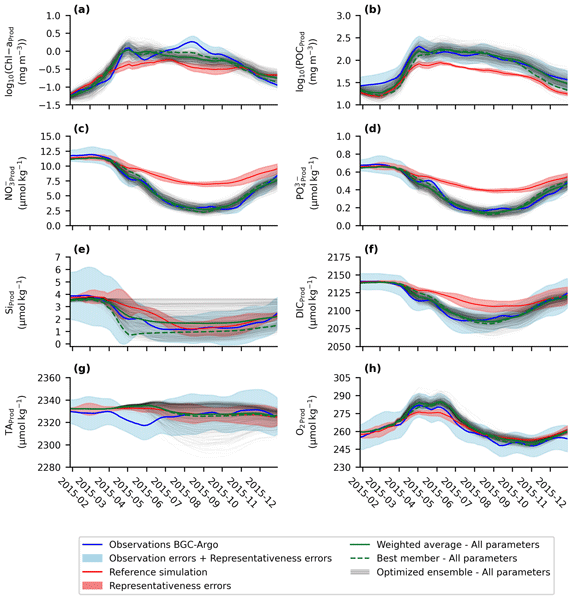
Quentin Hyvernat, Alexandre Mignot, Elodie Gutknecht, Giovanni Ruggiero, Coralie Perruche, Guillaume Samson, Raphaëlle Sauzède, Olivier Aumont, Hervé Claustre, and Fabrizio D'Ortenzio
Biogeosciences, 23, 4967–4998, https://doi.org/10.5194/bg-23-4967-2026, https://doi.org/10.5194/bg-23-4967-2026, 2026
Short summary
Short summary
We introduce an iterative Importance Sampling framework to optimize the Pelagic Interaction Scheme for Carbon and Ecosystem Studies (PISCES) model using 20 metrics from Biogeochemical-Argo data. Three strategies are compared: 29 main-effect, 66 including interaction effects, and all 95 parameters. All yield statistically indistinguishable skill gains, reducing error by 54–56 %. Optimizing all 95 parameters is recommended for comprehensive uncertainty quantification. The optimized set also improves skill in a three-dimensional regional simulation.
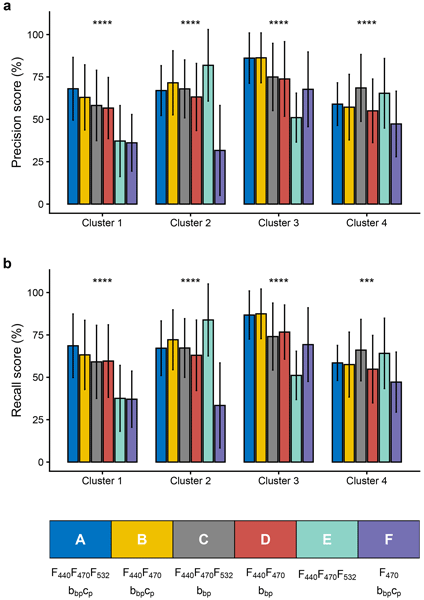
Flavien Petit, Julia Uitz, Louison Dufour, Collin Roesler, Frédéric Partensky, Laurence Garczarek, Priscillia Gourvil, Céline Dimier, Melek Golbol, Vincenzo Vellucci, David Antoine, Christophe Penkerc'h, Vincent Taillandier, and Hervé Claustre
Biogeosciences, 23, 4561–4582, https://doi.org/10.5194/bg-23-4561-2026, https://doi.org/10.5194/bg-23-4561-2026, 2026
Short summary
Short summary
We studied whether ocean sensors can detect changes in microscopic algae communities that influence marine ecosystems and carbon uptake. We combined laboratory experiments and ocean observations to test sensors that measure how algae emit light at different colors when illuminated. We found that combining these light measurements with other optical signals improves the identification of broad community types. This approach could help future ocean floats better track ecosystem change globally.
Louise Delaigue, Gert-Jan Reichart, Li Qiu, Eric P. Achterberg, Yasmina Ourradi, Chris Galley, André Mutzberg, and Matthew P. Humphreys
Biogeosciences, 22, 5103–5121, https://doi.org/10.5194/bg-22-5103-2025, https://doi.org/10.5194/bg-22-5103-2025, 2025
Short summary
Short summary
Our study analysed pH in ocean surface waters to understand how it fluctuates with changes in temperature, salinity, and biological activities. We found that temperature mainly controls daily pH variations, but biological processes also play a role, especially in affecting CO2 levels between the ocean and atmosphere. Our research shows how these factors together maintain the balance of ocean chemistry, which is crucial for predicting changes in marine environments.
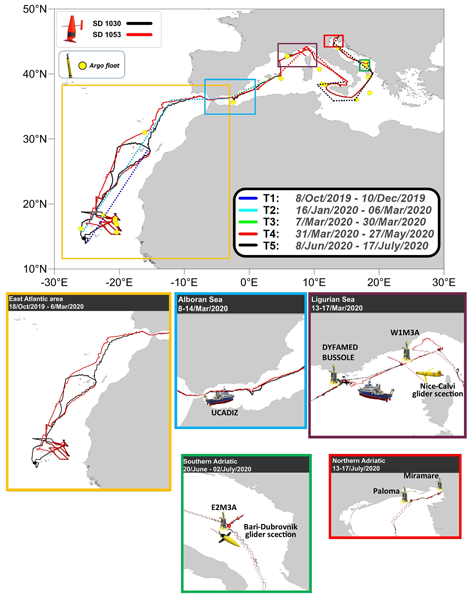
Riccardo Martellucci, Michele Giani, Elena Mauri, Laurent Coppola, Melf Paulsen, Marine Fourrier, Sara Pensieri, Vanessa Cardin, Carlotta Dentico, Roberto Bozzano, Carolina Cantoni, Anna Lucchetta, Alfredo Izquierdo, Miguel Bruno, and Ingunn Skjelvan
Earth Syst. Sci. Data, 16, 5333–5356, https://doi.org/10.5194/essd-16-5333-2024, https://doi.org/10.5194/essd-16-5333-2024, 2024
Short summary
Short summary
As part of the ATL2MED demonstration experiment, two autonomous surface vehicles undertook a 9-month mission from the northeastern Atlantic to the Adriatic Sea. Biofouling affected the measurement of variables such as conductivity and dissolved oxygen. COVID-19 limited the availability of discrete samples for validation. We present correction methods for salinity and dissolved oxygen. We use model products to correct salinity and apply the Argo floats in-air correction method for oxygen
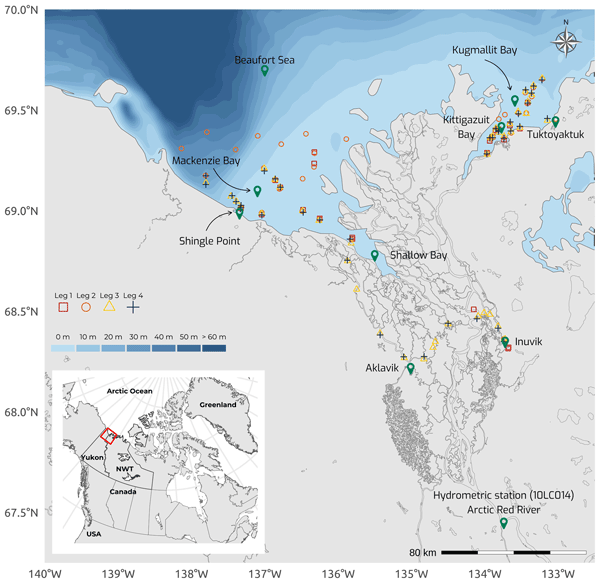
Martine Lizotte, Bennet Juhls, Atsushi Matsuoka, Philippe Massicotte, Gaëlle Mével, David Obie James Anikina, Sofia Antonova, Guislain Bécu, Marine Béguin, Simon Bélanger, Thomas Bossé-Demers, Lisa Bröder, Flavienne Bruyant, Gwénaëlle Chaillou, Jérôme Comte, Raoul-Marie Couture, Emmanuel Devred, Gabrièle Deslongchamps, Thibaud Dezutter, Miles Dillon, David Doxaran, Aude Flamand, Frank Fell, Joannie Ferland, Marie-Hélène Forget, Michael Fritz, Thomas J. Gordon, Caroline Guilmette, Andrea Hilborn, Rachel Hussherr, Charlotte Irish, Fabien Joux, Lauren Kipp, Audrey Laberge-Carignan, Hugues Lantuit, Edouard Leymarie, Antonio Mannino, Juliette Maury, Paul Overduin, Laurent Oziel, Colin Stedmon, Crystal Thomas, Lucas Tisserand, Jean-Éric Tremblay, Jorien Vonk, Dustin Whalen, and Marcel Babin
Earth Syst. Sci. Data, 15, 1617–1653, https://doi.org/10.5194/essd-15-1617-2023, https://doi.org/10.5194/essd-15-1617-2023, 2023
Short summary
Short summary
Permafrost thaw in the Mackenzie Delta region results in the release of organic matter into the coastal marine environment. What happens to this carbon-rich organic matter as it transits along the fresh to salty aquatic environments is still underdocumented. Four expeditions were conducted from April to September 2019 in the coastal area of the Beaufort Sea to study the fate of organic matter. This paper describes a rich set of data characterizing the composition and sources of organic matter.
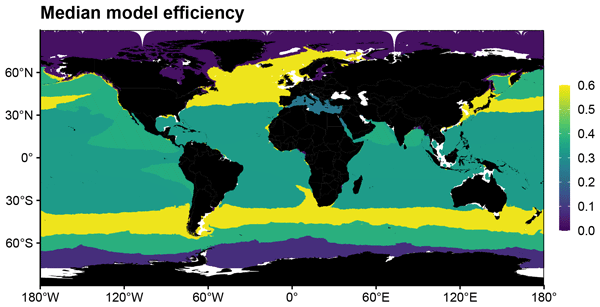
Alexandre Mignot, Hervé Claustre, Gianpiero Cossarini, Fabrizio D'Ortenzio, Elodie Gutknecht, Julien Lamouroux, Paolo Lazzari, Coralie Perruche, Stefano Salon, Raphaëlle Sauzède, Vincent Taillandier, and Anna Teruzzi
Biogeosciences, 20, 1405–1422, https://doi.org/10.5194/bg-20-1405-2023, https://doi.org/10.5194/bg-20-1405-2023, 2023
Short summary
Short summary
Numerical models of ocean biogeochemistry are becoming a major tool to detect and predict the impact of climate change on marine resources and monitor ocean health. Here, we demonstrate the use of the global array of BGC-Argo floats for the assessment of biogeochemical models. We first detail the handling of the BGC-Argo data set for model assessment purposes. We then present 23 assessment metrics to quantify the consistency of BGC model simulations with respect to BGC-Argo data.
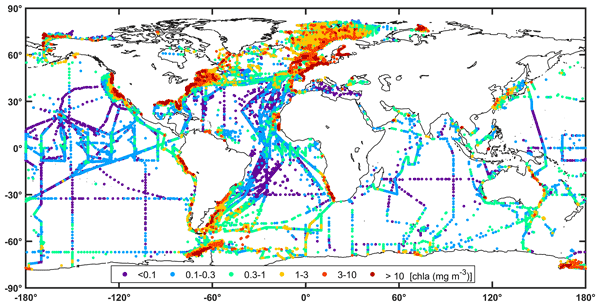
André Valente, Shubha Sathyendranath, Vanda Brotas, Steve Groom, Michael Grant, Thomas Jackson, Andrei Chuprin, Malcolm Taberner, Ruth Airs, David Antoine, Robert Arnone, William M. Balch, Kathryn Barker, Ray Barlow, Simon Bélanger, Jean-François Berthon, Şükrü Beşiktepe, Yngve Borsheim, Astrid Bracher, Vittorio Brando, Robert J. W. Brewin, Elisabetta Canuti, Francisco P. Chavez, Andrés Cianca, Hervé Claustre, Lesley Clementson, Richard Crout, Afonso Ferreira, Scott Freeman, Robert Frouin, Carlos García-Soto, Stuart W. Gibb, Ralf Goericke, Richard Gould, Nathalie Guillocheau, Stanford B. Hooker, Chuamin Hu, Mati Kahru, Milton Kampel, Holger Klein, Susanne Kratzer, Raphael Kudela, Jesus Ledesma, Steven Lohrenz, Hubert Loisel, Antonio Mannino, Victor Martinez-Vicente, Patricia Matrai, David McKee, Brian G. Mitchell, Tiffany Moisan, Enrique Montes, Frank Muller-Karger, Aimee Neeley, Michael Novak, Leonie O'Dowd, Michael Ondrusek, Trevor Platt, Alex J. Poulton, Michel Repecaud, Rüdiger Röttgers, Thomas Schroeder, Timothy Smyth, Denise Smythe-Wright, Heidi M. Sosik, Crystal Thomas, Rob Thomas, Gavin Tilstone, Andreia Tracana, Michael Twardowski, Vincenzo Vellucci, Kenneth Voss, Jeremy Werdell, Marcel Wernand, Bozena Wojtasiewicz, Simon Wright, and Giuseppe Zibordi
Earth Syst. Sci. Data, 14, 5737–5770, https://doi.org/10.5194/essd-14-5737-2022, https://doi.org/10.5194/essd-14-5737-2022, 2022
Short summary
Short summary
A compiled set of in situ data is vital to evaluate the quality of ocean-colour satellite data records. Here we describe the global compilation of bio-optical in situ data (spanning from 1997 to 2021) used for the validation of the ocean-colour products from the ESA Ocean Colour Climate Change Initiative (OC-CCI). The compilation merges and harmonizes several in situ data sources into a simple format that could be used directly for the evaluation of satellite-derived ocean-colour data.
Flavienne Bruyant, Rémi Amiraux, Marie-Pier Amyot, Philippe Archambault, Lise Artigue, Lucas Barbedo de Freitas, Guislain Bécu, Simon Bélanger, Pascaline Bourgain, Annick Bricaud, Etienne Brouard, Camille Brunet, Tonya Burgers, Danielle Caleb, Katrine Chalut, Hervé Claustre, Véronique Cornet-Barthaux, Pierre Coupel, Marine Cusa, Fanny Cusset, Laeticia Dadaglio, Marty Davelaar, Gabrièle Deslongchamps, Céline Dimier, Julie Dinasquet, Dany Dumont, Brent Else, Igor Eulaers, Joannie Ferland, Gabrielle Filteau, Marie-Hélène Forget, Jérome Fort, Louis Fortier, Martí Galí, Morgane Gallinari, Svend-Erik Garbus, Nicole Garcia, Catherine Gérikas Ribeiro, Colline Gombault, Priscilla Gourvil, Clémence Goyens, Cindy Grant, Pierre-Luc Grondin, Pascal Guillot, Sandrine Hillion, Rachel Hussherr, Fabien Joux, Hannah Joy-Warren, Gabriel Joyal, David Kieber, Augustin Lafond, José Lagunas, Patrick Lajeunesse, Catherine Lalande, Jade Larivière, Florence Le Gall, Karine Leblanc, Mathieu Leblanc, Justine Legras, Keith Lévesque, Kate-M. Lewis, Edouard Leymarie, Aude Leynaert, Thomas Linkowski, Martine Lizotte, Adriana Lopes dos Santos, Claudie Marec, Dominique Marie, Guillaume Massé, Philippe Massicotte, Atsushi Matsuoka, Lisa A. Miller, Sharif Mirshak, Nathalie Morata, Brivaela Moriceau, Philippe-Israël Morin, Simon Morisset, Anders Mosbech, Alfonso Mucci, Gabrielle Nadaï, Christian Nozais, Ingrid Obernosterer, Thimoté Paire, Christos Panagiotopoulos, Marie Parenteau, Noémie Pelletier, Marc Picheral, Bernard Quéguiner, Patrick Raimbault, Joséphine Ras, Eric Rehm, Llúcia Ribot Lacosta, Jean-François Rontani, Blanche Saint-Béat, Julie Sansoulet, Noé Sardet, Catherine Schmechtig, Antoine Sciandra, Richard Sempéré, Caroline Sévigny, Jordan Toullec, Margot Tragin, Jean-Éric Tremblay, Annie-Pier Trottier, Daniel Vaulot, Anda Vladoiu, Lei Xue, Gustavo Yunda-Guarin, and Marcel Babin
Earth Syst. Sci. Data, 14, 4607–4642, https://doi.org/10.5194/essd-14-4607-2022, https://doi.org/10.5194/essd-14-4607-2022, 2022
Short summary
Short summary
This paper presents a dataset acquired during a research cruise held in Baffin Bay in 2016. We observed that the disappearance of sea ice in the Arctic Ocean increases both the length and spatial extent of the phytoplankton growth season. In the future, this will impact the food webs on which the local populations depend for their food supply and fisheries. This dataset will provide insight into quantifying these impacts and help the decision-making process for policymakers.
Martí Galí, Marcus Falls, Hervé Claustre, Olivier Aumont, and Raffaele Bernardello
Biogeosciences, 19, 1245–1275, https://doi.org/10.5194/bg-19-1245-2022, https://doi.org/10.5194/bg-19-1245-2022, 2022
Short summary
Short summary
Part of the organic matter produced by plankton in the upper ocean is exported to the deep ocean. This process, known as the biological carbon pump, is key for the regulation of atmospheric carbon dioxide and global climate. However, the dynamics of organic particles below the upper ocean layer are not well understood. Here we compared the measurements acquired by autonomous robots in the top 1000 m of the ocean to a numerical model, which can help improve future climate projections.
Marie Barbieux, Julia Uitz, Alexandre Mignot, Collin Roesler, Hervé Claustre, Bernard Gentili, Vincent Taillandier, Fabrizio D'Ortenzio, Hubert Loisel, Antoine Poteau, Edouard Leymarie, Christophe Penkerc'h, Catherine Schmechtig, and Annick Bricaud
Biogeosciences, 19, 1165–1194, https://doi.org/10.5194/bg-19-1165-2022, https://doi.org/10.5194/bg-19-1165-2022, 2022
Short summary
Short summary
This study assesses marine biological production in two Mediterranean systems representative of vast desert-like (oligotrophic) areas encountered in the global ocean. We use a novel approach based on non-intrusive high-frequency in situ measurements by two profiling robots, the BioGeoChemical-Argo (BGC-Argo) floats. Our results indicate substantial yet variable production rates and contribution to the whole water column of the subsurface layer, typically considered steady and non-productive.
Matthew P. Humphreys, Erik H. Meesters, Henk de Haas, Szabina Karancz, Louise Delaigue, Karel Bakker, Gerard Duineveld, Siham de Goeyse, Andreas F. Haas, Furu Mienis, Sharyn Ossebaar, and Fleur C. van Duyl
Biogeosciences, 19, 347–358, https://doi.org/10.5194/bg-19-347-2022, https://doi.org/10.5194/bg-19-347-2022, 2022
Short summary
Short summary
A series of submarine sinkholes were recently discovered on Luymes Bank, part of Saba Bank, a carbonate platform in the Caribbean Netherlands. Here, we investigate the waters inside these sinkholes for the first time. One of the sinkholes contained a body of dense, low-oxygen and low-pH water, which we call the
acid lake. We use measurements of seawater chemistry to work out what processes were responsible for forming the acid lake and discuss the consequences for the carbonate platform.
Cited articles
Baumgartner, M. F. and Bonnel, J.: Real-time detection and classification of marine mammals from expendable profiling floats, Workshop on Detection, Classification, Localization and Density Estimation of Marine Mammals using Passive Acoustics, Oahu, USA, March 2022.
Baumgartner, M. F., Stafford, K. M., and Latha, G.: Near real-time underwater passive acoustic monitoring of natural and anthropogenic sounds, in: Observing the Oceans in Real Time, edited by: Venkatesan, R., Tandon, A., D’Asaro, E., and Atmanand, M., Springer Oceanography, Springer, Cham, 197–214, https://doi.org/10.1007/978-3-319-66493-4_10, 2017.
Bell, B., Hersbach, H., Simmons, A., Berrisford, P., Dahlgren, P., Horányi, A., Muñoz-Sabater, J., Nicolas, J., Radu, R., Schepers, D., and Thépaut, J.-N.: The ERA5 global reanalysis: Preliminary extension to 1950, Q. J. Roy. Meteor. Soc., 147, 4186–4227, https://doi.org/10.1002/qj.4174, 2021.
Bentamy, A., Katsaros, K. B., Mestas-Nuñez, A. M., Drennan, W. M., Forde, E. B., and Roquet, H.: Satellite estimates of wind speed and latent heat flux over the global oceans, J. Climate, 16, 637–656, https://doi.org/10.1175/1520-0442(2003)016<0637:SEOWSA>2.0.CO;2, 2003.
Bushinsky, S. M., Gray, A. R., Johnson, K. S., and Sarmiento, J. L.: Oxygen in the Southern Ocean from Argo floats: Determination of processes driving air–sea fluxes, J. Geophys. Res.-Oceans, 122, 8661–8682, https://doi.org/10.1002/2017JC012923, 2017.
Bytheway, J. L., Thompson, E. J., Yang, J., and Chen, H.: Evaluating satellite precipitation estimates over oceans using passive aquatic listeners, Geophys. Res. Lett., 50, e2022GL102087, https://doi.org/10.1029/2022GL102087, 2023.
Cauchy, P., Heywood, K. J., Merchant, N. D., Queste, B. Y., and Testor, P.: Wind speed measured from underwater gliders using passive acoustics, J. Atmos. Ocean. Technol., 35, 2305–2321, https://doi.org/10.1175/JTECH-D-17-0209.1, 2018.
Cauchy, P., Heywood, K. J., Risch, D., Merchant, N. D., Queste, B. Y., and Testor, P.: Sperm whale presence observed using passive acoustic monitoring from gliders of opportunity, Endang. Species Res., 42, 133–149, https://doi.org/10.3354/esr01044, 2020.
Cazau, D., Bonnel, J., Jouma'a, J., Le Bras, Y., and Guinet, C.: Measuring the marine soundscape of the Indian Ocean with southern elephant seals used as acoustic gliders of opportunity, J. Atmos. Ocean. Technol., 34, 207–223, https://doi.org/10.1175/JTECH-D-16-0124.1, 2017.
Cazau, D., Bonnel, J., and Baumgartner, M. F.: Wind speed estimation using an acoustic underwater glider in a near-shore marine environment, IEEE Trans. Geosci. Remote Sens., 57, 2097–2106, https://doi.org/10.1109/TGRS.2018.2871422, 2019.
Chelton, D. B., Schlax, M. G., Samelson, R. M., and de Szoeke, R. A.: Global observations of large oceanic eddies, Geophys. Res. Lett., 34, L15606, https://doi.org/10.1029/2007GL030812, 2007.
Chen, T. and Guestrin, C.: XGBoost: A scalable tree boosting system, Proc. 22nd ACM SIGKDD Int. Conf. Knowl. Discov. Data Min., 785–794, https://doi.org/10.1145/2939672.2939785, 2016.
Claustre, H., Johnson, K. S., and Takeshita, Y.: Observing the global ocean with Biogeochemical-Argo, Annu. Rev. Mar. Sci., 12, 23–48, https://doi.org/10.1146/annurev-marine-010419-010956, 2020.
Cocquempot, L., Delacourt, C., Paillet, J., Riou, P., Aucan, J., Castelle, B., Charria, G., Claudet, J., Conan, P., Coppola, L., Hocdé, R., Planes, S., Raimbault, P., Savoye, N., Testut, L., and Vuillemin, R.: Coastal Ocean and Nearshore Observation: A French Case Study, Front. Mar. Sci., 6, 324, https://doi.org/10.3389/fmars.2019.00324, 2019.
Delaigue, L.: WIND-FROM-FLOAT-ACOUSTICS (Version 1.1), Zenodo [code], https://doi.org/10.5281/zenodo.17232552, 2025.
D’Ortenzio, F., Taillandier, V., Claustre, H., Prieur, L. M., Leymarie, E., Mignot, A., Poteau, A., Penkerc’h, C., and Schmechtig, C. M.: Biogeochemical Argo: The test case of the NAOS Mediterranean array, Front. Mar. Sci., 7, 120, https://doi.org/10.3389/fmars.2020.00120, 2020.
Dotto, T. S., Naveira Garabato, A. C., Bacon, S., Holland, P. R., Kimura, S., Firing, Y. L., Tsamados, M., Wåhlin, A. K., and Jenkins, A.: Wind-driven processes controlling oceanic heat delivery to the Amundsen Sea, Antarctica, J. Phys. Oceanogr., 49, 2829–2849, https://doi.org/10.1175/JPO-D-19-0064.1, 2019.
Farmer, D. M., Vagle, S., and Booth, A. D.: A free-flooding acoustical resonator for measurement of bubble size distributions, J. Atmos. Ocean. Technol., 15, 1132–1146, https://doi.org/10.1175/1520-0426(1998)015<1132:AFFARF>2.0.CO;2, 1998.
Fregosi, S., Harris, D. V., Matsumoto, H., Mellinger, D. K., Barlow, J., Baumann-Pickering, S., and Klinck, H.: Detections of whale vocalizations by simultaneously deployed bottom-moored and deep-water mobile autonomous hydrophones, Front. Mar. Sci., 7, 721, https://doi.org/10.3389/fmars.2020.00721, 2020.
Gray, A. R., Johnson, K. S., Bushinsky, S. M., Riser, S. C., Russell, J. L., Talley, L. D., Wanninkhof, R., Williams, N. L., and Sarmiento, J. L.: Autonomous biogeochemical floats detect significant carbon dioxide outgassing in the high-latitude Southern Ocean, Geophys. Res. Lett., 45, 9049–9057, https://doi.org/10.1029/2018GL078013, 2018.
Gros-Martial, A., Dubus, G., Cazau, D., Bazin, S., and Guinet, C.: Producing a new in-situ wind speed product for the Southern Ocean based on acoustic meteorology from biologged southern elephant seals, J. Atmos. Ocean. Technol., https://doi.org/10.1175/JTECH-D-25-0037.1, 2025a.
Gros-Martial, A., Delaigue, L., Cauchy, P., Pensieri, S., Bozzano, R., Bonnel, J., Leymarie, E., Baumgartner, M., Guinet, C., Bazin, S., and Cazau, D.: Benchmarking models for ocean wind speed estimation based on passive acoustic monitoring, OCEANS 2025 Brest, Brest, France, IEEE, 1–10, https://doi.org/10.1109/OCEANS58557.2025.11104747, 2025b.
Gruber, N., Bakker, D. C. E., DeVries, T., Gregor, L., Hauck, J., Landschützer, P., McKinley, G. A., and Müller, J. D.: Trends and variability in the ocean carbon sink, Nat. Rev. Earth Environ., 4, 119–134, https://doi.org/10.1038/s43017-022-00381-x, 2023.
Ingenito, F.: Scattering from an object in a stratified medium, Journal of the Acoustical Society of America, 82, 2051–2059, https://doi.org/10.1121/1.395649, 1987.
Johnson, K. S. and Claustre, H.: Bringing biogeochemistry into the Argo age, Eos Trans. AGU, 97, https://doi.org/10.1029/2016EO062427, 2016.
Ma, B. B. and Nystuen, J. A.: Prediction of underwater sound levels from rain and wind, J. Acoust. Soc. Am., 117, 3555–3565, https://doi.org/10.1121/1.1910283, 2005.
Ma, B. B., Girton, J. B., Dunlap, J. H., Gobat, J. I., and Chen, J.: Passive acoustic measurements on autonomous profiling floats, OCEANS 2023 – MTS/IEEE U.S. Gulf Coast, Biloxi, USA, 1–6, https://doi.org/10.23919/OCEANS52994.2023.10337032, 2023.
Matsumoto, H., Jones, C., Klinck, H., Mellinger, D. K., Dziak, R. P., and Meinig, C.: Tracking beaked whales with a passive acoustic profiler float, J. Acoust. Soc. Am., 133, 731–740, https://doi.org/10.1121/1.4773260, 2013.
McGillicuddy, D. J.: Mechanisms of physical–biological–biogeochemical interaction at the oceanic mesoscale, Annu. Rev. Mar. Sci., 8, 125–159, https://doi.org/10.1146/annurev-marine-010814-015606, 2016.
McMonigal, K., Larson, S. M., and Gervais, M.: Wind-driven ocean circulation changes can amplify future cooling of the North Atlantic warming hole, J. Climate, 38, 2479–2496, https://doi.org/10.1175/JCLI-D-24-0227.1, 2025.
Menze, S., Kindermann, L., van Opzeeland, I., Rettig, S., Bombosch, A., Zitterbart, D., and Boebel, O.: Soundscapes of the Southern Ocean: passive acoustic monitoring in the Weddell Sea, Proceedings of the 25th International Polar Conference of the Deutsche Gesellschaft für Polarforschung (DGP), 18–22 February 2013, Bremerhaven, Germany, 2013.
Nystuen, J. A.: Listening to raindrops from underwater: an acoustic disdrometer, Atmospheric and Oceanic Technology, 18, 1640–1657, https://doi.org/10.1175/1520-0426(2001)018<1640:LTRFUA>2.0.CO;2, 2001.
Nystuen, J. A., Anagnostou, M. N., Anagnostou, E. N., and Papadopoulos, A.: Monitoring Greek seas using passive underwater acoustics, J. Atmos. Ocean. Technol., 32, 334–349, https://doi.org/10.1175/JTECH-D-13-00264.1, 2015.
Oguz, H. N. and Prosperetti, A.: Bubble entrainment by the impact of drops on liquid surfaces, J. Fluid Mech., 219, 143–179, https://doi.org/10.1017/S0022112090002890, 1990.
Pellichero, V., Boutin, J., Claustre, H., Merlivat, L., Sallée, J.-B., and Blain, S.: Relaxation of wind stress drives the abrupt onset of biological carbon uptake in the Kerguelen bloom: a multisensor approach, Geophys. Res. Lett., 47, e2019GL085992, https://doi.org/10.1029/2019GL085992, 2020.
Pensieri, S., Bozzano, R., Nystuen, J. A., Anagnostou, E. N., Anagnostou, M. N., and Bechini, R.: Underwater acoustic measurements to estimate wind and rainfall in the Mediterranean Sea, Adv. Meteorol., 2015, 612512, https://doi.org/10.1155/2015/612512, 2015.
Pipatprathanporn, S. and Simons, F. J.: One year of sound recorded by a MERMAID float in the Pacific: hydroacoustic earthquake signals and infrasonic ambient noise, Geophys. J. Int., 228, 193–212, https://doi.org/10.1093/gji/ggab296, 2022.
Prawirasasra, M. S., Mustonen, M., and Klauson, A.: Wind fetch effect on underwater wind-driven sound, Est. J. Earth Sci., 73, 15–25, https://doi.org/10.3176/earth.2024.02, 2024.
Rainaud, R., Lebeaupin Brossier, C., Ducrocq, V., Giordani, H., Nuret, M., Fourrié, N., Bouin, M.-N., Taupier-Letage, I., and Legain, D.: Characterization of air–sea exchanges over the Western Mediterranean Sea during HyMeX SOP1 using the AROME-WMED model, Quarterly Journal of the Royal Meteorological Society, 142, 173–187, https://doi.org/10.1002/qj.2480, 2014.
Riser, S. C., Nystuen, J. A., and Rogers, A.: Monsoon effects in the Bay of Bengal inferred from profiling float-based measurements of wind speed and rainfall, Limnol. Oceanogr., 53, 2080–2093, https://doi.org/10.4319/lo.2008.53.5_part_2.2080, 2008.
Riser, S. C., Freeland, H. J., Roemmich, D., Wijffels, S., Troisi, A., Belbéoch, M., Gilbert, D., Xu, J., Pouliquen, S., Thresher, A., Le Traon, P.-Y., Maze, G., Klein, B., Ravichandran, M., Grant, F., Poulain, P.-M., Suga, T., Lim, B., Sterl, A., Sutton, P., Mork, K.-A., Vélez-Belchí, P. J., Ansorge, I., King, B., Turton, J., Baringer, M., and Jayne, S. R.: Fifteen years of ocean observations with the global Argo array, Nat. Clim. Change, 6, 145–153, https://doi.org/10.1038/nclimate2872, 2016.
Roemmich, D., Johnson, G. C., Riser, S., Davis, R., Gilson, J., Owens, W. B., Garzoli, S. L., Schmid, C., and Ignaszewski, M.: The Argo Program: Observing the global ocean with profiling floats, Oceanography, 22, 34–43, https://doi.org/10.5670/oceanog.2009.36, 2009.
Schwock, F. and Abadi, S.: Statistical analysis and modeling of underwater wind noise at the northeast Pacific continental margin, Journal of the Acoustical Society of America, 150, 4166–4177, https://doi.org/10.1121/10.0007463, 2021.
Stoffelen, A., Portabella, M., Verhoef, A., Verspeek, J., and Vogelzang, J.: High-resolution ASCAT scatterometer winds near the coast, IGARSS 2008 – IEEE Int. Geosci. Remote Sens. Symp., Boston, USA, 7–11 July 2008, I-114–I-117, https://doi.org/10.1109/IGARSS.2008.4778806, 2008.
Taylor, W. O., Anagnostou, M. N., Cerrai, D., and Anagnostou, E. N.: Machine learning methods to approximate rainfall and wind from acoustic underwater measurements, IEEE Transactions on Geoscience and Remote Sensing, 59, 2810–2821, https://doi.org/10.1109/TGRS.2020.3007557, 2020.
Trenberth, K. E., Cheng, L., Pan, Y., Fasullo, J., and Mayer, M.: Distinctive pattern of global warming in ocean heat content, J. Climate, 38, 2155–2168, https://doi.org/10.1175/JCLI-D-24-0609.1, 2025.
Trucco, A., Barla, A., Bozzano, R., Pensieri, S., and Repetto, S.: Compounding approaches for wind prediction from underwater noise by supervised learning, IEEE J. Oceanic Eng., 47, 1172–1187, https://doi.org/10.1109/JOE.2022.3162689, 2022.
Trucco, A., Barla, A., Bozzano, R., Pensieri, S., and Repetto, S.: Introducing temporal correlation in rainfall and wind prediction from underwater noise, IEEE J. Oceanic Eng., 48, 349–364, https://doi.org/10.1109/JOE.2022.3223406, 2023.
Tyack, P., Akamatsu, T., Boebel, O., Chapuis, L., Debusschere, E., de Jong, C., Erbe, C., Evans, K., Gedamke, J., Gridley, T., Haralabus, G., Jenkins, R., Miksis-Olds, J., Sagen, H., Thomsen, F., Thomisch, K., and Urban, E.: Ocean Sound Essential Ocean Variable Implementation Plan, Zenodo [data set], https://doi.org/10.5281/zenodo.10067187, 2023.
Vagle, S., Large, W. G., and Farmer, D. M.: An evaluation of the WOTAN technique of inferring oceanic winds from underwater ambient sound, J. Atmos. Ocean. Technol., 7, 576–595, https://doi.org/10.1175/1520-0426(1990)007<0576:AEOTWT>2.0.CO;2, 1990.
Wang, Y., Yao, Q., Kwok, J. T., and Ni, L. M.: Generalizing from a few examples: A survey on few-shot learning, ACM Comput. Surv., 53, 1–34, https://doi.org/10.1145/3386252, 2020.
Wanninkhof, R.: Relationship between wind speed and gas exchange over the ocean revisited, Limnol. Oceanogr.-Meth., 12, 351–362, https://doi.org/10.4319/lom.2014.12.351, 2014.
Wanninkhof, R., Triñanes, J., Pierrot, D., Munro, D. R., Sweeney, C., and Fay, A. R.: Trends in sea–air CO2 fluxes and sensitivities to atmospheric forcing using an extremely randomized trees machine learning approach, Glob. Biogeochem. Cycles, 39, e2024GB008315, https://doi.org/10.1029/2024GB008315, 2025.
Yang, J., Riser, S. C., Nystuen, J. A., Asher, W. E., and Jessup, A. T.: Regional rainfall measurements using the Passive Aquatic Listener during the SPURS field campaign, Oceanography, 28, 124–133, https://doi.org/10.5670/oceanog.2015.10, 2015.
Yang, J., Asher, W. E., and Riser, S. C.: Rainfall measurements in the North Atlantic Ocean using underwater ambient sound, in: 2016 IEEE/OES China Ocean Acoustics (COA), Harbin, China, 9–11 January 2016, 1–4, https://doi.org/10.1109/COA.2016.7535834, 2016.
Zambra, M., Cazau, D., Farrugia, N., Gensse, A., Pensieri, S., Bozzano, R. and Fablet, R.: Learning-based temporal estimation of in-situ wind speed from underwater passive acoustics, IEEE J. Oceanic Eng., 48, 1215–1225, https://doi.org/10.1109/JOE.2023.3288970, 2023.
Zhang, M., Cheng, Y., Bao, Y., Zhao, C., Wang, G., Zhang, Y., Song, Z., Wu, Z., and Qiao, F.: Seasonal to decadal spatiotemporal variations of the global ocean carbon sink, Glob. Change Biol., 28, 1786–1797, https://doi.org/10.1111/gcb.16031, 2022.
Short summary
We tested a new way to measure ocean winds using sound recorded deep underwater by an autonomous float. By listening to how wind and waves create noise at the surface, we showed that these floats can track changes in wind speed with good accuracy. This approach can extend wind monitoring to remote seas where satellites and buoys struggle, helping us better understand how the ocean and atmosphere exchange heat, gases, and energy.
We tested a new way to measure ocean winds using sound recorded deep underwater by an autonomous...


