
Articles | Volume 21, issue 6
https://doi.org/10.5194/os-21-3471-2025
© Author(s) 2025. This work is distributed under
the Creative Commons Attribution 4.0 License.
the Creative Commons Attribution 4.0 License.
Special issue:
https://doi.org/10.5194/os-21-3471-2025
© Author(s) 2025. This work is distributed under
the Creative Commons Attribution 4.0 License.
the Creative Commons Attribution 4.0 License.
Research article
| 
11 Dec 2025
Research article |
| 11 Dec 2025
| 11 Dec 2025
Diel variability affects the inorganic carbon system in the sea-surface microlayer and influences air-sea CO2 flux estimates
Ander López-Puertas
CORRESPONDING AUTHOR

Center for Marine Sensors (ZfMarS), Institute for Chemistry and Biology of the Marine Environment (ICBM), School of Mathematics and Science, Carl von Ossietzky Universität Oldenburg, Ammerländer Heerstraße 114–118, 26129 Oldenburg, Germany
Instituto Universitario de Investigación Marina (INMAR), Universidad de Cádiz, 11510, Puerto Real, Cádiz, Spain
Oliver Wurl
Center for Marine Sensors (ZfMarS), Institute for Chemistry and Biology of the Marine Environment (ICBM), School of Mathematics and Science, Carl von Ossietzky Universität Oldenburg, Ammerländer Heerstraße 114–118, 26129 Oldenburg, Germany
Sanja Frka
Laboratory for Marine and Atmospheric Biogeochemistry, Division for Marine and Environmental Research, Ruđer Bošković Institute, Bijenicka c. 54, 10000 Zagreb, Croatia
Mariana Ribas-Ribas
Center for Marine Sensors (ZfMarS), Institute for Chemistry and Biology of the Marine Environment (ICBM), School of Mathematics and Science, Carl von Ossietzky Universität Oldenburg, Ammerländer Heerstraße 114–118, 26129 Oldenburg, Germany
Related authors
No articles found.
Jasper Zöbelein, Shubham Sawle, Gernot Friedrichs, Mariana Ribas-Ribas, Carola Lehners, Katharina Paetz, Maximilian Pflaum, and Hannelore Waska
Biogeosciences, 23, 5961–5982, https://doi.org/10.5194/bg-23-5961-2026, https://doi.org/10.5194/bg-23-5961-2026, 2026
Short summary
Short summary
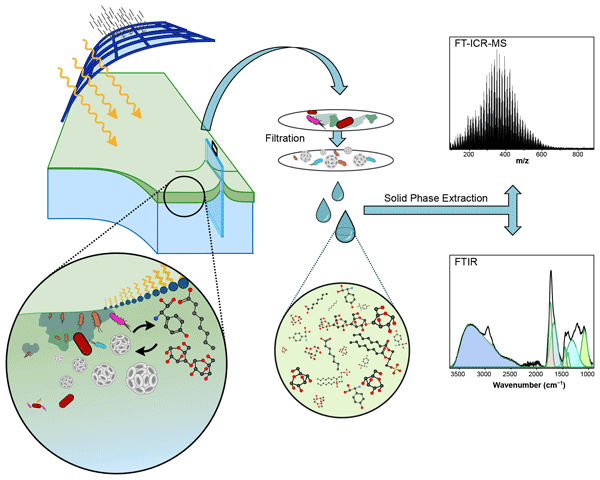
The ocean is glazed with a one-millimetre biofilm that controls the flow of gases and energy from the atmosphere. To investigate how this film forms, we cultivated microscopic algae in a tank under controlled, windless conditions. Our results show that carbohydrates released by these algae rise to the surface, forming "carbo-slicks" that create a gel-like layer. This demonstrates that biological production is a key driver of the sea surface, which is crucial for understanding carbon exchange.
Samuel Mintah Ayim and Oliver Wurl
EGUsphere, https://doi.org/10.5194/egusphere-2026-4866, https://doi.org/10.5194/egusphere-2026-4866, 2026
This preprint is open for discussion and under review for Ocean Science (OS).
Short summary
Short summary
We investigated whether small-scale changes in seawater properties at the ocean surface reflect those below. An autonomous surface vehicle measured water density at the ultra-thin skin layer and one meter deep in the German Bight. Skin density patterns frequently differed from the underlying water and were driven more by salinity than temperature. This suggests that satellite observations of the ocean skin may not accurately represent underlying water dynamics in complex coastal waters.
Michelle Albinus, Thomas H. Badewien, Lisa Gassen, Oliver Wurl, and Jens Meyerjürgens
Ocean Sci., 22, 2143–2160, https://doi.org/10.5194/os-22-2143-2026, https://doi.org/10.5194/os-22-2143-2026, 2026
Short summary
Short summary
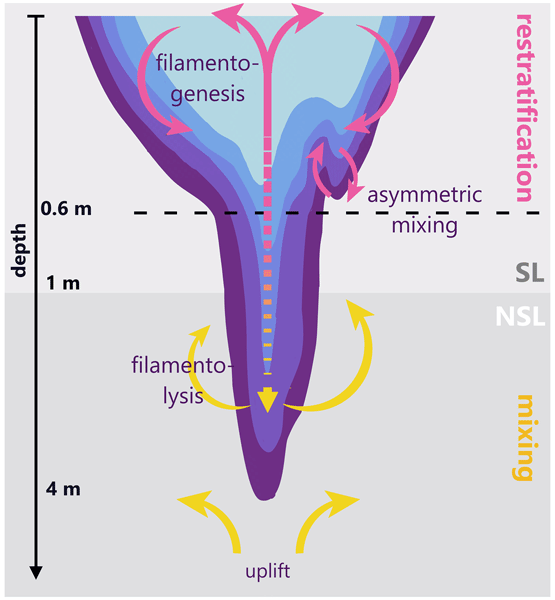
This study reveals the structure and alteration of a narrow freshwater-driven ocean low-density filament and its evolution through tidal modulationa an dlocale filament kinematics. Using multi-platform in situ observations, it is shown that these submesoscale features can rapidly being altered and reshape in near-surface waters, influencing how energy and heat alter just below the ocean-atmosphere interface.
Falko Asmussen-Schäfer, Mariana Ribas-Ribas, Oliver Wurl, and Gernot Friedrichs
Biogeosciences, 23, 3159–3178, https://doi.org/10.5194/bg-23-3159-2026, https://doi.org/10.5194/bg-23-3159-2026, 2026
Short summary
Short summary
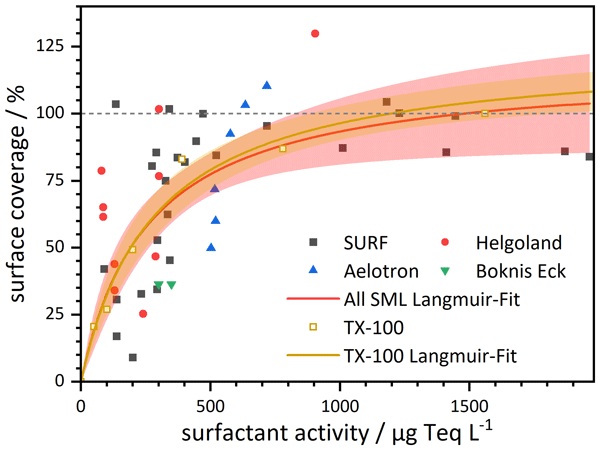
We developed an approach to quantify how molecules accumulate at the ocean surface on a nanometer scale. By combining laser spectroscopy with an electrochemical technique, we determined how densely these molecular films cover the water surface. Such single-molecule-thick layers can strongly affect gas transfer between the ocean and the atmosphere. Comparing our measurements with existing datasets allowed us to generate an initial global estimate of surfactant surface coverage potential.

Amavi Silva, Surandokht Nikzad, Theresa Barthelmeß, Anja Engel, Hartmut Herrmann, Manuela van Pinxteren, Kai Wirtz, Oliver Wurl, and Markus Schartau
Biogeosciences, 23, 1697–1718, https://doi.org/10.5194/bg-23-1697-2026, https://doi.org/10.5194/bg-23-1697-2026, 2026
Short summary
Short summary
We conducted the first meta-analysis combining marine and freshwater studies to understand organic matter enrichment in the surface microlayer. Nitrogen-rich, particulate compounds are often enriched, with patterns varying by multiple factors. We recommend tracking both absolute concentrations and normalized enrichment patterns to better assess ecological conditions. Our study also introduces improved statistical methods for analyzing and comparing surface microlayer data.

Carsten Rauch, Lisa Deyle, Leonie Jaeger, Edgar Fernando Cortés-Espinoza, Mariana Ribas-Ribas, Josefine Karnatz, Anja Engel, and Oliver Wurl
Ocean Sci., 22, 403–426, https://doi.org/10.5194/os-22-403-2026, https://doi.org/10.5194/os-22-403-2026, 2026
Short summary
Short summary
Microsensors measuring oxygen and temperature were used to gain high-resolution profiles across the surface of a water basin, in which an algal bloom was induced. These novel data show that the oxygen at the sea surface is highly influenced by algal blooms, while the temperature is only indirectly affected by them. Since algal blooms occur globally, this has considerable implications for calculating global air-sea exchanges of gases or heat, especially under low-wind conditions.
Lina A. Holthusen, Hermann W. Bange, Thomas H. Badewien, Julia C. Muchowski, Tina Santl-Temkiv, Jennie Spicker Schmidt, Oliver Wurl, and Damian L. Arévalo-Martínez
The Cryosphere, 20, 535–550, https://doi.org/10.5194/tc-20-535-2026, https://doi.org/10.5194/tc-20-535-2026, 2026
Short summary
Short summary
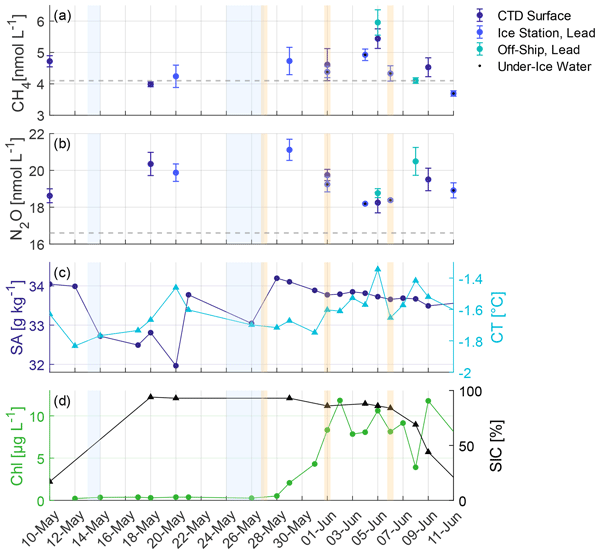
In spring 2023, in the Fram Strait, we investigated the near-surface distribution of the greenhouse gases methane and nitrous oxide in open leads and under sea ice to address the lack of observations in the Arctic Ocean. The study area acted as a source for both gases, and the onset of sea ice melt affected their concentrations and emissions. Surface-active substances accumulated in the sea-surface microlayer of open leads during an algal bloom, potentially attenuating greenhouse gas emissions.
Riaz Bibi, Mariana Ribas-Ribas, Leonie Jaeger, Carola Lehners, Lisa Gassen, Edgar Fernando Cortés-Espinoza, Jochen Wollschläger, Claudia Thölen, Hannelore Waska, Jasper Zöbelein, Thorsten Brinkhoff, Isha Athale, Rüdiger Röttgers, Michael Novak, Anja Engel, Theresa Barthelmeß, Josefine Karnatz, Thomas Reinthaler, Dmytro Spriahailo, Gernot Friedrichs, Falko Asmussen Schäfer, and Oliver Wurl
Biogeosciences, 22, 7563–7589, https://doi.org/10.5194/bg-22-7563-2025, https://doi.org/10.5194/bg-22-7563-2025, 2025
Short summary
Short summary
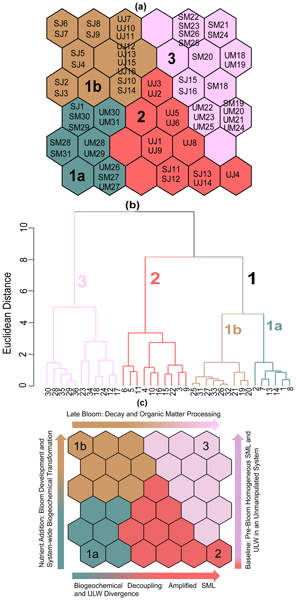
A multidisciplinary mesocosm study was conducted to investigate biogeochemical processes and their relationships in the sea-surface microlayer and underlying water during an induced phytoplankton bloom. Phytoplankton-derived organic matter, fuelled microbial activity and biofilm formation, supporting high bacterial abundance. Distinct temporal patterns in biogeochemical parameters and greater variability in the sea-surface microlayer highlight its influence on air–sea interactions.
Edgar Fernando Cortés-Espinoza, Alisa Wüst, Ander Lopéz-Puertas, Oliver Wurl, José Martín Hernández-Ayón, Hannelore Waska, and Mariana Ribas-Ribas
EGUsphere, https://doi.org/10.5194/egusphere-2025-5265, https://doi.org/10.5194/egusphere-2025-5265, 2025
Short summary
Short summary
In a mesocosm experiment, we measured carbon system variables to examine how organic matter accumulation increases organic alkalinity and alters seawater pH in the sea-surface microlayer and underlying water during an induced phytoplankton bloom. Organic alkalinity was consistently higher in the sea-surface microlayer, and during bloom peak its pH effect extended into the underlying water, reducing and sometimes reversing surface–subsurface pH differences.
Lisa Gassen, Samuel M. Ayim, Leonie Jaeger, Jens Meyerjürgens, Mariana Ribas-Ribas, and Oliver Wurl
Ocean Sci., 21, 2787–2804, https://doi.org/10.5194/os-21-2787-2025, https://doi.org/10.5194/os-21-2787-2025, 2025
Short summary
Short summary
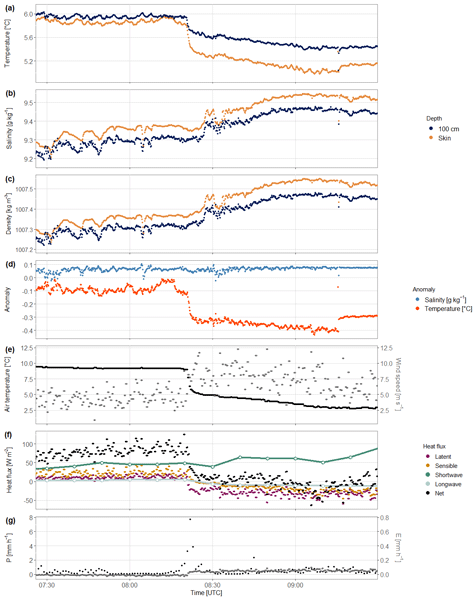
This study investigates how abrupt weather changes, such as shifts in air temperature, wind speed and precipitation, impact temperature and salinity in the ocean’s skin layer (upper first millimetre). Two events in the harbour of Bremerhaven and one event in the North Sea revealed that the skin layer reacts instantly, with greater temperature changes than those at a depth of 100 cm, underscoring its key role in air-sea interactions and climate dynamics.
Lisa Deyle, Thomas H. Badewien, Oliver Wurl, and Jens Meyerjürgens
Earth Syst. Sci. Data, 16, 2099–2112, https://doi.org/10.5194/essd-16-2099-2024, https://doi.org/10.5194/essd-16-2099-2024, 2024
Short summary
Short summary
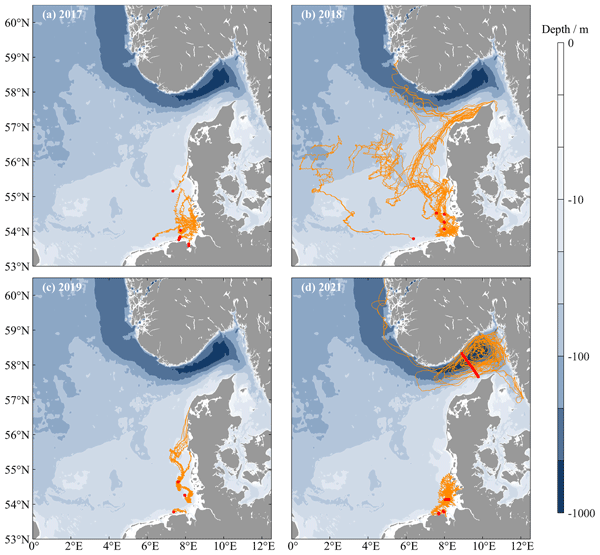
A dataset from the North Sea of 85 surface drifters from 2017–2021 is presented. Surface drifters enable the analysis of ocean currents by determining the velocities of surface currents and tidal effects. The entire North Sea has not been studied using drifters before, but the analysis of ocean currents is essential, e.g., to understand the pathways of plastic. The results show that there are strong tidal effects in the shallow North Sea area and strong surface currents in the deep areas.
Manuela van Pinxteren, Sebastian Zeppenfeld, Khanneh Wadinga Fomba, Nadja Triesch, Sanja Frka, and Hartmut Herrmann
Atmos. Chem. Phys., 23, 6571–6590, https://doi.org/10.5194/acp-23-6571-2023, https://doi.org/10.5194/acp-23-6571-2023, 2023
Short summary
Short summary
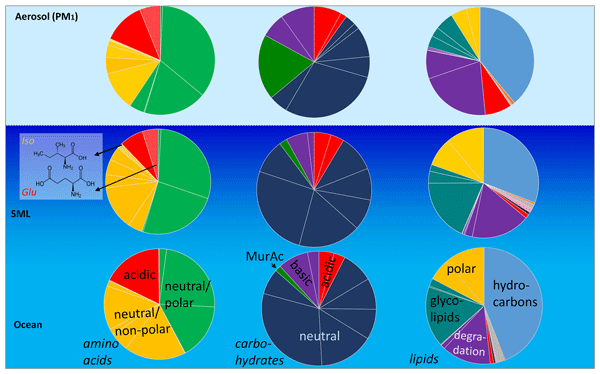
Important marine organic carbon compounds were identified in the Atlantic Ocean and marine aerosol particles. These compounds were strongly enriched in the atmosphere. Their enrichment was, however, not solely explained via sea-to-air transfer but also via atmospheric in situ formation. The identified compounds constituted about 50 % of the organic carbon on the aerosol particles, and a pronounced coupling between ocean and atmosphere for this oligotrophic region could be concluded.
Manuela van Pinxteren, Tiera-Brandy Robinson, Sebastian Zeppenfeld, Xianda Gong, Enno Bahlmann, Khanneh Wadinga Fomba, Nadja Triesch, Frank Stratmann, Oliver Wurl, Anja Engel, Heike Wex, and Hartmut Herrmann
Atmos. Chem. Phys., 22, 5725–5742, https://doi.org/10.5194/acp-22-5725-2022, https://doi.org/10.5194/acp-22-5725-2022, 2022
Short summary
Short summary
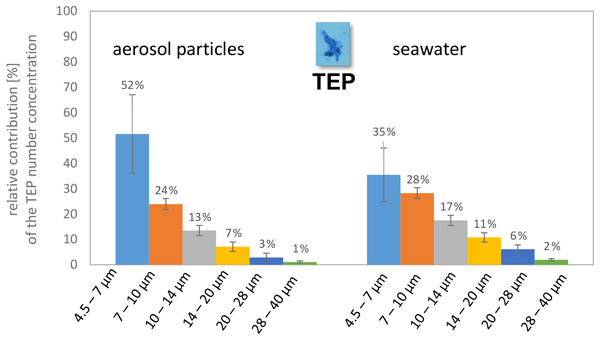
A class of marine particles (transparent exopolymer particles, TEPs) that is ubiquitously found in the world oceans was measured for the first time in ambient marine aerosol particles and marine cloud waters in the tropical Atlantic Ocean. TEPs are likely to have good properties for influencing clouds. We show that TEPs are transferred from the ocean to the marine atmosphere via sea-spray formation and our results suggest that they can also form directly in aerosol particles and in cloud water.
Cited articles
Acuña, V., Wolf, A., Uehlinger, U., and Tockner, K.: Temperature dependence of stream benthic respiration in an alpine river network under global warming, Freshw. Biol., 53, 2076–2088, https://doi.org/10.1111/j.1365-2427.2008.02028.x, 2008.
Álvarez, M., Sanleón-Bartolomé, H., Tanhua, T., Mintrop, L., Luchetta, A., Cantoni, C., Schroeder, K., and Civitarese, G.: The CO2 system in the Mediterranean Sea: a basin wide perspective, Ocean Sci., 10, 69–92, https://doi.org/10.5194/os-10-69-2014, 2014.
Álvarez-Rodríguez, M.: The CO2 system observations in the Mediterranean Sea: past, present and future, in: Designing Med-SHIP: a program for repeated oceanographic surveys, CIESM Workshop Monographs, No. 43, edited by: Briand, F., CIESM, Monaco, 41–50, https://ciesm.org/catalog/index.php?article=1043 (last access: 14 January 2025), 2012.
Bergamasco, A. and Malanotte-Rizzoli, P.: The circulation of the Mediterranean Sea: a historical review of experimental investigations, Adv. Oceanogr. Limnol., 1, 11–28, https://doi.org/10.1080/19475721.2010.491656, 2010.
Borges, A. V.: Do we have enough pieces of the jigsaw to integrate CO2 fluxes in the coastal ocean?, Estuaries, 28, 3–27, https://doi.org/10.1007/BF02732750, 2005.
Brutsaert, W.: Evaporation into the Atmosphere: Theory, History and Applications, Environmental Fluid Mechanics, Springer, Dordrecht, Netherlands, 302 pp., https://doi.org/10.1007/978-94-017-1497-6, 2013.
Bužančić, M., Gladan, Ž. N., Marasović, I., Kušpilić, G., and Grbec, B.: Eutrophication influence on phytoplankton community composition in three bays on the eastern Adriatic coast, Oceanologia, 58, 302–316, https://doi.org/10.1016/j.oceano.2016.05.003, 2016.
Cantoni, C., Luchetta, A., Celio, M., Cozzi, S., Raicich, F., and Catalano, G.: Carbonate system variability in the Gulf of Trieste (North Adriatic Sea), Estuarine, Coastal Shelf Sci., 115, 51–62, https://doi.org/10.1016/j.ecss.2012.07.006, 2012.
Cantoni, C., Luchetta, A., Chiggiato, J., Cozzi, S., Schroeder, K., and Langone, L.: Dense water flow and carbonate system in the southern Adriatic: A focus on the 2012 event, Mar. Geol., 375, 15–27, https://doi.org/10.1016/j.margeo.2015.08.013, 2016.
Cetinić, I., Viličić, D., Burić, Z., and Olujić, G.: Phytoplankton seasonality in a highly stratified karstic estuary (Krka, Adriatic Sea), Hydrobiologia, 555, 31–40, https://doi.org/10.1007/s10750-005-1107-6, 2006.
Croatian Meteorological and Hydrological Service: Precipitation data for August 2020, https://meteo.hr (last access: 19 September 2025), 2020.
Cronin, M. F. and Sprintall, J.: Wind-and buoyancy-forced upper ocean, in: Elements of Physical Oceanography: A Derivative of the Encyclopedia of Ocean Sciences, 237–245, https://doi.org/10.1006/rwos.2001.0157, 2001.
Cukrov, N., Cindrić, A.-M., Omanović, D., and Cukrov, N.: Spatial distribution, ecological risk assessment, and source identification of metals in sediments of the Krka River Estuary (Croatia), Sustainability, 16, 1800, https://doi.org/10.3390/su16051800, 2024a.
Cukrov, N., Cukrov, N., and Omanović, D.: Early diagenetic processes in the sediments of the Krka River Estuary, J. Mar. Sci. Eng., 12, 466, https://doi.org/10.3390/jmse12030466, 2024b.
Cunliffe, M., Engel, A., Frka, S., Gašparović, B., Guitart, C., Murrell, J. C., Salter, M., Stolle, C., Upstill-Goddard, R., and Wurl, O.: Sea surface microlayers: A unified physicochemical and biological perspective of the air–ocean interface, Prog. Oceanogr., 109, 104–116, https://doi.org/10.1016/j.pocean.2012.08.004, 2013.
De Montety, V., Martin, J. B., Cohen, M. J., Foster, C., and Kurz, M. J.: Influence of diel biogeochemical cycles on carbonate equilibrium in a karst river, Chem. Geol., 283, 31–43, https://doi.org/10.1016/j.chemgeo.2010.12.025, 2011.
del Giorgio, P. and Williams, P. (Eds.): Respiration in Aquatic Ecosystems, Oxford University Press, Oxford, UK, 320 pp., ISBN 9780198527084, 2005.
Dickson, A. G. and Millero, F. J.: A comparison of the equilibrium constants for the dissociation of carbonic acid in seawater media, Deep Sea Res. Part A, 34, 1733–1743, https://doi.org/10.1016/0198-0149(87)90021-5, 1987.
Dickson, A. G., Sabine, C. L., and Christian, J. R.: Guide to best practices for ocean CO2 measurements, PICES Special Publication 3, North Pacific Marine Science Organization, 191 pp., ISBN 1-897176-07-4, 2007.
Doney, S. C., Fabry, V. J., Feely, R. A., and Kleypas, J. A.: Ocean Acidification: The Other CO2 Problem, Annu. Rev. Mar. Sci., 1, 169–192, https://doi.org/10.1146/annurev.marine.010908.163834, 2009.
Engel, A., Bange, H. W., Cunliffe, M., Burrows, S. M., Friedrichs, G., Galgani, L., Herrmann, H., Hertkorn, N., Johnson, M., Liss, P. S., Quinn, P. K., Schartau, M., Soloviev, A., Stolle, C., Upstill-Goddard, R. C., Van Pinxteren, M., and Zäncker, B.: The ocean's vital skin: toward an integrated understanding of the sea surface microlayer, Front. Mar. Sci., 4, 165, https://doi.org/10.3389/fmars.2017.00165, 2017.
Fanning, K. A. and Pilson, M.: On the Spectrophotometric determination of dissolved silica in natural waters, Anal. Chem., 45, 136–140, https://doi.org/10.1021/ac60323a021, 1973.
Feng, Y., Warner, M. E., Zhang, Y., Sun, J., Fu, F.-X., Rose, J. M., and Hutchins, D. A.: Interactive effects of increased pCO2, temperature and irradiance on the marine coccolithophore Emiliania huxleyi (Prymnesiophyceae), Eur. J. Phycol., 43, 87–98, https://doi.org/10.1080/09670260701664674, 2008.
Frka, S., Kozarac, Z., and Ćosović, B.: Characterization and seasonal variations of surface active substances in the natural sea surface micro-layers of the coastal Middle Adriatic stations, Estuar. Coast. Shelf Sci., 85, 555–564, https://doi.org/10.1016/j.ecss.2009.09.023, 2009.
Garbe, C. S., Rutgersson, A., Boutin, J., De Leeuw, G., Delille, B., Fairall, C. W., Gruber, N., Hare, J., Ho, D. T., Johnson, M. T., Nightingale, P. D., Pettersson, H., Piskozub, J., Sahlée, E., Tsai, W., Ward, B., Woolf, D. K., and Zappa, C. J.: Transfer across the air–sea interface, in: Ocean–Atmosphere Interactions of Gases and Particles, edited by: Liss, P. S. and Johnson, M. T., Springer, Berlin, Heidelberg, Germany, 55–112, https://doi.org/10.1007/978-3-642-25643-1_2, 2014.
Gassen, L., Badewien, T. H., Ewald, J., Ribas-Ribas, M., and Wurl, O.: Temperature and Salinity Anomalies in the Sea Surface Microlayer of the South Pacific during Precipitation Events, J. Geophys. Res. Oceans, e2023JC019638, https://doi.org/10.1029/2023JC019638, 2023.
Gattuso, J.-P., Allemand, D., and Frankignoulle, M.: Photosynthesis and calcification at cellular, organismal and community levels in coral reefs: a review on interactions and control by carbonate chemistry, Am. Zool., 39, 160–183, https://doi.org/10.1093/icb/39.1.160, 1999.
Gattuso, J.-P., Magnan, A., Billé, R., Cheung, W. W. L., Howes, E. L., Joos, F., Allemand, D., Bopp, L., Cooley, S. R., Eakin, C. M., Hoegh-Guldberg, O., Kelly, R. P., Pörtner, H.-O., Rogers, A. D., Baxter, J. M., Laffoley, D., Osborn, D., Rankovic, A., Rochette, J., Sumaila, U. R., Treyer, S., and Turley, C.: Contrasting futures for ocean and society from different anthropogenic CO2 emissions scenarios, Science, 349, aac4722, https://doi.org/10.1126/science.aac4722, 2015.
Hassoun, A. E. R., Gemayel, E., Krasakopoulou, E., Goyet, C., Abboud-Abi Saab, M., Guglielmi, V., Touratier, F., and Falco, C.: Acidification of the Mediterranean Sea from anthropogenic carbon penetration, Deep Sea Res. Part I, 102, 1–15, https://doi.org/10.1016/j.dsr.2015.04.005, 2015.
Hassoun, A. E. R., Bantelman, A., Canu, D., Comeau, S., Galdies, C., Gattuso, J.-P., Giani, M., Grelaud, M., Hendriks, I. E., Ibello, V., Idrissi, M., Krasakopoulou, E., Shaltout, N., Solidoro, C., Swarzenski, P. W., and Ziveri, P.: Ocean acidification research in the Mediterranean Sea: Status, trends and next steps, Front. Mar. Sci., 9, 892670, https://doi.org/10.3389/fmars.2022.892670, 2022.
Herring, P. J., Campbell, A. K., Whitfeld, M., and Maddock, L. (Eds.): Light and Life in the Sea, Cambridge University Press, Cambridge, UK, 366 pp., ISBN 978-0521392075, 1990.
Hoegh-Guldberg, O., Cai, R., Poloczanska, E. S., Brewer, P. G., Sundby, S., Hilmi, K., Fabry, V. J., Jung, S., Skirving, W., and Stone, D. A.: The ocean, in: Climate Change 2014: Impacts, Adaptation, and Vulnerability. Part B: Regional Aspects, edited by: Barros, V. R., Field, C. B., Dokken, D. J., Mastrandrea, M. D., Mach, K. J., Bilir, T. E., Chatterjee, M., Ebi, K. L., Estrada, Y. O., Genova, R. C., Girma, B., Kissel, E. S., Levy, A. N., MacCracken, S., Mastrandrea, P. R., and White, L. L., Cambridge University Press, Cambridge, United Kingdom and New York, NY, USA, 1655–1731, https://doi.org/10.1017/CBO9781107415386.010, 2014.
Humphreys, M. P., Lewis, E. R., Sharp, J. D., and Pierrot, D.: PyCO2SYS v1.8: marine carbonate system calculations in Python, Geosci. Model Dev., 15, 15–43, https://doi.org/10.5194/gmd-15-15-2022, 2022.
IPCC: Climate Change 2021 – The Physical Science Basis, Contribution of Working Group I to the Sixth Assessment Report of the Intergovernmental Panel on Climate Change, Cambridge University Press, Cambridge, United Kingdom and New York, NY, USA, https://doi.org/10.1017/9781009157896, 2023.
Kapsenberg, L., Alliouane, S., Gazeau, F., Mousseau, L., and Gattuso, J.-P.: Coastal ocean acidification and increasing total alkalinity in the northwestern Mediterranean Sea, Ocean Sci., 13, 411–426, https://doi.org/10.5194/os-13-411-2017, 2017.
Kittel, C. and Kroemer, H.: Thermal Physics, Macmillan, ISBN 978-0716710882, 1980.
Laskov, C., Herzog, C., Lewandowski, J., and Hupfer, M.: Miniaturized photometrical methods for the rapid analysis of phosphate, ammonium, ferrous iron, and sulfate in pore water of freshwater sediments, Limnol. Oceanogr. Methods, 5, 63–71, https://doi.org/10.4319/lom.2007.5.63, 2007.
Lee, K., Kim, T.-W., Byrne, R. H., Millero, F. J., Feely, R. A., and Liu, Y.-M.: The universal ratio of boron to chlorinity for the North Pacific and North Atlantic oceans, Geochim. Cosmochim. Acta, 74, 1801–1811, https://doi.org/10.1016/j.gca.2009.12.027, 2010.
Liss, P. S. and Merlivat, L.: Air–sea gas exchange rates: introduction and synthesis, in: The Role of Air–Sea Exchange in Geochemical Cycling, edited by: Buat-Ménard, P., Springer, Dordrecht, Netherlands, 113–127, https://doi.org/10.1007/978-94-009-4738-2_5, 1986.
Liu, J., Hrustić, E., Du, J., Gašparović, B., Čanković, M., Cukrov, N., Zhu, Z., and Zhang, R.: Net submarine groundwater-derived dissolved inorganic nutrients and carbon input to the oligotrophic stratified karstic estuary of the Krka River (Adriatic Sea, Croatia), J. Geophys. Res.-Oceans, 124, 4334–4349, https://doi.org/10.1029/2018JC014814, 2019.
Marcinek, S., Santinelli, C., Cindrić, A.-M., Evangelista, V., Gonnelli, M., Layglon, N., Mounier, S., Lenoble, V., and Omanović, D.: Dissolved organic matter dynamics in the pristine Krka River estuary (Croatia), Mar. Chem., 225, 103848, https://doi.org/10.1016/j.marchem.2020.103848, 2020.
Mehrbach, C., Culberson, C. H., Hawley, J. E., and Pytkowicx, R. M.: Measurement of the apparent dissociation constants of carbonic acid in seawater at atmospheric pressure 1, Limnol. Oceanogr., 18, 897–907, https://doi.org/10.4319/lo.1973.18.6.0897, 1973.
Milinković, A., Penezić, A., Kušan, A. C., Gluščić, V., Žužul, S., Skejić, S., Šantić, D., Godec, R., Pehnec, G., Omanović, D., Engel, A., and Frka, S.: Variabilities of biochemical properties of the sea surface microlayer: Insights to the atmospheric deposition impacts, Sci. Total Environ., 838, 156440, https://doi.org/10.1016/j.scitotenv.2022.156440, 2022.
Nimick, D. A., Gammons, C. H., and Parker, S. R.: Diel biogeochemical processes and their effect on the aqueous chemistry of streams: A review, Chem. Geol., 283, 3–17, https://doi.org/10.1016/j.chemgeo.2010.08.017, 2011.
Orr, J. C., Fabry, V. J., Aumont, O., Bopp, L., Doney, S. C., Feely, R. A., Gnanadesikan, A., Gruber, N., Ishida, A., Joos, F., Key, R. M., Lindsay, K., Maier-Reimer, E., Matear, R., Monfray, P., Mouchet, A., Najjar, R. G., Plattner, G.-K., Rodgers, K. B., Sabine, C. L., Sarmiento, J. L., Schlitzer, R., Slater, R. D., Totterdell, I. J., Weirig, M.-F., Yamanaka, Y., and Yool, A.: Anthropogenic ocean acidification over the twenty-first century and its impact on calcifying organisms, Nature, 437, 681–686, https://doi.org/10.1038/nature04095, 2005.
Pecci, M., di Sarra, A., Sferlazzo, D., Anello, F., Di Iorio, T., Colella, S., Iaccarino, A., Marullo, S., Meloni, D., Monteleone, F., Pace, G., and Piacentino, S.: Ocean–atmosphere CO2 flux at the Lampedusa Oceanographic Observatory, https://www.lampedusa.enea.it/dataaccess/ocean_co2fluxes (last access: 19 August 2025), 2023.
Perez, F. F. and Fraga, F.: Association constant of fluoride and hydrogen ions in seawater, Mar. Chem., 21, 161–168, https://doi.org/10.1016/0304-4203(87)90036-3, 1987.
Pörtner, H.-O., Roberts, D. C., Masson-Delmotte, V., Zhai, P., Tignor, M., Poloczanska, E., and Weyer, N. M.: The ocean and cryosphere in a changing climate, IPCC Special Report on the Ocean and Cryosphere in a Changing Climate, 1155 pp., https://www.ipcc.ch/srocc/ (last access: 19 January 2025), 2019.
Poulson, S. R. and Sullivan, A. B.: Assessment of diel chemical and isotopic techniques to investigate biogeochemical cycles in the upper Klamath River, Oregon, USA, Chem. Geol., 269, 3–11, https://doi.org/10.1016/j.chemgeo.2009.05.016, 2010.
Prohić, E. and Juračić, M.: Heavy metals in sediments – problems concerning determination of the anthropogenic influence: study in the Krka River estuary, eastern Adriatic coast, Yugoslavia, Environ. Geol. Water Sci., 13, 145–151, https://doi.org/10.1007/BF01664699, 1989.
Ragazzola, F., Kolzenburg, R., Adani, M., Bordone, A., Cantoni, C., Cerrati, G., Ciuffardi, T., Cocito, S., Luchetta, A., Montagna, P., Nannini, M., Page, D. C., Peirano, A., Raiteri, G., and Lombardi, C.: Carbonate chemistry and temperature dynamics in an alga dominated habitat, Reg. Stud. Mar. Sci., 44, 101770, https://doi.org/10.1016/j.rsma.2021.101770, 2021.
Ribas-Ribas, M., Battaglia, G., Humphreys, M. P., and Wurl, O.: Impact of nonzero intercept gas transfer velocity parameterizations on global and regional ocean–atmosphere CO2 fluxes, Geosciences, 9, 230, https://doi.org/10.3390/geosciences9050230, 2019.
Ribas-Ribas, M., Hamizah Mustaffa, N. I., Rahlff, J., Stolle, C., and Wurl, O.: Sea Surface Scanner (S3): A catamaran for high-resolution measurements of biogeochemical properties of the sea surface microlayer, J. Atmos. Oceanic Technol., 34, 1433–1448, https://doi.org/10.1175/JTECH-D-17-0017.1, 2017.
Ribas-Ribas, M., López-Puertas, A., Wurl, O., and Frka, S.: Diel variability of thermohaline and carbon system parameters in the sea-surface microlayer and underlying water of a Mediterranean coastal site (Šibenik, Croatia), PANGAEA, [data set], https://doi.org/10.1594/PANGAEA.984017, 2025.
Robinson, A. R. and Golnaraghi, M.: The Physical and Dynamical Oceanography of the Mediterranean Sea, in: Ocean Processes in Climate Dynamics: Global and Mediterranean Examples, edited by: Malanotte-Rizzoli, P. and Robinson, A. R., Springer Netherlands, 255–306, https://doi.org/10.1007/978-94-011-0870-6_12, 1994.
RStudio Team: RStudio: integrated development environment for R, Posit Software, Boston, MA, USA, posit [code], https://posit.co/ (last access: 25 March 2025), 2023.
Schlitzer, R.: Ocean Data View, Alfred-Wegener-Institut [software], https://epic.awi.de/id/eprint/56921/ (last access: 10 December 2025), 2022.
Schneider, A., Tanhua, T., Körtzinger, A., and Wallace, D. W. R.: High anthropogenic carbon content in the eastern Mediterranean, J. Geophys. Res. Oceans, 115, https://doi.org/10.1029/2010JC006171, 2010.
Sharp, J. D., Pierrot, D., Humphreys, M. P., Epitalon, J.-M., Orr, J. C., Lewis, E. R., and Wallace, D. W. R.: CO2SYSv3 for MATLAB (v3.1), Zenodo [code], https://doi.org/10.5281/zenodo.4023039, 2020
Shaw, E. C., McNeil, B. I., and Tilbrook, B.: Impacts of ocean acidification in naturally variable coral reef flat ecosystems, J. Geophys. Res.-Oceans, 117, C03038, https://doi.org/10.1029/2011JC007655, 2012.
Soloviev, A. and Lukas, R.: The Near-Surface Layer of the Ocean: Structure, Dynamics and Applications, 2nd edn., Springer, Dordrecht, the Netherlands, 572 pp., ISBN 94-007-7621-7, 2013.
Stolle, C., Ribas-Ribas, M., Badewien, T. H., Barnes, J., Carpenter, L. J., Chance, R., Damgaard, L. R., Durán Quesada, A. M., Engel, A., Frka, S., Galgani, L., Gašparović, B., Gerriets, M., Hamizah Mustaffa, N. I., Herrmann, H., Kallajoki, L., Pereira, R., Radach, F., Revsbech, N. P., and Wurl, O.: The MILAN campaign: studying diel light effects on the air–sea interface, B. Am. Meteorol. Soc., 101, E146–E166, https://doi.org/10.1175/BAMS-D-17-0329.1, 2020.
Takahashi, T., Olafsson, J., Goddard, J. G., Chipman, D. W., and Sutherland, S. C.: Seasonal variation of CO2 and nutrients in the high-latitude surface oceans: A comparative study, Glob. Biogeochem. Cycles, 7, 843–878, https://doi.org/10.1029/93GB02263, 1993.
Takahashi, T., Sutherland, S. C., Sweeney, C., Poisson, A., Metzl, N., Tilbrook, B., Bates, N., Wanninkhof, R., Feely, R. A., Sabine, C., Olafsson, J., and Nojiri, Y.: Global sea–air CO2 flux based on climatological surface ocean pCO2, and seasonal biological and temperature effects, Deep-Sea Res. Pt. II, 49, 1601–1622, https://doi.org/10.1016/S0967-0645(02)00003-6, 2002.
Takahashi, T., Sutherland, S. C., Chipman, D. W., Goddard, J. G., Ho, C., Newberger, T., Sweeney, C., and Munro, D. R.: Climatological distributions of pH, pCO2, total CO2, alkalinity, and CaCO3 saturation in the global surface ocean, and temporal changes at selected locations, Mar. Chem., 164, 95–125, https://doi.org/10.1016/j.marchem.2014.06.004, 2014.
Van Heuven, S., Pierrot, D., Rae, J. W. B., Lewis, E., and Wallace, D. W. R.: MATLAB Program Developed for CO2 System Calculations, Carbon Dioxide Information Analysis Center (CDIAC), Oak Ridge National Laboratory (ORNL) [code], https://github.com/jamesorr/CO2SYS-MATLAB (last access: 10 December 2025), 2011.
Wanninkhof, R.: Relationship between wind speed and gas exchange over the ocean revisited, Limnol. Oceanogr. Methods, 12, 351–362, https://doi.org/10.4319/lom.2014.12.351, 2014.
Weiss, R. F.: Carbon dioxide in water and seawater: The solubility of a non-ideal gas, Mar. Chem., 2, 203–215, https://doi.org/10.1016/0304-4203(74)90015-2, 1974.
Wong, P. P., Losada, I. J., Gattuso, J.-P., Hinkel, J., Khattabi, A., McInnes, K. L., Saito, Y., and Sallenger, A.: Coastal systems and low-lying areas, in: Climate Change 2014: Impacts, Adaptation, and Vulnerability. Part A: Global and Sectoral Aspects, Contribution of Working Group II to the Fifth Assessment Report of the Intergovernmental Panel on Climate Change, edited by: Field, C. B., Barros, V. R., Dokken, D. J., Mach, K. J., Mastrandrea, M. D., Bilir, T. E., Chatterjee, M., Ebi, K. L., Estrada, Y. O., Genova, R. C., Girma, B., Kissel, E. S., Levy, A. N., MacCracken, S., Mastrandrea, P. R., and White, L. L., Cambridge University Press, Cambridge, United Kingdom and New York, NY, USA, 361–409, https://doi.org/10.1017/CBO9781107415379.010, 2014.
Wurl, O., Wurl, E., Miller, L., Johnson, K., and Vagle, S.: Formation and global distribution of sea-surface microlayers, Biogeosciences, 8, 121–135, https://doi.org/10.5194/bg-8-121-2011, 2011.
Wurl, O., Ekau, W., Landing, W. M., and Zappa, C. J.: Sea surface microlayer in a changing ocean – a perspective, Elem. Sci. Anthropocene, 5, 31, https://doi.org/10.1525/elementa.228, 2017.
Wurl, O., Landing, W. M., Mustaffa, N. I. H., Ribas-Ribas, M., Witte, C. R., and Zappa, C. J.: The Ocean's Skin Layer in the Tropics, in: Journal of Geophysical Research: Oceans, 124, 59–74, https://doi.org/10.1029/2018JC014021, 2019.
Yates, K. K., Dufore, C., Smiley, N., Jackson, C., and Halley, R. B.: Diurnal variation of oxygen and carbonate system parameters in Tampa Bay and Florida Bay, Mar. Chem., 104, 110–124, https://doi.org/10.1016/j.marchem.2006.12.008, 2007.
Zeebe, R. E. and Wolf-Gladrow, D. A.: CO2 in Seawater: Equilibrium, Kinetics, Isotopes, Elsevier Oceanography Series, vol. 65, Elsevier, Amsterdam, ISBN 0444509461, 2001.
Zutic, V. and Legovic, T.: A film of organic matter at the fresh-water/sea-water interface of an estuary, Nature, 328, 612–614, https://doi.org/10.1038/328612a0, 1987.
Short summary
We studied how daily cycles affect inorganic carbon variables in the ocean's surface microlayer. Using data from three full days and nights off the Croatian coast, we found that thermohaline properties and key indicators like pH and pCO₂ change significantly from day to night. Ignoring nighttime conditions may lead to global carbon budget errors and highlights the need for continuous ocean observations.
We studied how daily cycles affect inorganic carbon variables in the ocean's surface microlayer....


Special issue