
Articles | Volume 22, issue 2
https://doi.org/10.5194/os-22-843-2026
© Author(s) 2026. This work is distributed under
the Creative Commons Attribution 4.0 License.
the Creative Commons Attribution 4.0 License.
https://doi.org/10.5194/os-22-843-2026
© Author(s) 2026. This work is distributed under
the Creative Commons Attribution 4.0 License.
the Creative Commons Attribution 4.0 License.
Research article
| 
11 Mar 2026
Research article |
| 11 Mar 2026
| 11 Mar 2026
A first predictive mechanistic model of cold-water coral biomass and respiration based on physiology, hydrodynamics, and organic matter transport

Department of Ocean Systems, NIOZ Royal Netherlands Institute for Sea Research, Texel, the Netherlands
Centre for Fisheries Ecosystem Research, Fisheries and Marine Institute at Memorial University of Newfoundland, St. John's, NL, Canada
Wageningen Marine Research, Yerseke, the Netherlands
Christian Mohn
Department of Ecoscience, Aarhus University, Roskilde, Denmark
Karline Soetaert
Department of Estuarine and Delta Systems, NIOZ Royal Netherlands Institute for Sea Research Yerseke, the Netherlands
Anna-Selma van der Kaaden
Copernicus Institute of Sustainable Development, Faculty of Geosciences, Utrecht University, Utrecht, the Netherlands
Gert-Jan Reichart
Department of Ocean Systems, NIOZ Royal Netherlands Institute for Sea Research, Texel, the Netherlands
Utrecht University, Faculty of Geosciences, Utrecht, the Netherlands
Laurence H. De Clippele
School of Biodiversity, One Health & Veterinary Medicine, University of Glasgow, Glasgow, United Kingdom
Sandra R. Maier
Greenland Climate Research Centre, Greenland Institute of Natural Resources, Nuuk, Greenland
Dick van Oevelen
Department of Estuarine and Delta Systems, NIOZ Royal Netherlands Institute for Sea Research Yerseke, the Netherlands
Related authors
Evert de Froe, Igor Yashayaev, Christian Mohn, Johanne Vad, Furu Mienis, Gerard Duineveld, Ellen Kenchington, Erica Head, Steve W. Ross, Sabena Blackbird, George A. Wolff, J. Murray Roberts, Barry MacDonald, Graham Tulloch, and Dick van Oevelen
Biogeosciences, 21, 5407–5433, https://doi.org/10.5194/bg-21-5407-2024, https://doi.org/10.5194/bg-21-5407-2024, 2024
Short summary
Short summary
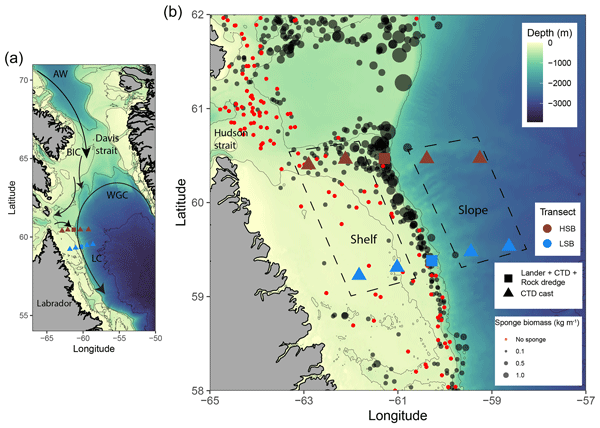
Deep-sea sponge grounds are distributed globally and are considered hotspots of biological diversity and biogeochemical cycling. To date, little is known about the environmental constraints that control where deep-sea sponge grounds occur and what conditions favour high sponge biomass. Here, we characterize oceanographic conditions at two contrasting sponge grounds. Our results imply that sponges and associated fauna benefit from strong tidal currents and favourable regional ocean currents.
Anna-Selma van der Kaaden, Sandra R. Maier, Siluo Chen, Laurence H. De Clippele, Evert de Froe, Theo Gerkema, Johan van de Koppel, Furu Mienis, Christian Mohn, Max Rietkerk, Karline Soetaert, and Dick van Oevelen
Biogeosciences, 21, 973–992, https://doi.org/10.5194/bg-21-973-2024, https://doi.org/10.5194/bg-21-973-2024, 2024
Short summary
Short summary
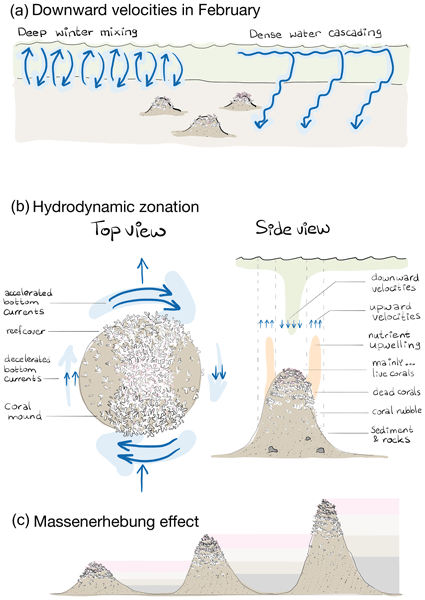
Combining hydrodynamic simulations and annotated videos, we separated which hydrodynamic variables that determine reef cover are engineered by cold-water corals and which are not. Around coral mounds, hydrodynamic zones seem to create a typical reef zonation, restricting corals from moving deeper (the expected response to climate warming). But non-engineered downward velocities in winter (e.g. deep winter mixing) seem more important for coral reef growth than coral engineering.
Pieter D. L. Hovenkamp, Lodewijk Van Walraven, Daan Temmerman, A. Frank Van der Stappen, and Dick Van Oevelen
Earth Syst. Sci. Data Discuss., https://doi.org/10.5194/essd-2026-614, https://doi.org/10.5194/essd-2026-614, 2026
Preprint under review for ESSD
Short summary
Short summary
In this paper, we collected millions of images of marine zooplankton across the Greater North Sea and Greenland using underwater cameras. Over 60,000 of these images were labeled, and AI was trained to automatically classify zooplankton via images. The annotated data and classifiers help us to monitor zooplankton populations more efficiently using novel imaging techniques —a vital task as climate change and construction of offshore wind farms reshape marine pelagic ecosystems.
Virginia Sánchez Barranco, Nienke C. J. van de Loosdrecht, Furu Mienis, Jasper M. de Goeij, Rick Hennekam, Gert-Jan Reichart, Jan-Berend W. Stuut, and Lennart J. de Nooijer
Biogeosciences, 23, 5879–5899, https://doi.org/10.5194/bg-23-5879-2026, https://doi.org/10.5194/bg-23-5879-2026, 2026
Short summary
Short summary
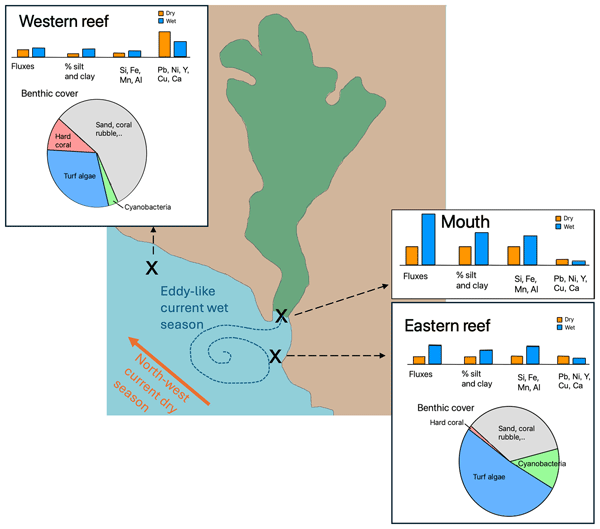
We studied how pollution from bays in Curaçao reaches nearby coral reefs and changes with seasons. By collecting suspended particulate matter at different locations during dry and wet seasons, we found that sheltered reefs receive more fine particles and pollutants, especially during rainy months, while exposed reefs are less affected. This shows that both location and seasonal rainfall determine reef vulnerability, highlighting the hidden impacts of human activity on these fragile ecosystems.
Emil De Borger, Karline Soetaert, Esther Cepeda Gamella, Arthur Capet, Jan Vanaverbeke, and Ulrike Braeckman
EGUsphere, https://doi.org/10.5194/egusphere-2026-3576, https://doi.org/10.5194/egusphere-2026-3576, 2026
This preprint is open for discussion and under review for Biogeosciences (BG).
Short summary
Short summary
We developed a new computer model to better understand how sandy seabed sediments process organic matter. Then, we used field measurements around an offshore wind turbine in the North Sea to guide model simulations. It showed that sediments closest to turbines receive more organic material throughout the year, that is efficiently processed. This modelling approach improves our ability to quantify seabed carbon cycling in dynamic coastal environments.
Qi Liu, Karline Soetaert, Lucille Hoogerdijk, Valle Perez-Rodriguez, and Lubos Polerecky
EGUsphere, https://doi.org/10.5194/egusphere-2026-4452, https://doi.org/10.5194/egusphere-2026-4452, 2026
Short summary
Short summary
Coastal mudflats store carbon and recycle nutrients, but their functioning is strongly affected by changing environmental conditions. We developed a computer model, supported by laboratory measurements, to predict how oxygen changes under different light, temperature, and tidal conditions. Our results identify the main processes controlling oxygen cycling and provide an open-source tool for predicting how coastal ecosystems may respond to environmental change.
Yannick F. Bats, Appy Sluijs, and Gert-Jan Reichart
EGUsphere, https://doi.org/10.5194/egusphere-2026-3713, https://doi.org/10.5194/egusphere-2026-3713, 2026
Short summary
Short summary
Fossil remains of algae can help us estimate ancient carbon dioxide levels, but current methods are often inaccurate. We built a numeric model of an algal cell to better understand how carbon is processed in these organisms. Our research reveals that light and calcification strongly influence the chemical signals preserved in algae. By including these factors, our model accurately matches results from lab studies, suggesting it can improve reconstructions of Earth’s climate and carbon cycle.
Olivier Beauchard and Karline Soetaert
Earth Syst. Sci. Data Discuss., https://doi.org/10.5194/essd-2026-444, https://doi.org/10.5194/essd-2026-444, 2026
Revised manuscript accepted for ESSD
Short summary
Short summary
Biological trait data often represent the bottleneck of biodiversity research. Given the growing demand for such data and the absence of worldwide data standard for the marine benthos, we propose a detailed terminology and provide a corresponding data base that covers the ecology of 1893 marine invertebrate species for 41 traits expressing life history, dwelling mode and ecosystem function.
Yasmina Ourradi, Gert-Jan Reichart, Sonja van Leeuwen, and Matthew P. Humphreys
Biogeosciences, 23, 3323–3346, https://doi.org/10.5194/bg-23-3323-2026, https://doi.org/10.5194/bg-23-3323-2026, 2026
Short summary
Short summary
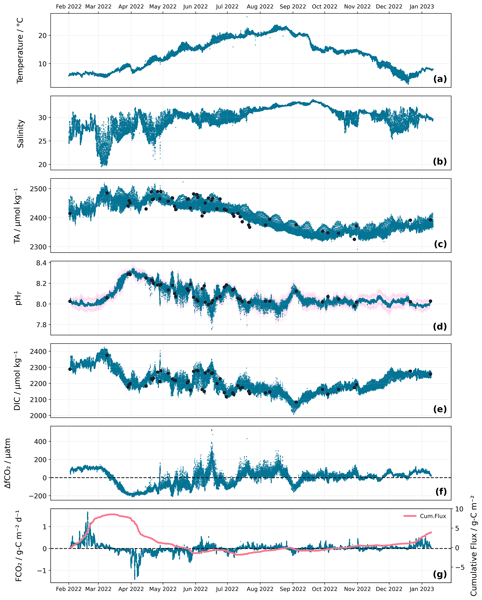
Coastal seas play a key role in the global carbon cycle, yet what drives their carbonate chemistry remains poorly understood. We measured pH at high frequency for a year at the Wadden Sea-North Sea interface. Biological activity drives pH changes, while freshwater inflow shapes total alkalinity. Both processes influence dissolved inorganic carbon. The Wadden Sea acts as a net carbon dioxide source to the atmosphere. High-frequency monitoring is essential under a changing climate.
Peter Kraal, Kristin A. Ungerhofer, Darci Rush, and Gert-Jan Reichart
Biogeosciences, 23, 3253–3277, https://doi.org/10.5194/bg-23-3253-2026, https://doi.org/10.5194/bg-23-3253-2026, 2026
Short summary
Short summary
Element cycles in oxygen-depleted areas such as upwelling areas inform future deoxygenation scenarios. The Benguela upwelling system shows strong decoupling of nitrogen and phosphorus cycling due to seasonal shelf anoxia. Anaerobic processes result in pelagic nitrogen loss as N2. At the same time, sediments are rich in fish-derived and bacterial phosphorus, with high fluxes of excess phosphate, altering deep-water nitrogen:phosphorus ratios. Such alterations can affect ocean functioning.
Madleen Grohganz, Thomas M. Bury, Bregje van der Bolt, Gert-Jan Reichart, and Rick Hennekam
EGUsphere, https://doi.org/10.5194/egusphere-2026-2223, https://doi.org/10.5194/egusphere-2026-2223, 2026
Short summary
Short summary
We introduce a new deep learning tool for the quantitative detection of catastrophic tipping points in the Earth system and test its performance on existing Cenozoic proxy records. Using our deep learning method, we are able to corroborate the existence of previously detected critical transitions in the paleo records and successfully identify them as catastrophic tipping points. We provide a powerful new tool, easily adaptable for the detection of tipping points in a variety of Earth systems.
Tjitske J. Kooistra, Anna-Maartje de Boer, Tjeerd J. Bouma, Natascia Pannozzo, Stuart G. Pearson, Ad van der Spek, Henko de Stigter, Jakob Wallinga, Rob Witbaard, and Karline Soetaert
Biogeosciences, 23, 2477–2501, https://doi.org/10.5194/bg-23-2477-2026, https://doi.org/10.5194/bg-23-2477-2026, 2026
Short summary
Short summary
On intertidal flats, it is hard to distinguish sediment mixing by animals from reworking by waves and currents. We combined tracers to identify reworking of grains of different sizes on the short- and long term. Coarse (sand) grains were less mobile than fine (mud) grains, and partly kept their layering after deposition. The luminescence properties of sand grains can be used for sediment dating and can show sediment mixing, but this method needs to be tested more for young, intertidal sediments.
Cecile S. Hilgen, Rick Hennekam, Marcel T. J. van der Meer, Timme H. Donders, Gert-Jan Reichart, and Francesca Sangiorgi
J. Micropalaeontol., 45, 275–295, https://doi.org/10.5194/jm-45-275-2026, https://doi.org/10.5194/jm-45-275-2026, 2026
Short summary
Short summary
The Northwest European Shelf plays a key role in the global carbon cycle. To assess its past role, we want to reconstruct primary productivity using microfossils. By comparing surface sediment assemblages with sediment properties and modern environmental conditions, we found a good microfossil-based indicator for primary productivity. This indicator will be useful to reconstruct productivity in the past Northwest European Shelf.
Lodewijk van Walraven, James Scott, Sophie Pitois, Joseph Ribeiro, Hayden Close, James Pettigrew, Cecilia M. Liszka, Elaine Fileman, Jeroen Hoekendijk, Pieter Hovenkamp, Robbert Jak, Joost van Dalen, and Dick van Oevelen
Earth Syst. Sci. Data Discuss., https://doi.org/10.5194/essd-2026-215, https://doi.org/10.5194/essd-2026-215, 2026
Preprint under review for ESSD
Short summary
Short summary
PlanktoShare offers a large collection of carefully labelled plankton images collected using the Pi-10 Plankton Imager in the North-East Atlantic. It was created to overcome inconsistent naming across datasets and to support reliable classification. By standardizing taxonomic details and storing extra traits separately, the database enables sharing and combining learning sets. This helps expand global monitoring efforts and strengthens future plankton imaging research.
Marilaure Grégoire, Luc Vandenbulcke, Séverine Chevalier, Mathurin Choblet, Ilya Drozd, Jean-François Grailet, Evgeny Ivanov, Loïc Macé, Polina Verezemskaya, Haolin Yu, Lauranne Alaerts, Ny Riana Randresihaja, Victor Mangeleer, Guillaume Maertens de Noordhout, Arthur Capet, Catherine Meulders, Anne Mouchet, Guy Munhoven, and Karline Soetaert
Geosci. Model Dev., 19, 2137–2175, https://doi.org/10.5194/gmd-19-2137-2026, https://doi.org/10.5194/gmd-19-2137-2026, 2026
Short summary
Short summary
This paper describes the ocean BiogeochemicAl Model for Hypoxic and Benthic Influenced areas (BAMHBI). BAMHBI is a moderate complexity marine biogeochemical model that describes the cycling of carbon, nitrogen, phosphorus, silicon and oxygen through the marine foodweb. BAMHBI is a stand-alone biogeochemical model that can be coupled to any hydrodynamical model and is particularly appropriate for modelling low oxygen environments and the generation of sulfidic waters.
Clare Woulds, Dick van Oevelen, Silvia Hidalgo-Martinez, and Filip J. R. Meysman
Biogeosciences, 23, 1739–1754, https://doi.org/10.5194/bg-23-1739-2026, https://doi.org/10.5194/bg-23-1739-2026, 2026
Short summary
Short summary
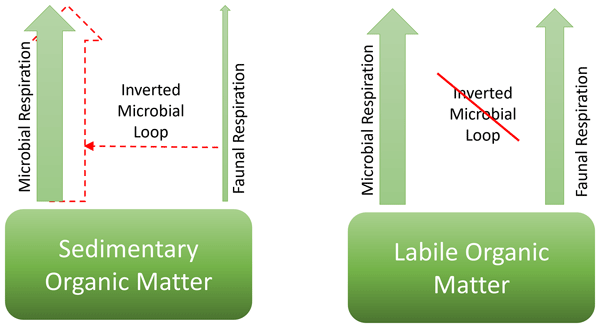
Marine sediments are locations of carbon storage. Only some deposited carbon remains stored, while most is lost as CO2 through respiration by organisms. We report experiments to investigate the organisms responsible for marine sediment respiration. Larger organisms and microbes contributed equally to respiration. The groups competed to feed on fresh carbon. Respiration of older carbon was stimulated when both groups were present, thus burrowing activities allow microbial activity to increase.
Marius Buydens, Emil De Borger, Lorenz Meire, Samuel Bodé, Antonio Schirone, Karline Soetaert, Ann Vanreusel, and Ulrike Braeckman
Biogeosciences, 23, 1159–1179, https://doi.org/10.5194/bg-23-1159-2026, https://doi.org/10.5194/bg-23-1159-2026, 2026
Short summary
Short summary
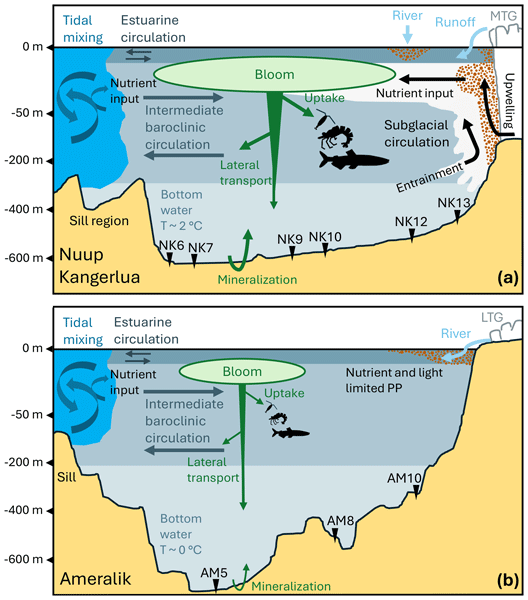
As the Greenland Ice Sheet retreats, it is crucial to understand how this affects carbon burial in fjords. Comparing a fjord influenced by marine-terminating glaciers with one fed by a land-terminating glacier shows that high productivity near marine-terminating glaciers does not necessarily enhance carbon burial. Instead, the complex interplay of physical, biological, and sedimentary processes governs fjord carbon dynamics.
Guangnan Wu, Klaas G. J. Nierop, Bingjie Yang, Stefan Schouten, Gert-Jan Reichart, and Peter Kraal
Biogeosciences, 23, 995–1012, https://doi.org/10.5194/bg-23-995-2026, https://doi.org/10.5194/bg-23-995-2026, 2026
Short summary
Short summary
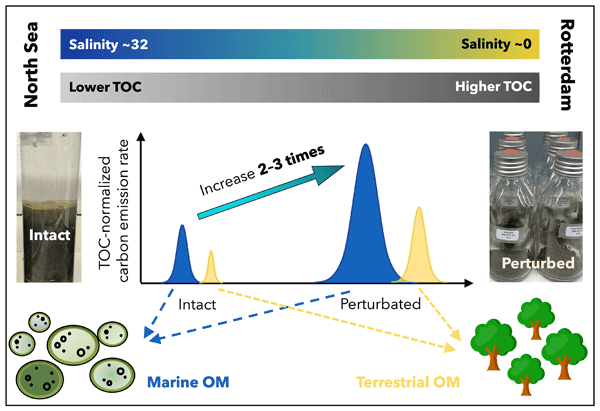
Estuaries store and process large amounts of carbon. In the Port of Rotterdam, we studied organic matter (OM) sources in sediments and showed how they influenced OM breakdown. We found that marine OM degraded faster than land-originated OM, and sediment perturbation could accelerate OM breakdown by introducing oxygen. Our findings highlight the impact of human disturbances on carbon storage in estuarine sediments, offering insights for the growing sediment reworking worldwide.
Louise Delaigue, Gert-Jan Reichart, Li Qiu, Eric P. Achterberg, Yasmina Ourradi, Chris Galley, André Mutzberg, and Matthew P. Humphreys
Biogeosciences, 22, 5103–5121, https://doi.org/10.5194/bg-22-5103-2025, https://doi.org/10.5194/bg-22-5103-2025, 2025
Short summary
Short summary
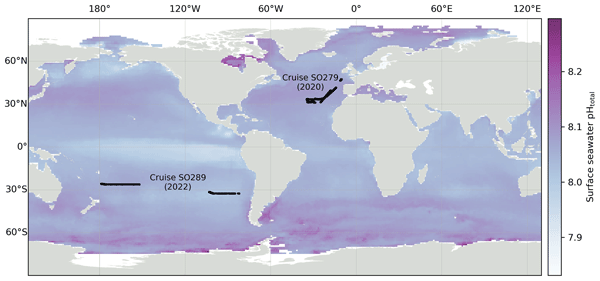
Our study analysed pH in ocean surface waters to understand how it fluctuates with changes in temperature, salinity, and biological activities. We found that temperature mainly controls daily pH variations, but biological processes also play a role, especially in affecting CO2 levels between the ocean and atmosphere. Our research shows how these factors together maintain the balance of ocean chemistry, which is crucial for predicting changes in marine environments.
Yannick F. Bats, Klaas G. J. Nierop, Alice Stuart-Lee, Joost Frieling, Linda van Roij, Gert-Jan Reichart, and Appy Sluijs
Biogeosciences, 22, 4689–4704, https://doi.org/10.5194/bg-22-4689-2025, https://doi.org/10.5194/bg-22-4689-2025, 2025
Short summary
Short summary
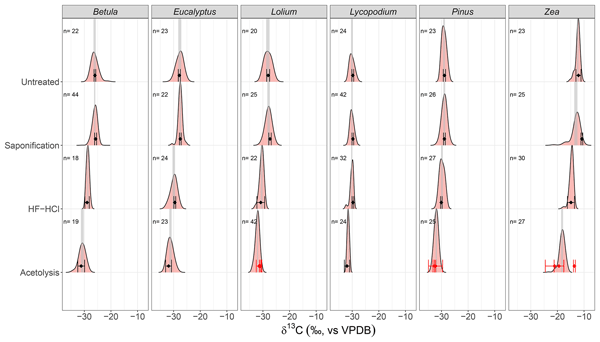
In this study, we analyzed the molecular and stable carbon isotopic composition (δ13C) of pollen and spores (sporomorphs) that underwent chemical treatments that simulate diagenesis during fossilization. We show that the successive removal of sugars and lipids results in the depletion of 13C in the residual sporomorph, leaving rich aromatic compounds. This residual aromatic-rich structure likely represents diagenetically resistant sporopollenin, implying that diagenesis results in the depletion of 13C in pollen.
Anna Cutmore, Nicole Bale, Rick Hennekam, Bingjie Yang, Darci Rush, Gert-Jan Reichart, Ellen C. Hopmans, and Stefan Schouten
Clim. Past, 21, 957–971, https://doi.org/10.5194/cp-21-957-2025, https://doi.org/10.5194/cp-21-957-2025, 2025
Short summary
Short summary
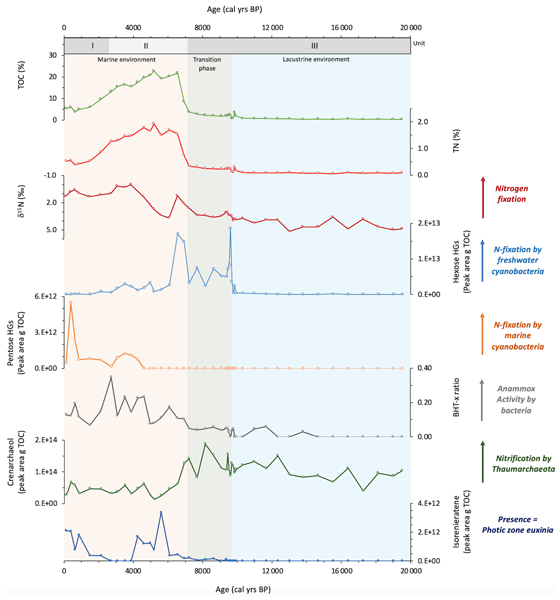
As human activities lower marine oxygen levels, understanding the impact on the marine nitrogen cycle is vital. The Black Sea, which became oxygen-deprived 9600 years ago, offers key insights. By studying organic compounds linked to nitrogen cycle processes, we found that, 7200 years ago, the Black Sea's nitrogen cycle significantly altered due to severe deoxygenation. This suggests that continued marine oxygen decline could similarly alter the marine nitrogen cycle, affecting vital ecosystems.
Szabina Karancz, Lennart J. de Nooijer, Bas van der Wagt, Marcel T. J. van der Meer, Sambuddha Misra, Rick Hennekam, Zeynep Erdem, Julie Lattaud, Negar Haghipour, Stefan Schouten, and Gert-Jan Reichart
Clim. Past, 21, 679–704, https://doi.org/10.5194/cp-21-679-2025, https://doi.org/10.5194/cp-21-679-2025, 2025
Short summary
Short summary
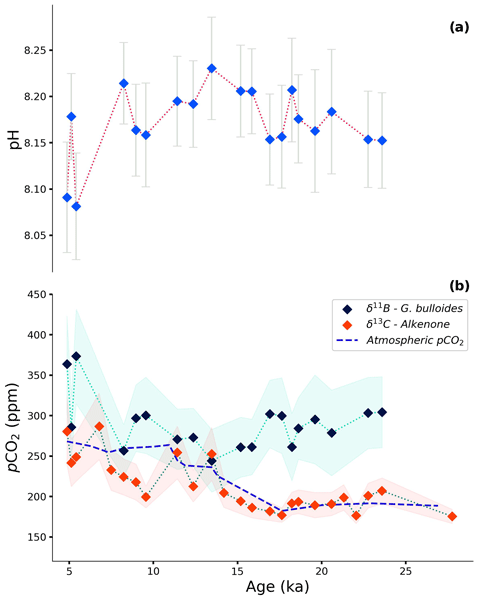
Changes in upwelling intensity of the Benguela upwelling region during the last glacial motivated us to investigate the local CO2 history during the last glacial-to-interglacial transition. Using various geochemical tracers on archives from both subsurface and surface waters reveals enhanced storage of carbon at depth during the Last Glacial Maximum. An efficient biological pump likely prevented outgassing of CO2 from intermediate depth to the atmosphere.
Evert de Froe, Igor Yashayaev, Christian Mohn, Johanne Vad, Furu Mienis, Gerard Duineveld, Ellen Kenchington, Erica Head, Steve W. Ross, Sabena Blackbird, George A. Wolff, J. Murray Roberts, Barry MacDonald, Graham Tulloch, and Dick van Oevelen
Biogeosciences, 21, 5407–5433, https://doi.org/10.5194/bg-21-5407-2024, https://doi.org/10.5194/bg-21-5407-2024, 2024
Short summary
Short summary
Deep-sea sponge grounds are distributed globally and are considered hotspots of biological diversity and biogeochemical cycling. To date, little is known about the environmental constraints that control where deep-sea sponge grounds occur and what conditions favour high sponge biomass. Here, we characterize oceanographic conditions at two contrasting sponge grounds. Our results imply that sponges and associated fauna benefit from strong tidal currents and favourable regional ocean currents.
Devika Varma, Laura Villanueva, Nicole J. Bale, Pierre Offre, Gert-Jan Reichart, and Stefan Schouten
Biogeosciences, 21, 4875–4888, https://doi.org/10.5194/bg-21-4875-2024, https://doi.org/10.5194/bg-21-4875-2024, 2024
Short summary
Short summary
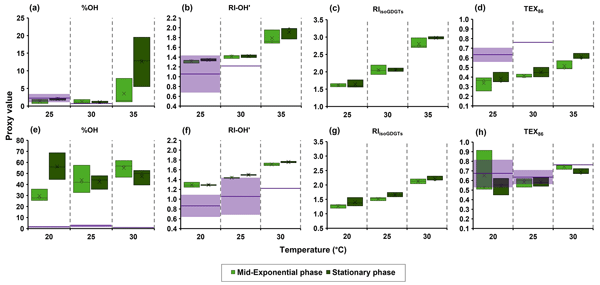
Archaeal hydroxylated tetraether lipids are increasingly used as temperature indicators in marine settings, but the factors influencing their distribution are still unclear. Analyzing membrane lipids of two thaumarchaeotal strains showed that the growth phase of the cultures does not affect the lipid distribution, but growth temperature profoundly affects the degree of cyclization of these lipids. Also, the abundance of these lipids is species-specific and is not influenced by temperature.
Charlotte Eich, Mathijs van Manen, J. Scott P. McCain, Loay J. Jabre, Willem H. van de Poll, Jinyoung Jung, Sven B. E. H. Pont, Hung-An Tian, Indah Ardiningsih, Gert-Jan Reichart, Erin M. Bertrand, Corina P. D. Brussaard, and Rob Middag
Biogeosciences, 21, 4637–4663, https://doi.org/10.5194/bg-21-4637-2024, https://doi.org/10.5194/bg-21-4637-2024, 2024
Short summary
Short summary
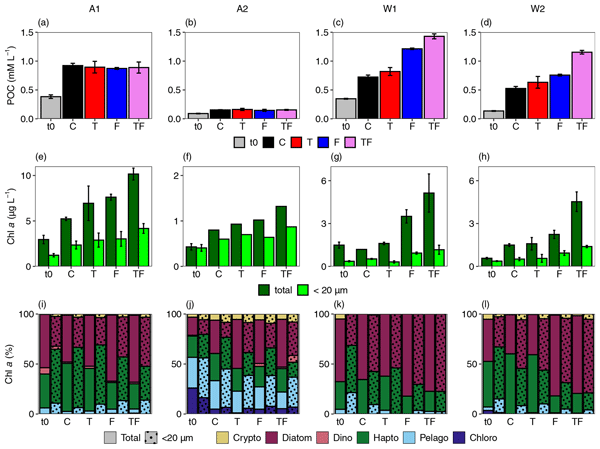
Phytoplankton growth in the Southern Ocean (SO) is often limited by low iron (Fe) concentrations. Sea surface warming impacts Fe availability and can affect phytoplankton growth. We used shipboard Fe clean incubations to test how changes in Fe and temperature affect SO phytoplankton. Their abundances usually increased with Fe addition and temperature increase, with Fe being the major factor. These findings imply potential shifts in ecosystem structure, impacting food webs and elemental cycling.
Anna-Selma van der Kaaden, Dick van Oevelen, Christian Mohn, Karline Soetaert, Max Rietkerk, Johan van de Koppel, and Theo Gerkema
Ocean Sci., 20, 569–587, https://doi.org/10.5194/os-20-569-2024, https://doi.org/10.5194/os-20-569-2024, 2024
Short summary
Short summary
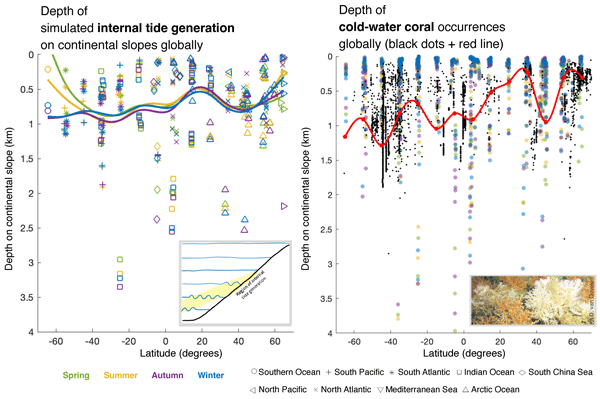
Cold-water corals (CWCs) and tidal waves in the interior of the ocean have been connected in case studies. We demonstrate this connection globally using hydrodynamic simulations and a CWC database. Internal-tide generation shows a similar depth pattern with slope steepness and latitude as CWCs. Our results suggest that internal-tide generation can be a useful predictor of CWC habitat and that current CWC habitats might change following climate-change-related shoaling of internal-tide generation.
Anna-Selma van der Kaaden, Sandra R. Maier, Siluo Chen, Laurence H. De Clippele, Evert de Froe, Theo Gerkema, Johan van de Koppel, Furu Mienis, Christian Mohn, Max Rietkerk, Karline Soetaert, and Dick van Oevelen
Biogeosciences, 21, 973–992, https://doi.org/10.5194/bg-21-973-2024, https://doi.org/10.5194/bg-21-973-2024, 2024
Short summary
Short summary
Combining hydrodynamic simulations and annotated videos, we separated which hydrodynamic variables that determine reef cover are engineered by cold-water corals and which are not. Around coral mounds, hydrodynamic zones seem to create a typical reef zonation, restricting corals from moving deeper (the expected response to climate warming). But non-engineered downward velocities in winter (e.g. deep winter mixing) seem more important for coral reef growth than coral engineering.
Caroline Ulses, Claude Estournel, Patrick Marsaleix, Karline Soetaert, Marine Fourrier, Laurent Coppola, Dominique Lefèvre, Franck Touratier, Catherine Goyet, Véronique Guglielmi, Fayçal Kessouri, Pierre Testor, and Xavier Durrieu de Madron
Biogeosciences, 20, 4683–4710, https://doi.org/10.5194/bg-20-4683-2023, https://doi.org/10.5194/bg-20-4683-2023, 2023
Short summary
Short summary
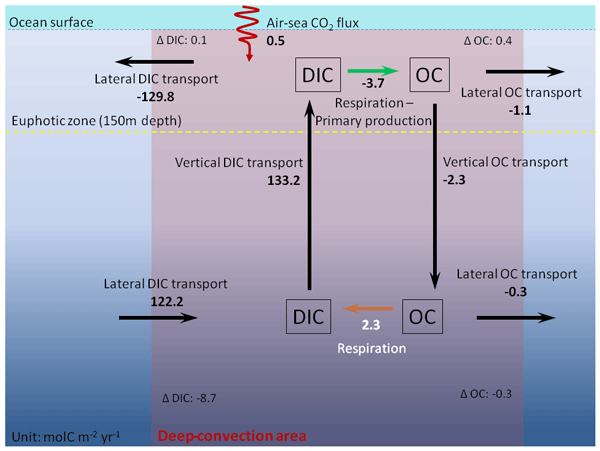
Deep convection plays a key role in the circulation, thermodynamics, and biogeochemical cycles in the Mediterranean Sea, considered to be a hotspot of biodiversity and climate change. In this study, we investigate the seasonal and annual budget of dissolved inorganic carbon in the deep-convection area of the northwestern Mediterranean Sea.
Joost Frieling, Linda van Roij, Iris Kleij, Gert-Jan Reichart, and Appy Sluijs
Biogeosciences, 20, 4651–4668, https://doi.org/10.5194/bg-20-4651-2023, https://doi.org/10.5194/bg-20-4651-2023, 2023
Short summary
Short summary
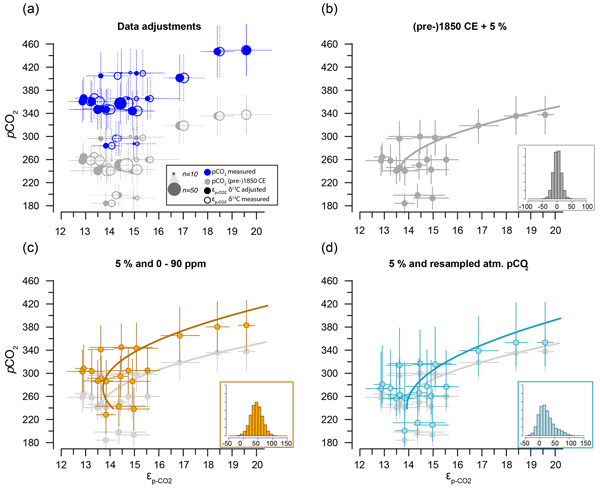
We present a first species-specific evaluation of marine core-top dinoflagellate cyst carbon isotope fractionation (εp) to assess natural pCO2 dependency on εp and explore its geological deep-time paleo-pCO2 proxy potential. We find that εp differs between genera and species and that in Operculodinium centrocarpum, εp is controlled by pCO2 and nutrients. Our results highlight the added value of δ13C analyses of individual micrometer-scale sedimentary organic carbon particles.
Laura Pacho, Lennart de Nooijer, and Gert-Jan Reichart
Biogeosciences, 20, 4043–4056, https://doi.org/10.5194/bg-20-4043-2023, https://doi.org/10.5194/bg-20-4043-2023, 2023
Short summary
Short summary
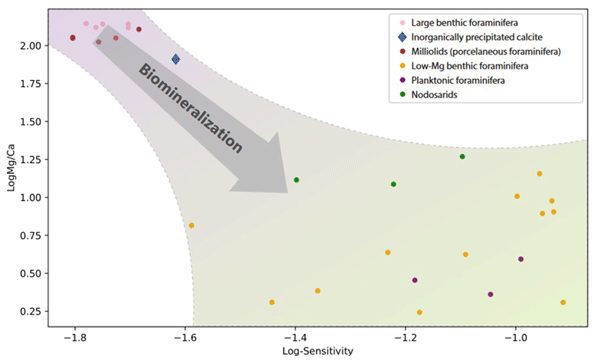
We analyzed Mg / Ca and other El / Ca (Na / Ca, B / Ca, Sr / Ca and Ba / Ca) in Nodosariata. Their calcite chemistry is markedly different to that of the other calcifying orders of foraminifera. We show a relation between the species average Mg / Ca and its sensitivity to changes in temperature. Differences were reflected in both the Mg incorporation and the sensitivities of Mg / Ca to temperature.
Niels J. de Winter, Daniel Killam, Lukas Fröhlich, Lennart de Nooijer, Wim Boer, Bernd R. Schöne, Julien Thébault, and Gert-Jan Reichart
Biogeosciences, 20, 3027–3052, https://doi.org/10.5194/bg-20-3027-2023, https://doi.org/10.5194/bg-20-3027-2023, 2023
Short summary
Short summary
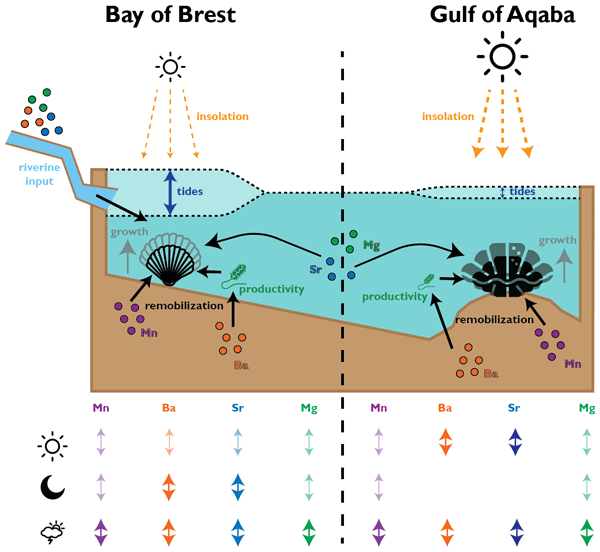
Mollusk shells are valuable recorders of climate and environmental changes of the past down to a daily resolution. To explore this potential, we measured changes in the composition of shells of two types of bivalves recorded at the hourly scale: the king scallop Pecten maximus and giant clams (Tridacna) that engaged in photosymbiosis. We find that photosymbiosis produces more day–night fluctuation in shell chemistry but that most of the variation is not periodic, perhaps recording weather.
Rick Hennekam, Katharine M. Grant, Eelco J. Rohling, Rik Tjallingii, David Heslop, Andrew P. Roberts, Lucas J. Lourens, and Gert-Jan Reichart
Clim. Past, 18, 2509–2521, https://doi.org/10.5194/cp-18-2509-2022, https://doi.org/10.5194/cp-18-2509-2022, 2022
Short summary
Short summary
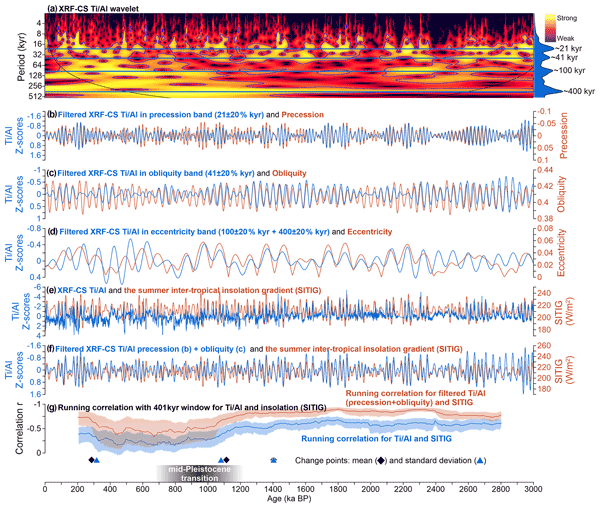
The ratio of titanium to aluminum (Ti/Al) is an established way to reconstruct North African climate in eastern Mediterranean Sea sediments. We demonstrate here how to obtain reliable Ti/Al data using an efficient scanning method that allows rapid acquisition of long climate records at low expense. Using this method, we reconstruct a 3-million-year North African climate record. African environmental variability was paced predominantly by low-latitude insolation from 3–1.2 million years ago.
Stanley I. Nmor, Eric Viollier, Lucie Pastor, Bruno Lansard, Christophe Rabouille, and Karline Soetaert
Geosci. Model Dev., 15, 7325–7351, https://doi.org/10.5194/gmd-15-7325-2022, https://doi.org/10.5194/gmd-15-7325-2022, 2022
Short summary
Short summary
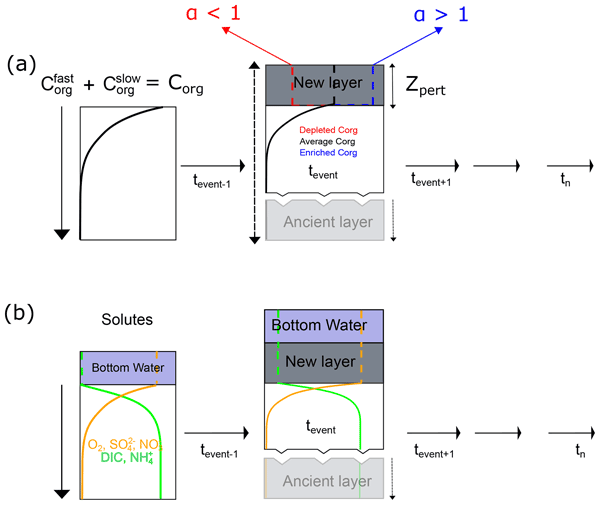
The coastal marine environment serves as a transition zone in the land–ocean continuum and is susceptible to episodic phenomena such as flash floods, which cause massive organic matter deposition. Here, we present a model of sediment early diagenesis that explicitly describes this type of deposition while also incorporating unique flood deposit characteristics. This model can be used to investigate the temporal evolution of marine sediments following abrupt changes in environmental conditions.
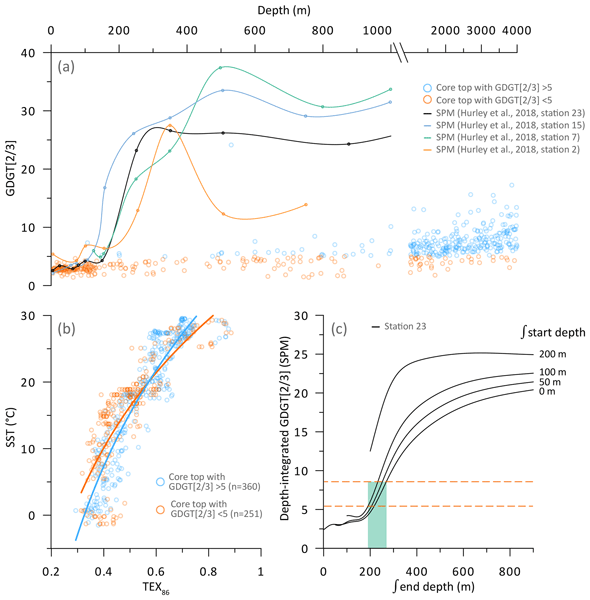
Carolien M. H. van der Weijst, Koen J. van der Laan, Francien Peterse, Gert-Jan Reichart, Francesca Sangiorgi, Stefan Schouten, Tjerk J. T. Veenstra, and Appy Sluijs
Clim. Past, 18, 1947–1962, https://doi.org/10.5194/cp-18-1947-2022, https://doi.org/10.5194/cp-18-1947-2022, 2022
Short summary
Short summary
The TEX86 proxy is often used by paleoceanographers to reconstruct past sea-surface temperatures. However, the origin of the TEX86 signal in marine sediments has been debated since the proxy was first proposed. In our paper, we show that TEX86 carries a mixed sea-surface and subsurface temperature signal and should be calibrated accordingly. Using our 15-million-year record, we subsequently show how a TEX86 subsurface temperature record can be used to inform us on past sea-surface temperatures.

Justin C. Tiano, Jochen Depestele, Gert Van Hoey, João Fernandes, Pieter van Rijswijk, and Karline Soetaert
Biogeosciences, 19, 2583–2598, https://doi.org/10.5194/bg-19-2583-2022, https://doi.org/10.5194/bg-19-2583-2022, 2022
Short summary
Short summary
This study gives an assessment of bottom trawling on physical, chemical, and biological characteristics in a location known for its strong currents and variable habitats. Although trawl gears only removed the top 1 cm of the seabed surface, impacts on reef-building tubeworms significantly decreased carbon and nutrient cycling. Lighter trawls slightly reduced the impact on fauna and nutrients. Tubeworms were strongly linked to biogeochemical and faunal aspects before but not after trawling.
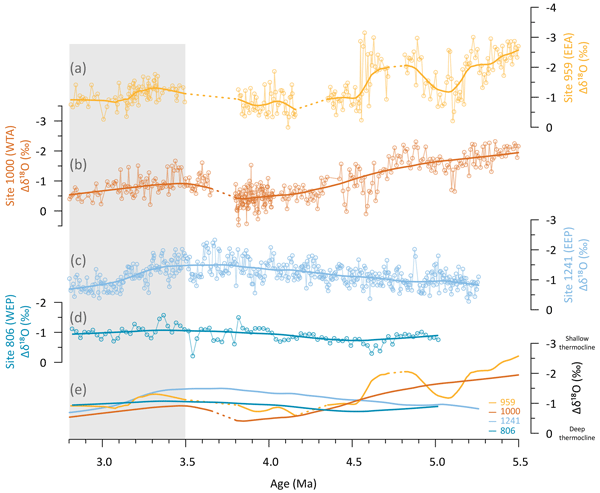
Carolien M. H. van der Weijst, Josse Winkelhorst, Wesley de Nooijer, Anna von der Heydt, Gert-Jan Reichart, Francesca Sangiorgi, and Appy Sluijs
Clim. Past, 18, 961–973, https://doi.org/10.5194/cp-18-961-2022, https://doi.org/10.5194/cp-18-961-2022, 2022
Short summary
Short summary
A hypothesized link between Pliocene (5.3–2.5 million years ago) global climate and tropical thermocline depth is currently only backed up by data from the Pacific Ocean. In our paper, we present temperature, salinity, and thermocline records from the tropical Atlantic Ocean. Surprisingly, the Pliocene thermocline evolution was remarkably different in the Atlantic and Pacific. We need to reevaluate the mechanisms that drive thermocline depth, and how these are tied to global climate change.
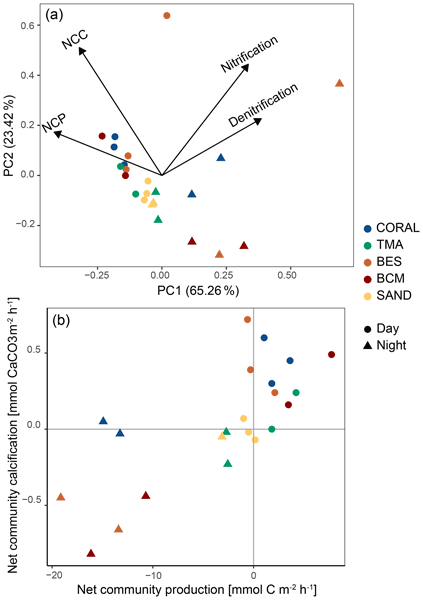
Alice E. Webb, Didier M. de Bakker, Karline Soetaert, Tamara da Costa, Steven M. A. C. van Heuven, Fleur C. van Duyl, Gert-Jan Reichart, and Lennart J. de Nooijer
Biogeosciences, 18, 6501–6516, https://doi.org/10.5194/bg-18-6501-2021, https://doi.org/10.5194/bg-18-6501-2021, 2021
Short summary
Short summary
The biogeochemical behaviour of shallow reef communities is quantified to better understand the impact of habitat degradation and species composition shifts on reef functioning. The reef communities investigated barely support reef functions that are usually ascribed to conventional coral reefs, and the overall biogeochemical behaviour is found to be similar regardless of substrate type. This suggests a decrease in functional diversity which may therefore limit services provided by this reef.
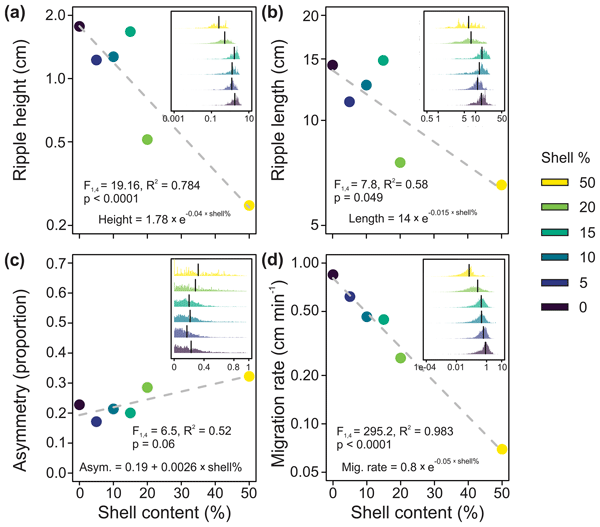
Chiu H. Cheng, Jaco C. de Smit, Greg S. Fivash, Suzanne J. M. H. Hulscher, Bas W. Borsje, and Karline Soetaert
Earth Surf. Dynam., 9, 1335–1346, https://doi.org/10.5194/esurf-9-1335-2021, https://doi.org/10.5194/esurf-9-1335-2021, 2021
Short summary
Short summary
Shells are biogenic particles that are widespread throughout natural sandy environments and can affect the bed roughness and seabed erodibility. As studies are presently lacking, we experimentally measured ripple formation and migration using natural sand with increasing volumes of shell material under unidirectional flow in a racetrack flume. We show that shells expedite the onset of sediment transport, reduce ripple dimensions and slow their migration rate.
Cited articles
Adams, C. E. and Weatherly, G. L.: Suspended-sediment transport and benthic boundary-layer dynamics, Mar. Geol., 42, 1–18, https://doi.org/10.1016/0025-3227(81)90155-9, 1981.
Addamo, A. M., Vertino, A., Stolarski, J., García-Jiménez, R., Taviani, M., and Machordom, A.: Merging scleractinian genera: the overwhelming genetic similarity between solitary Desmophyllum and colonial Lophelia, BMC Evolutionary Biology, 16, 108, https://doi.org/10.1186/s12862-016-0654-8, 2016.
Anderson, T. R., Hessen, D. O., Elser, J. J., and Urabe, J.: Metabolic Stoichiometry and the Fate of Excess Carbon and Nutrients in Consumers, The American Naturalist, 165, 1–15, https://doi.org/10.1086/426598, 2005.
Anthony, K. R. N.: Coral suspension feeding on fine particulate matter, J. Exp. Mar. Biol. Ecol., 232, 85–106, https://doi.org/10.1016/S0022-0981(98)00099-9, 1999.
Bakker, P., Schmittner, A., Lenaerts, J. T. M., Abe-Ouchi, A., Bi, D., van den Broeke, M. R., Chan, W.-L., Hu, A., Beadling, R. L., Marsland, S. J., Mernild, S. H., Saenko, O. A., Swingedouw, D., Sullivan, A., and Yin, J.: Fate of the Atlantic Meridional Overturning Circulation: Strong decline under continued warming and Greenland melting, Geophys. Res. Lett., 43, 12252–12260, https://doi.org/10.1002/2016GL070457, 2016.
Bargain, A., Foglini, F., Pairaud, I., Bonaldo, D., Carniel, S., Angeletti, L., Taviani, M., Rochette, S., and Fabri, M. C.: Predictive habitat modeling in two Mediterranean canyons including hydrodynamic variables, Prog. Oceanogr., 169, 151–168, https://doi.org/10.1016/j.pocean.2018.02.015, 2018.
Bartzke, G., Siemann, L., Büssing, R., Nardone, P., Koll, K., Hebbeln, D., and Huhn, K.: Investigating the Prevailing Hydrodynamics Around a Cold-Water Coral Colony Using a Physical and a Numerical Approach, Front. Mar. Sci., 8, https://doi.org/10.3389/fmars.2021.663304, 2021.
Boers, N.: Observation-based early-warning signals for a collapse of the Atlantic Meridional Overturning Circulation, Nat. Clim. Chang., 11, 680–688, https://doi.org/10.1038/s41558-021-01097-4, 2021.
Böning, C. W., Behrens, E., Biastoch, A., Getzlaff, K., and Bamber, J. L.: Emerging impact of Greenland meltwater on deepwater formation in the North Atlantic Ocean, Nat. Geosci., 9, 523–527, https://doi.org/10.1038/ngeo2740, 2016.
Bopp, L., Monfray, P., Aumont, O., Dufresne, J.-L., Le Treut, H., Madec, G., Terray, L., and Orr, J. C.: Potential impact of climate change on marine export production, Glob. Biogeochem. Cycles, 15, 81–99, https://doi.org/10.1029/1999GB001256, 2001.
Briscoe, N. J., Morris, S. D., Mathewson, P. D., Buckley, L. B., Jusup, M., Levy, O., Maclean, I. M. D., Pincebourde, S., Riddell, E. A., Roberts, J. A., Schouten, R., Sears, M. W., and Kearney, M. R.: Mechanistic forecasts of species responses to climate change: The promise of biophysical ecology, Glob. Change Biol., 29, 1451–1470, https://doi.org/10.1111/gcb.16557, 2023.
Brito-Morales, I., Schoeman, D. S., Molinos, J. G., Burrows, M. T., Klein, C. J., Arafeh-Dalmau, N., Kaschner, K., Garilao, C., Kesner-Reyes, K., and Richardson, A. J.: Climate velocity reveals increasing exposure of deep-ocean biodiversity to future warming, Nat. Clim. Chang., 10, 576–581, https://doi.org/10.1038/s41558-020-0773-5, 2020.
Brooke, S. and Järnegren, J.: Reproductive periodicity of the scleractinian coral Lophelia pertusa from the Trondheim Fjord, Norway, Mar. Biol., 160, 139–153, https://doi.org/10.1007/s00227-012-2071-x, 2013.
Buhl-Mortensen, L., Bøe, R., Dolan, M. F. J., Buhl-Mortensen, P., Thorsnes, T., Elvenes, S., and Hodnesdal, H.: 51 – Banks, Troughs, and Canyons on the Continental Margin off Lofoten, Vesterålen, and Troms, Norway, in: Seafloor Geomorphology as Benthic Habitat, edited by: Harris, P. T. and Baker, E. K., Elsevier, London, 703–715, https://doi.org/10.1016/B978-0-12-385140-6.00051-7, 2012.
Büscher, J. V., Form, A. U., and Riebesell, U.: Interactive Effects of Ocean Acidification and Warming on Growth, Fitness and Survival of the Cold-Water Coral Lophelia pertusa under Different Food Availabilities, Front. Mar. Sci., 4, 101, https://doi.org/10.3389/fmars.2017.00101, 2017.
Caesar, L., Rahmstorf, S., Robinson, A., Feulner, G., and Saba, V.: Observed fingerprint of a weakening Atlantic Ocean overturning circulation, Nature, 556, 191–196, https://doi.org/10.1038/s41586-018-0006-5, 2018.
Caesar, L., McCarthy, G. D., Thornalley, D. J. R., Cahill, N., and Rahmstorf, S.: Current Atlantic Meridional Overturning Circulation weakest in last millennium, Nat. Geosci., 14, 118–120, https://doi.org/10.1038/s41561-021-00699-z, 2021.
Caldeira, K. and Wickett, M. E.: Anthropogenic carbon and ocean pH, Nature, 425, 365–365, https://doi.org/10.1038/425365a, 2003.
Camazine, S., Deneubourg, J., Franks, N., Sneyd, J., Theraulaz, G., and Bonabeau, E. (Eds.): Self-Organization in Biological Systems, Princeton University Press, ISBN 9780691116242, 2001.
Cathalot, C., van Oevelen, D., Cox, T. J. S., Kutti, T., Lavaleye, M., Duineveld, G., and Meysman, F. J. R.: Cold-water coral reefs and adjacent sponge grounds: hotspots of benthic respiration and organic carbon cycling in the deep sea, Front. Mar. Sci., 2, https://doi.org/10.3389/fmars.2015.00037, 2015.
Chapron, L., Galand, P. E., Pruski, A. M., Peru, E., Vétion, G., Robin, S., and Lartaud, F.: Resilience of cold-water coral holobionts to thermal stress, P. Roy. Soc. B, 288, 20212117, https://doi.org/10.1098/rspb.2021.2117, 2021.
Conti, L. A., Lim, A., and Wheeler, A. J.: High resolution mapping of a cold water coral mound, Sci. Rep., 9, 1016, https://doi.org/10.1038/s41598-018-37725-x, 2019.
Corbera, G., Lo Iacono, C., Simarro, G., Grinyó, J., Ambroso, S., Huvenne, V. A. I., Mienis, F., Carreiro-Silva, M., Martins, I., Mano, B., Orejas, C., Larsson, A., Hennige, S., and Gori, A.: Local-scale feedbacks influencing cold-water coral growth and subsequent reef formation, Sci. Rep., 12, 20389, https://doi.org/10.1038/s41598-022-24711-7, 2022.
Correa, T. B. S., Eberli, G. P., Grasmueck, M., Reed, J. K., and Correa, A. M. S.: Genesis and morphology of cold-water coral ridges in a unidirectional current regime, Mar. Geol., 326–328, 14–27, https://doi.org/10.1016/j.margeo.2012.06.008, 2012.
Costello, M. J., McCrea, M., Freiwald, A., Lundälv, T., Jonsson, L., Bett, B. J., van Weering, T. C. E., de Haas, H., Roberts, J. M., and Allen, D.: Role of cold-water Lophelia pertusa coral reefs as fish habitat in the NE Atlantic, in: Cold-Water Corals and Ecosystems, edited by: Freiwald, A. and Roberts, J. M., Springer, Berlin, Heidelberg, 771–805, https://doi.org/10.1007/3-540-27673-4_41, 2005.
Cyr, F., Haren, H., Mienis, F., Duineveld, G., and Bourgault, D.: On the influence of cold-water coral mound size on flow hydrodynamics, and vice versa, Geophys. Res. Lett., 43, 775–783, https://doi.org/10.1002/2015GL067038, 2016.
Davies, A. J. and Guinotte, J. M.: Global Habitat Suitability for Framework-Forming Cold-Water Corals, PLoS ONE, 6, e18483, https://doi.org/10.1371/journal.pone.0018483, 2011.
Davies, A. J., Duineveld, G. C. A., Lavaleye, M. S. S., Bergman, M. J. N., van Haren, H., and Roberts, J. M.: Downwelling and deep-water bottom currents as food supply mechanisms to the cold-water coral Lophelia pertusa (Scleractinia) at the Mingulay Reef Complex, Limnol. Oceanogr., 54, 620–629, https://doi.org/10.4319/lo.2009.54.2.0620, 2009.
De Clippele, L. H., Gafeira, J., Robert, K., Hennige, S., Lavaleye, M. S., Duineveld, G. C. A., Huvenne, V. A. I., and Roberts, J. M.: Using novel acoustic and visual mapping tools to predict the small-scale spatial distribution of live biogenic reef framework in cold-water coral habitats, Coral Reefs, 36, 255–268, https://doi.org/10.1007/s00338-016-1519-8, 2017.
De Clippele, L. H., Huvenne, V. A. I., Molodtsova, T. N., and Roberts, J. M.: The Diversity and Ecological Role of Non-scleractinian Corals (Antipatharia and Alcyonacea) on Scleractinian Cold-Water Coral Mounds, Front. Mar. Sci., 6, 184, https://doi.org/10.3389/fmars.2019.00184, 2019.
De Clippele, L. H., Rovelli, L., Ramiro-Sánchez, B., Kazanidis, G., Vad, J., Turner, S., Glud, R. N., and Roberts, J. M.: Mapping cold-water coral biomass: an approach to derive ecosystem functions, Coral Reefs, 40, 215–231, https://doi.org/10.1007/s00338-020-02030-5, 2021a.
De Clippele, L. H., van der Kaaden, A.-S., Maier, S. R., de Froe, E., and Roberts, J. M.: Biomass Mapping for an Improved Understanding of the Contribution of Cold-Water Coral Carbonate Mounds to C and N Cycling, Front. Mar. Sci., 8, https://doi.org/10.3389/fmars.2021.721062, 2021b.
De Clippele, L. H., van der Kaaden, A.-S., Maier, S., de Froe, E., and Roberts, J. M.: Environmental data and image area measurements of different substrate types extracted from video transects recorded in the Logachev cold-water coral mound province, PANGAEA [data set], https://doi.org/10.1594/PANGAEA.959612, 2023.
de Froe, E.: Supplemental videos to PhD thesis Evert de Froe: Dinner's Served in the Deep Sea, Zenodo [video], https://doi.org/10.5281/zenodo.7510506, 2023.
de Froe, E., Rovelli, L., Glud, R. N., Maier, S. R., Duineveld, G., Mienis, F., Lavaleye, M., and van Oevelen, D.: Benthic Oxygen and Nitrogen Exchange on a Cold-Water Coral Reef in the North-East Atlantic Ocean, Front. Mar. Sci., 6, 665, https://doi.org/10.3389/fmars.2019.00665, 2019.
de Froe, E., Mohn, C., Soetaert, K., and van Oevelen, D.: ATLAS Deliverable 2.5: Model code for the Rockall Bank case study area, Zenodo [code and data set], https://doi.org/10.5281/zenodo.4250150, 2020.
de Froe, E., Maier, S. R., Horn, H. G., Wolff, G. A., Blackbird, S., Mohn, C., Schultz, M., van der Kaaden, A.-S., Cheng, C. H., Wubben, E., van Haastregt, B., Moller, E. F., Lavaleye, M., Soetaert, K., Reichart, G.-J., and van Oevelen, D.: Hydrography and food distribution during a tidal cycle above a cold-water coral mound, Deep-Sea Res. Pt. I, 189, 103854, https://doi.org/10.1016/j.dsr.2022.103854, 2022.
Dodds, L. A., Roberts, J. M., Taylor, A. C., and Marubini, F.: Metabolic tolerance of the cold-water coral Lophelia pertusa (Scleractinia) to temperature and dissolved oxygen change, J. Exp. Mar. Biol. Ecol., 349, 205–214, https://doi.org/10.1016/j.jembe.2007.05.013, 2007.
Dormann, C. F.: Promising the future? Global change projections of species distributions, Basic Appl. Ecol., 8, 387–397, https://doi.org/10.1016/j.baae.2006.11.001, 2007.
Dormann, C. F., Schymanski, S. J., Cabral, J., Chuine, I., Graham, C., Hartig, F., Kearney, M., Morin, X., Römermann, C., Schröder, B., and Singer, A.: Correlation and process in species distribution models: bridging a dichotomy, J. Biogeogr., 39, 2119–2131, https://doi.org/10.1111/j.1365-2699.2011.02659.x, 2012.
Dorschel, B., Hebbeln, D., Ruggeberg, A., Dullo, W., and Freiwald, A.: Growth and erosion of a cold-water coral covered carbonate mound in the Northeast Atlantic during the Late Pleistocene and Holocene, Earth Planet. Sc. Lett., 233, 33–44, https://doi.org/10.1016/j.epsl.2005.01.035, 2005.
Dorschel, B., Hebbeln, D., Foubert, A., White, M., and Wheeler, A. J.: Hydrodynamics and cold-water coral facies distribution related to recent sedimentary processes at Galway Mound west of Ireland, Mar. Geol., 244, 184–195, https://doi.org/10.1016/j.margeo.2007.06.010, 2007.
Duineveld, G. C. A., Lavaleye, M. S. S., Bergman, M. J. N., de Stigter, H., and Mienis, F.: Trophic structure of a cold-water coral mound community (Rockall Bank, NE Atlantic) in relation to the near-bottom particle supply and current regime, B. Mar. Sci., 81, 449–467, 2007.
Dullo, W. C., Flögel, S., and Rüggeberg, A.: Cold-water coral growth in relation to the hydrography of the Celtic and Nordic European continental margin, Mar. Ecol. Prog. Ser., 371, 165–176, https://doi.org/10.3354/meps07623, 2008.
Egbert, G. D. and Erofeeva, S. Y.: Efficient Inverse Modeling of Barotropic Ocean Tides, J. Atmos. Ocean. Tech., 19, 183–204, https://doi.org/10.1175/1520-0426(2002)019<0183:EIMOBO>2.0.CO;2, 2002.
Ellett, D. J., Edwards, A., and Bowers, R.: The hydrography of the Rockall Channel – an overview, P. Roy. Soc. Edinb. B, 88, 61–81, https://doi.org/10.1017/S0269727000004474, 1986.
Elith, J. and Leathwick, J. R.: Species Distribution Models: Ecological Explanation and Prediction Across Space and Time, Annu. Rev. Ecol. Evol. S., 40, 677–697, https://doi.org/10.1146/annurev.ecolsys.110308.120159, 2009.
Evans, T. G., Diamond, S. E., and Kelly, M. W.: Mechanistic species distribution modelling as a link between physiology and conservation, Conserv. Physiol., 3, cov056, https://doi.org/10.1093/conphys/cov056, 2015.
Fink, H. G., Wienberg, C., De Pol-Holz, R., Wintersteller, P., and Hebbeln, D.: Cold-water coral growth in the Alboran Sea related to high productivity during the Late Pleistocene and Holocene, Mar. Geol., 339, 71–82, https://doi.org/10.1016/j.margeo.2013.04.009, 2013.
Flögel, S., Dullo, W.-Chr., Pfannkuche, O., Kiriakoulakis, K., and Rüggeberg, A.: Geochemical and physical constraints for the occurrence of living cold-water corals, Deep-Sea Res. Pt. II, 99, 19–26, https://doi.org/10.1016/j.dsr2.2013.06.006, 2014.
Freiwald, A. and Wilson, J. B.: Taphonomy of modern deep, cold-temperate water coral reefs, Hist. Biol., 13, 37–52, https://doi.org/10.1080/08912969809386571, 1998.
Freiwald, A., Hühnerbach, V., Lindberg, B., Wilson, J. B., and Campbell, J.: The Sula Reef Complex, Norwegian shelf, Facies, 47, 179–200, https://doi.org/10.1007/BF02667712, 2002.
Galli, G., Bramanti, L., Priori, C., Rossi, S., Santangelo, G., Tsounis, G., and Solidoro, C.: Modelling red coral (Corallium rubrum) growth in response to temperature and nutrition, Ecol. Model., 337, 137–148, https://doi.org/10.1016/j.ecolmodel.2016.06.010, 2016.
Gehlen, M., Séférian, R., Jones, D. O. B., Roy, T., Roth, R., Barry, J., Bopp, L., Doney, S. C., Dunne, J. P., Heinze, C., Joos, F., Orr, J. C., Resplandy, L., Segschneider, J., and Tjiputra, J.: Projected pH reductions by 2100 might put deep North Atlantic biodiversity at risk, Biogeosciences, 11, 6955–6967, https://doi.org/10.5194/bg-11-6955-2014, 2014.
Genin, A., Dayton, P. K., Lonsdale, P. F., and Spiess, F. N.: Corals on seamount peaks provide evidence of current acceleration over deep-sea topography, Nature, 322, 59–61, https://doi.org/10.1038/322059a0, 1986.
Girard, F., Litvin, S. Y., Sherman, A., McGill, P., Gannon, A., Lovera, C., DeVogelaere, A., Burton, E., Graves, D., Schnittger, A., and Barry, J.: Phenology in the deep sea: seasonal and tidal feeding rhythms in a keystone octocoral, P. Roy. Soc. B, 289, 20221033, https://doi.org/10.1098/rspb.2022.1033, 2022.
Gómez, C. E., Wickes, L., Deegan, D., Etnoyer, P. J., and Cordes, E. E.: Growth and feeding of deep-sea coral Lophelia pertusa from the California margin under simulated ocean acidification conditions, PeerJ, 6, e5671, https://doi.org/10.7717/peerj.5671, 2018.
Gómez, C. E., Gori, A., Weinnig, A. M., Hallaj, A., Chung, H. J., and Cordes, E. E.: Natural variability in seawater temperature compromises the metabolic performance of a reef-forming cold-water coral with implications for vulnerability to ongoing global change, Coral Reefs, 41, 1225–1237, https://doi.org/10.1007/s00338-022-02267-2, 2022.
Gori, A., Grover, R., Orejas, C., Sikorski, S., and Ferrier-Pagès, C.: Uptake of dissolved free amino acids by four cold-water coral species from the Mediterranean Sea, Deep-Sea Res. Pt. II, 99, 42–50, https://doi.org/10.1016/j.dsr2.2013.06.007, 2014.
Gori, A., Ferrier-Pagès, C., Hennige, S. J., Murray, F., Rottier, C., Wicks, L. C., and Roberts, J. M.: Physiological response of the cold-water coral Desmophyllum dianthus to thermal stress and ocean acidification, PeerJ, 4, e1606, https://doi.org/10.7717/peerj.1606, 2016.
Greiffenhagen, L., Kutti, T., Maier, S. R., and De Clippele, L. H.: Biomass mapping of fjordic cold-water coral reefs reveals distinct functional role of vertical wall habitat, Deep-Sea Res. Pt. I, 211, 104350, https://doi.org/10.1016/j.dsr.2024.104350, 2024.
Greiffenhagen, L., Titschack, J., Wienberg, C., Wang, H., and Hebbeln, D.: Cold-water coral mounds are effective carbon sinks in the western Mediterranean Sea, Biogeosciences, 22, 2201–2223, https://doi.org/10.5194/bg-22-2201-2025, 2025.
Guihen, D., White, M., and Lundälv, T.: Boundary layer flow dynamics at a cold-water coral reef, J. Sea Res., 78, 36–44, https://doi.org/10.1016/j.seares.2012.12.007, 2013.
Guinotte, J. M. and Davies, A. J.: Predicted Deep-Sea Coral Habitat Suitability for the U.S. West Coast, PLOS ONE, 9, e93918, https://doi.org/10.1371/journal.pone.0093918, 2014.
Guinotte, J. M., Orr, J., Cairns, S., Freiwald, A., Morgan, L., and George, R.: Will human-induced changes in seawater chemistry alter the distribution of deep-sea scleractinian corals?, Front. Ecol. Environ., 4, 141–146, https://doi.org/10.1890/1540-9295(2006)004[0141:WHCISC]2.0.CO;2, 2006.
Hansen, B. and Østerhus, S.: North Atlantic–Nordic Seas exchanges, Prog. Oceanogr., 45, 109–208, https://doi.org/10.1016/S0079-6611(99)00052-X, 2000.
Hanz, U., Wienberg, C., Hebbeln, D., Duineveld, G., Lavaleye, M., Juva, K., Dullo, W.-C., Freiwald, A., Tamborrino, L., Reichart, G.-J., Flögel, S., and Mienis, F.: Environmental factors influencing benthic communities in the oxygen minimum zones on the Angolan and Namibian margins, Biogeosciences, 16, 4337–4356, https://doi.org/10.5194/bg-16-4337-2019, 2019.
Hebbeln, D., Wienberg, C., Wintersteller, P., Freiwald, A., Becker, M., Beuck, L., Dullo, C., Eberli, G. P., Glogowski, S., Matos, L., Forster, N., Reyes-Bonilla, H., and Taviani, M.: Environmental forcing of the Campeche cold-water coral province, southern Gulf of Mexico, Biogeosciences, 11, 1799–1815, https://doi.org/10.5194/bg-11-1799-2014, 2014.
Hebbeln, D., Van Rooij, D., and Wienberg, C.: Good neighbours shaped by vigorous currents: Cold-water coral mounds and contourites in the North Atlantic, Mar. Geol., 378, 171–185, https://doi.org/10.1016/j.margeo.2016.01.014, 2016.
Hebbeln, D., Portilho-Ramos, R. da C., Wienberg, C., and Titschack, J.: The Fate of Cold-Water Corals in a Changing World: A Geological Perspective, Front. Mar. Sci., 6, 119, https://doi.org/10.3389/fmars.2019.00119, 2019.
Hennige, S., Larsson, A., Orejas, C., Gori, A., De Clippele, L., Lee, Y., Jimeno, G., Georgoulas, K., Kamenos, N., and Roberts, J.: Using the Goldilocks Principle to model coral ecosystem engineering, P. Roy. Soc. B, 288, 20211260, https://doi.org/10.1098/rspb.2021.1260, 2021.
Hennige, S. J., Wicks, L. C., Kamenos, N. A., Perna, G., Findlay, H. S., and Roberts, J. M.: Hidden impacts of ocean acidification to live and dead coral framework, Proc. R. Soc. B, 282, 20150990, https://doi.org/10.1098/rspb.2015.0990, 2015.
Hennige, S. J., Wolfram, U., Wickes, L., Murray, F., Roberts, J. M., Kamenos, N. A., Schofield, S., Groetsch, A., Spiesz, E. M., Aubin-Tam, M.-E., and Etnoyer, P. J.: Crumbling Reefs and Cold-Water Coral Habitat Loss in a Future Ocean: Evidence of “Coralporosis” as an Indicator of Habitat Integrity, Front. Mar. Sci., 7, https://doi.org/10.3389/fmars.2020.00668, 2020.
Henry, L.-A. and Roberts, J. M.: Biodiversity and ecological composition of macrobenthos on cold-water coral mounds and adjacent off-mound habitat in the bathyal Porcupine Seabight, NE Atlantic, Deep-Sea Res. Pt. I, 54, 654–672, https://doi.org/10.1016/j.dsr.2007.01.005, 2007.
Henson, S. A., Yool, A., and Sanders, R.: Global Biogeochemical Cycles carbon export: A model study, Glob. Biogeochem. Cycles, 29, 33–45, https://doi.org/10.1002/2014GB004965, 2015.
Holliday, N. P., Pollard, R. T., Read, J. F., and Leach, H.: Water mass properties and fluxes in the Rockall Trough, 1975–1998, Deep-Sea Res. Pt. I, 47, 1303–1332, 2000.
Hunter, T.: Suspension Feeding in Oscillating Flow: The Effect of Colony Morphology and Flow Regime on Plankton Capture by the Hydroid Obelia longissima, Biol. Bull., 176, 41–49, https://doi.org/10.2307/1541887, 1989.
Husebø, Å., Nøttestad, L., Fosså, J. H., Furevik, D. M., and Jørgensen, S. B.: Distribution and abundance of fish in deep-sea coral habitats, Hydrobiologia, 471, 91–99, https://doi.org/10.1023/A:1016549203368, 2002.
Huthnance, J. M.: On the diurnal tidal currents over Rockall Bank, Deep-Sea Res., 21, 23–35, 1973.
Jensen, A. and Frederiksen, R.: The fauna associated with the bank-forming deepwater coral Lophelia pertusa (Scleractinaria) on the Faroe shelf, Sarsia, 77, 53–69, https://doi.org/10.1080/00364827.1992.10413492, 1992.
Johnson, C., Sherwin, T., Smythe-Wright, D., Shimmield, T., and Turrell, W.: Wyville Thomson Ridge Overflow Water: Spatial and temporal distribution in the Rockall Trough, Deep-Sea Res. Pt. I, 57, 1153–1162, https://doi.org/10.1016/j.dsr.2010.07.006, 2010.
Jones, D. O. B., Yool, A., Wei, C.-L., Henson, S. A., Ruhl, H. A., Watson, R. A., and Gehlen, M.: Global reductions in seafloor biomass in response to climate change, Glob. Change Biol., 20, 1861–1872, https://doi.org/10.1111/gcb.12480, 2014.
Jonsson, L., Nilsson, P., Floruta, F., and Lundälv, T.: Distributional patterns of macro- and megafauna associated with a reef of the cold-water coral Lophelia pertusa on the Swedish west coast, Mar. Ecol. Prog. Ser., 284, 163–171, https://doi.org/10.3354/meps284163, 2004.
Juva, K., Flögel, S., Karstensen, J., Linke, P., and Dullo, W.-C.: Tidal Dynamics Control on Cold-Water Coral Growth: A High-Resolution Multivariable Study on Eastern Atlantic Cold-Water Coral Sites, Front. Mar. Sci., 7, 132, https://doi.org/10.3389/fmars.2020.00132, 2020.
Kearney, M.: Habitat, environment and niche: what are we modelling?, Oikos, 115, 186–191, https://doi.org/10.1111/j.2006.0030-1299.14908.x, 2006.
Kearney, M., Phillips, B. L., Tracy, C. R., Christian, K. A., Betts, G., and Porter, W. P.: Modelling species distributions without using species distributions: the cane toad in Australia under current and future climates, Ecography, 31, 423–434, https://doi.org/10.1111/j.0906-7590.2008.05457.x, 2008.
Kearney, M. R., Wintle, B. A., and Porter, W. P.: Correlative and mechanistic models of species distribution provide congruent forecasts under climate change, Conserv. Lett., 3, 203–213, https://doi.org/10.1111/j.1755-263X.2010.00097.x, 2010.
Kenyon, N. H., Akhmetzhanov, A. M., Wheeler, A. J., van Weering, T. C. E., de Haas, H., and Ivanov, M. K.: Giant carbonate mud mounds in the southern Rockall Trough, Mar. Geol., 195, 5–30, https://doi.org/10.1016/S0025-3227(02)00680-1, 2003.
Khripounoff, A., Caprais, J.-C., Le Bruchec, J., Rodier, P., Noel, P., and Cathalot, C.: Deep cold-water coral ecosystems in the Brittany submarine canyons (Northeast Atlantic): Hydrodynamics, particle supply, respiration, and carbon cycling, Limnol. Oceanogr., 59, 87–98, https://doi.org/10.4319/lo.2014.59.1.0087, 2014.
Kim, K. and Lasker, H. R.: Allometry of resource capture in colonial cnidarians and constraints on modular growth, Funct. Ecology, 12, 646–654, https://doi.org/10.1046/j.1365-2435.1998.00228.x, 1998.
Kiriakoulakis, K., Freiwald, A., Fisher, E., and Wolff, G. A.: Organic matter quality and supply to deep-water coral/mound systems of the NW European Continental Margin, Int. J. Earth Sci., 96, 159–170, https://doi.org/10.1007/s00531-006-0078-6, 2007.
Larsson, A. I., Lundälv, T., and van Oevelen, D.: Skeletal growth, respiration rate and fatty acid composition in the cold-water coral Lophelia pertusa under varying food conditions, Mar. Ecol. Prog. Ser., 483, 169–184, https://doi.org/10.3354/meps10284, 2013.
Lavaleye, M., Duineveld, G., Lundälv, T., White, M., Guihen, D., Kiriakoulakis, K., and Wolff, G. A.: Cold-water corals on the Tisler reef: preliminary observations on the dynamic reef environment, Oceanography, 22, 76–84, 2009.
Laws, E. A., Falkowski, P. G., Smith, W. O., Ducklow, H., and McCarthy, J. J.: Temperature effects on export production in the open ocean, Glob. Biogeochem. Cycles, 14, 1231–1246, https://doi.org/10.1029/1999GB001229, 2000.
Levin, L. A. and Le Bris, N.: The deep ocean under climate change, Science, 350, 766–768, https://doi.org/10.1126/science.aad0126, 2015.
Lim, A., Wheeler, A. J., and Arnaubec, A.: High-resolution facies zonation within a cold-water coral mound: The case of the Piddington Mound, Porcupine Seabight, NE Atlantic, Mar. Geol., 390, 120–130, https://doi.org/10.1016/j.margeo.2017.06.009, 2017.
Lim, A., Wheeler, A. J., Price, D. M., O'Reilly, L., Harris, K., and Conti, L.: Influence of benthic currents on cold-water coral habitats: a combined benthic monitoring and 3D photogrammetric investigation, Sci. Rep., 10, 19433, https://doi.org/10.1038/s41598-020-76446-y, 2020.
Lunden, J. J., Georgian, S. E., and Cordes, E. E.: Aragonite saturation states at cold-water coral reefs structured by Lophelia pertusa in the northern Gulf of Mexico, Limnol. Oceanogr., 58, 354–362, https://doi.org/10.4319/lo.2013.58.1.0354, 2013.
Maier, S. R., Kutti, T., Bannister, R. J., van Breugel, P., van Rijswijk, P., and van Oevelen, D.: Survival under conditions of variable food availability: Resource utilization and storage in the cold-water coral Lophelia pertusa: Cold-water coral resource utilization and storage, Limnol. Oceanogr., 64, 1651–1671, https://doi.org/10.1002/lno.11142, 2019.
Maier, S. R., Bannister, R. J., van Oevelen, D., and Kutti, T.: Seasonal controls on the diet, metabolic activity, tissue reserves and growth of the cold-water coral Lophelia pertusa, Coral Reefs, 39, 173–187, https://doi.org/10.1007/s00338-019-01886-6, 2020.
Maier, S. R., Mienis, F., de Froe, E., Soetaert, K., Lavaleye, M., Duineveld, G., Beauchard, O., van der Kaaden, A.-S., Koch, B. P., and van Oevelen, D.: Reef communities associated with “dead” cold-water coral framework drive resource retention and recycling in the deep sea, Deep-Sea Res. Pt. I, 175, https://doi.org/10.1016/j.dsr.2021.103574, 2021.
Maier, S. R., Brooke, S., De Clippele, L. H., de Froe, E., van der Kaaden, A.-S., Kutti, T., Mienis, F., and van Oevelen, D.: On the paradox of thriving cold-water coral reefs in the food-limited deep sea, Biol. Rev., 98, 1768–1795, https://doi.org/10.1111/brv.12976, 2023.
Martin, J. H., Knauer, G. A., Karl, D. M., and Broenkow, W. W.: VERTEX: carbon cycling in the northeast Pacific, Deep-Sea Res. Pt. A, 34, 267–285, https://doi.org/10.1016/0198-0149(87)90086-0, 1987.
Matos, L., Wienberg, C., Titschack, J., Schmiedl, G., Frank, N., Abrantes, F., Cunha, M. R., and Hebbeln, D.: Coral mound development at the Campeche cold-water coral province, southern Gulf of Mexico: Implications of Antarctic Intermediate Water increased influence during interglacials, Mar. Geol., 392, 53–65, https://doi.org/10.1016/j.margeo.2017.08.012, 2017.
McCulloch, M., Trotter, J., Montagna, P., Falter, J., Dunbar, R., Freiwald, A., Försterra, G., López Correa, M., Maier, C., Rüggeberg, A., and Taviani, M.: Resilience of cold-water scleractinian corals to ocean acidification: Boron isotopic systematics of pH and saturation state up-regulation, Geochim. Cosmochim. Ac., 87, 21–34, https://doi.org/10.1016/j.gca.2012.03.027, 2012.
Mienis, F., van Weering, T., de Haas, H., de Stigter, H., Huvenne, V., and Wheeler, A.: Carbonate mound development at the SW Rockall Trough margin based on high resolution TOBI and seismic recording, Mar. Geol., 233, 1–19, https://doi.org/10.1016/j.margeo.2006.08.003, 2006.
Mienis, F., de Stigter, H. C., White, M., Duineveld, G., de Haas, H., and van Weering, T. C. E.: Hydrodynamic controls on cold-water coral growth and carbonate-mound development at the SW and SE Rockall Trough Margin, NE Atlantic Ocean, Deep-Sea Res. Pt. I, 54, 1655–1674, https://doi.org/10.1016/j.dsr.2007.05.013, 2007.
Mienis, F., de Stigter, H. C., de Haas, H., and van Weering, T. C. E.: Near-bed particle deposition and resuspension in a cold-water coral mound area at the Southwest Rockall Trough margin, NE Atlantic, Deep-Sea Res. Pt. I, 56, 1026–1038, https://doi.org/10.1016/j.dsr.2009.01.006, 2009a.
Mienis, F., van der Land, C., de Stigter, H. C., van de Vorstenbosch, M., de Haas, H., Richter, T., and van Weering, T. C. E.: Sediment accumulation on a cold-water carbonate mound at the Southwest Rockall Trough margin, Mar. Geol., 265, 40–50, https://doi.org/10.1016/j.margeo.2009.06.014, 2009b.
Mienis, F., Duineveld, G. C. A., Davies, A. J., Ross, S. W., Seim, H., Bane, J., and van Weering, T. C. E.: The influence of near-bed hydrodynamic conditions on cold-water corals in the Viosca Knoll area, Gulf of Mexico, Deep-Sea Res. Pt. I, 60, 32–45, https://doi.org/10.1016/j.dsr.2011.10.007, 2012.
Mienis, F., Bouma, T., Witbaard, R., van Oevelen, D., and Duineveld, G.: Experimental assessment of the effects of coldwater coral patches on water flow, Mar. Ecol. Prog. Ser., 609, 101–117, https://doi.org/10.3354/meps12815, 2019.
Mohn, C., Rengstorf, A., White, M., Duineveld, G., Mienis, F., Soetaert, K., and Grehan, A.: Linking benthic hydrodynamics and cold-water coral occurrences: A high-resolution model study at three cold-water coral provinces in the NE Atlantic, Prog. Oceanogr., 122, https://doi.org/10.1016/j.pocean.2013.12.003, 2014.
Mohn, C., Hansen, J. L. S., Carreiro-Silva, M., Cunningham, S. A., de Froe, E., Dominguez-Carrió, C., Gary, S., Glud, R. N., Göke, C., Johnson, C., Morato, T., Friis Møller, E., Rovelli, L., Schulz, K., Soetaert, K., van der Kaaden, A., and van Oevelen, D.: Tidal to decadal scale hydrodynamics at two contrasting cold-water coral sites in the Northeast Atlantic, Prog. Oceanogr., 214, 103031, https://doi.org/10.1016/j.pocean.2023.103031, 2023.
Morato, T., González-Irusta, J.-M., Dominguez-Carrió, C., Wei, C.-L., Davies, A., Sweetman, A. K., Taranto, G. H., Beazley, L., García-Alegre, A., Grehan, A., Laffargue, P., Murillo, F. J., Sacau, M., Vaz, S., Kenchington, E., Arnaud-Haond, S., Callery, O., Chimienti, G., Cordes, E., Egilsdottir, H., Freiwald, A., Gasbarro, R., Gutiérrez-Zárate, C., Gianni, M., Gilkinson, K., Wareham Hayes, V. E., Hebbeln, D., Hedges, K., Henry, L.-A., Johnson, D., Koen-Alonso, M., Lirette, C., Mastrototaro, F., Menot, L., Molodtsova, T., Durán Muñoz, P., Orejas, C., Pennino, M. G., Puerta, P., Ragnarsson, S. Á., Ramiro-Sánchez, B., Rice, J., Rivera, J., Roberts, J. M., Ross, S. W., Rueda, J. L., Sampaio, Í., Snelgrove, P., Stirling, D., Treble, M. A., Urra, J., Vad, J., van Oevelen, D., Watling, L., Walkusz, W., Wienberg, C., Woillez, M., Levin, L. A., and Carreiro-Silva, M.: Climate-induced changes in the suitable habitat of cold-water corals and commercially important deep-sea fishes in the North Atlantic, Glob. Change Biol., 26, 2181–2202, https://doi.org/10.1111/gcb.14996, 2020.
Orejas, C., Gori, A., Rad-Menéndez, C., Last, K. S., Davies, A. J., Beveridge, C. M., Sadd, D., Kiriakoulakis, K., Witte, U., and Roberts, J. M.: The effect of flow speed and food size on the capture efficiency and feeding behaviour of the cold-water coral Lophelia pertusa, J. Exp. Mar. Biol. Ecol., 481, 34–40, https://doi.org/10.1016/j.jembe.2016.04.002, 2016.
Orr, J. C., Fabry, V. J., Aumont, O., Bopp, L., Doney, S. C., Feely, R. A., Gnanadesikan, A., Gruber, N., Ishida, A., Joos, F., Key, R. M., Lindsay, K., Maier-Reimer, E., Matear, R., Monfray, P., Mouchet, A., Najjar, R. G., Plattner, G.-K., Rodgers, K. B., Sabine, C. L., Sarmiento, J. L., Schlitzer, R., Slater, R. D., Totterdell, I. J., Weirig, M.-F., Yamanaka, Y., and Yool, A.: Anthropogenic ocean acidification over the twenty-first century and its impact on calcifying organisms, Nature, 437, 681–686, https://doi.org/10.1038/nature04095, 2005.
Osterloff, J., Nilssen, I., Järnegren, J., Van Engeland, T., Buhl-Mortensen, P., and Nattkemper, T. W.: Computer vision enables short- and long-term analysis of Lophelia pertusa polyp behaviour and colour from an underwater observatory, Sci. Rep., 9, 6578, https://doi.org/10.1038/s41598-019-41275-1, 2019.
Pearman, T. R. R., Robert, K., Callaway, A., Hall, R., Lo Iacono, C., and Huvenne, V. A. I.: Improving the predictive capability of benthic species distribution models by incorporating oceanographic data – Towards holistic ecological modelling of a submarine canyon, Prog. Oceanogr., 184, 102338, https://doi.org/10.1016/j.pocean.2020.102338, 2020.
Pingree, R. D. and Griffiths, D. K.: Trapped diurnal waves on Porcupine and Rockall Banks, J. Mar. Biol. Assoc. UK, 64, 889–897, https://doi.org/10.1017/S0025315400047305, 1984.
Portilho-Ramos, R. da C., Titschack, J., Wienberg, C., Rojas, M. G. S., Yokoyama, Y., and Hebbeln, D.: Major environmental drivers determining life and death of cold-water corals through time, PLOS Biology, 20, e3001628, https://doi.org/10.1371/journal.pbio.3001628, 2022.
Puerta, P., Johnson, C., Carreiro-Silva, M., Henry, L.-A., Kenchington, E., Morato, T., Kazanidis, G., Rueda, J. L., Urra, J., Ross, S., Wei, C.-L., González-Irusta, J. M., Arnaud-Haond, S., and Orejas, C.: Influence of Water Masses on the Biodiversity and Biogeography of Deep-Sea Benthic Ecosystems in the North Atlantic, Front. Mar. Sci., 7, 239, https://doi.org/10.3389/fmars.2020.00239, 2020.
Purser, A., Larsson, A. I., Thomsen, L., and van Oevelen, D.: The influence of flow velocity and food concentration on Lophelia pertusa (Scleractinia) zooplankton capture rates, J. Exp. Mar. Biol. Ecol., 395, 55–62, https://doi.org/10.1016/j.jembe.2010.08.013, 2010.
Ranasinghe, R., Swinkels, C., Luijendijk, A., Roelvink, D., Bosboom, J., Stive, M., and Walstra, D.: Morphodynamic upscaling with the MORFAC approach: Dependencies and sensitivities, Coast. Eng., 58, 806–811, https://doi.org/10.1016/j.coastaleng.2011.03.010, 2011.
R Core Team: R: A language and environment for statistical computing. R Foundation for Statistical Computing, Vienna, Austria, https://www.R-project.org/ (last access: 22 January 2026), 2021.
Rengstorf, A. M., Mohn, C., Brown, C., Wisz, M. S., and Grehan, A. J.: Predicting the distribution of deep-sea vulnerable marine ecosystems using high-resolution data: Considerations and novel approaches, Deep-Sea Res. Pt. I, 93, 72–82, https://doi.org/10.1016/j.dsr.2014.07.007, 2014.
Rietkerk, M. and van de Koppel, J.: Regular pattern formation in real ecosystems, Trends Ecol. Evol., 23, 169–175, https://doi.org/10.1016/j.tree.2007.10.013, 2008.
Rietkerk, M., Bastiaansen, R., Banerjee, S., van de Koppel, J., Baudena, M., and Doelman, A.: Evasion of tipping in complex systems through spatial pattern formation, Science, 374, eabj0359, https://doi.org/10.1126/science.abj0359, 2021.
Riley, J. S., Sanders, R., Marsay, C., Le Moigne, F. A. C., Achterberg, E. P., and Poulton, A. J.: The relative contribution of fast and slow sinking particles to ocean carbon export: EXPORT OF FAST AND SLOW SINKING POC, Glob. Biogeochem. Cycles, 26, https://doi.org/10.1029/2011GB004085, 2012.
Roberts, J. M., Wheeler, A. J., and Freiwald, A.: Reefs of the Deep: The Biology and Geology of Cold-Water Coral Ecosystems, Science, 312, 543–547, https://doi.org/10.1126/science.1119861, 2006.
Roberts, J. M., Wheeler, A., Freiwald, A., and Cairns, S.: Cold-Water Corals: The Biology and Geology of Deep-Sea Coral Habitats, Cambridge University Press, https://doi.org/10.1017/CBO9780511581588, 2009.
Rovelli, L., Attard, K., Bryant, L., Flögel, S., Stahl, H., Roberts, J., Linke, P., and Glud, R.: Benthic O2 uptake of two cold-water coral communities estimated with the non-invasive eddy correlation technique, Mar. Ecol. Prog. Ser., 525, 97–104, https://doi.org/10.3354/meps11211, 2015.
Rüggeberg, A., Flögel, S., Dullo, W.-C., Hissmann, K., and Freiwald, A.: Water mass characteristics and sill dynamics in a subpolar cold-water coral reef setting at Stjernsund, northern Norway, Mar. Geol., 282, 5–12, https://doi.org/10.1016/j.margeo.2010.05.009, 2011.
Sanna, G., Büscher, J. V., and Freiwald, A.: Cold-water coral framework architecture is selectively shaped by bottom current flow, Coral Reefs, 42, 483–495, https://doi.org/10.1007/s00338-023-02361-z, 2023.
Schulz, K., Soetaert, K., Mohn, C., Korte, L., Mienis, F., Duineveld, G., and van Oevelen, D.: Linking large-scale circulation patterns to the distribution of cold water corals along the eastern Rockall Bank (northeast Atlantic), J. Marine Syst., 212, 103456, https://doi.org/10.1016/j.jmarsys.2020.103456, 2020.
Shchepetkin, A. F. and McWilliams, J. C.: The regional oceanic modeling system (ROMS): a split-explicit, free-surface, topography-following-coordinate oceanic model, Ocean Model., 9, 347–404, https://doi.org/10.1016/j.ocemod.2004.08.002, 2005.
Smith, C., Deleo, F., Bernardino, A., Sweetman, A., and Arbizu, P.: Abyssal food limitation, ecosystem structure and climate change, Trends Ecol. Evol., 23, 518–528, https://doi.org/10.1016/j.tree.2008.05.002, 2008.
Soetaert, K., Petzoldt, T., and Woodrow Setzer, R.: Solving Differential Equations in R: Package deSolve, J. Stat. Softw., 33, https://doi.org/10.18637/jss.v033.i09, 2010.
Soetaert, K., Mohn, C., Rengstorf, A., Grehan, A., and van Oevelen, D.: Ecosystem engineering creates a direct nutritional link between 600-m deep cold-water coral mounds and surface productivity, Sci. Rep., 6, 35057, https://doi.org/10.1038/srep35057, 2016.
Stechele, B., Hughes, A., Degraer, S., Bossier, P., and Nevejan, N.: Northern Europe's suitability for offshore European flat oyster (Ostrea edulis) habitat restoration: A mechanistic niche modelling approach, Aquat. Conserv., 33, 696–707, https://doi.org/10.1002/aqc.3947, 2023.
Titschack, J., Baum, D., De Pol-Holz, R., López Correa, M., Forster, N., Flögel, S., Hebbeln, D., and Freiwald, A.: Aggradation and carbonate accumulation of Holocene Norwegian cold-water coral reefs, Sedimentology, 62, 1873–1898, https://doi.org/10.1111/sed.12206, 2015.
van der Kaaden, A.-S., van Oevelen, D., Rietkerk, M., Soetaert, K., and van de Koppel, J.: Spatial Self-Organization as a New Perspective on Cold-Water Coral Mound Development, Front. Mar. Sci., 7, 631, https://doi.org/10.3389/fmars.2020.00631, 2020.
van der Kaaden, A.-S., Mohn, C., Gerkema, T., Maier, S. R., de Froe, E., van de Koppel, J., Rietkerk, M., Soetaert, K., and van Oevelen, D.: Feedbacks between hydrodynamics and cold-water coral mound development, Deep-Sea Res. Pt. I, 178, 103641, https://doi.org/10.1016/j.dsr.2021.103641, 2021.
van der Kaaden, A.-S., Maier, S. R., Siteur, K., De Clippele, L. H., van de Koppel, J., Purkis, S. J., Rietkerk, M., Soetaert, K., and van Oevelen, D.: Tiger reefs: Self-organized regular patterns in deep-sea cold-water coral reefs, Ecosphere, 14, e4654, https://doi.org/10.1002/ecs2.4654, 2023.
van der Kaaden, A.-S., Maier, S. R., Chen, S., De Clippele, L. H., de Froe, E., Gerkema, T., van de Koppel, J., Mienis, F., Mohn, C., Rietkerk, M., Soetaert, K., and van Oevelen, D.: Building your own mountain: the effects, limits, and drawbacks of cold-water coral ecosystem engineering, Biogeosciences, 21, 973–992, https://doi.org/10.5194/bg-21-973-2024, 2024.
van der Land, C., Eisele, M., Mienis, F., de Haas, H., Hebbeln, D., Reijmer, J. J. G., and van Weering, T. C. E.: Carbonate mound development in contrasting settings on the Irish margin, Deep-Sea Res. Pt. II, 99, 297–306, https://doi.org/10.1016/j.dsr2.2013.10.004, 2014.
van Haren, H., Mienis, F., Duineveld, G. C. A., and Lavaleye, M. S. S.: High-resolution temperature observations of a trapped nonlinear diurnal tide influencing cold-water corals on the Logachev mounds, Prog. Oceanogr., 125, 16–25, https://doi.org/10.1016/j.pocean.2014.04.021, 2014.
van Oevelen, D., Mueller, C. E., Lundälv, T., and Middelburg, J. J.: Food selectivity and processing by the cold-water coral Lophelia pertusa, Biogeosciences, 13, 5789–5798, https://doi.org/10.5194/bg-13-5789-2016, 2016.
van Weering, T. C. E., de Haas, H., de Stigter, H. C., Lykke-Andersen, H., and Kouvaev, I.: Structure and development of giant carbonate mounds at the SW and SE Rockall Trough margins, NE Atlantic Ocean, Mar. Geol., 198, 67–81, https://doi.org/10.1016/S0025-3227(03)00095-1, 2003.
Wagner, H., Purser, A., Thomsen, L., Jesus, C. C., and Lundälv, T.: Particulate organic matter fluxes and hydrodynamics at the Tisler cold-water coral reef, J. Marine Syst., 85, 19–29, https://doi.org/10.1016/j.jmarsys.2010.11.003, 2011.
Wang, H., Titschack, J., Wienberg, C., Korpanty, C., and Hebbeln, D.: The Importance of Ecological Accommodation Space and Sediment Supply for Cold-Water Coral Mound Formation, a Case Study From the Western Mediterranean Sea, Front. Mar. Sci., 8, https://doi.org/10.3389/fmars.2021.760909, 2021.
Westrich, J. T. and Berner, R. A.: The role of sedimentary organic matter in bacterial sulfate reduction: The G model tested1, Limnol. Oceanogr., 29, 236–249, https://doi.org/10.4319/lo.1984.29.2.0236, 1984.
White, M., Roberts, J. M., and van Weering, T.: Do bottom-intensified diurnal tidal currents shape the alignment of carbonate mounds in the NE Atlantic?, Geo.-Mar. Lett., 27, 391–397, https://doi.org/10.1007/s00367-007-0060-8, 2007.
White, M., Wolff, G., Lundälv, T., Guihen, D., Kiriakoulakis, K., Lavaleye, M., and Duineveld, G.: Cold-water coral ecosystem (Tisler Reef, Norwegian Shelf) may be a hotspot for carbon cycling, Mar. Ecol. Prog. Ser., 465, 11–23, https://doi.org/10.3354/meps09888, 2012.
Wienberg, C., Titschack, J., Frank, N., De Pol-Holz, R., Fietzke, J., Eisele, M., Kremer, A., and Hebbeln, D.: Deglacial upslope shift of NE Atlantic intermediate waters controlled slope erosion and cold-water coral mound formation (Porcupine Seabight, Irish margin), Quaternary Sci. Rev., 237, 106310, https://doi.org/10.1016/j.quascirev.2020.106310, 2020.
Wijffels, S., Roemmich, D., Monselesan, D., Church, J., and Gilson, J.: Ocean temperatures chronicle the ongoing warming of Earth, Nat. Clim. Change, 6, 116–118, https://doi.org/10.1038/nclimate2924, 2016.
Wild, C., Mayr, C., Wehrmann, L., Schöttner, S., Naumann, M., Hoffmann, F., and Rapp, H.: Organic matter release by cold water corals and its implication for fauna–microbe interaction, Mar. Ecol. Prog. Ser., 372, 67–75, https://doi.org/10.3354/meps07724, 2008.
Wilson, J. B.: `Patch' development of the deep-water coral Lophelia Pertusa (L.) on Rockall Bank, J. Mar. Biol. Assoc. UK, 59, 165–177, https://doi.org/10.1017/S0025315400046257, 1979.
Wohlers, J., Engel, A., Zöllner, E., Breithaupt, P., Jürgens, K., Hoppe, H.-G., Sommer, U., and Riebesell, U.: Changes in biogenic carbon flow in response to sea surface warming, P. Natl. Acad. Sci. USA, 106, 7067–7072, https://doi.org/10.1073/pnas.0812743106, 2009.
Yool, A., Popova, E. E., and Anderson, T. R.: MEDUSA-2.0: an intermediate complexity biogeochemical model of the marine carbon cycle for climate change and ocean acidification studies, Geosci. Model Dev., 6, 1767–1811, https://doi.org/10.5194/gmd-6-1767-2013, 2013.
Zamer, W. E. and Shick, J. M.: Physiological energetics of the intertidal sea anemone Anthopleura elegantissima, Mar. Biol., 93, 481–491, https://doi.org/10.1007/BF00392785, 1987.
Short summary
Cold-water corals are important reef-building animals in the deep sea and are distributed globally. Until now, scientists have been mapping and predicting where cold-water corals can be found using video transects and statistical models. This study provides the first process-based model in which corals are predicted based on ocean currents and food particle movement. The results show that resupply of food by tidal currents near the seafloor is crucial for predicting where corals can grow.
Cold-water corals are important reef-building animals in the deep sea and are distributed...


