
Articles | Volume 22, issue 1
https://doi.org/10.5194/os-22-587-2026
© Author(s) 2026. This work is distributed under
the Creative Commons Attribution 4.0 License.
the Creative Commons Attribution 4.0 License.
Special issue:
https://doi.org/10.5194/os-22-587-2026
© Author(s) 2026. This work is distributed under
the Creative Commons Attribution 4.0 License.
the Creative Commons Attribution 4.0 License.
Research article
| 
12 Feb 2026
Research article |
| 12 Feb 2026
| 12 Feb 2026
Characterising marine heatwaves in the Svalbard Archipelago and surrounding seas
Marianne Williams-Kerslake
CORRESPONDING AUTHOR

Nansen Environmental and Remote Sensing Center (NERSC), Bjerknes Centre for Climate Research, Jahnebakken 3, 5007, Bergen, Norway
University of Bergen Geophysical Institute, Bjerknes Centre for Climate Research, Jahnebakken 3, 5007, Bergen, Norway
Helene R. Langehaug
Nansen Environmental and Remote Sensing Center (NERSC), Bjerknes Centre for Climate Research, Jahnebakken 3, 5007, Bergen, Norway
University of Bergen Geophysical Institute, Bjerknes Centre for Climate Research, Jahnebakken 3, 5007, Bergen, Norway
Ragnheid Skogseth
University Centre in Svalbard (UNIS), Longyearbyen, Svalbard, Norway
Frank Nilsen
University of Bergen Geophysical Institute, Bjerknes Centre for Climate Research, Jahnebakken 3, 5007, Bergen, Norway
University Centre in Svalbard (UNIS), Longyearbyen, Svalbard, Norway
Annette Samuelsen
Nansen Environmental and Remote Sensing Center (NERSC), Bjerknes Centre for Climate Research, Jahnebakken 3, 5007, Bergen, Norway
Silvana Gonzalez
Institute of Marine Research (IMR), Bjerknes Centre for Climate Research, Nordnesgaten 50, 5005, Bergen, Norway
Noel Keenlyside
Nansen Environmental and Remote Sensing Center (NERSC), Bjerknes Centre for Climate Research, Jahnebakken 3, 5007, Bergen, Norway
University of Bergen Geophysical Institute, Bjerknes Centre for Climate Research, Jahnebakken 3, 5007, Bergen, Norway
Related authors
Silvana González, Solfrid Sætre Hjøllo, Randi B. Ingvaldsen, Helene R. Langehaug, Anne Britt Sandø, Frode Vikebø, and Marianne Williams-Kerslake
EGUsphere, https://doi.org/10.5194/egusphere-2026-5043, https://doi.org/10.5194/egusphere-2026-5043, 2026
This preprint is open for discussion and under review for Ocean Science (OS).
Short summary
Short summary
Marine heatwaves around Norway have become more frequent, longer-lasting and more widespread since 1991. Southern and coastal waters had more events, while northern waters had fewer but longer ones. Recent years exposed almost the whole open water region, raising risks for fisheries, kelp, seabirds and marine food webs.
Silvana González, Solfrid Sætre Hjøllo, Randi B. Ingvaldsen, Helene R. Langehaug, Anne Britt Sandø, Frode Vikebø, and Marianne Williams-Kerslake
EGUsphere, https://doi.org/10.5194/egusphere-2026-5043, https://doi.org/10.5194/egusphere-2026-5043, 2026
This preprint is open for discussion and under review for Ocean Science (OS).
Short summary
Short summary
Marine heatwaves around Norway have become more frequent, longer-lasting and more widespread since 1991. Southern and coastal waters had more events, while northern waters had fewer but longer ones. Recent years exposed almost the whole open water region, raising risks for fisheries, kelp, seabirds and marine food webs.
Quentin Dalaiden, François Counillon, Lea Svendsen, Ingo Bethke, and Noel Keenlyside
Earth Syst. Sci. Data Discuss., https://doi.org/10.5194/essd-2026-433, https://doi.org/10.5194/essd-2026-433, 2026
Preprint under review for ESSD
Short summary
Short summary
Instrumental observations only cover a small part of Earth’s climate history, making it difficult to understand long-term climate changes. We combined information from natural climate archives, such as tree rings, corals, and ice cores, with a climate model to reconstruct climate variability over the last 500 years. Our reconstruction displays a good performance when compared with observations, provide a physically consistent picture of how the atmosphere and ocean evolved together through time.
Silvana Gonzalez, Mari F. Jensen, Ingrid A. Johnsen, Randi Ingvaldsen, Jon Albretsen, Lars Asplin, Anne Sandvik, Vidar S. Lien, Solfrid Sætre Hjøllo, and Anne Britt Sandø
State Planet Discuss., https://doi.org/10.5194/sp-2026-2, https://doi.org/10.5194/sp-2026-2, 2026
Revised manuscript accepted for SP
Short summary
Short summary
Marine heatwaves occurrence is increasing, especially in northern oceans. In summer 2025, western/central Norway had the most intense event on record, with sea temperatures up to 22 °C. This event was shallow and developed quickly. It was mainly driven by unusual weather: strong solar radiation, weak winds, warm air, and persistent high pressure over Scandinavia. The occurrence of these rapid-forming events has important implications for predictability and adaptation.
Achref Othmani, Annette Samuelsen, Jiping Xie, Laurent Bertino, Fabio Mangini, and Roshin Pappukutty Raj
EGUsphere, https://doi.org/10.5194/egusphere-2026-1520, https://doi.org/10.5194/egusphere-2026-1520, 2026
Short summary
Short summary
We developed a high-resolution (6–10 km) HYCOM-CICE configuration to better understand ocean and sea ice conditions in the Arctic and North Atlantic from 2009 to 2019. By comparing the model with available datasets, we found it reliably captures major patterns and seasonal changes. This can support forecasting, helping improve environmental monitoring and decision-making in regions sensitive to climate change.
Marilaure Grégoire, Gianpiero Cossarini, Corinne Derval, Elodie Gutknecht, Susan Kay, Julien Lamouroux, Helen Morrison, Coralie Perruche, Annette Samuelsen, Lena Spruch, Anna Teruzzi, Luc Vandenbulcke, Karina Von Schuckmann, and Tsuyoshi Wakamatsu
EGUsphere, https://doi.org/10.5194/egusphere-2026-813, https://doi.org/10.5194/egusphere-2026-813, 2026
Short summary
Short summary
We review the advancements in our capabilities to predict the green ocean in the frame of the European Copernicus Marine Service since its start in 2015 and for the five European seas, the Arctic and Global oceans. The evolutions of the prediction systems, delivered products and computing resources requirements are reviewed. Recommendations for future developments are proposed based on a SWOT analysis of current CMEMS green ocean prediction systems and products.
Issufo Halo, Tarron Lamont, Michael Hart-Davis, Pierrick Penven, Isabelle Ansorge, Chris Reason, Bjorn Backeberg, Siren Rühs, Erik van Sebille, Christo Whittle, Annette Samuelsen, Johnny Johannessen, Tamaryn Morris, Marjolaine Krug, Juliet Hermes, Marek Ostrowski, Sheveenah Taukoor, and Babatunde Abiodun
EGUsphere, https://doi.org/10.5194/egusphere-2025-6573, https://doi.org/10.5194/egusphere-2025-6573, 2026
Short summary
Short summary
This review synthesizes two decades of research on the Greater Agulhas Current System, a major ocean current influencing climate, weather and marine life around southern Africa and beyond. Using improved observations, satellites, and computer models, we show how this system transports properties between oceans, affects rainfall and climate patterns, and marine ecosystems. The findings highlight its global climate importance and the need for sustained monitoring to better predict future change.
Hans Segura, Xabier Pedruzo-Bagazgoitia, Philipp Weiss, Sebastian K. Müller, Thomas Rackow, Junhong Lee, Edgar Dolores-Tesillos, Imme Benedict, Matthias Aengenheyster, Razvan Aguridan, Gabriele Arduini, Alexander J. Baker, Jiawei Bao, Swantje Bastin, Eulàlia Baulenas, Tobias Becker, Sebastian Beyer, Hendryk Bockelmann, Nils Brüggemann, Lukas Brunner, Suvarchal K. Cheedela, Sushant Das, Jasper Denissen, Ian Dragaud, Piotr Dziekan, Madeleine Ekblom, Jan Frederik Engels, Monika Esch, Richard Forbes, Claudia Frauen, Lilli Freischem, Diego García-Maroto, Philipp Geier, Paul Gierz, Álvaro González-Cervera, Katherine Grayson, Matthew Griffith, Oliver Gutjahr, Helmuth Haak, Ioan Hadade, Kerstin Haslehner, Shabeh ul Hasson, Jan Hegewald, Lukas Kluft, Aleksei Koldunov, Nikolay Koldunov, Tobias Kölling, Shunya Koseki, Sergey Kosukhin, Josh Kousal, Peter Kuma, Arjun U. Kumar, Rumeng Li, Nicolas Maury, Maximilian Meindl, Sebastian Milinski, Kristian Mogensen, Bimochan Niraula, Jakub Nowak, Divya Sri Praturi, Ulrike Proske, Dian Putrasahan, René Redler, David Santuy, Domokos Sármány, Reiner Schnur, Patrick Scholz, Dmitry Sidorenko, Dorian Spät, Birgit Sützl, Daisuke Takasuka, Adrian Tompkins, Alejandro Uribe, Mirco Valentini, Menno Veerman, Aiko Voigt, Sarah Warnau, Fabian Wachsmann, Marta Wacławczyk, Nils Wedi, Karl-Hermann Wieners, Jonathan Wille, Marius Winkler, Yuting Wu, Florian Ziemen, Janos Zimmermann, Frida A.-M. Bender, Dragana Bojovic, Sandrine Bony, Simona Bordoni, Patrice Brehmer, Marcus Dengler, Emanuel Dutra, Saliou Faye, Erich Fischer, Chiel van Heerwaarden, Cathy Hohenegger, Heikki Järvinen, Markus Jochum, Thomas Jung, Johann H. Jungclaus, Noel S. Keenlyside, Daniel Klocke, Heike Konow, Martina Klose, Szymon Malinowski, Olivia Martius, Thorsten Mauritsen, Juan Pedro Mellado, Theresa Mieslinger, Elsa Mohino, Hanna Pawłowska, Karsten Peters-von Gehlen, Abdoulaye Sarré, Pajam Sobhani, Philip Stier, Lauri Tuppi, Pier Luigi Vidale, Irina Sandu, and Bjorn Stevens
Geosci. Model Dev., 18, 7735–7761, https://doi.org/10.5194/gmd-18-7735-2025, https://doi.org/10.5194/gmd-18-7735-2025, 2025
Short summary
Short summary
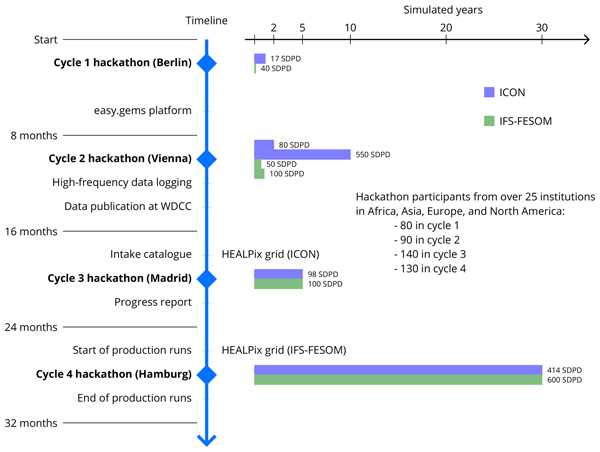
The Next Generation of Earth Modeling Systems project (nextGEMS) developed two Earth system models that use horizontal grid spacing of 10 km and finer, giving more fidelity to the representation of local phenomena, globally. In its fourth cycle, nextGEMS simulated the Earth System climate over the 2020–2049 period under the SSP3-7.0 scenario. Here, we provide an overview of nextGEMS, insights into the model development, and the realism of multi-decadal, kilometer-scale simulations.
Lukas Frank, Jon Albretsen, Ragnheid Skogseth, Frank Nilsen, and Marius O. Jonassen
Ocean Sci., 21, 2419–2442, https://doi.org/10.5194/os-21-2419-2025, https://doi.org/10.5194/os-21-2419-2025, 2025
Short summary
Short summary
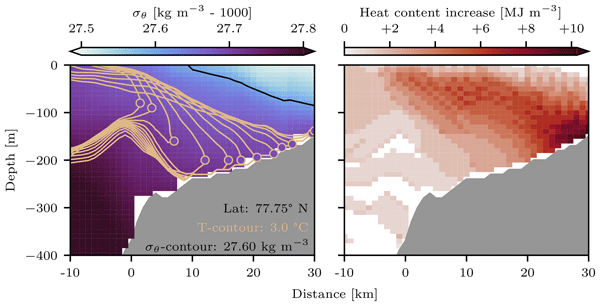
West of Svalbard, warm Atlantic Water frequently deviates from the West Spitsbergen Current onto shallow shelf areas, with significant implications for the regional climate system. The intrusions can be triggered by different processes, but their depths ultimately depend on the density difference between the intruding water and the ambient shelf water. These findings are an important step toward a better understanding of how warm Atlantic Water eventually reaches the fjords of Svalbard.
William E. Chapman, Francine Schevenhoven, Judith Berner, Noel Keenlyside, Ingo Bethke, Ping-Gin Chiu, Alok Gupta, and Jesse Nusbaumer
Geosci. Model Dev., 18, 5451–5465, https://doi.org/10.5194/gmd-18-5451-2025, https://doi.org/10.5194/gmd-18-5451-2025, 2025
Short summary
Short summary
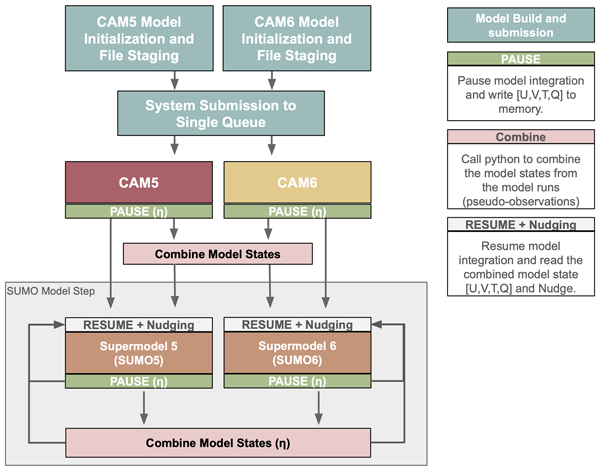
We introduce the first state-of-the-art atmosphere-connected supermodel, where two advanced atmospheric models share information in real time to form a new dynamical system. By synchronizing the models, particularly in storm track regions, we achieve better predictions without losing variability. This approach maintains key climate patterns and reduces bias in some variables compared to traditional models, demonstrating a useful technique for improving atmospheric simulations.
Yiguo Wang, François Counillon, Lea Svendsen, Ping-Gin Chiu, Noel Keenlyside, Patrick Laloyaux, Mariko Koseki, and Eric de Boisseson
Earth Syst. Sci. Data, 17, 4185–4211, https://doi.org/10.5194/essd-17-4185-2025, https://doi.org/10.5194/essd-17-4185-2025, 2025
Short summary
Short summary
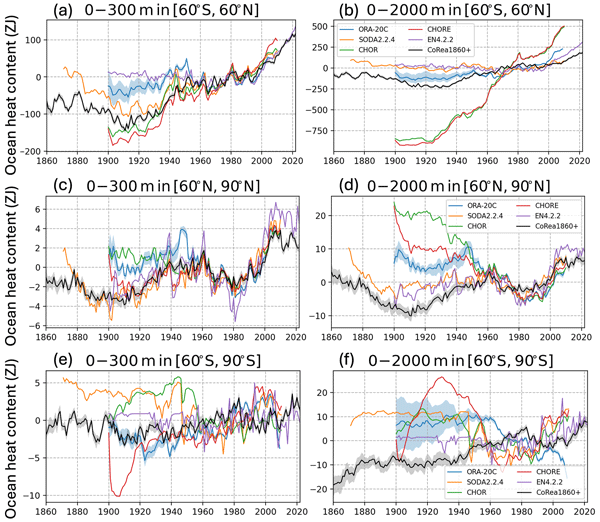
CoRea1860+ is a new climate dataset that reconstructs past climate conditions from 1860 to today. By using advanced modelling techniques and incorporating sea surface temperature observations, it provides a consistent picture of long-term climate variability. The dataset captures key ocean, sea ice, and atmosphere changes, helping scientists understand past climate changes and variability.
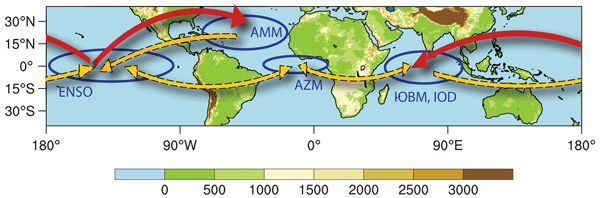
Ingo Richter, Ping Chang, Ping-Gin Chiu, Gokhan Danabasoglu, Takeshi Doi, Dietmar Dommenget, Guillaume Gastineau, Zoe E. Gillett, Aixue Hu, Takahito Kataoka, Noel S. Keenlyside, Fred Kucharski, Yuko M. Okumura, Wonsun Park, Malte F. Stuecker, Andréa S. Taschetto, Chunzai Wang, Stephen G. Yeager, and Sang-Wook Yeh
Geosci. Model Dev., 18, 2587–2608, https://doi.org/10.5194/gmd-18-2587-2025, https://doi.org/10.5194/gmd-18-2587-2025, 2025
Short summary
Short summary
Tropical ocean basins influence each other through multiple pathways and mechanisms, referred to here as tropical basin interaction (TBI). Many researchers have examined TBI using comprehensive climate models but have obtained conflicting results. This may be partly due to differences in experiment protocols and partly due to systematic model errors. The Tropical Basin Interaction Model Intercomparison Project (TBIMIP) aims to address this problem by designing a set of TBI experiments that will be performed by multiple models.
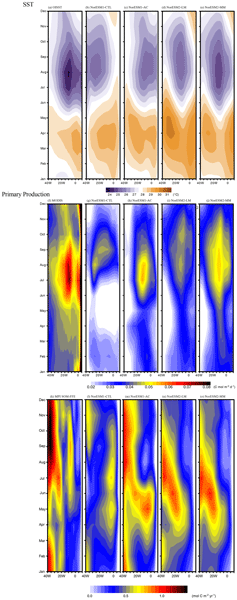
Shunya Koseki, Lander R. Crespo, Jerry Tjiputra, Filippa Fransner, Noel S. Keenlyside, and David Rivas
Biogeosciences, 21, 4149–4168, https://doi.org/10.5194/bg-21-4149-2024, https://doi.org/10.5194/bg-21-4149-2024, 2024
Short summary
Short summary
We investigated how the physical biases of an Earth system model influence the marine biogeochemical processes in the tropical Atlantic. With four different configurations of the model, we have shown that the versions with better SST reproduction tend to better represent the primary production and air–sea CO2 flux in terms of climatology, seasonal cycle, and response to climate variability.
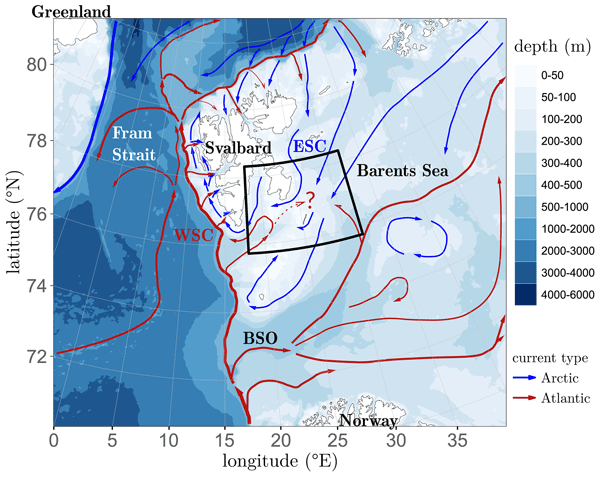
Kjersti Kalhagen, Ragnheid Skogseth, Till M. Baumann, Eva Falck, and Ilker Fer
Ocean Sci., 20, 981–1001, https://doi.org/10.5194/os-20-981-2024, https://doi.org/10.5194/os-20-981-2024, 2024
Short summary
Short summary
Atlantic water (AW) is a key driver of change in the Barents Sea. We studied an emerging pathway through the Svalbard Archipelago that allows AW to enter the Barents Sea. We found that the Atlantic sector near the study site has warmed over the past 2 decades; that Atlantic-origin waters intermittently enter the Barents Sea through the aforementioned pathway; and that heat transport is driven by tides, wind events, and variations in the upstream current system.
Akhilesh Sivaraman Nair, François Counillon, and Noel Keenlyside
Geosci. Model Dev. Discuss., https://doi.org/10.5194/gmd-2023-217, https://doi.org/10.5194/gmd-2023-217, 2024
Publication in GMD not foreseen
Short summary
Short summary
This study demonstrates the importance of soil moisture (SM) in subseasonal-to-seasonal predictions. To addess this, we introduce the Norwegian Climate Prediction Model Land (NorCPM-Land), a land data assimilation system developed for the NorCPM. NorCPM-Land reduces error in SM by 10.5 % by assimilating satellite SM products. Enhanced land initialisation improves predictions up to a 3.5-month lead time for SM and a 1.5-month lead time for temperature and precipitation.
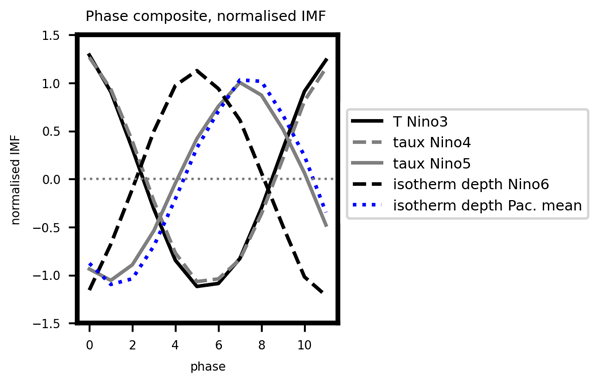
Lina Boljka, Nour-Eddine Omrani, and Noel S. Keenlyside
Weather Clim. Dynam., 4, 1087–1109, https://doi.org/10.5194/wcd-4-1087-2023, https://doi.org/10.5194/wcd-4-1087-2023, 2023
Short summary
Short summary
This study examines quasi-periodic variability in the tropical Pacific on interannual timescales and related physics using a recently developed time series analysis tool. We find that wind stress in the west Pacific and recharge–discharge of ocean heat content are likely related to each other on ~1.5–4.5-year timescales (but not on others) and dominate variability in sea surface temperatures on those timescales. This may have further implications for climate models and long-term prediction.
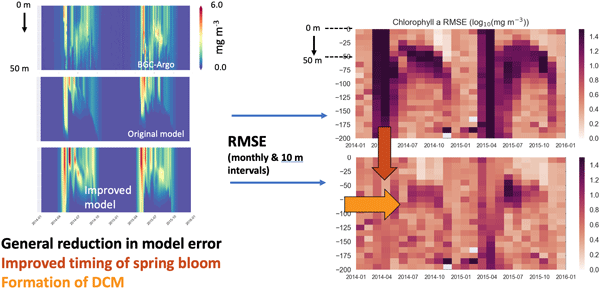
Veli Çağlar Yumruktepe, Erik Askov Mousing, Jerry Tjiputra, and Annette Samuelsen
Geosci. Model Dev., 16, 6875–6897, https://doi.org/10.5194/gmd-16-6875-2023, https://doi.org/10.5194/gmd-16-6875-2023, 2023
Short summary
Short summary
We present an along BGC-Argo track 1D modelling framework. The model physics is constrained by the BGC-Argo temperature and salinity profiles to reduce the uncertainties related to mixed layer dynamics, allowing the evaluation of the biogeochemical formulation and parameterization. We objectively analyse the model with BGC-Argo and satellite data and improve the model biogeochemical dynamics. We present the framework, example cases and routines for model improvement and implementations.
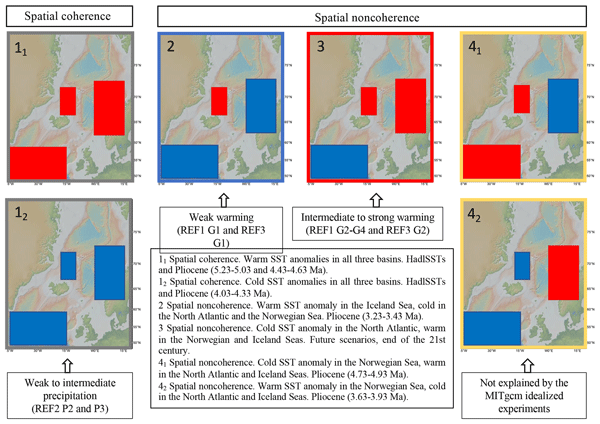
Bjørg Risebrobakken, Mari F. Jensen, Helene R. Langehaug, Tor Eldevik, Anne Britt Sandø, Camille Li, Andreas Born, Erin Louise McClymont, Ulrich Salzmann, and Stijn De Schepper
Clim. Past, 19, 1101–1123, https://doi.org/10.5194/cp-19-1101-2023, https://doi.org/10.5194/cp-19-1101-2023, 2023
Short summary
Short summary
In the observational period, spatially coherent sea surface temperatures characterize the northern North Atlantic at multidecadal timescales. We show that spatially non-coherent temperature patterns are seen both in further projections and a past warm climate period with a CO2 level comparable to the future low-emission scenario. Buoyancy forcing is shown to be important for northern North Atlantic temperature patterns.
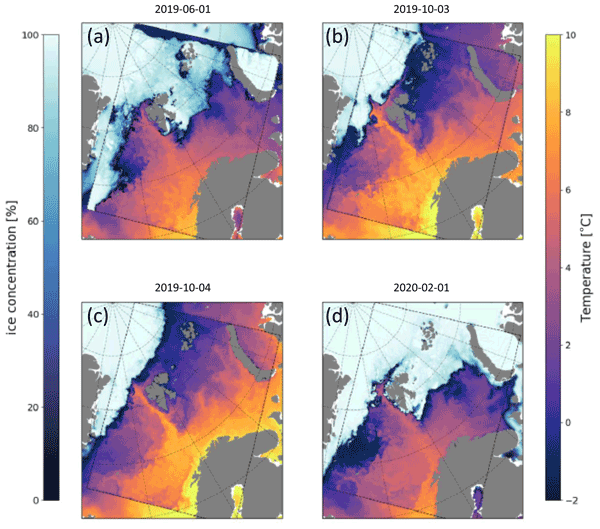
Pedro Duarte, Jostein Brændshøi, Dmitry Shcherbin, Pauline Barras, Jon Albretsen, Yvonne Gusdal, Nicholas Szapiro, Andreas Martinsen, Annette Samuelsen, Keguang Wang, and Jens Boldingh Debernard
Geosci. Model Dev., 15, 4373–4392, https://doi.org/10.5194/gmd-15-4373-2022, https://doi.org/10.5194/gmd-15-4373-2022, 2022
Short summary
Short summary
Sea ice models are often implemented for very large domains beyond the regions of sea ice formation, such as the whole Arctic or all of Antarctica. In this study, we implement changes in the Los Alamos Sea Ice Model, allowing it to be implemented for relatively small regions within the Arctic or Antarctica and yet considering the presence and influence of sea ice outside the represented areas. Such regional implementations are important when spatially detailed results are required.

Veli Çağlar Yumruktepe, Annette Samuelsen, and Ute Daewel
Geosci. Model Dev., 15, 3901–3921, https://doi.org/10.5194/gmd-15-3901-2022, https://doi.org/10.5194/gmd-15-3901-2022, 2022
Short summary
Short summary
We describe the coupled bio-physical model ECOSMO II(CHL), which is used for regional configurations for the North Atlantic and the Arctic hind-casting and operational purposes. The model is consistent with the large-scale climatological nutrient settings and is capable of representing regional and seasonal changes, and model primary production agrees with previous measurements. For the users of this model, this paper provides the underlying science, model evaluation and its development.
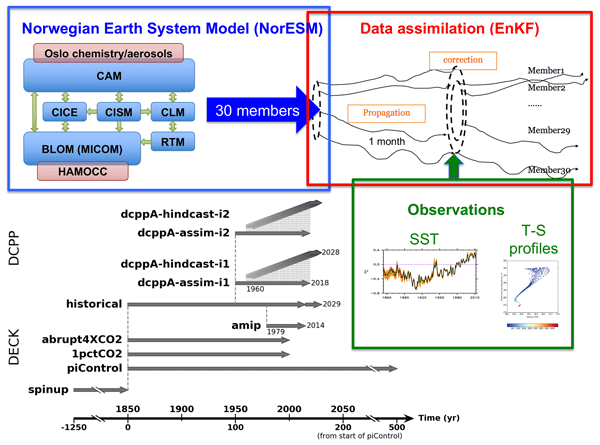
Ingo Bethke, Yiguo Wang, François Counillon, Noel Keenlyside, Madlen Kimmritz, Filippa Fransner, Annette Samuelsen, Helene Langehaug, Lea Svendsen, Ping-Gin Chiu, Leilane Passos, Mats Bentsen, Chuncheng Guo, Alok Gupta, Jerry Tjiputra, Alf Kirkevåg, Dirk Olivié, Øyvind Seland, Julie Solsvik Vågane, Yuanchao Fan, and Tor Eldevik
Geosci. Model Dev., 14, 7073–7116, https://doi.org/10.5194/gmd-14-7073-2021, https://doi.org/10.5194/gmd-14-7073-2021, 2021
Short summary
Short summary
The Norwegian Climate Prediction Model version 1 (NorCPM1) is a new research tool for performing climate reanalyses and seasonal-to-decadal climate predictions. It adds data assimilation capability to the Norwegian Earth System Model version 1 (NorESM1) and has contributed output to the Decadal Climate Prediction Project (DCPP) as part of the sixth Coupled Model Intercomparison Project (CMIP6). We describe the system and evaluate its baseline, reanalysis and prediction performance.
Cited articles
Akhtyamova, A. and Travkin, V.: Investigation of Frontal Zones in the Norwegian Sea, Physical Oceanography, 30, 62–77, 2023. a
Amaya, D. J., Jacox, M. G., Fewings, M. R., Saba, V. S., Stuecker, M. F., Rykaczewski, R. R., Ross, A. C., and Stock, C. A.: Marine heatwaves need clear definitions so coastal communities can adapt, Nature, 616, 29–32, 2023. a
Årthun, M., Eldevik, T., Smedsrud, L. H., Skagseth, and Ingvaldsen, R. B.: Quantifying the influence of atlantic heat on barents sea ice variability and retreat, Journal of Climate, 25, 4736–4743, https://doi.org/10.1175/JCLI-D-11-00466.1, 2012. a
Årthun, M., Eldevik, T., Viste, E., Drange, H., Furevik, T., Johnson, H. L., and Keenlyside, N. S.: Skillful Prediction of Northern Climate Provided by the Ocean, Nature Communications, 8, 15875, https://doi.org/10.1038/ncomms15875, 2017. a
Athanase, M., Sánchez-Benítez, A., Goessling, H. F., Pithan, F., and Jung, T.: Projected amplification of summer marine heatwaves in a warming Northeast Pacific Ocean, Communications Earth and Environment, 5, https://doi.org/10.1038/s43247-024-01212-1, 2024. a
Barkhordarian, A., Nielsen, D. M., Olonscheck, D., and Baehr, J.: Arctic marine heatwaves forced by greenhouse gases and triggered by abrupt sea-ice melt, Communications Earth and Environment, 5, https://doi.org/10.1038/s43247-024-01215-y, 2024. a
Barton, B. I., Lenn, Y. D., and Lique, C.: Observed atlantification of the Barents Sea causes the Polar Front to limit the expansion of winter sea ice, Journal of Physical Oceanography, 48, 1849–1866, https://doi.org/10.1175/JPO-D-18-0003.1, 2018. a
Bashiri, B., Barzandeh, A., Männik, A., and Raudsepp, U.: Variability of marine heatwaves' characteristics and assessment of their potential drivers in the Baltic Sea over the last 42 years, Scientific Reports, 14, 22419, https://doi.org/10.1038/s41598-024-74173-2, 2024. a
Beszczynska-Möller, A., Fahrbach, E., Schauer, U., and Hansen, E.: Variability in Atlantic water temperature and transport at the entrance to the Arctic Ocean, ICES Journal of Marine Science, 19972010, https://doi.org/10.1093/icesjms/fss056, 2012. a, b
Bianco, E., Iovino, D., Masina, S., Materia, S., and Ruggieri, P.: The role of upper-ocean heat content in the regional variability of Arctic sea ice at sub-seasonal timescales, The Cryosphere, 18, 2357–2379, https://doi.org/10.5194/tc-18-2357-2024, 2024. a, b
Bleck, R.: An oceanic general circulation model framed in hybrid iopycnic-Cartesian coordinates, Ocean Modelling, 4, 55–88, https://doi.org/10.1016/S1463-5003(01)00012-9, 2002. a
Bloshkina, E. V., Pavlov, A. K., and Filchuk, K.: Warming of atlantic water in three west spitsbergen fjords: Recent patterns and century-long trends, Polar Research, 40, https://doi.org/10.33265/polar.v40.5392, 2021. a
Capotondi, A., Rodrigues, R. R., Sen Gupta, A., Benthuysen, J. A., Deser, C., Frölicher, T. L., Lovenduski, N. S., Amaya, D. J., Le Grix, N., Xu, T., Hermes, J., Holbrook, N. J., Martinez-Villalobos, C., Masina, S., Roxy, M. K., Schaeffer, A., Schlegel, R. W., Smith, K. E., and Wang, C.: A Global Overview of Marine Heatwaves in a Changing Climate, Communications Earth & Environment, 5, 701, https://doi.org/10.1038/s43247-024-01806-9, 2024. a
Chafik, L., Årthun, M., Langehaug, H. R., Nilsson, J., and Rossby, T.: The Nordic Seas Overturning Is Modulated by Northward-Propagating Thermohaline Anomalies, Communications Earth & Environment, 6, 573, https://doi.org/10.1038/s43247-025-02557-x, 2025. a
Chatterjee, S., Raj, R. P., Bertino, L., Skagseth, Ravichandran, M., and Johannessen, O. M.: Role of Greenland Sea Gyre Circulation on Atlantic Water Temperature Variability in the Fram Strait, Geophysical Research Letters, 45, 8399–8406, https://doi.org/10.1029/2018GL079174, 2018. a, b
Chen, K., Gawarkiewicz, G. G., Lentz, S. J., and Bane, J. M.: Diagnosing the warming of the Northeastern U.S. Coastal Ocean in 2012: A linkage between the atmospheric jet stream variability and ocean response, Journal of Geophysical Research: Oceans, 119, 218–227, https://doi.org/10.1002/2013JC009393, 2014. a
Chen, K., Gawarkiewicz, G., Kwon, Y. O., and Zhang, W. G.: The role of atmospheric forcing versus ocean advection during the extreme warming of the Northeast U.S. continental shelf in 2012, Journal of Geophysical Research: Oceans, 120, 4324–4339, https://doi.org/10.1002/2014JC010547, 2015. a
Cheung, W. W. L., Frölicher, T. L., Lam, V. W. Y., Oyinlola, M. A., Reygondeau, G., Sumaila, U. R., Tai, T. C., Teh, L. C. L., and Wabnitz, C. C. C.: Marine high temperature extremes amplify the impacts of climate change on fish and fisheries, Science Advances, 7, https://doi.org/10.1126/sciadv.abh0895, 2021. a
Choi, H. Y., Park, M. S., Kim, H. S., and Lee, S.: Marine heatwave events strengthen the intensity of tropical cyclones, Communications Earth and Environment, 5, https://doi.org/10.1038/s43247-024-01239-4, 2024. a
Comiso, J. C. and Hall, D. K.: Climate Trends in the Arctic as Observed from Space, WIREs Climate Change, 5, 389–409, https://doi.org/10.1002/wcc.277, 2014. a
Cottier, F. R., Nilsen, F., Enall, M. E., Gerland, S., Tverberg, V., and Svendsen, H.: Wintertime warming of an Arctic shelf in response to large-scale atmospheric circulation, Geophysical Research Letters, 34, https://doi.org/10.1029/2007GL029948, 2007. a
Dania, A., Lutier, M., Heimböck, M. P., Heuschele, J., Søreide, J. E., Jackson, M. C., and Dinh, K. V.: Temporal patterns in multiple stressors shape the vulnerability of overwintering Arctic zooplankton, Ecology and Evolution, 14, https://doi.org/10.1002/ece3.11673, 2024. a
Drange, H. and Simonsen, K.: Formulation of air-sea fluxes in ESOP2 version of MICOM, NERSC Technical Report 125, Nansen Environmental and Remote Sensing Center, 1996. a
Eisbrenner, E., Chafik, L., Åslund, O., Döös, K., and Muchowski, J. C.: Interplay of atmosphere and ocean amplifies summer marine extremes in the Barents Sea at different timescales, Communications Earth and Environment, 5, https://doi.org/10.1038/s43247-024-01610-5, 2024. a, b
Eisenman, I., Schneider, T., Battisti, D. S., and Bitz, C. M.: Consistent changes in the sea ice seasonal cycle in response to global warming, Journal of Climate, 24, 5325–5335, https://doi.org/10.1175/2011JCLI4051.1, 2011. a
Eriksen, E., Gjøsæter, H., Prozorkevich, D., Shamray, E., Dolgov, A., Skern-Mauritzen, M., Stiansen, J. E., Kovalev, Y., and Sunnanå, K.: From single species surveys towards monitoring of the Barents Sea ecosystem, Progress in Oceanography, 166, 4–14, https://doi.org/10.1016/j.pocean.2017.09.007, 2018. a
EU Copernicus Marine Service: Product User Manual for Arctic PHY, ICE and BGC products: For Arctic Ocean Physical and BGC Analysis and Forecasting Products, User Manual, EU Copernicus Marine Service – Public, Toulouse, issue 5.19 – June 2024, https://documentation.marine.copernicus.eu/PUM/CMEMS-ARC-PUM-002-ALL.pdf (last access: 9 February 2026), 2024. a, b
E.U. Copernicus Marine Service Information: Arctic Ocean Physics Reanalysis, Marine Data Store (MDS) [data set], https://doi.org/10.48670/moi-00007, 2025. a
Filbee-Dexter, K., Wernberg, T., Grace, S. P., Thormar, J., Fredriksen, S., Narvaez, C. N., Feehan, C. J., and Norderhaug, K. M.: Marine heatwaves and the collapse of marginal North Atlantic kelp forests, Scientific Reports, 10, https://doi.org/10.1038/s41598-020-70273-x, 2020. a
Fredston, A. L., Cheung, W. W., Frölicher, T. L., Kitchel, Z. J., Maureaud, A. A., Thorson, J. T., Auber, A., Mérigot, B., Palacios-Abrantes, J., Palomares, M. L. D., Pecuchet, L., Shackell, N. L., and Pinsky, M. L.: Marine heatwaves are not a dominant driver of change in demersal fishes, Nature, 621, 324–329, https://doi.org/10.1038/s41586-023-06449-y, 2023. a
Garrabou, J., Gómez-Gras, D., Medrano, A., Cerrano, C., Ponti, M., Schlegel, R., Bensoussan, N., Turicchia, E., Sini, M., Gerovasileiou, V., Teixido, N., Mirasole, A., Tamburello, L., Cebrian, E., Rilov, G., Ledoux, J. B., Souissi, J. B., Khamassi, F., Ghanem, R., Benabdi, M., Grimes, S., Ocaña, O., Bazairi, H., Hereu, B., Linares, C., Kersting, D. K., la Rovira, G., Ortega, J., Casals, D., Pagès-Escolà, M., Margarit, N., Capdevila, P., Verdura, J., Ramos, A., Izquierdo, A., Barbera, C., Rubio-Portillo, E., Anton, I., López-Sendino, P., Díaz, D., Vázquez-Luis, M., Duarte, C., Marbà, N., Aspillaga, E., Espinosa, F., Grech, D., Guala, I., Azzurro, E., Farina, S., Gambi, M. C., Chimienti, G., Montefalcone, M., Azzola, A., Mantas, T. P., Fraschetti, S., Ceccherelli, G., Kipson, S., Bakran-Petricioli, T., Petricioli, D., Jimenez, C., Katsanevakis, S., Kizilkaya, I. T., Kizilkaya, Z., Sartoretto, S., Elodie, R., Ruitton, S., Comeau, S., Gattuso, J. P., and Harmelin, J. G.: Marine heatwaves drive recurrent mass mortalities in the Mediterranean Sea, Global Change Biology, 28, 5708–5725, https://doi.org/10.1111/gcb.16301, 2022. a
Golubeva, E., Kraineva, M., Platov, G., Iakshina, D., Tarkhanova, M., Golubeva, E., Kraineva, M., Platov, G., Iakshina, D., and Tarkhanova, M.: Marine Heatwaves in Siberian Arctic Seas and Adjacent Region, Remote Sensing, 13, https://doi.org/10.3390/rs13214436, 2021. a, b
Gou, R., Wolf, K. K., Hoppe, C. J., Wu, L., and Lohmann, G.: The changing nature of future Arctic marine heatwaves and its potential impacts on the ecosystem, Nature Climate Change, https://doi.org/10.1038/s41558-024-02224-7, 2025. a
He, Y., Shu, Q., Wang, Q., Song, Z., Zhang, M., Wang, S., Zhang, L., Bi, H., Pan, R., and Qiao, F.: Arctic Amplification of Marine Heatwaves under Global Warming, Nature Communications, 15, 8265, https://doi.org/10.1038/s41467-024-52760-1, 2024. a
Hersbach, H., Rosnay, P. D., Bell, B., Schepers, D., Simmons, A., Soci, C., Abdalla, S., Balmaseda, A., Balsamo, G., Bechtold, P., Berrisford, P., Bidlot, J., Boisséson, E. D., Bonavita, M., Browne, P., Buizza, R., Dahlgren, P., Dee, D., Dragani, R., Diamantakis, M., Flemming, J., Forbes, R., Geer, A., Haiden, T., Hólm, E., Haimberger, L., Hogan, R., Horányi, A., Janisková, M., Laloyaux, P., Lopez, P., Muñoz-Sabater, J., Peubey, C., Radu, R., Richardson, D., Thépaut, J.-N., Vitart, F., Yang, X., Zsótér, E., and Zuo, H.: 27 Operational global reanalysis: progress, future directions and synergies with NWP including updates on the ERA5 production status, Tech. rep., ECMWF – European Centre for Medium Range Weather Forecasts, https://doi.org/10.21957/tkic6g3wm, 2018. a
Hobday, A. J., Alexander, L. V., Perkins, S. E., Smale, D. A., Straub, S. C., Oliver, E. C., Benthuysen, J. A., Burrows, M. T., Donat, M. G., Feng, M., Holbrook, N. J., Moore, P. J., Scannell, H. A., Gupta, A. S., and Wernberg, T.: A hierarchical approach to defining marine heatwaves, Progress in Oceanography, 141, 227–238, https://doi.org/10.1016/j.pocean.2015.12.014, 2016. a, b, c, d, e
Hobday, A. J., Oliver, E. C., Gupta, A. S., Benthuysen, J. A., Burrows, M. T., Donat, M. G., Holbrook, N. J., Moore, P. J., Thomsen, M. S., Wernberg, T., and Smale, D. A.: Categorizing and naming marine heatwaves, Oceanography, 31, 162–173, https://doi.org/10.5670/oceanog.2018.205, 2018. a, b, c, d
Holbrook, N. J., Scannell, H. A., Gupta, A. S., Benthuysen, J. A., Feng, M., Oliver, E. C., Alexander, L. V., Burrows, M. T., Donat, M. G., Hobday, A. J., Moore, P. J., Perkins-Kirkpatrick, S. E., Smale, D. A., Straub, S. C., and Wernberg, T.: A global assessment of marine heatwaves and their drivers, Nature Communications, 10, https://doi.org/10.1038/s41467-019-10206-z, 2019. a
Hu, S., Zhang, L., and Qian, S.: Marine Heatwaves in the Arctic Region: Variation in Different Ice Covers, Geophysical Research Letters, 47, https://doi.org/10.1029/2020GL089329, 2020. a
Huang, B., Liu, C., Banzon, V., Freeman, E., Graham, G., Hankins, B., Smith, T., and Zhang, H.-M.: Improvements of the Daily Optimum Interpolation Sea Surface Temperature (DOISST) Version 2.1, Journal of Climate, 34, 2923–2939, https://doi.org/10.1175/JCLI-D-20-0166.1, 2021a. a
Huang, B., Yin, X., Carton, J. A., Chen, L., Graham, G., Hibbert, K., Lee, S., Smith, T., and Zhang, H.-M.: Extreme Marine Heatwaves in the Global Oceans during the Past Decade, Bulletin of the American Meteorological Society, 106, E2017–E2028, https://doi.org/10.1175/BAMS-D-24-0337.1, 2025. a
Ibrahim, O., Mohamed, B., and Nagy, H.: Spatial variability and trends of marine heat waves in the eastern mediterranean sea over 39 years, Journal of Marine Science and Engineering, 9, https://doi.org/10.3390/jmse9060643, 2021. a
IPCC: Climate Change 2021 – The Physical Science Basis, Cambridge University Press, ISBN 9781009157896, https://doi.org/10.1017/9781009157896, 2021. a
Jacox, M. G.: Marine heatwaves in a changing climate, Nature, 571, 485–487, https://doi.org/10.1038/d41586-019-02196-1, 2019. a, b
Jacox, M. G., Alexander, M. A., Bograd, S. J., and Scott, J. D.: Thermal Displacement by Marine Heatwaves, Nature, 584, 82–86, https://doi.org/10.1038/s41586-020-2534-z, 2020. a
Kalhagen, K., Fer, I., Skogseth, R., Nilsen, F., and Czyz, C.: Physical oceanography data from a mooring on Spitsbergenbanken in the north-western Barents Sea, September 2018 – November 2019, Norwegian Marine Data Center (NMDC) [data set], https://doi.org/10.21335/NMDC-1780886855, 2024. a, b
Li, Y., Ren, G., Wang, Q., and You, Q.: More extreme marine heatwaves in the China Seas during the global warming hiatus, Environmental Research Letters, 14, https://doi.org/10.1088/1748-9326/ab28bc, 2019. a
Lien, V. S., Hjøllo, S. S., Skogen, M. D., Svendsen, E., Wehde, H., Bertino, L., Counillon, F., Chevallier, M., and Garric, G.: An assessment of the added value from data assimilation on modelled Nordic Seas hydrography and ocean transports, Ocean Modelling, 99, 43–59, https://doi.org/10.1016/j.ocemod.2015.12.010, 2016. a
Lien, V. S., Raj, R. P., and Chatterjee, S.: Surface and bottom marine heatwave characteristics in the Barents Sea: a model study, in: 8th edition of the Copernicus Ocean State Report (OSR8), edited by: von Schuckmann, K., Moreira, L., Grégoire, M., Marcos, M., Staneva, J., Brasseur, P., Garric, G., Lionello, P., Karstensen, J., and Neukermans, G., Copernicus Publications, State Planet, 4-osr8, 8, https://doi.org/10.5194/sp-4-osr8-8-2024, 2024. a, b, c, d, e
Lique, C. and Steele, M.: Seasonal to decadal variability of Arctic Ocean heat content: A model-based analysis and implications for autonomous observing systems, Journal of Geophysical Research: Oceans, 118, 1673–1695, https://doi.org/10.1002/jgrc.20127, 2013. a
Malan, N., Gupta, A. S., Schaeffer, A., Zhang, S., Doblin, M. A., Pilo, G. S., Kiss, A. E., Everett, J. D., Behrens, E., Capotondi, A., Cravatte, S., Hobday, A. J., Holbrook, N. J., Kajtar, J. B., and Spillman, C. M.: Lifting the Lid on Marine Heatwaves, Progress in Oceanography, 239, 103539, https://doi.org/10.1016/j.pocean.2025.103539, 2025. a, b
Maslowski, W., Kinney, J. C., Higgins, M., and Roberts, A.: The Future of Arctic Sea Ice, Annual Review of Earth and Planetary Sciences, 40, 625–654, https://doi.org/10.1146/annurev-earth-042711-105345, 2012. a
McAdam, R., Masina, S., and Gualdi, S.: Seasonal forecasting of subsurface marine heatwaves, Communications Earth and Environment, 4, https://doi.org/10.1038/s43247-023-00892-5, 2023. a
Menze, S., Ingvaldsen, R. B., Haugan, P., Fer, I., Sundfjord, A., Beszczynska-Moeller, A., and Falk-Petersen, S.: Atlantic Water Pathways Along the North-Western Svalbard Shelf Mapped Using Vessel-Mounted Current Profilers, Journal of Geophysical Research: Oceans, 124, 1699–1716, https://doi.org/10.1029/2018JC014299, 2019. a
Misund, O. A., Heggland, K., Skogseth, R., Falck, E., Gjøsæter, H., Sundet, J., Watne, J., and Lønne, O. J.: Norwegian fisheries in the Svalbard zone since 1980. Regulations, profitability and warming waters affect landings, Polar Science, 10, 312–322, https://doi.org/10.1016/j.polar.2016.02.001, 2016. a
Mohamed, B., Nagy, H., and Ibrahim, O.: Spatiotemporal variability and trends of marine heat waves in the red sea over 38 years, Journal of Marine Science and Engineering, 9, https://doi.org/10.3390/jmse9080842, 2021. a
Nilsen, F., Skogseth, R., Vaardal-Lunde, J., and Inall, M.: A simple shelf circulation model: Intrusion of Atlantic water on the West Spitsbergen Shelf, Journal of Physical Oceanography, 46, 1209–1230, https://doi.org/10.1175/JPO-D-15-0058.1, 2016. a
Nilsen, F., Ersdal, E. A., and Skogseth, R.: Wind-Driven Variability in the Spitsbergen Polar Current and the Svalbard Branch Across the Yermak Plateau, Journal of Geophysical Research: Oceans, 126, https://doi.org/10.1029/2020JC016734, 2021. a
Nilsen, F.: Remote Sensing of Ocean Circulation og Environmental Mass Changes (REOCIRC), 2016 (Versjon 2), Sikt – Kunnskapssektorens tjenesteleverandør [data set], https://doi.org/10.18712/NSD-NSD2756-V2, 2022. a
Olita, A., Sorgente, R., Natale, S., Gaberšek, S., Ribotti, A., Bonanno, A., and Patti, B.: Effects of the 2003 European heatwave on the Central Mediterranean Sea: surface fluxes and the dynamical response, Ocean Science, 3, 273–289, https://doi.org/10.5194/os-3-273-2007, 2007. a
Oliver, E. C., Donat, M. G., Burrows, M. T., Moore, P. J., Smale, D. A., Alexander, L. V., Benthuysen, J. A., Feng, M., Gupta, A. S., Hobday, A. J., Holbrook, N. J., Perkins-Kirkpatrick, S. E., Scannell, H. A., Straub, S. C., and Wernberg, T.: Longer and more frequent marine heatwaves over the past century, Nature Communications, 9, https://doi.org/10.1038/s41467-018-03732-9, 2018. a, b
Passos, L., Langehaug, H. R., Årthun, M., and Straneo, F.: On the Relation between Thermohaline Anomalies and Water Mass Transformation in the Eastern Subpolar North Atlantic, Journal of Climate, 37, 4821–4834, https://doi.org/10.1175/JCLI-D-23-0379.1, 2024. a
PlanMiljø: Marine Heatwaves in Northern Sea Areas: Occurrence, effects, and expected frequencies, Tech. rep., PlanMiljø, 2022. a
Polyakov, I. V., Pnyushkov, A. V., Alkire, M. B., Ashik, I. M., Baumann, T. M., Carmack, E. C., Goszczko, I., Guthrie, J., Ivanov, V. V., Kanzow, T., Krishfield, R., Kwok, R., Sundfjord, A., Morison, J., Rember, R., and Yulin, A.: Greater Role for Atlantic Inflows on Sea-Ice Loss in the Eurasian Basin of the Arctic Ocean, Science, 356, 285–291, https://doi.org/10.1126/science.aai8204, 2017. a
Rantanen, M., Karpechko, A. Y., Lipponen, A., Nordling, K., Hyvärinen, O., Ruosteenoja, K., Vihma, T., and Laaksonen, A.: The Arctic has warmed nearly four times faster than the globe since 1979, Communications Earth and Environment, 3, https://doi.org/10.1038/s43247-022-00498-3, 2022. a
Reynolds, R. W., Rayner, N. A., Smith, T. M., and Stokes, D. C.: An Improved In Situ and Satellite SST Analysis for Climate, Journal of Climate, 15, 1609–1625, 2002. a
Richaud, B., Hu, X., Darmaraki, S., Fennel, K., Lu, Y., and Oliver, E. C.: Drivers of Marine Heatwaves in the Arctic Ocean, Journal of Geophysical Research: Oceans, 129, https://doi.org/10.1029/2023JC020324, 2024. a, b, c
Sakov, P. and Oke, P. R.: A deterministic formulation of the ensemble Kalman filter: An alternative to ensemble square root filters, Tellus, Series A: Dynamic Meteorology and Oceanography, 60 A, 361–371, https://doi.org/10.1111/j.1600-0870.2007.00299.x, 2008. a
Shanks, A. L., Rasmuson, L. K., Valley, J. R., Jarvis, M. A., Salant, C., Sutherland, D. A., Lamont, E. I., Hainey, M. A., and Emlet, R. B.: Marine heat waves, climate change, and failed spawning by coastal invertebrates, Limnology and Oceanography, 65, 627–636, https://doi.org/10.1002/lno.11331, 2020. a
Shu, Q., Wang, Q., Årthun, M., Wang, S., Song, Z., Zhang, M., and Qiao, F.: Arctic Ocean Amplification in a warming climate in CMIP6 models, Sci. Adv., 8, 9755, https://doi.org/10.1126/sciadv.abn9755, 2022. a
Skogseth, R. and Ellingsen, P. G.: Mooring data from the Isfjorden Mouth – South (I-S) during September 2005 to September 2006, Norwegian Polar Institute [data set], https://doi.org/10.21334/NPOLAR.2019.176EEA39, 2019a. a
Skogseth, R. and Ellingsen, P. G.: Mooring data from the Isfjorden Mouth – South (I-S) during September 2006 to September 2007, Norwegian Polar Institute [data set], https://doi.org/10.21334/NPOLAR.2019.A1239CA3, 2019b. a
Skogseth, R. and Ellingsen, P. G.: Mooring data from the Isfjorden Mouth – South (I-S) during 9 Sep 2010 to 3 Sep 2011, Norwegian Polar Institute [data set], https://doi.org/10.21334/NPOLAR.2019.B0E473C4, 2019c. a
Skogseth, R. and Ellingsen, P. G.: Mooring data from the Isfjorden Mouth – South (I-S) during 8 Sep 2011 to 3 Sep 2012, Norwegian Polar Institute [data set], https://doi.org/10.21334/NPOLAR.2019.2BE7BDEE, 2019d. a
Skogseth, R. and Ellingsen, P. G.: . Mooring data from the Isfjorden Mouth – South (I-S) during 6 Sep 2012 to 28 Aug 2013, Norwegian Polar Institute [data set], https://doi.org/10.21334/NPOLAR.2019.A247E9A9, 2019e. a
Skogseth, R. and Ellingsen, P. G.: Mooring data from the Isfjorden Mouth – South (I-S) during 2 Sep 2013 to 26 Aug 2014, Norwegian Polar Institute [data set], https://doi.org/10.21334/NPOLAR.2019.6813CE6D, 2019f. a
Skogseth, R. and Ellingsen, P. G.: Mooring data from the Isfjorden Mouth – South (I-S) during 31 Aug 2014 to 24 Aug 2015, Norwegian Polar Institute [data set], https://doi.org/10.21334/NPOLAR.2019.11B7E849, 2019g. a
Skogseth, R. and Ellingsen, P. G.: Mooring data from the Isfjorden Mouth – South (I-S) during 31 Aug 2015 to 12 Aug 2016, Norwegian Polar Institute [data set], https://doi.org/10.21334/NPOLAR.2019.21838303, 2019h. a
Skogseth, R. and Ellingsen, P. G.: Mooring data from the Isfjorden Mouth – South (I-S) during 19 Aug 2016 to 2 Oct 2017, Norwegian Polar Institute [data set], https://doi.org/10.21334/NPOLAR.2019.CD7A2F7C, 2019i. a
Skogseth, R. and Ellingsen, P. G.: Mooring data from the Isfjorden Mouth – South (I-S) during 5 Oct 2017 to 25 Aug 2018, Norwegian Polar Institute [data set], https://doi.org/10.21334/NPOLAR.2019.54DCD0C9, 2019j. a
Skogseth, R. and Ellingsen, P. G.: Mooring data from the Isfjorden Mouth – South (I-S) during 29 Aug 2018 to 6 Sep 2019, Norwegian Polar Institute [data set], https://doi.org/10.21334/NPOLAR.2022.AEC34FDE, 2022a. a
Skogseth, R. and Ellingsen, P. G.: Mooring data from the Isfjorden Mouth – South (I-SM) during 06 Oct 2020 to 10 Oct 2021, Norwegian Polar Institute [data set], https://doi.org/10.21334/NPOLAR.2022.42927488, 2022b. a
Skogseth, R., Olivier, L. L., Nilsen, F., Falck, E., Fraser, N., Tverberg, V., Ledang, A. B., Vader, A., Jonassen, M. O., Søreide, J., Cottier, F., Berge, J., Ivanov, B. V., and Falk-Petersen, S.: Variability and decadal trends in the Isfjorden (Svalbard) ocean climate and circulation – An indicator for climate change in the European Arctic, Progress in Oceanography, 187, https://doi.org/10.1016/j.pocean.2020.102394, 2020. a, b, c, d, e
Smith, K. E., Burrows, M. T., Hobday, A. J., King, N. G., Moore, P. J., Gupta, A. S., Thomsen, M. S., Wernberg, T., and Smale, D. A.: Biological Impacts of Marine Heatwaves, Annual Review of Marine Science, 15, 119–145, https://doi.org/10.1146/annurev-marine-032122-121437, 2023. a
Smith, K. E., Sen Gupta, A., Amaya, D., Benthuysen, J. A., Burrows, M. T., Capotondi, A., Filbee-Dexter, K., Frölicher, T. L., Hobday, A. J., Holbrook, N. J., Malan, N., Moore, P. J., Oliver, E. C. J., Richaud, B., Salcedo-Castro, J., Smale, D. A., Thomsen, M., and Wernberg, T.: Baseline Matters: Challenges and Implications of Different Marine Heatwave Baselines, Progress in Oceanography, 231, 103404, https://doi.org/10.1016/j.pocean.2024.103404, 2025. a, b
Stroeve, J. C., Notz, D., Dawson, J., Schuur, E. A. G., Dahl-Jensen, D., and Giesse, C.: Disappearing landscapes: The Arctic at +2.7 °C global warming, Science, 387, 616–621, 2025. a
Strzelewicz, A., Przyborska, A., and Walczowski, W.: Increased presence of Atlantic Water on the shelf south-west of Spitsbergen with implications for the Arctic fjord Hornsund, Progress in Oceanography, 200, https://doi.org/10.1016/j.pocean.2021.102714, 2022. a, b
Sumata, H., de Steur, L., Divine, D. V., Granskog, M. A., and Gerland, S.: Regime shift in Arctic Ocean sea ice thickness, Nature, 615, 443–449, https://doi.org/10.1038/s41586-022-05686-x, 2023. a
Sun, D., Li, F., Jing, Z., Hu, S., and Zhang, B.: Frequent Marine Heatwaves Hidden below the Surface of the Global Ocean, Nature Geoscience, 16, 1099–1104, https://doi.org/10.1038/s41561-023-01325-w, 2023. a, b
Tverberg, V., Skogseth, R., Cottier, F., Sundfjord, A., Walczowski, W., Inall, M. E., Falck, E., Pavlova, O., and Nilsen, F.: The Kongsfjorden Transect: Seasonal and Inter-annual Variability in Hydrography, 49–104, Springer Nature, https://doi.org/10.1007/978-3-319-46425-1_3, 2019. a, b
Vihtakari, M., Sundfjord, A., and de Steur, L.: Barents Sea ocean-current arrows modified from Eriksen et al. (2018), GitHub repository, Norwegian Polar Institute & Institute of Marine Research, https://github.com/MikkoVihtakari/Barents-Sea-currents (last access: 9 February 2026), 2019. a
Vivier, F., Lourenço, A., Michel, E., and Pruchon, A.: Hydrography and currents in Storfjorden (Svalbard) from the STEP 2016–2017 moorings, SEANOE [data set], https://doi.org/10.17882/62632, 2019. a, b
Walczowski, W.: GeoPlanet: Earth and Planetary Sciences Atlantic Water in the Nordic Seas, Springer, http://www.springer.com/series/8821 (last access: 9 February 2026), 2014. a
Xie, J. and Bertino, L.: Quality Information Document: Arctic Physical Multi Year Product ARCTIC_MULTIYEAR_PHY_002_003, https://documentation.marine.copernicus.eu/QUID/CMEMS-ARC-QUID-002-003.pdf (last access: 9 February 2026), 2024. a
Xie, J., Bertino, L., Counillon, F., Lisæter, K. A., and Sakov, P.: Quality assessment of the TOPAZ4 reanalysis in the Arctic over the period 1991–2013, Ocean Science, 13, 123–144, https://doi.org/10.5194/os-13-123-2017, 2017. a, b
Xie, J., Raj, R. P., Bertino, L., Samuelsen, A., and Wakamatsu, T.: Evaluation of Arctic Ocean surface salinities from the Soil Moisture and Ocean Salinity (SMOS) mission against a regional reanalysis and in situ data, Ocean Science, 15, 1191–1206, https://doi.org/10.5194/os-15-1191-2019, 2019. a
Xie, J., Raj, R. P., Bertino, L., Martínez, J., Gabarró, C., and Catany, R.: Assimilation of sea surface salinities from SMOS in an Arctic coupled ocean and sea ice reanalysis, Ocean Science, 19, 269–287, https://doi.org/10.5194/os-19-269-2023, 2023. a
Xu, T., Newman, M., Capotondi, A., Stevenson, S., Di Lorenzo, E., and Alexander, M. A.: An Increase in Marine Heatwaves without Significant Changes in Surface Ocean Temperature Variability, Nature Communications, 13, 7396, https://doi.org/10.1038/s41467-022-34934-x, 2022. a
Zhang, Y., Du, Y., Feng, M., and Hobday, A. J.: Vertical structures of marine heatwaves, Nature Communications, 14, https://doi.org/10.1038/s41467-023-42219-0, 2023. a
Short summary
Marine heatwaves – periods of extreme ocean temperatures – are increasing globally, posing a threat to marine ecosystems. One region where a high number of marine heatwave events per year has been observed is around Svalbard. This study characterises past marine heatwave events in this region, including their extent in terms of both distance and depth. We identified eight events west of Svalbard that were largely driven by the movement of warmer water into the region by ocean currents.
Marine heatwaves – periods of extreme ocean temperatures – are increasing globally, posing a...


