
Articles | Volume 22, issue 3
https://doi.org/10.5194/os-22-1987-2026
© Author(s) 2026. This work is distributed under
the Creative Commons Attribution 4.0 License.
the Creative Commons Attribution 4.0 License.
https://doi.org/10.5194/os-22-1987-2026
© Author(s) 2026. This work is distributed under
the Creative Commons Attribution 4.0 License.
the Creative Commons Attribution 4.0 License.
Research article
| 
26 Jun 2026
Research article |
| 26 Jun 2026
| 26 Jun 2026
Dynamically downscaled future projections of the Northwest Atlantic Ocean across low to high emissions scenarios

Cooperative Institute for Marine and Atmospheric Studies, University of Miami, Miami, FL, USA
NOAA/OAR/Atlantic Oceanographic and Meteorological Laboratory, Miami, FL, USA
Andrew C. Ross
NOAA/OAR/Geophysical Fluid Dynamics Laboratory, Princeton, NJ, USA,
Sang-Ik Shin
Cooperative Institute for Research in Environmental Sciences, University of Colorado Boulder, Boulder, CO, USA
NOAA/OAR/Physical Sciences Laboratory, Boulder, CO, USA
Fabian A. Gomez
Northern Gulf Institute, Mississippi State University, Starkville, MS, USA
NOAA/OAR/Atlantic Oceanographic and Meteorological Laboratory, Miami, FL, USA
Jasmin G. John
NOAA/OAR/Atlantic Oceanographic and Meteorological Laboratory, Miami, FL, USA
Denis L. Volkov
Cooperative Institute for Marine and Atmospheric Studies, University of Miami, Miami, FL, USA
NOAA/OAR/Atlantic Oceanographic and Meteorological Laboratory, Miami, FL, USA
Sang-Ki Lee
NOAA/OAR/Atlantic Oceanographic and Meteorological Laboratory, Miami, FL, USA
Michael A. Alexander
Department of Atmospheric and Oceanic Sciences, University of Colorado Boulder, Boulder, CO, USA
Charles A. Stock
NOAA/OAR/Geophysical Fluid Dynamics Laboratory, Princeton, NJ, USA,
Related authors
No articles found.
Michael Jacox, Dmitry Dukhovskoy, Jessie Liu, Michael Alexander, Elizabeth Drenkard, Andrew Ross, Natalie Freeman, Dillon Amaya, Steven Bograd, Allison Cluett, Nicole Lovenduski, Samuel Mogen, Mercedes Pozo Buil, Charles Stock, Wei Cheng, Albert Hermann, Liwei Jia, Nathaniel Johnson, Kelly Kearney, Colleen McHugh, and Darren Pilcher
EGUsphere, https://doi.org/10.5194/egusphere-2026-5844, https://doi.org/10.5194/egusphere-2026-5844, 2026
This preprint is open for discussion and under review for Ocean Science (OS).
Short summary
Short summary
We present a new system to predict conditions in the Northeast Pacific Ocean up to one year in advance. By comparing past forecasts with ocean measurements, we show that we can accurately predict temperature and oxygen levels several months in advance. These predictions will soon be available to the public, enabling coastal communities, managers, and industries to make better proactive decisions.
Vimal Koul, Andrew C. Ross, Charles Stock, Liping Zhang, Andrew T. Wittenberg, and Thomas Delworth
Ocean Sci., 22, 3017–3036, https://doi.org/10.5194/os-22-3017-2026, https://doi.org/10.5194/os-22-3017-2026, 2026
Short summary
Short summary
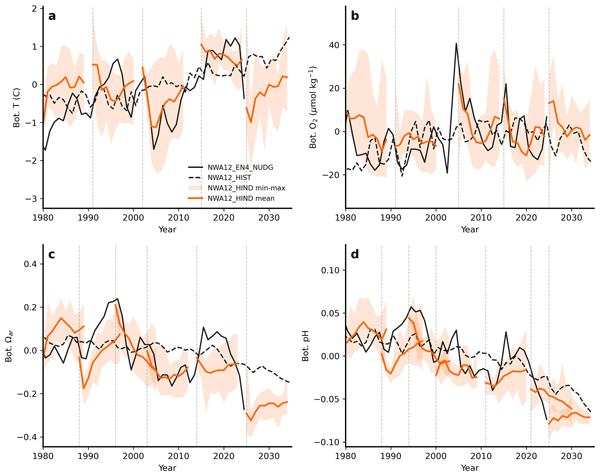
Predicting coastal ocean conditions years ahead has been difficult due to complex regional dynamics. This work shows we can forecast bottom temperature, oxygen, and acidity up to a decade ahead for the Northeast US Shelf. Our forecasts indicate increasing Labrador water may accelerate acidification, threatening shell-forming organisms. This provides a foundation for early warning systems to help communities and fisheries adapt proactively.
Andrew Ross, Charles Stock, Vimal Koul, Liwei Jia, Nathaniel Johnson, and Colleen McHugh
EGUsphere, https://doi.org/10.5194/egusphere-2026-5262, https://doi.org/10.5194/egusphere-2026-5262, 2026
This preprint is open for discussion and under review for Ocean Science (OS).
Short summary
Short summary
This paper examines the accuracy of forecasts of ocean oxygen and acidity, both critical for the healthy functioning of fish and marine ecosystems, along the continental shelf off the Northeast U.S. coastline. The forecasts are produced using a novel numerical model able to resolve fine oceanographic details. Comparison with a reference dataset shows that the model often accurately predicts oxygen and acidity up to several months in advance.
Dmitry S. Dukhovskoy, Theresa Cordero, Katherine Hedstrom, Michael Alexander, Michael Jacox, Robert Hallberg, Matthew Harrison, and Jessie Liu
Geosci. Model Dev., 19, 7169–7196, https://doi.org/10.5194/gmd-19-7169-2026, https://doi.org/10.5194/gmd-19-7169-2026, 2026
Short summary
Short summary
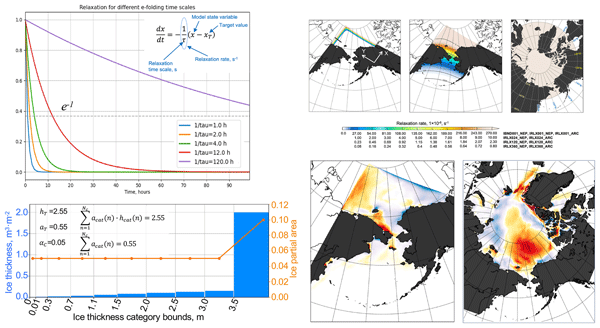
Regional sea ice models often struggle to represent sea ice near model domain boundaries, where errors can accumulate over time. We implemented and tested a method that gradually adjusts simulated sea ice toward prescribed conditions while preserving a realistic evolution of the ice cover. Experiments in the Arctic and Northeast Pacific show improved sea ice simulations and ocean surface conditions, providing a practical tool for regional forecasting and research applications.
Gabriela Negrete García, Dax Matthews, Charles A. Stock, Brian Powell, Ryan R. Rykaczewski, Kisei Tanaka, Hannah Barkley, Tobias Friedrich, Jessica Y. Luo, Andrew C. Ross, and Yi-Cheng Teng
EGUsphere, https://doi.org/10.5194/egusphere-2026-1877, https://doi.org/10.5194/egusphere-2026-1877, 2026
This preprint is open for discussion and under review for Geoscientific Model Development (GMD).
Short summary
Short summary
Ocean waters near the Hawaiian Islands support billions of dollars in fisheries, tourism, and coral reefs, yet managing these resources requires understanding ocean dynamics at multiple scales. We developed and tested a high-resolution ocean model for the central North Pacific against satellite data, long-term ocean monitoring, and coral temperatures. The model reliably reproduced key patterns across all scales, offering a tool for forecasting fish habitat, reef health, and ocean acidification.
Xiao Liu, John P. Dunne, Liwei Jia, Charles A. Stock, Xiaosong Yang, Matthew J. Harrison, Liping Zhang, and Anthony Rosati
EGUsphere, https://doi.org/10.5194/egusphere-2026-4194, https://doi.org/10.5194/egusphere-2026-4194, 2026
Short summary
Short summary
This study uses NOAA GFDL’s SPEAR model to improve predictions of how the ocean absorbs human emitted CO2. While standard models capture long-term trends, they struggle with yearly fluctuations. Researchers found that "initializing" the model with observed data significantly boosts their prediction accuracy for up to two years. This framework helps separate the predictions of natural variability from human-driven carbon changes, a vital step for verifying future marine carbon removal efforts.
Jacob Steinberg, John Krasting, and Andrew Ross
EGUsphere, https://doi.org/10.5194/egusphere-2026-3057, https://doi.org/10.5194/egusphere-2026-3057, 2026
Short summary
Short summary
We build and analyze an ensemble of year-long hindcasts of sea level in the northwest Atlantic Ocean. With a particular focus at US East Coast tide gauge stations, we reveal regional differences in simulated variability resulting from different parent and downscaled ocean model horizontal resolution. We consider differences among parent model, downscaled model, and observed variability as a function of frequency and find downscaled enhancements increase with decreasing latitude.
Meena Raju, David J. Cannon, Peter Alsip, He Wang, Jia Wang, Theresa Cordero, Robert W. Hallberg, Charles A. Stock, and Joseph A. Langan
Geosci. Model Dev., 19, 4331–4356, https://doi.org/10.5194/gmd-19-4331-2026, https://doi.org/10.5194/gmd-19-4331-2026, 2026
Short summary
Short summary
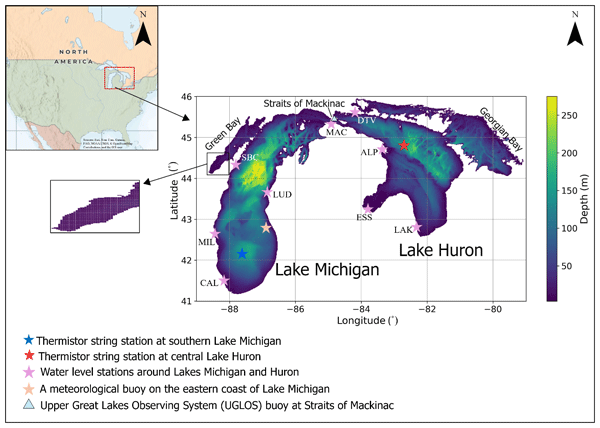
This study developed the Modular Ocean Model version 6.0 coupled with Sea Ice Simulator version 2.0 for the Great Lakes, validated against observations and an operational model. This study also tested two vertical coordinate systems, z* and hybrid. The model reproduced lake physics with good skill. The hybrid vertical coordinate improved thermocline representation and preserved deep cold-water during stratification, demonstrating the model’s suitability for large freshwater systems.
Inseong Chang, Young Ho Kim, Young-Gyu Park, Hyunkeun Jin, Gyundo Pak, Andrew C. Ross, and Robert Hallberg
Geosci. Model Dev., 19, 3053–3074, https://doi.org/10.5194/gmd-19-3053-2026, https://doi.org/10.5194/gmd-19-3053-2026, 2026
Short summary
Short summary
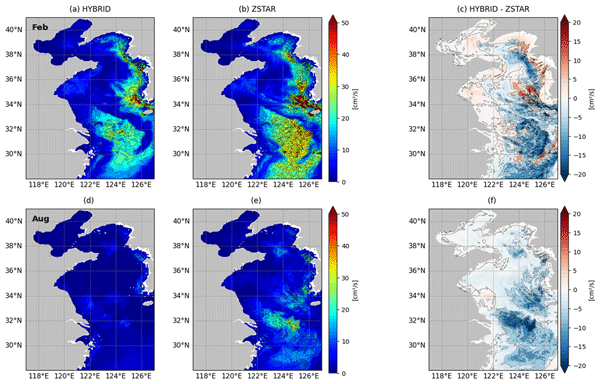
This study assesses how vertical coordinate choice shapes barotropic and baroclinic tide simulations in a high-resolution, MOM6 (Modular Ocean Model version 6) regional model. Focusing on the Yellow Sea under realistic forcing and seasonal stratification, we compare z* and z*-isopycnal hybrid to quantify coordinate-dependent impacts on tidal energetics and vertical structure. The results underscore that vertical representation is critical for accurately reproducing coastal stratification and tide–stratification interactions.

Inseong Chang, Young Ho Kim, Young-Gyu Park, Hyunkeun Jin, Gyundo Pak, Andrew C. Ross, and Robert Hallberg
Geosci. Model Dev., 19, 187–216, https://doi.org/10.5194/gmd-19-187-2026, https://doi.org/10.5194/gmd-19-187-2026, 2026
Short summary
Short summary
We conducted sensitivity experiments to examine how different vertical coordinates influence the representation of water masses and tides using a high-resolution regional ocean model for the Northwest Pacific. We found that the choice of vertical coordinate strongly affects the degree of artificial mixing, which in turn changes how well the model reproduces key ocean features. This highlights the importance of selecting a vertical coordinate when developing regional ocean models.
Vivek Seelanki, Wei Cheng, Phyllis J. Stabeno, Albert J. Hermann, Elizabeth J. Drenkard, Charles A. Stock, and Katherine Hedstrom
Geosci. Model Dev., 18, 7681–7705, https://doi.org/10.5194/gmd-18-7681-2025, https://doi.org/10.5194/gmd-18-7681-2025, 2025
Short summary
Short summary
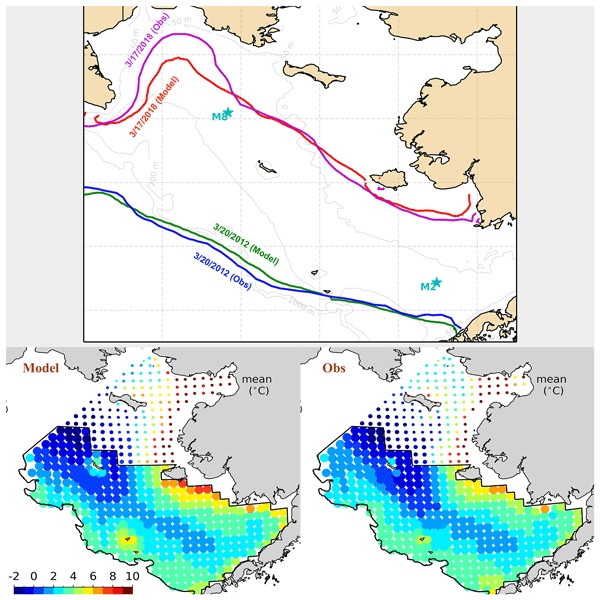
Both physical and ecosystem properties of the ocean are rapidly changing. These changes anticipating ecosystem responses to environmental change and effectively managing marine. The model-based predictions and their performance in the historical states of the ocean must be carefully evaluated against observations. In this study a coupled ocean and sea-ice simulation during 1993–2018 using observations. We focus on the Bering Sea shelf, which is the largest productive ecosystem in the US.
Enhui Liao, Laure Resplandy, Fan Yang, Yangyang Zhao, Sam Ditkovsky, Manon Malsang, Jenna Pearson, Andrew C. Ross, Robert Hallberg, and Charles Stock
Geosci. Model Dev., 18, 6553–6596, https://doi.org/10.5194/gmd-18-6553-2025, https://doi.org/10.5194/gmd-18-6553-2025, 2025
Short summary
Short summary
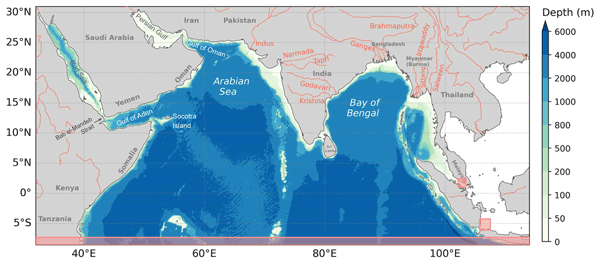
The northern Indian Ocean is central to the livelihoods and economies of countries that comprise about one-third of the world's population. We present a high-resolution (~10 km) ocean model that simulates seasonal and year-to-year variability in ocean, including currents, oxygen levels, and phytoplankton growth. This model is a powerful tool to study how climate change and human activities influence the northern Indian Ocean, which can be used for marine resource applications and management.
Elizabeth J. Drenkard, Charles A. Stock, Andrew C. Ross, Yi-Cheng Teng, Theresa Cordero, Wei Cheng, Alistair Adcroft, Enrique Curchitser, Raphael Dussin, Robert Hallberg, Claudine Hauri, Katherine Hedstrom, Albert Hermann, Michael G. Jacox, Kelly A. Kearney, Rémi Pagès, Darren J. Pilcher, Mercedes Pozo Buil, Vivek Seelanki, and Niki Zadeh
Geosci. Model Dev., 18, 5245–5290, https://doi.org/10.5194/gmd-18-5245-2025, https://doi.org/10.5194/gmd-18-5245-2025, 2025
Short summary
Short summary
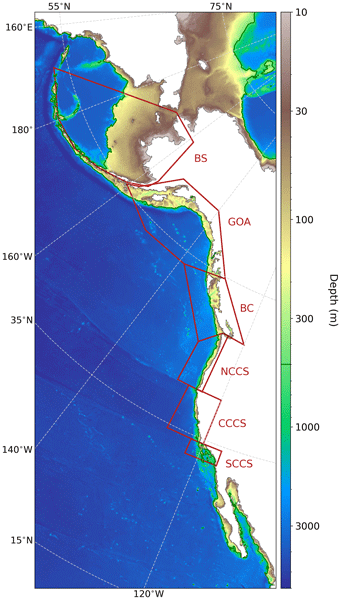
We made a new regional ocean model to assist fisheries and ecosystem managers in making decisions in the Northeast Pacific Ocean (NEP). We found that the model did well simulating past ocean conditions like temperature and nutrient and oxygen levels and can even reproduce metrics used by, and important to, ecosystem managers.
Mathieu A. Poupon, Laure Resplandy, Jessica Garwood, Charles Stock, Niki Zadeh, and Jessica Y. Luo
Ocean Sci., 21, 851–875, https://doi.org/10.5194/os-21-851-2025, https://doi.org/10.5194/os-21-851-2025, 2025
Short summary
Short summary
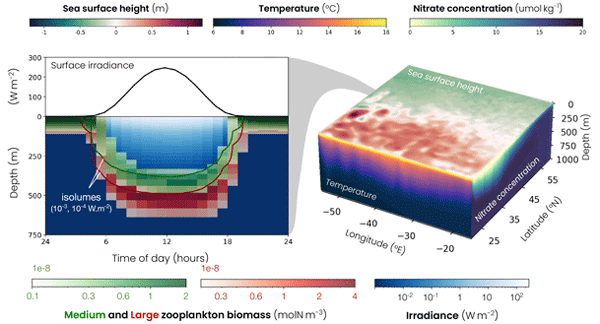
Zooplankton diel vertical migration (DVM) shapes ocean biogeochemical cycles. We present a new DVM model that reproduces migration depths observed in the North Atlantic Ocean. We show that chlorophyll shading contributes to reducing zooplankton migration depth and mainly controls its spatial and temporal variability. Thus, high chlorophyll concentrations may limit carbon sequestration caused by zooplankton migration despite the general abundance of zooplankton migration in these environments.
Andrew C. Ross, Charles A. Stock, Vimal Koul, Thomas L. Delworth, Feiyu Lu, Andrew Wittenberg, and Michael A. Alexander
Ocean Sci., 20, 1631–1656, https://doi.org/10.5194/os-20-1631-2024, https://doi.org/10.5194/os-20-1631-2024, 2024
Short summary
Short summary
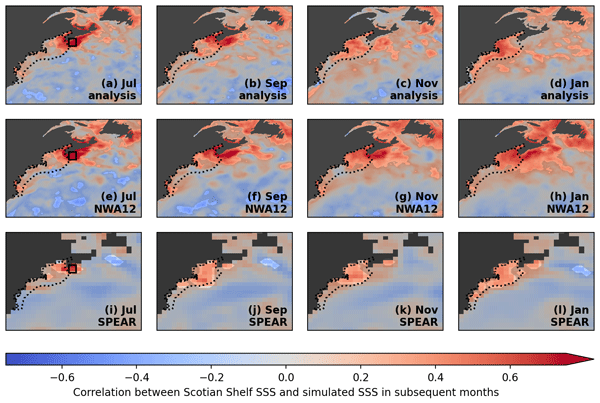
In this paper, we use a high-resolution regional ocean model to downscale seasonal ocean forecasts from the Seamless System for Prediction and EArth System Research (SPEAR) model of the Geophysical Fluid Dynamics Laboratory (GFDL). We find that the downscaled model has significantly higher prediction skill in many cases.
Minjin Lee, Charles A. Stock, John P. Dunne, and Elena Shevliakova
Geosci. Model Dev., 17, 5191–5224, https://doi.org/10.5194/gmd-17-5191-2024, https://doi.org/10.5194/gmd-17-5191-2024, 2024
Short summary
Short summary
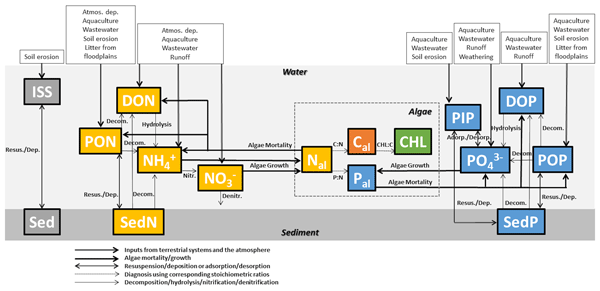
Modeling global freshwater solid and nutrient loads, in both magnitude and form, is imperative for understanding emerging eutrophication problems. Such efforts, however, have been challenged by the difficulty of balancing details of freshwater biogeochemical processes with limited knowledge, input, and validation datasets. Here we develop a global freshwater model that resolves intertwined algae, solid, and nutrient dynamics and provide performance assessment against measurement-based estimates.
Mathilde Dugenne, Marco Corrales-Ugalde, Jessica Y. Luo, Rainer Kiko, Todd D. O'Brien, Jean-Olivier Irisson, Fabien Lombard, Lars Stemmann, Charles Stock, Clarissa R. Anderson, Marcel Babin, Nagib Bhairy, Sophie Bonnet, Francois Carlotti, Astrid Cornils, E. Taylor Crockford, Patrick Daniel, Corinne Desnos, Laetitia Drago, Amanda Elineau, Alexis Fischer, Nina Grandrémy, Pierre-Luc Grondin, Lionel Guidi, Cecile Guieu, Helena Hauss, Kendra Hayashi, Jenny A. Huggett, Laetitia Jalabert, Lee Karp-Boss, Kasia M. Kenitz, Raphael M. Kudela, Magali Lescot, Claudie Marec, Andrew McDonnell, Zoe Mériguet, Barbara Niehoff, Margaux Noyon, Thelma Panaïotis, Emily Peacock, Marc Picheral, Emilie Riquier, Collin Roesler, Jean-Baptiste Romagnan, Heidi M. Sosik, Gretchen Spencer, Jan Taucher, Chloé Tilliette, and Marion Vilain
Earth Syst. Sci. Data, 16, 2971–2999, https://doi.org/10.5194/essd-16-2971-2024, https://doi.org/10.5194/essd-16-2971-2024, 2024
Short summary
Short summary
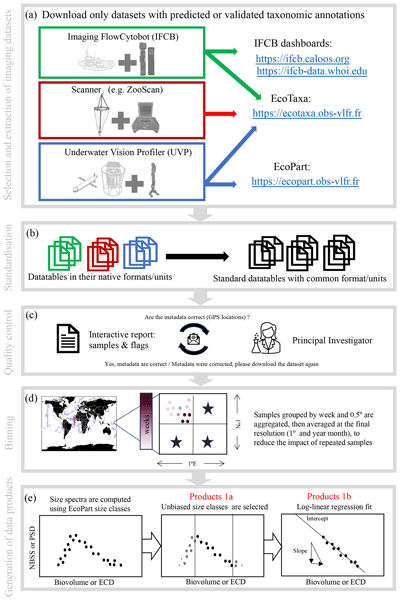
Plankton and particles influence carbon cycling and energy flow in marine ecosystems. We used three types of novel plankton imaging systems to obtain size measurements from a range of plankton and particle sizes and across all major oceans. Data were compiled and cross-calibrated from many thousands of images, showing seasonal and spatial changes in particle size structure in different ocean basins. These datasets form the first release of the Pelagic Size Structure database (PSSdb).
Krysten Rutherford, Katja Fennel, Lina Garcia Suarez, and Jasmin G. John
Biogeosciences, 21, 301–314, https://doi.org/10.5194/bg-21-301-2024, https://doi.org/10.5194/bg-21-301-2024, 2024
Short summary
Short summary
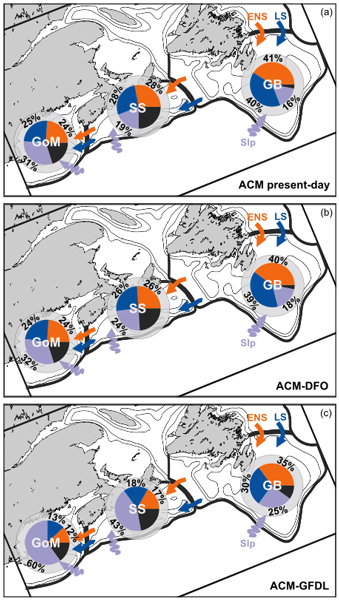
We downscaled two mid-century (~2075) ocean model projections to a high-resolution regional ocean model of the northwest North Atlantic (NA) shelf. In one projection, the NA shelf break current practically disappears; in the other it remains almost unchanged. This leads to a wide range of possible future shelf properties. More accurate projections of coastal circulation features would narrow the range of possible outcomes of biogeochemical projections for shelf regions.
Katja Frieler, Jan Volkholz, Stefan Lange, Jacob Schewe, Matthias Mengel, María del Rocío Rivas López, Christian Otto, Christopher P. O. Reyer, Dirk Nikolaus Karger, Johanna T. Malle, Simon Treu, Christoph Menz, Julia L. Blanchard, Cheryl S. Harrison, Colleen M. Petrik, Tyler D. Eddy, Kelly Ortega-Cisneros, Camilla Novaglio, Yannick Rousseau, Reg A. Watson, Charles Stock, Xiao Liu, Ryan Heneghan, Derek Tittensor, Olivier Maury, Matthias Büchner, Thomas Vogt, Tingting Wang, Fubao Sun, Inga J. Sauer, Johannes Koch, Inne Vanderkelen, Jonas Jägermeyr, Christoph Müller, Sam Rabin, Jochen Klar, Iliusi D. Vega del Valle, Gitta Lasslop, Sarah Chadburn, Eleanor Burke, Angela Gallego-Sala, Noah Smith, Jinfeng Chang, Stijn Hantson, Chantelle Burton, Anne Gädeke, Fang Li, Simon N. Gosling, Hannes Müller Schmied, Fred Hattermann, Jida Wang, Fangfang Yao, Thomas Hickler, Rafael Marcé, Don Pierson, Wim Thiery, Daniel Mercado-Bettín, Robert Ladwig, Ana Isabel Ayala-Zamora, Matthew Forrest, and Michel Bechtold
Geosci. Model Dev., 17, 1–51, https://doi.org/10.5194/gmd-17-1-2024, https://doi.org/10.5194/gmd-17-1-2024, 2024
Short summary
Short summary
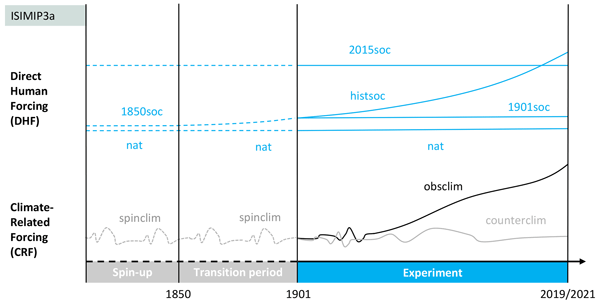
Our paper provides an overview of all observational climate-related and socioeconomic forcing data used as input for the impact model evaluation and impact attribution experiments within the third round of the Inter-Sectoral Impact Model Intercomparison Project. The experiments are designed to test our understanding of observed changes in natural and human systems and to quantify to what degree these changes have already been induced by climate change.
Andrew C. Ross, Charles A. Stock, Alistair Adcroft, Enrique Curchitser, Robert Hallberg, Matthew J. Harrison, Katherine Hedstrom, Niki Zadeh, Michael Alexander, Wenhao Chen, Elizabeth J. Drenkard, Hubert du Pontavice, Raphael Dussin, Fabian Gomez, Jasmin G. John, Dujuan Kang, Diane Lavoie, Laure Resplandy, Alizée Roobaert, Vincent Saba, Sang-Ik Shin, Samantha Siedlecki, and James Simkins
Geosci. Model Dev., 16, 6943–6985, https://doi.org/10.5194/gmd-16-6943-2023, https://doi.org/10.5194/gmd-16-6943-2023, 2023
Short summary
Short summary
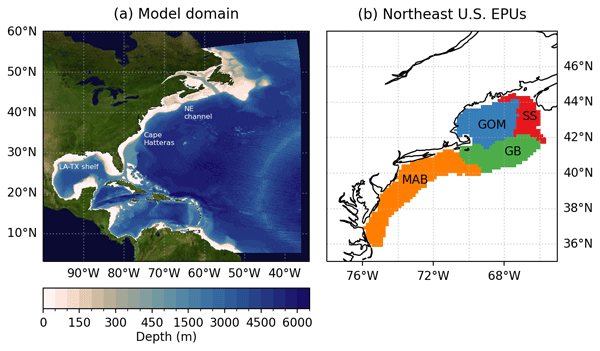
We evaluate a model for northwest Atlantic Ocean dynamics and biogeochemistry that balances high resolution with computational economy by building on the new regional features in the MOM6 ocean model and COBALT biogeochemical model. We test the model's ability to simulate impactful historical variability and find that the model simulates the mean state and variability of most features well, which suggests the model can provide information to inform living-marine-resource applications.
Weiyi Tang, Bess B. Ward, Michael Beman, Laura Bristow, Darren Clark, Sarah Fawcett, Claudia Frey, François Fripiat, Gerhard J. Herndl, Mhlangabezi Mdutyana, Fabien Paulot, Xuefeng Peng, Alyson E. Santoro, Takuhei Shiozaki, Eva Sintes, Charles Stock, Xin Sun, Xianhui S. Wan, Min N. Xu, and Yao Zhang
Earth Syst. Sci. Data, 15, 5039–5077, https://doi.org/10.5194/essd-15-5039-2023, https://doi.org/10.5194/essd-15-5039-2023, 2023
Short summary
Short summary
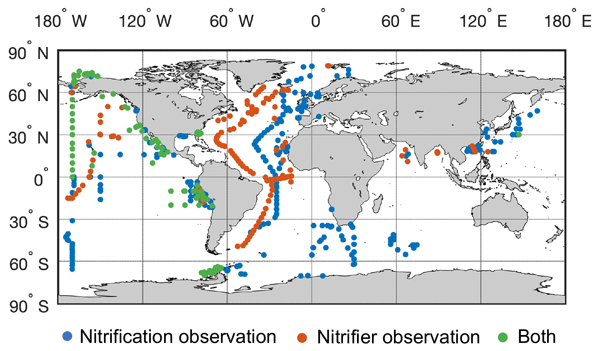
Nitrification and nitrifiers play an important role in marine nitrogen and carbon cycles by converting ammonium to nitrite and nitrate. Nitrification could affect microbial community structure, marine productivity, and the production of nitrous oxide – a powerful greenhouse gas. We introduce the newly constructed database of nitrification and nitrifiers in the marine water column and guide future research efforts in field observations and model development of nitrification.
Fabian A. Gomez, Sang-Ki Lee, Charles A. Stock, Andrew C. Ross, Laure Resplandy, Samantha A. Siedlecki, Filippos Tagklis, and Joseph E. Salisbury
Earth Syst. Sci. Data, 15, 2223–2234, https://doi.org/10.5194/essd-15-2223-2023, https://doi.org/10.5194/essd-15-2223-2023, 2023
Short summary
Short summary
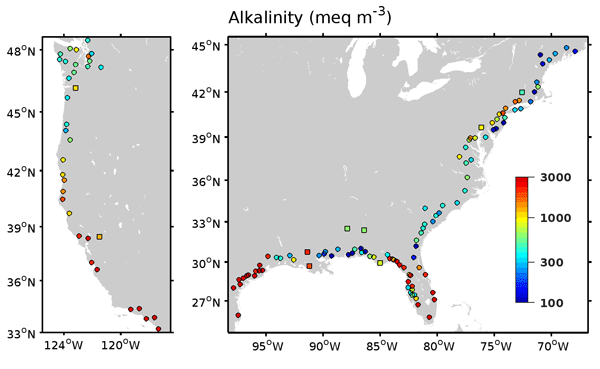
We present a river chemistry and discharge dataset for 140 rivers in the United States, which integrates information from the Water Quality Database of the US Geological Survey (USGS), the USGS’s Surface-Water Monthly Statistics for the Nation, and the U.S. Army Corps of Engineers. This dataset includes dissolved inorganic carbon and alkalinity, two key properties to characterize the carbonate system, as well as nutrient concentrations, such as nitrate, phosphate, and silica.
Alban Planchat, Lester Kwiatkowski, Laurent Bopp, Olivier Torres, James R. Christian, Momme Butenschön, Tomas Lovato, Roland Séférian, Matthew A. Chamberlain, Olivier Aumont, Michio Watanabe, Akitomo Yamamoto, Andrew Yool, Tatiana Ilyina, Hiroyuki Tsujino, Kristen M. Krumhardt, Jörg Schwinger, Jerry Tjiputra, John P. Dunne, and Charles Stock
Biogeosciences, 20, 1195–1257, https://doi.org/10.5194/bg-20-1195-2023, https://doi.org/10.5194/bg-20-1195-2023, 2023
Short summary
Short summary
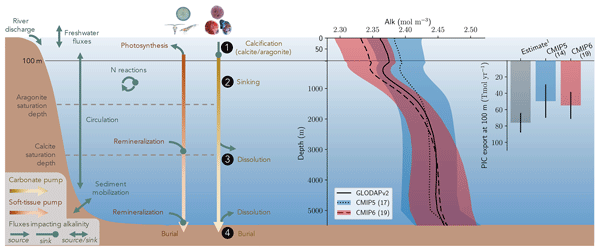
Ocean alkalinity is critical to the uptake of atmospheric carbon and acidification in surface waters. We review the representation of alkalinity and the associated calcium carbonate cycle in Earth system models. While many parameterizations remain present in the latest generation of models, there is a general improvement in the simulated alkalinity distribution. This improvement is related to an increase in the export of biotic calcium carbonate, which closer resembles observations.
Denis L. Volkov, Claudia Schmid, Leah Chomiak, Cyril Germineaud, Shenfu Dong, and Marlos Goes
Ocean Sci., 18, 1741–1762, https://doi.org/10.5194/os-18-1741-2022, https://doi.org/10.5194/os-18-1741-2022, 2022
Short summary
Short summary
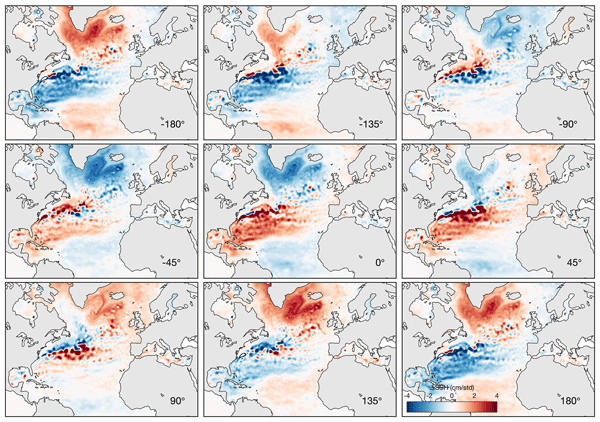
Ocean and atmosphere dynamics redistribute heat and freshwater, which drives regional sea level changes. This study reports on the east-to-west propagation of sea level anomalies in the subpolar North Atlantic as an important component of the interannual to decadal regional sea level variability. It is demonstrated that this variability is the result of a complex interplay between the local wind forcing, surface heat fluxes, and the advection of heat and freshwater by ocean currents.
Marion Kersalé, Denis L. Volkov, Kandaga Pujiana, and Hong Zhang
Ocean Sci., 18, 193–212, https://doi.org/10.5194/os-18-193-2022, https://doi.org/10.5194/os-18-193-2022, 2022
Short summary
Short summary
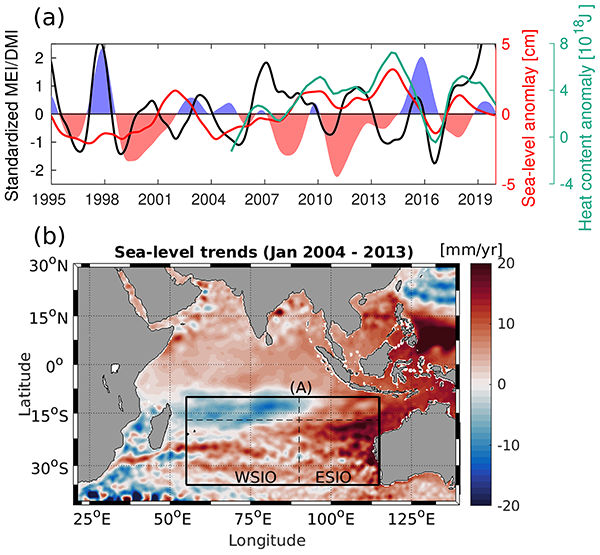
The southern Indian Ocean is one of the major basins for regional heat accumulation and sea level rise. The year-to-year changes of regional sea level are influenced by water exchange with the Pacific Ocean via the Indonesian Throughflow. Using a general circulation model, we show that the spatiotemporal pattern of these changes is primarily set by local wind forcing modulated by El Niño–Southern Oscillation, while oceanic signals originating in the Pacific can amplify locally forced signals.
Cited articles
Adcroft, A. and Campin, J.-M.: Rescaled height coordinates for accurate representation of free-surface flows in ocean circulation models, Ocean Model., 7, 269–284, https://doi.org/10.1016/j.ocemod.2003.09.003, 2004.
Adcroft, A. and Hallberg, R.: On methods for solving the oceanic equations of motion in generalized vertical coordinates, Ocean Model., 11, 224–233, https://doi.org/10.1016/j.ocemod.2004.12.007, 2006.
Adcroft, A., Anderson, W., Balaji, V., Blanton, C., Bushuk, M., Dufour, C. O., Dunne, J. P., Griffies, S. M., Hallberg, R., Harrison, M. J., Held, I. M., Jansen, M. F., John, J. G., Krasting, J. P., Langenhorst, A. R., Legg, S., Liang, Z., McHugh, C., Radhakrishnan, A., Reichl, B. G., Rosati, T., Samuels, B. L., Shao, A., Stouffer, R., Winton, M., Wittenberg, A. T., Xiang, B., Zadeh, N., and Zhang, R.: The GFDL Global Ocean and Sea Ice Model OM4.0: Model Description and Simulation Features, J. Adv. Model. Earth Sy., 11, 3167–3211, https://doi.org/10.1029/2019MS001726, 2019.
Alexander, M. A. and Scott, J. D.: The Role of Ekman Ocean Heat Transport in the Northern Hemisphere Response to ENSO, J. Climate, 21, 5688–5707, https://doi.org/10.1175/2008JCLI2382.1, 2008.
Alexander, M. A., Shin, S., Scott, J. D., Curchitser, E., and Stock, C.: The Response of the Northwest Atlantic Ocean to Climate Change, J. Climate, 33, 405–428, https://doi.org/10.1175/JCLI-D-19-0117.1, 2020.
Alfieri, L., Lorini, V., Hirpa, F. A., Harrigan, S., Zsoter, E., Prudhomme, C., and Salamon, P.: A Global Streamflow Reanalysis for 1980–2018, J. Hydrol., 6, 100049, https://doi.org/10.1016/j.hydroa.2019.100049, 2020.
Athié, G., Sheinbaum, J., Leben, R., Ochoa, J., Shannon, M. R., and Candela, J.: Interannual variability in the Yucatan Channel flow, Geophys. Res. Lett., 42, 1496–1503, https://doi.org/10.1002/ 2014GL062674, 2015.
Athié, G., Sheinbaum, J., Candela, J., Ochoa, J., Pérez-Brunius, P., and Romero-Arteaga, A.: Seasonal Variability of the Transport through the Yucatan Channel from Observations, J. Phys. Oceanogr., 50, 343–360, https://doi.org/10.1175/JPO-D-18-0269.1, 2020.
Baker, J. A., Bell, M. J., Jackson, L. C.,Renshaw, R., Vallis, G. K., Watson, A. J., and Wood, R. A.: Overturning pathways control AMOC weakening inCMIP6 models, Geophys. Res. Lett., 50, e2023GL103381, https://doi.org/10.1029/2023GL103381, 2023.
Beadling, R. L., Russell, J. L., Stouffer, R. J., and Goodman, P. J.: Evaluation of subtropical North Atlantic Ocean circulation in CMIP5 models against the observational array at 26.5° N and its changes under continued warming, J. Climate. 31, 9697–9718, https://doi.org/10.1175/jcli-d-17-0845.1, 2018.
Bell, R. J, Richardson, D. E., Hare, J. A., Lynch, P. D., and Fratantoni, P. S.: Disentangling the effects of climate, abundance, and size on the distribution of marine fish: an example based on four stocks from the Northeast US shelf, ICES J. Mar. Sci., 72, 1311–1322, https://doi.org/10.1093/icesjms/fsu217, 2015.
Bellomo, K., Angeloni, M., Corti, S., and Hardenberg, J.: Future climate change shaped by inter-model differences in Atlantic meridional overturning circulation response, Nat. Commun., 12, 3659, https://doi.org/10.1038/s41467-021-24015-w, 2021.
Caesar, L., Rahmstorf, S., Robinson, Feulner, G., and Saba, V.: Observed fingerprint of a weakening Atlantic Ocean overturning circulation, Nature, 556, 191–196, https://doi.org/10.1038/s41586-018-0006-5, 2018.
Cai, J., Yang, H., Chen, Z., and Wu. L.: The disappearing Antilles Current dominates the weakening meridional heat transport in the North Atlantic Ocean under global warming, Environ. Res. Lett., 19, 044049, https://doi.org/10.1088/1748-9326/ad3567, 2024.
Castelao, R.: Intrusions of Gulf Stream waters onto the South Atlantic Bight shelf, J. Geophys. Res.-Oceans, 116, C10011, https://doi.org/10.1029/2011JC007178, 2011.
Chassignet, E. and Marshall. D.: Gulf Stream separation in numerical ocean models, in: Ocean Modeling in an Eddying Regime, Geoph. Monog. Series 177, Wiley, https://doi.org/10.1029/GM177, 2008.
Cheng, C. S., Li, G., Li, Q., Auld, H., and Fu, C.: Possible Impacts of Climate Change on Wind Gusts under Downscaled Future Climate Conditions over Ontario, Canada, J. Climate, 25, 3390–3408, https://doi.org/10.1175/JCLI-D-11-00198.1, 2012.
Domingues, R., Goni, G., Baringer, M., and Volkov, D.: What caused the accelerated sea level changes along the U. S. East Coast during 2010–2015?, Geophys. Res. Lett., 45, 13367–13376, https://doi.org/10.1029/2018GL081183, 2018.
Dong, S., Baringer, M., and Goni, G.: Slowdown of the Gulf Stream during 1993–2016, Sci. Rep., 9, 6672, https://doi.org/10.1038/s41598-019-42820-8, 2019.
Drenkard, E. J., Stock, C., Ross, A. C., Dixon, K. W., Adcroft, A., Alexander, M., Balaji, V., Bograd, S. J., Butenschön, M., Cheng, W., Curchitser, E., Lorenzo, E. D., Dussin, R., Haynie, A. C., Harrison, M., Hermann, A., Hollowed, A., Holsman, K., Holt, J., Jacox, M. G., Jang, C. J., Kearney, K. A., Muhling, B. A., Buil, M. P., Saba, V., Sandø, A. B., Tommasi, D., and Wang, M.: Next-generation regional ocean projections for living marine resource management in a changing climate, ICES J. Mar. Sci., 78, 1969–1987, https://doi.org/10.1093/icesjms/fsab100, 2021.
Dunne, J. P., Horowitz, L. W., Adcroft, A. J., Ginoux, P., Held, I. M., John, J. G.. Krasting, J. P., Malyshev, S., Naik, V., Paulot, F., Shevliakova, E., Stock, C. A., Zadeh, N., Balaji, V., Blanton, C., Dunne, K. A., Dupuis, C., Durachta, J., Dussin, R., Gauthier, P. P. G., Griffies, S. M., Guo, H., Hallberg, R. W., Harrison, M., He, J., Hurlin, W., McHugh, C., Menzel, R., Milly, P. C. D., Nikonov, S., Paynter, D. J., Ploshay, J., Radhakrishnan, A., Rand, K., Reichl, B. G., Robinson, T., Schwarzkopf, D. M., Sentman, L. T., Underwood, S., Vahlenkamp, H., and Winton, M.: The GFDL Earth SystemModel Version 4.1 (GFDL-ESM 4.1): Overall coupled model description and simulation characteristic, J. Adv. Model. Earth Sy.,12, e2019MS002015, https://doi.org/10.1029/2019MS002015, 2020.
Ezer, T.: Detecting changes in the transport of the Gulf Stream and the Atlantic overturning circulation from coastal sea level data: The extreme decline in 2009–2010 and estimated variations for 1935–2012, Global Planet. Change, 129, 23–36, https://doi.org/10.1016/j.gloplacha.2015.03.002, 2015.
Ezer, T.: Regional differences in sea level rise between the Mid-Atlantic Bight and the South Atlantic Bight: Is the Gulf Stream to blame?, Earths Future, 7, 771–783, https://doi.org/10.1029/2019EF001174, 2019.
Ezer, T. and Atkinson, L. P.: Accelerated flooding along the US EastCoast: On the impact of sea-level rise,tides, storms, the Gulf Stream, and the North Atlantic Oscillations, Earths Future, 2, https://doi.org/10.1002/2014EF000252, 2014.
Ezer, T., Atkinson, L. P., Corlett, W. B., and Blanco, J. L.: Gulf Stream's induced sea level rise and variability along the US mid-Atlantic coast, J. Geophys. Res.-Oceans, 118, 685–697, https://doi.org/10.1002/jgrc.20091, 2013.
Friedrichs, M. A. M., St-Laurent, P., Xiao, Y., Hofmann, E., Hyde, K., Mannino, A., Najjar, R. G., Narváez, D. A., Signorini, S. R., Tian, H., Wilkin, J., Yao, Y., and Xue, J.: Ocean circulation causes strong variability in the Mid-Atlantic Bight nitrogen budget, J. Geophys. Res.-Oceans, 124, 113–134, https://doi.org/10.1029/2018JC014424, 2019.
Goddard, P. B., Yin, J., Griffies, S. M., and Zhang, S.: An extreme event of sea-level rise along the Northeast coast of North America in 2009–2010, Nat. Commun., 6, https://doi.org/10.1038/ncomms7346, 2015.
Gomez, F. A., Lee, S. K., Hernandez, F. J., Chiaverano, L. M., Muller-Karger, F. E., Liu, Y., and Lamkin, J. T.: ENSO-induced co-variability of Salinity, Plankton Biomass and Coastal Currents in the Northern Gulf of Mexico, Sci. Rep., 9, 178, https://doi.org/10.1038/s41598-018-36655-y, 2019.
Gomez, F. A., Wanninkhof, R., Barbero, L., Lee, S.-K., and Hernandez Jr., F. J.: Seasonal patterns of surface inorganic carbon system variables in the Gulf of Mexico inferred from a regional high-resolution ocean biogeochemical model, Biogeosciences, 17, 1685–1700, https://doi.org/10.5194/bg-17-1685-2020, 2020.
Gomez, F. A., Lee, S.-K., Stock, C. A., Ross, A. C., Resplandy, L., Siedlecki, S. A., Tagklis, F., and Salisbury, J. E.: RC4USCoast: a river chemistry dataset for regional ocean model applications in the US East Coast, Gulf of Mexico, and US West Coast, Earth Syst. Sci. Data, 15, 2223–2234, https://doi.org/10.5194/essd-15-2223-2023, 2023.
Gomez, F. A., Wanninkhof, R., Barbero, L., and Lee, S.-K.: Mississippi River Chemistry Impacts on the Interannual Variability of Aragonite Saturation State in the Northern Gulf of Mexico, J. Geophys. Res.-Oceans, 129, e2023JC020436, https://doi.org/10.1029/2023JC020436, 2024.
Gomez, F. A., Ross, A. C., Lee, S.-K., Volkov, D., Kim, D., John, J. G., and Stock, C. A.: Wind control of the interannual ocean-biogeochemical variability in the South Atlantic Bight, J. Geophys. Res.-Oceans, 131, e2025JC023322, https://doi.org/10.1029/2025JC023322, 2026.
Greatbatch, R. J.: A note on the representation of steric sea level in models that conserve volume rather than mass, J. Geophys. Res.-Oceans, 99, 12767–12771, https://doi.org/10.1029/94JC00847, 1994.
Griffies, S. M. and Greatbatch, R. J.: Physical processes that impact the evolution of global mean sea level in ocean climate models, Ocean Model., 51, 37–72, 2012.
Griffies, S. M., Yin, J., Durack, P. J., Goddard, P., Bates, S. C., Behrens, E., Bentsen, M., Bi, D., Biastoch, A., Böning, C., Bozec, A., Chassignet, E., Danabasoglu, G., Danilov, S., Domingues, C. M., Drange, H., Farneti, R., Fernandez, E., Greatebatch, R. J., Holland, D. M., Ilicak, M., Large, W. G., Lorbacher, K., Lu, J., Marsland, S. J., Mishra, A., Nurser, A. J. G., Salas y Mélia, D., Palter, J. B., Samuels, B. L., Schröter, Schwarzkopf, F. U., Sidorenko, D., Treguier, A.-M., Tseng, Y. H., Tsujino, H., Uotila, P., Valcke, S., Voldoire, A., Wang, Q., Winton, M., and Zhang, X.: An assessment of global and regional sea level for years 1993–2007 in a suite of interannual CORE-II simulations, Ocean Model., 78, 35–89, https://doi.org/10.1016/j.ocemod.2014.03.004, 2014.
Hameed, S. C. Wolfe, L. P., and Chi, L.: Impact of the Atlantic Meridional Mode on Gulf Stream North Wall Position, J. Climate, 31, 8875–8894, https://doi.org/10.1175/JCLI-D-18-0098.1, 2018.
Hersbach, H., Bell, B., Berrisford, P., Hirahara, S., Horányi, A., Muñoz-Sabater, J., Nicolas, J., Peubey, C., Radu, R., Schepers, D., Simmons, A., Soci, C., Abdalla, S., Abellan, X., Balsamo, G., Bechtold, P., Biavati, G., Bidlot, J., Bonavita, M., De Chiara, G., Dahlgren, P., Dee, D., Diamantakis, M., Dragani, R., Flemming, J., Forbes, R., Fuentes, M., Geer, A., Haimberger, L., Healy, S., Hogan, R. J., Hólm, E., Janisková, M., Keeley, S., Laloyaux, P., Lopez, P., Lupu, C., Radnoti, G., de Rosnay, P., Rozum, I., Vamborg, F., Villaume, S., and Thépaut, J.-N.: The ERA5 Global Reanalysis, Q. J. Roy. Meteor. Soc., 146, 1999–2049, https://doi.org/10.1002/qj.3803, 2020.
Huang, L., Volkov, D. L., Dong, S., and Schmid, C.: On the rapid warming in the subtropical North Atlantic in 2011–2021, Geophys. Res. Lett., 52, e2025GL116280, https://doi.org/10.1029/2025GL116280, 2025.
IPCC – Intergovernmental Panel On Climate Change: Climate Change 2021 – The Physical Science Basis: Working Group I Contribution to the Sixth Assessment Report of the Intergovernmental Panel on Climate Change, Cambridge University Press, https://doi.org/10.1017/9781009157896, 2023.
Jeong, D. I. and Sushama, L.: Projected Changes to Mean and Extreme Surface Wind Speeds for North America Based on Regional Climate Model Simulations, Atmosphere, 10, 497, https://doi.org/10.3390/atmos10090497, 2019.
Karnauskas, M., Schirripa, M. J., Kelble, C. K., Cook, G. S., and Craig, J. K.: Ecosystem status report for the Gulf of Mexico, NOAA Technical Memorandum NMFS-SEFSC-653, https://repository.library.noaa.gov/view/noaa/4575 (last access: 17 June 2026), 2013.
Koul, V., Ross, A. C., Stock, C., Zhang, L.,Delworth, T., and Wittenberg, A.: A predicted pause in the rapid warming of theNorthwest Atlantic Shelf in the coming decade, Geophys. Res. Lett., 51, e2024GL110946, https://doi.org/10.1029/2024GL110946, 2024.
Lee, T. N., Yoder, J. A., and Atkinson, L. P.: Gulf Stream frontal eddy influence on productivity of the 857 southeast US Continental Shelf, J. Geophys. Res.-Oceans, 96, 191–205, https://doi.org/10.1029/91jc02450, 1991.
Lellouche, J., Greiner, E., Bourdallé-Badie, R., Garric, G., Melet, A., Drévillon, M., Bricaud, C., Hamon, M., Le Galloudec, O., Regnier, C., Candela, T., Testut, C., Gasparin, F., Ruggiero, G., Benkiran, M., Drillet, Y., and Le Traon, P.: The Copernicus Global 1
Levermann, A., Griesel, A., Hofmann, M., Montoya, M., and Rahmstorf, S.: Dynamic sea level changes following changes in the thermohaline circulation, Clim. Dynam., 24, 347–354, https://doi.org/10.1007/s00382-004-0505-y, 2005.
Li, D., Chang, P., Yeager, S. G., Danabasoglu, G., Castruccio, F. S., Small, Wang, H., Zhang, Q., and Gopal, A.: The impact of horizontal resolution on projected sea-level rise along US east continental shelf with the community earth system model, J. Adv. Model. Earth Sy., 14, e2021MS002868, 2022.
Lin, S. J.: A “vertically Lagrangian” finite-volume dynamical core for global models, Mon. Weather Rev., 132, 2293–2307, 2004.
Little, C. M., Piecuch, C. G., and Ponte, R. M.: On the relationship between the meridional overturning circulation, alongshore wind stress, and United States East Coast sea level in the Community Earth System Model Large Ensemble, J. Geophys. Res.-Oceans, 122, 4554–4568, https://doi.org/10.1002/2017JC012713, 2017.
Little, C. M., Hu, A., Hughes, C. W.,McCarthy, G. D., Piecuch, C. G., Ponte, R. M., and Thomas, M. D.: TheRelationship between U. S. East Coastsea level and the Atlantic MeridionalOverturning Circulation: A review, J. Geophys. Res.-Oceans, 124, 6435–6458, https://doi.org/10.1029/2019JC015152, 2019.
Liu, Y., Lee, S.-K., Muhling, B. A., Lamkin, J. T., and Enfield, D. B.: Significant reduction of the Loop Current in the 21st century and its impact on the Gulf of Mexico, J. Geophys. Res.-Oceans, 117, C05039, https://doi.org/10.1029/2011JC007555, 2012.
Liu, Y., Lee, S.-K., Enfield, D. B., Muhling, B. A., Lamkin, J. T., Muller-Karger, F. E., and Roffer, M. A.: Potential impact of climate change on the Intra-Americas Sea: Part-1. A dynamic downscaling of the CMIP5 model projections, J. Marine Syst., 148, 56–69, https://doi.org/10.1016/j.jmarsys.2015.01.007, 2015.
McCarthy, G. D., Smeed, D. A., Johns, W. E., Frajka-Williams, E., Moat, B. I., Rayner, D., Baringer, M. O., Meinen, C. S., Collins, J., and Bryden, H. L.: Measuring the Atlantic Meridional Overturning Circulation at 26° N, Prog. Oceanogr., 130, 91–111, https://doi.org/10.1016/j.pocean.2014.10.006, 2015.
Meehl, G. A., Senior, C. A., Eyring, V., Flato, G., Lamarque, J.-F., Stouffer, R. J., Taylor, K. E., and Schlund, M.: Context for interpreting equilibrium climate sensitivity and transient climate response from the CMIP6 Earth system models, Sci. Adv., 6, eaba1981, https://doi.org/10.1126/sciadv.aba1981, 2020.
Meinen, C. S., Johns, W. E., Moat, B. I., Smith, R. H., Johns, E. M., Rayner, D., Frajka-Williams, E., Garcia, R. F., and Garzoli, S. L.: Structure and variability of the Antilles Current at 26.5° N, J. Geophys. Res.-Oceans, 124, 3700–3723, https://doi.org/10.1029/2018JC014836, 2019.
Minobe, S., Terada, M., Qiu, B., and Schneider, N.: Western boundary sea level: A theory, rule of thumb, and application to climate models, J. Phys. Oceanogr., 47, 957–977, https://doi.org/10.1175/JPO-D-16-0144.1., 2017.
Müller, O. V., McGuire, P. C., Vidale, P. L., and Hawkins, E.: River flow in the near future: a global perspective in the context of a high-emission climate change scenario, Hydrol. Earth Syst. Sci., 28, 2179–2201, https://doi.org/10.5194/hess-28-2179-2024, 2024.
Muller-Karger, F. E., Smith, J. P., Werner, S., Chen, R., Roffer, M., Liu, Y., Muhling, B., Lindo-Atichati, D., Lamkin, J., Cerdeira-Estrada, S., and Enfield, D. B.: Natural variability of surface oceanographic conditions in the offshore Gulf of Mexico, Prog. Oceanogr., 134, 54–76. 2015.
New, A. L., Smeed, D. A., Czaja, A., Blaker, A. T., Mecking, J. V., Mathews, J. P., and Sanchez-Franks, A.: Labrador Slope Water connects the subarctic with the Gulf Stream, Environ. Res. Lett., 16, 084019, https://doi.org/10.1088/1748-9326/ac1293, 2021.
NOAA-GFDL: CEFI-regional-MOM6, GitHub [code], https://github.com/NOAA-GFDL/CEFI-regional-MOM6 (last access: 22 June 2026), 2026.
O'Neill, B. C., Tebaldi, C., van Vuuren, D. P., Eyring, V., Friedlingstein, P., Hurtt, G., Knutti, R., Kriegler, E., Lamarque, J.-F., Lowe, J., Meehl, G. A., Moss, R., Riahi, K., and Sanderson, B. M.: The Scenario Model Intercomparison Project (ScenarioMIP) for CMIP6, Geosci. Model Dev., 9, 3461–3482, https://doi.org/10.5194/gmd-9-3461-2016, 2016.
Park, J. and Sweet, W.: Accelerated sea level rise and Florida Current transport, Ocean Sci., 11, 607–615, https://doi.org/10.5194/os-11-607-2015, 2015.
Pershing, A. J., Alexander, M. A., Hernandez, C. M., Kerr, L. A., Le Bris, A., Mills, K. E., Nye, J. A., Record, N. R., Scannell, H. A., Scott, J. D., Sherwood, G. D., and Thomas, A. C.: Slow adaptation in the face of rapid warming leads to collapse of the Gulf of Maine cod fishery, Science, 350, 809–812, 2015.
Pozo Buil, M., Jacox, M. G., Fiechter, J., Alexander, M. A., Bograd, S. J., Curchitser, E. N., Edwards, C. A., Rykaczewski, R. R., and Stock, C. A.: A Dynamically Downscaled Ensemble of Future Projections for the California Current System, Frontiers Marine Sciences, 8:612874, https://doi.org/10.3389/fmars.2021.612874, 2021.
Roberts, M. J., Jackson, L. C., Roberts, C. D., Meccia, V., Docquier, D., Koenigk, T., Ortega, P., Moreno-Chamarro., E., Bellucci, A., Coward, A., Drijfhout, S., Exarchou, E., Gutjahr, O., Hewitt, H., Iovino, D., Lohmann, K., Putrasahan, D., Schiemann, R., Seddon, J. Terray, L., Xu, X., Zhang, Q., Chang, P., Yeager, S. G., Castruccio, F. S., Zhang, S., and Wu, L.: Sensitivity of the Atlantic Meridional Overturning Circulation to model resolution in CMIP6 HighResMIP simulations and implications for future changes, J. Adv. Model. Earth Sy., 12, e2019MS002014, https://doi.org/10.1029/2019MS002014, 2020.
Ross, A. C., Stock, C. A., Adcroft, A., Curchitser, E., Hallberg, R., Harrison, M. J., Hedstrom, K., Zadeh, N., Alexander, M., Chen, W., Drenkard, E. J., du Pontavice, H., Dussin, R., Gomez, F., John, J. G., Kang, D., Lavoie, D., Resplandy, L., Roobaert, A., Saba, V., Shin, S.-I., Siedlecki, S., and Simkins, J.: A high-resolution physical–biogeochemical model for marine resource applications in the northwest Atlantic (MOM6-COBALT-NWA12 v1.0), Geosci. Model Dev., 16, 6943–6985, https://doi.org/10.5194/gmd-16-6943-2023, 2023.
Ross, A. C., Stock, C. A., Koul, V., Delworth, T. L., Lu, F., Wittenberg, A., and Alexander, M. A.: Dynamically downscaled seasonal ocean forecasts for North American east coast ecosystems, Ocean Sci., 20, 1631–1656, https://doi.org/10.5194/os-20-1631-2024, 2024.
Rutherford, K., Fennel, K., Garcia Suarez, L., and John, J. G.: Uncertainty in the evolution of northwestern North Atlantic circulation leads to diverging biogeochemical projections, Biogeosciences, 21, 301–314, https://doi.org/10.5194/bg-21-301-2024, 2024.
Saba, V. S., Griffies, S. M., Anderson, W. G., Winton, M., Alexander, M. A., Delworth, T. L., Hare, J. A., Harrison, M. J., Rosati, A., Vecchi, G. A., and Zhang, R.: Enhanced warming of the Northwest Atlantic Ocean under climate change, J. Geophys. Res.-Oceans, 121, 118–132, 2016.
Sanchez-Franks, A. and Zhang, J.: Decadal variability and shifts of the Gulf Stream path, J. Climate, 28, 9825–9838, 2015.
Seidov, D., Mishonov, A., and Parsons, R.: Recent warming and decadal variability of Gulf of Maine and Slope Water, Limnol. Oceanogr., 66, 3472–3488, https://doi.org/10.1002/lno.11892, 2021.
Sentman, L. T., Dunne, J. P., Horowitz, L. W., Naik, V., Paulot, F., Ginoux, P., and Zadeh, N.: Quantifying equilibrium climate sensitivity to atmospheric chemistry and composition representations in GFDL-CM4.0 and GFDL-ESM4.1, Geophys. Res. Lett., 53,e2025GL116545, https://doi.org/10.1029/2025GL116545, 2026.
Shevliakova, E., Malyshev, S., Martinez-Cano, I., Milly, P. C. D., Pacala, S. W.,Ginoux, P., Dunne, K. A., Dunne, J. P., Dupuis, C., Findell, K. L., Ghannam, K., Horowitz, L. W., Knutson, T. R., Krasting, J. P., Naik, V., Phillipps, P., Zadeh, N., Yu, Y., Zeng, F., and Zeng, Y.: The land component LM4.1 of the GFDL Earth System Model ESM4.1: Model description and characteristics of land surface climate and carbon cycling in the historical simulation, J. Adv. Model. Earth Sy., 16, e2023MS003922, https://doi.org/10.1029/2023MS003922, 2024.
Shin, S. and Alexander, M. A.: Dynamical Downscaling of Future Hydrographic Changes over the Northwest Atlantic Ocean, J. Climate, 33, 2871–2890, https://doi.org/10.1175/JCLI-D-19-0483.1, 2020.
Steinberg, J. M., Griffies, S. M., Krasting, J. P., Piecuch, C. G., and Ross, A. C.: A Link between U. S. East coast sea leveland North Atlantic subtropical ocean heatcontent, J. Geophys. Res.-Oceans, 129, e2024JC021425, https://doi.org/10.1029/2024JC021425, 2024.
Stock, C. A., Dunne, J. P., Fan, S., Ginoux, P., John, J., Krasting, J. P., Laufkötter, C., Paulot, F., and Zadeh, N.: Ocean Biogeochemistry in GFDL's Earth System Model 4.1 and Its Response to Increasing Atmospheric CO2, J. Adv. Model. Earth Sy., 12, e2019MS002043, https://doi.org/10.1029/2019MS002043, 2020.
Stock, C. A., Dunne, J. P., Luo, J. Y., Ross, A. C., Van Oostende, N., Zadeh, N., Cordero, T. J., Liu, X., Teng, Y.-C.: Photoacclimation and photoadaptation sensitivity in a global ocean ecosystem model, J. Adv. Model. Earth Sy., 17, e2024MS004701, https://doi.org/10.1029/2024MS004701, 2025.
Tanaka, K. R., Torre, M. P., Saba, V. S., Stock, C. A., and Chen, Y.: An ensemble high-resolution projection of changes in the future habitat of American lobster and sea scallop in the Northeast US continental shelf, Divers. Distrib., 26, 987–1001, https://doi.org/10.1111/ddi.13069, 2020.
Volkov, D. L., Lee, S.-K., Domingues, R., Zhang, H., and Goes, M.: Interannual sea level variability along the southeastern seaboard of the United States in relation to whom it may concern: The gyre-scale heat divergence in the North Atlantic, Geophys. Res. Lett., 46, 7481–7490, https://doi.org/10.1029/2019GL083596, 2019.
Volkov, D. L., Zhang, K., Johns, W. E. Willis, J. K., Hobbs, W., Goes, M., Zhang, H., and Menemenlis, D.: Atlantic meridional overturning circulation increases flood risk along the United States southeast coast, Nat. Commun., 14, 5095, https://doi.org/10.1038/s41467-023-40848-z, 2023.
Volkov, D. L., Smith, R. H., Garcia, R. F., Smeed, D. A., Moat, B. I, Johns, W. E., and Baringer, M. O.: Florida Current transport observations reveal four decades of steady state, Nat. Commun., 15, 7780, https://doi.org/10.1038/s41467-024-51879-5, 2024.
Wang, Z., Boyer, T., Reagan, J., and Hogan, P.: Upper-Oceanic Warming in the Gulf of Mexico between 1950 and 2020, J. Climate, 36, 2721–2734, https://doi.org/10.1175/JCLI-D-22-0409.1, 2023.
Wang, Z. A., Wanninkhof, R., Cai, W.-J., Byrne, R. H., Hu, X., Peng, T.-H., and Huang, W.-J.: The marine inorganic carbon system along the Gulf of Mexico and Atlantic coasts of the United States: Insights from a transregional coastal carbon study, Limnol. Oceanogr., 58, 325–342, 2013.
Wanninkhof, R., Barbero, L., Byrne, R., Cai, W.-J., Zhang, H. Z., Baringer, M., and Langdon, C.: Ocean acidification along the Gulf Coast and East Coast of the USA, Cont. Shelf. Res., 98, 54–71. 2015.
Weijer, W., Cheng, W., Garuba, O. A.,Hu, A., and Nadiga, B. T.: CMIP6 models predict significant 21st century decline of the Atlantic Meridional Overturning Circulation, Geophys. Res. Lett., 47,e2019GL086075, https://doi.org/10.1029/2019GL086075, 2020.
Weinberg, J. R.: Bathymetric shift in the distribution of Atlantic surfclams: response to warmer ocean temperature, ICES J. Mar. Sci., 62, 1444–1453, https://doi.org/10.1016/j.icesjms.2005.04.020, 2005.
Worthington, L. V.: On the north Atlantic circulation, John Hopkins Oceanographic Studies, 6, 107–110, 1976.
Yang, J. and Chen, K.: Profound changes in the seasonal cycle of sea level along the United States Mid-Atlantic Coast, Geophys. Res. Lett., 52, e2024GL112273, https://doi.org/10.1029/2024GL112273, 2025.
Yin, J., Schlesinger, M., and Stouffer, R.: Model projections of rapid sea-level rise on the northeast coast of the United States, Nat. Geosci., 2, 262–266, https://doi.org/10.1038/ngeo462, 2009.
Yuan, Y., Castelao, R. M., and He, R.: Variability in along-shelf and cross-shelf circulation in the South Atlantic Bight, Cont. Shelf. Res., 134, 52–62, https://doi.org/10.1016/j.csr.2017.01.006, 2017.
Zantopp, R., Fischer, J., Visbeck, M., and Karstensen, J.: From interannual to decadal: 17 years of boundary current transports at the exit of the Labrador Sea, J. Geophys. Res.-Oceans, 122, 1724–1748, https://doi.org/10.1002/2016JC012271, 2017.
Zhang, W., Alatalo, P., Crockford, T., Hirzel, A. J., Meyer, M. G., Oliver, H., Peacock, E., Petitpas, C. M., Sandwith, Z., Smith, W. O., Sosik, H. M., Stanley, R. H. R., Stevens, B. L. F., Turner, J. T., and McGillicuddy, D. J.: Cross-shelf exchange associated with a shelf-water streamer at the Mid-Atlantic Bight shelf edge, Prog. Oceanogr., 210, 102931, https://doi.org/10.1016/j.pocean.2022.102931, 2023.
Zhao, M., Golaz, J.-C., Held, I. M., Guo, H., Balaji, V., Benson, R., Chen, J. H., Chen, X., Donner, L. J., Dunne, J., Dunne, K. A., Durachta, J., Fan, S.-M., Freidenreich, S. M., Garner, S. T., Ginoux, P., Harris, L., Horowitz, L. W., Krasting, J. P., Langenhorst, A. R., Zhi, L., Lin, P., Lin, S. J., Malyshev, S., Mason, E., Milly, P. C. D., Ming, Y., Naik, V., Paulot, F., Paynter, D., Phillipps, P. J., Radhakrishnan, A., Ramaswamy, V., Robinson, T., Schwarzkopf, D., Seman, C. J., Shevliakova, E., Shen, Z., Shin, H. H., Silvers, L. G., Wilson, J. R., Winton, M., Wittenberg, A. T., Wyman, B., and Xiang, B.: The GFDL Global Atmosphere and Land Model AM4.0/LM4.0: 1. Simulation characteristics with prescribed SSTS, J. Adv. Model. Earth Sy., 10, 691–734, https://doi.org/10.1002/2017ms001208, 2018a.
Zhao, M., Golaz, J. C., Held, I. M., Guo, H., Balaji, V., Benson, R., Chen, J. H., Chen, X., Donner, L. J., Dunne, J. P., Dunne, K., Durachta, J., Fan, S. M., Freidenreich, S. M., Garner, S. T., Ginoux, P., Harris, L. M., Horowitz, L. W., Krasting, J. P., Langenhorst, A. R., Liang, Z., Lin, P., Lin, S. J., Malyshev, S. L., Mason, E., Milly, P. C. D., Ming, Y., Naik, V., Paulot, F., Paynter, D., Phillipps, P., Radhakrishnan, A., Ramaswamy, V., Robinson, T., Schwarzkopf, D., Seman, C. J., Shevliakova, E., Shen, Z., Shin, H., Silvers, L. G., Wilson, J. R., Winton, M., Wittenberg, A. T., Wyman, B., and Xiang, B.: The GFDL Global Atmosphere and Land Model AM4.0/LM4.0: 2. Model Description, Sensitivity Studies, and Tuning Strategies, J. Adv. Model. Earth Sy., 10, 735–769, https://doi.org/10.1002/2017MS001209, 2018b.
Short summary
Using high-resolution Modular Ocean Model version 6, we projected Northwest Atlantic changes under four future emission scenarios. Results show a weakening Gulf Stream reduces upwelling, causing significant shelf warming and salinification. This also leads to dynamic sea-level rise along the US East Coast, particularly in the South Atlantic Bight, with critical implications for marine ecosystems and coastal risks.
Using high-resolution Modular Ocean Model version 6, we projected Northwest Atlantic changes...


