
Articles | Volume 22, issue 1
https://doi.org/10.5194/os-22-167-2026
© Author(s) 2026. This work is distributed under
the Creative Commons Attribution 4.0 License.
the Creative Commons Attribution 4.0 License.
Special issue:
https://doi.org/10.5194/os-22-167-2026
© Author(s) 2026. This work is distributed under
the Creative Commons Attribution 4.0 License.
the Creative Commons Attribution 4.0 License.
Research article
| 
16 Jan 2026
Research article |
| 16 Jan 2026
| 16 Jan 2026
A decade of continuous Rockall Trough transport observations using moorings and gliders
Kristin Burmeister
CORRESPONDING AUTHOR

Scottish Association for Marine Science, Oban, UK
Sam C. Jones
Scottish Association for Marine Science, Oban, UK
Neil J. Fraser
Scottish Association for Marine Science, Oban, UK
Alan D. Fox
Scottish Association for Marine Science, Oban, UK
Stuart A. Cunningham
Scottish Association for Marine Science, Oban, UK
Lewis A. Drysdale
Scottish Association for Marine Science, Oban, UK
Mark E. Inall
Scottish Association for Marine Science, Oban, UK
Tiago S. Dotto
National Oceanography Centre, Southampton, UK
N. Penny Holliday
National Oceanography Centre, Southampton, UK
Related authors
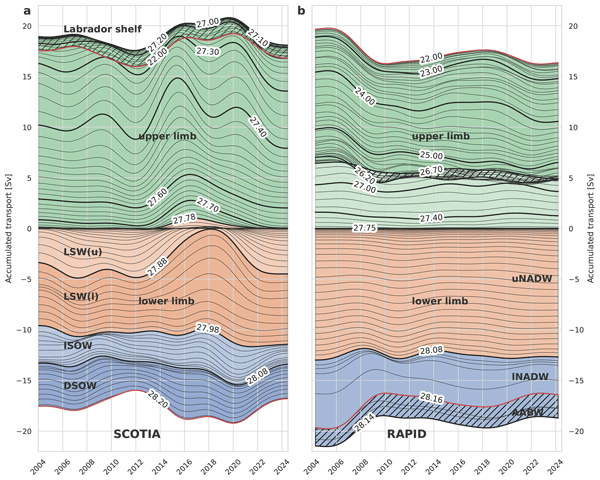
Alan D. Fox, Neil J. Fraser, Kristin Burmeister, Sam C. Jones, Stuart A. Cunningham, Lewis A. Drysdale, Ahmad Fehmi Dilmahamod, and Johannes Karstensen
Ocean Sci., 22, 1439–1456, https://doi.org/10.5194/os-22-1439-2026, https://doi.org/10.5194/os-22-1439-2026, 2026
Short summary
Short summary
The Atlantic ocean circulation that helps regulate climate is expected to weaken this century. Long-term measurements in the subtropics now show signs of weakening, but northern data are shorter and more variable. By combining several observing systems, we reconstructed northern circulation since 2004 and found strong ups and downs, but no clear long-term weakening so far.
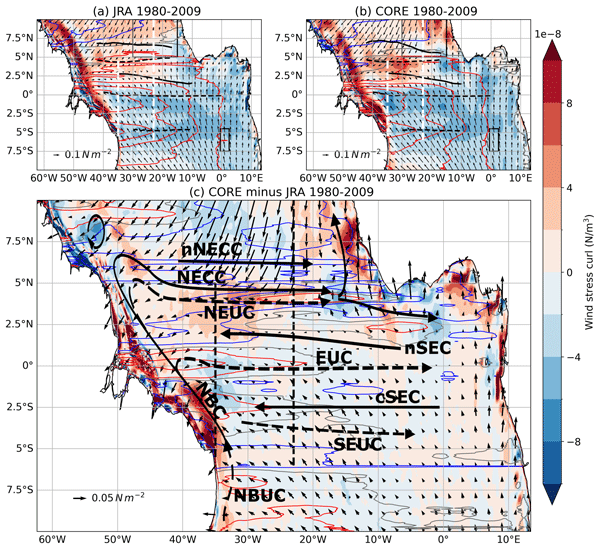
Kristin Burmeister, Franziska U. Schwarzkopf, Willi Rath, Arne Biastoch, Peter Brandt, Joke F. Lübbecke, and Mark Inall
Ocean Sci., 20, 307–339, https://doi.org/10.5194/os-20-307-2024, https://doi.org/10.5194/os-20-307-2024, 2024
Short summary
Short summary
We apply two different forcing products to a high-resolution ocean model to investigate their impact on the simulated upper-current field in the tropical Atlantic. Where possible, we compare the simulated results to long-term observations. We find large discrepancies between the two simulations regarding the wind and current fields. We propose that long-term observations, once they have reached a critical length, need to be used to test the quality of wind-driven simulations.
Alan D. Fox, Neil J. Fraser, Kristin Burmeister, Sam C. Jones, Stuart A. Cunningham, Lewis A. Drysdale, Ahmad Fehmi Dilmahamod, and Johannes Karstensen
Ocean Sci., 22, 1439–1456, https://doi.org/10.5194/os-22-1439-2026, https://doi.org/10.5194/os-22-1439-2026, 2026
Short summary
Short summary
The Atlantic ocean circulation that helps regulate climate is expected to weaken this century. Long-term measurements in the subtropics now show signs of weakening, but northern data are shorter and more variable. By combining several observing systems, we reconstructed northern circulation since 2004 and found strong ups and downs, but no clear long-term weakening so far.
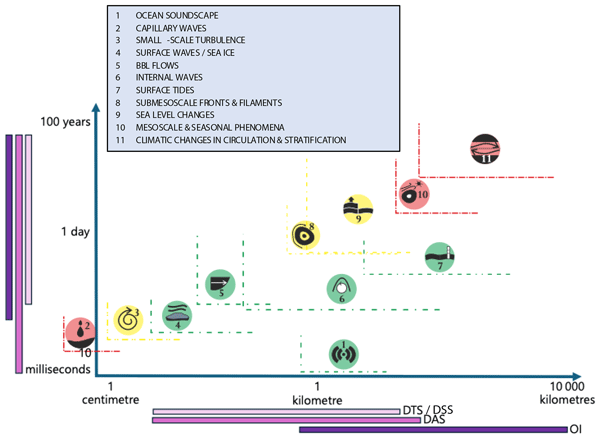
Alberto C. Naveira Garabato, Carl P. Spingys, Andrew J. Lucas, Tiago S. Dotto, Christian T. Wild, Scott W. Tyler, Ted A. Scambos, Christopher B. Kratt, Giuseppe Cappelli, Ethan F. Williams, Mariona Claret, Hannah E. Glover, Meagan E. Wengrove, Madison M. Smith, Michael G. Baker, Giuseppe Marra, Max Tamussino, Zitong Feng, David Lloyd, Liam Taylor, Mikael Mazur, Maria-Daphne Mangriotis, Aaron Micallef, Jennifer Ward Neale, Oleg A. Godin, Matthew H. Alford, Emma P. M. Gregory, Michael A. Clare, Hamid Shiri, Angel Ruiz Angulo, Kathryn L. Gunn, Ben I. Moat, Isobel A. Yeo, Afonso Loureiro, Alessandro Silvano, Arthur Hartog, and Mohammad Belal
Ocean Sci., 22, 1129–1167, https://doi.org/10.5194/os-22-1129-2026, https://doi.org/10.5194/os-22-1129-2026, 2026
Short summary
Short summary
Distributed optical fibre sensing (DOFS) is a technology that enables continuous, real-time measurements of environmental parameters along a fibre optic cable. Here, we review the recently emerged applications of DOFS in physical oceanography, and offer a perspective on the technology’s potential for future growth in the field.
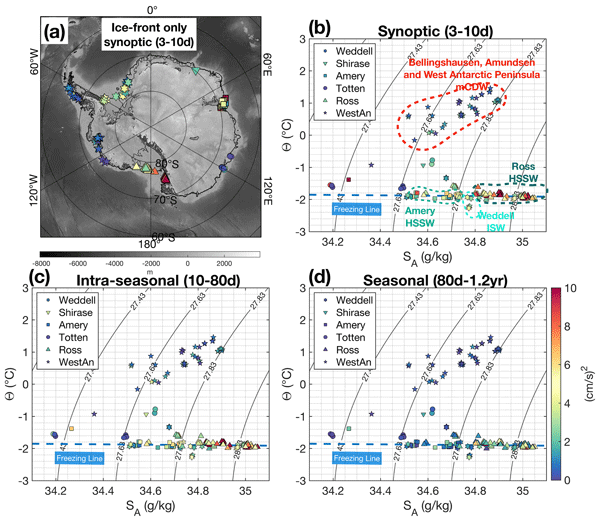
Shenjie Zhou, Pierre Dutrieux, Claudia F. Giulivi, Adrian Jenkins, Alessandro Silvano, Christopher Auckland, E. Povl Abrahamsen, Michael Meredith, Irena Vaňková, Keith Nicholls, Peter E. D. Davis, Svein Østerhus, Arnold L. Gordon, Christopher J. Zappa, Tiago S. Dotto, Ted Scambos, Kathryn L. Gunn, Stephen R. Rintoul, Shigeru Aoki, Craig Stevens, Chengyan Liu, Sukyoung Yun, Tae-Wan Kim, Won Sang Lee, Markus Janout, Tore Hattermann, Julius Lauber, Elin Darelius, Anna Wåhlin, Leo Middleton, Pasquale Castagno, Giorgio Budillon, Karen J. Heywood, Jennifer Graham, Stephen Dye, Daisuke Hirano, and Una Kim Miller
Earth Syst. Sci. Data, 17, 5693–5706, https://doi.org/10.5194/essd-17-5693-2025, https://doi.org/10.5194/essd-17-5693-2025, 2025
Short summary
Short summary
We created the first standardised dataset of in-situ ocean measurements time series from around Antarctica collected since 1970s. This includes temperature, salinity, pressure, and currents recorded by instruments deployed in icy, challenging conditions. Our analysis highlights the dominance of tidal currents and separates these from other patterns to study regional energy distribution. This unique dataset offers a foundation for future research on Antarctic ocean dynamics and ice interactions.
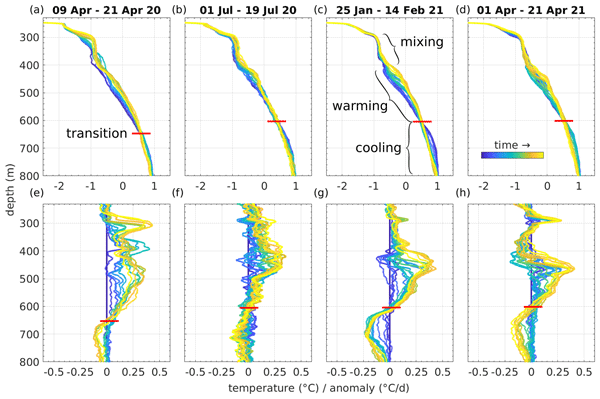
Christian T. Wild, Tasha Snow, Tiago S. Dotto, Peter E. D. Davis, Scott Tyler, Ted A. Scambos, Erin C. Pettit, and Karen J. Heywood
Ocean Sci., 21, 2605–2629, https://doi.org/10.5194/os-21-2605-2025, https://doi.org/10.5194/os-21-2605-2025, 2025
Short summary
Short summary
Thwaites Glacier is retreating due to warm ocean water melting it from below, but its thick ice shelf makes this heat hard to monitor. Using hot-water drilling, we placed sensors beneath the floating ice, revealing how surface freezing in Pine Island Bay influences heat at depth. Alongside gradual warming, we found bursts of heat that could speed up melting at the grounding zone, which may become more common as sea ice declines.

Donald A. Slater, Eleanor Johnstone, Martim Mas e Braga, Neil J. Fraser, Tom Cowton, and Mark Inall
Geosci. Model Dev., 18, 7475–7500, https://doi.org/10.5194/gmd-18-7475-2025, https://doi.org/10.5194/gmd-18-7475-2025, 2025
Short summary
Short summary
Glacial fjords connect ice sheets to the ocean, controlling heat delivery to glaciers, which impacts ice sheet melt, and freshwater discharge to the ocean, affecting ocean circulation. However, their dynamics are not captured in large-scale climate models. We designed a simplified, computationally efficient model – FjordRPM – that accurately captures key fjord processes. It has direct applications for improving projections of ice melt, ocean circulation, and sea level rise.
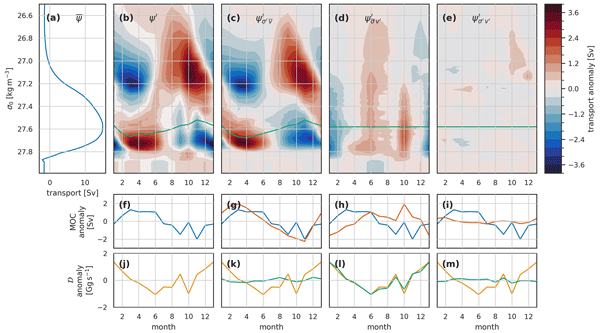
Alan D. Fox, Neil J. Fraser, and Stuart A. Cunningham
Ocean Sci., 21, 1735–1760, https://doi.org/10.5194/os-21-1735-2025, https://doi.org/10.5194/os-21-1735-2025, 2025
Short summary
Short summary
Understanding the seasonality of the overturning circulation is important for mitigating the impacts of Atlantic meridional overturning circulation (AMOC) changes on European weather and climate. We examine the seasonal cycle in various common measures of overturning and find each to be dominated by different processes, not necessarily reflective of the processes driving overturning. We advocate for the use of a density flux measure as a valuable addition to understanding AMOC.
Kristin Burmeister, Franziska U. Schwarzkopf, Willi Rath, Arne Biastoch, Peter Brandt, Joke F. Lübbecke, and Mark Inall
Ocean Sci., 20, 307–339, https://doi.org/10.5194/os-20-307-2024, https://doi.org/10.5194/os-20-307-2024, 2024
Short summary
Short summary
We apply two different forcing products to a high-resolution ocean model to investigate their impact on the simulated upper-current field in the tropical Atlantic. Where possible, we compare the simulated results to long-term observations. We find large discrepancies between the two simulations regarding the wind and current fields. We propose that long-term observations, once they have reached a critical length, need to be used to test the quality of wind-driven simulations.
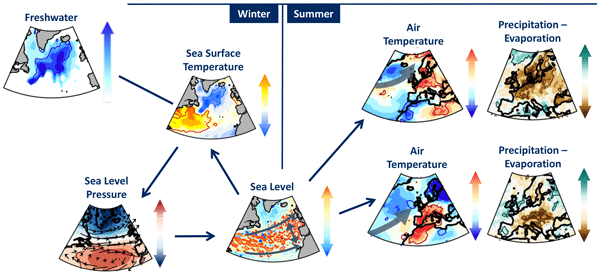
Marilena Oltmanns, N. Penny Holliday, James Screen, Ben I. Moat, Simon A. Josey, D. Gwyn Evans, and Sheldon Bacon
Weather Clim. Dynam., 5, 109–132, https://doi.org/10.5194/wcd-5-109-2024, https://doi.org/10.5194/wcd-5-109-2024, 2024
Short summary
Short summary
The melting of land ice and sea ice leads to freshwater input into the ocean. Based on observations, we show that stronger freshwater anomalies in the subpolar North Atlantic in winter are followed by warmer and drier weather over Europe in summer. The identified link indicates an enhanced predictability of European summer weather at least a winter in advance. It further suggests that warmer and drier summers over Europe can become more frequent under increased freshwater fluxes in the future.
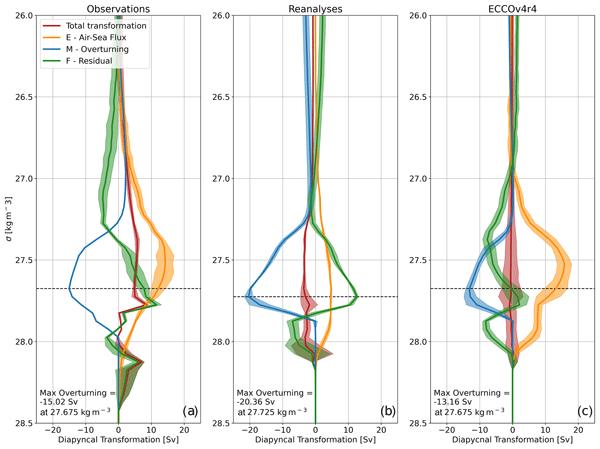
Dafydd Gwyn Evans, N. Penny Holliday, Sheldon Bacon, and Isabela Le Bras
Ocean Sci., 19, 745–768, https://doi.org/10.5194/os-19-745-2023, https://doi.org/10.5194/os-19-745-2023, 2023
Short summary
Short summary
This study investigates the processes that form dense water in the high latitudes of the North Atlantic to determine how they affect the overturning circulation in the Atlantic. We show for the first time that turbulent mixing is an important driver in the formation of dense water, along with the loss of heat from the ocean to the atmosphere. We point out that the simulation of turbulent mixing in ocean–climate models must improve to better predict the ocean's response to climate change.
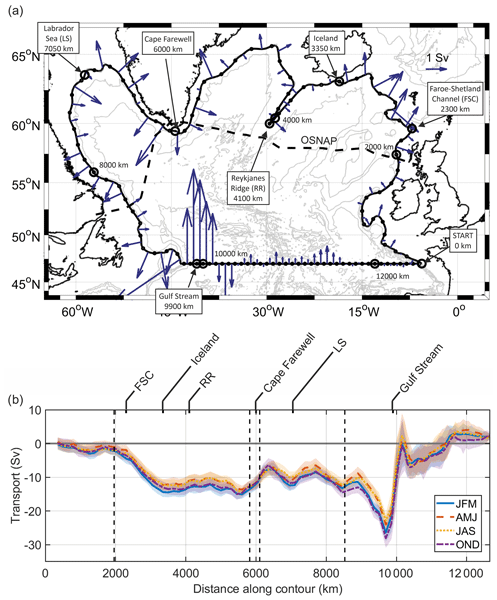
Sam C. Jones, Neil J. Fraser, Stuart A. Cunningham, Alan D. Fox, and Mark E. Inall
Ocean Sci., 19, 169–192, https://doi.org/10.5194/os-19-169-2023, https://doi.org/10.5194/os-19-169-2023, 2023
Short summary
Short summary
Warm water is transported from the tropical Atlantic towards western Europe and the Arctic. It loses heat to the atmosphere on the way, which strongly influences the climate. We construct a dataset encircling the North Atlantic basin north of 47° N. We calculate how and where heat enters and leaves the basin and how much cooling must happen in the interior. We find that cooling in the north-eastern Atlantic is a crucial step in controlling the conversion of water to higher densities.
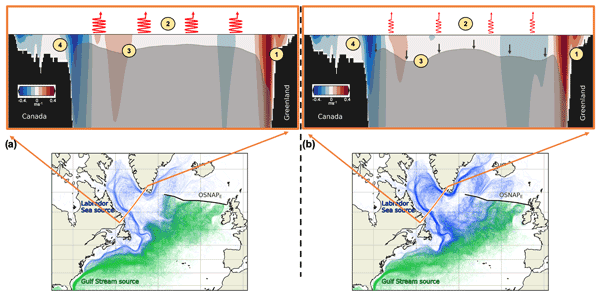
Alan D. Fox, Patricia Handmann, Christina Schmidt, Neil Fraser, Siren Rühs, Alejandra Sanchez-Franks, Torge Martin, Marilena Oltmanns, Clare Johnson, Willi Rath, N. Penny Holliday, Arne Biastoch, Stuart A. Cunningham, and Igor Yashayaev
Ocean Sci., 18, 1507–1533, https://doi.org/10.5194/os-18-1507-2022, https://doi.org/10.5194/os-18-1507-2022, 2022
Short summary
Short summary
Observations of the eastern subpolar North Atlantic in the 2010s show exceptional freshening and cooling of the upper ocean, peaking in 2016 with the lowest salinities recorded for 120 years. Using results from a high-resolution ocean model, supported by observations, we propose that the leading cause is reduced surface cooling over the preceding decade in the Labrador Sea, leading to increased outflow of less dense water and so to freshening and cooling of the eastern subpolar North Atlantic.
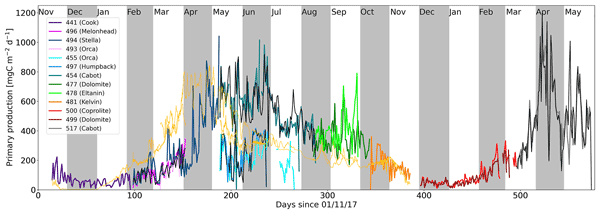
Benjamin R. Loveday, Timothy Smyth, Anıl Akpinar, Tom Hull, Mark E. Inall, Jan Kaiser, Bastien Y. Queste, Matt Tobermann, Charlotte A. J. Williams, and Matthew R. Palmer
Earth Syst. Sci. Data, 14, 3997–4016, https://doi.org/10.5194/essd-14-3997-2022, https://doi.org/10.5194/essd-14-3997-2022, 2022
Short summary
Short summary
Using a new approach to combine autonomous underwater glider data and satellite Earth observations, we have generated a 19-month time series of North Sea net primary productivity – the rate at which phytoplankton absorbs carbon dioxide minus that lost through respiration. This time series, which spans 13 gliders, allows for new investigations into small-scale, high-frequency variability in the biogeochemical processes that underpin the carbon cycle and coastal marine ecosystems in shelf seas.
Marilena Oltmanns, N. Penny Holliday, James Screen, D. Gwyn Evans, Simon A. Josey, Sheldon Bacon, and Ben I. Moat
Weather Clim. Dynam. Discuss., https://doi.org/10.5194/wcd-2021-79, https://doi.org/10.5194/wcd-2021-79, 2021
Revised manuscript not accepted
Short summary
Short summary
The Arctic is currently warming twice as fast as the global average. This results in enhanced melting and thus freshwater releases into the North Atlantic. Using a combination of observations and models, we show that atmosphere-ocean feedbacks initiated by freshwater releases into the North Atlantic lead to warmer and drier weather over Europe in subsequent summers. The existence of this dynamical link suggests that European summer weather can potentially be predicted months to years in advance.
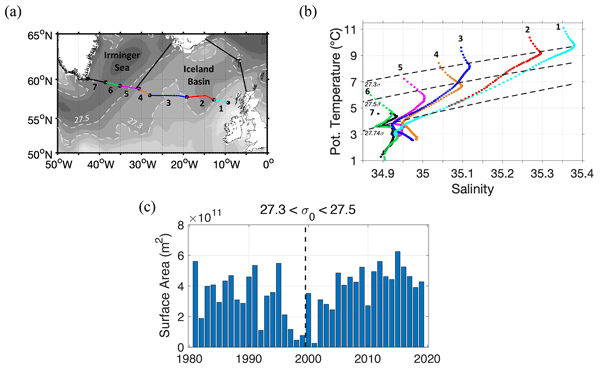
Tillys Petit, M. Susan Lozier, Simon A. Josey, and Stuart A. Cunningham
Ocean Sci., 17, 1353–1365, https://doi.org/10.5194/os-17-1353-2021, https://doi.org/10.5194/os-17-1353-2021, 2021
Short summary
Short summary
Recent work has highlighted the dominant role of the Irminger and Iceland basins in the production of North Atlantic Deep Water. From our analysis, we find that air–sea fluxes and the ocean surface density field are both key determinants of the buoyancy-driven transformation in the Iceland Basin. However, the spatial distribution of the subpolar mode water (SPMW) transformation is most sensitive to surface density changes as opposed to the direct influence of the air–sea fluxes.
Cited articles
Barnes, S. L.: Applications of the Barnes Objective Analysis Scheme. Part II: Improving Derivative Estimates, Journal of Atmospheric and Oceanic Technology, 11, 1449–1458, https://doi.org/10.1175/1520-0426(1994)011<1449:AOTBOA>2.0.CO;2, 1994. a
Berthou, S., Renshaw, R., Smyth, T., Tinker, J., Grist, J. P., Wihsgott, J. U., Jones, S., Inall, M., Nolan, G., Berx, B., Arnold, A., Blunn, L. P., Castillo, J. M., Cotterill, D., Daly, E., Dow, G., Gómez, B., Fraser-Leonhardt, V., Hirschi, J. J., Lewis, H. W., Mahmood, S., and Worsfold, M.: Exceptional atmospheric conditions in June 2023 generated a northwest European marine heatwave which contributed to breaking land temperature records, Communications Earth and Environment, 5, https://doi.org/10.1038/s43247-024-01413-8, 2024. a
Berx, B., Hansen, B., Østerhus, S., Larsen, K. M., Sherwin, T., and Jochumsen, K.: Combining in situ measurements and altimetry to estimate volume, heat and salt transport variability through the Faroe–Shetland Channel, Ocean Science, 9, 639–654, https://doi.org/10.5194/os-9-639-2013, 2013. a
Brandt, P., Funk, A., Tantet, A., Johns, W. E., and Fischer, J.: The Equatorial Undercurrent in the central Atlantic and its relation to tropical Atlantic variability, Climate Dynamics, 43, 2985–2997, https://doi.org/10.1007/s00382-014-2061-4, 2014. a, b, c
Brandt, P., Claus, M., Greatbatch, R. J., Kopte, R., Toole, J. M., Johns, W. E., and Böning, C. W.: Annual and Semiannual Cycle of Equatorial Atlantic Circulation Associated with Basin-Mode Resonance, Journal of Physical Oceanography, 46, 3011–3029, https://doi.org/10.1175/JPO-D-15-0248.1, 2016. a, b, c
Brandt, P., Hahn, J., Schmidtko, S., Tuchen, F. P., Kopte, R., Kiko, R., Bourlès, B., Czeschel, R., and Dengler, M.: Atlantic Equatorial Undercurrent intensification counteracts warming-induced deoxygenation, Nature Geoscience, 14, 278–282, https://doi.org/10.1038/s41561-021-00716-1, 2021. a, b, c
Burmeister, K.: ScotMarPhys/Rockall_Trough_Transports: Rockall Trough transports 2014–2024 DOI, Zenodo [code], https://doi.org/10.5281/zenodo.18216704, 2026. a
Clark, M., Marsh, R., and Harle, J.: Weakening and warming of the European Slope Current since the late 1990s attributed to basin-scale density changes, Ocean Science, 18, 549–564, https://doi.org/10.5194/os-18-549-2022, 2022. a
Daly, E., Nolan, G., Berry, A., Büscher, J. V., Cave, R. R., Caesar, L., Cronin, M., Fennell, S., Lyons, K., McAleer, A., McCarthy, G. D., McGovern, E., McGovern, J. V., McGrath, T., O'Donnell, G., Pereiro, D., Thomas, R., Vaughan, L., White, M., and Cusack, C.: Diurnal to interannual variability in the Northeast Atlantic from hydrographic transects and fixed time-series across the Rockall Trough, Deep-Sea Research Part I: Oceanographic Research Papers, 204, https://doi.org/10.1016/j.dsr.2024.104233, 2024. a, b
Diabaté, S. T., Fraser, N. J., White, M., Berx, B., Marié, L., and McCarthy, G. D.: On the wind-driven European shelf sea-level variability and the associated oceanic circulation, Continental Shelf Research, 291, https://doi.org/10.1016/j.csr.2025.105466, 2025. a
Dotto, T. S., Holliday, N. P., Fraser, N., Moat, B., Firing, Y., Burmeister, K., Rayner, D., Cunningham, S., Worthington, E., and Johns, W. E.: Dynamics and Temporal Variability of the North Atlantic Current in the Iceland Basin (2014–2022), Journal of Geophysical Research: Oceans, 130, https://doi.org/10.1029/2024JC021836, 2025. a, b, c, d, e, f
Drysdale, L., Jones, S., and Burmeister, K.: Microcat and current meter data from moorings of the Eastern Boundary array (Rockall Trough), as part of UK OSNAP (Overturning in the Subpolar North Atlantic Programme) from July 2014 to July 2024, Scottish Association of Marine Science [data set], https://thredds.sams.ac.uk/thredds/catalog/osnap/catalog.html (last access: 3 October 2025), 2025. a
Egbert, G. D. and Erofeeva, S. Y.: Efficient Inverse Modeling of Barotropic Ocean Tides, Journal of Atmospheric and Oceanic Technology, 19, 183–204, https://doi.org/10.1175/1520-0426(2002)019<0183:EIMOBO>2.0.CO;2, 2002. a
Ellett, D. J., Edwards, A., and Bowers, R.: The hydrography of the Rockall Channel – an overview, Proceedings of the Royal Society of Edinburgh. Section B. Biological Sciences, 88, 61–81, https://doi.org/10.1017/S0269727000004474, 1986. a, b
England, M. H., Li, Z., Huguenin, M. F., Kiss, A. E., Gupta, A. S., Holmes, R. M., and Rahmstorf, S.: Drivers of the extreme North Atlantic marine heatwave during 2023, Nature, 642, 636–643, https://doi.org/10.1038/s41586-025-08903-5, 2025. a
Eriksen, C., Osse, T., Light, R., Wen, T., Lehman, T., Sabin, P., Ballard, J., and Chiodi, A.: Seaglider: a long-range autonomous underwater vehicle for oceanographic research, IEEE Journal of Oceanic Engineering, 26, 424–436, https://doi.org/10.1109/48.972073, 2001. a
E.U. Copernicus Marine Service Information: Global Ocean Gridded L4 Sea Surface Heights And Derived Variables Reprocessed Copernicus Climate Service, Marine Data Store (MDS) [data set], https://doi.org/10.48670/moi-00145, 2018. a
E.U. Copernicus Marine Service Information: Global Ocean Physics Reanalysis, Marine Data Store (MDS) [data set], https://doi.org/10.48670/moi-00021, 2021. a
Foukal, N. P. and Lozier, M. S.: Assessing variability in the size and strength of the North Atlantic subpolar gyre, Journal of Geophysical Research: Oceans, 122, 6295–6308, https://doi.org/10.1002/2017JC012798, 2017. a
Fox, A. D., Handmann, P., Schmidt, C., Fraser, N., Rühs, S., Sanchez-Franks, A., Martin, T., Oltmanns, M., Johnson, C., Rath, W., Holliday, N. P., Biastoch, A., Cunningham, S. A., and Yashayaev, I.: Exceptional freshening and cooling in the eastern subpolar North Atlantic caused by reduced Labrador Sea surface heat loss, Ocean Science, 18, 1507–1533, https://doi.org/10.5194/os-18-1507-2022, 2022. a, b, c
Fraser, N. J., Cunningham, S. A., Drysdale, L. A., Inall, M. E., Johnson, C., Jones, S. C., Burmeister, K., Fox, A. D., Dumont, E., Porter, M., and Holliday, N. P.: North Atlantic Current and European Slope Current Circulation in the Rockall Trough Observed Using Moorings and Gliders, Journal of Geophysical Research: Oceans, 127, https://doi.org/10.1029/2022JC019291, 2022. a, b, c, d, e, f, g, h, i, j, k, l, m, n, o, p, q, r, s, t, u, v, w, x, y, z, aa, ab, ac, ad, ae, af, ag, ah
Fu, Y., Lozier, M. S., Bower, A., Burmeister, K., Biló, T. C., Cyr, F., Cunningham, S. A., deYoung, B., Dilmahamod, A. F., de Jong, M. F., Fried, N., Holliday, N. P., Fraser, N. J., Johns, W. E., Li, F., Karstensen, J., Pickart, R. S., Straneo, F., and Yashayaev, I.: Characterizing the Interannual Variability of North Atlantic Subpolar Overturning, Geophysical Research Letters, 52, https://doi.org/10.1029/2025GL114672, 2025. a, b, c
Gary, S. F., Cunningham, S. A., Johnson, C., Houpert, L., Holliday, N. P., Behrens, E., Biastoch, A., and Böning, C. W.: Seasonal Cycles of Oceanic Transports in the Eastern Subpolar North Atlantic, Journal of Geophysical Research: Oceans, 123, 1471–1484, https://doi.org/10.1002/2017JC013350, 2018. a, b
Gregor, L., Ryan-Keogh, T. J., Nicholson, S.-A., du Plessis, M., Giddy, I., and Swart, S.: GliderTools: A Python Toolbox for Processing Underwater Glider Data, Frontiers in Marine Science, 6, https://doi.org/10.3389/fmars.2019.00738, 2019. a
Hamed, K. H. and Rao, A. R.: A modified Mann-Kendall trend test for autocorrelated data, Journal of Hydrology, 204, 182–196, https://doi.org/10.1016/S0022-1694(97)00125-X, 1998. a
Henstock, T. J., McNeill, L. C., and Tappin, D. R.: Seafloor morphology of the Sumatran subduction zone: Surface rupture during megathrust earthquakes?, Geology, 34, https://doi.org/10.1130/22426.1, 2006. a
Hersbach, H., Bell, B., Berrisford, P., Biavati, G., Horányi, A., Sabater, J. M., Nicolas, J., Peubey, C., Radu, R., Rozum, I., Schepers, D., Simmons, A., Soci, C., Dee, D., and Thépaut, J.-N.: ERA5 monthly averaged data on single levels from 1940 to present, Copernicus Climate Change Service (C3S) Climate Data Store (CDS) [data set], https://doi.org/10.24381/cds.f17050d7, 2023. a, b
Hátún, H., Sandø, A. B., Drange, H., Hansen, B., and Valdimarsson, H.: Influence of the Atlantic Subpolar Gyre on the Thermohaline Circulation, Science, 309, 1841–1844, https://doi.org/10.1126/science.1114777, 2005. a
Holliday, N. P., Pollard, R. T., Read, J. F., and Leach, H.: Water mass properties and fluxes in the Rockall Trough, 1975–1998, Deep Sea Research Part I: Oceanographic Research Papers, 47, 1303–1332, https://doi.org/10.1016/S0967-0637(99)00109-0, 2000. a
Holliday, N. P., Bacon, S., Allen, J., and McDonagh, E. L.: Circulation and transport in the western boundary currents at Cape Farewell, Greenland, Journal of Physical Oceanography, 39, 1854–1870, https://doi.org/10.1175/2009JPO4160.1, 2009. a
Holliday, N. P., Bersch, M., Berx, B., Chafik, L., Cunningham, S., Florindo-López, C., Hátún, H., Johns, W., Josey, S. A., Larsen, K. M. H., Mulet, S., Oltmanns, M., Reverdin, G., Rossby, T., Thierry, V., Valdimarsson, H., and Yashayaev, I.: Ocean circulation causes the largest freshening event for 120 years in eastern subpolar North Atlantic, Nature Communications, 11, 585, https://doi.org/10.1038/s41467-020-14474-y, 2020. a, b, c, d
Holliday, P. and Cunningham, S.: The Extended Ellett Line: Discoveries From 65 Years of Marine Observations West of the UK, Oceanography, 26, https://doi.org/10.5670/oceanog.2013.17, 2013. a
Houpert, L., Inall, M. E., Dumont, E., Gary, S., Johnson, C., Porter, M., Johns, W. E., and Cunningham, S. A.: Structure and Transport of the North Atlantic Current in the Eastern Subpolar Gyre From Sustained Glider Observations, Journal of Geophysical Research: Oceans, 123, 6019–6038, https://doi.org/10.1029/2018JC014162, 2018. a
Houpert, L., Cunningham, S., Fraser, N., Johnson, C., Holliday, N. P., Jones, S., Moat, B., and Rayner, D.: Observed Variability of the North Atlantic Current in the Rockall Trough From 4 Years of Mooring Measurements, Journal of Geophysical Research: Oceans, 125, 1–9, https://doi.org/10.1029/2020JC016403, 2020. a, b, c, d, e, f, g, h, i, j, k, l, m, n, o, p, q, r, s, t, u, v, w, x, y, z, aa, ab, ac, ad
Huthnance, J., Hopkins, J., Berx, B., Dale, A., Holt, J., Hosegood, P., Inall, M., Jones, S., Loveday, B. R., Miller, P. I., Polton, J., Porter, M., and Spingys, C.: Ocean shelf exchange, NW European shelf seas: Measurements, estimates and comparisons, Progress in Oceanography, 202, 102760, https://doi.org/10.1016/j.pocean.2022.102760, 2022. a, b
Huthnance, J. M.: Slope Currents and “JEBAR”, Journal of Physical Oceanography, 14, 795–810, https://doi.org/10.1175/1520-0485(1984)014<0795:SCA>2.0.CO;2, 1984. a, b, c
Häkkinen, S. and Rhines, P. B.: Decline of Subpolar North Atlantic Circulation during the 1990s, Science, 304, 555–559, https://doi.org/10.1126/science.1094917, 2004. a, b
Johnson, C., Sherwin, T., Cunningham, S., Dumont, E., Houpert, L., and Holliday, N. P.: Transports and pathways of overflow water in the Rockall Trough, Deep Sea Research Part I: Oceanographic Research Papers, 122, 48–59, https://doi.org/10.1016/J.DSR.2017.02.004, 2017. a
Johnson, C., Fraser, N., Cunningham, S., Burmeister, K., Jones, S., Drysdale, L., Abell, R., Brown, P., Dumont, E., Fox, A., Holliday, N. P., Inall, M., and Reed, S.: Biogeochemical Properties and Transports in the North East Atlantic, Journal of Geophysical Research: Oceans, 129, https://doi.org/10.1029/2023JC020427, 2024. a
Jones, S., Inall, M., Porter, M., Graham, J. A., and Cottier, F.: Storm-driven across-shelf oceanic flows into coastal waters, Ocean Science, 16, 389–403, https://doi.org/10.5194/os-16-389-2020, 2020. a, b
Jones, S. C., Fraser, N. J., Cunningham, S. A., Fox, A. D., and Inall, M. E.: Observation-based estimates of volume, heat, and freshwater exchanges between the subpolar North Atlantic interior, its boundary currents, and the atmosphere, Ocean Sciene, 19, 169–192, https://doi.org/10.5194/os-19-169-2023, 2023. a
Lellouche, J.-M., Greiner, E., Bourdallé-Badie, R., Garric, G., Melet, A., Drévillon, M., Bricaud, C., Hamon, M., Le Galloudec, O., Regnier, C., Candela, T., Testut, C.-E., Gasparin, F., Ruggiero, G., Benkiran, M., Drillet, Y., and Le Traon, P.-Y.: The Copernicus Global 1/12° Oceanic and Sea Ice GLORYS12 Reanalysis, Frontiers in Earth Science, 9, https://doi.org/10.3389/feart.2021.698876, 2021. a
Lozier, M. S., Li, F., Bacon, S., Bahr, F., Bower, A. S., Cunningham, S. A., de Jong, M. F., de Steur, L., DeYoung, B., Fischer, J., Gary, S. F., Greenan, B. J. W., Holliday, N. P., Houk, A., Houpert, L., Inall, M. E., Johns, W. E., Johnson, H. L., Johnson, C., Karstensen, J., Koman, G., Bras, I. A. L., Lin, X., Mackay, N., Marshall, D. P., Mercier, H., Oltmanns, M., Pickart, R. S., Ramsey, A. L., Rayner, D., Straneo, F., Thierry, V., Torres, D. J., Williams, R. G., Wilson, C., Yang, J., Yashayaev, I., and Zhao, J.: A sea change in our view of overturning in the subpolar North Atlantic, Science, 363, 516–521, https://doi.org/10.1126/science.aau6592, 2019. a
McCarthy, G. D., Smeed, D. A., Johns, W. E., Frajka-Williams, E., Moat, B. I., Rayner, D., Baringer, M. O., Meinen, C. S., Collins, J., and Bryden, H. L.: Measuring the Atlantic Meridional Overturning Circulation at 26° N, Progress in Oceanography, 130, 91–111, https://doi.org/10.1016/j.pocean.2014.10.006, 2015. a
McCarthy, G. D., Brown, P. J., Flagg, C. N., Goni, G., Houpert, L., Hughes, C. W., Hummels, R., Inall, M., Jochumsen, K., Larsen, K. M., Lherminier, P., Meinen, C. S., Moat, B. I., Rayner, D., Rhein, M., Roessler, A., Schmid, C., and Smeed, D. A.: Sustainable Observations of the AMOC: Methodology and Technology, Review of Geophysics, 58, https://doi.org/10.1029/2019RG000654, 2020. a
Porter, M., Dale, A., Jones, S., Siemering, B., and Inall, M.: Cross-slope flow in the Atlantic Inflow Current driven by the on-shelf deflection of a slope current, Deep Sea Research Part I: Oceanographic Research Papers, 140, 173–185, https://doi.org/10.1016/j.dsr.2018.09.002, 2018. a, b
Schmidtko, S., Johnson, G. C., and Lyman, J. M.: MIMOC: A global monthly isopycnal upper-ocean climatology with mixed layers, Journal of Geophysical Research: Oceans, 118, 1658–1672, https://doi.org/10.1002/jgrc.20122, 2013. a
Ullgren, J. E. and White, M.: Observations of mesoscale variability in the Rockall Trough, Deep-Sea Research Part I: Oceanographic Research Papers, 64, 1–8, https://doi.org/10.1016/j.dsr.2012.01.015, 2012. a
Xu, W., Miller, P. I., Quartly, G. D., and Pingree, R. D.: Seasonality and interannual variability of the European Slope Current from 20years of altimeter data compared with in situ measurements, Remote Sensing of Environment, 162, 196–207, https://doi.org/10.1016/j.rse.2015.02.008, 2015. a
Short summary
The Rockall Trough carries two ocean currents vital for Europe’s climate. Using underwater sensors and robotic gliders we develop a new method to create the first decade-long record of these flows. We find that the North Atlantic Current drives most changes linked to wider ocean shifts while the slope current responds mainly to local winds. This work improves ocean monitoring and advances our understanding of climate-related changes.
The Rockall Trough carries two ocean currents vital for Europe’s climate. Using underwater...


Special issue