
Articles | Volume 22, issue 3
https://doi.org/10.5194/os-22-1587-2026
© Author(s) 2026. This work is distributed under
the Creative Commons Attribution 4.0 License.
the Creative Commons Attribution 4.0 License.
https://doi.org/10.5194/os-22-1587-2026
© Author(s) 2026. This work is distributed under
the Creative Commons Attribution 4.0 License.
the Creative Commons Attribution 4.0 License.
Research article
| 
19 May 2026
Research article |
| 19 May 2026
| 19 May 2026
Analytical approaches for wave energy dissipation induced by wave-generated turbulence and random wave-breaking
Yongzeng Yang
First Institute of Oceanography, Ministry of Natural Resources, Qingdao, Shandong, China
Key Laboratory of Marine Science and Numerical Modeling (MASNUM), Ministry of Natural Resources, Qingdao, Shandong, China
Fuwei Wang
Frontier Science Center for Deep Ocean Multispheres and Earth System (FDOMES) and Physical Oceanography Laboratory, Ocean University of China, Qingdao, Shandong, China
Meng Sun
CORRESPONDING AUTHOR

First Institute of Oceanography, Ministry of Natural Resources, Qingdao, Shandong, China
Key Laboratory of Marine Science and Numerical Modeling (MASNUM), Ministry of Natural Resources, Qingdao, Shandong, China
Xingjie Jiang
First Institute of Oceanography, Ministry of Natural Resources, Qingdao, Shandong, China
Key Laboratory of Marine Science and Numerical Modeling (MASNUM), Ministry of Natural Resources, Qingdao, Shandong, China
Xunqiang Yin
First Institute of Oceanography, Ministry of Natural Resources, Qingdao, Shandong, China
Key Laboratory of Marine Science and Numerical Modeling (MASNUM), Ministry of Natural Resources, Qingdao, Shandong, China
Yongfang Shi
First Institute of Oceanography, Ministry of Natural Resources, Qingdao, Shandong, China
Key Laboratory of Marine Science and Numerical Modeling (MASNUM), Ministry of Natural Resources, Qingdao, Shandong, China
Yong Teng
First Institute of Oceanography, Ministry of Natural Resources, Qingdao, Shandong, China
Related authors
Meng Sun, Yongzeng Yang, Xunqiang Yin, Jisheng Ding, Tianqi Sun, and Nan Jia
EGUsphere, https://doi.org/10.5194/egusphere-2023-2905, https://doi.org/10.5194/egusphere-2023-2905, 2023
Preprint withdrawn
Short summary
Short summary
The understanding of wave-current interactions is important for comprehending the dynamics of the ocean. Among them, the mechanisms of vertical shear of background current and topographic fluctuations are two research issues with limited attention. In this study, based on the unified wave theory, an analytical model is proposed to describe the modification of the amplitude of orbital velocities for surface waves in presence of background current and topographic fluctuations.
Zhanpeng Zhuang, Quanan Zheng, Yongzeng Yang, Zhenya Song, Yeli Yuan, Chaojie Zhou, Xinhua Zhao, Ting Zhang, and Jing Xie
Geosci. Model Dev., 15, 7221–7241, https://doi.org/10.5194/gmd-15-7221-2022, https://doi.org/10.5194/gmd-15-7221-2022, 2022
Short summary
Short summary
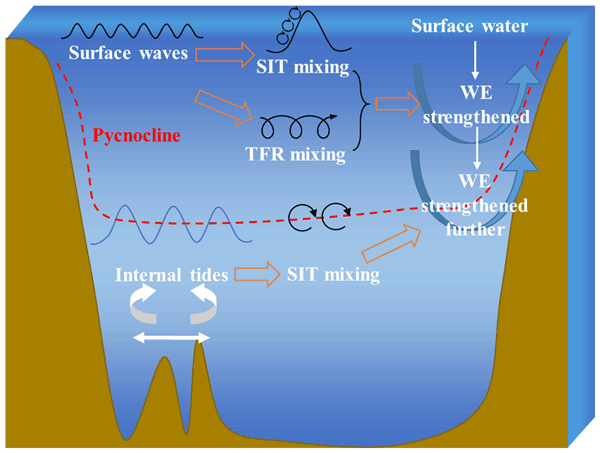
We evaluate the impacts of surface waves and internal tides on the upper-ocean mixing in the Indian Ocean. The surface-wave-generated turbulent mixing is dominant if depth is < 30 m, while the internal-tide-induced mixing is larger than surface waves in the ocean interior from 40
to 130 m. The simulated thermal structure, mixed layer depth and surface current are all improved when the mixing schemes are jointly incorporated into the ocean model because of the strengthened vertical mixing.
Meng Sun, Yongzeng Yang, Xunqiang Yin, Jisheng Ding, Tianqi Sun, and Nan Jia
EGUsphere, https://doi.org/10.5194/egusphere-2023-2905, https://doi.org/10.5194/egusphere-2023-2905, 2023
Preprint withdrawn
Short summary
Short summary
The understanding of wave-current interactions is important for comprehending the dynamics of the ocean. Among them, the mechanisms of vertical shear of background current and topographic fluctuations are two research issues with limited attention. In this study, based on the unified wave theory, an analytical model is proposed to describe the modification of the amplitude of orbital velocities for surface waves in presence of background current and topographic fluctuations.
Bin Xiao, Fangli Qiao, Qi Shu, Xunqiang Yin, Guansuo Wang, and Shihong Wang
Geosci. Model Dev., 16, 1755–1777, https://doi.org/10.5194/gmd-16-1755-2023, https://doi.org/10.5194/gmd-16-1755-2023, 2023
Short summary
Short summary
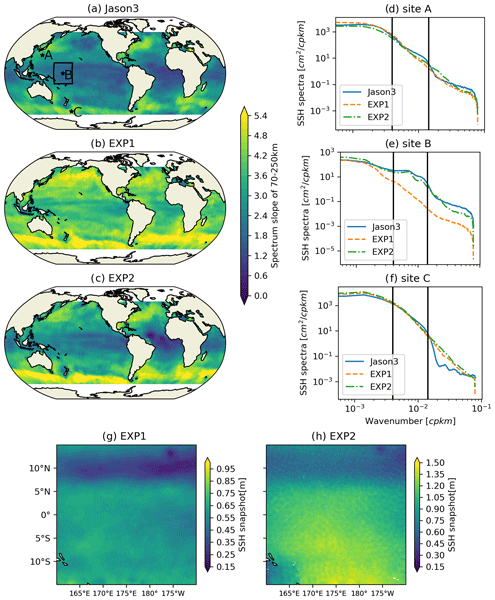
A new global surface-wave–tide–circulation coupled ocean model (FIO-COM32) with a resolution of 1/32° × 1/32° is developed and validated. Both the promotion of the horizontal resolution and included physical processes are shown to be important contributors to the significant improvements in FIO-COM32 simulations. It is time to merge these separated model components (surface waves, tidal currents and ocean circulation) and start a new generation of ocean model development.
Zhanpeng Zhuang, Quanan Zheng, Yongzeng Yang, Zhenya Song, Yeli Yuan, Chaojie Zhou, Xinhua Zhao, Ting Zhang, and Jing Xie
Geosci. Model Dev., 15, 7221–7241, https://doi.org/10.5194/gmd-15-7221-2022, https://doi.org/10.5194/gmd-15-7221-2022, 2022
Short summary
Short summary
We evaluate the impacts of surface waves and internal tides on the upper-ocean mixing in the Indian Ocean. The surface-wave-generated turbulent mixing is dominant if depth is < 30 m, while the internal-tide-induced mixing is larger than surface waves in the ocean interior from 40
to 130 m. The simulated thermal structure, mixed layer depth and surface current are all improved when the mixing schemes are jointly incorporated into the ocean model because of the strengthened vertical mixing.
Bin Xiao, Fangli Qiao, Qi Shu, Xunqiang Yin, Guansuo Wang, and Shihong Wang
Geosci. Model Dev. Discuss., https://doi.org/10.5194/gmd-2022-52, https://doi.org/10.5194/gmd-2022-52, 2022
Revised manuscript not accepted
Short summary
Short summary
A new global surface wave-tide-circulation coupled ocean model FIO-COM32 with resolution of 1/32° × 1/32° is developed and validated. Both the promotion of the horizontal resolution and included physical processes are proved to be important contributors to the significant improvements of FIO-COM32 simulations. It should be the time to merge these separated model components (surface wave, tidal current and ocean circulation) for new generation ocean model development.
Cited articles
Alves, J. H. G. and Banner, M. L: Performance of a saturation-based dissipation-rate source term in modeling the fetch-limited evolution of wind waves, J. Phys. Oceanogr., 33, 1274–1298, https://doi.org/10.1175/1520-0485(2003)033<1274:POASDS>2.0.CO;2, 2003.
Ardhuin, F. and Jenkins, A. D.: On the interaction of surface waves and upper ocean turbulence, J. Phys. Oceanogr., 36, 551–557, https://doi.org/10.1175/JPO2862.1 , 2006.
Ardhuin, F., Chapron, B., and Collard, F.: Observation of swell dissipation across oceans, Geophys. Res. Lett., 36, L06607, https://doi.org/10.1029/2008GL037030, 2009a.
Ardhuin, F., Marié, L., Rascle, N., Forget, P., and Roland, A.: Observation and estimation of Lagrangian, Stokes, and Eulerian currents induced by wind and waves at the sea surface, J. Phys. Oceanogr., 39, 2820–2838, https://doi.org/10.1175/2009JPO4169.1, 2009b.
Ardhuin, F., Rogers, W. E., Babanin, A. V., Filipot, J., Magne, R., Roland, A., van der Westhuysen, A., Queffeulou, P., Lefevre, J., Aouf, L., and Collard, F.: Semiempirical dissipation source functions for ocean waves. Part I: Definition, calibration, and validation, J. Phys. Oceanogr., 40, 1917–1941, https://doi.org/10.1175/2010JPO4324.1, 2010.
Babanin, A. V.: On a wave-induced turbulence and a wave-mixed upper ocean layer, Geophys. Res. Lett., 33, L20605, https://doi.org/10.1029/2006GL027308, 2006.
Babanin, A. V.: Breaking of ocean surface waves, Acta Phys. Slovaca, 59, 305–535, 2009.
Babanin, A. V. (Ed.): Breaking and Dissipation of Ocean Surface Waves, Cambridge University Press, Cambridge, UK, 480 pp., ISBN 978-1-107-00158-9, https://doi.org/10.1017/CBO9780511736162, 2011.
Babanin, A. V.: Swell attenuation due to wave-induced turbulence, in: Volume 2: Structures, safety and reliability, Proceedings of the 31st International Conference on Ocean, Offshore and Arctic Engineering, American Society of Mechanical Engineers, Rio de Janeiro, Brazil, 439–443, https://doi.org/10.1115/OMAE2012-83706, 2012.
Babanin, A. V. and Chalikov, D.: Numerical investigation of turbulence generation in non-breaking potential waves, J. Geophys. Res., 117, C00J17, https://doi.org/10.1029/2012JC007929, 2012.
Babanin, A. V. and Haus, B. K.: On the Existence of Water Turbulence Induced by Nonbreaking Surface Waves, J. Phys. Oceanogr., 39, 2675–2679, https://doi.org/10.1175/2009JPO4202.1, 2009.
Babanin, A. V., Banner, M. L, Young, I. R., and Donelan, M. A.: Wave-follower field measurements of the wind-input spectral function. Part III: Parameterization of the wind-input enhancement due to wave breaking, J. Phys. Oceanogr., 37, 2764–2775, https://doi.org/10.1175/2007JPO3757.1, 2007.
Babanin, A. V., Tsagareli, K. N., Young, I. R., and Walker, D. J.: Numerical investigation of spectral evolution of wind waves. Part II: Dissipation term and evolution tests, J. Phys. Oceanogr., 40, 667–683, https://doi.org/10.1175/2009JPO4370.1, 2010.
Baumert, H. and Peters, H.: Second-moment closures and length scales for weakly stratified turbulent shear flows, J. Geophys. Res., 105, 6453–6468, 2000.
Baumert, H. Z., Simpson, J. H., and Sündermann, J. (Eds.): Marine turbulence: theories, observations, and models, Cambridge University Press, Cambridge, UK, 630 pp., ISBN 978-0-521-15372-0, 2005.
Bidlot, J.-R.: Present status of wave forecasting at E.C.M.W.F., in: Proceedings of ECMWF workshop on ocean wave forecasting, ECMWF report, June, 2012.
Bidlot, J. R., Abdalla, S., and Janssen, P. A. E. M.: A revised formulation for ocean wave dissipation in CY25R1, Tech. Rep. Memorandum R60.9/JB/0516, Research Department, ECMWF, Reading, U.K., 2005.
Cartwright, D. E. and Longuet-Higgins, M. S.: The statistical distribution of the maxima of a random function, Proc. Roy. Soc. London, 237, 212–232, 1956.
Chalikov, D.: The parameterization of the wave boundary layer, J. Phys. Oceanogr., 25, 1333–1349, 1995.
Chalikov, D. and Babanin, A. V: Parameterization of wave boundary layer, Atmosphere, 10, 686, https://doi.org/10.3390/atmos10110686, 2019.
Chalikov, D. V. and Belevich, M. Y.: One-dimensional theory of the wave boundary layer, Bound.-Lay. Meteorol., 63, 65–96, 1993.
Collard, F., Ardhuin, F., and Chapron, B.: Monitoring and analysis of ocean swell fields from space: New methods for routine observations, J. Geophys. Res., 114, C07023, https://doi.org/10.1029/2008JC005215, 2009.
Dai, D., Qiao, F., Sulisz, W., and Han, L.: An experiment on the non-breaking surface-wave-induced vertical mixing, J. Phys. Oceanogr., 40, 2180–2188, https://doi.org/10.1175/2010JPO4378.1, 2010.
Donelan, M. A. and Yuan, Y.: Wave dissipation by surface processes, in: Dynamics and Modelling of Ocean Waves, edited by: Komen, G. J., Cavaleri, L., Donelan, M., Hasselmann, K., Hasselmann, S., and Janssen, P. A. E. M., Cambridge University Press, Cambridge, UK, 143–155, ISBN 0-521-47047-1, 1994.
Filipot, J.-F. and Ardhuin, F.: A unified spectral parameterization for wave breaking: from the deep ocean to the surf zone, J. Geophys. Res., 117, C00J08, https://doi.org/10.1029/2011JC007784, 2012.
Grachev, A. A. and Fairall, C. W.: Upward momentum transfer in the marine boundary layer, J. Phys. Oceanogr., 31, 1698–1711, 2001.
Guo, X. and Shen, L.: Numerical study of the effect of surface waves on turbulence underneath. Part 1. Mean flow and turbulence vorticity, J. Fluid Mech., 733, 558–587, 2013.
Guo, X. and Shen, L.: Numerical study of the effect of surface waves on turbulence underneath. Part 2. Eulerian and Lagrangian properties of turbulence kinetic energy, J. Fluid Mech., 744, 250–272, 2014.
Hasselmann, K.: On the spectral disspation of ocean waves due to whitecapping, Bound.-Lay. Meteorol., 6, 107–127, 1974.
Hua, F. and Yuan, Y.: Theoretical study of breaking wave spectrum and its application, Sci. China Ser. B, 9, 958–965, 1992.
Huang, C. and Qiao, F.: Wave-turbulence interaction and its induced mixing in the upper ocean, J. Geophys. Res., 115, C04026, https://doi.org/10.1029/2009JC005853, 2010.
Huang, C., Qiao, F., Song, Z., and Ezer, T.: Improving simulations of the upper ocean by inclusion of surface waves in the Mellor-Yamada turbulence scheme, J. Geophys. Res., 116, C01007, https://doi.org/10.1029/2010JC006320, 2011.
Janssen, P. E. A. M.: Quasi-linear theory of wind-wave generation applied to wave forecasting, J. Phys. Oceanogr., 21, 1631–1642, 1991.
Janssen, P. E. A. M. (Ed.): The interaction of ocean waves and wind, Cambridge University Press, Cambridge, UK, 300 pp., ISBN 978-0-521-12104-0, 2004.
Janssen, P. A. E. M., Giinther, H., Hasselmann, S., Hasselmann, K., Komen, G. J., and Zambresky, L.: Simple tests, in: Dynamics and Modelling of Ocean Waves, edited by: Komen, G. J., Cavaleri, L., Donelan, M.,Hasselmann, K., Hasselmann, S., and Janssen, P. A. E. M., Cambridge University Press, Cambridge, UK, 244–257, ISBN 0-521-47047-1, 1994.
Kinsman, B. (Ed.): Wind Waves: Their Generation and Propagation on the Ocean Surface, Dover Publications, Inc., New York, USA, 676 pp., ISBN 978-0-486-64652-7, 2012.
Komen, G. I., Cavaleri, L., Donelan, M., Hasselmann, K., Hasselmann, S., and Janssen, P. A. E. M. (Eds.): Dynamics and Modelling of Ocean Waves. Cambridge University Press, Cambridge, UK, 532 pp., ISBN 0-521-47047-1,1994.
Komen, G. J., Hasselmann, S., and Hasselmann, K.: On the existence of a fully developed windsea spectrum, J. Phys. Oceanogr., 14, 1271–1285, 1984.
Lamarre, E. and Melville, W. K.: Air entrainment and dissipation in breaking waves, Nature, 351, 469–472, 1991.
Liu, Q., Rogers, W. E., Babanin, A. V., Young, I. R., Romero, L., Zieger, S., Qiao, F., and Guan ,C.: Observation-based source terms in the third-generation wave model WAVEWATCH III: Updates and verification, J. Phys. Oceanogr., 49, 489–517, https://doi.org/10.1175/JPO-D-18-0137.1, 2019.
Longuet-Higgins, M. S.: The statistical analysis of a random, moving surface, Philos. T. R. Soc. Lond., 249A, 321–387, 1957.
Longuet-Higgins, M. S.: On wave breaking and equilibrium spectrum of wind, Proc. Roy. Soc. London, 310A, 151–159, 1969.
McWilliams, J. C., Sullivan, P. P., and Moeng, C.-H.: Langmuir turbulence in the ocean. J. Fluid Mech., 334, 1–30, 1997.
Mellor, G. L. and Yamada, T.: Development of a turbulence closure model for geophysical fluid problems, Rev. Geophys. Space Ge., 20, 851–875, 1982.
Melville, W. K., Loewen, M. R., and Lamarre, E.: Sound production and air entrainment by breaking waves: A review of recent laboratory experiments, in: Breaking Waves:IUTAM Symposium, Sydney, Australia, 1991, edited by: Banner, M. L. and Grimshaw, R. H. J., Springer-Verlag, Berlin, Heidelberg, 139–146, ISBN 978-3-540-55944-3, 1992.
Phillips, O. M.: Spectral and statistical properties of the equilibrium range in wind-generated gravity waves, J. Fluid Mech., 156, 505–531, 1985.
Polnikov, V. G.: On a description of a wind-wave energy dissipation function, in: The Air-Sea Interface: Radio and Acoustic Sensing, Turbulence and Wave Dynamics, edited by: Donelan, M. A., Hui, W. H., and Plant, W. J., RSMAS/University of Miami, 277–282, ISBN 0-930050-00-2, 1994.
Polnikov, V. G.: Wind-wave model with an optimized source function (English transl.), Izv. Atmos. Ocean. Phy., 41, 594–610, 2005.
Polnikov, V. G.: An extended verification technique for solving problems of numerical modeling of wind waves (English transl.), Izv. Atmos. Ocean. Phy., 46, 511–523, 2010.
Polnikov, V. G.: Spectral description of the dissipation mechanism for wind waves. Eddy viscosity model, Mar. Sci., 2, 13–26, https://doi.org/10.5923/j.ms.20120203.01, 2012.
Polnikov, V. G. and Tkalich, P.: Influence of the wind waves dissipation processes on dynamics in the water upper layer, Ocean Model., 11, 193–213, https://doi.org/10.1016/j.ocemod.2004.12.006, 2006.
Qiao, F., Yuan, Y., Yang, Y., Zheng, Q., Xia, C., and Ma, J.: Wave-induced mixing in the upper ocean: Distribution and application to a global ocean circulation model, Geophys. Res. Lett., 31, L11303, https://doi.org/10.1029/2004GL019824, 2004.
Qiao, F., Yuan, Y., Ezer, T., Xia, C., Yang, Y., Lv, X., and Song, Z.: A three-dimensional surface wave–ocean circulation coupled model and its initial testing, Ocean Dynam., 60, 1339–1355, https://doi.org/10.1007/s10236-010-0326-y, 2010.
Rogers, W. E., Babanin, A. V., and Wang, D. W.: Observation consistent input and whitecapping dissipation in a model for wind-generated surface waves: Description and simple calculations, J. Atmos. Ocean. Tech., 29, 1329–1346, https://doi.org/10.1175/JTECH-D-11-00092.1, 2012.
Shi, Y., Wu, K., and Yang, Y.: Preliminary results of assessing the mixing of wave transport flux residual in the upper ocean with ROMS, J. Ocean U. China, 15, 193–200, https://doi.org/10.1007/s11802-016-2706-5, 2016.
Shi, Y., Yang, Y., Teng, Y., Sun, M., and Yun, S.: Analysis on the formation of sea ice based on comprehensive observation data, J. Oceanol. Limnol., 37, 1846–1856, https://doi.org/10.1007/s00343-019-8269-8, 2019.
Shi, Y., Yang, Y., Qi, J., and Wang, H.: Adaptability assessment of the whitecap statistical physics model with cruise observations under high sea states, Front. Mar. Sci., 12, 1486860, https://doi.org/10.3389/fmars.2025.1486860, 2025.
Shu, Q., Qiao, F., Song, Z., Xia, C., and Yang, Y.: Improvement of MOM4 by including surface wave-induced vertical mixing, Ocean Model., 40, 42–51, https://doi.org/10.1016/j.ocemod.2011.07.005, 2011.
Sun, M., Yang, Y., Shi, Y., and Teng, Y.: Data and comparison results, Zenodo [data set], https://doi.org/10.5281/zenodo.19230125, 2026.
Teixeira, M. A. C. and Belcher, S. E.: On the distortion of turbulence by a progressive surface wave, J. Fluid Mech., 458, 229–267, 2002.
Thais, L. and Magnaudet, J.: Turbulent structure beneath surface gravity waves sheared by the wind, J. Fluid Mech., 328, 313–344, 1996.
The WAVEWATCH III® Development Group (WW3DG): User manual and system documentation of WAVEWATCH III® version 6.07, Tech. Note 333, NOAA/NWS/NCEP/MMAB, College Park, MD, USA, 465 pp., 2019.
Tolman, H. L.: A third-generation model for wind waves on slowly varying, unsteady and inhomogeneous depths and currents, J. Phys. Oceanogr., 21, 782–797, 1991.
Tolman, H. L.: Effects of numerics on the physics in a third-generation wind-wave model, J. Phys. Oceanogr., 22, 1095–1111, 1992.
Tolman, H. L.: Validation of WAVEWATCH III version 1.15 for a global domain, Tech. Note 213, NOAA/NWS/NCEP/OMB, 33 pp., 2002.
Tolman, H. L. and Chalikov, D.: Source terms in a third-generation wind-wave model, J. Phys. Oceanogr., 26, 2497–2518, 1996.
Wang, F., Yang, Y., Yin, X., Jiang, X., and Sun, M.: Improving wave modeling performance by incorporating wave-generated turbulence dissipation and improved post-breaking spectrum, Ocean Model., 188, 102311, https://doi.org/10.1016/j.ocemod.2023.102311, 2024.
Wang, H., Yang, Y., Sun, B., and Shi, Y.: Improvements to the statistical theoretical model for wave breaking based on the ratio of breaking wave kinetic and potential energy, Sci. China Earth Sci., 60, 180–187, https://doi.org/10.1007/s11430-016-0053-3, 2017.
Wang, H., Yang, Y., Dong, C., Su, T., Sun, B., and Zou, B.: Validation of an improved statistical theory for sea surface whitecap coverage using satellite remote sensing data, Sensors, 18, 3306, https://doi.org/10.3390/s18103306, 2018.
WAMDI G.: The WAM model-A third generation ocean wave prediction model, J. Phys. Oceanogr., 18, 1775–1810, 1988.
Wei, L., Guan, C., and Troitskaya, Y: Laboratory experiment on wave induced turbulence, J. Ocean U. China, 17, 721–726, https://doi.org/10.1007/s11802-018-3528-4, 2018.
Xia, C., Qiao, F., Zhang, M., Yang, Y., and Yuan, Y.: Simulation of double cold cores of the 35° N section in the Yellow Sea with a wave-tide-circulation coupled model, Chin. J. Oceanol. Limn., 22, 292–298, 2004.
Xia, C., Qiao, F., Yang, Y., Ma, J., and Yuan, Y.: Three-dimensional structure of the summertime circulation in the Yellow Sea from a wave-tide-circulation coupled model, J. Geophys. Res., 111, C11S03, https://doi.org/10.1029/2005JC003218, 2006.
Xu, D. and Yu, D. (Eds.): Theory of random ocean waves, Higher Education Press, Beijing, China, 390 pp., ISBN 7-04-009922-5, 2001.
Yang, Y., Qiao, F., Xia, C., Ma, J., and Yuan, Y.: Effect of ocean wave momentum and mixing on upper ocean, Adv. Mar. Sci., 21, 363–368, 2003 (in Chinese).
Yang, Y., Qiao, F., Xia, C., Ma, J., and Yuan, Y.: Wave-induced Mixing in the Yellow Sea, Chin. J. Oceanol. Limn., 22, 322–326, 2004.
Yang, Y., Qiao, F., Zhao, W., Teng, Y., and Yuan, Y.: MASNUM ocean wave model in spherical coordinate and its application, Acta Oceanol. Sin., 27, l–7, 2005.
Yang, Y., Shi, Y., Yu, C., Teng, Y., and Sun, M.: Study on surface wave-induced mixing of transport flux residue under typhoon conditions, J. Oceanol. Limnol., 37, 1837–1845, https://doi.org/10.1007/s00343-019-8268-9, 2019.
Yang, Y., Sun, M., Sun ,L., Xia, C., Teng, Y., and Cui, X.: A characteristics set computation model for internal wavenumber spectra and its validation with MODIS retrieved parameters in the Sulu Sea and Celebes Sea, Remote Sens., 14, 1967, https://doi.org/10.3390/rs14091967, 2022.
Yang, Y., Sun, M., Jiang, X., and Yin, X.: The MASNUM wave model, Zenodo [code], https://doi.org/10.5281/zenodo.19229991, 2026.
Yefimov, V. V. and Khristoforov, G. N.: Spectra and statistical relations between the velocity fluctuations in the upper layer of the sea and surface waves, Izv. Acad. Sci. USSR Atmos. Oceanic Phys., 7, 1290–1310, 1971.
Young, I. R. and Babanin, A. V.: Spectral distribution of energy dissipation of wind-generated waves due to dominant wave breaking, J. Phys. Oceanogr., 36, 376–394, https://doi.org/10.1175/JPO2859.1, 2006.
Young, I. R., Babanin, A. V., and Zieger, S.: The decay rate of ocean swell observed by altimeter, J. Phys. Oceanogr., 43, 2322–2333, https://doi.org/10.1175/JPO-D-13-083.1, 2013.
Yu, C., Yang, Y., Yin, X., Sun, M., and Shi, Y.: Impact of enhanced wave-induced mixing on the ocean upper mixed layer during Typhoon Nepartak in a regional model of the Northwest Pacific Ocean, Remote Sens., 12, 2808, https://doi.org/10.3390/rs12172808, 2020.
Yuan, Y. (Ed.): The governing equation sets of the ocean dynamic system and their analytical application examples, Science Press, Beijing, China, 415 pp., ISBN 978-7-03-074846-1, 2024 (in Chinese).
Yuan, Y., Tung, C. C., and Huang, N. E.: Statistical characteristics of breaking waves, in: Wave Dynamics and Radio Probing of the Ocean Surface, edited by: Phillips, O. M. and Hasselmann, K., Plenum Press, New York, 265–272, ISBN 0-306-41992-0, 1986.
Yuan, Y., Hua, F., Pan, Z., and Sun, L.: LAGFD-WAM numerical wave model-I. Basic physical model, Acta Oceanol. Sin., 10, 483–488, 1991.
Yuan, Y., Hua, F., Pan, Z., and Sun, L.: Dissipation source function and improvement of LAGFD-WAM numerical wave model, Oceanol. Limnol. Sin., 24, 367–376, 1993.
Yuan, Y., Qiao, F., Hua, F., and Wang, Z.: The development of a coastal circulation numerical model: I. Wave-induced mixing and wave-current interaction, J. Hydrodyn. Ser. A, 14, 1–8, 1999.
Yuan, Y., Han, L., Hua, F., Zhang, S., Qiao, F., Yang, Y., and Xia, C.: The statistical theory of breaking entrainment depth and surface whitecap coverage of real sea waves, J. Phys. Oceanogr., 39, 143–161, https://doi.org/10.1175/2008JPO3944.1, 2009.
Yuan, Y., Qiao, F., Yin, X., and Han, L.: Establishment of the ocean dynamic system with four sub-systems and the derivation of their governing equation sets, J. Hydrodyn., 24, 153–168, https://doi.org/10.1016/S1001-6058(11)60231-X, 2012.
Yuan, Y., Qiao, F., Yin, X., and Han, L.: Analytical estimation of mixing coefficient induced by surface wave-generated turbulence based on the equilibrium solution of the second-order turbulence closure model, Sci. China Earth Sci., 56, 71–80, https://doi.org/10.1007/s11430-012-4517-x, 2013.
Zieger, S., Babanin, A. V., Rogers, W. E., and Young, I. R.: Observation-based source terms in the third-generation wave model WAVEWATCH, Ocean Model., 96, 2–25, https://doi.org/10.1016/j.ocemod.2015.07.014, 2015.
Zhuang, Z., Zheng, Q., Yuan, Y., Yang, G., and Zhao, X.: A non-breaking-wave-generated turbulence mixing scheme for a global ocean general circulation model, Ocean Dynam., 70, 293–305, https://doi.org/10.1007/s10236-019-01338-3, 2020.
Zhuang, Z., Yuan ,Y., Zheng, Q., Zhou, C., Zhao, X., and Zhang, T.: Effects of buoyancy flux on upper-ocean turbulent mixing generated by nonbreaking surface waves observed in the South China Sea, J. Geophys. Res., 126, e2020JC016816, https://doi.org/10.1029/2020JC016816, 2021.
Zhuang, Z., Zheng, Q., Yang, Y., Song, Z., Yuan, Y., Zhou, C., Zhao, X., Zhang, T., and Xie, J.: Improved upper-ocean thermodynamical structure modeling with combined effects of surface waves and M2 internal tides on vertical mixing: a case study for the Indian Ocean, Geosci. Model Dev., 15, 7221–7241, https://doi.org/10.5194/gmd-15-7221-2022, 2022.
Short summary
The purpose of this study is to investigate the ocean wave energy dissipation induced by wave-generated turbulence and random wave-breaking. Dissipation is one of the less known processes and still remains poor, so there is a notable gap in mechanism research pertaining to varied parameterizations in wave models. Our results point the way toward better understanding of the dissipation induced by wave-generated turbulence and random wave-breaking, allowing future improvements, applications, etc.
The purpose of this study is to investigate the ocean wave energy dissipation induced by...


