Articles | Volume 21, issue 6
https://doi.org/10.5194/os-21-3361-2025
© Author(s) 2025. This work is distributed under
the Creative Commons Attribution 4.0 License.
https://doi.org/10.5194/os-21-3361-2025
© Author(s) 2025. This work is distributed under
the Creative Commons Attribution 4.0 License.
Interannual variability of summertime cross-isobath exchanges in the northern South China Sea: ENSO and riverine influences

Yunping Song
Department of Ocean Science and Engineering, Southern University of Science and Technology, Shenzhen, China
Institute for Ocean Engineering, Shenzhen International Graduate School, Tsinghua University, Shenzhen, China
Yuxin Lin
Department of Ocean Science and Engineering, Southern University of Science and Technology, Shenzhen, China
Peng Zhan
Department of Ocean Science and Engineering, Southern University of Science and Technology, Shenzhen, China
Center for Complex Flows and Soft Matter Research, Southern University of Science and Technology, Shenzhen, China
State Key Laboratory of Internet of Things for Smart City, Department of Ocean Science and Technology, University of Macau, Macau, China
Center for Ocean Research in Hong Kong and Macau, Hong Kong, China
Related authors
No articles found.
Yuxin Lin, Zhiqiang Liu, Feng Zhou, Qicheng Meng, and Wenyan Zhang
EGUsphere, https://doi.org/10.5194/egusphere-2025-5105, https://doi.org/10.5194/egusphere-2025-5105, 2025
This preprint is open for discussion and under review for Ocean Science (OS).
Short summary
Short summary
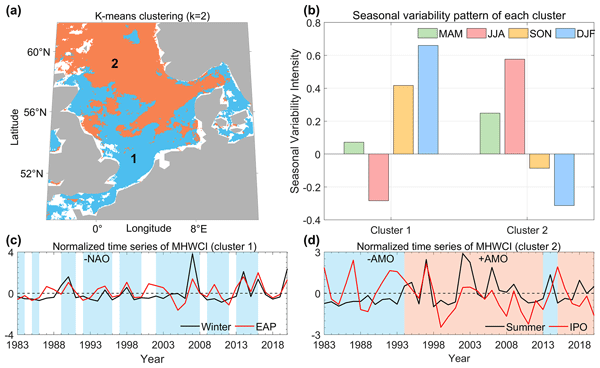
Marine heatwaves, periods of unusually warm sea temperatures, are increasing worldwide. Using observed sea surface temperature data and statistical clustering, this study shows that the North Sea contains two regions with different seasonal responses to climate patterns. Winter heatwaves in the south are driven by regional circulation, while summer events in the north reflect Atlantic and Pacific influences. These insights can help improve regional forecasting.
Qibang Tang, Zhongya Cai, and Zhiqiang Liu
Ocean Sci., 21, 1291–1301, https://doi.org/10.5194/os-21-1291-2025, https://doi.org/10.5194/os-21-1291-2025, 2025
Short summary
Short summary
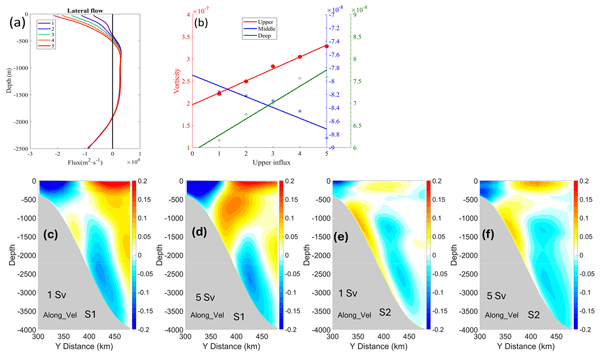
The South China Sea is the largest semi-enclosed marginal sea in the western Pacific, featuring unique layered circulation with rotating currents in its upper, middle, and deep layers. This study uses simulations to explore how stronger currents in the upper layer influence circulation across the entire basin. The vorticity analyses show that the enhanced upper currents increase the strength of middle and deep currents, driven by changes in bottom pressure and cross-slope movements.
Mingyu Li, Alessandro Stocchino, Zhongya Cai, and Tingting Zu
Ocean Sci., 20, 931–944, https://doi.org/10.5194/os-20-931-2024, https://doi.org/10.5194/os-20-931-2024, 2024
Short summary
Short summary
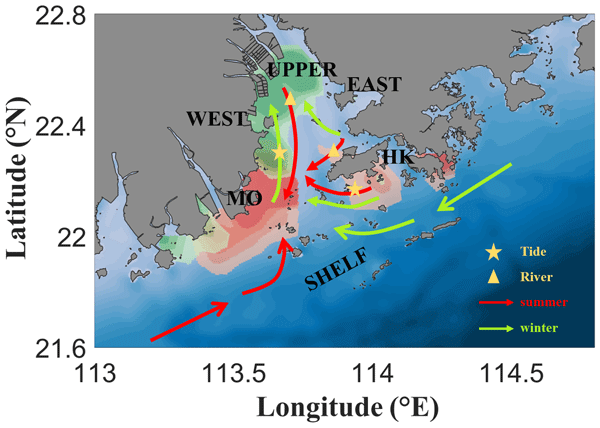
In this study, we explored how water accumulates in a coastal estuary, a key factor affecting the estuary's environmental health and ecosystem. We revealed significant bottom accumulations influenced by plume fronts and velocity convergence, with notable seasonal variability. By analyzing trajectories, we identified subregions with distinct accumulation patterns and examined their interconnections, highlighting the substantial impact of tides and river discharge on these dynamics.
Fanglou Liao, Xiao Hua Wang, and Zhiqiang Liu
Geosci. Model Dev., 15, 1129–1153, https://doi.org/10.5194/gmd-15-1129-2022, https://doi.org/10.5194/gmd-15-1129-2022, 2022
Short summary
Short summary
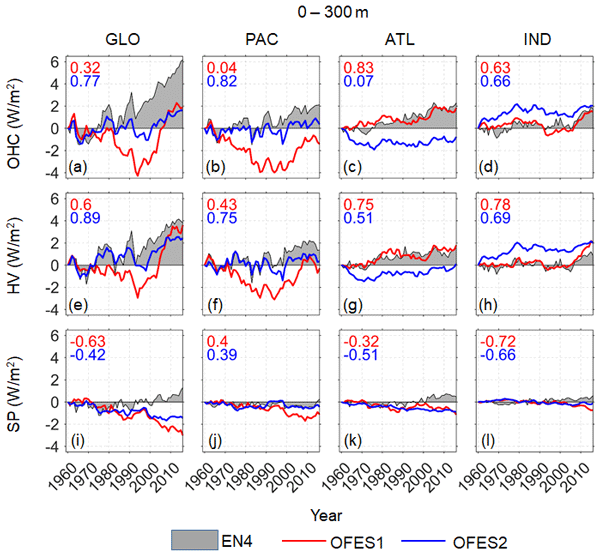
The ocean heat content (OHC) estimated using two eddying hindcast simulations, OFES1 and OFES2, was compared from 1960 to 2016, with observation-based results as a reference. Marked differences were found, especially in the Atlantic Ocean. These were related to the differences in the net surface heating, heat advection, and vertical heat diffusion. These documented differences may help the community better understand and use these quasi-global high-resolution datasets for their own purposes.
Cited articles
Chen, C. T. A., Wang, S. L., Wang, B. J., and Pai, S. C.: Nutrient budgets for the South China Sea basin, Marine Chemistry, 75, 281–300, https://doi.org/10.1016/s0304-4203(01)00041-x, 2001.
Dawson, A.: EOFS: A library for EOF analysis of meteorological, oceanographic, and climate data, Journal of Open Research Software, 4, 14, https://doi.org/10.5334/jors.122, 2016.
Deng, Y., Liu, Z., Zu, T., Hu, J., Gan, J., Lin, Y., Li, Z., Quan, Q., and Cai, Z.: Climatic Controls on the Interannual Variability of Shelf Circulation in the Northern South China Sea, Journal of Geophysical Research-Oceans, 127, https://doi.org/10.1029/2022jc018419, 2022.
Egbert, G. D. and Erofeeva, S. Y.: Efficient inverse Modeling of barotropic ocean tides, Journal of Atmospheric and Oceanic Technology, 19, 183–204, https://doi.org/10.1175/1520-0426(2002)019<0183:EIMOBO>2.0.CO;2, 2002.
Environment Protection Department of Hong Kong: Marine Water Quality Monitoring Data, Environmental Protection Interactive Centre [data set], https://cd.epic.epd.gov.hk/EPICRIVER/marine/?lang=en (last access: last access: 1 December 2025), 2024.
EU CMEMS (Copernicus Marine Service Information): Global Ocean Gridded L 4 Sea Surface Heights And Derived Variables Reprocessed 1993 Ongoing, Marine Data Store (MDS) [data set], https://doi.org/10.48670/moi-00148, 2024.
Fang, G., Fang, W., Fang, Y., and Wang, K.: A survey of studies on the South China Sea upper ocean circulation, Acta Oceanogr. Taiwan, 37, 1–16, 1998.
Gan, J., Li, H., Curchitser, E. N., and Haidvogel, D. B.: Modeling South China Sea circulation: Response to seasonal forcing regimes, Journal of Geophysical Research: Oceans, 111, https://doi.org/10.1029/2005JC003298, 2006.
Geng, B., Shu, Y., Hu, J., Li, S., Liu, N., Xiu, P., and Wang, D.: Influences of tides on shelf circulation in the northeastern South China Sea during summer, Journal of Marine Systems, 243, https://doi.org/10.1016/j.jmarsys.2024.103964, 2024.
Gu, X., Zhang, Q., Singh, V. P., and Shi, P.: Hydrological response to large-scale climate variability across the Pearl River basin, China: Spatiotemporal patterns and sensitivity, Global and Planetary Change, 149, 1–13, https://doi.org/10.1016/j.gloplacha.2016.12.016, 2017.
Hersbach, H., Bell, B., Berrisford, P., Biavati, G., Horányi, A., Muñoz Sabater, J., Nicolas, J., Peubey, C., Radu, R., Rozum, I., Schepers, D., Simmons, A., Soci, C., Dee, D., and Thépaut, J.-N.: ERA5 monthly averaged data on single levels from 1940 to present. Copernicus Climate Change Service (C3S) Climate Data Store (CDS) [data set], https://doi.org/10.24381/cds.f17050d7, 2023.
Hong, B. and Wang, D.: Sensitivity Study of the Seasonal Mean Circulation in the Northern South China Sea, Advances in Atmospheric Sciences, 25, 824–840, https://doi.org/10.1007/s00376-008-0824-8, 2008.
Hu, J., Kawamura, H., Hong, H., and Qi, Y.: A review on the currents in the South China Sea: seasonal circulation, South China Sea warm current and Kuroshio intrusion, Journal of Oceanography, 56, 607–624, https://doi.org/10.1023/A:1011117531252, 2000.
Jing, Z., Qi, Y., Hua, Z., and Zhang, H.: Numerical study on the summer upwelling system in the northern continental shelf of the South China Sea, Continental Shelf Research, 29, 467–478, https://doi.org/10.1016/j.csr.2008.11.008, 2009.
Jing, Z., Qi, Y., and Du, Y.: Upwelling in the continental shelf of northern South China Sea associated with 1997–1998 El Niño, Journal of Geophysical Research-Oceans, 116, https://doi.org/10.1029/2010jc006598, 2011.
Li, D., Zhou, M., Zhang, Z., Zhong, Y., Zhu, Y., Yang, C., Xu, M., Xu, D., and Hu, Z.: Intrusions of Kuroshio and Shelf Waters on Northern Slope of South China Sea in Summer 2015, Journal of Ocean University of China, 17, 477–486, https://doi.org/10.1007/s11802-018-3384-2, 2018.
Liang, Y.-C., Mazloff, M. R., Rosso, I., Fang, S.-W., and Yu, J.-Y.: A multivariate empirical orthogonal function method to construct nitrate maps in the Southern Ocean, J. Atmos. Ocean. Tech., 35, 1505–1519, https://doi.org/10.1175/JTECH-D-17-0201.1, 2018.
Lin, S. and Gan, J.: Dynamics of Tidal Effects on Coastal Upwelling Circulation Over Variable Shelves in the Northern South China Sea, Journal of Geophysical Research-Oceans, 129, https://doi.org/10.1029/2024jc021193, 2024.
Liu, Z. and Gan, J.: Upwelling induced by the frictional stress curl and vertical squeezing of the vortex tube over a submerged valley in the East China Sea, Journal of Geophysical Research-Oceans, 120, 2571–2587, https://doi.org/10.1002/2015jc010715, 2015.
Liu, Z. and Gan, J.: A modeling study of estuarine-shelf circulation using a composite tidal and subtidal open boundary condition, Ocean Modelling, 147, https://doi.org/10.1016/j.ocemod.2019.101563, 2020.
Liu, Z., Zu, T., and Gan, J.: Dynamics of cross-shelf water exchanges off Pearl River Estuary in summer, Progress in Oceanography, 189, https://doi.org/10.1016/j.pocean.2020.102465, 2020.
Mao, Q. W., Shi, P., Yin, K. D., Gan, J. P., and Qi, Y. Q.: Tides and tidal currents in the Pearl River estuary, Continental Shelf Research, 24, 1797–1808, https://doi.org/10.1016/j.csr.2004.06.008, 2004.
Maturi, E., Harris, A., Mittaz, J., Sapper, J., Wick, G., Zhu, X., and Koner, P.: A new high‐resolution sea surface temperature blended analysis, Bulletin of American Meteorological Society, 98, 1015–1026, https://doi.org/10.1175/BAMS-D-15-00002.1, 2017.
Mellor, G. L. and Yamada, T.: Development of a turbulence closure model for geophysical fluid problems, Reviews of Geophysics, 20, 851–875, https://doi.org/10.1029/RG020i004p00851, 1982.
Mertz, G. and Wright, D. G.: Interpretations of the JEBAR Term, Journal of Physical Oceanography, 22, 301–305, https://doi.org/10.1175/1520-0485(1992)022<0301:Iotjt>2.0.Co;2, 1992.
Nan, F., Xue, H., and Yu, F.: Kuroshio intrusion into the South China Sea: A review, Progress in Oceanography, 137, 314–333, https://doi.org/10.1016/j.pocean.2014.05.012, 2015.
NOAA Coral Reef Watch: NOAA coral reef watch version 3.1 Daily 5 km satellite sea surface temperature, updated daily, U.S.A. National Oceanic and Atmospheric Administration [data set], https://coralreefwatch.noaa.gov/product/5km/index_5km_sst.php (last access: 1 December 2025), 2025.
Oey, L.-Y., Hsin, Y.-C., and Wu, C.-R.: Why does the Kuroshio northeast of Taiwan shift shelfward in winter?, Ocean Dynamics, 60, 413–426, https://doi.org/10.1007/s10236-009-0259-5, 2010.
Oey, L.-Y., Chang, Y. L., Lin, Y. C., Chang, M. C., Varlamov, S., and Miyazawa, Y.: Cross Flows in the Taiwan Strait in Winter, Journal of Physical Oceanography, 44, 801–817, https://doi.org/10.1175/jpo-d-13-0128.1, 2014.
Ouyang, R., Liu, W., Fu, G., Liu, C., Hu, L., and Wang, H.: Linkages between ENSO/PDO signals and precipitation, streamflow in China during the last 100 years, Hydrol. Earth Syst. Sci., 18, 3651–3661, https://doi.org/10.5194/hess-18-3651-2014, 2014.
Renkl, C., Oliver, E. C. J., and Thompson, K. R.: The alongshore tilt of mean dynamic topography and its implications for model validation and ocean monitoring, Ocean Sci., 21, 181–198, https://doi.org/10.5194/os-21-181-2025, 2025.
Shchepetkin, A. F. and McWilliams, J. C.: The regional oceanic modeling system (ROMS): a split-explicit, free-surface, topography-following-coordinate oceanic model, Ocean Modelling, 9, 347–404, https://doi.org/10.1016/j.ocemod.2004.08.002, 2005.
Shu, Y., Zhu, J., Wang, D., and Xiao, X.: Assimilating remote sensing and in situ observations into a coastal model of northern South China Sea using ensemble Kalman filter, Continental Shelf Research, 31, S24–S36, https://doi.org/10.1016/j.csr.2011.01.017, 2011.
Shu, Y., Wang, D., Feng, M., Geng, B., Chen, J., Yao, J., Xie, Q., and Liu, Q.-Y.: The Contribution of Local Wind and Ocean Circulation to the Interannual Variability in Coastal Upwelling Intensity in the Northern South China Sea, Journal of Geophysical Research-Oceans, 123, 6766–6778, https://doi.org/10.1029/2018jc014223, 2018.
Smolarkiewicz, P. K.: A fully multidimensional positive definite advection transport algorithm with small implicit diffusion, Journal of Computational Physics, 54, 325–362, https://doi.org/10.1016/0021-9991(84)90121-9, 1984.
Song, Y. and Haidvogel, D.: A semi-implicit ocean circulation model using a generalized topography-following coordinate system, Journal of Computational Physics, 115, 228–244, https://doi.org/10.1006/jcph.1994.1189, 1994.
Song, Y., Lin, Y., Quan, Q., Zu, T., Cai, Z., Zhan, P., and Liu, Z.: ENSO-Modulated Variability in Winter Shelf Circulation of the Northern South China Sea, Journal of Geophysical Research-Oceans, 129, https://doi.org/10.1029/2024jc021577, 2024.
Wang, L., Li, Q., Mao, X.-z., Bi, H., and Yin, P.: Interannual sea level variability in the Pearl River Estuary and its response to El Niño-Southern Oscillation, Global and Planetary Change, 162, 163–174, https://doi.org/10.1016/j.gloplacha.2018.01.007, 2018.
Wang, Q., Zeng, L., Shu, Y., Liu, Q., Zu, T., Li, J., Chen, J., He, Y., and Wang, D.: Interannual variability of South China Sea winter circulation: response to Luzon Strait transport and El Nino wind, Climate Dynamics, 54, 1145–1159, https://doi.org/10.1007/s00382-019-05050-2, 2020.
Xu, Z. X., Li, J. Y., Takeuchi, K., and Ishidaira, H.: Long-term trend of precipitation in China and its association with the El Nino-southern oscillation, Hydrological Processes, 21, 61–71, https://doi.org/10.1002/hyp.6180, 2007.
Xue, H., Chai, F., Pettigrew, N., Xu, D., Shi, M., and Xu, J.: Kuroshio intrusion and the circulation in the South China Sea, Journal of Geophysical Research: Oceans, 109, https://doi.org/10.1029/2002JC001724, 2004.
Zhu, Y., Sun, J., Wang, Y., Li, S., Xu, T., Wei, Z., and Qu, T.: Overview of the multi-layer circulation in the South China Sea, Progress in Oceanography, 175, 171–182, https://doi.org/10.1016/j.pocean.2019.04.001, 2019.
Zu, T., Gan, H., and Erofeeva, S. Y.: Numerical study of the tide and tidal dynamics in the South China Sea, Deep-Sea Research Part I-Oceanographic Research Papers, 55, 137–154, https://doi.org/10.1016/j.dsr.2007.10.007, 2008.
Zu, T., Wang, D., Wang, Q., Li, M., Wei, J., Geng, B., He, Y., and Chen, J.: A revisit of the interannual variation of the South China Sea upper layer circulation in summer: correlation between the eastward jet and northward branch, Climate Dynamics, 54, 457–471, https://doi.org/10.1007/s00382-019-05007-5, 2020.
Short summary
To study summer coastal current changes in the Northern South China Sea (NSCS), we analyzed 2000–2022 observations and simulations, focusing on El Niño–Southern Oscillation (ENSO) and Pearl River freshwater impacts. During El Niño, uneven sea levels between the central and southern South China Sea strengthened northward currents. The Pearl River’s freshwater plume extended farther east, reducing nearshore salinity. Our findings highlight how local and remote factors interact to shape NSCS circulation dynamics.
To study summer coastal current changes in the Northern South China Sea (NSCS), we analyzed...