
Articles | Volume 22, issue 1
https://doi.org/10.5194/os-22-187-2026
© Author(s) 2026. This work is distributed under
the Creative Commons Attribution 4.0 License.
the Creative Commons Attribution 4.0 License.
https://doi.org/10.5194/os-22-187-2026
© Author(s) 2026. This work is distributed under
the Creative Commons Attribution 4.0 License.
the Creative Commons Attribution 4.0 License.
Research article
| 
19 Jan 2026
Research article |
| 19 Jan 2026
| 19 Jan 2026
Ocean circulation, sea ice, and productivity simulated in Jones Sound, Canadian Arctic Archipelago, between 2003–2016

Scripps Institution of Oceanography, University of California, San Diego, La Jolla, CA, USA
Paul G. Myers
Department of Earth and Atmospheric Sciences, University of Alberta, Edmonton, Canada
Andrew Hamilton
Department of Earth and Atmospheric Sciences, University of Alberta, Edmonton, Canada
Matthew Mazloff
Scripps Institution of Oceanography, University of California, San Diego, La Jolla, CA, USA
Krista M. Soderlund
Institute for Geophysics, Jackson School of Geosciences, University of Texas at Austin, Austin, TX, USA
Lucas Beem
Institute for Geophysics, Jackson School of Geosciences, University of Texas at Austin, Austin, TX, USA
Donald D. Blankenship
Institute for Geophysics, Jackson School of Geosciences, University of Texas at Austin, Austin, TX, USA
Cyril Grima
Institute for Geophysics, Jackson School of Geosciences, University of Texas at Austin, Austin, TX, USA
Feras Habbal
Institute for Geophysics, Jackson School of Geosciences, University of Texas at Austin, Austin, TX, USA
Mark Skidmore
Department of Earth Sciences, Montana State University, Bozeman, MT, USA
Jamin S. Greenbaum
Scripps Institution of Oceanography, University of California, San Diego, La Jolla, CA, USA
Related authors
James R. Jordan, Frank Pattyn, Daniel Abele, Torsten Albrecht, Jorge Alvarez-Solas, Jowan M. Barnes, Tijn Berends, Jorge A. Bernales, Javier Blasco, Gong Cheng, Youngmin Choi, Stephen L. Cornford, Cruz Garcia-Molina, Fabien Gillet-Chaulet, G. Hilmar Gudmundsson, Angelika Humbert, Gunter R. Leguy, William H. Lipscomb, Marisa Montoya, Daniel Moreno-Parada, Mathieu Morlighem, Tyler Pelle, Alexander Robinson, Martin Rückamp, Hélène Seroussi, Yanmei Tian, Luisa Wagner, Roderick S. W. van de Wal, Liyun Zhao, and Thomas Zwinger
EGUsphere, https://doi.org/10.5194/egusphere-2026-1962, https://doi.org/10.5194/egusphere-2026-1962, 2026
Short summary
Short summary
Ice calving is a recent inclusion in ice sheet models and there has not been a systematic test of how well it has been implemented. We show that models can accurately represent a given rate of ice calving, properties at the ice front evolve smoothly during calving, and that there are no consistent differences in ice behaviour between various approaches to representing calving in numerical ice models. This gives us confidence in their ability for use in sea level rise prediction simulations.
Johanna Beckmann, Ronja Reese, Felicity S. McCormack, Sue Cook, Lawrence Bird, Dawid Gwyther, Daniel Richards, Matthias Scheiter, Yu Wang, Hélène Seroussi, Ayako Abe‐Ouchi, Torsten Albrecht, Jorge Alvarez‐Solas, Xylar S. Asay‐Davis, Jean‐Baptiste Barre, Constantijn J. Berends, Jorge Bernales, Javier Blasco, Justine Caillet, David M. Chandler, Violaine Coulon, Richard Cullather, Christophe Dumas, Benjamin K. Galton‐Fenzi, Julius Garbe, Fabien Gillet‐Chaulet, Rupert Gladstone, Heiko Goelzer, Nicholas R. Golledge, Ralf Greve, G. Hilmar Gudmundsson, Holly Kyeore Han, Trevor R. Hillebrand, Matthew J. Hoffman, Philippe Huybrechts, Nicolas C. Jourdain, Ann Kristin Klose, Petra M. Langebroek, Gunter R. Leguy, William H. Lipscomb, Daniel P. Lowry, Pierre Mathiot, Marisa Montoya, Mathieu Morlighem, Sophie Nowicki, Frank Pattyn, Antony J. Payne, Tyler Pelle, Aurélien Quiquet, Alexander Robinson, Leopekka Saraste, Erika G. Simon, Sainan Sun, Jake P. Twarog, Luke D. Trusel, Benoit Urruty, Jonas Van Breedam, Roderik S. W. van de Wal, Chen Zhao, and Thomas Zwinger
EGUsphere, https://doi.org/10.5194/egusphere-2025-4069, https://doi.org/10.5194/egusphere-2025-4069, 2025
Short summary
Short summary
Antarctica holds enough ice to raise sea levels by many meters, but its future is uncertain. Warm ocean water melts ice shelves from below, letting inland ice flow faster into the sea. By 2300, Antarctica could add 0.6–4.4 m to sea levels. Our study identifies two key factors—how strongly shelves melt and how the ice responds. These explain much of the range, and refining them in models may improve future predictions.
Luc Houriez, Eric Larour, Lambert Caron, Nicole-Jeanne Schlegel, Surendra Adhikari, Erik Ivins, Tyler Pelle, Hélène Seroussi, Eric Darve, and Martin Fischer
The Cryosphere, 19, 4355–4372, https://doi.org/10.5194/tc-19-4355-2025, https://doi.org/10.5194/tc-19-4355-2025, 2025
Short summary
Short summary
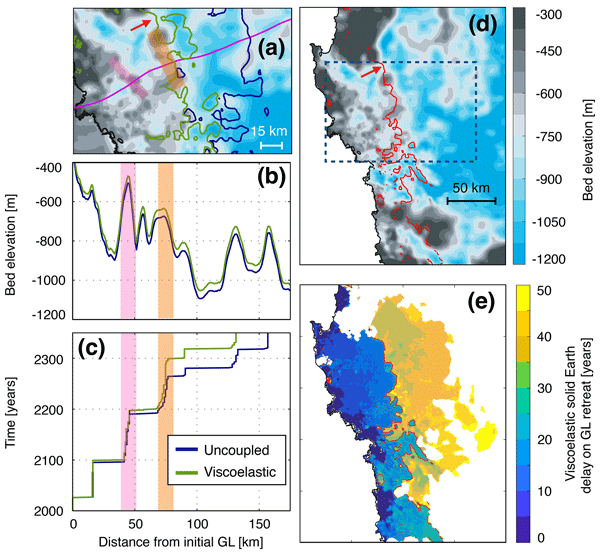
This work examines how interactions between the ice sheet and the Earth’s evolving surface affect the future of Thwaites Glacier in Antarctica. We find that small features in the bedrock play a major role in these interactions which can delay the glacier’s retreat by decades or even centuries. This can significantly reduce sea-level rise projections. Our study highlights resolution requirements for similar ice–earth models and the importance of bedrock mapping efforts in Antarctica.
Hélène Seroussi, Vincent Verjans, Sophie Nowicki, Antony J. Payne, Heiko Goelzer, William H. Lipscomb, Ayako Abe-Ouchi, Cécile Agosta, Torsten Albrecht, Xylar Asay-Davis, Alice Barthel, Reinhard Calov, Richard Cullather, Christophe Dumas, Benjamin K. Galton-Fenzi, Rupert Gladstone, Nicholas R. Golledge, Jonathan M. Gregory, Ralf Greve, Tore Hattermann, Matthew J. Hoffman, Angelika Humbert, Philippe Huybrechts, Nicolas C. Jourdain, Thomas Kleiner, Eric Larour, Gunter R. Leguy, Daniel P. Lowry, Chistopher M. Little, Mathieu Morlighem, Frank Pattyn, Tyler Pelle, Stephen F. Price, Aurélien Quiquet, Ronja Reese, Nicole-Jeanne Schlegel, Andrew Shepherd, Erika Simon, Robin S. Smith, Fiammetta Straneo, Sainan Sun, Luke D. Trusel, Jonas Van Breedam, Peter Van Katwyk, Roderik S. W. van de Wal, Ricarda Winkelmann, Chen Zhao, Tong Zhang, and Thomas Zwinger
The Cryosphere, 17, 5197–5217, https://doi.org/10.5194/tc-17-5197-2023, https://doi.org/10.5194/tc-17-5197-2023, 2023
Short summary
Short summary
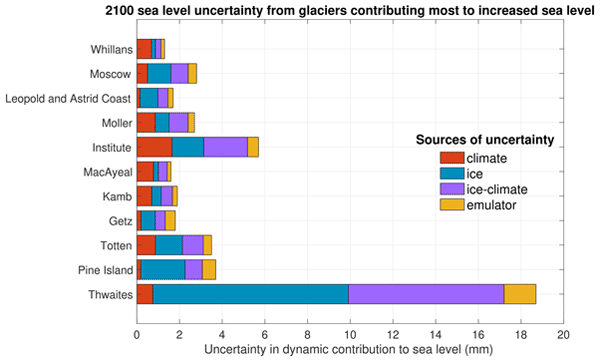
Mass loss from Antarctica is a key contributor to sea level rise over the 21st century, and the associated uncertainty dominates sea level projections. We highlight here the Antarctic glaciers showing the largest changes and quantify the main sources of uncertainty in their future evolution using an ensemble of ice flow models. We show that on top of Pine Island and Thwaites glaciers, Totten and Moscow University glaciers show rapid changes and a strong sensitivity to warmer ocean conditions.
Sarah S. Thompson, Bernd Kulessa, Adrian Luckman, Jacqueline A. Halpin, Jamin S. Greenbaum, Tyler Pelle, Feras Habbal, Jingxue Guo, Lenneke M. Jong, Jason L. Roberts, Bo Sun, and Donald D. Blankenship
The Cryosphere, 17, 157–174, https://doi.org/10.5194/tc-17-157-2023, https://doi.org/10.5194/tc-17-157-2023, 2023
Short summary
Short summary
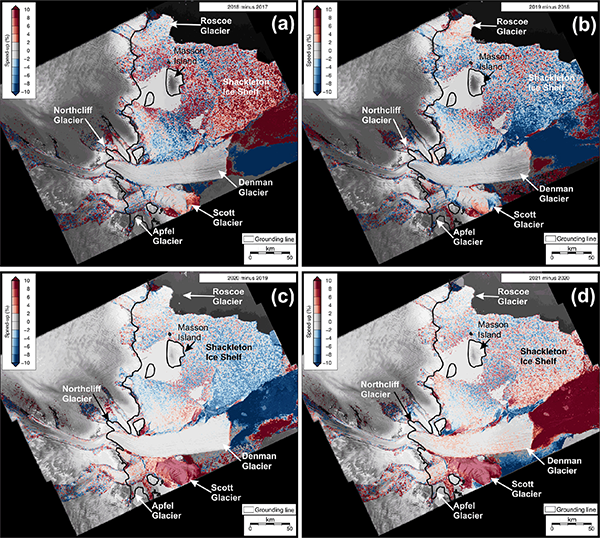
We use satellite imagery and ice penetrating radar to investigate the stability of the Shackleton system in East Antarctica. We find significant changes in surface structures across the system and observe a significant increase in ice flow speed (up to 50 %) on the floating part of Scott Glacier. We conclude that knowledge remains woefully insufficient to explain recent observed changes in the grounded and floating regions of the system.
Shuai Yan, Michelle R. Koutnik, Tyler J. Fudge, Shivangini Singh, Duyi Li, Donald D. Blankenship, and Duncan A. Young
EGUsphere, https://doi.org/10.5194/egusphere-2026-4672, https://doi.org/10.5194/egusphere-2026-4672, 2026
This preprint is open for discussion and under review for The Cryosphere (TC).
Short summary
Short summary
Surface snow accumulation is a key control on how the Antarctic Ice Sheet changes. We combined airborne radar observations with numerical models to reconstruct snow accumulation in a interior sector of Antarctica over the past 162,000 years. The results show that this region often followed a different history from a major East Antarctic ice-core site, demonstrating that records from one location may not represent a wider area and that broader observations are needed.
Joseph K. Ansong, Brian K. Arbic, Romain Bourdalle-Badié, Clément Bricaud, Jérôme Chanut, Dimitris Menemenlis, Richard D. Ray, Michael Schindelegger, Alan J. Wallcraft, He Wang, Alistair J. Adcroft, Frédéric Briol, Maarten C. Buijsman, Loren Carrère, Eric P. Chassignet, Gerald Dibarboure, Robert W. Hallberg, Christopher N. Hill, Ariane Koch-Larrouy, Florent Lyard, Matthew R. Mazloff, An T. Nguyen, Nicolas Picot, Rui M. Ponte, and Jay F. Shriver
EGUsphere, https://doi.org/10.5194/egusphere-2026-5064, https://doi.org/10.5194/egusphere-2026-5064, 2026
This preprint is open for discussion and under review for Ocean Science (OS).
Short summary
Short summary
We assess how well four high-resolution global ocean models reproduce surface and internal tides compared with satellite observations. Some models produce internal tides that are too strong, but including energy loss over rough seafloor improves their accuracy. Longer model records and higher resolution also improve agreement with observations. We further identify errors in the tidal forcing of widely used MITgcm simulations that reduce the accuracy of their simulated tides.
Xiner Wu, Anne de Vernal, and Paul G. Myers
Clim. Past, 22, 1609–1629, https://doi.org/10.5194/cp-22-1609-2026, https://doi.org/10.5194/cp-22-1609-2026, 2026
Short summary
Short summary
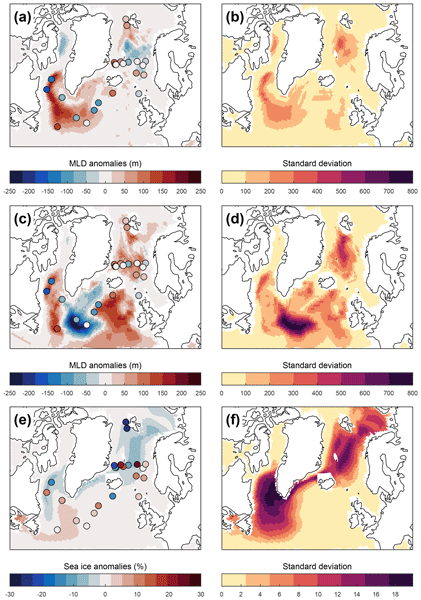
The ocean mixed layer needs to be correctly represented in climate models to provide reliable future projections. We evaluate the mixed layer depth in 15 climate models against reconstructions for the mid-Holocene North Atlantic. The lack of meltwater input to models causes the simulated mixed layer to be deeper than reconstructed in the Labrador Sea but does not affect the Nordic Seas. Deep ocean mixing in the Labrador Sea may be particularly sensitive to ice-sheet melting under global warming.
James R. Jordan, Frank Pattyn, Daniel Abele, Torsten Albrecht, Jorge Alvarez-Solas, Jowan M. Barnes, Tijn Berends, Jorge A. Bernales, Javier Blasco, Gong Cheng, Youngmin Choi, Stephen L. Cornford, Cruz Garcia-Molina, Fabien Gillet-Chaulet, G. Hilmar Gudmundsson, Angelika Humbert, Gunter R. Leguy, William H. Lipscomb, Marisa Montoya, Daniel Moreno-Parada, Mathieu Morlighem, Tyler Pelle, Alexander Robinson, Martin Rückamp, Hélène Seroussi, Yanmei Tian, Luisa Wagner, Roderick S. W. van de Wal, Liyun Zhao, and Thomas Zwinger
EGUsphere, https://doi.org/10.5194/egusphere-2026-1962, https://doi.org/10.5194/egusphere-2026-1962, 2026
Short summary
Short summary
Ice calving is a recent inclusion in ice sheet models and there has not been a systematic test of how well it has been implemented. We show that models can accurately represent a given rate of ice calving, properties at the ice front evolve smoothly during calving, and that there are no consistent differences in ice behaviour between various approaches to representing calving in numerical ice models. This gives us confidence in their ability for use in sea level rise prediction simulations.
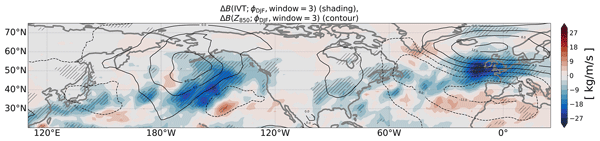
Tien-Yiao Hsu, Matthew R. Mazloff, Sarah T. Gille, Hai Lin, K. Andrew Peterson, Rui Sun, Aneesh C. Subramanian, and Luca Delle Monache
Weather Clim. Dynam., 7, 681–694, https://doi.org/10.5194/wcd-7-681-2026, https://doi.org/10.5194/wcd-7-681-2026, 2026
Short summary
Short summary
We examine the impact of replacing persistent sea surface temperature with a dynamical ocean model on 15 d weather forecasts over the North Pacific and Atlantic during wintertime. With the usage of an uncoupled atmospheric model, a coupled atmosphere-ocean model, and ERA5 for validation, we find that latent heat flux bias variance is reduced by 10 %–20 % in the Pacific. This improves forecasts of integrated vapor transport, enhancing the prediction of weather extremes in mid- to high latitudes.
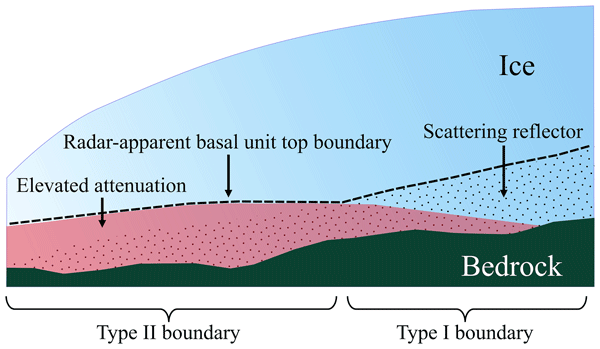
Shuai Yan, Duncan A. Young, Donald D. Blankenship, Tyler J. Fudge, Duyi Li, Laura Lindzey, Hunter Reeves, Alejandra Vega-Gonzalez, Shivangini Singh, Megan Kerr, Emily Wilbur, and Michelle Koutnik
The Cryosphere, 20, 453–465, https://doi.org/10.5194/tc-20-453-2026, https://doi.org/10.5194/tc-20-453-2026, 2026
Short summary
Short summary
This study examines the radar characteristics of the basal unit along Dome A’s southern flank. Through manual mapping and delay-Doppler analysis, we identifies two basal unit types and maps the spatial variation of incoherent scattering. The results suggest that basal unit radar appearance is influenced by englacial temperature variability and potentially by subglacial geological controls.
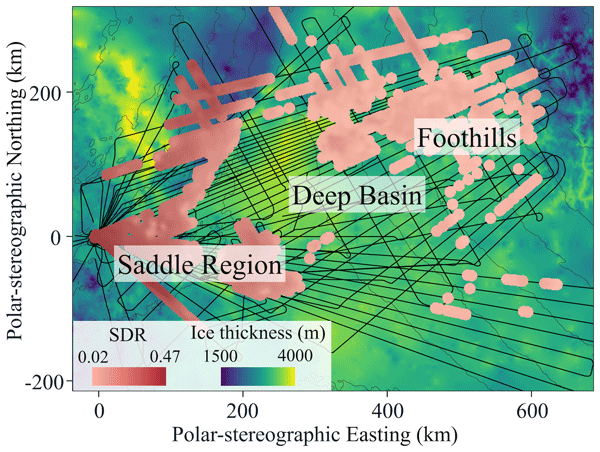
Marc J. Sailer, Tyler J. Fudge, John D. Patterson, Shuai Yan, Duncan A. Young, Shivangini Singh, Don Blankenship, and Megan Kerr
Clim. Past, 21, 2389–2406, https://doi.org/10.5194/cp-21-2389-2025, https://doi.org/10.5194/cp-21-2389-2025, 2025
Short summary
Short summary
In this study, we model vertical atmospheric gas diffusion in ice older than 1 million years in the Antarctic ice sheet. We estimate climate signal preservation and help identify a potential region for a future deep ice core in East Antarctica. We find that regions with low accumulation rates and moderate ice thickness result in lower diffusion rates. In particular, the foothills of Dome A is a promising location for a deep ice core that extends the present ice core record.
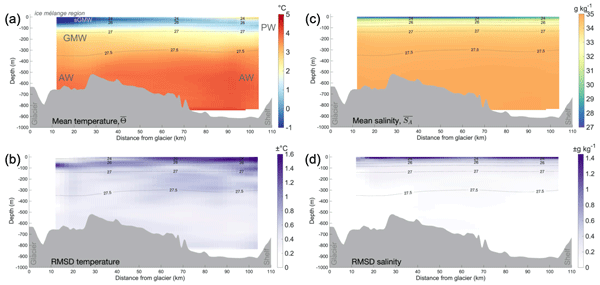
Aurora Roth, Fiamma Straneo, James Holte, Margaret Lindeman, and Matthew Mazloff
Earth Syst. Sci. Data, 17, 6025–6048, https://doi.org/10.5194/essd-17-6025-2025, https://doi.org/10.5194/essd-17-6025-2025, 2025
Short summary
Short summary
The fjords of Kalaallit Nunaat/Greenland play a critical role in our climate system and support thriving ecosystems that Greenlanders call home. As our climate warms, fjords are hotspots of change and more scientists are collecting data in fjords. These data need to be available, useable, and intuitive across a wide range of users – from scientists to local people. We provide an example of gridded transect data from Sermilik Fjord as a way to achieve this.
Johanna Beckmann, Ronja Reese, Felicity S. McCormack, Sue Cook, Lawrence Bird, Dawid Gwyther, Daniel Richards, Matthias Scheiter, Yu Wang, Hélène Seroussi, Ayako Abe‐Ouchi, Torsten Albrecht, Jorge Alvarez‐Solas, Xylar S. Asay‐Davis, Jean‐Baptiste Barre, Constantijn J. Berends, Jorge Bernales, Javier Blasco, Justine Caillet, David M. Chandler, Violaine Coulon, Richard Cullather, Christophe Dumas, Benjamin K. Galton‐Fenzi, Julius Garbe, Fabien Gillet‐Chaulet, Rupert Gladstone, Heiko Goelzer, Nicholas R. Golledge, Ralf Greve, G. Hilmar Gudmundsson, Holly Kyeore Han, Trevor R. Hillebrand, Matthew J. Hoffman, Philippe Huybrechts, Nicolas C. Jourdain, Ann Kristin Klose, Petra M. Langebroek, Gunter R. Leguy, William H. Lipscomb, Daniel P. Lowry, Pierre Mathiot, Marisa Montoya, Mathieu Morlighem, Sophie Nowicki, Frank Pattyn, Antony J. Payne, Tyler Pelle, Aurélien Quiquet, Alexander Robinson, Leopekka Saraste, Erika G. Simon, Sainan Sun, Jake P. Twarog, Luke D. Trusel, Benoit Urruty, Jonas Van Breedam, Roderik S. W. van de Wal, Chen Zhao, and Thomas Zwinger
EGUsphere, https://doi.org/10.5194/egusphere-2025-4069, https://doi.org/10.5194/egusphere-2025-4069, 2025
Short summary
Short summary
Antarctica holds enough ice to raise sea levels by many meters, but its future is uncertain. Warm ocean water melts ice shelves from below, letting inland ice flow faster into the sea. By 2300, Antarctica could add 0.6–4.4 m to sea levels. Our study identifies two key factors—how strongly shelves melt and how the ice responds. These explain much of the range, and refining them in models may improve future predictions.
Luc Houriez, Eric Larour, Lambert Caron, Nicole-Jeanne Schlegel, Surendra Adhikari, Erik Ivins, Tyler Pelle, Hélène Seroussi, Eric Darve, and Martin Fischer
The Cryosphere, 19, 4355–4372, https://doi.org/10.5194/tc-19-4355-2025, https://doi.org/10.5194/tc-19-4355-2025, 2025
Short summary
Short summary
This work examines how interactions between the ice sheet and the Earth’s evolving surface affect the future of Thwaites Glacier in Antarctica. We find that small features in the bedrock play a major role in these interactions which can delay the glacier’s retreat by decades or even centuries. This can significantly reduce sea-level rise projections. Our study highlights resolution requirements for similar ice–earth models and the importance of bedrock mapping efforts in Antarctica.
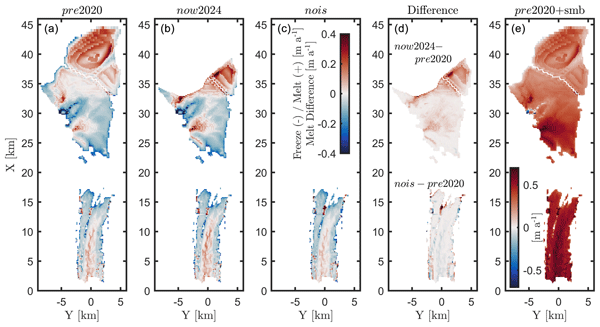
Jérémie Bonneau, Bernard E. Laval, Derek Mueller, Yulia Antropova, and Andrew K. Hamilton
The Cryosphere, 19, 2615–2633, https://doi.org/10.5194/tc-19-2615-2025, https://doi.org/10.5194/tc-19-2615-2025, 2025
Short summary
Short summary
Arctic glaciers and ice shelves are retreating due to warmer oceans, but the link between ocean warming and ice loss is complex. We used a numerical model to study these processes in Milne Fiord, a unique site with an ice shelf and a tidewater glacier. Our results show that submarine melting is an important thinning mechanism and that glacier retreat will continue for decades. This research highlights the ongoing and future changes in Arctic ice structures.
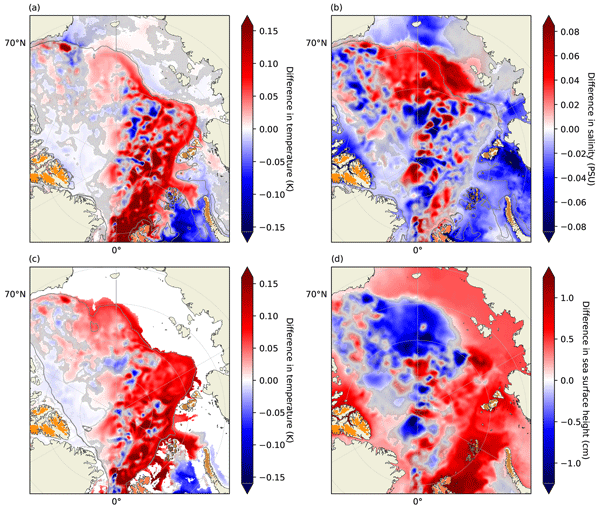
Jan-Hendrik Malles, Ben Marzeion, and Paul G. Myers
Earth Syst. Dynam., 16, 347–377, https://doi.org/10.5194/esd-16-347-2025, https://doi.org/10.5194/esd-16-347-2025, 2025
Short summary
Short summary
Glaciers in the high-latitude Northern Hemisphere (outside Greenland) are losing mass at roughly half the Greenland ice sheet's rate. Still, this is usually not included in the freshwater input data for ocean circulation models. Also, the submarine melt of glaciers (outside the ice sheets) has not been quantified yet. We tackle both issues by using a glacier model's output as additional fresh water for the ocean model and by using the ocean model's output to model submarine melt.
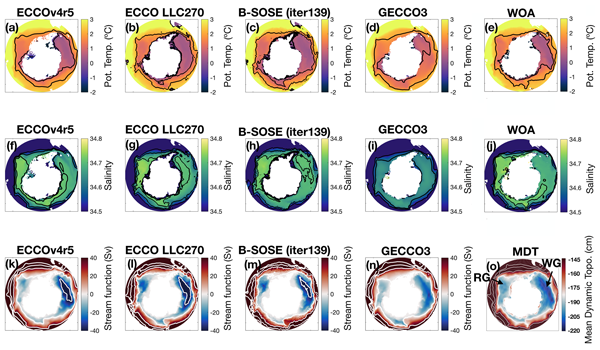
Yoshihiro Nakayama, Alena Malyarenko, Hong Zhang, Ou Wang, Matthis Auger, Yafei Nie, Ian Fenty, Matthew Mazloff, Armin Köhl, and Dimitris Menemenlis
Geosci. Model Dev., 17, 8613–8638, https://doi.org/10.5194/gmd-17-8613-2024, https://doi.org/10.5194/gmd-17-8613-2024, 2024
Short summary
Short summary
Global- and basin-scale ocean reanalyses are becoming easily accessible. However, such ocean reanalyses are optimized for their entire model domains and their ability to simulate the Southern Ocean requires evaluation. We conduct intercomparison analyses of Massachusetts Institute of Technology General Circulation Model (MITgcm)-based ocean reanalyses. They generally perform well for the open ocean, but open-ocean temporal variability and Antarctic continental shelves require improvements.
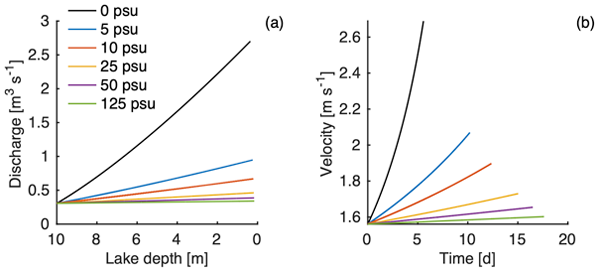
Amy Jenson, Mark Skidmore, Lucas Beem, Martin Truffer, and Scott McCalla
The Cryosphere, 18, 5451–5464, https://doi.org/10.5194/tc-18-5451-2024, https://doi.org/10.5194/tc-18-5451-2024, 2024
Short summary
Short summary
Water in some glacier environments contains salt, which increases its density and lowers its freezing point, allowing saline water to exist where freshwater cannot. Previous subglacial hydrology models do not consider saline fluid. We model the flow of saline fluid from a subglacial lake through a circular channel at the glacier bed, finding that higher salinities lead to less melting at the channel walls and lower discharge rates. We also observe the impact of increased fluid density on flow.
Graham Epstein, Susanna D. Fuller, Dipti Hingmire, Paul G. Myers, Angelica Peña, Clark Pennelly, and Julia K. Baum
Earth Syst. Sci. Data, 16, 2165–2195, https://doi.org/10.5194/essd-16-2165-2024, https://doi.org/10.5194/essd-16-2165-2024, 2024
Short summary
Short summary
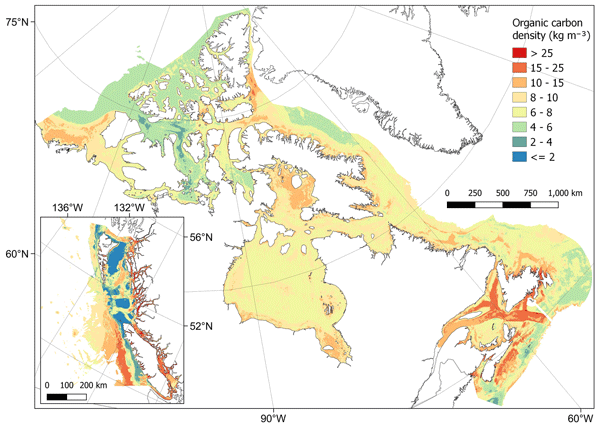
Improved mapping of surficial seabed sediment organic carbon is vital for best-practice marine management. Here, using systematic data review, data unification process and machine learning techniques, the first national predictive maps were produced for Canada at 200 m resolution. We show fine-scale spatial variation of organic carbon across the continental margin and estimate the total standing stock in the top 30 cm of the sediment to be 10.9 Gt.
Chris Pierce, Christopher Gerekos, Mark Skidmore, Lucas Beem, Don Blankenship, Won Sang Lee, Ed Adams, Choon-Ki Lee, and Jamey Stutz
The Cryosphere, 18, 1495–1515, https://doi.org/10.5194/tc-18-1495-2024, https://doi.org/10.5194/tc-18-1495-2024, 2024
Short summary
Short summary
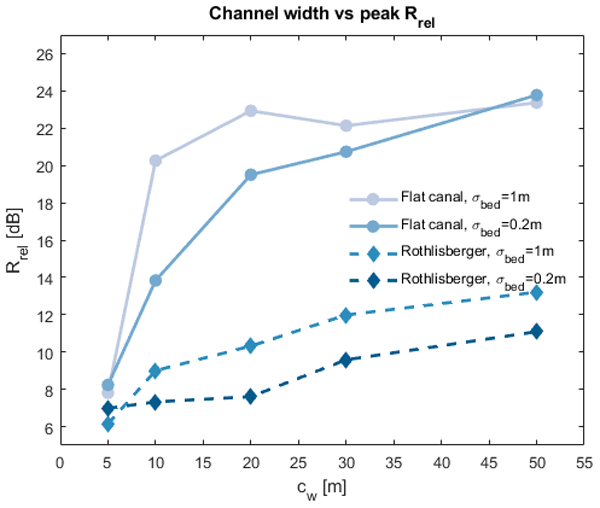
Water beneath glaciers in Antarctica can influence how the ice slides or melts. Airborne radar can detect this water, which looks bright in radar images. However, common techniques cannot identify the water's size or shape. We used a simulator to show how the radar image changes based on the bed material, size, and shape of the waterbody. This technique was applied to a suspected waterbody beneath Thwaites Glacier. We found it may be consistent with a series of wide, flat canals or a lake.
Christine F. Dow, Derek Mueller, Peter Wray, Drew Friedrichs, Alexander L. Forrest, Jasmin B. McInerney, Jamin Greenbaum, Donald D. Blankenship, Choon Ki Lee, and Won Sang Lee
The Cryosphere, 18, 1105–1123, https://doi.org/10.5194/tc-18-1105-2024, https://doi.org/10.5194/tc-18-1105-2024, 2024
Short summary
Short summary
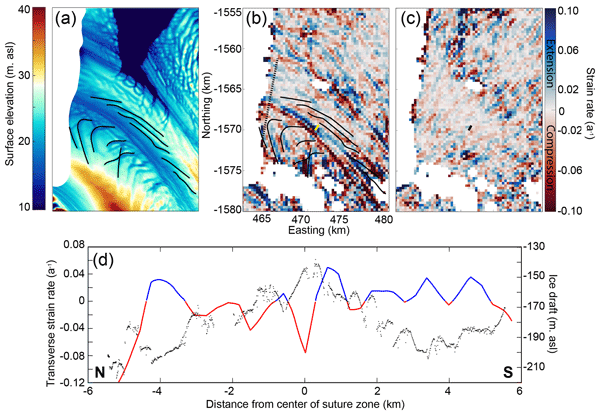
Ice shelves are a key control on Antarctic contribution to sea level rise. We examine the Nansen Ice Shelf in East Antarctica using a combination of field-based and satellite data. We find the basal topography of the ice shelf is highly variable, only partially visible in satellite datasets. We also find that the thinnest region of the ice shelf is altered over time by ice flow rates and ocean melting. These processes can cause fractures to form that eventually result in large calving events.
Linghan Li, Forest Cannon, Matthew R. Mazloff, Aneesh C. Subramanian, Anna M. Wilson, and Fred Martin Ralph
The Cryosphere, 18, 121–137, https://doi.org/10.5194/tc-18-121-2024, https://doi.org/10.5194/tc-18-121-2024, 2024
Short summary
Short summary
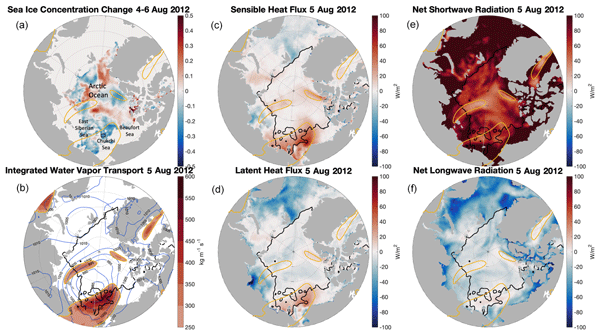
We investigate how the moisture transport through atmospheric rivers influences Arctic sea ice variations using hourly atmospheric ERA5 for 1981–2020 at 0.25° × 0.25° resolution. We show that individual atmospheric rivers initiate rapid sea ice decrease through surface heat flux and winds. We find that the rate of change in sea ice concentration has significant anticorrelation with moisture, northward wind and turbulent heat flux on weather timescales almost everywhere in the Arctic Ocean.
Hélène Seroussi, Vincent Verjans, Sophie Nowicki, Antony J. Payne, Heiko Goelzer, William H. Lipscomb, Ayako Abe-Ouchi, Cécile Agosta, Torsten Albrecht, Xylar Asay-Davis, Alice Barthel, Reinhard Calov, Richard Cullather, Christophe Dumas, Benjamin K. Galton-Fenzi, Rupert Gladstone, Nicholas R. Golledge, Jonathan M. Gregory, Ralf Greve, Tore Hattermann, Matthew J. Hoffman, Angelika Humbert, Philippe Huybrechts, Nicolas C. Jourdain, Thomas Kleiner, Eric Larour, Gunter R. Leguy, Daniel P. Lowry, Chistopher M. Little, Mathieu Morlighem, Frank Pattyn, Tyler Pelle, Stephen F. Price, Aurélien Quiquet, Ronja Reese, Nicole-Jeanne Schlegel, Andrew Shepherd, Erika Simon, Robin S. Smith, Fiammetta Straneo, Sainan Sun, Luke D. Trusel, Jonas Van Breedam, Peter Van Katwyk, Roderik S. W. van de Wal, Ricarda Winkelmann, Chen Zhao, Tong Zhang, and Thomas Zwinger
The Cryosphere, 17, 5197–5217, https://doi.org/10.5194/tc-17-5197-2023, https://doi.org/10.5194/tc-17-5197-2023, 2023
Short summary
Short summary
Mass loss from Antarctica is a key contributor to sea level rise over the 21st century, and the associated uncertainty dominates sea level projections. We highlight here the Antarctic glaciers showing the largest changes and quantify the main sources of uncertainty in their future evolution using an ensemble of ice flow models. We show that on top of Pine Island and Thwaites glaciers, Totten and Moscow University glaciers show rapid changes and a strong sensitivity to warmer ocean conditions.
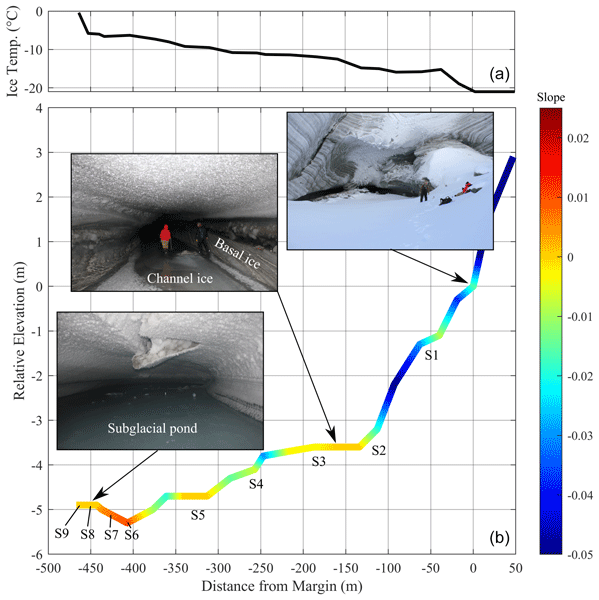
Ashley J. Dubnick, Rachel L. Spietz, Brad D. Danielson, Mark L. Skidmore, Eric S. Boyd, Dave Burgess, Charvanaa Dhoonmoon, and Martin Sharp
The Cryosphere, 17, 2993–3012, https://doi.org/10.5194/tc-17-2993-2023, https://doi.org/10.5194/tc-17-2993-2023, 2023
Short summary
Short summary
At the end of an Arctic winter, we found ponded water 500 m under a glacier. We explored the chemistry and microbiology of this unique, dark, and cold aquatic habitat to better understand ecology beneath glaciers. The water was occupied by cold-loving and cold-tolerant microbes with versatile metabolisms and broad habitat ranges and was depleted in compounds commonly used by microbes. These results show that microbes can become established beneath glaciers and deplete nutrients within months.
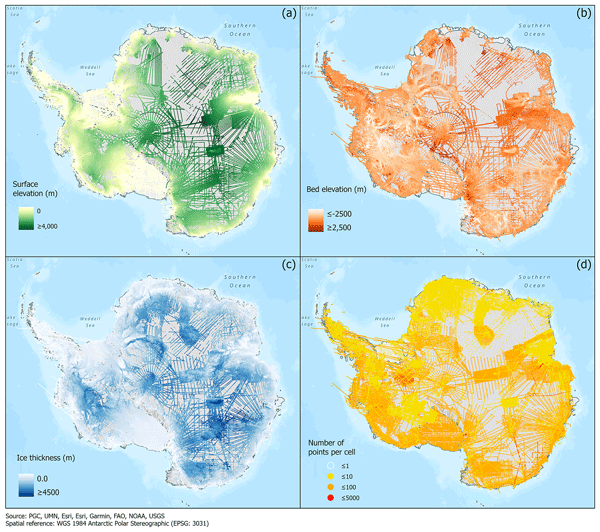
Alice C. Frémand, Peter Fretwell, Julien A. Bodart, Hamish D. Pritchard, Alan Aitken, Jonathan L. Bamber, Robin Bell, Cesidio Bianchi, Robert G. Bingham, Donald D. Blankenship, Gino Casassa, Ginny Catania, Knut Christianson, Howard Conway, Hugh F. J. Corr, Xiangbin Cui, Detlef Damaske, Volkmar Damm, Reinhard Drews, Graeme Eagles, Olaf Eisen, Hannes Eisermann, Fausto Ferraccioli, Elena Field, René Forsberg, Steven Franke, Shuji Fujita, Yonggyu Gim, Vikram Goel, Siva Prasad Gogineni, Jamin Greenbaum, Benjamin Hills, Richard C. A. Hindmarsh, Andrew O. Hoffman, Per Holmlund, Nicholas Holschuh, John W. Holt, Annika N. Horlings, Angelika Humbert, Robert W. Jacobel, Daniela Jansen, Adrian Jenkins, Wilfried Jokat, Tom Jordan, Edward King, Jack Kohler, William Krabill, Mette Kusk Gillespie, Kirsty Langley, Joohan Lee, German Leitchenkov, Carlton Leuschen, Bruce Luyendyk, Joseph MacGregor, Emma MacKie, Kenichi Matsuoka, Mathieu Morlighem, Jérémie Mouginot, Frank O. Nitsche, Yoshifumi Nogi, Ole A. Nost, John Paden, Frank Pattyn, Sergey V. Popov, Eric Rignot, David M. Rippin, Andrés Rivera, Jason Roberts, Neil Ross, Anotonia Ruppel, Dustin M. Schroeder, Martin J. Siegert, Andrew M. Smith, Daniel Steinhage, Michael Studinger, Bo Sun, Ignazio Tabacco, Kirsty Tinto, Stefano Urbini, David Vaughan, Brian C. Welch, Douglas S. Wilson, Duncan A. Young, and Achille Zirizzotti
Earth Syst. Sci. Data, 15, 2695–2710, https://doi.org/10.5194/essd-15-2695-2023, https://doi.org/10.5194/essd-15-2695-2023, 2023
Short summary
Short summary
This paper presents the release of over 60 years of ice thickness, bed elevation, and surface elevation data acquired over Antarctica by the international community. These data are a crucial component of the Antarctic Bedmap initiative which aims to produce a new map and datasets of Antarctic ice thickness and bed topography for the international glaciology and geophysical community.
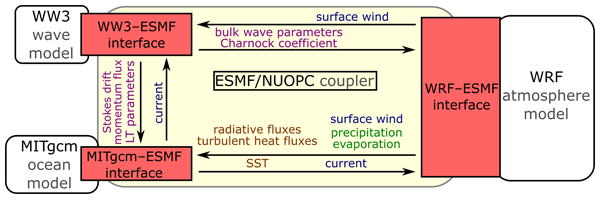
Rui Sun, Alison Cobb, Ana B. Villas Bôas, Sabique Langodan, Aneesh C. Subramanian, Matthew R. Mazloff, Bruce D. Cornuelle, Arthur J. Miller, Raju Pathak, and Ibrahim Hoteit
Geosci. Model Dev., 16, 3435–3458, https://doi.org/10.5194/gmd-16-3435-2023, https://doi.org/10.5194/gmd-16-3435-2023, 2023
Short summary
Short summary
In this work, we integrated the WAVEWATCH III model into the regional coupled model SKRIPS. We then performed a case study using the newly implemented model to study Tropical Cyclone Mekunu, which occurred in the Arabian Sea. We found that the coupled model better simulates the cyclone than the uncoupled model, but the impact of waves on the cyclone is not significant. However, the waves change the sea surface temperature and mixed layer, especially in the cold waves produced due to the cyclone.

Kristian Chan, Cyril Grima, Anja Rutishauser, Duncan A. Young, Riley Culberg, and Donald D. Blankenship
The Cryosphere, 17, 1839–1852, https://doi.org/10.5194/tc-17-1839-2023, https://doi.org/10.5194/tc-17-1839-2023, 2023
Short summary
Short summary
Climate warming has led to more surface meltwater produced on glaciers that can refreeze in firn to form ice layers. Our work evaluates the use of dual-frequency ice-penetrating radar to characterize these ice layers on the Devon Ice Cap. Results indicate that they are meters thick and widespread, and thus capable of supporting lateral meltwater runoff from the top of ice layers. We find that some of this meltwater runoff could be routed through supraglacial rivers in the ablation zone.
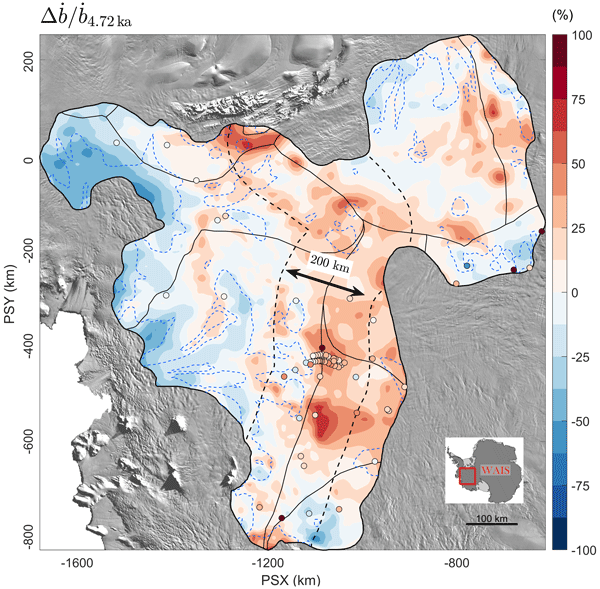
Julien A. Bodart, Robert G. Bingham, Duncan A. Young, Joseph A. MacGregor, David W. Ashmore, Enrica Quartini, Andrew S. Hein, David G. Vaughan, and Donald D. Blankenship
The Cryosphere, 17, 1497–1512, https://doi.org/10.5194/tc-17-1497-2023, https://doi.org/10.5194/tc-17-1497-2023, 2023
Short summary
Short summary
Estimating how West Antarctica will change in response to future climatic change depends on our understanding of past ice processes. Here, we use a reflector widely visible on airborne radar data across West Antarctica to estimate accumulation rates over the past 4700 years. By comparing our estimates with current atmospheric data, we find that accumulation rates were 18 % greater than modern rates. This has implications for our understanding of past ice processes in the region.
Beatriz Gill-Olivas, Jon Telling, Mark Skidmore, and Martyn Tranter
Biogeosciences, 20, 929–943, https://doi.org/10.5194/bg-20-929-2023, https://doi.org/10.5194/bg-20-929-2023, 2023
Short summary
Short summary
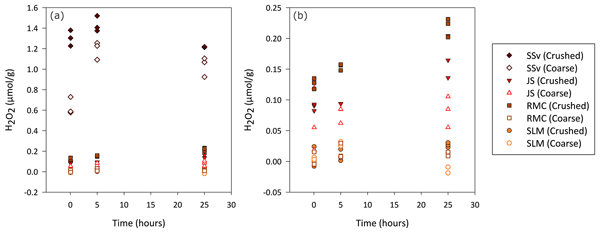
Microbial ecosystems have been found in all subglacial environments sampled to date. Yet, little is known of the sources of energy and nutrients that sustain these microbial populations. This study shows that crushing of sedimentary rocks, which contain organic carbon, carbonate and sulfide minerals, along with previously weathered silicate minerals, produces a range of compounds and nutrients which can be utilised by the diverse suite of microbes that inhabit glacier beds.
Sarah S. Thompson, Bernd Kulessa, Adrian Luckman, Jacqueline A. Halpin, Jamin S. Greenbaum, Tyler Pelle, Feras Habbal, Jingxue Guo, Lenneke M. Jong, Jason L. Roberts, Bo Sun, and Donald D. Blankenship
The Cryosphere, 17, 157–174, https://doi.org/10.5194/tc-17-157-2023, https://doi.org/10.5194/tc-17-157-2023, 2023
Short summary
Short summary
We use satellite imagery and ice penetrating radar to investigate the stability of the Shackleton system in East Antarctica. We find significant changes in surface structures across the system and observe a significant increase in ice flow speed (up to 50 %) on the floating part of Scott Glacier. We conclude that knowledge remains woefully insufficient to explain recent observed changes in the grounded and floating regions of the system.
David S. Trossman, Caitlin B. Whalen, Thomas W. N. Haine, Amy F. Waterhouse, An T. Nguyen, Arash Bigdeli, Matthew Mazloff, and Patrick Heimbach
Ocean Sci., 18, 729–759, https://doi.org/10.5194/os-18-729-2022, https://doi.org/10.5194/os-18-729-2022, 2022
Short summary
Short summary
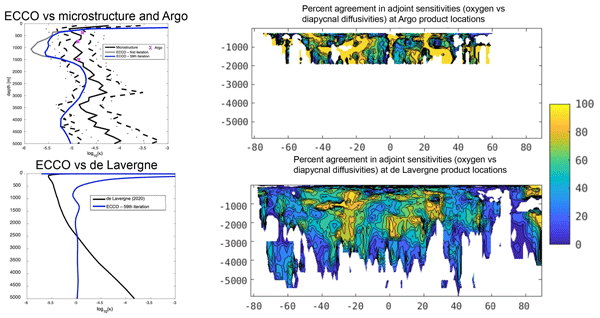
How the ocean mixes is not yet adequately represented by models. There are many challenges with representing this mixing. A model that minimizes disagreements between observations and the model could be used to fill in the gaps from observations to better represent ocean mixing. But observations of ocean mixing have large uncertainties. Here, we show that ocean oxygen, which has relatively small uncertainties, and observations of ocean mixing provide information similar to the model.
Anja Rutishauser, Donald D. Blankenship, Duncan A. Young, Natalie S. Wolfenbarger, Lucas H. Beem, Mark L. Skidmore, Ashley Dubnick, and Alison S. Criscitiello
The Cryosphere, 16, 379–395, https://doi.org/10.5194/tc-16-379-2022, https://doi.org/10.5194/tc-16-379-2022, 2022
Short summary
Short summary
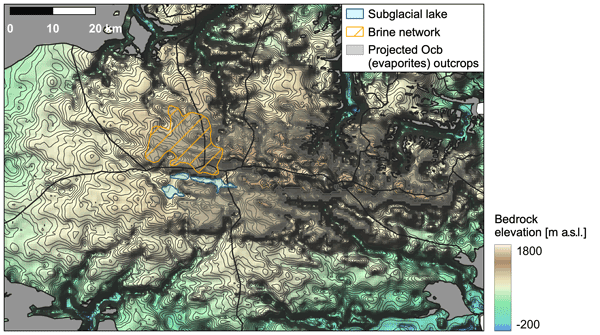
Recently, a hypersaline subglacial lake complex was hypothesized to lie beneath Devon Ice Cap, Canadian Arctic. Here, we present results from a follow-on targeted aerogeophysical survey. Our results support the evidence for a hypersaline subglacial lake and reveal an extensive brine network, suggesting more complex subglacial hydrological conditions than previously inferred. This hypersaline system may host microbial habitats, making it a compelling analog for bines on other icy worlds.
Cited articles
Amundsen Science Data Collection: CTD-Rosette data collected by the CCGS Amundsen in the Canadian Arctic, Processed data, version 1, Arcticnet Inc. [data set], Québec, Canada, Canadian Cryospheric Information Network (CCIN), Waterloo, Canada, https://doi.org/10.5884/12713, 2003–2021. a, b, c
Achterberg, E. P., Steigenberger, S., Marsay, C. M., LeMoigne, F. A. C., Painter, S. C., Baker, A. R., Connelly, D. P., Moore, C. M., Tagliabue, A., and Tanhua, T.: Iron Biogeochemistry in the High Latitude North Atlantic Ocean, Sci. Rep., 8, 1283, https://doi.org/10.1038/s41598-018-19472-1, 2018. a
Armitage, T. W. K., Manucharyan, G. E., Petty, A. A., Kwok, R., and Thompson, A. F.: Enhanced eddy activity in the Beaufort Gyre in response to sea ice loss, Nat. Commun., 11, 761, https://doi.org/10.1038/s41467-020-14449-z, 2020. a
Ballinger, T. J., Moore, G. W. K., Garcia-Quintana, Y., Myers, P. G., Imrit, A. A., Topál, D., and Meier, W. N.: Abrupt Northern Baffin Bay Autumn Warming and Sea-Ice Loss Since the Turn of the Twenty-First Century, Geophys. Res. Lett., 49, e2022GL101472, https://doi.org/10.1029/2022GL101472, 2022. a
Bhatia, M. P., Waterman, S., Burgess, D. O., Williams, P. L., Bundy, R. M., Mellett, T., Roberts, M., and Bertrand, E. M.: Glaciers and Nutrients in the Canadian Arctic Archipelago Marine System, Global Biogeochem. Cy., 35, e2021GB006976, https://doi.org/10.1029/2021GB006976, 2021. a, b, c, d
Bromwich, D. H., Wilson, A. B., Bai, L., Liu, Z., Barlage, M., Shih, C. F., Maldonado, S., Hines, K. M., Wang, S. H., Woollen, J., Kuo, B., Lin, H. C., Wee, T. K., Serreze, M. C., and Walsh, J. E.: The Arctic System Reanalysis, Version 2, B. Am. Meteorol. Soc., 99, 805–828, https://doi.org/10.1175/BAMS-D-16-0215.1, 2018 (data available at: https://gdex.ucar.edu/datasets/d631001/dataaccess/#, last access: 18 April 2025). a, b
Canadian Ice Service: Canadian Ice Service Arctic Regional Sea Ice Charts in SIGRID-3 Format, Version 1 (Eastern Arctic), National Snow and Ice Data Center [data set], https://doi.org/10.7265/N51V5BW9, 2009. a, b, c
Ding, Q., Schweiger, A., L'Heureux, M., Battisti, D. S., Po-Chedley, S., Johnson, N. C., Blanchard-Wrigglesworth, E., Harnos, K., Zhang, Q., Eastman, R., and Steig, E. J.: Influence of high-latitude atmospheric circulation changes on summertime Arctic sea ice, Nat. Clim. Change, 7, 289–295, https://doi.org/10.1038/nclimate3241, 2017. a
Ding, Q., Schweiger, A., L'Heureux, M., Steig, E. J., Battisti, D. S., Johnson, N. C., Blanchard-Wrigglesworth, E., Po-Chedley, S., Zhang, Q., Harnos, K., Bushuk, M., Markle, B., and Baxter, I.: Fingerprints of internal drivers of Arctic sea ice loss in observations and model simulations, Nat. Geosci., 12, 28–33, https://doi.org/10.1038/s41561-018-0256-8, 2019. a
Frey, K. E., Comiso, J. C., Cooper, L. W., Garcia-Eidell, C., Grebmeier, J. M., and Stock, L. V.: Arctic Ocean Primary Productivity: The Response of Marine Algae to Climate Warming and Sea Ice Decline, Noaa technical report OAR ARC; 22-08, National Oceanic and Atmospheric Administration, https://doi.org/10.25923/0je1-te61, 2022. a
Galbraith, E. D., Gnanadesikan, A., Dunne, J. P., and Hiscock, M. R.: Regional impacts of iron-light colimitation in a global biogeochemical model, Biogeosciences, 7, 1043–1064, https://doi.org/10.5194/bg-7-1043-2010, 2010. a, b, c
Garcia, H. E., Weathers, K. W., Paver, C. R., Smolyar, I., Boyer, T. P., Locarnini, R. A., Zweng, M. M., Mishonov, A. V., Baranova, O. K., Seidov, D., and Reagan, J. R.: World Ocean Atlas 2018, Volume 4: Dissolved Inorganic Nutrients (phosphate, nitrate and nitrate+nitrite, silicate), Tech. Rep. 84, A. Mishonov Technical Ed., NOAA Atlas NESDIS, 2018. a
Gardner, A., Moholdt, G., Arendt, A., and Wouters, B.: Accelerated contributions of Canada's Baffin and Bylot Island glaciers to sea level rise over the past half century, The Cryosphere, 6, 1103–1125, https://doi.org/10.5194/tc-6-1103-2012, 2012. a
Gillard, L. C., Hu, X., Myers, P. G., Ribergaard, M. H., and Lee, C. M.: Drivers for Atlantic-origin waters abutting Greenland, The Cryosphere, 14, 2729–2753, https://doi.org/10.5194/tc-14-2729-2020, 2020. a, b
Grivault, N., Hu, X., and Myers, P. G.: Impact of the Surface Stress on the Volume and Freshwater Transport Through the Canadian Arctic Archipelago From a High-Resolution Numerical Simulation, J. Geophys. Res.-Oceans, 123, 9038–9060, https://doi.org/10.1029/2018JC013984, 2018. a, b
Howard, S. and Padman, L.: Arc2kmTM: Arctic 2 kilometer Tide Model, Arctic Data Center, https://doi.org/10.18739/A2PV6B79W, 2021. a
Hu, X., Myers, P. G., and Lu, Y.: Pacific Water Pathway in the Arctic Ocean and Beaufort Gyre in Two Simulations With Different Horizontal Resolutions, J. Geophys. Res.-Oceans, 124, 6414–6432, https://doi.org/10.1029/2019JC015111, 2019. a, b
Kay, J. E., Holland, M. M., and Jahn, A.: Inter-annual to multi-decadal Arctic sea ice extent trends in a warming world, Geophys. Res. Lett., 38, L15708, https://doi.org/10.1029/2011GL048008, 2011. a
Kinnard, C., Zdanowicz, C. M., Fisher, D. A., Isaksson, E., de Vernal, A., and Thompson, L. G.: Reconstructed changes in Arctic sea ice over the past 1,450 years, Nature, 479, 509–512, https://doi.org/10.1038/nature10581, 2011. a
Kliem, N. and Greenberg, D. A.: Diagnostic simulations of the summer circulation in the Canadian arctic archipelago, Atmos.-Ocean, 41, 273–289, https://doi.org/10.3137/ao.410402, 2003. a
Losch, M., Menemenlis, D., Campin, J.-M., Heimbach, P., and Hill, C.: On the formulation of sea-ice models. Part 1: Effects of different solver implementations and parameterizations, Ocean Model., 33, 129–144, https://doi.org/10.1016/j.ocemod.2009.12.008, 2010. a
Mahowald, N. M., Baker, A. R., Bergametti, G., Brooks, N., Duce, R. A., Jickells, T. D., Kubilay, N., Prospero, J. M., and Tegen, I.: Atmospheric global dust cycle and iron inputs to the ocean, Global Biogeochem. Cy., 19, GB4025, https://doi.org/10.1029/2004GB002402, 2005. a
Marshall, J., Adcroft, A., Hill, C., Perelman, L., and Heisey, C.: A finite-volume, incompressible Navier Stokes model for studies of the ocean on parallel computers, J. Geophys. Res., 102, 5753–5766, https://doi.org/10.1029/96JC02775, 1997. a
McGeehan, T. and Maslowski, W.: Evaluation and control mechanisms of volume and freshwater export through the Canadian Arctic Archipelago in a high-resolution pan-Arctic ice-ocean model, J. Geophys. Res.-Oceans, 117, C00D14, https://doi.org/10.1029/2011JC007261, 2012. a
Melling, H., Agnew, T. A., Falkner, K. K., Greenberg, D. A., Lee, C. M., Münchow, A., Petrie, B., Prinsenberg, S. J., Samelson, R. M., and Woodgate, R. A.: Fresh-Water Fluxes via Pacific and Arctic Outflows Across the Canadian Polar Shelf, 193–247, Springer Netherlands, Dordrecht, ISBN 978-1-4020-6774-7, https://doi.org/10.1007/978-1-4020-6774-7_10, 2008. a, b, c, d
Münchow, A.: Volume and Freshwater Flux Observations from Nares Strait to the West of Greenland at Daily Time Scales from 2003 to 2009, J. Phys. Oceanogr., 46, 141–157, https://doi.org/10.1175/JPO-D-15-0093.1, 2016. a
Munchow, A. and Humfrey, M.: Ocean current observations from Nares Strait to the west of Greenland: Interannual to tidal variability and forcing, J. Mar. Res., 66, 801–833, 2008. a
Nakayama, Y., Menemenlis, D., Zhang, H., Schodlok, M., and Rignot, E.: Origin of Circumpolar Deep Water intruding onto the Amundsen and Bellingshausen Sea continental shelves, Nat. Commun., https://doi.org/10.1038/s41467-018-05813-1, 2018. a, b
Noh, K.-M., Oh, J.-H., Lim, H.-G., Song, H., and Kug, J.-S.: Role of Atlantification in Enhanced Primary Productivity in the Barents Sea, Earth's Future, 12, e2023EF003709, https://doi.org/10.1029/2023EF003709, 2024. a
Notz, D. and Stroeve, J.: Observed Arctic sea-ice loss directly follows anthropogenic CO2 emission, Science, 354, 747–750, https://doi.org/10.1126/science.aag2345, 2016. a
Olsen, A., Key, R. M., van Heuven, S., Lauvset, S. K., Velo, A., Lin, X., Schirnick, C., Kozyr, A., Tanhua, T., Hoppema, M., Jutterström, S., Steinfeldt, R., Jeansson, E., Ishii, M., Pérez, F. F., and Suzuki, T.: The Global Ocean Data Analysis Project version 2 (GLODAPv2) – an internally consistent data product for the world ocean, Earth Syst. Sci. Data, 8, 297–323, https://doi.org/10.5194/essd-8-297-2016, 2016. a
Pelle, T., Myers, P. G., Hamilton, A., Mazloff, M. R., Soderlund, K. M., Beem, L. H., Blankenship, D. D., Grima, C., Habbal, F. A., Skidmore, M., and Greenbaum, J. S.: Data From: Ocean circulation, sea ice, and productivity simulated in Jones Sound, Canadian Arctic Archipelago, between 2003–2016, Dryad, https://doi.org/10.5061/dryad.w3r228116, 2024. a
Peterson, I., Hamilton, J., Prinsenberg, S., and Pettipas, R.: Wind-forcing of volume transport through Lancaster Sound, J. Geophys. Res.-Oceans, 117, C11018, https://doi.org/10.1029/2012JC008140, 2012. a, b
Polyakov, I. V., Bhatt, U. S., Walsh, J. E., Abrahamsen, E. P., Pnyushkov, A. V., and Wassmann, P. F.: Recent oceanic changes in the Arctic in the context of long-term observations, Ecol. Appl., 23, 1745–1764, https://doi.org/10.1890/11-0902.1, 2013. a
Prinsenberg, S. J. and Bennett, E. B.: Mixing and transports in Barrow Strait, the central part of the Northwest passage, Cont. Shelf Res., 7, 913–935, https://doi.org/10.1016/0278-4343(87)90006-9, 1987. a
Prinsenberg, S. J. and Hamilton, J.: Monitoring the volume, freshwater and heat fluxes passing through Lancaster sound in the Canadian arctic archipelago, Atmos.-Ocean, 43, 1–22, https://doi.org/10.3137/ao.430101, 2005. a
Rotermund, L. M., Williams, W. J., Klymak, J. M., Wu, Y., Scharien, R. K., and Haas, C.: The Effect of Sea Ice on Tidal Propagation in the Kitikmeot Sea, Canadian Arctic Archipelago, J. Geophys. Res.-Oceans, 126, e2020JC016786, https://doi.org/10.1029/2020JC016786, 2021. a
Shroyer, E. L., Samelson, R. M., Padman, L., and Münchow, A.: Modeled ocean circulation in Nares Strait and its dependence on landfast-ice cover, J. Geophys. Res.-Oceans, 120, 7934–7959, https://doi.org/10.1002/2015JC011091, 2015. a
Stroeve, J. and Notz, D.: Changing state of Arctic sea ice across all seasons, Environ. Res. Lett., 13, 103001, https://doi.org/10.1088/1748-9326/aade56, 2018. a
Tivy, A., Howell, S. E. L., Alt, B., McCourt, S., Chagnon, R., Crocker, G., Carrieres, T., and Yackel, J. J.: Trends and variability in summer sea ice cover in the Canadian Arctic based on the Canadian Ice Service Digital Archive, 1960–2008 and 1968–2008, J. Geophys. Res.-Oceans, 116, C03007, https://doi.org/10.1029/2009JC005855, 2011. a, b
Tozer, B., Sandwell, D. T., Smith, W. H. F., Olson, C., Beale, J. R., and Wessel, P.: Global Bathymetry and Topography at 15 Arc Sec: SRTM15+, Earth Space Sci., 6, 1847–1864, https://doi.org/10.1029/2019EA000658, 2019. a, b
Verdy, A. and Mazloff, M. R.: A data assimilating model for estimating Southern Ocean biogeochemistry, J. Geophys. Res.-Oceans, 122, 6968–6988, https://doi.org/10.1002/2016JC012650, 2017. a
Wang, Q., Wekerle, C., Wang, X., Danilov, S., Koldunov, N., Sein, D., Sidorenko, D., von Appen, W.-J., and Jung, T.: Intensification of the Atlantic Water Supply to the Arctic Ocean Through Fram Strait Induced by Arctic Sea Ice Decline, Geophys. Res. Lett., 47, e2019GL086682, https://doi.org/10.1029/2019GL086682, 2020. a
Wang, Z., Hamilton, J., and Su, J.: Variations in freshwater pathways from the Arctic Ocean into the North Atlantic Ocean, Prog. Oceanogr., 155, 54–73, https://doi.org/10.1016/j.pocean.2017.05.012, 2017. a, b
Wekerle, C., Wang, Q., Danilov, S., Jung, T., and Schröter, J.: The Canadian Arctic Archipelago throughflow in a multiresolution global model: Model assessment and the driving mechanism of interannual variability, J. Geophys. Res.-Oceans, 118, 4525–4541, https://doi.org/10.1002/jgrc.20330, 2013. a, b
Zhang, Y., Chen, C., Beardsley, R. C., Gao, G., Lai, Z., Curry, B., Lee, C. M., Lin, H., Qi, J., and Xu, Q.: Studies of the Canadian Arctic Archipelago water transport and its relationship to basin-local forcings: Results from AO-FVCOM, J. Geophys. Res.-Oceans, 121, 4392–4415, https://doi.org/10.1002/2016JC011634, 2016. a, b
Short summary
Here, we develop and run a high-resolution ocean model of Jones Sound from 2003–2016 and characterize circulation into, out of, and within the sound as well as associated sea ice and productivity cycles. Atmospheric and ocean warming drives sea ice decline, which enhances biological productivity due to the increased light availability. These results highlight the utility of high-resolution models in simulating complex waterways and the need for sustained oceanographic measurements in the sound.
Here, we develop and run a high-resolution ocean model of Jones Sound from 2003–2016 and...


