
Articles | Volume 21, issue 6
https://doi.org/10.5194/os-21-3291-2025
© Author(s) 2025. This work is distributed under
the Creative Commons Attribution 4.0 License.
the Creative Commons Attribution 4.0 License.
https://doi.org/10.5194/os-21-3291-2025
© Author(s) 2025. This work is distributed under
the Creative Commons Attribution 4.0 License.
the Creative Commons Attribution 4.0 License.
Research article
| 
03 Dec 2025
Research article |
| 03 Dec 2025
| 03 Dec 2025
Modelling river-sea continuum: the case of the Danube Delta
Christian Ferrarin
CORRESPONDING AUTHOR

CNR – National Research Council of Italy, ISMAR – Marine Sciences Institute, Venice, Italy
Debora Bellafiore
CNR – National Research Council of Italy, ISMAR – Marine Sciences Institute, Venice, Italy
Alejandro Paladio Hernandez
CNR – National Research Council of Italy, ISMAR – Marine Sciences Institute, Venice, Italy
Irina Dinu
National Institute of Marine Geology and Geoecology – GeoEcoMar, Bucharest, Romania
Adrian Stanica
National Institute of Marine Geology and Geoecology – GeoEcoMar, Bucharest, Romania
Related authors
Sara Pavan, Marco Bajo, Francesco Barbariol, Alvise Benetazzo, Silvio Davison, and Christian Ferrarin
EGUsphere, https://doi.org/10.5194/egusphere-2026-2774, https://doi.org/10.5194/egusphere-2026-2774, 2026
This preprint is open for discussion and under review for Natural Hazards and Earth System Sciences (NHESS).
Short summary
Short summary
We present the marine and coastal hazard estimation of Mediterranean cyclones during the period 1994–2020. The study shows which portion of extreme storm surge and waves is linked to cyclones in the Mediterranean Sea. Hazard estimation is performed according to sea level and waves based parameters. Results stress that it is challenging to identify the most hazardous Mediterranean cyclones in a comprehensive sense (i.e., accounting for all parameters), as well as the areas most exposed to hazard.
Manuel Vargas-Yáñez, Orens Pasqueron de Fommervault, Emanuela Clementi, Christian Ferrarin, Svitlana Liubertseva, Diego Álvarez-Berastegui, Baptiste Mourre, Salvatore Aronica, Rosa Balbin, Joaquín Ballabrera-Poy, Sana Ben Ismail, Nathaniel Benssousan, Ismail Bessa, Alicia Blanco, Anthony Bosse, Evi Bourma, François Bourrin, Carlo Brandini, Fulvio Capodici, Clara Casals-Baixas, Branko Cermelj, Giuseppe Ciraolo, Pascal Conan, Laurent Coppola, Lorenzo Corgnati, Joaquín del Río, Emilie Diamond Riquier, Lara Diaz-Barroso, Bartolomeo Doronzo, Xavier Durrieu de Madron, Milad Fakhri, Costantine Frangoulis, Claudia Fratianni, Emilio García-Ladona, Jesus García-Lafuente, M. Carmen García-Martínez, Joaquín Garrabou, Josep Gasol, Adam Gauci, Frédéric Gazeau, Gerard Gregory, Abed El Raman Hassoun, Jordi Isern-Fontanet, Dominique Lefevre, Nadia Lo Bue, Guiomar López, Pablo Lorente, Deny Malengros, Ramon Massana, Sinan Mavruk, Stefano Miserocchi, Behzad Mostajir, Laure Mousseau, Francina Moya, Antonio Novellino, Arianna Orasi, Emanuele Organelli, Vicent Ouisse, Tal Ozer, Begoña Pérez-Gómez, Susana Pérez-Rubio, Leonidas Perivoliotis, Georges Petihakis, Anne Petrenko, Sebastien Pinel, Xavier Pitarch, Angela Pomaro, Lucía Quirós-Collazos, Emma Reyes, Simone Sammartino, Anna Sánchez-Vidal, Katrin Schroeder, Stefano Taddei, Elena Tel, Pierre Testor, Marco Torri, Daniela Turk, Laura Ursella, Dimitris Velaoras, Francesca Vidussi, Ivica Vilivić, Enrico Zambiachi, D. Nikolaos Zarokanellos, George Zodiatis, and Vanessa Cardin
EGUsphere, https://doi.org/10.5194/egusphere-2026-2632, https://doi.org/10.5194/egusphere-2026-2632, 2026
Short summary
Short summary
This work compiles current marine observation capabilities in the Mediterranean Sea, making this information accessible to scientists, organizations, stakeholders, and environmental policymakers. It supports initiatives such as Copernicus Marine Service, EMODNet, the European Ocean Pact, and EU directives. It is intended as a living resource to be updated, identifying strengths and gaps in Mediterranean observation systems.
Chiara Favaretto, Francesco Barbariol, Alvise Benetazzo, Luigi Cavaleri, Francesco Marcello Falcieri, Christian Ferrarin, Rossella Ferretti, Stefano Menegon, Matteo Nastasi, Gianluca Redaelli, Antonio Ricchi, and Piero Ruol
EGUsphere, https://doi.org/10.5194/egusphere-2026-2285, https://doi.org/10.5194/egusphere-2026-2285, 2026
Short summary
Short summary
Coastal flooding is becoming more frequent and damaging, but warnings often rely on single forecasts that miss important uncertainty. We developed and tested a new early warning approach that uses multiple weather scenarios to better describe possible flood outcomes, while reducing computing costs. Applied to severe storms in northern Italy, the method preserved key information and showed that reliable flood alerts can be produced efficiently, supporting practical early warning systems.
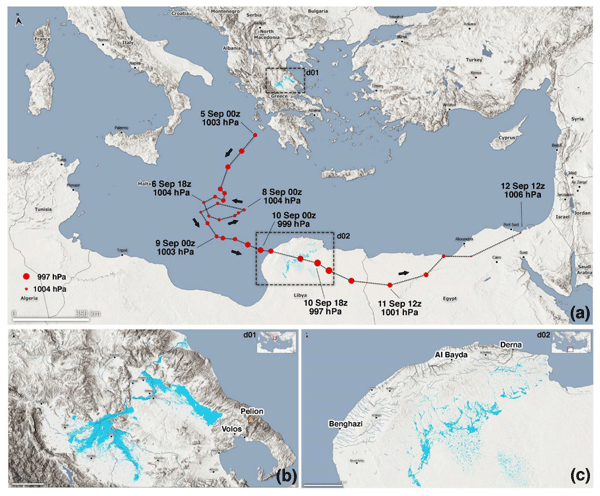
Emmanouil Flaounas, Stavros Dafis, Silvio Davolio, Davide Faranda, Christian Ferrarin, Katharina Hartmuth, Assaf Hochman, Aristeidis Koutroulis, Samira Khodayar, Mario Marcello Miglietta, Florian Pantillon, Platon Patlakas, Michael Sprenger, and Iris Thurnherr
Weather Clim. Dynam., 6, 1515–1538, https://doi.org/10.5194/wcd-6-1515-2025, https://doi.org/10.5194/wcd-6-1515-2025, 2025
Short summary
Short summary
Storm Daniel (2023) is one of the most catastrophic storms ever documented in the Mediterranean. Our results highlight the different dynamics and therefore the different predictability skill of precipitation, its extremes and impacts that have been produced in Greece and Libya, the two most affected countries. Our approach concerns an analysis of the storm by articulating dynamics, weather prediction, hydrological and oceanographic implications, climate extremes, and attribution theory.
Roderik van de Wal, Angélique Melet, Debora Bellafiore, Paula Camus, Christian Ferrarin, Gualbert Oude Essink, Ivan D. Haigh, Piero Lionello, Arjen Luijendijk, Alexandra Toimil, Joanna Staneva, and Michalis Vousdoukas
State Planet, 3-slre1, 5, https://doi.org/10.5194/sp-3-slre1-5-2024, https://doi.org/10.5194/sp-3-slre1-5-2024, 2024
Short summary
Short summary
Sea level rise has major impacts in Europe, which vary from place to place and in time, depending on the source of the impacts. Flooding, erosion, and saltwater intrusion lead, via different pathways, to various consequences for coastal regions across Europe. This causes damage to assets, the environment, and people for all three categories of impacts discussed in this paper. The paper provides an overview of the various impacts in Europe.
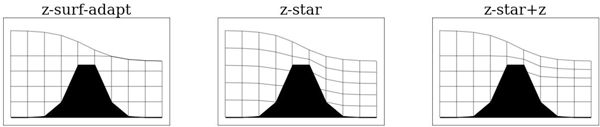
Luca Arpaia, Christian Ferrarin, Marco Bajo, and Georg Umgiesser
Geosci. Model Dev., 16, 6899–6919, https://doi.org/10.5194/gmd-16-6899-2023, https://doi.org/10.5194/gmd-16-6899-2023, 2023
Short summary
Short summary
We propose a discrete multilayer shallow water model based on z-layers which, thanks to the insertion and removal of surface layers, can deal with an arbitrarily large tidal oscillation independently of the vertical resolution. The algorithm is based on a two-step procedure used in numerical simulations with moving boundaries (grid movement followed by a grid topology change, that is, the insertion/removal of surface layers), which avoids the appearance of very thin surface layers.
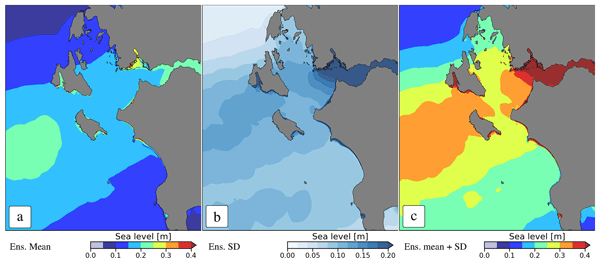
Christian Ferrarin, Florian Pantillon, Silvio Davolio, Marco Bajo, Mario Marcello Miglietta, Elenio Avolio, Diego S. Carrió, Ioannis Pytharoulis, Claudio Sanchez, Platon Patlakas, Juan Jesús González-Alemán, and Emmanouil Flaounas
Nat. Hazards Earth Syst. Sci., 23, 2273–2287, https://doi.org/10.5194/nhess-23-2273-2023, https://doi.org/10.5194/nhess-23-2273-2023, 2023
Short summary
Short summary
The combined use of meteorological and ocean models enabled the analysis of extreme sea conditions driven by Medicane Ianos, which hit the western coast of Greece on 18 September 2020, flooding and damaging the coast. The large spread associated with the ensemble highlighted the high model uncertainty in simulating such an extreme weather event. The different simulations have been used for outlining hazard scenarios that represent a fundamental component of the coastal risk assessment.
Marco Bajo, Christian Ferrarin, Georg Umgiesser, Andrea Bonometto, and Elisa Coraci
Ocean Sci., 19, 559–579, https://doi.org/10.5194/os-19-559-2023, https://doi.org/10.5194/os-19-559-2023, 2023
Short summary
Short summary
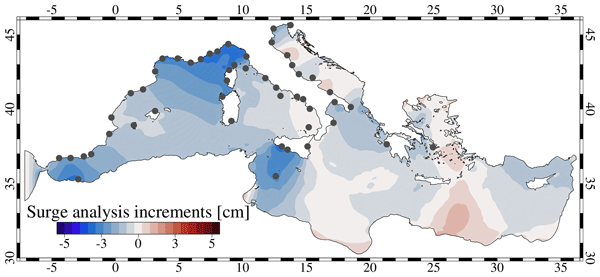
This work uses a hydrodynamic model which assimilates in situ data to reproduce tides, surges, and seiches in the Mediterranean basin. Furthermore, we study the periods of the barotropic modes of the Mediterranean and Adriatic basins. This research aims to improve the forecasting and reanalysis for operational warning and climatological studies. It aims also to reach a better knowledge of these sea level components in this area.
Manuel Aghito, Loris Calgaro, Knut-Frode Dagestad, Christian Ferrarin, Antonio Marcomini, Øyvind Breivik, and Lars Robert Hole
Geosci. Model Dev., 16, 2477–2494, https://doi.org/10.5194/gmd-16-2477-2023, https://doi.org/10.5194/gmd-16-2477-2023, 2023
Short summary
Short summary
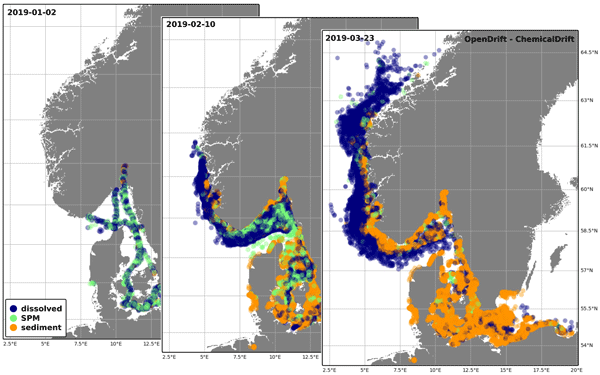
The newly developed ChemicalDrift model can simulate the transport and fate of chemicals in the ocean and in coastal regions. The model combines ocean physics, including transport due to currents, turbulence due to surface winds and the sinking of particles to the sea floor, with ocean chemistry, such as the partitioning, the degradation and the evaporation of chemicals. The model will be utilized for risk assessment of ocean and sea-floor contamination from pollutants emitted from shipping.

Julius Schlumberger, Christian Ferrarin, Sebastiaan N. Jonkman, Manuel Andres Diaz Loaiza, Alessandro Antonini, and Sandra Fatorić
Nat. Hazards Earth Syst. Sci., 22, 2381–2400, https://doi.org/10.5194/nhess-22-2381-2022, https://doi.org/10.5194/nhess-22-2381-2022, 2022
Short summary
Short summary
Flooding has serious impacts on the old town of Venice. This paper presents a framework combining a flood model with a flood-impact model to support improving protection against future floods in Venice despite the recently built MOSE barrier. Applying the framework to seven plausible flood scenarios, it was found that individual protection has a significant damage-mediating effect if the MOSE barrier does not operate as anticipated. Contingency planning thus remains important in Venice.
Sara Pavan, Marco Bajo, Francesco Barbariol, Alvise Benetazzo, Silvio Davison, and Christian Ferrarin
EGUsphere, https://doi.org/10.5194/egusphere-2026-2774, https://doi.org/10.5194/egusphere-2026-2774, 2026
This preprint is open for discussion and under review for Natural Hazards and Earth System Sciences (NHESS).
Short summary
Short summary
We present the marine and coastal hazard estimation of Mediterranean cyclones during the period 1994–2020. The study shows which portion of extreme storm surge and waves is linked to cyclones in the Mediterranean Sea. Hazard estimation is performed according to sea level and waves based parameters. Results stress that it is challenging to identify the most hazardous Mediterranean cyclones in a comprehensive sense (i.e., accounting for all parameters), as well as the areas most exposed to hazard.
Morgan Reed Raven, Nitai Amiel, Dror L. Angel, James P. Barry, Thomas M. Blattmann, Laura Boicenco, Antoine Crémière, Natalya Evans, Nora Gallarotti, Sebastian Haas, Jan-Hendrik Hehemann, Peter Krost, Pranay Lal, David Lordkipanidze, Tiia Luostarinen, Aaron M. Martinez, Allison J. Matzelle, Selma Menabit, Mihaela Muresan, Andreas Neumann, Jean-Daniel Paris, Christopher R. Pearce, Nick Reynard, Daniel L. Sanchez, Florence Schubotz, Violeta Slabakova, Adrian Stanica, Elena Stoica, Andrew K. Sweetman, Tina Treude, Yoana G. Voynova, and Nikolaos D. Zarokanellos
Biogeosciences, 23, 3755–3776, https://doi.org/10.5194/bg-23-3755-2026, https://doi.org/10.5194/bg-23-3755-2026, 2026
Short summary
Short summary
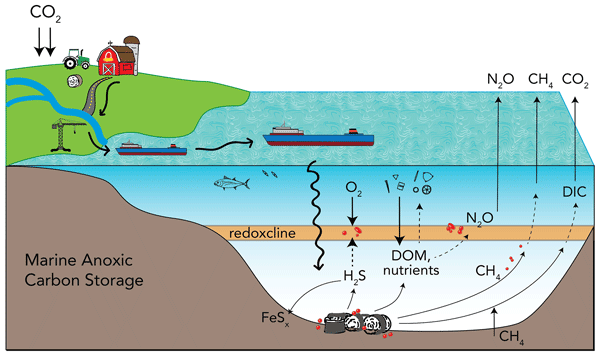
In addition to reducing emissions, vast quantities of CO2 will need to be removed from the atmosphere to meet climate goals. One strategy known as Marine Anoxic Carbon Storage (MACS) would bury plant carbon for thousands of years in parts in the ocean that lack oxygen, where carbon preservation can be highly efficient. We evaluate the environmental and other impacts of hypothetical large-scale MACS deployment from an interdisciplinary, international perspective and present a research roadmap.
Manuel Vargas-Yáñez, Orens Pasqueron de Fommervault, Emanuela Clementi, Christian Ferrarin, Svitlana Liubertseva, Diego Álvarez-Berastegui, Baptiste Mourre, Salvatore Aronica, Rosa Balbin, Joaquín Ballabrera-Poy, Sana Ben Ismail, Nathaniel Benssousan, Ismail Bessa, Alicia Blanco, Anthony Bosse, Evi Bourma, François Bourrin, Carlo Brandini, Fulvio Capodici, Clara Casals-Baixas, Branko Cermelj, Giuseppe Ciraolo, Pascal Conan, Laurent Coppola, Lorenzo Corgnati, Joaquín del Río, Emilie Diamond Riquier, Lara Diaz-Barroso, Bartolomeo Doronzo, Xavier Durrieu de Madron, Milad Fakhri, Costantine Frangoulis, Claudia Fratianni, Emilio García-Ladona, Jesus García-Lafuente, M. Carmen García-Martínez, Joaquín Garrabou, Josep Gasol, Adam Gauci, Frédéric Gazeau, Gerard Gregory, Abed El Raman Hassoun, Jordi Isern-Fontanet, Dominique Lefevre, Nadia Lo Bue, Guiomar López, Pablo Lorente, Deny Malengros, Ramon Massana, Sinan Mavruk, Stefano Miserocchi, Behzad Mostajir, Laure Mousseau, Francina Moya, Antonio Novellino, Arianna Orasi, Emanuele Organelli, Vicent Ouisse, Tal Ozer, Begoña Pérez-Gómez, Susana Pérez-Rubio, Leonidas Perivoliotis, Georges Petihakis, Anne Petrenko, Sebastien Pinel, Xavier Pitarch, Angela Pomaro, Lucía Quirós-Collazos, Emma Reyes, Simone Sammartino, Anna Sánchez-Vidal, Katrin Schroeder, Stefano Taddei, Elena Tel, Pierre Testor, Marco Torri, Daniela Turk, Laura Ursella, Dimitris Velaoras, Francesca Vidussi, Ivica Vilivić, Enrico Zambiachi, D. Nikolaos Zarokanellos, George Zodiatis, and Vanessa Cardin
EGUsphere, https://doi.org/10.5194/egusphere-2026-2632, https://doi.org/10.5194/egusphere-2026-2632, 2026
Short summary
Short summary
This work compiles current marine observation capabilities in the Mediterranean Sea, making this information accessible to scientists, organizations, stakeholders, and environmental policymakers. It supports initiatives such as Copernicus Marine Service, EMODNet, the European Ocean Pact, and EU directives. It is intended as a living resource to be updated, identifying strengths and gaps in Mediterranean observation systems.
Chiara Favaretto, Francesco Barbariol, Alvise Benetazzo, Luigi Cavaleri, Francesco Marcello Falcieri, Christian Ferrarin, Rossella Ferretti, Stefano Menegon, Matteo Nastasi, Gianluca Redaelli, Antonio Ricchi, and Piero Ruol
EGUsphere, https://doi.org/10.5194/egusphere-2026-2285, https://doi.org/10.5194/egusphere-2026-2285, 2026
Short summary
Short summary
Coastal flooding is becoming more frequent and damaging, but warnings often rely on single forecasts that miss important uncertainty. We developed and tested a new early warning approach that uses multiple weather scenarios to better describe possible flood outcomes, while reducing computing costs. Applied to severe storms in northern Italy, the method preserved key information and showed that reliable flood alerts can be produced efficiently, supporting practical early warning systems.
Emmanouil Flaounas, Stavros Dafis, Silvio Davolio, Davide Faranda, Christian Ferrarin, Katharina Hartmuth, Assaf Hochman, Aristeidis Koutroulis, Samira Khodayar, Mario Marcello Miglietta, Florian Pantillon, Platon Patlakas, Michael Sprenger, and Iris Thurnherr
Weather Clim. Dynam., 6, 1515–1538, https://doi.org/10.5194/wcd-6-1515-2025, https://doi.org/10.5194/wcd-6-1515-2025, 2025
Short summary
Short summary
Storm Daniel (2023) is one of the most catastrophic storms ever documented in the Mediterranean. Our results highlight the different dynamics and therefore the different predictability skill of precipitation, its extremes and impacts that have been produced in Greece and Libya, the two most affected countries. Our approach concerns an analysis of the storm by articulating dynamics, weather prediction, hydrological and oceanographic implications, climate extremes, and attribution theory.
Angélique Melet, Roderik van de Wal, Angel Amores, Arne Arns, Alisée A. Chaigneau, Irina Dinu, Ivan D. Haigh, Tim H. J. Hermans, Piero Lionello, Marta Marcos, H. E. Markus Meier, Benoit Meyssignac, Matthew D. Palmer, Ronja Reese, Matthew J. R. Simpson, and Aimée B. A. Slangen
State Planet, 3-slre1, 4, https://doi.org/10.5194/sp-3-slre1-4-2024, https://doi.org/10.5194/sp-3-slre1-4-2024, 2024
Short summary
Short summary
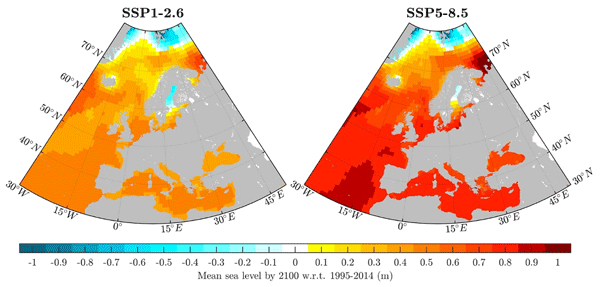
The EU Knowledge Hub on Sea Level Rise’s Assessment Report strives to synthesize the current scientific knowledge on sea level rise and its impacts across local, national, and EU scales to support evidence-based policy and decision-making, primarily targeting coastal areas. This paper complements IPCC reports by documenting the state of knowledge of observed and 21st century projected changes in mean and extreme sea levels with more regional information for EU seas as scoped with stakeholders.
Roderik van de Wal, Angélique Melet, Debora Bellafiore, Paula Camus, Christian Ferrarin, Gualbert Oude Essink, Ivan D. Haigh, Piero Lionello, Arjen Luijendijk, Alexandra Toimil, Joanna Staneva, and Michalis Vousdoukas
State Planet, 3-slre1, 5, https://doi.org/10.5194/sp-3-slre1-5-2024, https://doi.org/10.5194/sp-3-slre1-5-2024, 2024
Short summary
Short summary
Sea level rise has major impacts in Europe, which vary from place to place and in time, depending on the source of the impacts. Flooding, erosion, and saltwater intrusion lead, via different pathways, to various consequences for coastal regions across Europe. This causes damage to assets, the environment, and people for all three categories of impacts discussed in this paper. The paper provides an overview of the various impacts in Europe.
Luca Arpaia, Christian Ferrarin, Marco Bajo, and Georg Umgiesser
Geosci. Model Dev., 16, 6899–6919, https://doi.org/10.5194/gmd-16-6899-2023, https://doi.org/10.5194/gmd-16-6899-2023, 2023
Short summary
Short summary
We propose a discrete multilayer shallow water model based on z-layers which, thanks to the insertion and removal of surface layers, can deal with an arbitrarily large tidal oscillation independently of the vertical resolution. The algorithm is based on a two-step procedure used in numerical simulations with moving boundaries (grid movement followed by a grid topology change, that is, the insertion/removal of surface layers), which avoids the appearance of very thin surface layers.
Christian Ferrarin, Florian Pantillon, Silvio Davolio, Marco Bajo, Mario Marcello Miglietta, Elenio Avolio, Diego S. Carrió, Ioannis Pytharoulis, Claudio Sanchez, Platon Patlakas, Juan Jesús González-Alemán, and Emmanouil Flaounas
Nat. Hazards Earth Syst. Sci., 23, 2273–2287, https://doi.org/10.5194/nhess-23-2273-2023, https://doi.org/10.5194/nhess-23-2273-2023, 2023
Short summary
Short summary
The combined use of meteorological and ocean models enabled the analysis of extreme sea conditions driven by Medicane Ianos, which hit the western coast of Greece on 18 September 2020, flooding and damaging the coast. The large spread associated with the ensemble highlighted the high model uncertainty in simulating such an extreme weather event. The different simulations have been used for outlining hazard scenarios that represent a fundamental component of the coastal risk assessment.
Marco Bajo, Christian Ferrarin, Georg Umgiesser, Andrea Bonometto, and Elisa Coraci
Ocean Sci., 19, 559–579, https://doi.org/10.5194/os-19-559-2023, https://doi.org/10.5194/os-19-559-2023, 2023
Short summary
Short summary
This work uses a hydrodynamic model which assimilates in situ data to reproduce tides, surges, and seiches in the Mediterranean basin. Furthermore, we study the periods of the barotropic modes of the Mediterranean and Adriatic basins. This research aims to improve the forecasting and reanalysis for operational warning and climatological studies. It aims also to reach a better knowledge of these sea level components in this area.
Manuel Aghito, Loris Calgaro, Knut-Frode Dagestad, Christian Ferrarin, Antonio Marcomini, Øyvind Breivik, and Lars Robert Hole
Geosci. Model Dev., 16, 2477–2494, https://doi.org/10.5194/gmd-16-2477-2023, https://doi.org/10.5194/gmd-16-2477-2023, 2023
Short summary
Short summary
The newly developed ChemicalDrift model can simulate the transport and fate of chemicals in the ocean and in coastal regions. The model combines ocean physics, including transport due to currents, turbulence due to surface winds and the sinking of particles to the sea floor, with ocean chemistry, such as the partitioning, the degradation and the evaporation of chemicals. The model will be utilized for risk assessment of ocean and sea-floor contamination from pollutants emitted from shipping.
Julius Schlumberger, Christian Ferrarin, Sebastiaan N. Jonkman, Manuel Andres Diaz Loaiza, Alessandro Antonini, and Sandra Fatorić
Nat. Hazards Earth Syst. Sci., 22, 2381–2400, https://doi.org/10.5194/nhess-22-2381-2022, https://doi.org/10.5194/nhess-22-2381-2022, 2022
Short summary
Short summary
Flooding has serious impacts on the old town of Venice. This paper presents a framework combining a flood model with a flood-impact model to support improving protection against future floods in Venice despite the recently built MOSE barrier. Applying the framework to seven plausible flood scenarios, it was found that individual protection has a significant damage-mediating effect if the MOSE barrier does not operate as anticipated. Contingency planning thus remains important in Venice.
Cited articles
Androsov, A., Fofonova, V., Kuznetsov, I., Danilov, S., Rakowsky, N., Harig, S., Brix, H., and Wiltshire, K. H.: FESOM-C v.2: coastal dynamics on hybrid unstructured meshes, Geosci. Model Dev., 12, 1009–1028, https://doi.org/10.5194/gmd-12-1009-2019, 2019. a
Bajo, M., Ferrarin, C., Dinu, I., Stanica, A., and Umgiesser, G.: The circulation near the Romanian coast and the Danube Delta modelled with finite elements, Cont. Shelf Res., 78, 62–74, https://doi.org/10.1016/j.csr.2014.02.006, 2014. a, b
Barsi, J., Barker, J., and Schott, J.: An atmospheric correction parameter calculator for a single thermal band earth-sensing instrument IGARSS 2003, in: Proceedings of the 2003 IEEE International Geoscience and Remote Sensing Symposium (IEEE Cat. No. 03CH37477), 5, 3014–3016, 2003. a
Bellafiore, D., Mc Kiver, W., Ferrarin, C., and Umgiesser, G.: The importance of modeling nonhydrostatic processes for dense water reproduction in the southern Adriatic Sea, Ocean Model., 125, 22–28, https://doi.org/10.1016/j.ocemod.2018.03.001, 2018. a
Bellafiore, D., Ferrarin, C., Braga, F., Zaggia, L., Maicu, F., Lorenzetti, G., Manfè, G., Brando, V., and De Pascalis, F.: Coastal mixing in multiple-mouth deltas: a case study in the Po Delta, Italy, Estuarine Coastal Shelf Sci., 226, 106254, https://doi.org/10.1016/j.ecss.2019.106254, 2019. a, b
Bellafiore, D., Ferrarin, C., Maicu, F., Manfé, G., Lorenzetti, G., Umgiesser, G., Zaggia, L., and Valle-Levinson, A.: Saltwater intrusion in a Mediterranean delta under a changing climate, J. Geophys. Res.-Oceans, 126, e2020JC016437, https://doi.org/10.1029/2020JC016437, 2021. a
Bloesch, J., Lenhardt, M., and Ionescu, C.: Chapter 8 – Hydromorphological alterations and overexploitation of aquatic resources, in: The Danube River and The Western Black Sea Coast, edited by: Bloesch, J., Cyffka, B., Hein, T., Sandu, C., and Sommerwerk, N., Ecohydrology from Catchment to Coast, 147–164, Elsevier, https://doi.org/10.1016/B978-0-443-18686-8.00001-9, 2025. a
Bricheno, L. M., Wolf, J., and Islam, S.: Tidal intrusion within a mega delta: An unstructured grid modelling approach, Estuarine Coastal Shelf Sci., 182, 12–26, https://doi.org/10.1016/j.ecss.2016.09.014, 2016. a
Burchard, H. and Petersen, O.: Models of turbulence in the marine environment – a comparative study of two equation turbulence models, J. Mar. Syst., 21, 29–53, https://doi.org/10.1016/S0924-7963(99)00004-4, 1999. a
Chen, C., Liu, H., and Beardsley, R.: An unstructured grid, finite-volume, three-dimensional, primitive equations ocean model: application to coastal ocean and estuaries, J. Atmos. Ocean. Tech., 20, 159–186, https://doi.org/10.1175/1520-0426(2003)020<0159:AUGFVT>2.0.CO;2, 2003. a
Constantinescu, A. M., Tyler, A. N., Stanica, A., Spyrakos, E., Hunter, P. D., Catianis, I., and Panin, N.: A century of human interventions on sediment flux variations in the Danube-Black Sea transition zone, Front. Mar. Sci., 10, https://doi.org/10.3389/fmars.2023.1068065, 2023. a, b, c
Cucco, A., Umgiesser, G., Ferrarin, C., Perilli, A., Melaku Canu, D., and Solidoro, C.: Eulerian and lagrangian transport time scales of a tidal active coastal basin, Ecol. Model., 220, 913–922, https://doi.org/10.1016/j.ecolmodel.2009.01.008, 2009. a
Deltares: Delft3D Flexible Mesh Suite, Deltares, Tech. rep., Deltares, https://www.deltares.nl/en/software-and-data/products/delft3d-flexible-mesh-suite (last access: 25 October 2025), 2023. a
Dan, S., Stive, M., Walstra, D.-J. R., and Panin, N.: Wave climate, coastal sediment budget and shoreline changes for the Danube Delta, Mar. Geol., 262, 39–49, https://doi.org/10.1016/j.margeo.2009.03.003, 2009. a
De Pascalis, F., Urbinati, E., Aalifar, A., Alcazar, L. A., Arpaia, L., Bajo, M., Barbanti, A., Barbariol, F., Bastianini, M., Bellafiore, D., Bellati, F., Benetazzo, A., Bologna, G., Bonaldo, D., Bongiorni, L., Braga, F., Brando, V. E., Brunetti, F., Caccavale, M., Camatti, E., Campostrini, P., Cantoni, C., Canu, D., Capotondi, L., Cassin, D., Castelli, G., Celussi, M., Correggiari, A., Cozzi, S., Dabalà, C., Davison, S., Fadini, A., Falcieri, F. M., Falcini, F., Ferrarin, C., Foglini, F., Gissi, E., Ghezzo, M., Grande, V., Guarneri, I., Lanzoni, A., Laurent, C., Lorenzetti, G., Madricardo, F., Manfè, G., Mc Kiver, W., Menegon, S., Moschino, V., Nesto, N., Petrizzo, A., Pomaro, A., Ravaioli, M., Remia, A., Riminucci, F., Rosina, A., Rosati, G., Santoleri, R., Scarpa, G., Scroccaro, I., Stanghellini, G., Solidoro, C., and Umgiesser, G.: The DANUBIUS-RI Supersite of Po Delta and North Adriatic Lagoons: a living lab on transitional environments in the Adriatic Sea, Estuarine Coastal Shelf Sci., 324, 109453, https://doi.org/10.1016/j.ecss.2025.109453, 2025. a
Dinu, I., Umgiesser, G., Bajo, M., De Pascalis, F., Stanica, A., Pop, C., Dimitriu, R., Nichersu, I., and Constantinescu, A.: Modelling of the response of the Razelm Sinoie lagoon system to physical forcing, GeoEcoMarina, Zenodo, 21, 5–18, https://doi.org/10.5281/zenodo.45064, 2015. a
EMODnet Bathymetry Consortium: EMODnet Digital Bathymetry (DTM 2022), EMODnet Bathymetry Consortium [data set], https://doi.org/10.12770/ff3aff8a-cff1-44a3-a2c8-1910bf109f85, 2022. a, b
Feizabadi, S., Li, C., and Hiatt, M.: Response of river delta hydrological connectivity to changes in river discharge and atmospheric frontal passage, Front. Mar. Sci., 11, https://doi.org/10.3389/fmars.2024.1387180, 2024. a, b
Ferrarin, C., Ghezzo, M., Umgiesser, G., Tagliapietra, D., Camatti, E., Zaggia, L., and Sarretta, A.: Assessing hydrological effects of human interventions on coastal systems: numerical applications to the Venice Lagoon, Hydrol. Earth Syst. Sci., 17, 1733–1748, https://doi.org/10.5194/hess-17-1733-2013, 2013. a, b
Ferrarin, C., Bajo, M., Bellafiore, D., Cucco, A., De Pascalis, F., Ghezzo, M., and Umgiesser, G.: Toward homogenization of Mediterranean lagoons and their loss of hydrodiversity, Geophys. Res. Lett., 41, 5935–5941, https://doi.org/10.1002/2014GL060843, 2014. a
Ferrarin, C., Bellafiore, D., Sannino, G., Bajo, M., and Umgiesser, G.: Tidal dynamics in the inter-connected Mediterranean, Marmara, Black and Azov seas, Prog. Oceanogr., 161, 102–115, https://doi.org/10.1016/j.pocean.2018.02.006, 2018. a
Ferrarin, C., Davolio, S., Bellafiore, D., Ghezzo, M., Maicu, F., Drofa, O., Umgiesser, G., Bajo, M., De Pascalis, F., Malguzzi, P., Zaggia, L., Lorenzetti, G., Manfè, G., and Mc Kiver, W.: Cross-scale operational oceanography in the Adriatic Sea, J. Oper. Oceanogr., 12, 86–103, https://doi.org/10.1080/1755876X.2019.1576275, 2019. a
Ferrarin, C., Penna, P., Penna, A., Špada, V., Ricci, F., Bilić, J., Krzelj, M., Ordulj, M., Sikoronja, M., Duračić, I., Iagnemma, L., Bućan, M., Baldrighi, E., Grilli, F., Moro, F., Casabianca, S., Bolognini, L., and Marini, M.: Modelling the quality of bathing waters in the Adriatic Sea, Water, 13, 1525, https://doi.org/10.3390/w13111525, 2021. a
Fong, D. A. and Geyer, W. R.: Response of a river plume during an upwelling favorable wind event, J. Geophys. Res.-Oceans, 106, 1067–1084, https://doi.org/10.1029/2000JC900134, 2001. a
Fong, D. A. and Geyer, W. R.: The alongshore transport of freshwater in a surface-trapped river plume, J. Phys. Oceanogr., 32, 957–972, https://doi.org/10.1175/1520-0485(2002)032<0957:TATOFI>2.0.CO;2, 2002. a
Frank, G., Funk, A., Becker, I., Schneider, E., and Egger, G.: Chapter 16 – The key role of floodplains in nature conservation: How to improve the current status of biodiversity?, in: The Danube River and The Western Black Sea Coast, edited by Bloesch, J., Cyffka, B., Hein, T., Sandu, C., and Sommerwerk, N., Ecohydrology from Catchment to Coast, 335–364, Elsevier, https://doi.org/10.1016/B978-0-443-18686-8.00008-1, 2025. a
Garvine, R. W.: A dynamical system for classifying buoyant coastal discharges, Cont. Shelf Res., 15, 1585–1596, https://doi.org/10.1016/0278-4343(94)00065-U, 1995. a
Geuzaine, C. and Remacle, J.-F.: Gmsh: A 3-D finite element mesh generator with built-in pre- and post-processing facilities, Int. J. Numer. Methods Eng., 79, 1309–1331, https://doi.org/10.1002/nme.2579, 2009. a
Giosan, L., Donnelly, J. P., Constantinescu, S., Filip, F., Ovejanu, I., Vespremeanu-Stroe, A., Vespremeanu, E., and Duller, G. A.: Young Danube delta documents stable Black Sea level since the middle Holocene: Morphodynamic, paleogeographic, and archaeological implications, Geology, 34, 757–760, https://doi.org/10.1130/G22587.1, 2006. a
Hariharan, J., Wright, K., Moodie, A., Tull, N., and Passalacqua, P.: Impacts of human modifications on material transport in deltas, Earth Surf. Dynam., 11, 405–427, https://doi.org/10.5194/esurf-11-405-2023, 2023. a
Hersbach, H., Bell, B., Berrisford, P., Hirahara, S., Horànyi, A., Munoz-Sabater, J., Nicolas, J., Peubey, C., Radu, R., Schepers, D., Simmons, A., Soci, C., Abdalla, S., Abellan, X., Balsamo, G., Bechtold, P., Biavati, G., Bidlot, J., Bonavita, M., De Chiara, G., Dahlgren, P., Dee, D., Diamantakis, M., Dragani, R., Flemming, J., Forbes, R., Fuentes, M., Geer, A., Haimberger, L., Healy, S., Hogan, R. J., Hólm, E., Janisková, M., Keeley, S., Laloyaux, P., Lopez, P., Lupu, C., Radnoti, G., de Rosnay, P., Rozum, I., Vamborg, F., Villaume, S., and Thépaut, J.-N.: The ERA5 global reanalysis, Q. J. Roy. Meteor. Soc., 146, 1999–2049, https://doi.org/10.1002/qj.3803, 2020. a
Horner-Devine, A. R., Hetland, R. D., and MacDonald, D. G.: Mixing and Transport in Coastal River Plumes, Annu. Rev. Fluid Mech., 47, 569–594, https://doi.org/10.1146/annurev-fluid-010313-141408, 2015. a, b
Kjerfve, B.: Comparative oceanography of coastal lagoons, in: Estuarine Variability, edited by D. A. Wolfe, 63–81, Academic Press, New York, USA, https://doi.org/10.1016/B978-0-12-761890-6.50009-5, 1986. a
Kolb, P., Zorndt, A., Burchard, H., Gräwe, U., and Kösters, F.: Modelling the impact of anthropogenic measures on saltwater intrusion in the Weser estuary, Ocean Sci., 18, 1725–1739, https://doi.org/10.5194/os-18-1725-2022, 2022. a
Li, M., Najjar, R. G., Kaushal, S., Mejia, A., Chant, R. J., Ralston, D. K., Burchard, H., Hadjimichael, A., Lassiter, A., and Wang, X.: The emerging global threat of salt contamination of water supplies in tidal rivers, Environ. Sci. Technol. Lett., 12, 881–892, https://doi.org/10.1021/acs.estlett.5c00505, 2025. a
Lima, L., Aydogdu, A., Escudier, R., Masina, S., Ciliberti, S. A., Azevedo, D., Peneva, E. L., Causio, S., Cipollone, A., Clementi, E., Cretí, S., Stefanizzi, L., Lecci, R., Palermo, F., Coppini, G., Pinardi, N., and Palazov, A.: Black Sea Physical Reanalysis (CMEMS BLK-Physics, E3R1 system) (Version 1), Copernicus Monitoring Environment Marine Service (CMEMS) [data set], https://doi.org/10.25423/CMCC/BLKSEA_MULTIYEAR_PHY_ 007_004, 2020. a, b, c
Maicu, F., De Pascalis, F., Ferrarin, C., and Umgiesser, G.: Hydrodynamics of the Po River-Delta-Sea system, J. Geophys. Res.-Oceans, 123, 6349–6372, https://doi.org/10.1029/2017JC013601, 2018. a, b, c
Maselli, V. and Trincardi, F.: Man made deltas, Sci. Rep., 3, 1926, https://doi.org/10.1038/srep01926, 2013. a
Miladinova, S., Stips, A., Macias Moy, D., and Garcia-Gorriz, E.: Pathways and mixing of the north western river waters in the Black Sea, Estuarine Coastal Shelf Sci., 236, 106630, https://doi.org/10.1016/j.ecss.2020.106630, 2020. a, b
Newton, A., Mistri, M., Pérez-Ruzafa, A., and Reizopoulou, S.: Editorial: Ecosystem services, biodiversity, and water quality in transitional ecosystems, Frontiers in Ecology and Evolution, 11, https://doi.org/10.3389/fevo.2023.1136750, 2023. a
Nichersu, I., Livanov, O., Mierlǎ, M., Trifanov, C., Simionov, M., Lupu, G., Ibram, O., Burada, A., Despina, C., Covaliov, S., Doroftei, M., Doroşencu, A., Bolboacǎ, L., Nǎstase, A., Ene, L., and Balaican, D.: Chapter 6 – The Danube Delta – The link between the Danube River and the Black Sea, in: The Danube River and The Western Black Sea Coast, edited by Bloesch, J., Cyffka, B., Hein, T., Sandu, C., and Sommerwerk, N., Ecohydrology from Catchment to Coast, 107–122, Elsevier, https://doi.org/10.1016/B978-0-443-18686-8.00002-0, 2025. a, b
Panin, N.: Impact of global changes on geo-environmental and coastal zone state of the Black Sea, GeoEcoMarina, 1, 7–23, 1996. a
Panin, N.: Global changes, sea level rise and the Danube Delta: risks and responses, GeoEcoMarina, 4, 19–29, 1999. a
Passalacqua, P.: The Delta Connectome: A network-based framework for studying connectivity in river deltas, Geomorphology, 277, 50–62, https://doi.org/10.1016/j.geomorph.2016.04.001, 2017. a
Payo-Payo, M., Bricheno, L. M., Dijkstra, Y. M., Cheng, W., Gong, W., and Amoudry, L. O.: Multiscale temporal response of salt intrusion to transient river and ocean forcing, J. Geophys. Res.-Oceans, 127, e2021JC017523, https://doi.org/10.1029/2021JC017523, 2022. a
Pein, J., Staneva, J., Mayer, B., Palmer, M., and Schrum, C.: A framework for estuarine future sea-level scenarios: Response of the industrialised Elbe estuary to projected mean sea level rise and internal variability, Frontiers in Marine Science, 10, https://doi.org/10.3389/fmars.2023.1102485, 2023. a
Pekárová, P., Mèszáros, J., Miklánek, P., Pekár, J., Prohaska, S., and Ilić, A.: Long-term runoff variability analysis of rivers in the Danube basin, Acta Horticulturae et Regiotecturae, 24, 37–44, https://doi.org/10.2478/ahr-2021-0008, 2021. a
Pérez-Ruzafa, A., Pérez-Ruzafa, I. M., Newton, A., and Marcos, C.: Chapter 15 – Coastal Lagoons: Environmental Variability, Ecosystem Complexity, and Goods and Services Uniformity, in: Coasts and Estuaries, edited by Wolanski, E., Day, J. W., Elliott, M., and Ramachandran, R., 253–276, Elsevier, https://doi.org/10.1016/B978-0-12-814003-1.00015-0, 2019. a
Probst, E. and Mauser, W.: Climate Change Impacts on Water Resources in the Danube River Basin: A Hydrological Modelling Study Using EURO-CORDEX Climate Scenarios, Water, 15, https://doi.org/10.3390/w15010008, 2023. a
Schimanke, S., Ridal, M., Le Moigne, P., Berggren, L., Undén, P., Randriamampianina, R., Andrea, U., Bazile, E., Bertelsen, A., Brousseau, P., Dahlgren, P., Edvinsson, L., El Said, A., Glinton, M., Hopsch, S., Isaksson, L., Mladek, R., Olsson, E., Verrelle, A., and Wang, Z. Q.: CERRA sub-daily regional reanalysis data for Europe on single levels from 1984 to present, Copernicus Climate Change Service (C3S) Climate Data Store (CDS) [data set], https://doi.org/10.24381/cds.622a565a, 2021. a, b
Shen, Y., Jia, H., Li, C., and Tang, J.: Numerical simulation of saltwater intrusion and storm surge effects of reclamation in Pearl River Estuary, China, Applied Ocean Research, 79, 101–112, https://doi.org/10.1016/j.apor.2018.07.013, 2018. a
Simpson, J. H., Bos, W., Schirmer, F., Souza, A., Rippeth, T., Jones, S., and Hydes, D.: Periodic stratification in the Rhine ROFI in the North Sea, Oceanologica Acta, 16, 23–32, 1993. a
Stolz, R., Mauser, W., and Probst, E.: Chapter 10 – Climate change-specific consequences for the Danube River Basin and the Black Sea Coast, in: The Danube River and The Western Black Sea Coast, edited by Bloesch, J., Cyffka, B., Hein, T., Sandu, C., and Sommerwerk, N., Ecohydrology from Catchment to Coast, 195–222, Elsevier, https://doi.org/10.1016/B978-0-443-18686-8.00012-3, 2025. a
Telemac-Mascaret, O.: TELEMAC-3D Theory guide, Tech. rep., http://www.opentelemac.org/ (last access: 25 October 2025), 2022. a
Thanh, V. Q., Roelvink, D., van der Wegen, M., Reyns, J., Kernkamp, H., Van Vinh, G., and Linh, V. T. P.: Flooding in the Mekong Delta: the impact of dyke systems on downstream hydrodynamics, Hydrol. Earth Syst. Sci., 24, 189–212, https://doi.org/10.5194/hess-24-189-2020, 2020. a, b
Umgiesser, G.: The impact of operating the mobile barriers in Venice (MOSE) under climate change, J. Nat. Conserv., 54, 125783, https://doi.org/10.1016/j.jnc.2019.125783, 2020. a
Umgiesser, G., Melaku Canu, D., Cucco, A., and Solidoro, C.: A finite element model for the Venice Lagoon. Development, set up, calibration and validation, J. Mar. Syst., 51, 123–145, https://doi.org/10.1016/j.jmarsys.2004.05.009, 2004. a
Umgiesser, G., Ferrarin, C., Cucco, A., De Pascalis, F., Bellafiore, D., Ghezzo, M., and Bajo, M.: Comparative hydrodynamics of 10 Mediterranean lagoons by means of numerical modeling, J. Geophys. Res.-Oceans, 119, 2212–2226, https://doi.org/10.1002/2013JC009512, 2014. a, b, c
Umgiesser, G., Ferrarin, C., Bajo, M., Bellafiore, D., Cucco, A., De Pascalis, F., Ghezzo, M., Mc Kiver, W., and Arpaia, L.: Hydrodynamic modelling in marginal and coastal seas – The case of the Adriatic Sea as a permanent laboratory for numerical approach, Ocean Model., 179, 102123, https://doi.org/10.1016/j.ocemod.2022.102123, 2022. a, b, c, d, e, f
Umgiesser, G., Arpaia, L., CeliaLaurent, gmicaletto, Ferrarin, C., shyfem-cm, Bajo, M., jalessandri, fivan, Pinsky, A., Epicoco, I., Ghezzo, M., Chegini, T., and dbellafiore: georgu/shyfemcm-ismar: Ebbe edition (VERS_8_2_6), Zenodo [code], https://doi.org/10.5281/zenodo.17721804, 2025. a
Vallaeys, V., Kärnä, T., Delandmeter, P., Lambrechts, J., Baptista, A. M., Deleersnijder, E., and Hanert, E.: Discontinuous Galerkin modeling of the Columbia River's coupled estuary-plume dynamics, Ocean Model., 124, 111–124, https://doi.org/10.1016/j.ocemod.2018.02.004, 2018. a, b
Valle-Levinson, A.: Contemporary Issues in Estuarine Physics, Cambridge University Press, https://doi.org/10.1017/CBO9780511676567, 2010. a
van de Wal, R., Melet, A., Bellafiore, D., Camus, P., Ferrarin, C., Oude Essink, G., Haigh, I. D., Lionello, P., Luijendijk, A., Toimil, A., Staneva, J., and Vousdoukas, M.: Sea Level Rise in Europe: Impacts and consequences, in: Sea Level Rise in Europe: 1st Assessment Report of the Knowledge Hub on Sea Level Rise (SLRE1), edited by: van den Hurk, B., Pinardi, N., Kiefer, T., Larkin, K., Manderscheid, P., and Richter, K., Copernicus Publications, State Planet, 3-slre1, 5, https://doi.org/10.5194/sp-3-slre1-5-2024, 2024. a
van Gils, J., Loos, S., and Boisgontier, H.: Simulated fluxes of water, heat, nutrients, fine sediment for 13 large rivers to the Black Sea 2011–2020, Zenodo [data set], https://doi.org/10.5281/zenodo.15675190, 2025. a, b, c
Vespremeanu-Stroe, A., Preoteasa, L., Hanganu, D., Brown, T., Bîrzescu, I., Toms, P., and Timar-Gabor, A.: The impact of the Late Holocene coastal changes on the rise and decay of the ancient city of Histria (Southern Danube delta), Quaternary International, 293, 245–256, https://doi.org/10.1016/j.quaint.2012.11.039, 2013. a
Warrick, J. A. and Farnsworth, K. L.: Coastal river plumes: Collisions and coalescence, Prog. Oceanogr., 151, 245–260, https://doi.org/10.1016/j.pocean.2016.11.008, 2017. a
Zhang, A. and Yu, X.: Development of a land–river–ocean coupled model for compound floods jointly caused by heavy rainfall and storm surges in large river delta regions, Hydrol. Earth Syst. Sci., 29, 2505–2520, https://doi.org/10.5194/hess-29-2505-2025, 2025. a
Zhang, Y. J., Ye, F., Stanev, E. V., and Grashorn, S.: Seamless cross-scale modeling with SCHISM, Ocean Model., 102, 64–81, https://doi.org/10.1016/j.ocemod.2016.05.002, 2016. a
Zhu, J., Cheng, X., Li, L., Wu, H., Gu, J., and Lyu, H.: Dynamic mechanism of an extremely severe saltwater intrusion in the Changjiang estuary in February 2014, Hydrol. Earth Syst. Sci., 24, 5043–5056, https://doi.org/10.5194/hess-24-5043-2020, 2020. a
Short summary
This paper investigates the hydrodynamic processes among the interconnected water bodies (river branches, lagoons, and the coastal sea) that together form the Danube Delta river-sea continuum. To achieve this, we implemented the SHYFEM (System of HydrodYnamic Finite Element Modules) model across the entire Danube Delta. The model was applied to investigate the distribution of water among river branches, coastal dynamics in front of the delta, the renewal capacity of the lagoons, and the potential impacts of lagoon-sea reconnection solutions.
This paper investigates the hydrodynamic processes among the interconnected water bodies (river...


